For all the new Buddhas in the West posts
follow us on Bluesky & Instagram
It’s said the postcard was the first truly democratic photograph, providing people with images of places and things for the cost of a few pennies. In 1913, Japanese postal carriers delivered 1.5 billion cards, second only to Germany with 1.8 billion cards delivered.
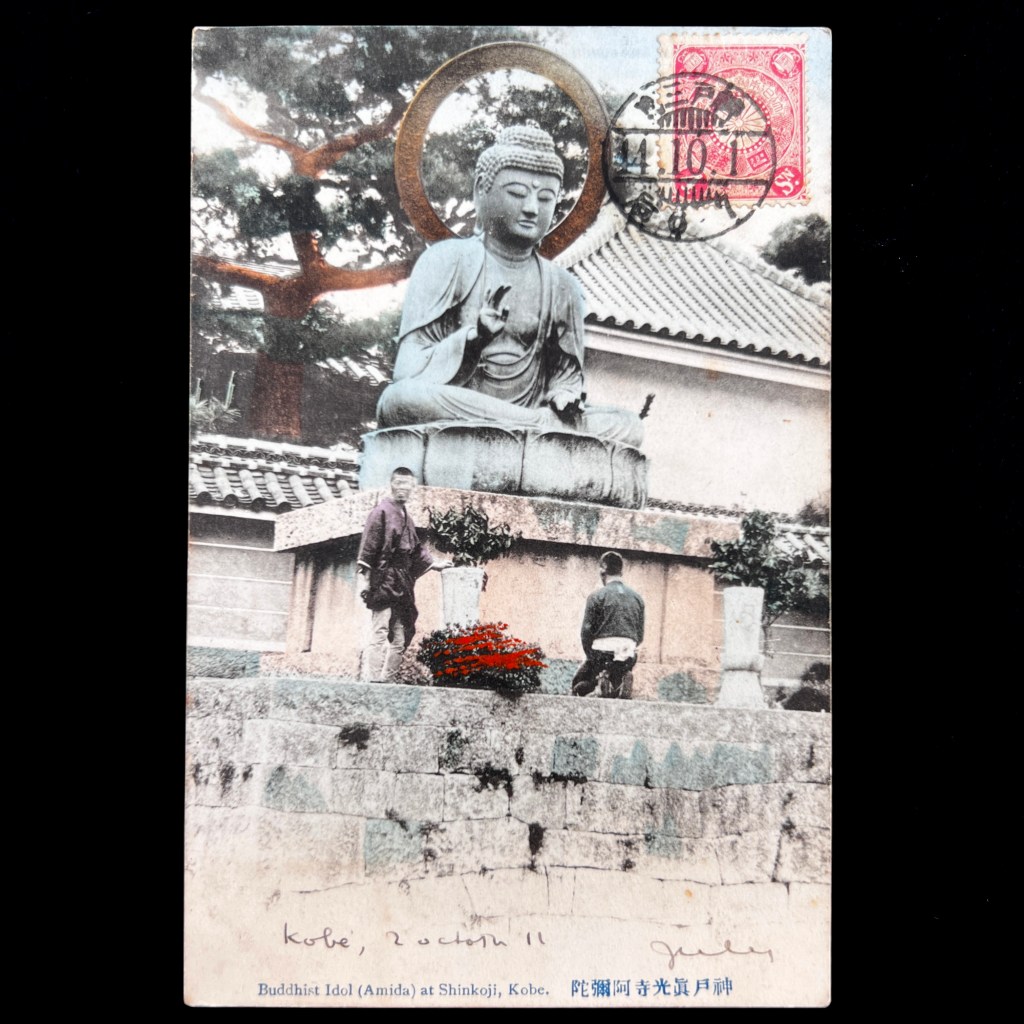
In Japan, postcards of Buddhist temples, priests, and other elements of religious practice were popular as both domestic and foreign souvenirs as well as collector’s items (postcard collecting is known as deltiology).

Collecting picture postcards (ehagaki 絵葉書) for display in albums was commonplace. In the case of the postcard here, the stamp is affixed to the image side of the card – this allows the stamp and postal mark to be displayed when the card is attached to an album page.

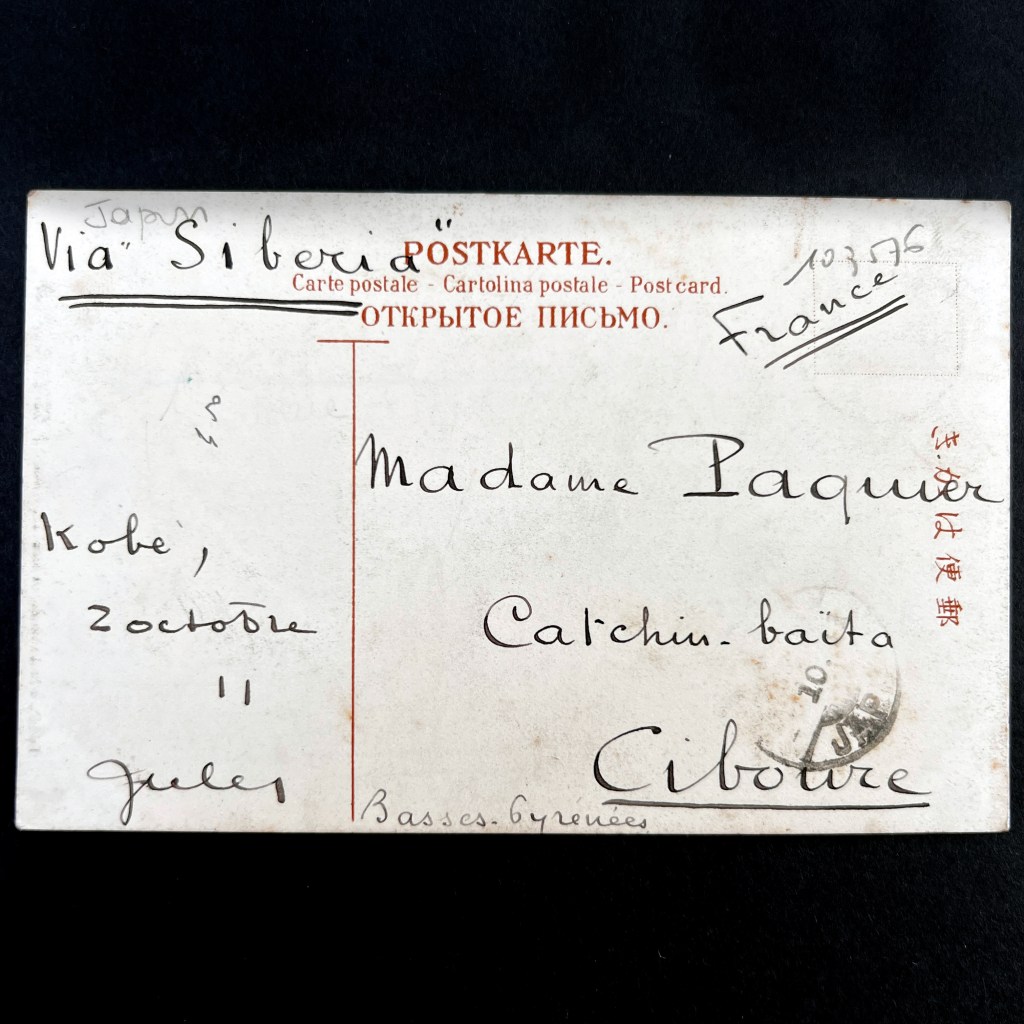
According to the postal mark, the stamp was cancelled on October 1, 1925 (Taisho 14) in Kobe, the same location as the statue in the image. The cost of international postage for postcards at this time was four sen. The final destination of this card was France.
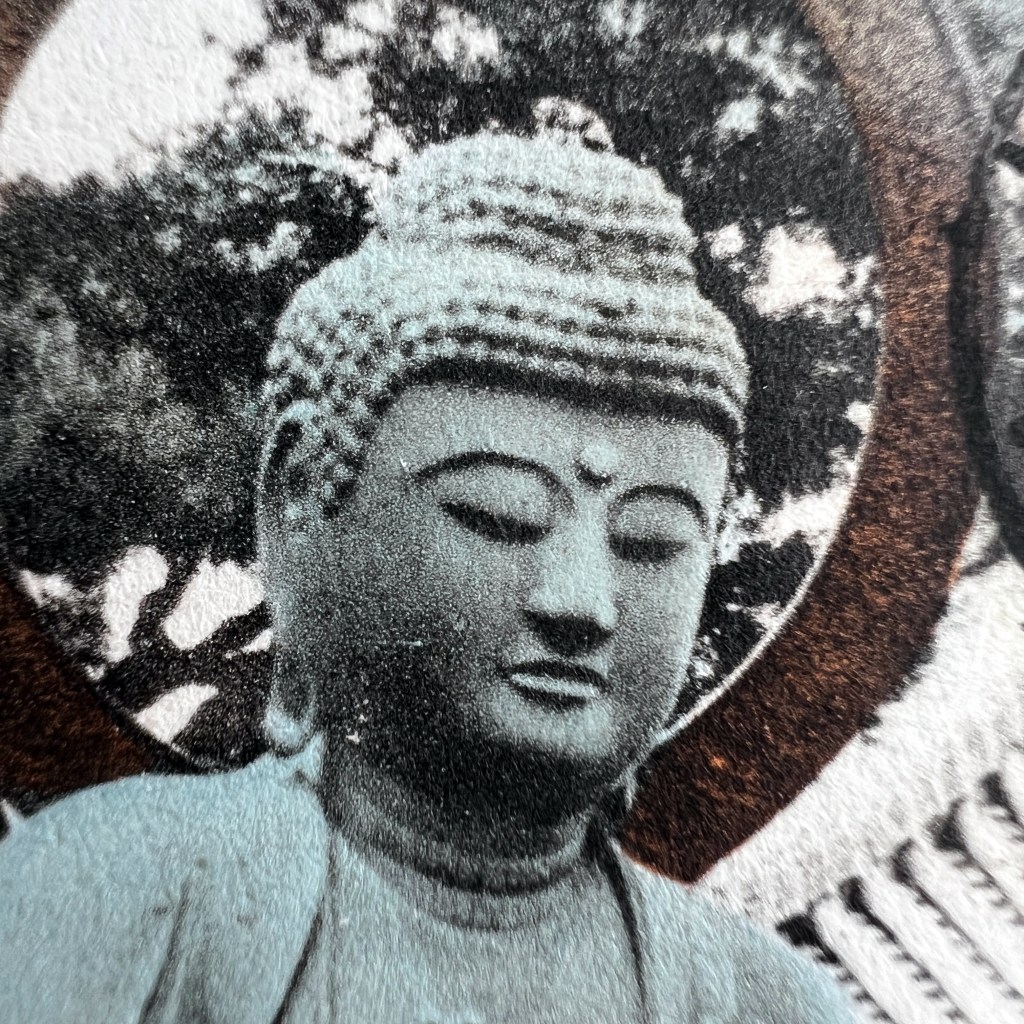
The composition of the photograph includes people thus helping us gauge the size of the Buddhist state. As far as I can tell, this state was destroyed in World War II by allied firebomb attacks on Kobe in March 1945.

Joanne Bernardi has curated a wonderful collection of Japanese postcards at the University of Rochester, available to be viewed here: https://tinyurl.com/57fae58f.

The Buddhas in the West Material Archive is a digital scholarship project that catalogues artifacts depicting Buddhist material culture for Western audiences. It’s comprised of prints, photos, and an assortment of ephemera and other objects. For a brief introduction to this archive, visit the main Buddhas in the West project page.
For Related Buddhas in the West Posts Featuring Japan:

For the Most Recent Buddhas in the West Posts:




 Personal Site of Peter Romaskiewicz