Puck Magazine’s Benjamin Butler as Joss Buddha Cover

For all the new Buddhas in the West posts
follow us on Bluesky & Instagram


By the 1880s, Chinese American temples were sufficiently familiar to the public imagination to serve as an effective visual basis for political satire. Yet, however, the imagery was often not rooted in ethnographic realism; it remained a caricature of Western fantasy.
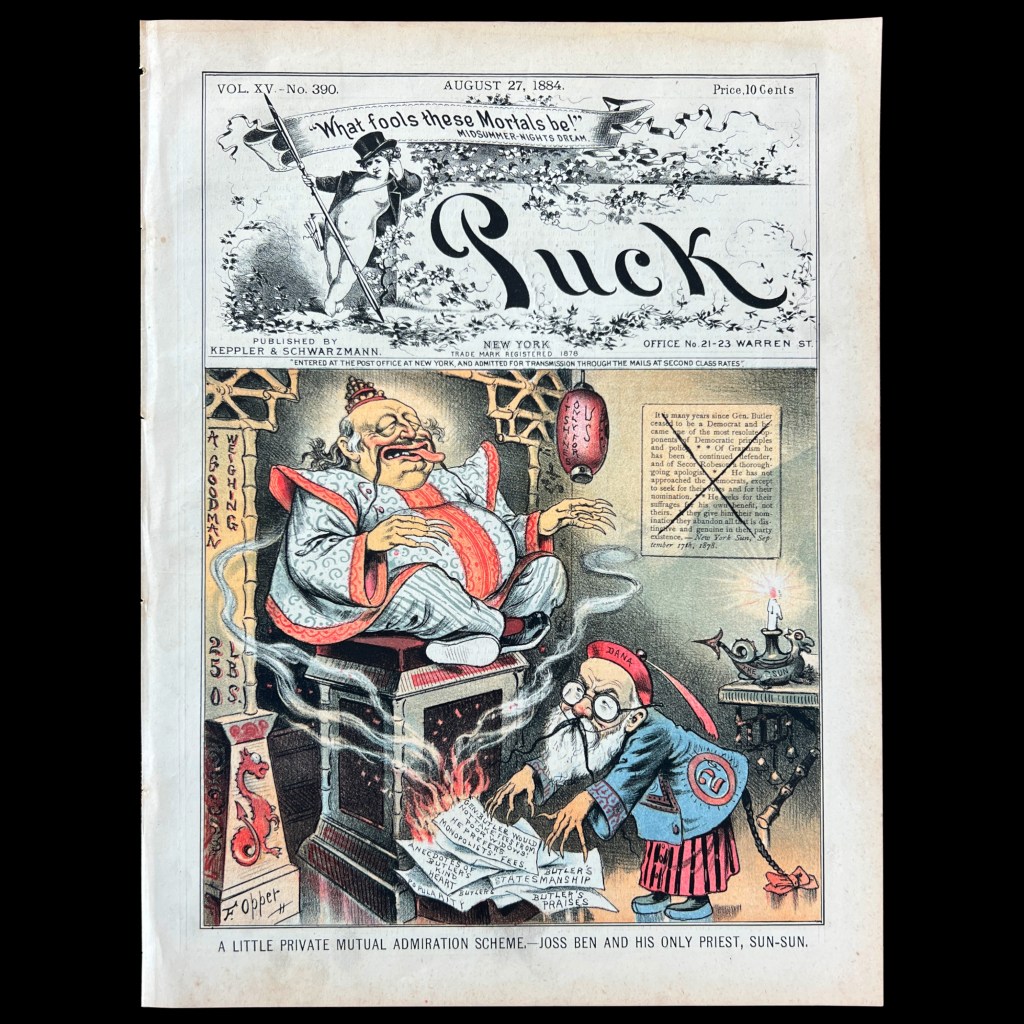
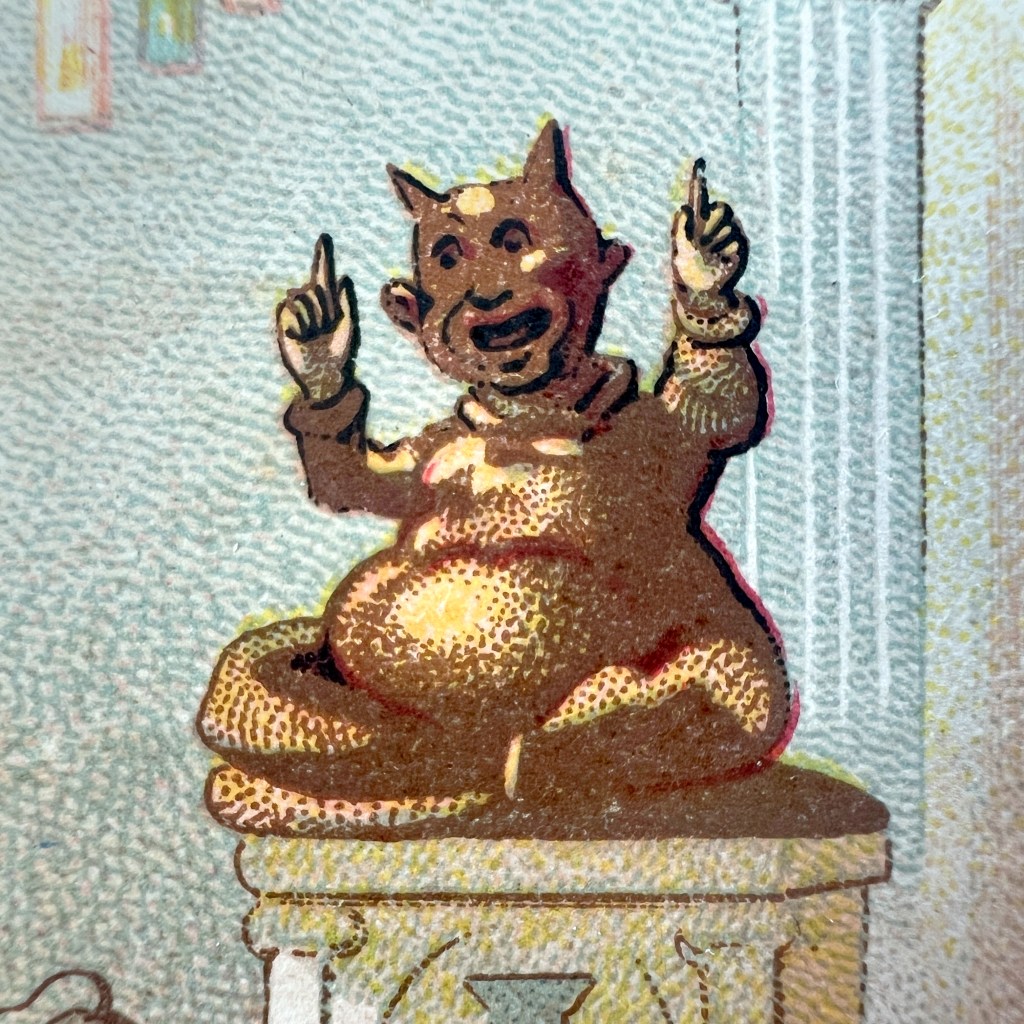
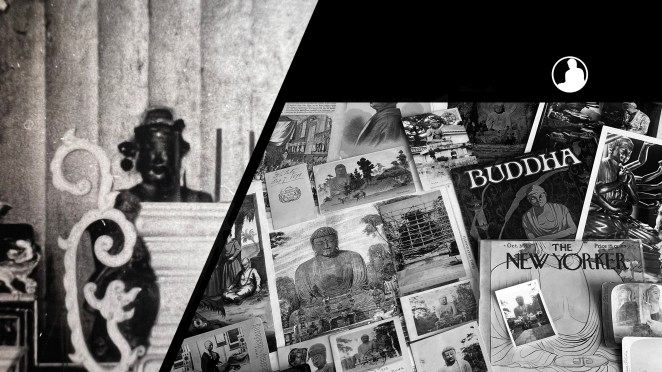
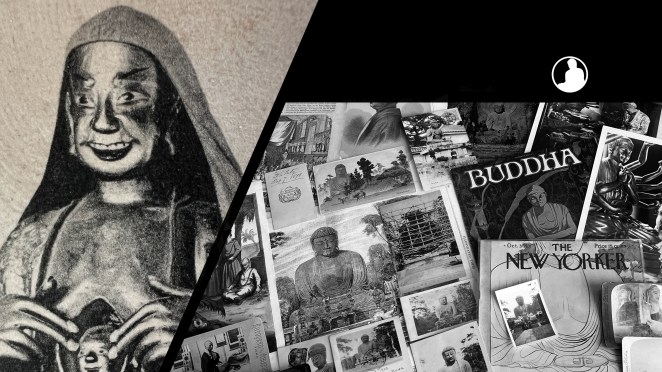
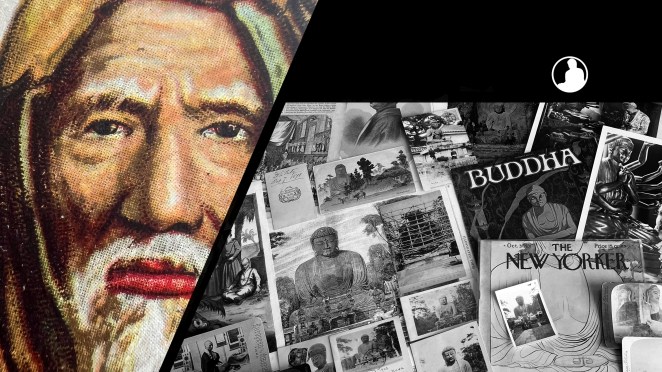
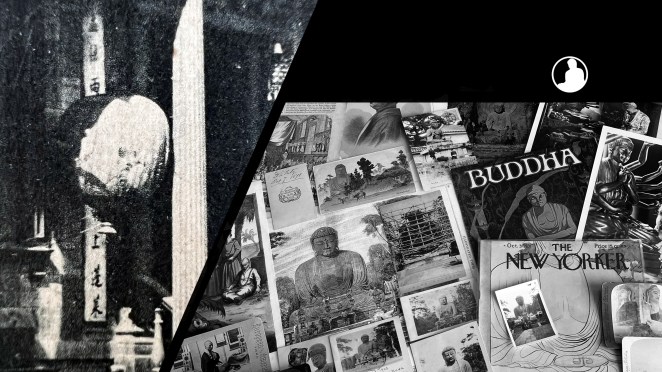
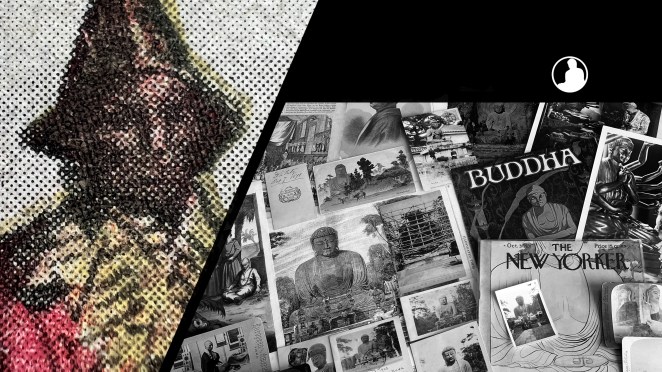
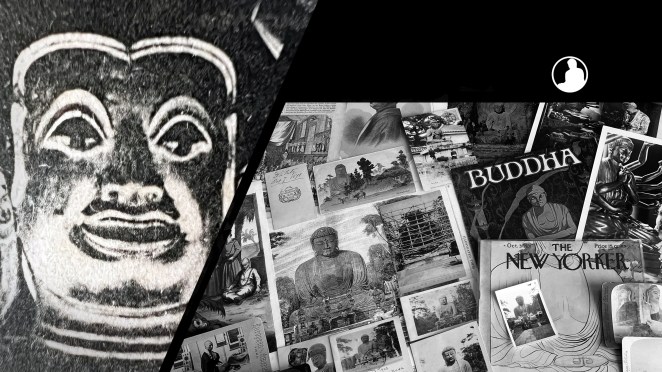
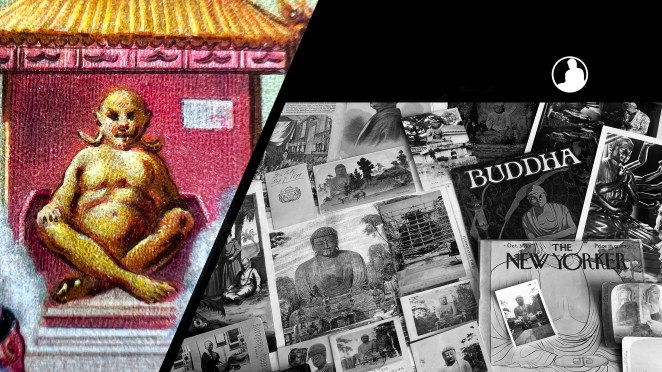
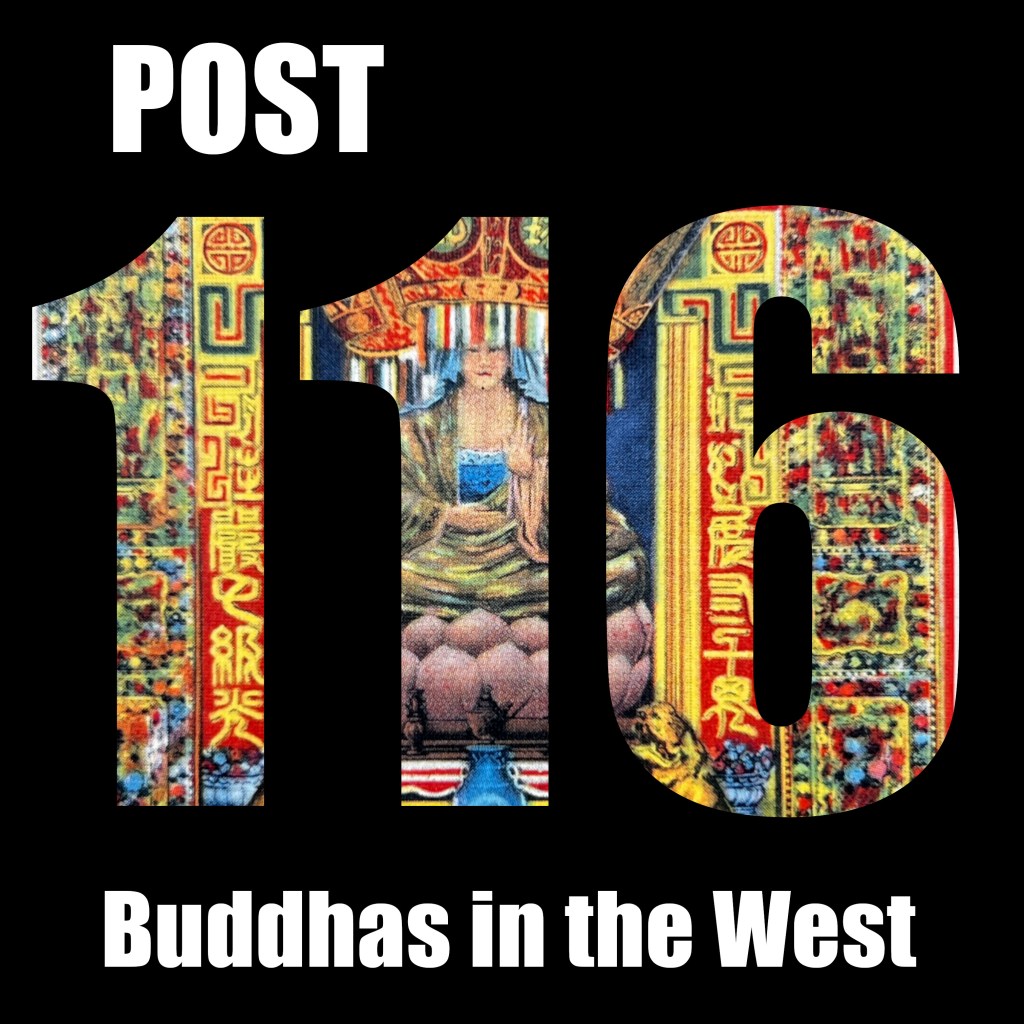
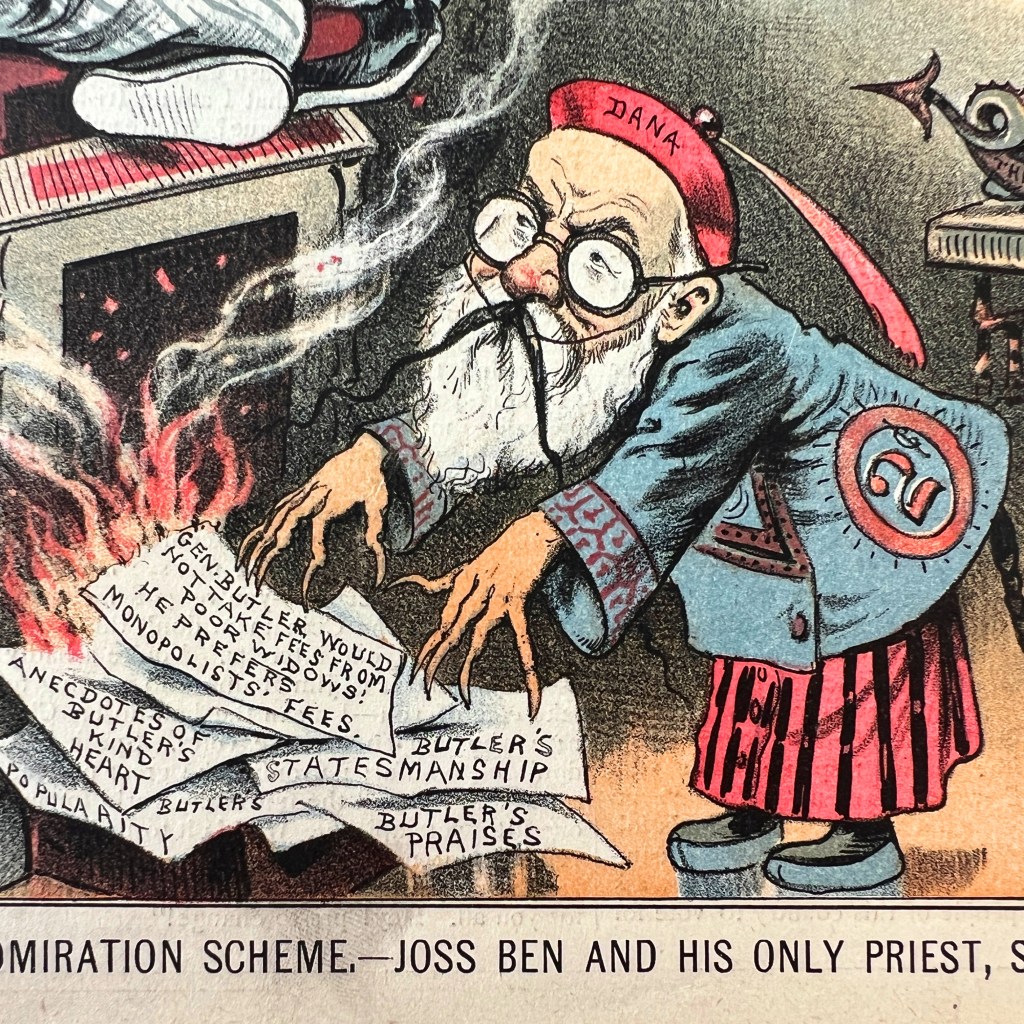
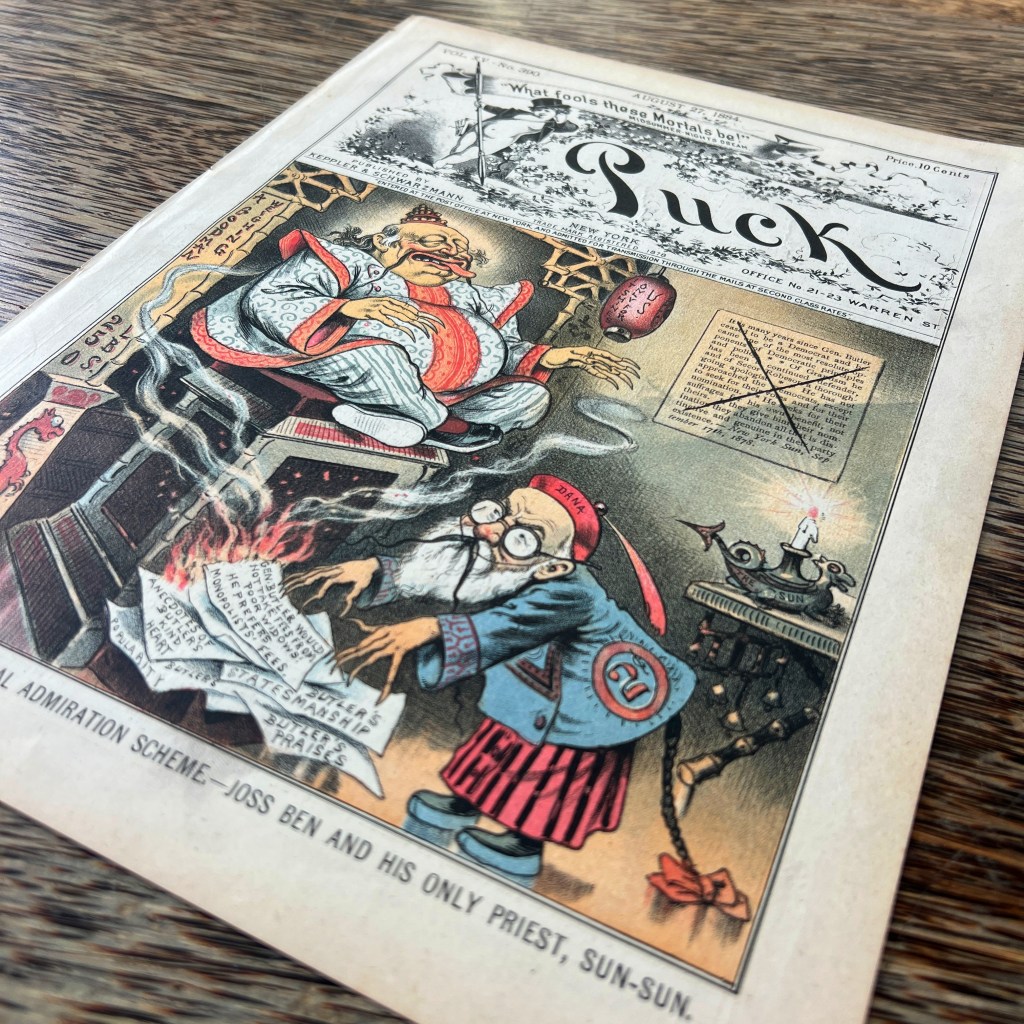
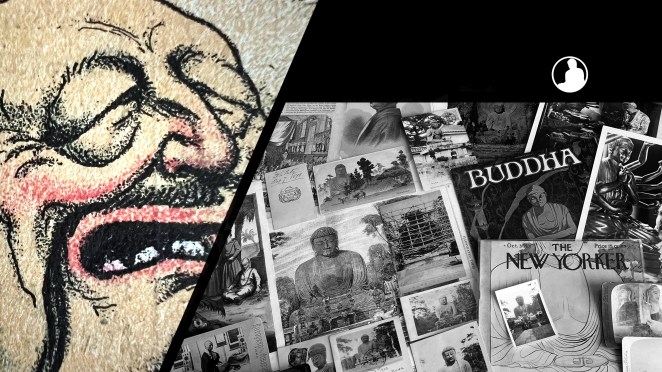
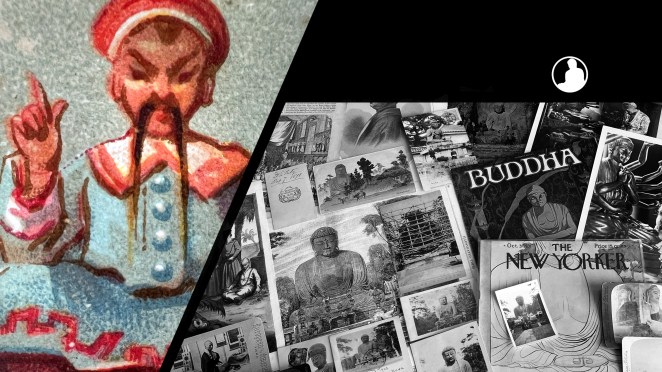
This 1884 cover of Puck depicts Gen. Benjamin Butler as a Chinese deity named “Ben Joss” receiving offerings from Charles Dana, the editor of the New York Sun, dressed in yellowface. Frederick Opper’s illustration draws attention to the effusive editorial praise Dana lavished upon Butler.
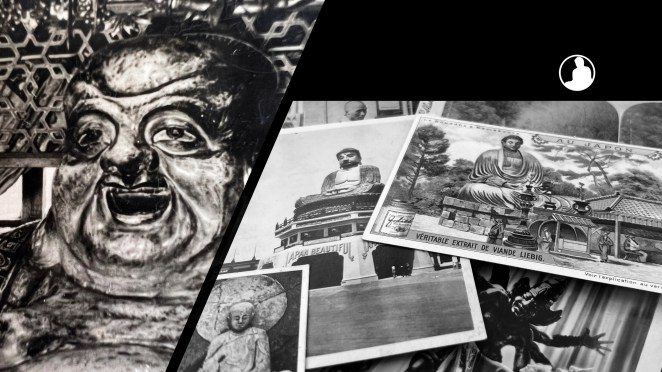
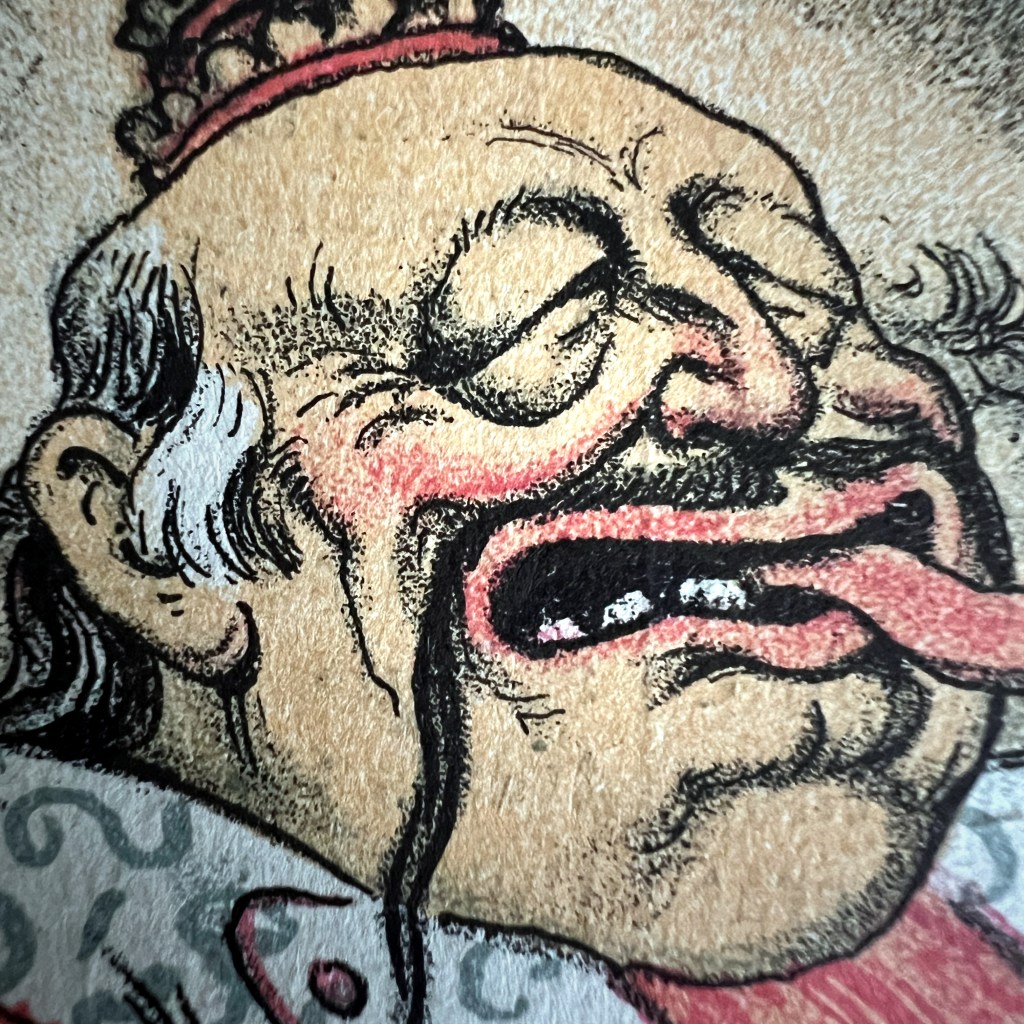
The lithograph portrays Butler as a cross-legged Buddha, but such figures were nearly non-existent in Chinese American temples of the era. In fact, the image portrays a “nodding” chinoiserie magot figurine, a European caricature of a Chinese Laughing Buddha, with bobbing hands and tongue.
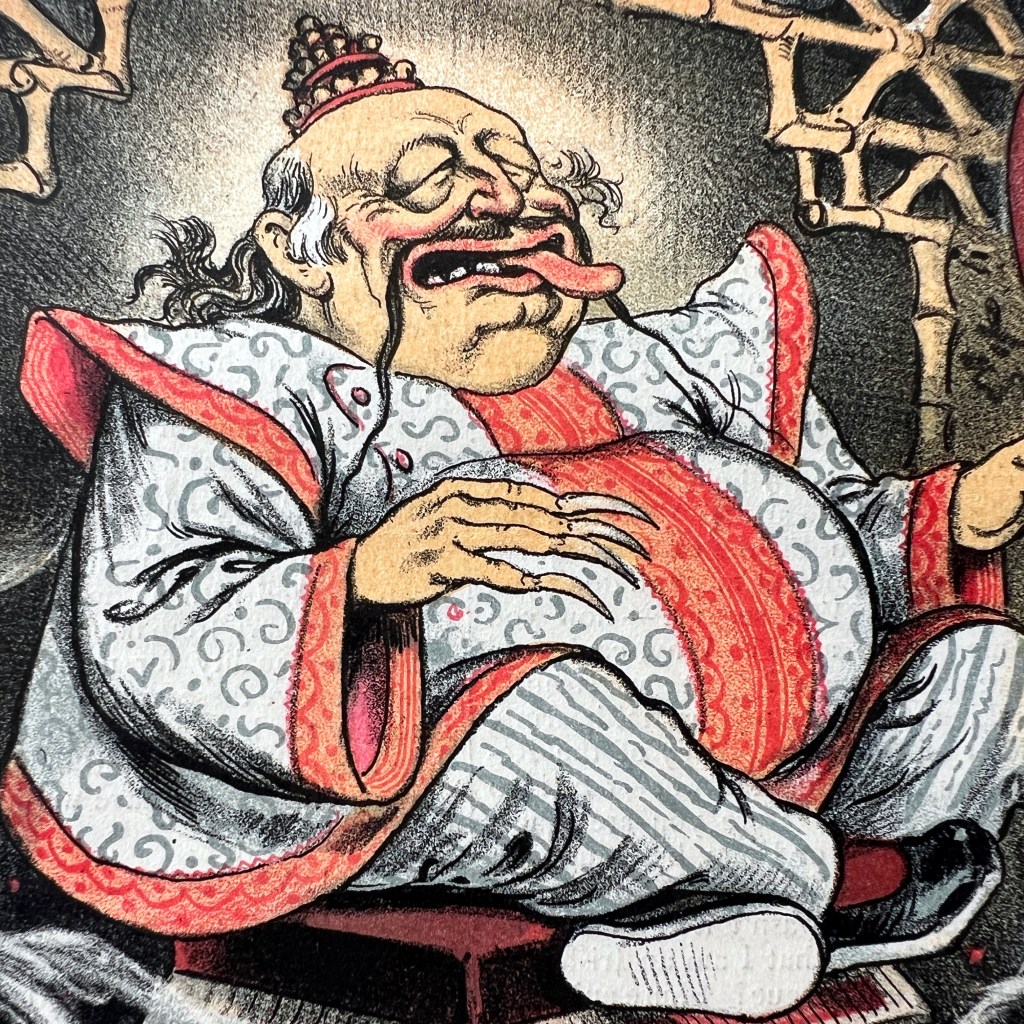
Magots were popularized in Europe as grotesque and whimsical decorative figurines, made with mechanically balanced heads, tongues, and hands that moved. Opper’s illustrations adds a string-like mustache and pointy fingernails to Butler, racialized visual cues to identify the figure as Chinese.
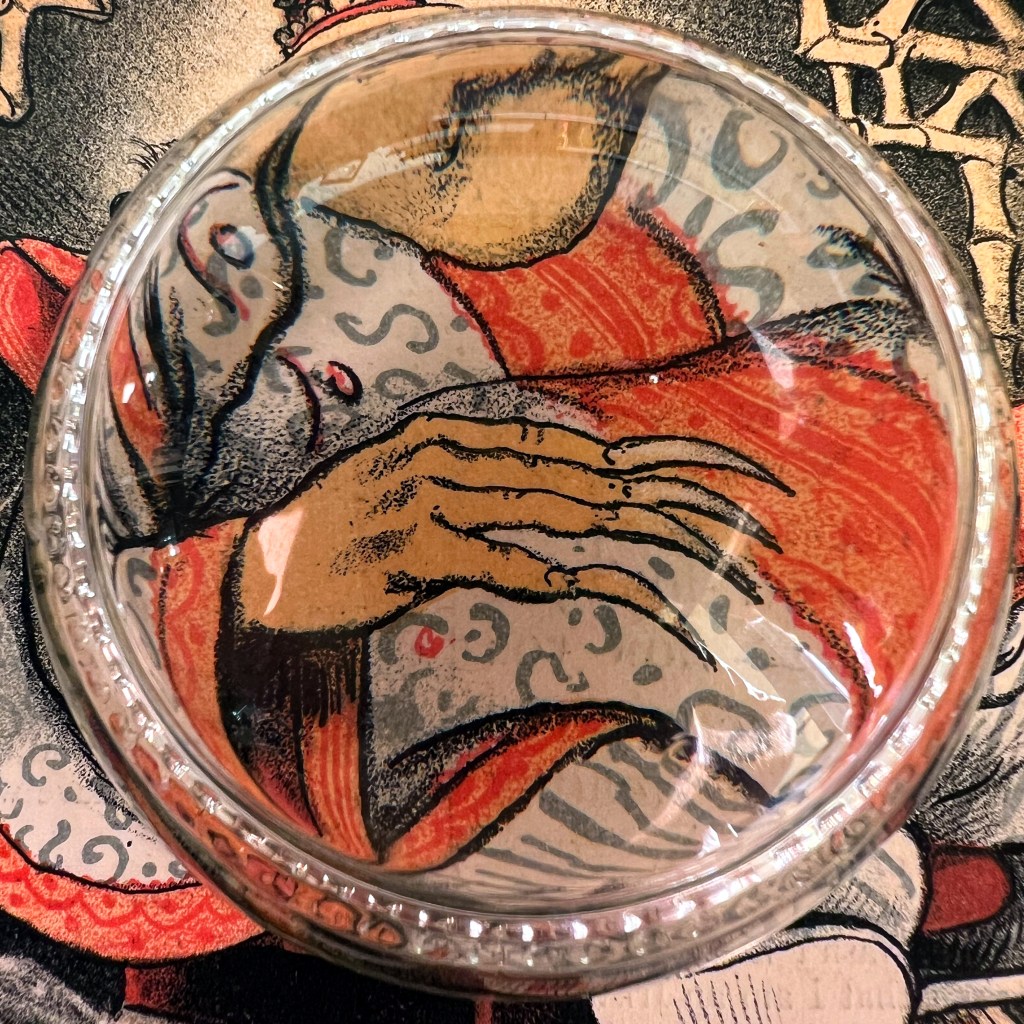
Even as satire, such illustrations imply buddhas were commonplace in Chinese American temples, but this was not the case. Opper’s illustration is a pastiche of visual tropes – paper lanterns, dragon candle holders, and Buddha statues – to evoke a exoticized notion of Chinese religiosity.
To see a better representation of the kinds of icons enshrined in early Chinese American temples, see the online “Map of Temples in San Francisco’s Chinatown: 1850s-1906,” viewable here: https://tinyurl.com/ykyaas2d.
The Buddhas in the West Material Archive is a digital scholarship project that catalogues artifacts depicting Buddhist material culture for Western audiences. It’s comprised of prints, photos, and an assortment of ephemera and other objects. For a brief introduction to this archive, visit the main Buddhas in the West project page.


For Related Buddhas in the West Posts Featuring Magazines:

For the Most Recent Buddhas in the West Posts:

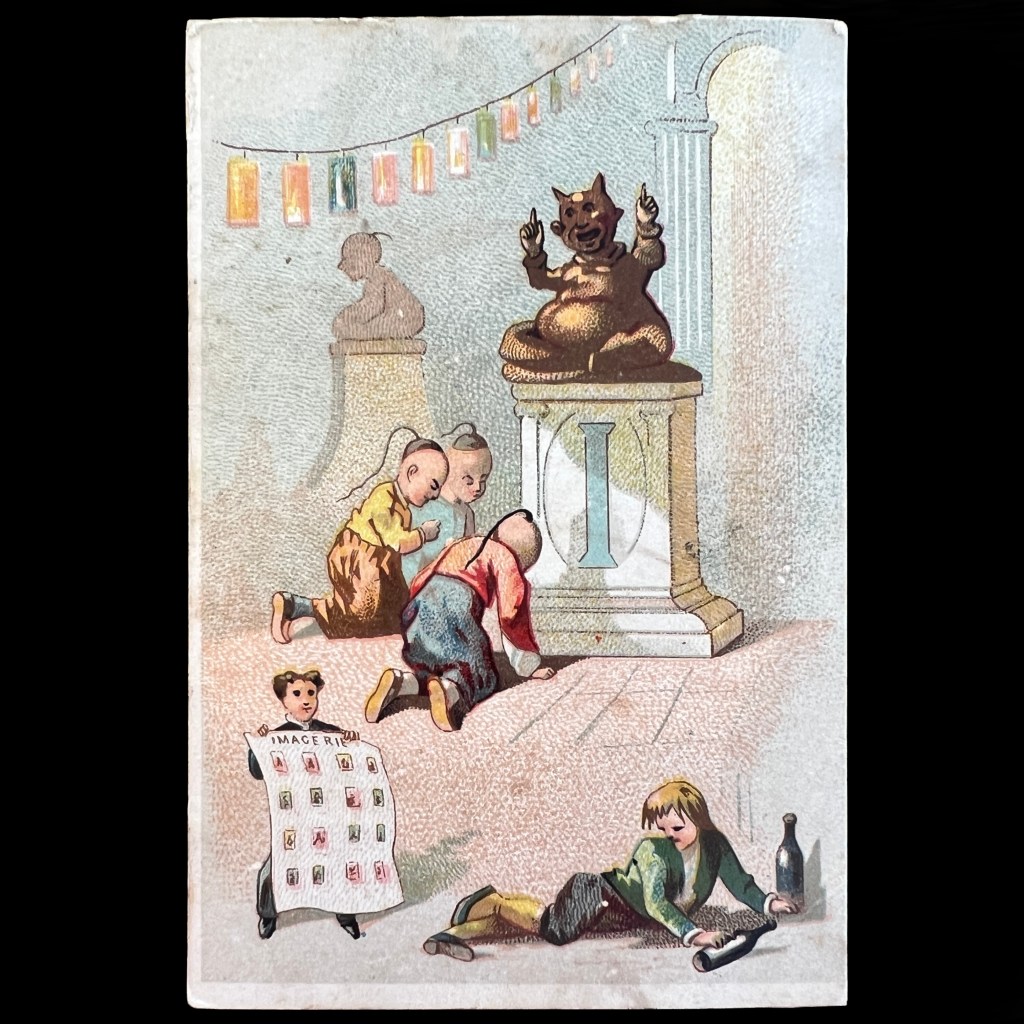
Chinese Idolatry Stock Advertising Card

For all the new Buddhas in the West posts
follow us on Bluesky & Instagram


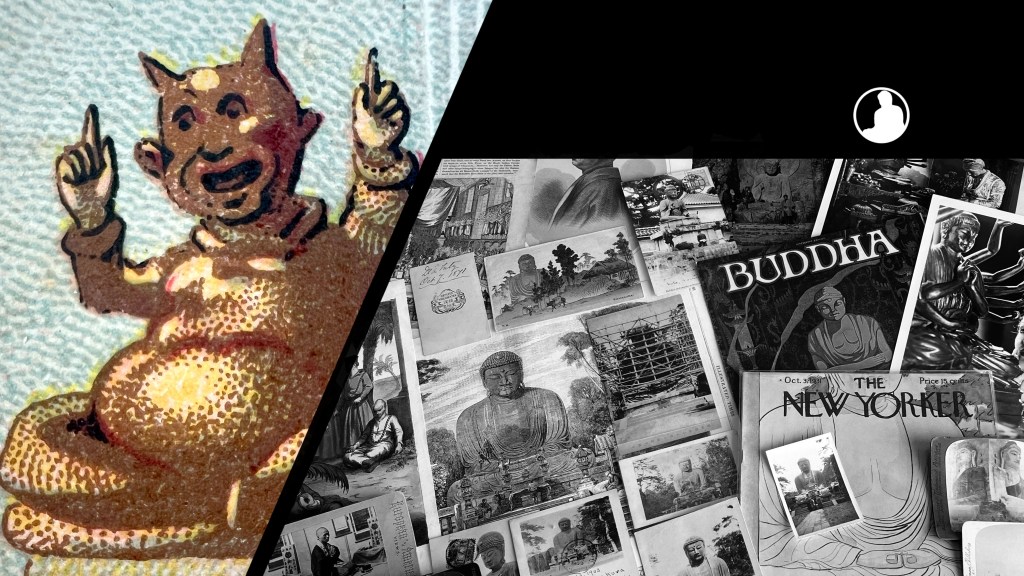
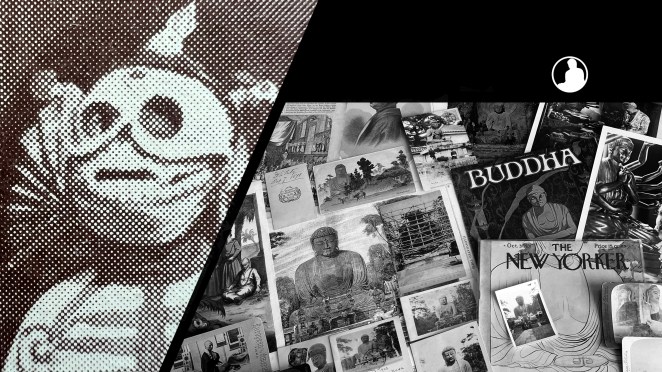
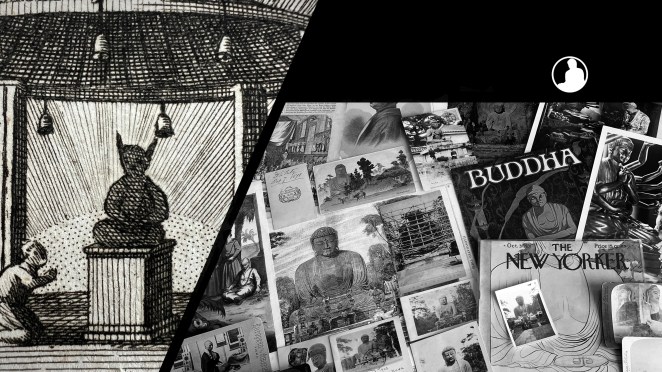
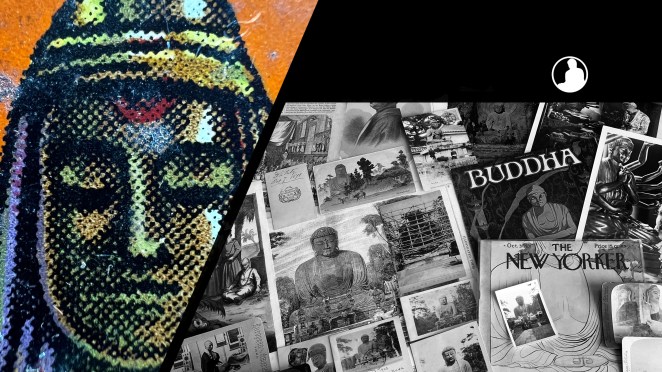
Victorian trade cards often employed the same visual language found in contemporary political cartoons. In the late 1870s and 1880s, as anti-Chinese xenophobia intensified in the US, depictions of the “heathen chinee” prostrating before Buddhist idols became more widespread.

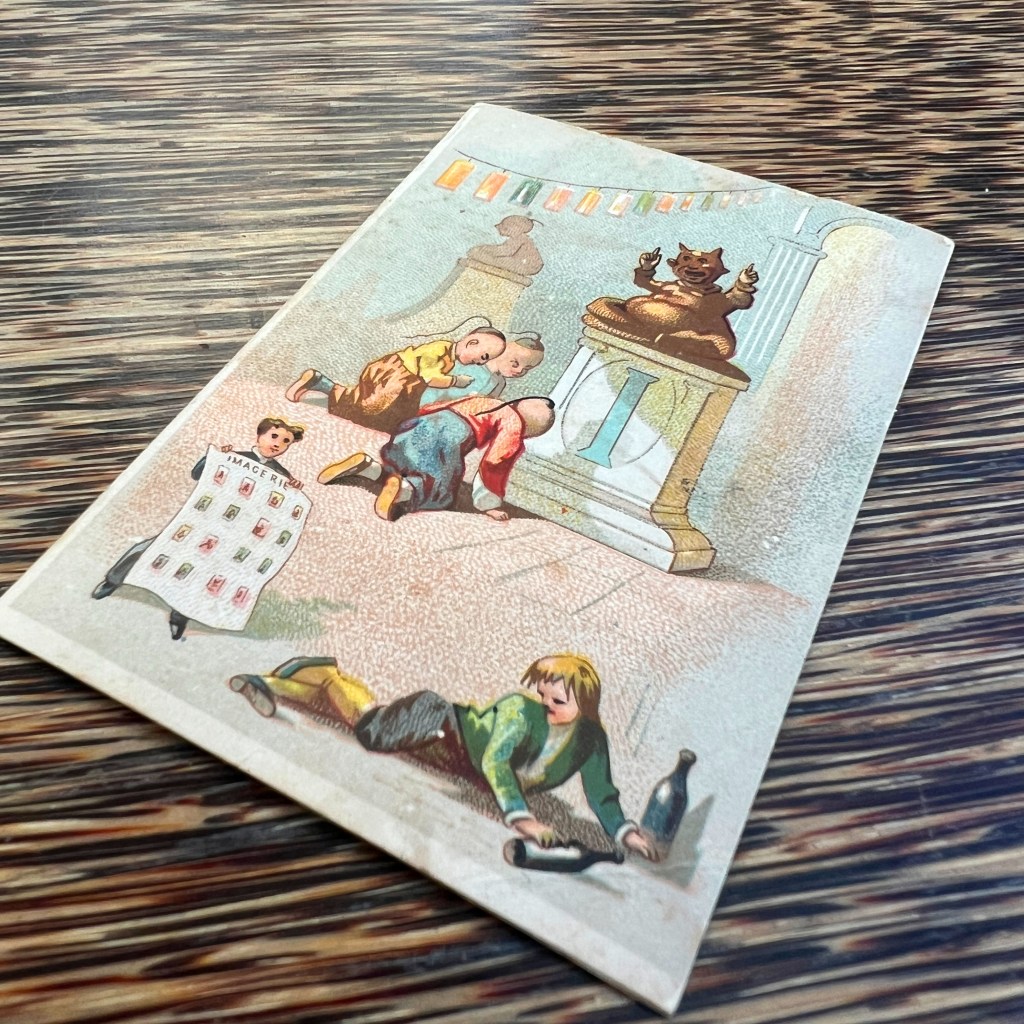
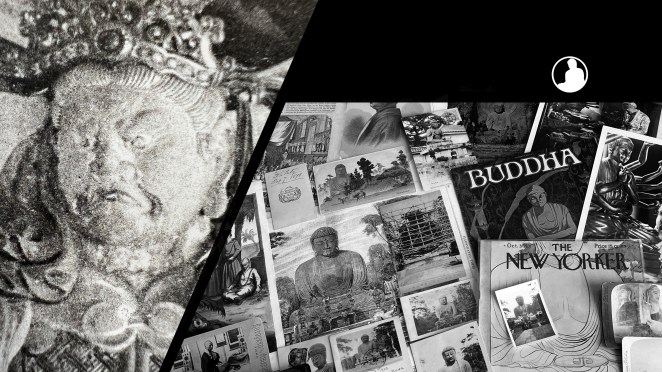
This stock card was from an alphabet primer series, appealing to one of the primary audiences for trade cards, children. The letter “I” can be spotted on the pedestal in the rear, thus asking viewers to interpret the scenes through the lens of words beginning with “I.”

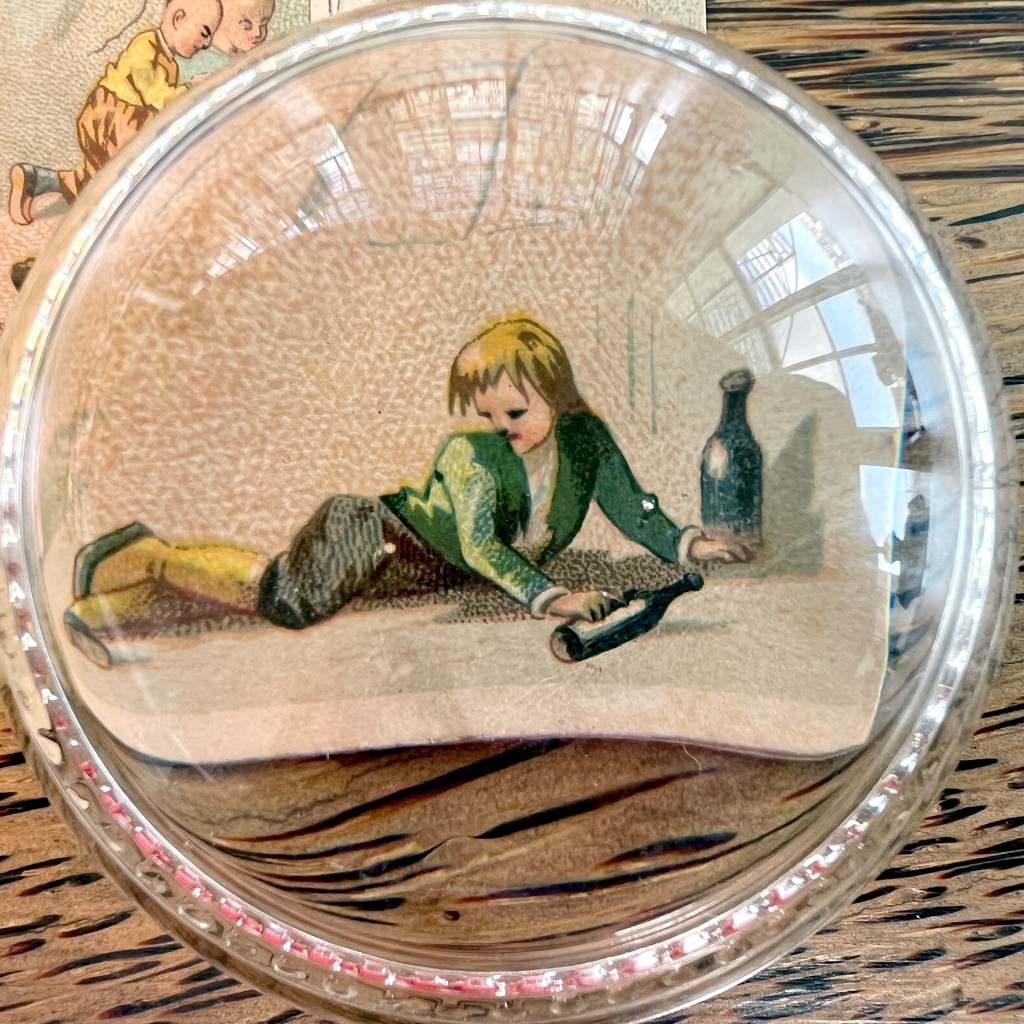
The moralizing tone of the images is apparent. In the foreground we see a child lying on the floor clutching a bottle, representing inebriation or intoxication.

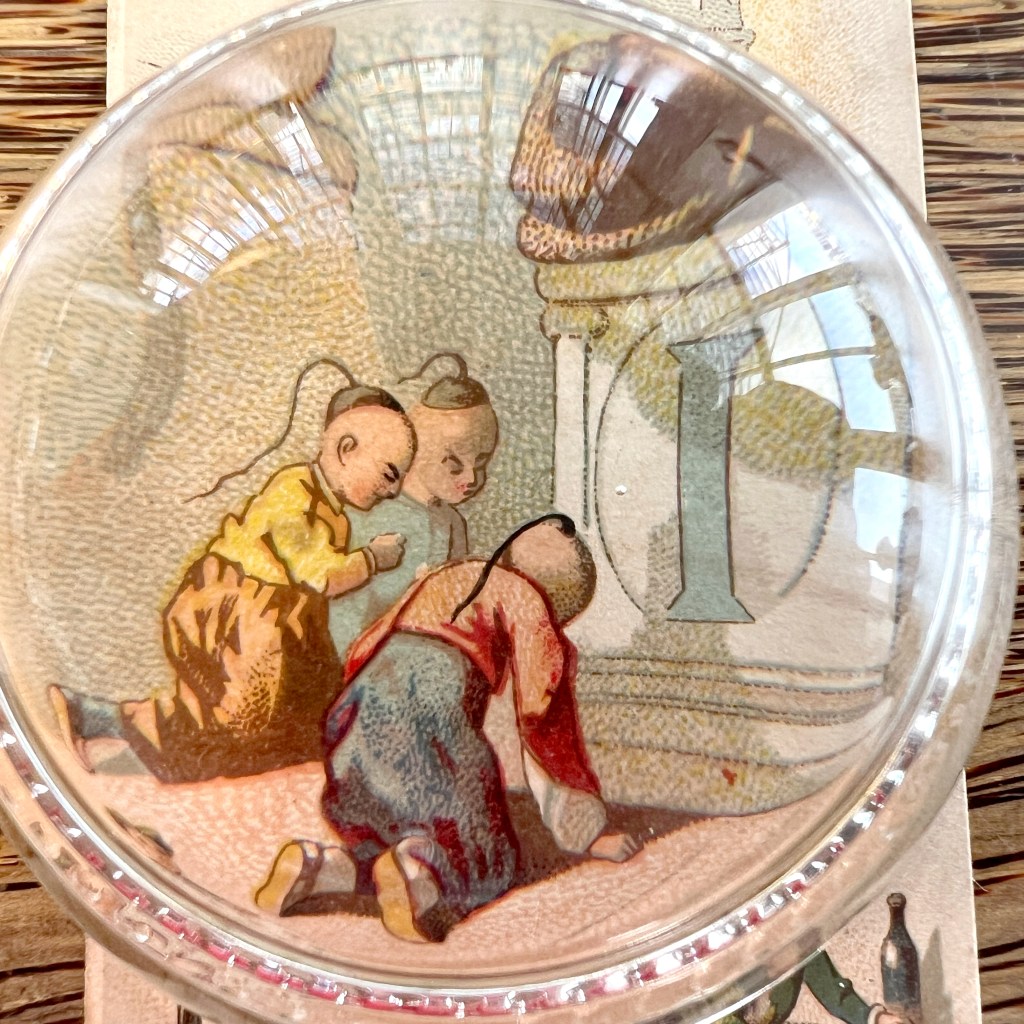
The Chinese children in the background, clearly identified by their long queues and flowing garments, represent idolators practicing foreign idolatry.

The idol is a distorted version of a sitting buddha, portrayed with horns and performing a “Chinese dance.” For more on the visual language of trade cards, see Lenore Metrick-chen, “The Chinese of the American Imagination: 19th Century Trade Card Images” (2007).


The Buddhas in the West Material Archive is a digital scholarship project that catalogues artifacts depicting Buddhist material culture for Western audiences. It’s comprised of prints, photos, and an assortment of ephemera and other objects. For a brief introduction to this archive, visit the main Buddhas in the West project page.


For Related Buddhas in the West Posts Featuring Chinese in the United States:


For the Most Recent Buddhas in the West Posts:

World in Cincinnati Japan Scene Postcard

For all the new Buddhas in the West posts
follow us on Bluesky & Instagram


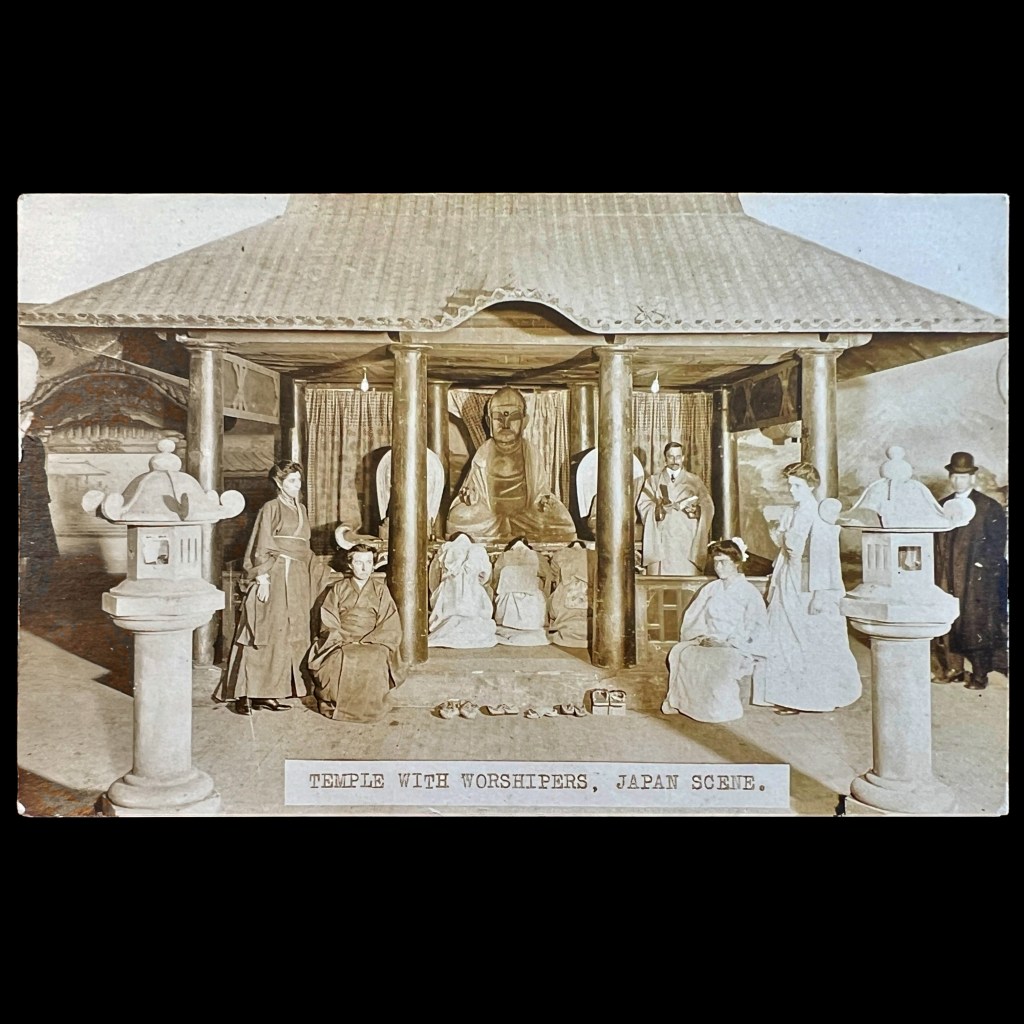
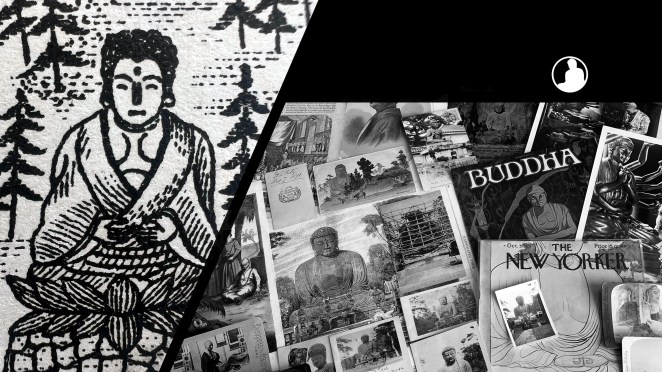
In 1911, to promote efforts of American missionaries abroad, an arm of the missions board sponsored a massive traveling exhibit of the world’s religions. The “Japan Scene” was dominated by a replica of a Buddhist temple, traveling from Boston to Cincinnati and elsewhere.

Flanked by shops and scenes of everyday Japanese life, the exhibit was considered an exercise in immersive visual educational. Partition walls were painted with panoramic views of distant locales such as Mt. Fuji and lotus ponds to further create a sense of virtual travel.

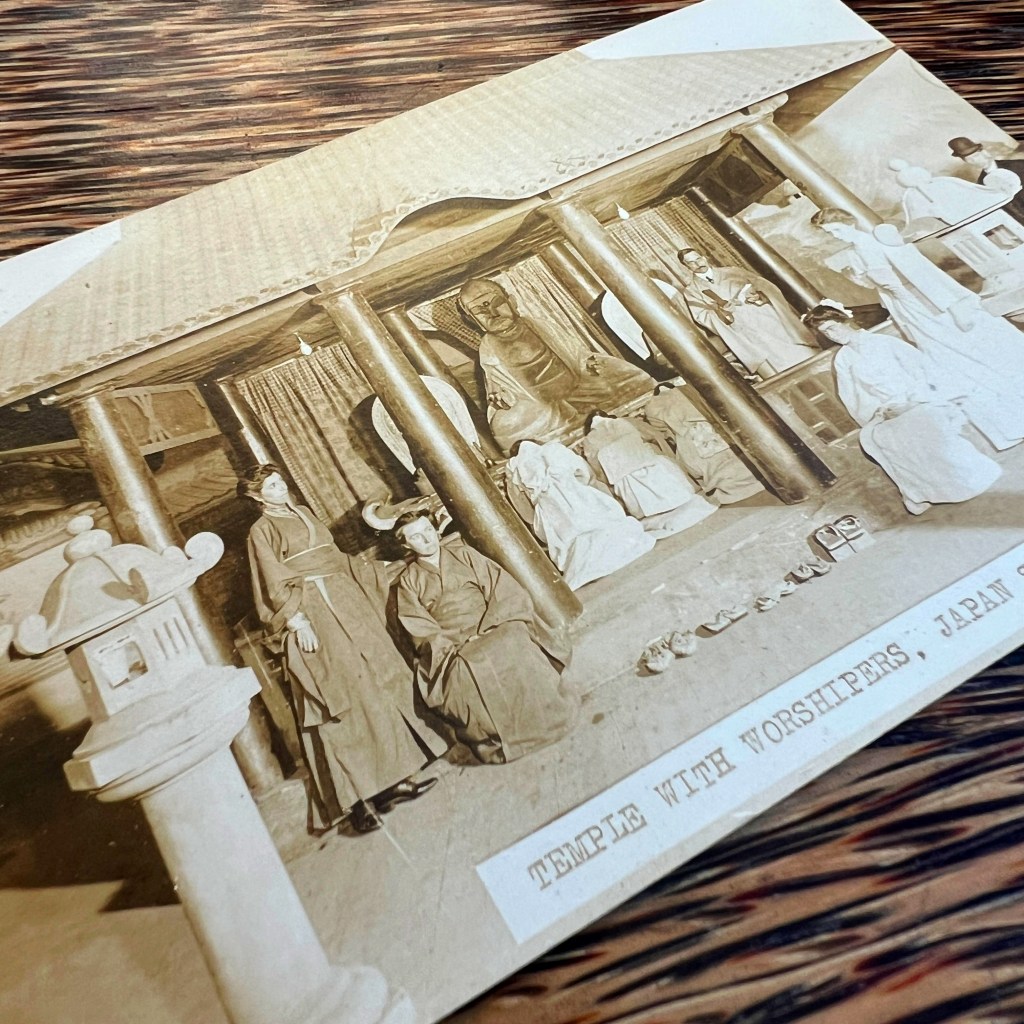
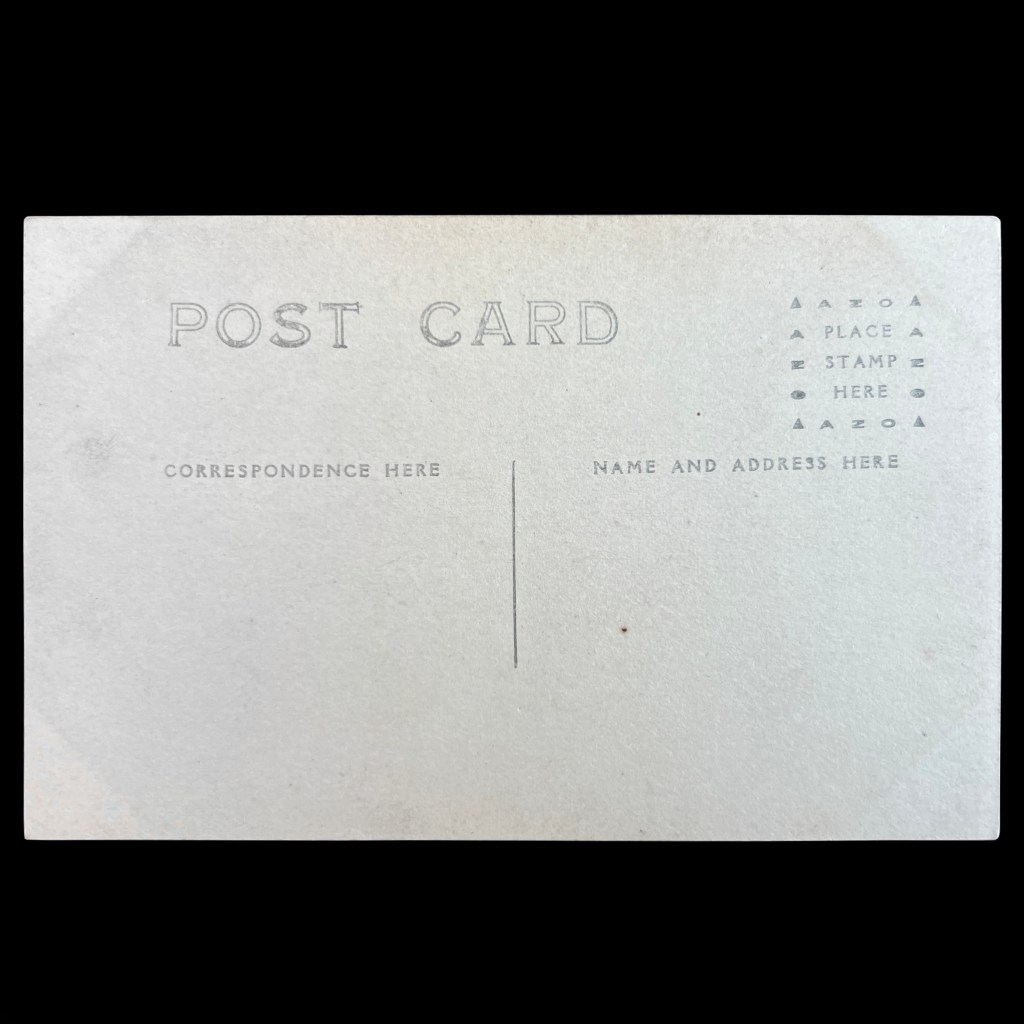
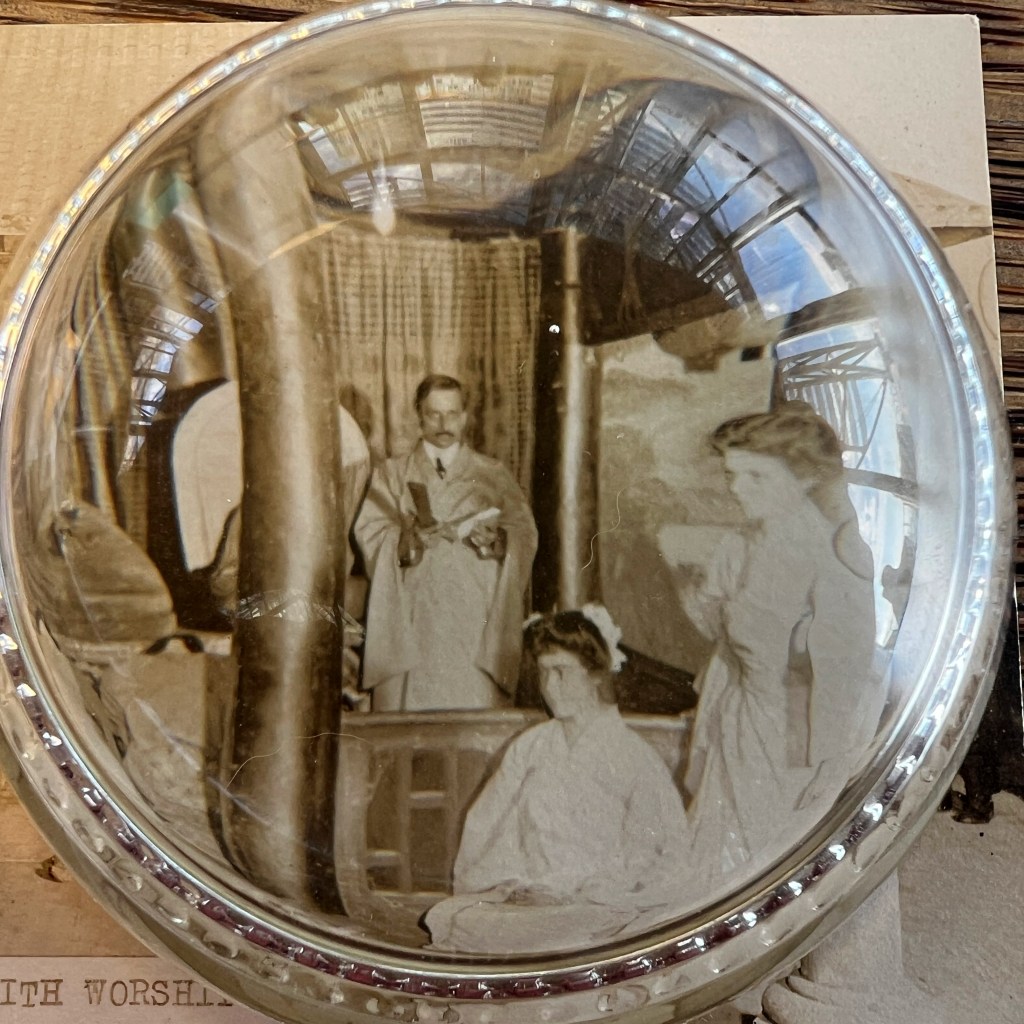
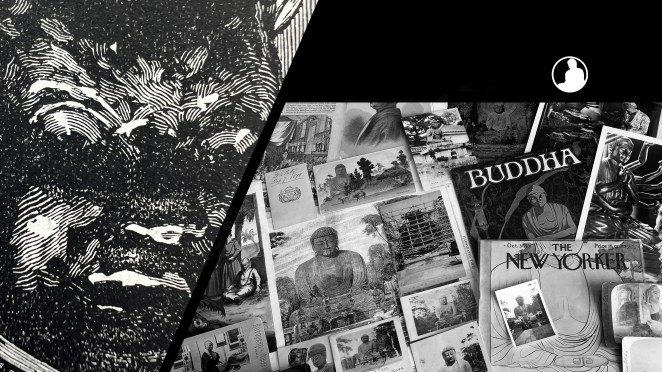
A variety of print ephemera, such as maps, posters, and postcards, were sold as souvenirs and visual learning aids to visitors. The superimposed label printed on front of this real photo post card helps identify it as from the “World in Cincinnati,” similar to other known examples.

In Cincinnati, the replicated foreign lands were populated by more than 5000 stewards from more than 200 local churches portraying native peoples.

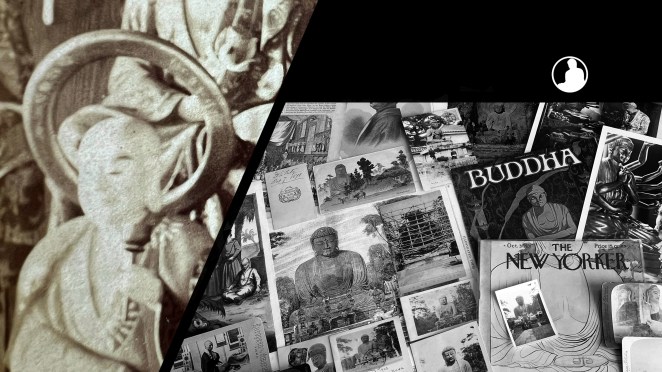
While some replicated scenes were decorated with authentic religious imagery, Japan’s icon appears to be recreated with wood or plaster. For more about missionary exhibits, see April Makgoeng’s “Visualizing Missions: The Power of the Image in Promoting Foreign Missions” (2021).


The Buddhas in the West Material Archive is a digital scholarship project that catalogues artifacts depicting Buddhist material culture for Western audiences. It’s comprised of prints, photos, and an assortment of ephemera and other objects. For a brief introduction to this archive, visit the main Buddhas in the West project page.


For Related Buddhas in the West Posts Featuring Real Photo Post Cards:


For the Most Recent Buddhas in the West Posts:

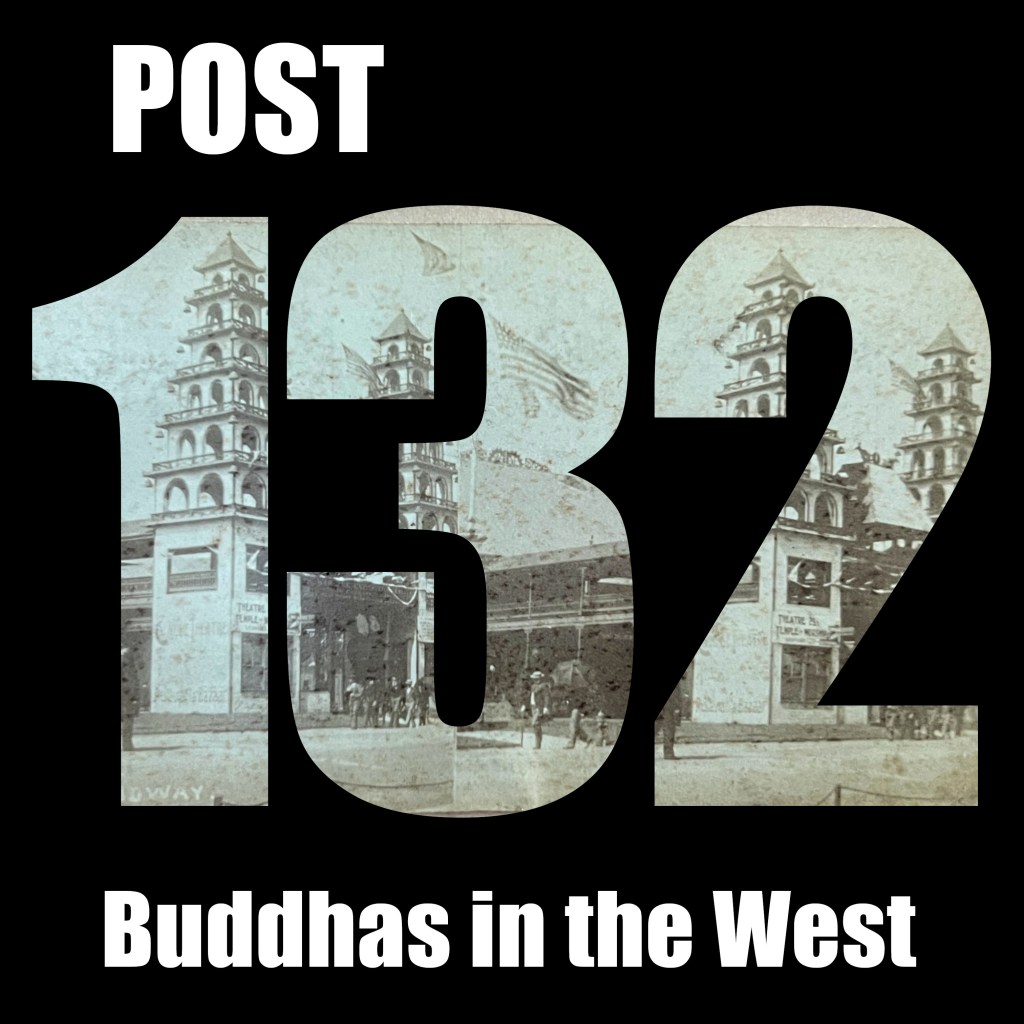
1893 Chinese Theater and Joss House Stereoview

For all the new Buddhas in the West posts
follow us on Bluesky & Instagram


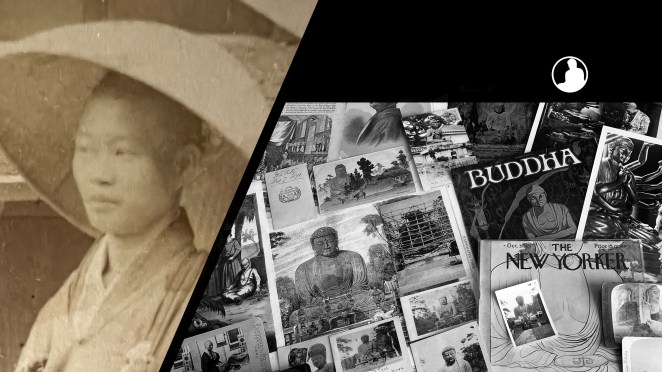
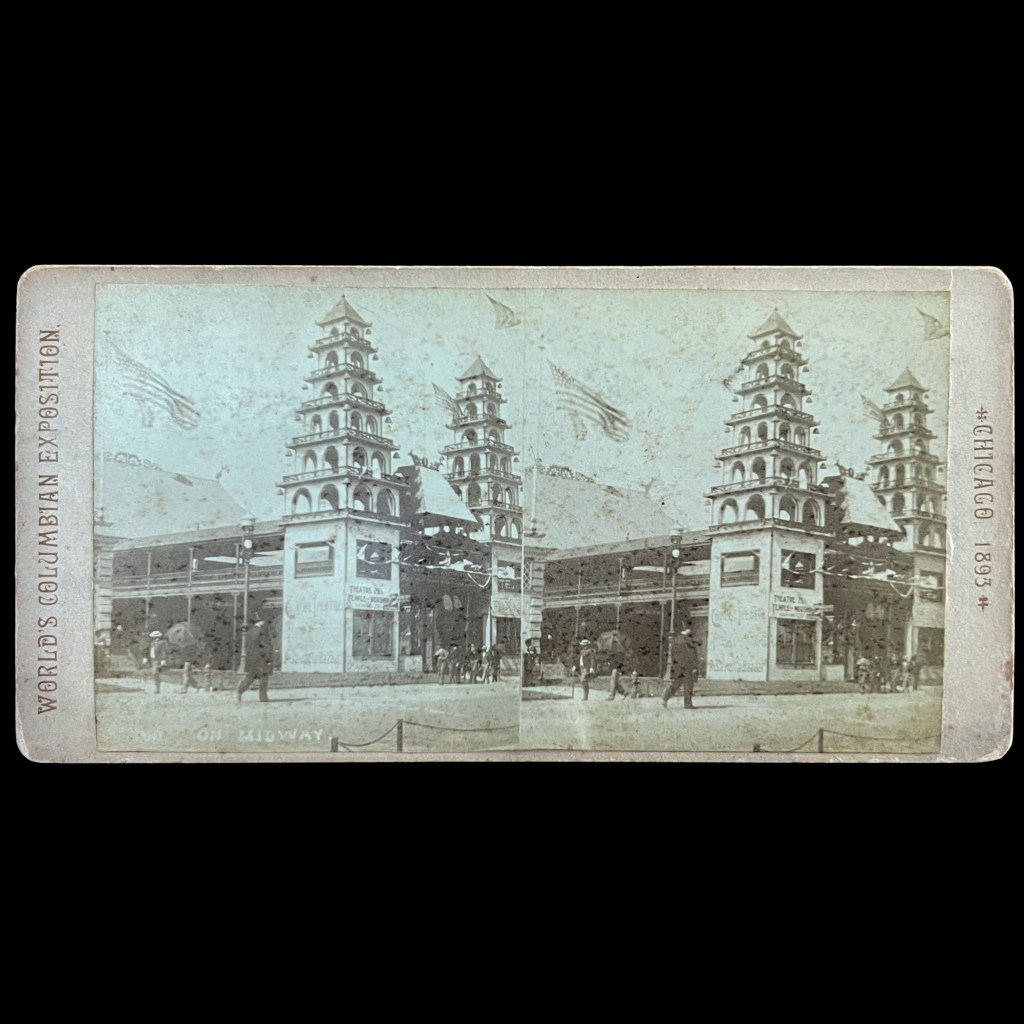
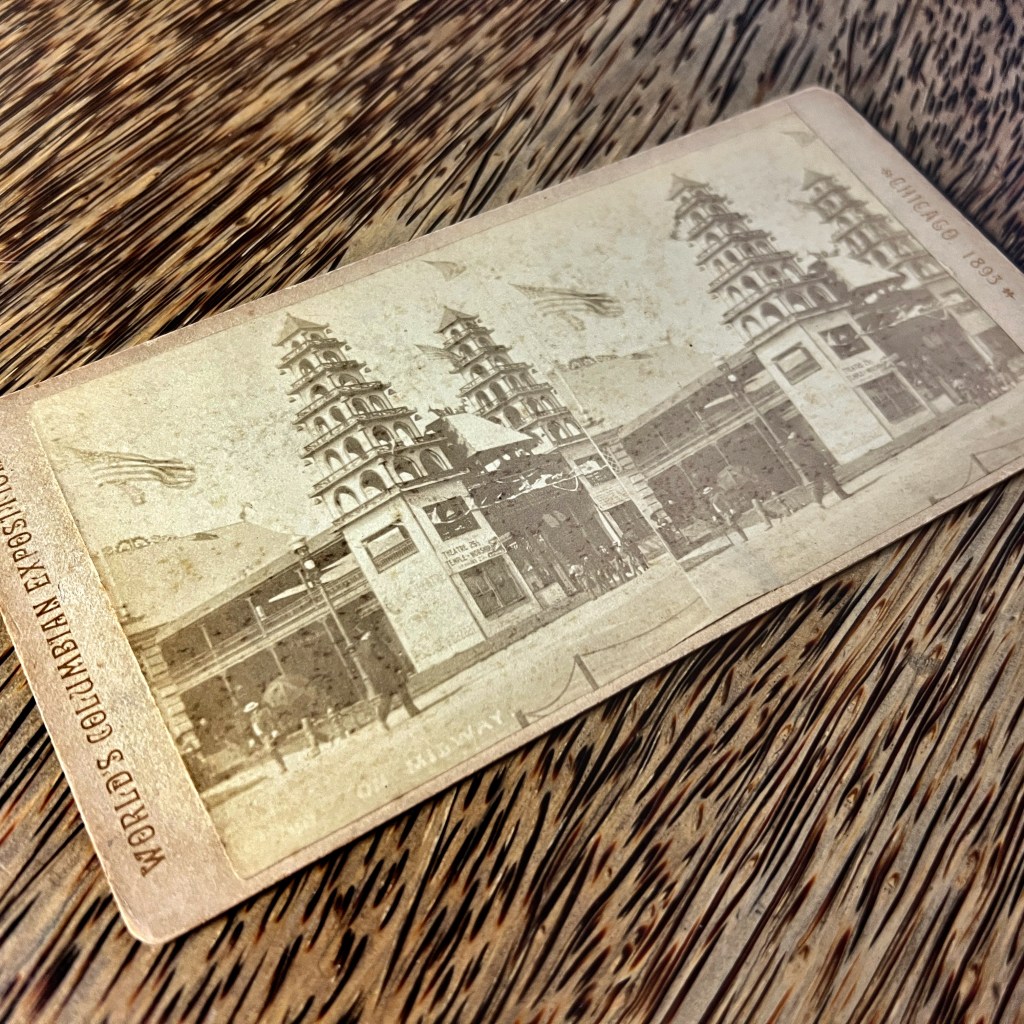
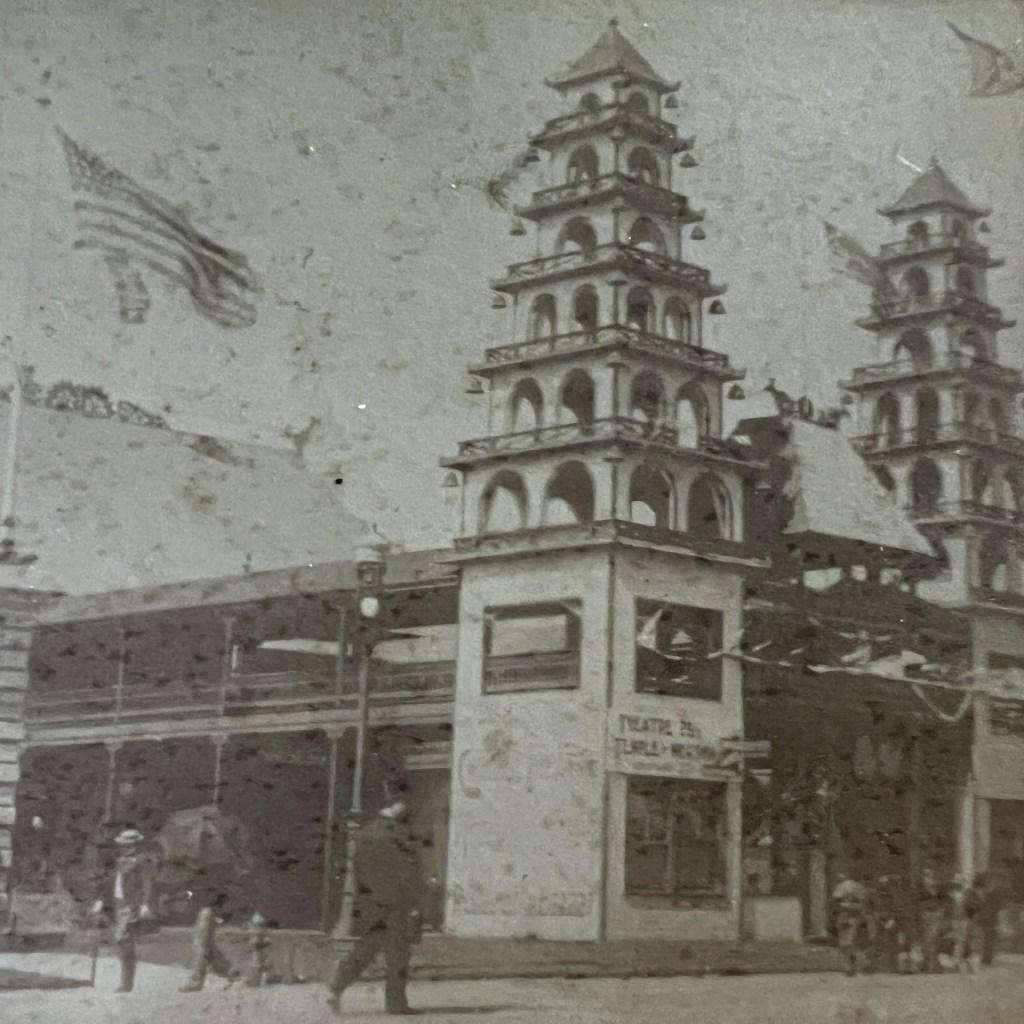
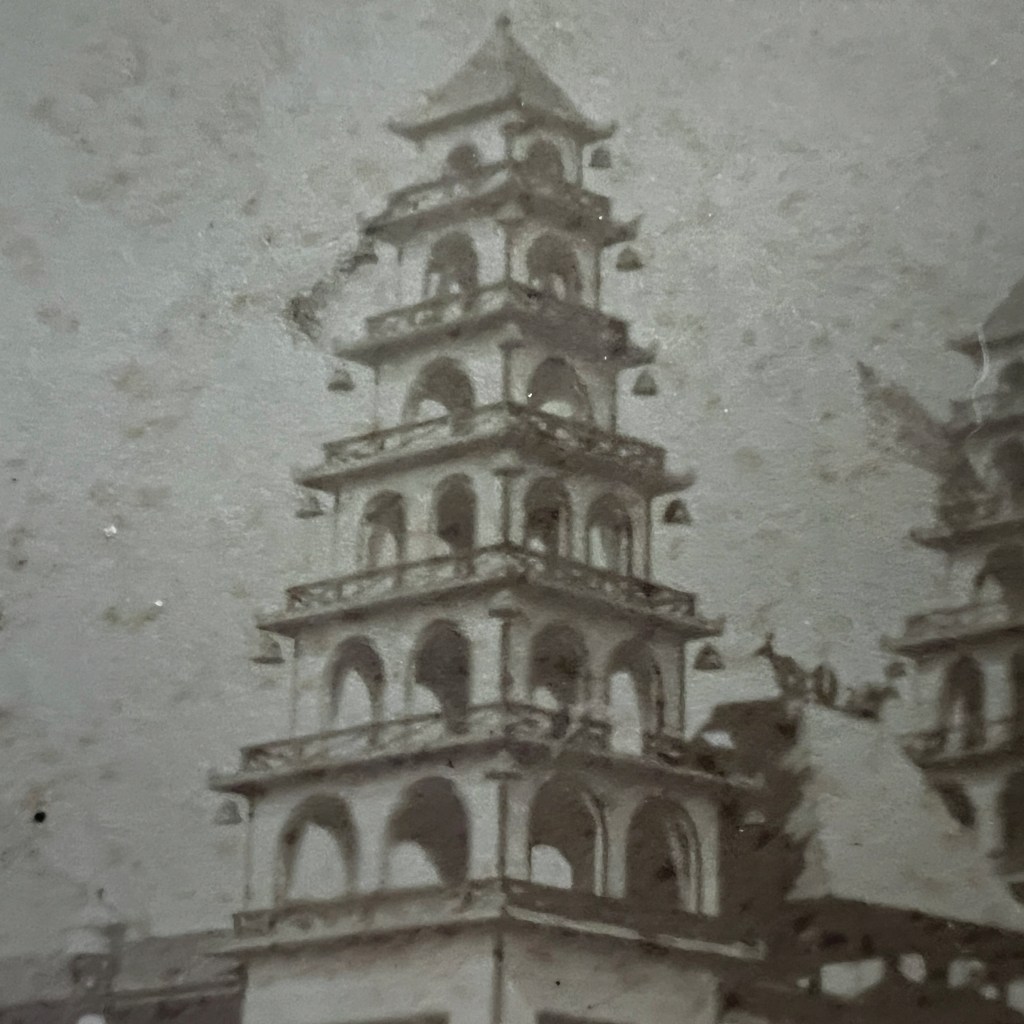
Due to the US extension of the Chinese Exclusion Act in 1892, the Chinese Qing Empire withdrew from the 1893 World’s Columbian Exposition in Chicago. This created the opportunity for local Chinese Chicagoans to build a Chinese Theatre and Joss House as an amusement concession.

The concession was financed and managed by three Chinese immigrants operating as the Wah Mee Exposition Company. The second floor held “thousands of idols” from the “Buddhist stand-point” as well as depictions of the Buddhist hells “with the many different modes of punishment.”

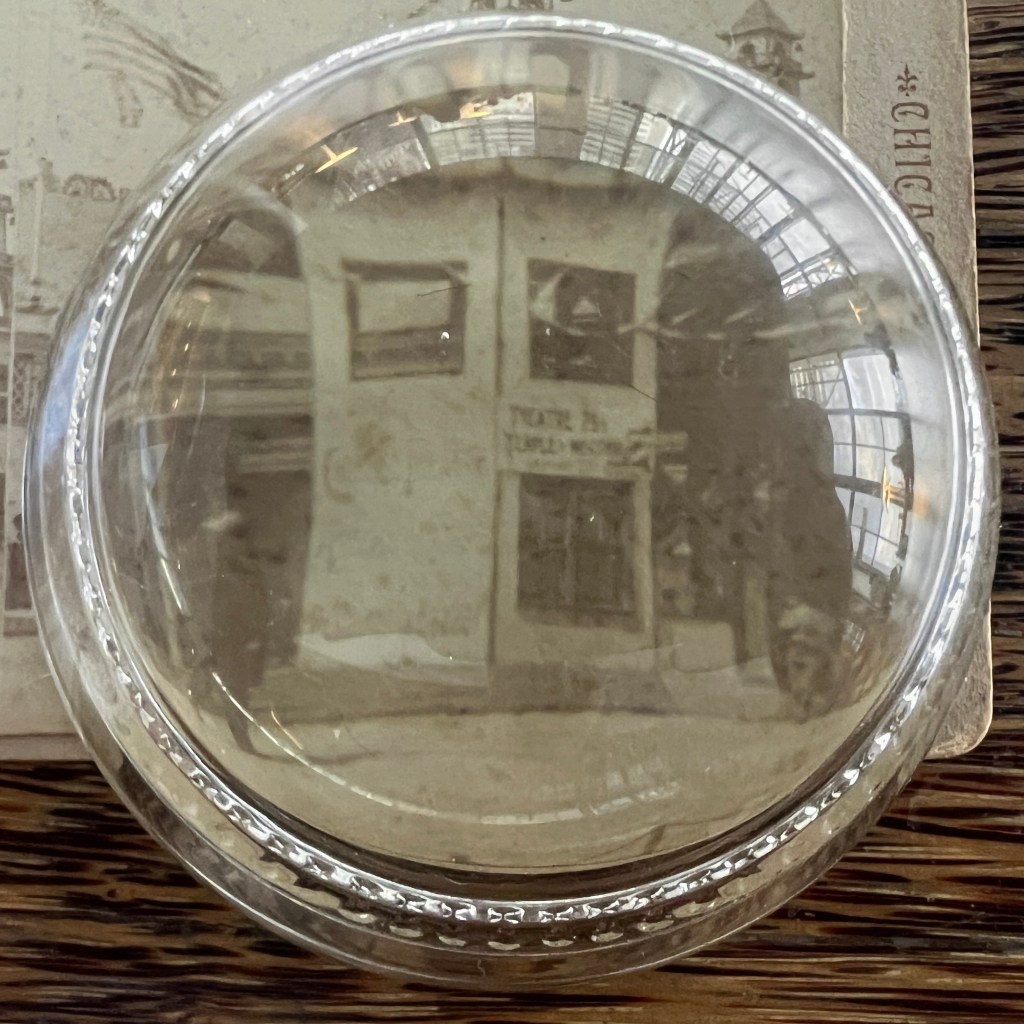
Charles Dudley Arnold was the official photographer of the 1893 exposition, but many other studios sold photographic souvenirs of the fair grounds. While sold as a stereoview, this card by an unknown publisher reproduces the same photograph twice, creating a pseudo-stereoscopic image.

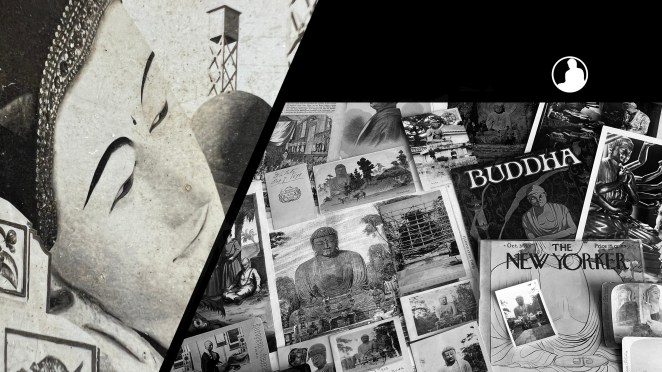
Signage notes admission to the Cantonese theater hall and temple cost 25 cents. An estimated 27 million people visited the fair in Chicago, many of whom would have walked the amusements along the Midway Plaisance where the joss house was located.

While prominent Buddhists attended the World’s Parliament of Religions in 1893, fair visitors were also exposed to Buddhism through the joss house attraction. For more on Chinese participation, see Mae Ngai’s “Transnationalism and the Transformation of the ‘Other'” (2005).


The Buddhas in the West Material Archive is a digital scholarship project that catalogues artifacts depicting Buddhist material culture for Western audiences. It’s comprised of prints, photos, and an assortment of ephemera and other objects. For a brief introduction to this archive, visit the main Buddhas in the West project page.


For Related Buddhas in the West Posts Featuring World’s Fairs:


For the Most Recent Buddhas in the West Posts:

Shangri-la in Lost Horizon (1937) Production Photograph

For all the new Buddhas in the West posts
follow us on Bluesky & Instagram


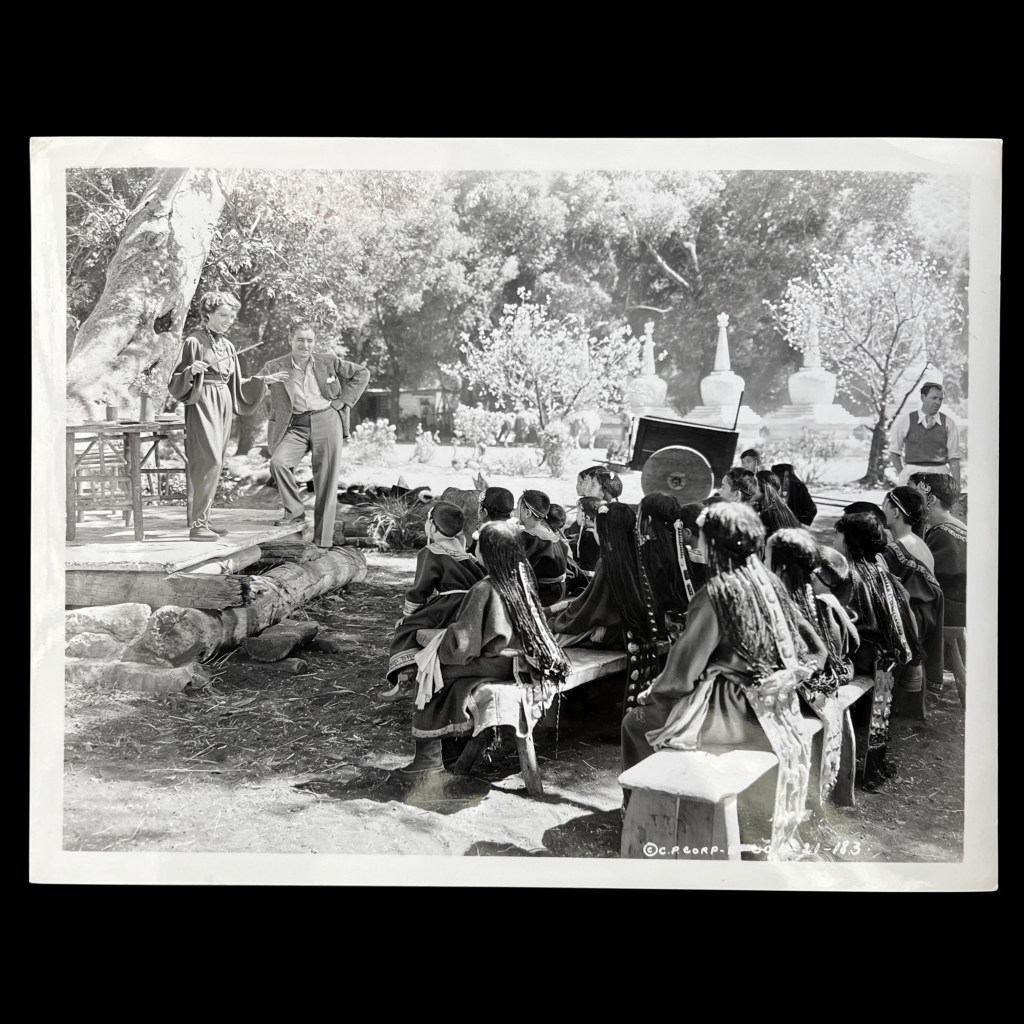
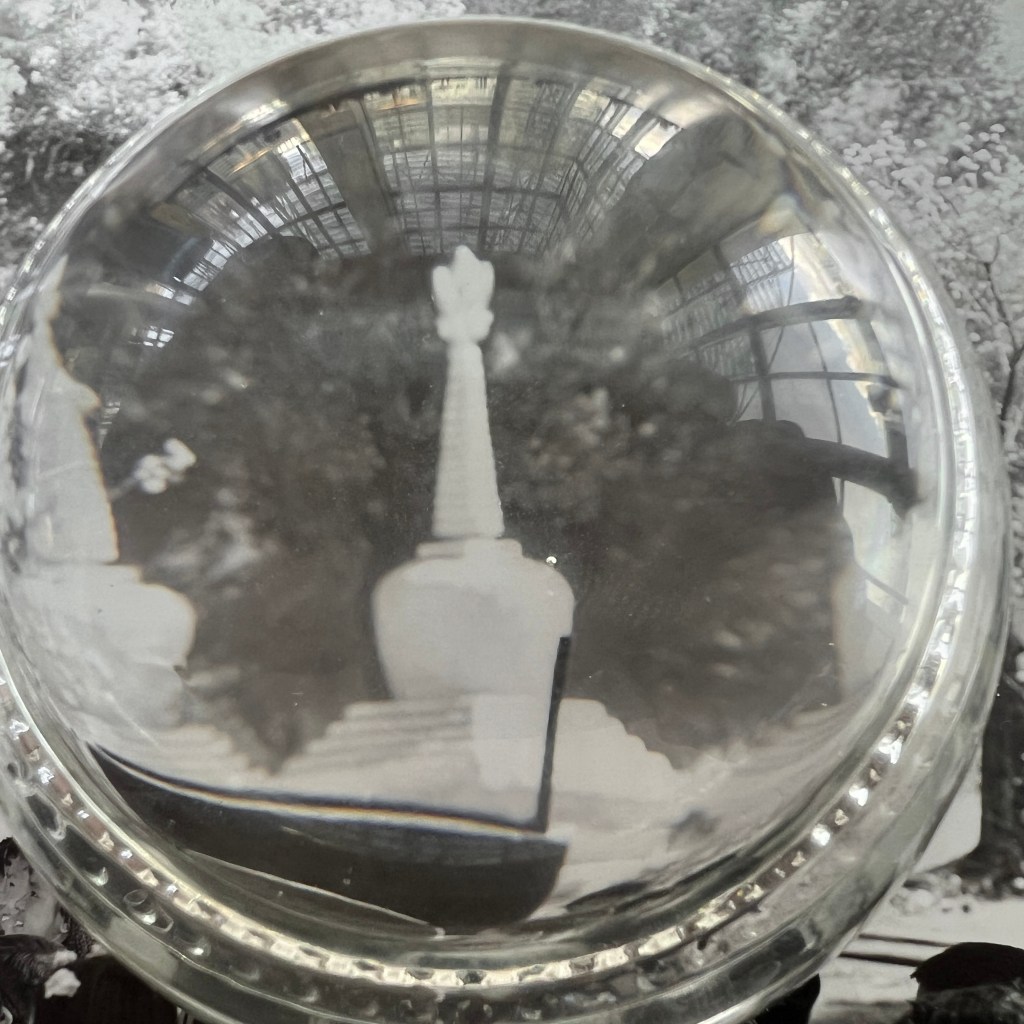
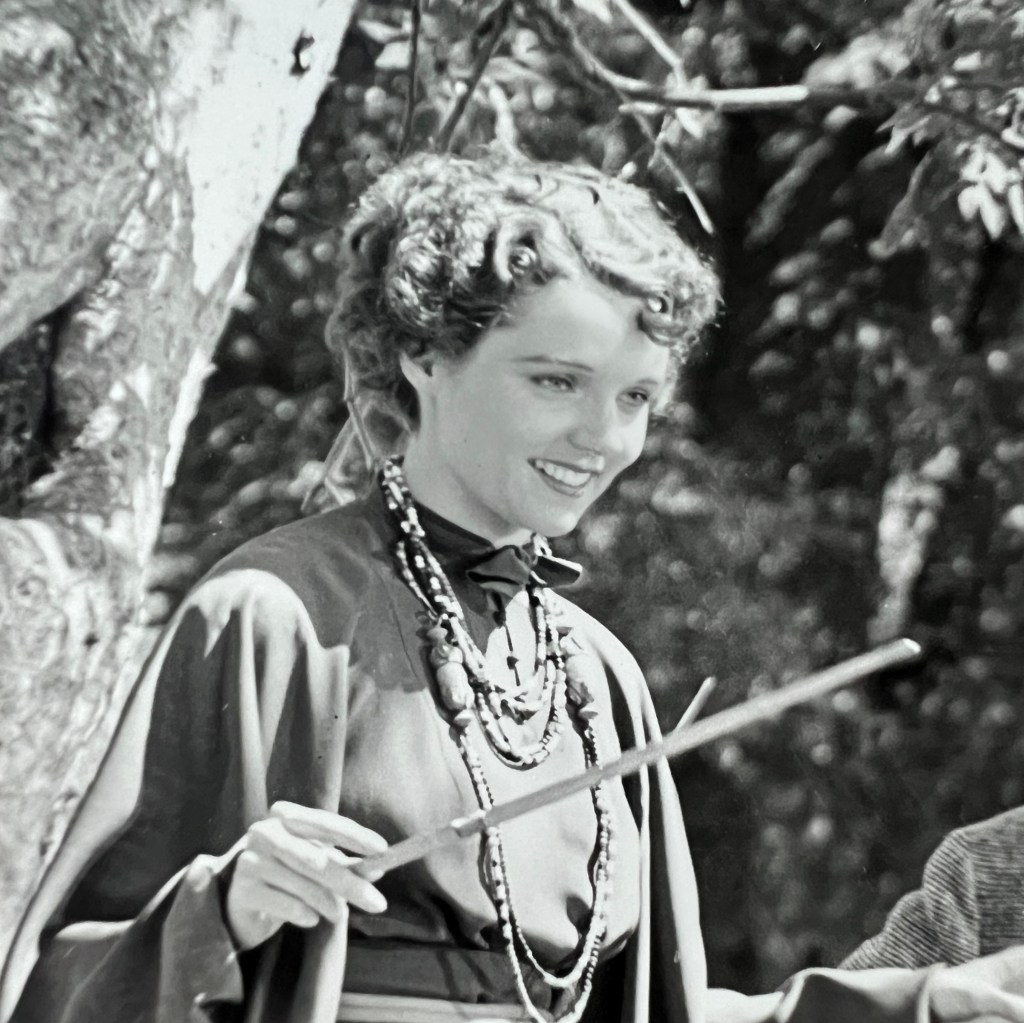
American escapist films grew in prominence during the Depression Era 1930s and Frank Capra’s 1937 film, Lost Horizon, was an important Buddhist entry to this genre. The early 20th century romantic imagery of Tibet helped raise interest in the film’s Himalayan utopia of Shangri-la.

The pristine beauty of Shangri-la as seen in Lost Horizon played to the fantasy of an enchanted landscape of the Oriental Other filled with peace and prosperity. Tibetan Buddhist lamas are initially portrayed as the protectors of this hidden mountain kingdom.

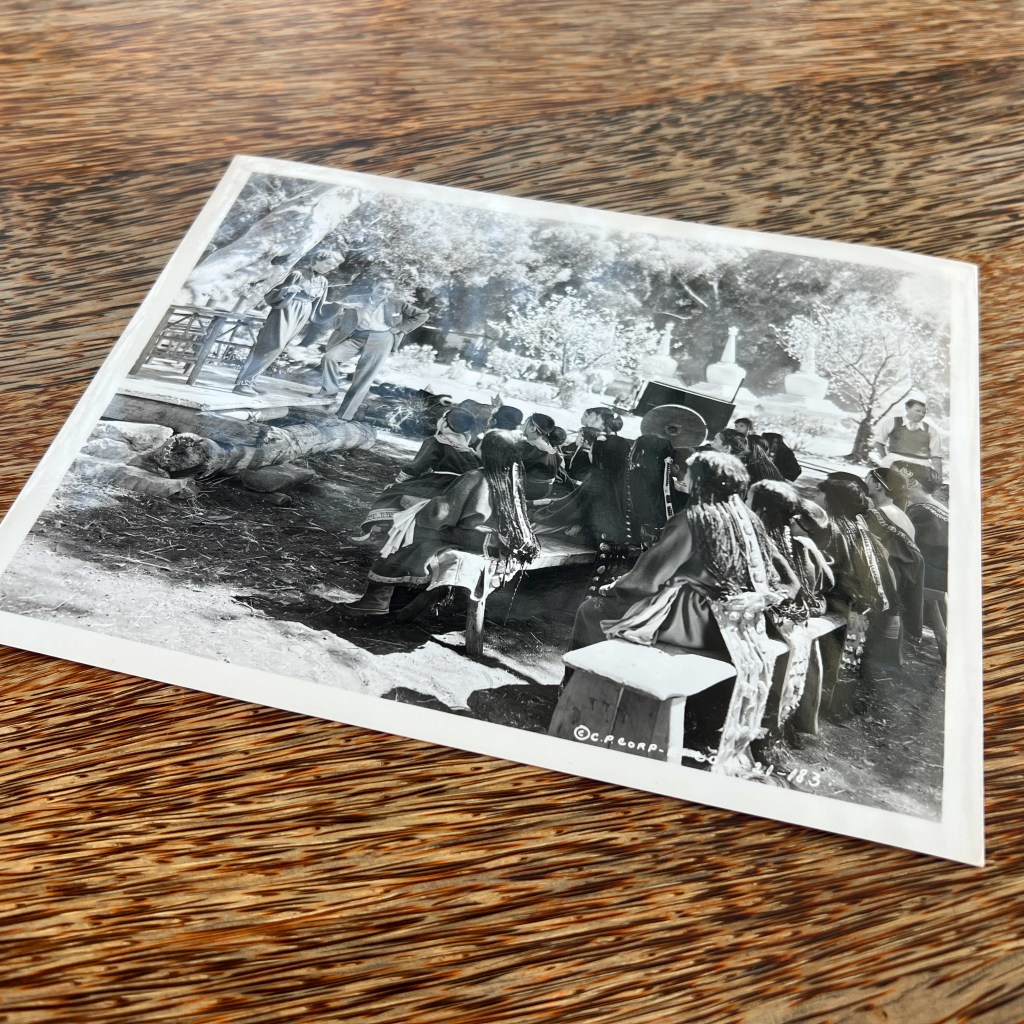
While filmed in a Hollywood back lot fitted with Streamlined Art Deco buildings, elements – such as the Tibetan-stye stūpa reliquaries – clued the appropriate Buddhist mise-en-scène.

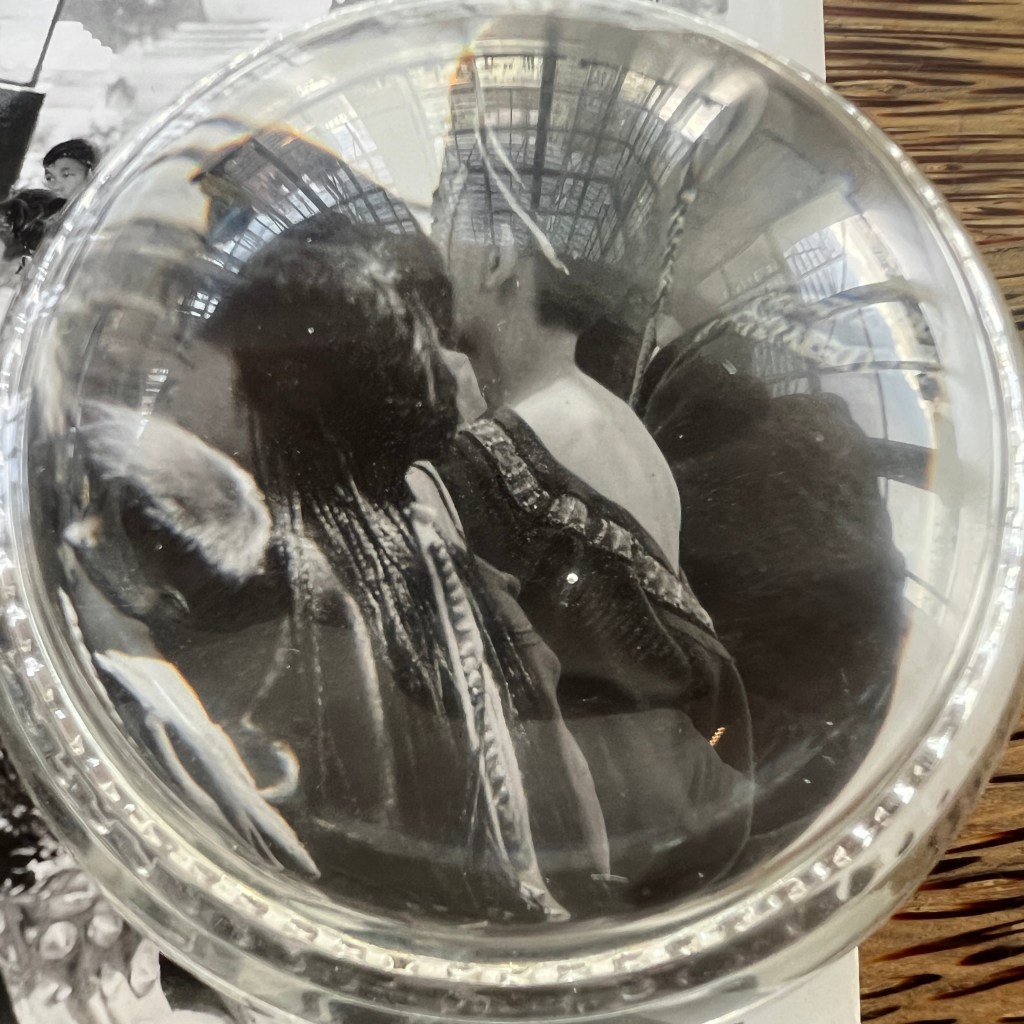
The film’s Tibetan-style costuming often showed exposed skin, suggesting the inhabitants had a child-like innocence and a pre-modern lifestyle. Ultimately we learn the High Lama is not Tibetan at all, but a Belgian Catholic priest who is the founder and caretaker of Shangri-la.

While flourishing and peaceful, Shangri-la still needed a benevolent colonial ruling hand to realize its full mission. For further exploration of the portrayal of Buddhism in American film, see Sharon Suh’s Silver Screen Buddha (2015).


The Buddhas in the West Material Archive is a digital scholarship project that catalogues artifacts depicting Buddhist material culture for Western audiences. It’s comprised of prints, photos, and an assortment of ephemera and other objects. For a brief introduction to this archive, visit the main Buddhas in the West project page.


For Related Buddhas in the West Posts Featuring Chicago:


For the Most Recent Buddhas in the West Posts:

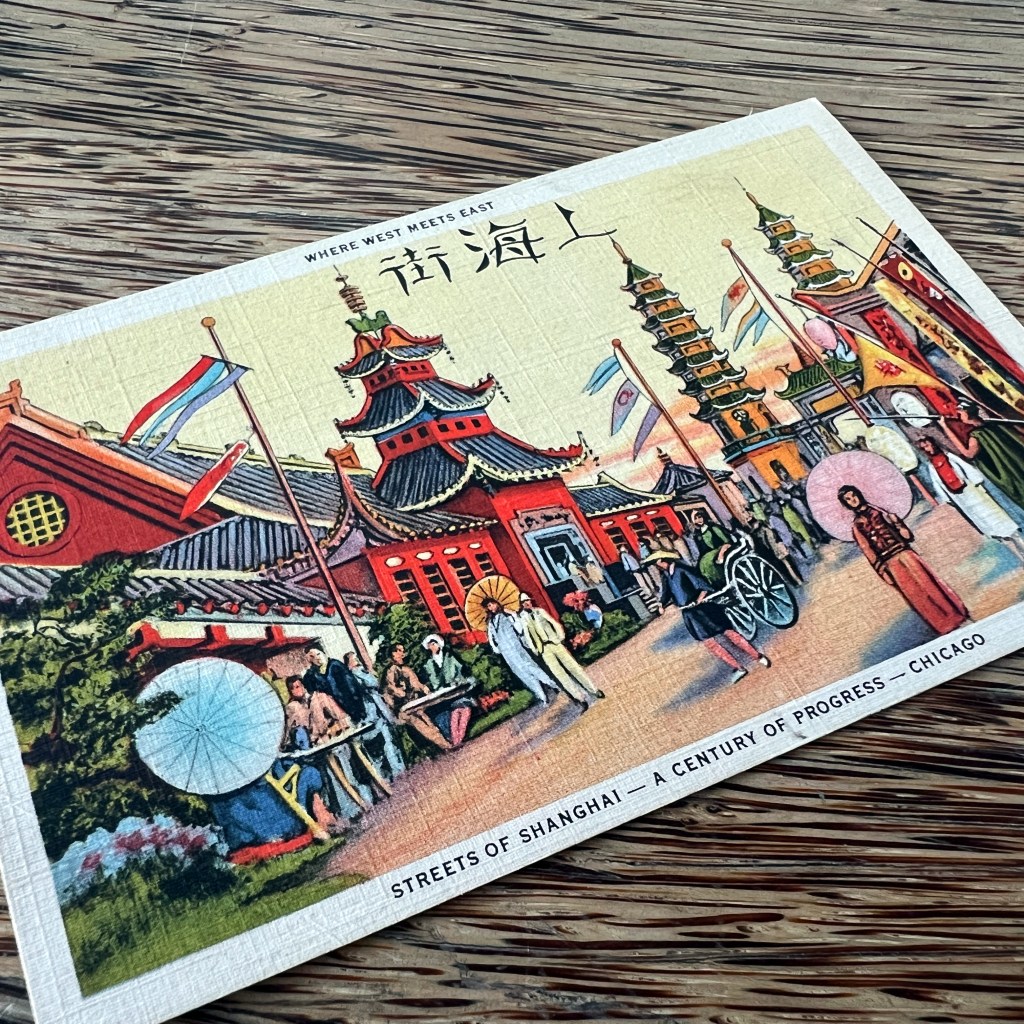
1933 Streets of Shanghai Concession Postcard

For all the new Buddhas in the West posts
follow us on Bluesky & Instagram


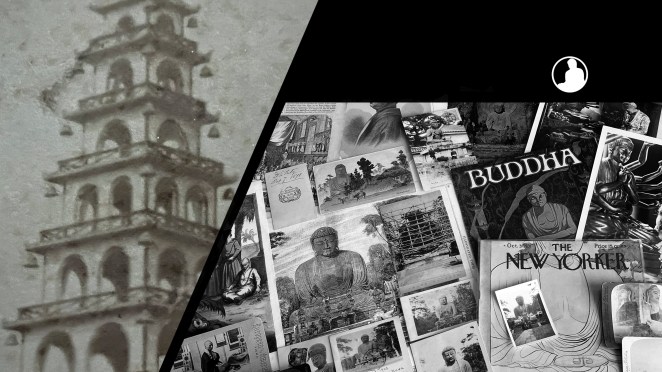
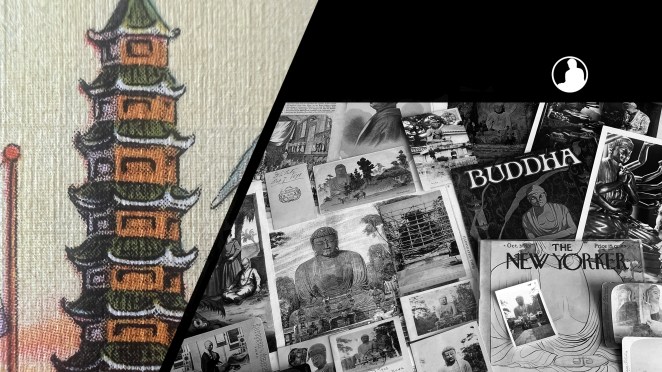
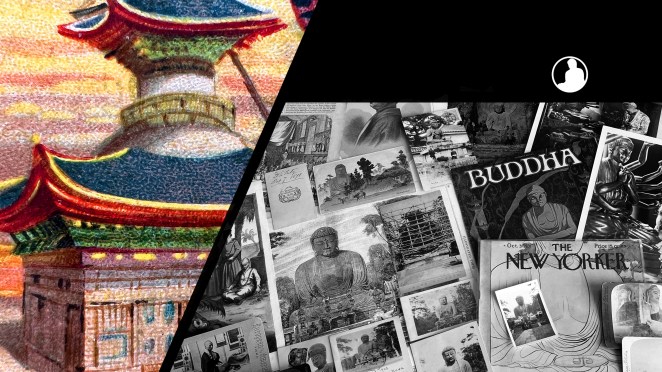
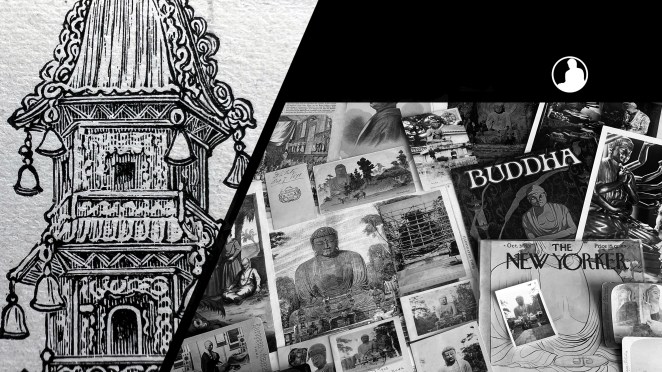
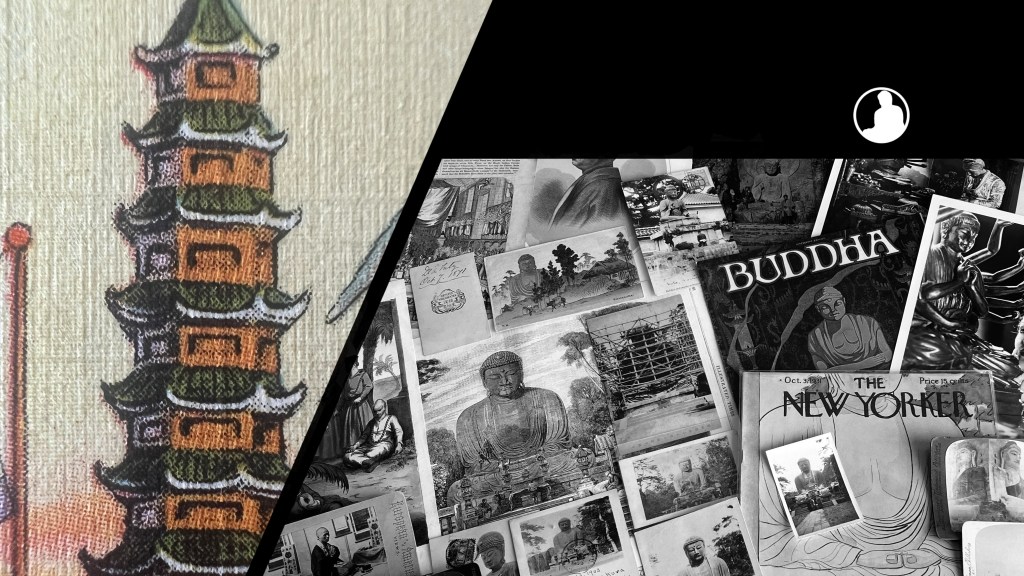
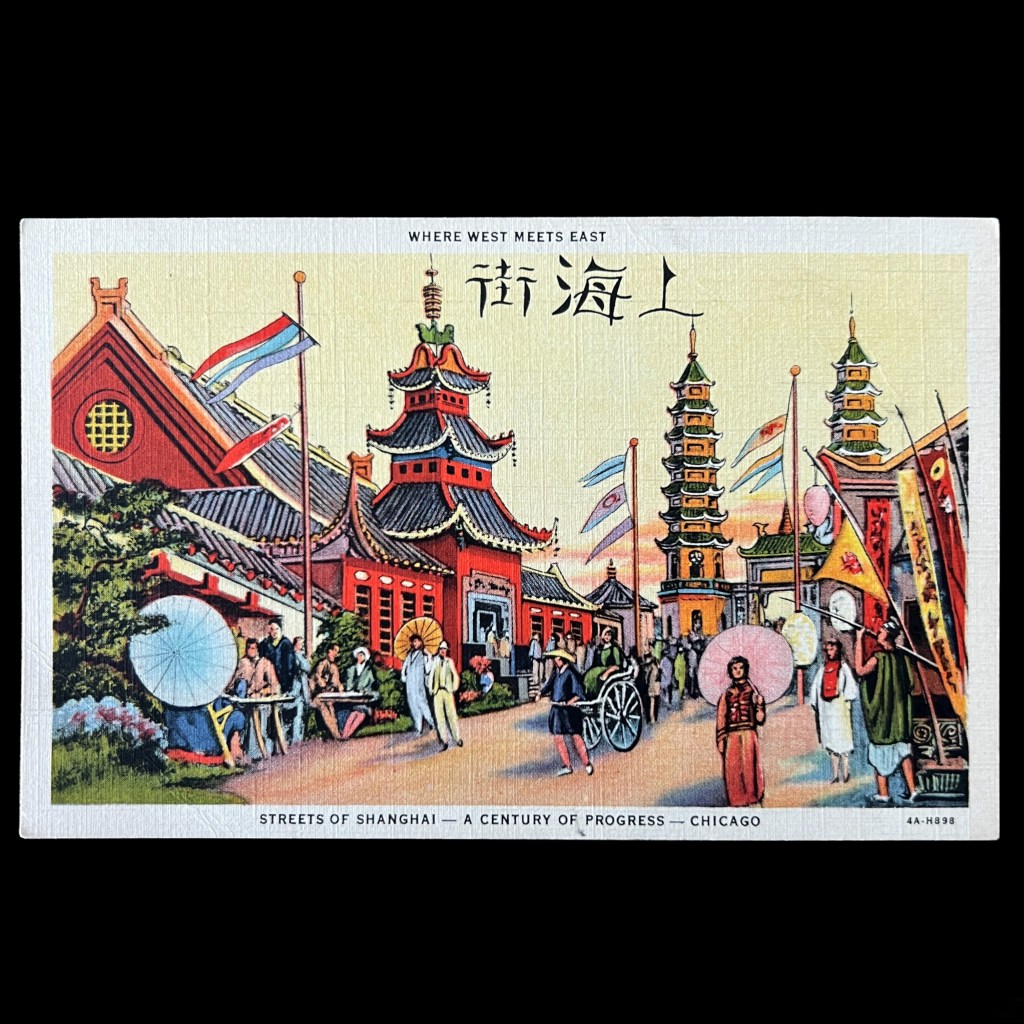
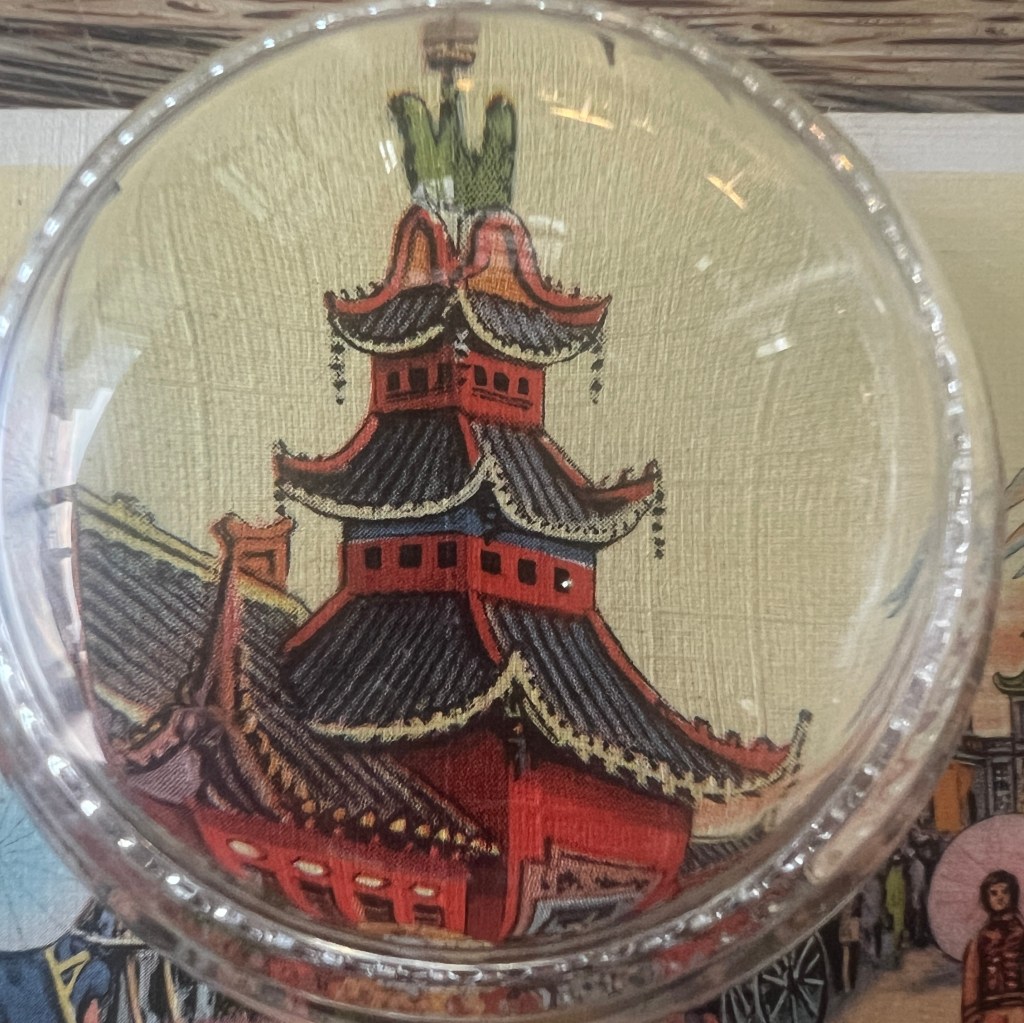
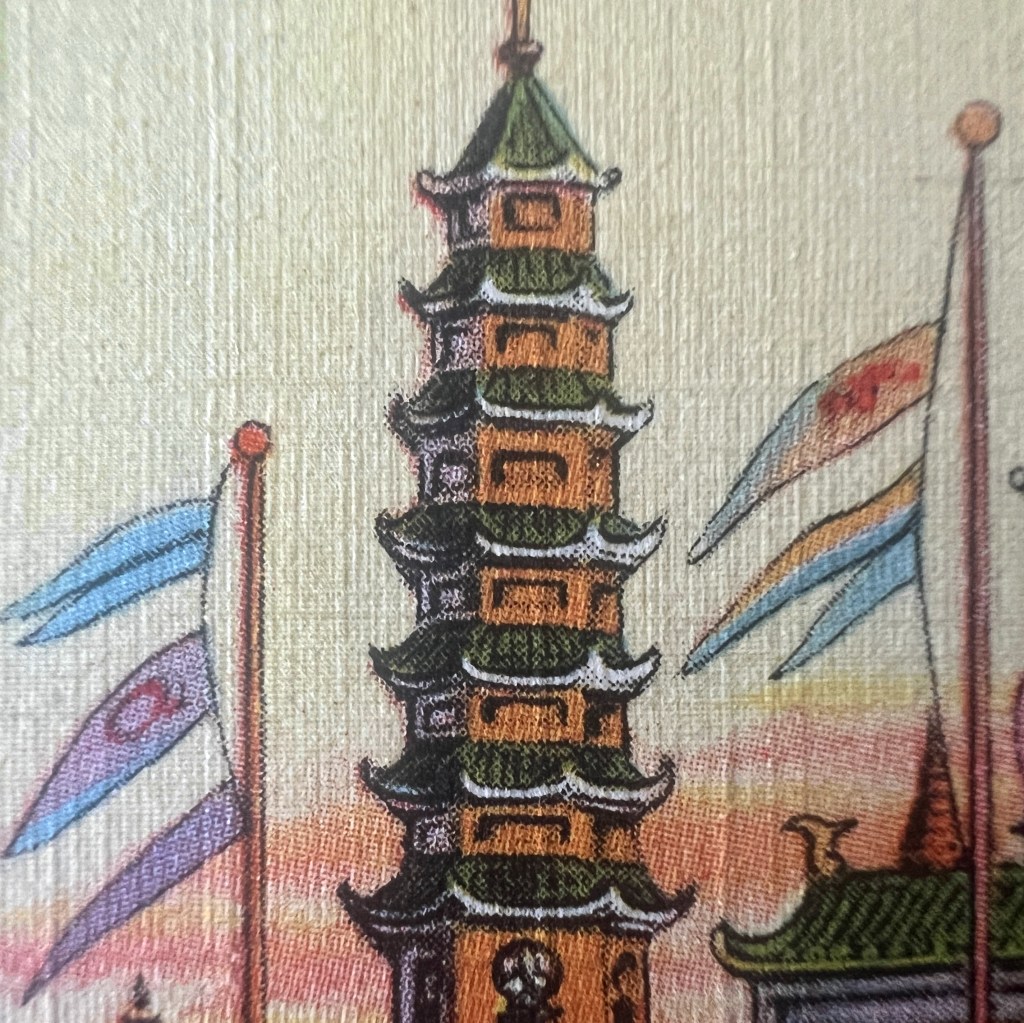
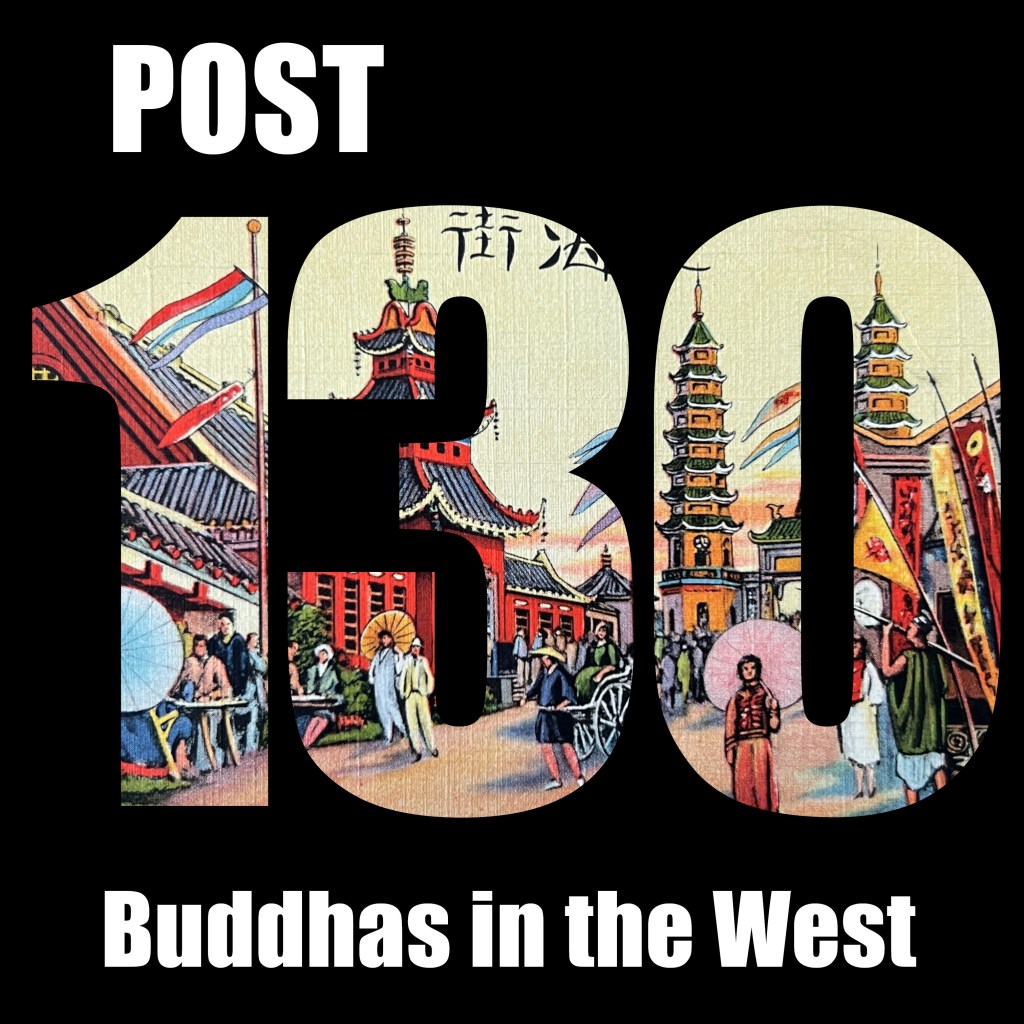
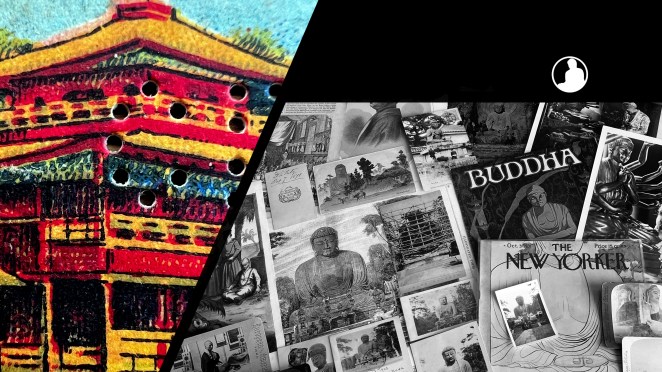
In the midst of a growing Pacific War, the young Republic of China withdrew from the World’s Fair in Chicago in 1933. Private individual ensured China’s symbolic presence, however, with local Chinatown businessmen erecting two giant pagodas for the “Streets of Shanghai” concession.

Arguably the lesser of two other China exhibits, including a Chinese pavilion and reconstruction of a Tibetan Buddhist shrine hall from Chengde, the Streets of Shanghai was one of many foreign “villages” erected on the fairgrounds. It overlooked Lake Michigan alongside the Dutch Village.

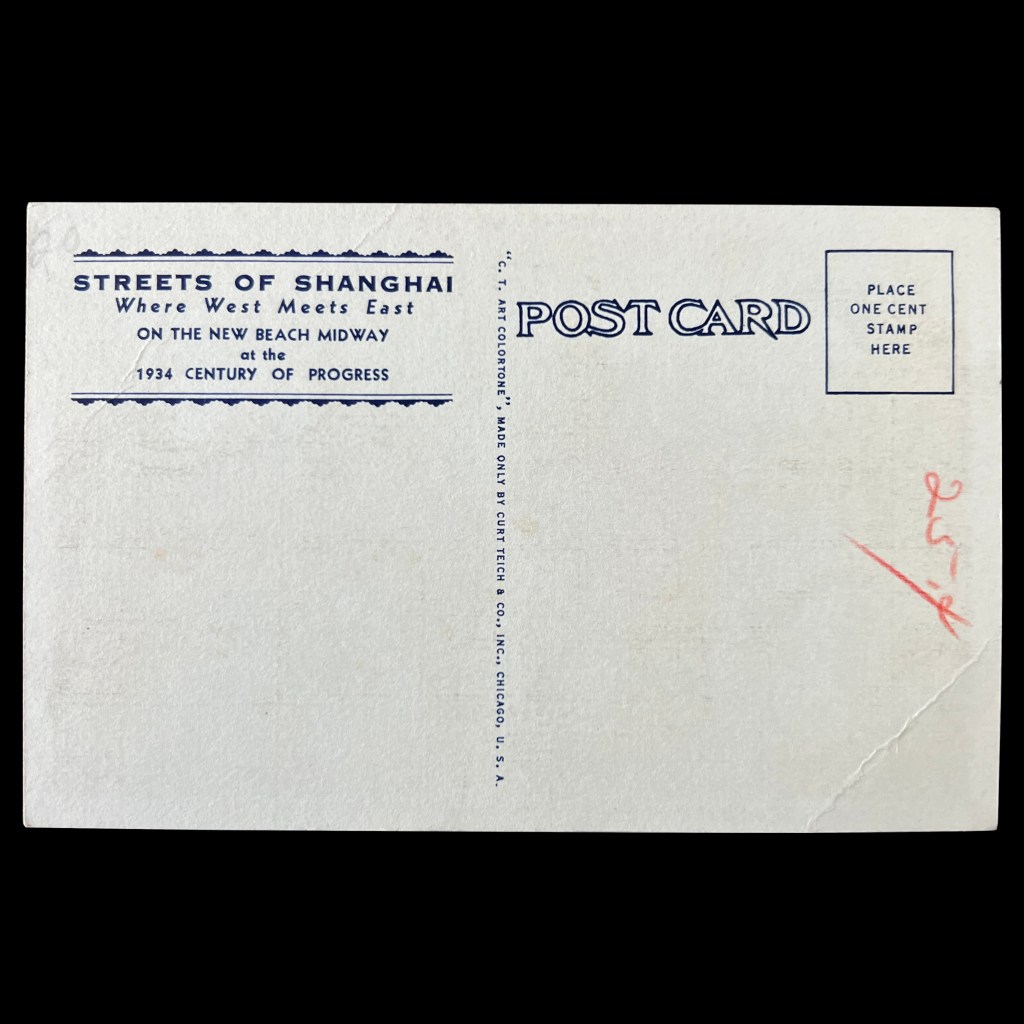
Picture postcards were issued fifty years earlier for the famous 1893 fair in Chicago and, although past their prime, remained favorite, cheap souvenirs through the Depression. Chicago-based Curt Teich was critical for the development of the vibrantly colored “linen” postcards of the 1930s.

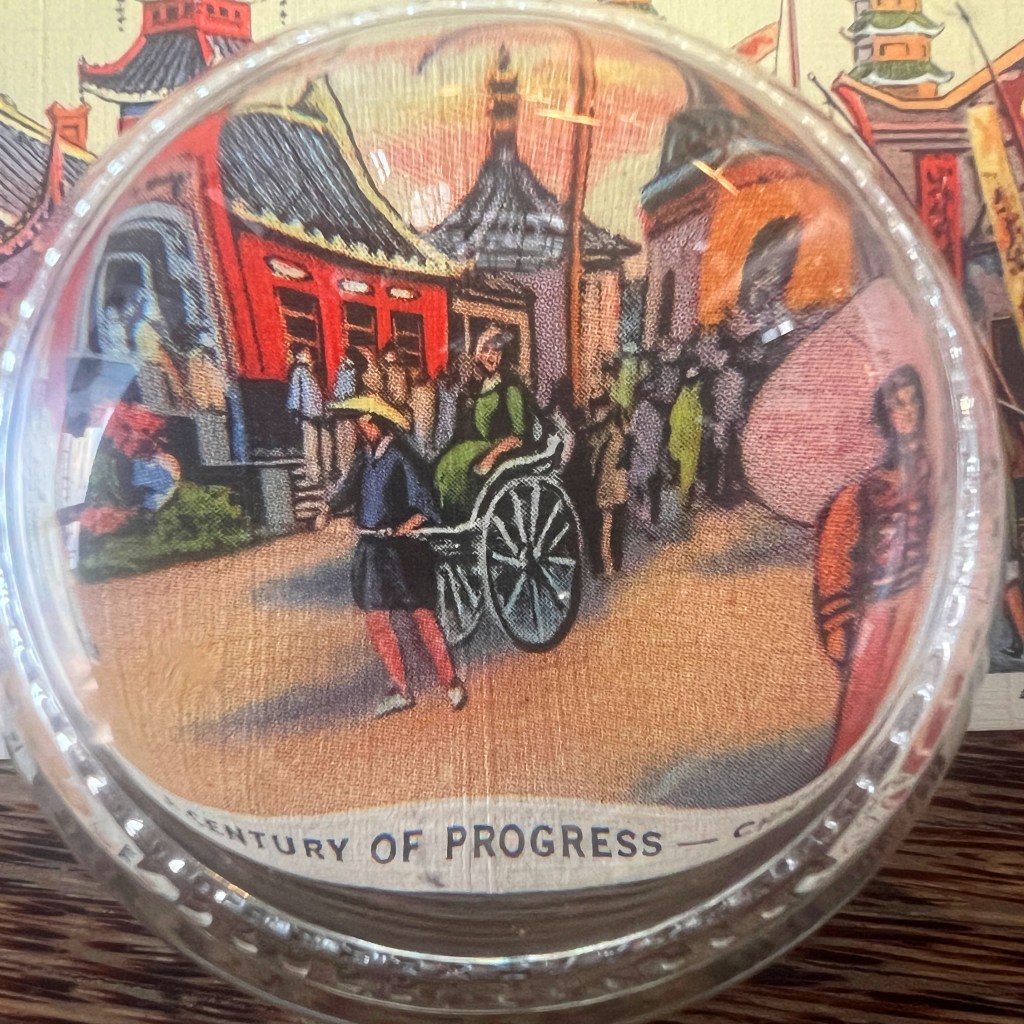
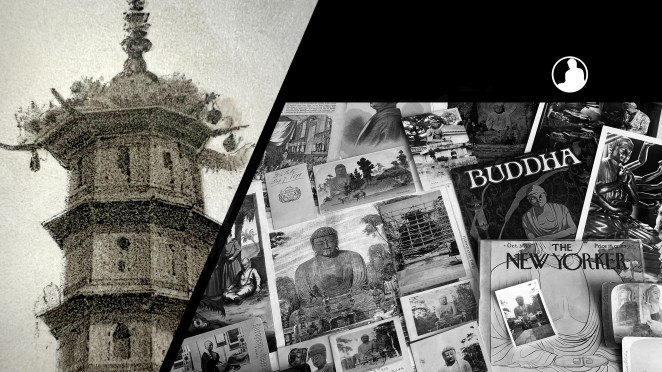
As an amusement concession with an extra admission cost, the Streets of Shanghai embraced stereotypes to drum up interest and recreate the “mysteries of a Chinese port.” The twin eight-story pagodas at the main gate were well-developed visual icons of the Orientalist Far East.

Some sources claim an interior building was a Buddhist Arhat Temple, while others claim it was a temple to Confucius. Notably, a new private museum opened in Chicago’s Chinatown to draw fair visitors to the area, also displaying elements of China’s Buddhist heritage (see postcard here: https://tinyurl.com/3wb7jfvu).

The Streets of Shangahi housed a large Chinese restaurant, an operating noodle factory, and many shops selling silks, bronzes, and porcelains. Advertised as “Where West Meets East,” the concession created a commercial fantasy land for the Century of Progress.


The Buddhas in the West Material Archive is a digital scholarship project that catalogues artifacts depicting Buddhist material culture for Western audiences. It’s comprised of prints, photos, and an assortment of ephemera and other objects. For a brief introduction to this archive, visit the main Buddhas in the West project page.


For Related Buddhas in the West Posts Featuring Chicago:


For the Most Recent Buddhas in the West Posts:

Bosselman’s Mt. Penn Pagoda Postcard

For all the new Buddhas in the West posts
follow us on Bluesky & Instagram


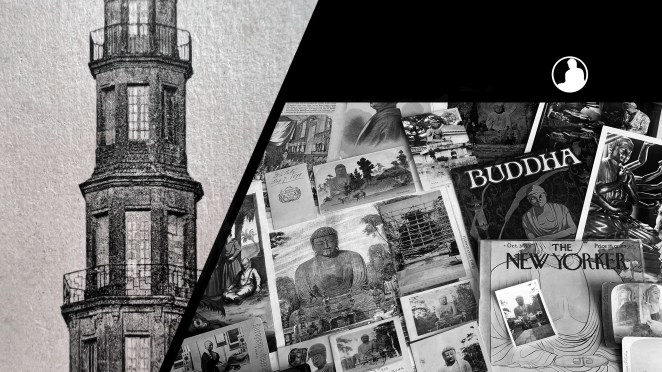
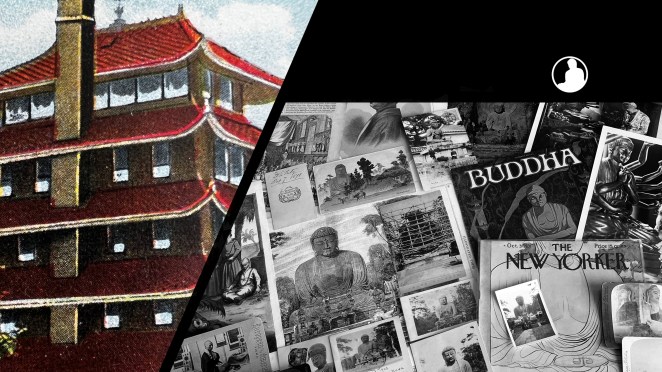
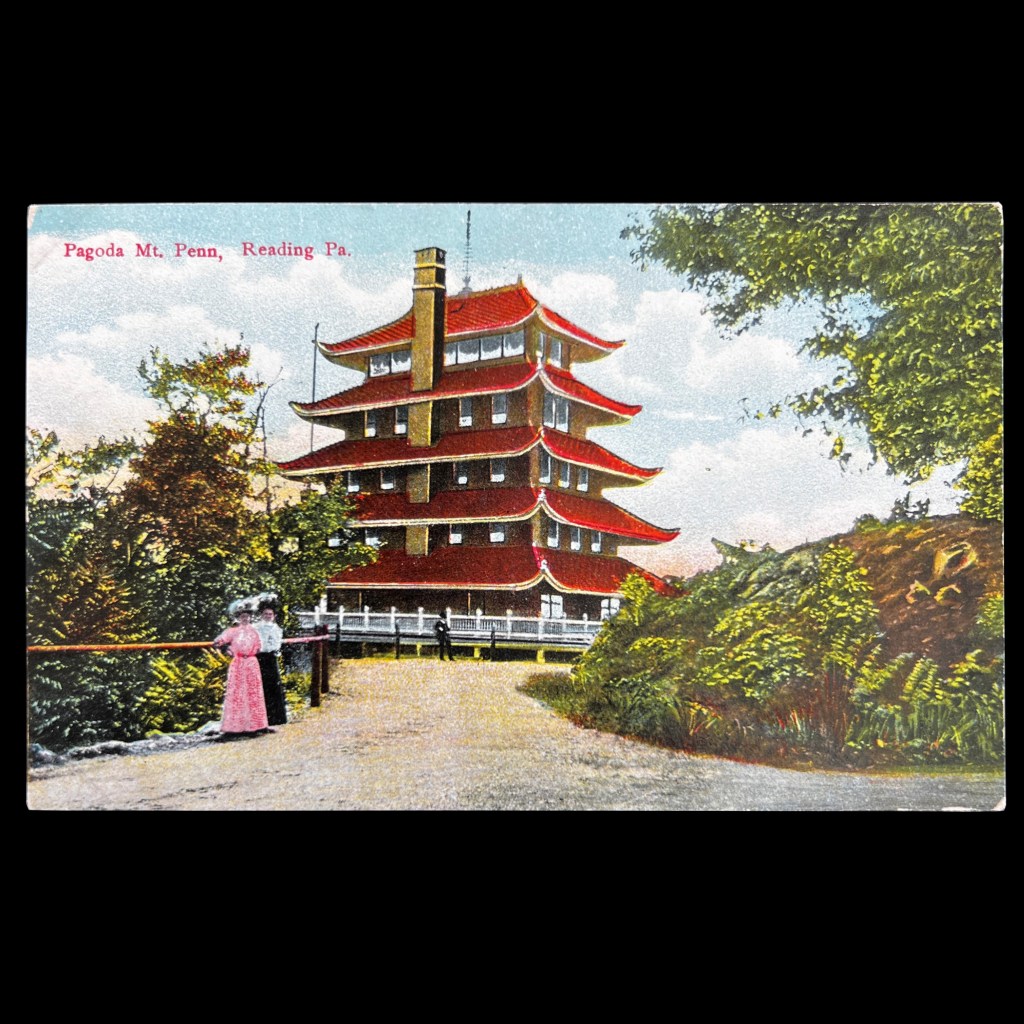
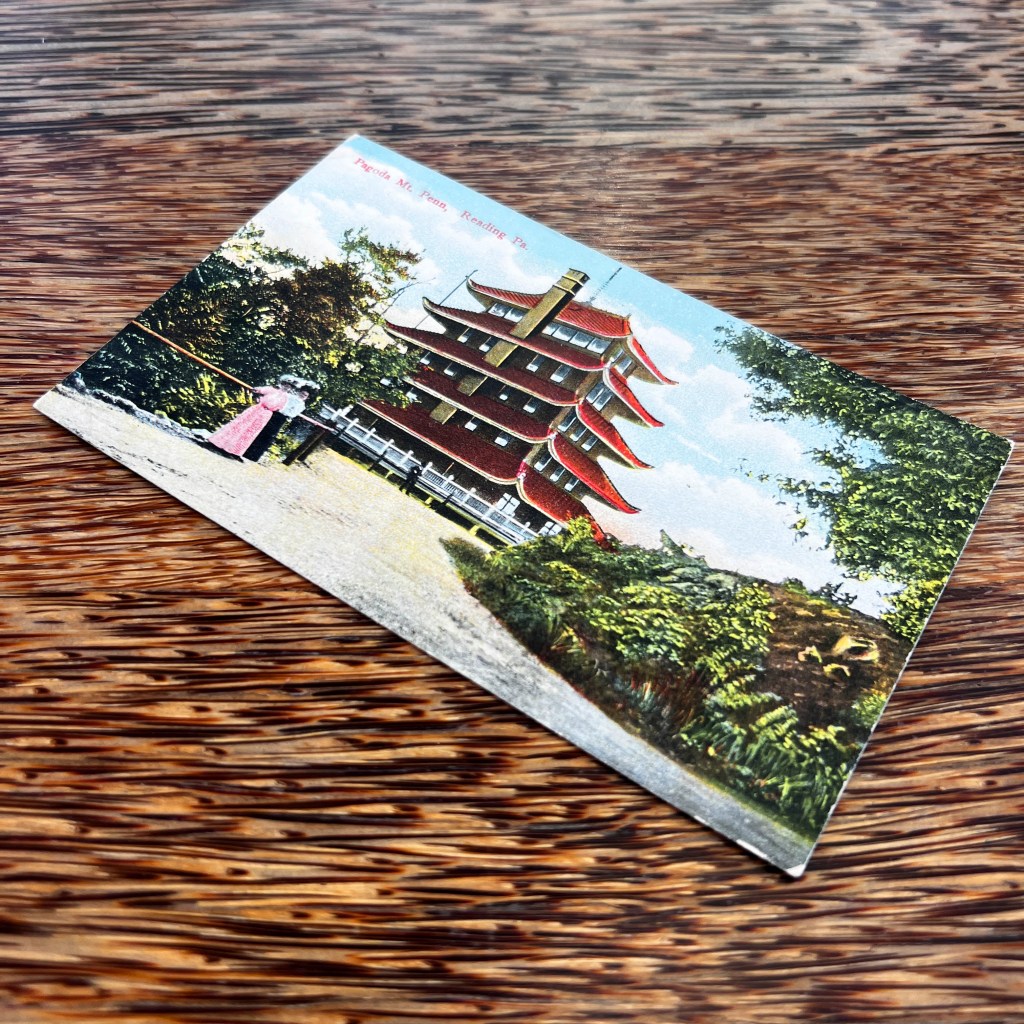
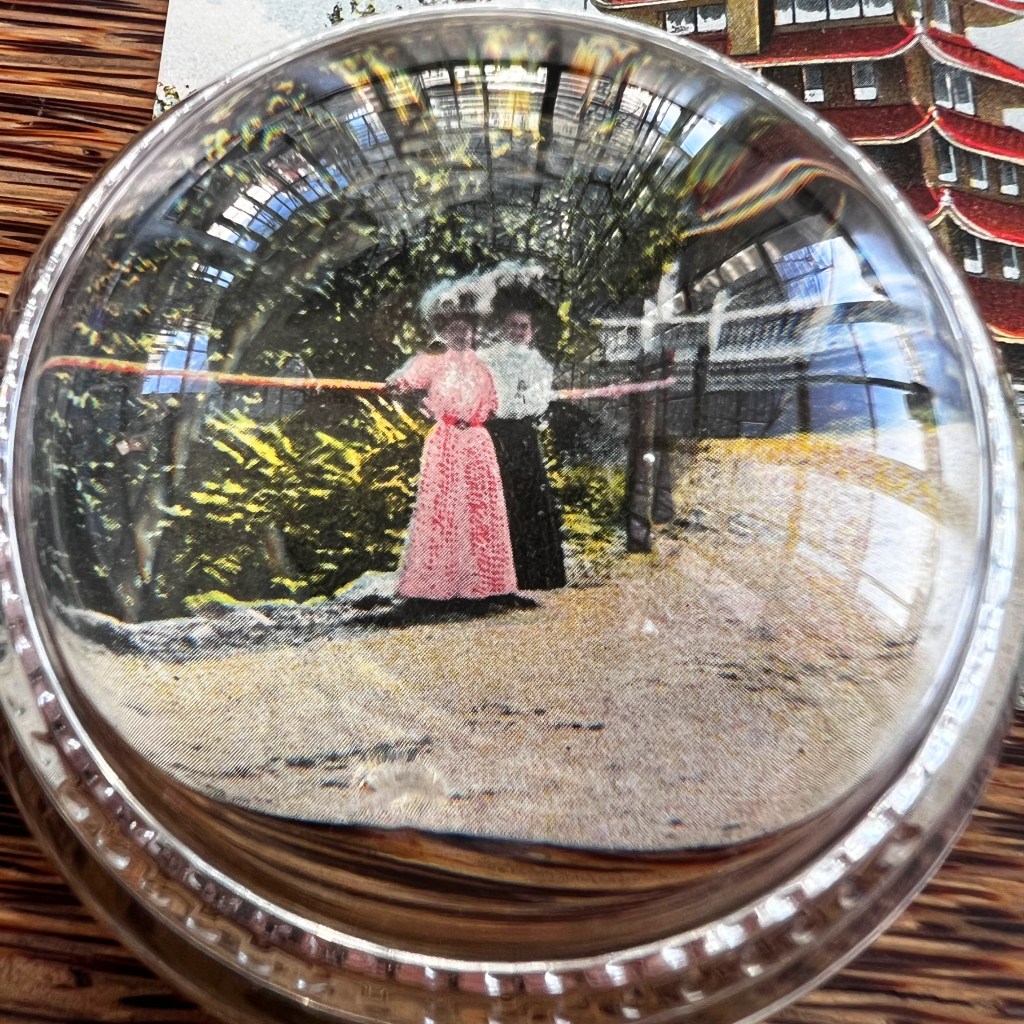
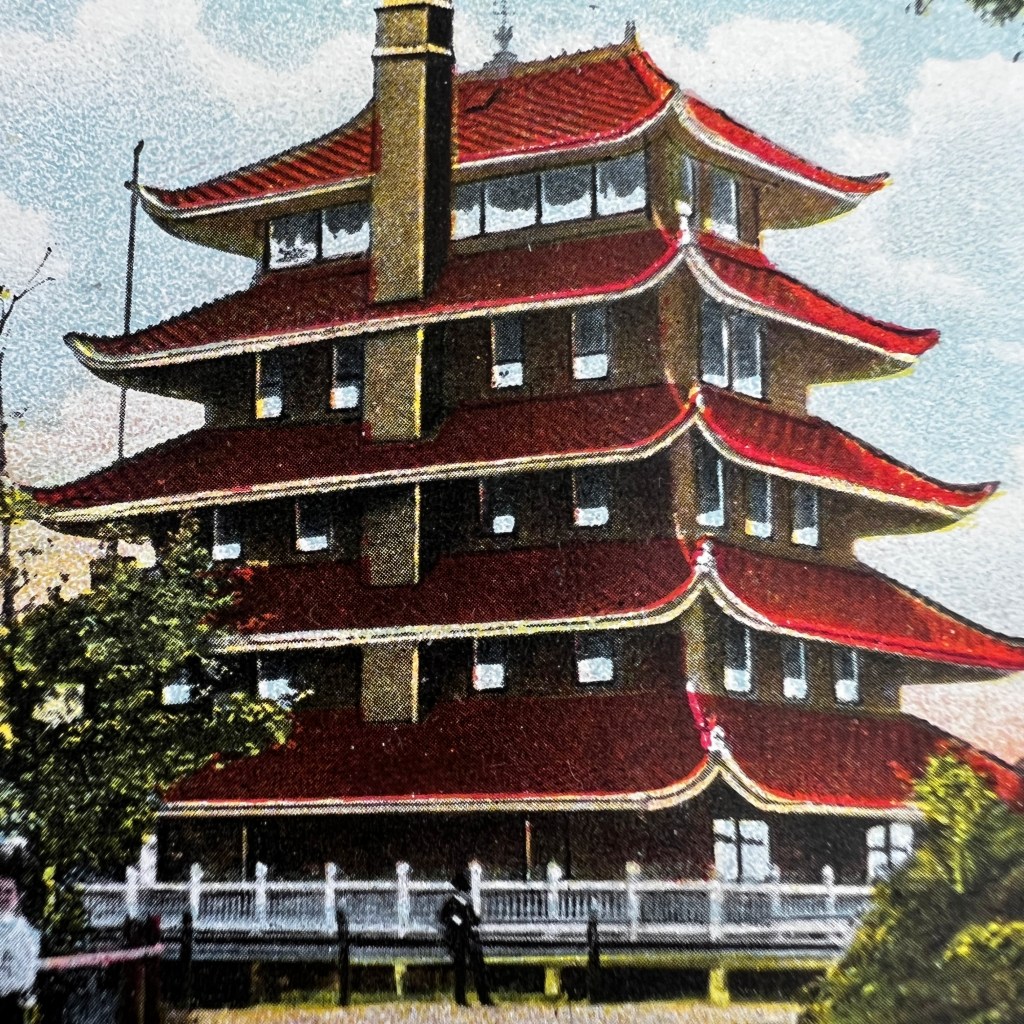
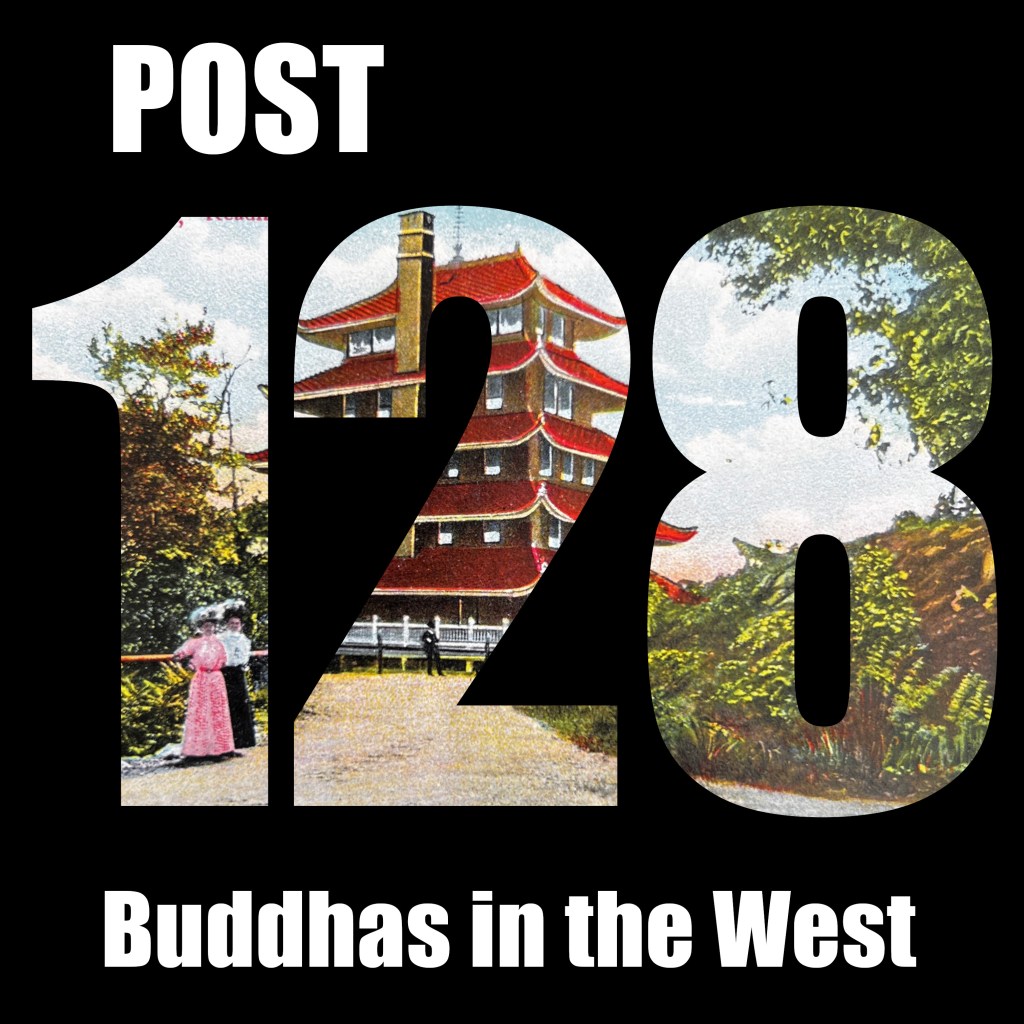
Sitting atop the southern end of Mount Penn, a seven-story wooden pagoda has overlooked Reading, Pennsylvania, since 1908. Built as part of a luxury resort, the building and land were donated to the city in 1911, making this Buddhist-inspired building a symbol of the city.

William Abbott Witman decided to construct a “Japanese pagoda” in an attempt to cover the scars of his quarrying operation on Mount Penn. After failing to obtain a liquor license, the plan to build a full resort was abandoned and the pagoda became the property of the residents of Reading.

One story claims the pagoda was modeled on a photograph (others say a postcard) of the Nagoya Castle in Japan; another yet claims it was based on an amusement park attraction in Coney Island (see Coney Island Postcard here: https://tinyurl.com/m3vshkz4).

Once opened to the public, the building interior showcased murals of Asia and articles from Japan, including a large Japanese temple bell Witman purchased and had shipped through the Suez Canal. While many of the artifacts are now lost, the temple bell still remains an attraction.

For a brief history of this site, see Michelle Nicholl Lynch’s “The Pagoda,” The Historical Review of Berks County (1995), viewable here: https://berkshistory.org/article/the-pagoda/.


The Buddhas in the West Material Archive is a digital scholarship project that catalogues artifacts depicting Buddhist material culture for Western audiences. It’s comprised of prints, photos, and an assortment of ephemera and other objects. For a brief introduction to this archive, visit the main Buddhas in the West project page.


For Related Buddhas in the West Posts Featuring the United States:


For the Most Recent Buddhas in the West Posts:

Universal Studio’s Back Lot Buddha Photograph

For all the new Buddhas in the West posts
follow us on Bluesky & Instagram


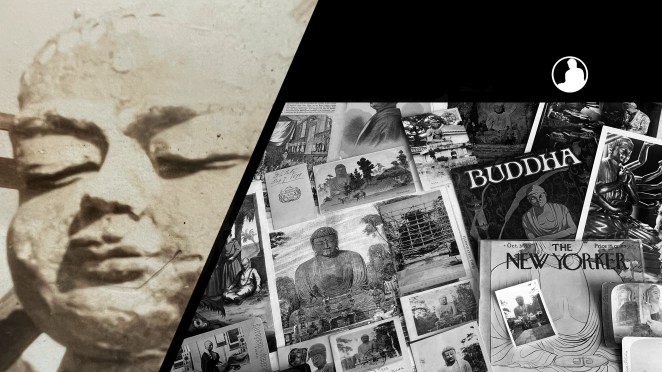
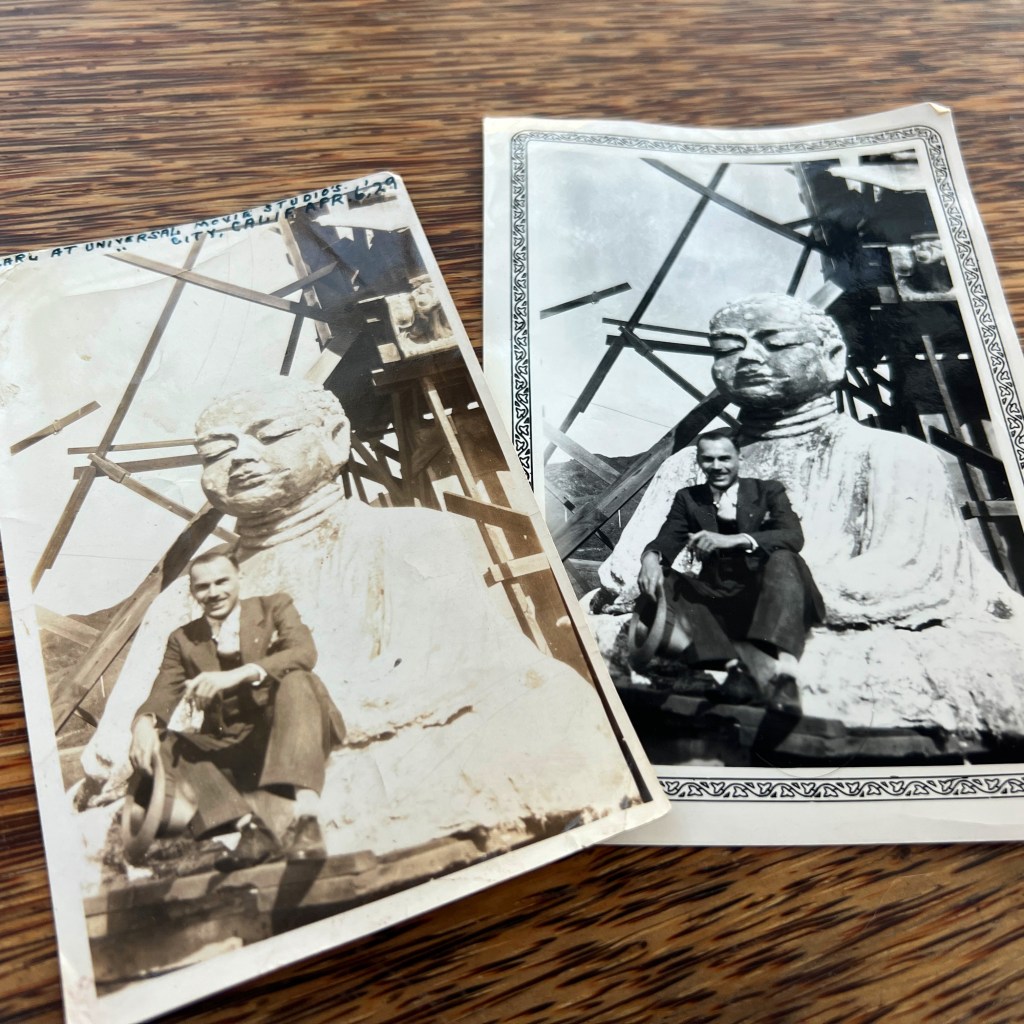
The Golden Age of Hollywood expanded the theatrical tradition of set design to create a more immersive world on screen. Through the 1920s studio art directors built bigger sets and fine Buddhist statuary that was once purchased or borrowed was increasingly made of wood and plaster.

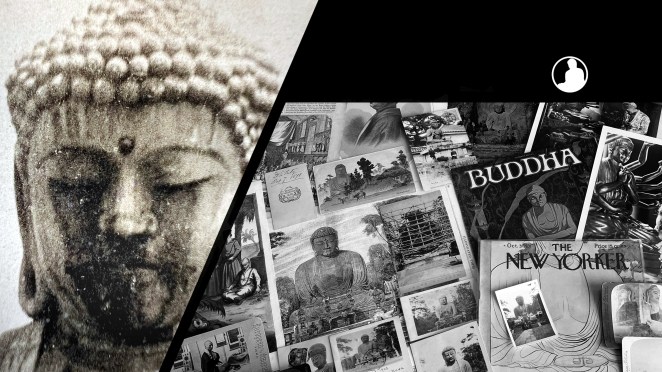
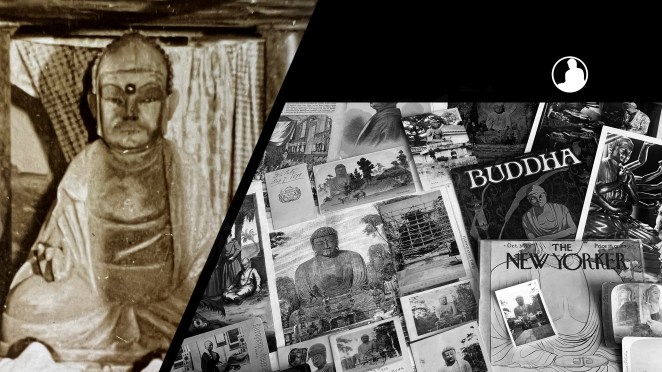
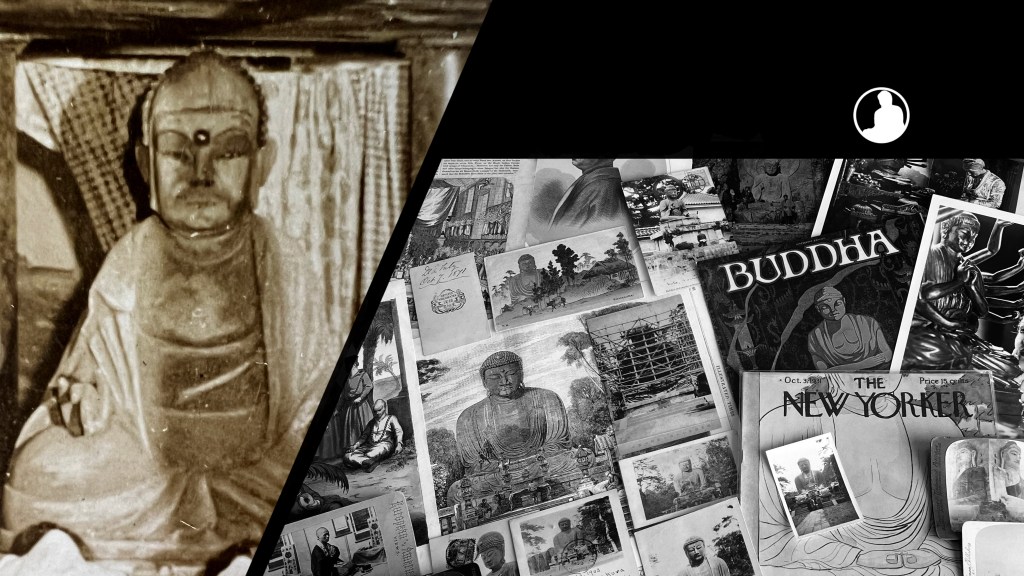
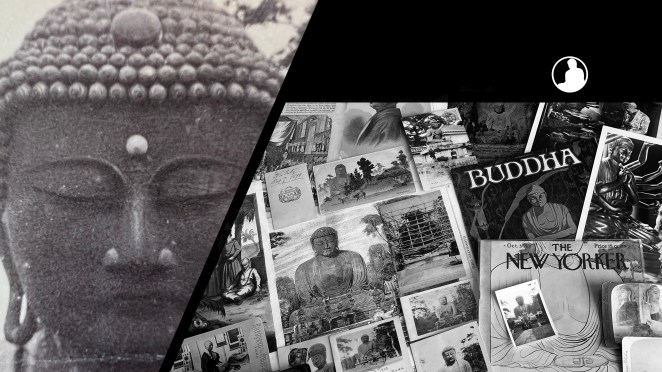
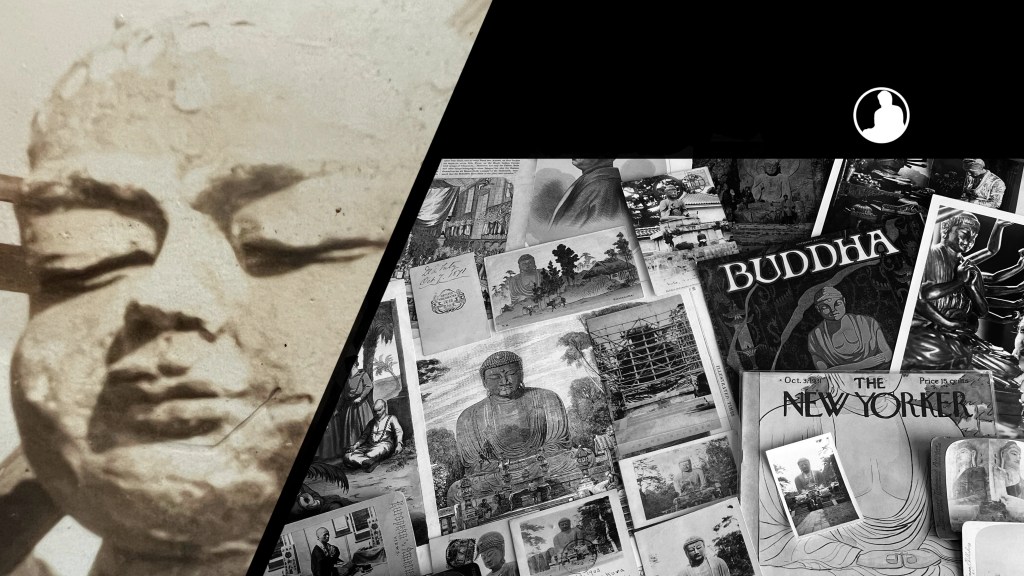
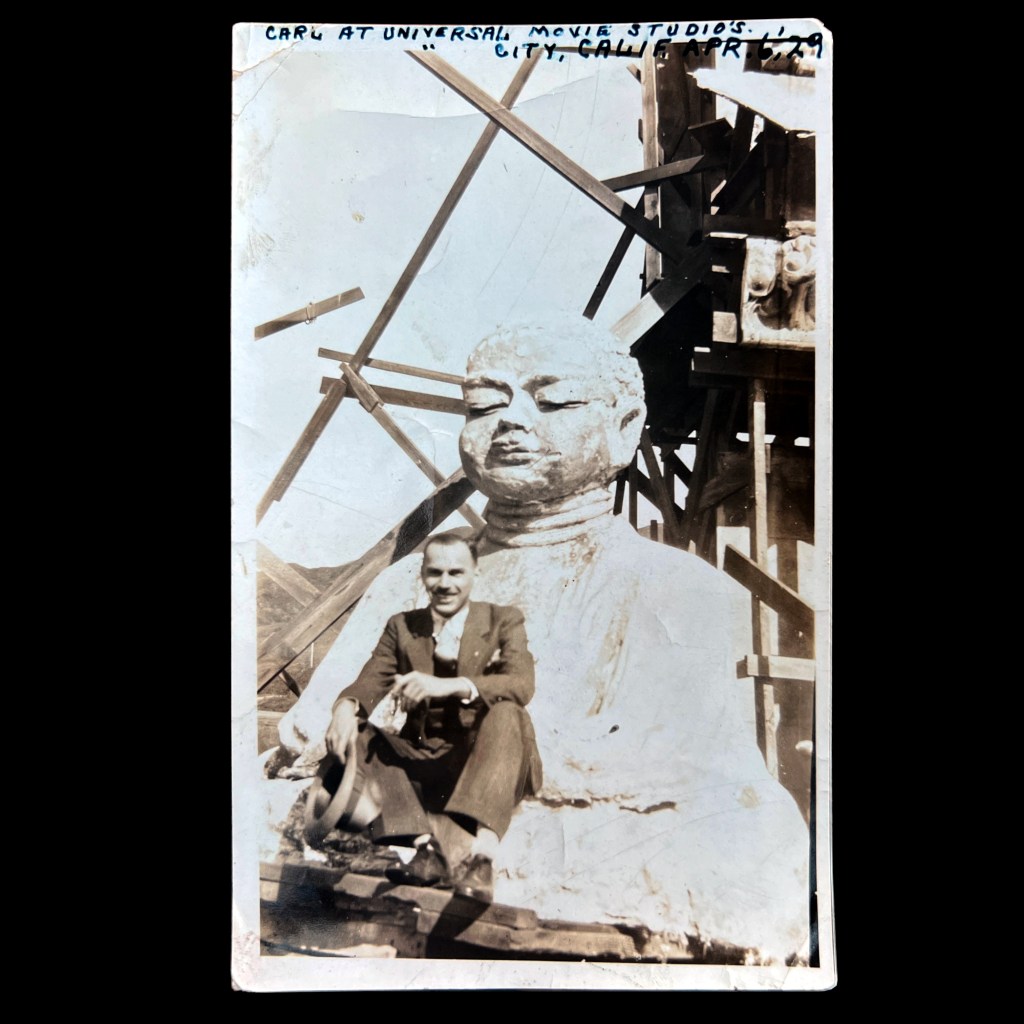
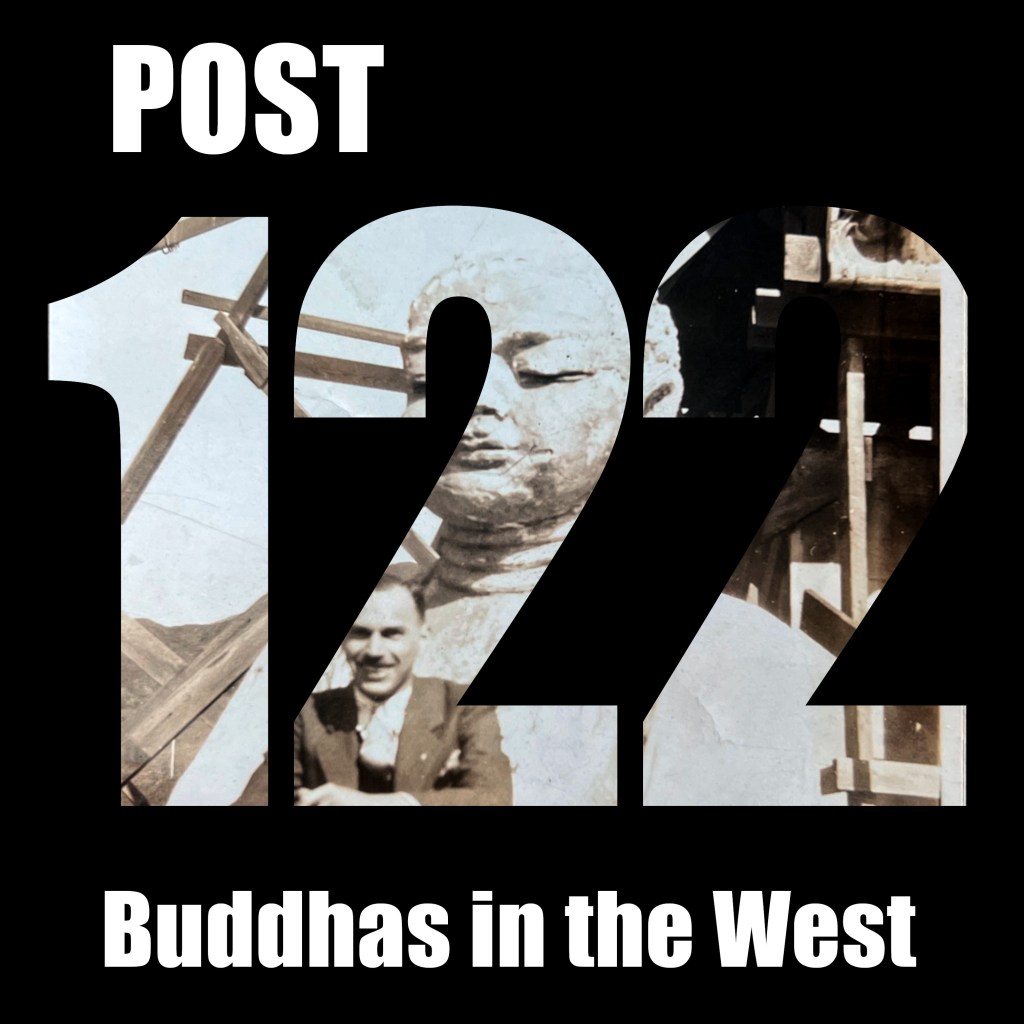
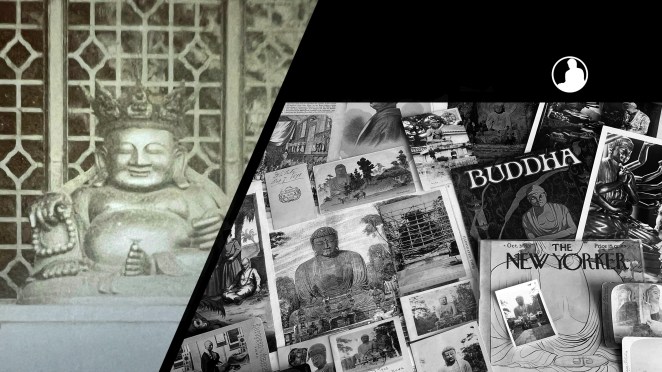
When Carl Laemmle opened Universal City in 1915, it garnered such public acclaim he decided to make studio tours a permanent attraction. Here we see a photograph (and duplicate) of the Universal back lot where a visitor sizes up one of the plaster buddhas on display.

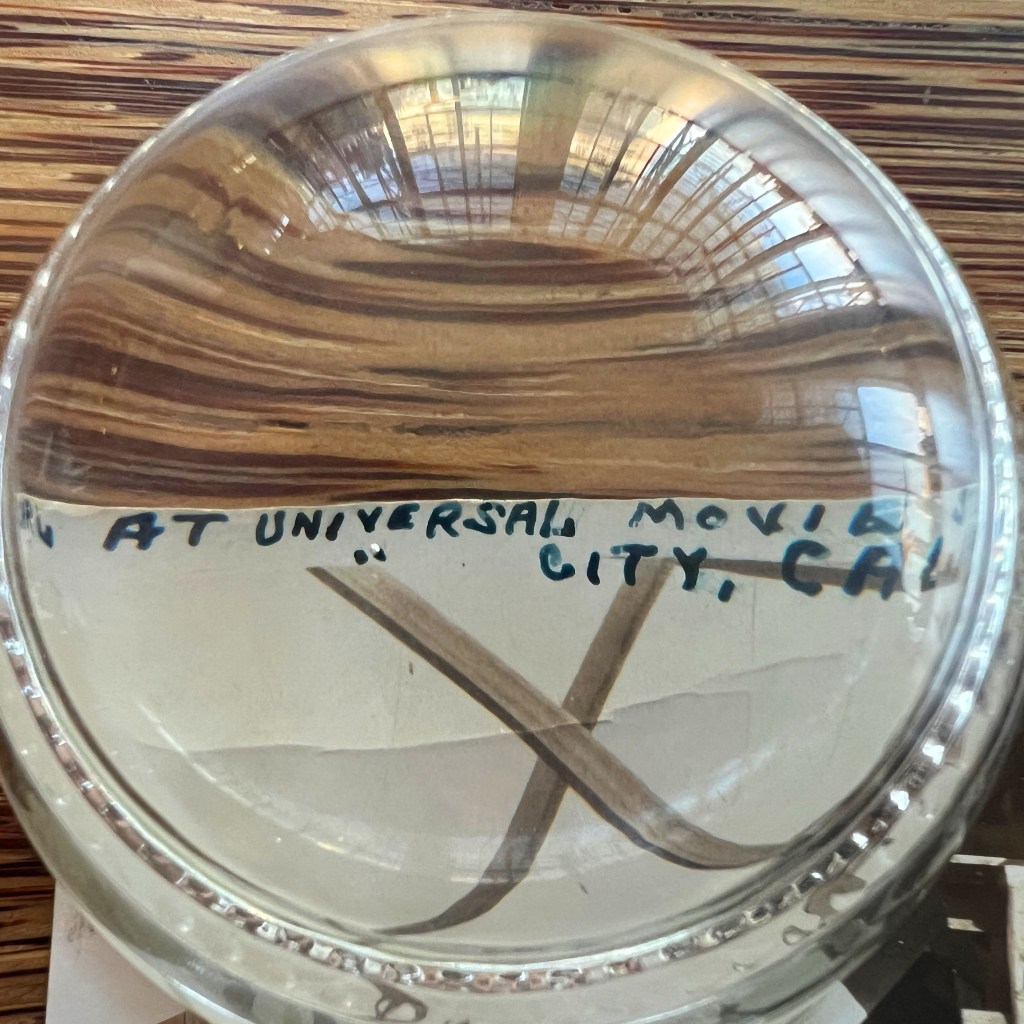
An inscription dates the photo to 1929. At this time Charles Hall was the art director for Universal, famous for his gothic aesthetic seen in the classic films Phantom of the Opera, Dracula, and Frankenstein. Was this buddha statue a creation of Hall for a new Universal film?

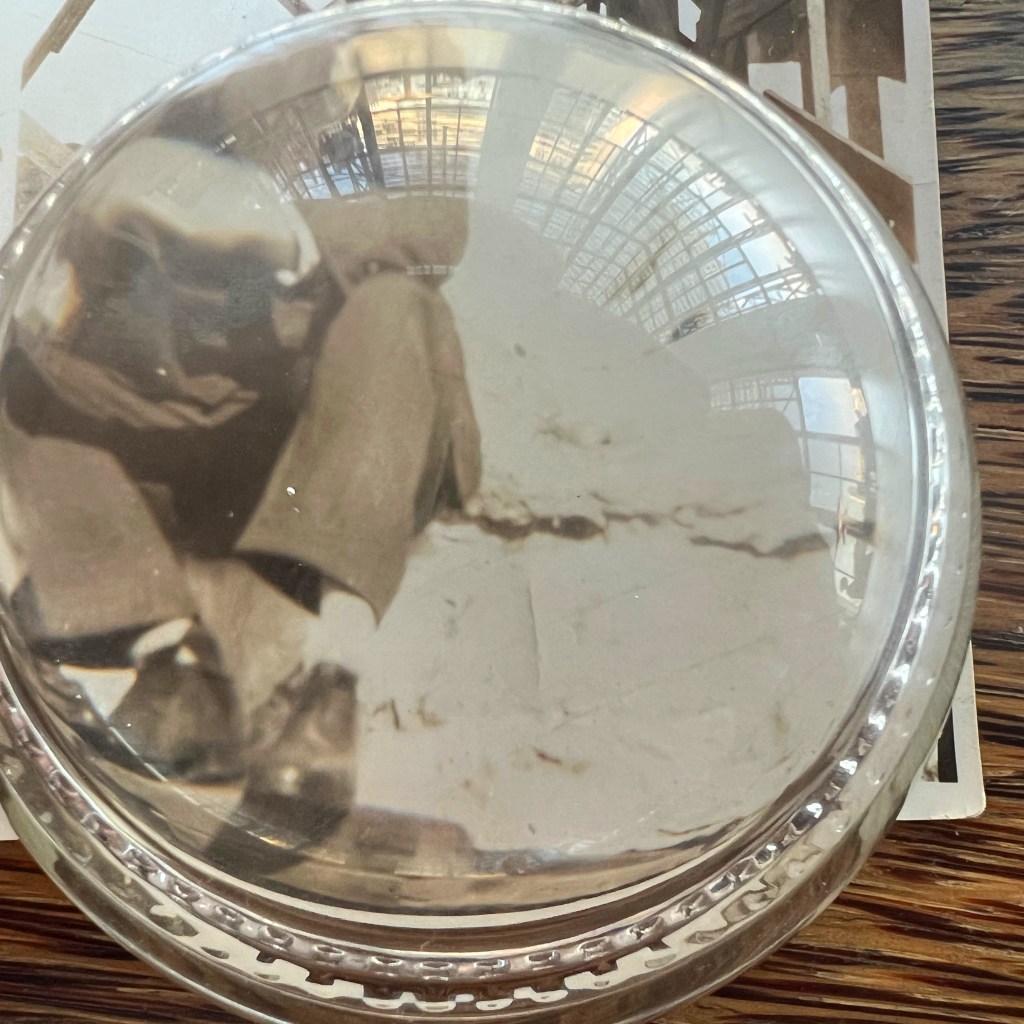
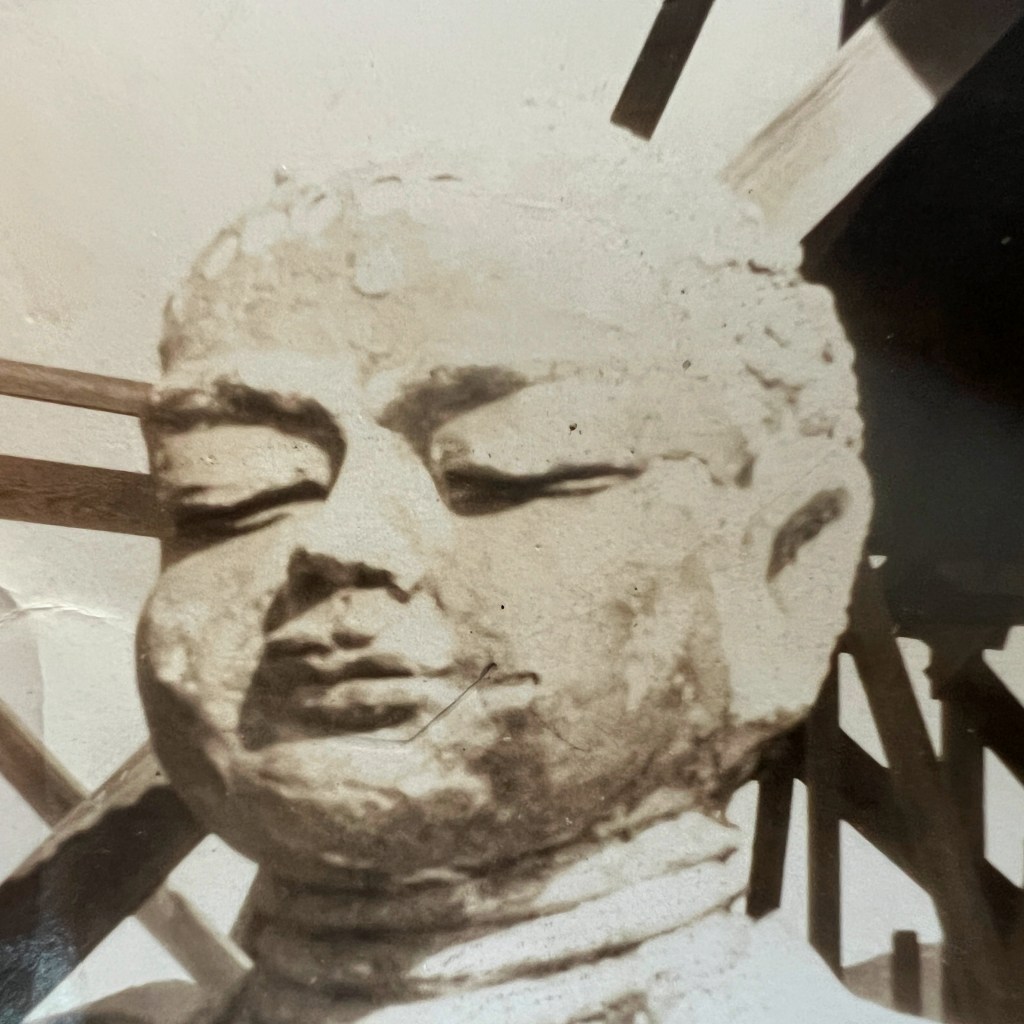
believe not. The cracks in the plaster suggest wear and age, not the process of crafting (see also the broken curls of hair below). Moreover, a very similar plaster buddha was created for Universal’s The Breath of the Gods in 1920, before Hall was hired, starring Tsuru Aoki.

Unfortunately, The Breath of the Gods is now lost and production stills remain the best evidence for set design. Popular Science ran a short article on the film, showing the construction of a new plaster buddha, is it the same one? Article viewable here: https://tinyurl.com/3jzhc3rj.


The Buddhas in the West Material Archive is a digital scholarship project that catalogues artifacts depicting Buddhist material culture for Western audiences. It’s comprised of prints, photos, and an assortment of ephemera and other objects. For a brief introduction to this archive, visit the main Buddhas in the West project page.


For Related Buddhas in the West Posts Featuring Photography:


For the Most Recent Buddhas in the West Posts:

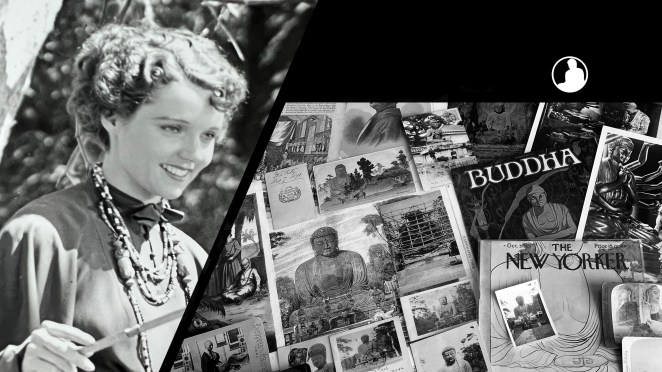
Captured in Chinatown (1935) Production Photograph

For all the new Buddhas in the West posts
follow us on Bluesky & Instagram


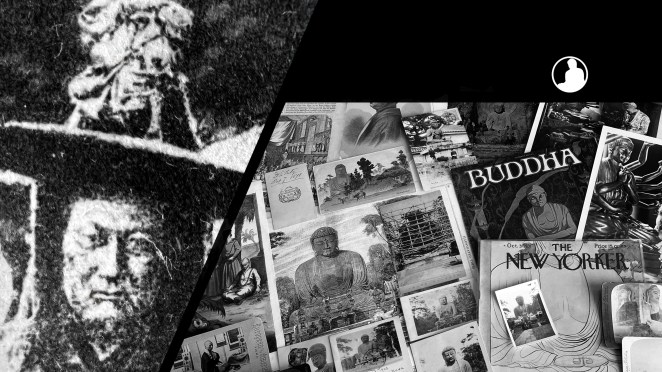
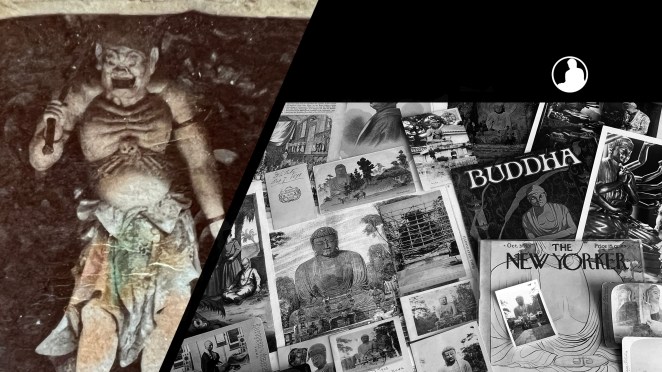
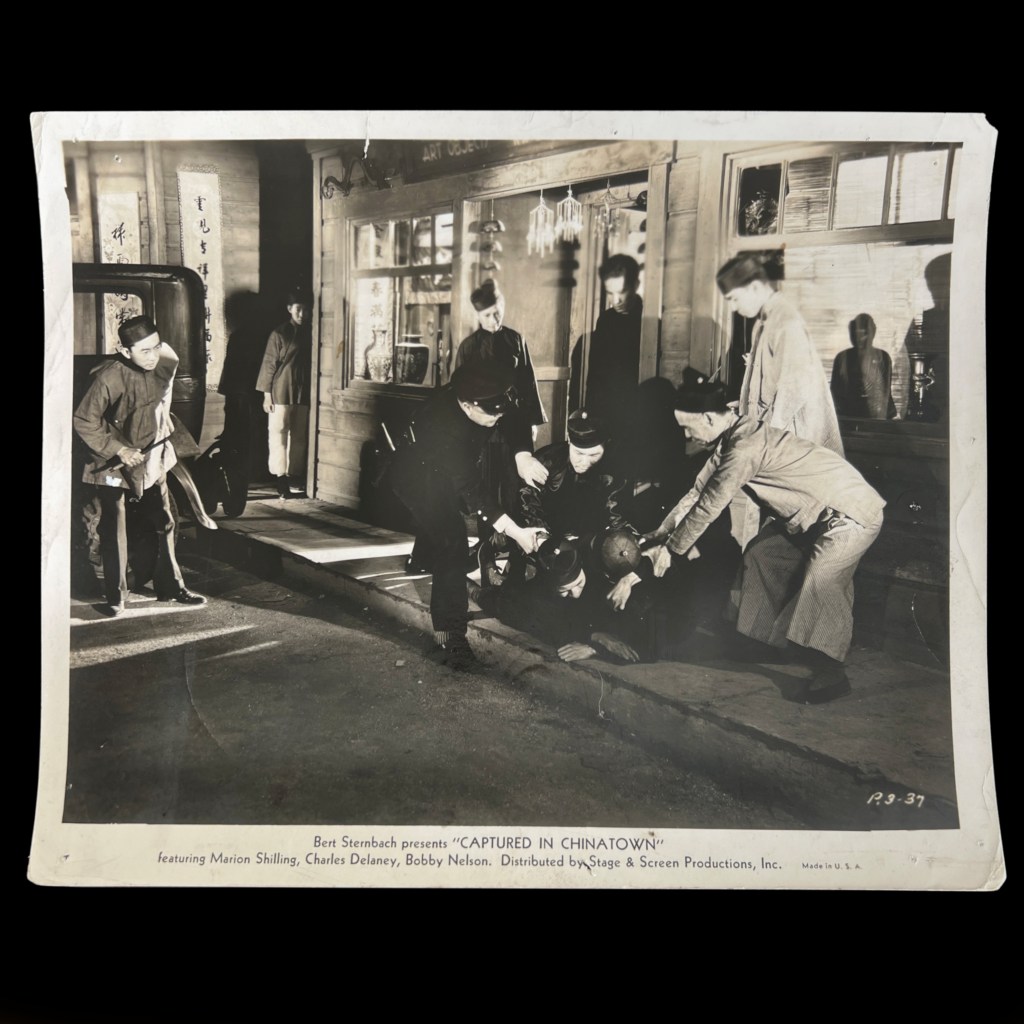
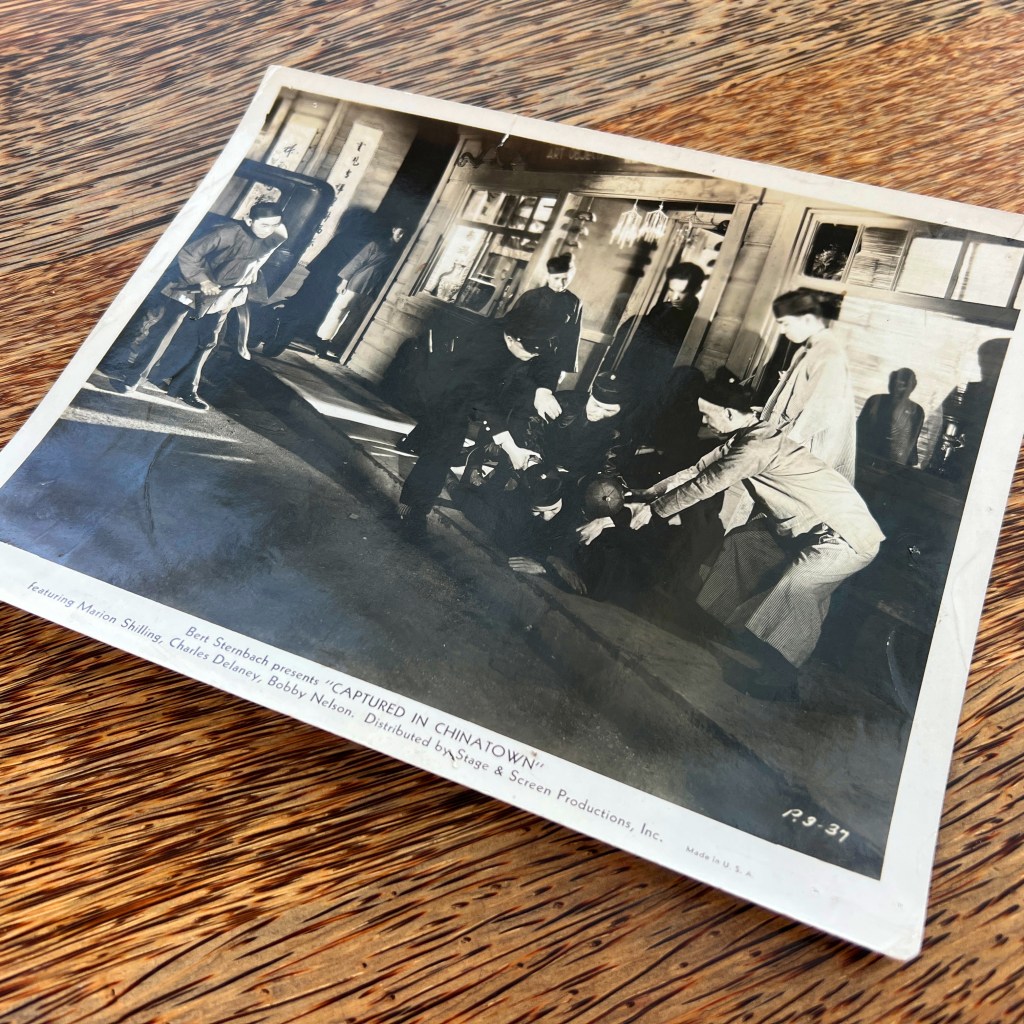
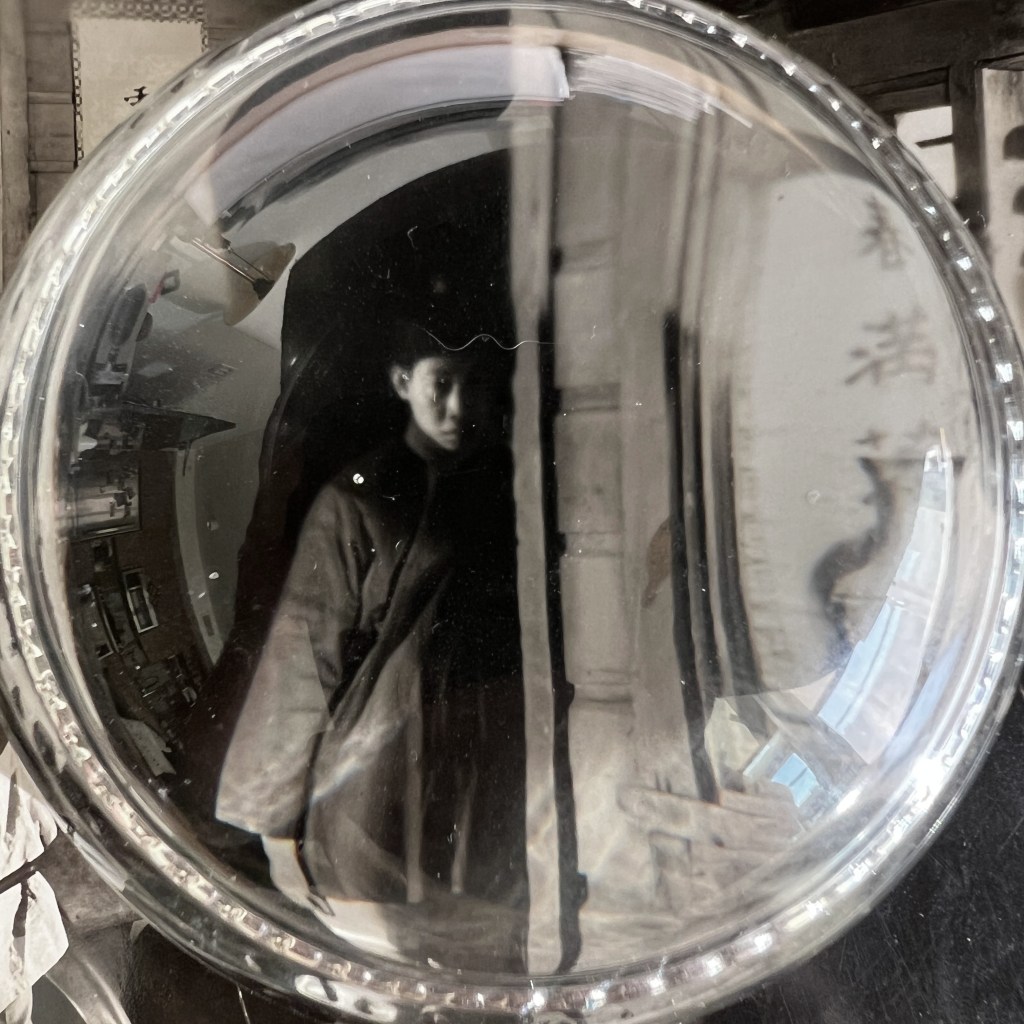
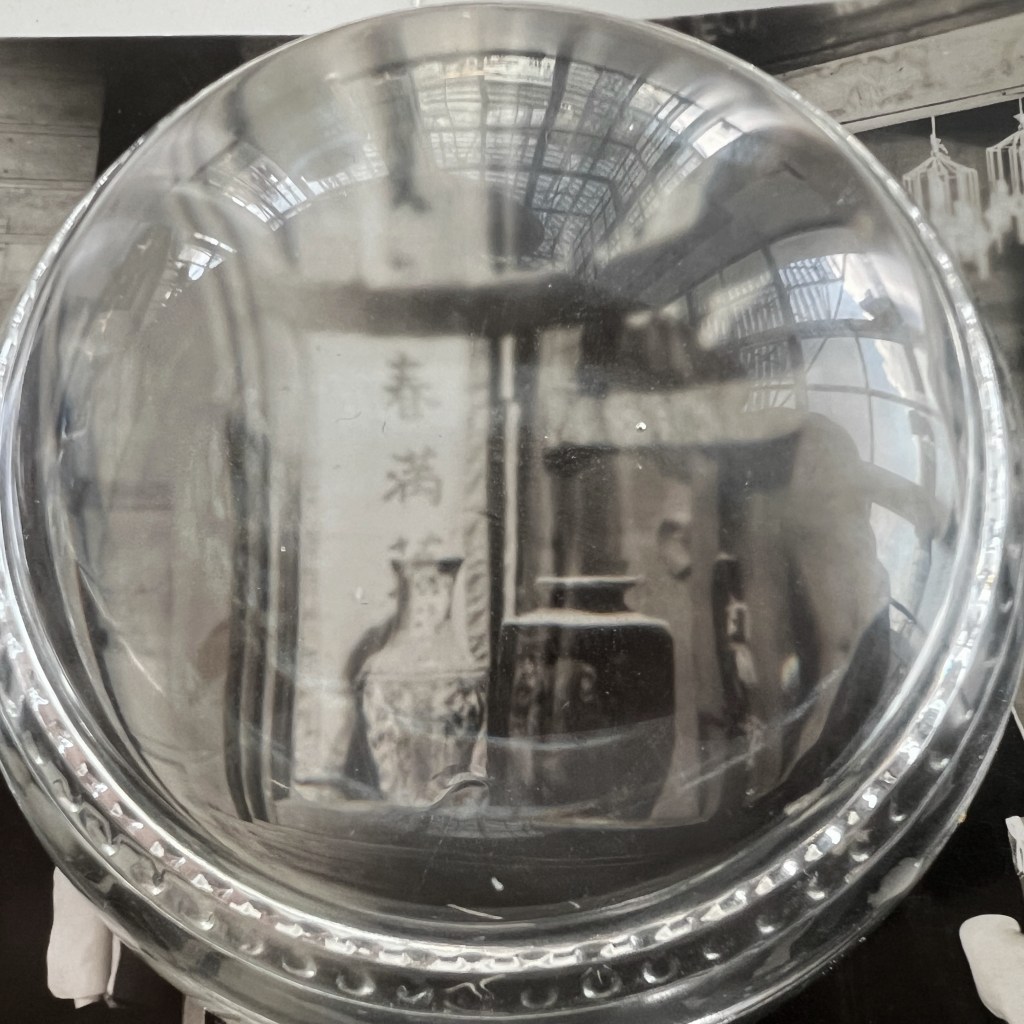
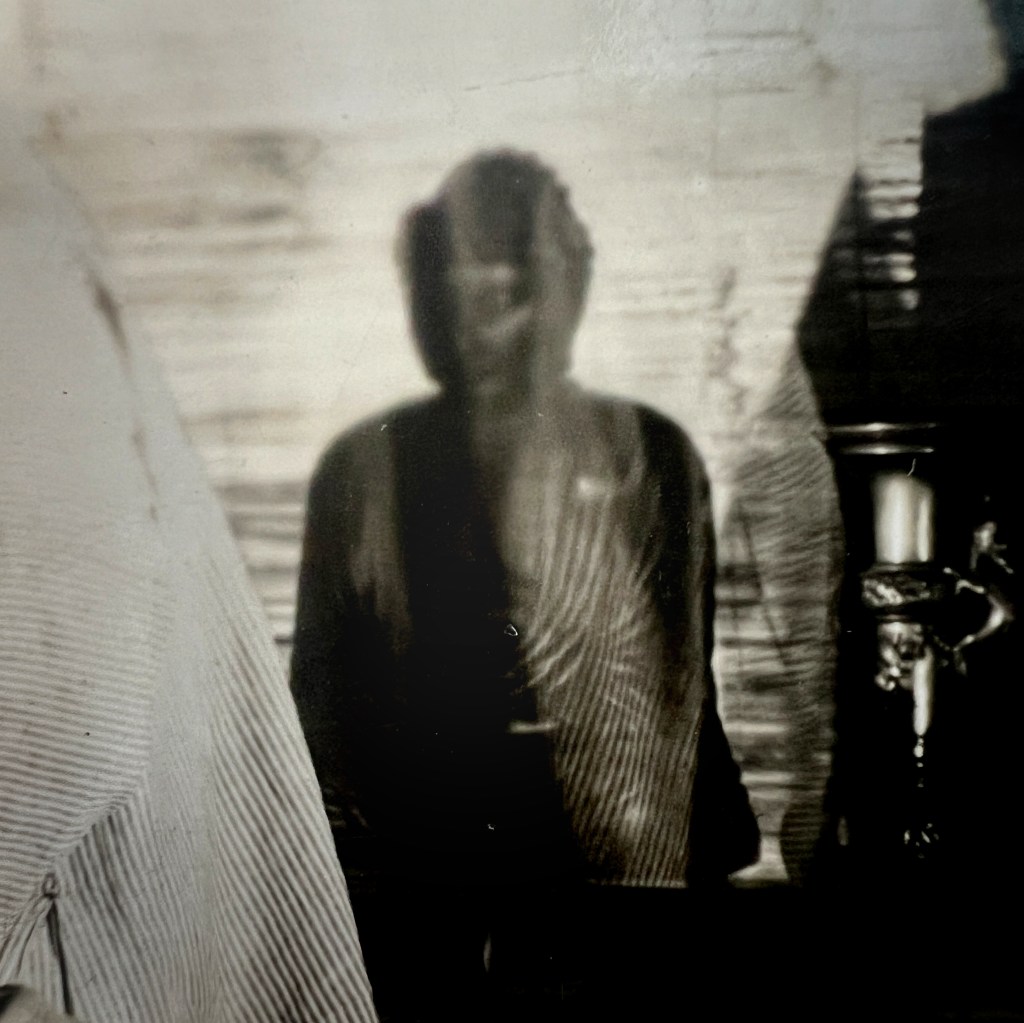
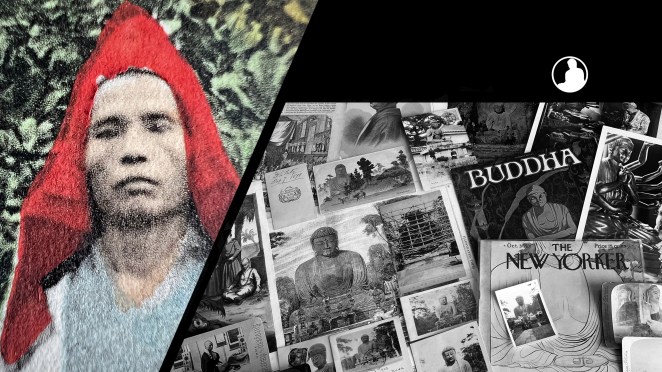
Two figures seen here in the shadows emerged in the 1920s and 30s as part of the cinematic shorthand for American Chinatowns. One, the murderous hatchet man, can be seen in the back alley, while other is seen peering out the curio shop window: an icon of a buddha.

This film, Captured in Chinatown, is a melodrama from 1935 that portrays a Romeo and Juliet style love story and a growing war between two Chinatown tongs. As Philippa Gates suggests, it also shows the promise of American assimilation provided outdated Chinese ways are abandoned.

While the American-born Chinese lovers embrace American life, their immigrant parents remain stuck in petty and violent family feuds. Unlike many major Hollywood productions, this B film cast Asian American actors in all of the leading Chinese roles.

One of the main sets includes the interior of Lieu Ling Importers which displays a Buddhist statue in the window, presumably for sale. There is also a different Buddhist shrine inside the shop where the female Chinese lead prays to Amitābha Buddha, invoking him with, “Amituofo.”

The film ends with the two lovers reunited, thanking the revered “Most High One” for ending the feud. For more on the portrayal of Chinatown in films of this era, see Philippa Gates, Criminalization/Assimilation: Chinese/Americans and Chinatowns in Classical Hollywood Film (2019).


The Buddhas in the West Material Archive is a digital scholarship project that catalogues artifacts depicting Buddhist material culture for Western audiences. It’s comprised of prints, photos, and an assortment of ephemera and other objects. For a brief introduction to this archive, visit the main Buddhas in the West project page.


For Related Buddhas in the West Posts Featuring Films:


For the Most Recent Buddhas in the West Posts:

Postcard of Guanyin at Chicago’s Ling Long Chinese Museum

For all the new Buddhas in the West posts
follow us on Bluesky & Instagram


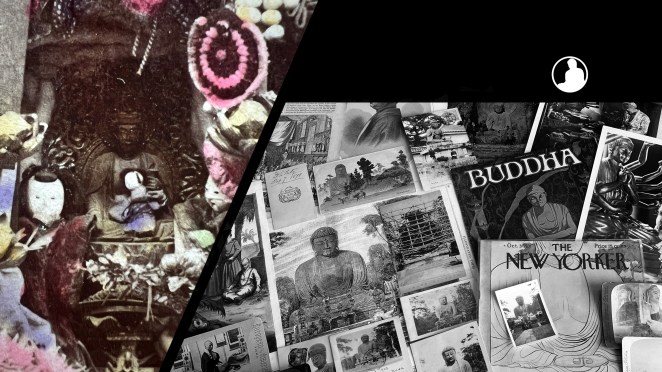
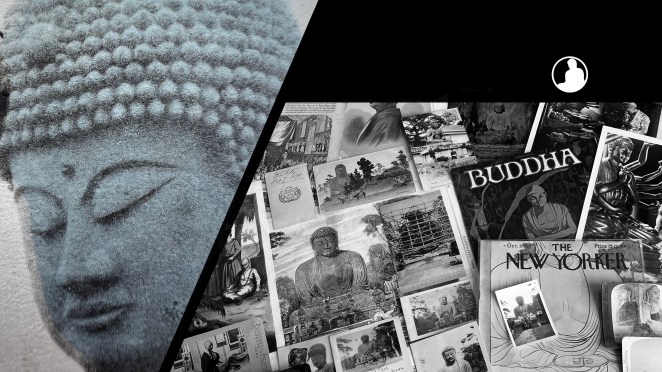
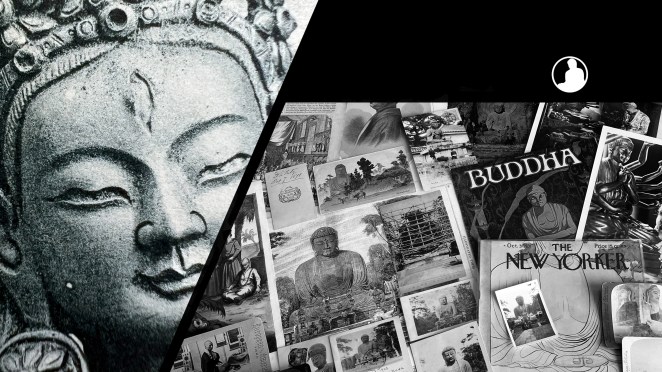
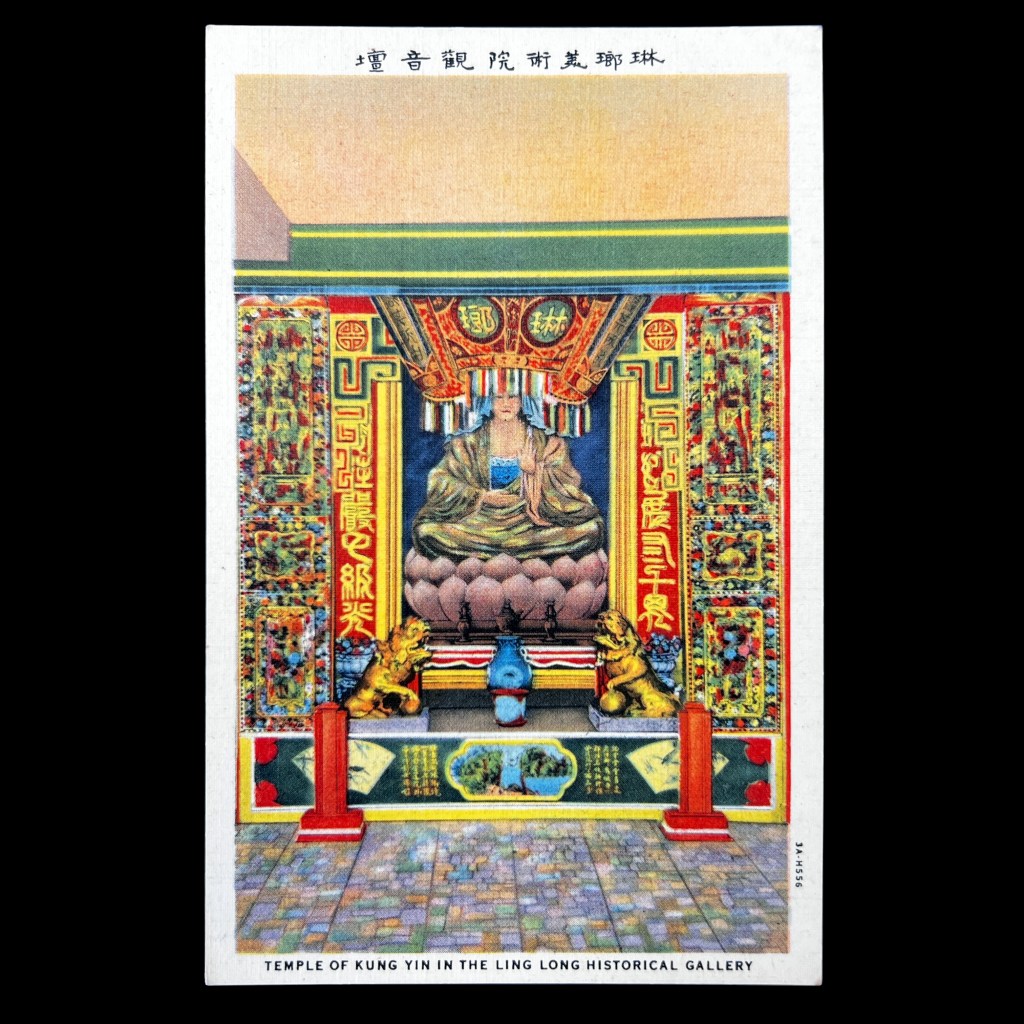
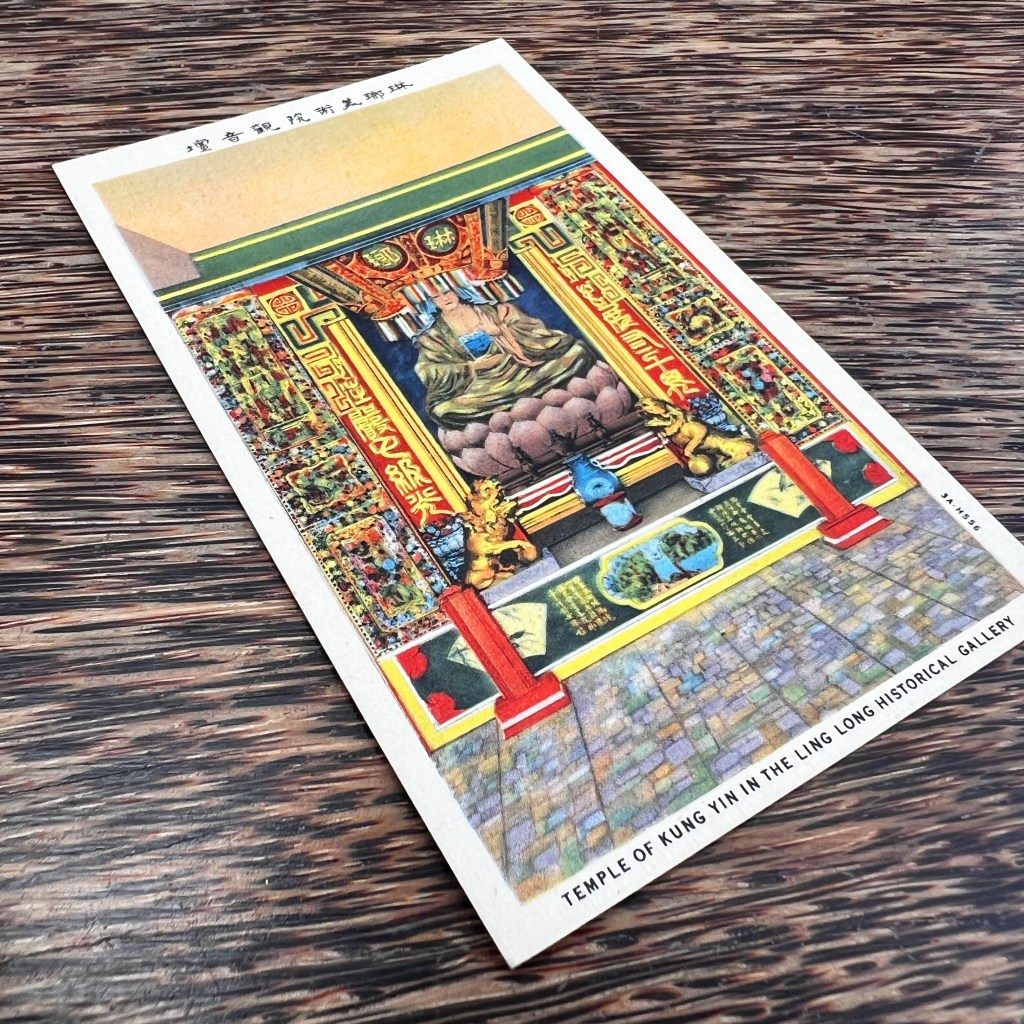
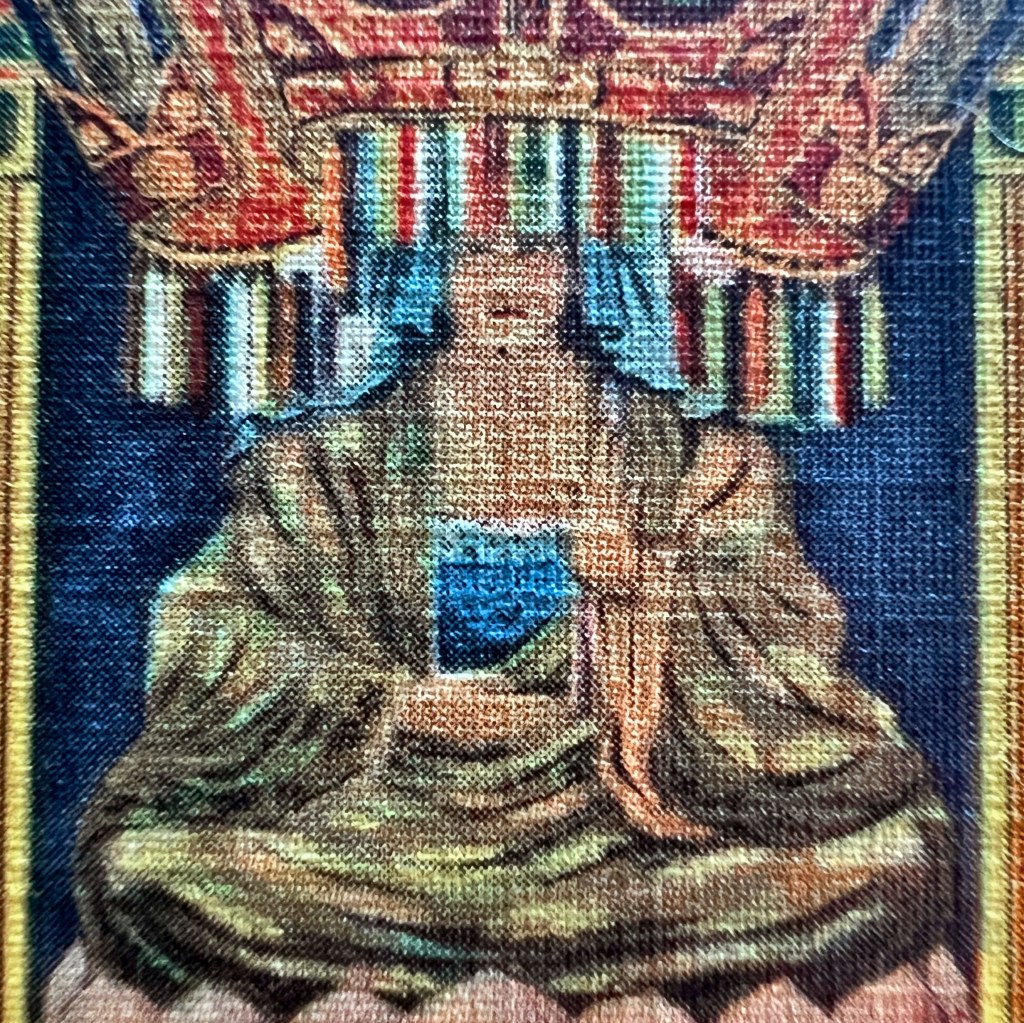
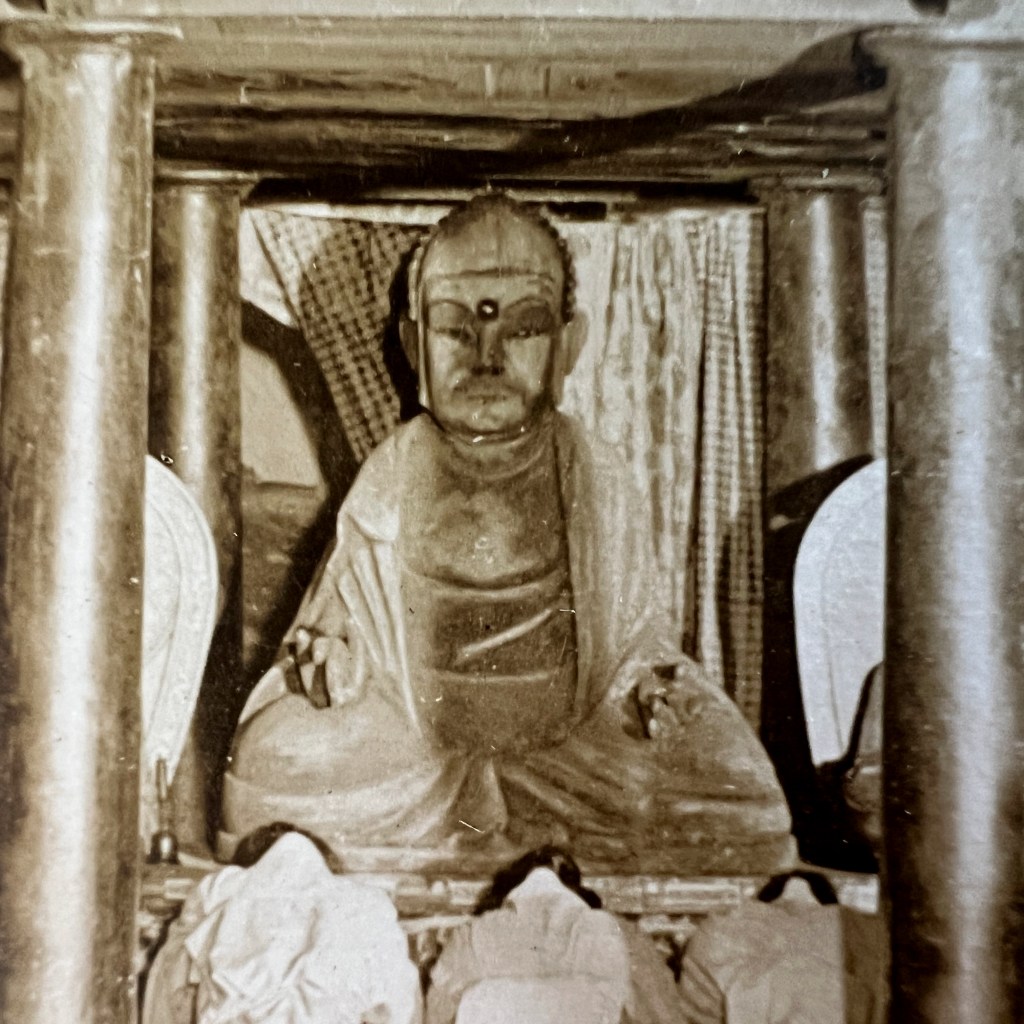
The Ling Long Chinese Museum in Chicago opened prior to the 1933 World’s Fair hoping to draw visitors and help erase the popular view that US Chinatowns were “immoral and dangerous.” The museum housed a large altar in the rear of the main arcade to enshrine an icon of Guanyin.

The was the first American museum owned and operated by Chinese immigrants. One of the main attractions were a series of twenty-four dioramas flanking the “shrine hall” that displayed historical stories and legends from China’s past.

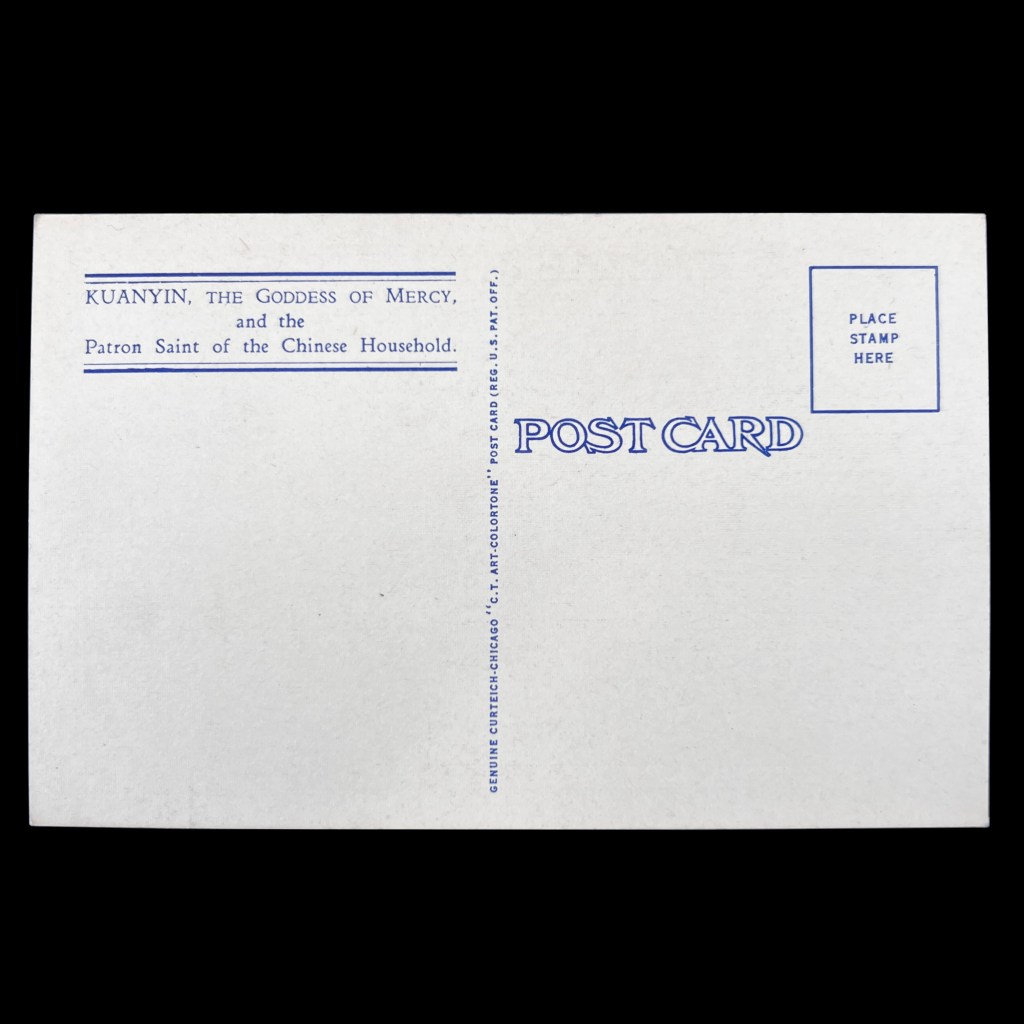
Chicago’s Curt Teich & Co. spearheaded new technology to print postcards in hyperreal colors in 1931, starting the “linen card” era that ran through World War II. Based on production numbers, we know this card was first published for the Ling Long Museum in 1933, the year it first opened.

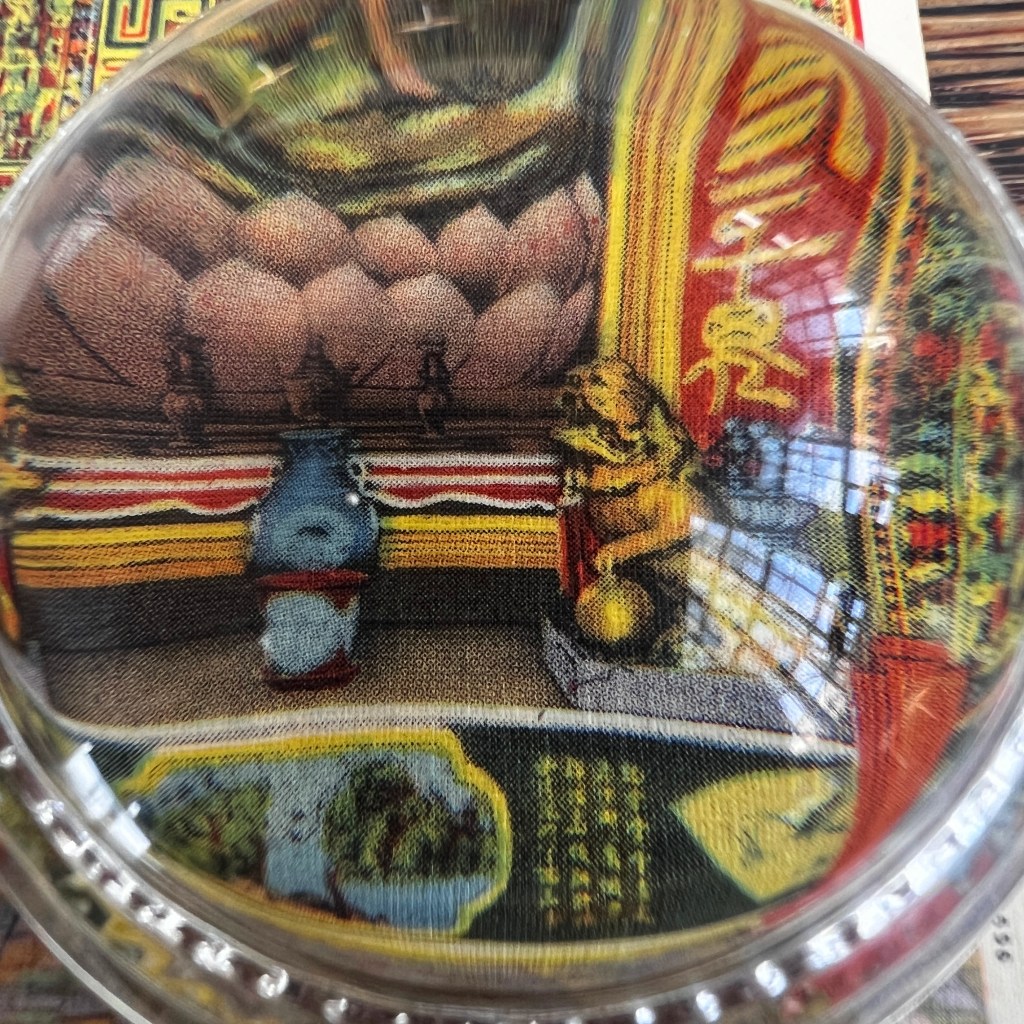
The Guanyin altar was set-up during the period of Chinese Exclusion when many Chinatown temples across the US were closing. Even the shrine seen here displays altar arrangements not commonly seen, such as including lion statuettes.

The museum was open through the 1970s before changing over to a Chinese restaurant. Many items were moved to the Chinese-American Museum of Chicago, but a fire in 2008 destroyed much of the collection, including most of the original dioramas; the Guanyin image is presumed lost.


The Buddhas in the West Material Archive is a digital scholarship project that catalogues artifacts depicting Buddhist material culture for Western audiences. It’s comprised of prints, photos, and an assortment of ephemera and other objects. For a brief introduction to this archive, visit the main Buddhas in the West project page.


For Related Buddhas in the West Posts Featuring the United States:

For the Most Recent Buddhas in the West Posts: