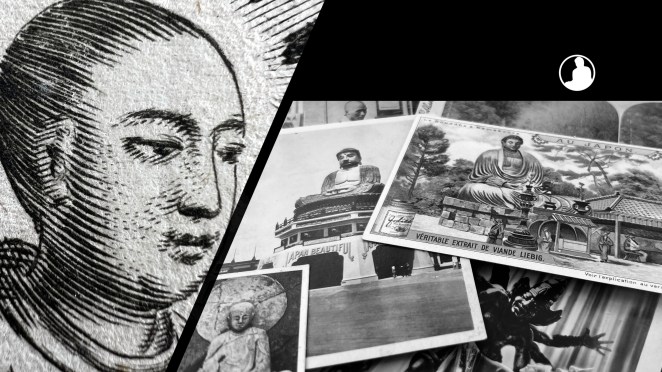
T. H. McAllister’s Kamakura Daibutsu Lantern Slide

For all the new Buddhas in the West posts
follow us on Bluesky & Instagram


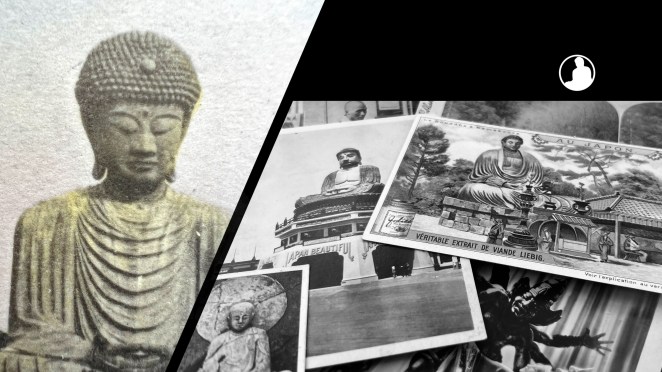
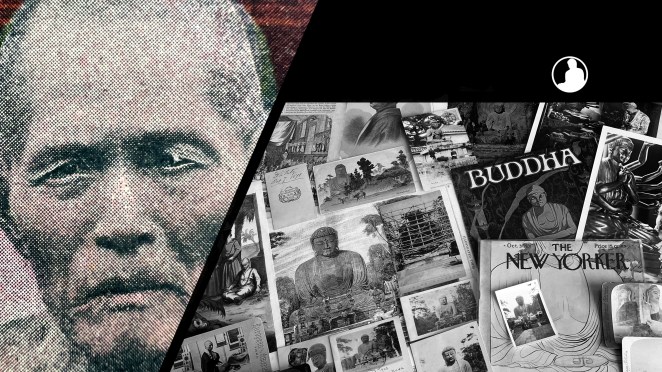
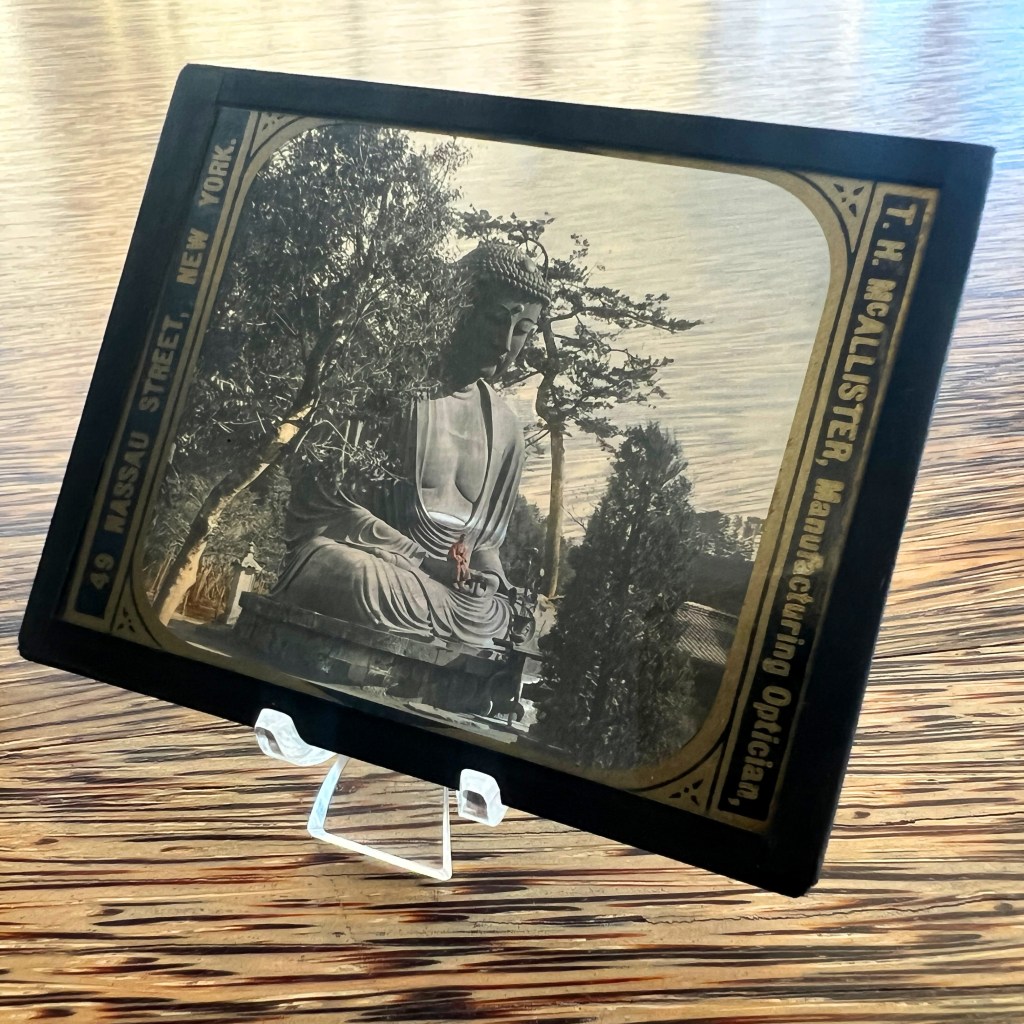
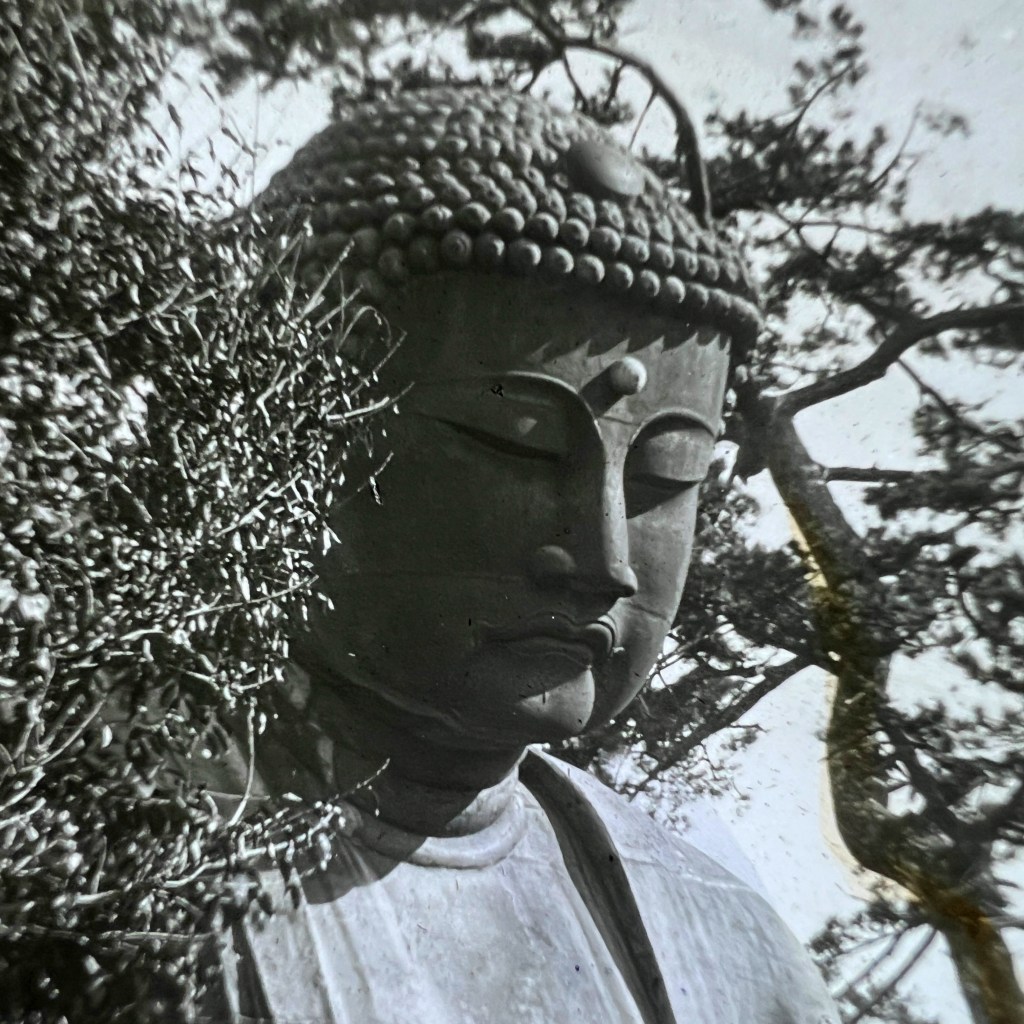
By the 1890s it was possible to browse American newspapers and see advertisements for informal lectures on countries around the world. Occupying church halls or town theaters, returning travelers often used “magic lantern” slides to illustrate their gripping travel narratives.
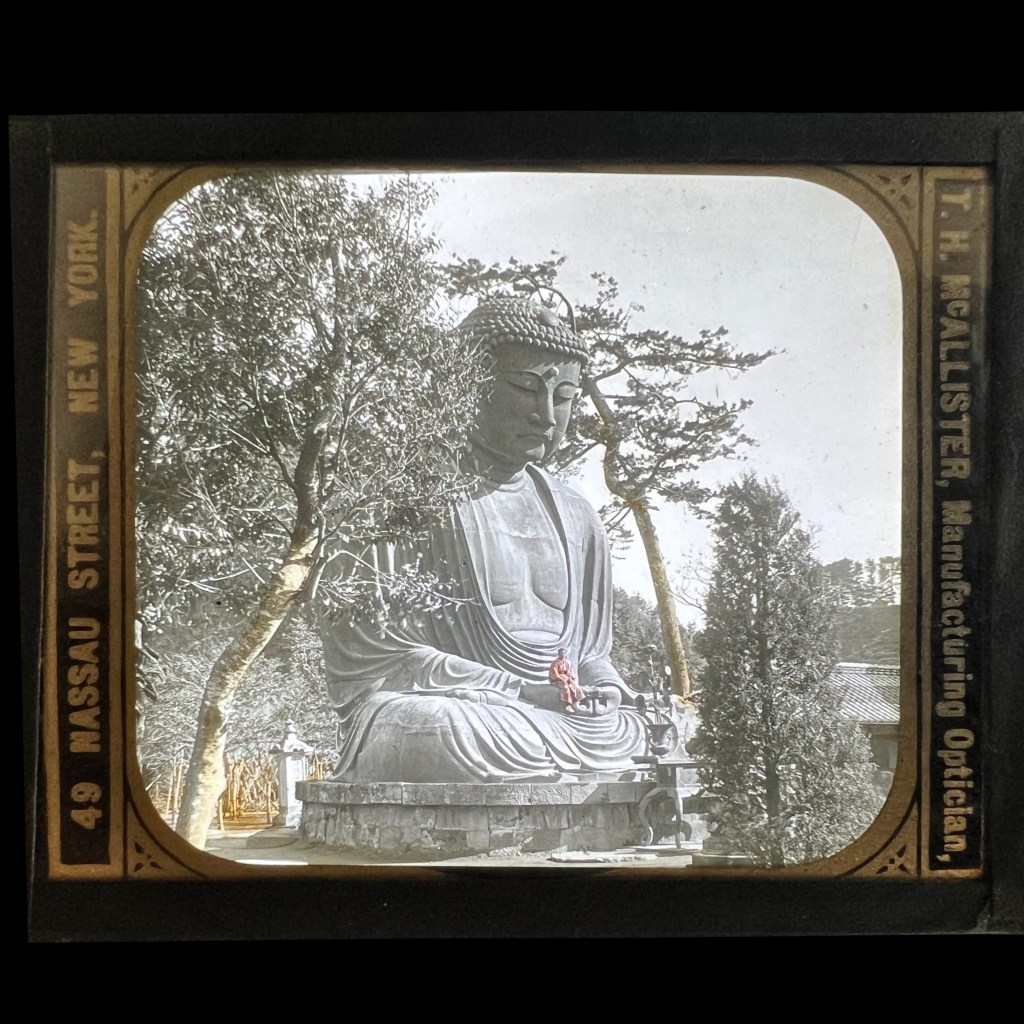
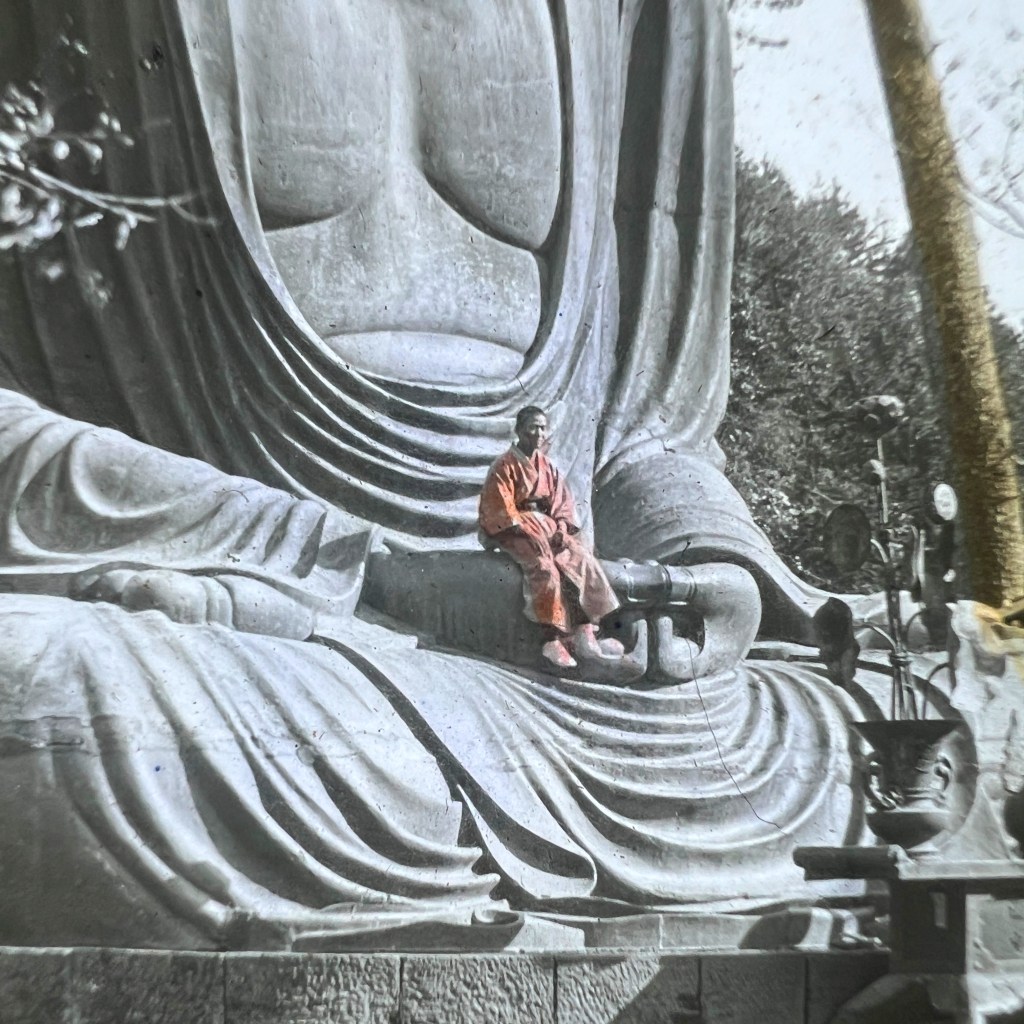
A typical trans-Pacific cruise of the era would port in Yokohama, a short day trip away from the colossal Kamakura Daibutsu. An image projected onto a wall or screen would enliven the presentation and provide visual details impossible to elaborate through words alone.
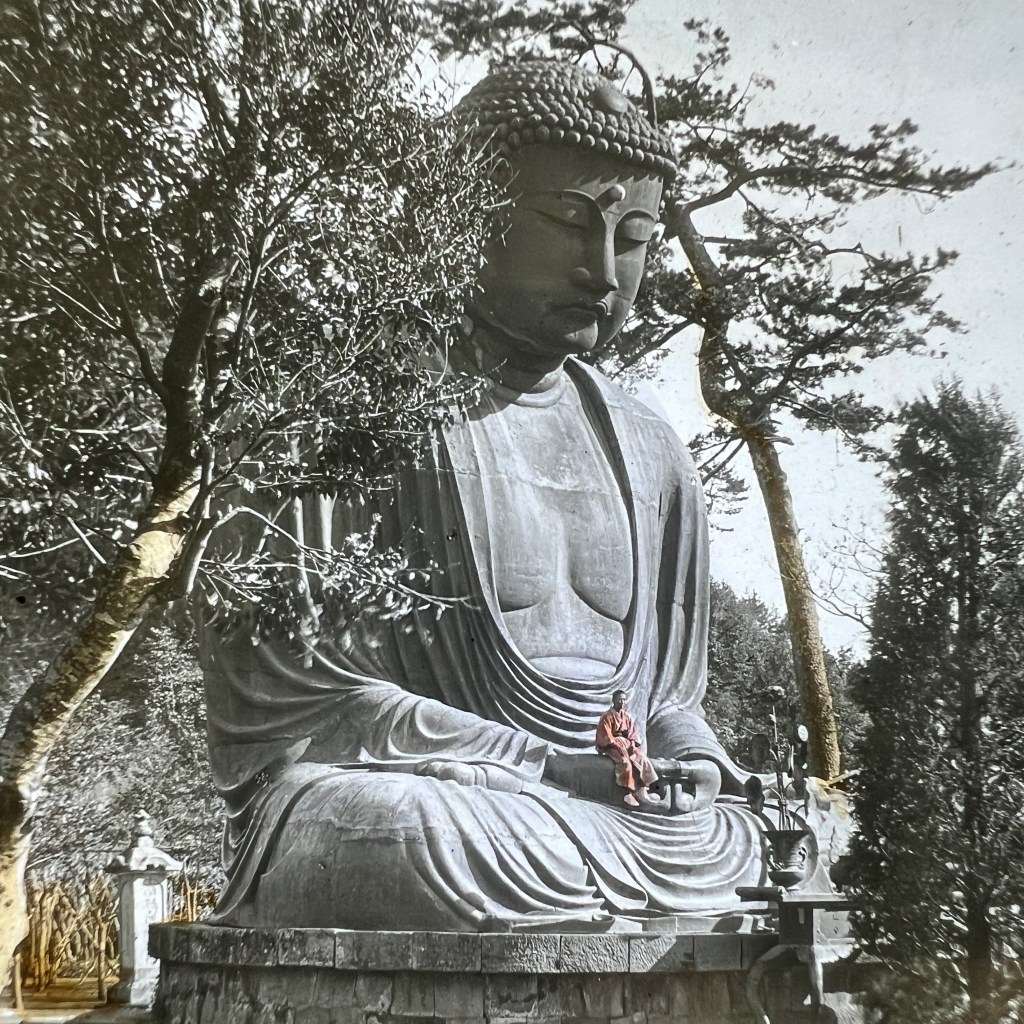
As the Victorian era progressed, there was increasing demand for visual education and moral entertainments, and the illustrated travelogue reflected such interests. We might find the past splendor of Asia, as seen through it monuments, contrasted with its then-current political strife.
By 1887 T. H. McAllister was selling a set of 61 slides for a stock presentation entitled, “Around the World in 80 Minutes.” For a total of $30.25, the slides and lecture notes could be purchased by an aspiring lecturer so as to be “well prepared to describe the various scenes intelligently.”
Beginning in England and ending in Washington DC, the Kamakura Daibutsu is the only Buddhist location visited during the lecture. For more on the importance of travel lecturers in spreading information about Asia, see Jeanette Roan’s Envisioning Asia (2010).
The Buddhas in the West Material Archive is a digital scholarship project that catalogues artifacts depicting Buddhist material culture for Western audiences. It’s comprised of prints, photos, and an assortment of ephemera and other objects. For a brief introduction to this archive, visit the main Buddhas in the West project page.


For Related Buddhas in the West Posts Featuring Lantern Slides:


For the Most Recent Buddhas in the West Posts:


Nikko’s Yashamon “Demon Gate” Photograph

For all the new Buddhas in the West posts
follow us on Bluesky & Instagram


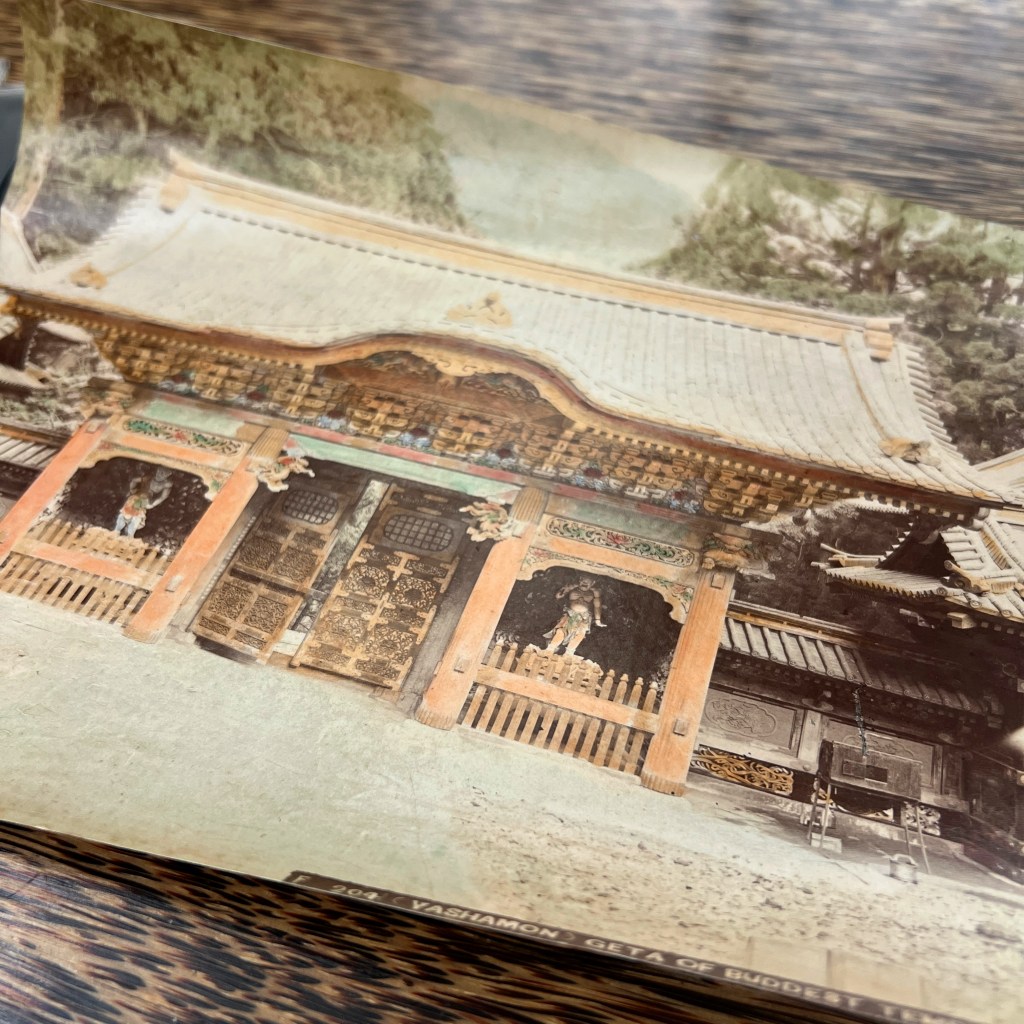
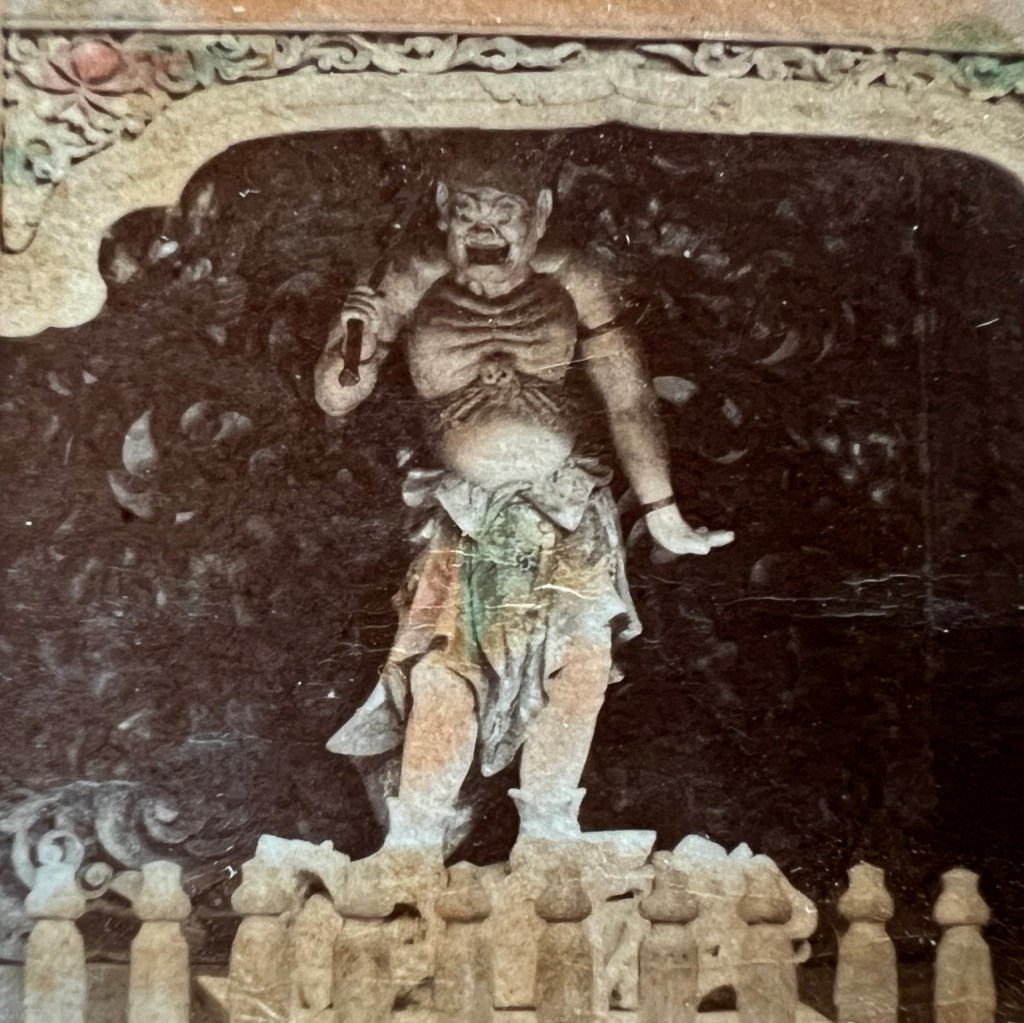
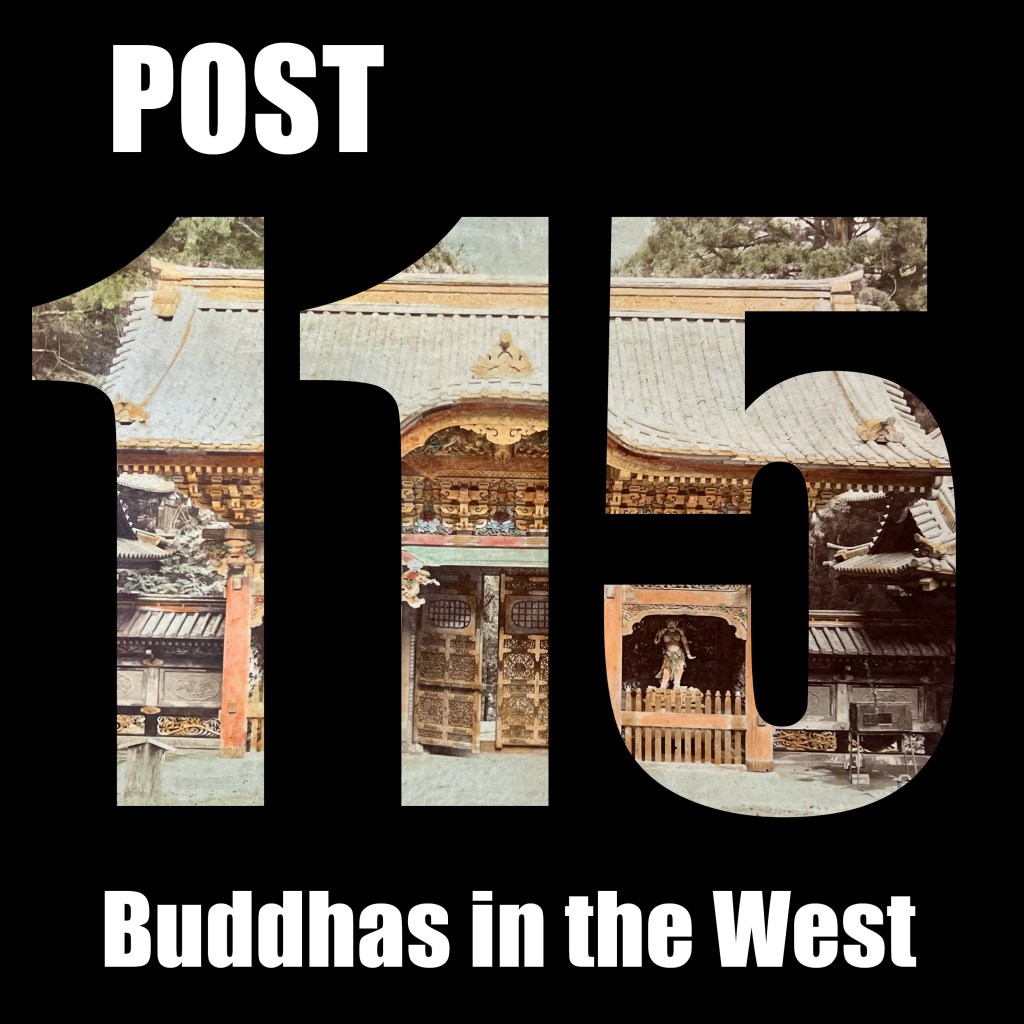
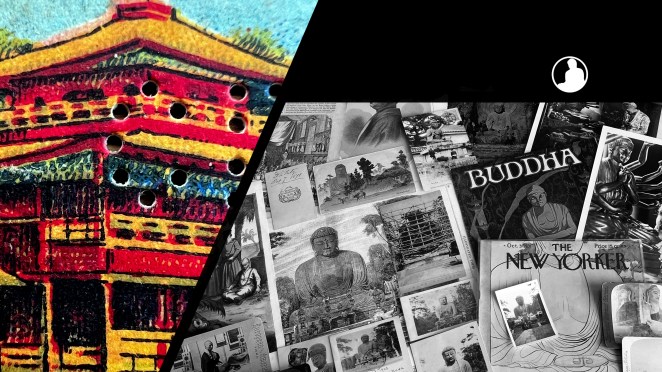
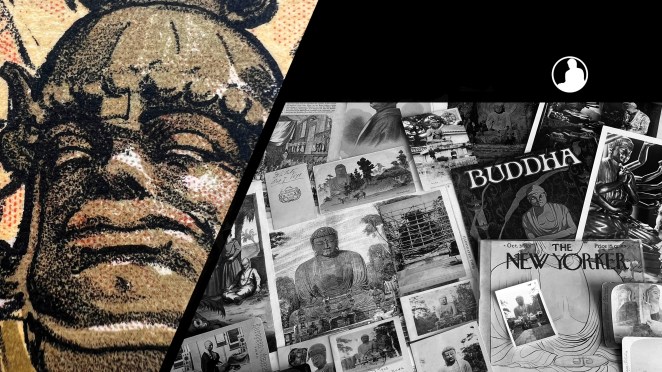
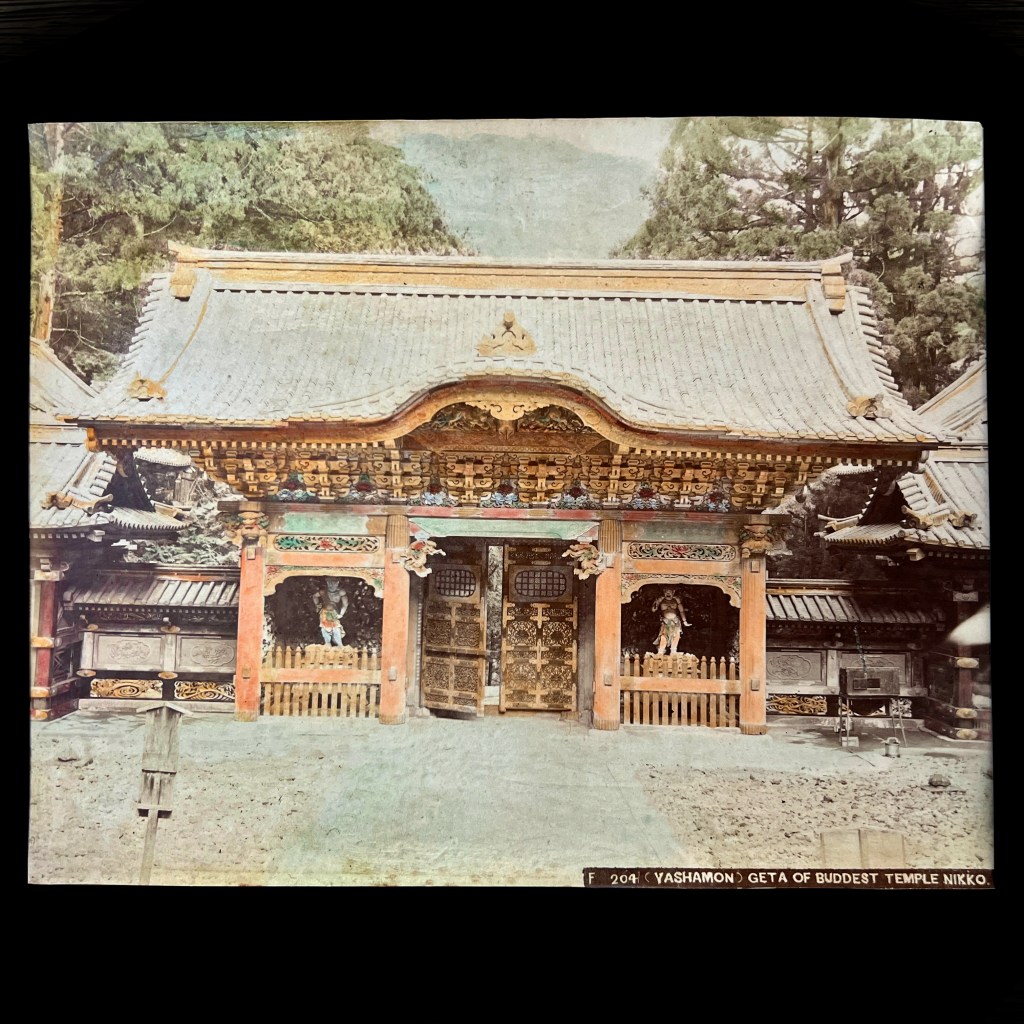
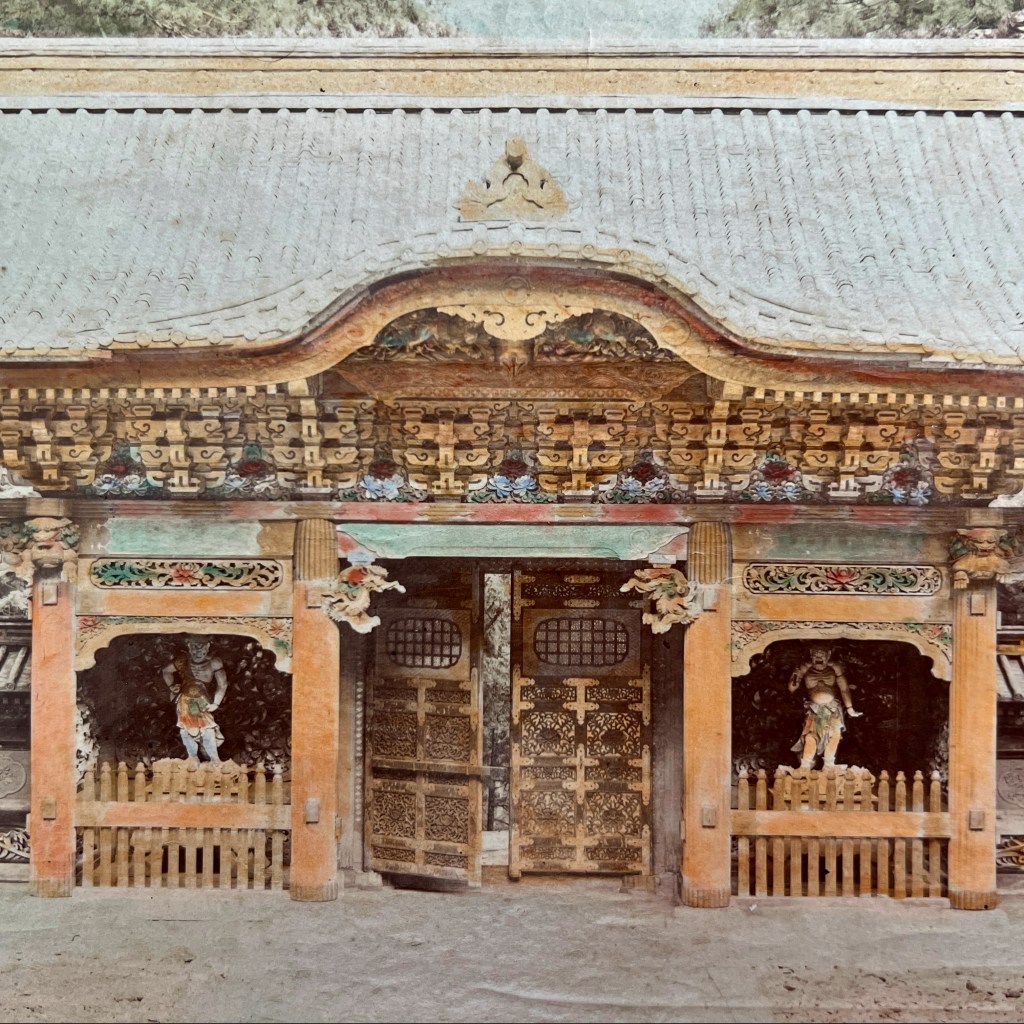
The Taiyū-in Shrine, in idyllic Nikko, is the final resting place of shōgun Tokugawa Iemitsu, one of the “Great Unifiers” of Japan. The compound is punctuated by several ornate gate houses, including the one here known as Yashamon for the Buddhist guardian figures protecting it.

Completed in 1653, Iemitsu’s mausoleum blends both Shinto and Buddhist architectural styles and elements. The Yashamon is the third gate within the compound and houses four icons of weapon-wielding yakṣa (J. yasha) who have history in Buddhist Asia as temple guardians.

This photograph was taken in the late 1880s or 1890s and most likely reflects one of the many Japanese-owned photography studios that catered to foreign visitors.

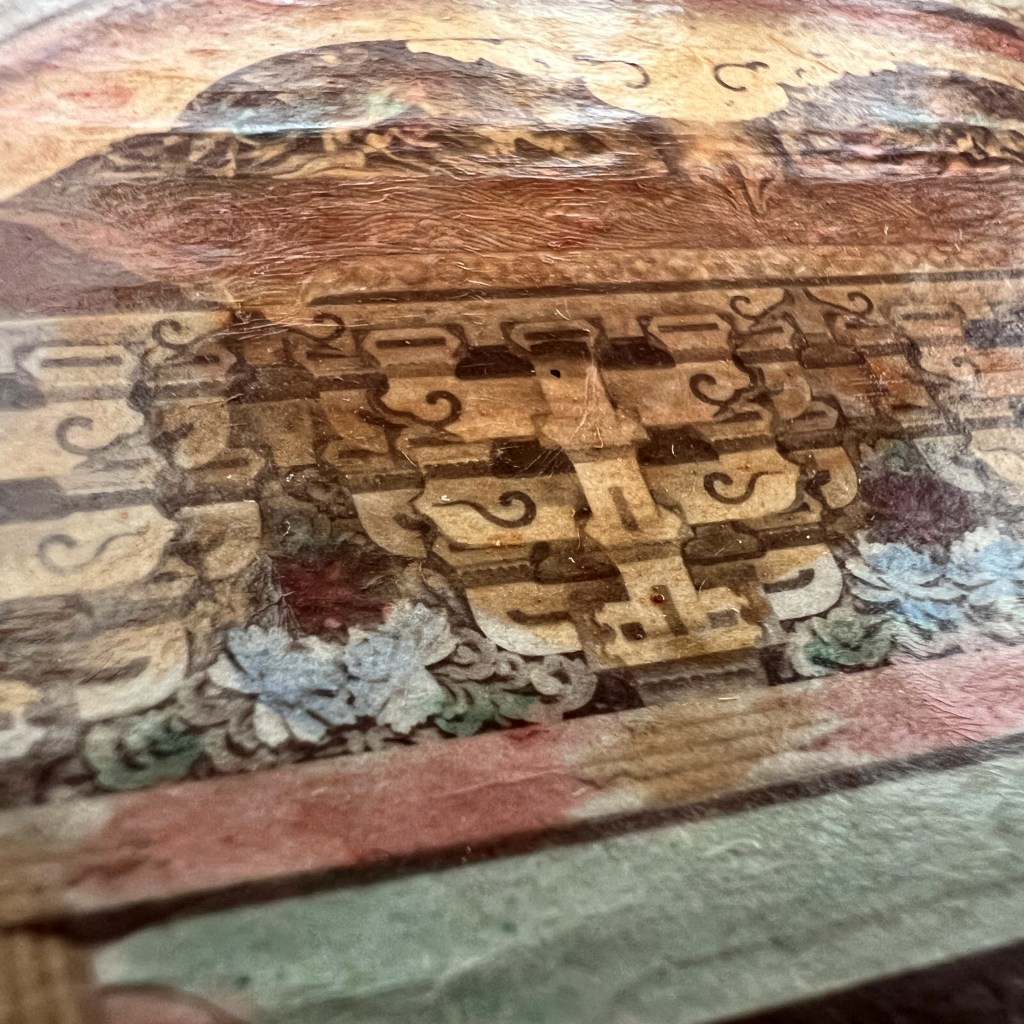
Not as grand or sophisticated as Nikko’s main attraction, Tōshō-gū, the Taiyū-in Shrine still displays highly skilled craftsmanship.Looking closely, the Yashamon is covered with delicately carved peonies (painted light blue on the photo), and thus is also called Botanmon, or the Peony Gate.

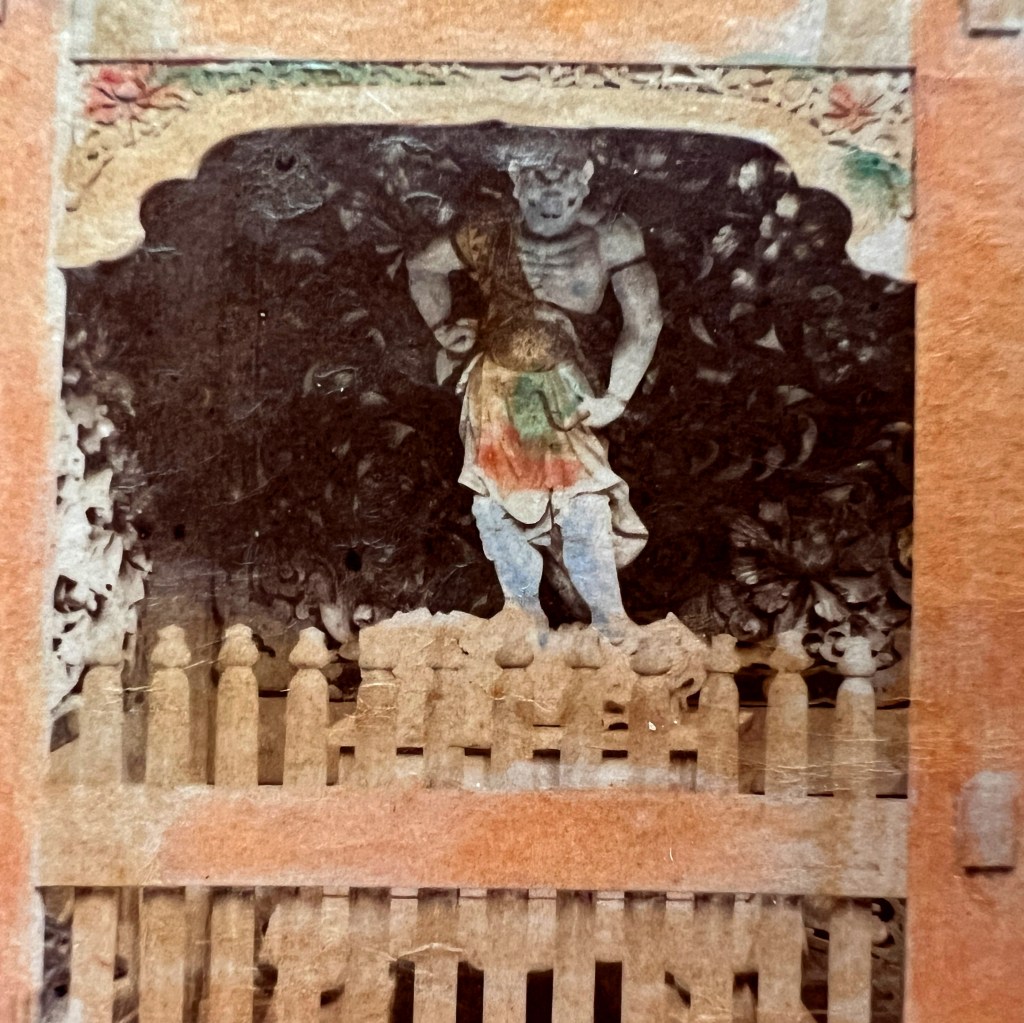
As one walks through Taiyū-in Shrine, the Yashamon is first seen atop a flight of steps, but if you cross the threshold and turn around, two yakṣa peer back at you. The blue figure on the left is Umarokya holding a bow and arrow.

The fierce white-skinned yakṣa on the right is Kendara who carries a weapon on his shoulder.Due to the warrior nature of these images another name for this gate was sometimes used in turn-of-the-century guidebooks: the Demon Gate.


The Buddhas in the West Material Archive is a digital scholarship project that catalogues artifacts depicting Buddhist material culture for Western audiences. It’s comprised of prints, photos, and an assortment of ephemera and other objects. For a brief introduction to this archive, visit the main Buddhas in the West project page.


For Related Buddhas in the West Posts Featuring the Buddhist Temples:


For the Most Recent Buddhas in the West Posts:


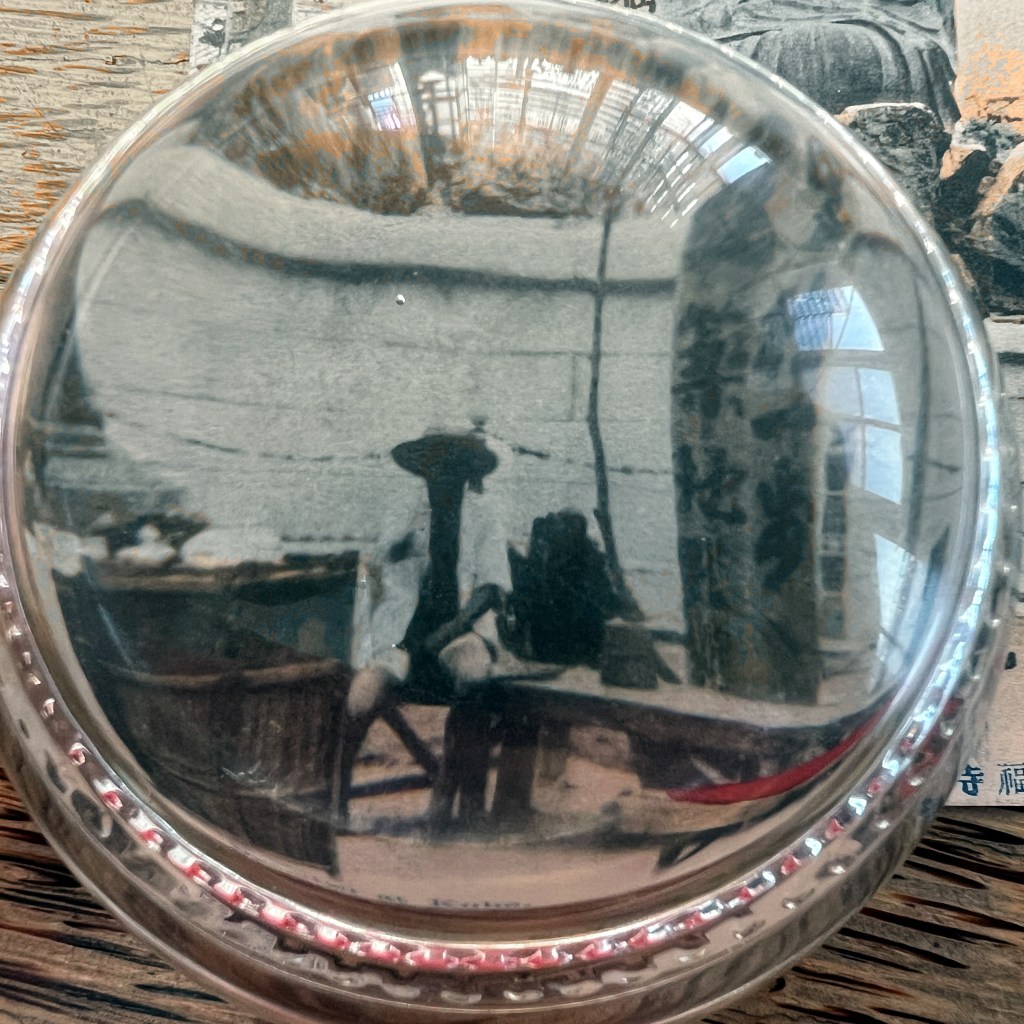
Ueda’s Hyōgo Daibutsu at Kobe Postcard

For all the new Buddhas in the West posts
follow us on Bluesky & Instagram


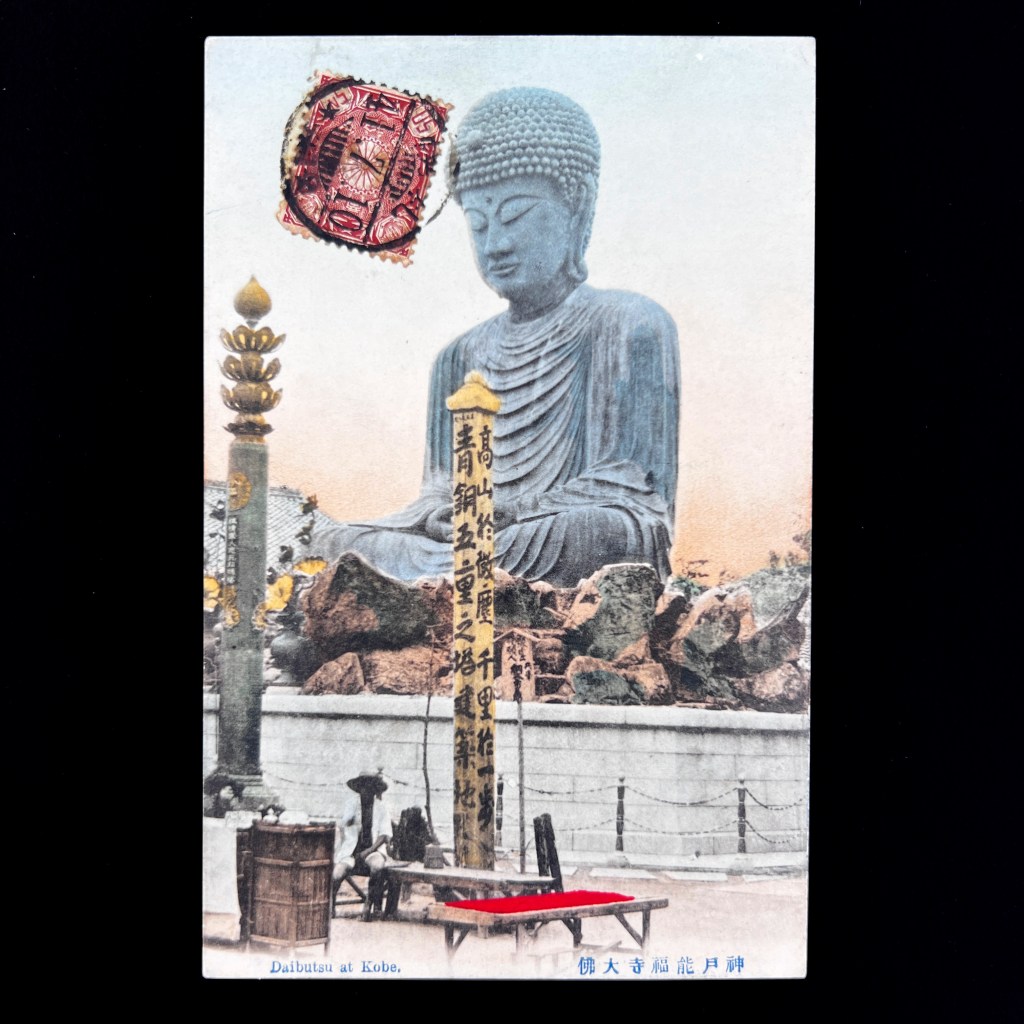
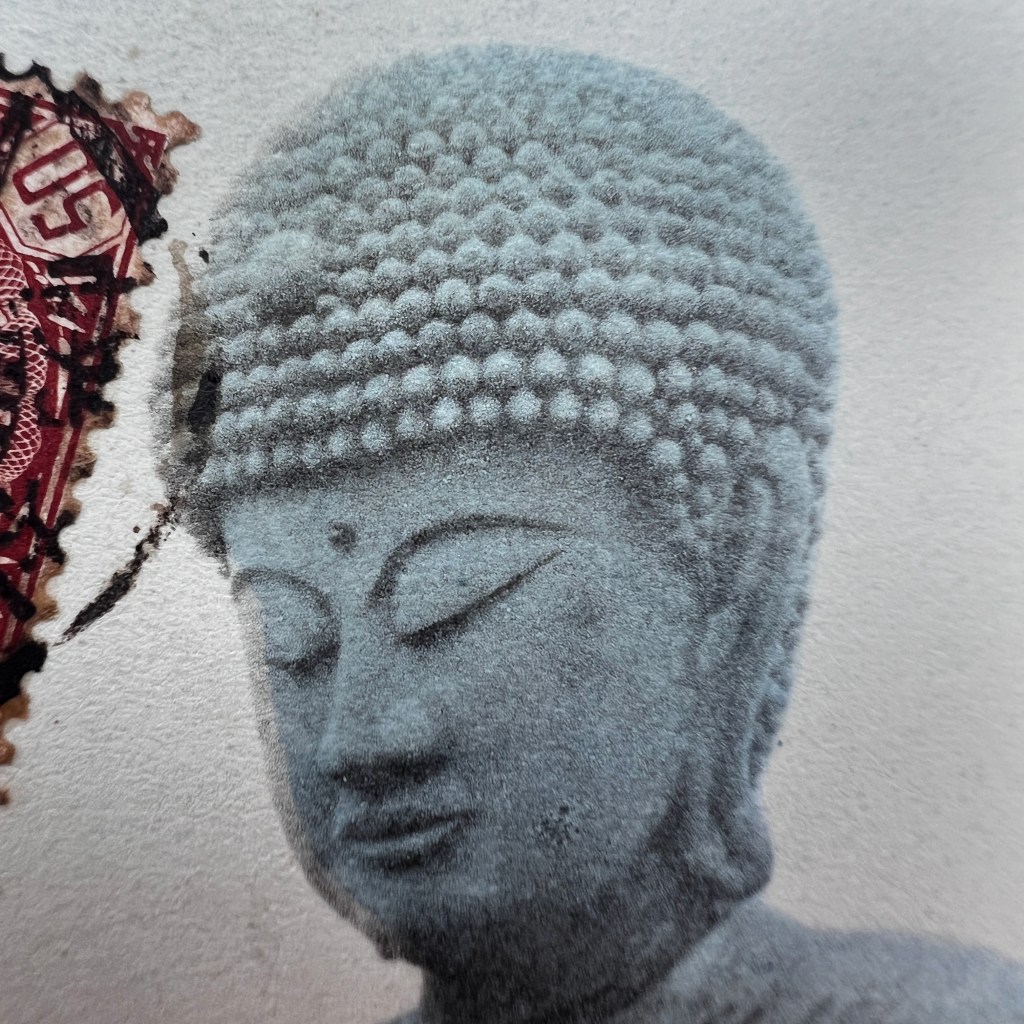
Nōfuku-ji, a Buddhist temple in the port city of Kobe, Japan, was reportedly founded by the monk Saichō in 805. A thousand years later, the colossal Hyōgo Daibutsu was built on temple grounds in 1891, but the statue did not survive beyond World War II.

Commissioned by a local paper merchant, the bronze icon stood just under 15 meters (48 ft.) in height, but remained exposed and uncovered by a shrine hall. The Hyōgo Daibutsu represented Vairocana Buddha, the same figure enshrined at Tōdai-ji, in the ancient capital of Nara.

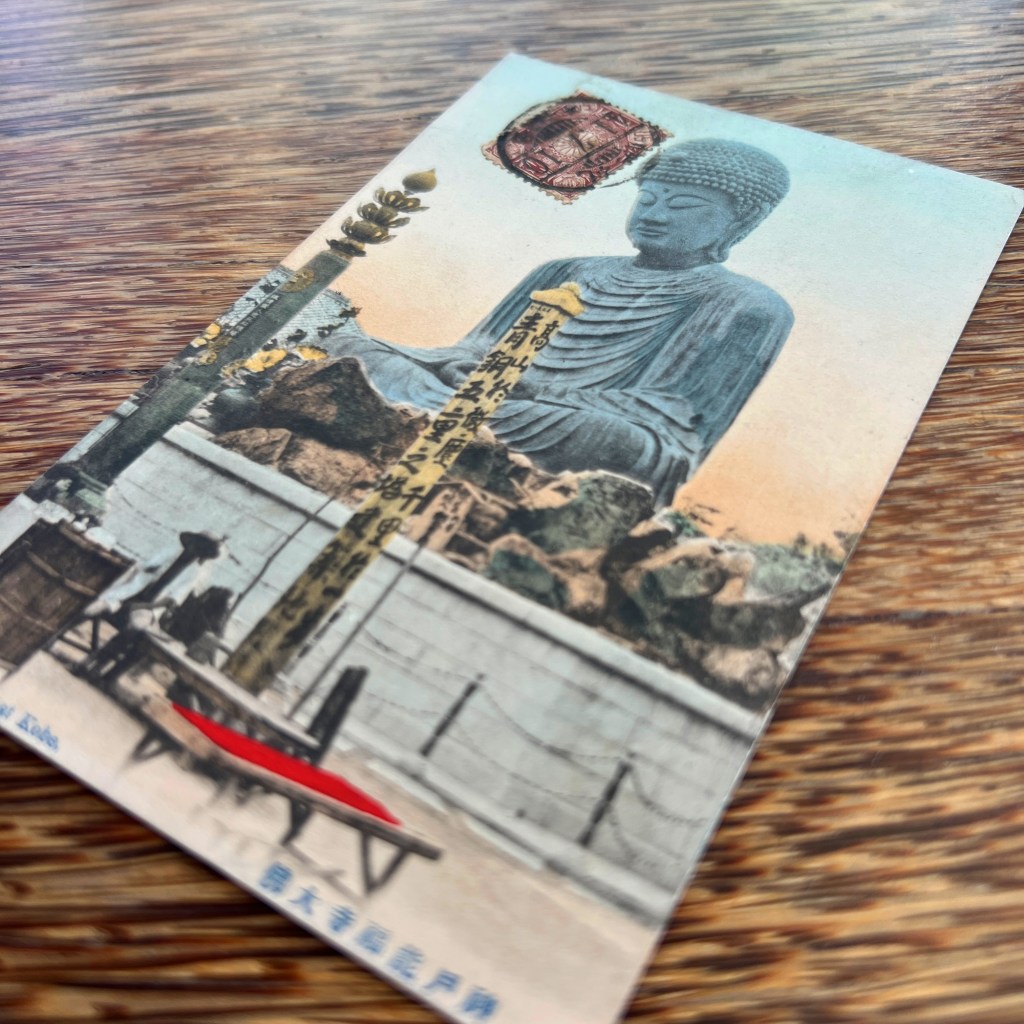
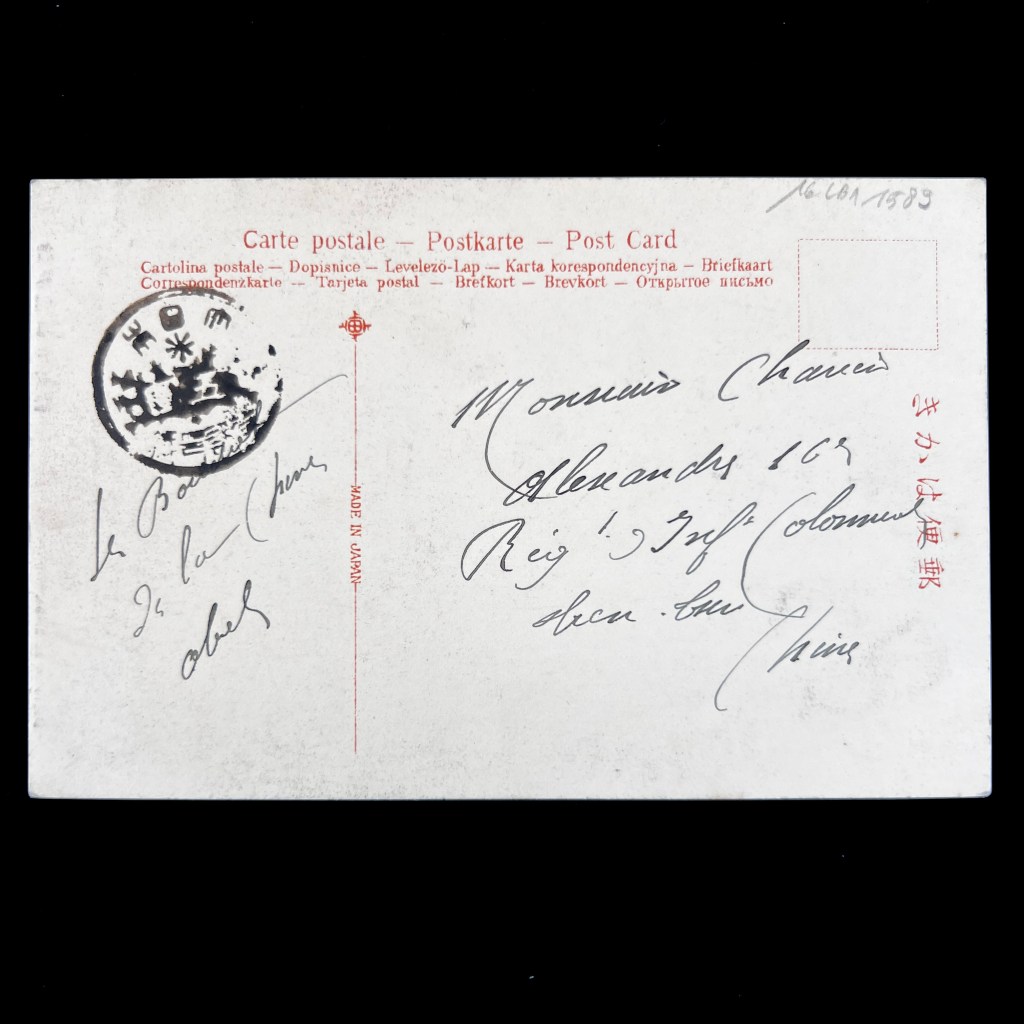
Guidebooks in the early 20th century refer to Nōfuku-ji as a worthy tourist destination when traveling through Kobe. Equally, Japanese postcard companies often used imagery of the Hyōgo Daibutsu; here we see a card made by Ueda Photo, one of the largest publishers during the late Meiji era.

Like the Kamakura Daibutsu, the outdoor setting allowed visitors an easy opportunity to have photographs taken in front of the colossal statue.

The statue was dismantled under the Ordinance on the Collection of Metals issued as part of Japanese war efforts during WWII. In 1991, one hundred years after the original was complete, a new Hyōgo Daibutsu was consecrated and remains today at Nōfuku-ji.


The Buddhas in the West Material Archive is a digital scholarship project that catalogues artifacts depicting Buddhist material culture for Western audiences. It’s comprised of prints, photos, and an assortment of ephemera and other objects. For a brief introduction to this archive, visit the main Buddhas in the West project page.


For Related Buddhas in the West Posts Featuring the Hyōgo Daibutsu:


For the Most Recent Buddhas in the West Posts:


Tamamura Kōzaburō’s Kamakura Daibutsu Photograph For Brinkley’s Japan

For all the new Buddhas in the West posts
follow us on Bluesky & Instagram


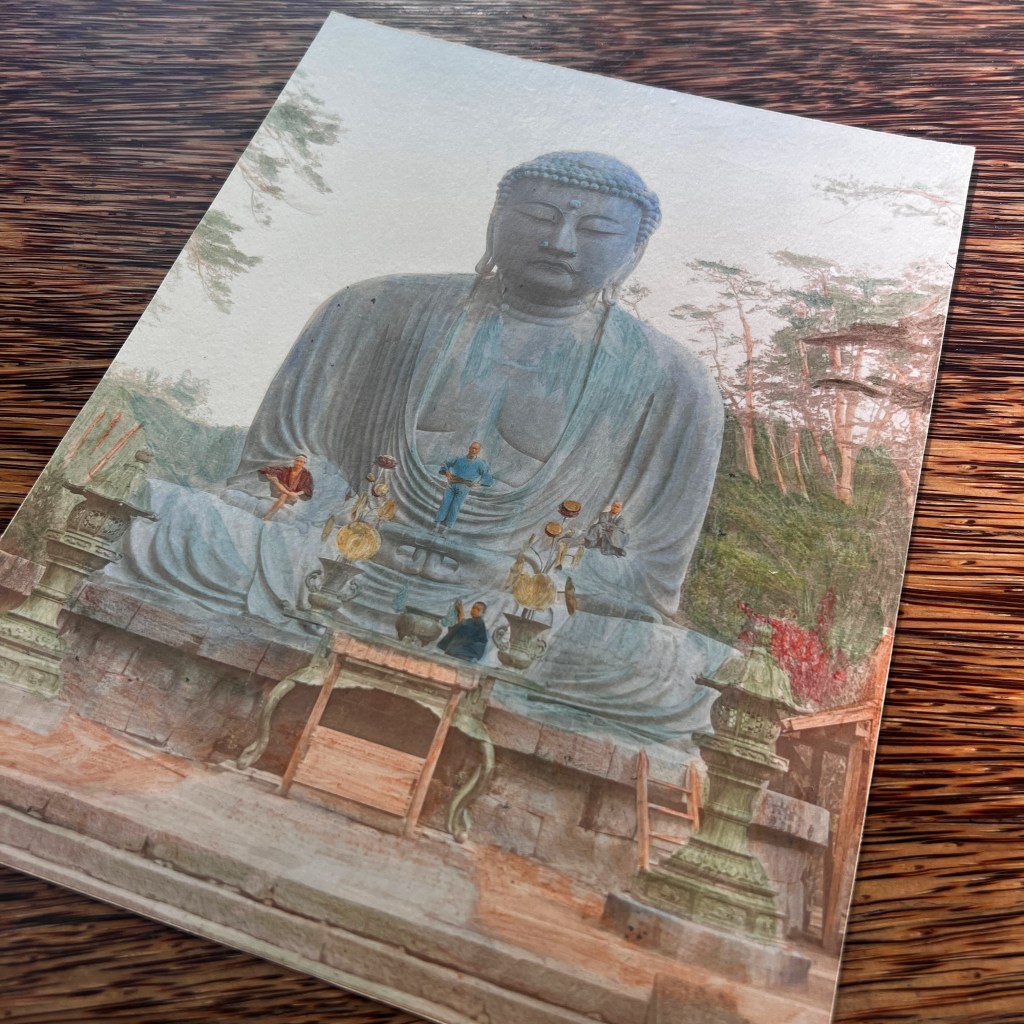
An astounding 400,000 hand-colored photographic prints were used for all editions of Francis Brinkley’s Japan: Described and Illustrated by the Japanese. Produced in Boston between 1897 and 1898, this work was the pinnacle of photographic book publishing at the turn of the century.

The photographs were imported from Japan from the Yokohama studio of Tamamura Kōzaburō, one of the most prolific Japanese photographers of his generation. He reportedly employed 350 artists for several months to complete the job, yet Tamamura’s name is omitted from the final publication.

Unlike most books of the era which used photomechanical prints, Brinkley’s Japan used mounted photographs. The Great Buddha of Kamakura was the second full page photograph, following Mt. Fuji, in the first volume, suggesting its perceived value in the American visual language of Japan.

Tamamura’s output was so extensive in preparation for Brinkley’s book, there was a fivefold increase in Japan’s photography exports between 1895 and 1896. This volume of work was achieved at expense of quality, as many of the color washes are pale and poorly executed.

While the number of one million photos for Brinkley’s Japan was likely exaggerated by Tamamura for publicity, this was truly an enormous undertaking. To view the first volume of Brinkley’s Japan held by the Getty Museum, see here: https://tinyurl.com/bddt5z32.


The Buddhas in the West Material Archive is a digital scholarship project that catalogues artifacts depicting Buddhist material culture for Western audiences. It’s comprised of prints, photos, and an assortment of ephemera and other objects. For a brief introduction to this archive, visit the main Buddhas in the West project page.


For Related Buddhas in the West Posts Featuring the Kamakura Daibutsu:


For the Most Recent Buddhas in the West Posts:


T. Enami’s Sanjūsangen-dō Lantern Slide

For all the new Buddhas in the West posts
follow us on Bluesky & Instagram


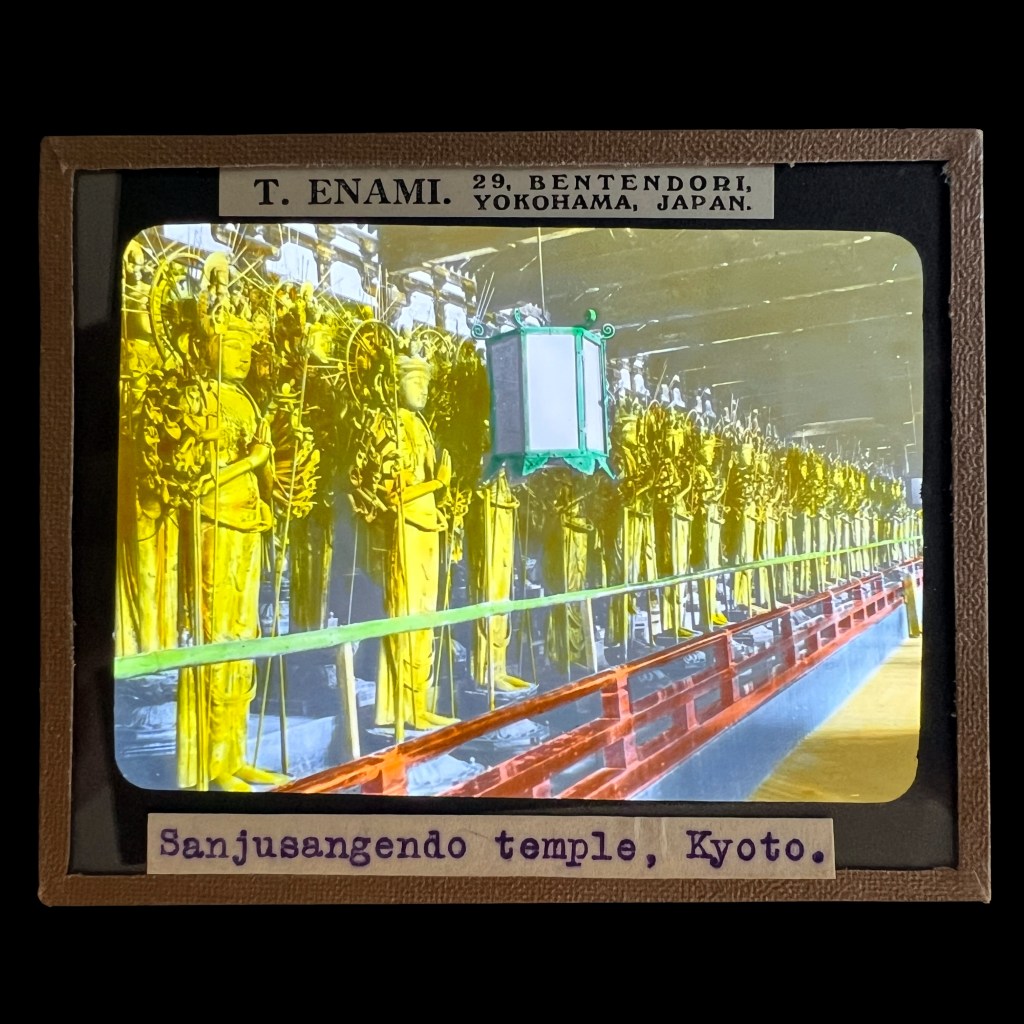
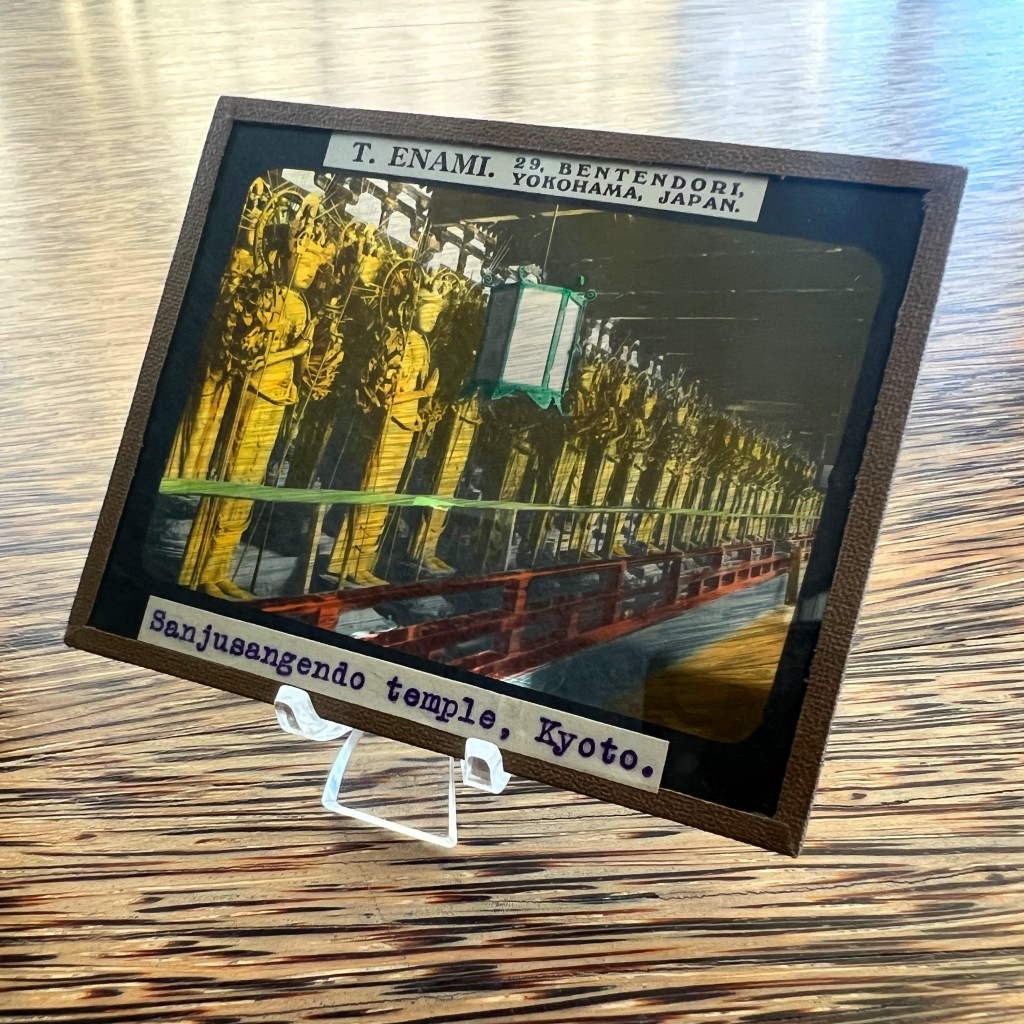
Before nickelodeons and cinema halls, “magic lantern” shows were an important part of popular American entertainment. Hand tinted glass slides were used by children’s story tellers, stage magicians, and traveling public lecturers in town and cities across the United States.

Enami Nobukuni, known professionally as T. Enami, opened his Yokohama photography studio in 1892 and by 1915 offered a very large glass slide portfolio. Objects such as this would have been sold as visual aids for public presentations or parlor room entertainment.

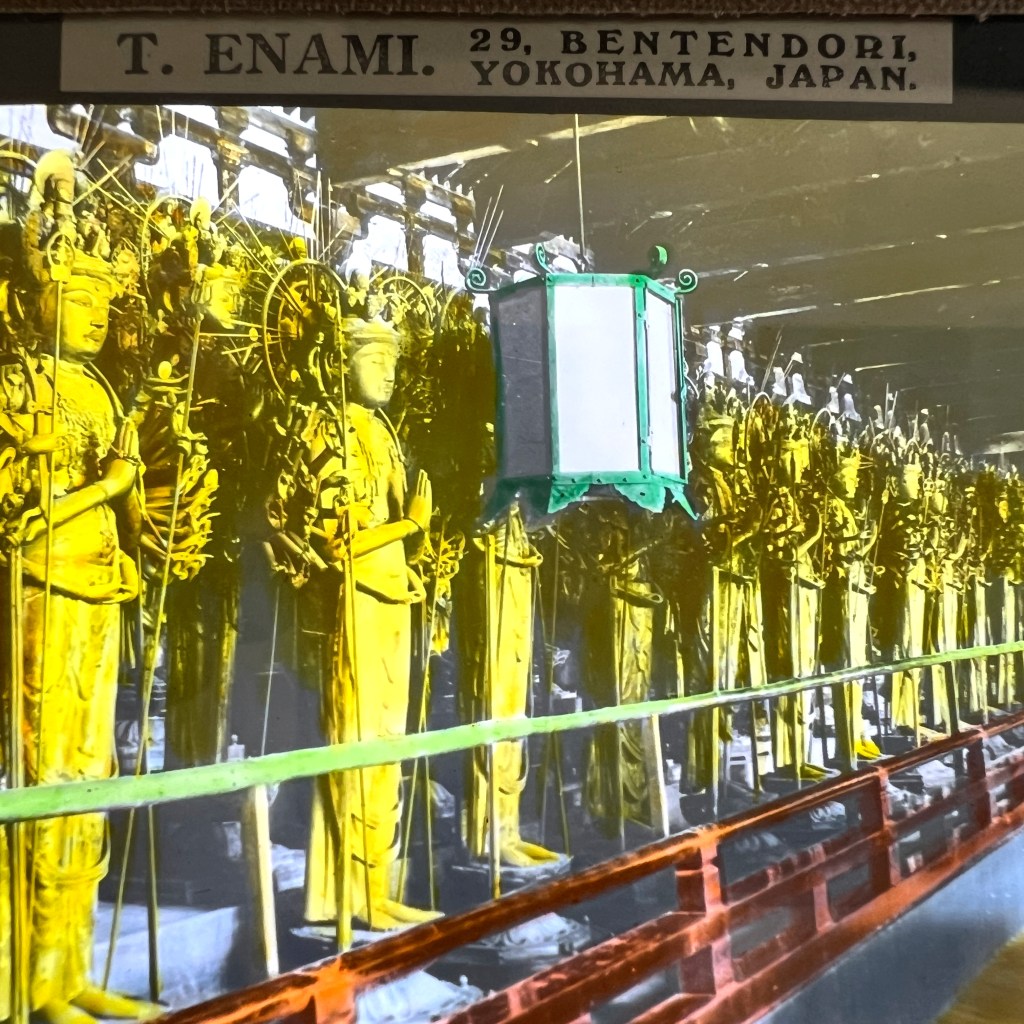
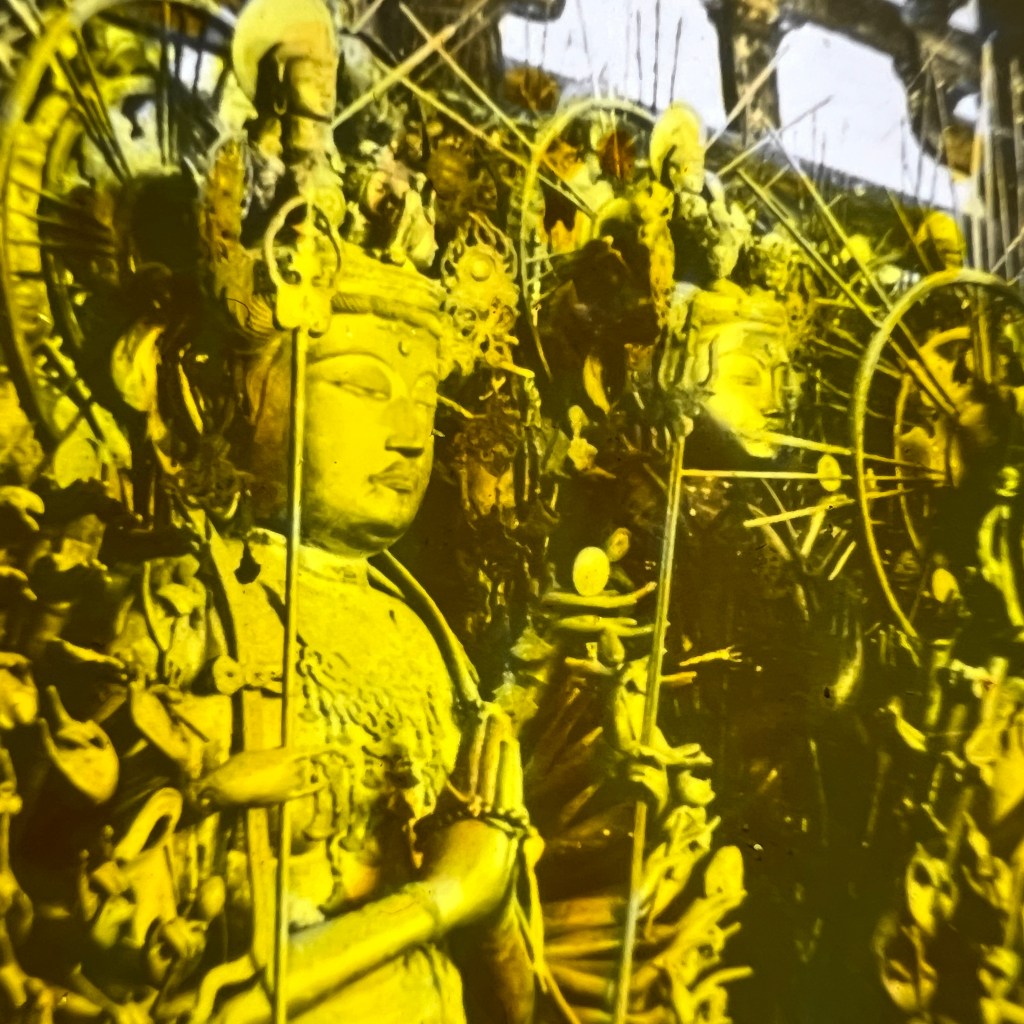
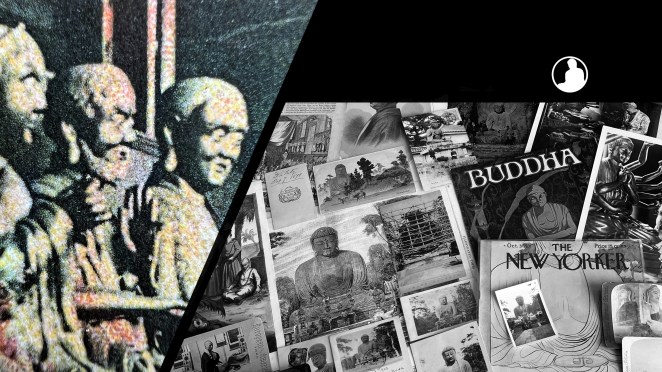
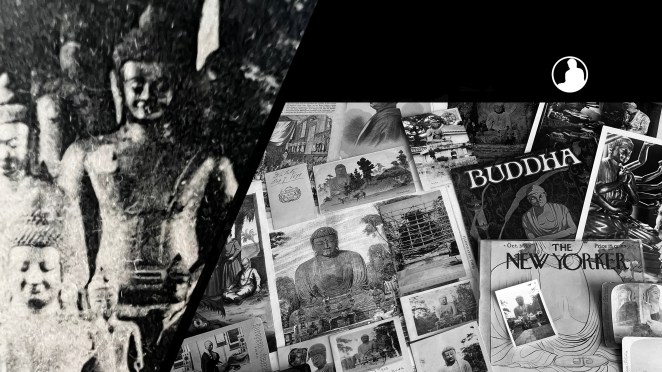
This slide shows a grouping of the famous one thousand Kannon statues of Sanjūsangendō in Kyoto, one of the most commonly photographed tourist sites in Japan during the late Meiji and Victorian periods.

Enami was celebrated for the beautiful hand tinting of his slides, but the coloring here suggests this slide was produced after his death in 1929, when his son took over the business and did not have an eye for finer detail like his father.

Enami was Japan’s most prolific producer of small format photographs and was often showcased in National Geographic Magazine. To view a selection of Enami’s photographs, see the digitized collection of Kjeld Duits, viewable here: tinyurl.com/245skpf8.


The Buddhas in the West Material Archive is a digital scholarship project that catalogues artifacts depicting Buddhist material culture for Western audiences. It’s comprised of prints, photos, and an assortment of ephemera and other objects. For a brief introduction to this archive, visit the main Buddhas in the West project page.


For Related Buddhas in the West Posts Featuring Lantern Slides:

For the Most Recent Buddhas in the West Posts:

Alain Mallet’s Dalai Lama Engraving

For all the new Buddhas in the West posts
follow us on Bluesky & Instagram


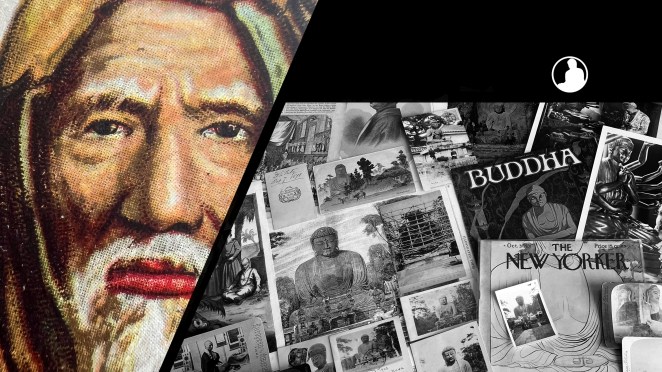
Earliest European depiction of the Dalai Lama? In 1683 Alain Mallet published his illustrated five-volume set entitled Description de l’univers. The second volume, devoted to Asia, contained an illustration of the Grand Lama, a “living and true God.”

Mallet copied an earlier illustration of Althanius Kircher from 1667 with minimal changes. The engraving shown here was hand colored (possibly after publication), giving the Dalai Lama a dark red robe.

While not named in the text, the original illustration was published during the lifetime of the famed Fifth Dalai Lama, Ngawang Lobsang Gyatso. Information about the Dalai Lama was gleaned from the reports of Jesuit missionary Johann Grueber who visited Lhasa in 1661.

The Fifth Dalai Lama died in 1682, a year before Mallet’s publication, but his passing was concealed for more than a decade. Mallet reports on the process of reincarnation, describing it as a “deception.”

To read Mallet’s text associated with this image, see the digitized scan provided by the University of Ottawa here: https://tinyurl.com/37895xc9


The Buddhas in the West Material Archive is a digital scholarship project that catalogues artifacts depicting Buddhist material culture for Western audiences. It’s comprised of prints, photos, and an assortment of ephemera and other objects. For a brief introduction to this archive, visit the main Buddhas in the West project page.


For Related Buddhas in the West Posts Featuring Engravings:


For the Most Recent Buddhas in the West Posts:

Johannes Nieuhof’s Temple Interior Engraving

For all the new Buddhas in the West posts
follow us on Bluesky & Instagram


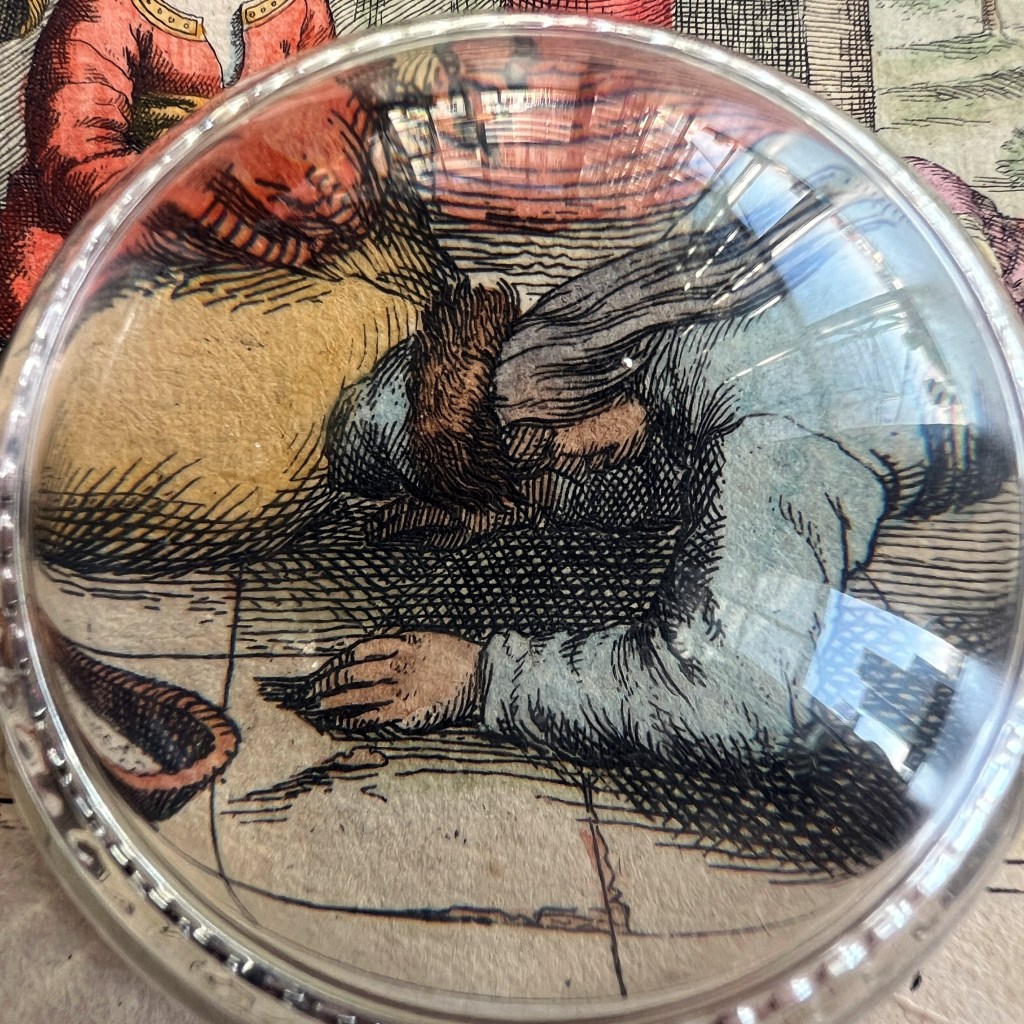
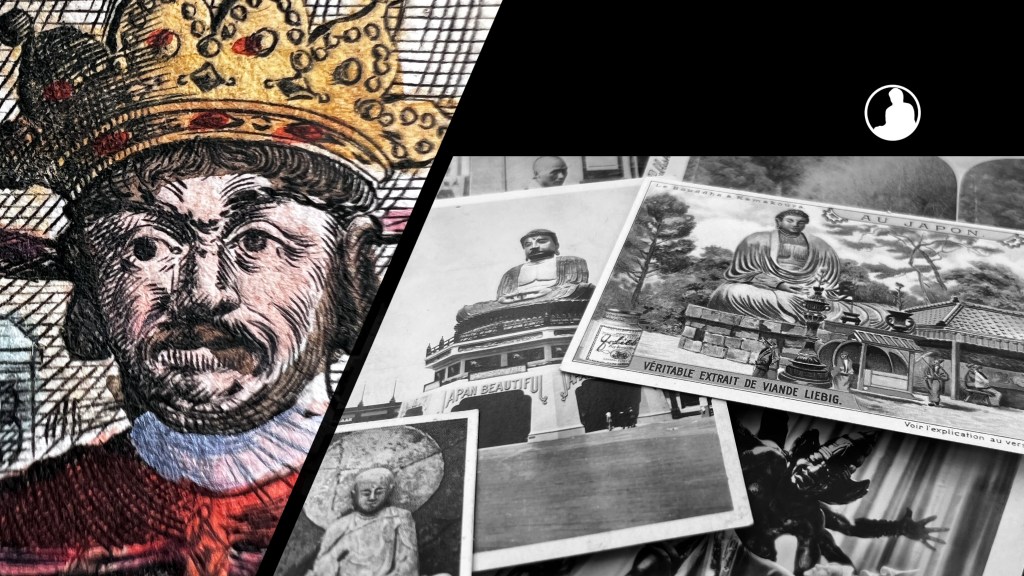
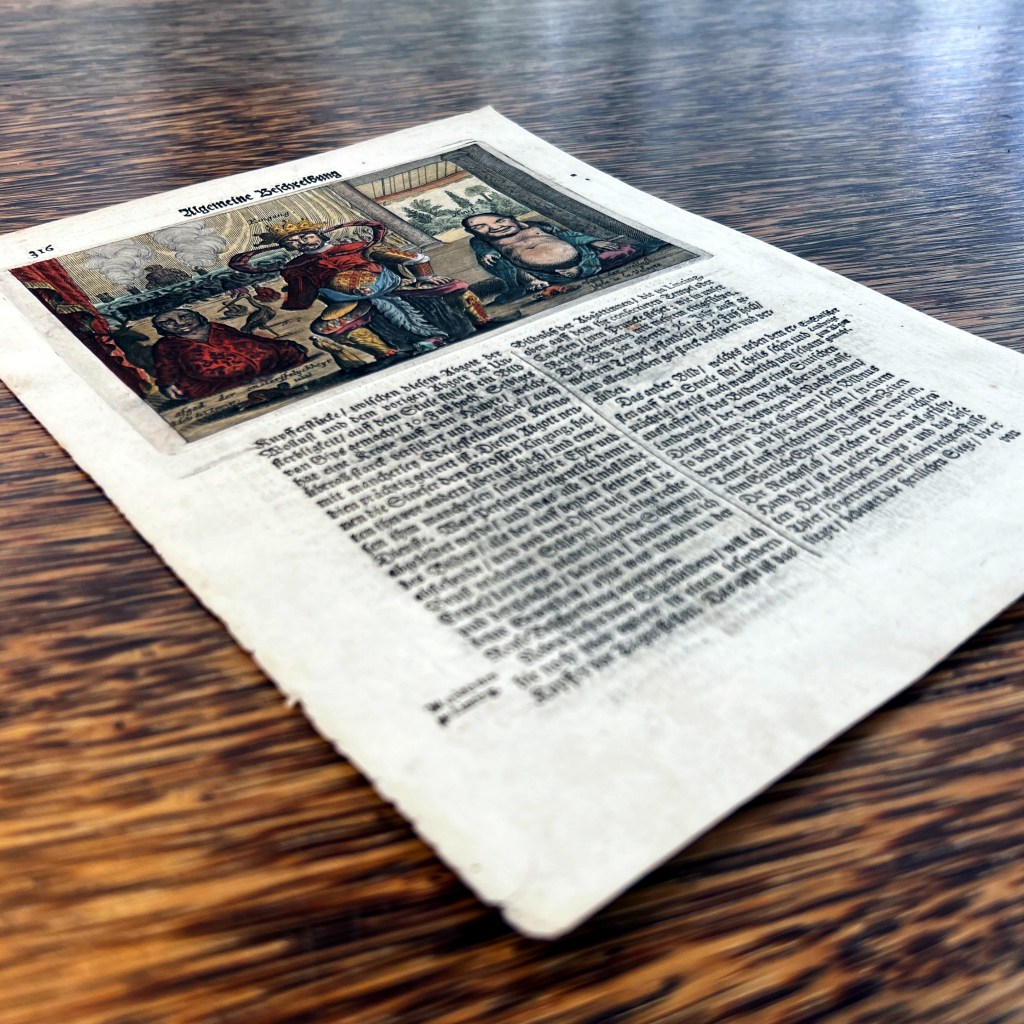
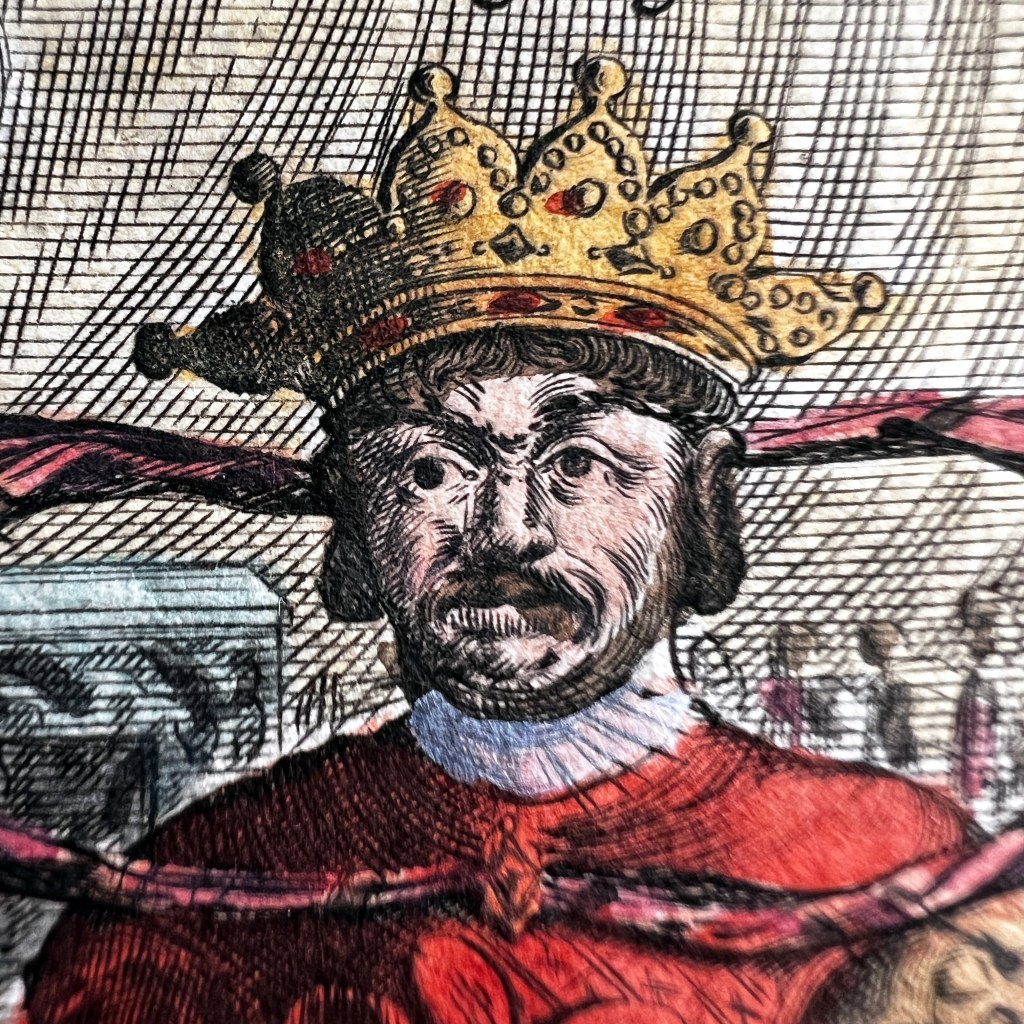
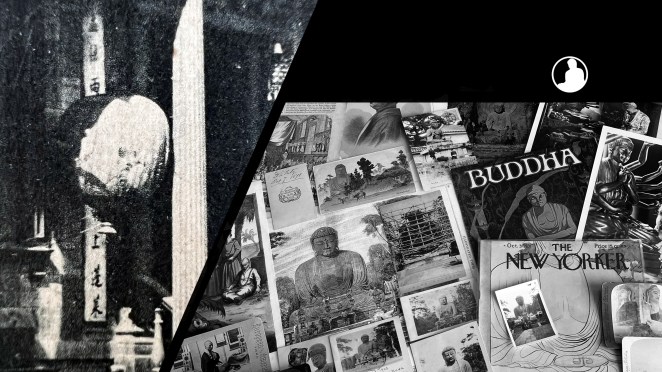
Some of the earliest Buddhist imagery in Europe appears as copperplate engravings in late 17th century books. Here’s a hand-colored page from the German edition of An Embassy of the Dutch East India Company by Johannes Nieuhof showing the imaginary interior of a Chinese temple.

Nieuhof’s work was the first illustrated European book on China. Moreover, after Nieuhof returned from the first Dutch envoy to China in 1657, his personal drawings formed the basis for many illustrations in this work.

The copper plates were most likely prepared in the workshop of the publisher Jacob van Meurs who printed the first Dutch edition in 1665; the German edition appeared in 1666. You can still see the impression of the plate in the paper. The text was standard letterpress.

This page was extracted from a volume and is 27 cm x 20 cm (10 in x 8 in) in size.

A Buddhist statue is also seen on the back altar.

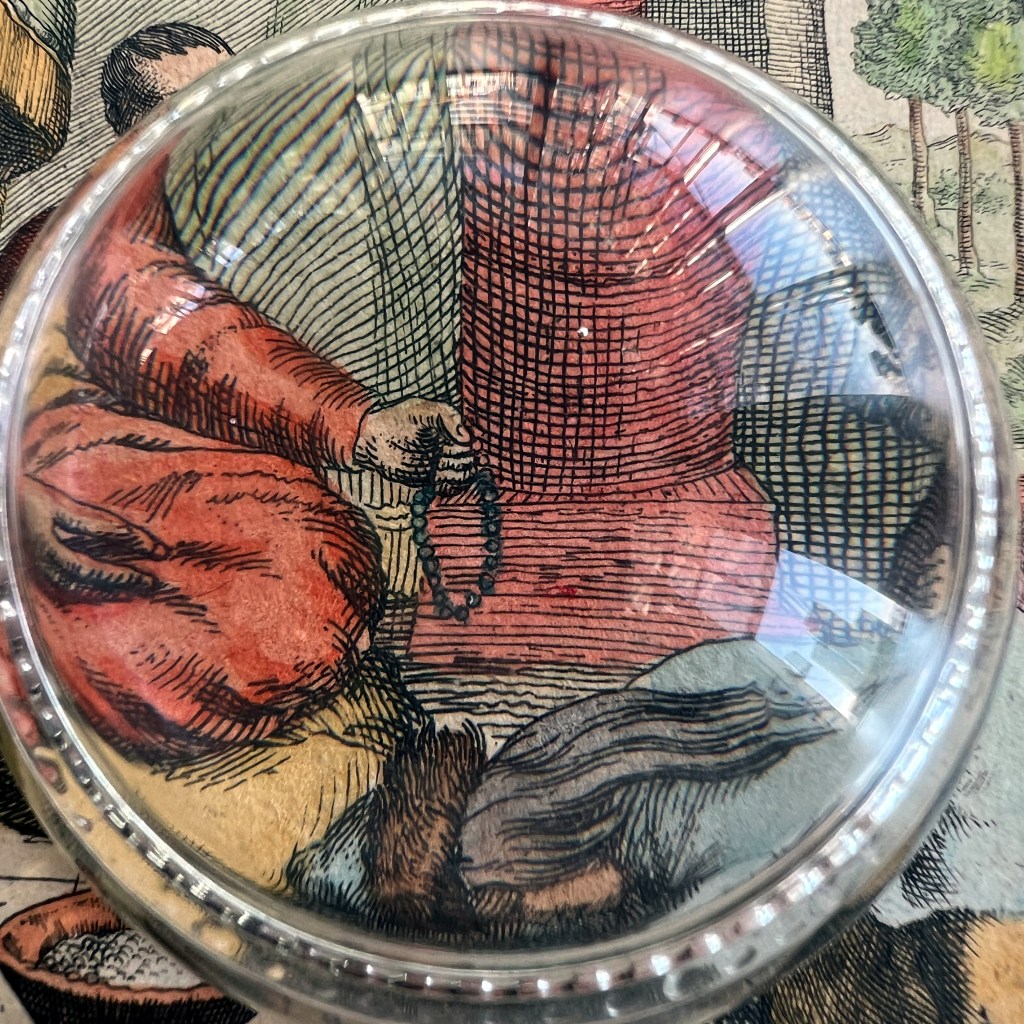
Prostrating Buddhist devotees enliven the scene.

The etching reveals meticulous line work. Amazingly, A manuscript copy of Nieuhof’s sketches was discovered in the 1970s and is held by the Bibliothèque Nationale de France, it can be viewed here: https://tinyurl.com/yb94urpj


The Buddhas in the West Material Archive is a digital scholarship project that catalogues artifacts depicting Buddhist material culture for Western audiences. It’s comprised of prints, photos, and an assortment of ephemera and other objects. For a brief introduction to this archive, visit the main Buddhas in the West project page.


For Related Buddhas in the West Posts Featuring Historical Engravings:


For the Most Recent Buddhas in the West Posts: