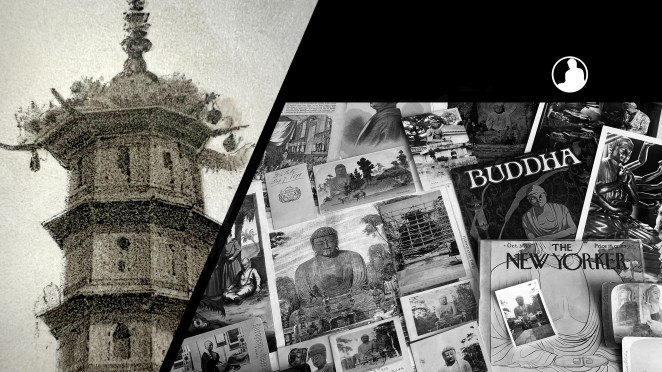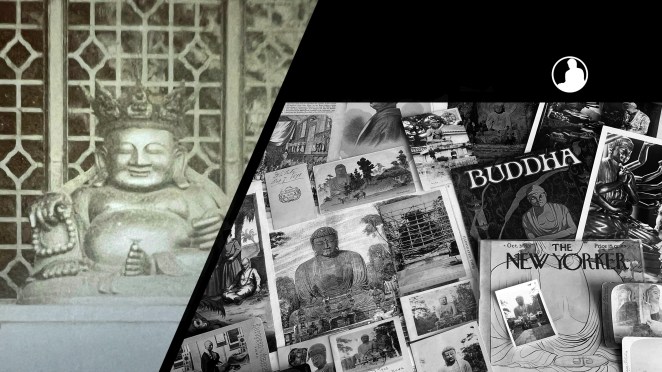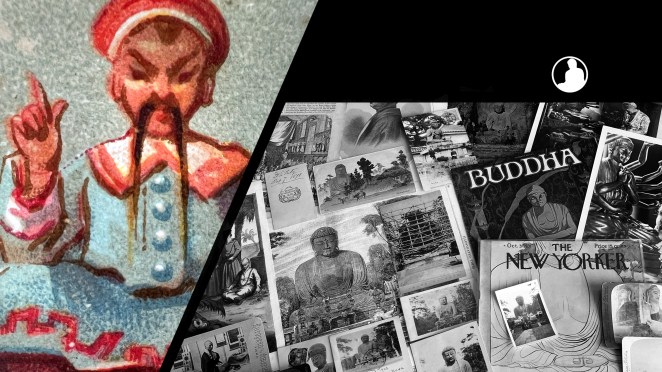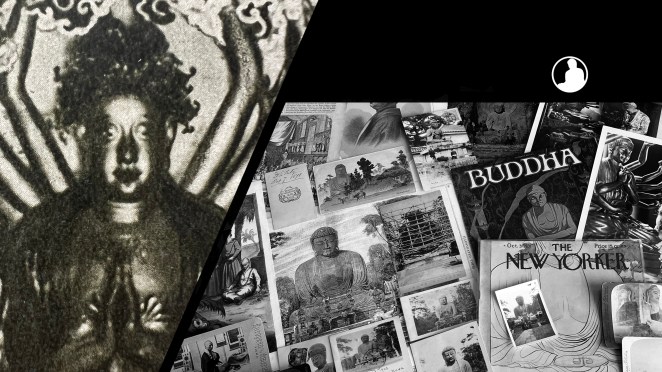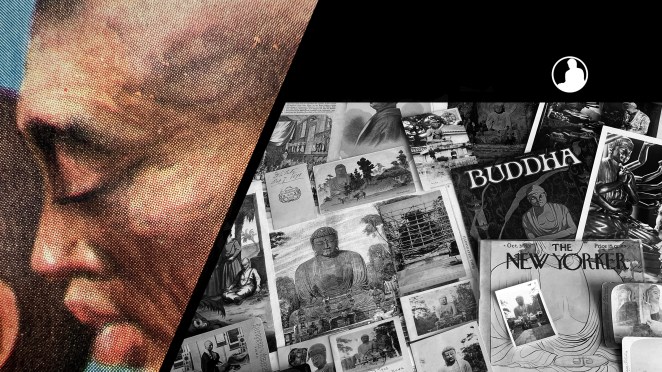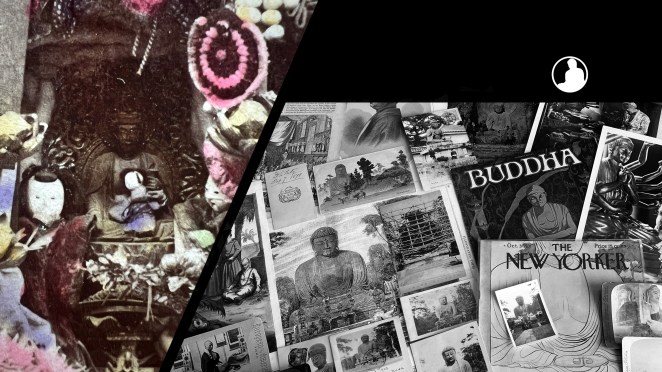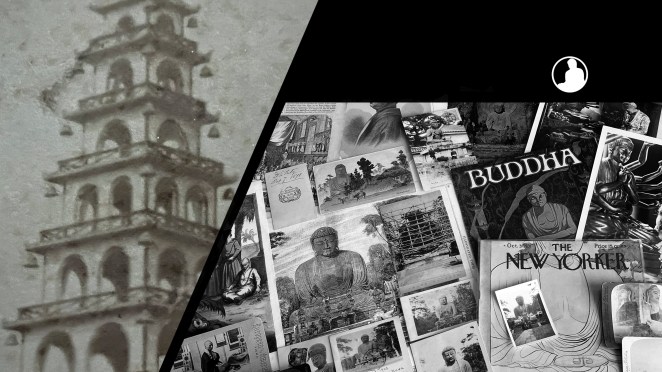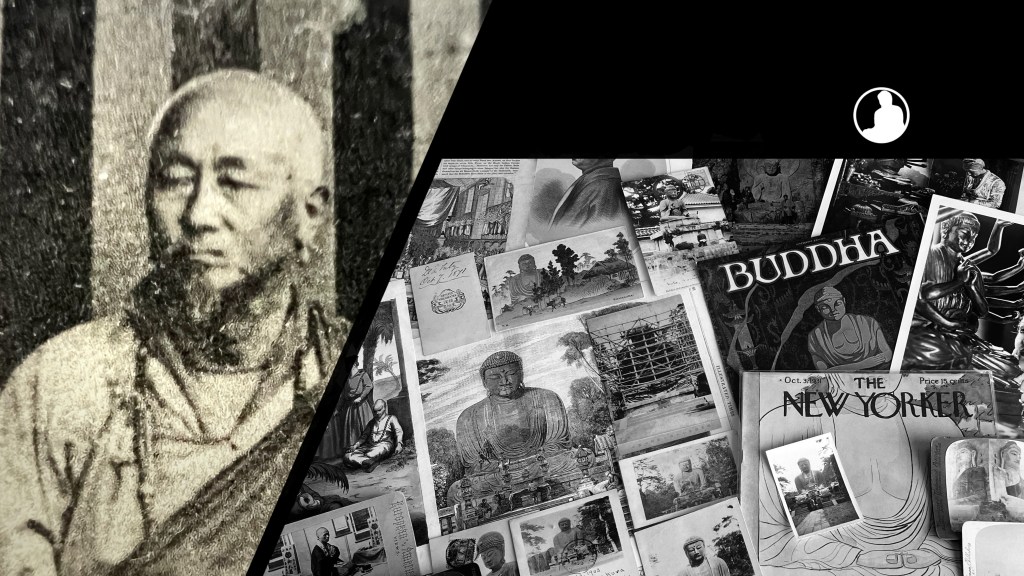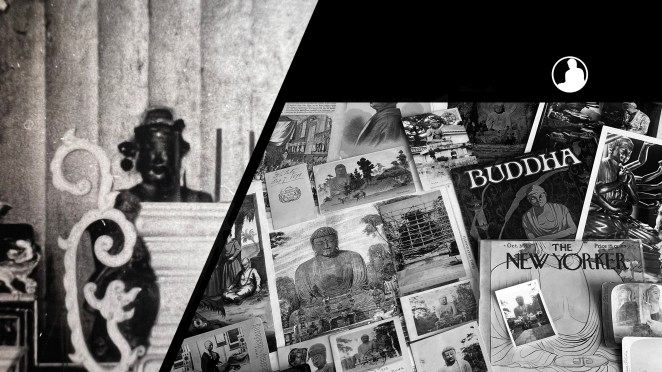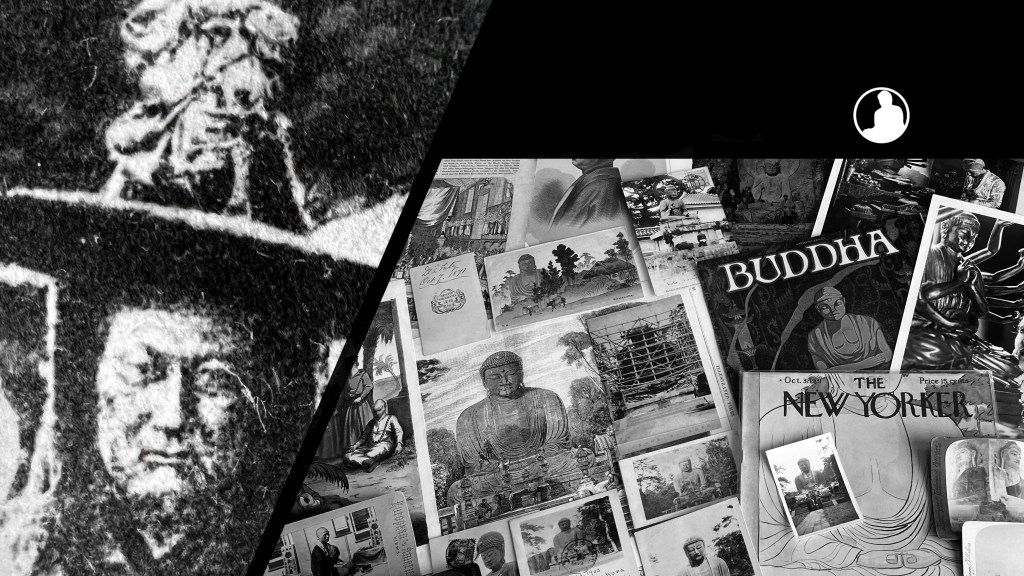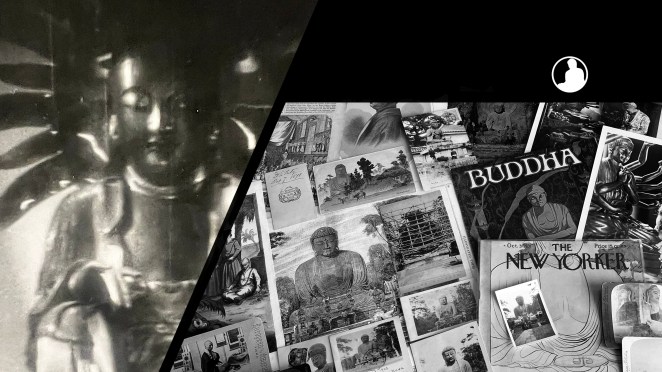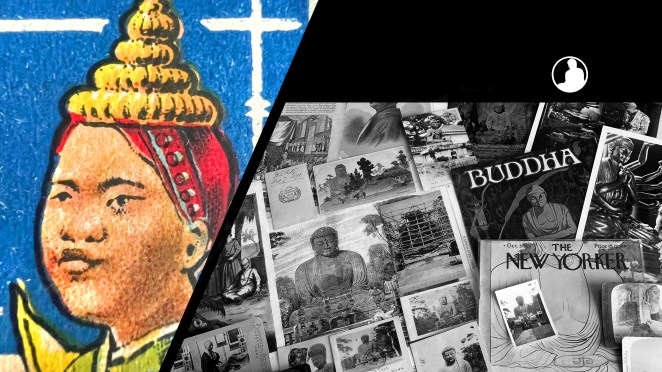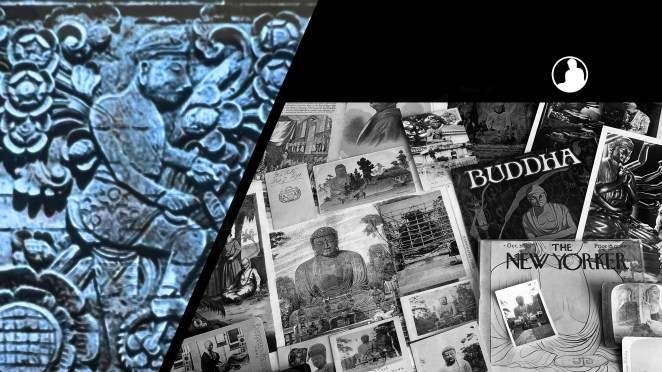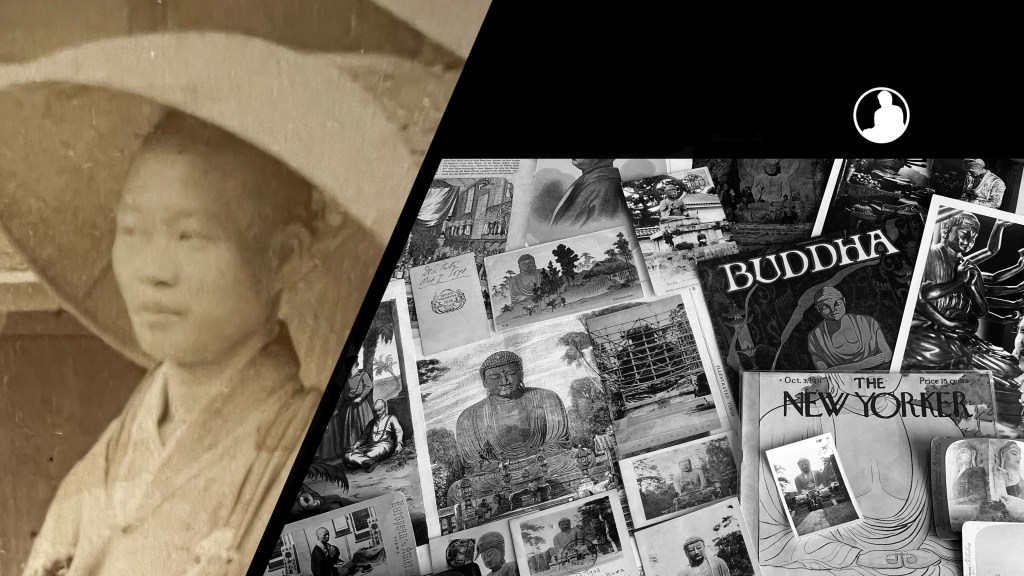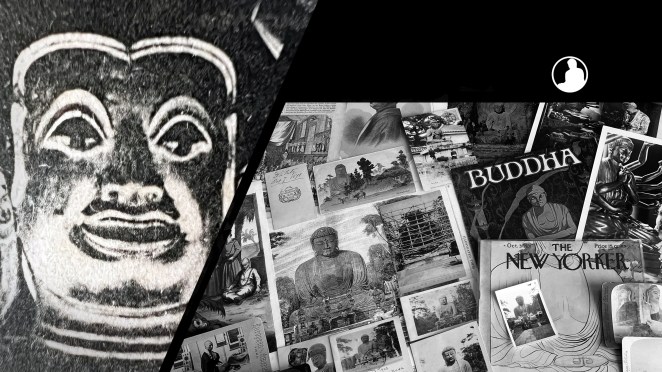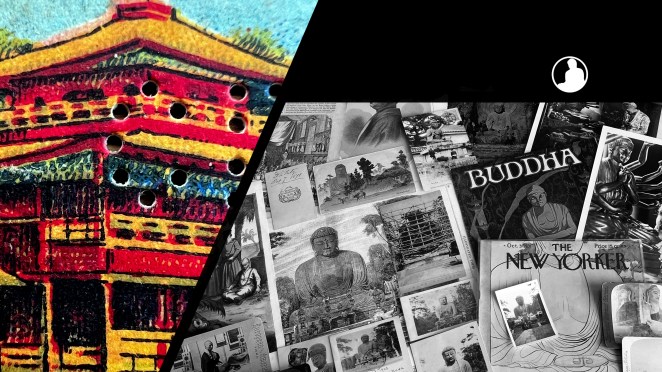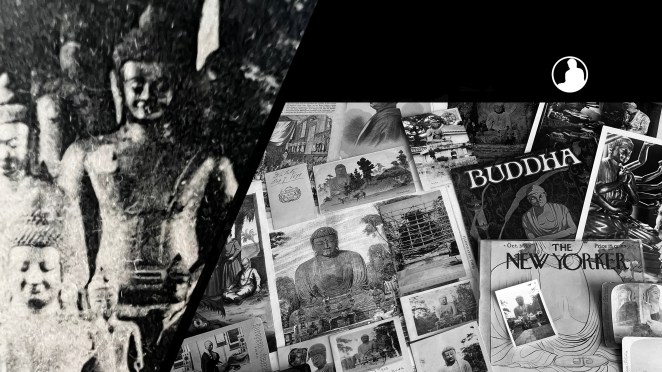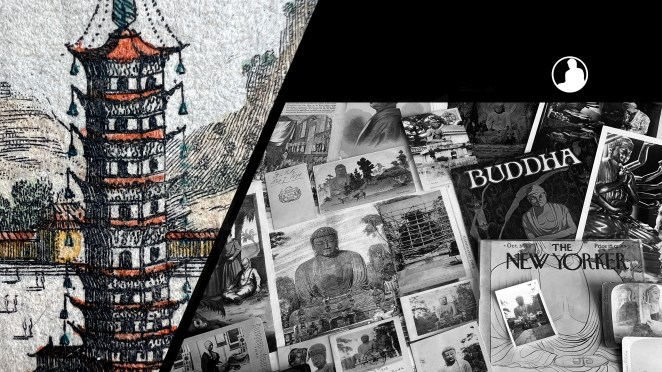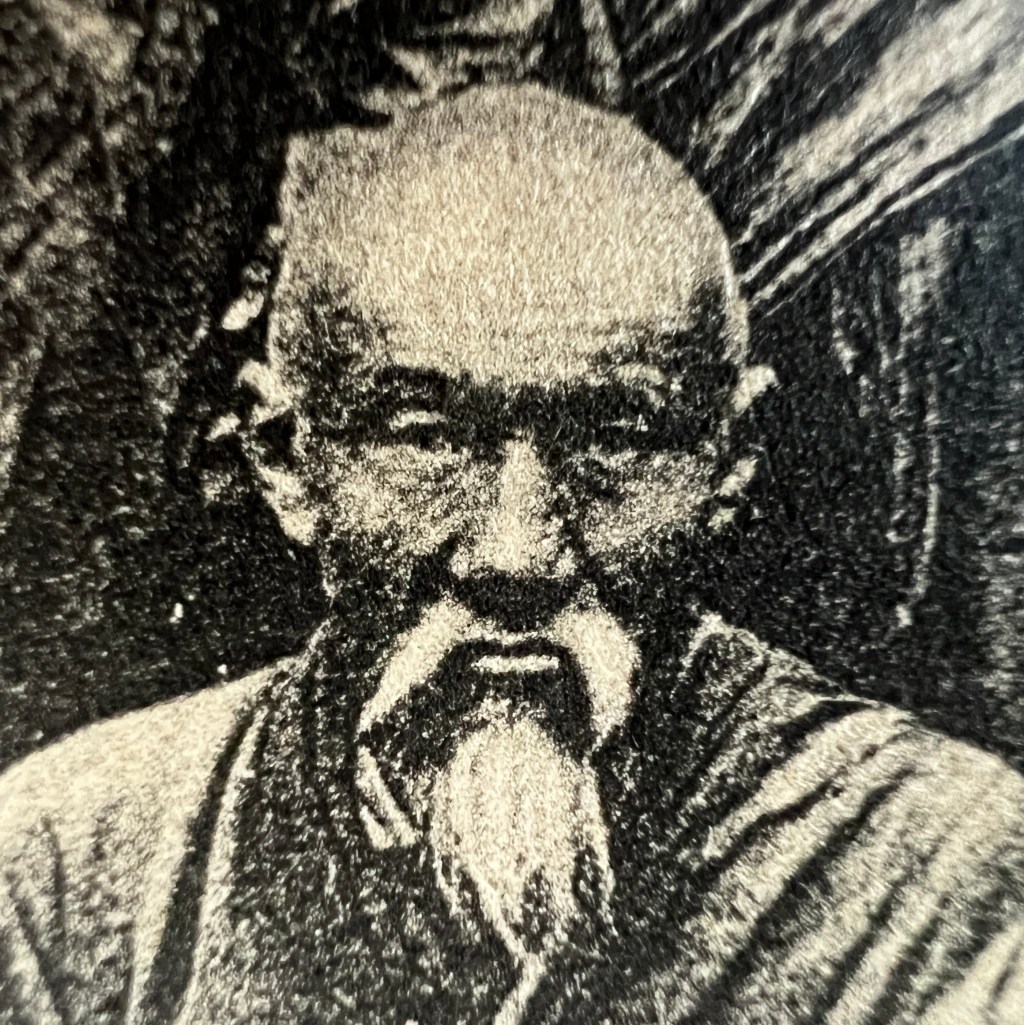
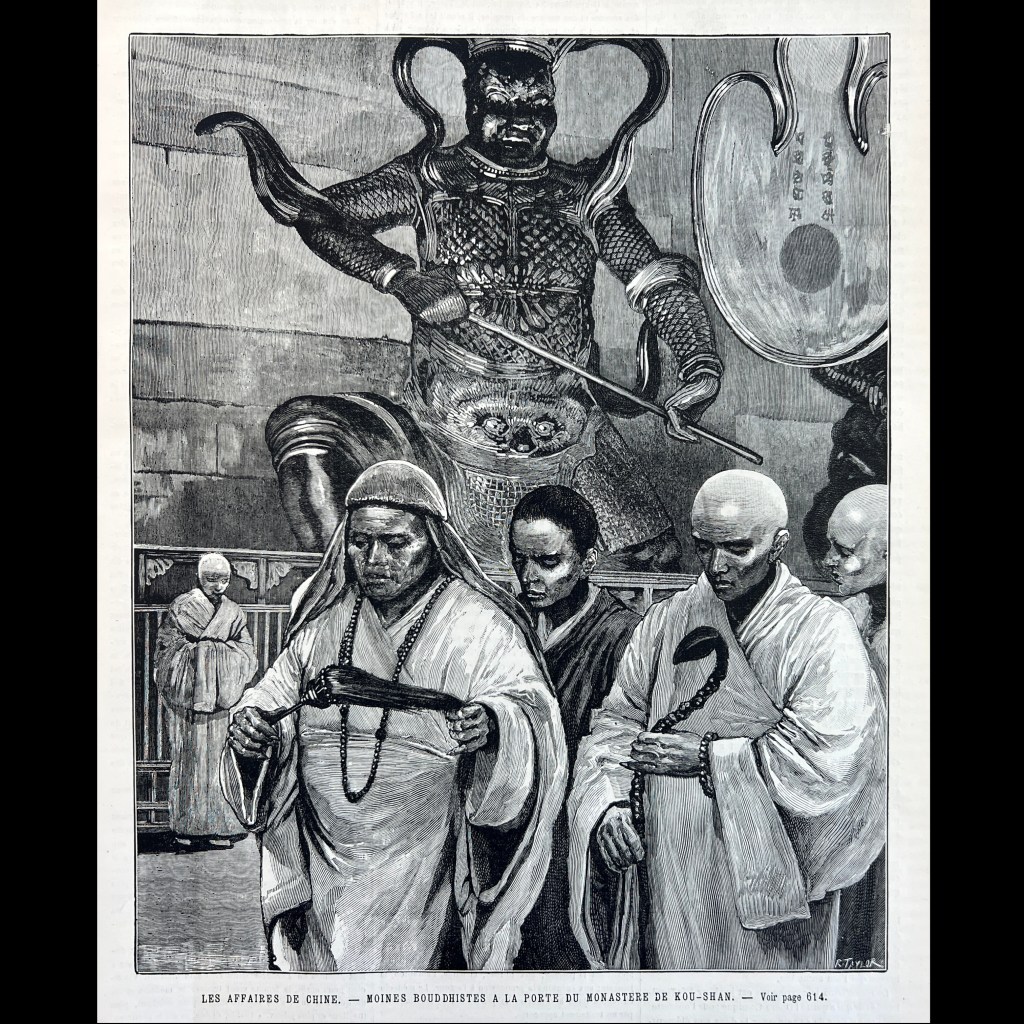
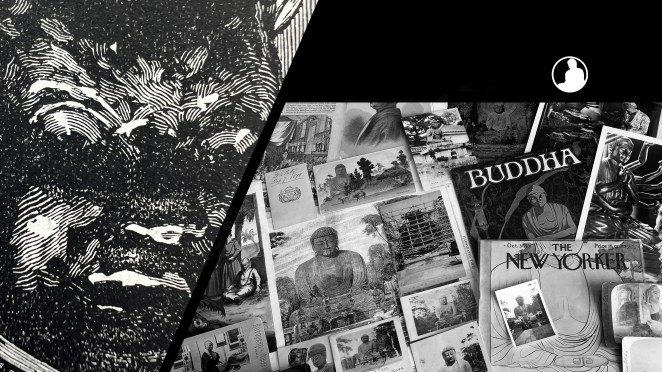
Engraving of John Thomson’s Photograph of Gushan’s Monks

For all the new Buddhas in the West posts
follow us on Bluesky & Instagram


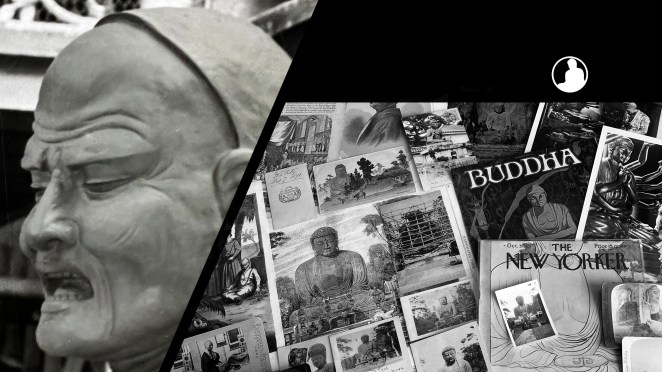
After Fuzhou opened to foreign trade in 1842, missionaries, merchants, and travelers began climbing the stone stairway to Gushan. The dramatic setting with temple roofs rising from forested slopes above the Min River plain made it irresistible to photographers and travel writers.
Set on the peaks of Gushan, Yongquan Monastery was a large complex with many monks and thus drew considerable attention from foreigners. The temple was relatively close to the city center of Fuzhou, making excursions into the mountains feasible for many.
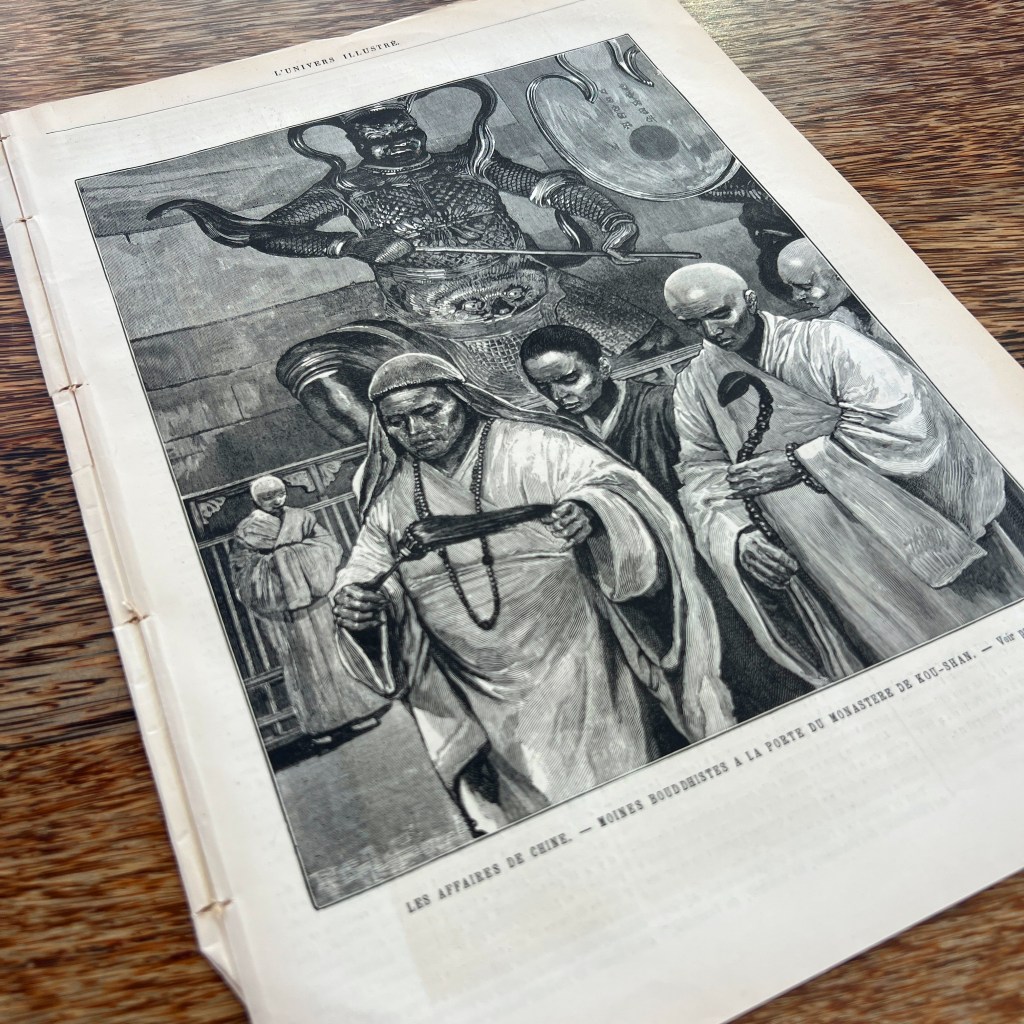
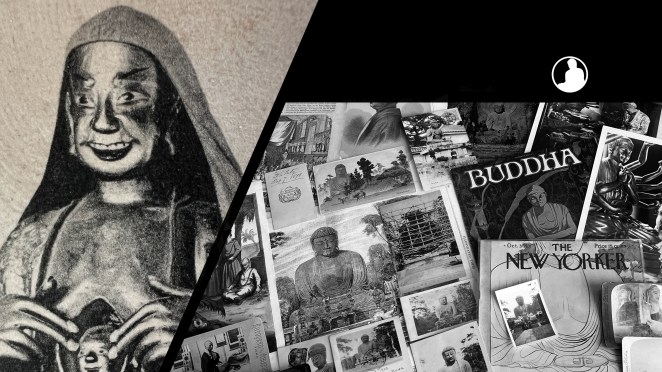
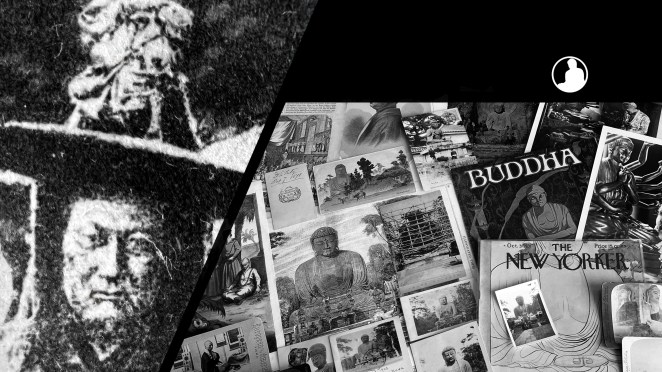
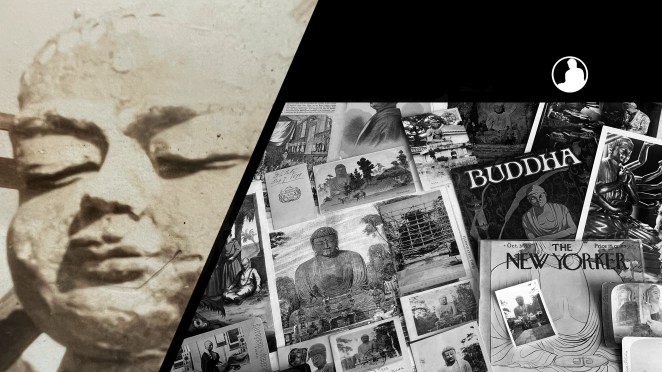
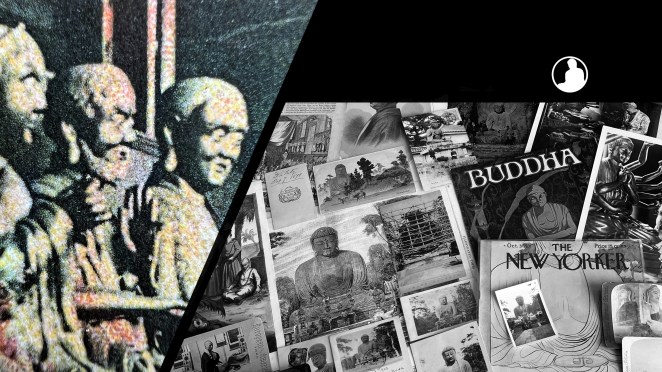
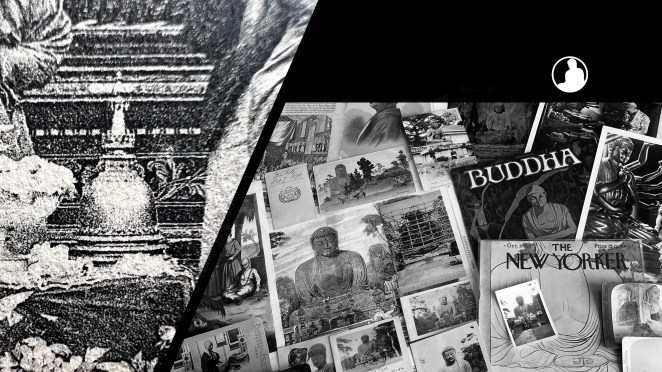
The woodcut engraving depicting the monks of Gushan appeared in an 1884 edition of L’Univers illustré, an illustrated weekly French newspaper. The accompanying short article notes the Buddhist monastery on Gushan “ranks among the most renowned” in Fuzhou.
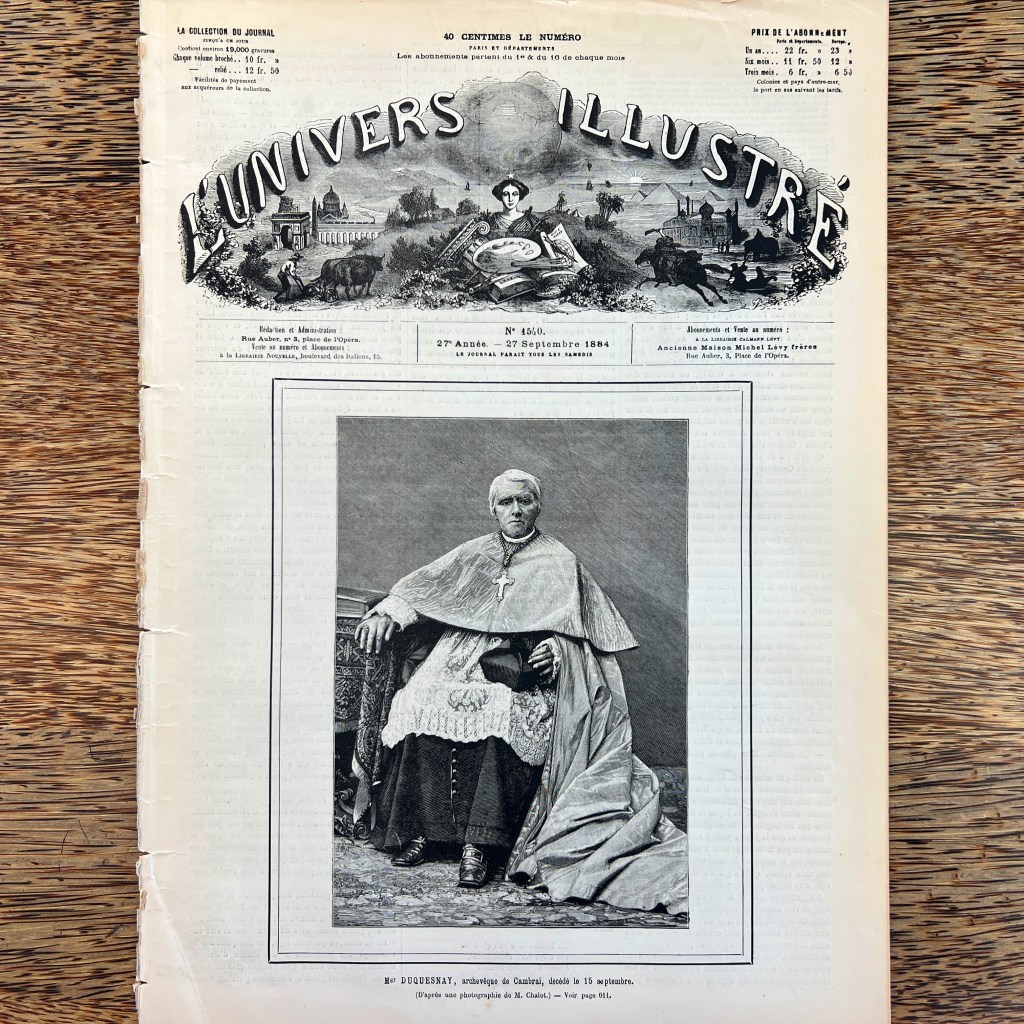
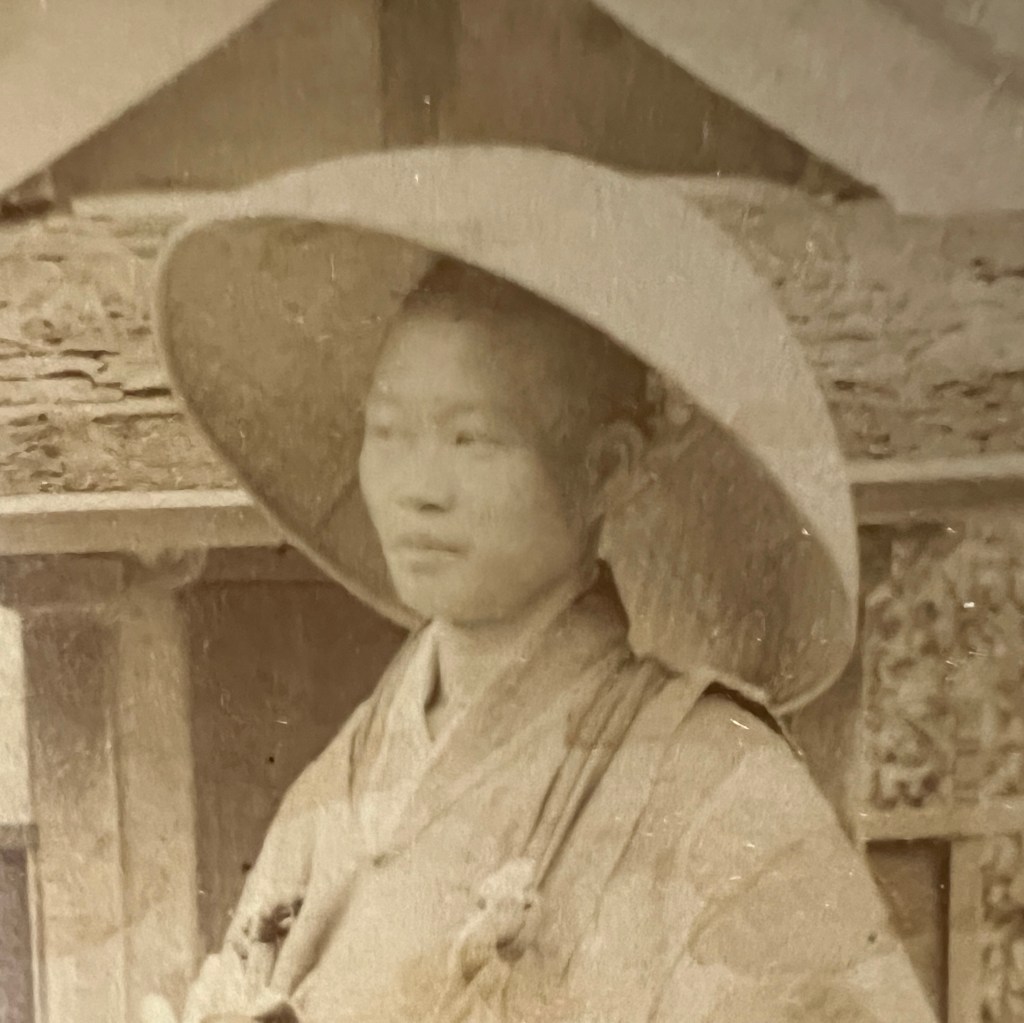
Scottish photographer John Thomson took many photos of Fuzhou and the Min River in the 1870s, including the monks of Yongquan Monastery. This engraving clearly draws upon a photograph first published by Thomson in his Foochow and the River Min (1873).
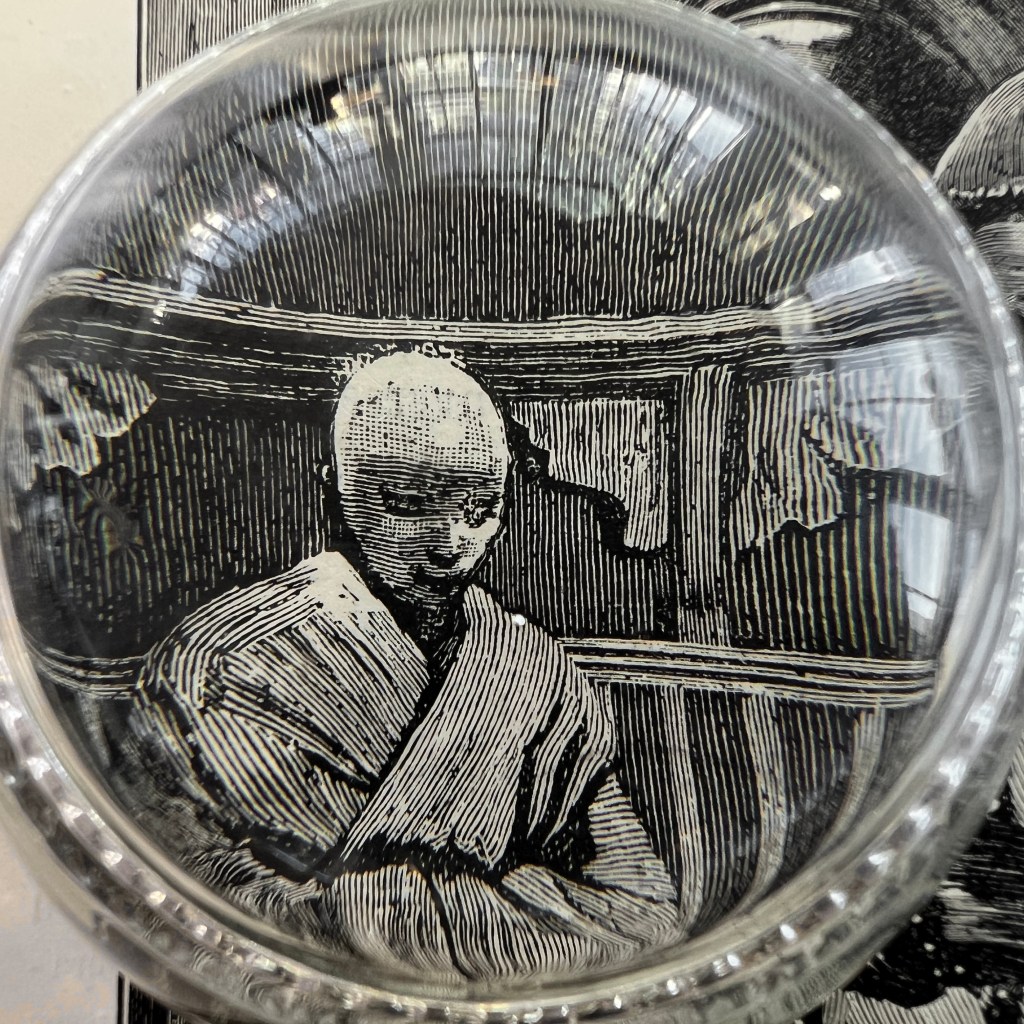
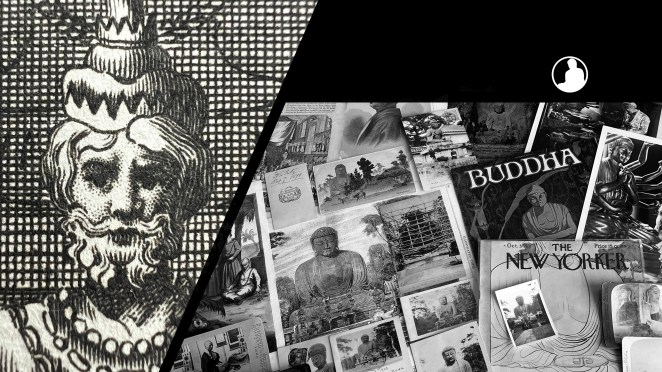
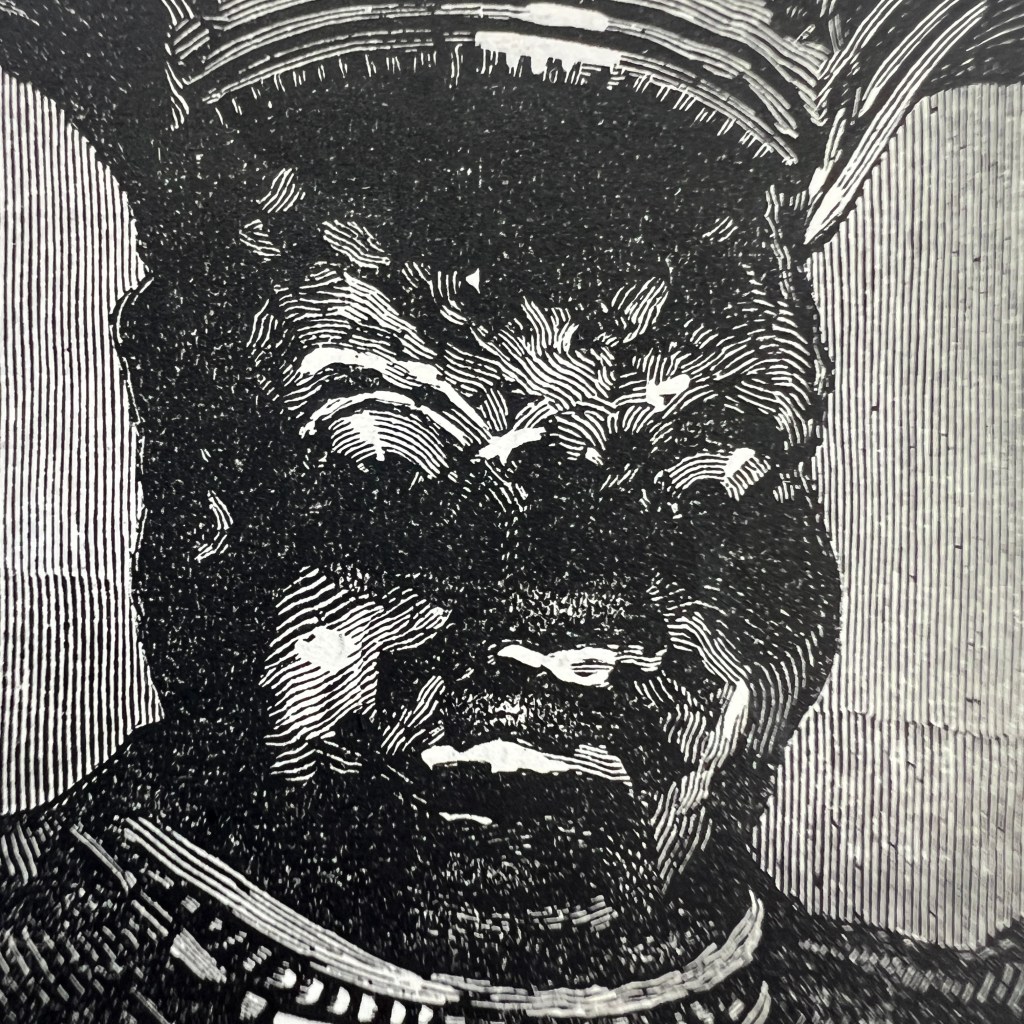
The artist R. Caton Woodville transformed Thomson’s formal sitting portrait into a more animated scene with monks walking by the temple gate; the Heavenly King statue was added for dramatic effect. To compare the engraving with Thomson’s photo, see here: https://tinyurl.com/yeuepkht.
The Buddhas in the West Material Archive is a digital scholarship project that catalogues artifacts depicting Buddhist material culture for Western audiences. It’s comprised of prints, photos, and an assortment of ephemera and other objects. For a brief introduction to this archive, visit the main Buddhas in the West project page.


For Related Buddhas in the West Posts Featuring China:

For the Most Recent Buddhas in the West Posts:
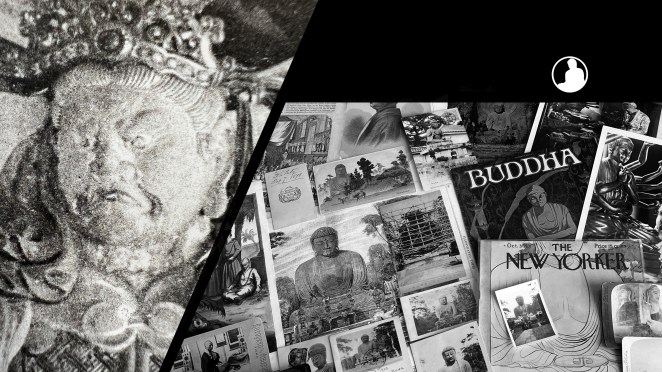

Pierre Dieulefils’ Abbot of Marble Mountains Postcard

For all the new Buddhas in the West posts
follow us on Bluesky & Instagram


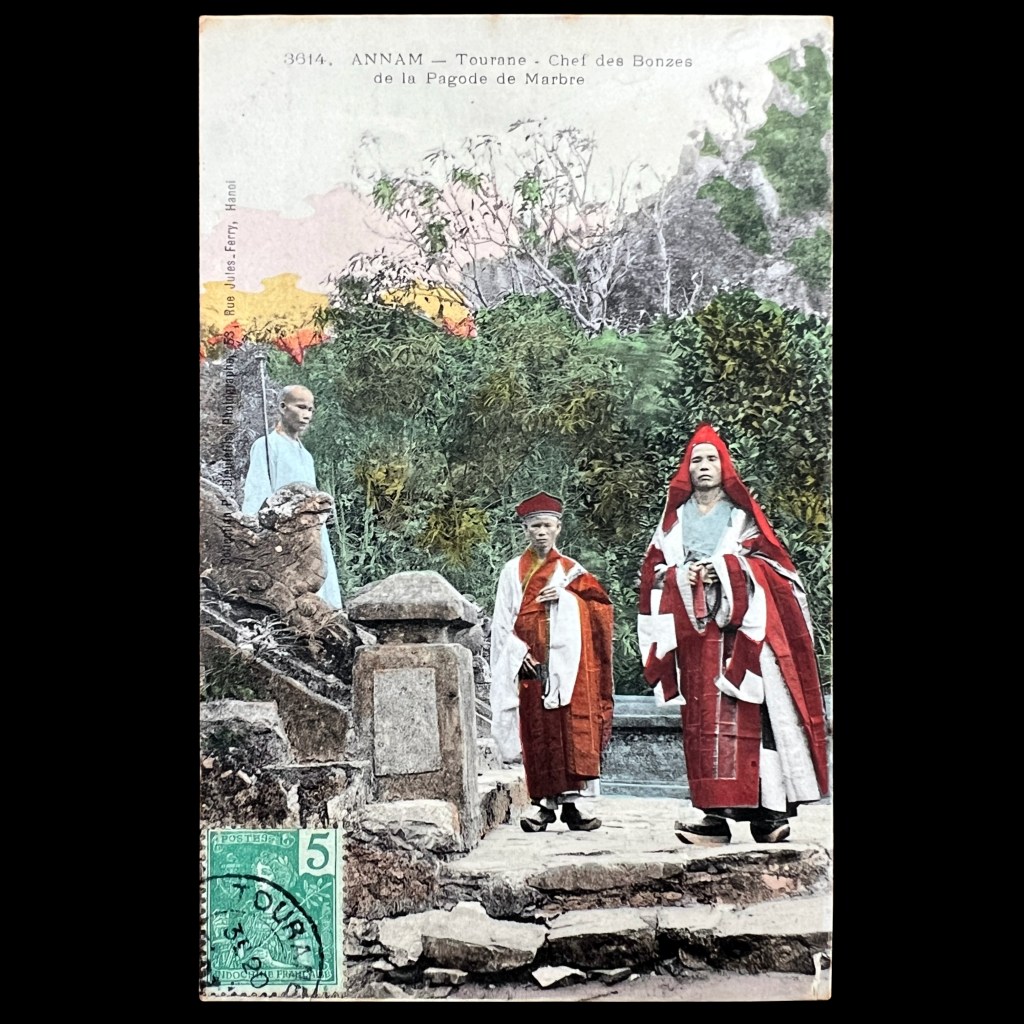
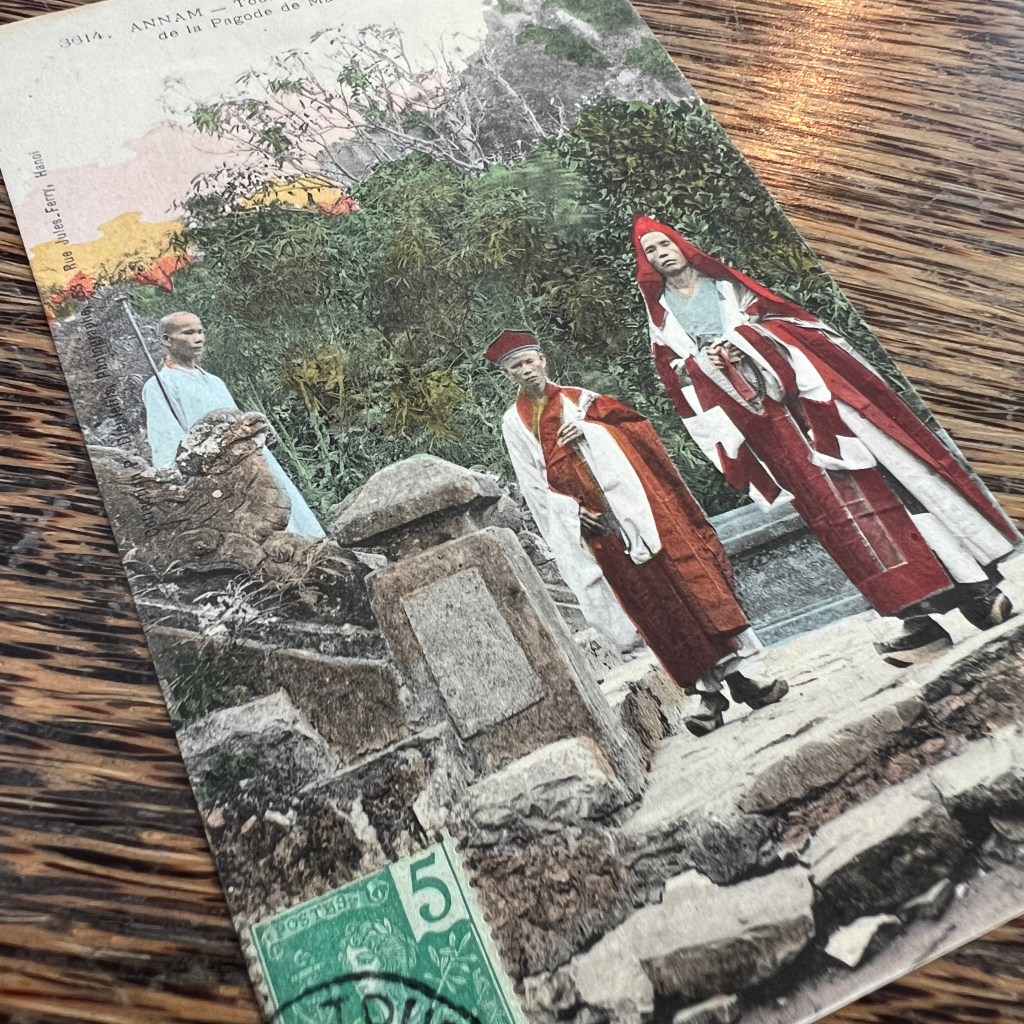
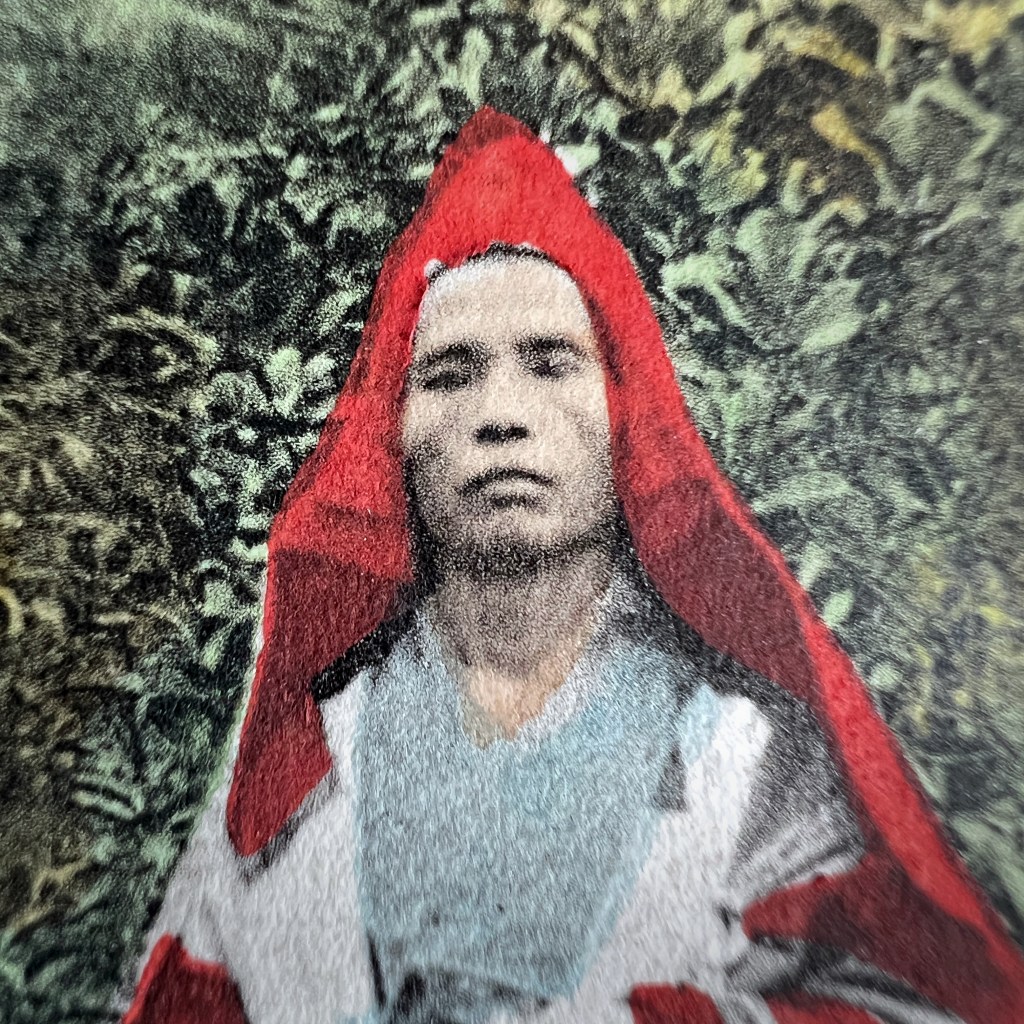
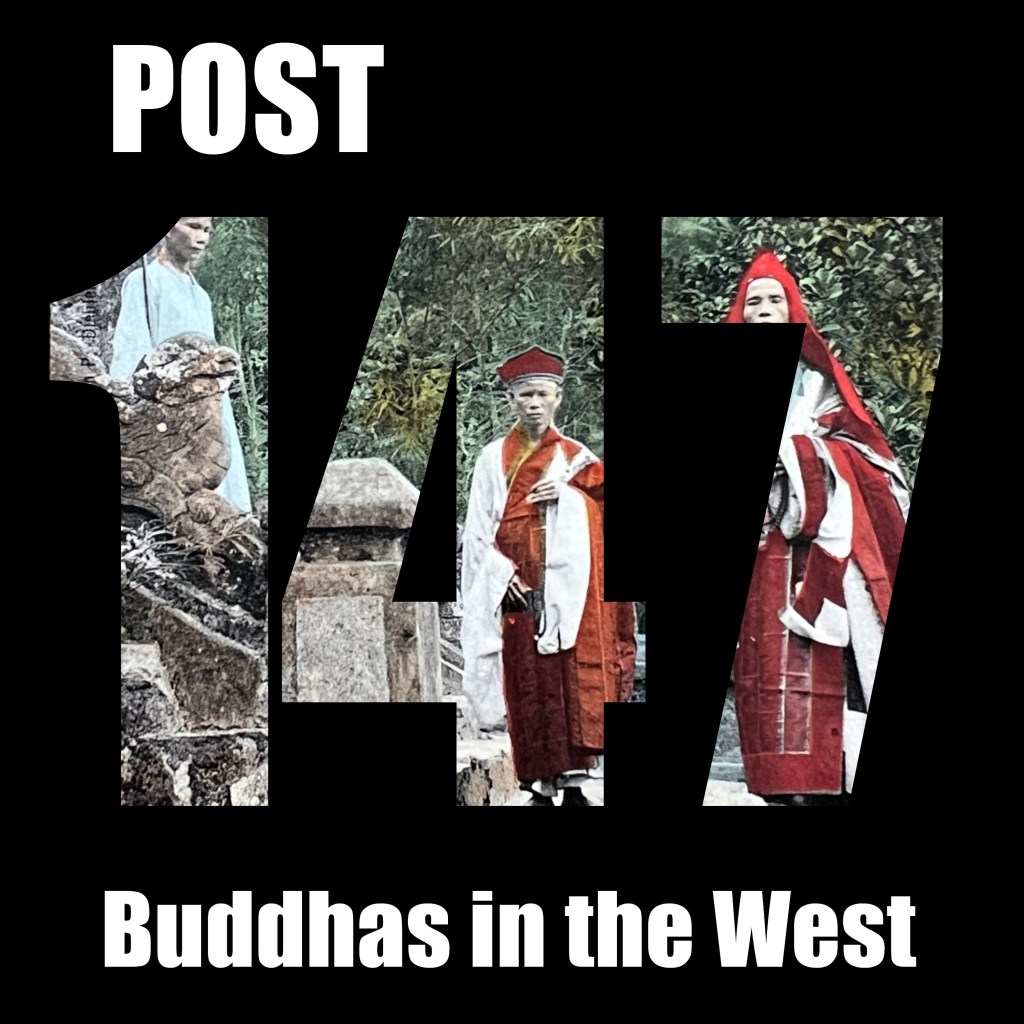
This early photograph from Tourane (today’s Da Nang) shows three Buddhist monks at the Marble Mountains temple complex. It is a rare colonial-era view of the full hierarchy of Vietnamese Buddhist monastic dress, from a novice’s plain robe to the ceremonial vestments of a senior abbot.

Originally revered by the Cham people, the Marble Mountains, known locally as the Five Element Mountains (Ngu Hanh Son), later evolved into an important Buddhist pilgrimage center. Under imperial order, temples were built and grottoes were developed here in the 1820s.

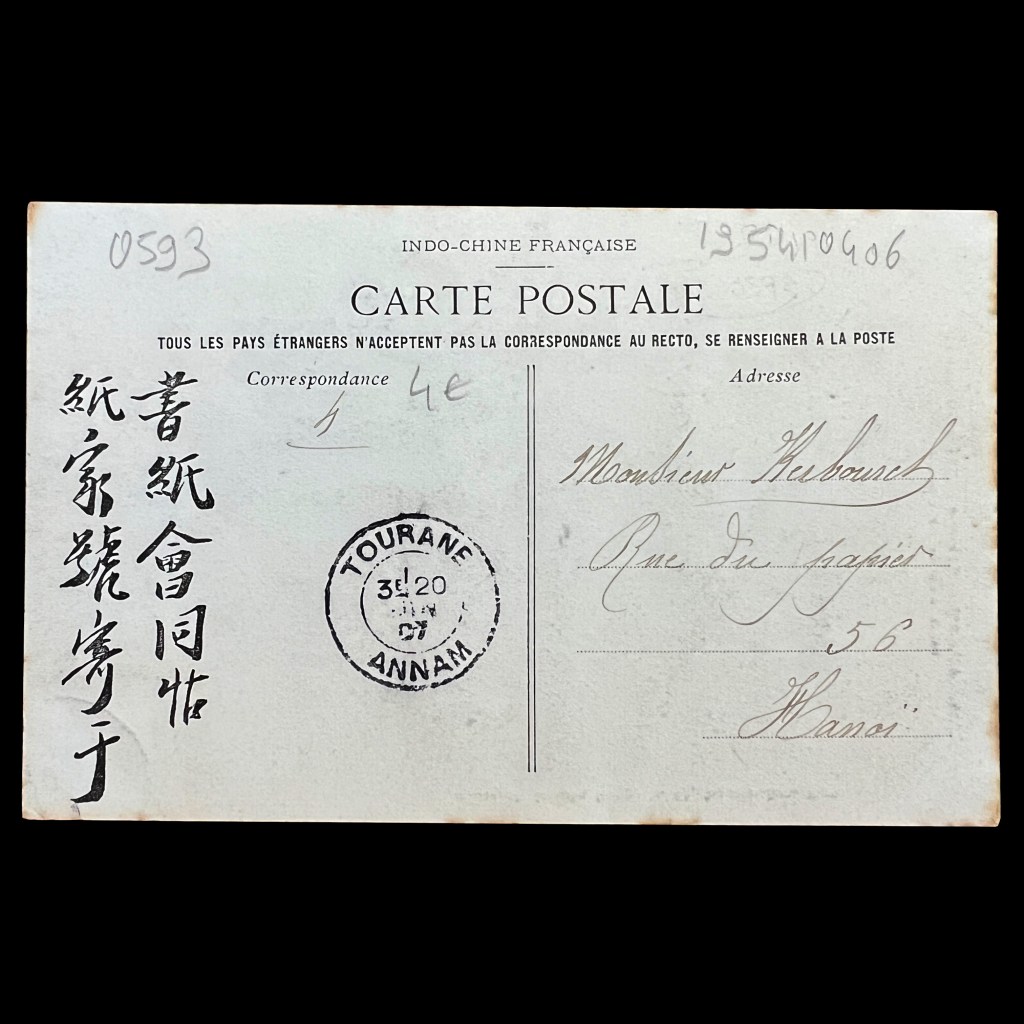
Photographer Pierre Dieulefils produced postcards like this for French soldiers and colonial tourists, but they also preserve a rare glimpse of Vietnamese Buddhist life at the turn of the twentieth century. The cancellation stamp shows this card was mailed in 1907.

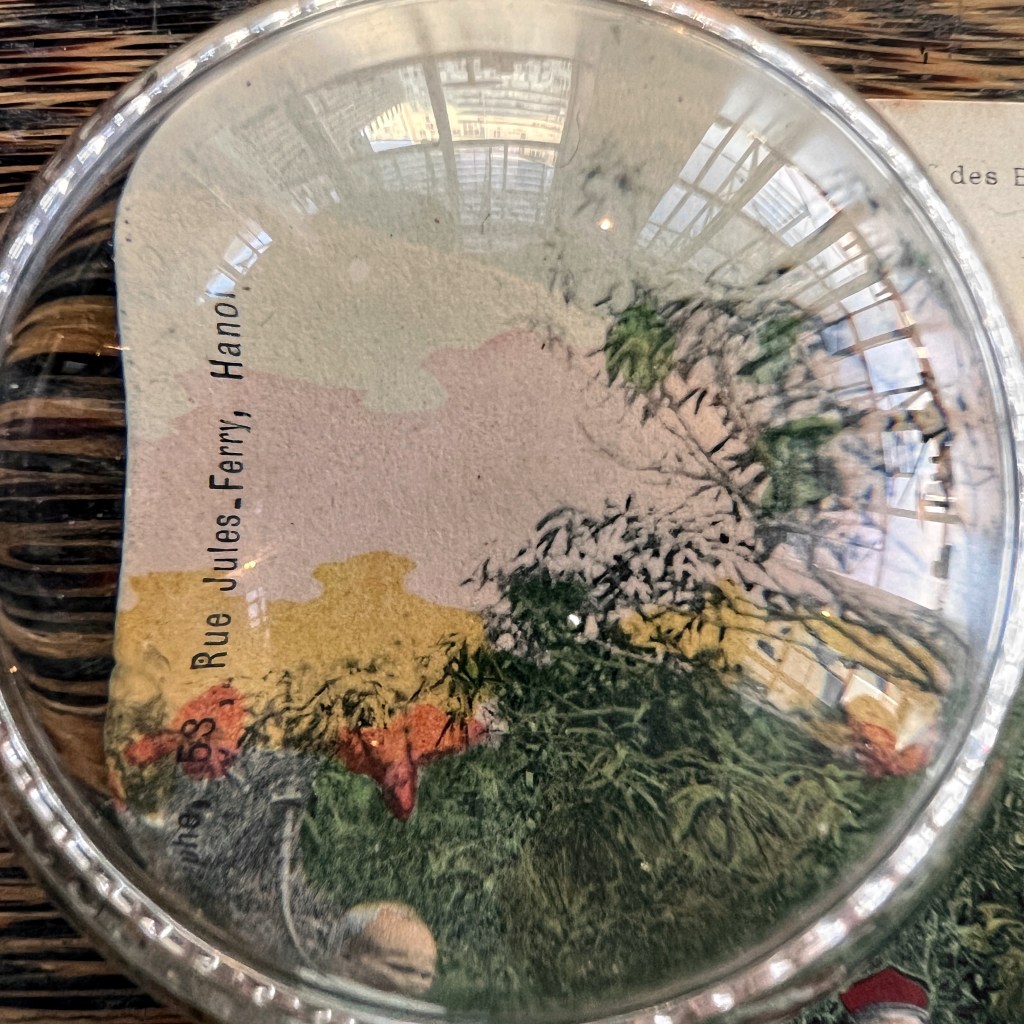
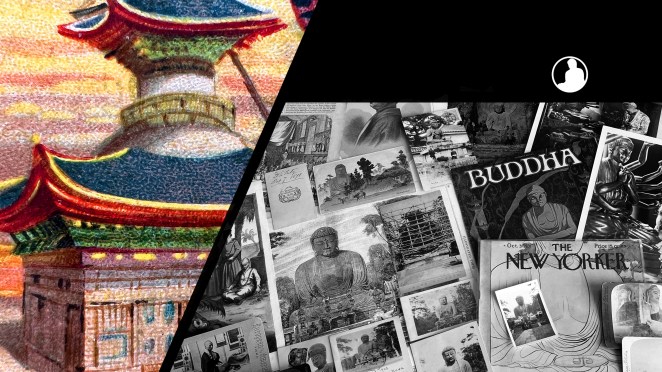
While many of Dieulefils’s postcards were issued in plain black and white, this example was hand-colored, a technique widely used by Japanese postcard publishers at the time. The crisp edges of the gradated sky reveal the use of a time-saving stencil.

The central figure is likely Lê Văn Sành, the abbot of Tam Thai Pagoda within the Marble Mountains complex. For more on the history of this remarkable site, see Albert Sallet’s Les Montagnes de Marbre (1925).


The Buddhas in the West Material Archive is a digital scholarship project that catalogues artifacts depicting Buddhist material culture for Western audiences. It’s comprised of prints, photos, and an assortment of ephemera and other objects. For a brief introduction to this archive, visit the main Buddhas in the West project page.


For Related Buddhas in the West Posts Featuring Vietnam:


For the Most Recent Buddhas in the West Posts:
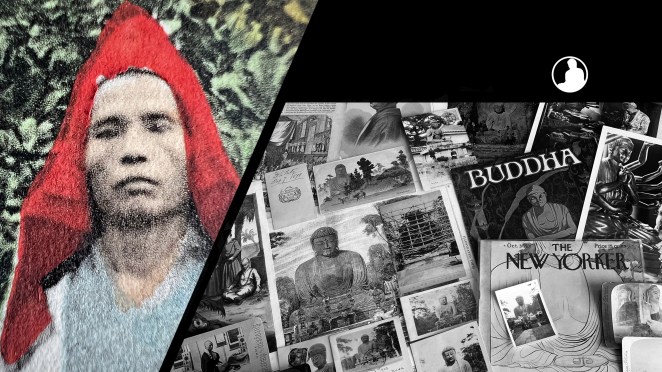

Robert Phillips’ “Thibetan Musicians” Postcard

For all the new Buddhas in the West posts
follow us on Bluesky & Instagram


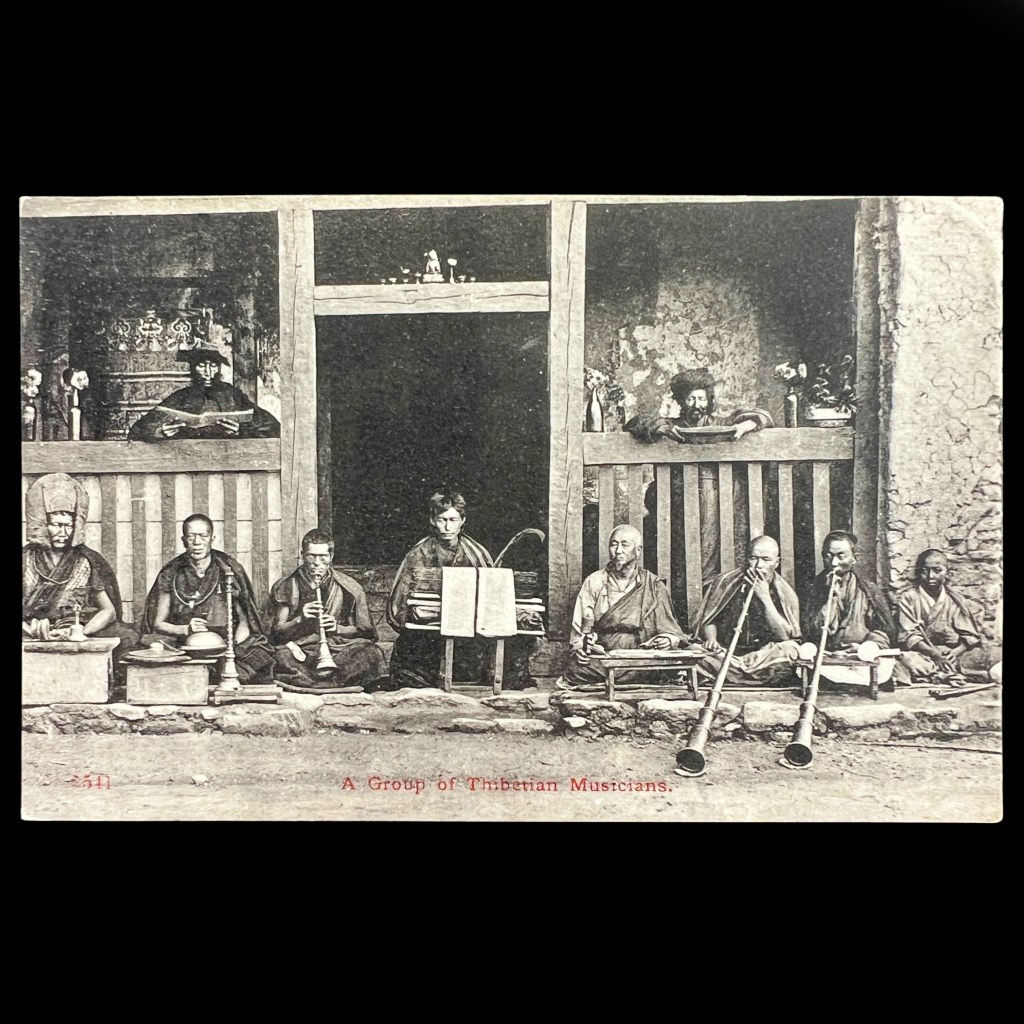
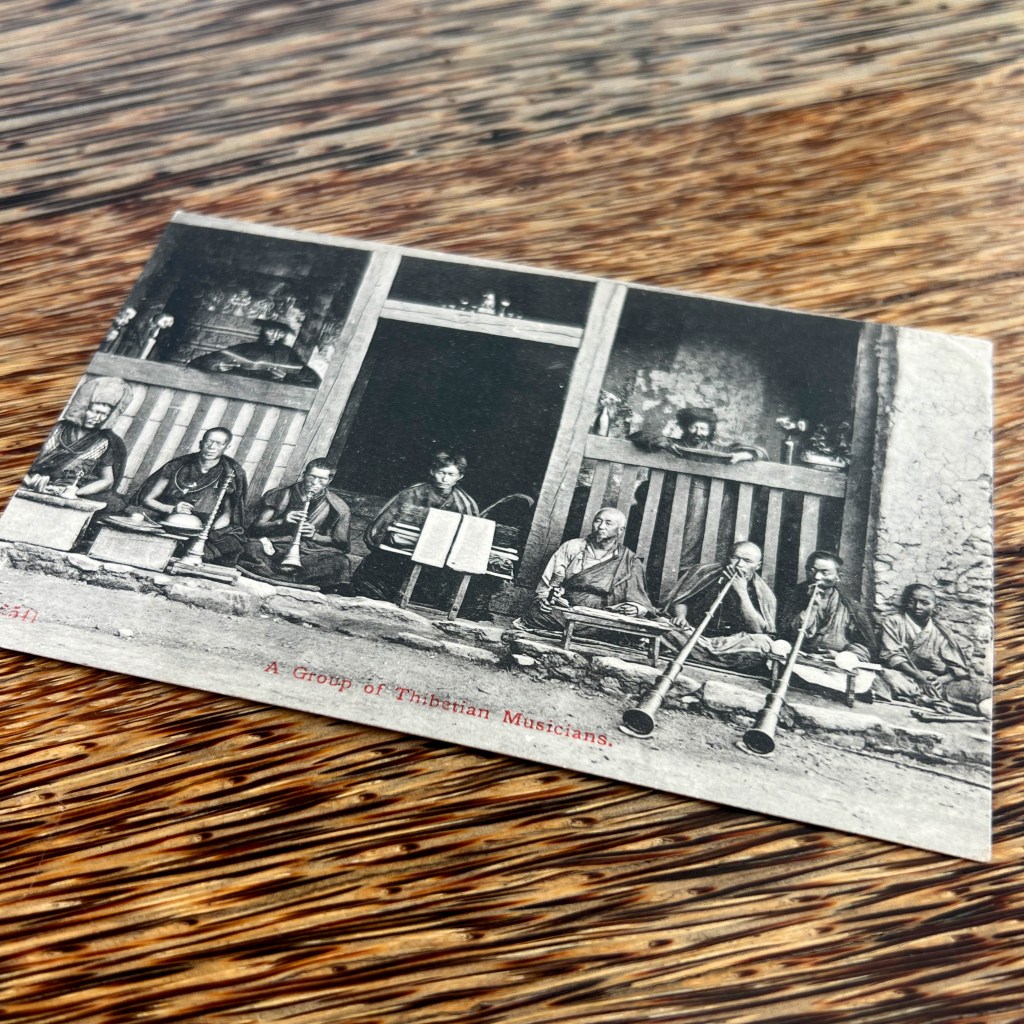
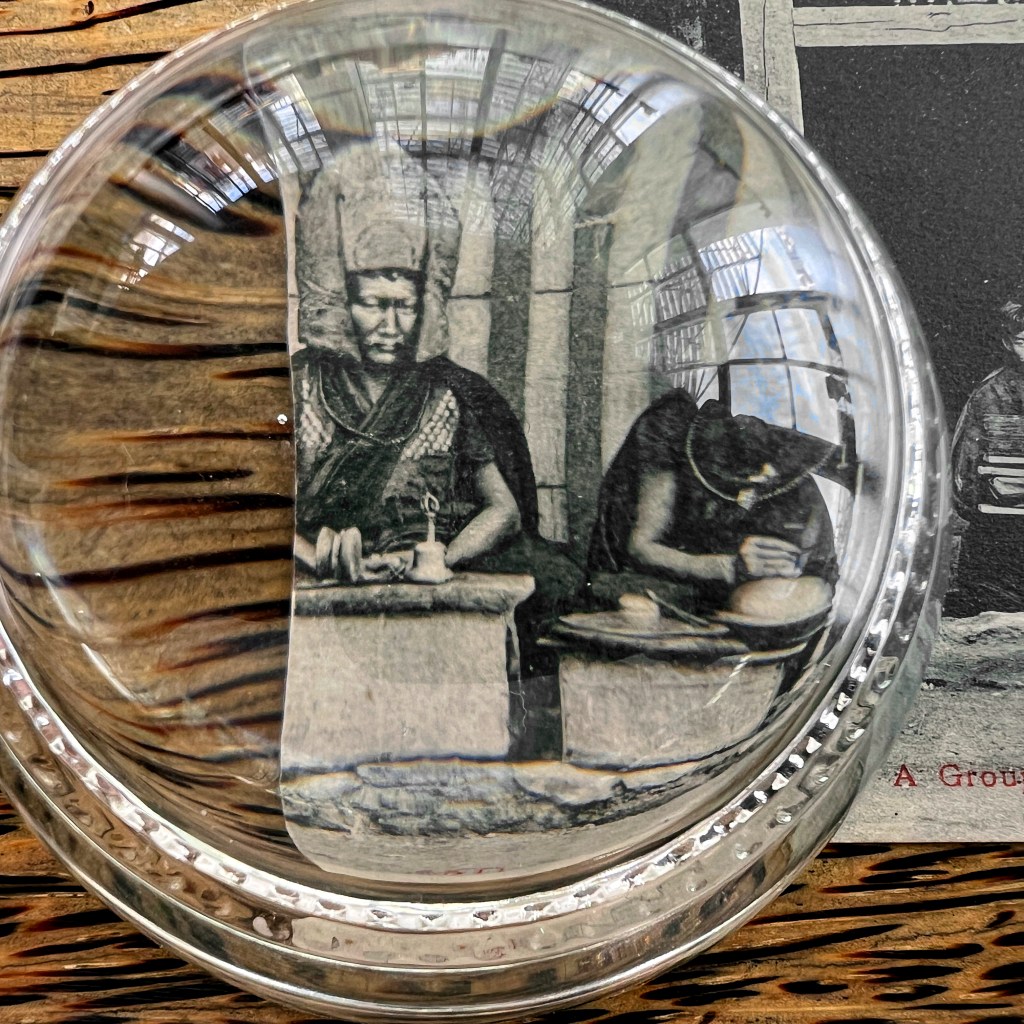
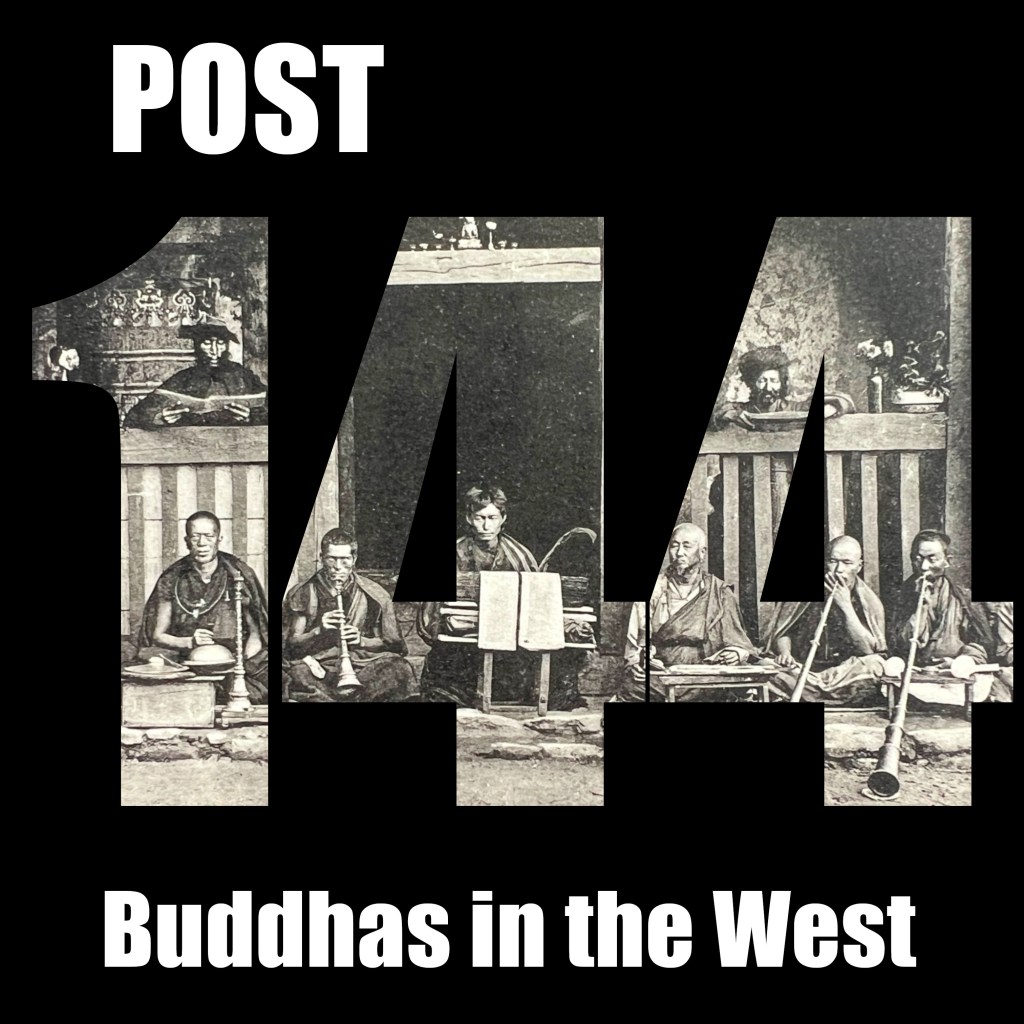
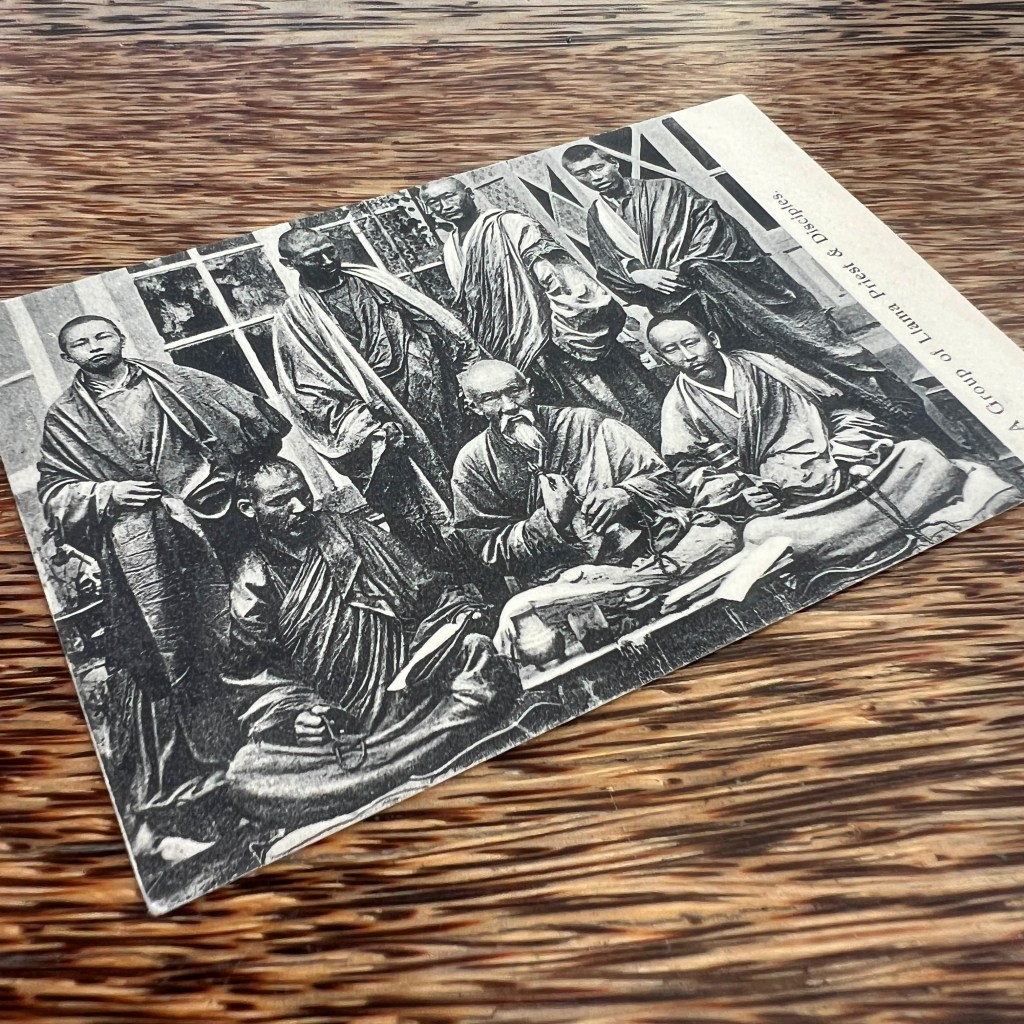
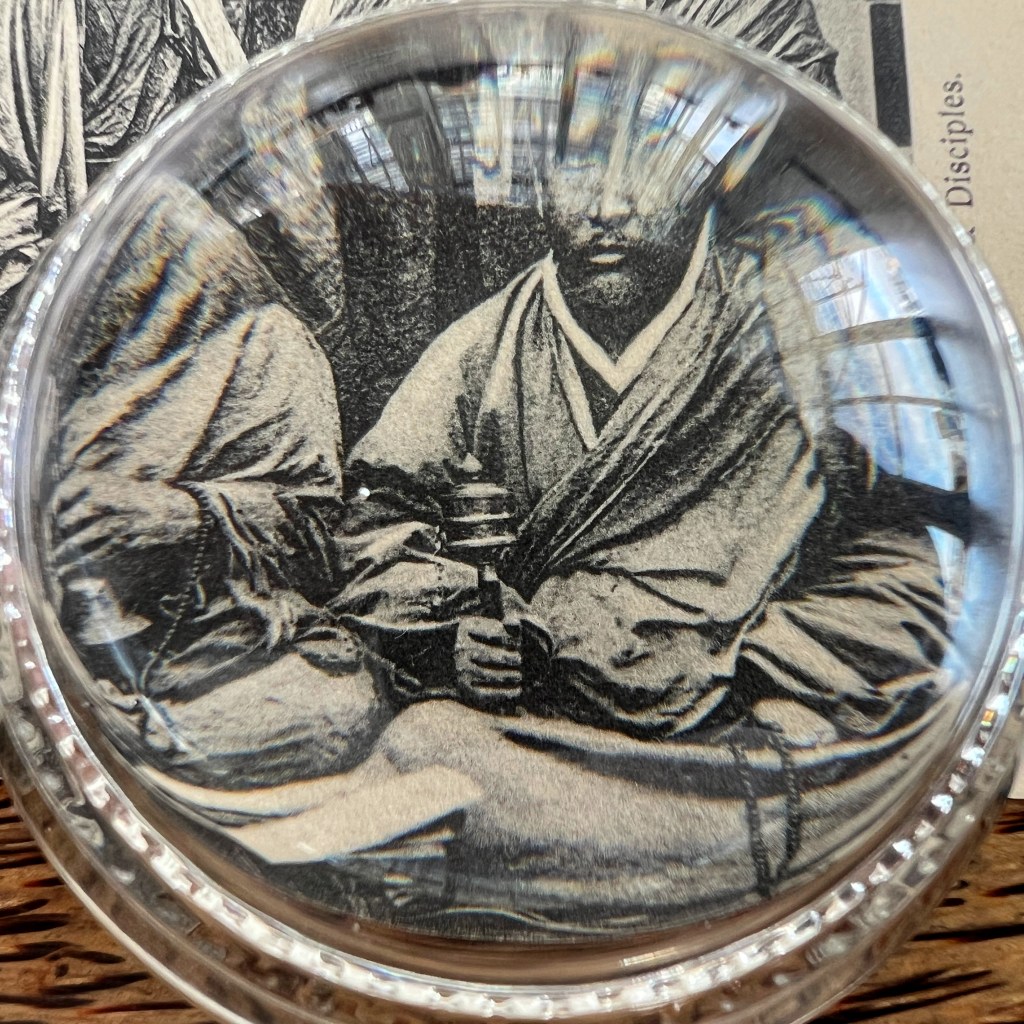
Despite the ambiguous caption—”A Group of Thibetan Musicians”—the history behind this anonymous photograph is remarkably well-documented. Taken by Robert Phillips before 1873, we see a gathering of the resident lamas at Sangchen Thongdrol Ling, a Nyingma monastery in Darjeeling.

Phillips, who operated a prominent studio in the colonial hill-station, submitted his photograph to the Illustrated London News which published an engraving of this image with an accompanying article in 1873. The sitting lama are described as natives of Sikkhim posing with ritual instruments.

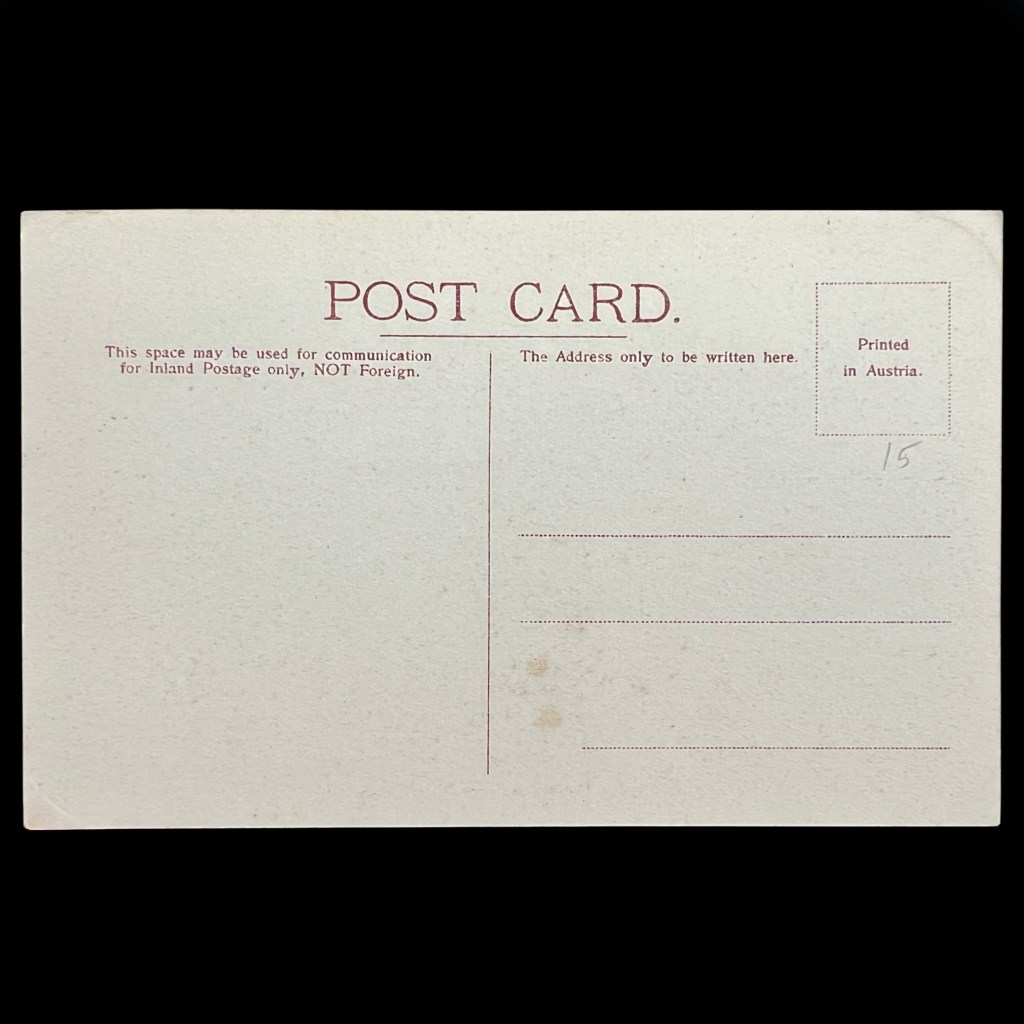
Great Britain pioneered divided back postcards in 1902, allowing messages on the address side for the first time. This innovation sparked a surge in popularity for postcards featuring full-view images—even if, as in this case, the photographs were already decades old.

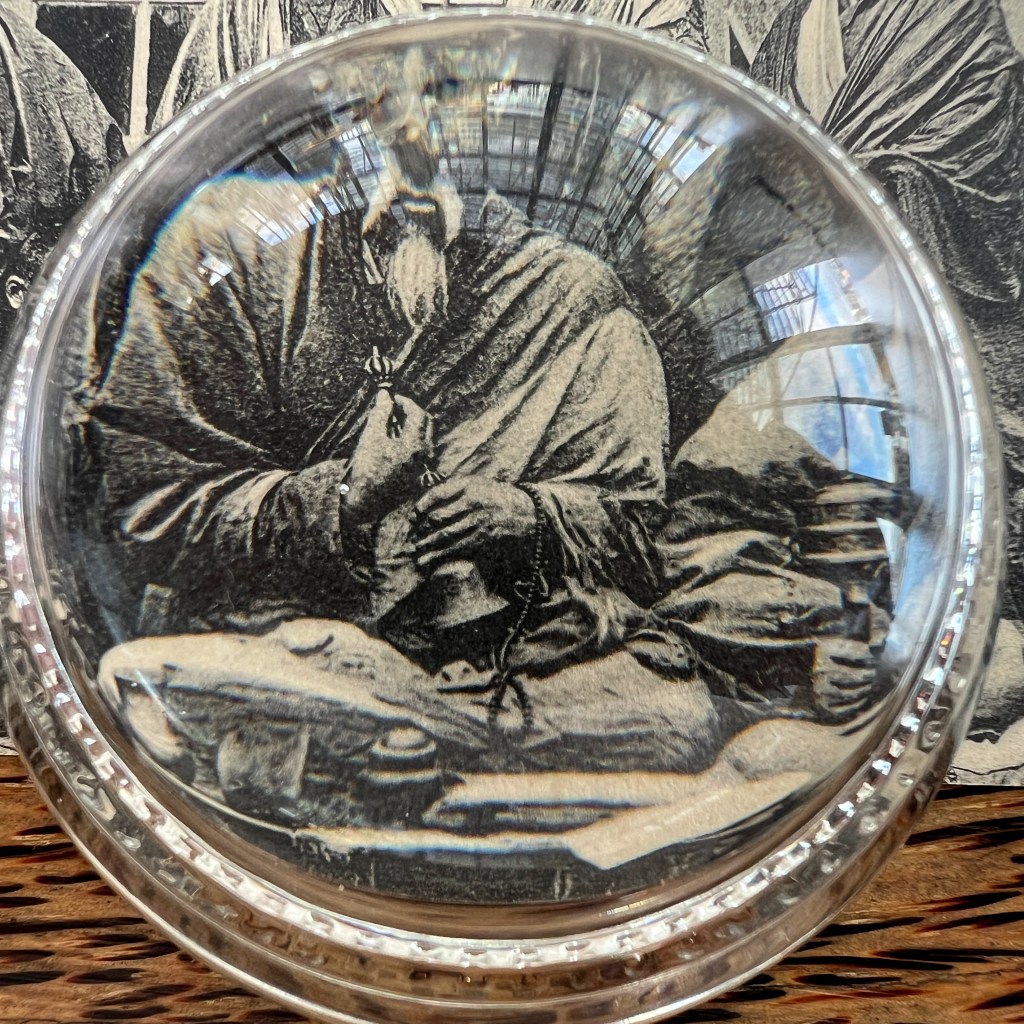
The newspaper article identifies figure on the far left as the head officiating lama. Before him are placed ritual instruments including a small hand drum, a vajra scepter, and bell.

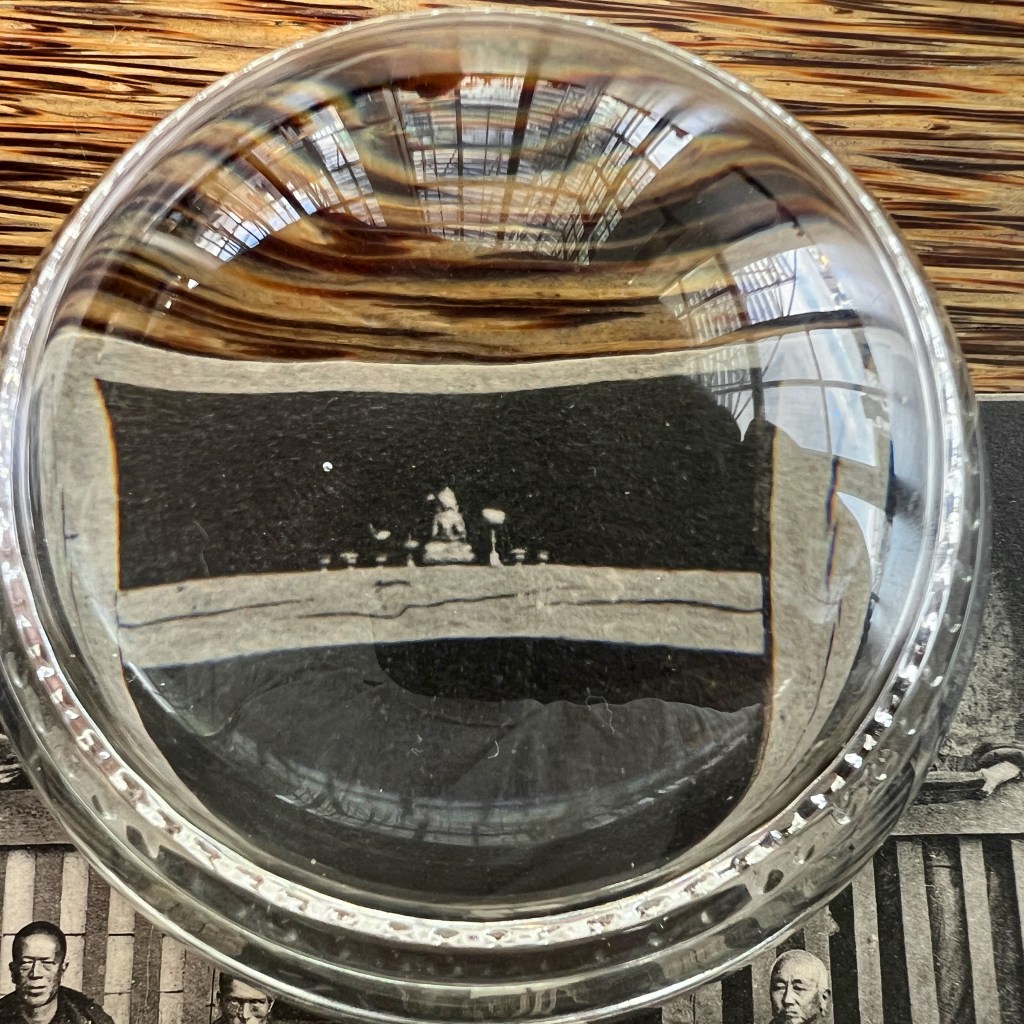
A small Buddhist icons rests above the doorway with small brass offering bowls of oil and rice set on both sides. The main altar, not visible in the photograph, reportedly enshrined an image of Padmasambhava, the Indian adept famed for introducing Tantric Buddhism into Tibet.

Often described as the oldest Buddhist monastery in Darjeeling, the temple was forced to relocate in 1879 to Ging by British authorities. To read more about details in Phillips’ photograph, consult the Illustrated London News article, viewable here: https://tinyurl.com/329mh668.


The Buddhas in the West Material Archive is a digital scholarship project that catalogues artifacts depicting Buddhist material culture for Western audiences. It’s comprised of prints, photos, and an assortment of ephemera and other objects. For a brief introduction to this archive, visit the main Buddhas in the West project page.


For Related Buddhas in the West Posts Featuring Tibet:


For the Most Recent Buddhas in the West Posts:
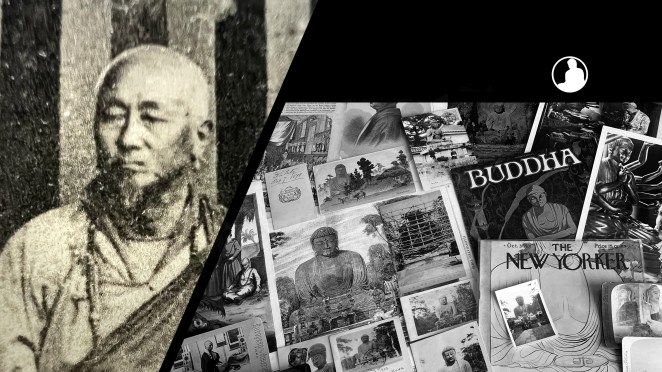

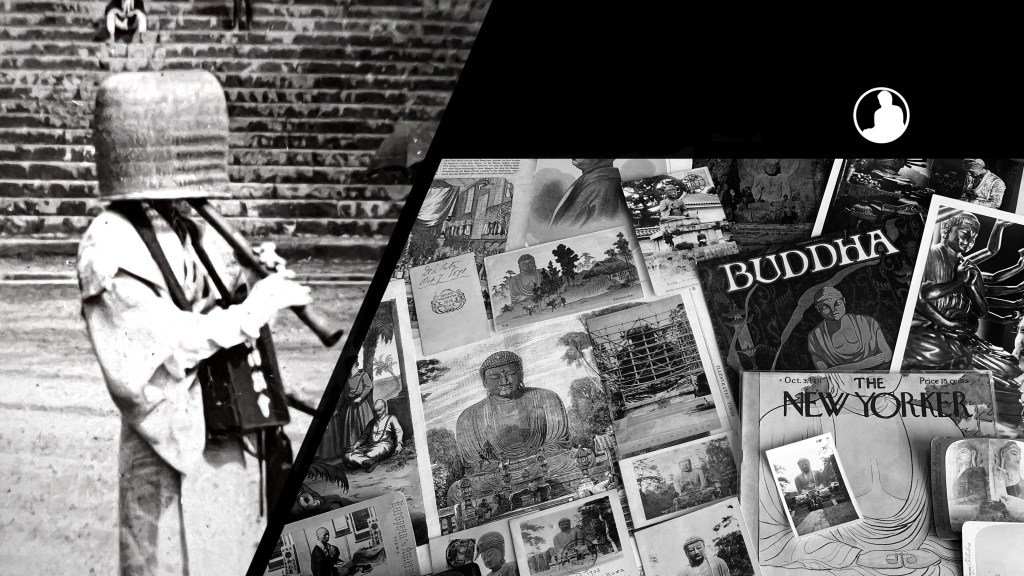
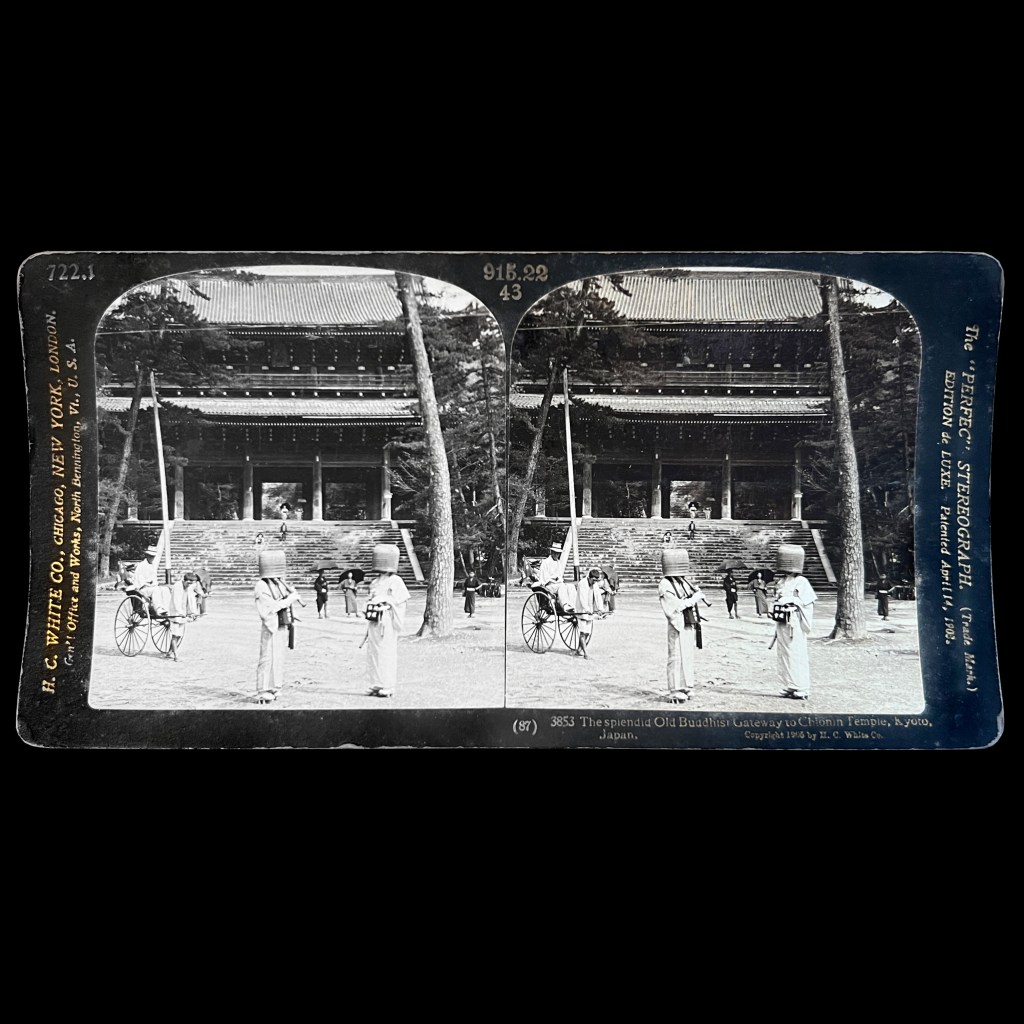
Herbert Ponting’s Flute Playing Komusō Stereoview

For all the new Buddhas in the West posts
follow us on Bluesky & Instagram


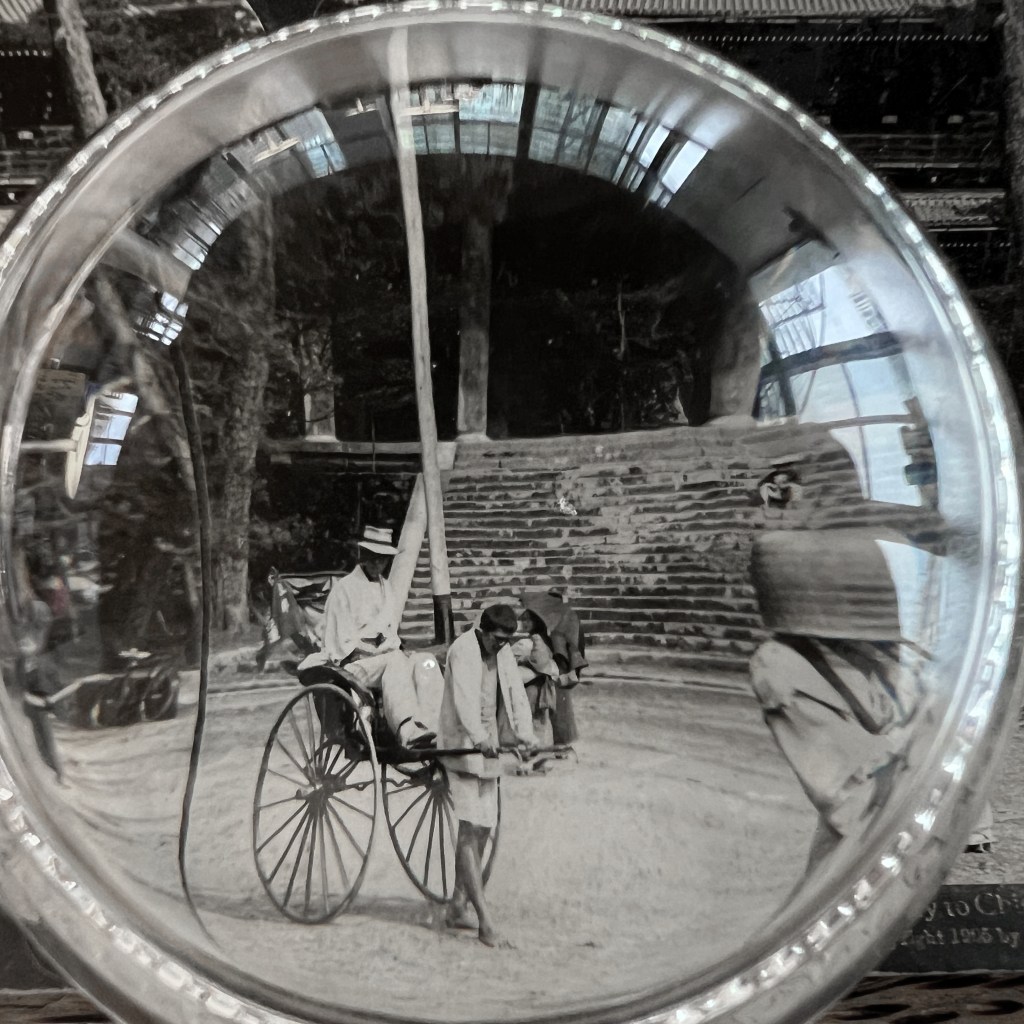
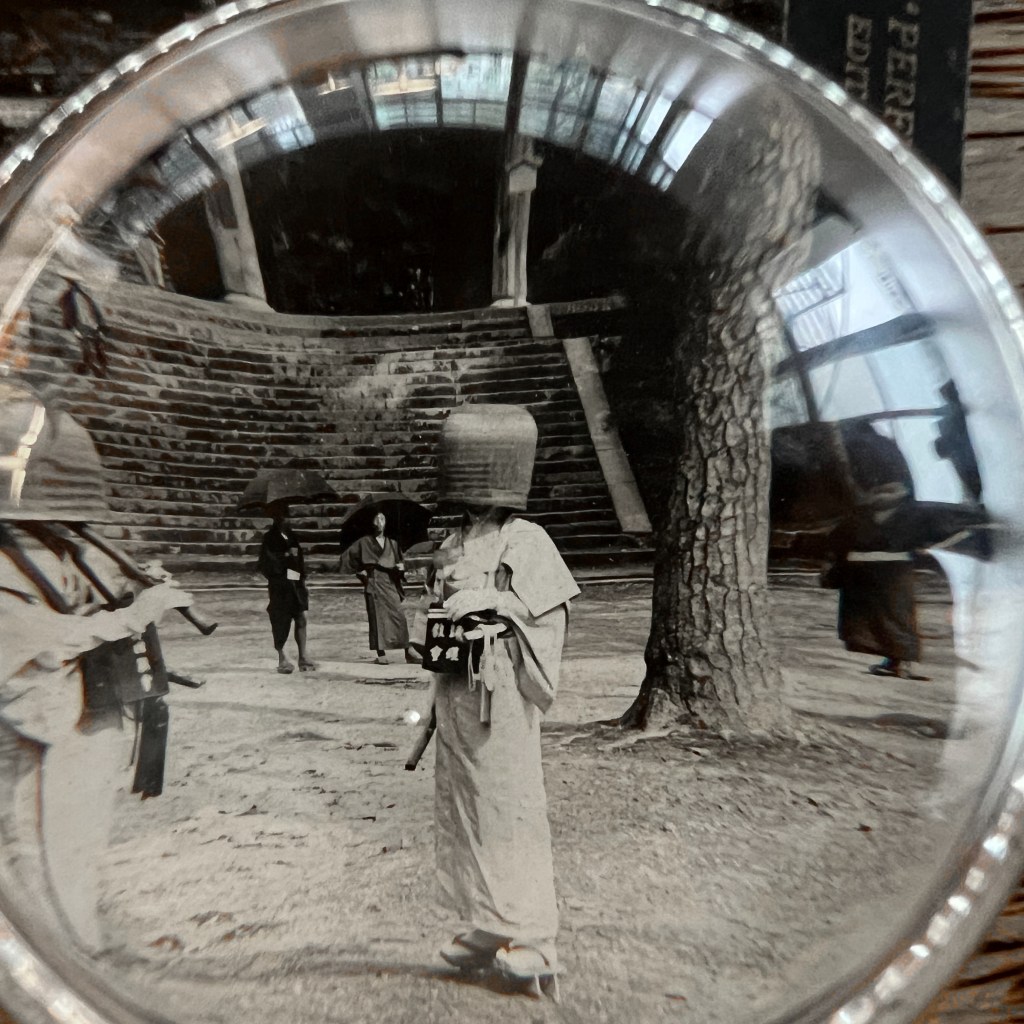
The Russo-Japanese War (1904–05) fueled Western demand for new images of a rapidly modernizing Japan. Among the companies meeting this demand was H. C. White, which issued boxed stereoview sets of Japan highlighting both its cultural traditions and signs of modern progress.

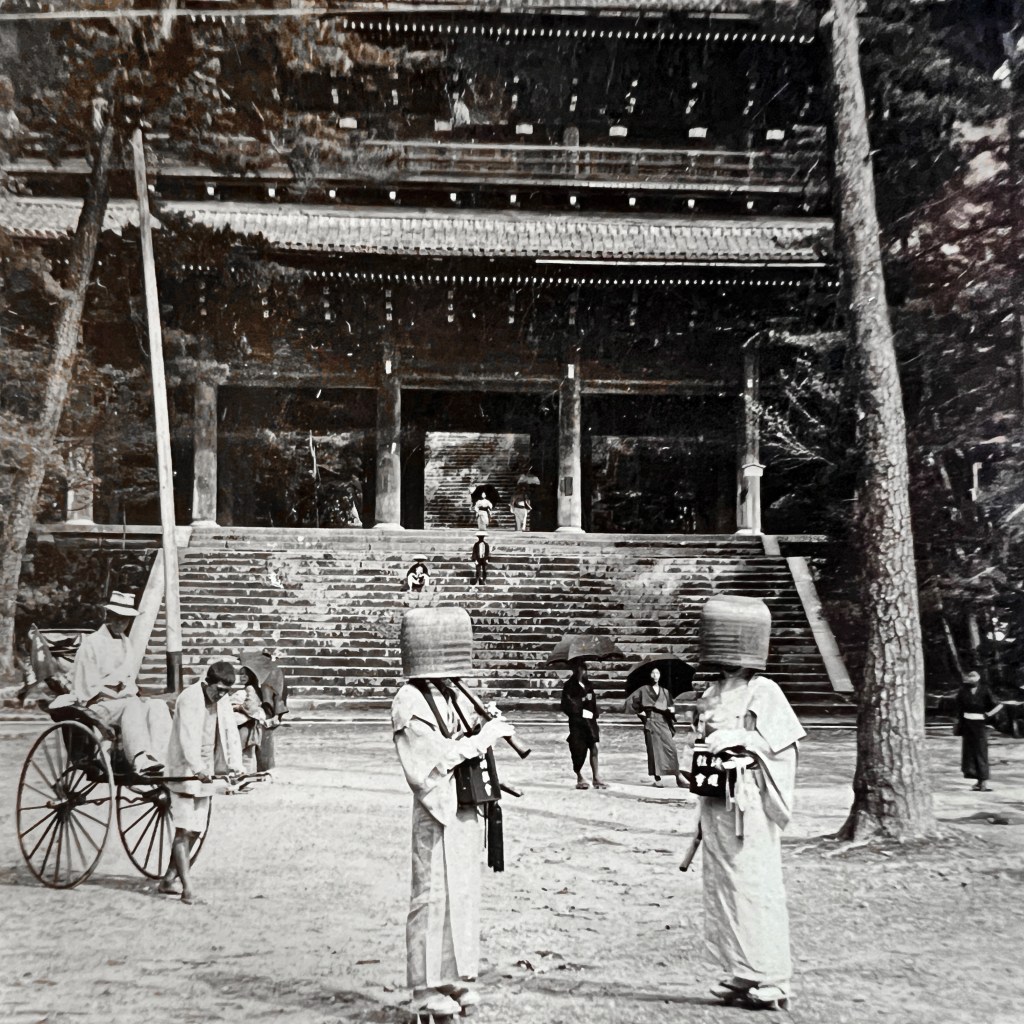
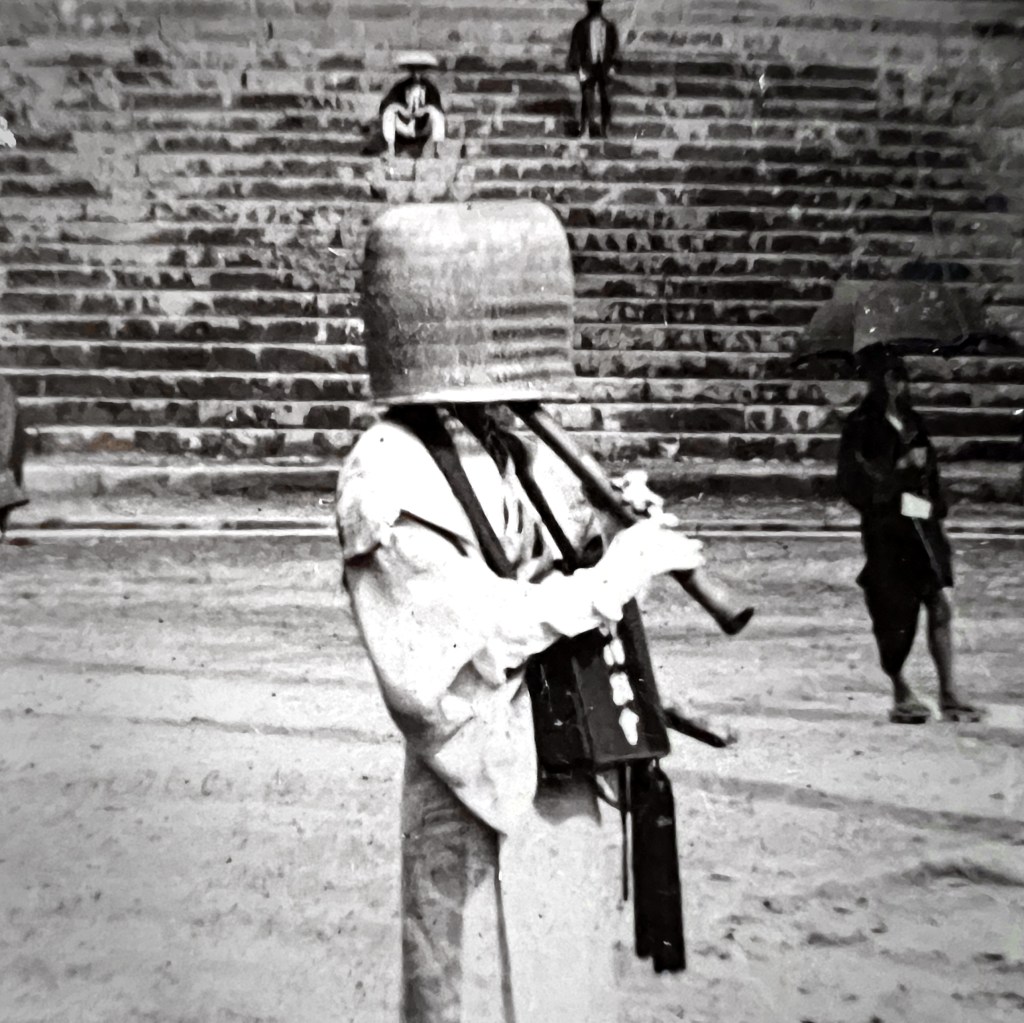
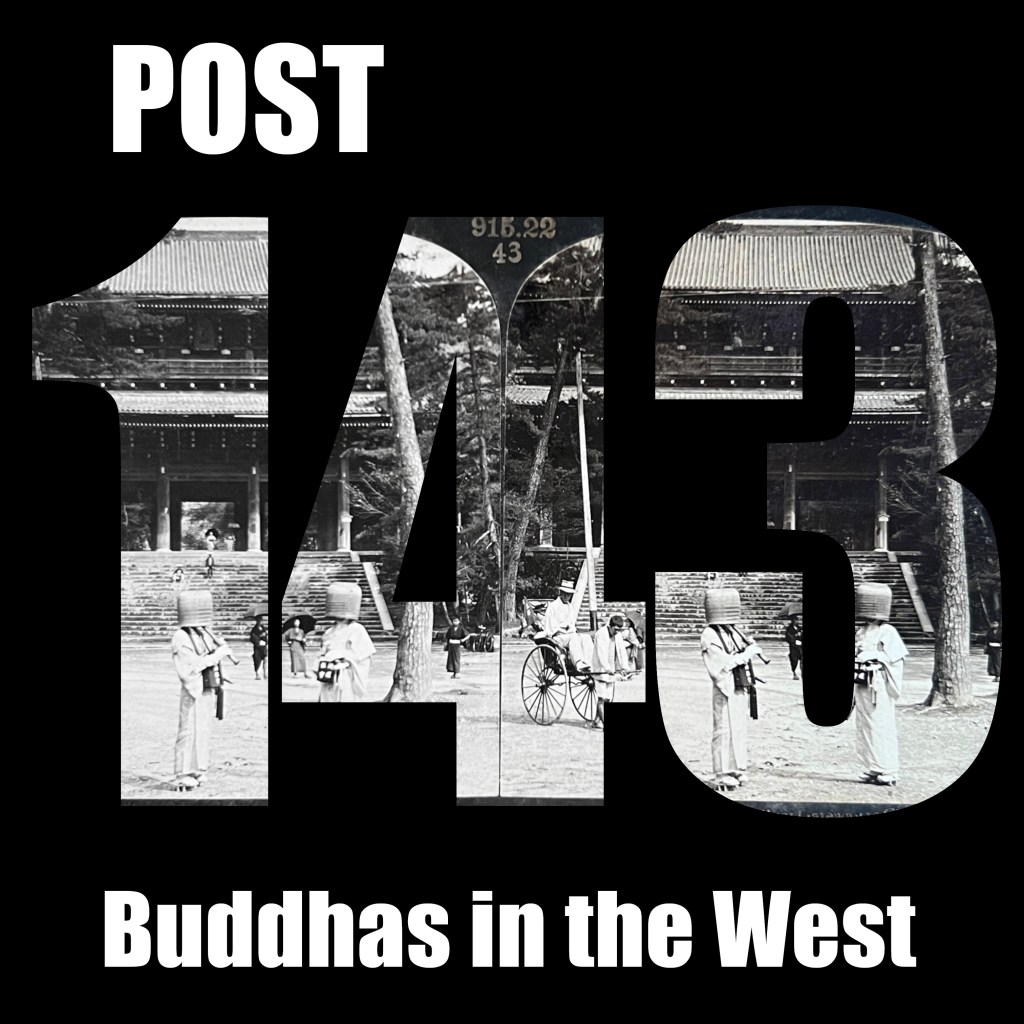
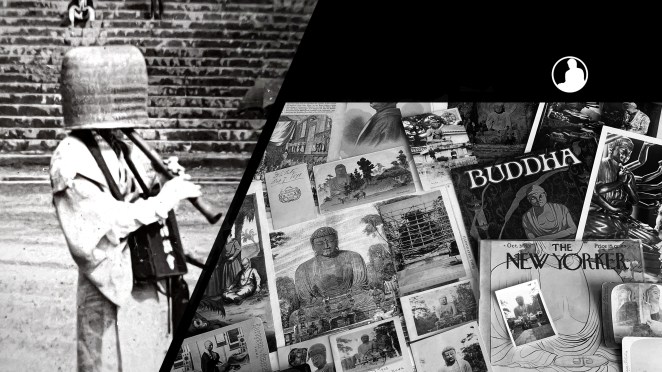
This photograph was taken by the seasoned stereophotographer Herbert Ponting, who had produced Japan sets for other studios, including H. C. Graves and Underwood. The scene depicts the front gate of Chion-in, the head monastery of the Pure Land sect founded by Hōnen in the 12th century.

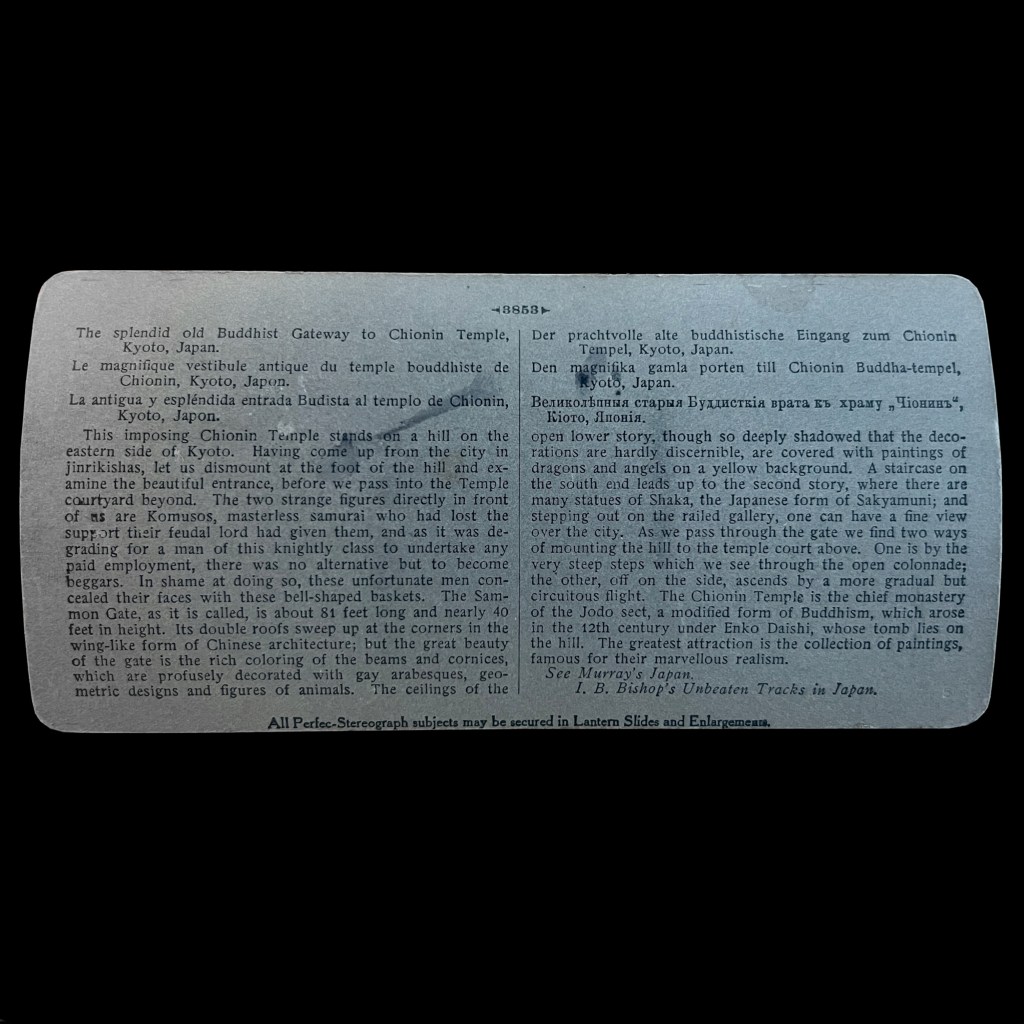
The accompanying description reads like a guided tour of the temple grounds, lending narrative weight to the immersive “virtual reality” effect of stereophotography. It blends historical context with vivid visual detail, inviting viewers to examine the scene closely.

Compositional touches, such as the tourist seated in a pulled rickshaw, reinforce Japan’s presentation as a traveler’s paradise for Western audiences.

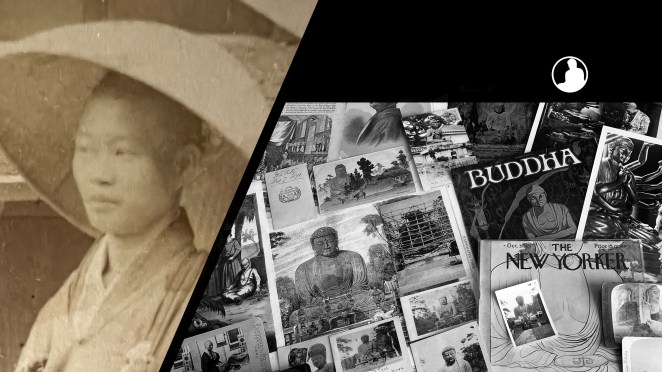
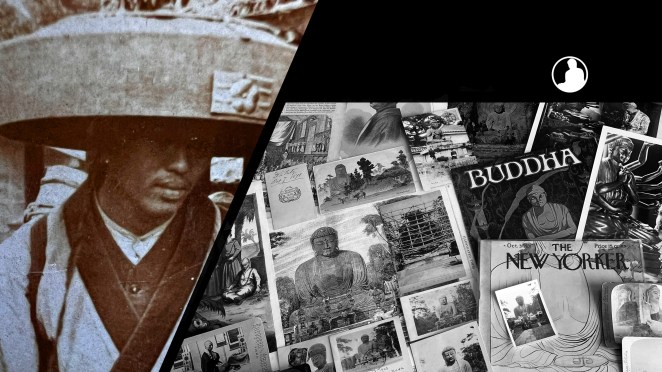
At the center stand komusō, “monks of nothingness,” recognizable by their basket hats and their playing of the bamboo shakuhachi during begging rounds.

In the West, shakuhachi performance is often linked to a Zen-like moment of spiritual awakening – an interpretation largely absent from Japanese historical practice. For more, see Max Deeg, “Komusō and Shakuhachi-Zen: From Historical Legitimation to the Spiritualisation” (2007).


The Buddhas in the West Material Archive is a digital scholarship project that catalogues artifacts depicting Buddhist material culture for Western audiences. It’s comprised of prints, photos, and an assortment of ephemera and other objects. For a brief introduction to this archive, visit the main Buddhas in the West project page.


For Related Buddhas in the West Posts Featuring Herbert Ponting:


For the Most Recent Buddhas in the West Posts:

Tuck’s Henry Savage Landor Tibetan Lamas Postcard

For all the new Buddhas in the West posts
follow us on Bluesky & Instagram


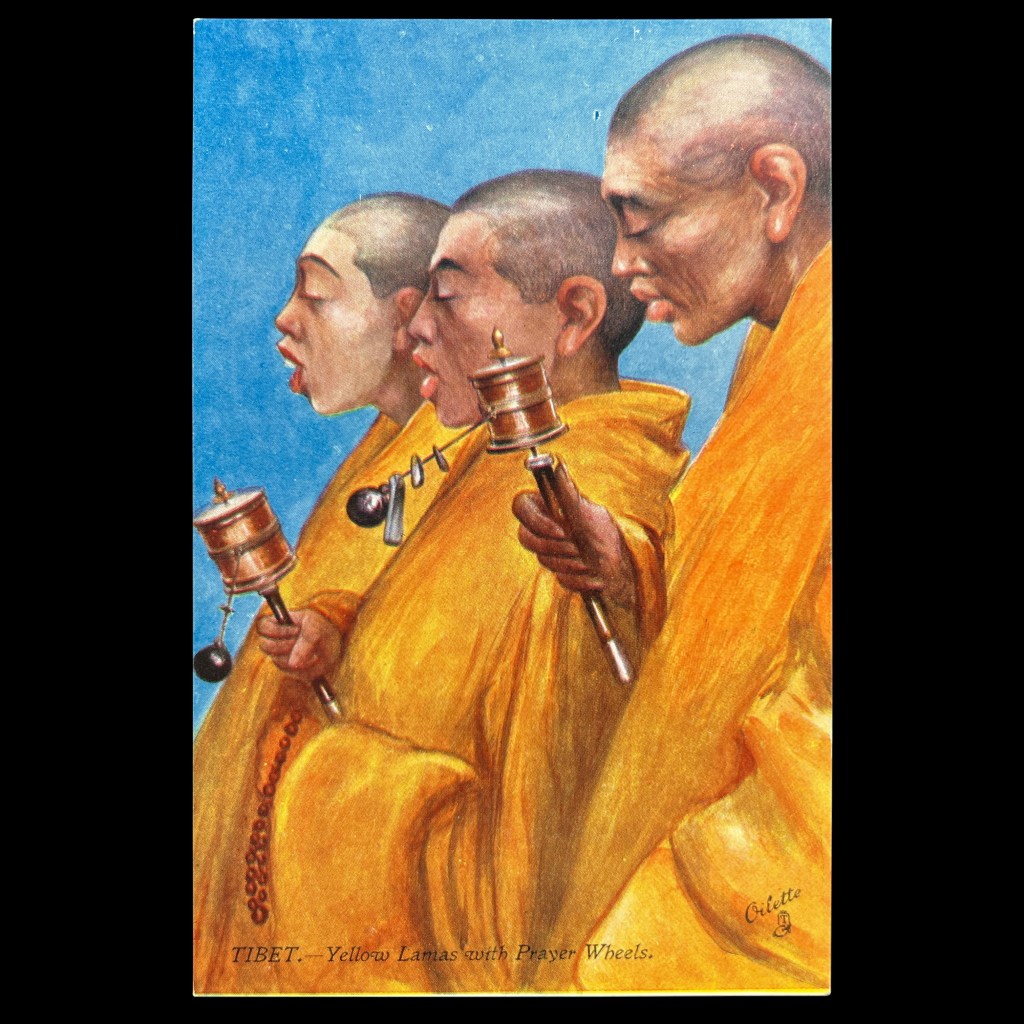
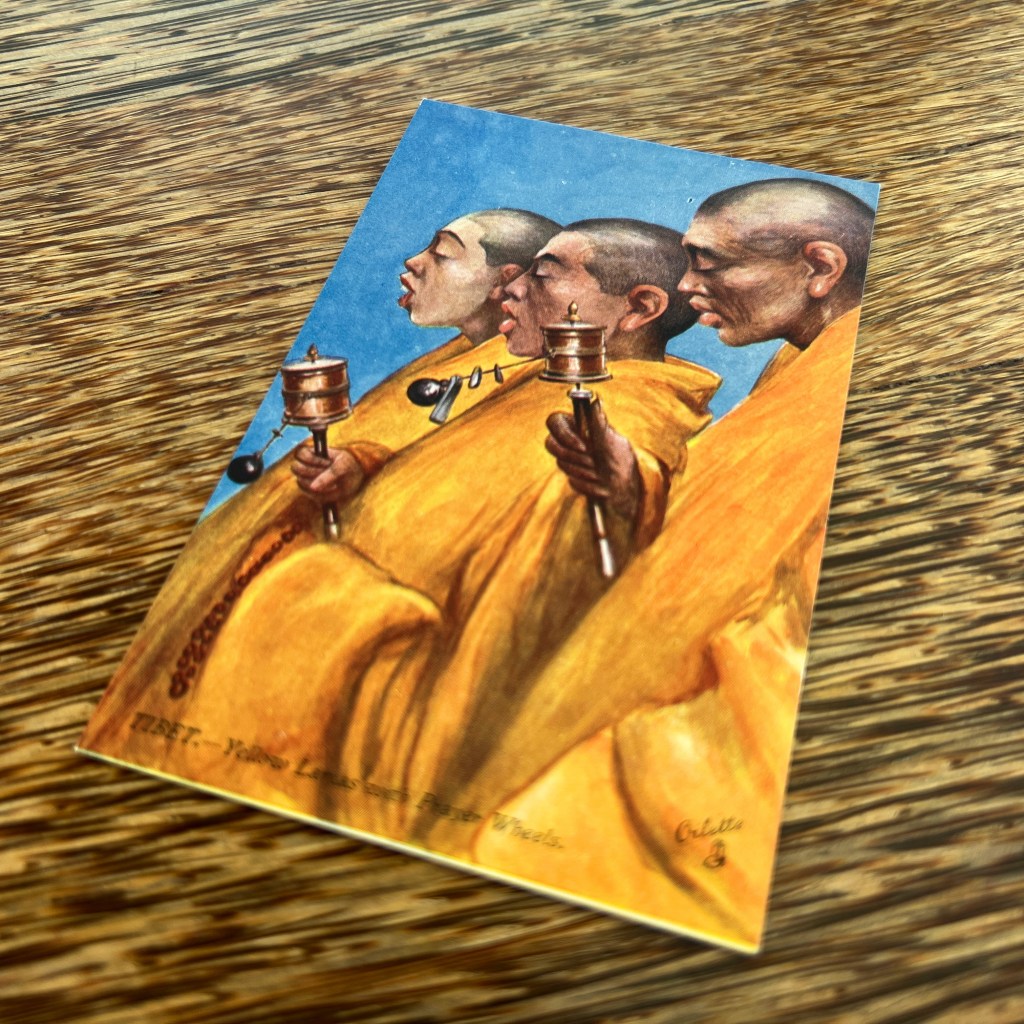
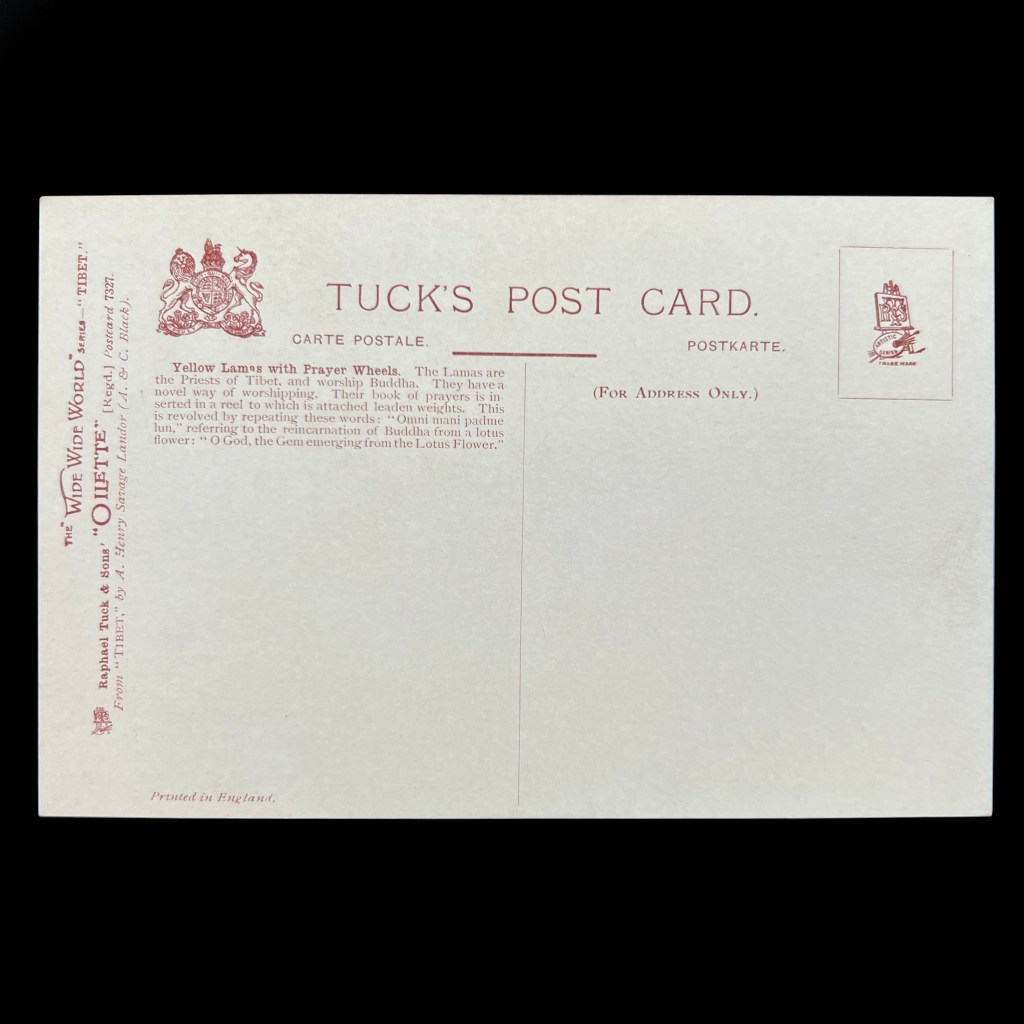
In 1903, a titan of world postcard production, England-based Raphael Tuck & Sons, set themselves further apart by issuing the vibrantly colored Oilette Series based on commissioned oil paintings. Among the first sets released was devoted to the mysterious Himalayan nation of Tibet.

Six paintings were prepared by the explorer and artist Henry Savage Landor who wrote about his travels to the region in his 1898 book, In the Forbidden Land. Tuck printed Landor’s paintings as lithograph postcards at a time when photos of Tibet were only first starting to circulate.

While a majority of Tuck’s pictorial stock focused on the English countryside, the Wide Wide World Series introduced colonial lands and other foreign cultures. Here the caption notes the use of Om mani padme hum, a six-syllable Sanskrit mantra common among Tibetan Buddhists.

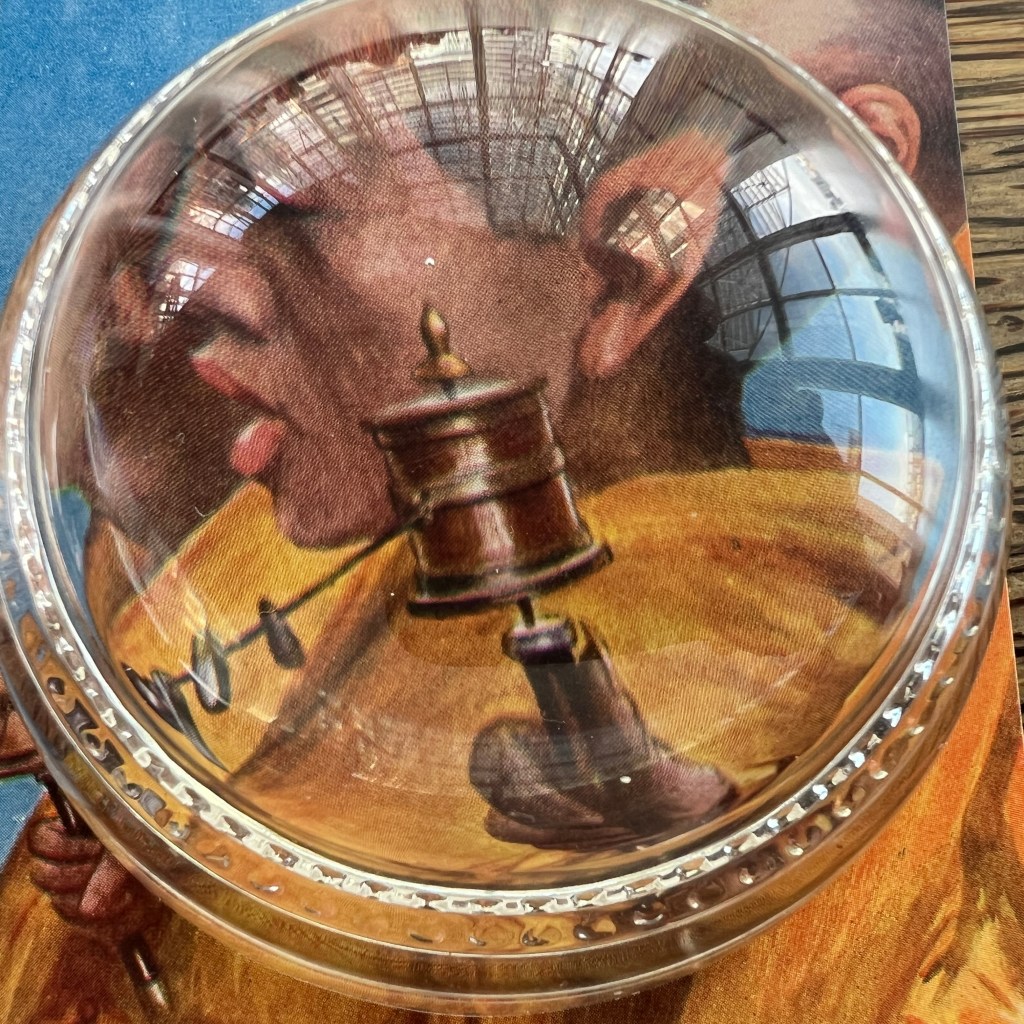
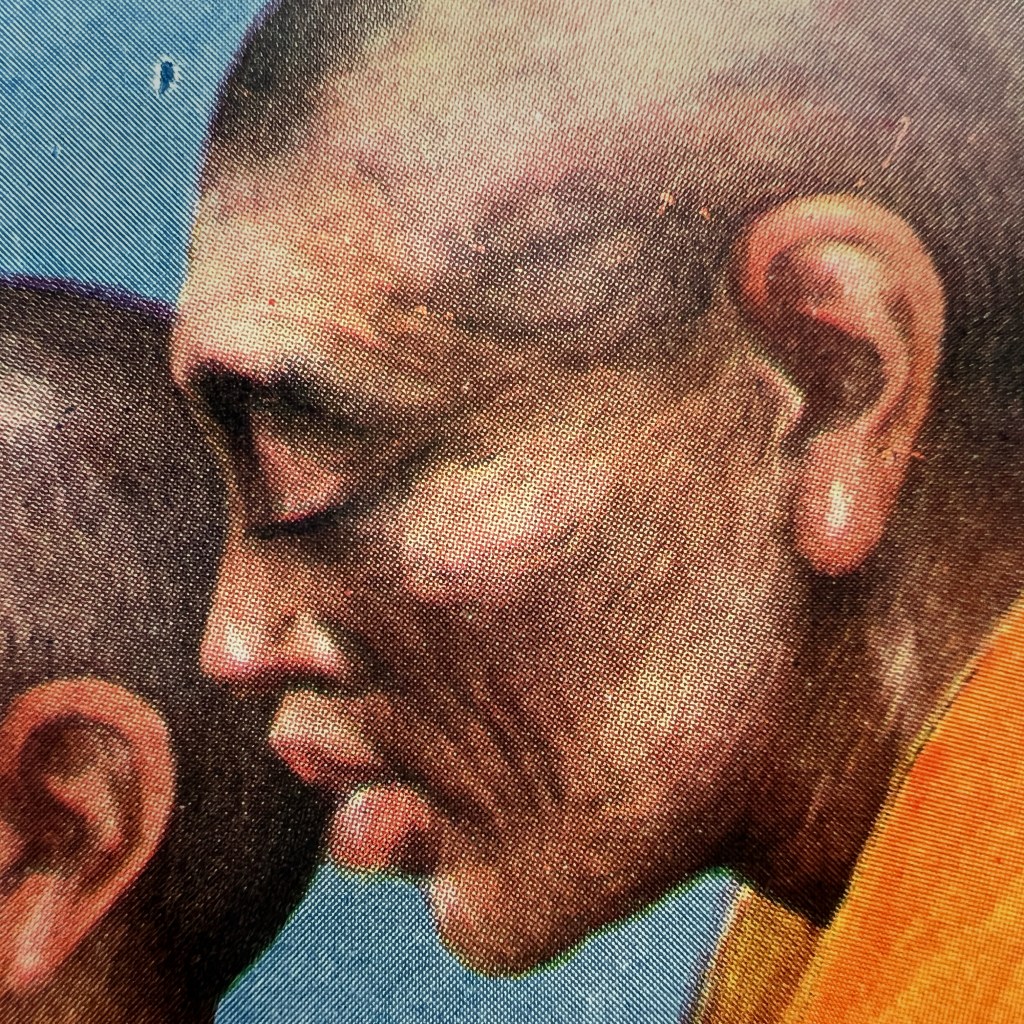
The visual focus of Landor’s painting is the monk’s use of the prayer wheel, noted as containing the Buddhist “book of prayers.” As with others of his time, Landor was fascinated by the ritual object, describing its use in his published work on Tibet.

Landor’s six card set was the only set of Tibet Tuck published before it stopped operation during WWII. For a comprehensive digitized catalogue of Tuck Oilette cards, see www.tuckdbpostcards.org.


The Buddhas in the West Material Archive is a digital scholarship project that catalogues artifacts depicting Buddhist material culture for Western audiences. It’s comprised of prints, photos, and an assortment of ephemera and other objects. For a brief introduction to this archive, visit the main Buddhas in the West project page.


For Related Buddhas in the West Posts Featuring Prayer Wheels:


For the Most Recent Buddhas in the West Posts:

P.A. Johnston and Theodor Hoffmann’s Tibetan “Devil Dancers” Postcard

For all the new Buddhas in the West posts
follow us on Bluesky & Instagram


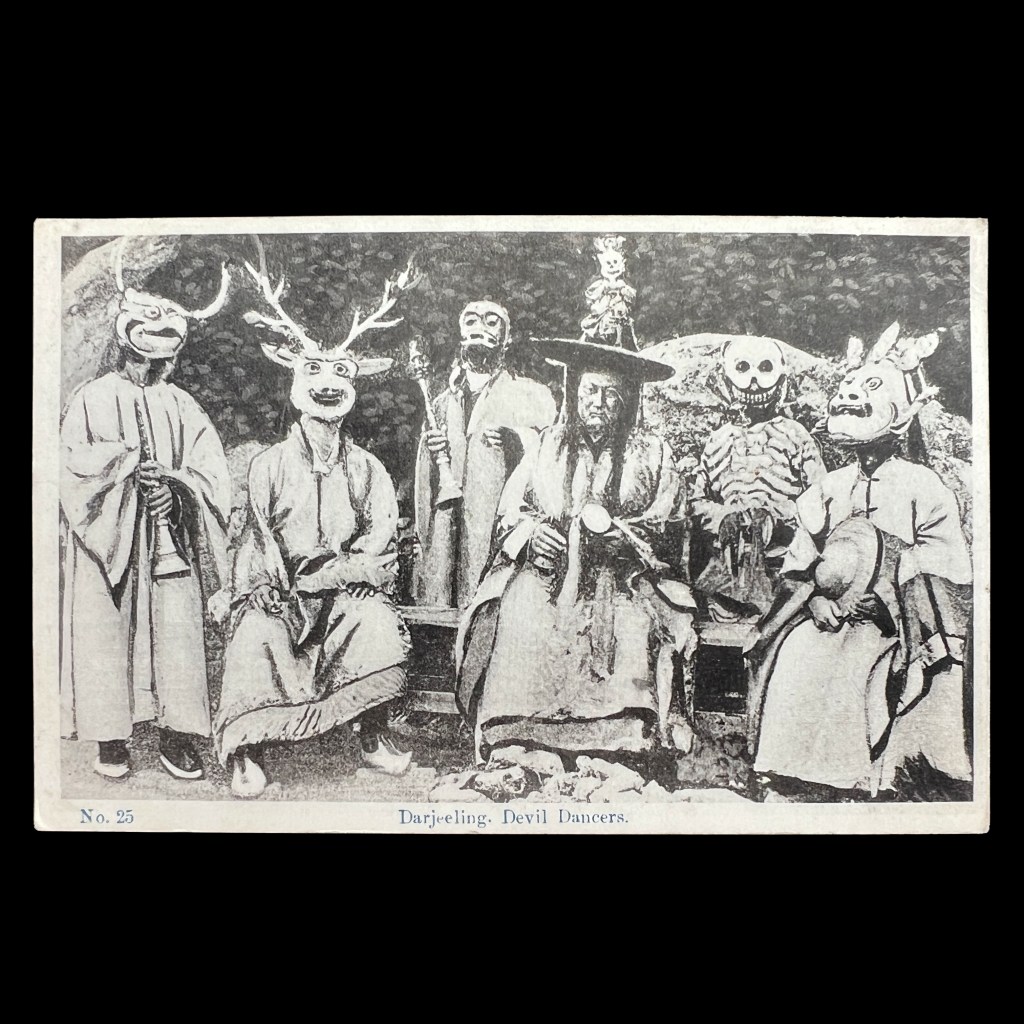
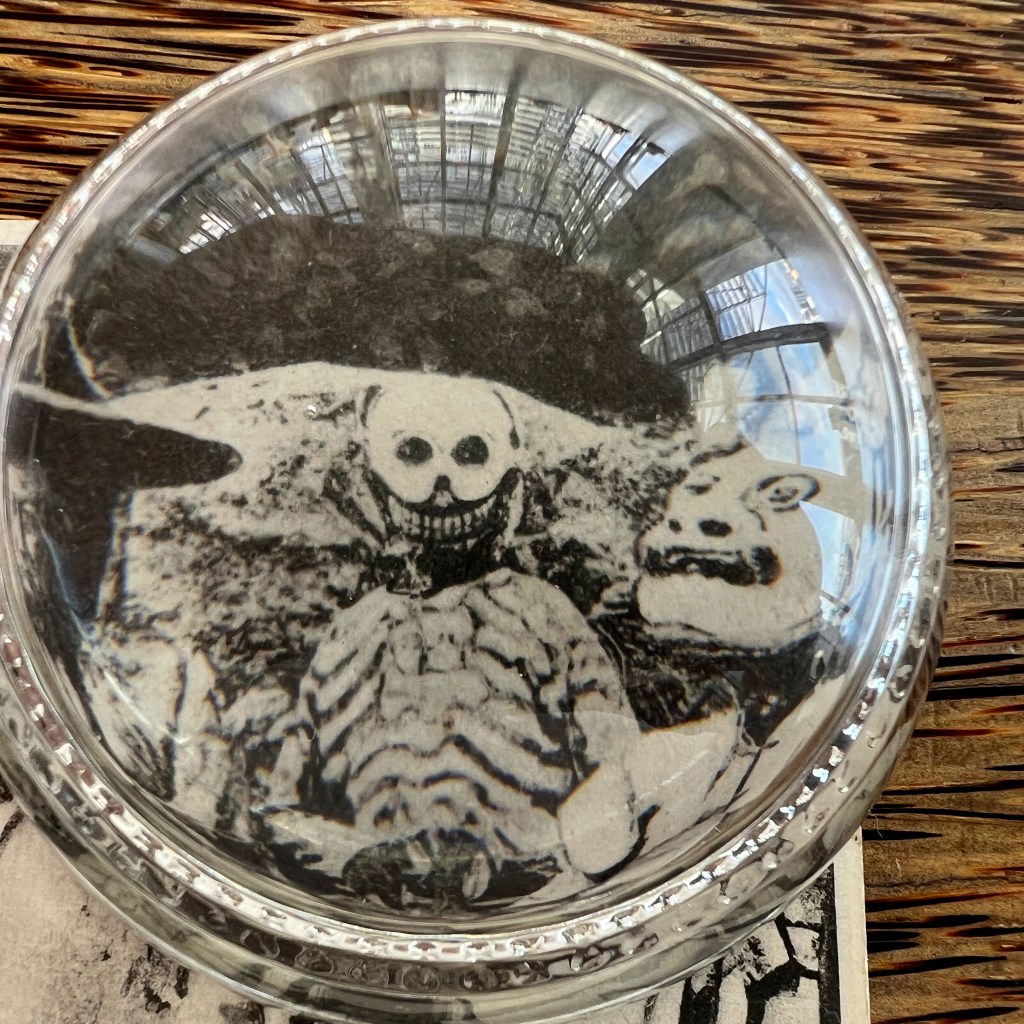
Tibetan ritual cham dances were often called “Devil Dances” by Western scholars and travelers through the turn of the 20th century. Dressed in the ceremonial regalia of masked dance, performing monks became a popular visual motif for representing Tibetan Buddhism.

Traditionally traced to the semi-legendary 8th century tantric Buddhist Padmasambhava, ritual dances are usually held as part of larger religious festivals. Performers portray a range of figures from protector deities and heroes to comic characters.

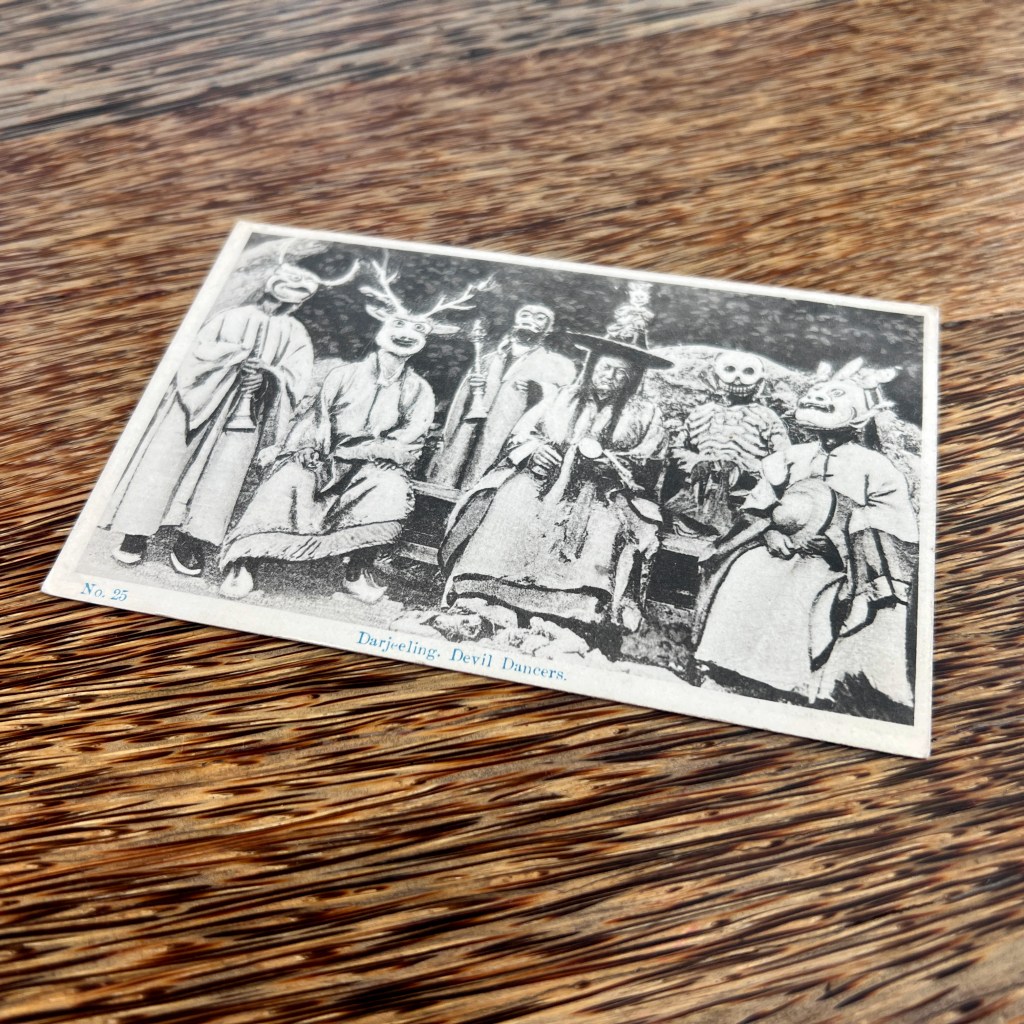
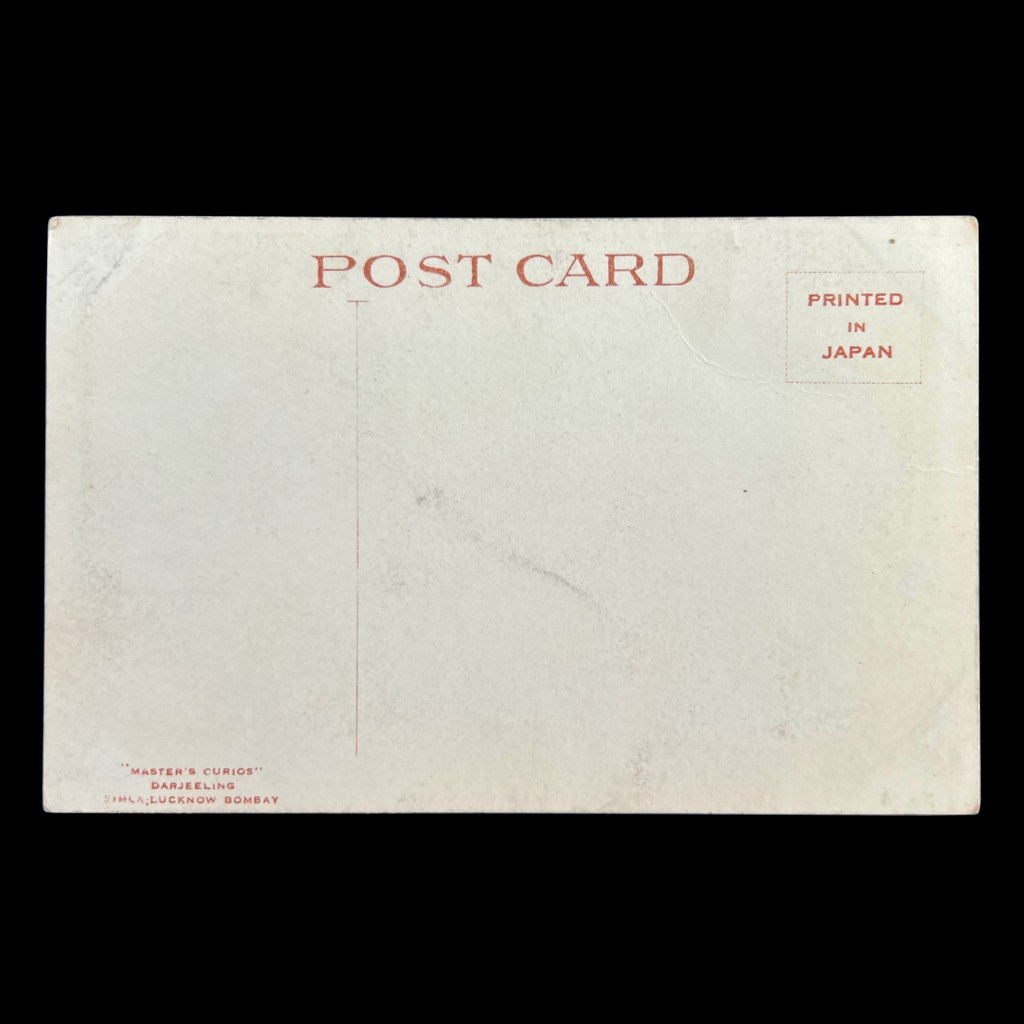
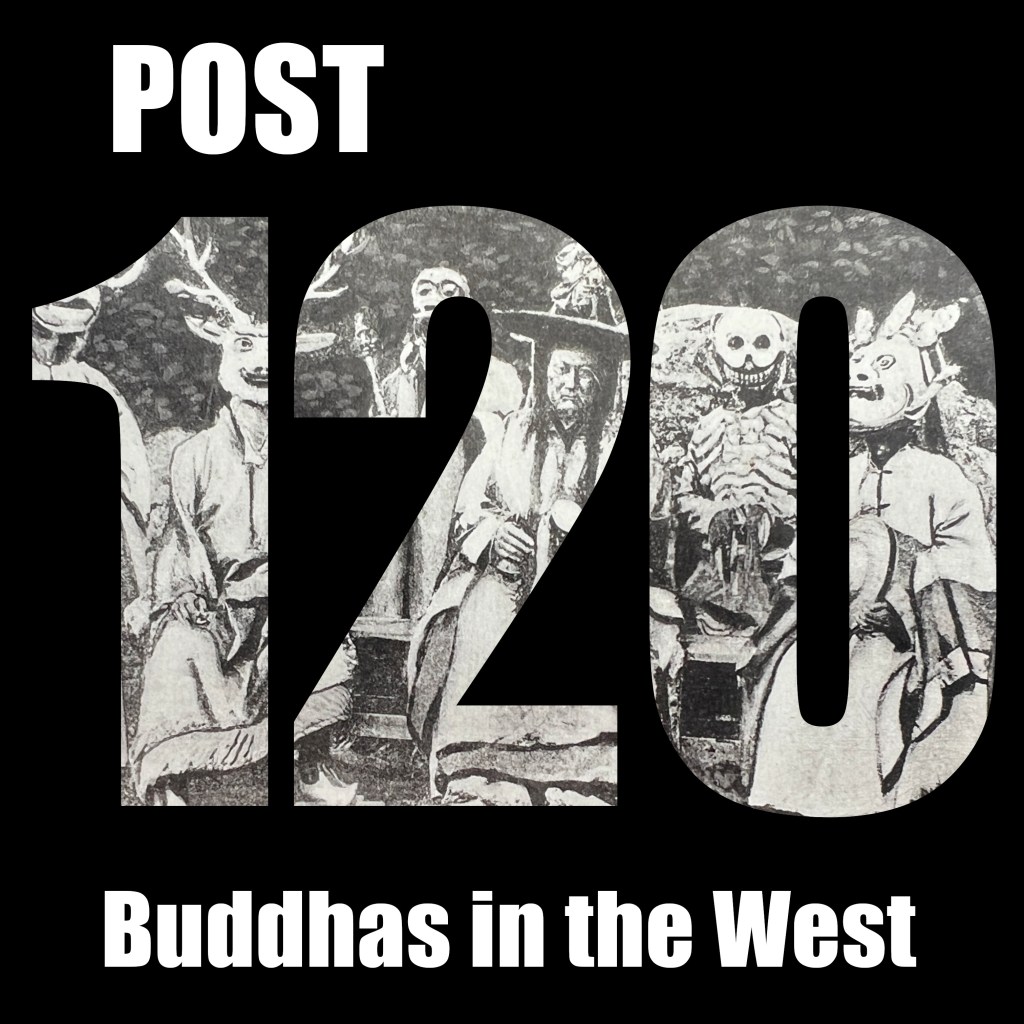
The photograph, retouched considerably here, was taken by P.A. Johnston and Theodor Hoffmann who opened a studio in Calcutta in 1882 and Darjeeling in 1890. This postcard, likely published in the 1920s, was printed in the epicenter of Asian postcard production at the time, Japan.

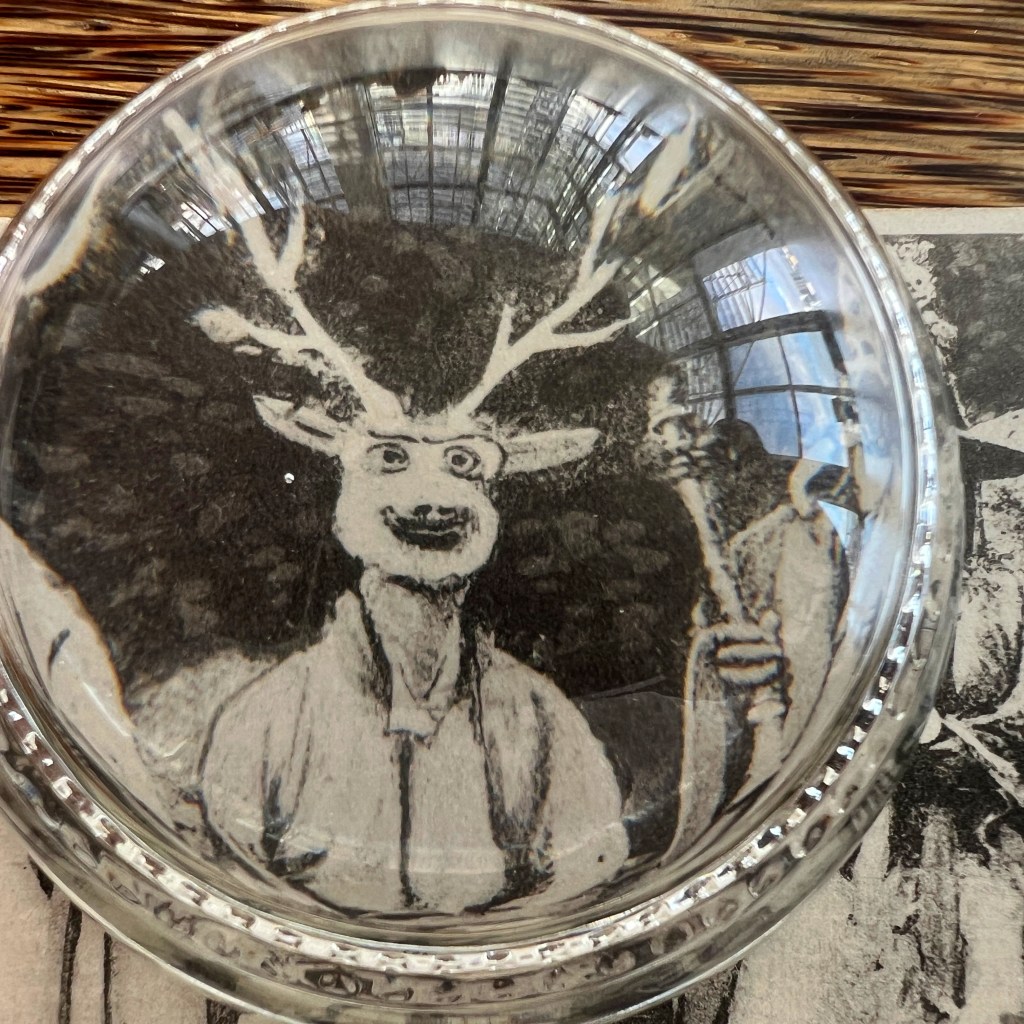
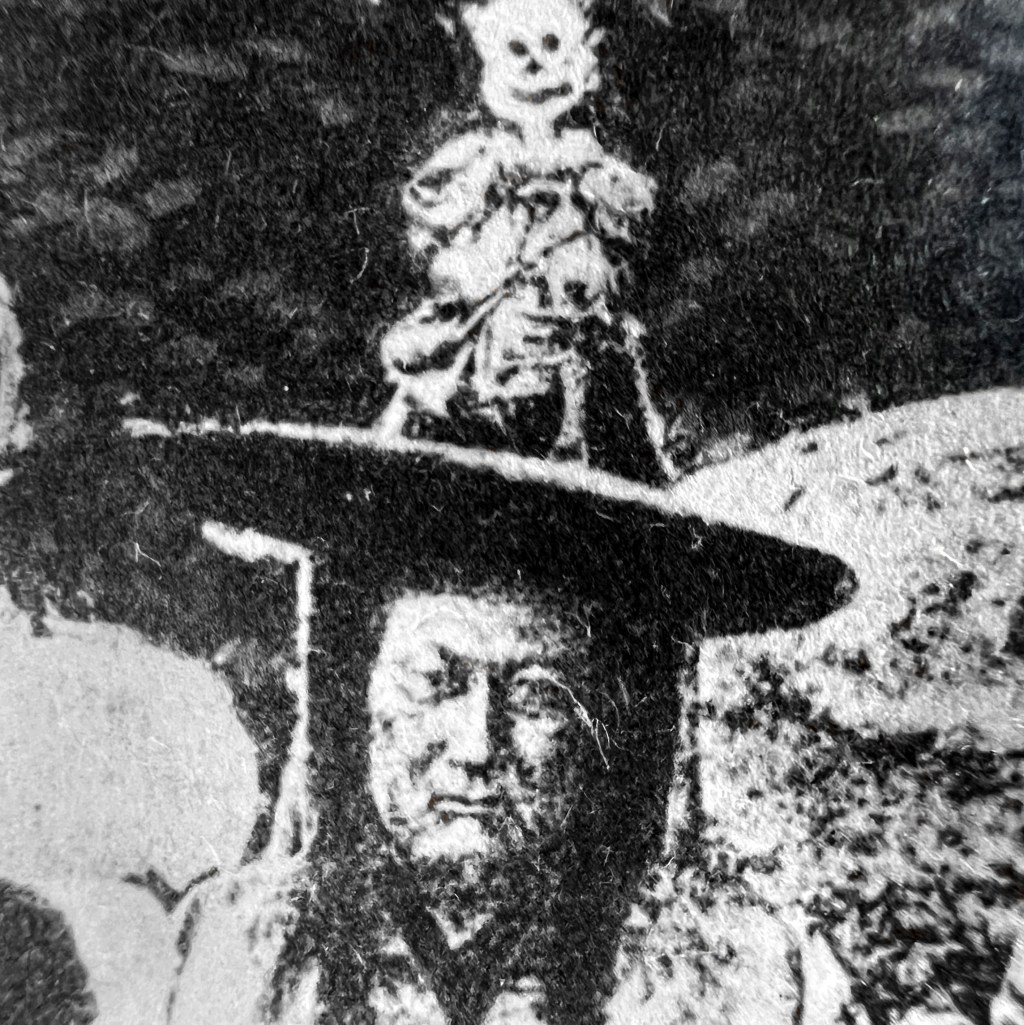
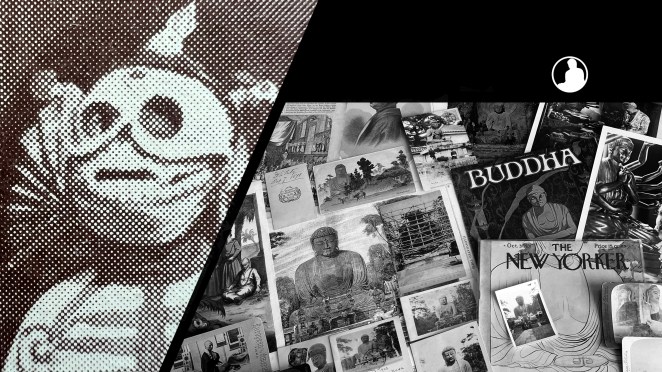
The stag mask recalls a dance symbolizing the repulsion of negative forces and the consecration of surrounding space for spiritual practice. One source claims this photo was taken in Bhutia Busty, a village in the Darjeeling district known for its cham performances at the local monastery.

Another ritual performer, possibly a young boy, wears a skeleton mask with a blood-red suit sewn with white skeleton bones. Skeleton dancers can represent the impermanence of phenomena and sometimes play a semi-comedic role.

The central figure is representative of the Black Hat dance, sometimes seen as a celebration for the death of Langdarma, an enemy of Buddhism. For an introductory overview of Tibetan cham, see Ellen Pearlman, Tibetan Sacred Dance: A Journey into the Religious and Folk Traditions.


The Buddhas in the West Material Archive is a digital scholarship project that catalogues artifacts depicting Buddhist material culture for Western audiences. It’s comprised of prints, photos, and an assortment of ephemera and other objects. For a brief introduction to this archive, visit the main Buddhas in the West project page.


For Related Buddhas in the West Posts Featuring Ritual Dance:


For the Most Recent Buddhas in the West Posts:

Benjamin Kilburn’s Buddhist Pilgrims Stereoview

For all the new Buddhas in the West posts
follow us on Bluesky & Instagram


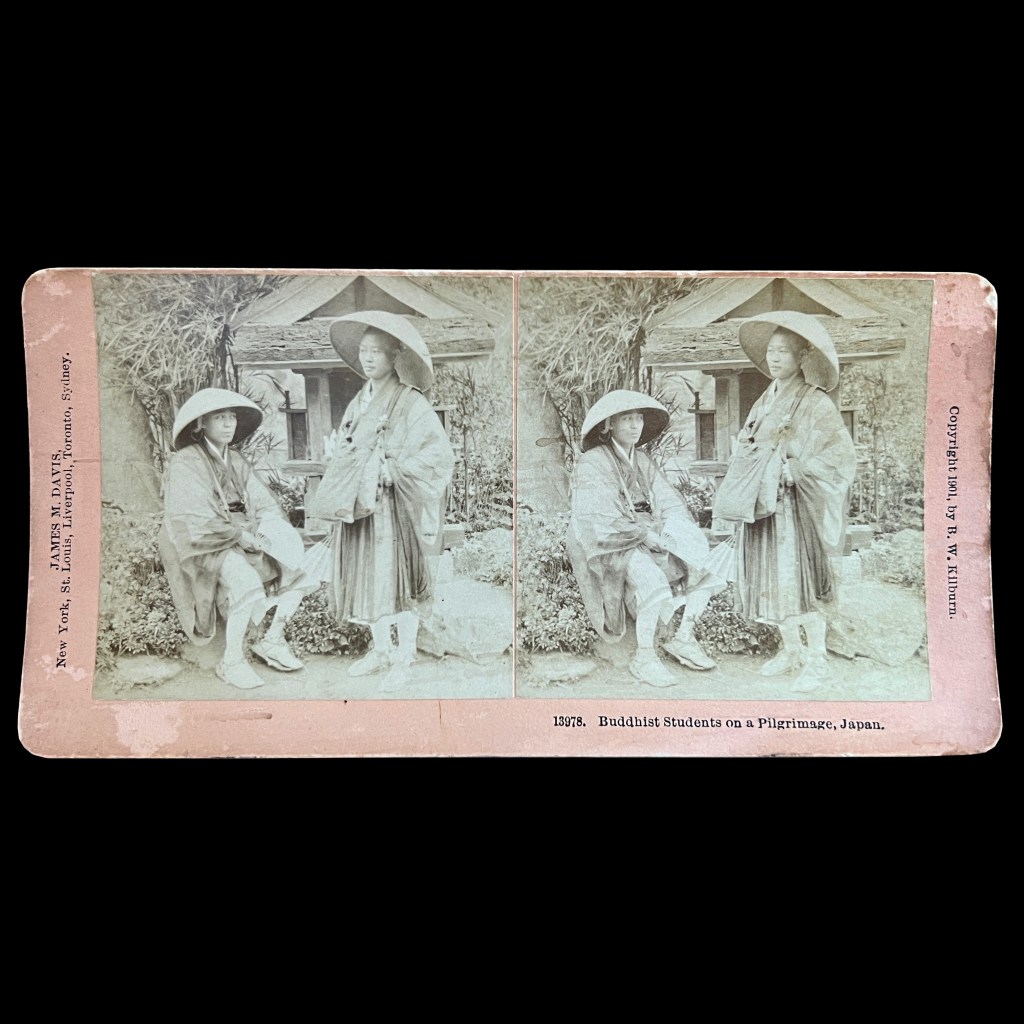
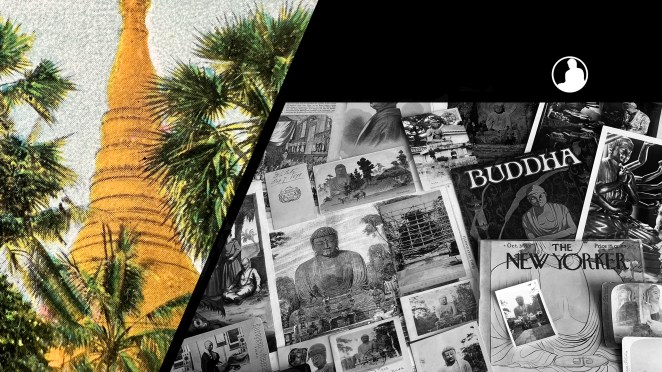
The earliest stereo photographs of Japan were taken in 1859, but it was not until the late 1890s when publishers started to take a genuine commercial interest in the country. In 1901 Benjamin Kilburn released a beautiful series of views of Japan where Buddhism played a minor role.

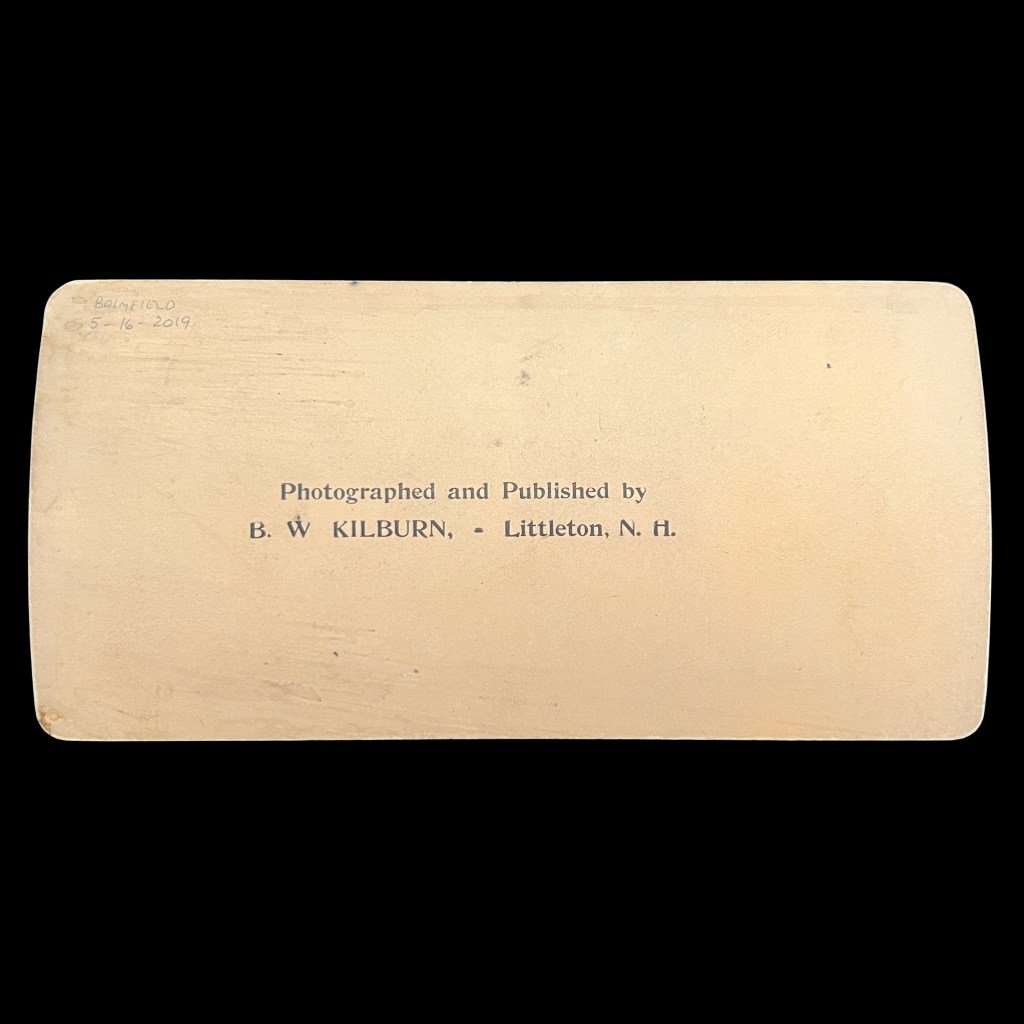
By 1900, Kilburn was one of the world’s largest producers and distributors of stereoviews, traveling extensively to build his portfolio. Yet, despite Kilburn’s name printed on the back of each mount, the Japanese series was not photographed by him; the photographer remains unknown.

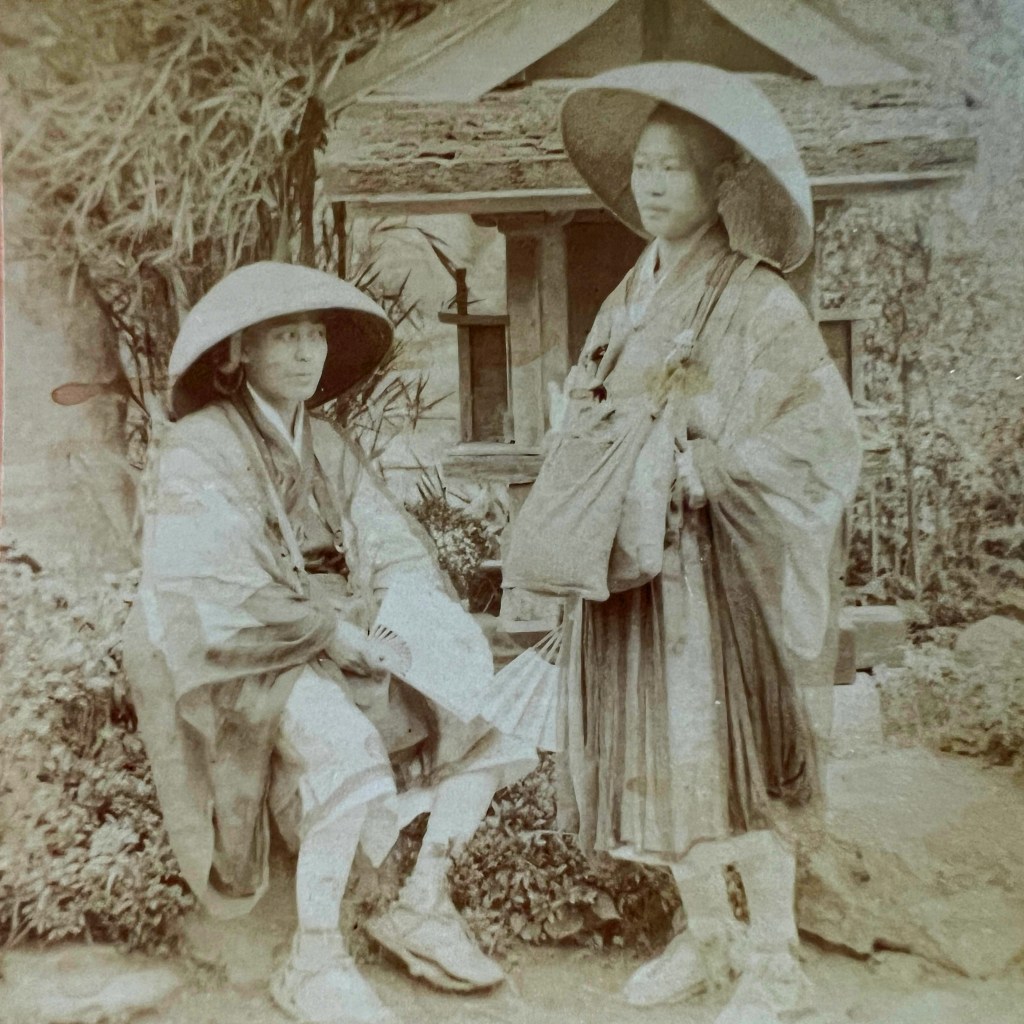
This view is captioned, “Buddhist Priests on a Pilgrimage, Japan,” but we have no precise information regarding the location. The negative number (13978) places this image in a series taken around Mt. Fuji, thus it may be somewhere on the pilgrimage path to the sacred mountain.

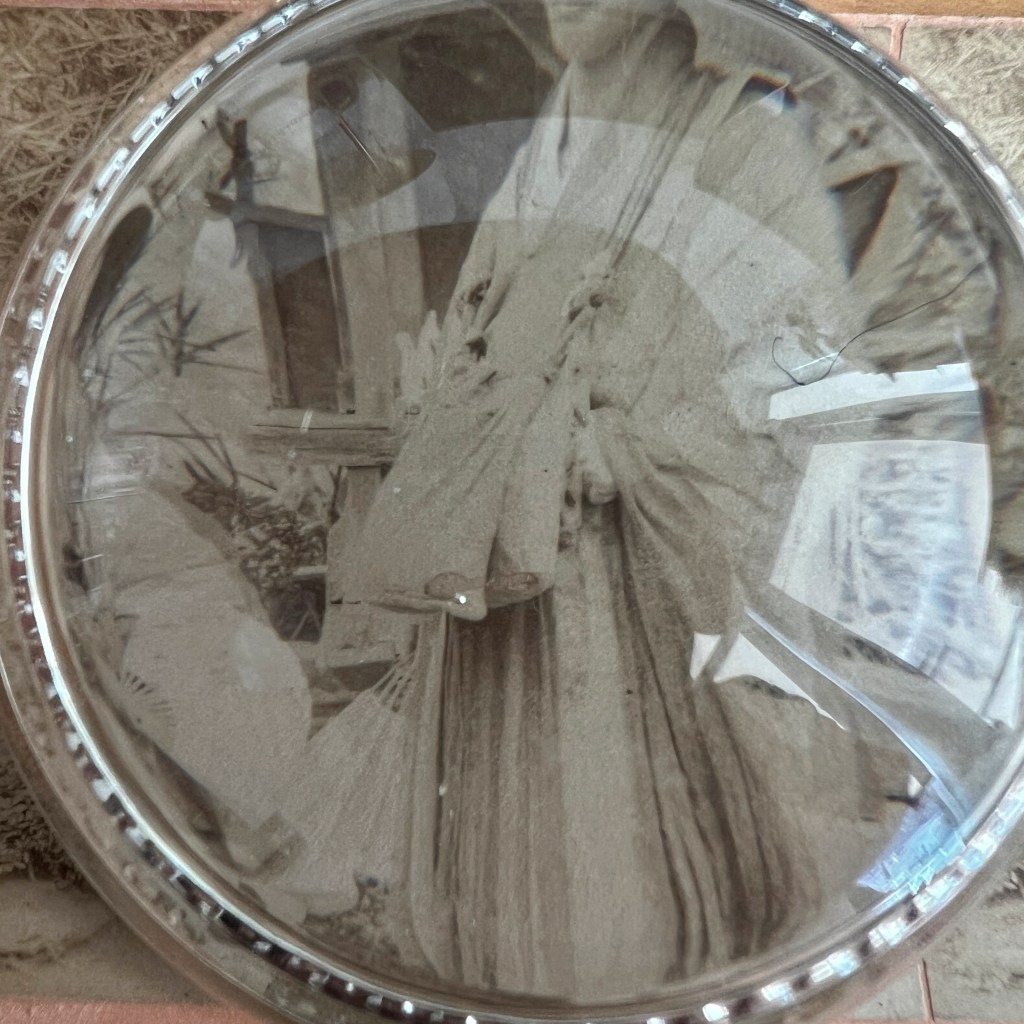
The sedge hats, bags, and white clothes all signal the activity of a religious pilgrimage. Views such as this were considered educational as much as they were entertaining and thus reflected a visual tradition of anthropological photography by showing native peoples in religious attire.

For more on the religious history of mountains in Japan, see the edited volume, Defining Shugendō: Critical Studies on Japanese Mountain Religion (2020).


The Buddhas in the West Material Archive is a digital scholarship project that catalogues artifacts depicting Buddhist material culture for Western audiences. It’s comprised of prints, photos, and an assortment of ephemera and other objects. For a brief introduction to this archive, visit the main Buddhas in the West project page.


For Related Buddhas in the West Posts Featuring Stereoviews:


For the Most Recent Buddhas in the West Posts:

Buddhist Revivalist Hikkaduwe Sumangala Postcard

For all the new Buddhas in the West posts
follow us on Bluesky & Instagram


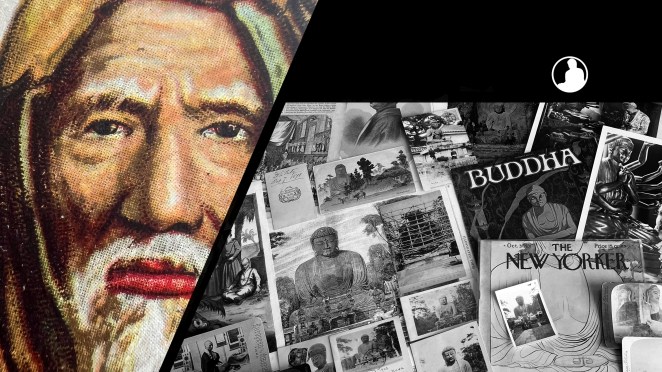
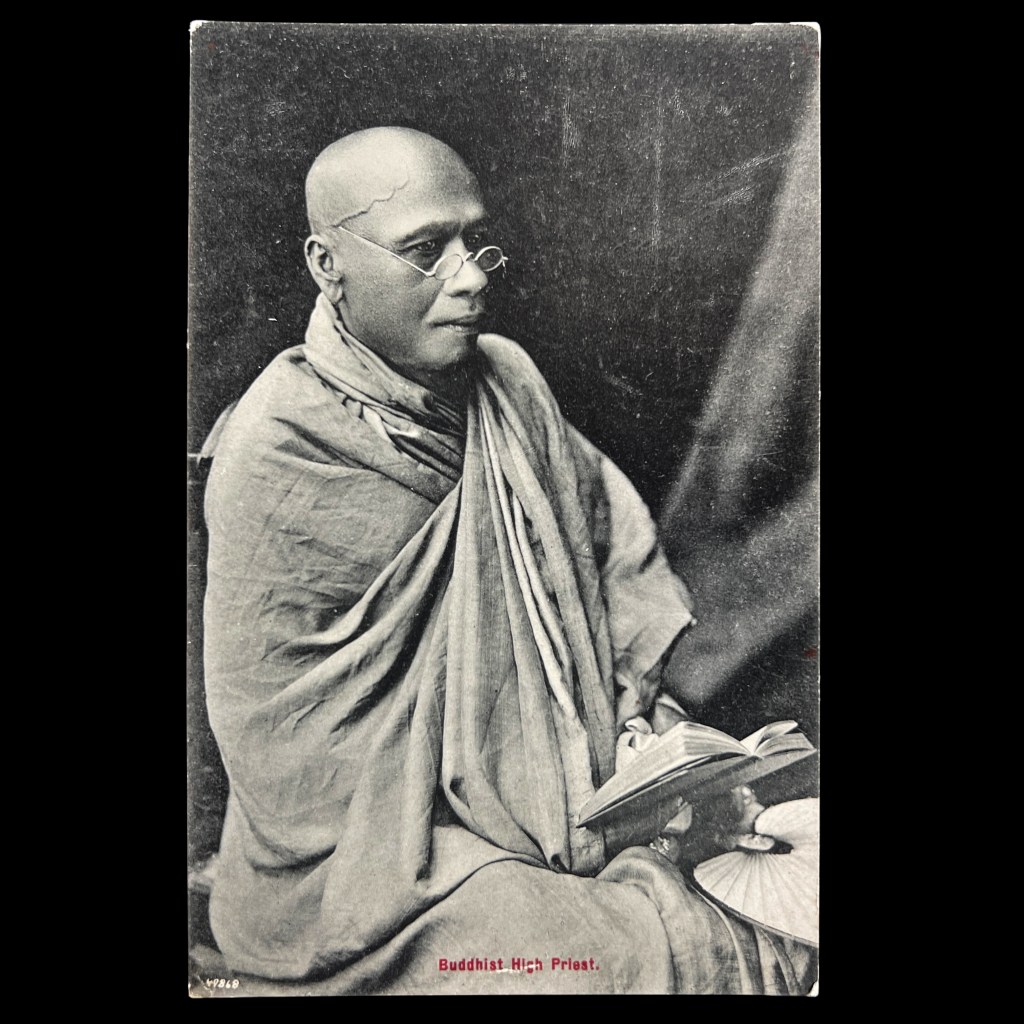
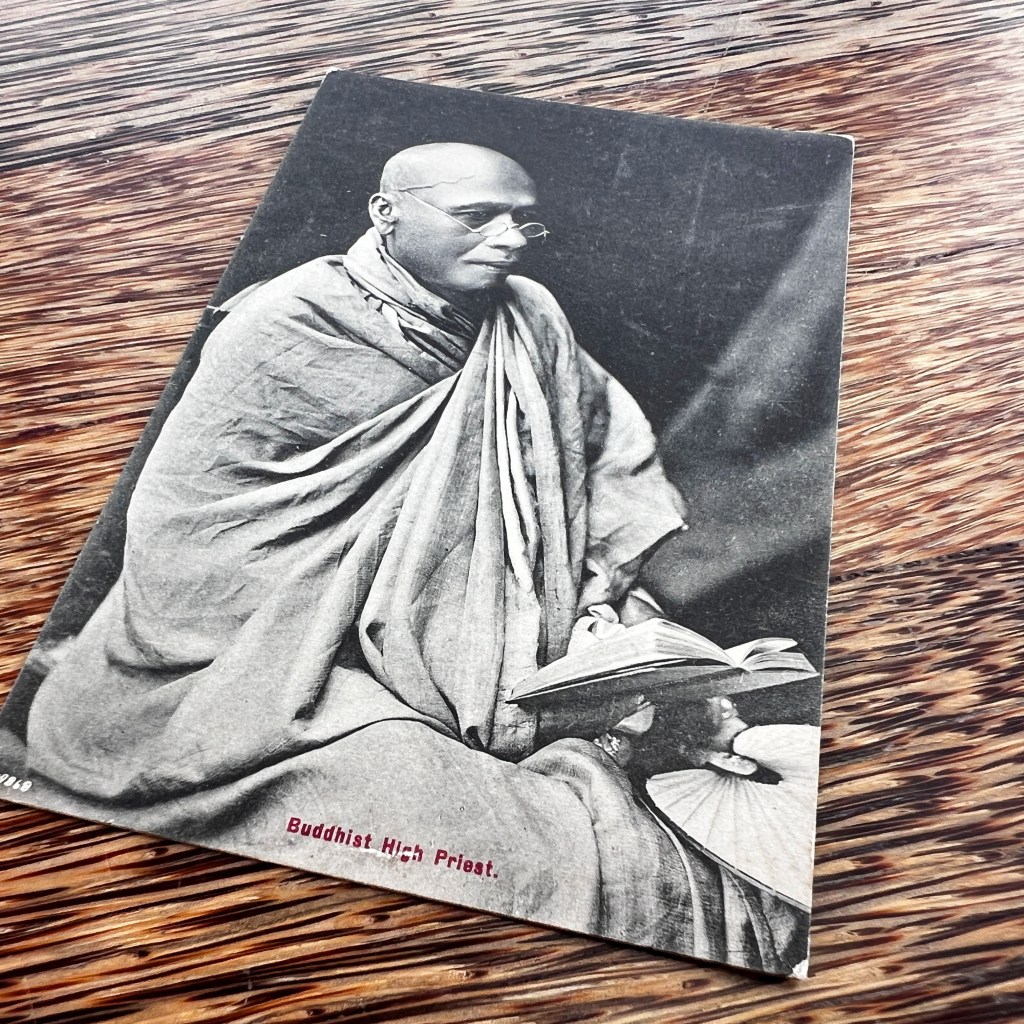
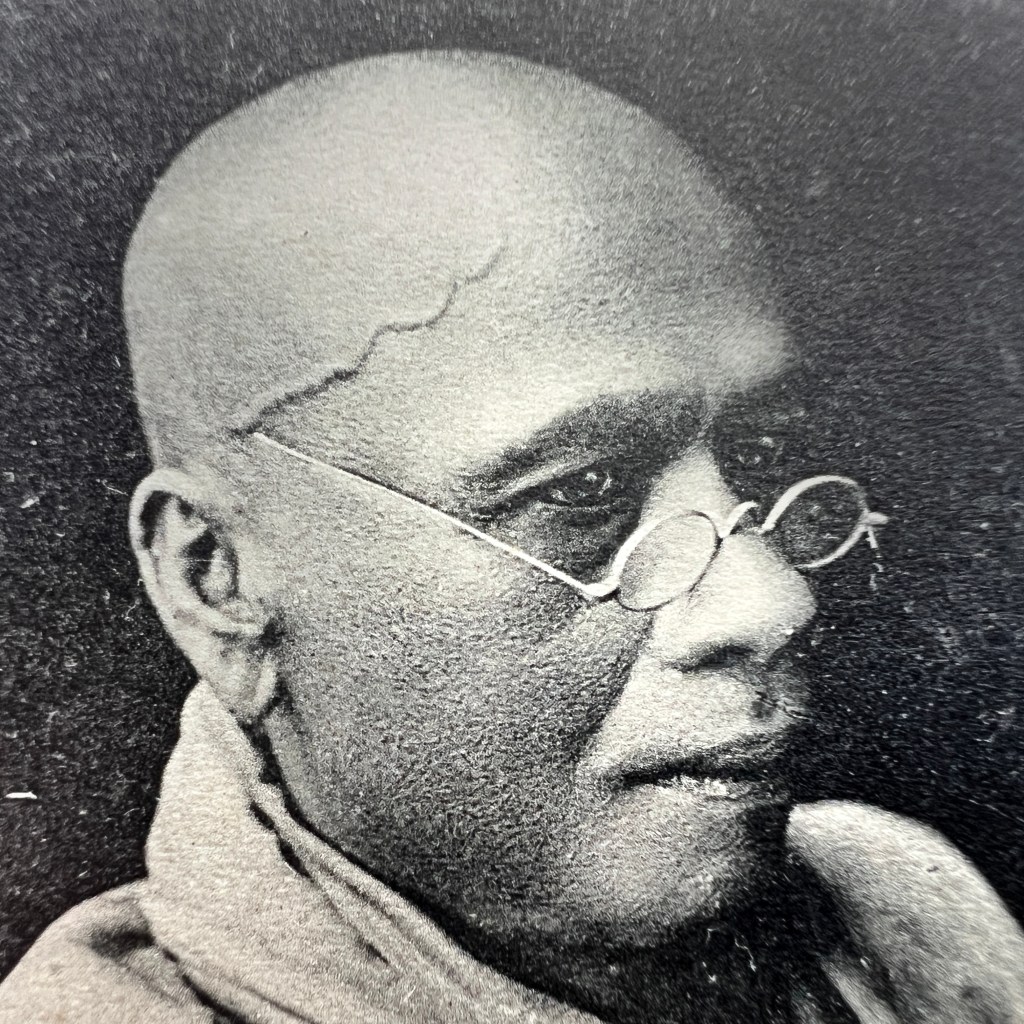
Identified as a “Buddhist High Priest” and shown holding an open book, the caption and image both suggest a highly learned Sinhalese monk. Although anonymous, we can identify him as one of the pioneers of the Buddhist revivalist movement in the 19th century, Hikkaduwe Sumangala.

Sumangala was the head priest of Adam’s Peak, a position of great prestige, and a friend to many Western Orientalist scholars Theosophists Henry Steel Olcott and Helena Blavatsky considered Sumangala, “the most learned of all the representatives of his faith.”

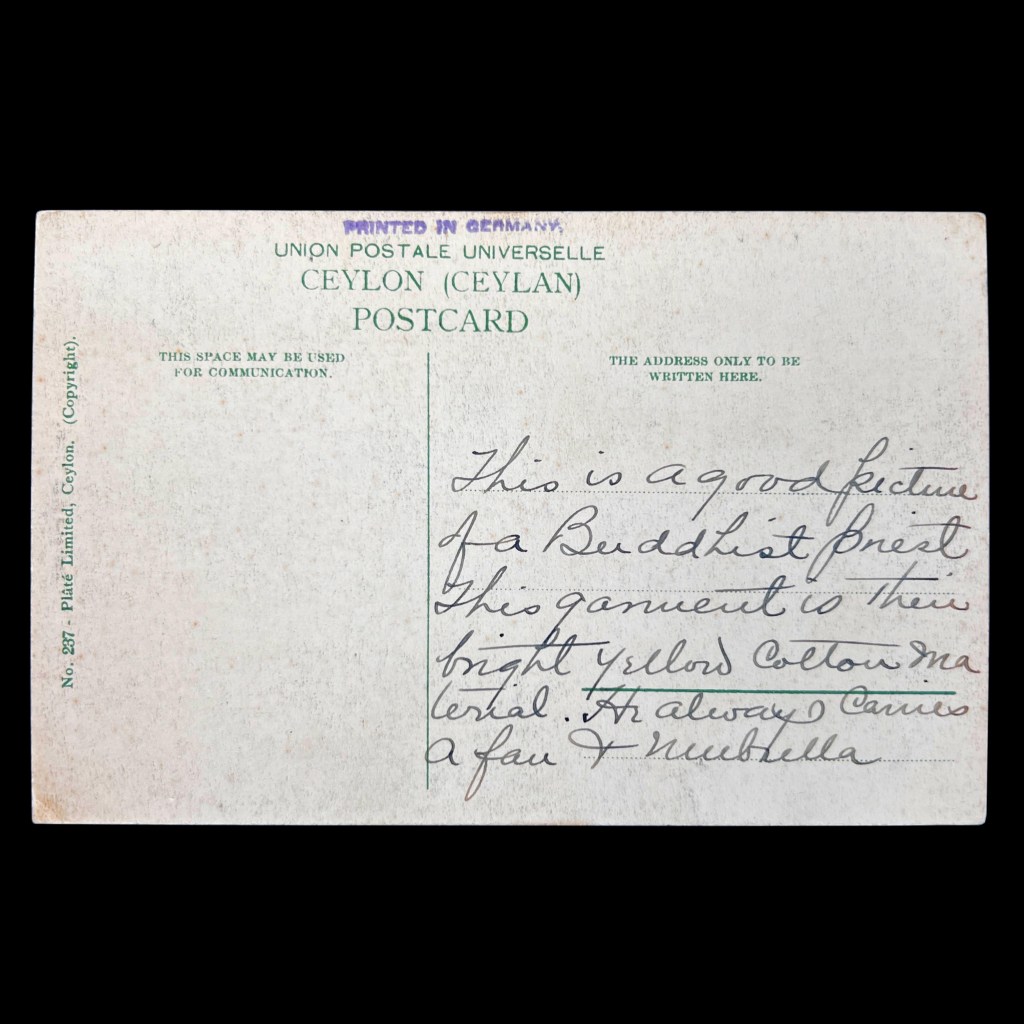
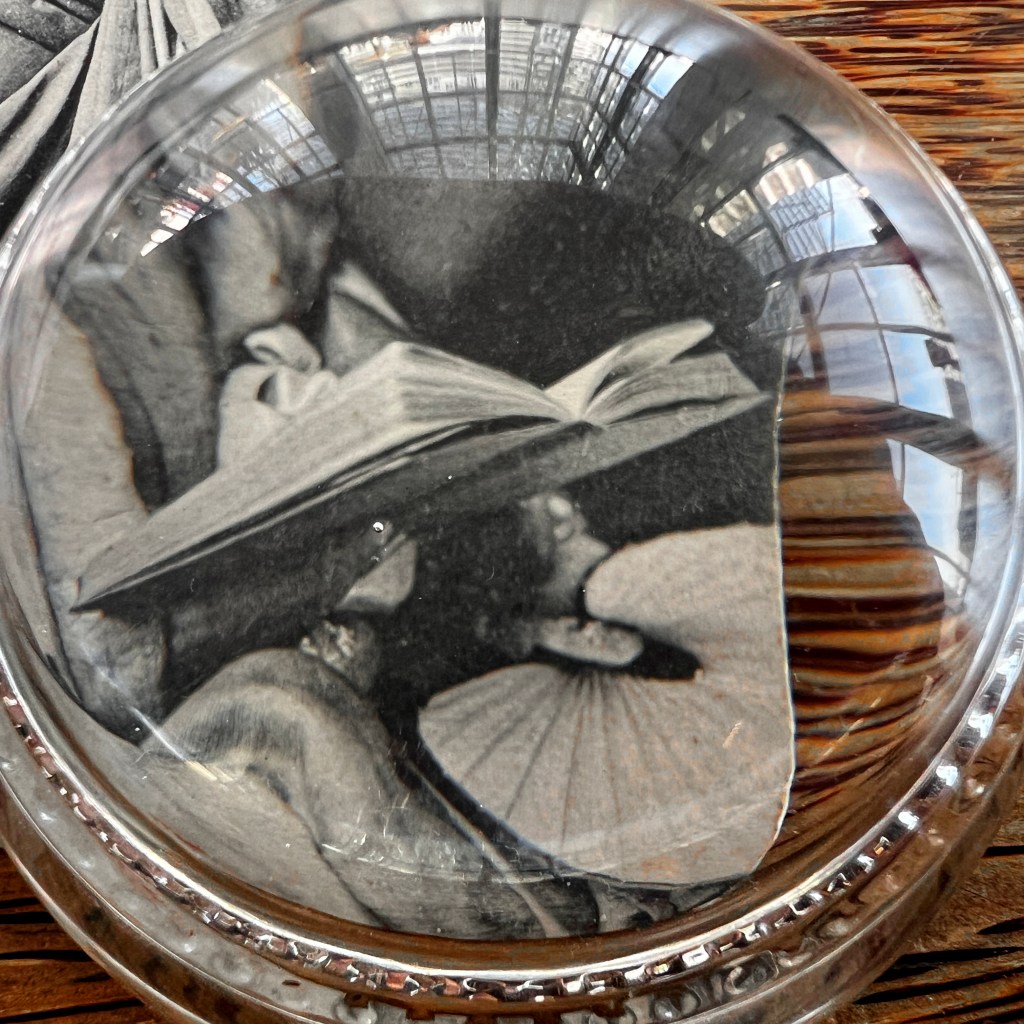
The photograph was taken in the 1890s by the first private studio to sell postcards in Sri Lanka, A. W. Plâté & Co. The previous owner of the card used it to take travel notes, detailing the “bright yellow” color of monks’ robes and their frequent use of palm leaf fans and umbrellas.

Considered an esteemed scholar of Buddhism, Sumangala formally certified the accuracy of Olcott’s Buddhist Catechism in 1881, a book that presented Buddhism as both scientific and rational, as opposed to “religious.”

Sumangala pushed back against Olcott’s reading of a persisting soul, however, which was removed from his book. For more on the interaction of Sumangala and Olcott, see Julie Chajes, “Orientalist Aggregates: Theosophical Buddhism Between Innovation and Tradition” (2021).


The Buddhas in the West Material Archive is a digital scholarship project that catalogues artifacts depicting Buddhist material culture for Western audiences. It’s comprised of prints, photos, and an assortment of ephemera and other objects. For a brief introduction to this archive, visit the main Buddhas in the West project page.


For Related Buddhas in the West Posts Featuring Buddhist Monk:


For the Most Recent Buddhas in the West Posts:

Fritz Kapp’s Lamas and Disciples Postcard

For all the new Buddhas in the West posts
follow us on Bluesky & Instagram


In 1900, traveling to Darjeeling meant gazing upon the grandeur of the snow-capped Himalayas and imagining the inaccessible lands that lay beyond them in Tibet. Visiting Darjeeling at this time also meant having the rare opportunity to encounter and observe real Tibetan lamas.

Following the completion of the Darjeeling Himalayan Railway in 1881, the first commercial photography studios opened in the region. As the tourist demand for photographic souvenirs soared, studios increasingly staged scenes of various “ethnic” activities, including Tibetan Buddhist ritual.

The original photographer for this shot was Fritz Kapp who ran a studio at Calcutta and Darjeeling from about 1888 to 1903. When the picture postcard format was first introduced to Darjeeling in the 1890s, they became a cheaper alternative to photographs and a highly collectable souvenir.

Driven in part by an anthropological mode of seeing and recording, staged studio photographs required appropriate clothing and props to clearly identify the “ethnic type.” Monk’s robes, mala beads, and prayer wheels all signaled the presence of “Llama [sic] priests” as cited in the caption.

The central figure, looking directly at the camera, holds both a ritual vajra and bell; he is also a real Tibetan monk. Historian Clare Harris has identified this figure as Sherab Gyatso, the abbot of Ghoom Monastery located on the outskirts of Darjeeling.

A November 2021 Sotheby’s sale of the original photo was inscribed: “Lama priests by F. Kapp./ Lama Sherb, Gyatso (front middle).” For more on the history of photography in Darjeeling, see Clare Harris’ Photography in Tiber (2016).


The Buddhas in the West Material Archive is a digital scholarship project that catalogues artifacts depicting Buddhist material culture for Western audiences. It’s comprised of prints, photos, and an assortment of ephemera and other objects. For a brief introduction to this archive, visit the main Buddhas in the West project page.


For Related Buddhas in the West Posts Featuring Prayer Wheels:


For the Most Recent Buddhas in the West Posts:

Eliphalet Brown’s Buddhist Priest at Shimoda Lithograph

For all the new Buddhas in the West posts
follow us on Bluesky & Instagram


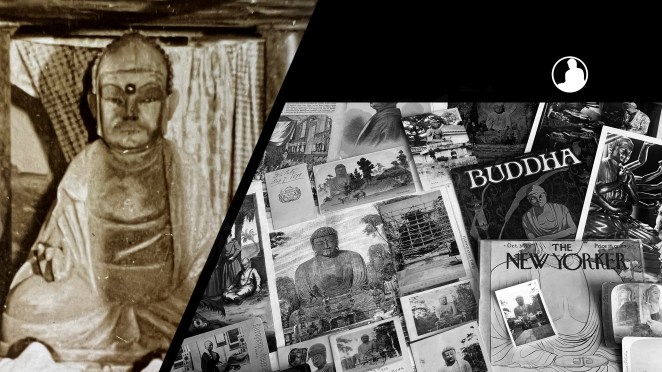
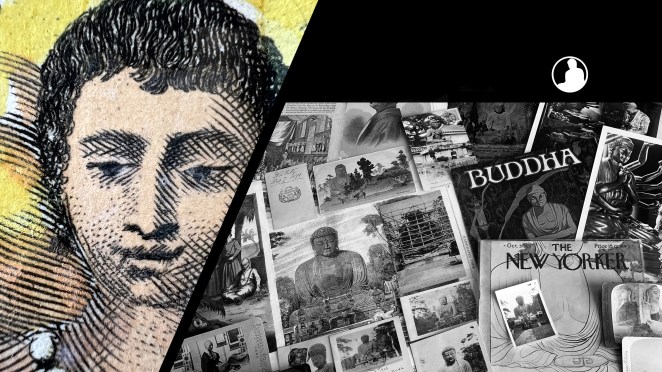
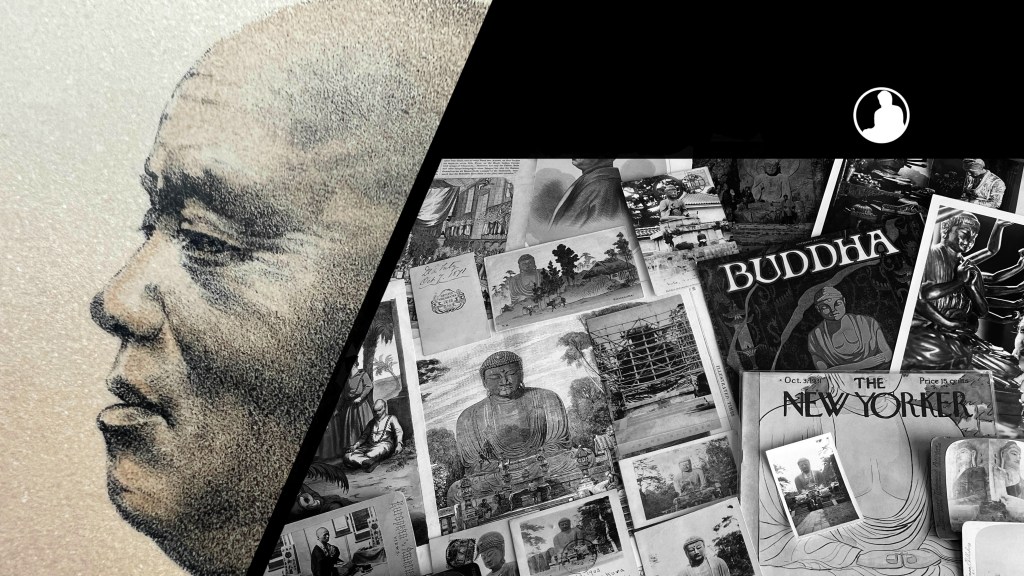
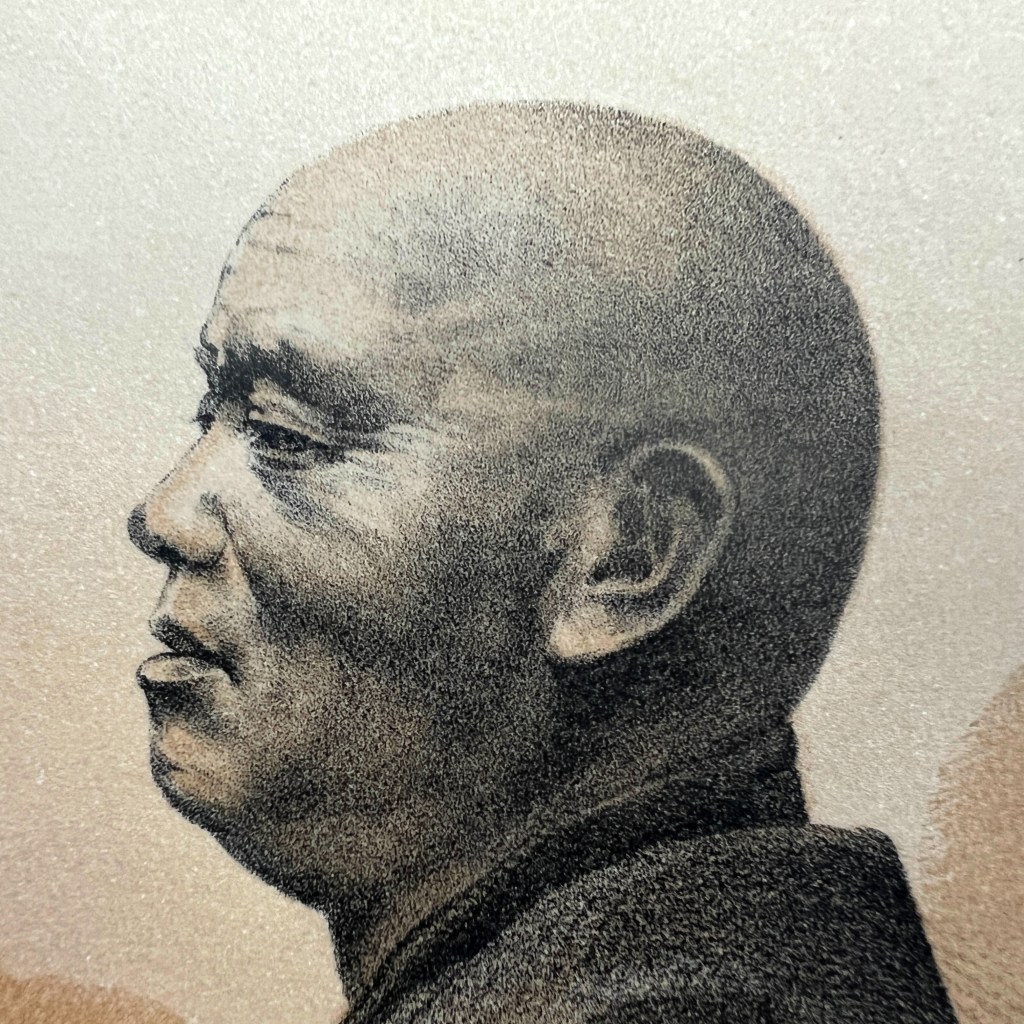
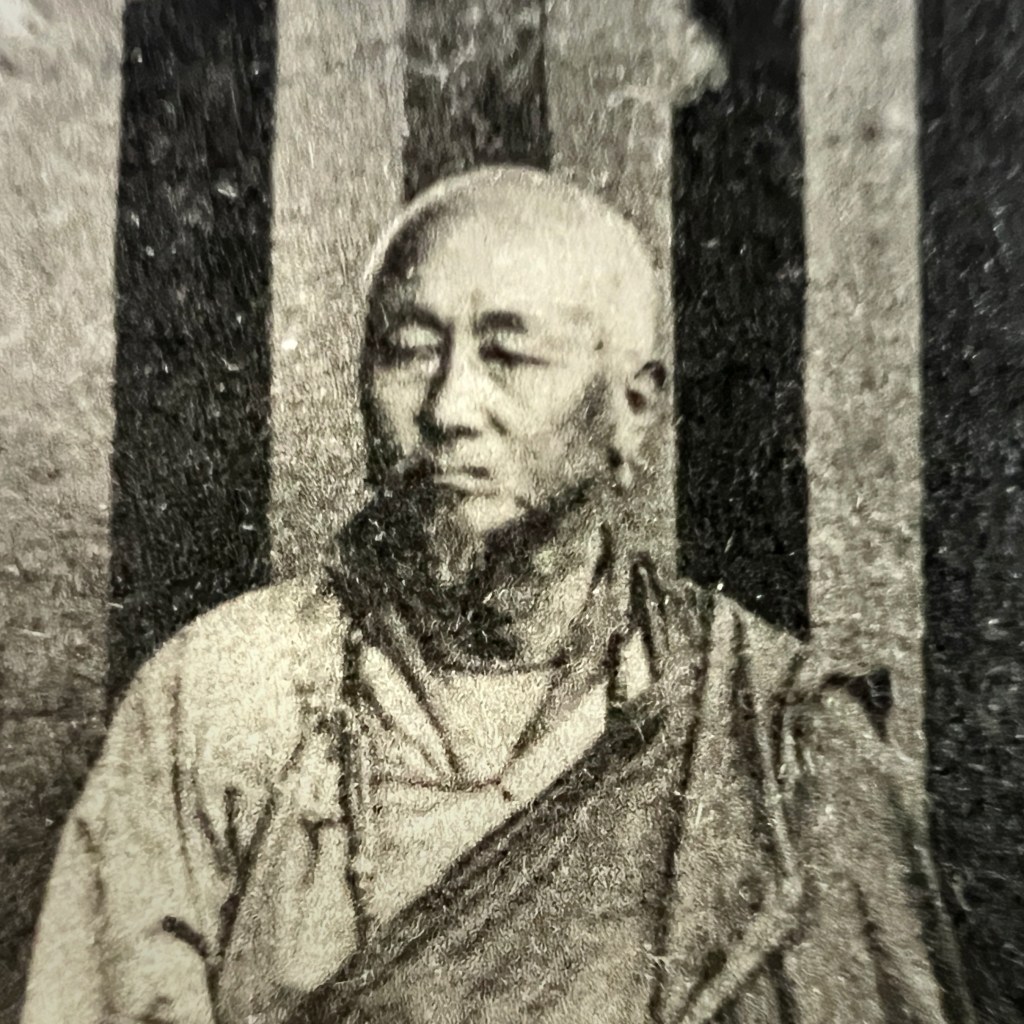
The earliest surviving photographs of Japan were shot by Eliphalet Brown as part of the Perry Expedition in 1853/54. Among many landscapes, Brown also took a few portraits, including this anonymous Buddhist priest at Shimoda – likely the earliest surviving photo of a Buddhist cleric.

Brown reportedly took more than 400 daguerreotypes during the expedition. Several dozen images, including fifteen from Shimoda, were used to illustrate the official US government report published as the Narrative of the Expedition of an American Squadron to the China Seas and Japan in 1856.

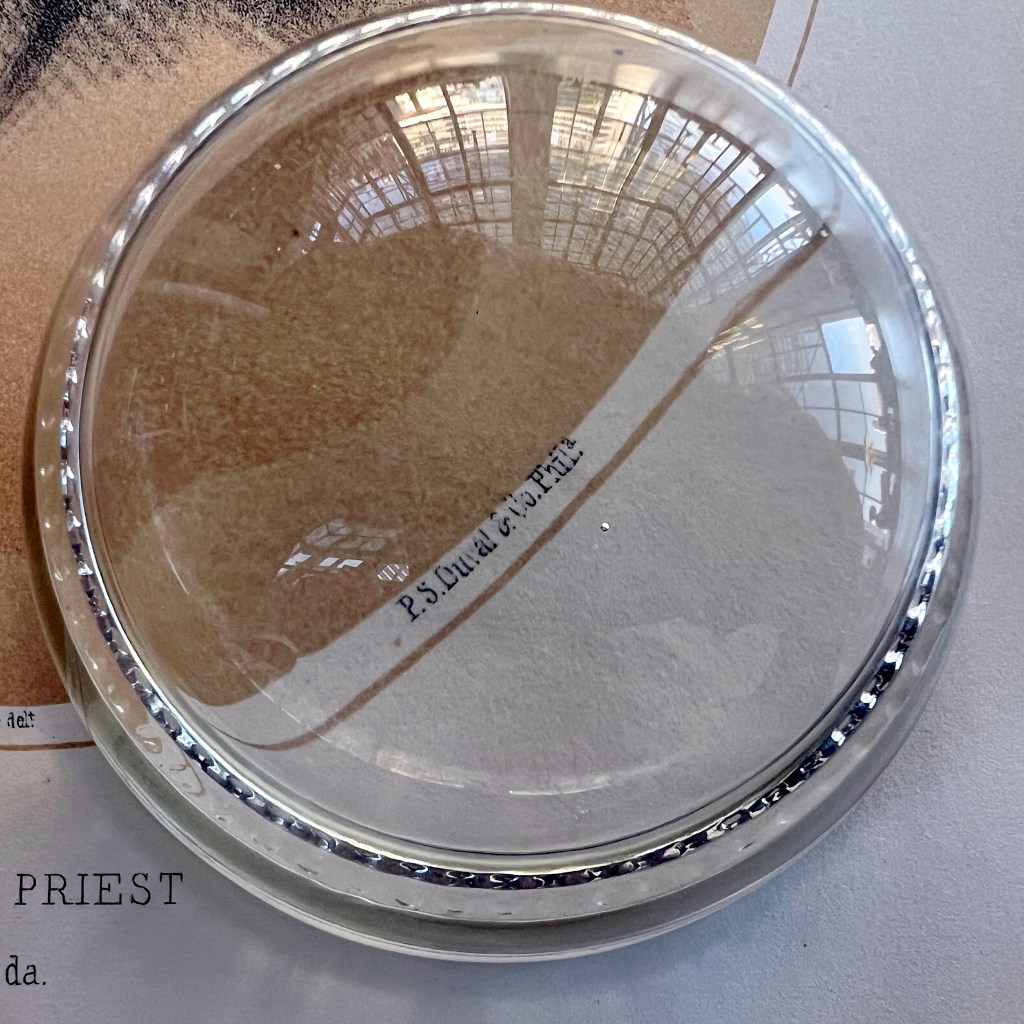
The selected daguerreotypes taken by Brown were first turned into paintings, most often by expedition artist Wilhelm Heine. These were then converted into sepia tone or color-tinted stone lithograph plates for printing; the caption below indicates this image was prepared by artist Peter Krämer.

Lithography is a printing process that uses drawings made with a waxy crayon on a stone plate. Due to a special “gumming” treatment applied to the stone, ink adheres only to the drawn lines, thus allowing prints to be made. The characteristic crayon marks can be easily seen here.

Only six of Brown’s daguerreotypes have been located; some were believed lost when the Philadelphia printer, P. S. Duval, suffered a fire in April 1856. In total, it is believed between 10,000 and 18,000 copies of Perry’s Expedition report were published.

When Perry landed in Shimoda on April 18, 1854, he reported a total of 7,000 inhabitants and nine Buddhist temples. The figure in Brown’s portrait remains unknown. The first volume of Perry’s report is viewable here: https://tinyurl.com/3rpscp9h.


The Buddhas in the West Material Archive is a digital scholarship project that catalogues artifacts depicting Buddhist material culture for Western audiences. It’s comprised of prints, photos, and an assortment of ephemera and other objects. For a brief introduction to this archive, visit the main Buddhas in the West project page.


For Related Buddhas in the West Posts Featuring Buddhist Clerics:

For the Most Recent Buddhas in the West Posts: