For all the new Buddhas in the West posts
follow us on Bluesky & Instagram
The earliest stereo photographs of Japan were taken in 1859, but it was not until the late 1890s when publishers started to take a genuine commercial interest in the country. In 1901 Benjamin Kilburn released a beautiful series of views of Japan where Buddhism played a minor role.
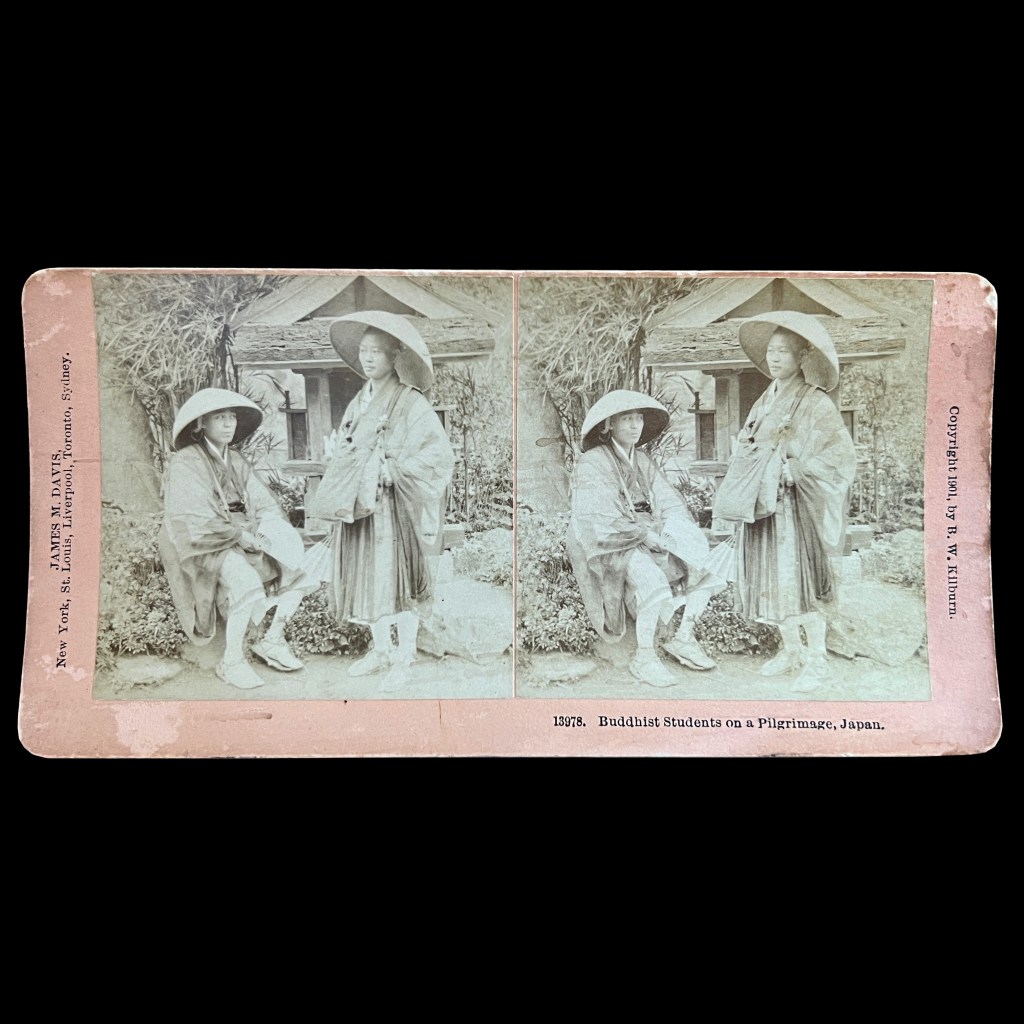
By 1900, Kilburn was one of the world’s largest producers and distributors of stereoviews, traveling extensively to build his portfolio. Yet, despite Kilburn’s name printed on the back of each mount, the Japanese series was not photographed by him; the photographer remains unknown.

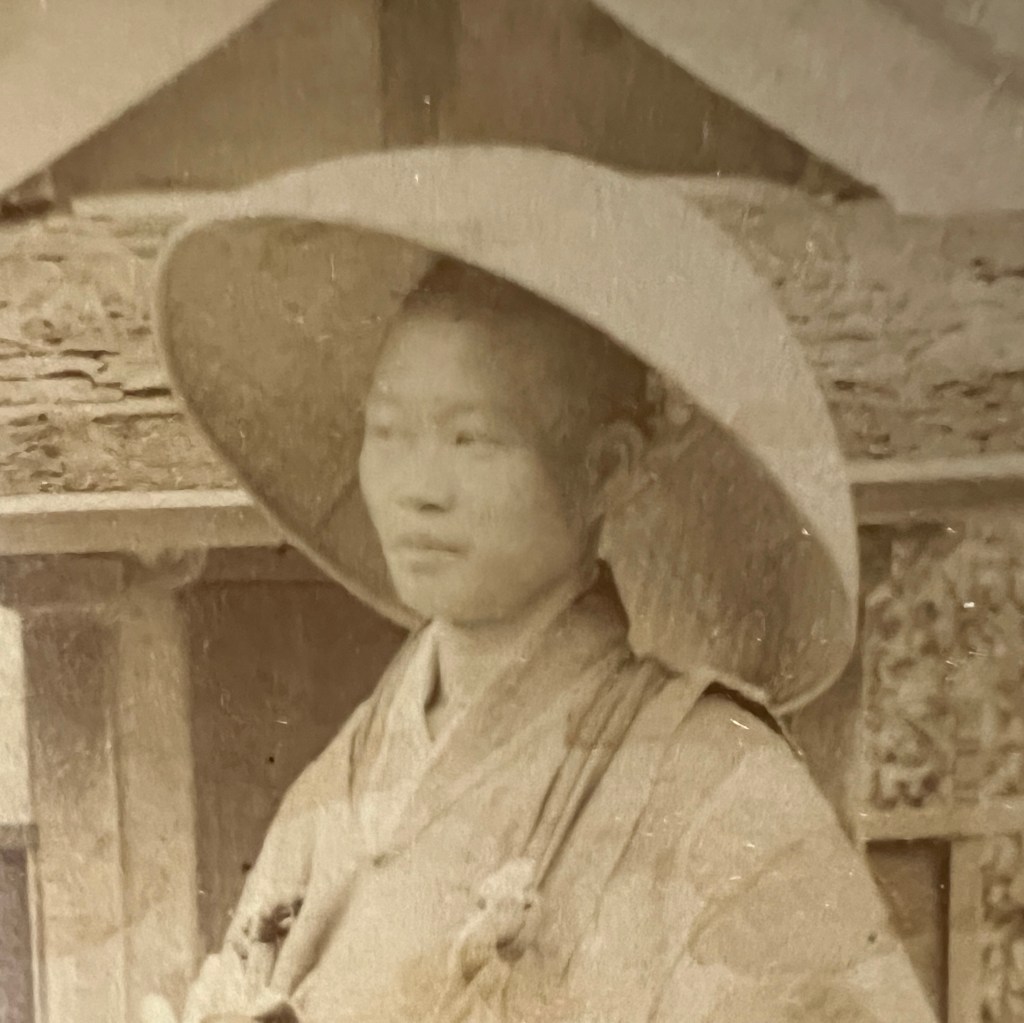
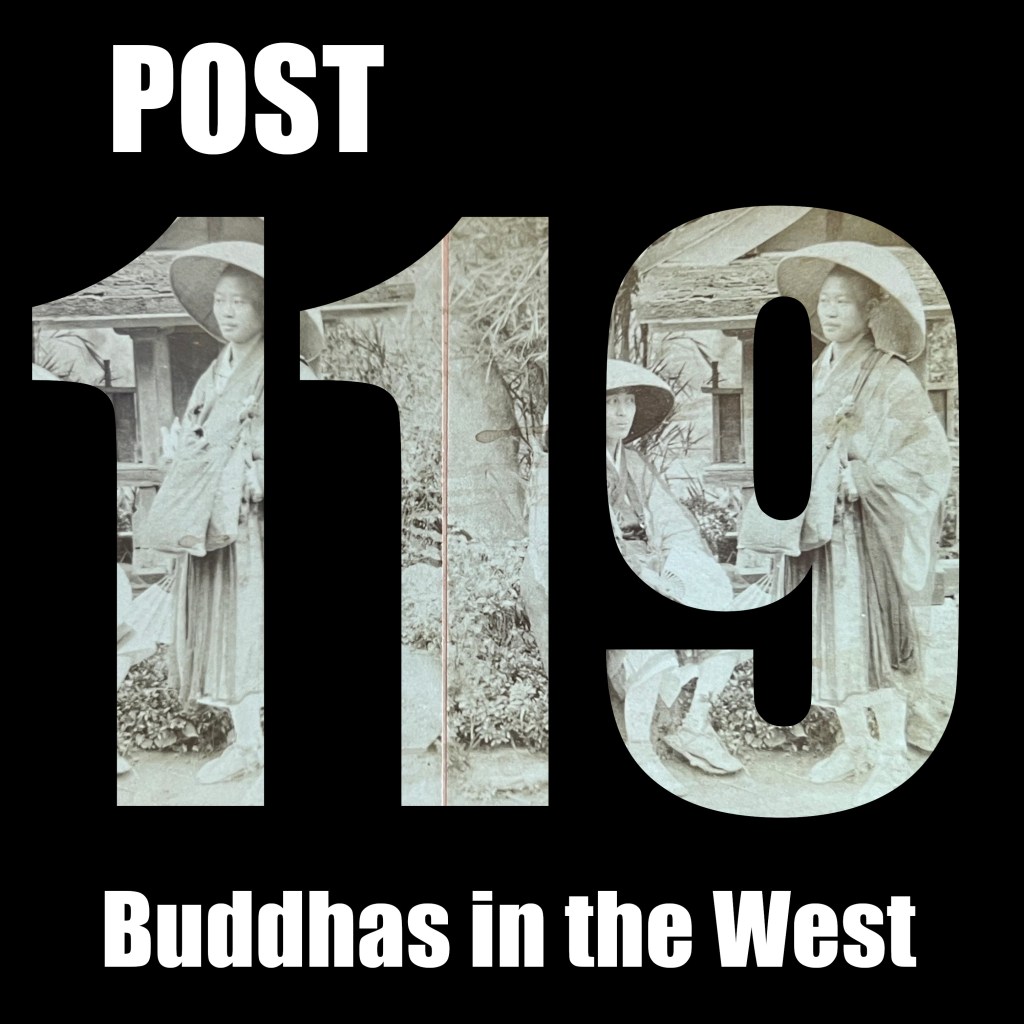
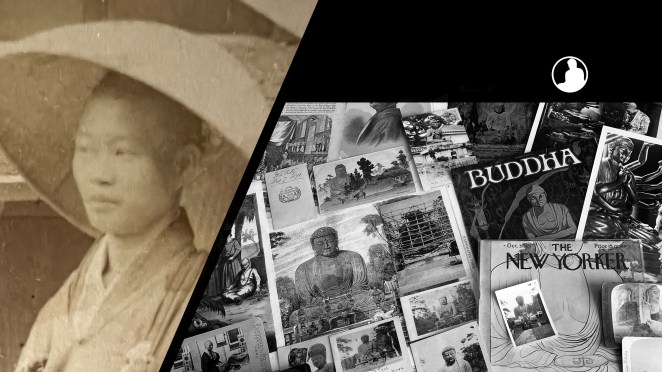
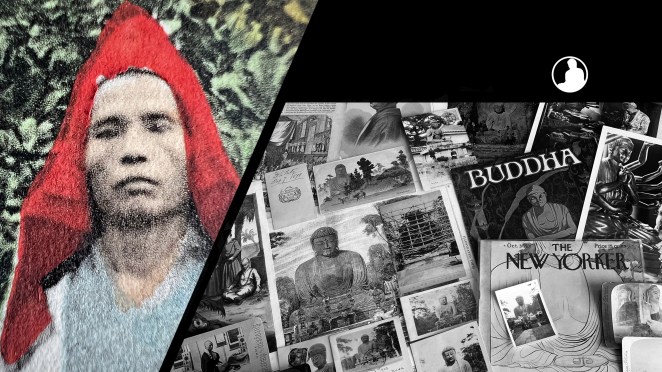
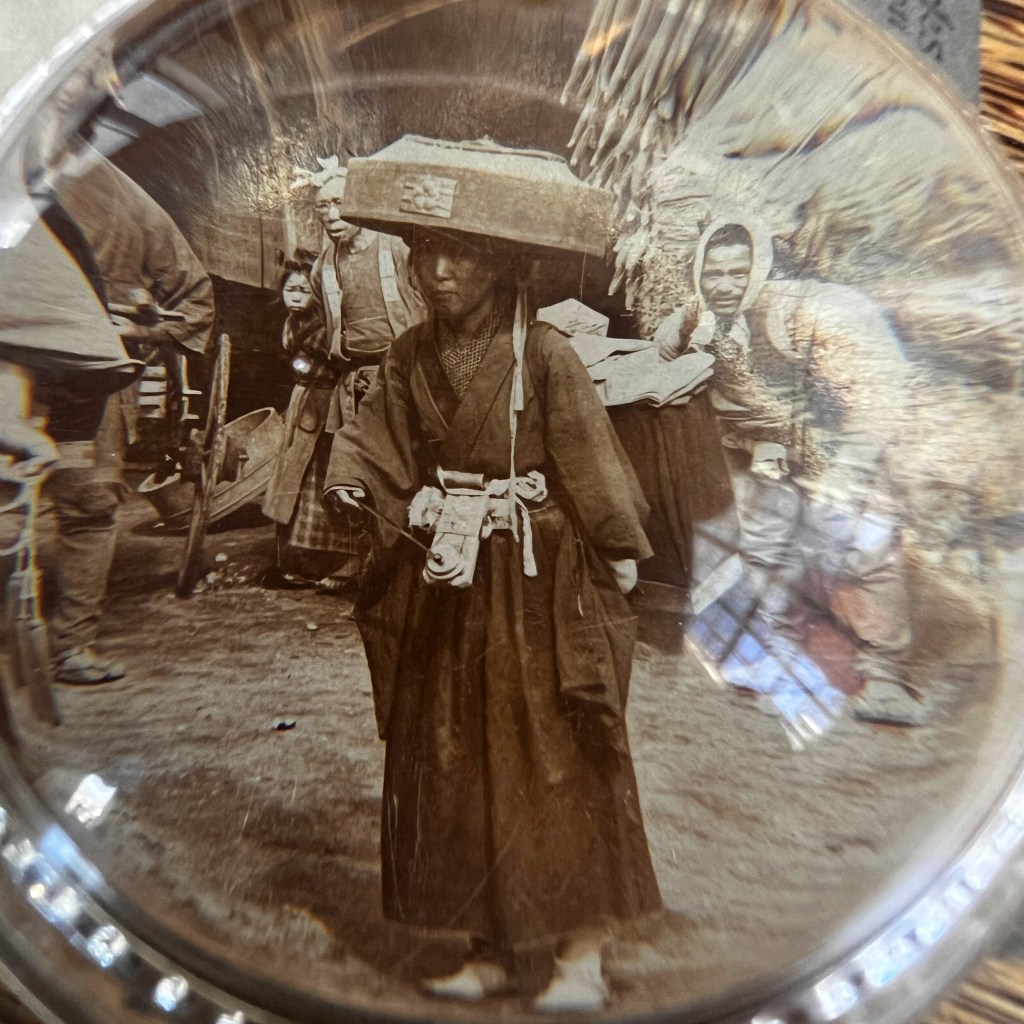
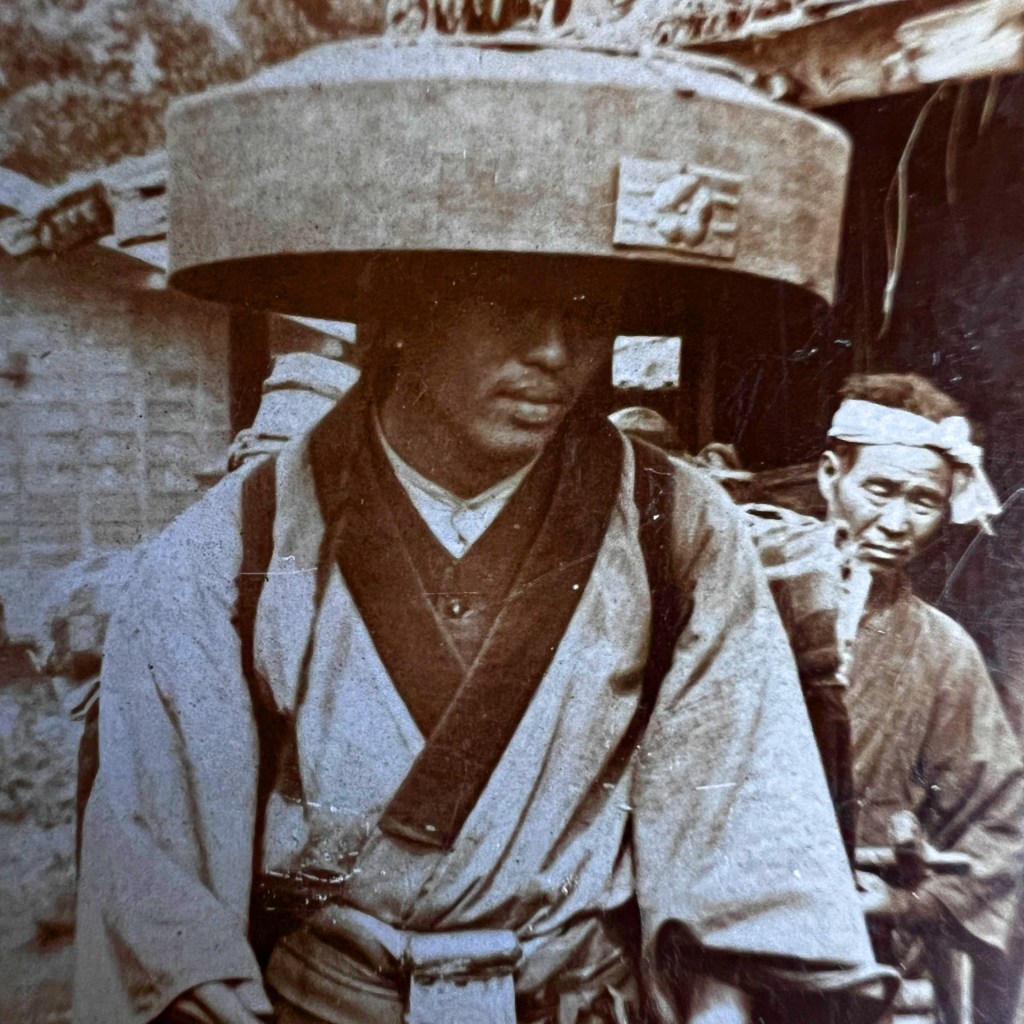
This view is captioned, “Buddhist Priests on a Pilgrimage, Japan,” but we have no precise information regarding the location. The negative number (13978) places this image in a series taken around Mt. Fuji, thus it may be somewhere on the pilgrimage path to the sacred mountain.
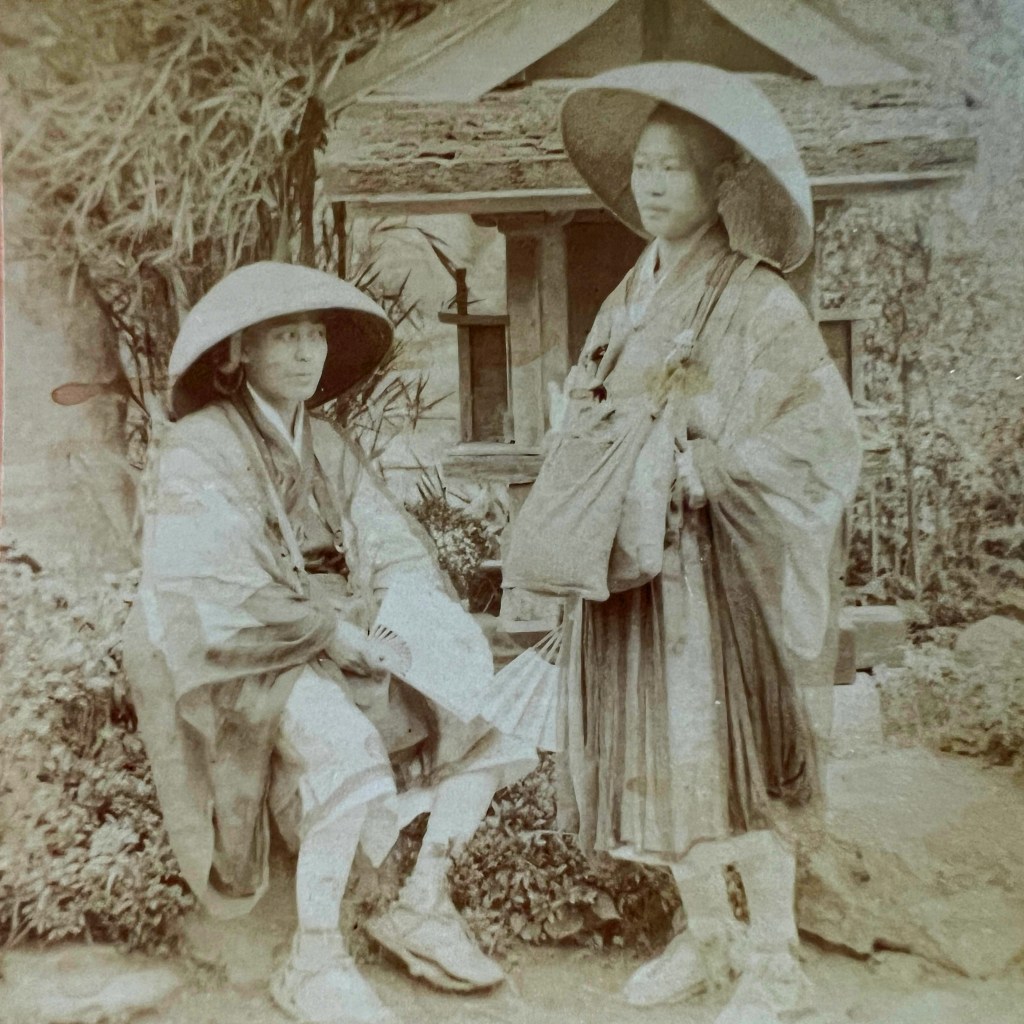
The sedge hats, bags, and white clothes all signal the activity of a religious pilgrimage. Views such as this were considered educational as much as they were entertaining and thus reflected a visual tradition of anthropological photography by showing native peoples in religious attire.
For more on the religious history of mountains in Japan, see the edited volume, Defining Shugendō: Critical Studies on Japanese Mountain Religion (2020).
The Buddhas in the West Material Archive is a digital scholarship project that catalogues artifacts depicting Buddhist material culture for Western audiences. It’s comprised of prints, photos, and an assortment of ephemera and other objects. For a brief introduction to this archive, visit the main Buddhas in the West project page.
For Related Buddhas in the West Posts Featuring Stereoviews:

For the Most Recent Buddhas in the West Posts:














 Personal Site of Peter Romaskiewicz