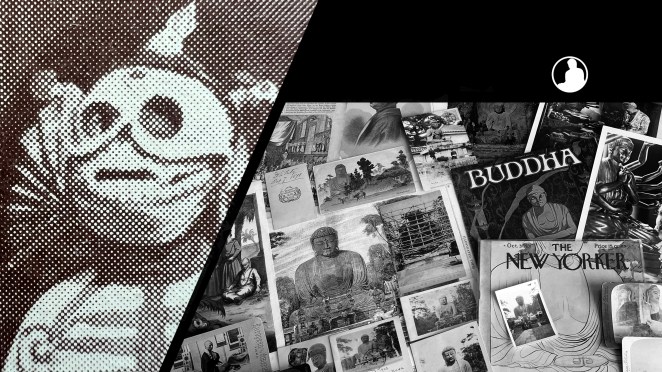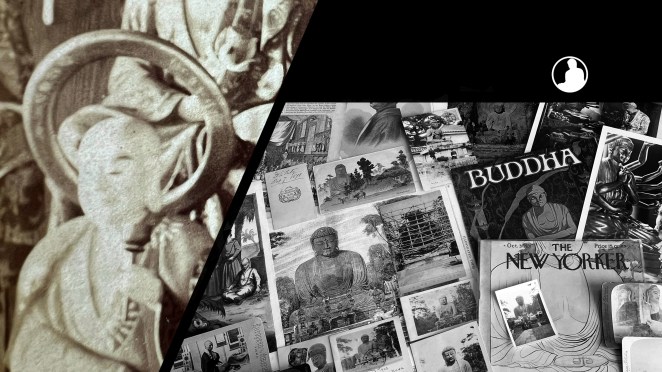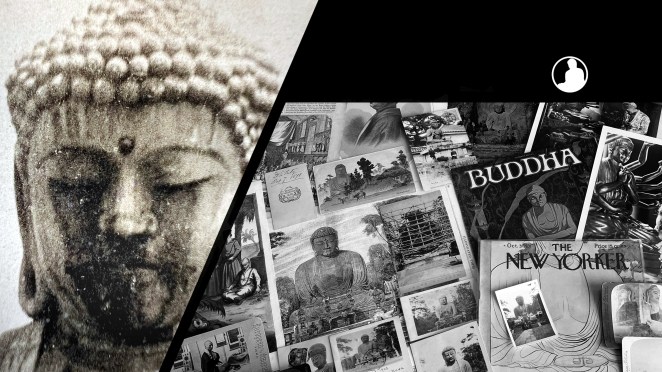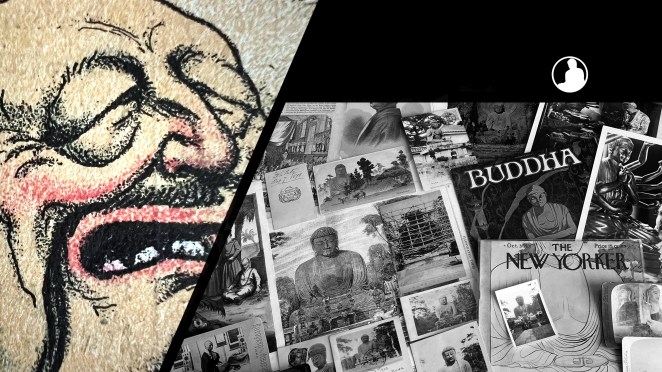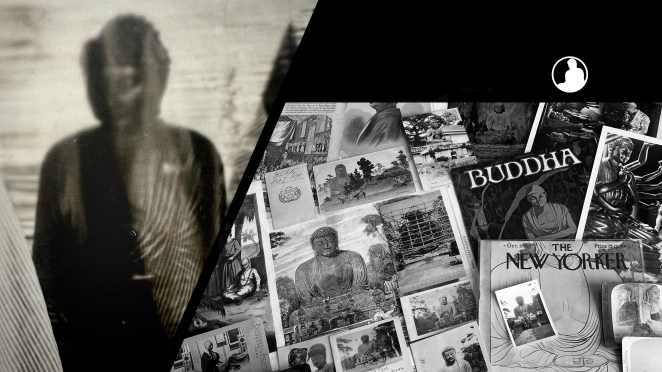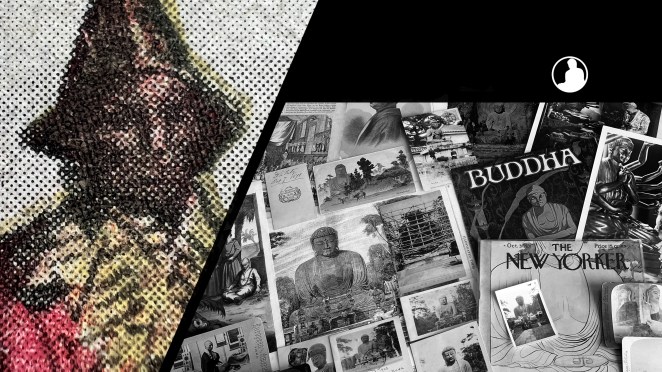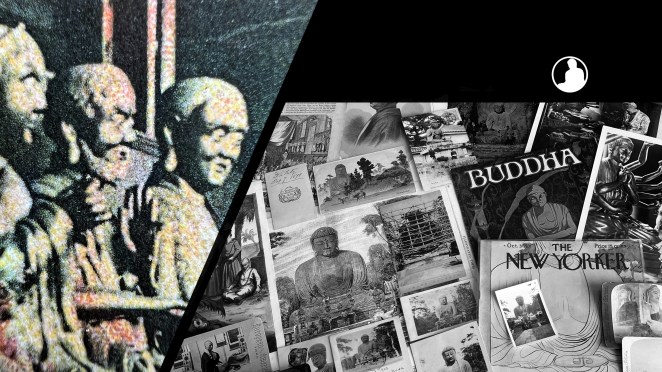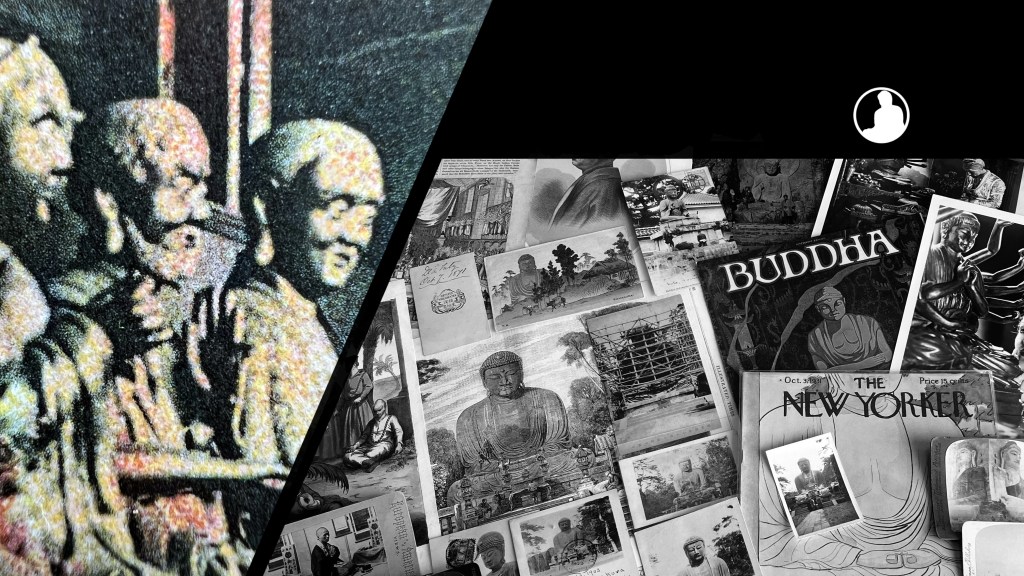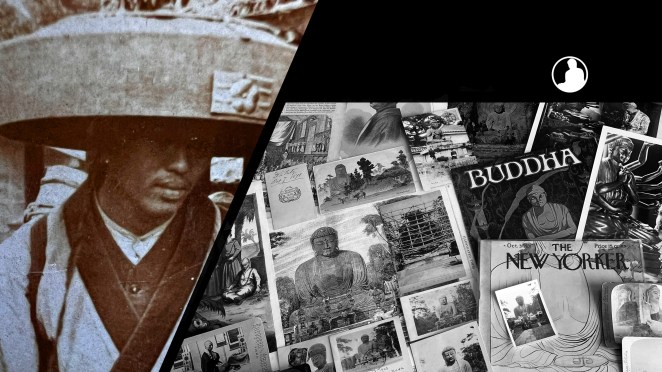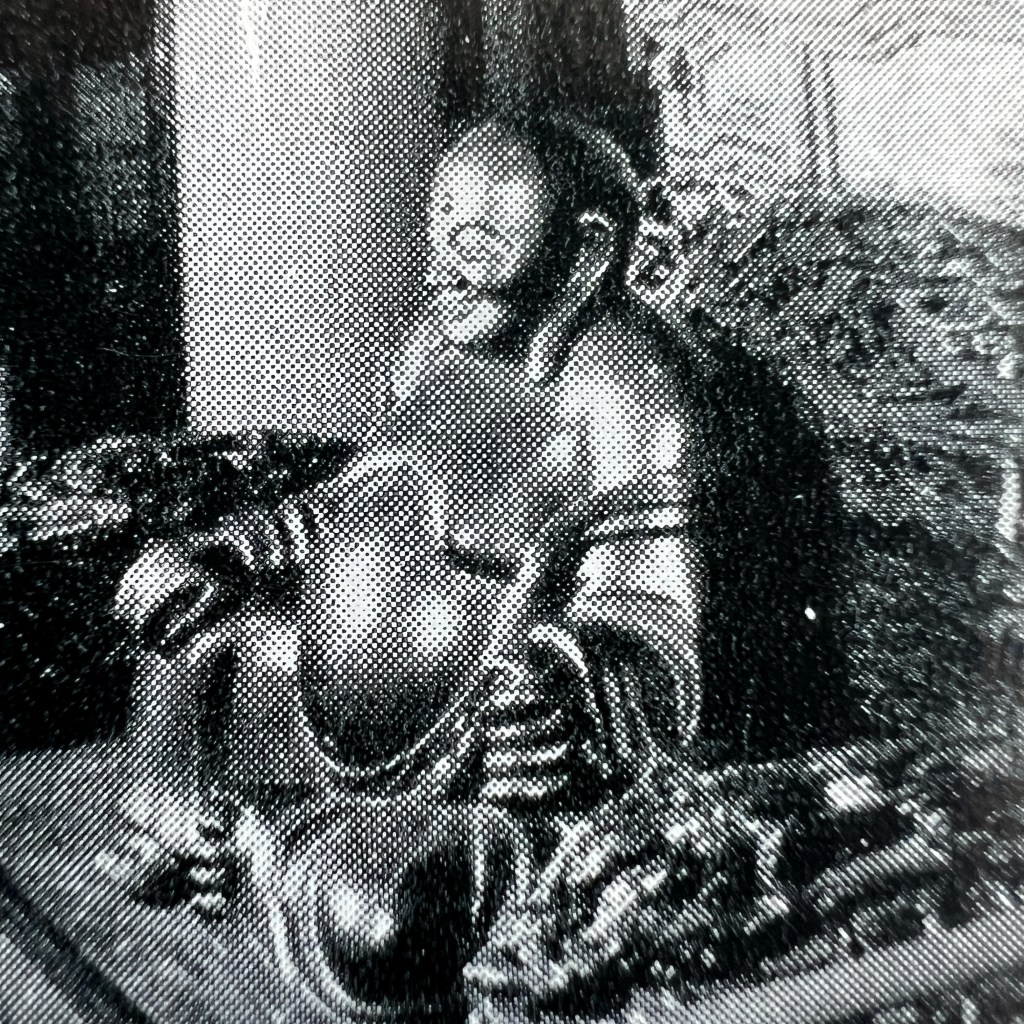
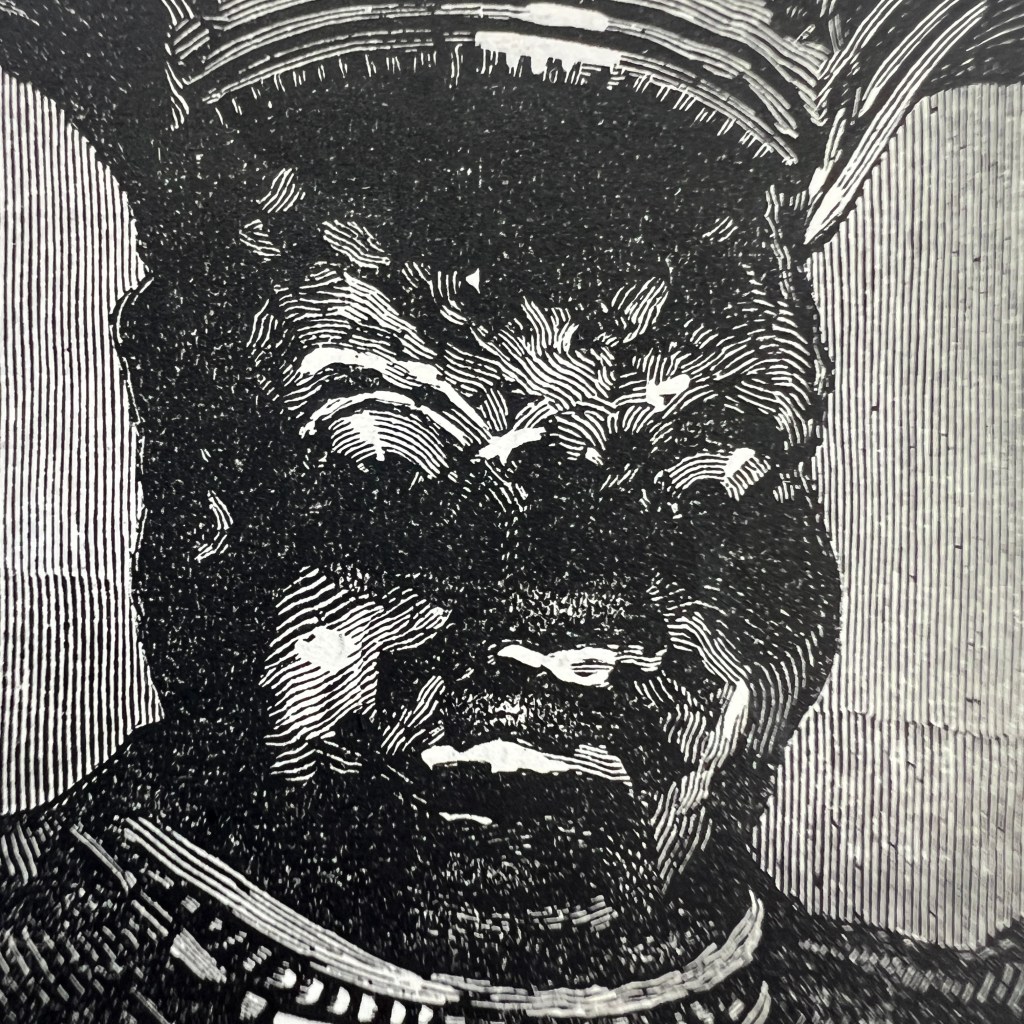
Engraving of John Thomson’s Photograph of Gushan’s Monks

For all the new Buddhas in the West posts
follow us on Bluesky & Instagram


After Fuzhou opened to foreign trade in 1842, missionaries, merchants, and travelers began climbing the stone stairway to Gushan. The dramatic setting with temple roofs rising from forested slopes above the Min River plain made it irresistible to photographers and travel writers.
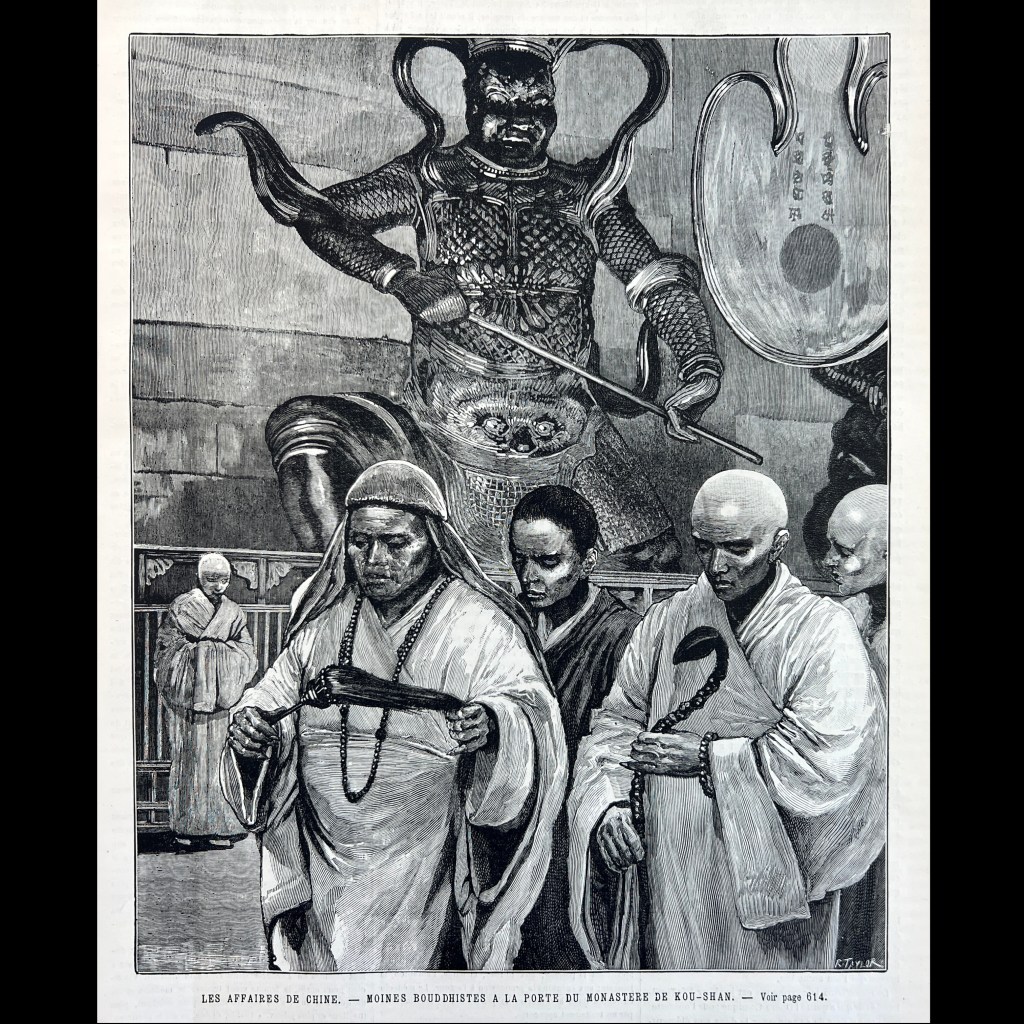
Set on the peaks of Gushan, Yongquan Monastery was a large complex with many monks and thus drew considerable attention from foreigners. The temple was relatively close to the city center of Fuzhou, making excursions into the mountains feasible for many.
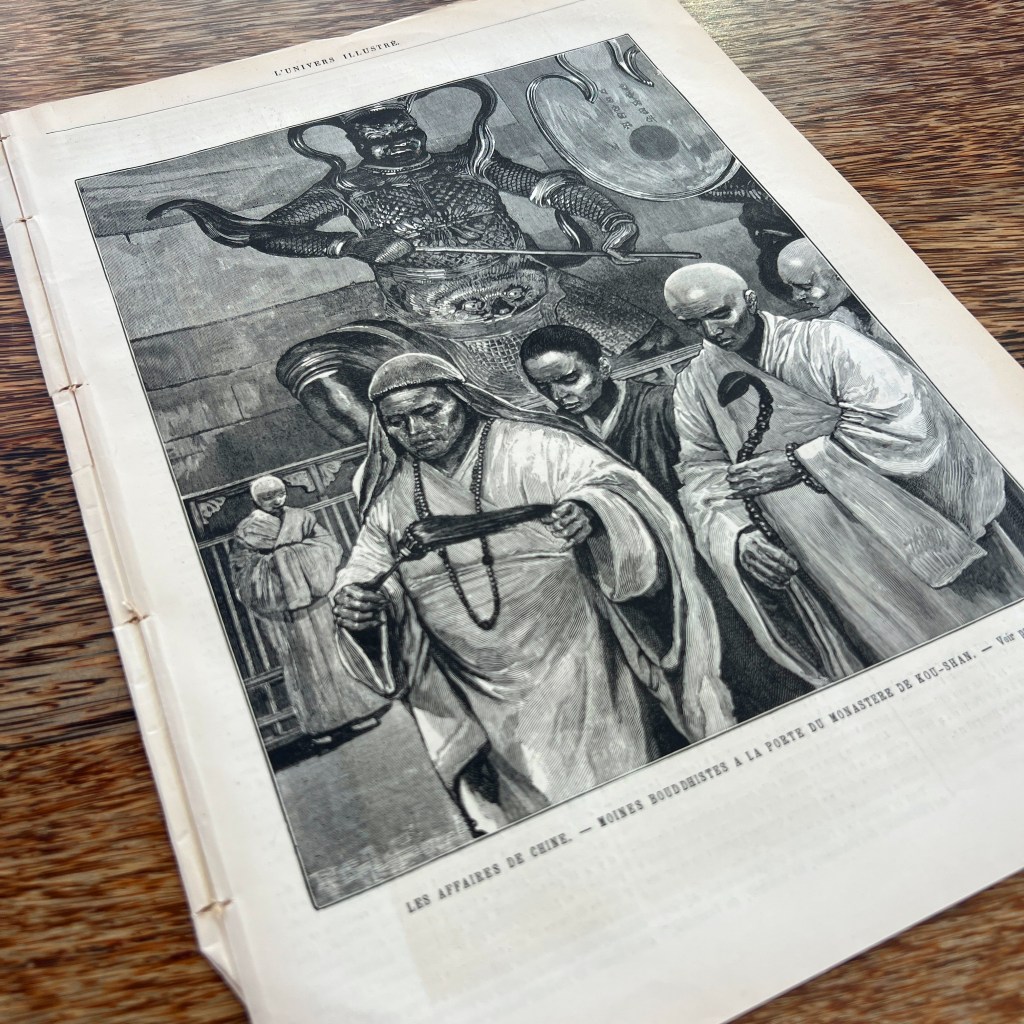
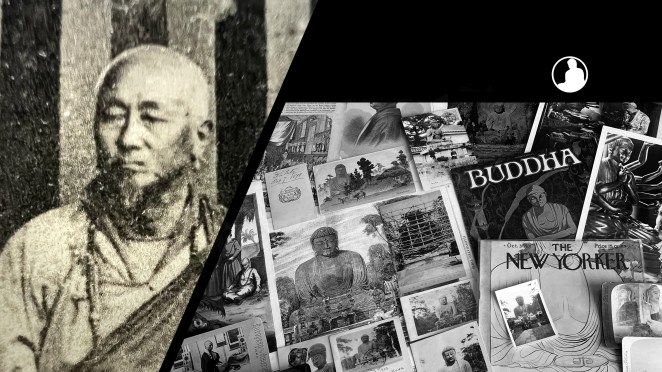
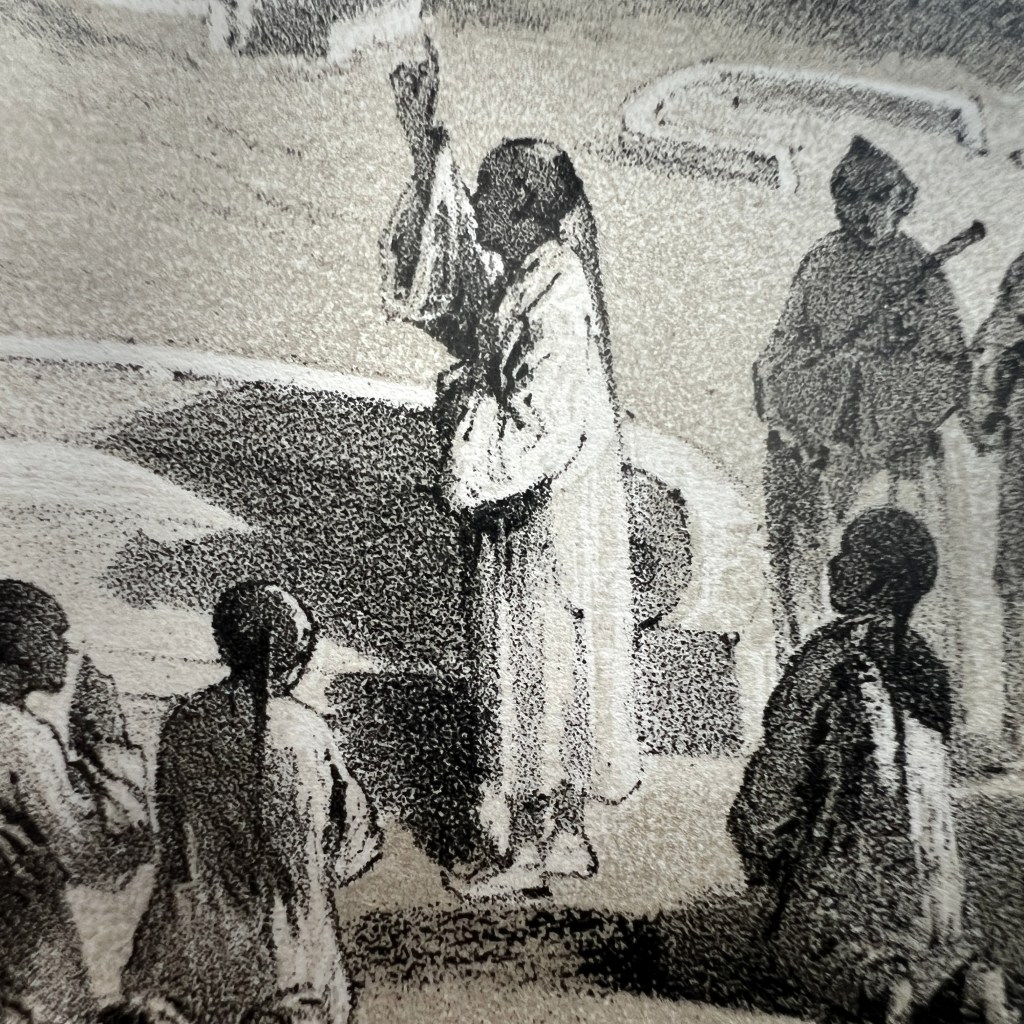
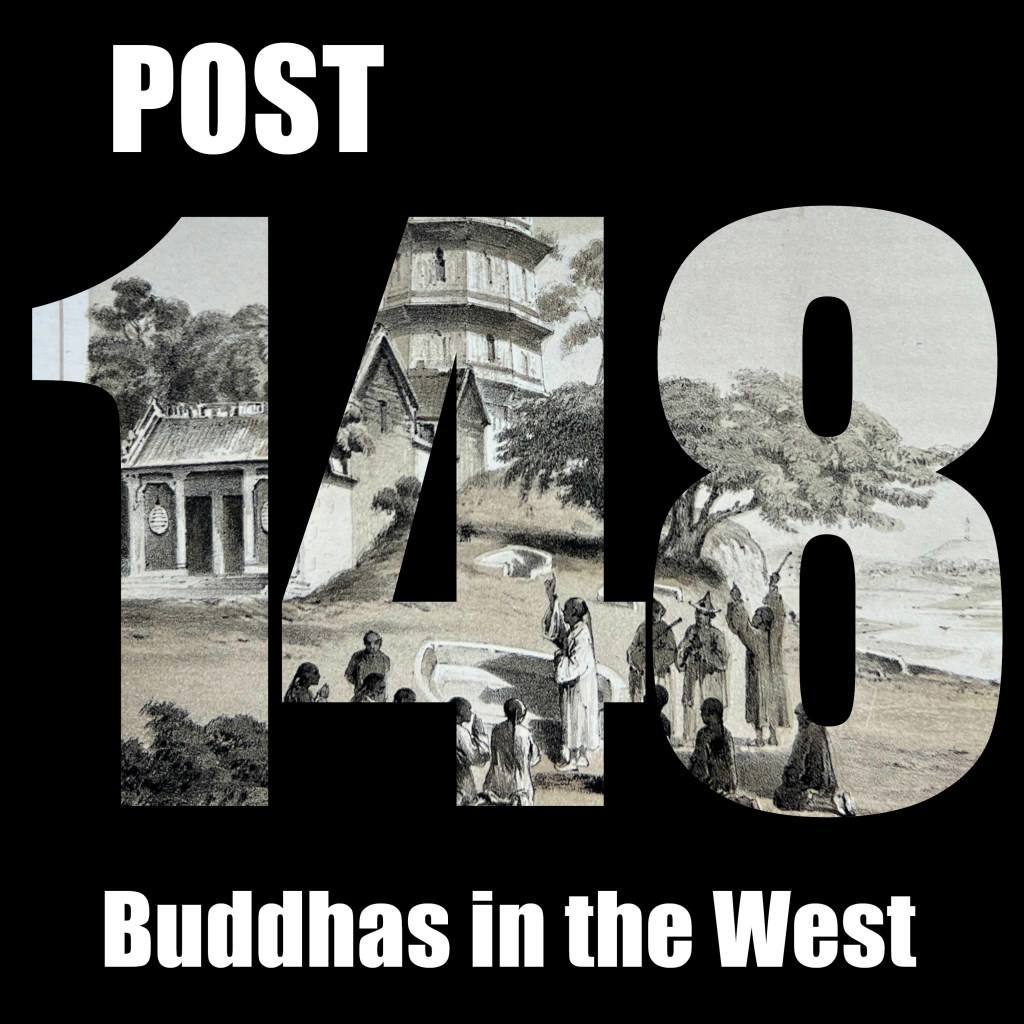
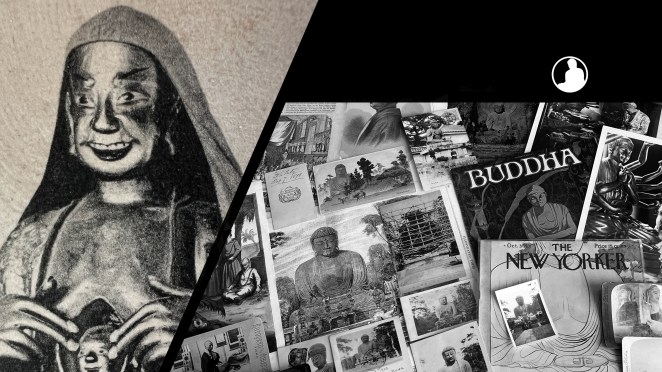
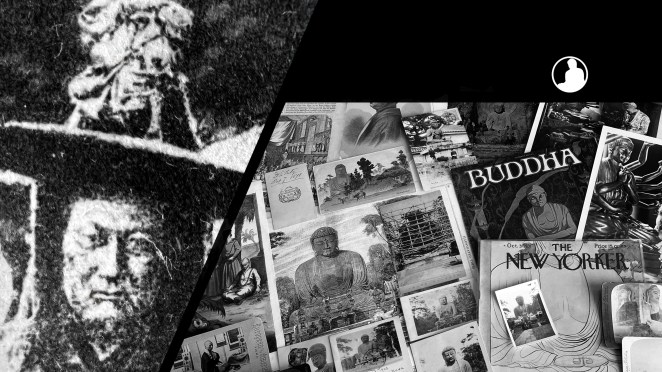
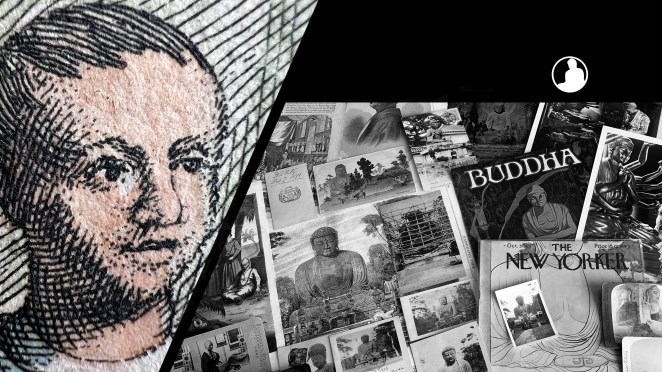
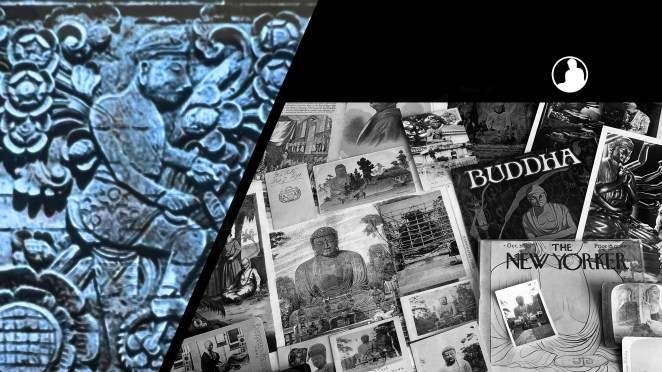
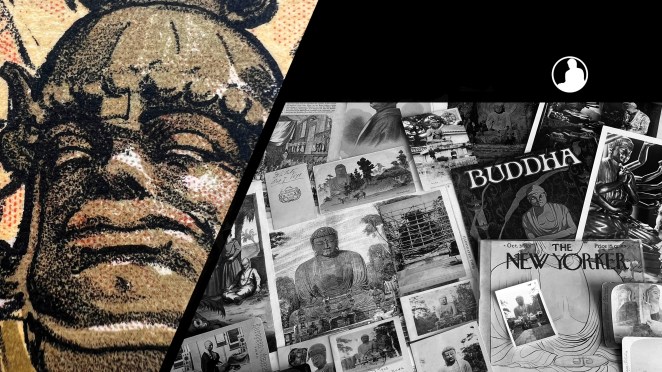
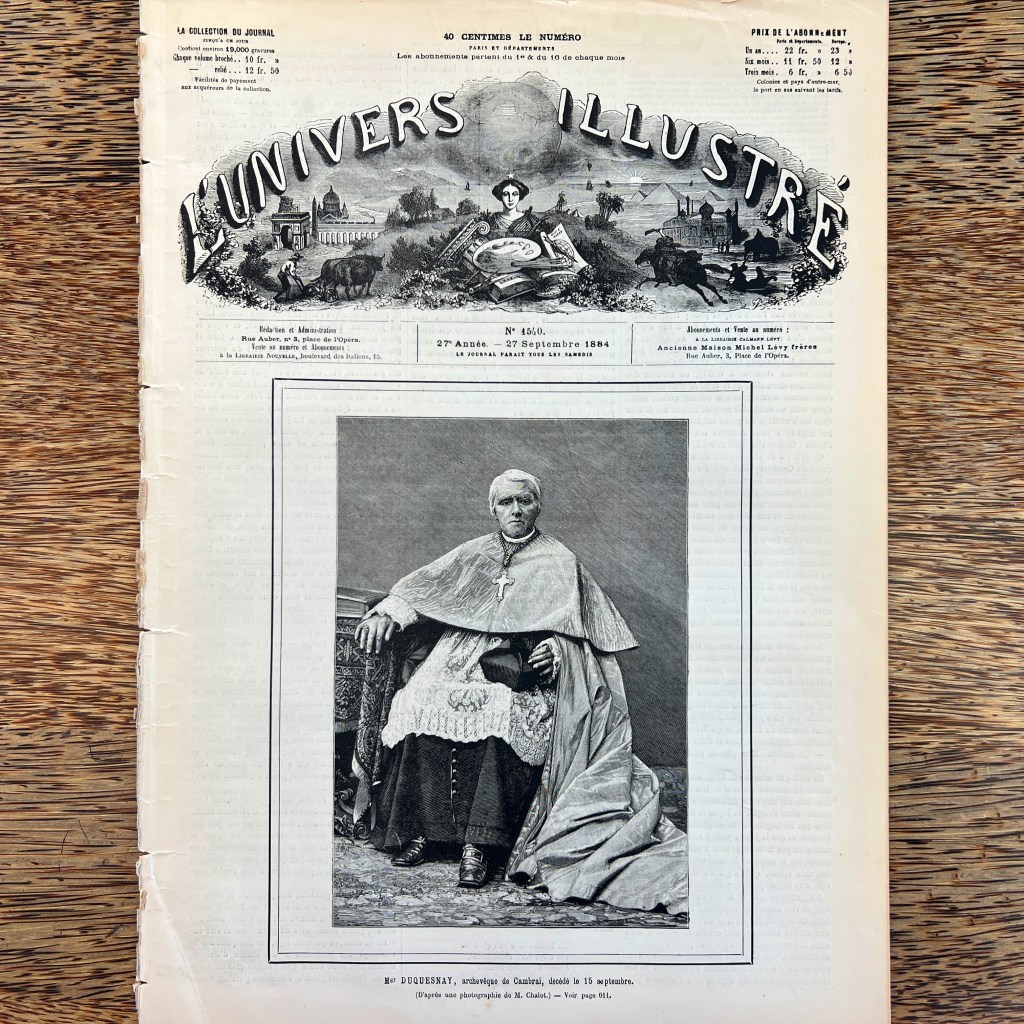
The woodcut engraving depicting the monks of Gushan appeared in an 1884 edition of L’Univers illustré, an illustrated weekly French newspaper. The accompanying short article notes the Buddhist monastery on Gushan “ranks among the most renowned” in Fuzhou.
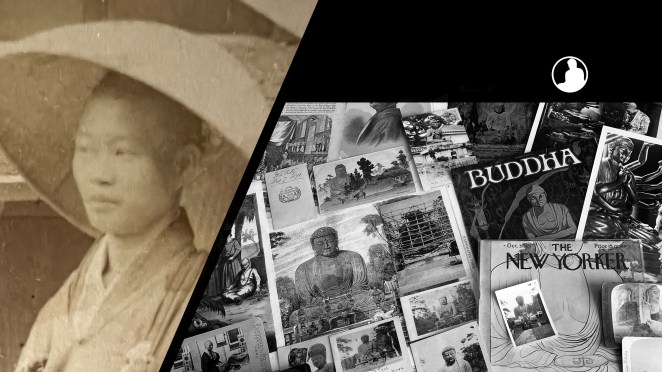
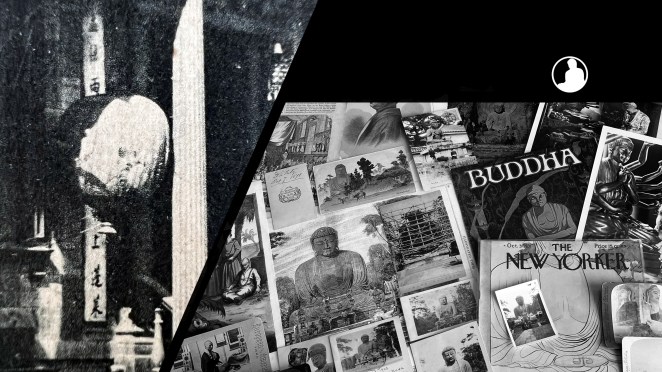
Scottish photographer John Thomson took many photos of Fuzhou and the Min River in the 1870s, including the monks of Yongquan Monastery. This engraving clearly draws upon a photograph first published by Thomson in his Foochow and the River Min (1873).
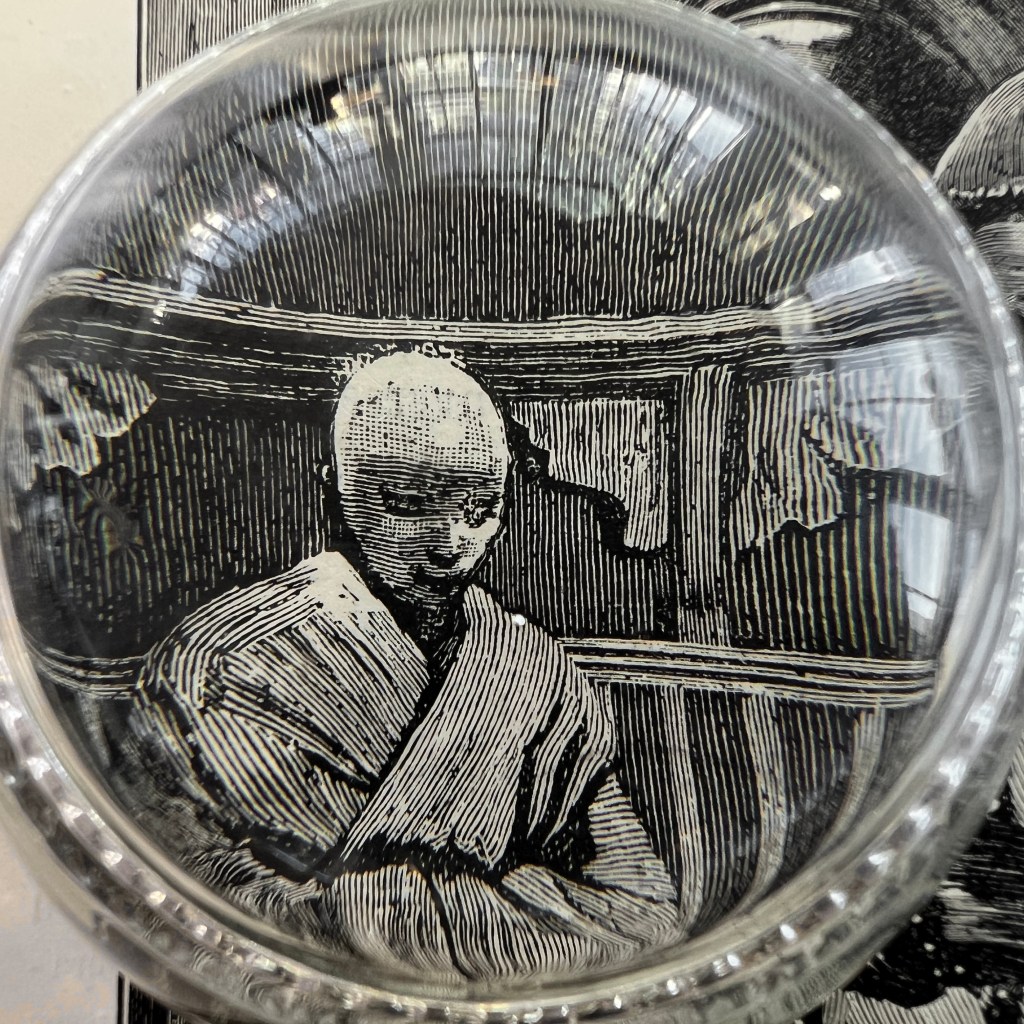
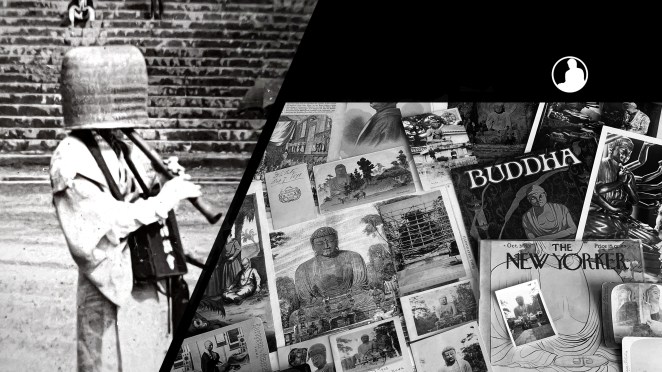
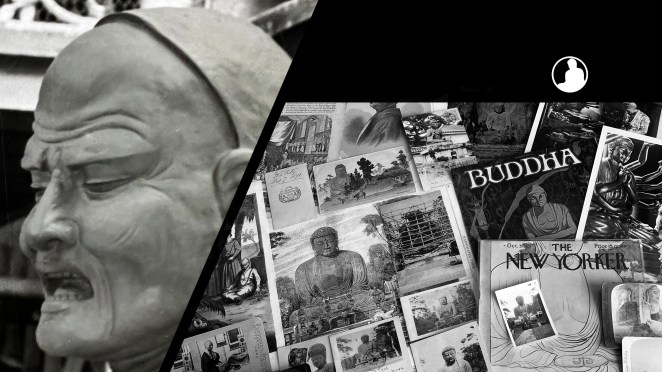
The artist R. Caton Woodville transformed Thomson’s formal sitting portrait into a more animated scene with monks walking by the temple gate; the Heavenly King statue was added for dramatic effect. To compare the engraving with Thomson’s photo, see here: https://tinyurl.com/yeuepkht.
The Buddhas in the West Material Archive is a digital scholarship project that catalogues artifacts depicting Buddhist material culture for Western audiences. It’s comprised of prints, photos, and an assortment of ephemera and other objects. For a brief introduction to this archive, visit the main Buddhas in the West project page.


For Related Buddhas in the West Posts Featuring China:

For the Most Recent Buddhas in the West Posts:


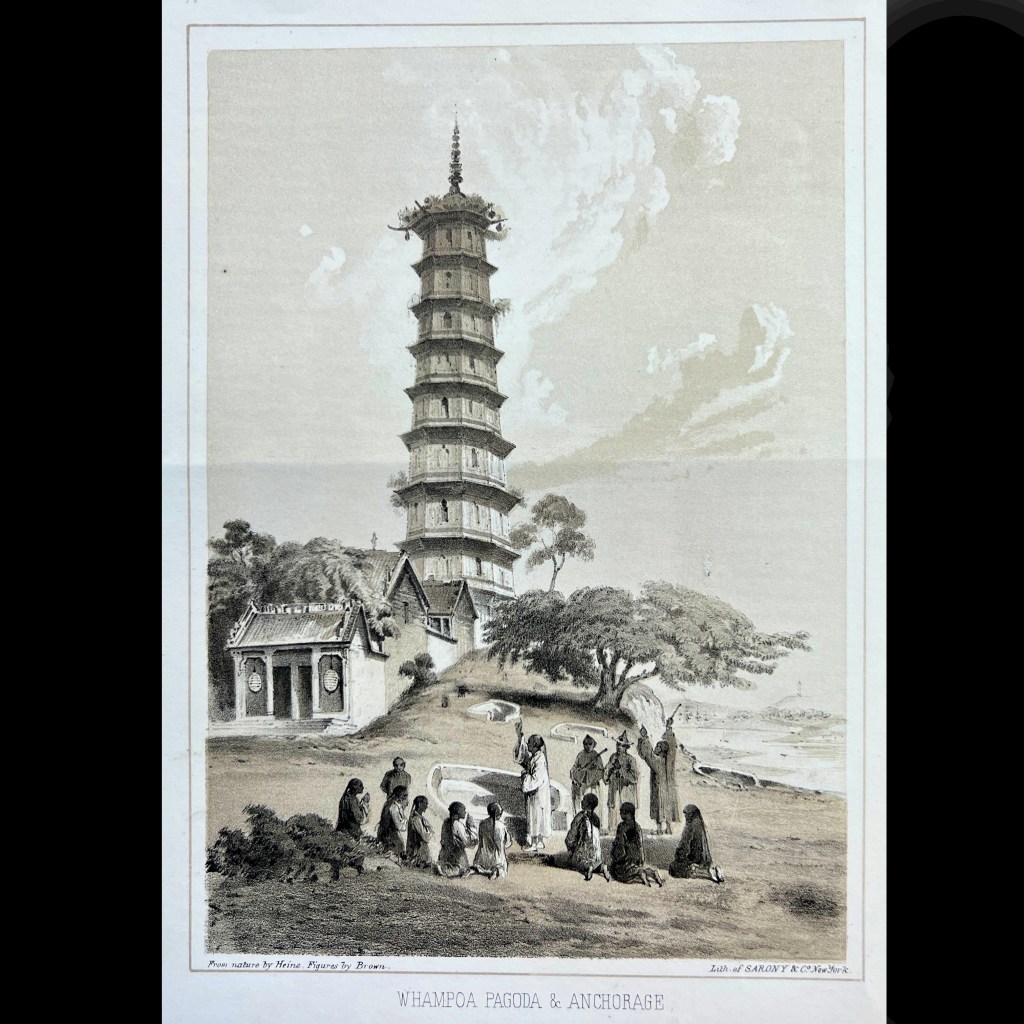
Wilhelm Heine’s Whampoa Pagoda Lithograph

For all the new Buddhas in the West posts
follow us on Bluesky & Instagram


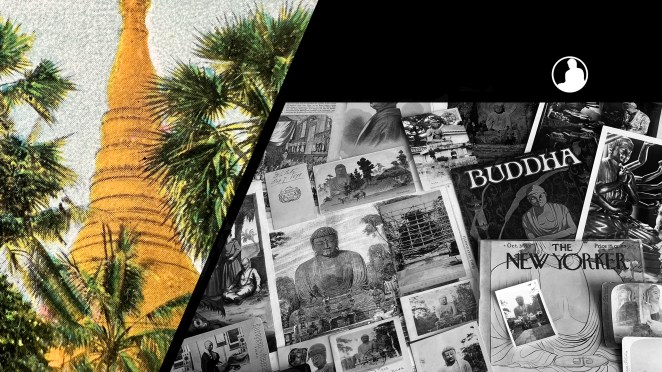
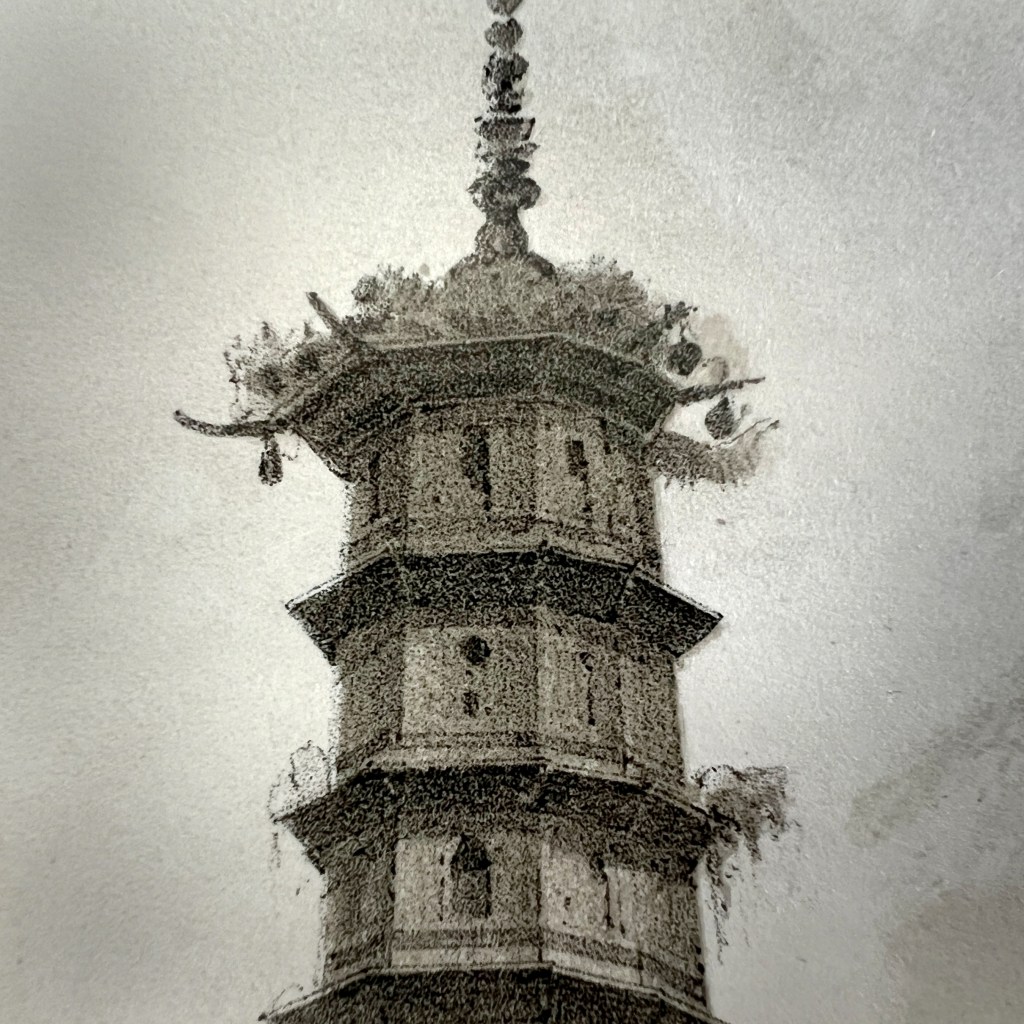
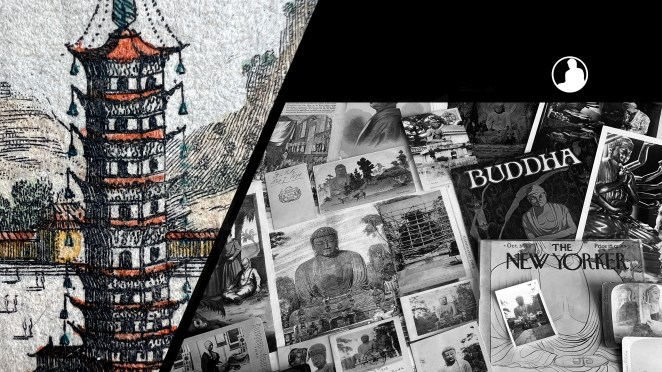
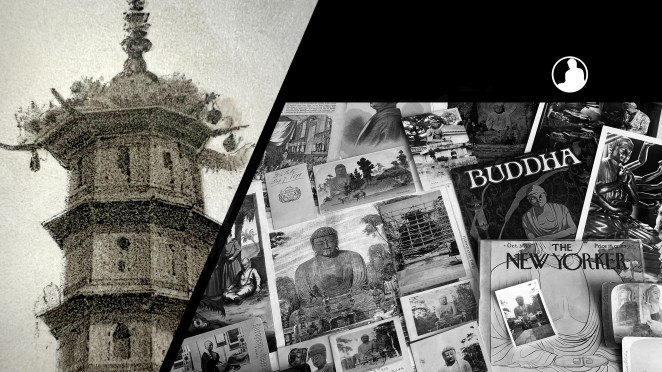
En route to Japan in 1853, the Perry Expedition stopped in Guangdong, the historic center of China’s foreign trade. Anchored in the Pearl River, expedition artist Wilhelm Heine sketched arguably one of the most famous pagodas in the world at the time: the Whampoa Pagoda.

Matthew Perry noted the religious significance of the Pazhou Pagoda, as it was known in China, but also emphasized its value as a landmark, as ships “steer and anchor by its bearings.” Under the Canton System, foreign vessels often waited months at the Whampoa anchorage for Chinese cargo.

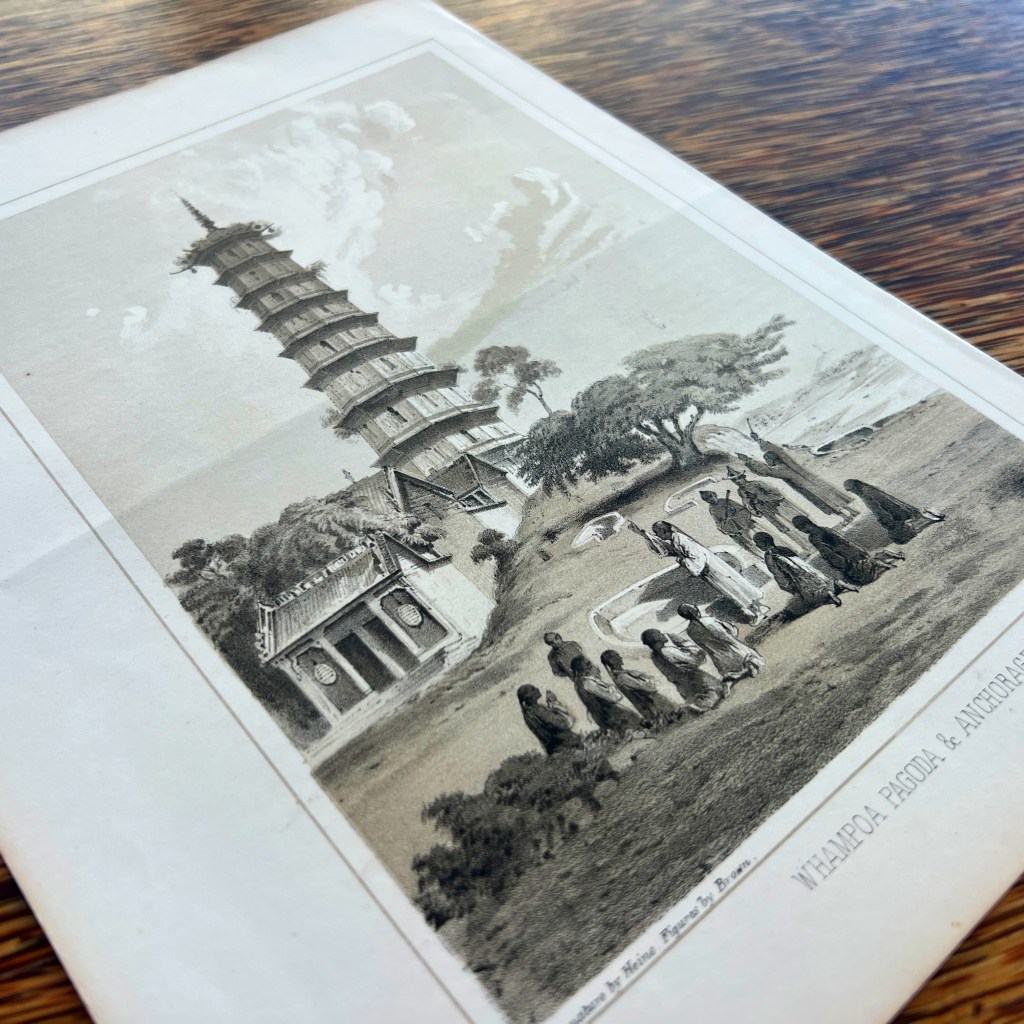
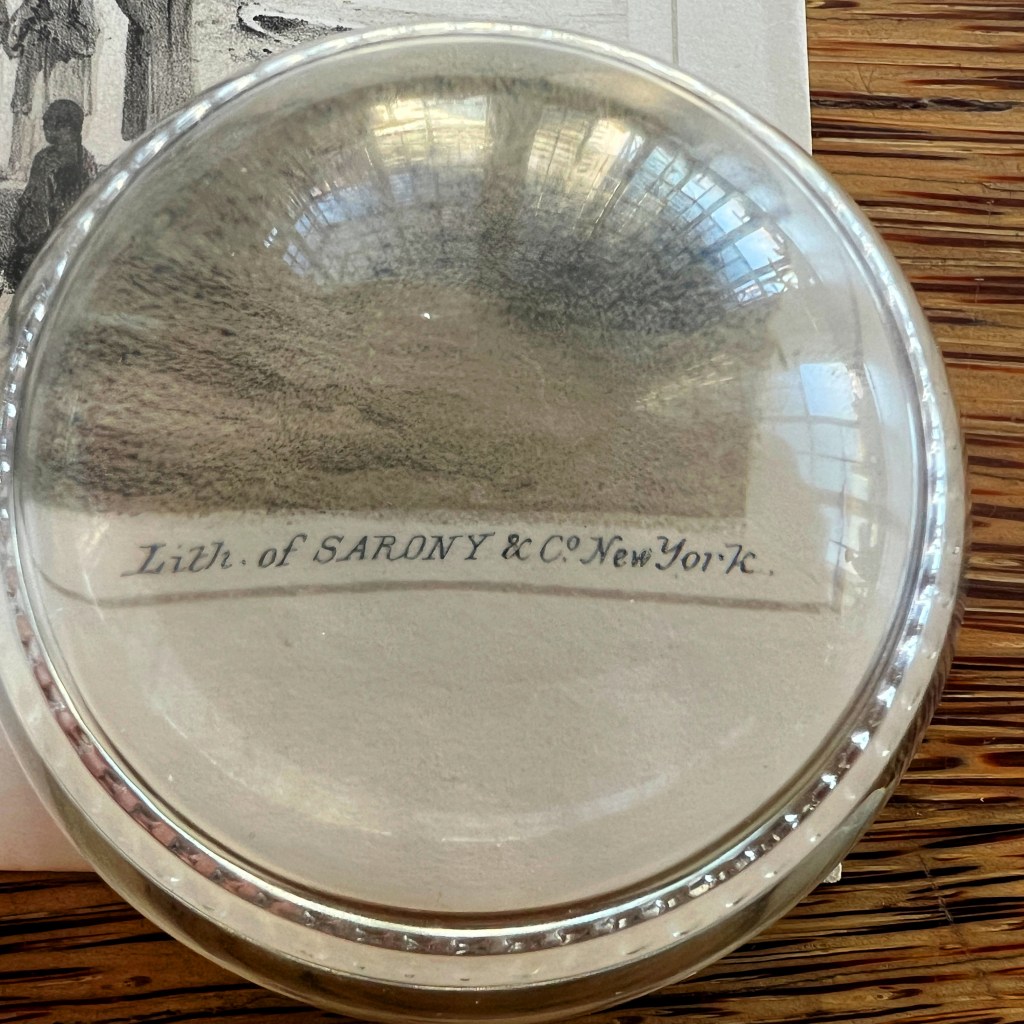
Heine’s paintings were later converted into sepia and hand-tinted stone lithographs to illustrate the official U.S. government report on the mission, Narrative of the Expedition of an American Squadron to the China Seas and Japan (1856).

Because foreign ships spent long periods at Whampoa, the nine-story pagoda became familiar to many merchants and sailors. It also emerged as a visual emblem of China, appearing in numerous paintings, news illustrations, and on decorative objects such as porcelain and hand fans.

The octagonal brick pagoda, built in 1600 and rising more than 60 meters, was destroyed during the Cultural Revolution. For more on the visual importance of the Whampoa Pagoda, see Peter Perdue’s essay on the Canton System for MIT’s Visualizing Culture: tinyurl.com/46xrpkxf.


The Buddhas in the West Material Archive is a digital scholarship project that catalogues artifacts depicting Buddhist material culture for Western audiences. It’s comprised of prints, photos, and an assortment of ephemera and other objects. For a brief introduction to this archive, visit the main Buddhas in the West project page.


For Related Buddhas in the West Posts Featuring Pagodas:


For the Most Recent Buddhas in the West Posts:


Sandringham Laughing Buddha Real Photo Post Card

For all the new Buddhas in the West posts
follow us on Bluesky & Instagram


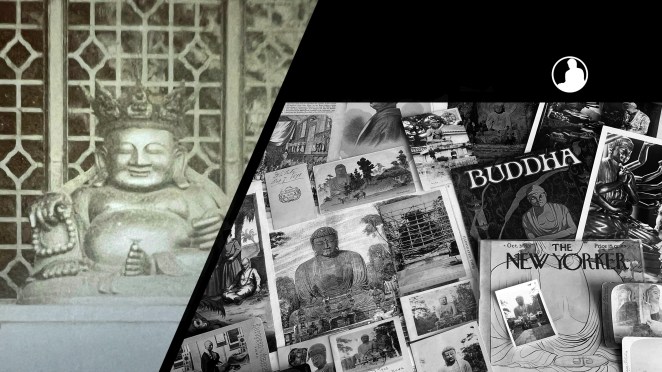
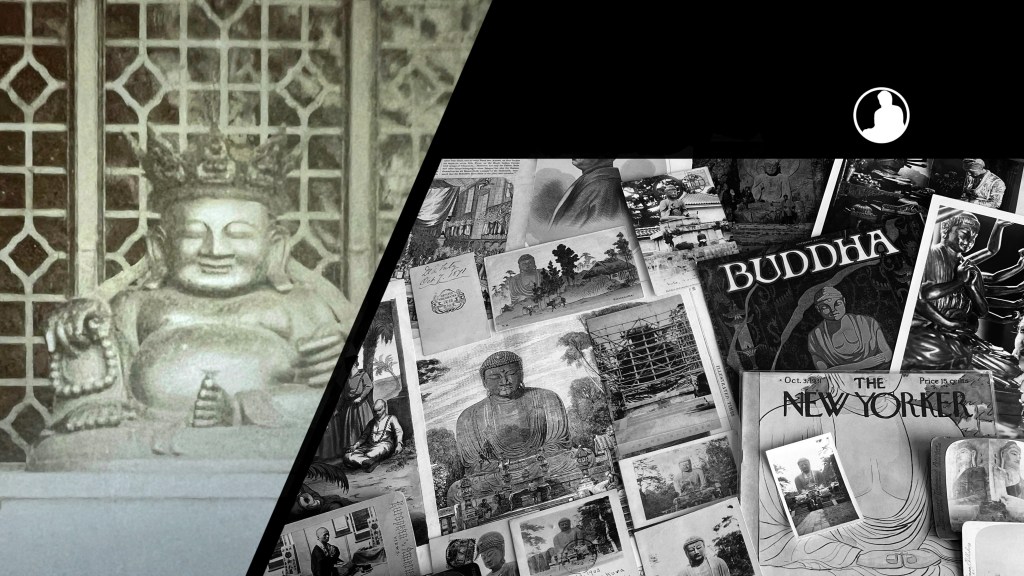
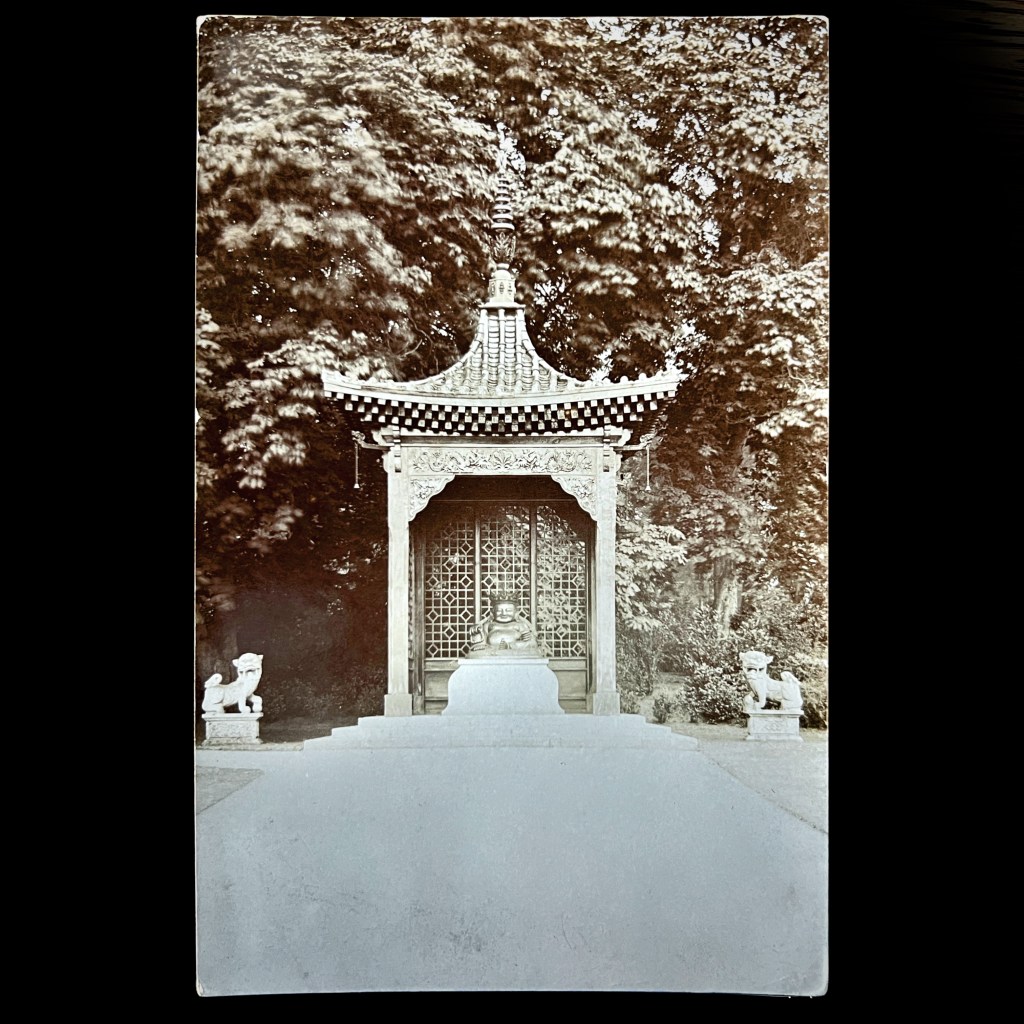
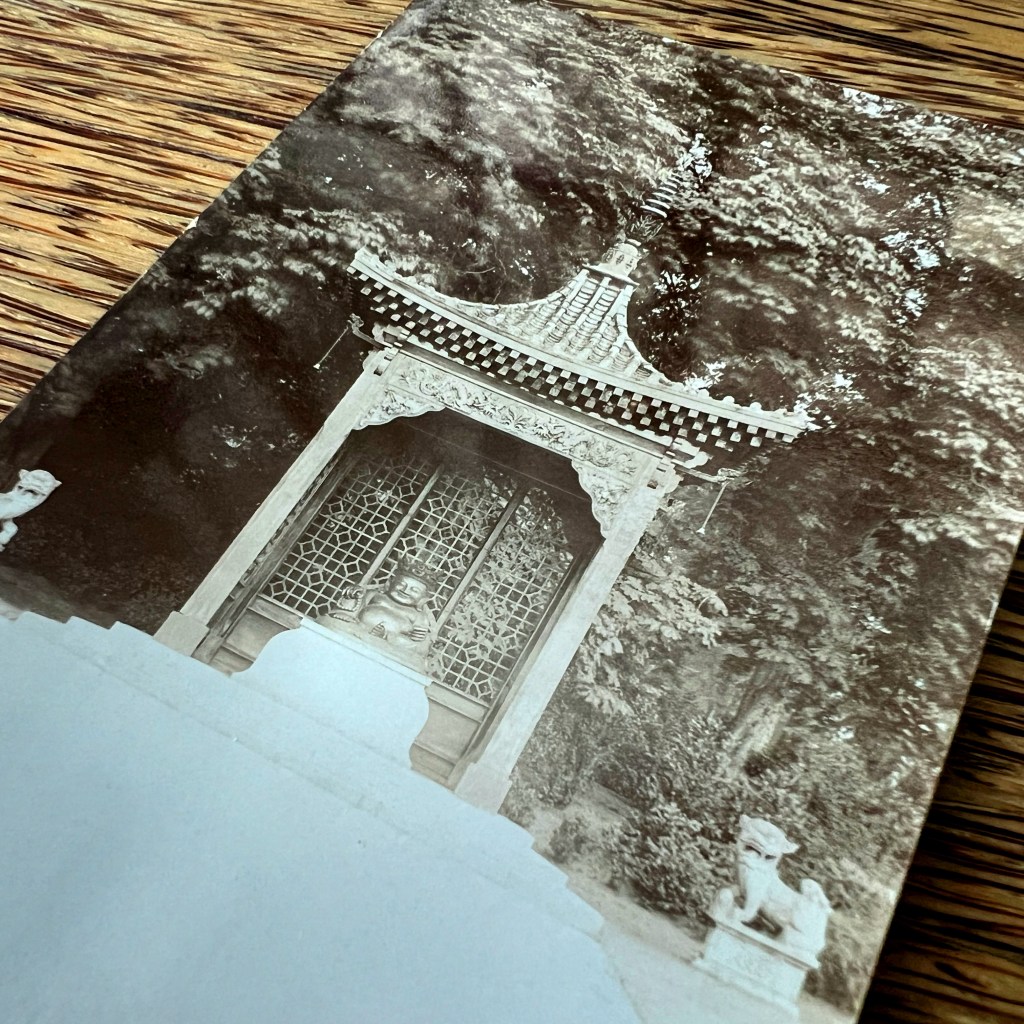
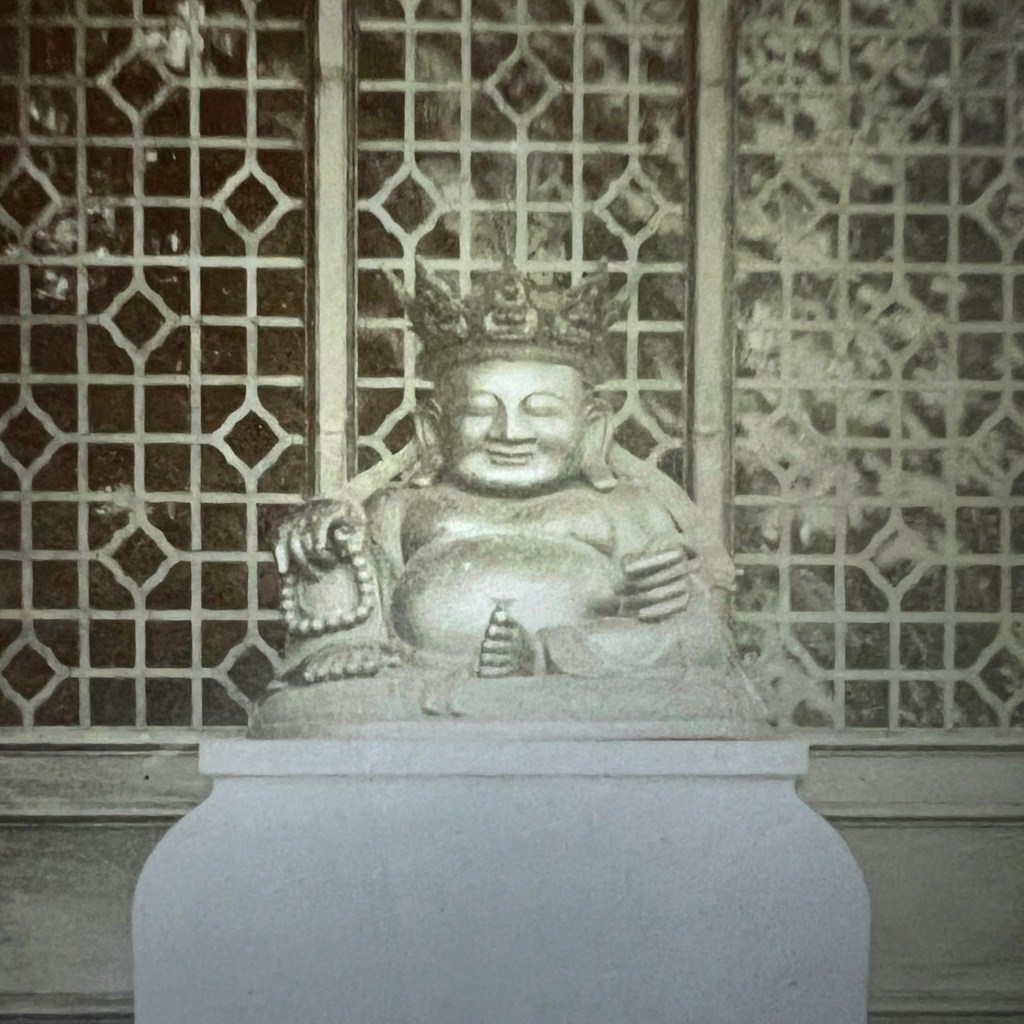
This gilded Laughing Buddha wearing an eight-pointed crown once graced a Chinese Buddhist monastery. Today, the statue sits in a very different setting on the grounds of the royal Sandringham estate as an unusual imperial garden ornament.

The Sandringham Buddha was sent to Britain by Admiral Sir Henry Keppel in 1869. After encountering the statue in Beijing, he shipped it home aboard HMS Rodney and presented it to the Prince of Wales (later Edward VII) as a gift for the newly built Sandringham House.

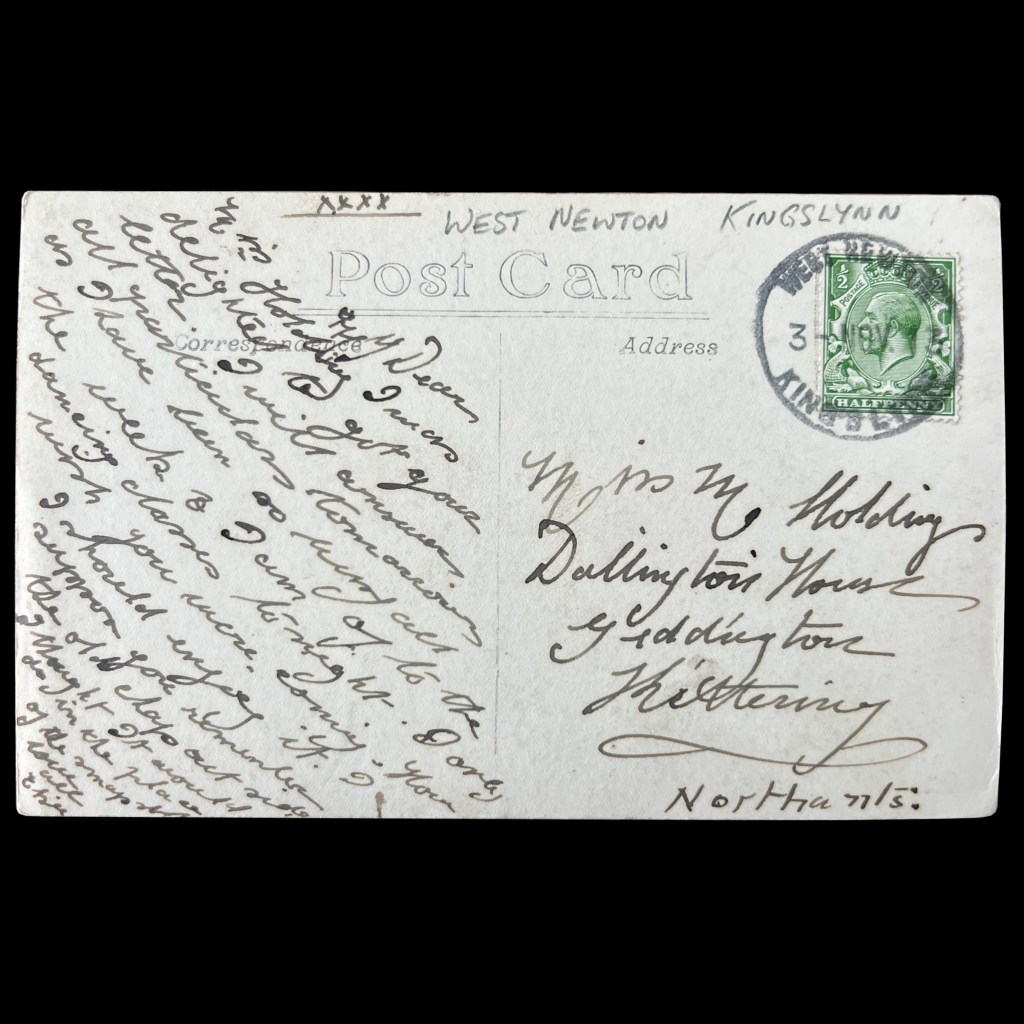
The image here was produced as a “real photo” postcard—created by printing a photographic positive directly onto photosensitized postcard stock. This card was mailed in 1913, near the end of the great postcard boom that was soon cut short by the First World War.

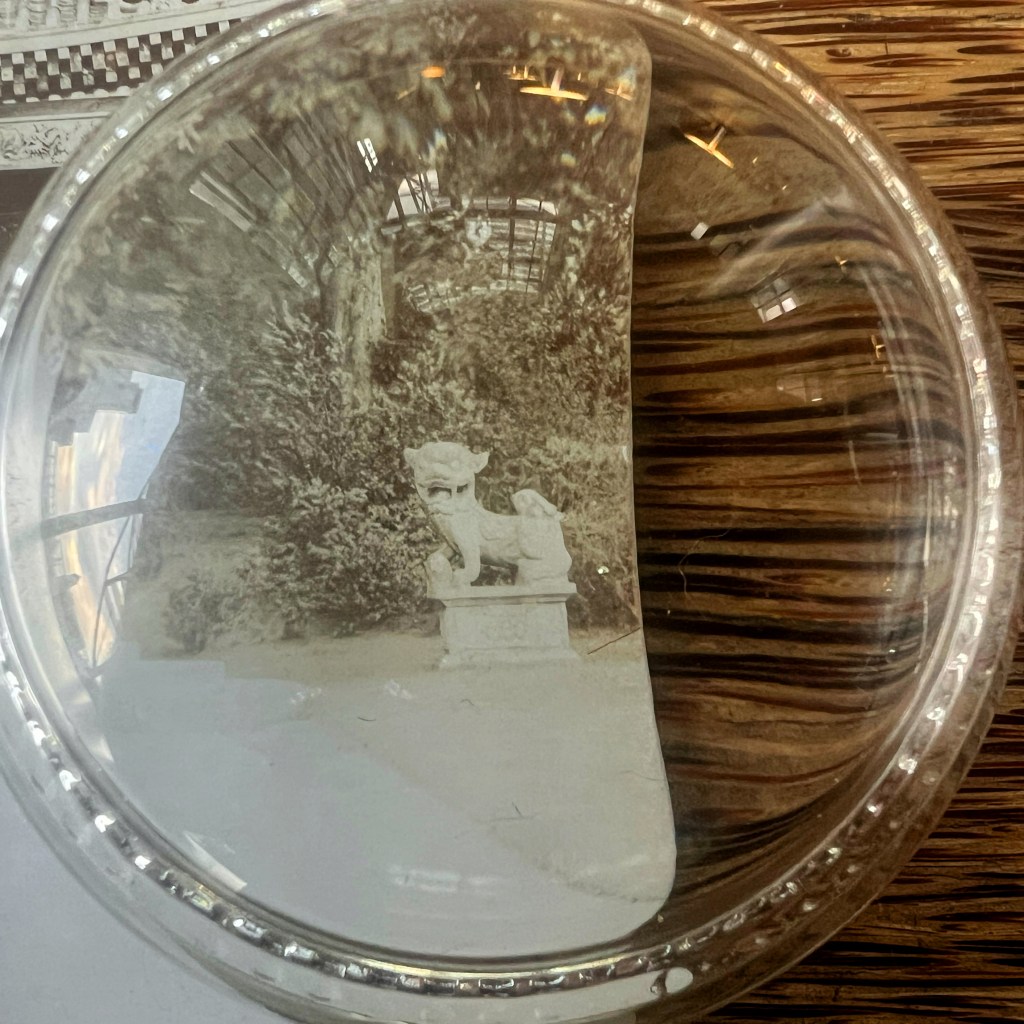
In the 1870s, estate carpenters built a wooden pagoda canopy above the statue, flanked by granite Japanese lions. The structure stood for decades before eventually rotting away and being demolished in 1960, leaving the Buddha exposed.

It is thought the statue was cast in 1690 and was found to have many Chinese coins inside it, likely offerings placed there by pious Buddhists. For more on this icon, see Jamie Carstairs’ “Location/Dislocation” viewable here: https://tinyurl.com/5w4tbpr7.


The Buddhas in the West Material Archive is a digital scholarship project that catalogues artifacts depicting Buddhist material culture for Western audiences. It’s comprised of prints, photos, and an assortment of ephemera and other objects. For a brief introduction to this archive, visit the main Buddhas in the West project page.


For Related Buddhas in the West Posts Featuring the Laughing Buddha | Budai:


For the Most Recent Buddhas in the West Posts:


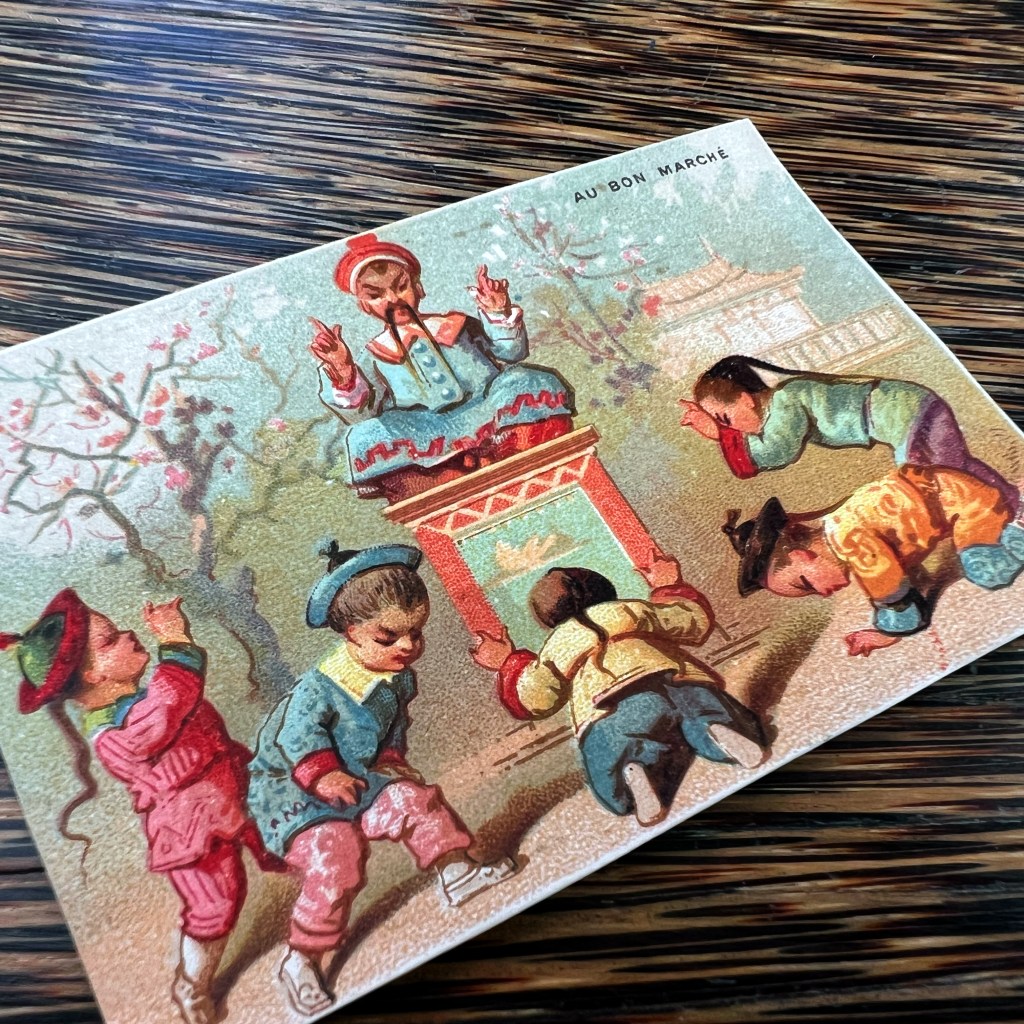
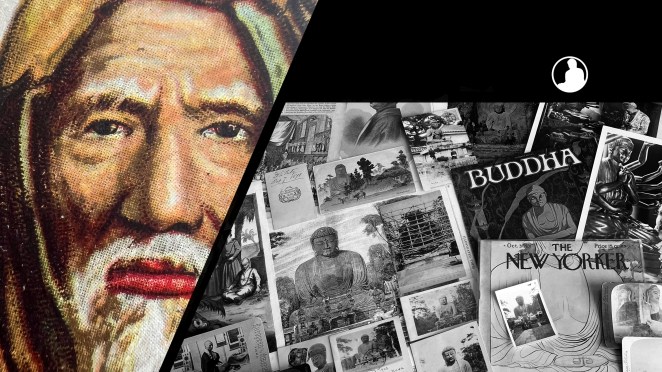
Au Bon Marché’s Chinese Idolatry Advertising Card

For all the new Buddhas in the West posts
follow us on Bluesky & Instagram


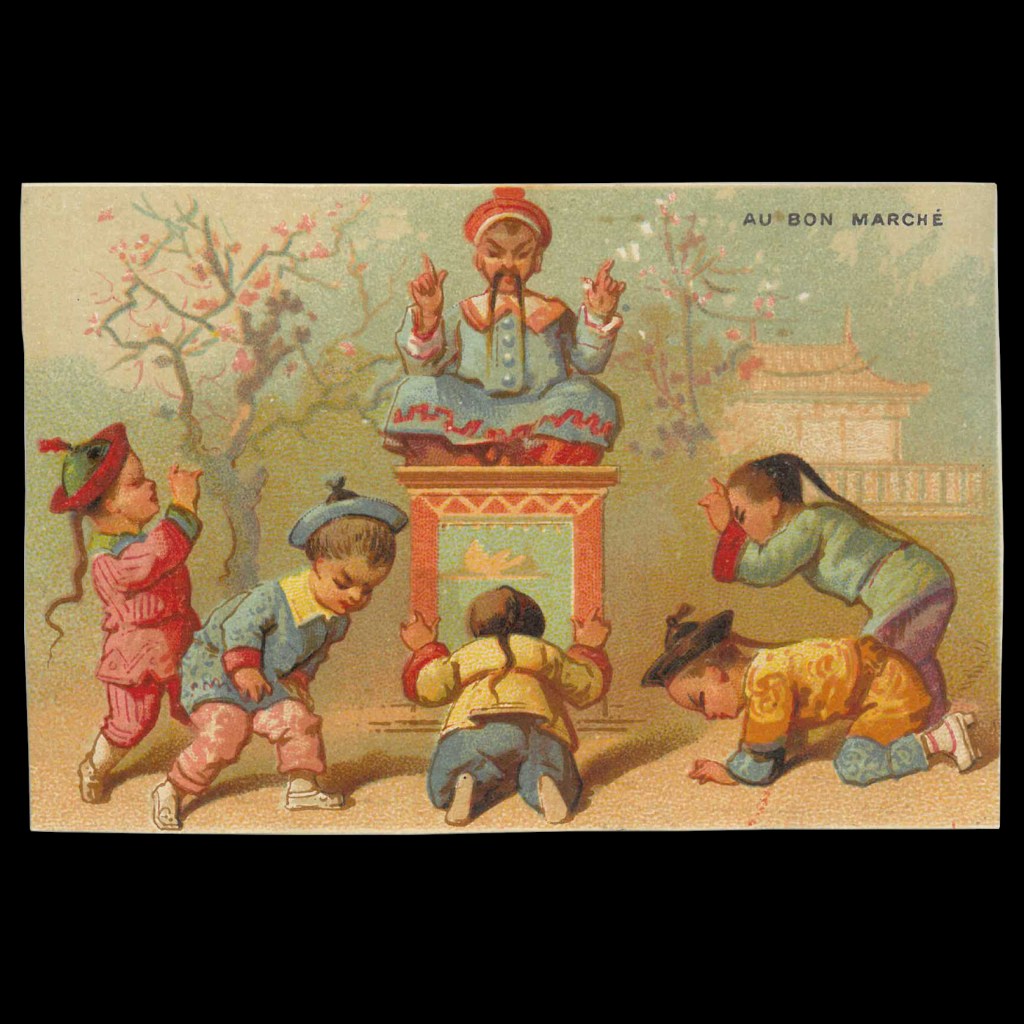
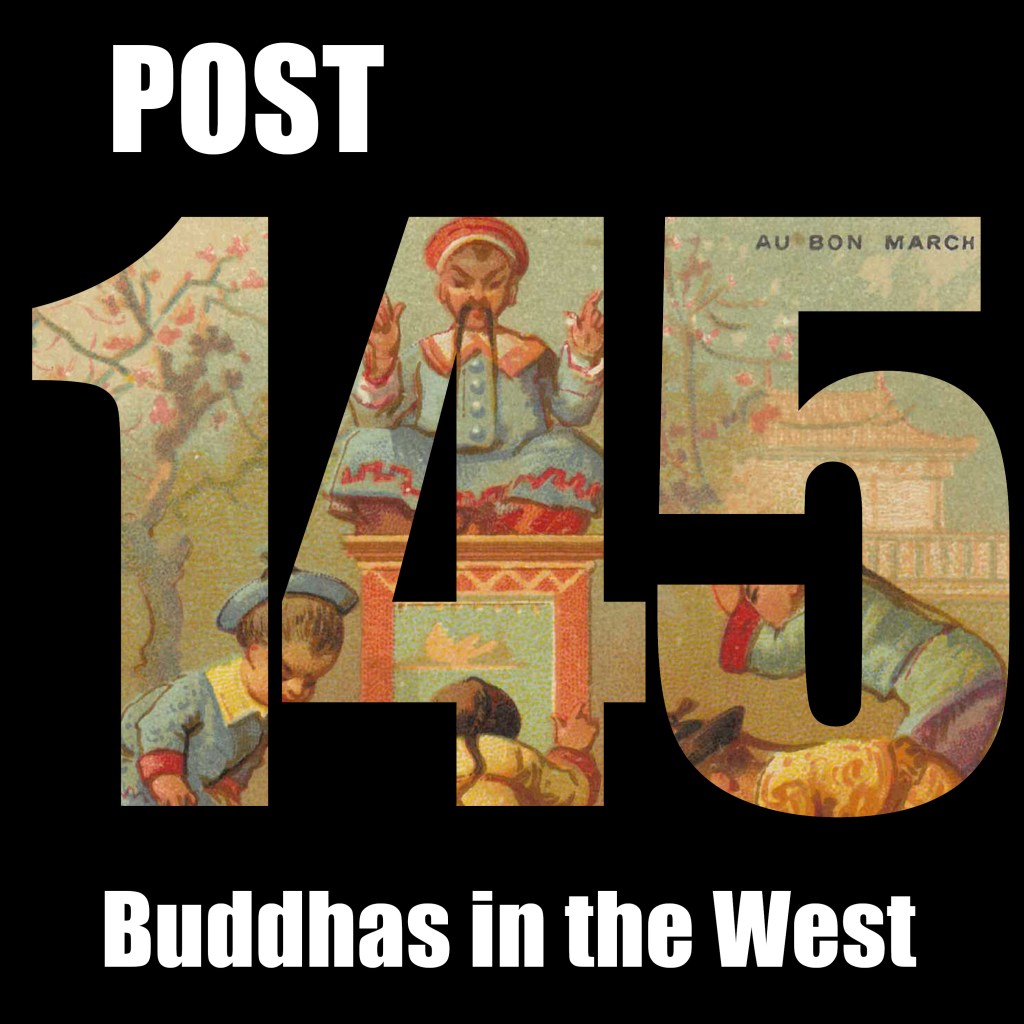
The centuries-long fascination with the Chinese-inspired aesthetic known as Chinoiserie had waned considerably by the end of the 19th century. Yet the famed Parisian department store Au Bon Marché continued to draw upon its familiar imagery for a series of popular advertising cards.

Chinoiserie offered a dreamlike vision of China, populated with pagodas, lush landscapes, and mysterious idols. After the First Opium War (1839–1842) and the expansion of colonial contact, however, depictions of China grew less romanticized, increasingly depicting the it as a land of idolatry.

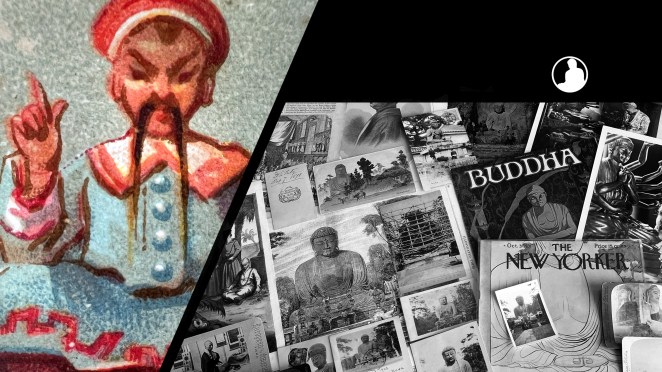
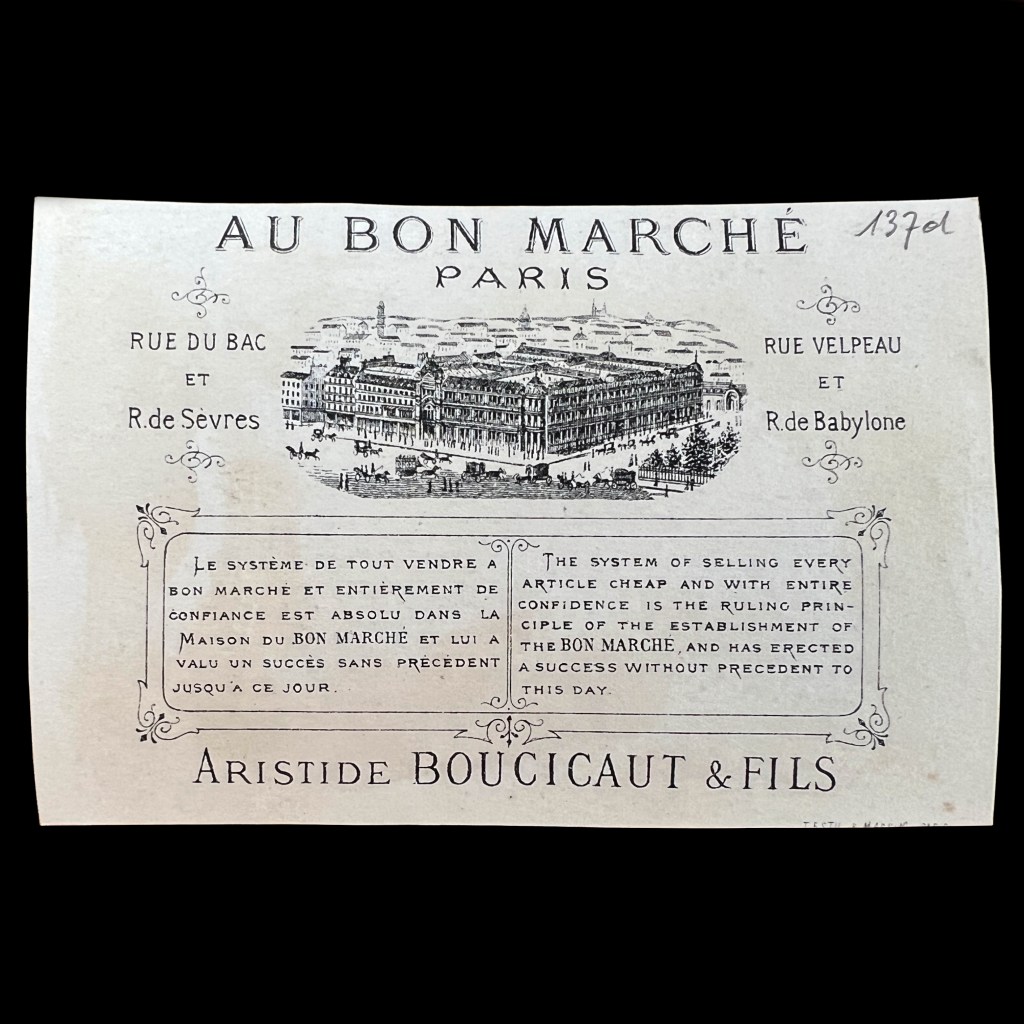
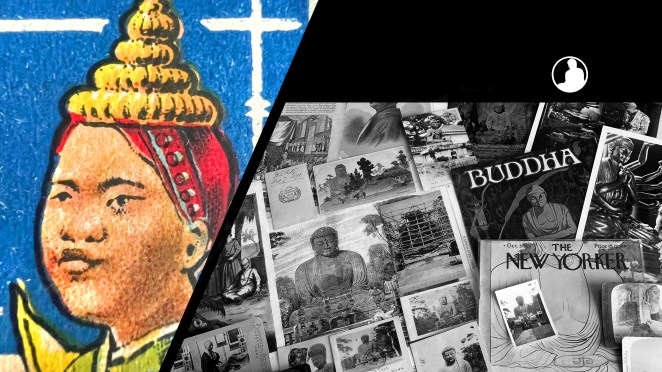
Au Bon Marché was reputedly the first store in Paris to distribute free lithographic prints to children, a practice soon adopted by other major department stores. Printed by Testu & Massin, this card belonged to a set of six illustrating various “Oriental” scenes.

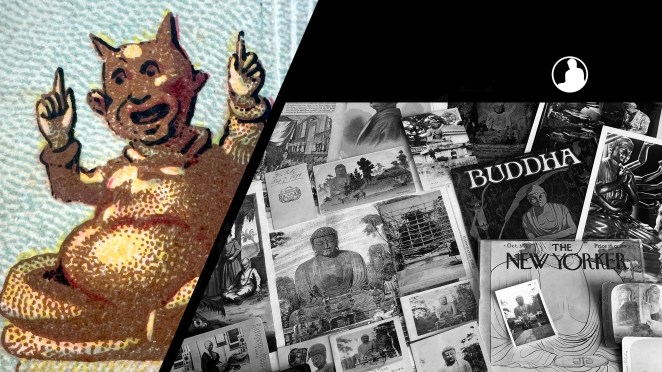
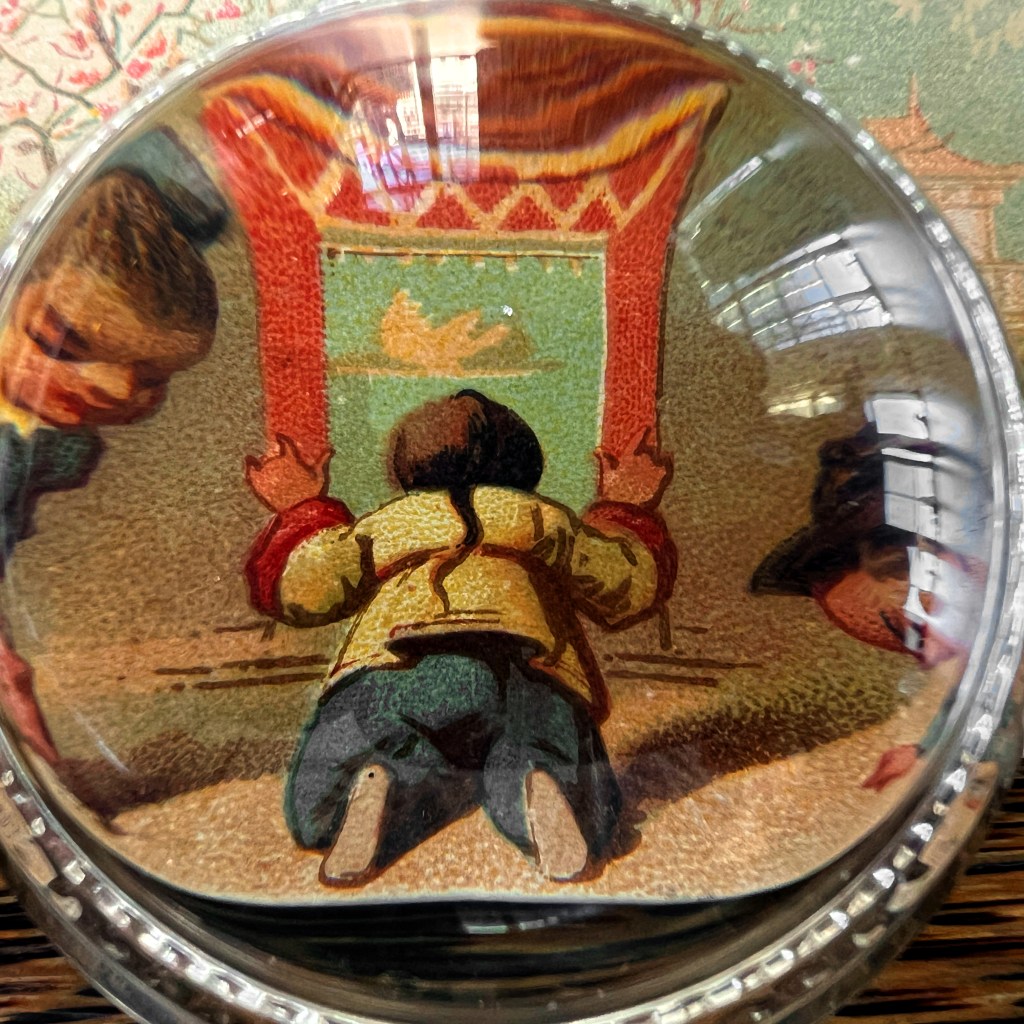
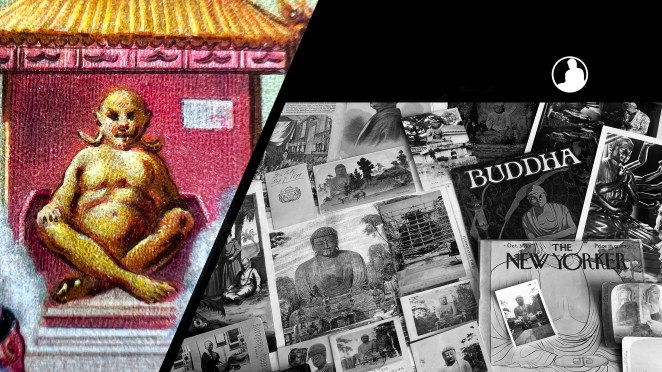
The colorful image blends the ethereal with the corporeal, showing children prostrating before a Buddhist-style idol.

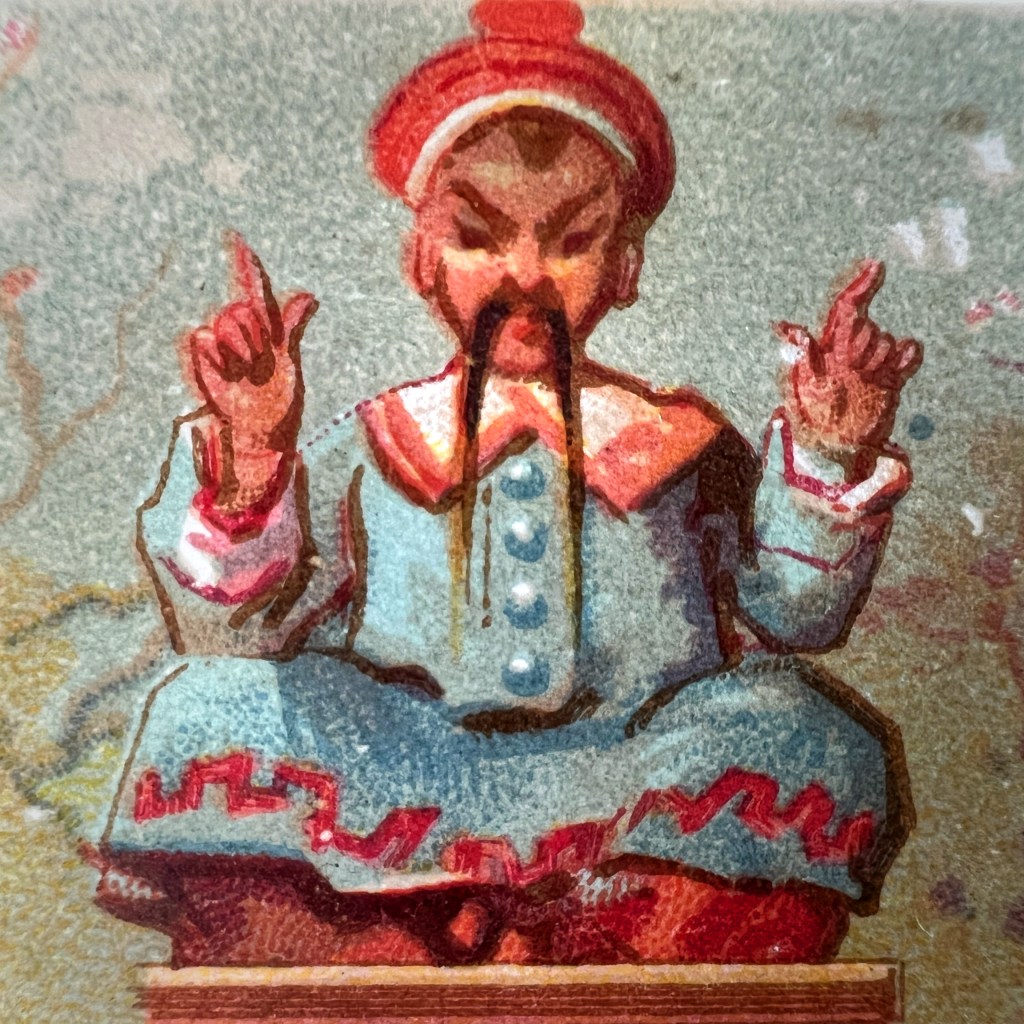
The idol itself merges a cross-legged Buddha with a racialized caricature of a Chinese man, complete with a long mustache and posed in what was known in France as the “Chinese dance.”


The Buddhas in the West Material Archive is a digital scholarship project that catalogues artifacts depicting Buddhist material culture for Western audiences. It’s comprised of prints, photos, and an assortment of ephemera and other objects. For a brief introduction to this archive, visit the main Buddhas in the West project page.


For Related Buddhas in the West Posts Featuring Advertising Cards:


For the Most Recent Buddhas in the West Posts:


L’Illustration Photographs of Qiongzhu Temple

For all the new Buddhas in the West posts
follow us on Bluesky & Instagram


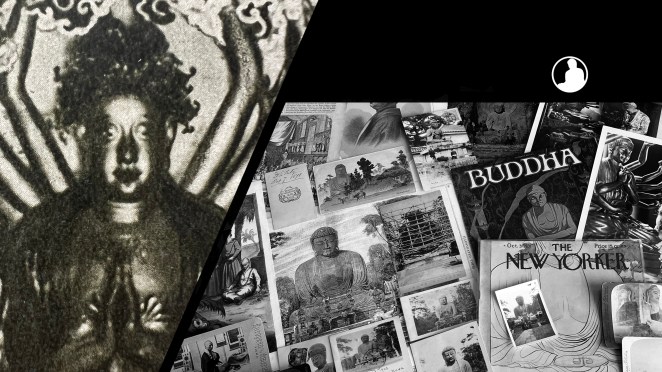
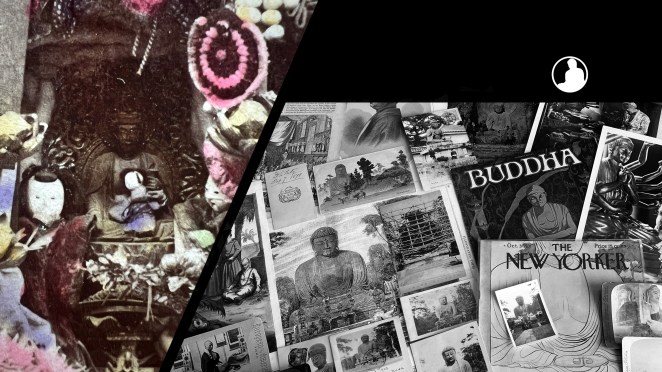
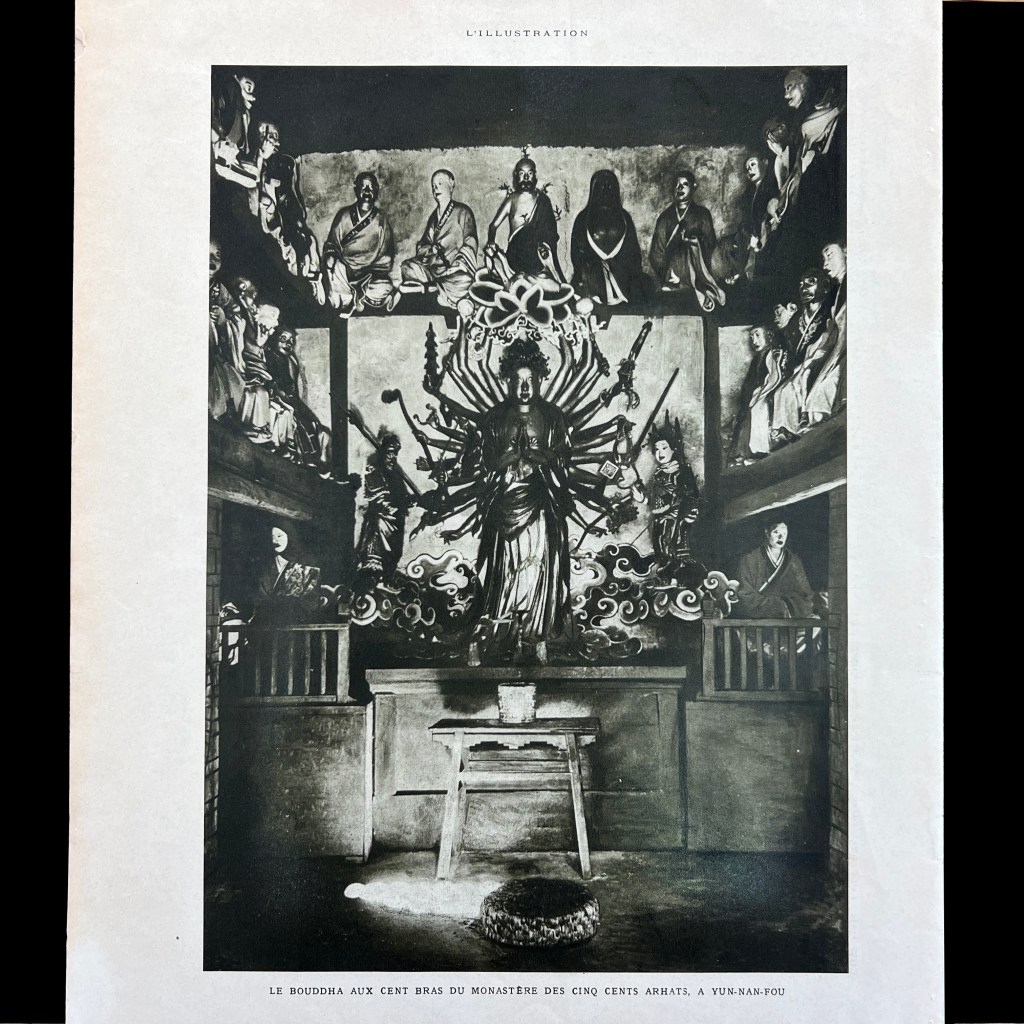
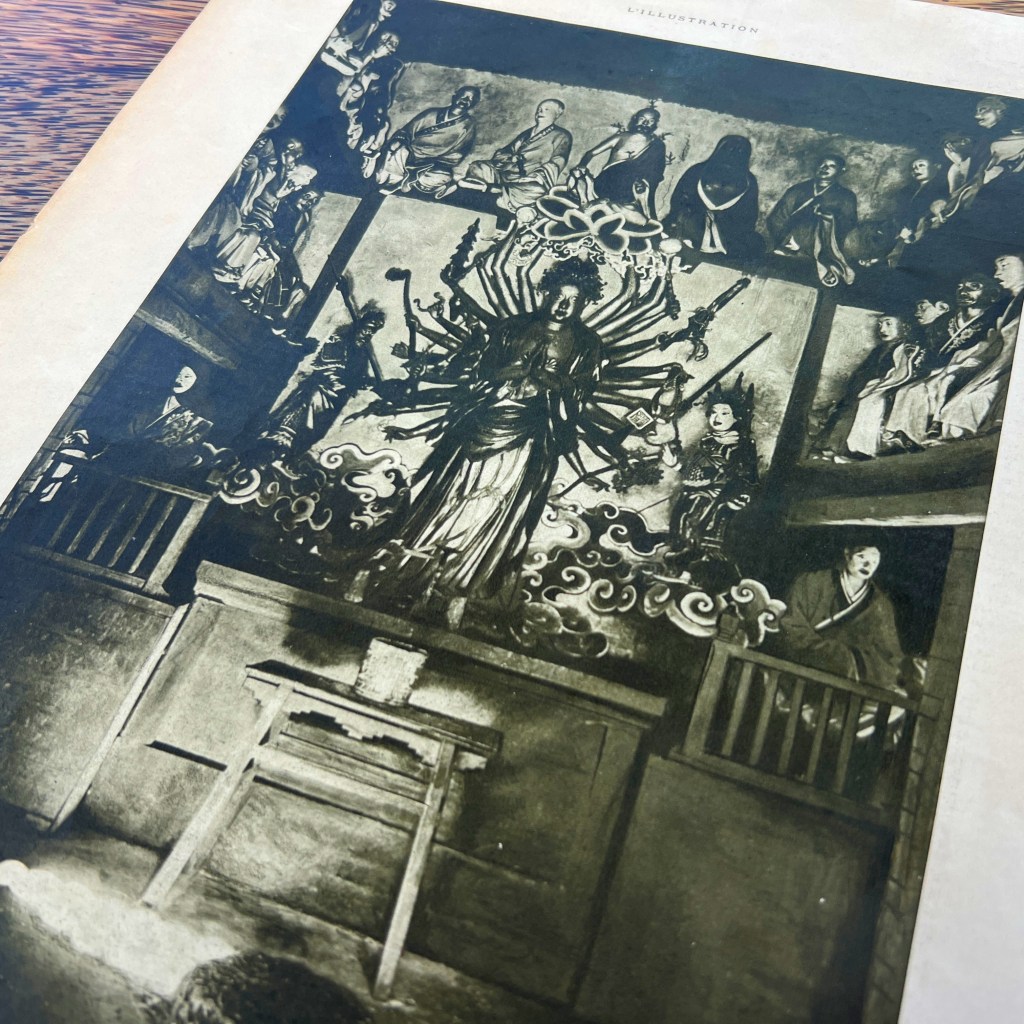
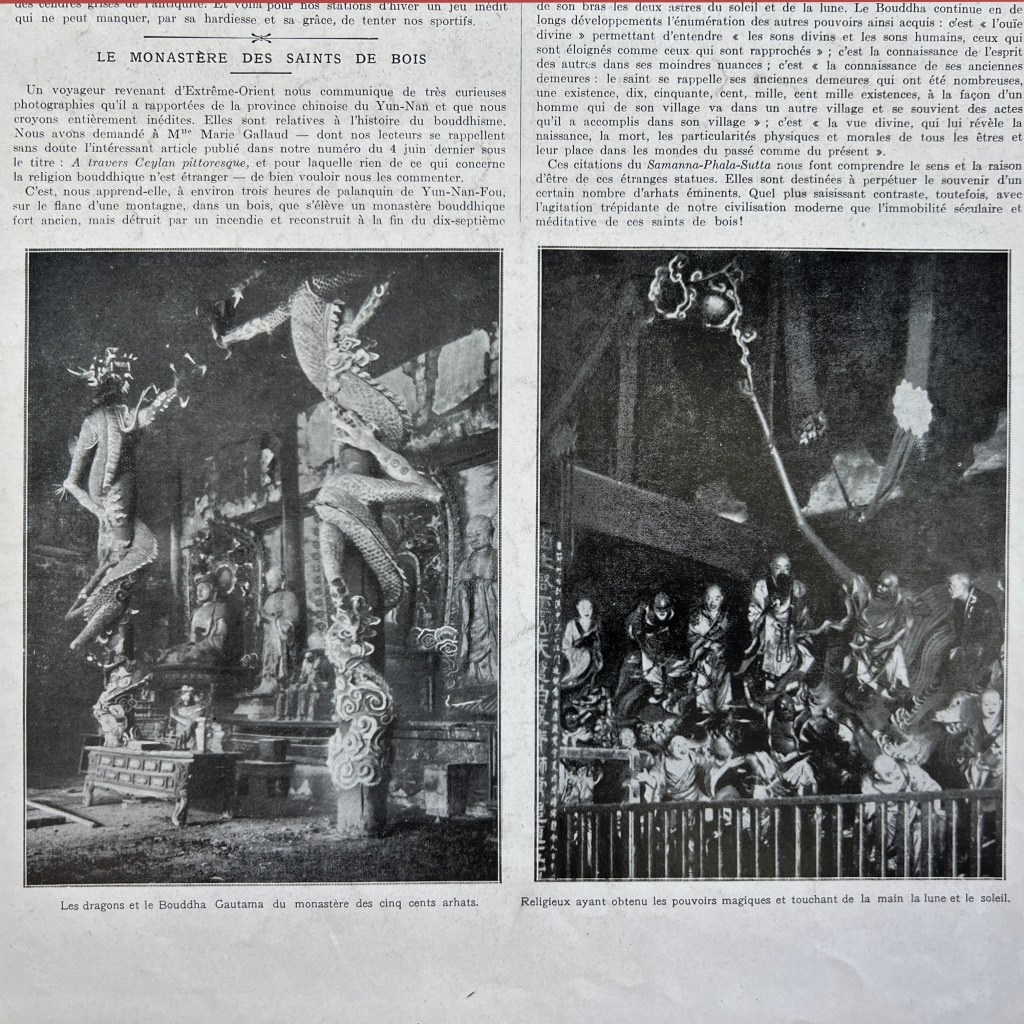
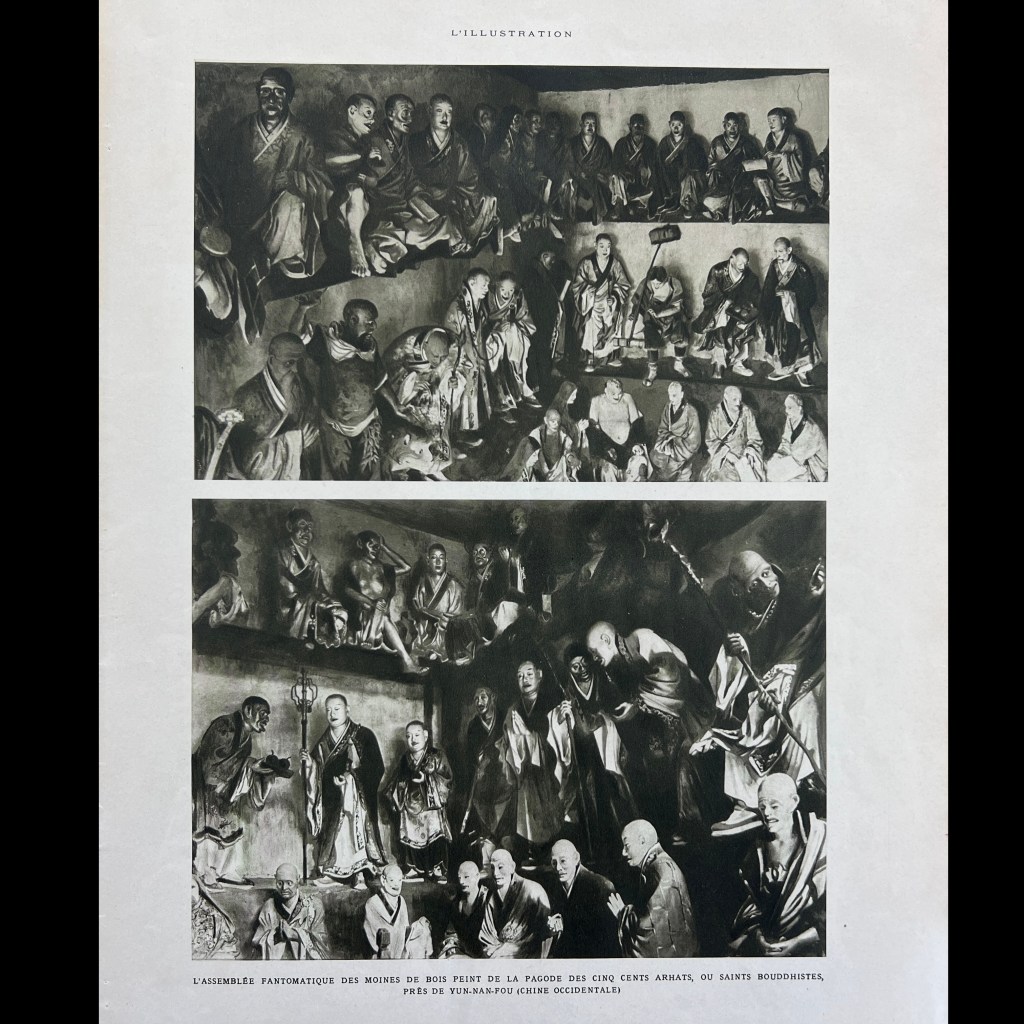
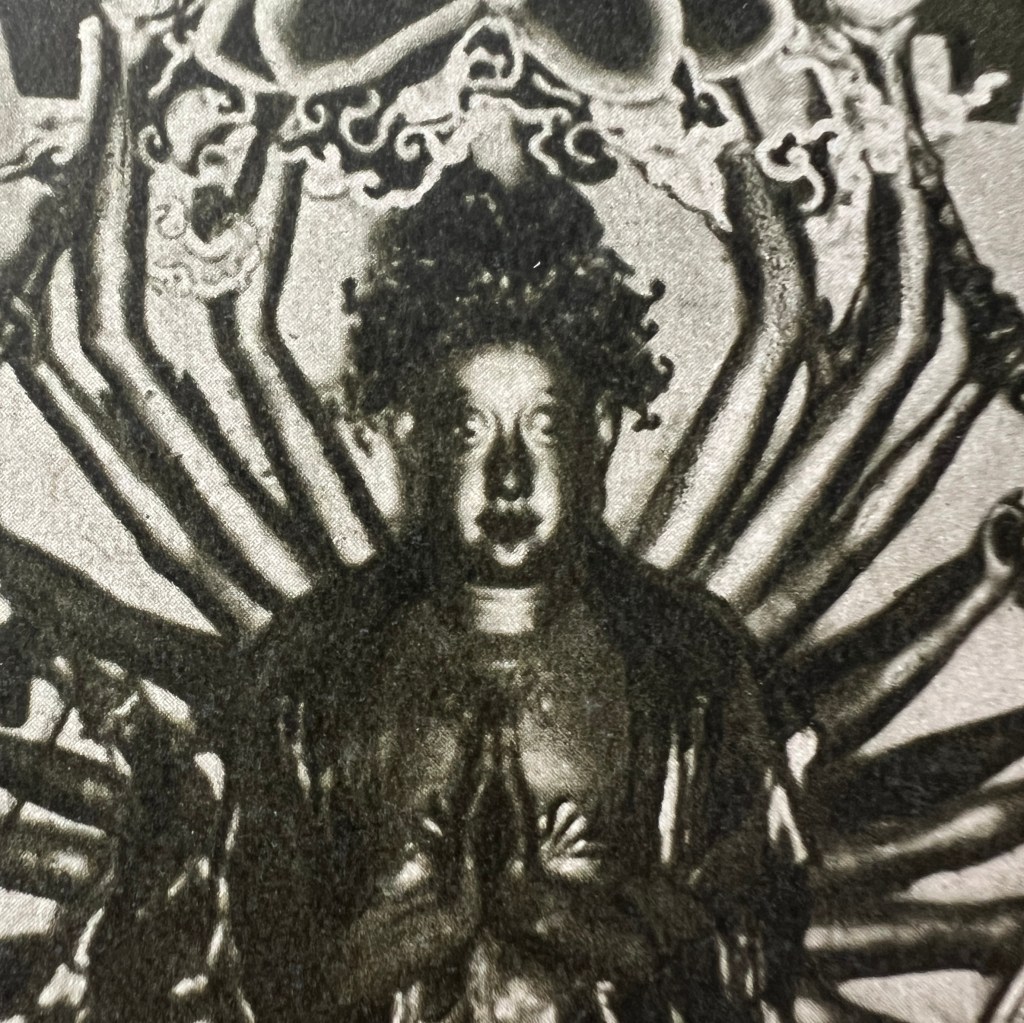
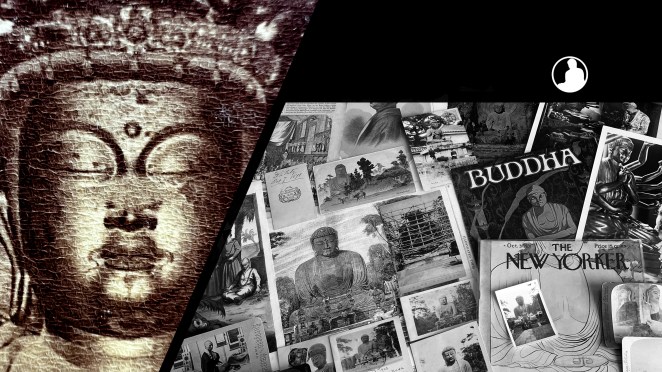
Located in the mountains of Yunnan, China, the Qiongzhu Temple (Qiongzhu si 筇竹寺) houses a collection of fantastic Buddhist statues. This Thousand-Armed Guanyin icon is surrounded by over 200 arhat disciples, comprising part of a Five Hundred Arhat collection over a century old.

While the temple was founded in the 13th century, a devastating fire allowed major reconstruction and expansion projects under the Qing Emperor Guangxu. Three new buildings, completed in the 1880s, were used to for housing newly commissioned clay statues of the Five Hundred Arhats.

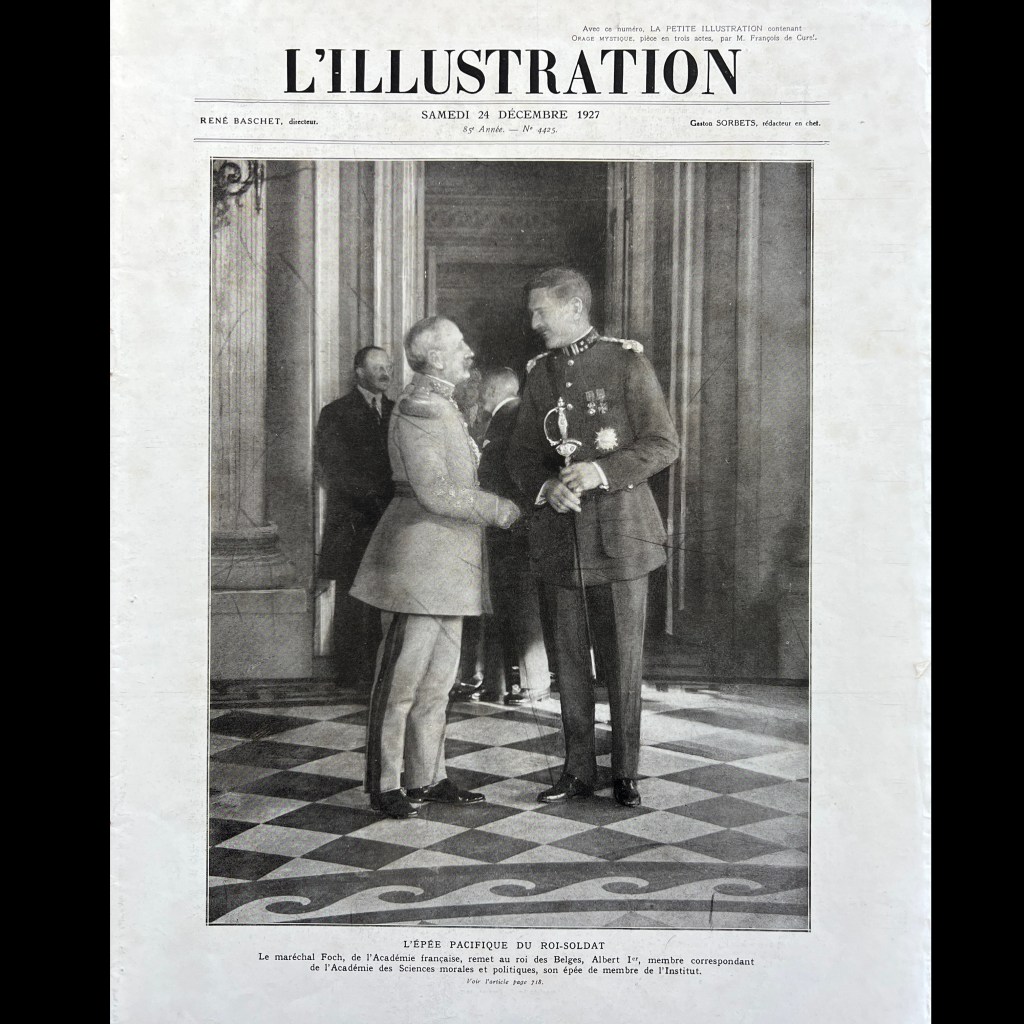
The photos seen here were printed in L’Illustration, reputedly the first international illustrated magazine published out of Paris. This issue was released in December 1927, containing what the editor believed were otherwise unpublished photographs of Qiongzhu Temple.

The French text cites the Samaññaphala Sutta to give context to the arhats, who are the Awakened disciples of the Buddha. In East Asian, the arhats are often shown as having curious physical characteristics; here we can spot one arhat with a long, craning arm reaching up to hold the moon.

In addition to the main hall, the arhat statues were further divided between two halls on temple grounds, each constructed with three rows of shelving to hold the numerous icons. Each painted statue is about one meter in height.

Records reveal the images were made by an artist from Sichuan, Li Guangxiu, who along with several assistants crafted the arhat icons over a period of seven years (1883-1890).


The Buddhas in the West Material Archive is a digital scholarship project that catalogues artifacts depicting Buddhist material culture for Western audiences. It’s comprised of prints, photos, and an assortment of ephemera and other objects. For a brief introduction to this archive, visit the main Buddhas in the West project page.


For Related Buddhas in the West Posts Featuring Guanyin:


For the Most Recent Buddhas in the West Posts:


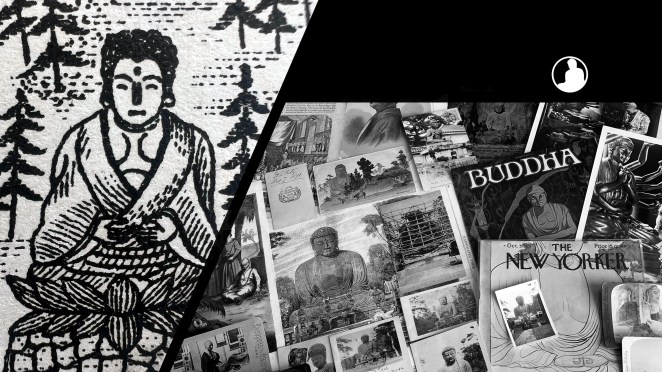
Olfert Dapper’s “The Idoll Sechia” Engraving

For all the new Buddhas in the West posts
follow us on Bluesky & Instagram


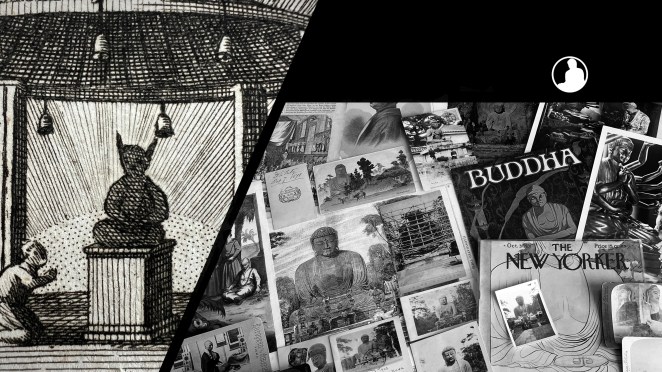
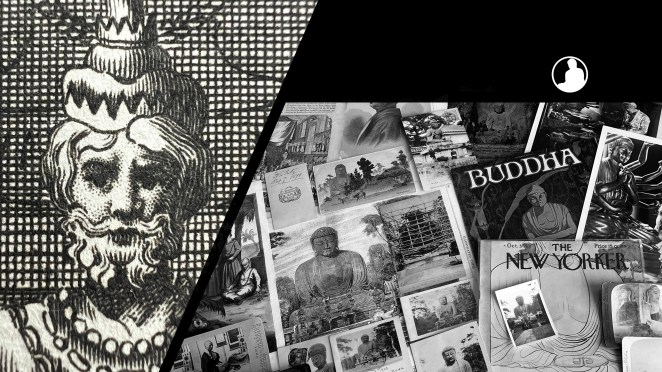
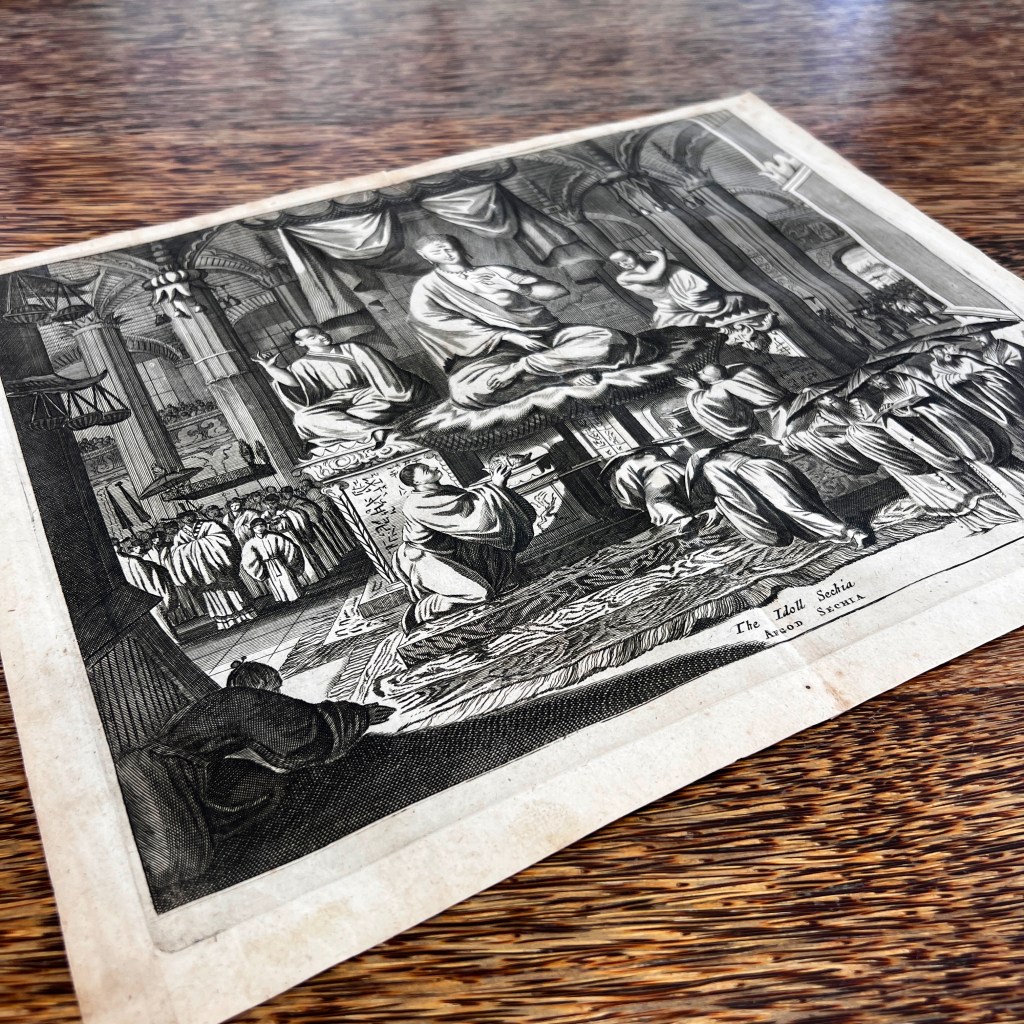
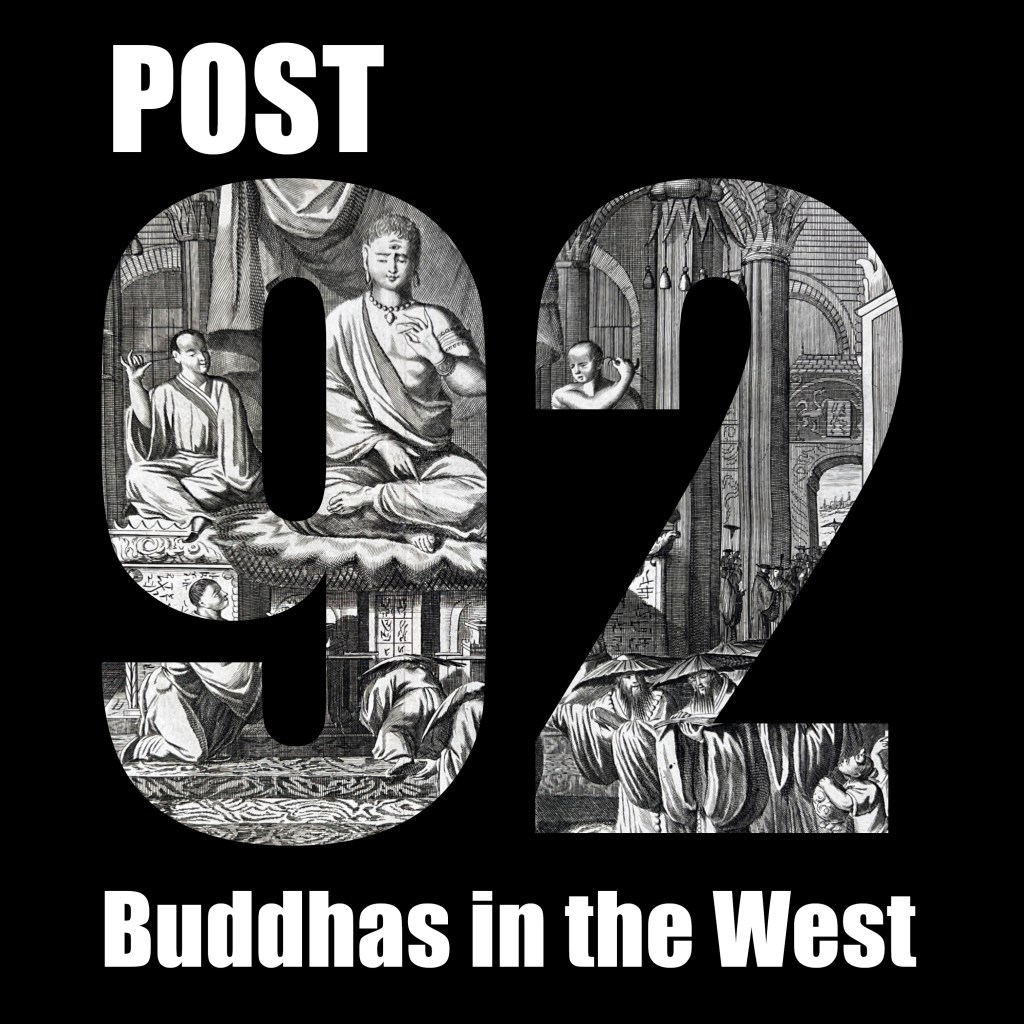
The Atlas Chinensis by Olfert Dapper (1636–1689) is among the most visually embellished European treatments of China from the late 17th century. Never traveling to Asia, Dapper used reports from the 2nd and 3rd Dutch embassies to China and consulted older Jesuit accounts.

The copperplate engravings were likely prepared in the workshop of publisher Jacob van Meurs who found reasonable success issuing illustrated books on Asia. The illustration here is from the 1674 German edition of Atlas Chinensis; it was originally published in Dutch in 1670.

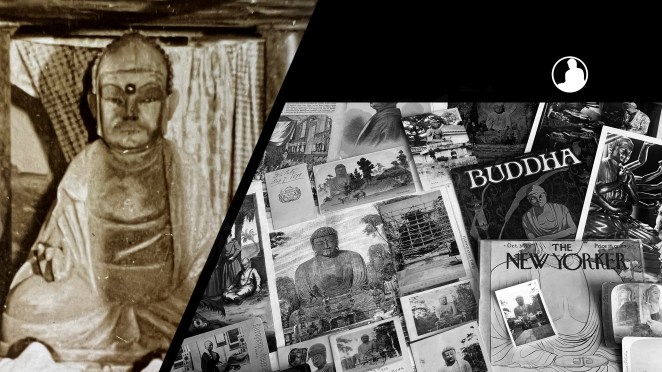
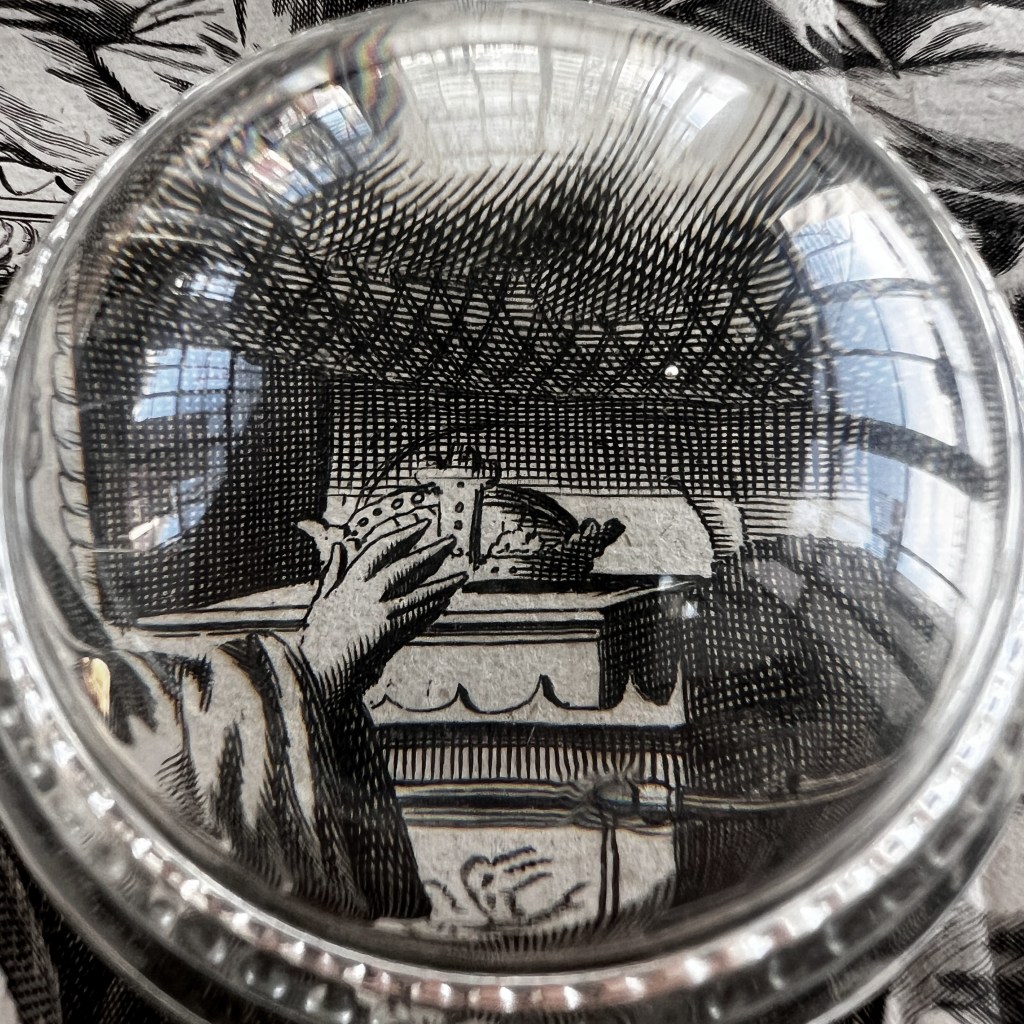
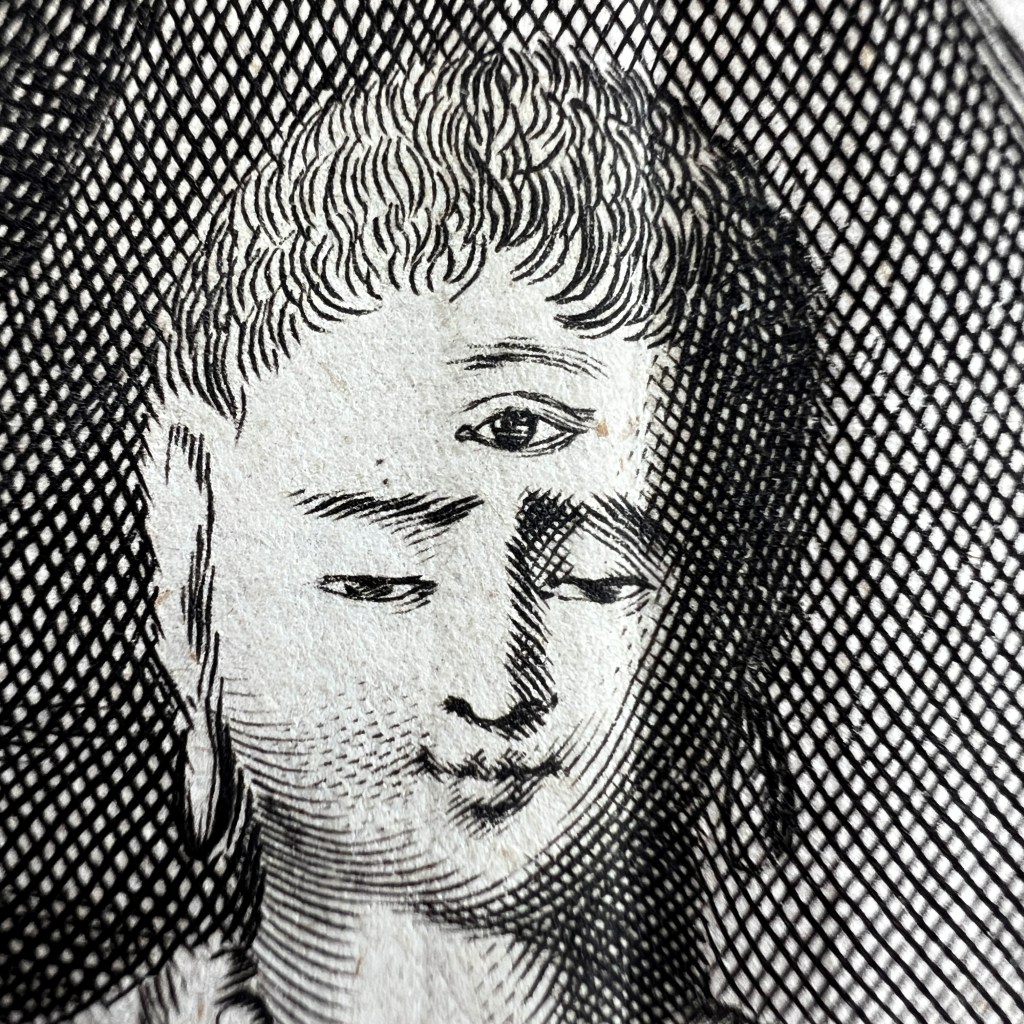
In a section describing Buddhism, Dapper notes that images of the “Idoll Sechia” (Śākyamuni) are found in temples, “in the shape of a fair Youth; with a third Eye in his forehead.” Engravers had great liberty to interpret and add further details.

Some details, such as the European-style crown at the base of the altar, suggest fabricated visual embellishments intended to make the scene more familiar to European readers.

While other details that might appear odd, such as the flanking figures scratching their ears, are actually based on authentic Buddhist imagery of the arhats (C. luohan). Unpublished Jesuit sketches available to Dapper likely informed some of these details.

An English edition of Dapper’s work, published by John Ogilby in 1671 (and curiously misattributed to Arnoldus Montanus), can be viewed through Stanford University here: tinyurl.com/ycyw93eb.


The Buddhas in the West Material Archive is a digital scholarship project that catalogues artifacts depicting Buddhist material culture for Western audiences. It’s comprised of prints, photos, and an assortment of ephemera and other objects. For a brief introduction to this archive, visit the main Buddhas in the West project page.


For Related Buddhas in the West Posts Featuring Historical Engravings:


For the Most Recent Buddhas in the West Posts:


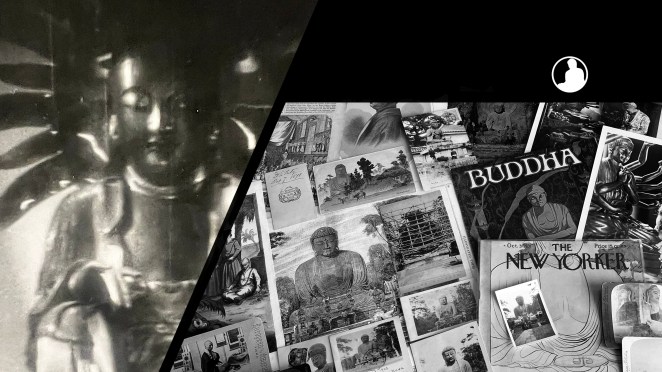
Guanyin Icon in The Mask of Fu Manchu (1932)

For all the new Buddhas in the West posts
follow us on Bluesky & Instagram


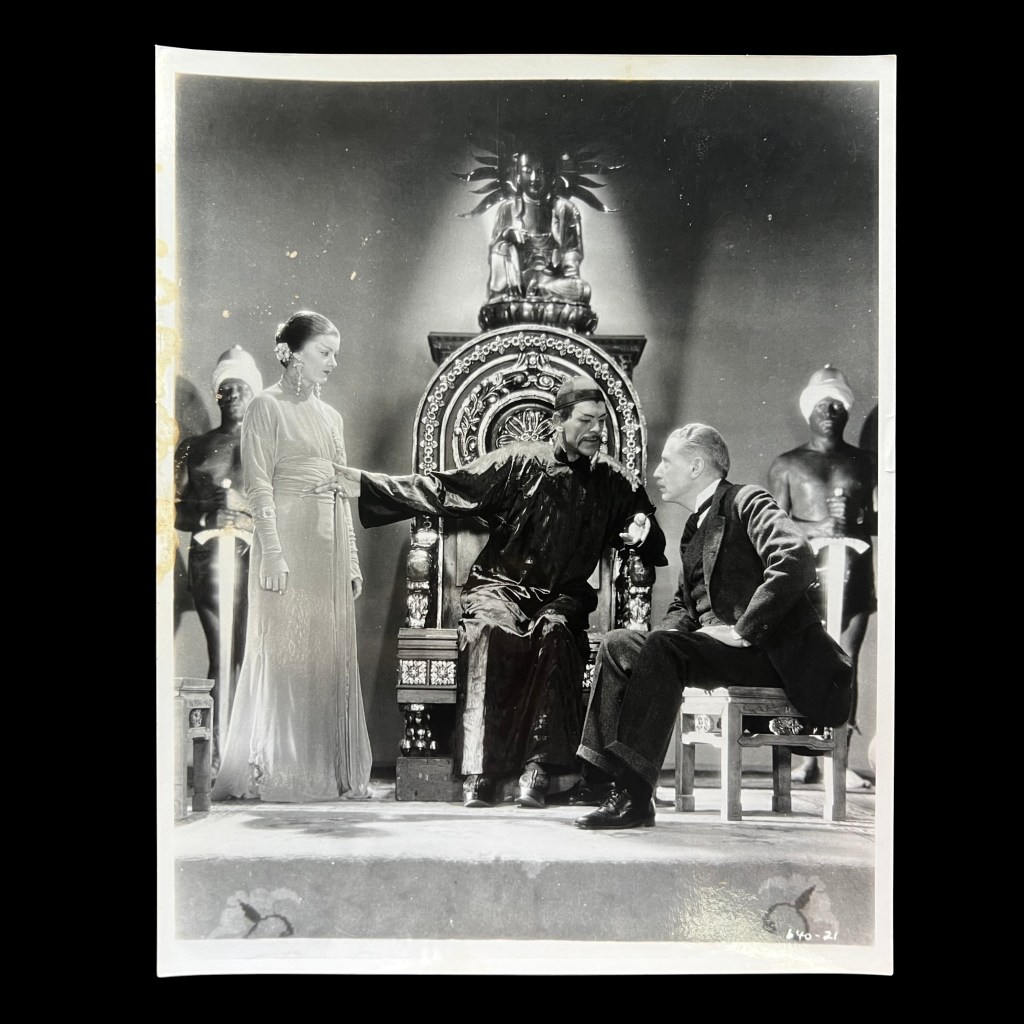
Fu Manchu’s opulent Gobi Desert lair seen in The Mask of Fu Manchu (1932) was assembled by MGM art director Cedric Gibbons. While the Art Deco inspired torture chambers remain horror classics, Gibbons’ strategic use of Buddhist statuary also hint to the audience impending danger.

Boris Karloff portrayed the villainous doctor Fu Manchu, here sitting on a throne introducing his daughter Fah Lo See (Myrna Loy). This scene unfolds under the eyes of a shadowy Buddhist figure perched atop the throne; close inspection reveals this to be in the style of a Guanyin statue.

Many props Gibbons used were made at the studio, including some of the Buddhist statues seen on screen. The idiosyncratic elements, including the multi-rayed halo, suggested this statue was pieced together by set designers; it was seen previously in Daughter of the Dragon (1931).

Curiously, the ornate backrest of the throne makes it appear as if Fu Manchu himself is a statue encircled by a halo. Like a menacing statue come to life, the audience can surmise the visitor will suffer at the hands of the villain.

Fu Manchu played on the racist fears of the Yellow Peril; in film, these fears could also be signified by Buddhist imagery. For further discussion of the dueling positive and negative views of China in American cinema, see Naomi Greene’s From Fu Manchu to Kung Fu Panda (2014).


The Buddhas in the West Material Archive is a digital scholarship project that catalogues artifacts depicting Buddhist material culture for Western audiences. It’s comprised of prints, photos, and an assortment of ephemera and other objects. For a brief introduction to this archive, visit the main Buddhas in the West project page.


For Related Buddhas in the West Posts Featuring Guanyin / Avalokiteśvara:


For the Most Recent Buddhas in the West Posts:


William Alexander’s Idol Temple Aquatint Print

For all the new Buddhas in the West posts
follow us on Bluesky & Instagram


Artist William Alexander (1767–1816) accompanied the first British diplomatic mission to China in 1793 to visually document the embassy’s trip. Eager to be the first Brit to provide wide-ranging eye-witness accounts of China, Alexander’s published works blend fantasy and reality.

After arriving in China and sailing inland routes from Macao to Beijing, Alexander was mostly quarantined to the Summer Palace of the emperor. Alexander’s illustrations sometimes draw heavily upon European chinoiserie imagery, creating idyllic pagoda-filled land

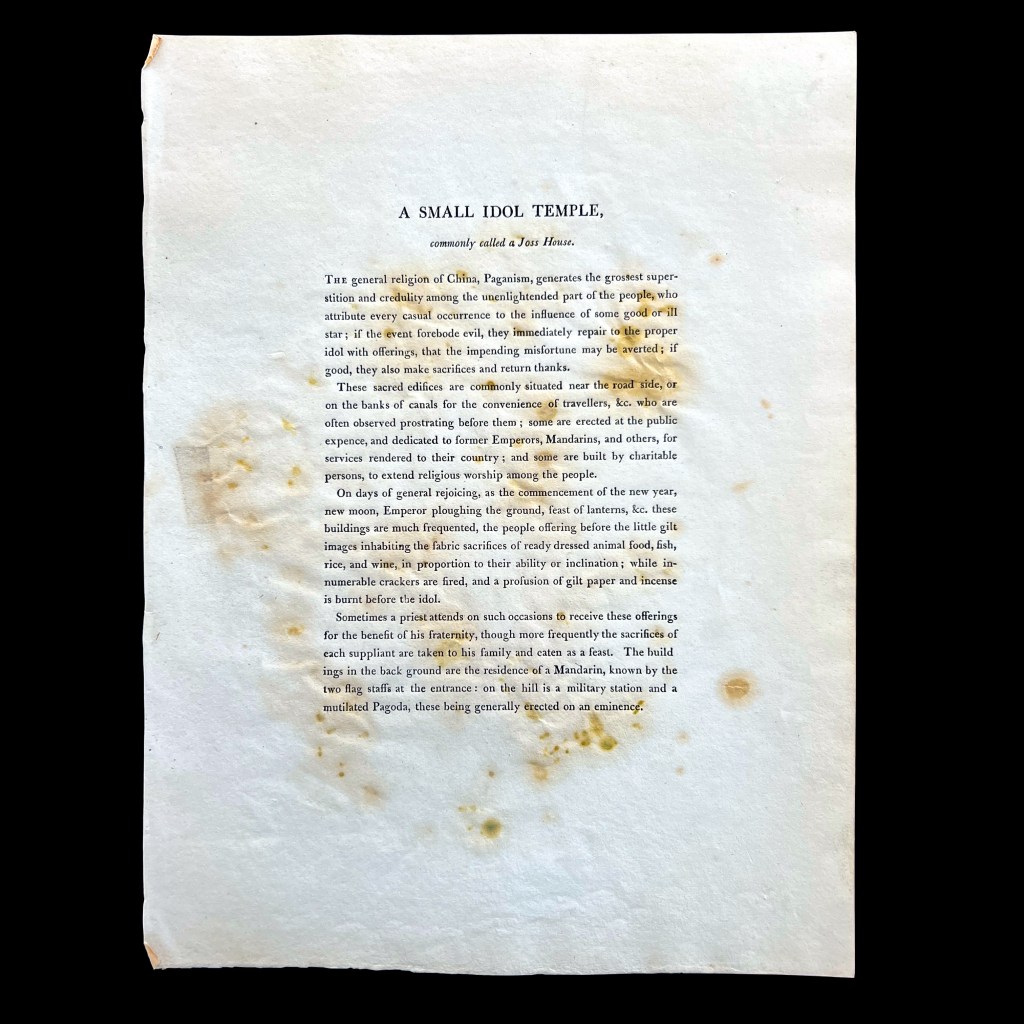
Alexander’s 1805 publication, The Costume of China [sic], was bound pairing images with short explanatory text. It’s notable that while the accompanying image shows a rudimentary Buddhist figure with crossed legs, the text only speaks generically of paganism, idols, and joss houses.

Alexander originally produced sketches and watercolors, but these were rendered into engravings for early publications recounting the British embassy. For The Costume of China, however, the London publisher used colored aquatints, a popular printmaking method at the turn of the 19th century.

As for the “continued biography” of this print, the masking tape indicates it was previously framed. The explanatory text was taped to the back of the image.

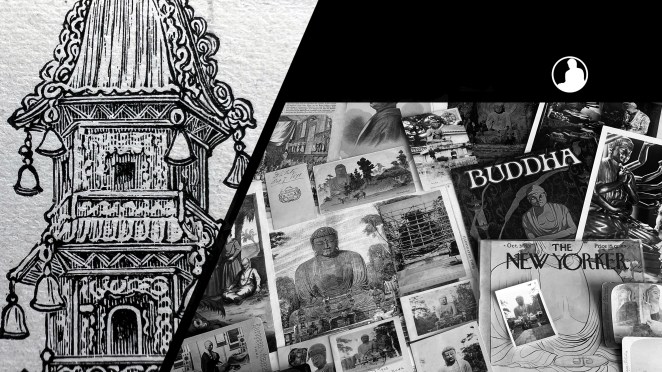
The pagoda was one of the most enduring visual icons of China in the European imagination. The crumbling top could indicate the diminishing stature of China in comparison so the growing industrial might and colonial reach of Britain.

Unlike earlier European visitors to China who focused on religion, few of Alexander’s artworks concern this topic, reflecting changing interests. For further discussion of Alexander’s illustrations of China, see Chen Yushu’s “William Alexander’s Image of Qing China” (2019).


The Buddhas in the West Material Archive is a digital scholarship project that catalogues artifacts depicting Buddhist material culture for Western audiences. It’s comprised of prints, photos, and an assortment of ephemera and other objects. For a brief introduction to this archive, visit the main Buddhas in the West project page.


For Related Buddhas in the West Posts Featuring Historical Prints:


For the Most Recent Buddhas in the West Posts:


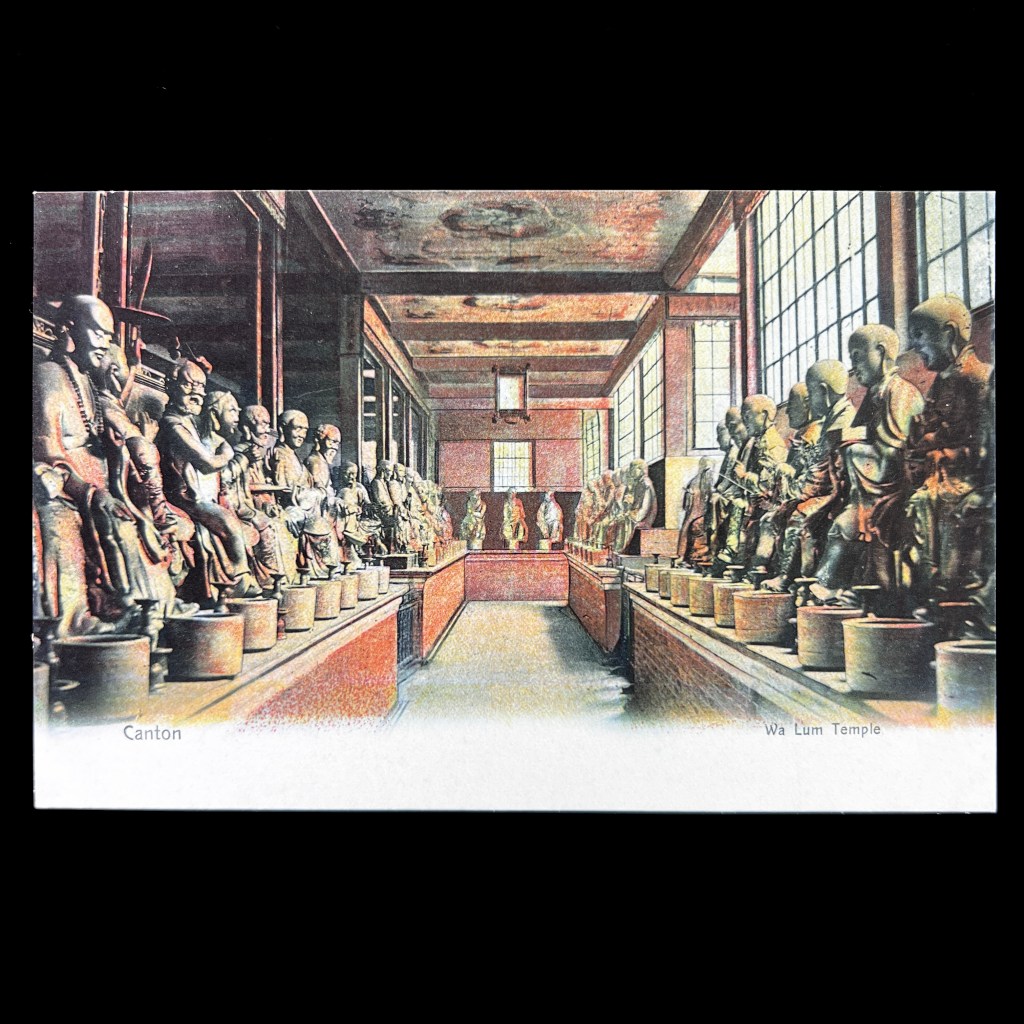
Wa Lum (Hualin) Temple 500 Arhats Hall Postcard

For all the new Buddhas in the West posts
follow us on Bluesky & Instagram


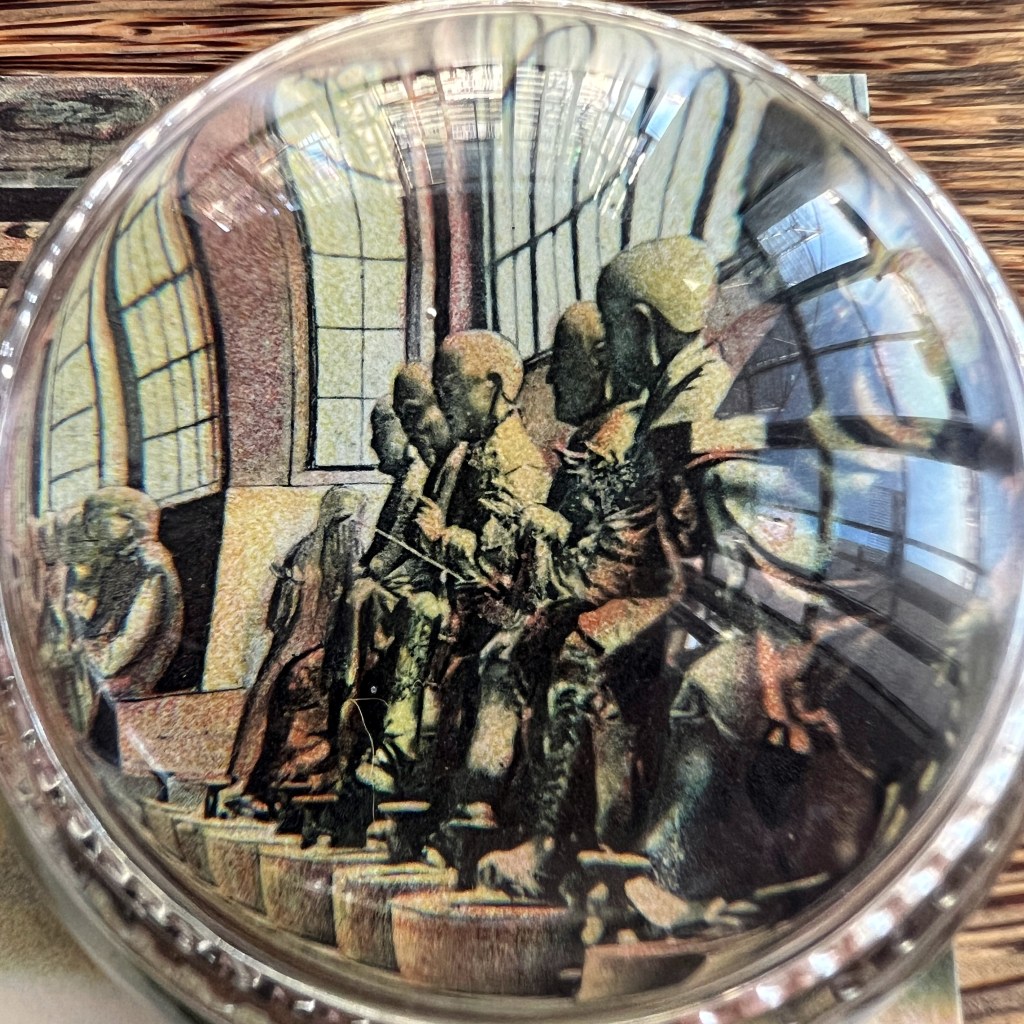
The Hualin Temple in Guangzhou, China was well known among foreign tourists at the end of the 19th century for its Hall of Five Hundred Arhats. Reportedly made of clay, the icons were installed in the early 1850s and remained until the Cultural Revolution a century later.

This postcard dates to c. 1910 and was published by the postcard dealer Moritz Sternberg who operated from Queen’s Road in Hong Kong. The original photo, however, is much older and is often attributed to Lai Afong, the most influential Chinese photographer of the late Qing.

While the temple has a history dating to the 6th century, the Arhat Hall was built in the late 1840s. It was one of the sites visited by the pioneering Scottish photographer John Thompson when he sojourned in China from 1868 to 1872.

By Thompson’s visit, rumor had spread that one of the arhat statues was actually an image of Marco Polo (not shown). Thompson notes “careful inquiry proves this statement incorrect,” nevertheless, the belief still persists to the present.

While the icons were replaced in the 1990s, several photographs exist of the originals that were destroyed. A copy of the original photo for this postcard is found in the Hotz Collection of Leiden University Library, viewable here: https://tinyurl.com/2syahybe


The Buddhas in the West Material Archive is a digital scholarship project that catalogues artifacts depicting Buddhist material culture for Western audiences. It’s comprised of prints, photos, and an assortment of ephemera and other objects. For a brief introduction to this archive, visit the main Buddhas in the West project page.


For Related Buddhas in the West Posts Featuring China:

For the Most Recent Buddhas in the West Posts:

1933 Golden Pavilion Laughing Buddha Playing Card

For all the new Buddhas in the West posts
follow us on Bluesky & Instagram


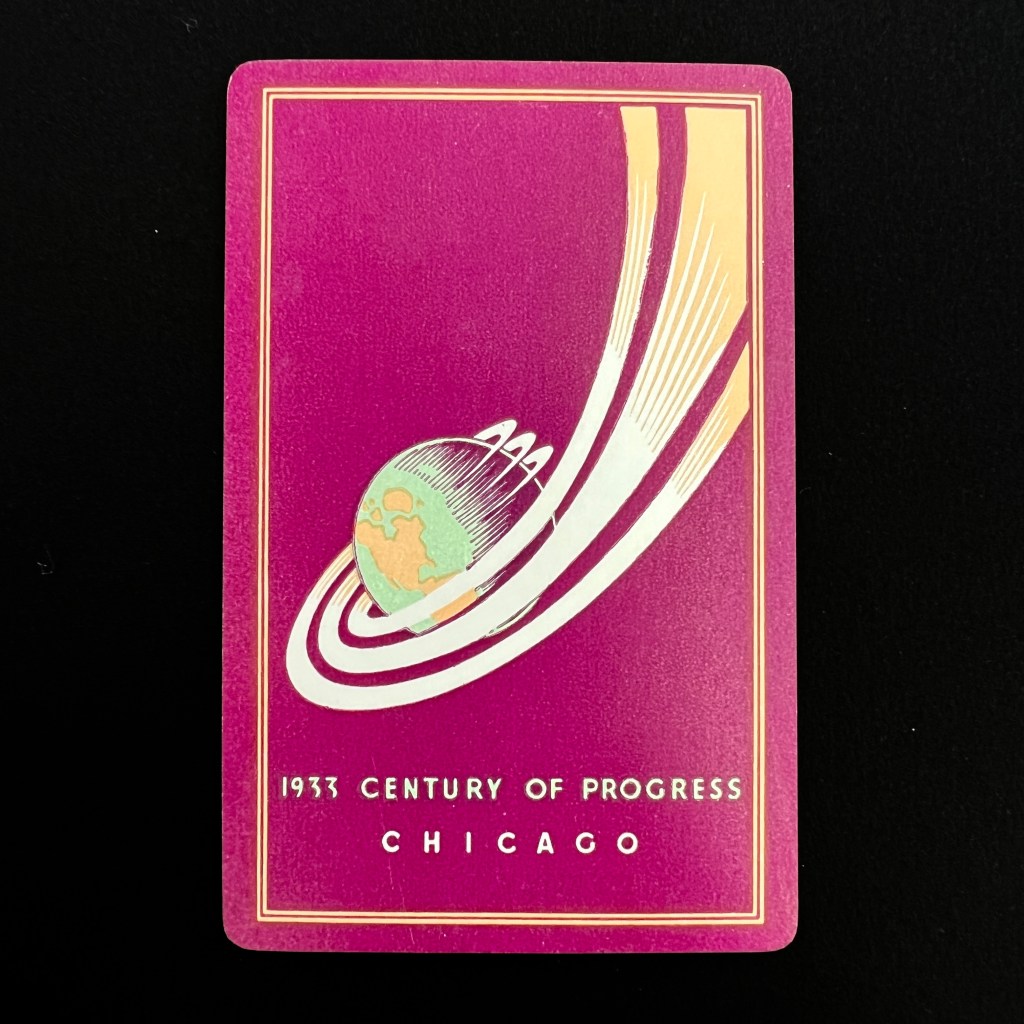
The 1933 Chicago World’s Fair held a true wonder: A Chinese replica of an 18th century Tibetan Buddhist shrine hall, the Golden Temple of Jehol. While the hall included a main shrine to Guanyin, the Laughing Buddha at the front entrance was often used in advertising.
Due to growing conflict in East Asia, the Chinese government withdrew from the 1933 World’s Fair. Subsequently, organizers arranged for display of the recently acquired temple replica of Vincent Bendix, a well-known Chicago industrialist.

Bendix had funded the expedition of Sved Hedin a few years earlier to procure a replica of a Chinese Buddhist temple. The original interest was to display two replica temples with Tibetan religious objects, one in Chicago and one in Stockholm.

Only one replica was made, but Hedin acquired many ritual implements, including thankas and icons, to outfit the building. Named the Bendix Golden Temple (or Pavilion), it was a Chinese-made replica of the Wanfaguiyi Hall in present-day Chengde (Jehol).

The temple was rebuilt for the 1939 World’s Fair in New York. As of 2018 the remains of the temple hall are in Stockholm, but the ritual items and furnishing have all been lost.


The Buddhas in the West Material Archive is a digital scholarship project that catalogues artifacts depicting Buddhist material culture for Western audiences. It’s comprised of prints, photos, and an assortment of ephemera and other objects. For a brief introduction to this archive, visit the main Buddhas in the West project page.


For Related Buddhas in the West Posts Featuring Budai / Laughing Buddha:


For the Most Recent Buddhas in the West Posts: