World in Cincinnati Japan Scene Postcard

For all the new Buddhas in the West posts
follow us on Bluesky & Instagram


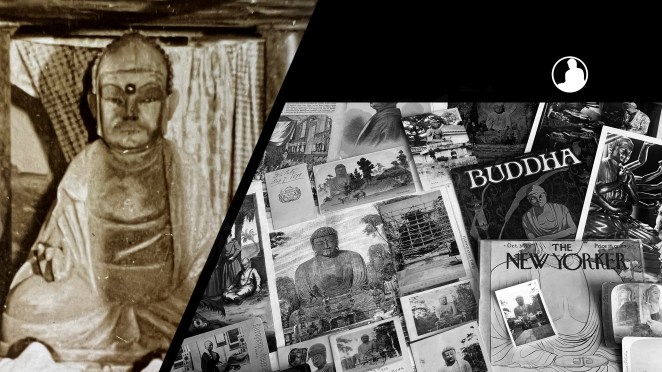
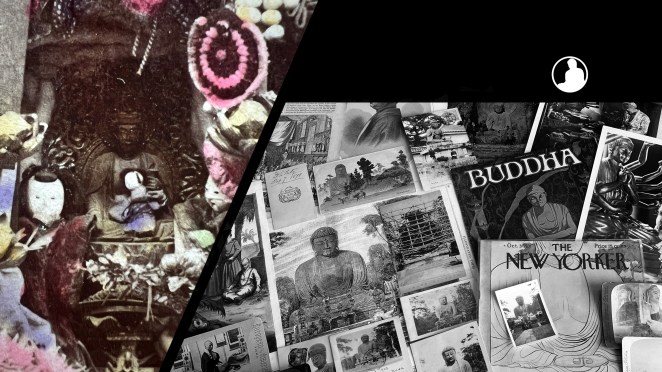
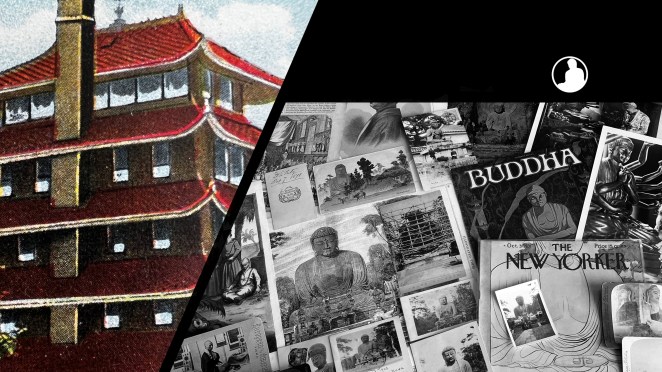
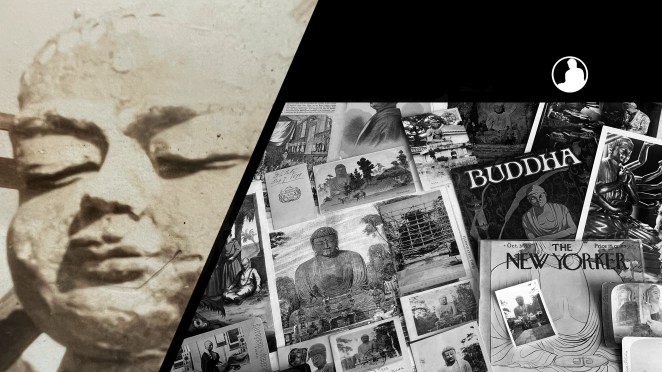
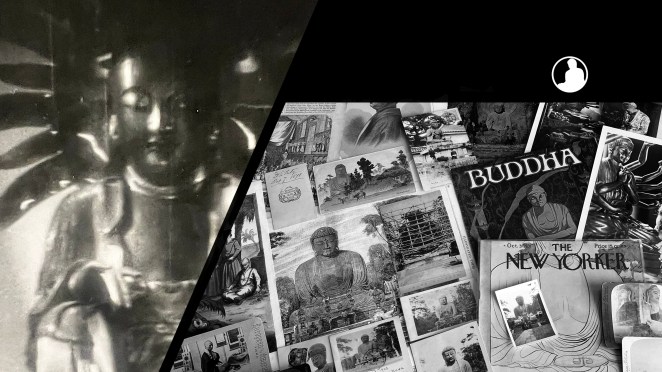
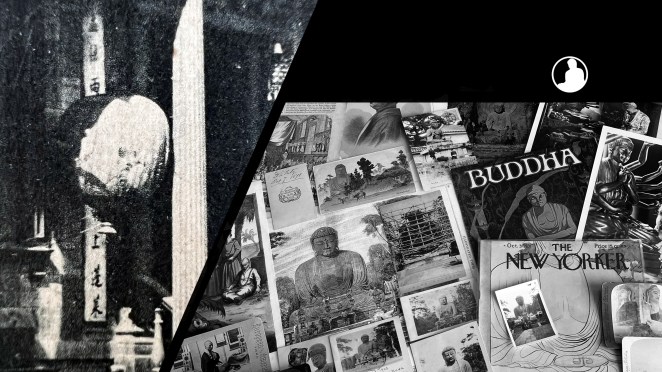
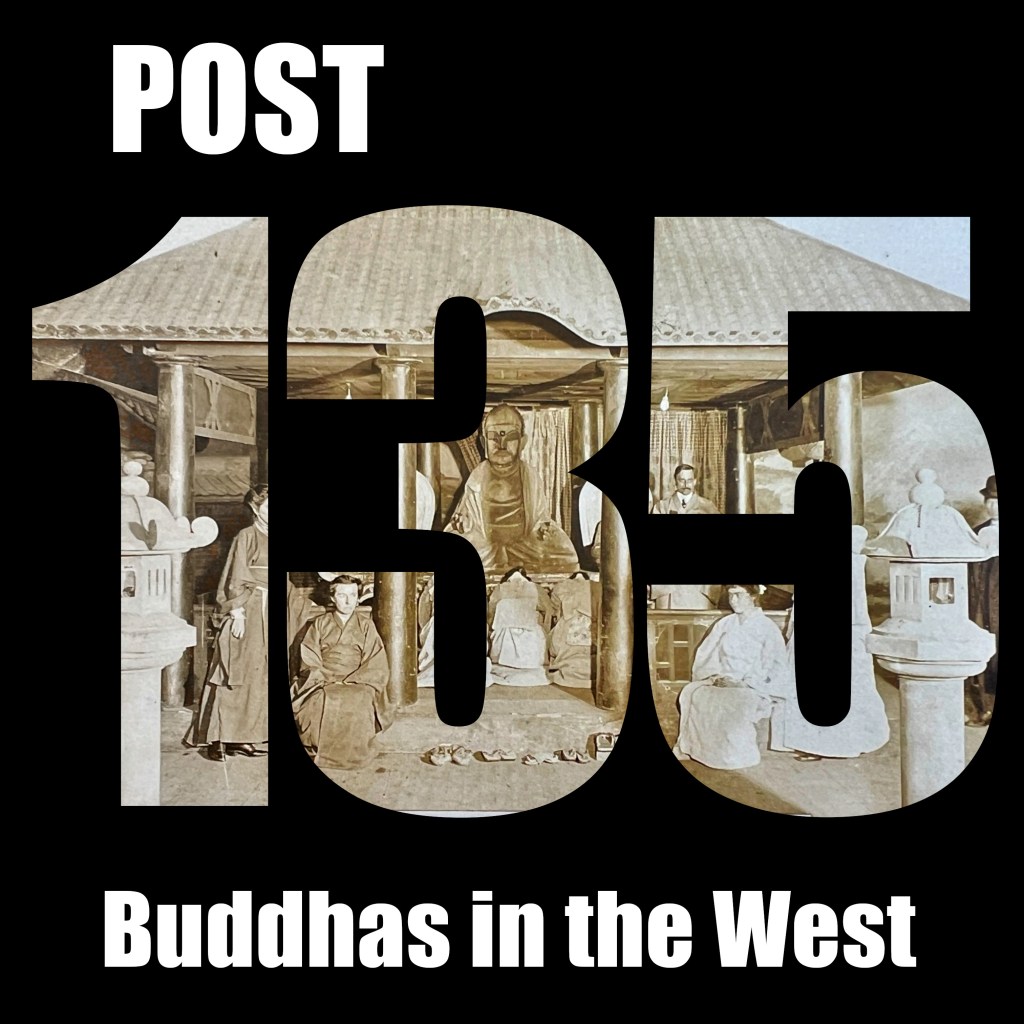
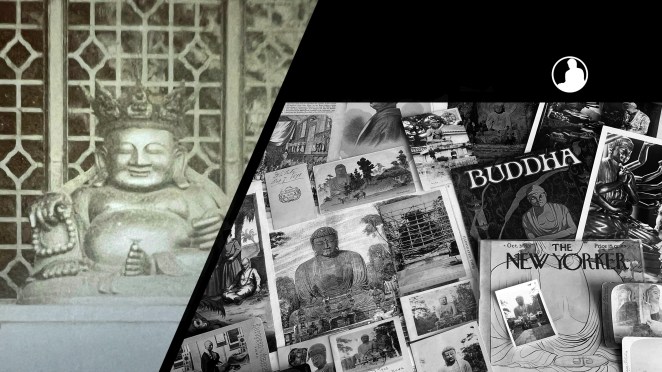
In 1911, to promote efforts of American missionaries abroad, an arm of the missions board sponsored a massive traveling exhibit of the world’s religions. The “Japan Scene” was dominated by a replica of a Buddhist temple, traveling from Boston to Cincinnati and elsewhere.
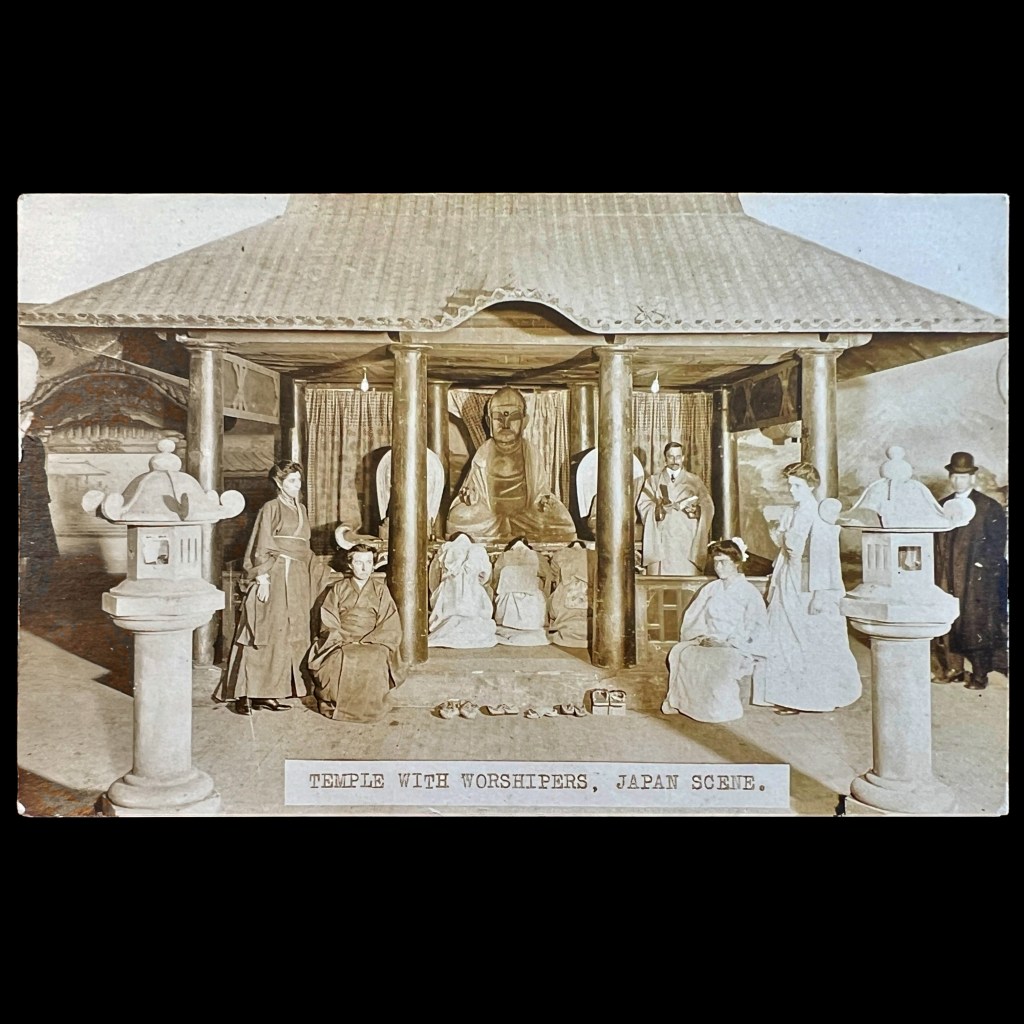
Flanked by shops and scenes of everyday Japanese life, the exhibit was considered an exercise in immersive visual educational. Partition walls were painted with panoramic views of distant locales such as Mt. Fuji and lotus ponds to further create a sense of virtual travel.
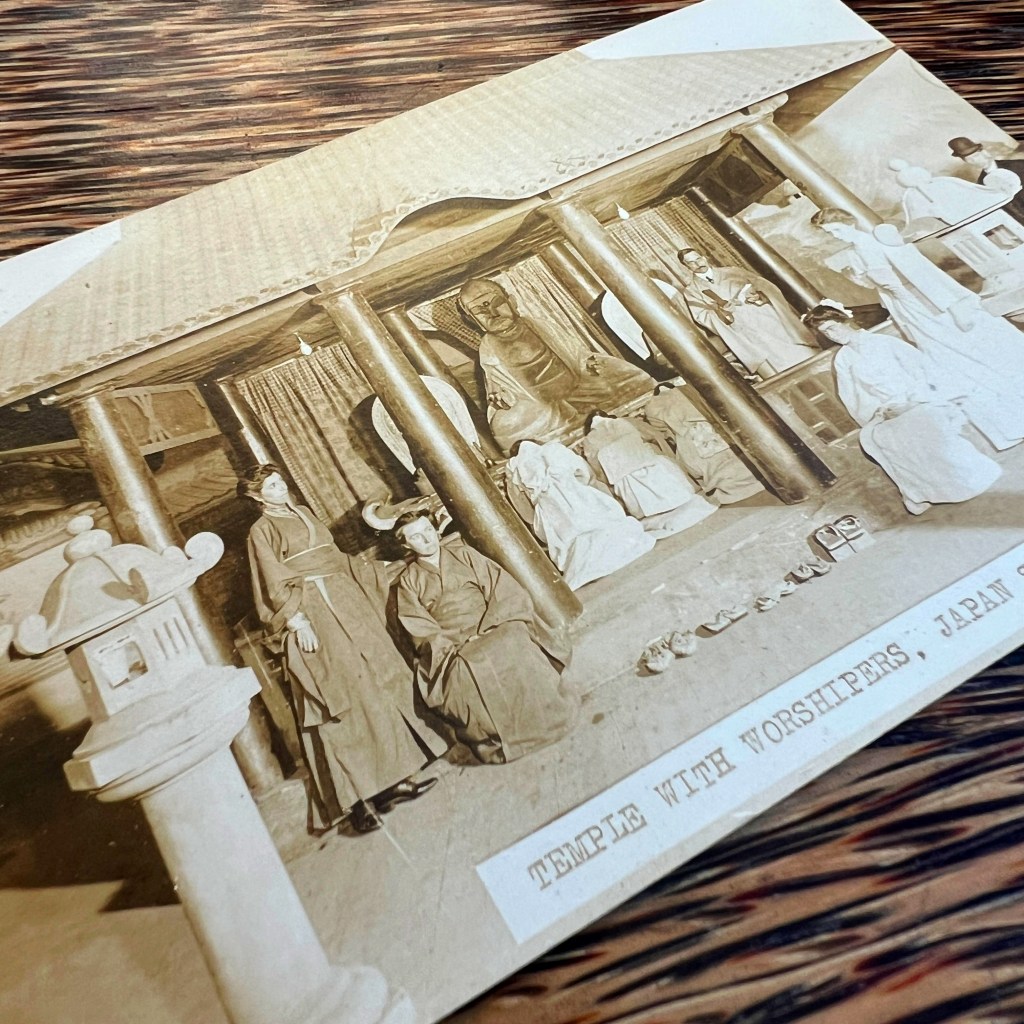
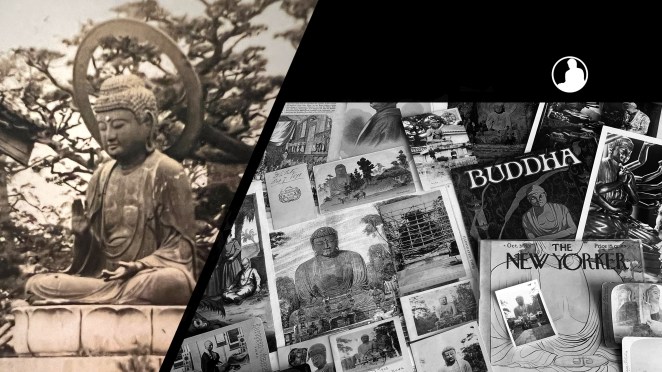
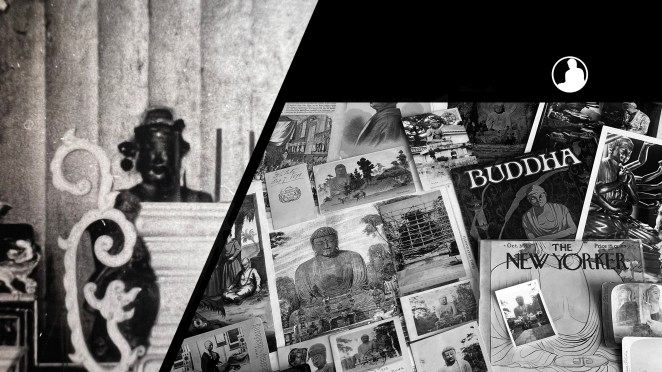
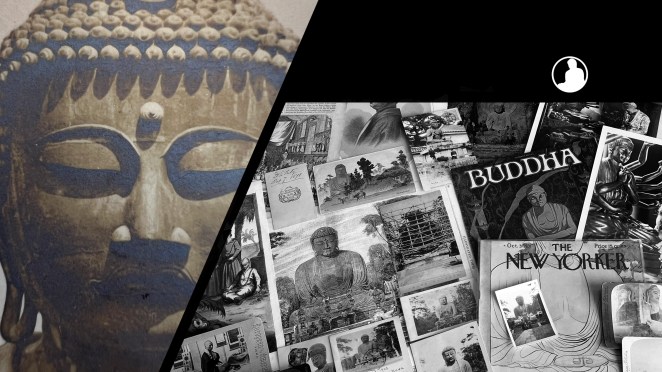
A variety of print ephemera, such as maps, posters, and postcards, were sold as souvenirs and visual learning aids to visitors. The superimposed label printed on front of this real photo post card helps identify it as from the “World in Cincinnati,” similar to other known examples.
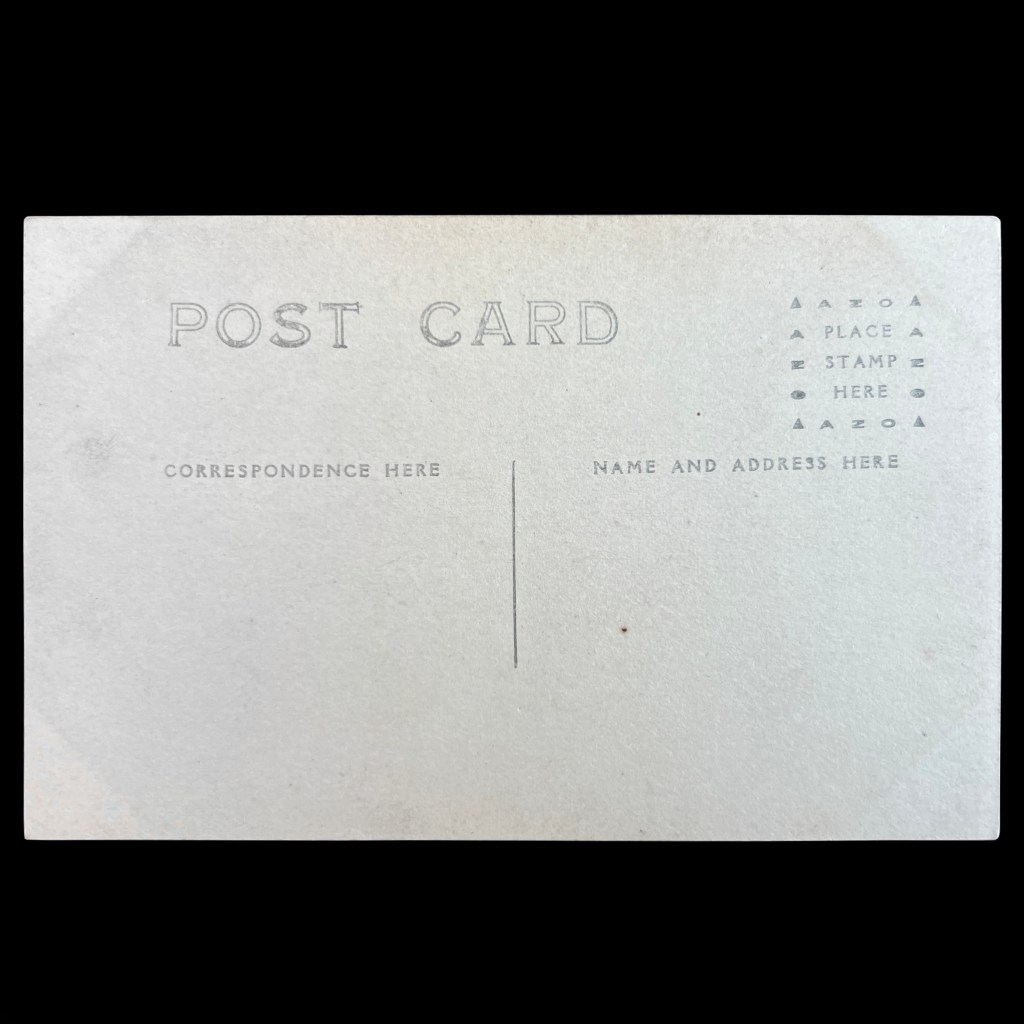
In Cincinnati, the replicated foreign lands were populated by more than 5000 stewards from more than 200 local churches portraying native peoples.
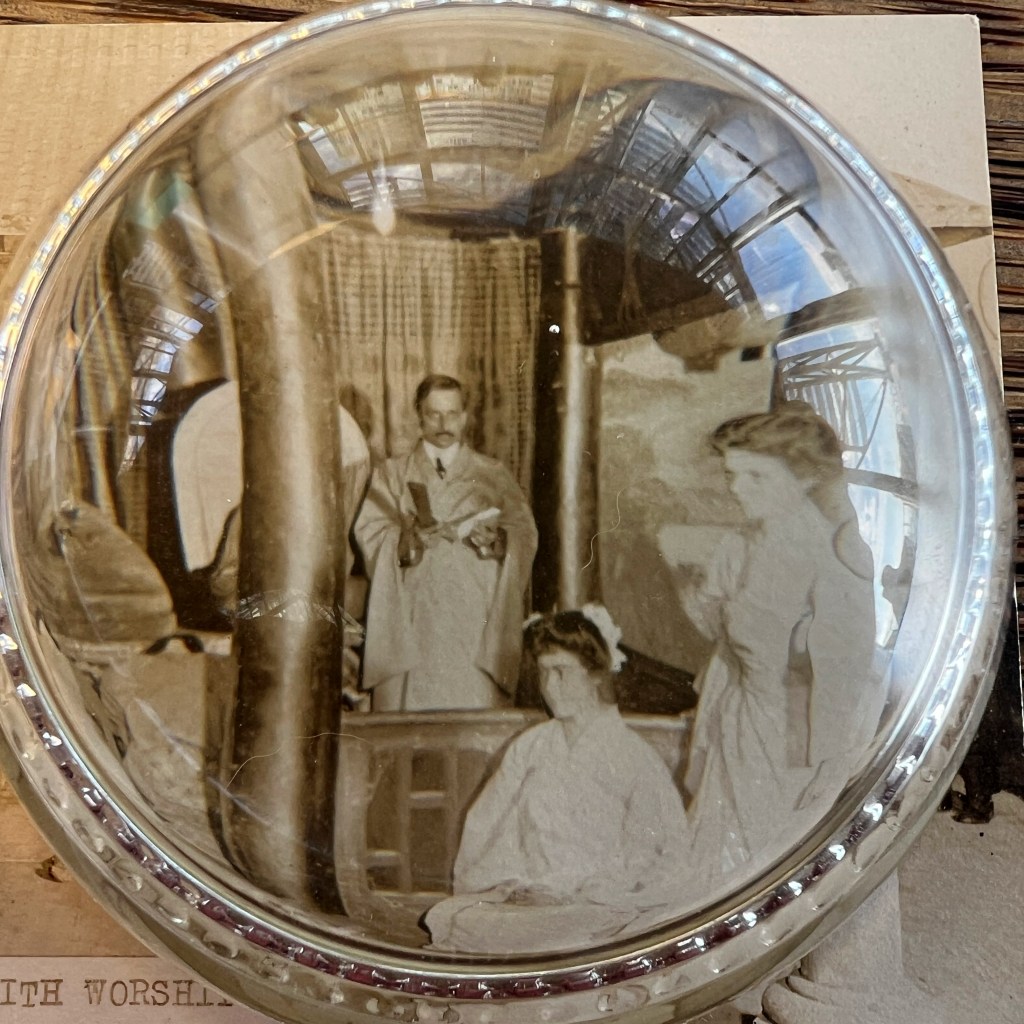
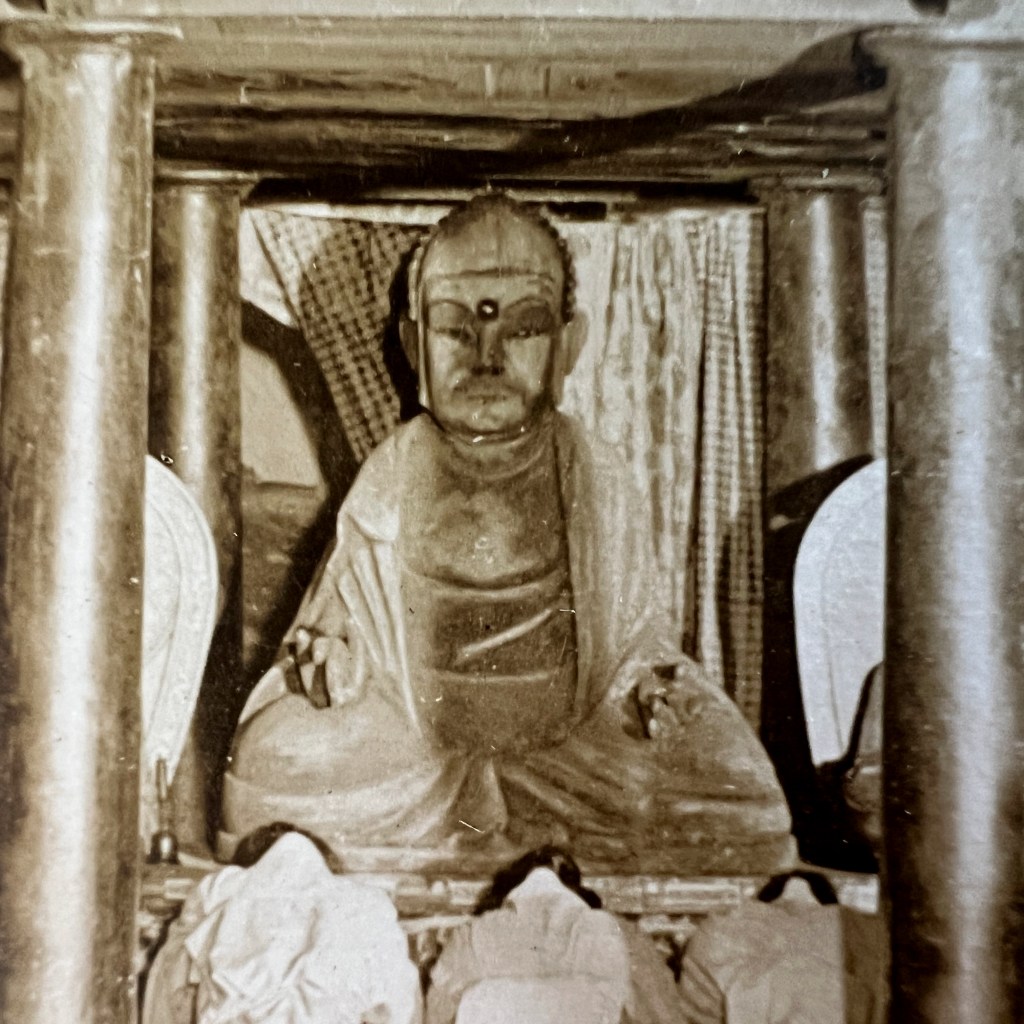
While some replicated scenes were decorated with authentic religious imagery, Japan’s icon appears to be recreated with wood or plaster. For more about missionary exhibits, see April Makgoeng’s “Visualizing Missions: The Power of the Image in Promoting Foreign Missions” (2021).
The Buddhas in the West Material Archive is a digital scholarship project that catalogues artifacts depicting Buddhist material culture for Western audiences. It’s comprised of prints, photos, and an assortment of ephemera and other objects. For a brief introduction to this archive, visit the main Buddhas in the West project page.


For Related Buddhas in the West Posts Featuring Real Photo Post Cards:

For the Most Recent Buddhas in the West Posts:

Jean Claude White’s Panorama Photograph of Lhasa

For all the new Buddhas in the West posts
follow us on Bluesky & Instagram


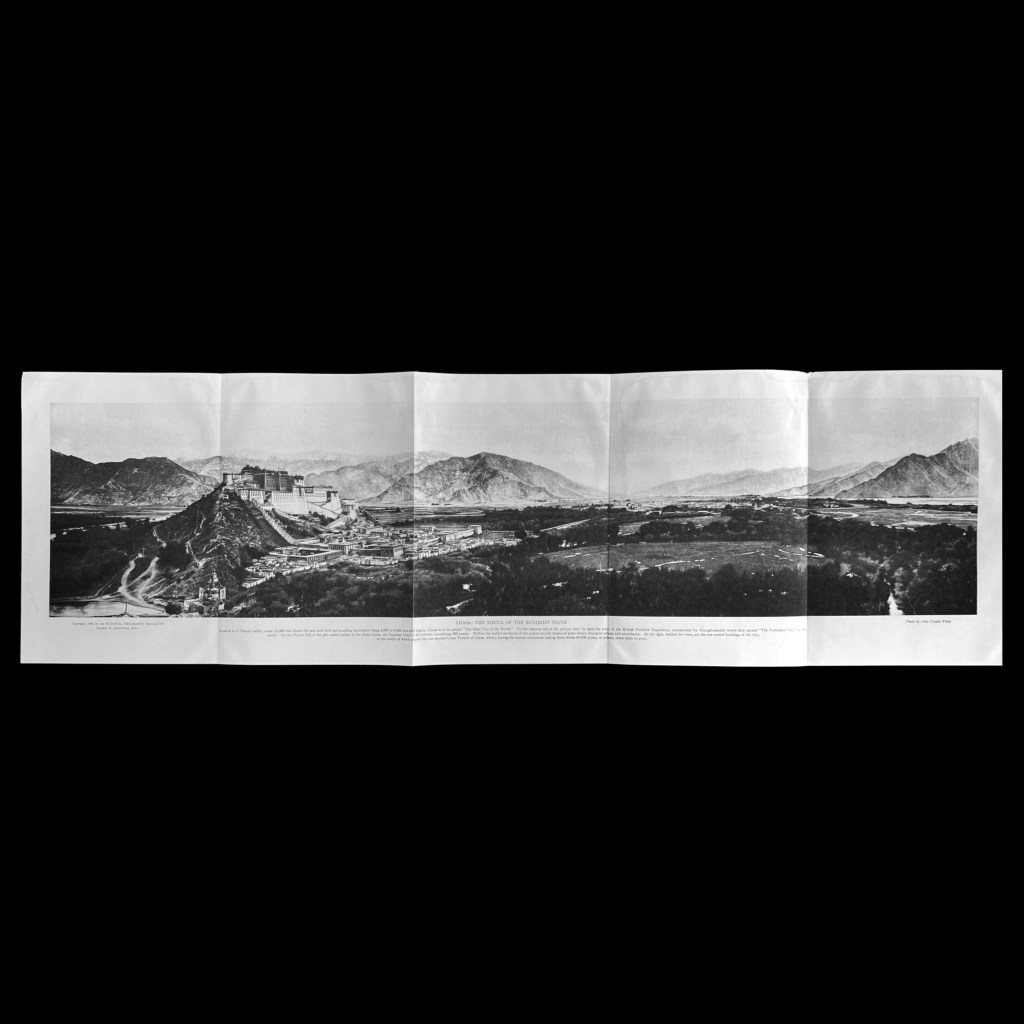
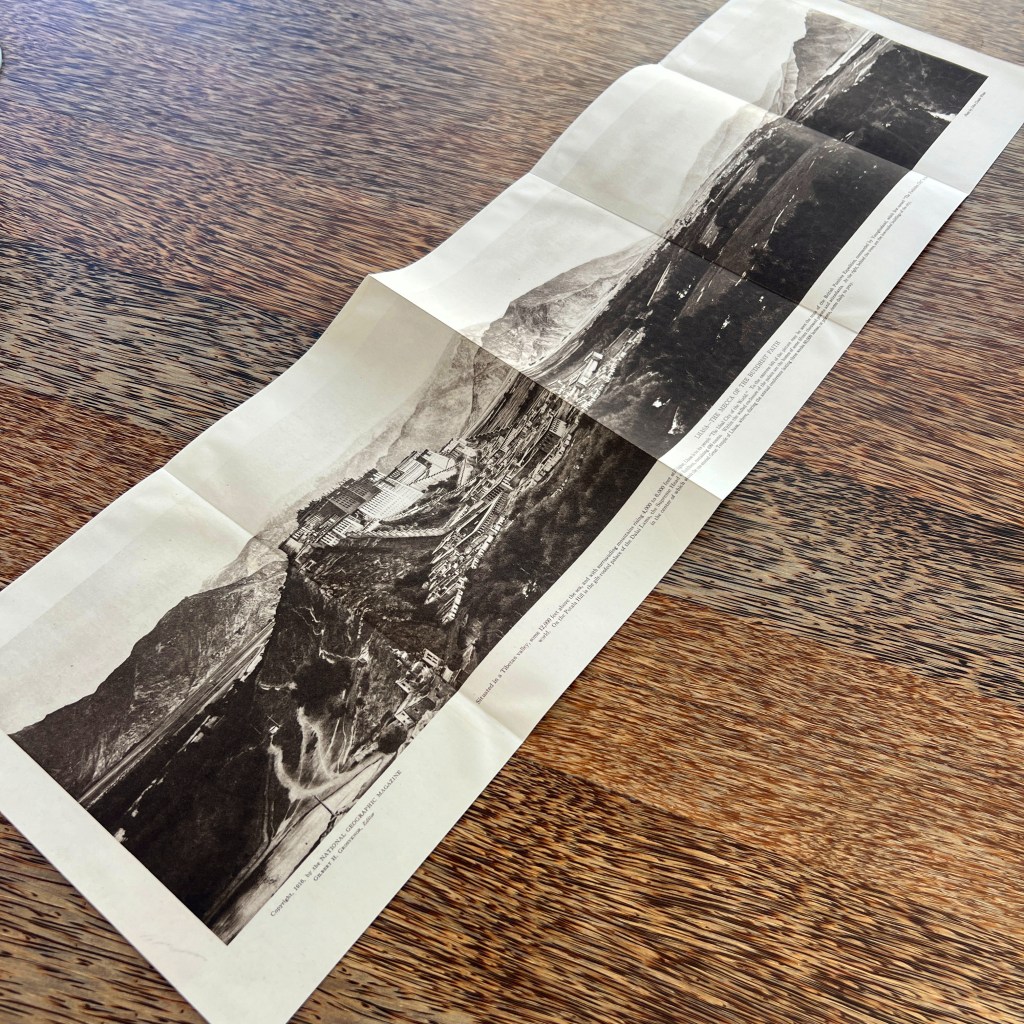
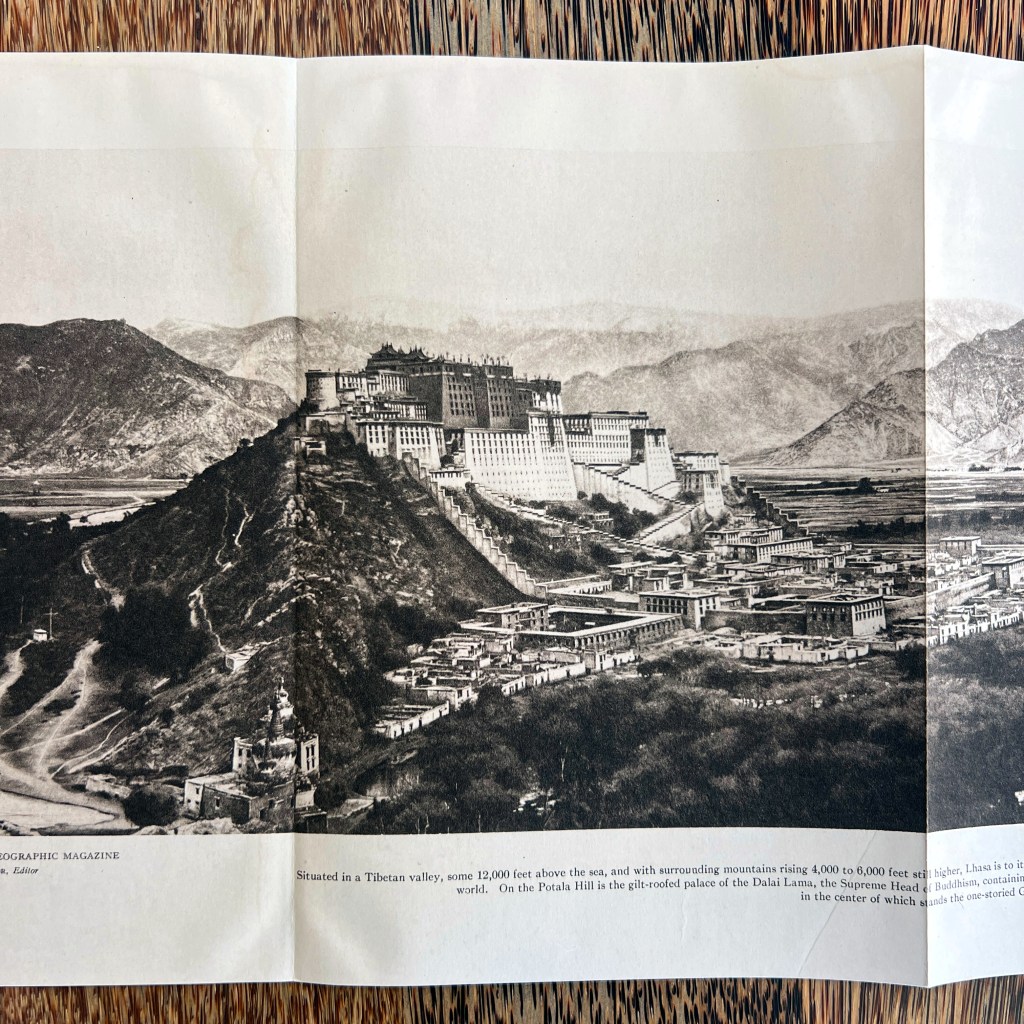
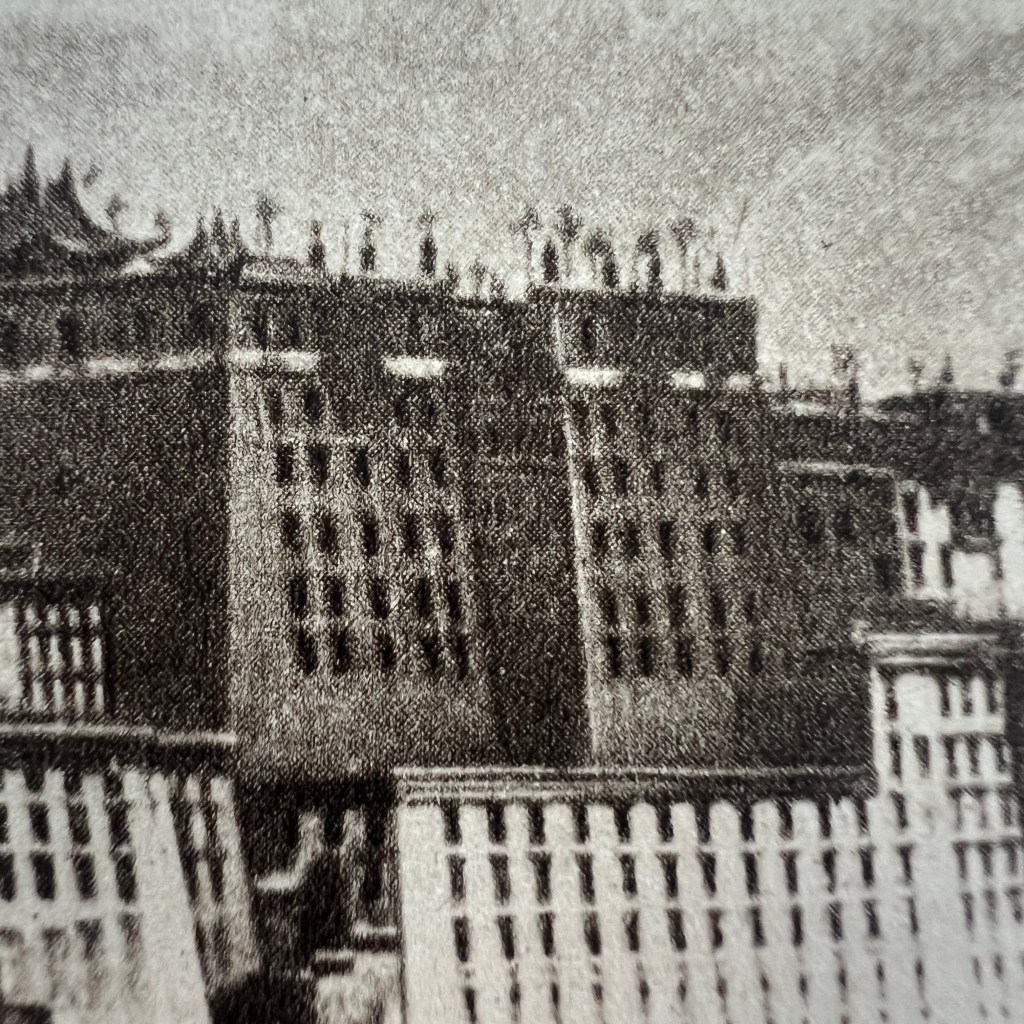
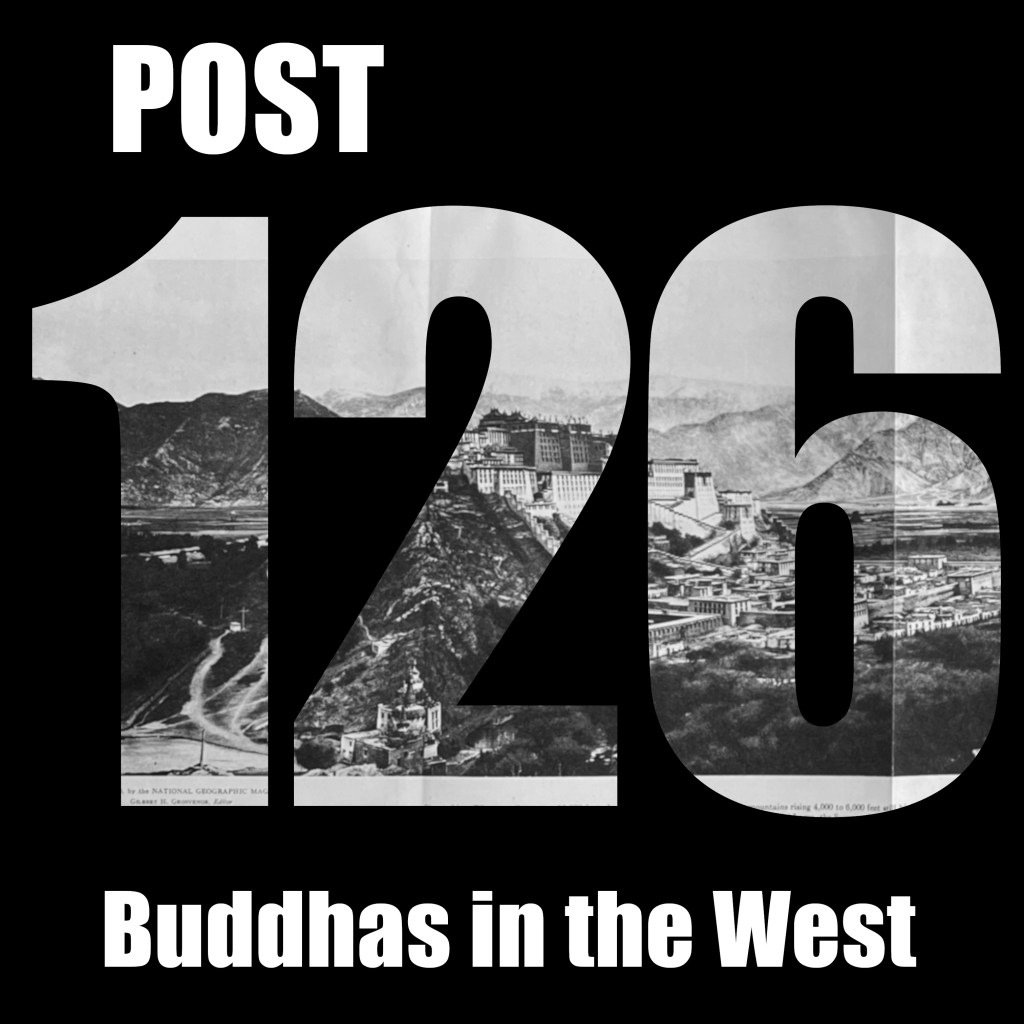
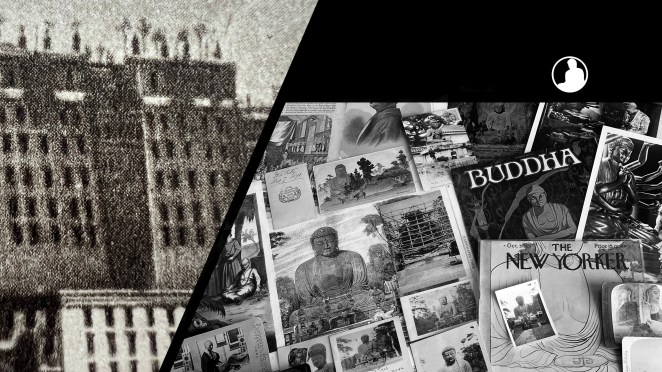
By the early 20th century there was an unofficial race to capture a photograph of Lhasa, the religious center of Tibet. In 1905 National Geographic printed a few of the first photos of the region and a decade later, in 1916, published a large panoramic insert of Lhasa’s Potala Palace.

The shot was taken by Jean Claude White, a civil servant in British India who traveled with the 1903-04 British Youghusband expedition to Tibet as the official mission photographer. National Geographic reproduced many photos White took on the expedition, including this stunning panoramic view.

The Potala dominates everything in Lhasa,” notes White in his accompanying article entitled, “The World’s Strangest Capital.” Illustrated with 19 photogravure prints, all the photos seem to have been taken during the Youghusband expedition, giving readers very early and rare views of Tibet.

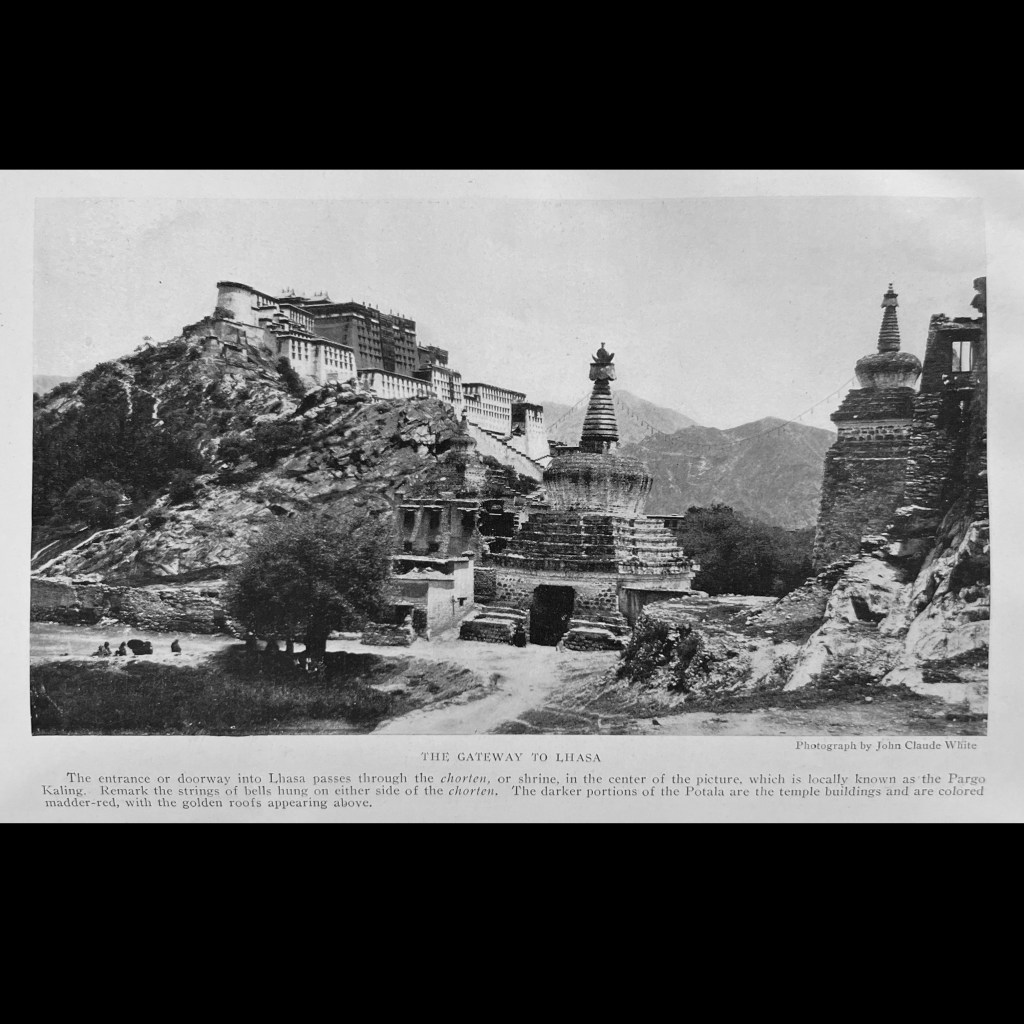
The first photo in the article shows the Western Gate to Lhasa, known as the Pargo Kaling. The structure was a large stūpa with a walkway cut through the middle.

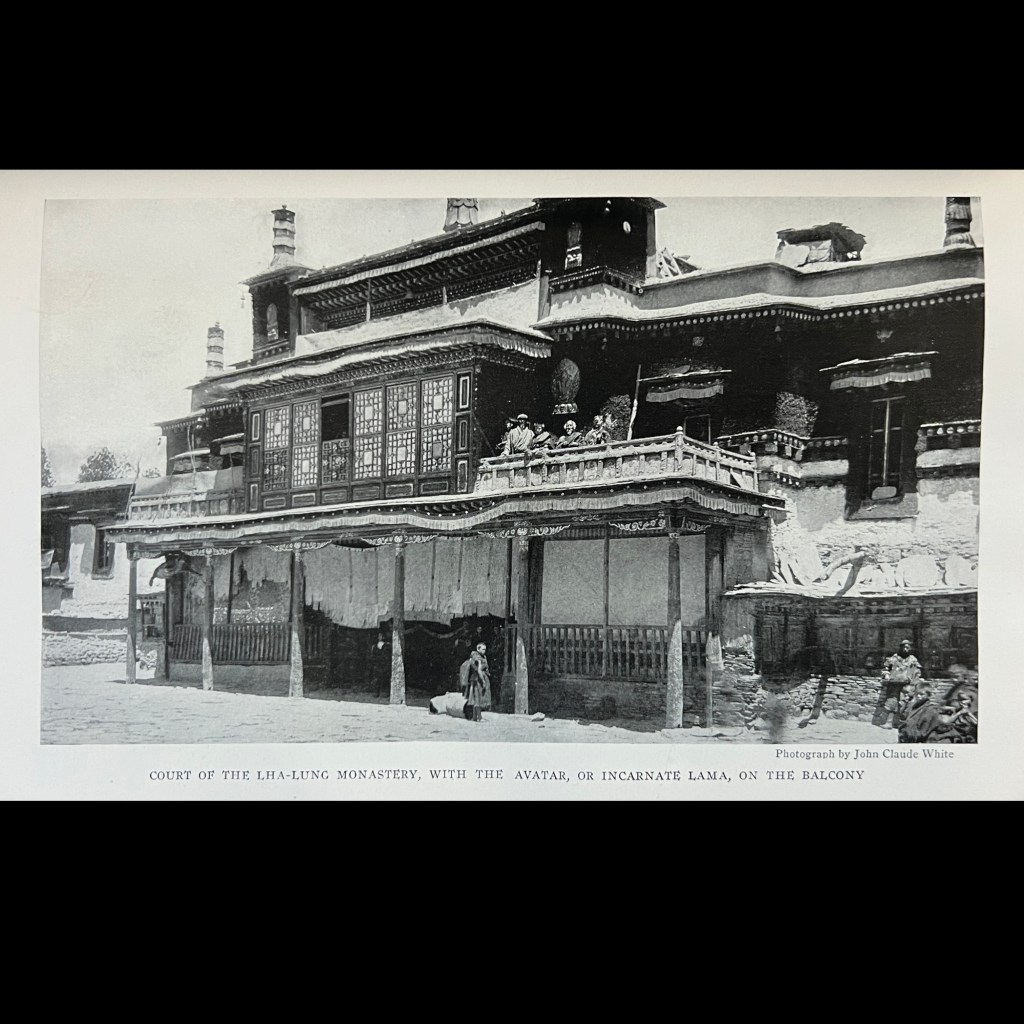
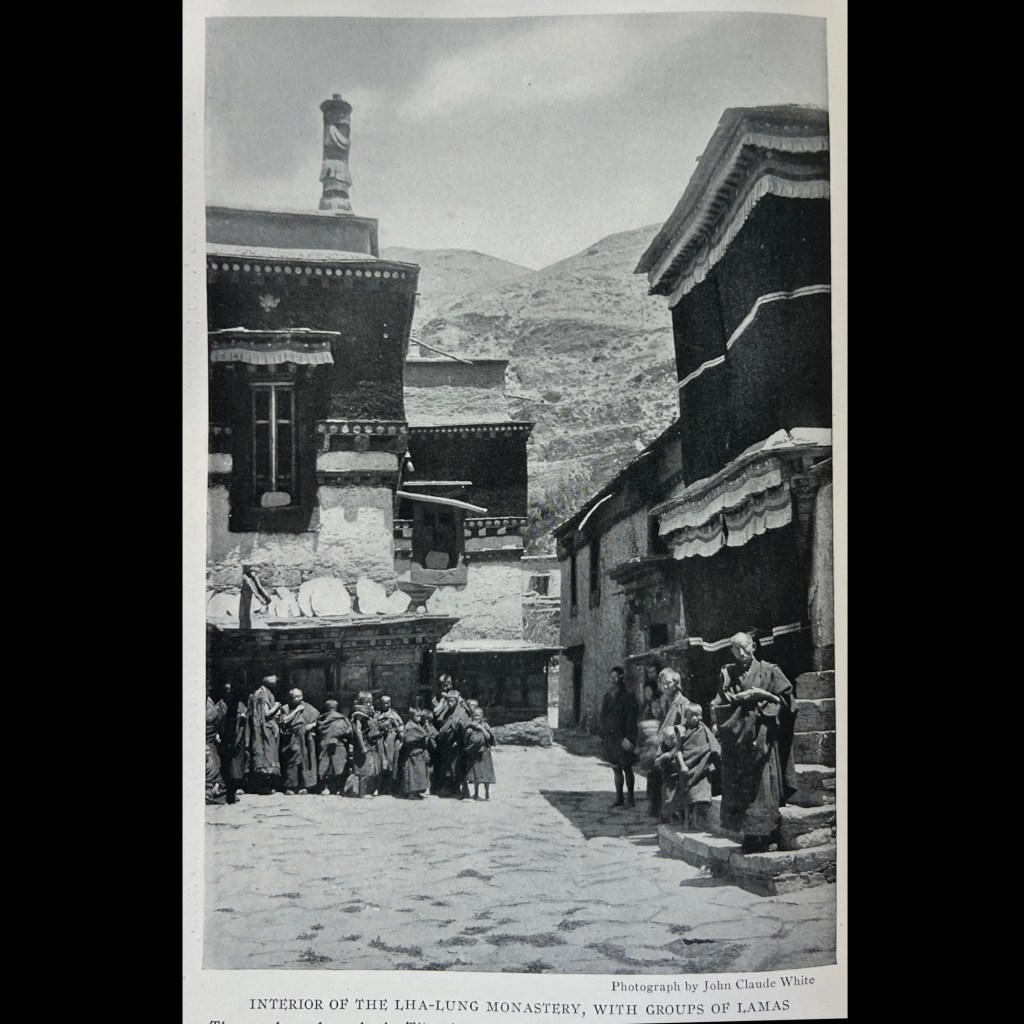
White also visited sites outside of Lhasa, including the Lhalung Monastery.

According to White’s estimate, there were 500,000 monks living in 1026 monasteries.

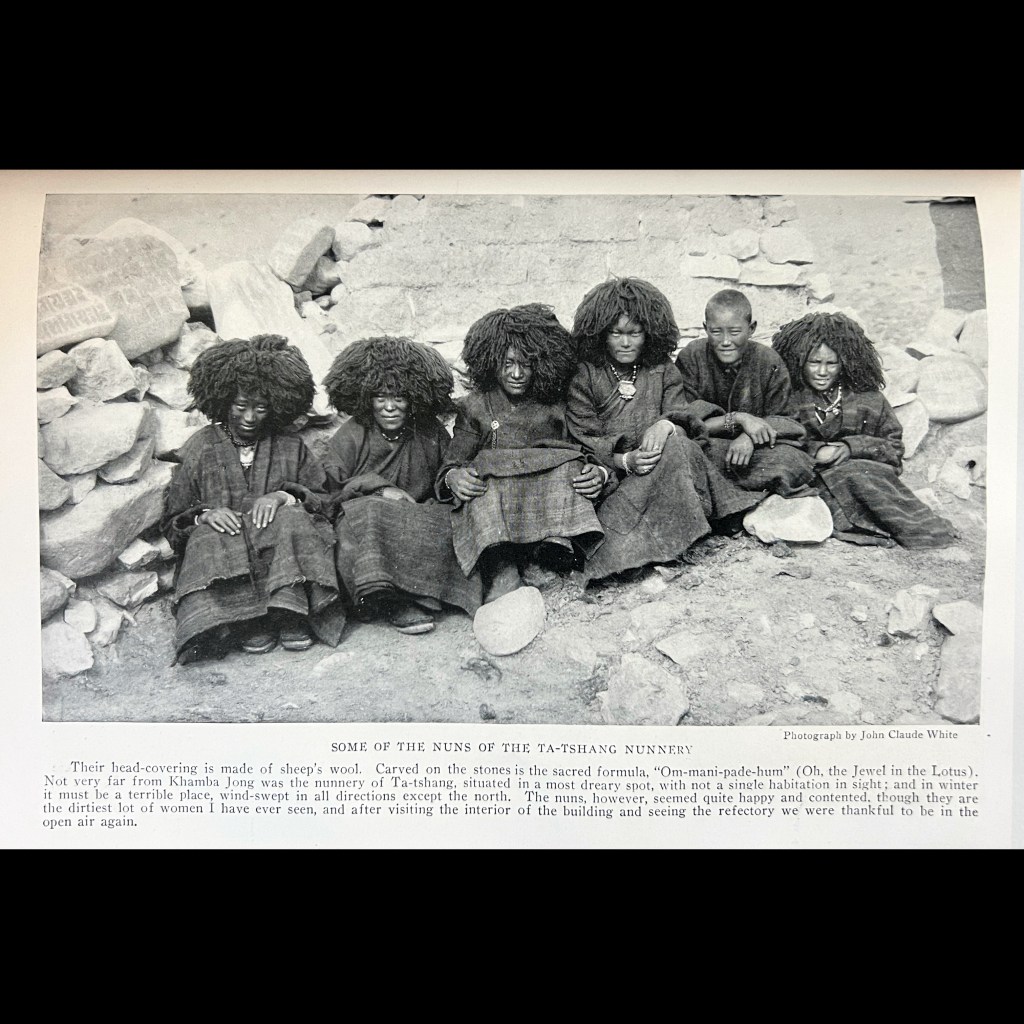
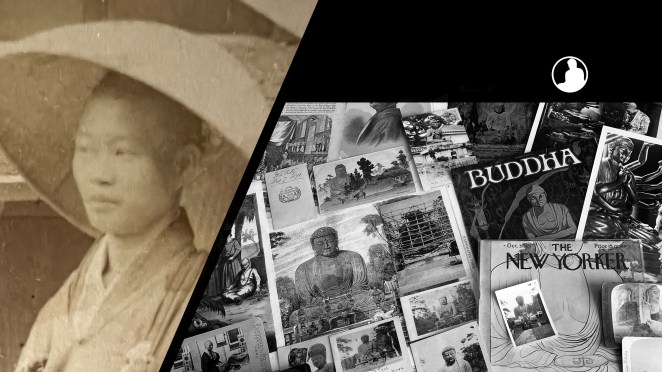
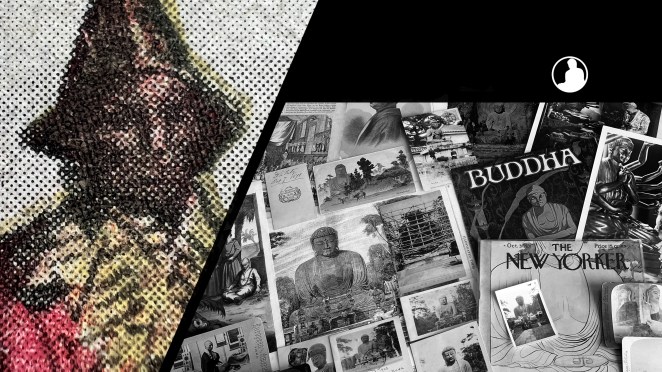
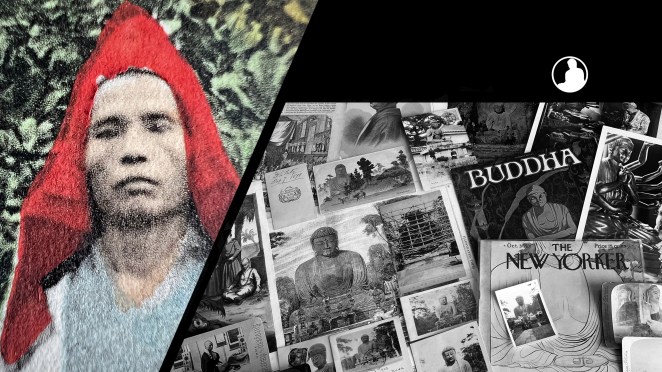
White also visited a Buddhist convent in Sikkim. The striking sheep’s wool hats were dyed red.

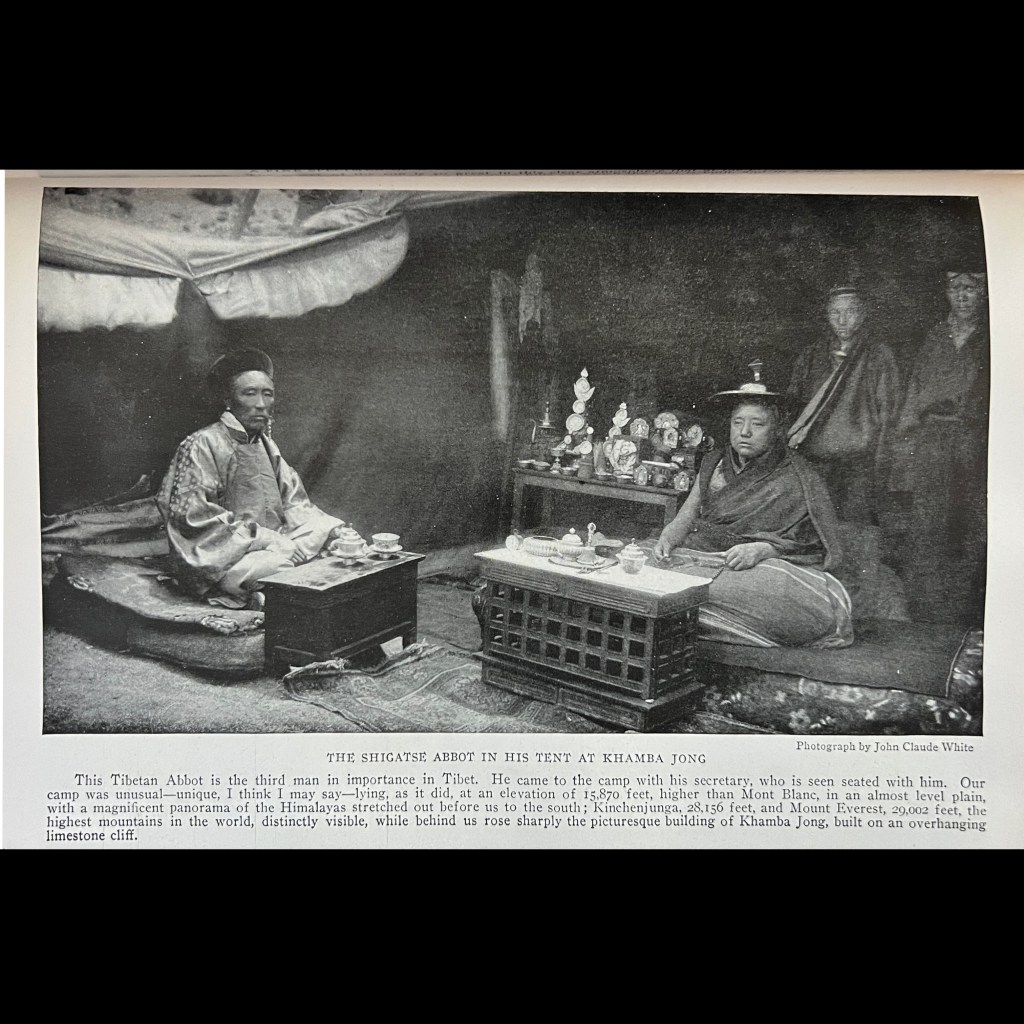
This photo was taken at Khamba Dzong, in Sikkim, where Youghusband planned to negotiate his entrance into Lhasa. The failure of talks with Tibetan officials eventually led to the forceful and bloody advance of Youghusband into Tibet.

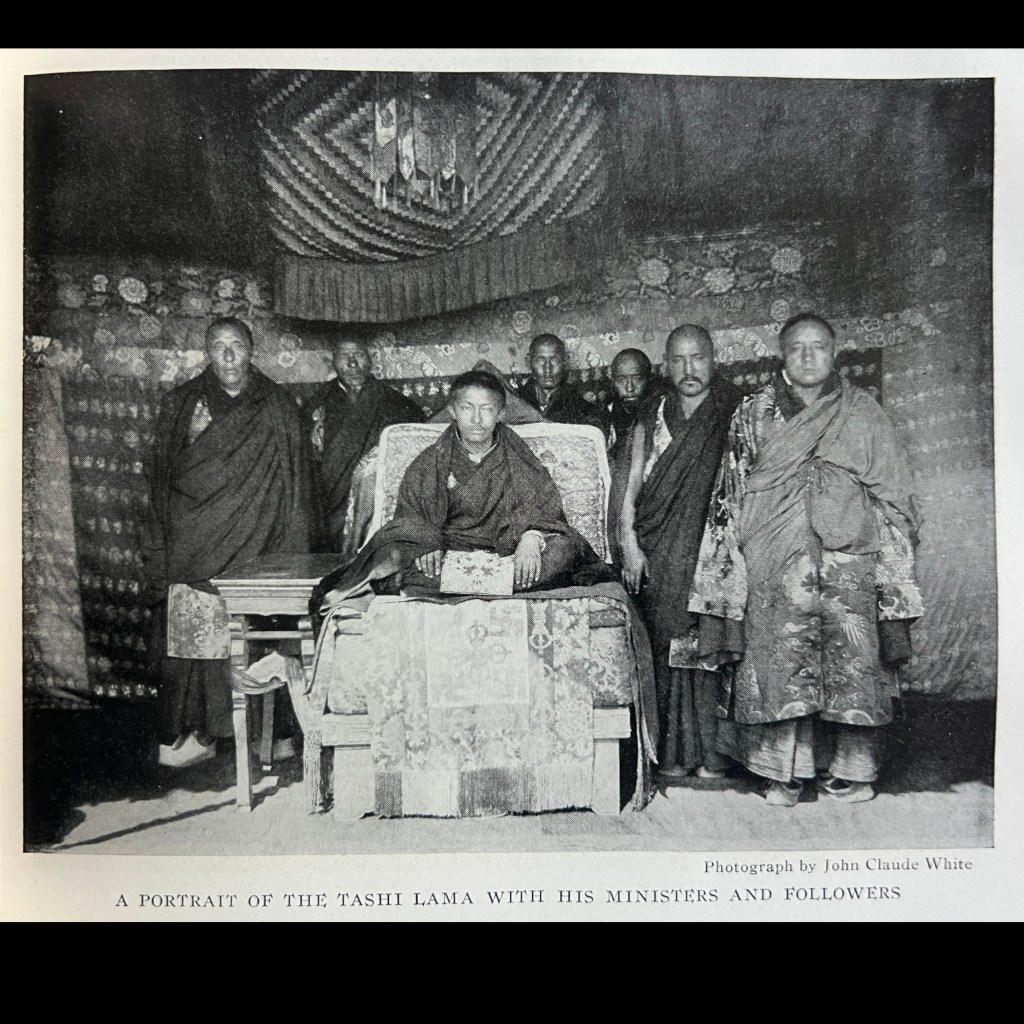
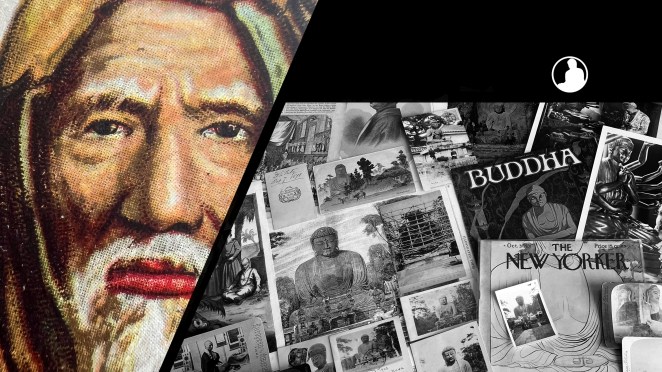
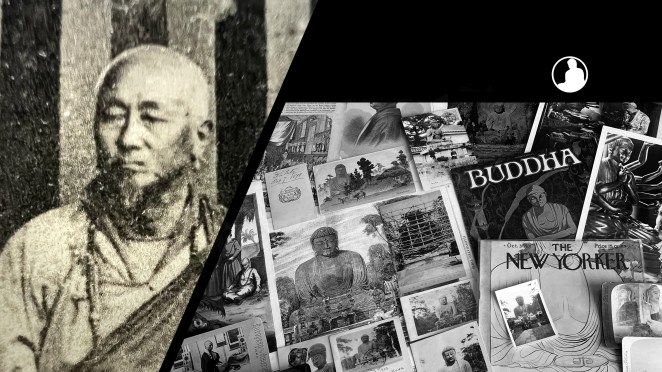
A rare photo by White of Thubten Choekyi Nyima, the 9th Panchen Lama of Tibet.

The thirteen-story Potala was based upon early Tibetan castles and fortified camps, but soon was seen by many as a symbol of Tibet itself. To read the “The World’s Strangest Capital” (without the panorama insert), see here: https://tinyurl.com/5fd596mx.


The Buddhas in the West Material Archive is a digital scholarship project that catalogues artifacts depicting Buddhist material culture for Western audiences. It’s comprised of prints, photos, and an assortment of ephemera and other objects. For a brief introduction to this archive, visit the main Buddhas in the West project page.


For Related Buddhas in the West Posts Featuring Lhasa, Tibet:


For the Most Recent Buddhas in the West Posts:

Guérin-Boutron’s Mysteries of Japan Advertising Card

For all the new Buddhas in the West posts
follow us on Bluesky & Instagram


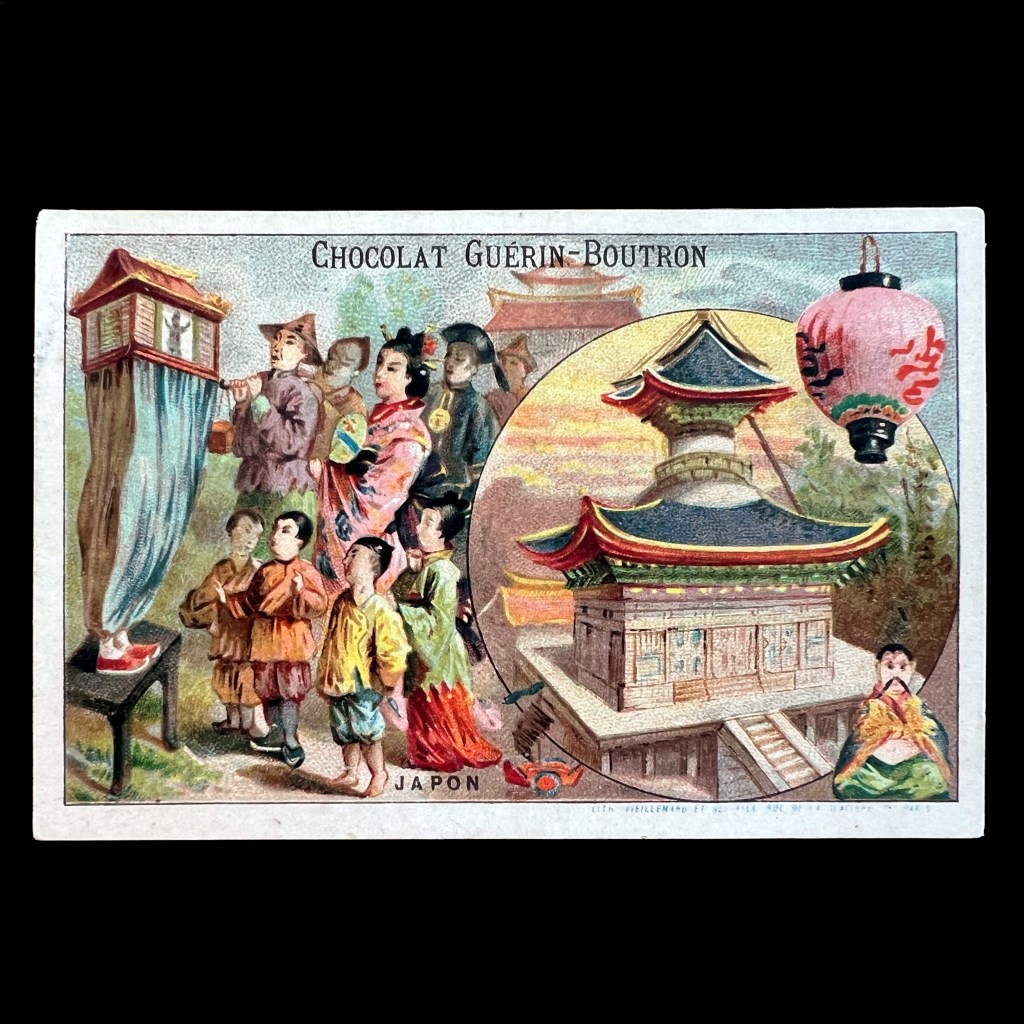
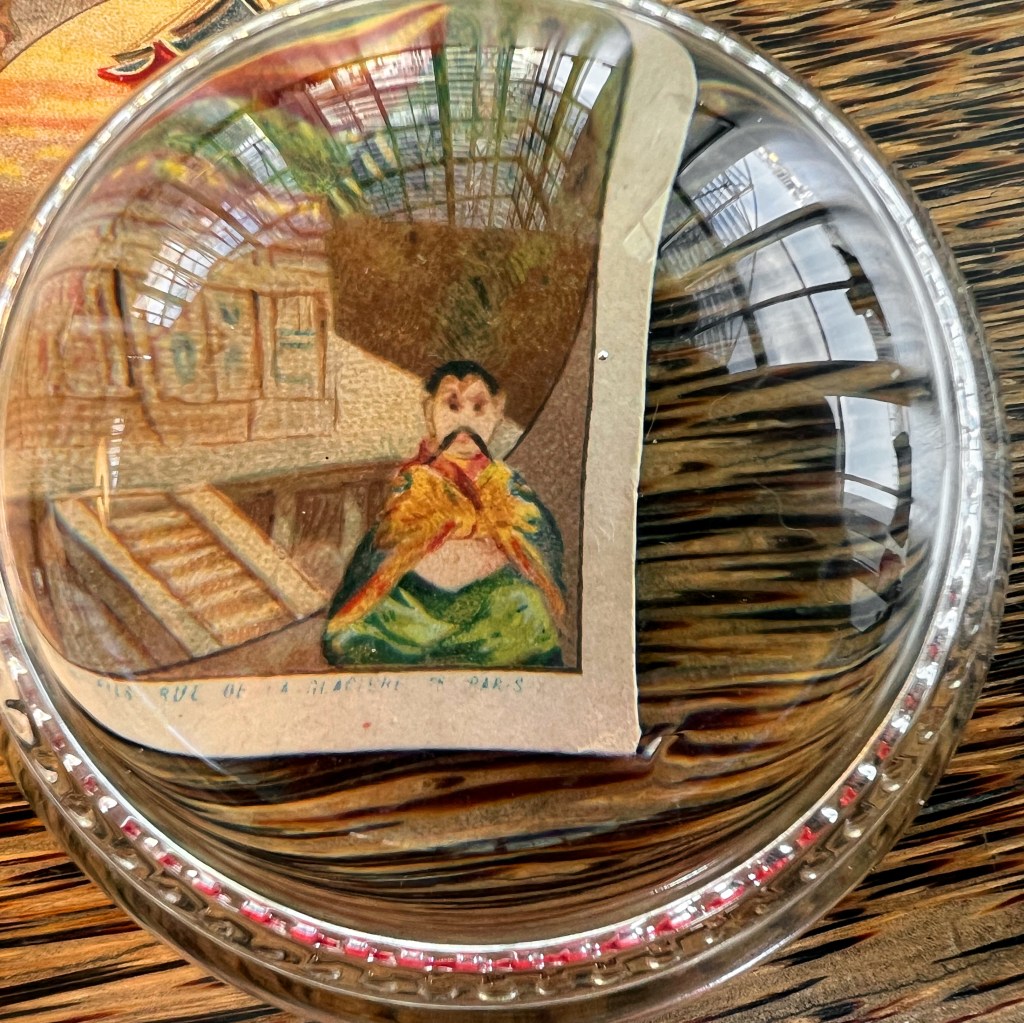
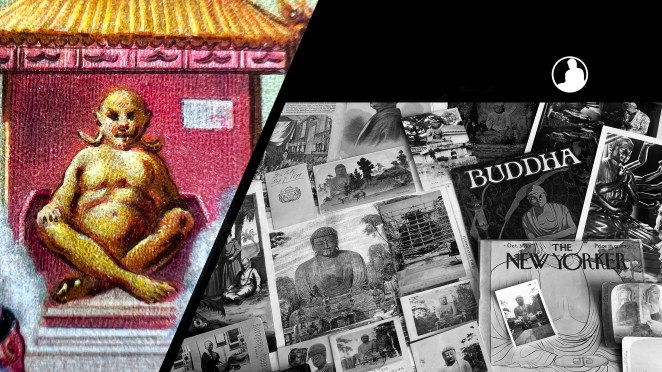
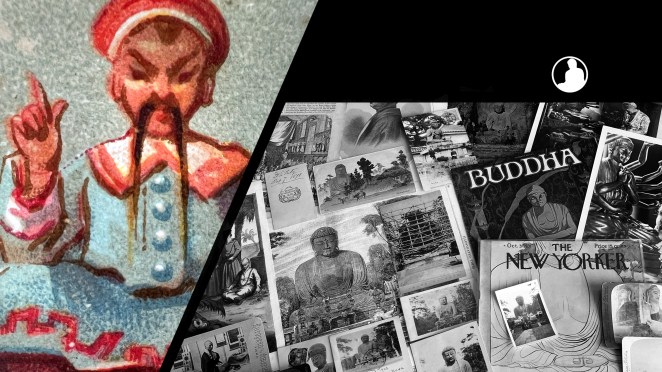
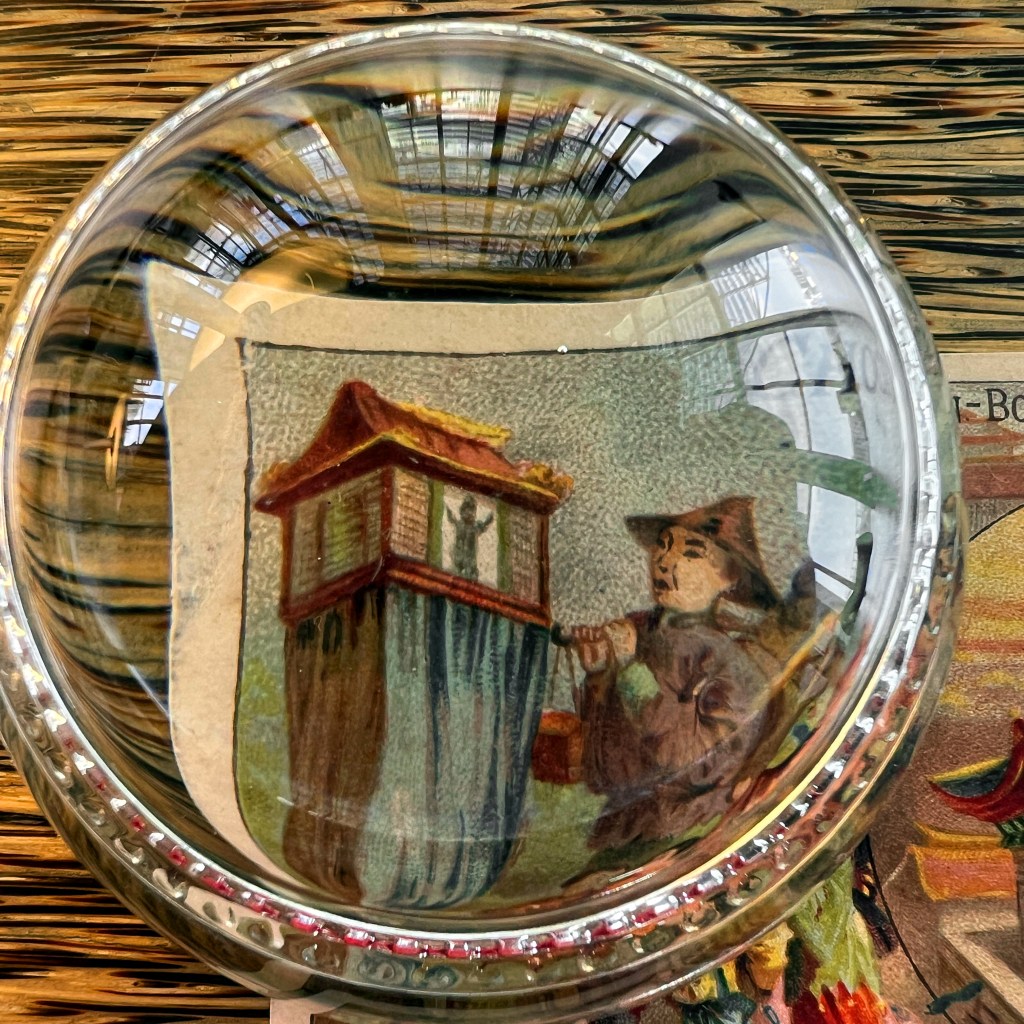
By the turn of the 20th century advertising cards were sought-after collectables, often pasted alongside other printed ephemera inside scrap books. The main visual language was the stereotype, and places like Japan were depicted as a mélange of mystery, pagodas, and odd idols.

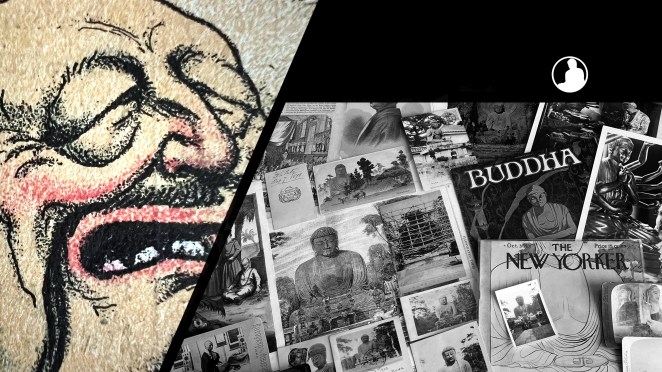
The mystery figure on the left edge is a Chinese puppeteer; distinctions between China and Japan often dissolved under the umbrella of “the Orient.” Such imagery had circulated in Europe since the late 18th century through southern Chinese export paintings depicting popular Chinese occupations.

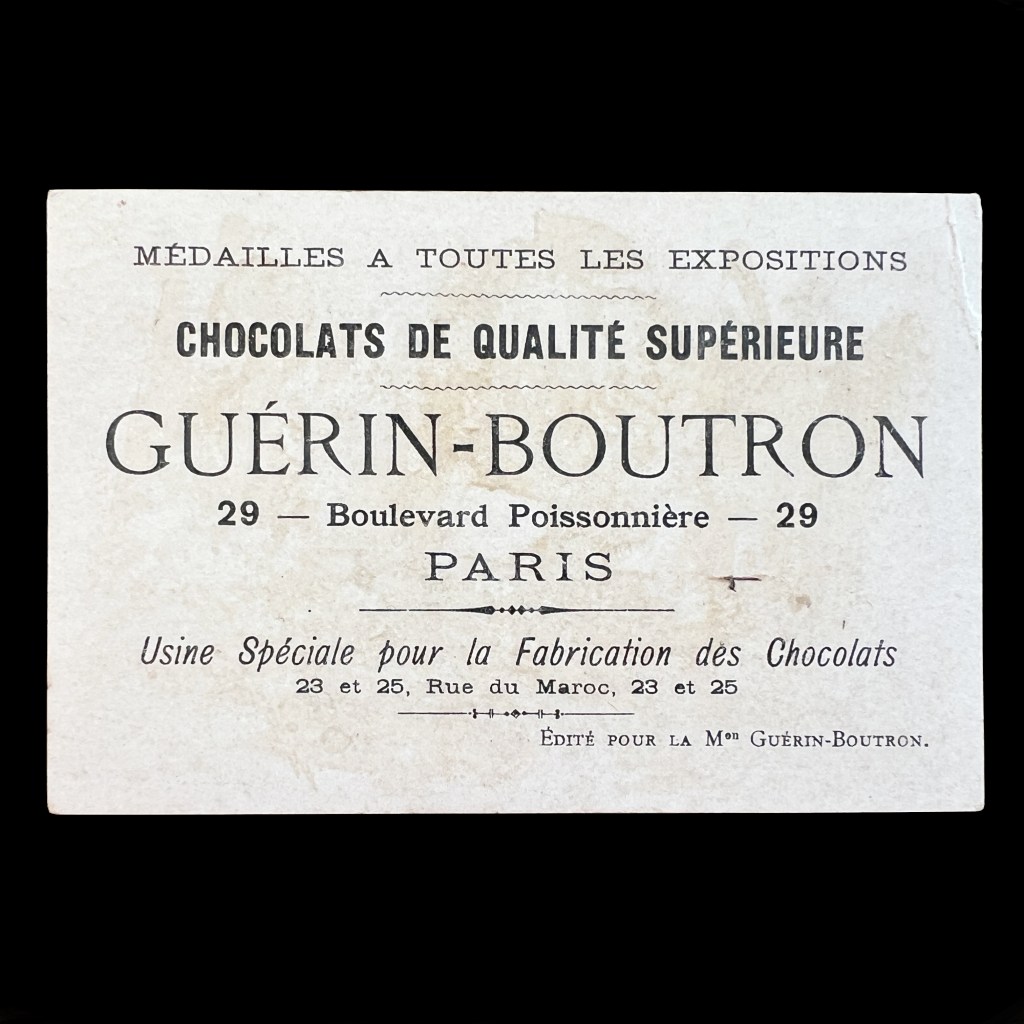
Guérin-Boutron was a luxury Parisian chocolatier and early adopter of chromolithographed trade cards, creating this set of worldwide nations and cities in the early 1900s.The printer, Vieillemard Fils & Cie, was a premier lithographer for major French trade card producers of the era.

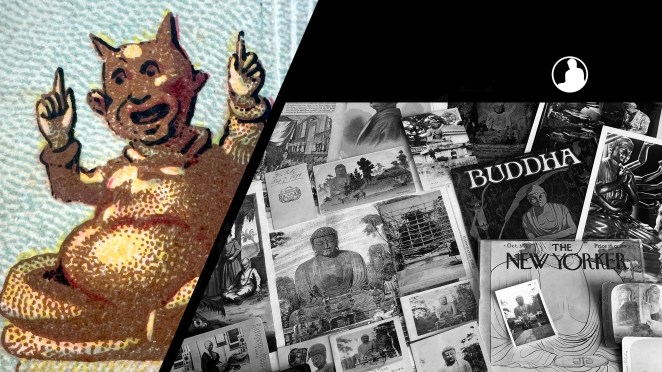
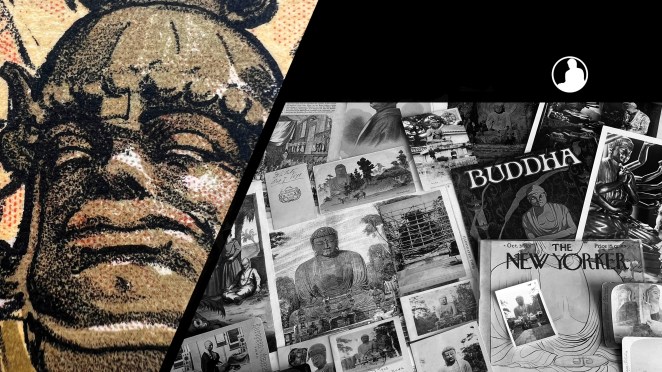
The figure in the lower right corner is a crude rendering of a seated buddha. Pronounced ethnic facial features and flowing silk garments were sometimes used to signify “authentic” Asian religions iconography.

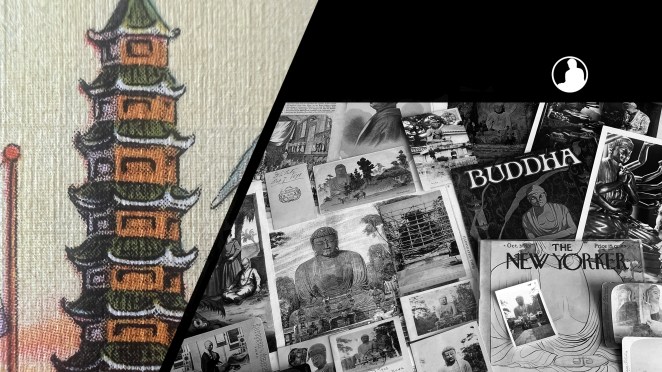
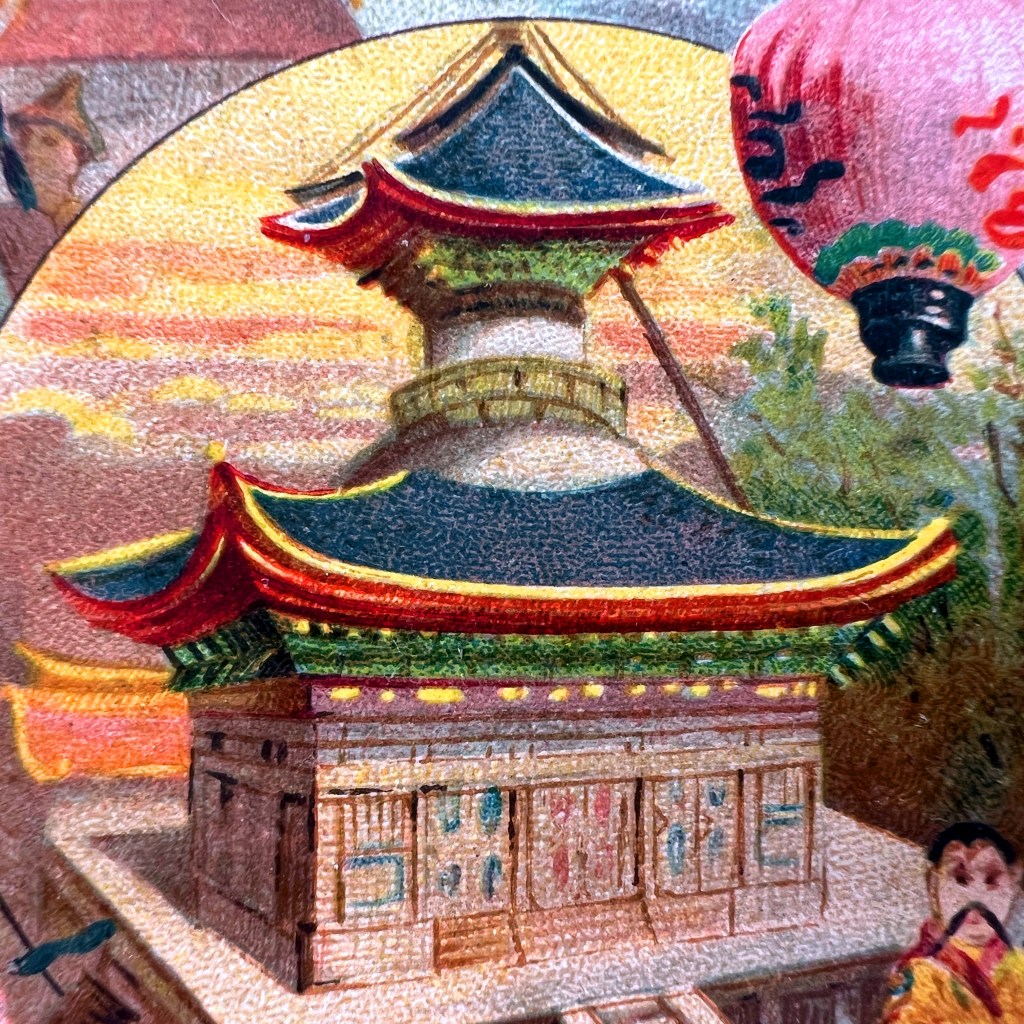
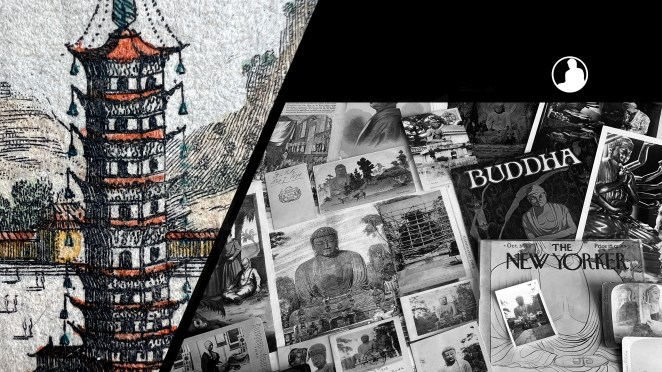
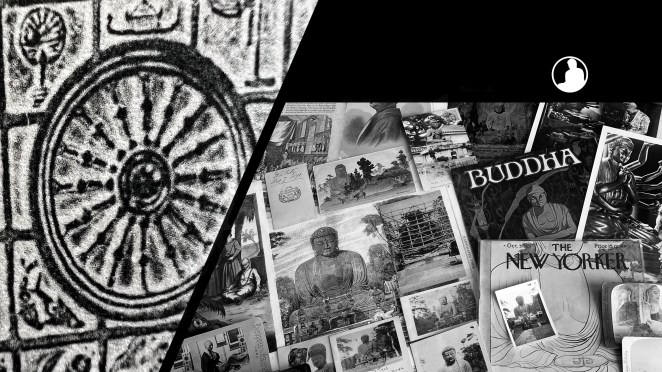
The circular insert depicts an uncommon two-story pagoda known as the Many Treasures Pagoda (tahōtō 多宝塔) described in the Lotus Sutra. This illustration shows the one built at Hachiman Shrine which was destroyed in 1870, several decades before this card was issued.


The Buddhas in the West Material Archive is a digital scholarship project that catalogues artifacts depicting Buddhist material culture for Western audiences. It’s comprised of prints, photos, and an assortment of ephemera and other objects. For a brief introduction to this archive, visit the main Buddhas in the West project page.


For Related Buddhas in the West Posts Featuring Lithography:


For the Most Recent Buddhas in the West Posts:

Nikko’s Yashamon “Demon Gate” Photograph

For all the new Buddhas in the West posts
follow us on Bluesky & Instagram


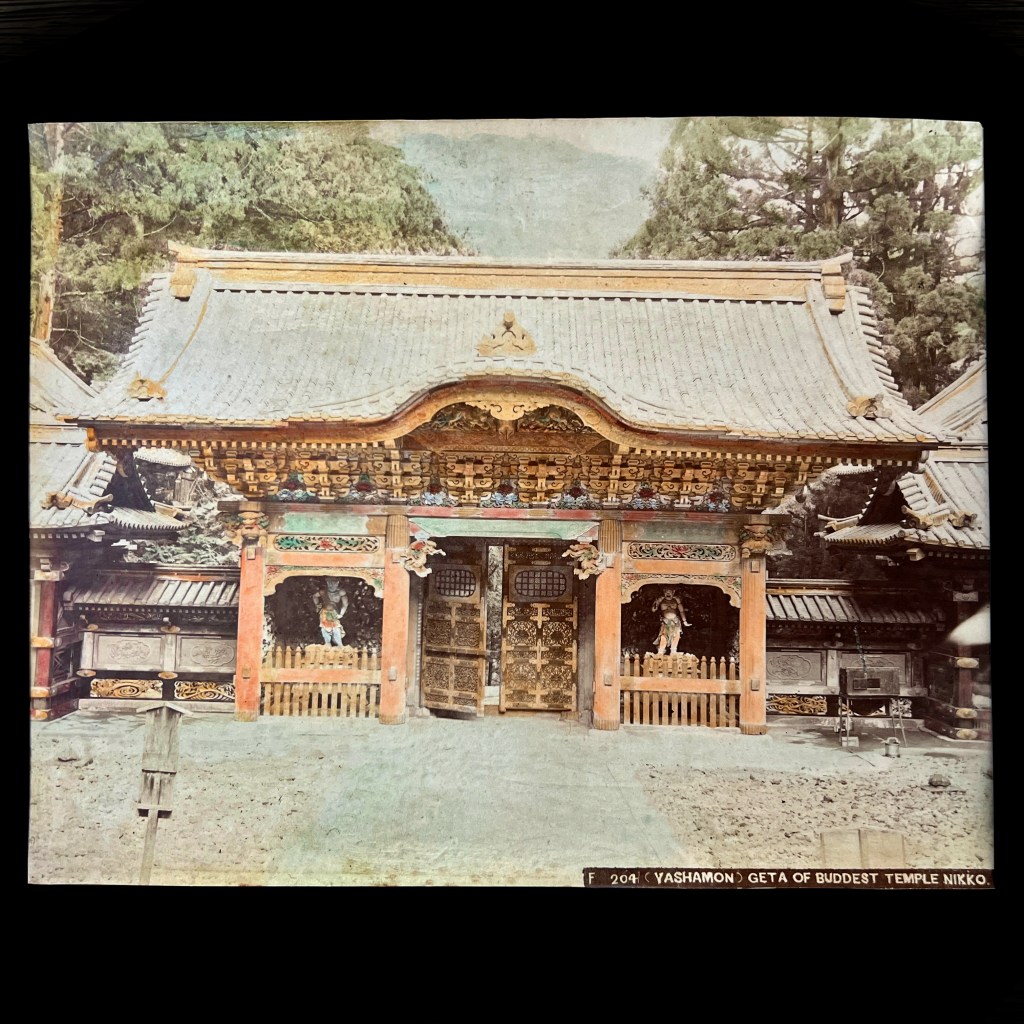
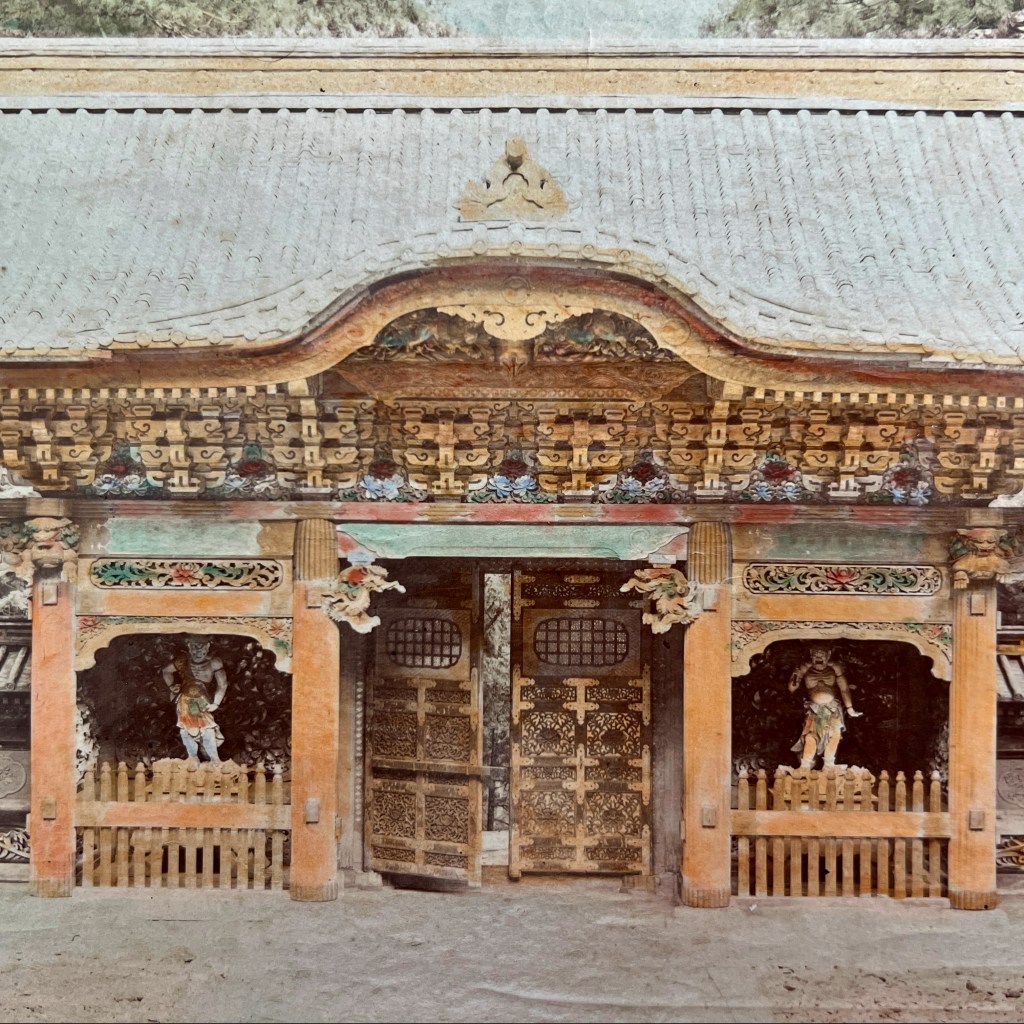
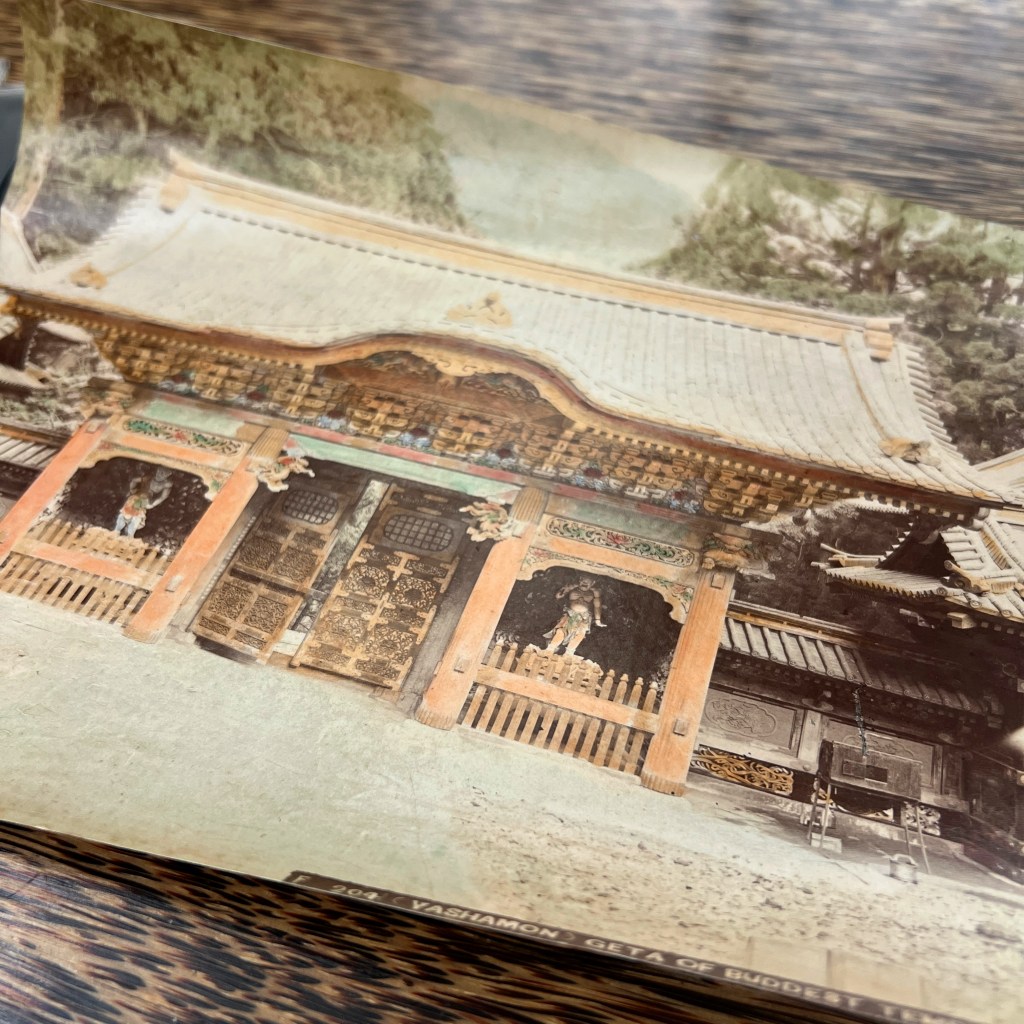
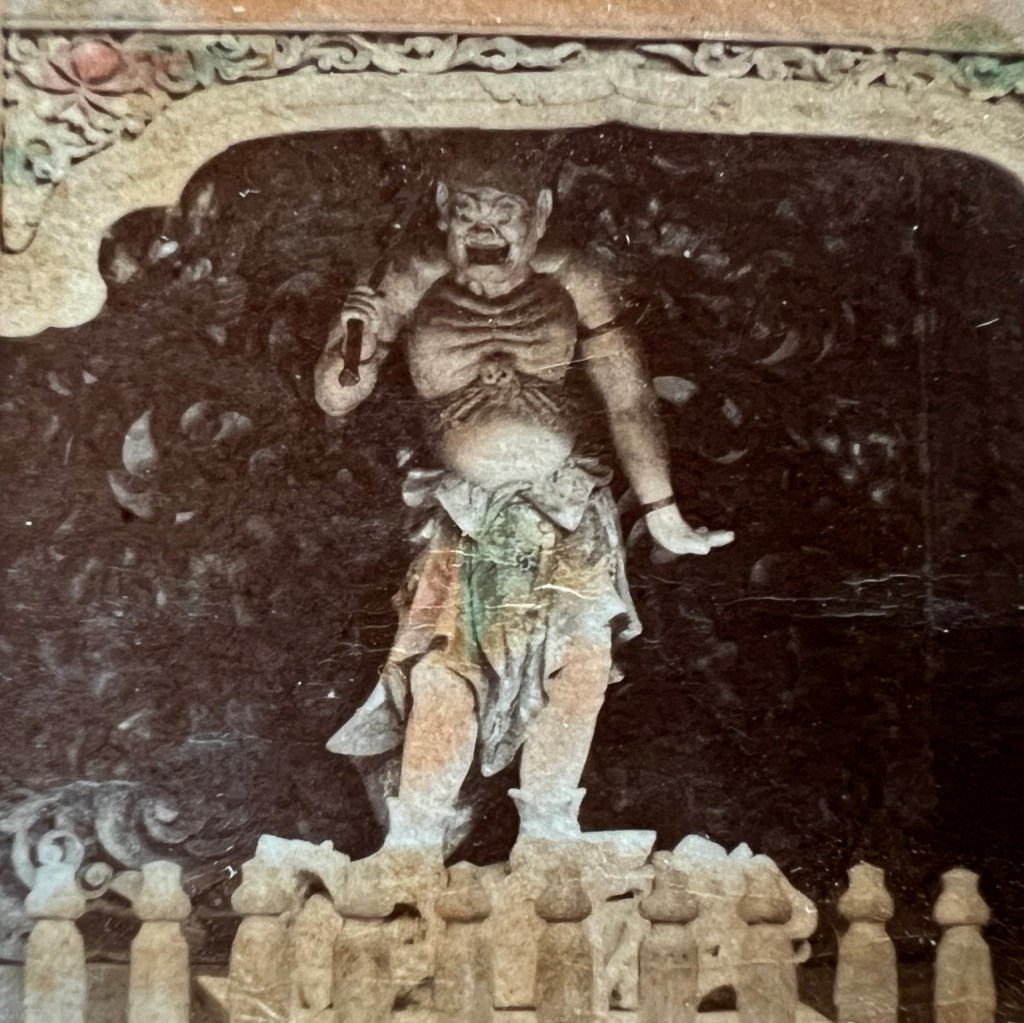
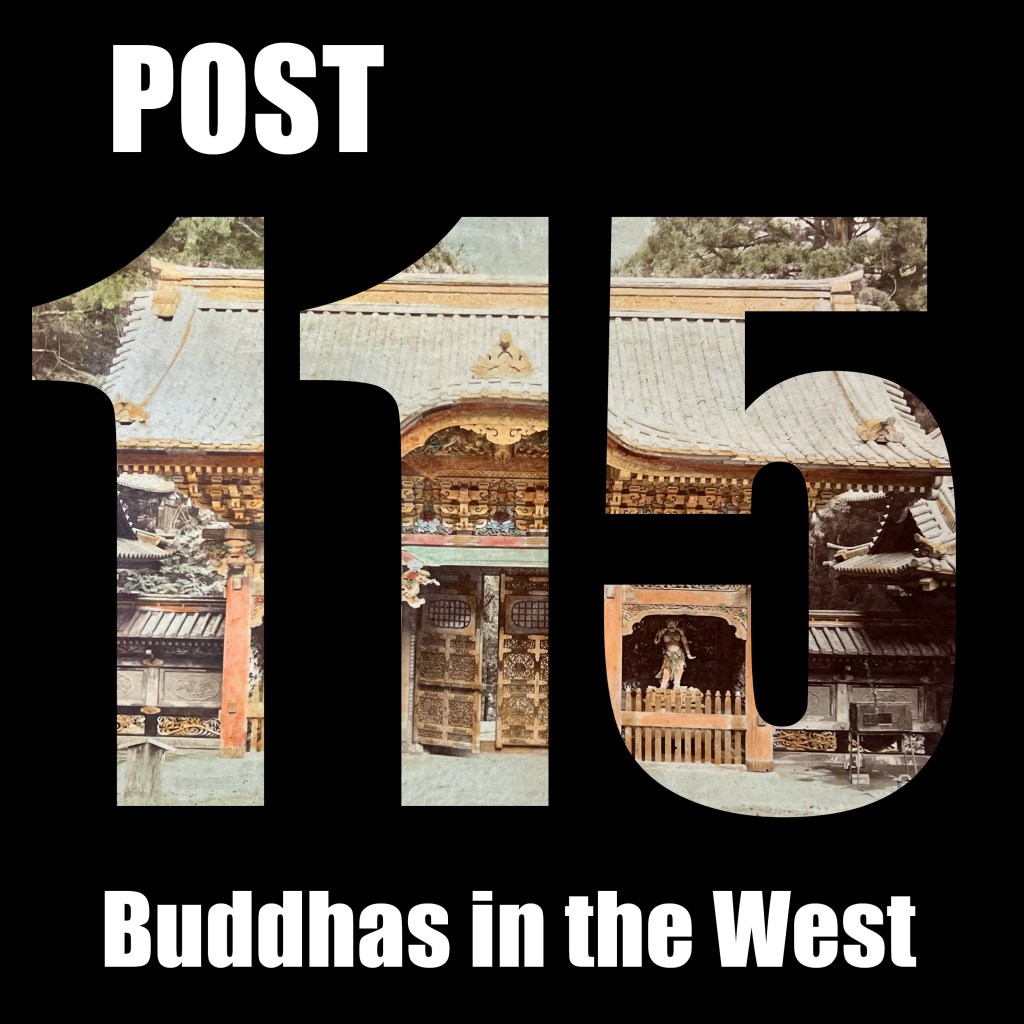
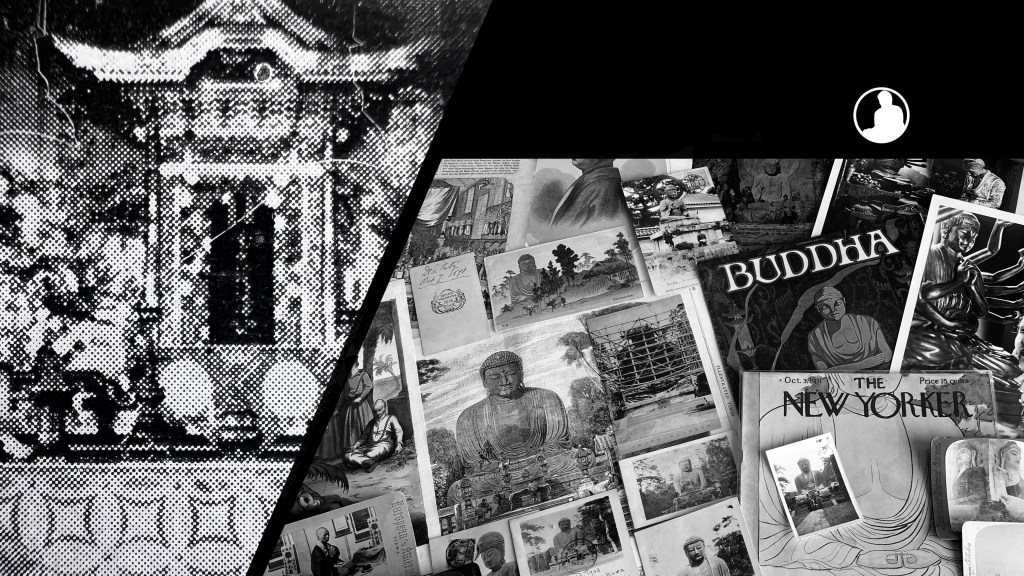
The Taiyū-in Shrine, in idyllic Nikko, is the final resting place of shōgun Tokugawa Iemitsu, one of the “Great Unifiers” of Japan. The compound is punctuated by several ornate gate houses, including the one here known as Yashamon for the Buddhist guardian figures protecting it.

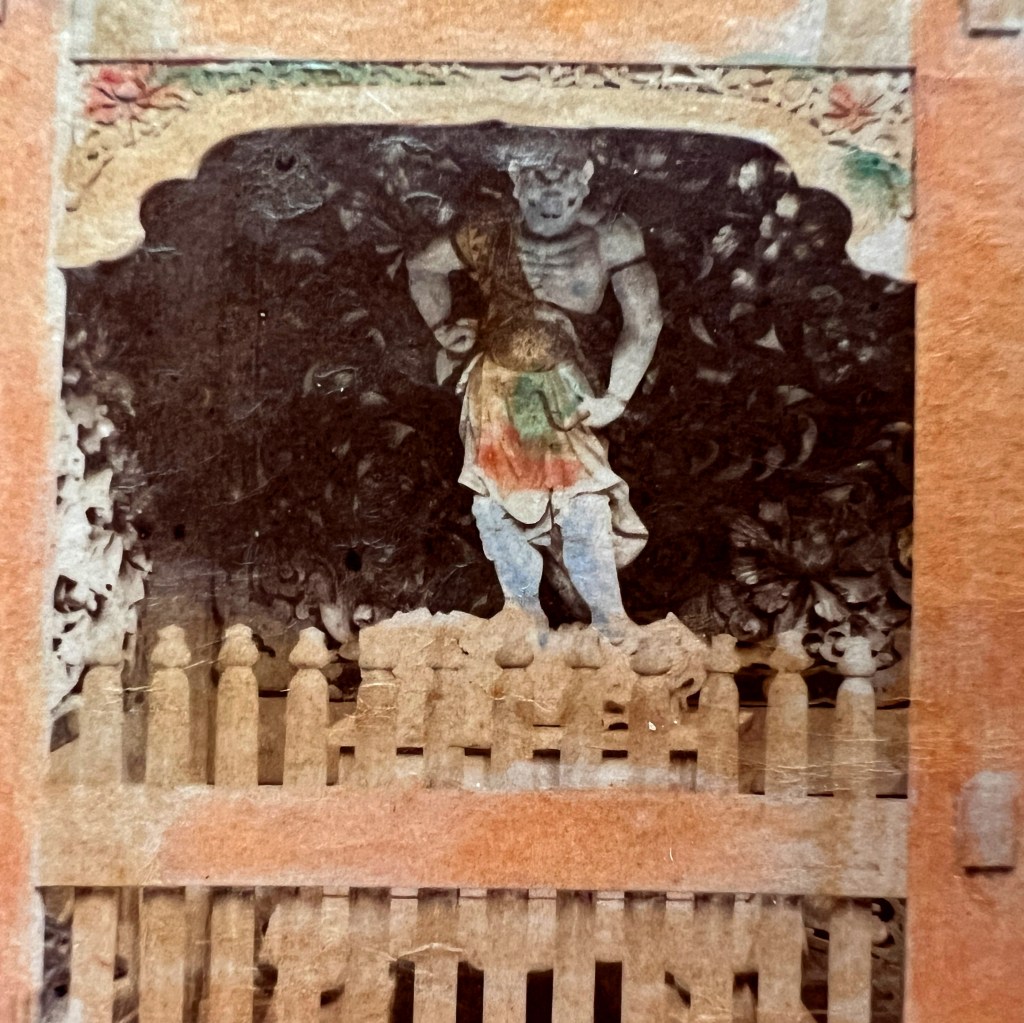
Completed in 1653, Iemitsu’s mausoleum blends both Shinto and Buddhist architectural styles and elements. The Yashamon is the third gate within the compound and houses four icons of weapon-wielding yakṣa (J. yasha) who have history in Buddhist Asia as temple guardians.

This photograph was taken in the late 1880s or 1890s and most likely reflects one of the many Japanese-owned photography studios that catered to foreign visitors.

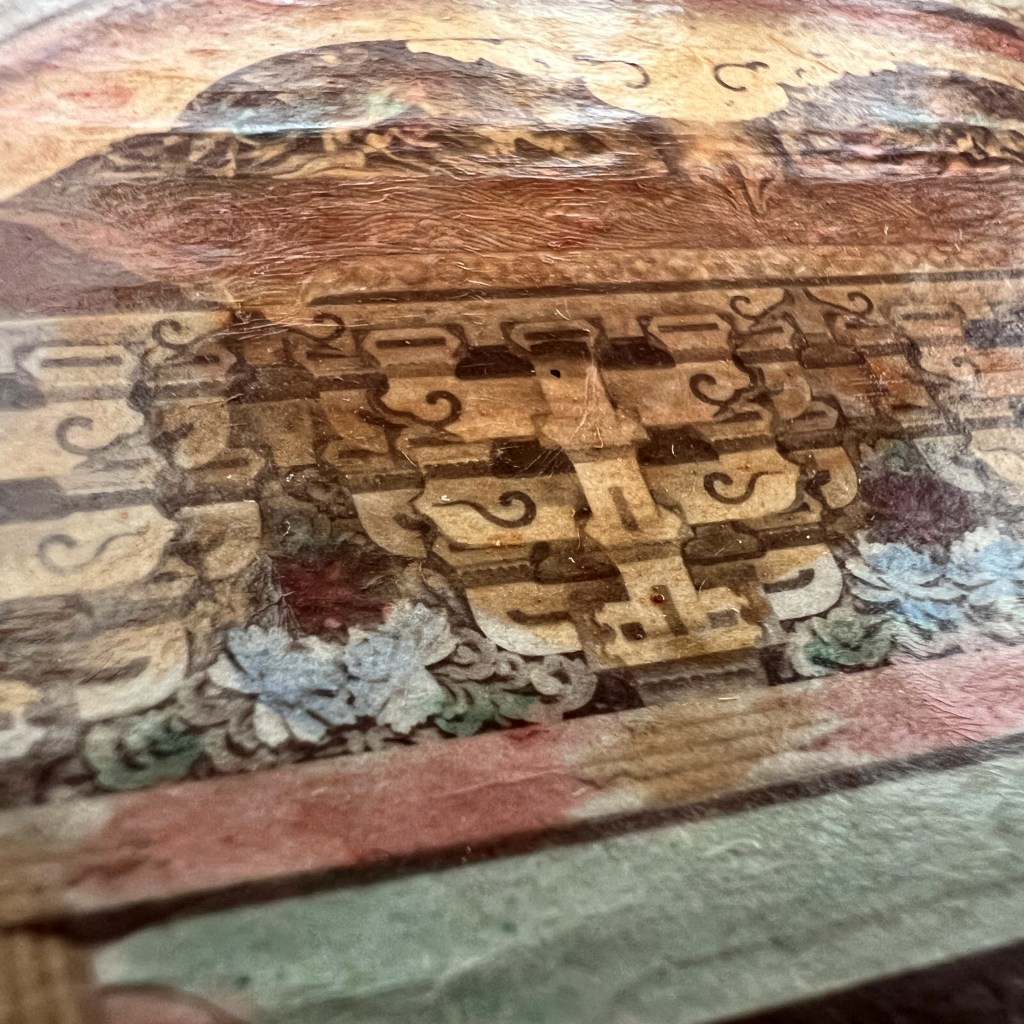
Not as grand or sophisticated as Nikko’s main attraction, Tōshō-gū, the Taiyū-in Shrine still displays highly skilled craftsmanship.Looking closely, the Yashamon is covered with delicately carved peonies (painted light blue on the photo), and thus is also called Botanmon, or the Peony Gate.

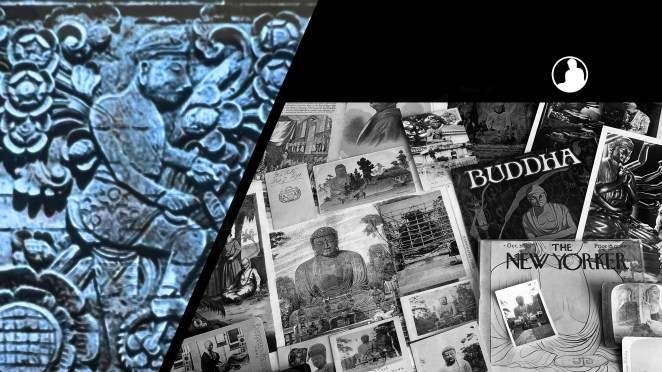
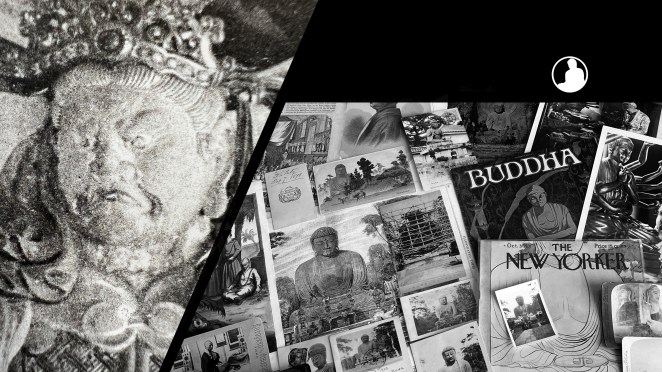
As one walks through Taiyū-in Shrine, the Yashamon is first seen atop a flight of steps, but if you cross the threshold and turn around, two yakṣa peer back at you. The blue figure on the left is Umarokya holding a bow and arrow.

The fierce white-skinned yakṣa on the right is Kendara who carries a weapon on his shoulder.Due to the warrior nature of these images another name for this gate was sometimes used in turn-of-the-century guidebooks: the Demon Gate.


The Buddhas in the West Material Archive is a digital scholarship project that catalogues artifacts depicting Buddhist material culture for Western audiences. It’s comprised of prints, photos, and an assortment of ephemera and other objects. For a brief introduction to this archive, visit the main Buddhas in the West project page.


For Related Buddhas in the West Posts Featuring the Buddhist Temples:


For the Most Recent Buddhas in the West Posts:

L’Illustration Photographs of Qiongzhu Temple

For all the new Buddhas in the West posts
follow us on Bluesky & Instagram


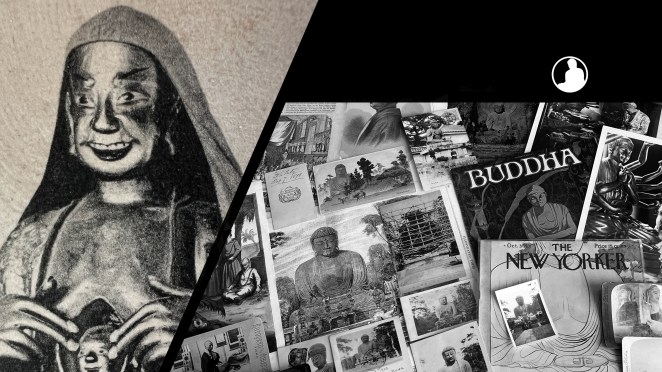
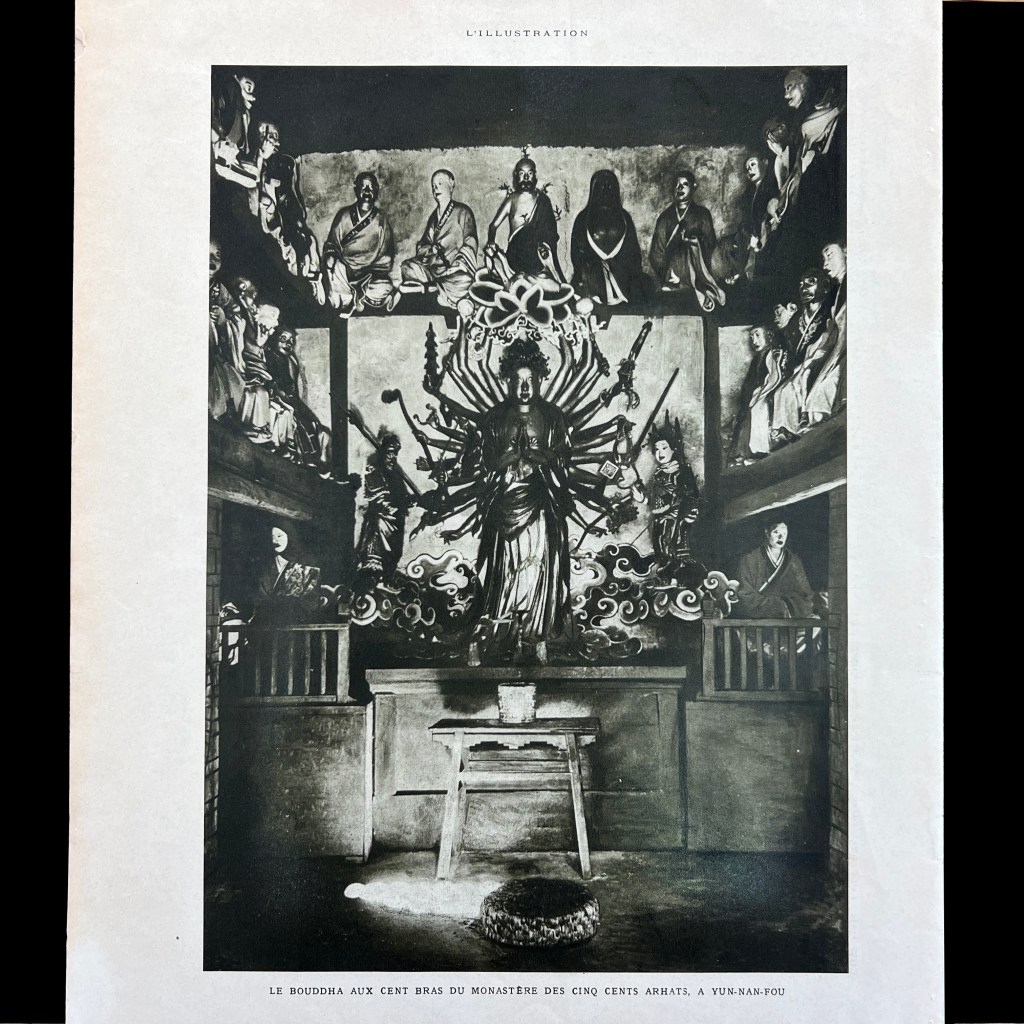
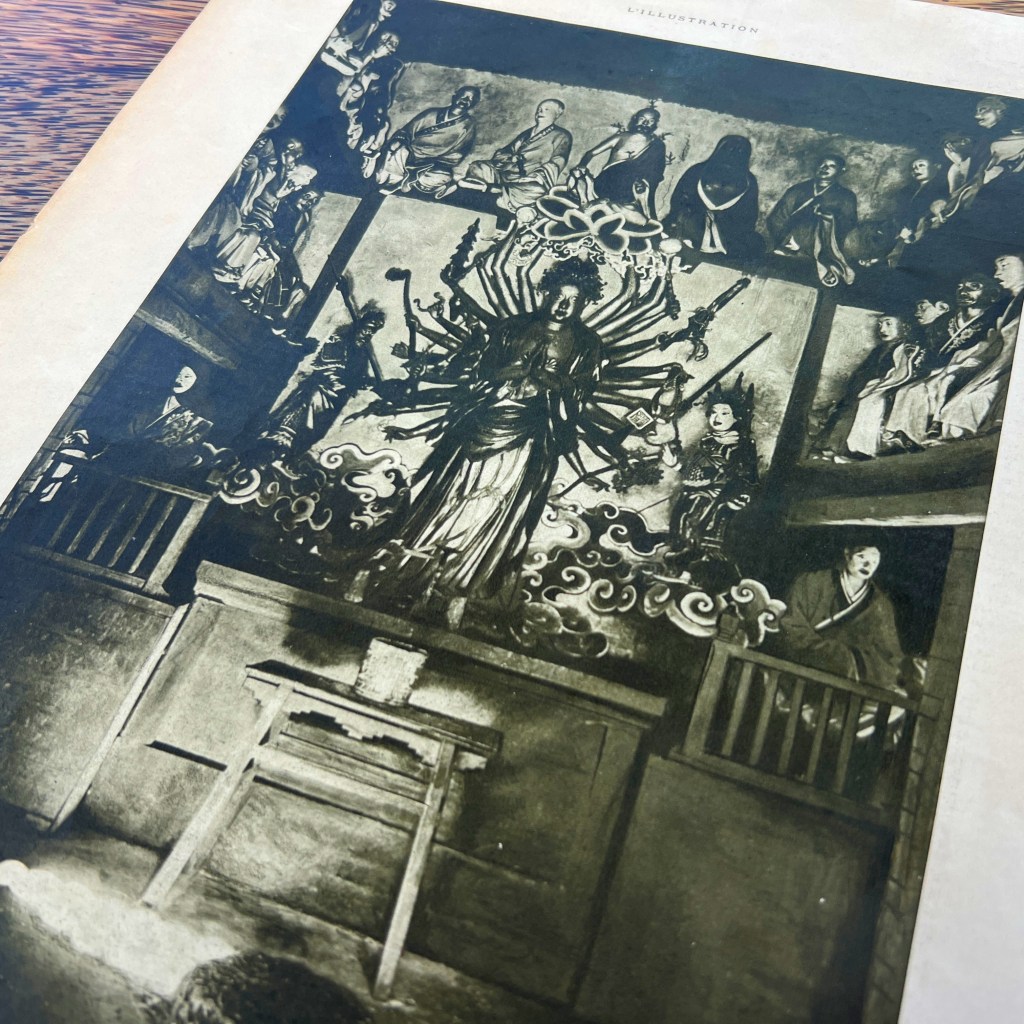
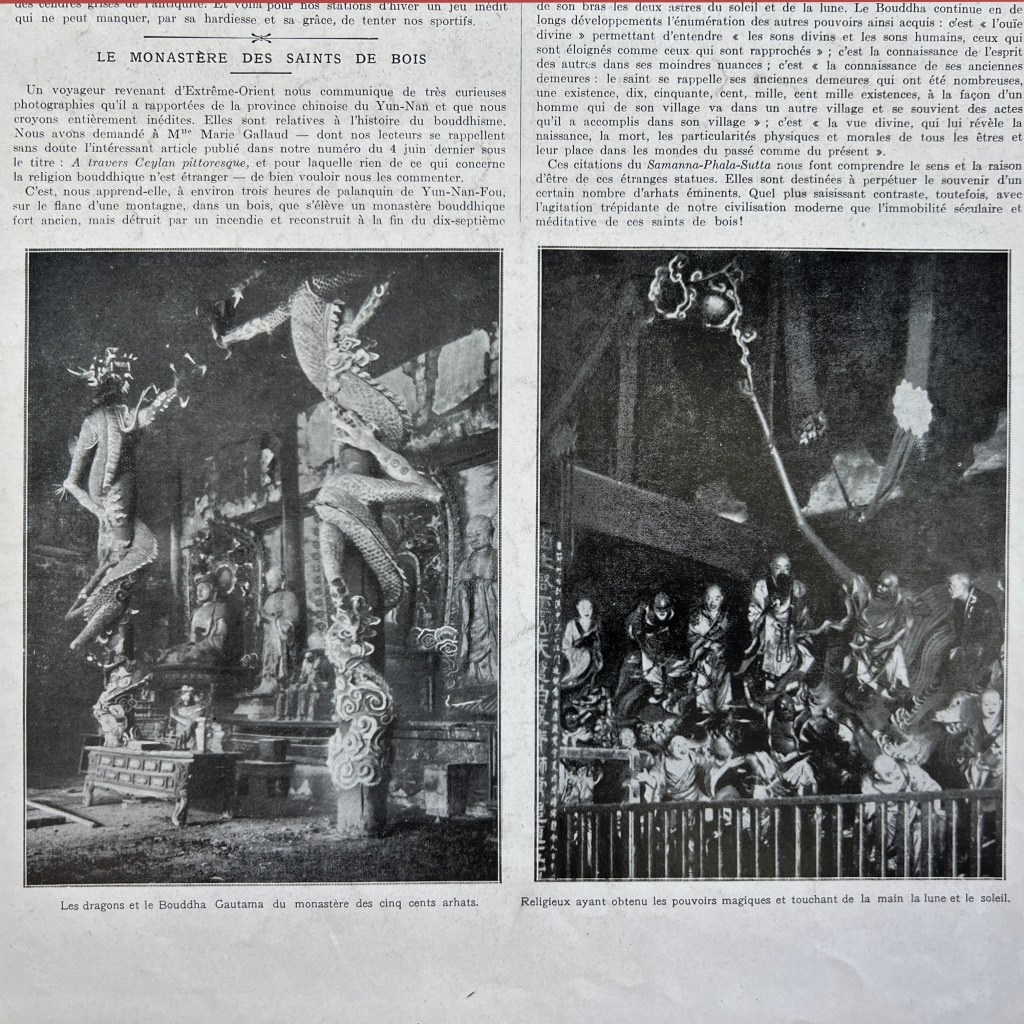
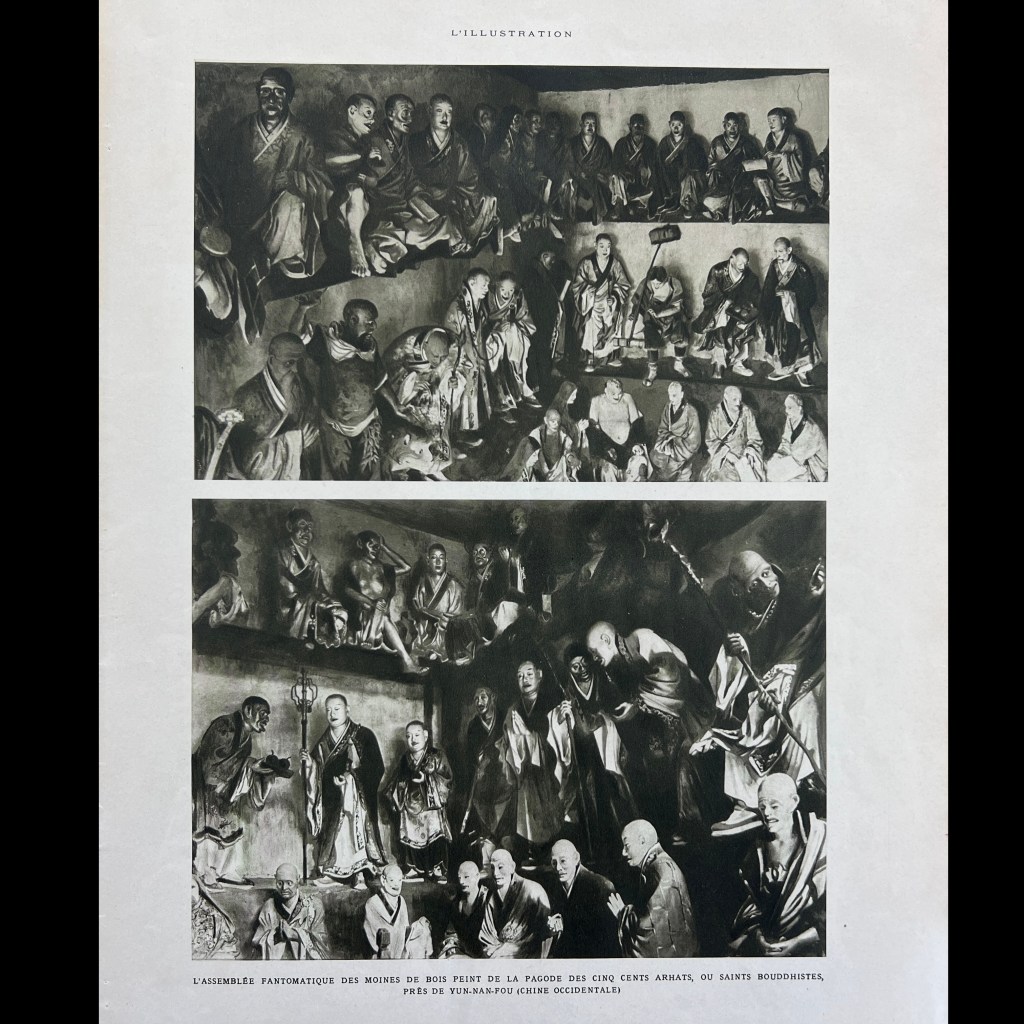
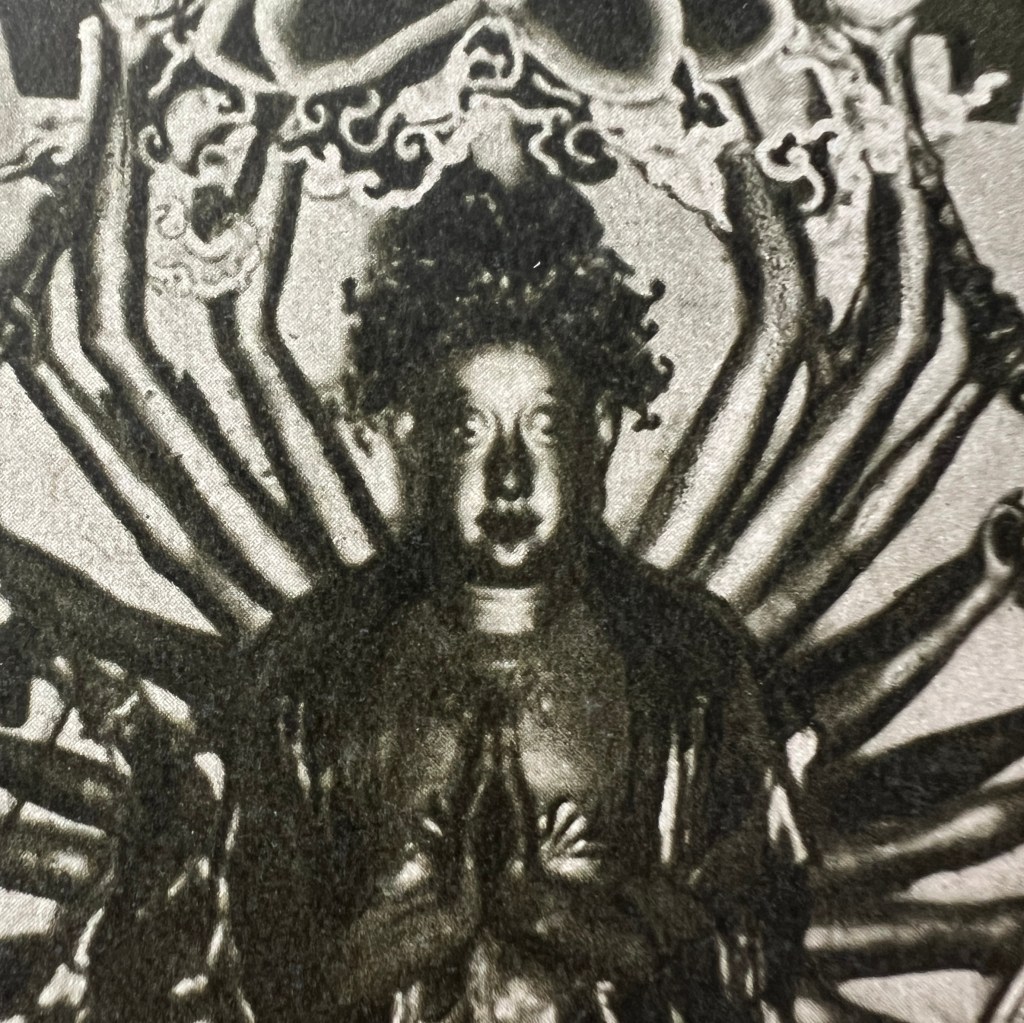
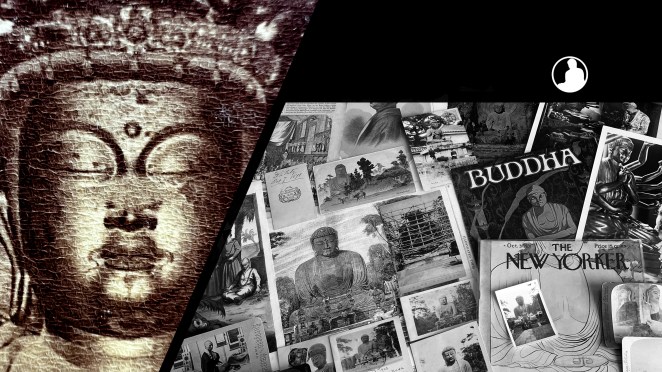
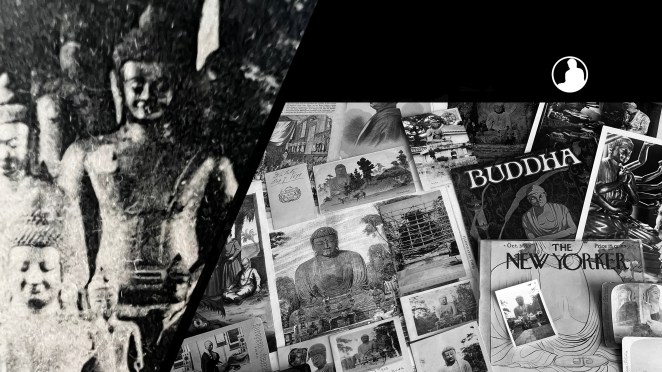
Located in the mountains of Yunnan, China, the Qiongzhu Temple (Qiongzhu si 筇竹寺) houses a collection of fantastic Buddhist statues. This Thousand-Armed Guanyin icon is surrounded by over 200 arhat disciples, comprising part of a Five Hundred Arhat collection over a century old.

While the temple was founded in the 13th century, a devastating fire allowed major reconstruction and expansion projects under the Qing Emperor Guangxu. Three new buildings, completed in the 1880s, were used to for housing newly commissioned clay statues of the Five Hundred Arhats.

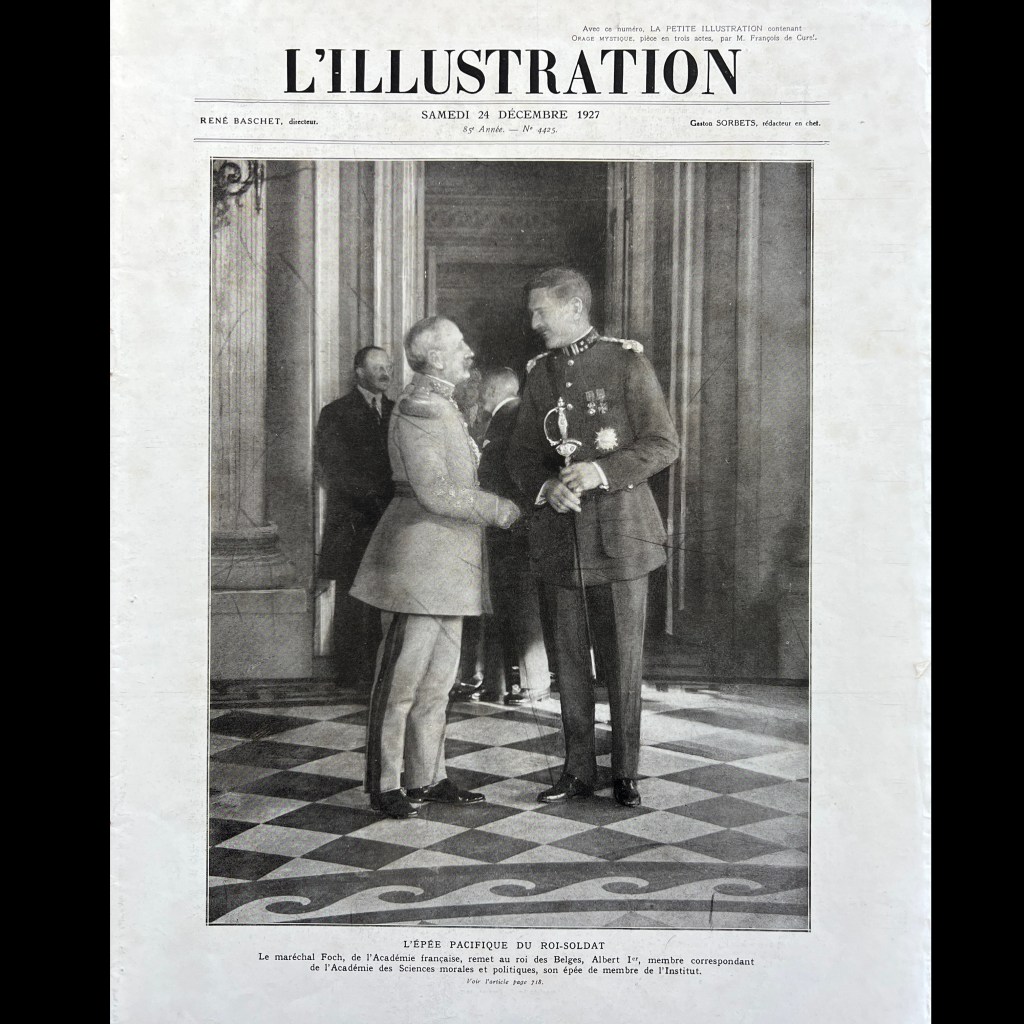
The photos seen here were printed in L’Illustration, reputedly the first international illustrated magazine published out of Paris. This issue was released in December 1927, containing what the editor believed were otherwise unpublished photographs of Qiongzhu Temple.

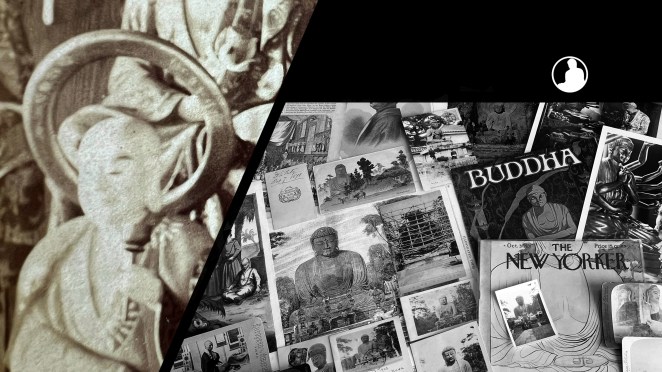
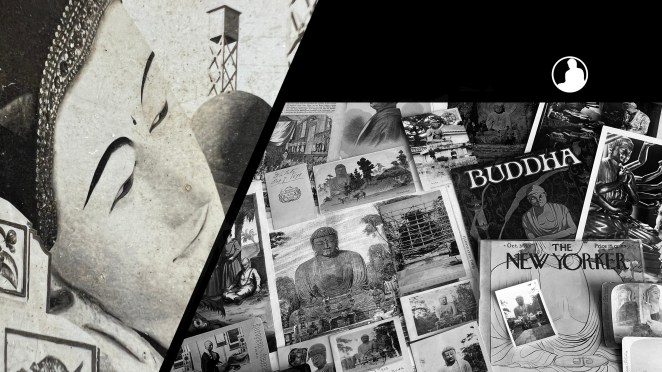
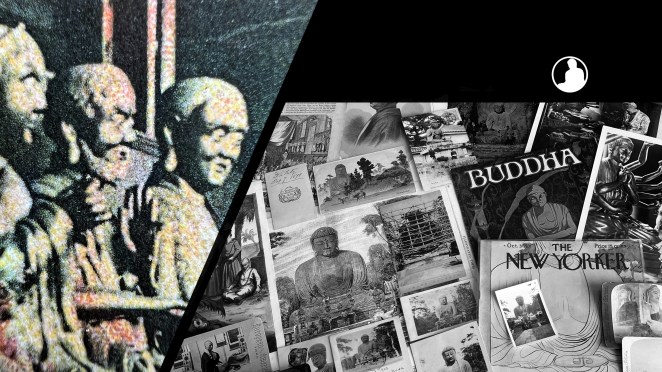
The French text cites the Samaññaphala Sutta to give context to the arhats, who are the Awakened disciples of the Buddha. In East Asian, the arhats are often shown as having curious physical characteristics; here we can spot one arhat with a long, craning arm reaching up to hold the moon.

In addition to the main hall, the arhat statues were further divided between two halls on temple grounds, each constructed with three rows of shelving to hold the numerous icons. Each painted statue is about one meter in height.

Records reveal the images were made by an artist from Sichuan, Li Guangxiu, who along with several assistants crafted the arhat icons over a period of seven years (1883-1890).


The Buddhas in the West Material Archive is a digital scholarship project that catalogues artifacts depicting Buddhist material culture for Western audiences. It’s comprised of prints, photos, and an assortment of ephemera and other objects. For a brief introduction to this archive, visit the main Buddhas in the West project page.


For Related Buddhas in the West Posts Featuring Guanyin:


For the Most Recent Buddhas in the West Posts:

1906 French Colonial Exposition Annam Pavilion Postcard

For all the new Buddhas in the West posts
follow us on Bluesky & Instagram


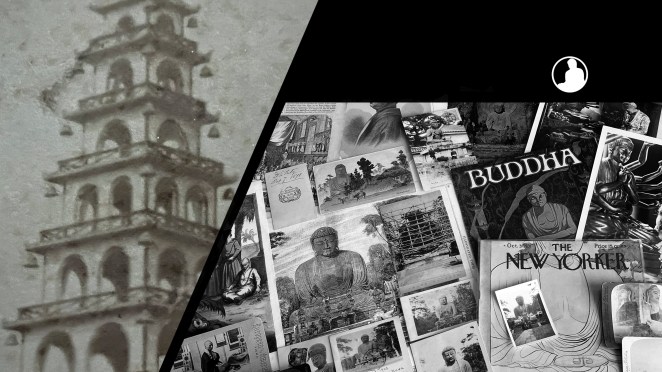
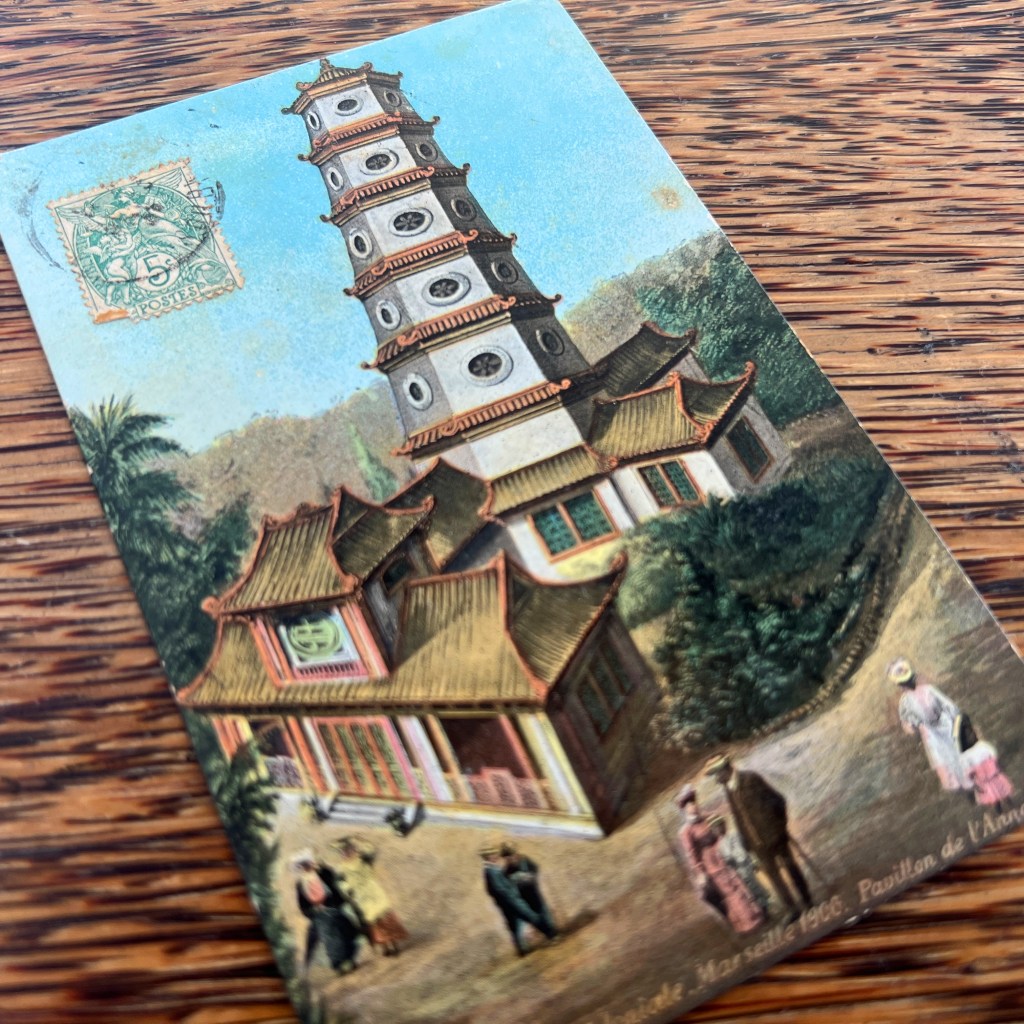
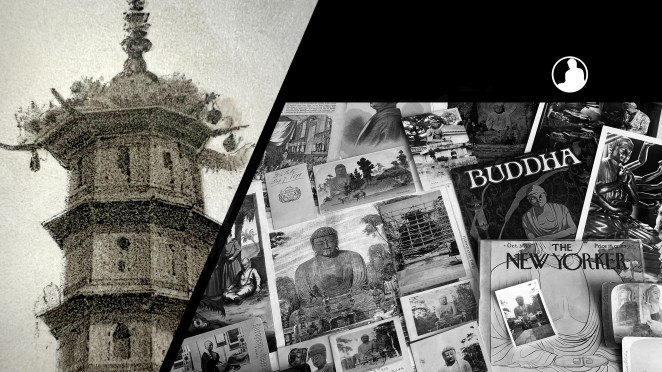
Following the success of colonial pavilions at World’s Fairs, France initiated its own independent Colonial Expositions in the 1890s. In Marseilles in 1906, famous architectural sites from French Indochina were reconstructed, including a towering Buddhist pagoda representing Annam.

Jules Charles-Roux, organizer of the colonial portions of the Paris World’s Fair of 1900 and head of the 1906 exposition, showcased the pagoda behind the main Indochina gate. The pagoda was also set at the head of a replicated “Hanoi road” populated with real inhabitants of the protectorate.

Held during the height of the postcard craze, the exposition grounds opened its own dedicated postcard pavilion. While the cancellation is unclear on the obverse, this card appears to have been sent from Marseilles; its destination was Port-Vendres, further down the Mediterranean coast.

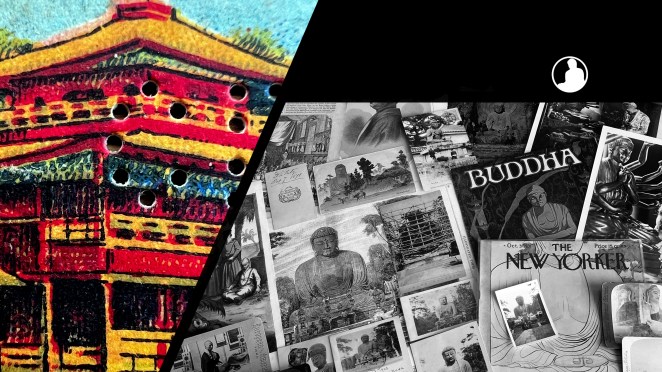
While often obscure in exposition literature, the “Annam Pavilion” was a replica of the pagoda from Tien Mu Temple, in the city of Hue, which was founded in 1601. The pagoda was a popular subject of souvenir photographs sold by studios throughout French Cochinchina, Annam, and Tonkin.

The following year, in 1907, Paris held another colonial exposition, but recreated a different pagoda to represent Annam. A photo illustrated book of the 1906 Marseilles Exposition is digitized by the University of Aix-Marseille, viewable here: https://tinyurl.com/mczsvn6s.


The Buddhas in the West Material Archive is a digital scholarship project that catalogues artifacts depicting Buddhist material culture for Western audiences. It’s comprised of prints, photos, and an assortment of ephemera and other objects. For a brief introduction to this archive, visit the main Buddhas in the West project page.


For Related Buddhas in the West Posts Featuring Vietnam / French Indochina:


For the Most Recent Buddhas in the West Posts:

Dreamland’s Japanese Tea Garden Pagoda, “Greeting From Coney Island” Postcard

For all the new Buddhas in the West posts
follow us on Bluesky & Instagram


During the Golden Age of American amusement parks, New York’s Coney Island was king, sporting the trifecta of the Steeplechase, Dreamland, and Luna Park. Opening in May 1904, Dreamland advertised a “faithful reproduction of a Japanese temple,” attempting to pull customers away from its rivals.

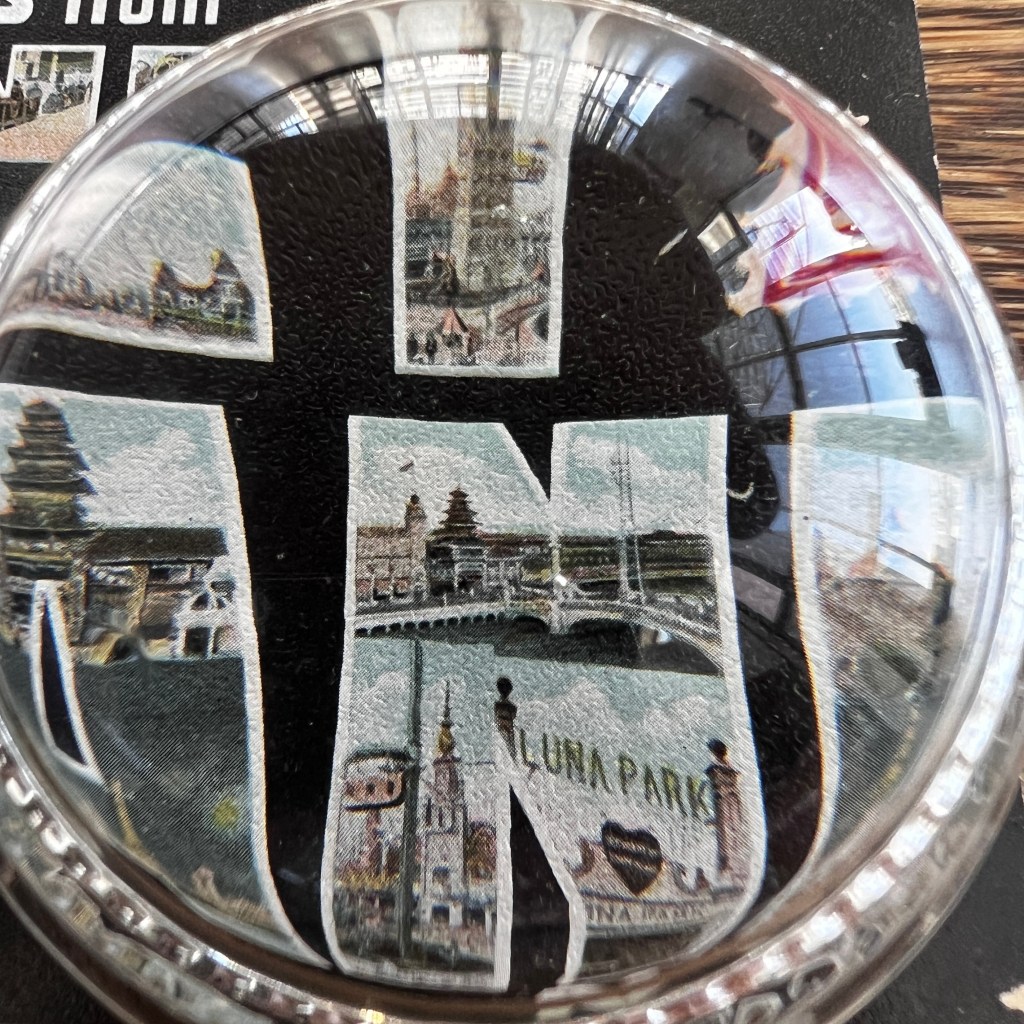
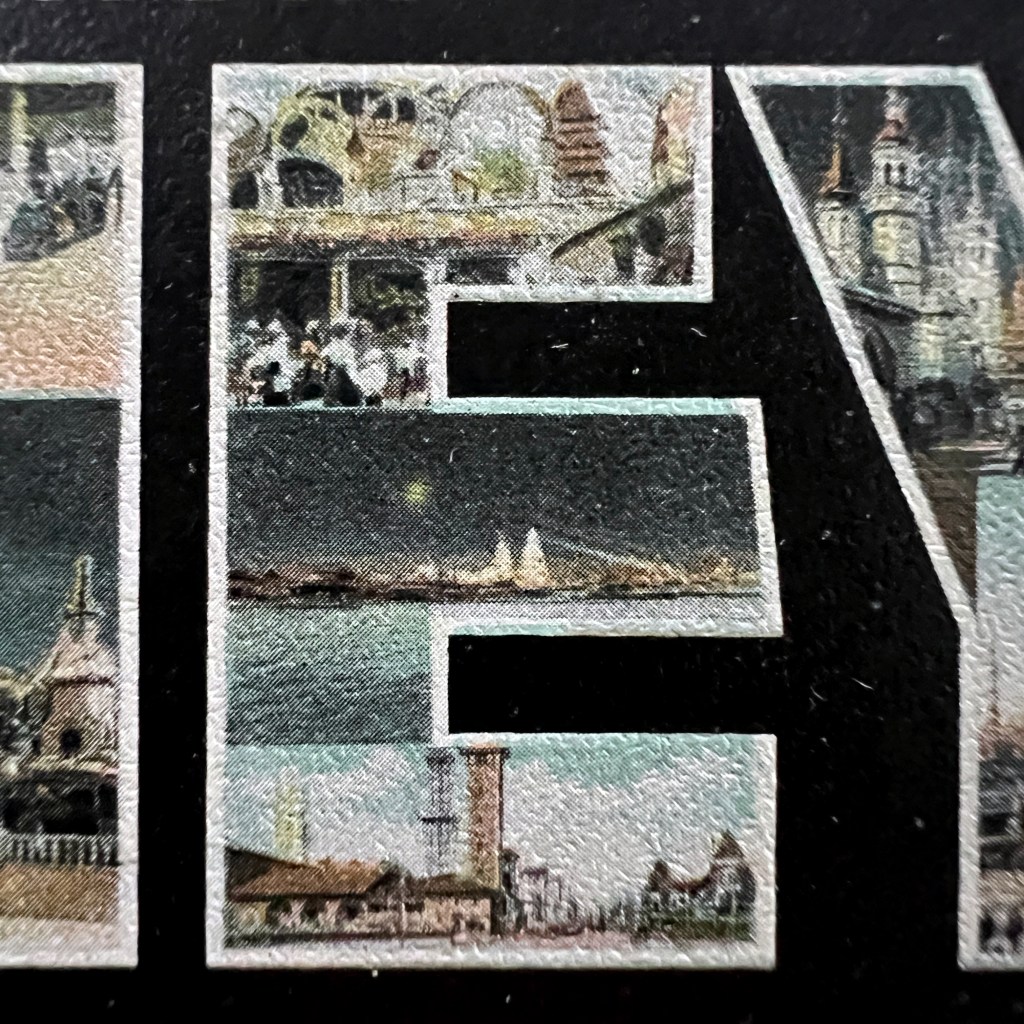
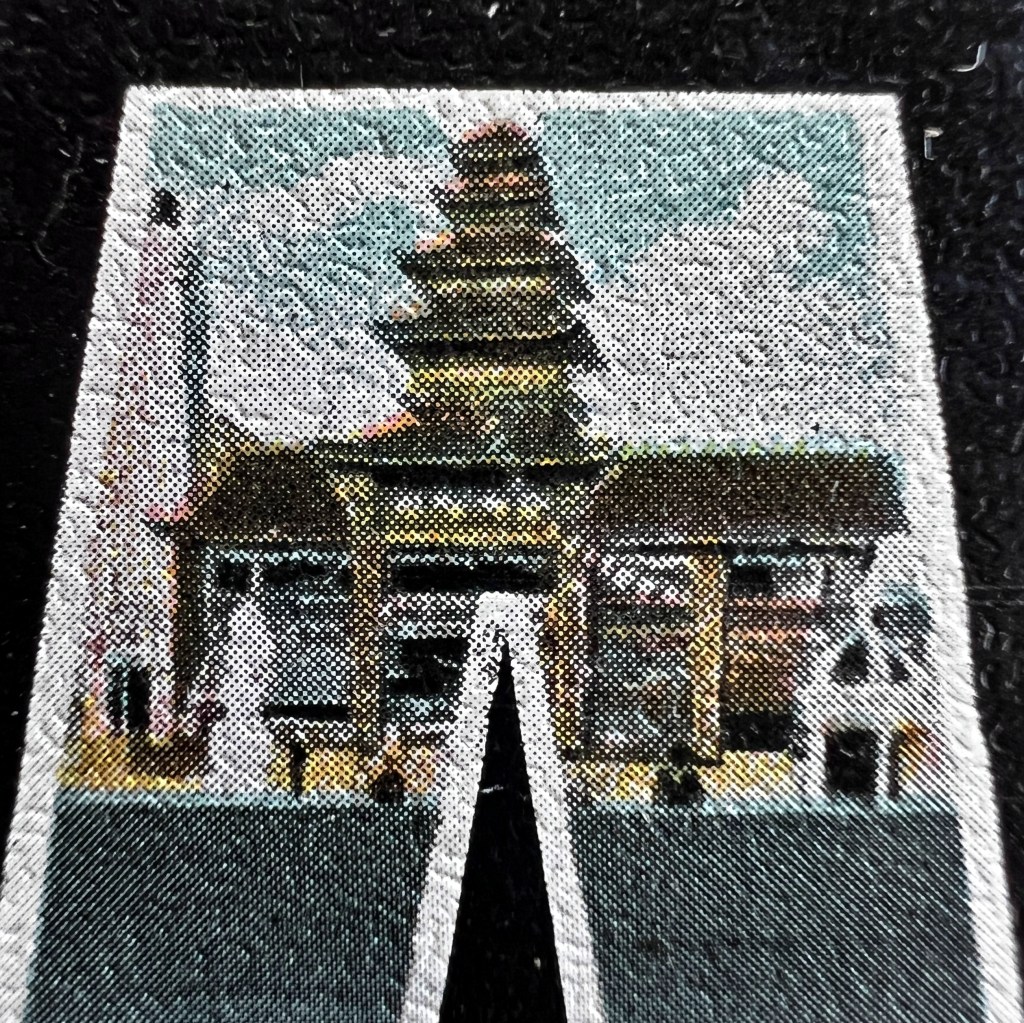
The “temple” attraction was mostly bluster, but a two-story Japanese-style pavilion was built as a tea house, crowned by an additional four-level pagoda. Iconic in its own right, this pagoda is featured at least two times in this classic “Greetings from” postcard design.

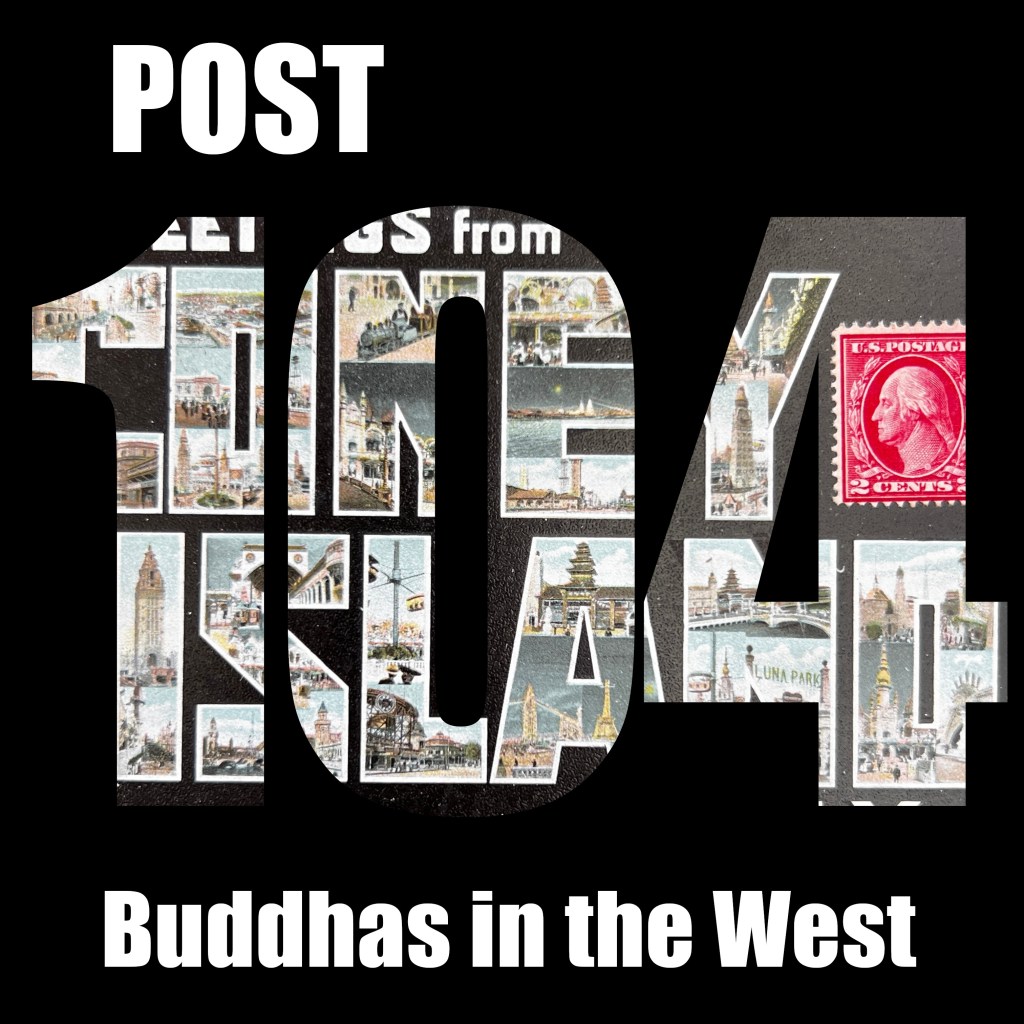
Mailed from Brooklyn to Bavaria in 1912, this postcard was originally printed in Germany, the worldwide epicenter of postcard production previous to WWI. Note the stamp indicating the postage was affixed on the obverse; this allowed collectors to display the postcard in an album.

Based on World’s Fair amusement zones, the buildings at Dreamland each had their own architectural style to showcase their offerings: Canals of Venice, Coast through Switzerland, Destruction of Pompeii, etc. The pagoda’s distinctive features (seen in the “N”) identified the Japanese tea garden.

Luna Park, which opened the previous year in 1903, expanded its own Japanese Roof Garden with towering pagodas; this park’s pagoda is just visible in the top of the letter “E”. As new Luna Parks opened across the US, some added their own Japanese style pagodas.

Dreamland was destroyed in 1911 when a fire ripped through the park. An extraordinarily detailed map of Coney Island’s three parks c.1906 is available through the Library of Congress (Dreamland’s pagoda is in the lower right), viewable here: https://tinyurl.com/xvdtw8yt.


The Buddhas in the West Material Archive is a digital scholarship project that catalogues artifacts depicting Buddhist material culture for Western audiences. It’s comprised of prints, photos, and an assortment of ephemera and other objects. For a brief introduction to this archive, visit the main Buddhas in the West project page.


For Related Buddhas in the West Posts Featuring Amusements at World’s Fairs:


For the Most Recent Buddhas in the West Posts:

James Ricalton’s Priest at the Temple of the Tooth

For all the new Buddhas in the West posts
follow us on Bluesky & Instagram


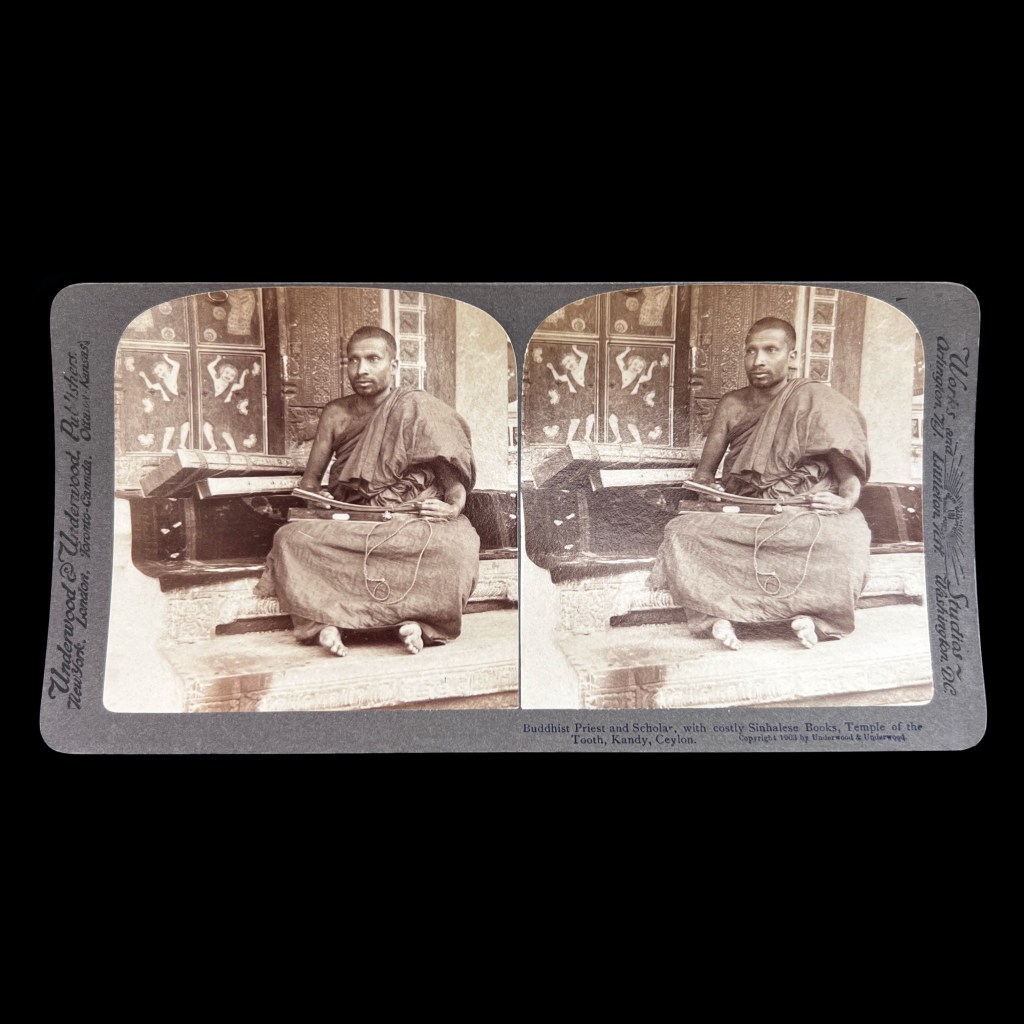
Just after the discovery of the Buddha’s relics at Piprahwa in 1898, James Ricalton was planning a photographic tour of the world. One of his planned stops was to visit the most famous Buddhist relic of his era, the Buddha’s tooth enshrined in the capital city of Kandy.

Ricalton’s employer, the largest stereoscope firm in the world, Underwood & Underwood, was launching several sets devoted to specific countries; Ceylon was slated to have 30 stereoview cards. Underwood’s slogan, ‘‘to see is to know,’’ drove its message that education was a main objective.

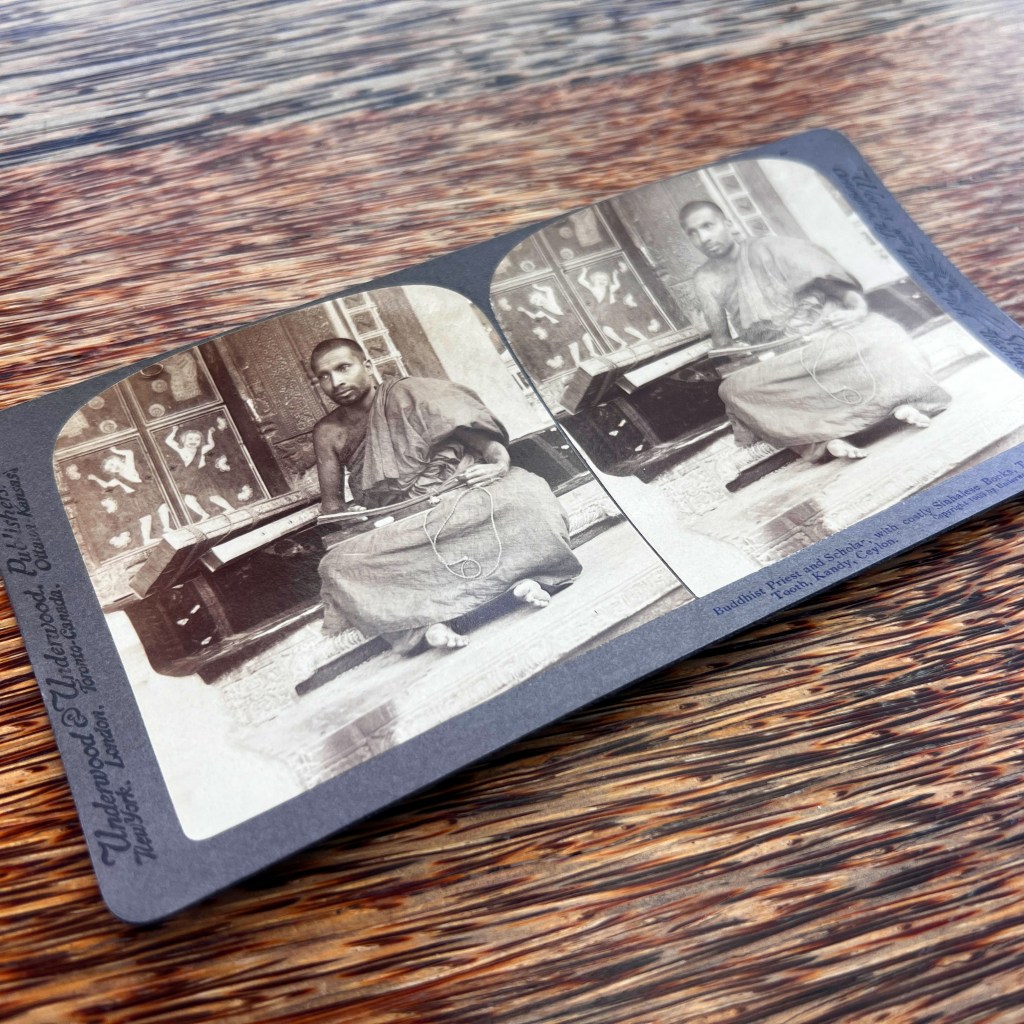
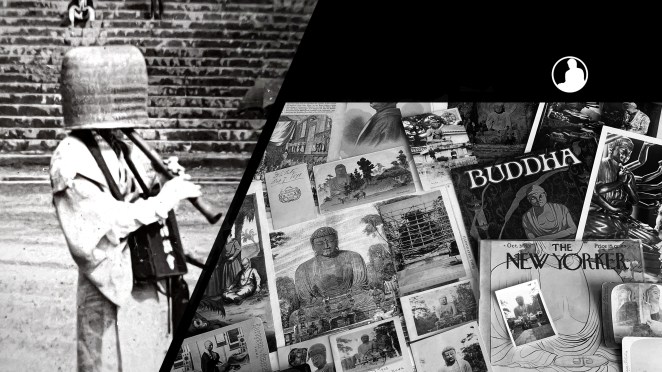
Shooting the Temple of the Tooth, Sri Dalada Maligawa, and a few stupas, this image was the only one for Ceylon showing a Buddhist monk. While it was common to depict monks on alms rounds, Ricalton shows this unnamed monk reading scripture, calling him a priest and scholar in the caption.

The monk sits holding the long, rectangular leaves of a Buddhist scripture in his lap. Views such as this were intended to give a glimpse into the “real lives” of the photographed subjects, thus allowing viewers to travel without the hassle of actually leaving home.

Selling “the world in a box,” stereoviews helped shape a vision of Buddhism for American consumers. For more on the powerful visual language of stereoviews, see Judith Babbitts’ “Stereographs and the Construction of a Visual Culture in the United States,” in History Bytes (2004).


The Buddhas in the West Material Archive is a digital scholarship project that catalogues artifacts depicting Buddhist material culture for Western audiences. It’s comprised of prints, photos, and an assortment of ephemera and other objects. For a brief introduction to this archive, visit the main Buddhas in the West project page.


For Related Buddhas in the West Posts Featuring Buddhist Clerics:


For the Most Recent Buddhas in the West Posts:

Buddhist Temple of Los Angeles Postcard

For all the new Buddhas in the West posts
follow us on Bluesky & Instagram


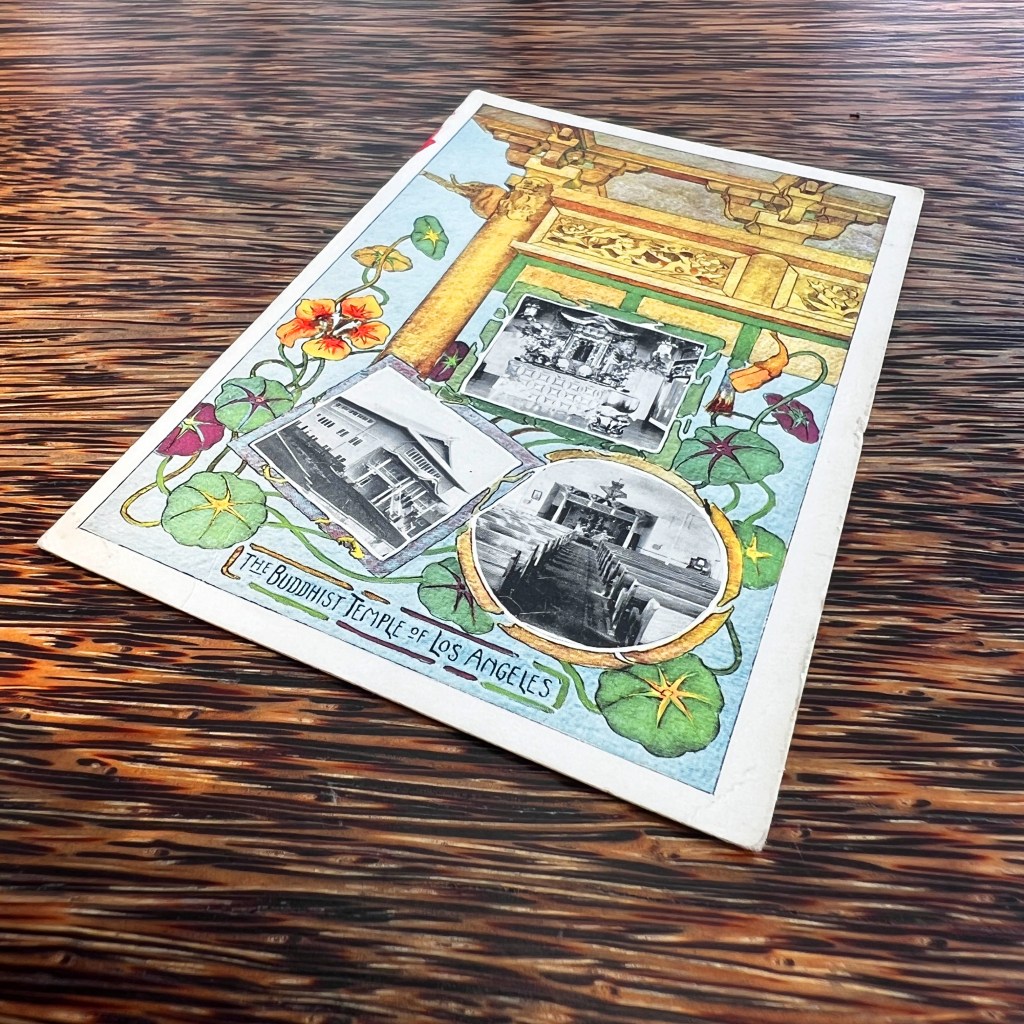
Inspired by the success in San Jose and Sacramento, Izumida Junjō 泉田準城 (1866–1951) arrived in Los Angeles in 1904 and opened the city’s first Buddhist temple for Japanese immigrants. After raising funds and purchasing land, a newer and larger temple was opened in 1911 on Savannah Street.

Associated with Nishi Hongan-ji, a Jōdo Shinshū Buddhist organization headquartered in Kyoto, Izumida organized the Rafu Bukkyō-kai 羅府仏教会, the Buddhist Mission of Los Angeles. It was meant to meet Japanese immigrants’ needs for funerals, memorial services, and spiritual guidance.

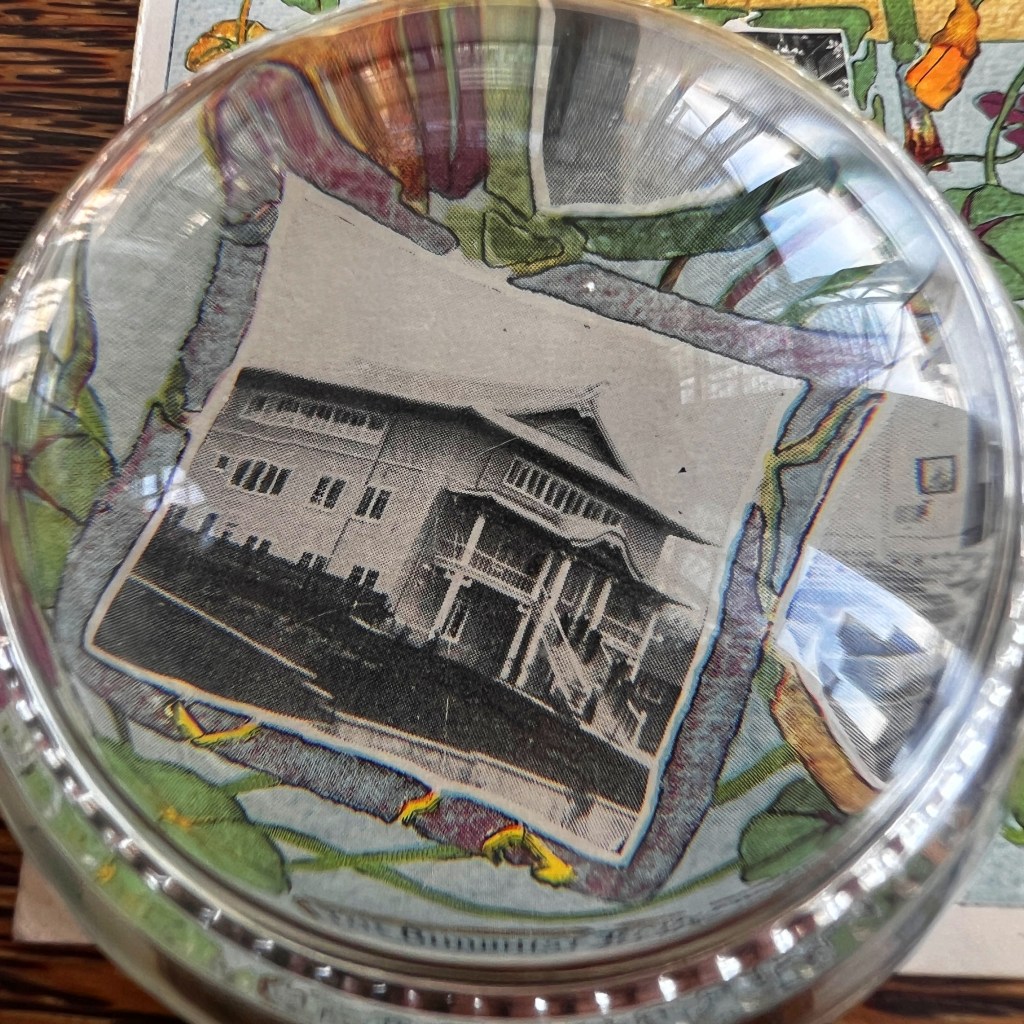
Possibly in celebration and promotion of the new temple, the Mission issued picture postcards highlighting both the interior and exterior of the building. The colorful illustrated elements on the front reveal an Arts and Crafts influence popular in the early 20th century.

The building was meant to reflect both American residential architecture and Japanese temple architecture. The latter can be seen in the curved eaves on the roof and the temple-style gate over the front porch.

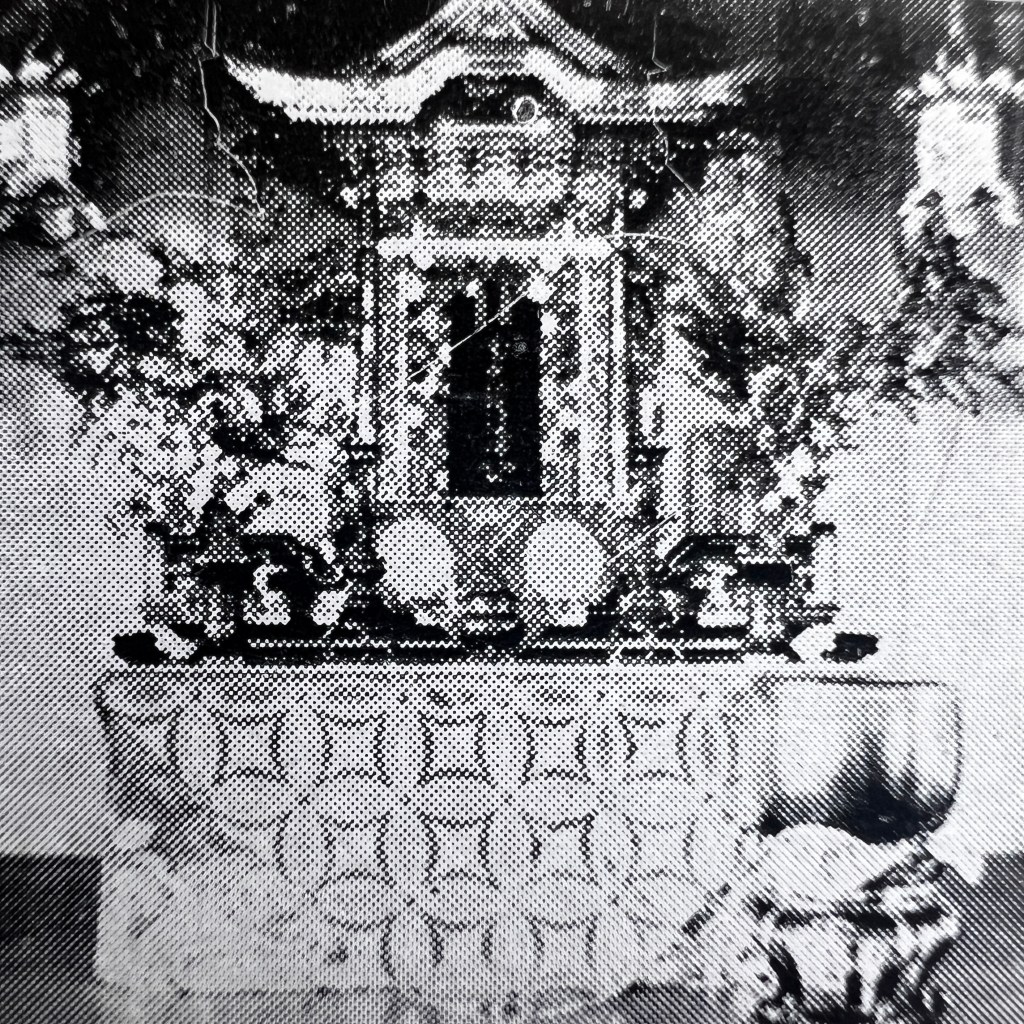
The interior also shows a hybrid style, with church-like pews set in front of a traditional Japanese Buddhist altar.

As a Jōdo Shinshū temple, the shrine is dedicated to Amida Buddha, here with a scroll bearing his name. For more on the history of this LA temple, see Michihiro Ama, Immigrants to the Pure Land: The Modernization, Acculturation, and Globalization of Shin Buddhism (2011).


The Buddhas in the West Material Archive is a digital scholarship project that catalogues artifacts depicting Buddhist material culture for Western audiences. It’s comprised of prints, photos, and an assortment of ephemera and other objects. For a brief introduction to this archive, visit the main Buddhas in the West project page.


For Related Buddhas in the West Posts Featuring Historical Trade Cards:


For the Most Recent Buddhas in the West Posts:

Olfert Dapper’s “The Idoll Sechia” Engraving

For all the new Buddhas in the West posts
follow us on Bluesky & Instagram


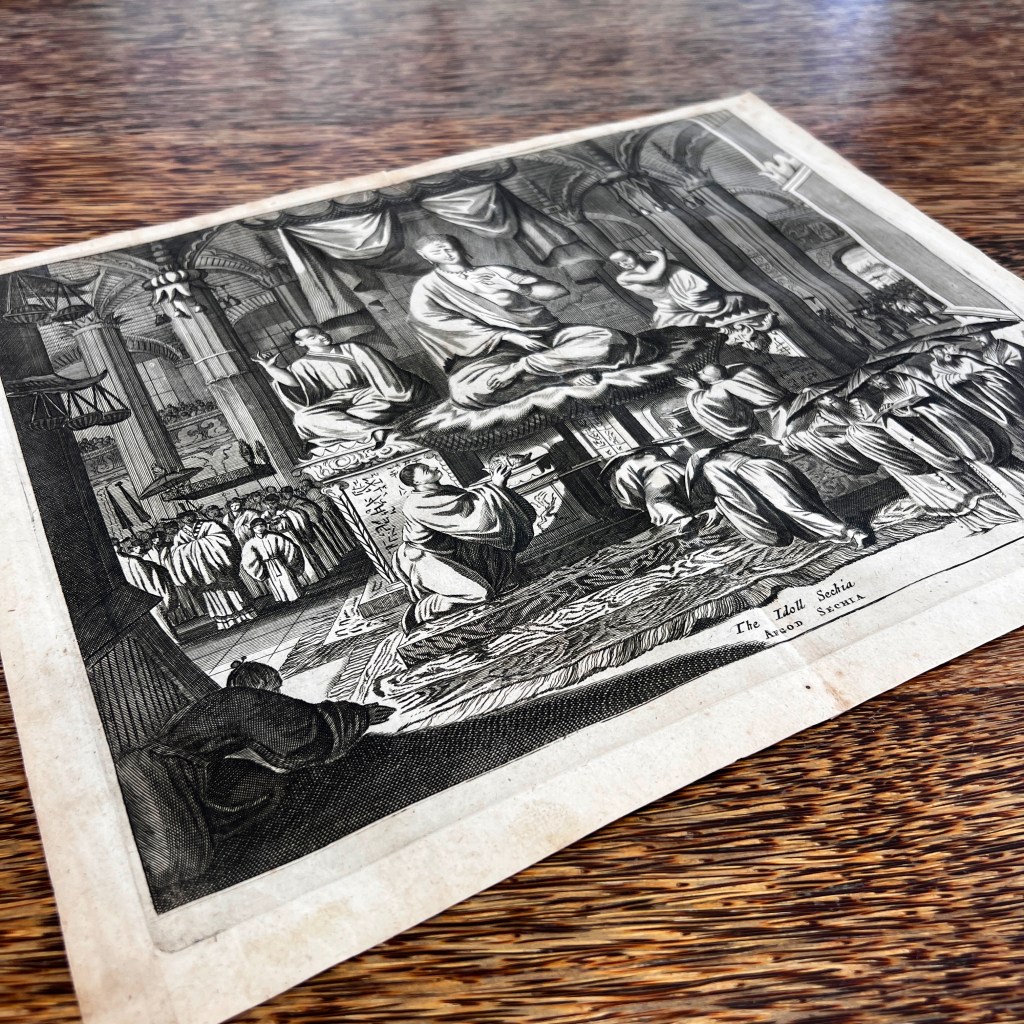
The Atlas Chinensis by Olfert Dapper (1636–1689) is among the most visually embellished European treatments of China from the late 17th century. Never traveling to Asia, Dapper used reports from the 2nd and 3rd Dutch embassies to China and consulted older Jesuit accounts.

The copperplate engravings were likely prepared in the workshop of publisher Jacob van Meurs who found reasonable success issuing illustrated books on Asia. The illustration here is from the 1674 German edition of Atlas Chinensis; it was originally published in Dutch in 1670.

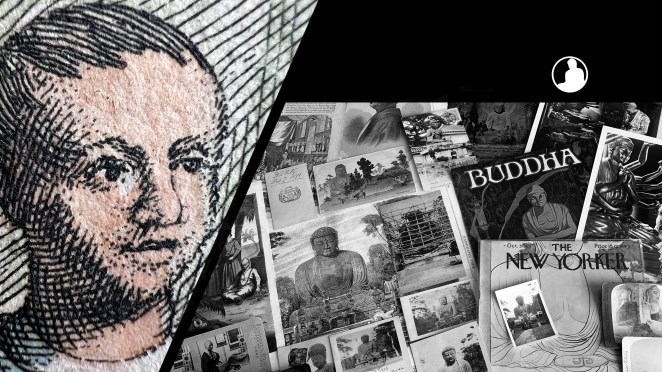
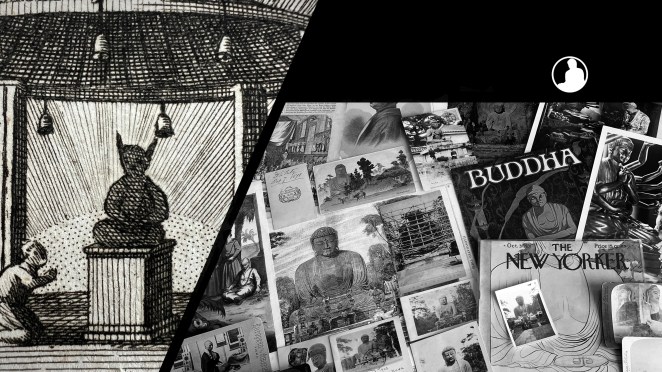
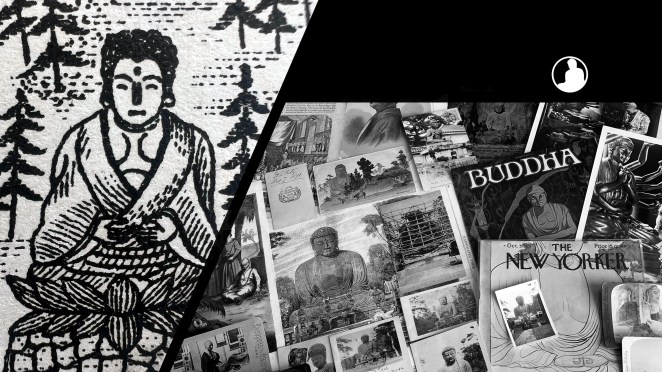
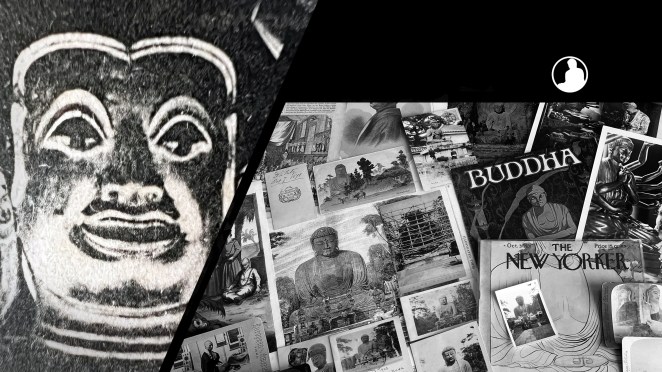
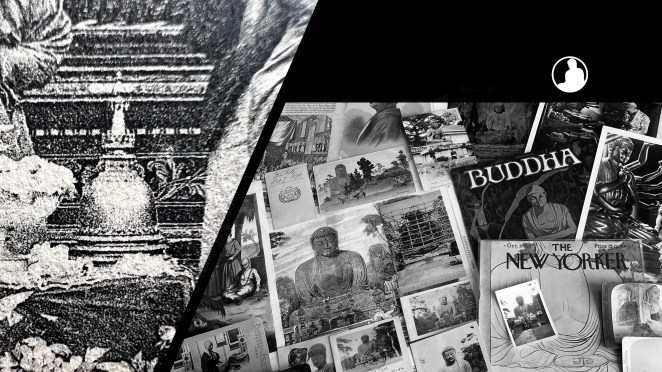
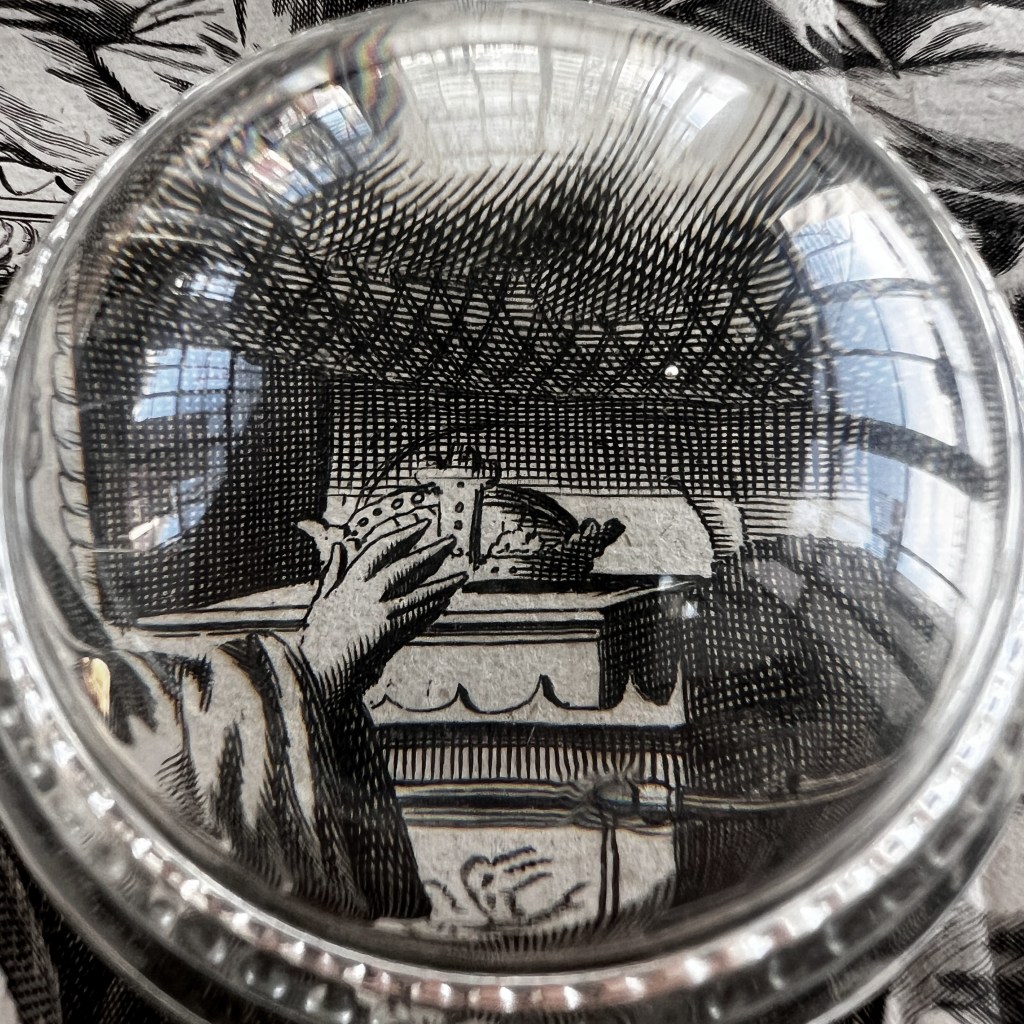
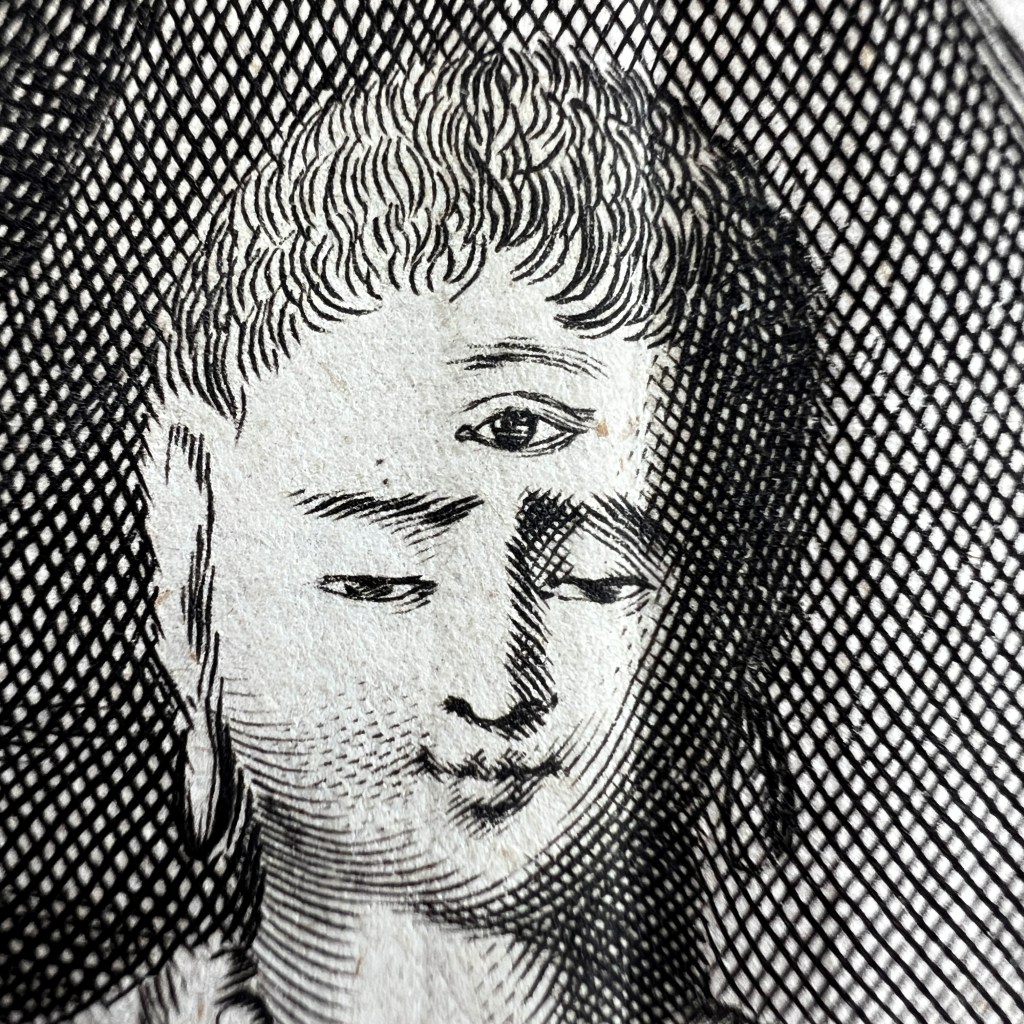
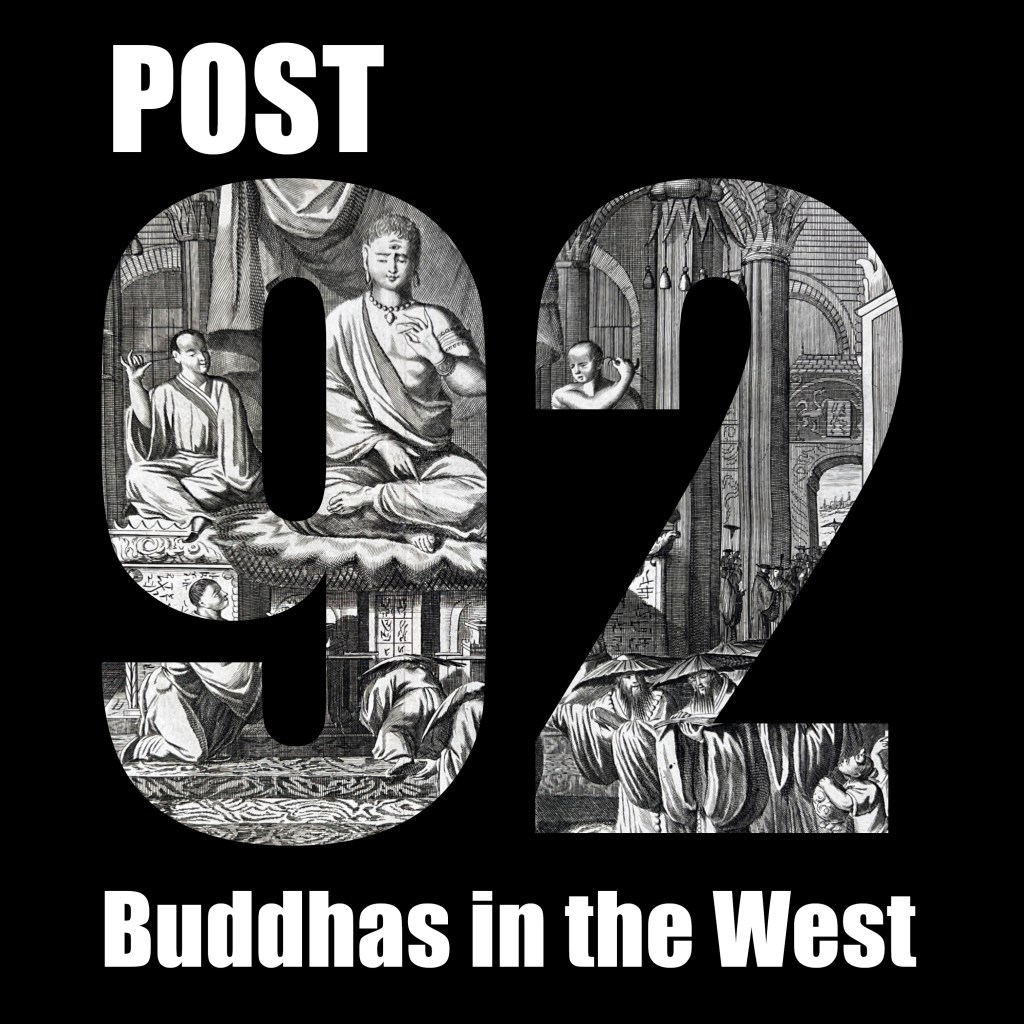
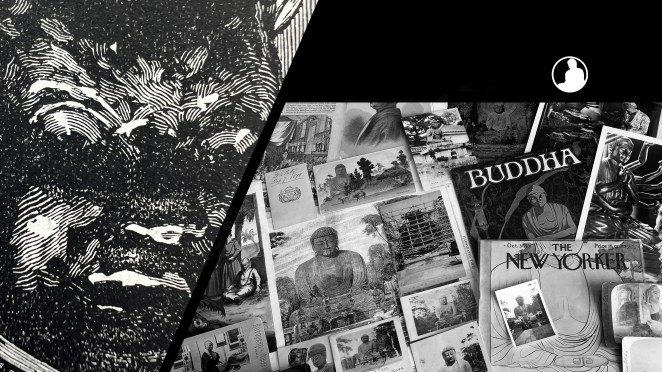
In a section describing Buddhism, Dapper notes that images of the “Idoll Sechia” (Śākyamuni) are found in temples, “in the shape of a fair Youth; with a third Eye in his forehead.” Engravers had great liberty to interpret and add further details.

Some details, such as the European-style crown at the base of the altar, suggest fabricated visual embellishments intended to make the scene more familiar to European readers.

While other details that might appear odd, such as the flanking figures scratching their ears, are actually based on authentic Buddhist imagery of the arhats (C. luohan). Unpublished Jesuit sketches available to Dapper likely informed some of these details.

An English edition of Dapper’s work, published by John Ogilby in 1671 (and curiously misattributed to Arnoldus Montanus), can be viewed through Stanford University here: tinyurl.com/ycyw93eb.


The Buddhas in the West Material Archive is a digital scholarship project that catalogues artifacts depicting Buddhist material culture for Western audiences. It’s comprised of prints, photos, and an assortment of ephemera and other objects. For a brief introduction to this archive, visit the main Buddhas in the West project page.


For Related Buddhas in the West Posts Featuring Historical Engravings:

For the Most Recent Buddhas in the West Posts: