Sandringham Laughing Buddha Real Photo Post Card

For all the new Buddhas in the West posts
follow us on Bluesky & Instagram


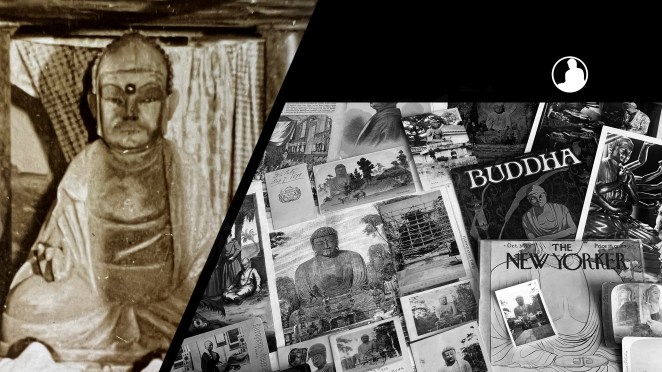
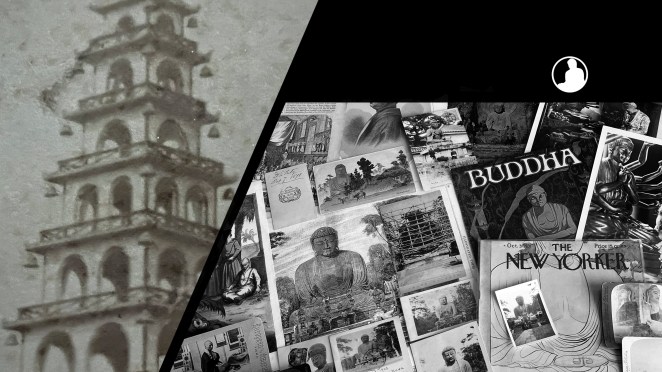
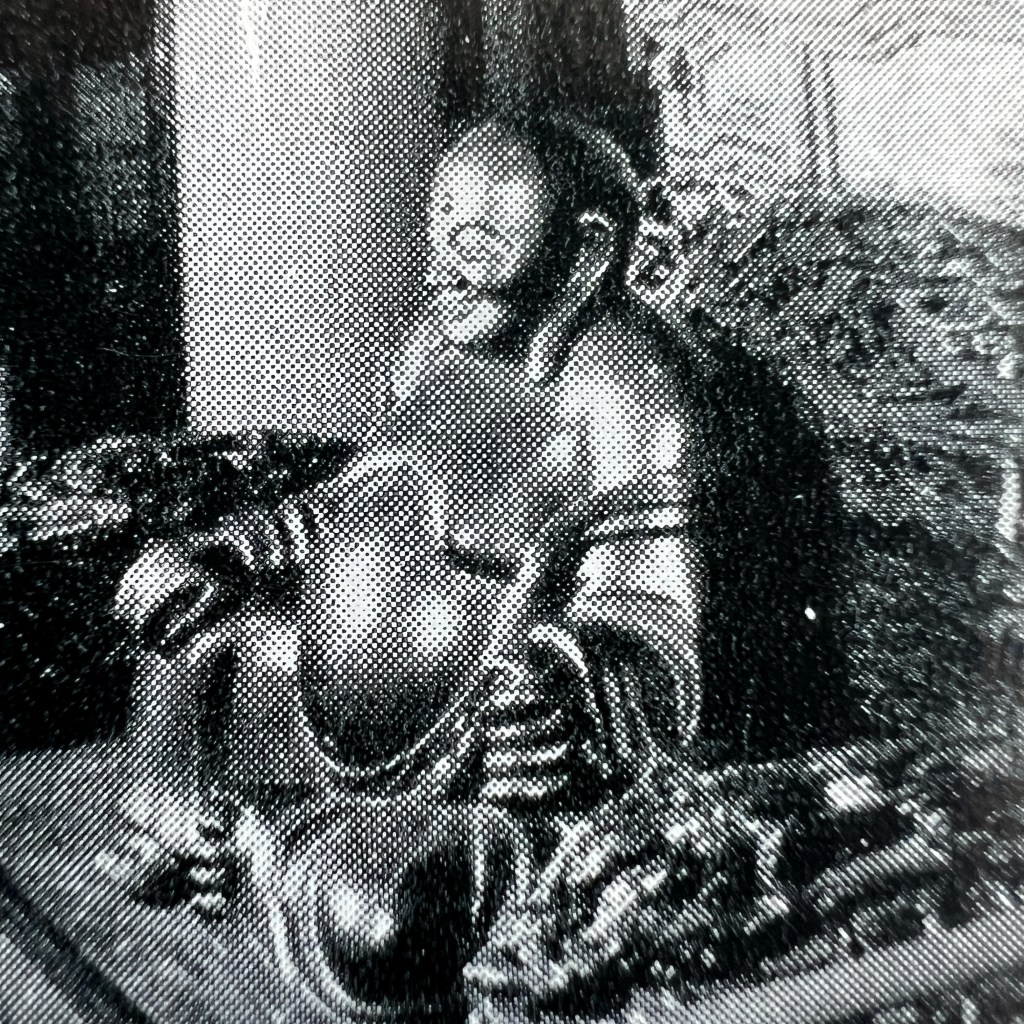
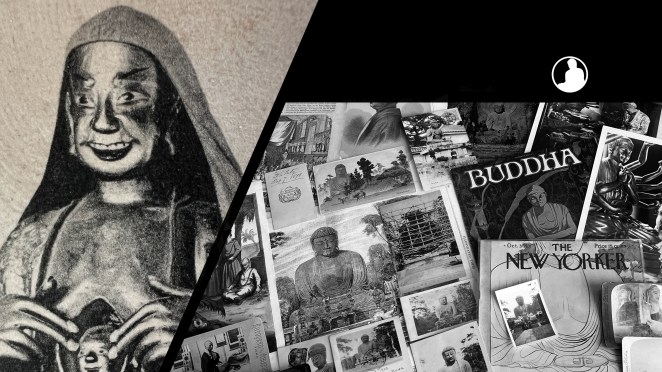
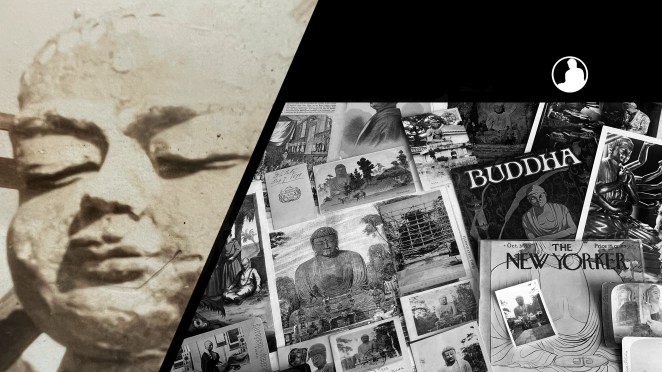
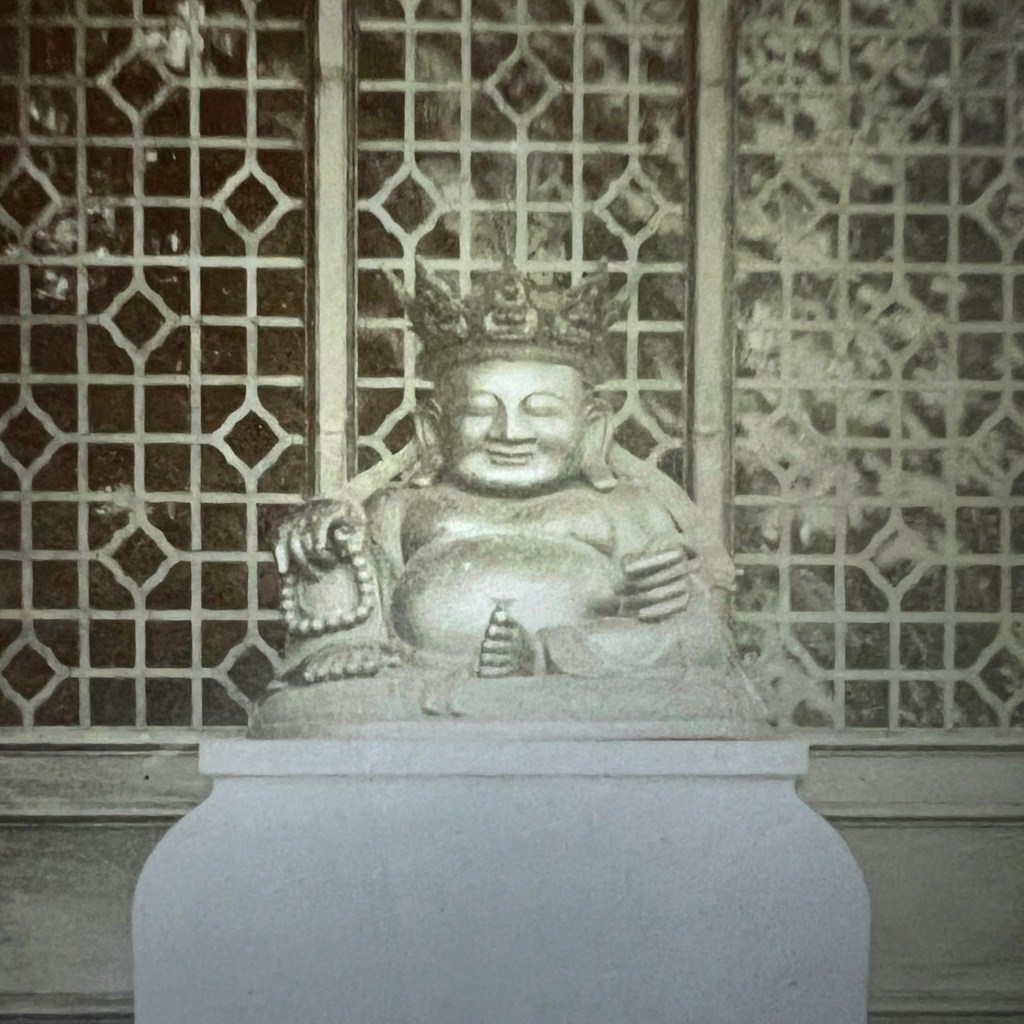
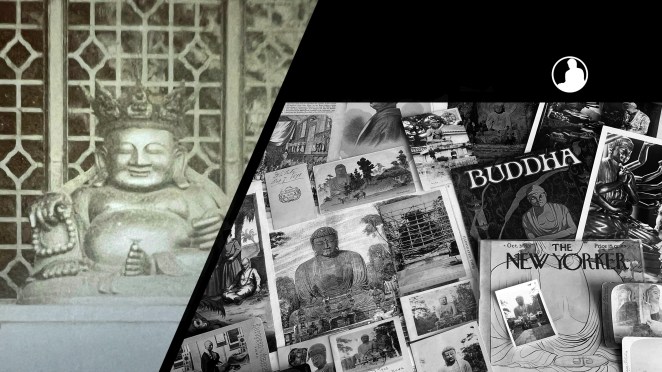
This gilded Laughing Buddha wearing an eight-pointed crown once graced a Chinese Buddhist monastery. Today, the statue sits in a very different setting on the grounds of the royal Sandringham estate as an unusual imperial garden ornament.
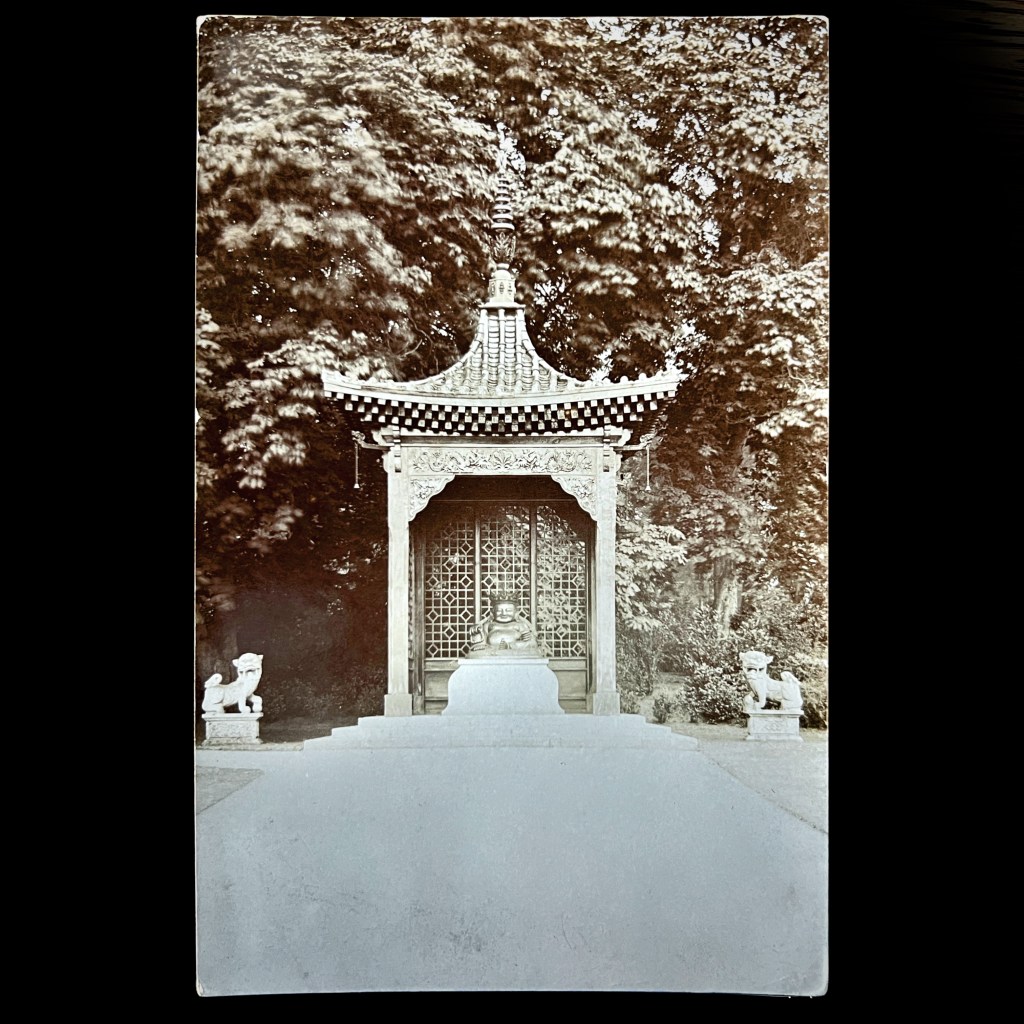
The Sandringham Buddha was sent to Britain by Admiral Sir Henry Keppel in 1869. After encountering the statue in Beijing, he shipped it home aboard HMS Rodney and presented it to the Prince of Wales (later Edward VII) as a gift for the newly built Sandringham House.
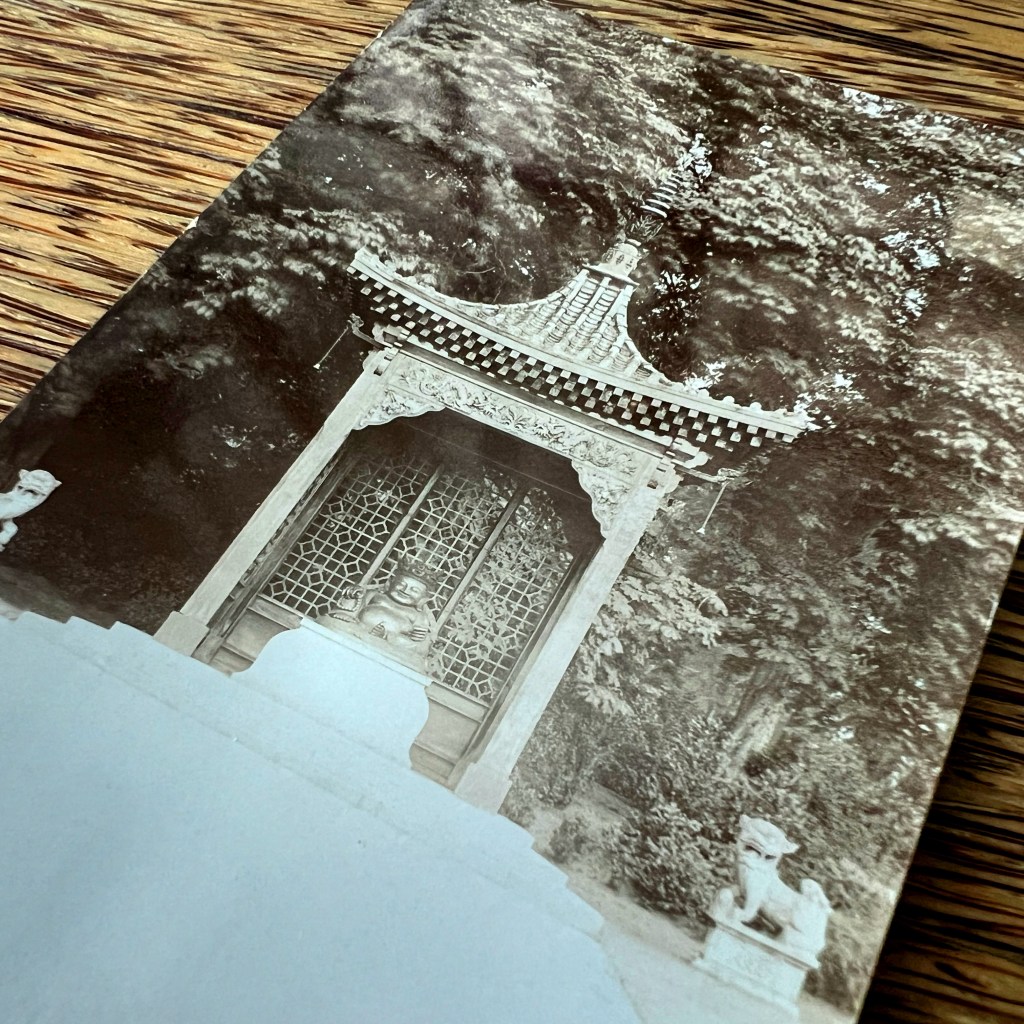
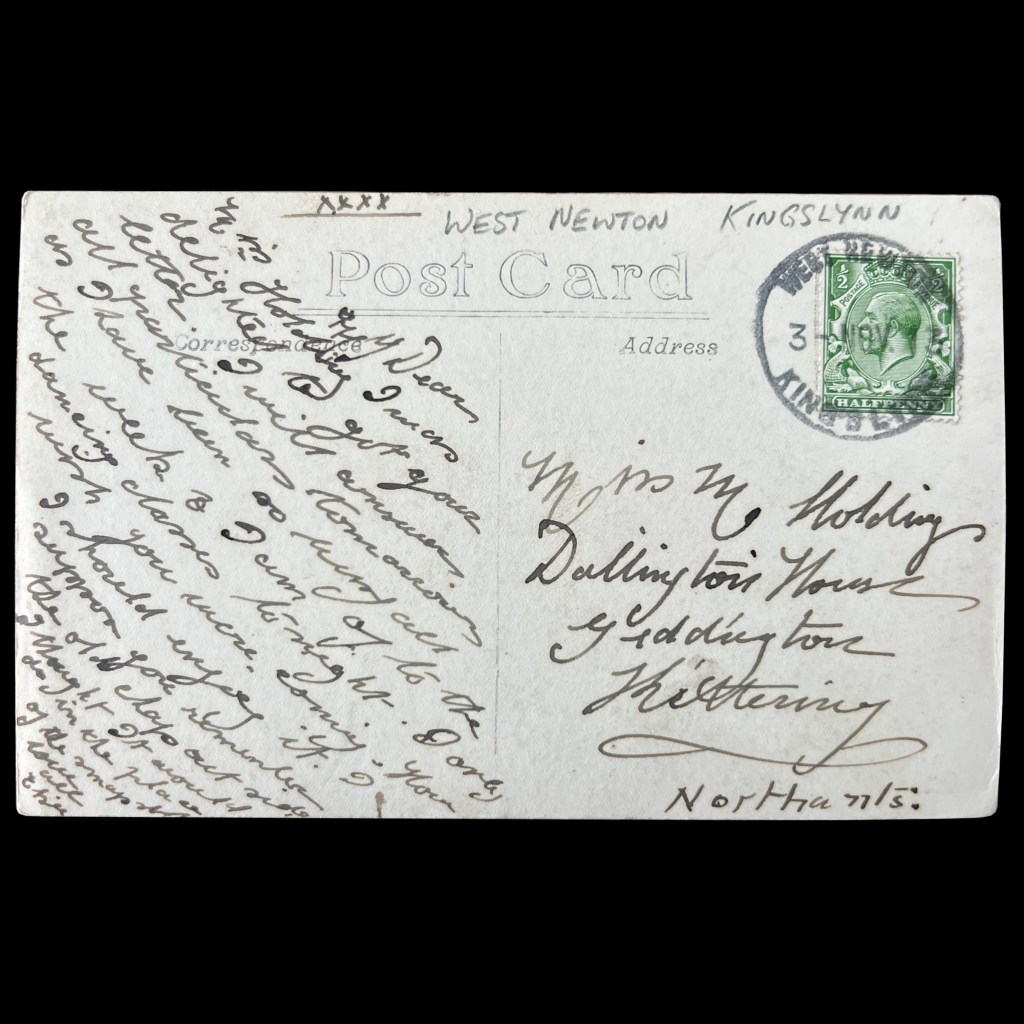
The image here was produced as a “real photo” postcard—created by printing a photographic positive directly onto photosensitized postcard stock. This card was mailed in 1913, near the end of the great postcard boom that was soon cut short by the First World War.
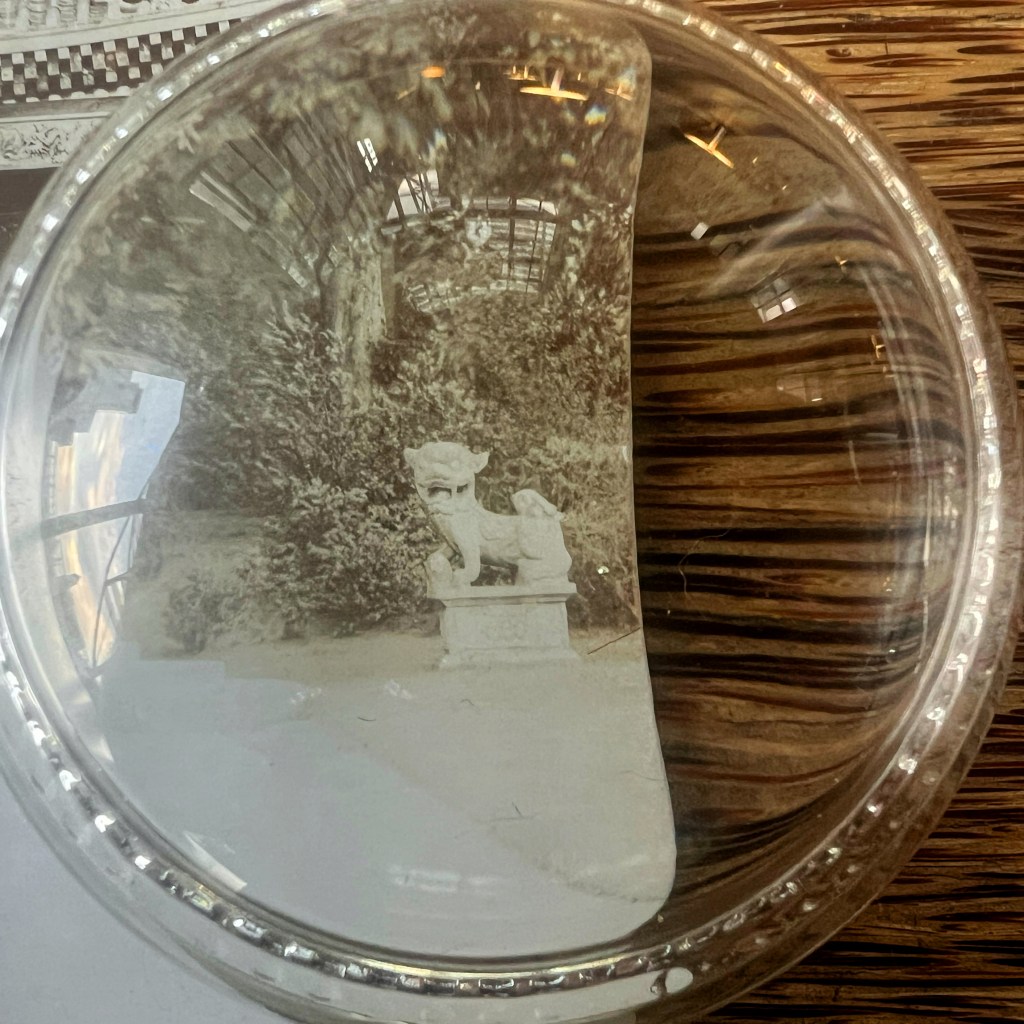
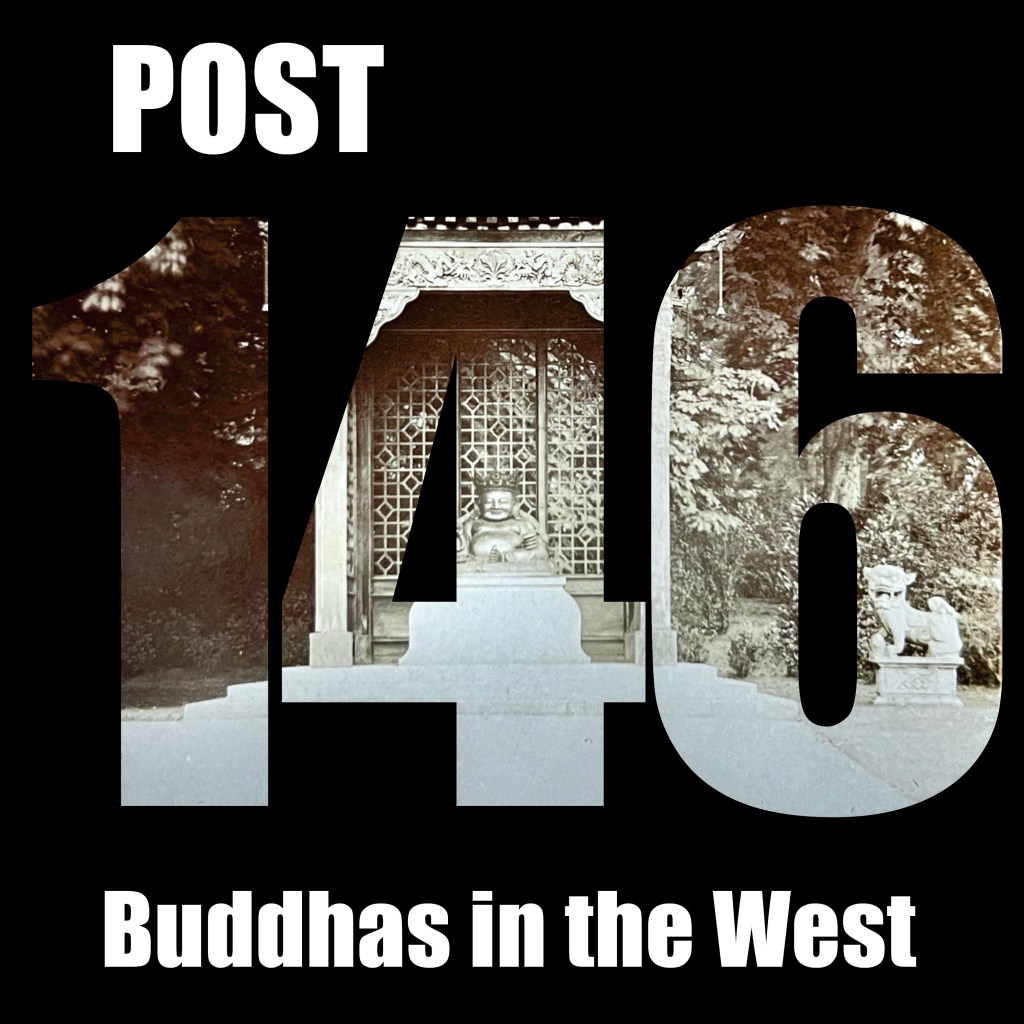
In the 1870s, estate carpenters built a wooden pagoda canopy above the statue, flanked by granite Japanese lions. The structure stood for decades before eventually rotting away and being demolished in 1960, leaving the Buddha exposed.
It is thought the statue was cast in 1690 and was found to have many Chinese coins inside it, likely offerings placed there by pious Buddhists. For more on this icon, see Jamie Carstairs’ “Location/Dislocation” viewable here: https://tinyurl.com/5w4tbpr7.
The Buddhas in the West Material Archive is a digital scholarship project that catalogues artifacts depicting Buddhist material culture for Western audiences. It’s comprised of prints, photos, and an assortment of ephemera and other objects. For a brief introduction to this archive, visit the main Buddhas in the West project page.


For Related Buddhas in the West Posts Featuring the Laughing Buddha | Budai:

For the Most Recent Buddhas in the West Posts:

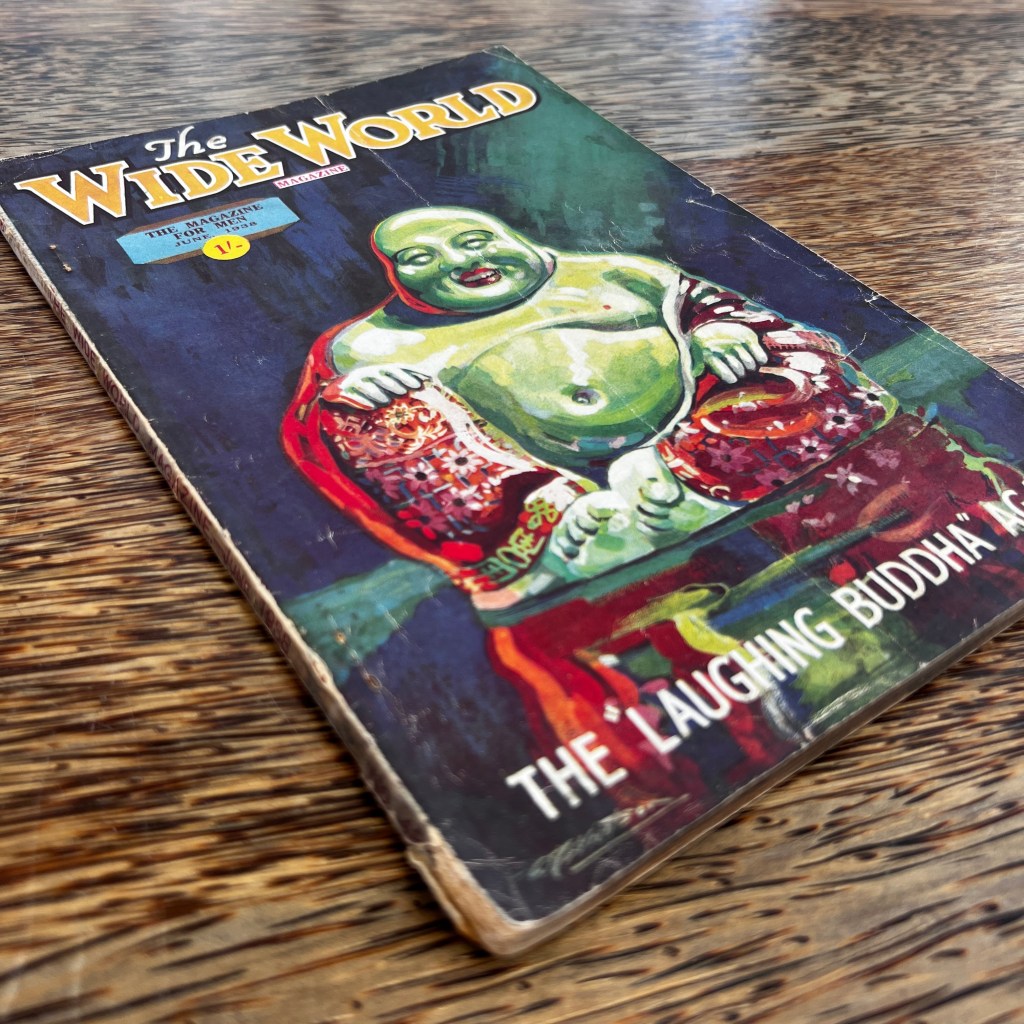
World Wide Magazine 1938 Laughing Buddha Cover

For all the new Buddhas in the West posts
follow us on Bluesky & Instagram


Founded in 1898, the Wide World Magazine was “devoted to romance of travel, adventure, and exploration.” Stories were promoted as “true in every detail” and submissions required a written statement by the author to this effect (they were, of course, not true).

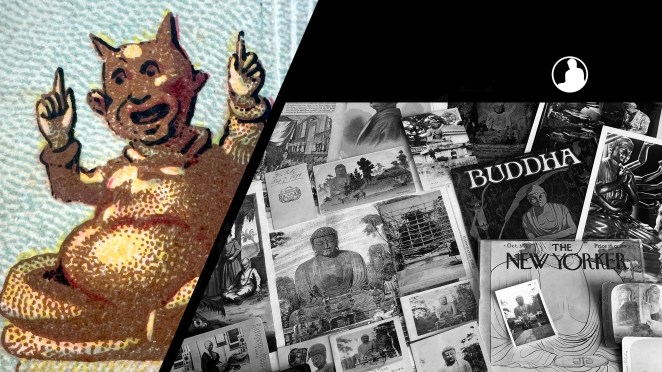
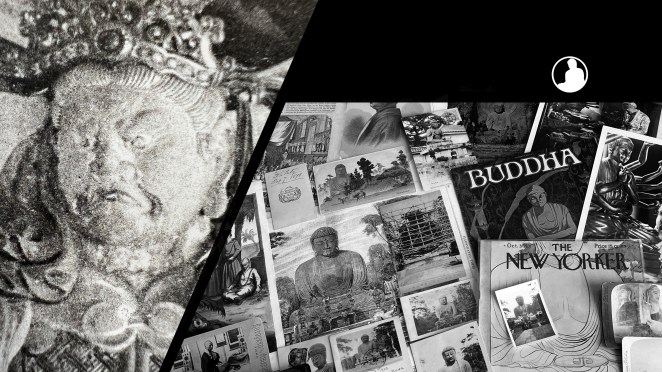
Over 150 pulp magazine titles were sold in the 1930s, thus striking cover art was critical for newsstand sales. The cover here depicts a brightly colored green-skinned Laughing Buddha statue

The cover story of June 1938 issue contained a report provided by one “Dennis Blake of Rangoon, Burma,” concerning the curious effects of Buddhist images.

In this report, two small Chinese Laughing Buddha statues were believed to either cause blessings or misfortune to its owners. The artwork by Kenneth Inns shows a statue about to be broken against the wall.

The stories are resolved when we are told that gifted Buddhist statues bring luck, while purchased Buddhist statues bring misfortune!


The Buddhas in the West Material Archive is a digital scholarship project that catalogues artifacts depicting Buddhist material culture for Western audiences. It’s comprised of prints, photos, and an assortment of ephemera and other objects. For a brief introduction to this archive, visit the main Buddhas in the West project page.


For Related Buddhas in the West Posts Featuring the Laughing Buddha:


For the Most Recent Buddhas in the West Posts:

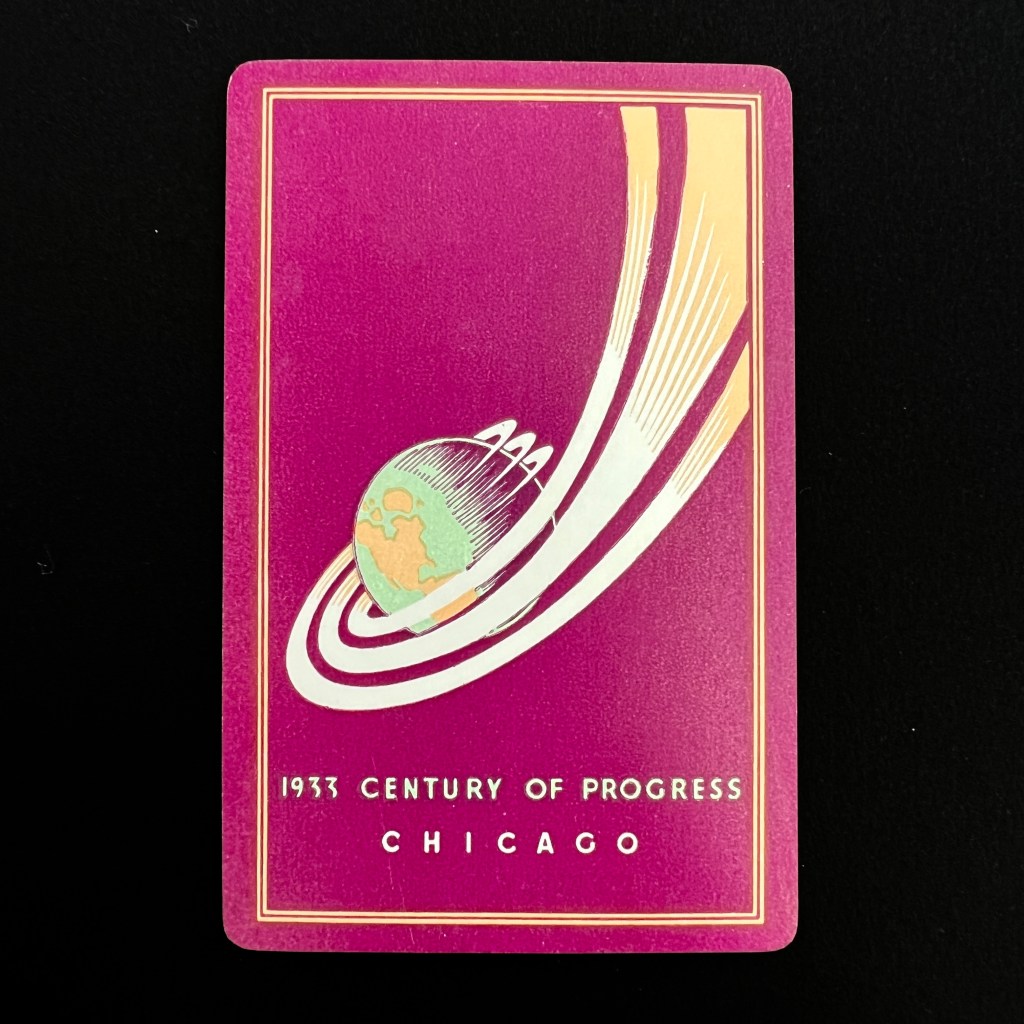
1933 Golden Pavilion Laughing Buddha Playing Card

For all the new Buddhas in the West posts
follow us on Bluesky & Instagram


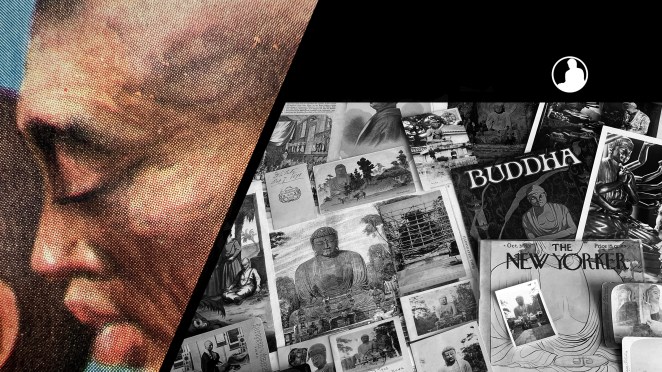
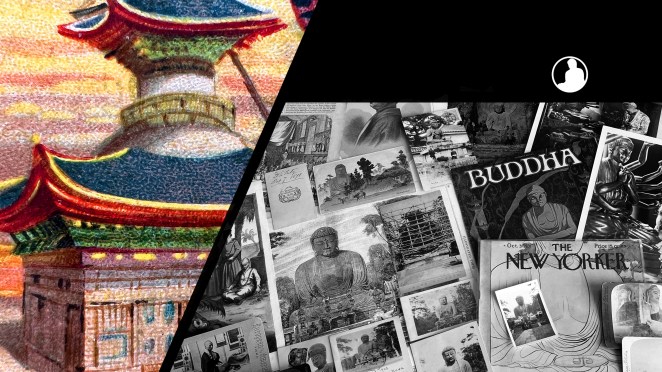
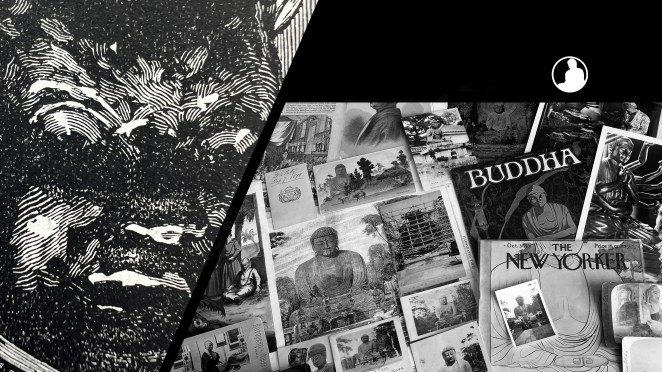
The 1933 Chicago World’s Fair held a true wonder: A Chinese replica of an 18th century Tibetan Buddhist shrine hall, the Golden Temple of Jehol. While the hall included a main shrine to Guanyin, the Laughing Buddha at the front entrance was often used in advertising.

Due to growing conflict in East Asia, the Chinese government withdrew from the 1933 World’s Fair. Subsequently, organizers arranged for display of the recently acquired temple replica of Vincent Bendix, a well-known Chicago industrialist.

Bendix had funded the expedition of Sved Hedin a few years earlier to procure a replica of a Chinese Buddhist temple. The original interest was to display two replica temples with Tibetan religious objects, one in Chicago and one in Stockholm.

Only one replica was made, but Hedin acquired many ritual implements, including thankas and icons, to outfit the building. Named the Bendix Golden Temple (or Pavilion), it was a Chinese-made replica of the Wanfaguiyi Hall in present-day Chengde (Jehol).

The temple was rebuilt for the 1939 World’s Fair in New York. As of 2018 the remains of the temple hall are in Stockholm, but the ritual items and furnishing have all been lost.


The Buddhas in the West Material Archive is a digital scholarship project that catalogues artifacts depicting Buddhist material culture for Western audiences. It’s comprised of prints, photos, and an assortment of ephemera and other objects. For a brief introduction to this archive, visit the main Buddhas in the West project page.


For Related Buddhas in the West Posts Featuring Budai / Laughing Buddha:


For the Most Recent Buddhas in the West Posts:

Mott Street Laughing Buddha Postcard

For all the new Buddhas in the West posts
follow us on Bluesky & Instagram


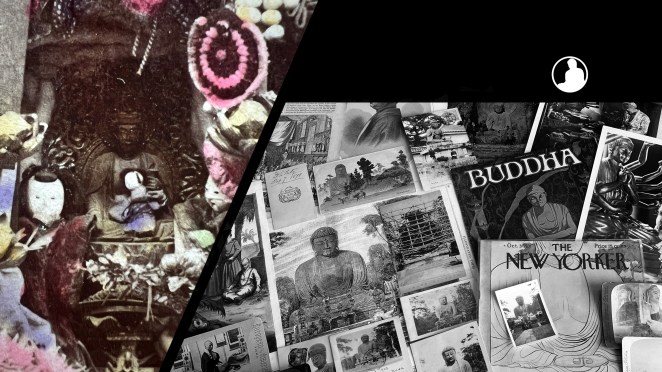
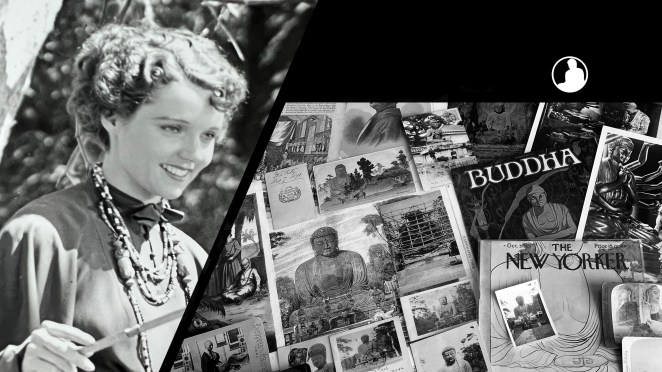
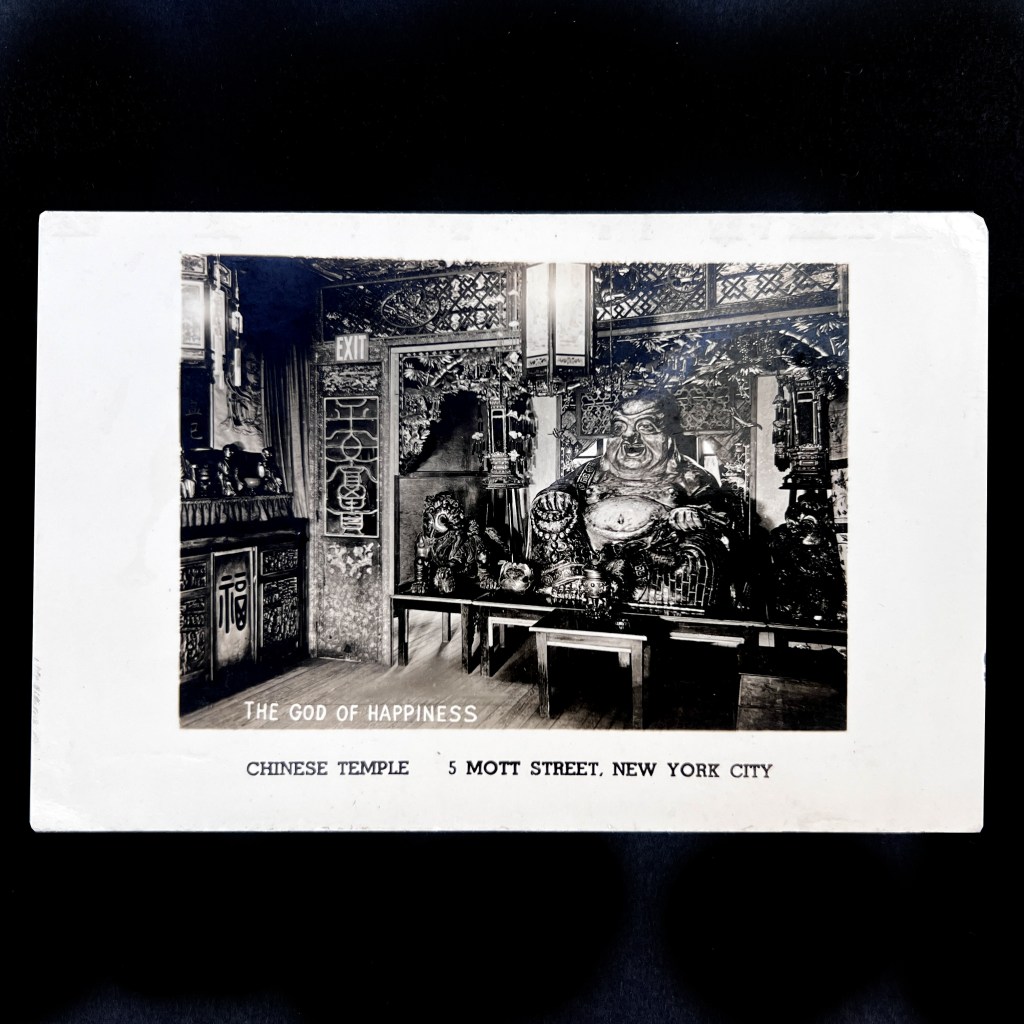
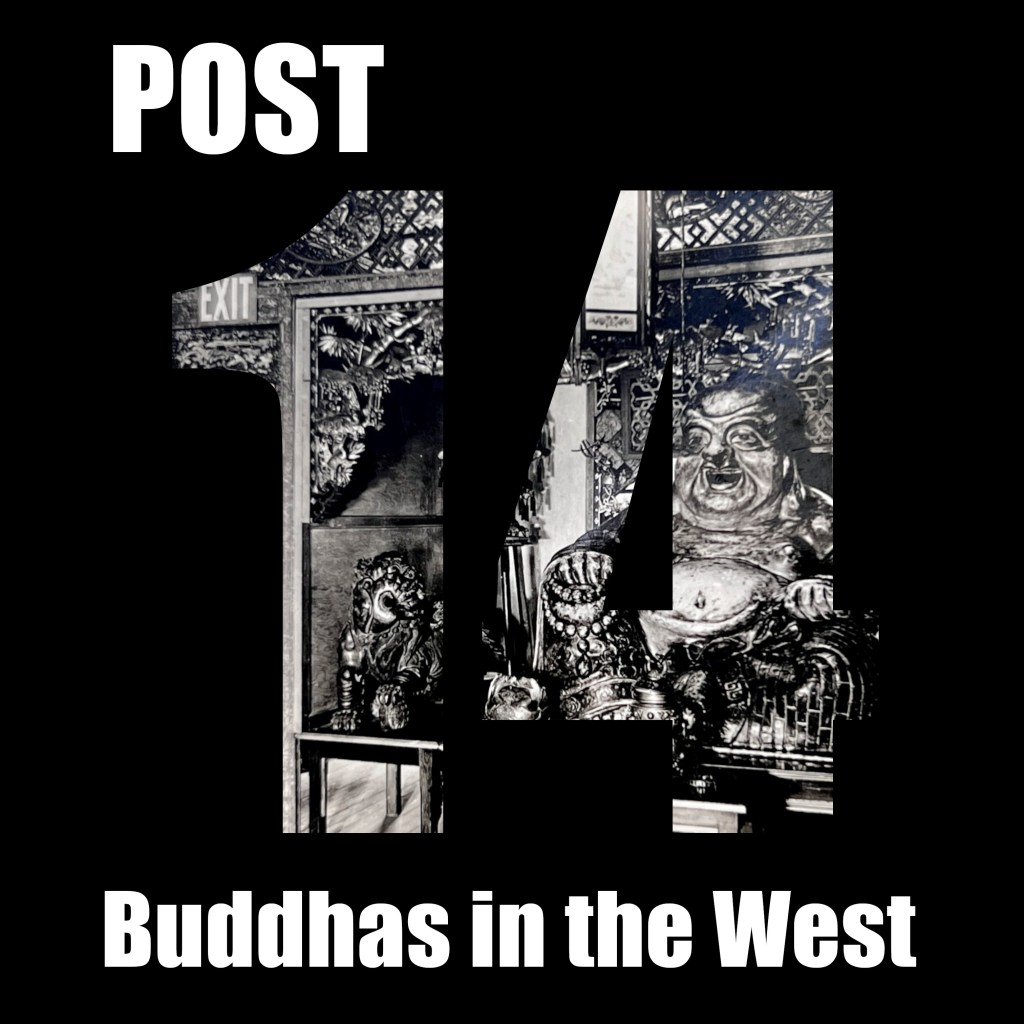
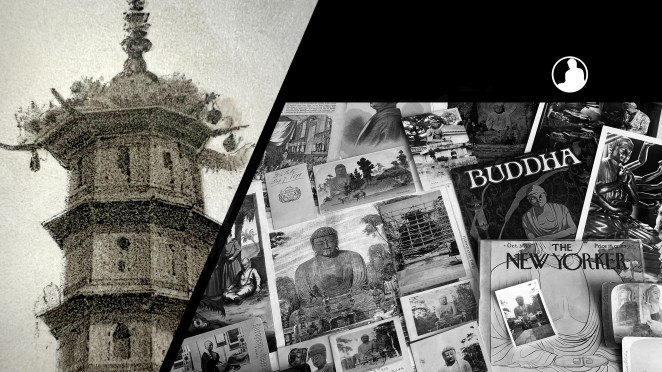
A Rare Buddha of New York: It was uncommon for early Chinese American temples to display Buddhist icons. Here we have the sitting figure of Budai, popularly known as the Laughing Buddha, shown in New York’s Chinatown in the 1930s.

Born in San Francisco in 1888, Poy Yee became secretary for one of the most influential tongs in New York, the On Leong Tong. In 1926, he opened the Chinese Temple at 5 Mott Street with this Budai icon.

The image is on a “real photo post card,” meaning the image was produced on photosensitized paper directly. Based on the design of the obverse we can tell the card was produced between 1939 and 1950.

Yee called the space a Chinese Temple, but the interior was not typical of a religious space. He housed additional Chinese exhibits and charged Chinatown tourists 25c admission.

The statue was made of plaster and painted a bronze color; it reputedly weighed 1000 pounds. Yee closed his Chinese Temple in 1947.


The Buddhas in the West Material Archive is a digital scholarship project that catalogues artifacts depicting Buddhist material culture for Western audiences. It’s comprised of prints, photos, and an assortment of ephemera and other objects. For a brief introduction to this archive, visit the main Buddhas in the West project page.


For Related Buddhas in the West Posts Featuring Budai / Laughing Buddha:


For the Most Recent Buddhas in the West Posts:

Johannes Nieuhof’s Temple Interior Engraving

For all the new Buddhas in the West posts
follow us on Bluesky & Instagram


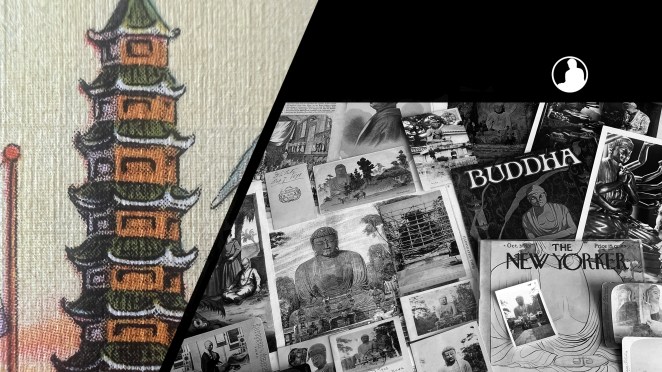
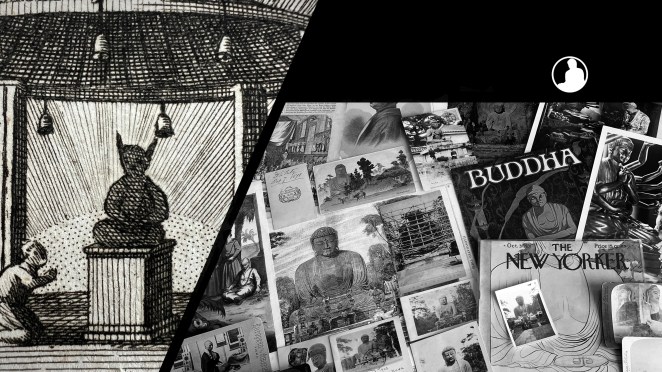
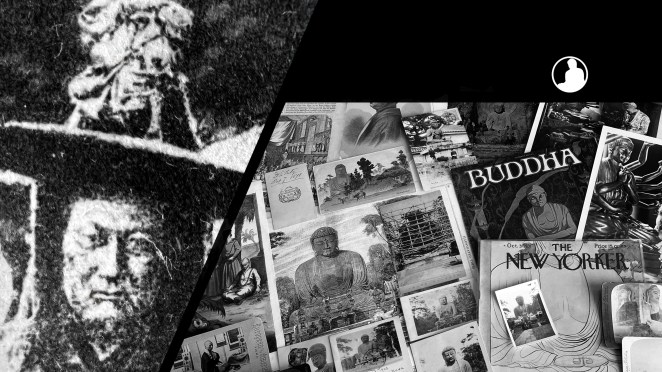
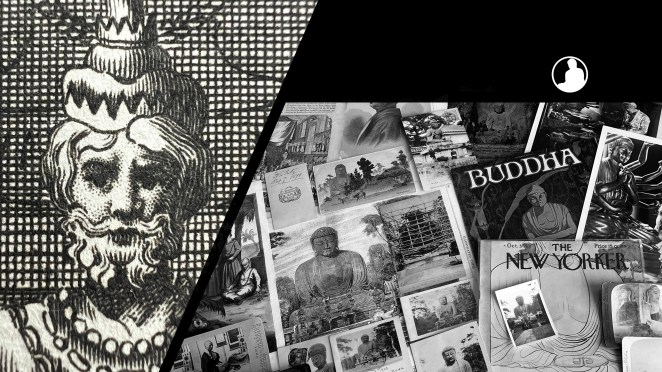
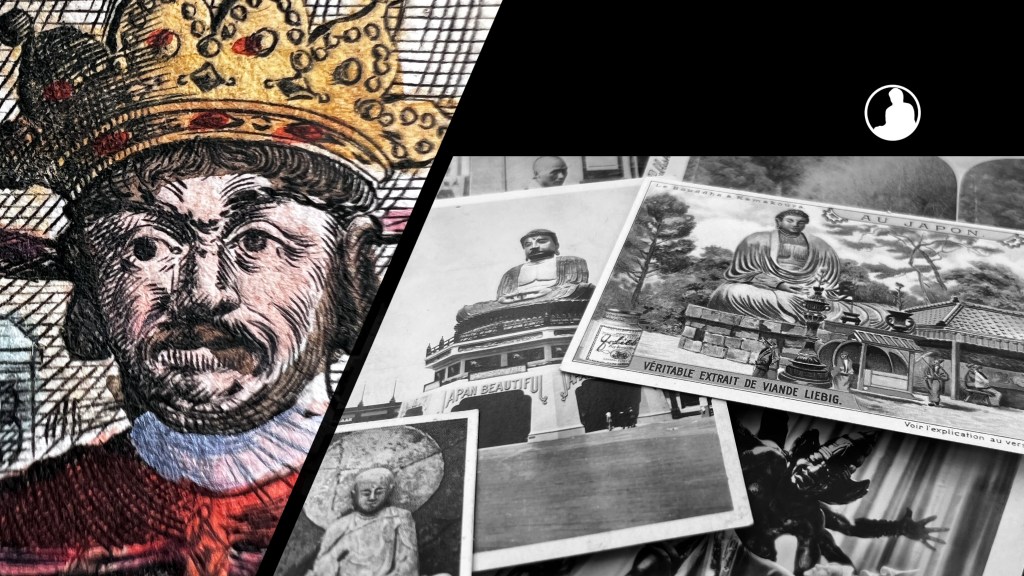
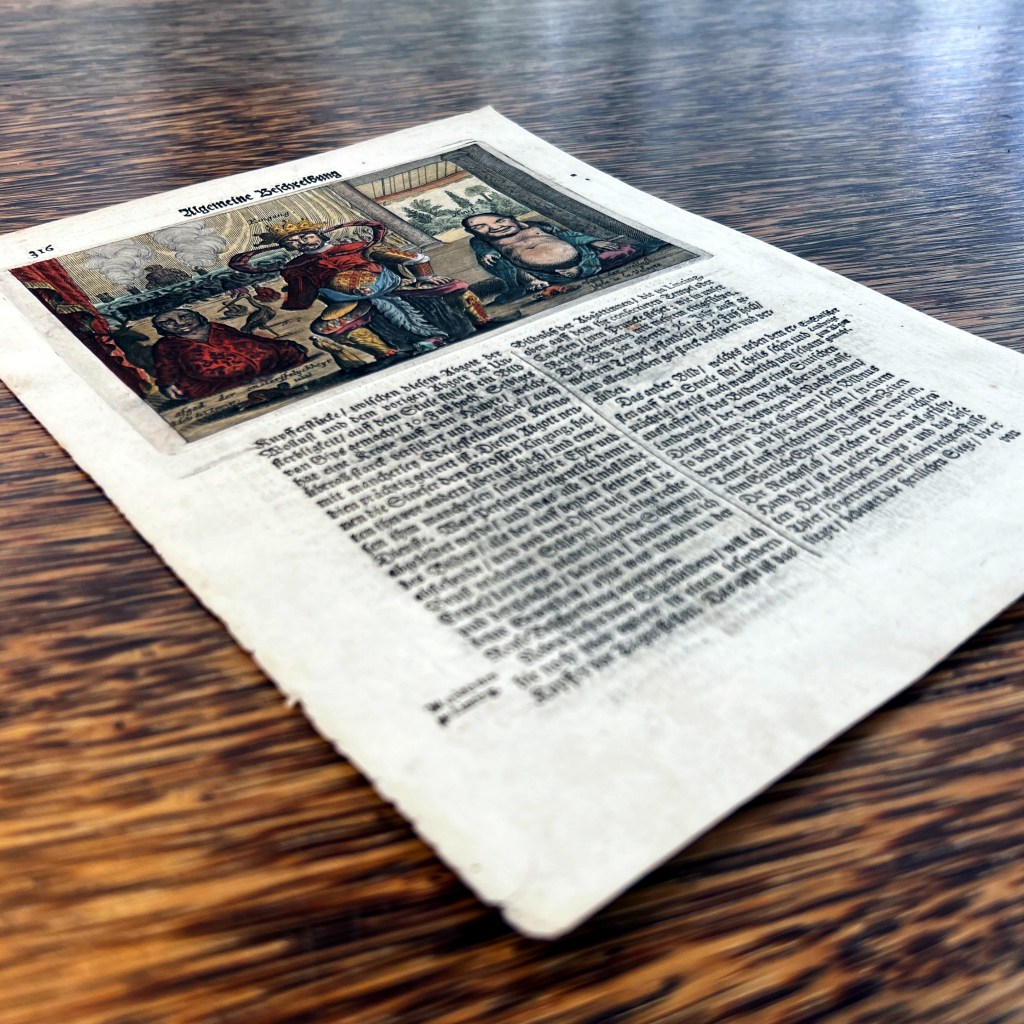
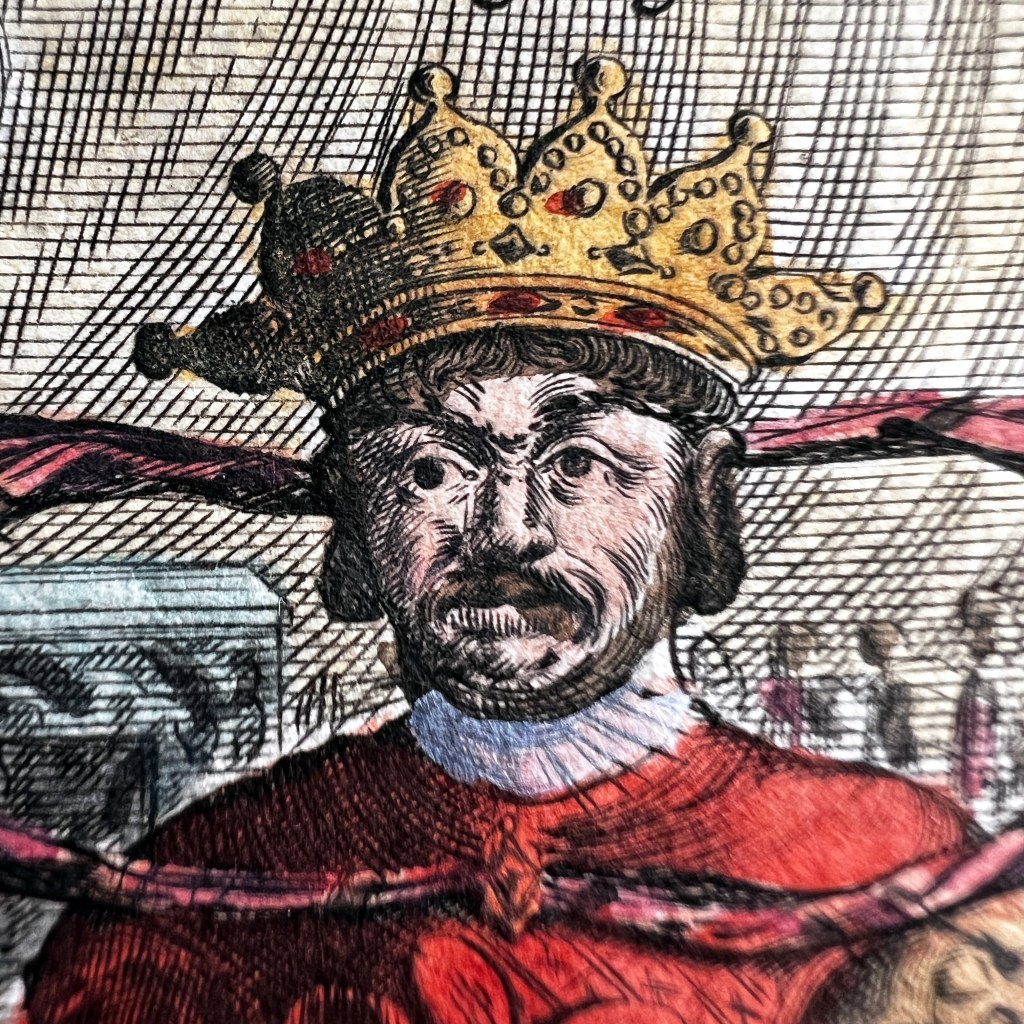
Some of the earliest Buddhist imagery in Europe appears as copperplate engravings in late 17th century books. Here’s a hand-colored page from the German edition of An Embassy of the Dutch East India Company by Johannes Nieuhof showing the imaginary interior of a Chinese temple.

Nieuhof’s work was the first illustrated European book on China. Moreover, after Nieuhof returned from the first Dutch envoy to China in 1657, his personal drawings formed the basis for many illustrations in this work.

The copper plates were most likely prepared in the workshop of the publisher Jacob van Meurs who printed the first Dutch edition in 1665; the German edition appeared in 1666. You can still see the impression of the plate in the paper. The text was standard letterpress.

This page was extracted from a volume and is 27 cm x 20 cm (10 in x 8 in) in size.

A Buddhist statue is also seen on the back altar.

Prostrating Buddhist devotees enliven the scene.

The etching reveals meticulous line work. Amazingly, A manuscript copy of Nieuhof’s sketches was discovered in the 1970s and is held by the Bibliothèque Nationale de France, it can be viewed here: https://tinyurl.com/yb94urpj


The Buddhas in the West Material Archive is a digital scholarship project that catalogues artifacts depicting Buddhist material culture for Western audiences. It’s comprised of prints, photos, and an assortment of ephemera and other objects. For a brief introduction to this archive, visit the main Buddhas in the West project page.


For Related Buddhas in the West Posts Featuring Historical Engravings:

For the Most Recent Buddhas in the West Posts: