Puck Magazine’s Benjamin Butler as Joss Buddha Cover

For all the new Buddhas in the West posts
follow us on Bluesky & Instagram


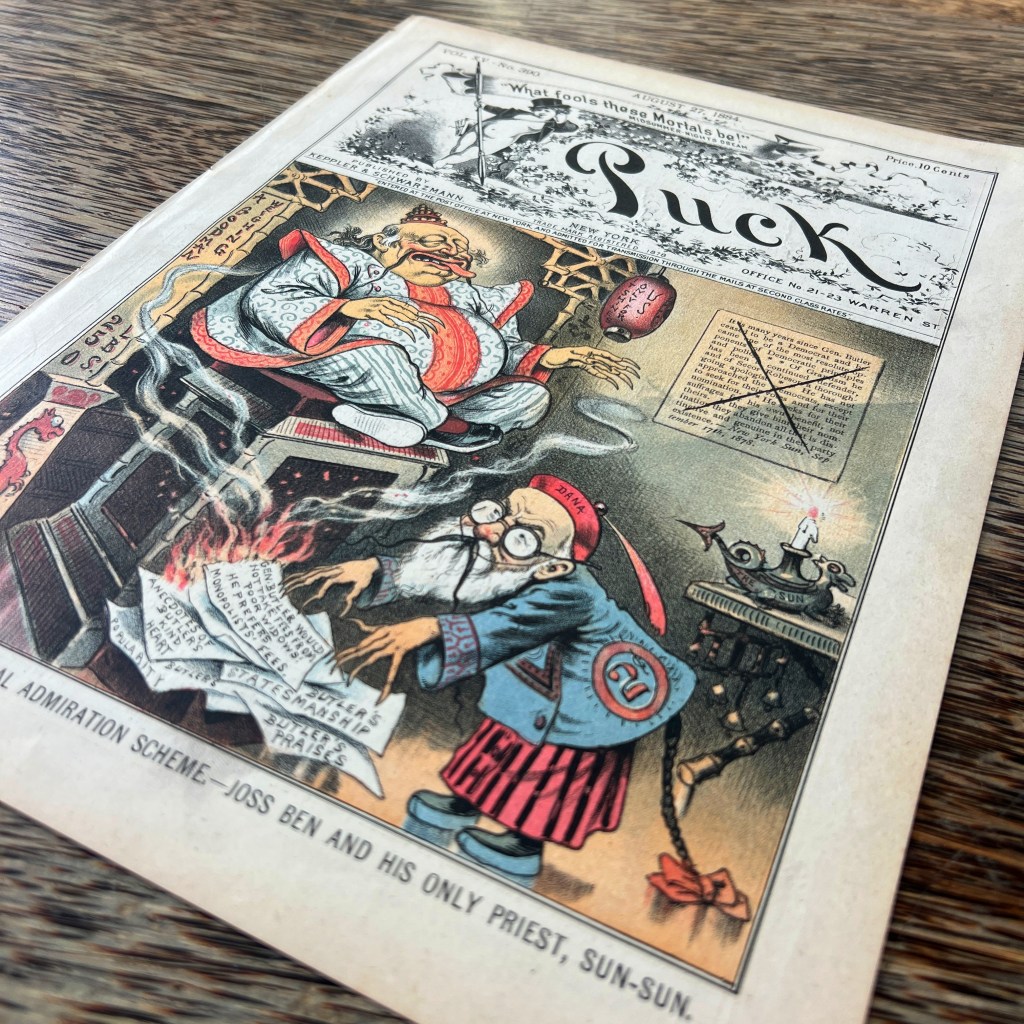
By the 1880s, Chinese American temples were sufficiently familiar to the public imagination to serve as an effective visual basis for political satire. Yet, however, the imagery was often not rooted in ethnographic realism; it remained a caricature of Western fantasy.
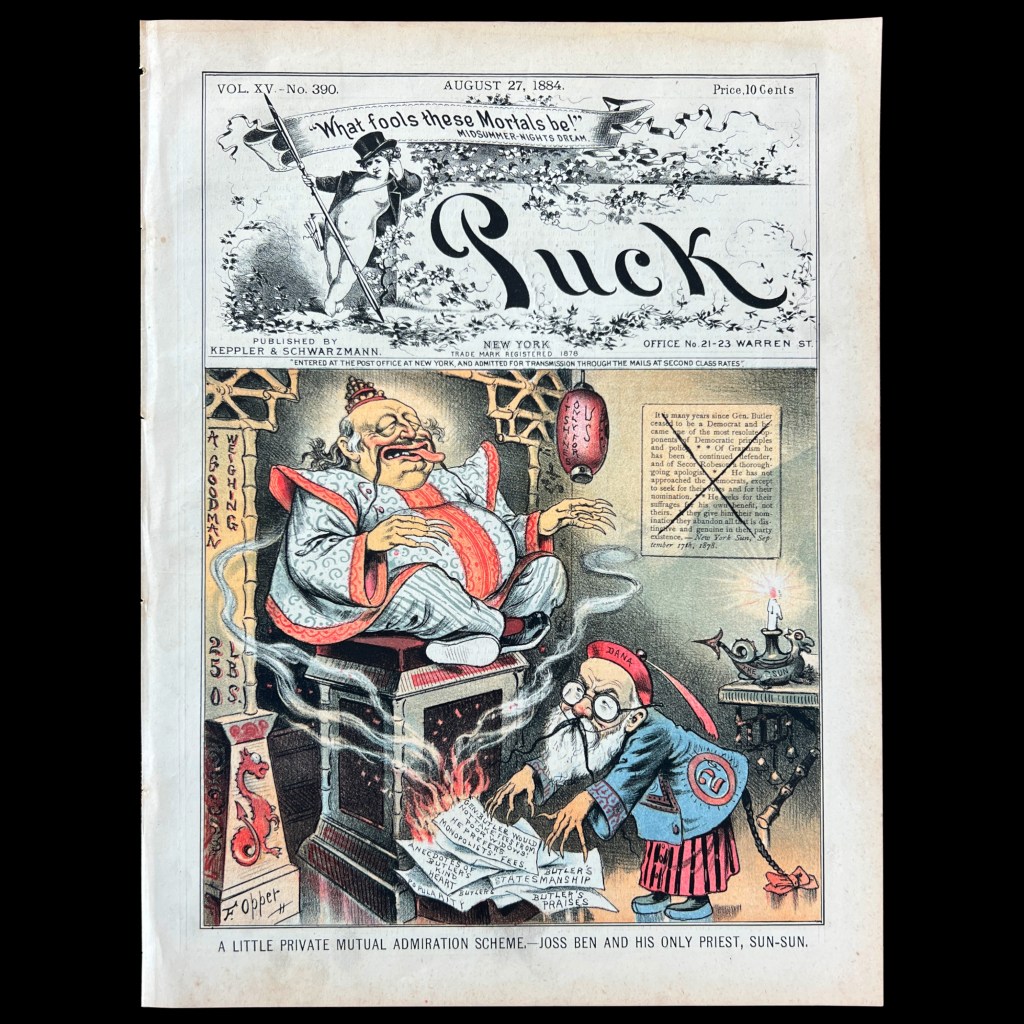
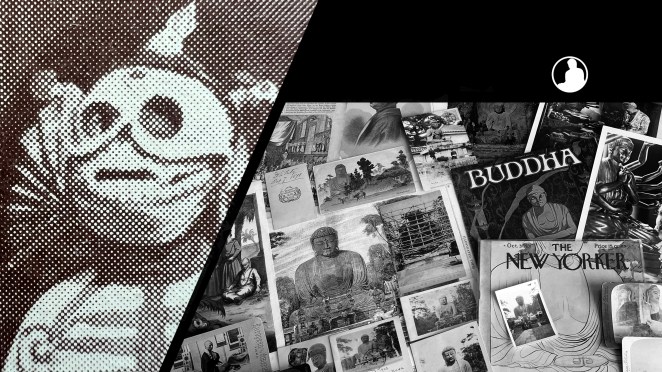
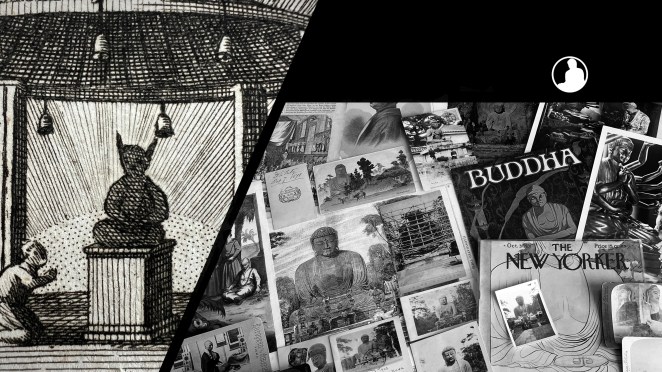
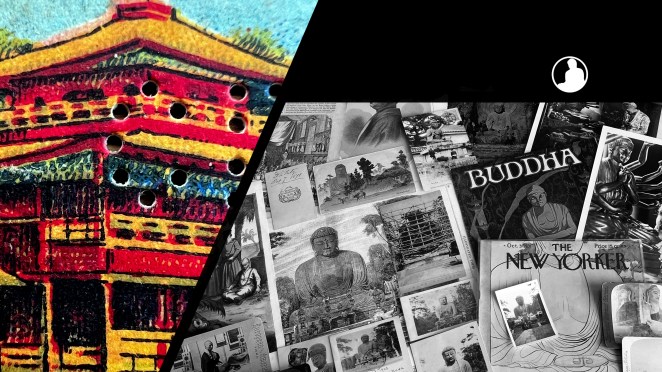
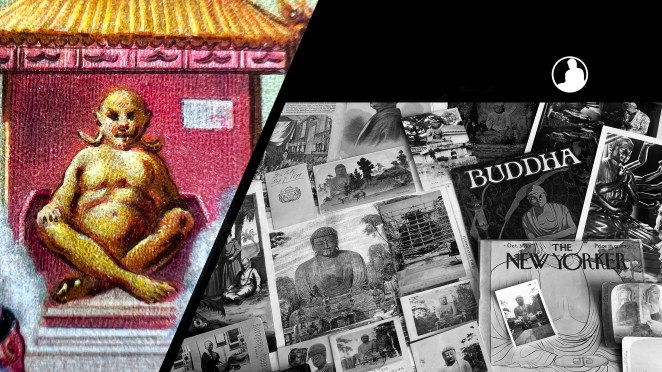
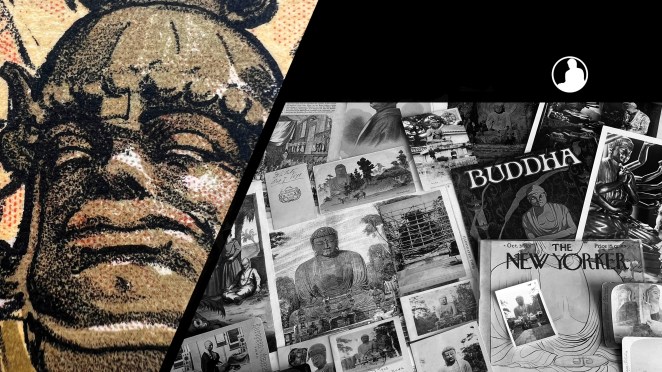
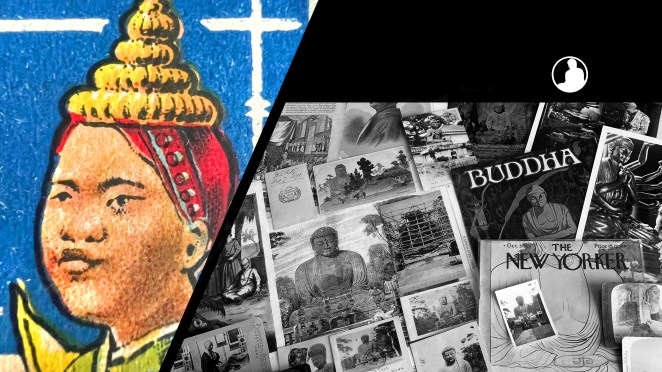
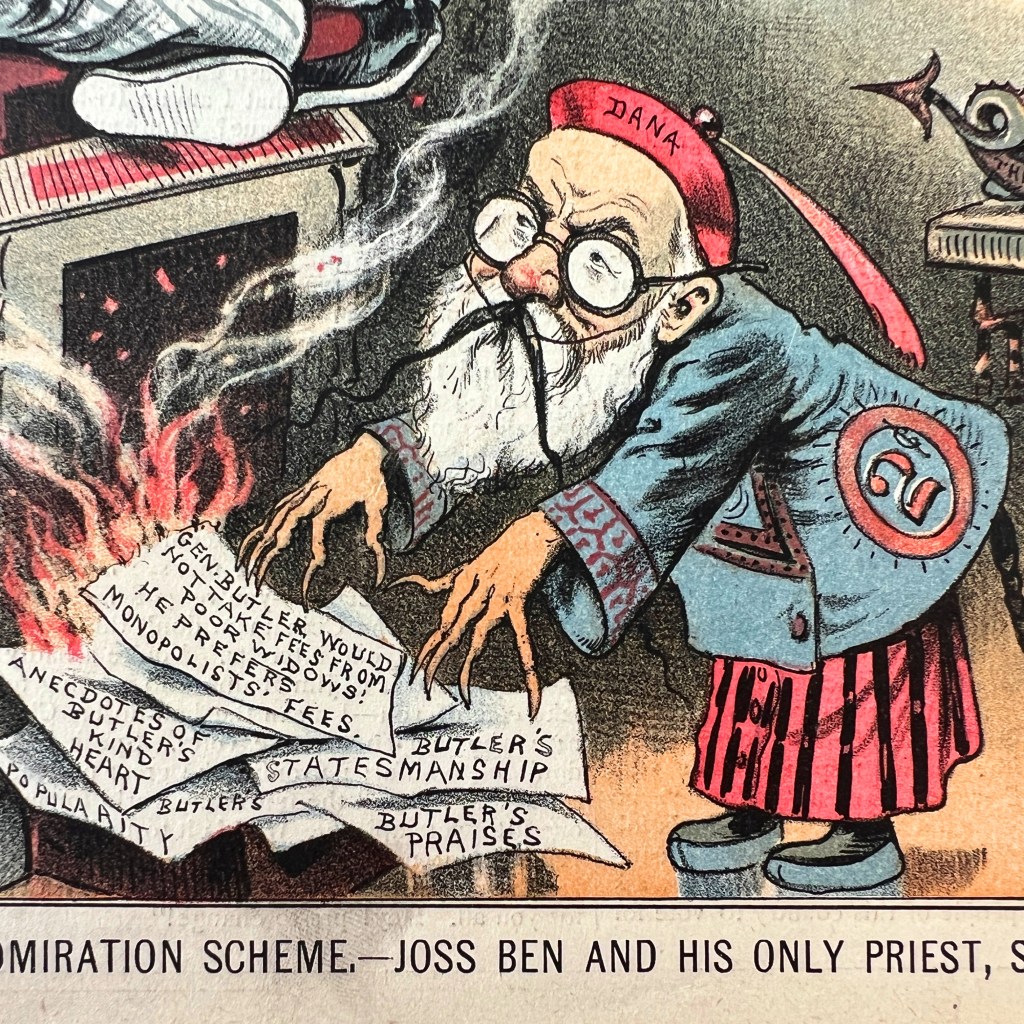
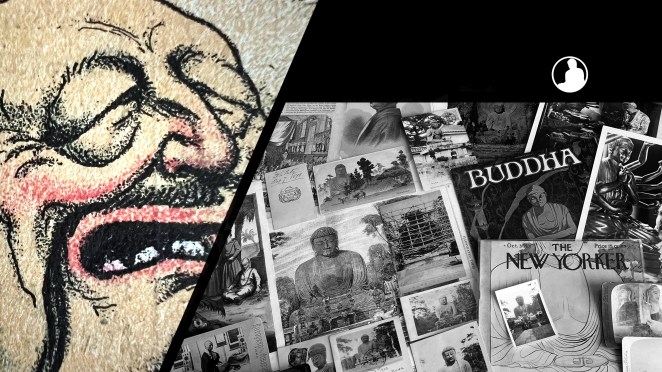
This 1884 cover of Puck depicts Gen. Benjamin Butler as a Chinese deity named “Ben Joss” receiving offerings from Charles Dana, the editor of the New York Sun, dressed in yellowface. Frederick Opper’s illustration draws attention to the effusive editorial praise Dana lavished upon Butler.
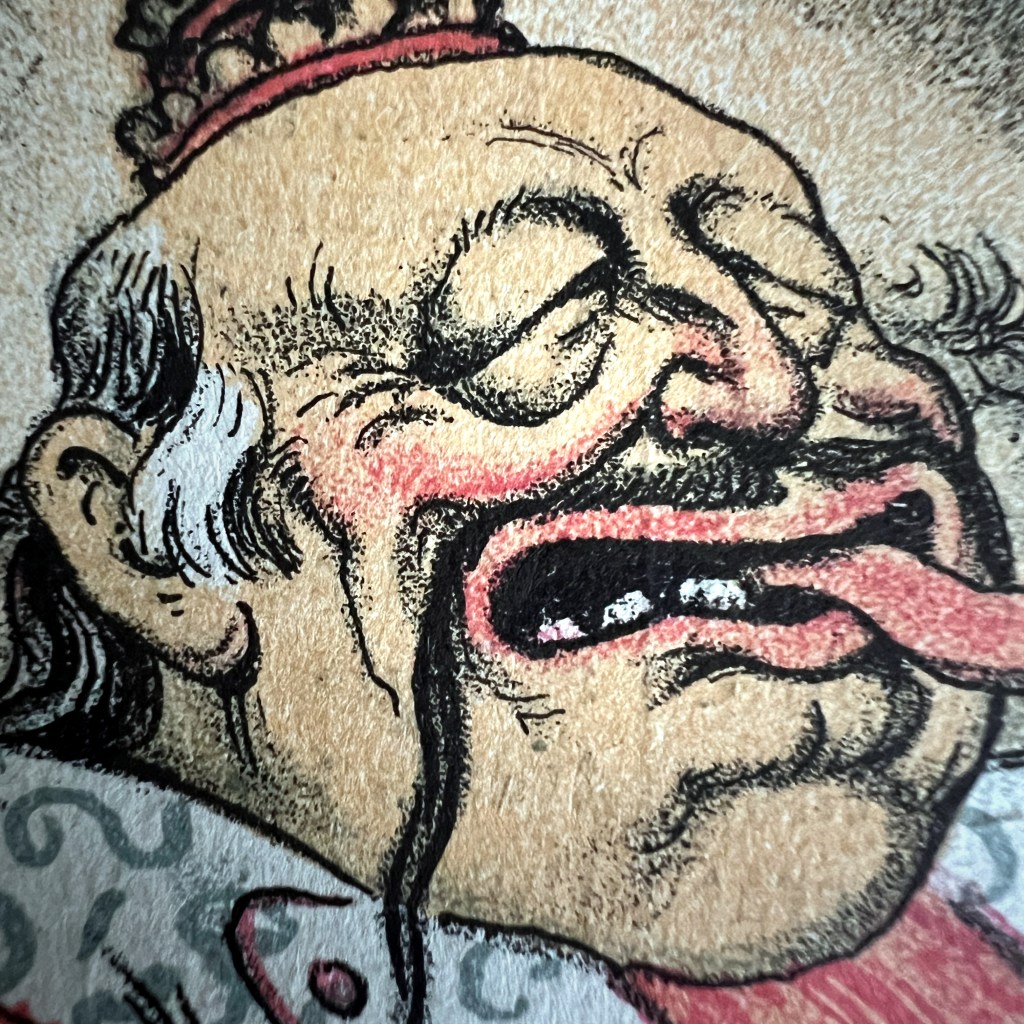
The lithograph portrays Butler as a cross-legged Buddha, but such figures were nearly non-existent in Chinese American temples of the era. In fact, the image portrays a “nodding” chinoiserie magot figurine, a European caricature of a Chinese Laughing Buddha, with bobbing hands and tongue.
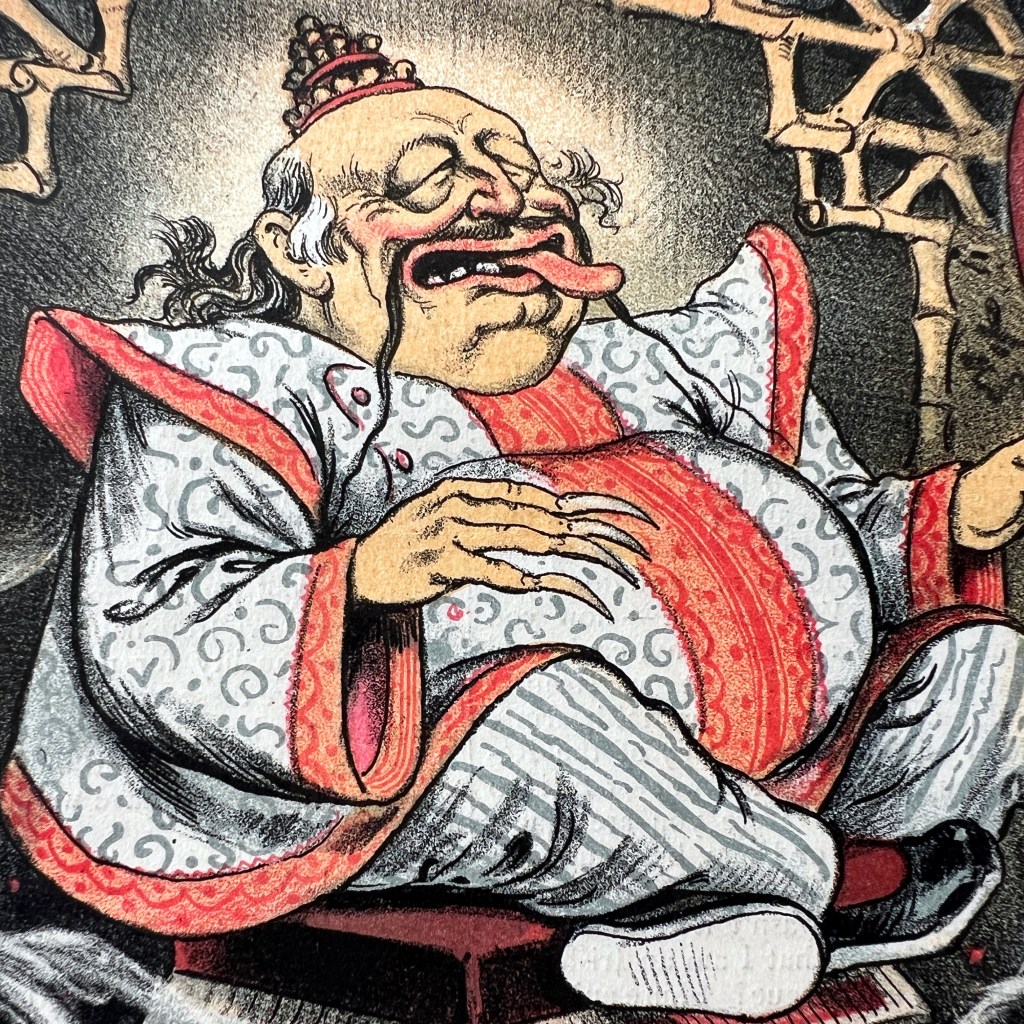
Magots were popularized in Europe as grotesque and whimsical decorative figurines, made with mechanically balanced heads, tongues, and hands that moved. Opper’s illustrations adds a string-like mustache and pointy fingernails to Butler, racialized visual cues to identify the figure as Chinese.
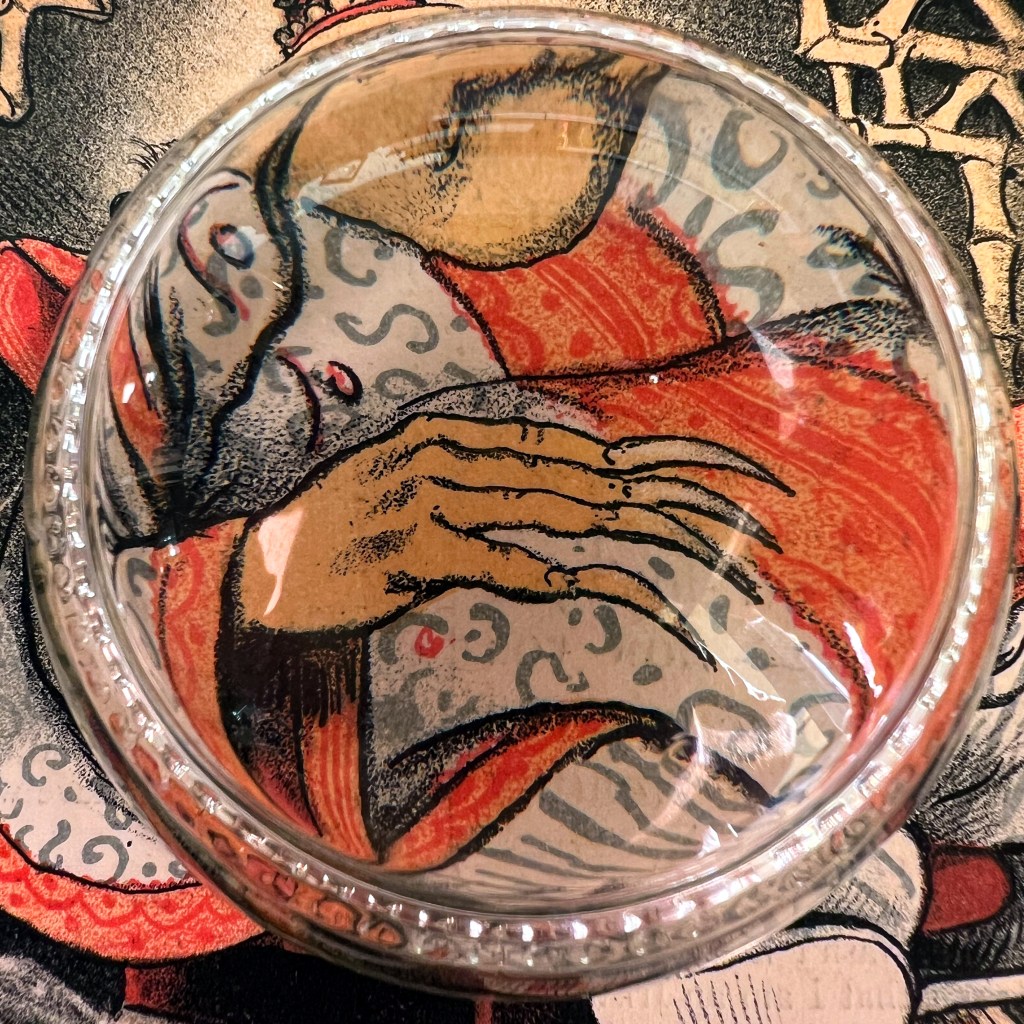
Even as satire, such illustrations imply buddhas were commonplace in Chinese American temples, but this was not the case. Opper’s illustration is a pastiche of visual tropes – paper lanterns, dragon candle holders, and Buddha statues – to evoke a exoticized notion of Chinese religiosity.
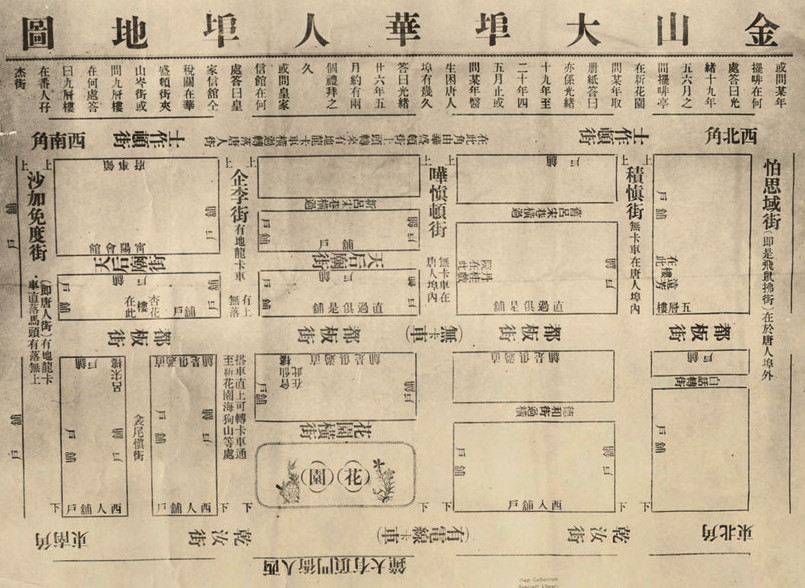
To see a better representation of the kinds of icons enshrined in early Chinese American temples, see the online “Map of Temples in San Francisco’s Chinatown: 1850s-1906,” viewable here: https://tinyurl.com/ykyaas2d.
The Buddhas in the West Material Archive is a digital scholarship project that catalogues artifacts depicting Buddhist material culture for Western audiences. It’s comprised of prints, photos, and an assortment of ephemera and other objects. For a brief introduction to this archive, visit the main Buddhas in the West project page.


For Related Buddhas in the West Posts Featuring Magazines:

For the Most Recent Buddhas in the West Posts:

Jean Claude White’s Panorama Photograph of Lhasa

For all the new Buddhas in the West posts
follow us on Bluesky & Instagram


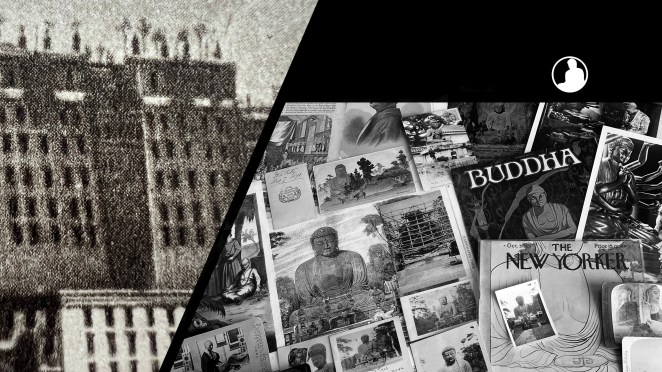
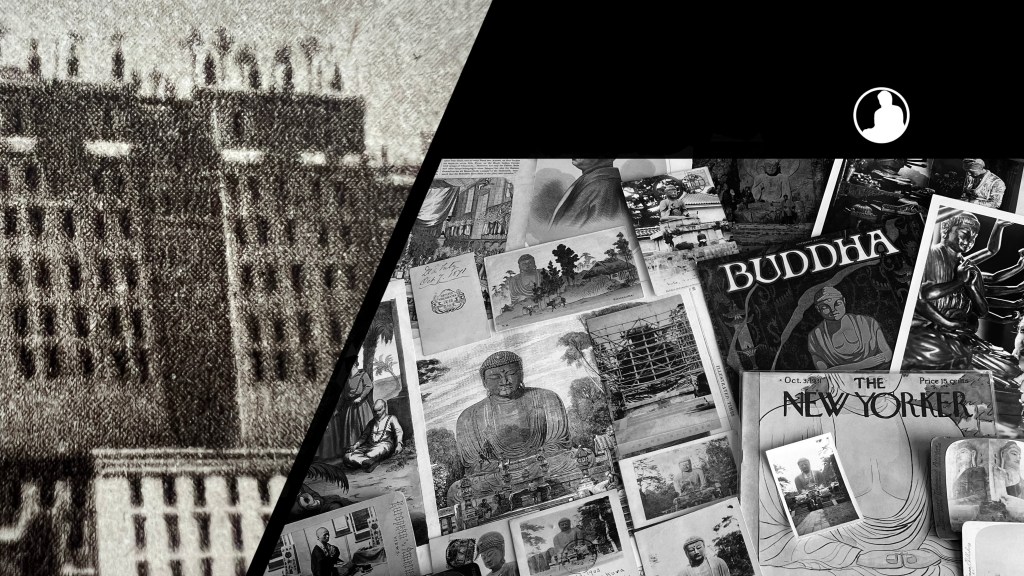
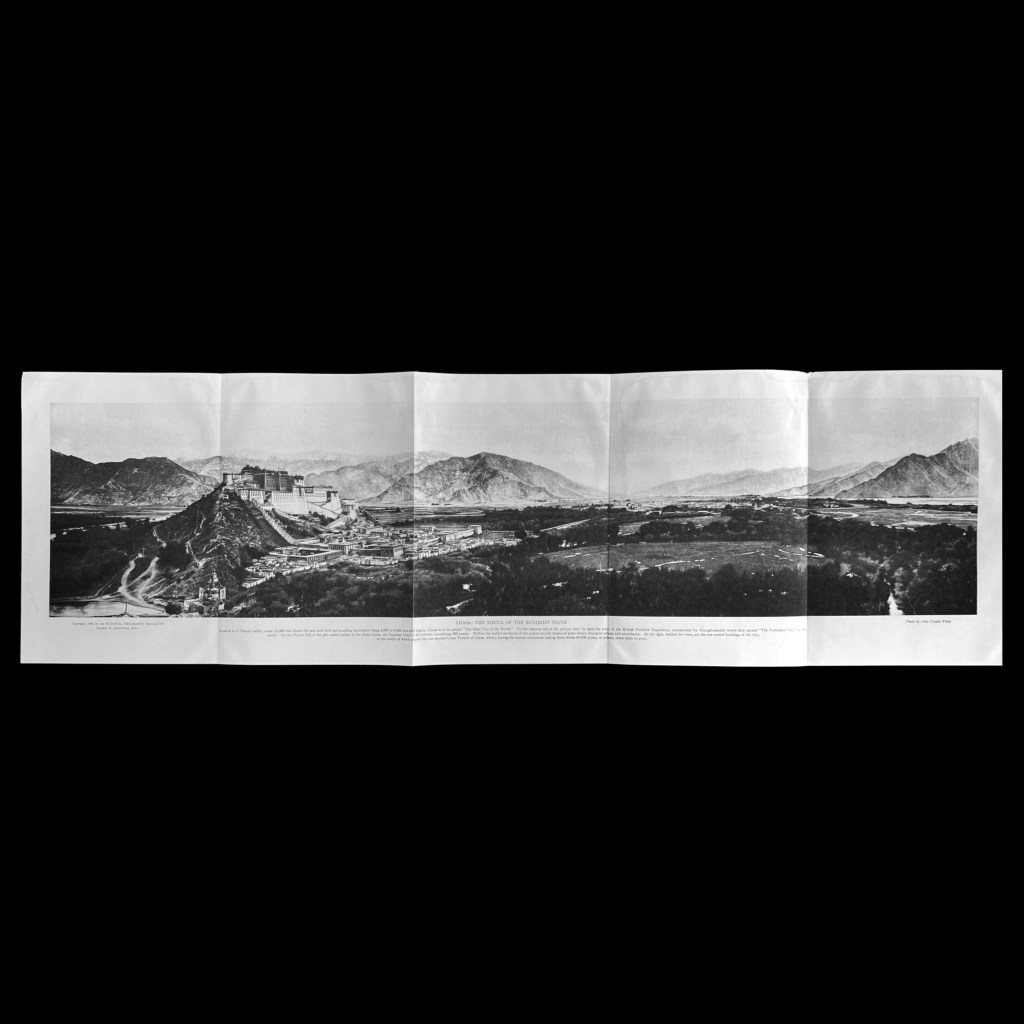
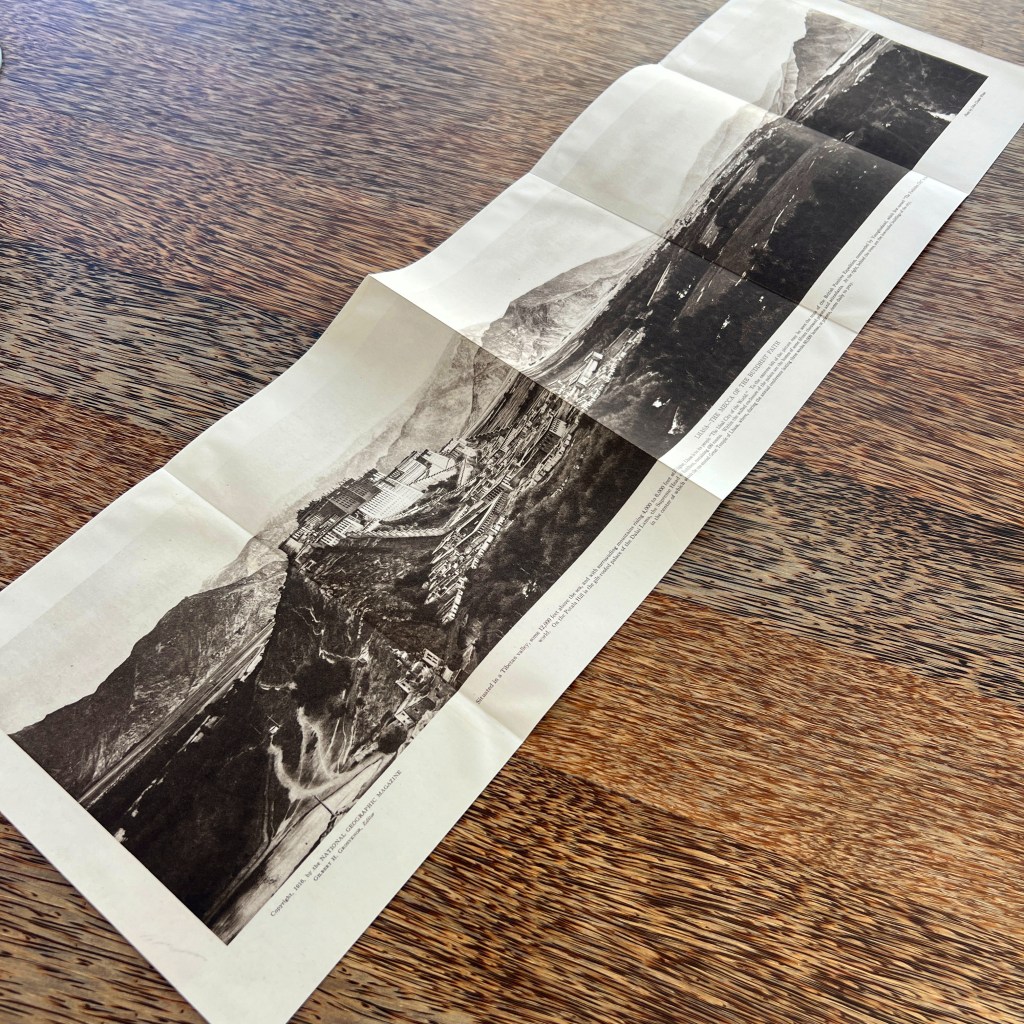
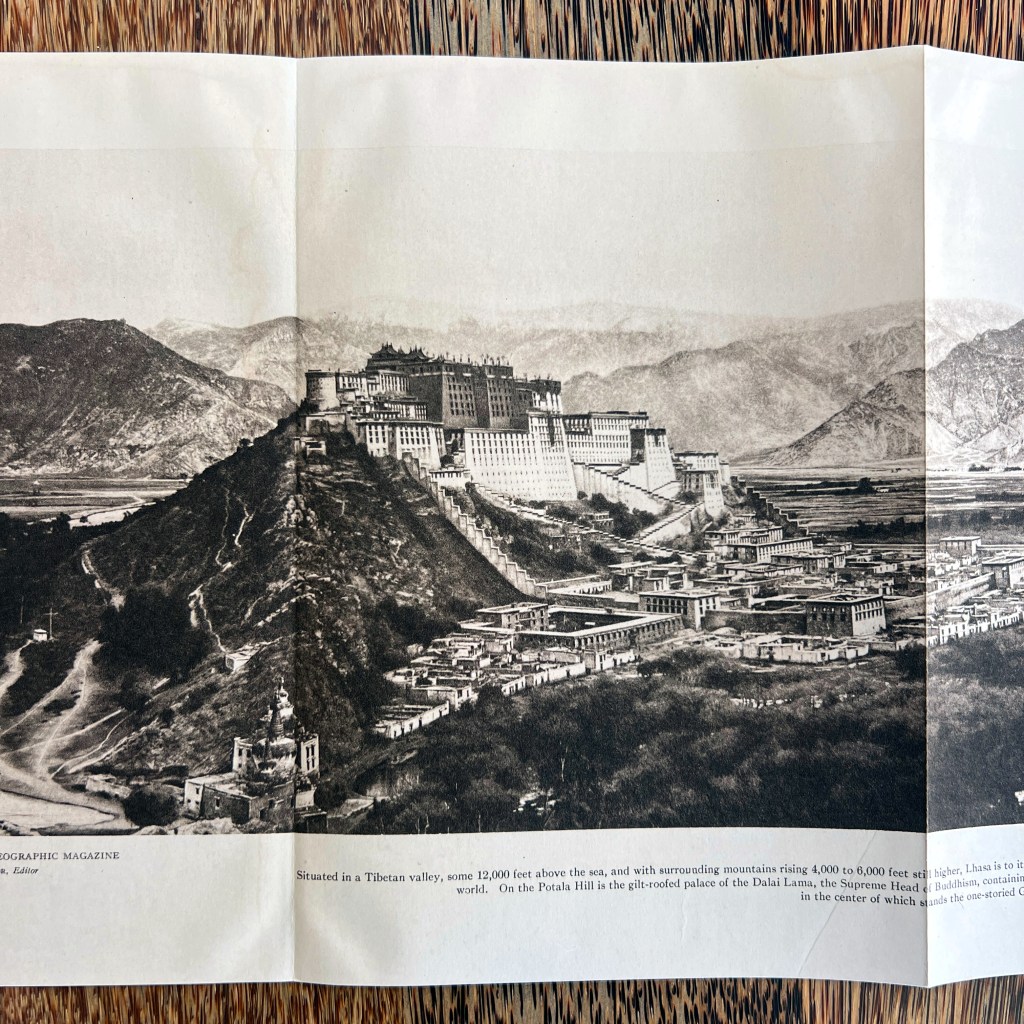
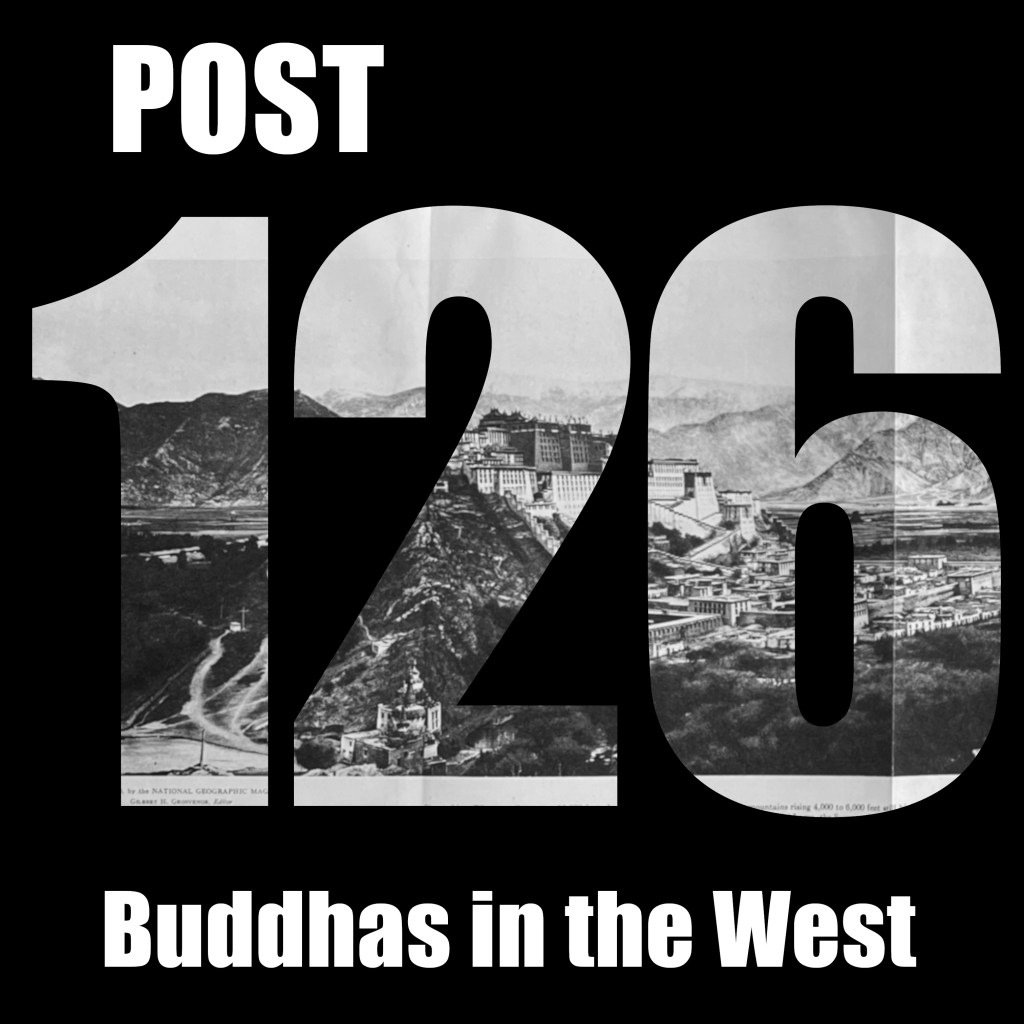
By the early 20th century there was an unofficial race to capture a photograph of Lhasa, the religious center of Tibet. In 1905 National Geographic printed a few of the first photos of the region and a decade later, in 1916, published a large panoramic insert of Lhasa’s Potala Palace.

The shot was taken by Jean Claude White, a civil servant in British India who traveled with the 1903-04 British Youghusband expedition to Tibet as the official mission photographer. National Geographic reproduced many photos White took on the expedition, including this stunning panoramic view.

The Potala dominates everything in Lhasa,” notes White in his accompanying article entitled, “The World’s Strangest Capital.” Illustrated with 19 photogravure prints, all the photos seem to have been taken during the Youghusband expedition, giving readers very early and rare views of Tibet.

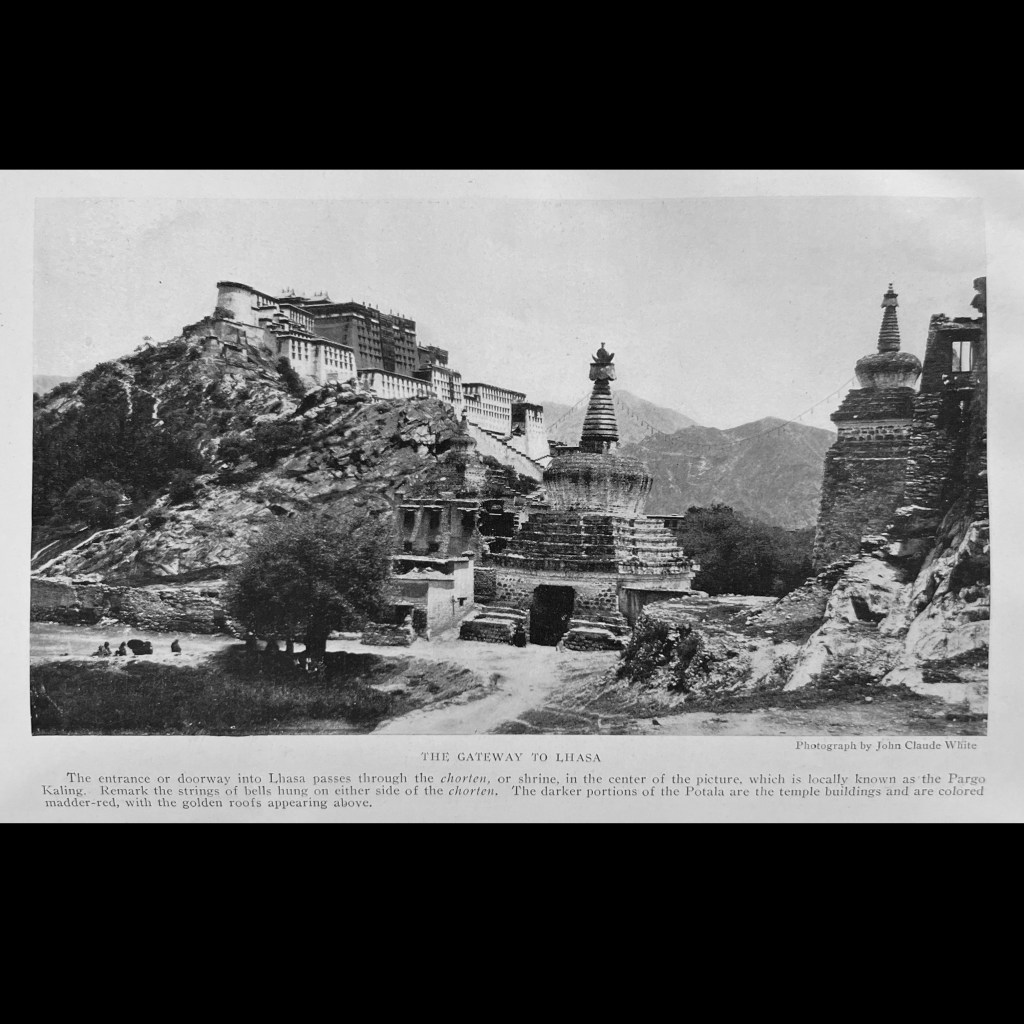
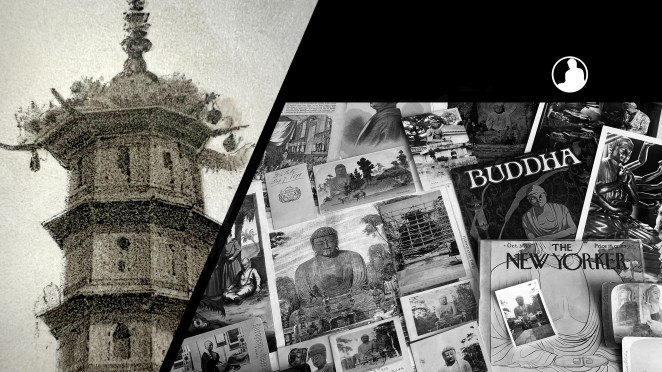
The first photo in the article shows the Western Gate to Lhasa, known as the Pargo Kaling. The structure was a large stūpa with a walkway cut through the middle.

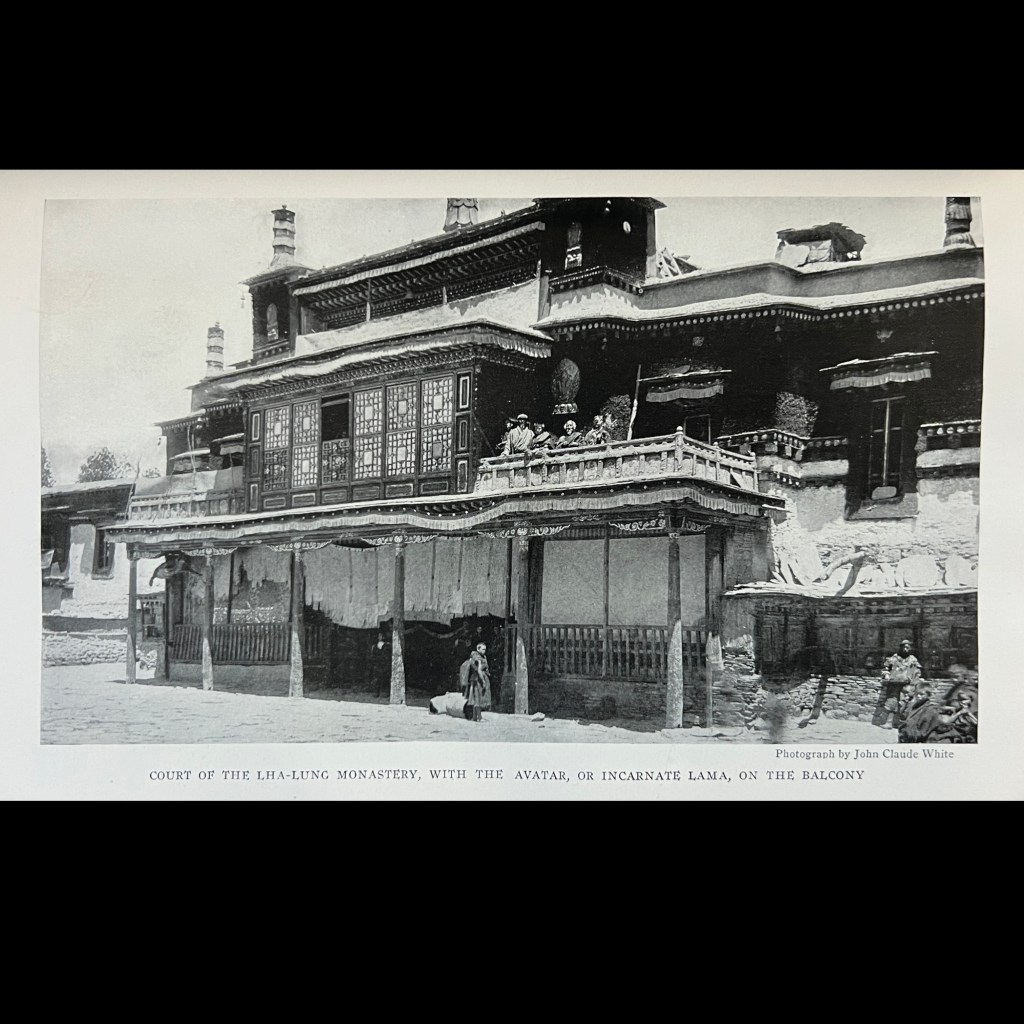
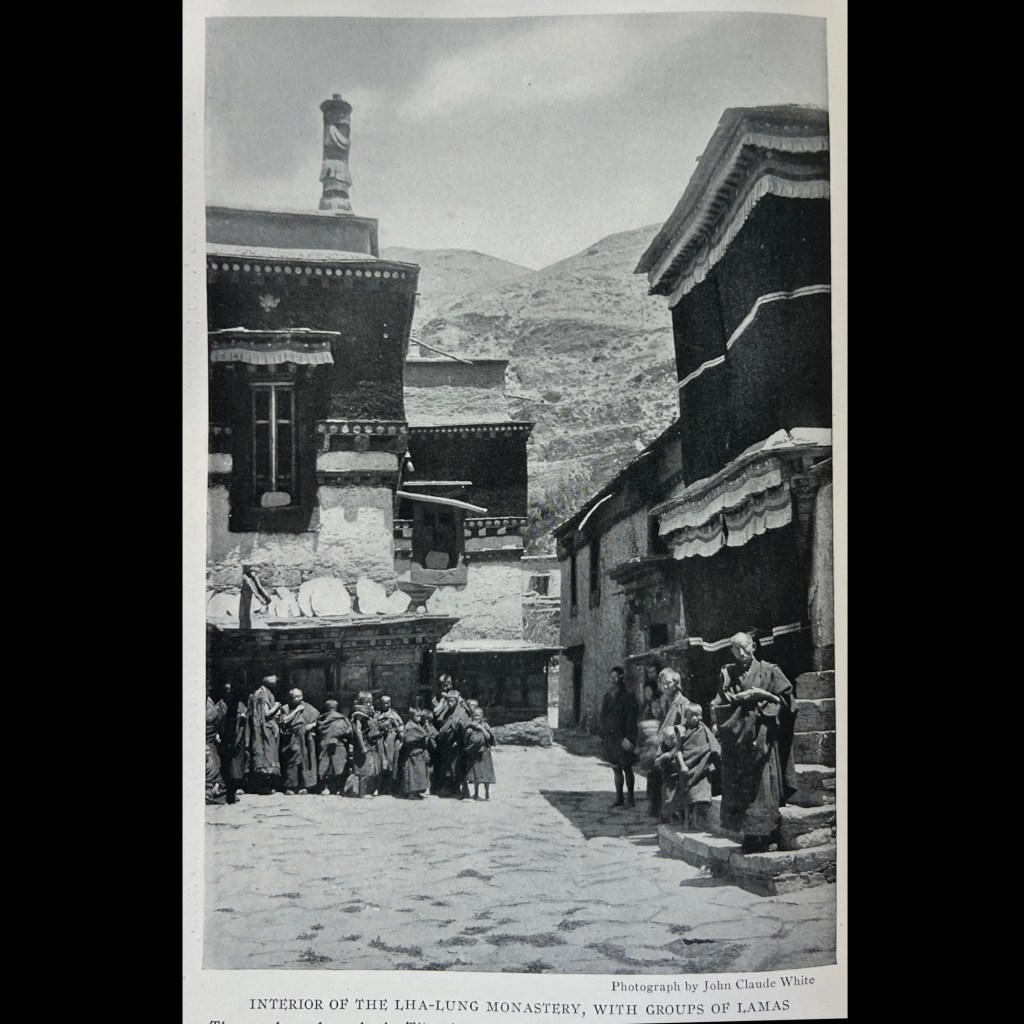
White also visited sites outside of Lhasa, including the Lhalung Monastery.

According to White’s estimate, there were 500,000 monks living in 1026 monasteries.

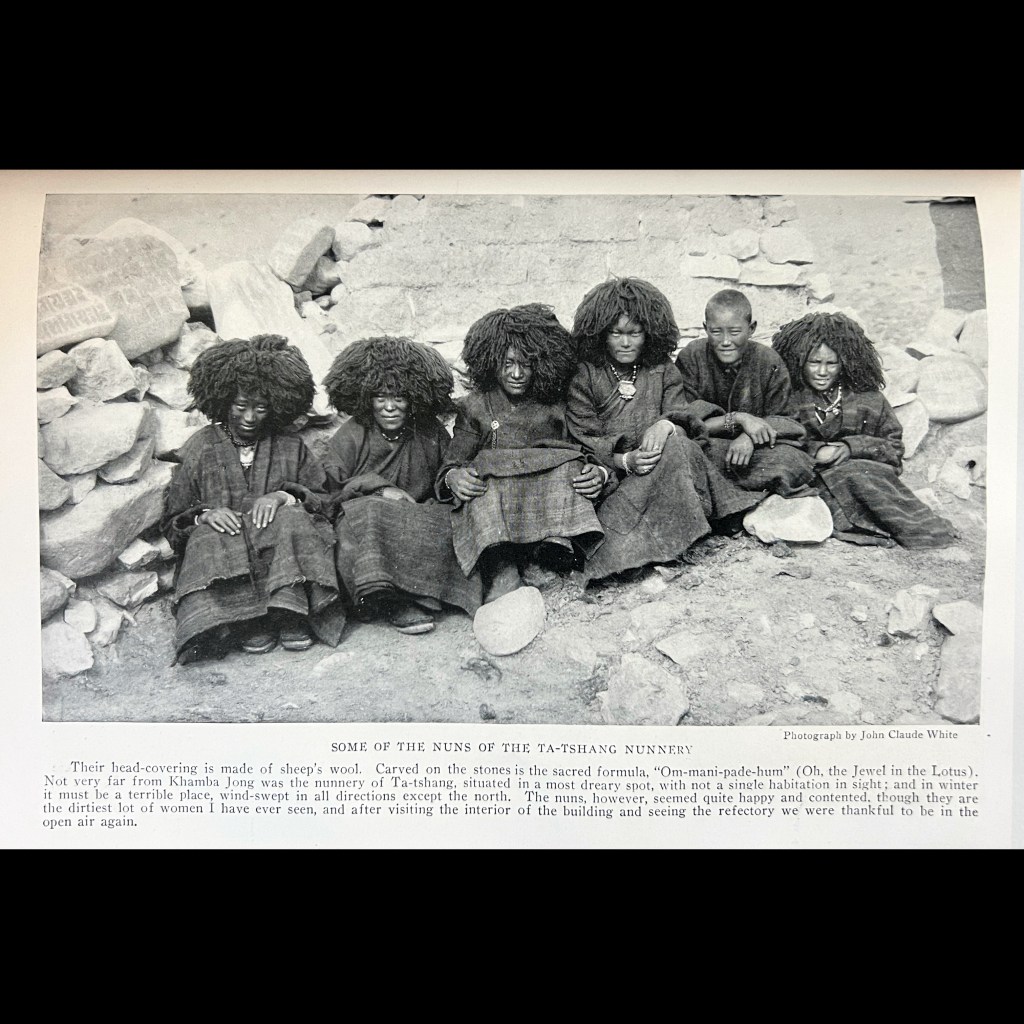
White also visited a Buddhist convent in Sikkim. The striking sheep’s wool hats were dyed red.

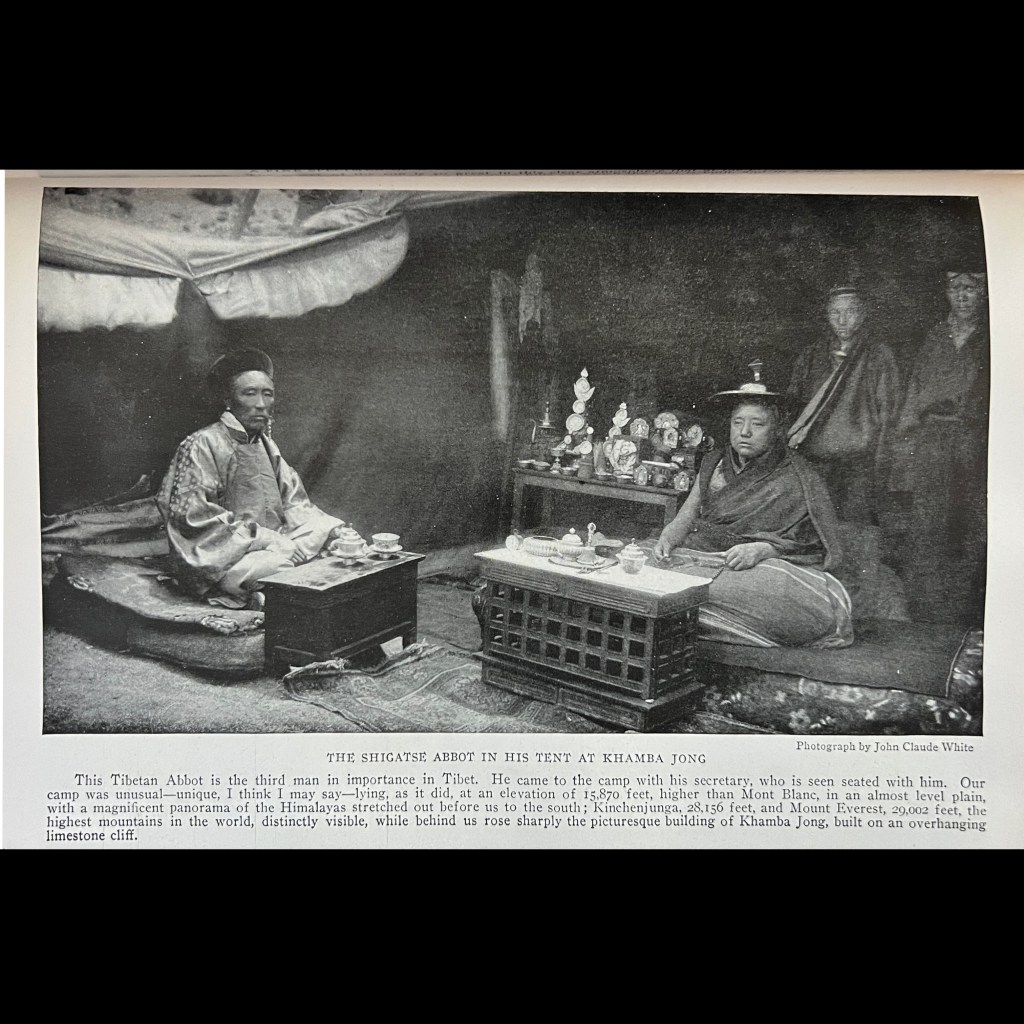
This photo was taken at Khamba Dzong, in Sikkim, where Youghusband planned to negotiate his entrance into Lhasa. The failure of talks with Tibetan officials eventually led to the forceful and bloody advance of Youghusband into Tibet.

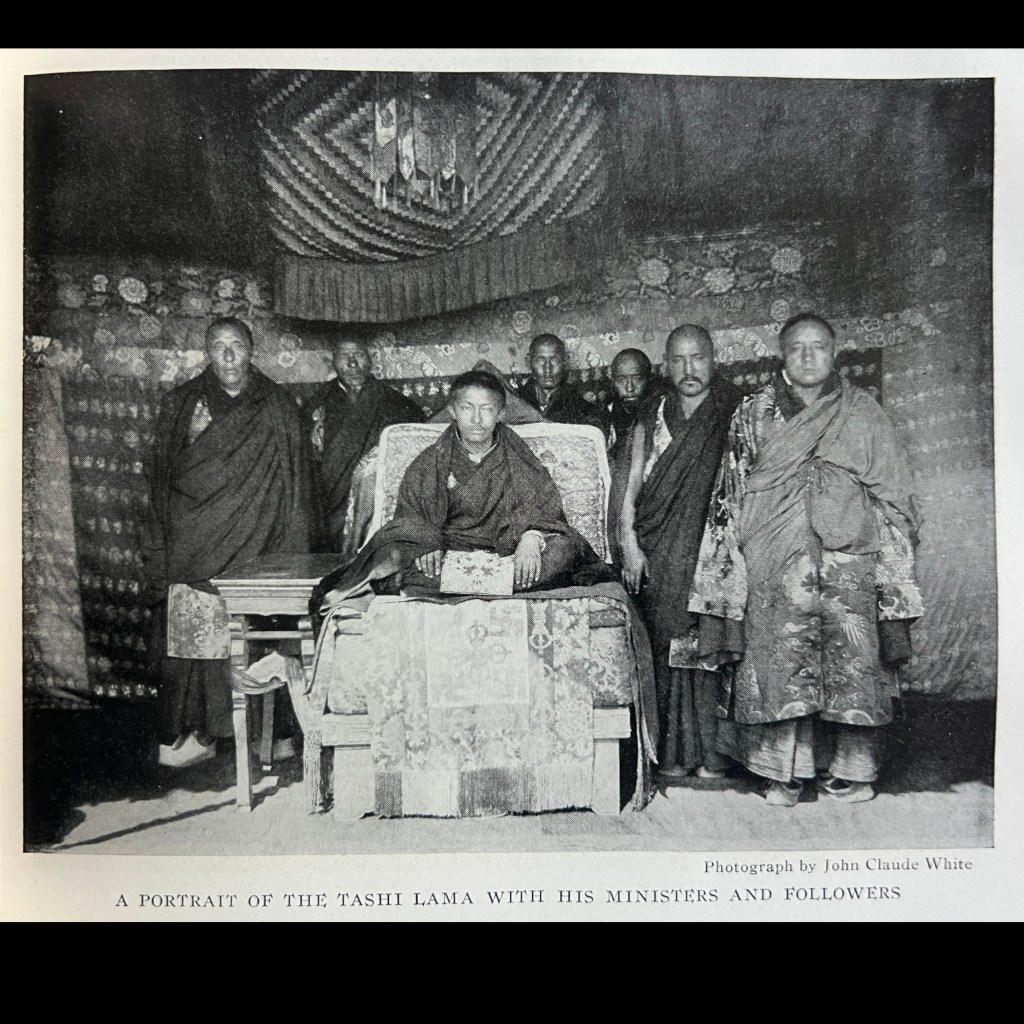
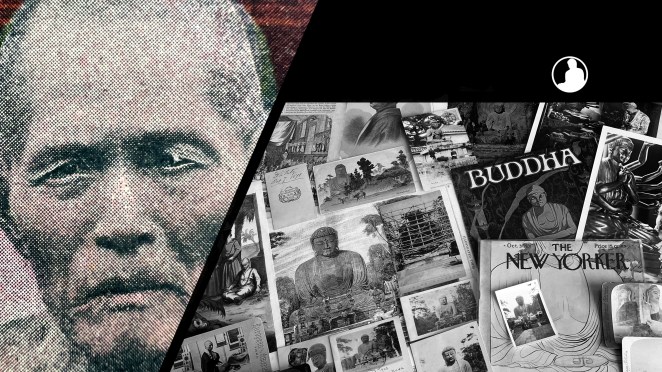
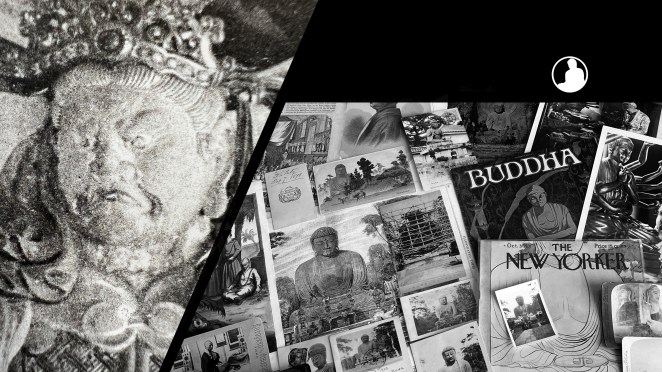
A rare photo by White of Thubten Choekyi Nyima, the 9th Panchen Lama of Tibet.

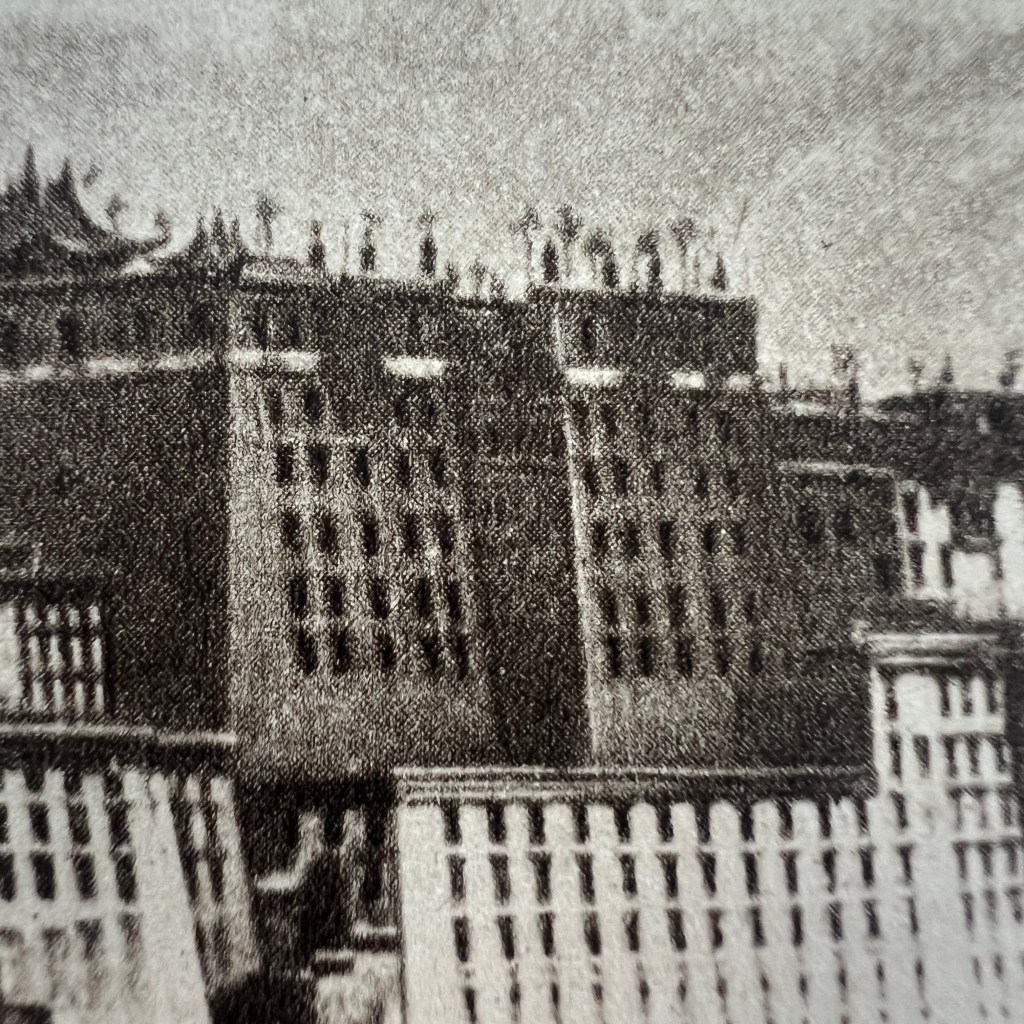
The thirteen-story Potala was based upon early Tibetan castles and fortified camps, but soon was seen by many as a symbol of Tibet itself. To read the “The World’s Strangest Capital” (without the panorama insert), see here: https://tinyurl.com/5fd596mx.


The Buddhas in the West Material Archive is a digital scholarship project that catalogues artifacts depicting Buddhist material culture for Western audiences. It’s comprised of prints, photos, and an assortment of ephemera and other objects. For a brief introduction to this archive, visit the main Buddhas in the West project page.


For Related Buddhas in the West Posts Featuring Lhasa, Tibet:


For the Most Recent Buddhas in the West Posts:

L’Illustration Photographs of Qiongzhu Temple

For all the new Buddhas in the West posts
follow us on Bluesky & Instagram


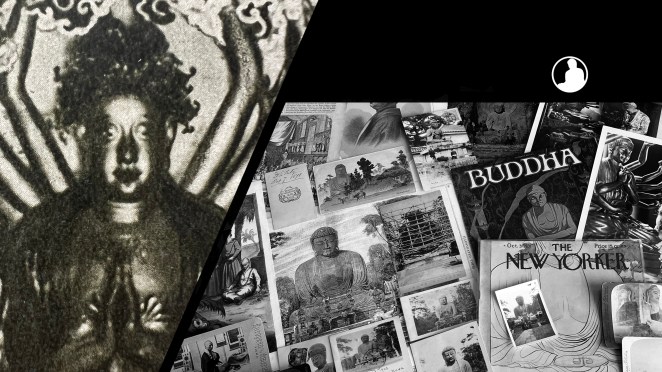
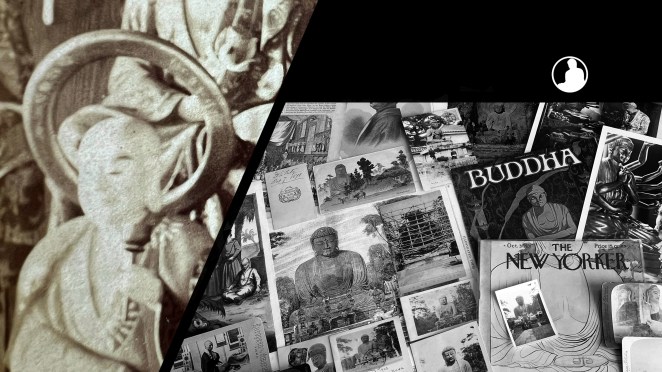
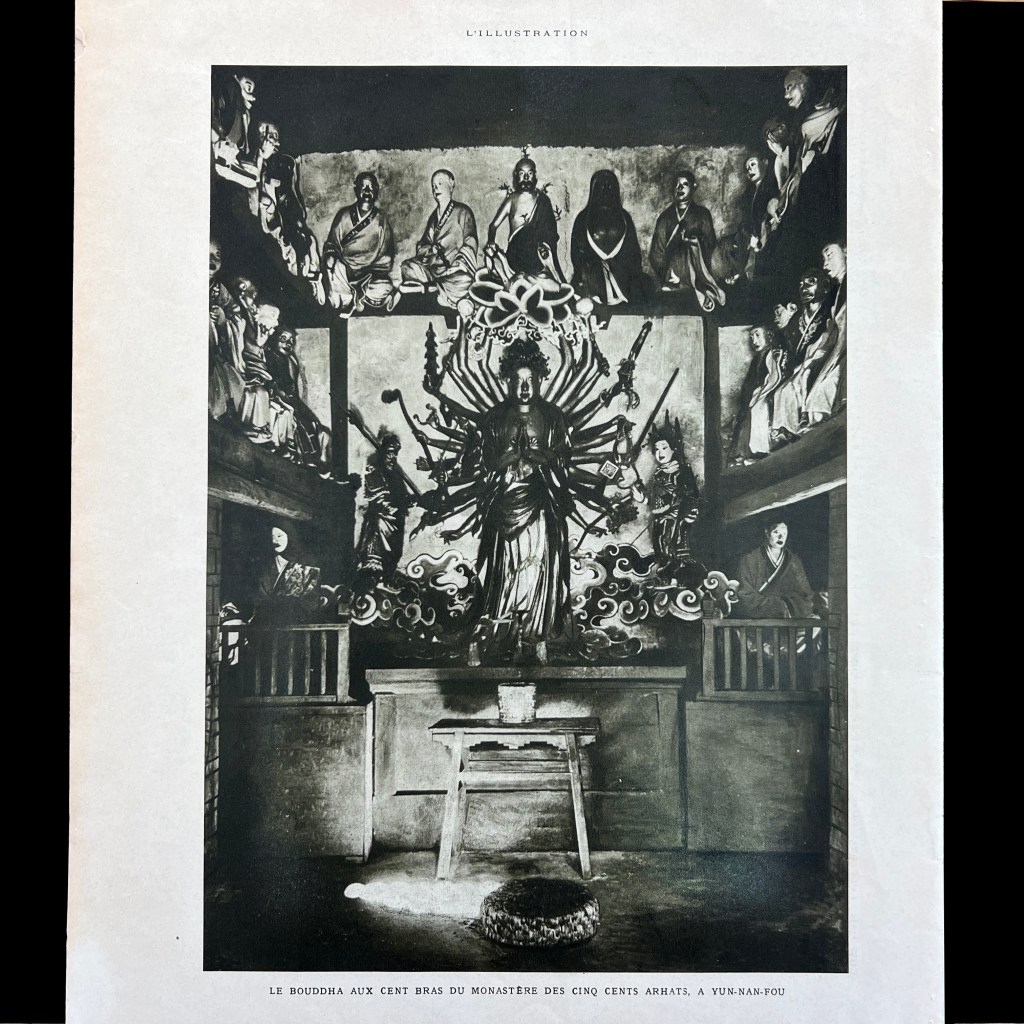
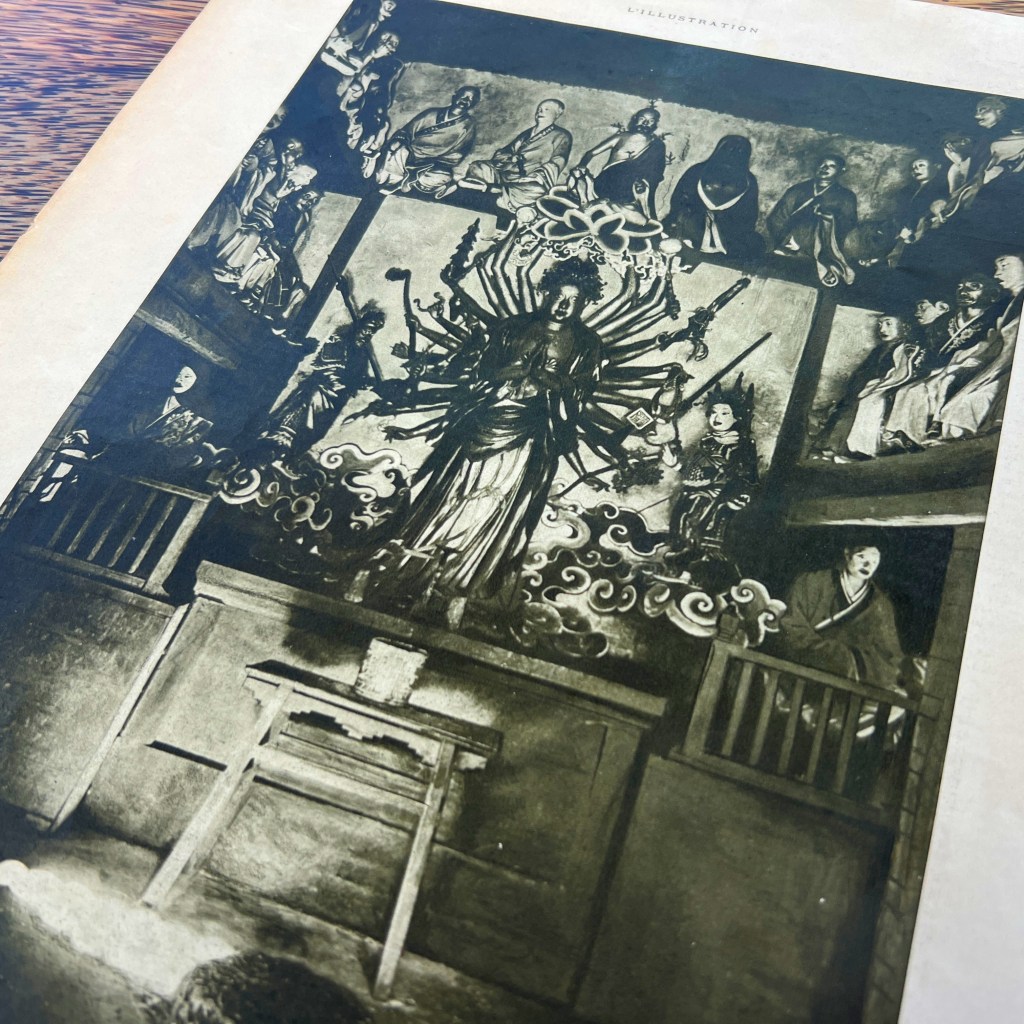
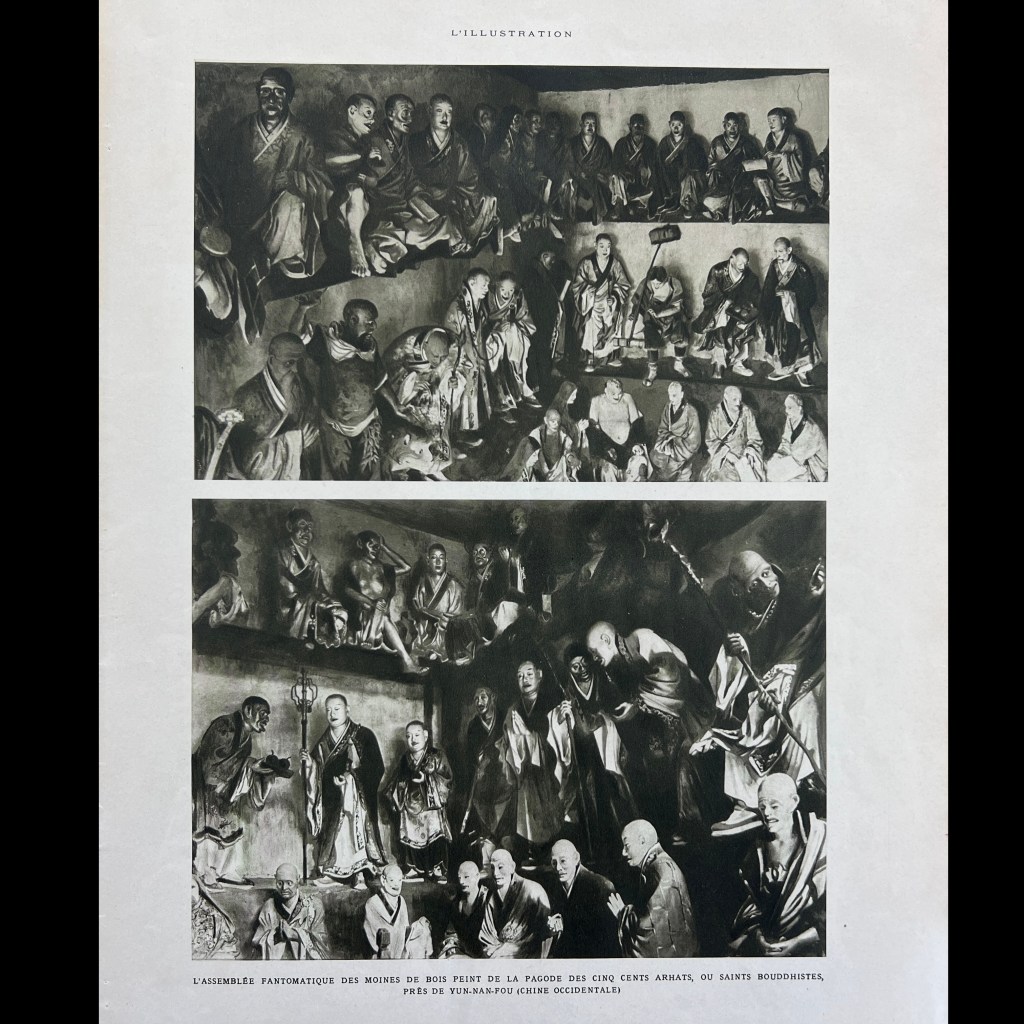
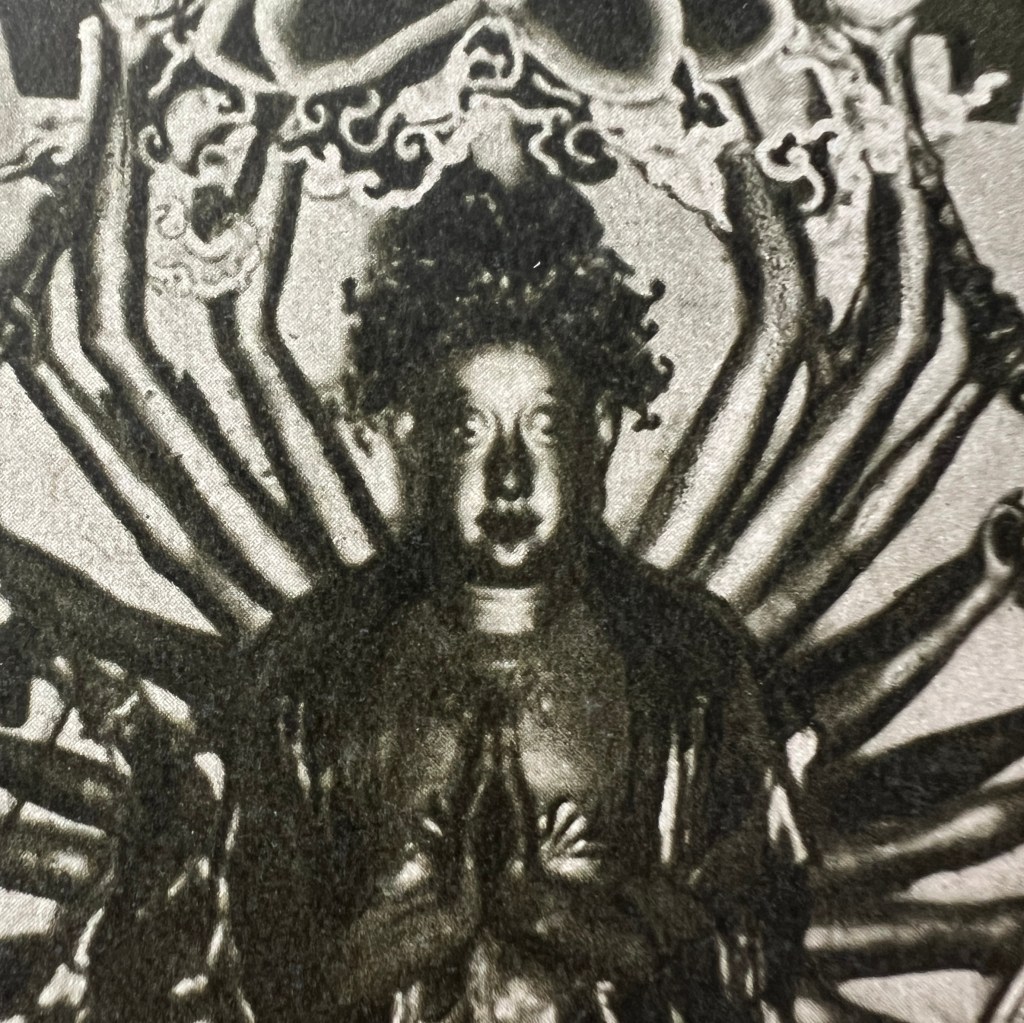
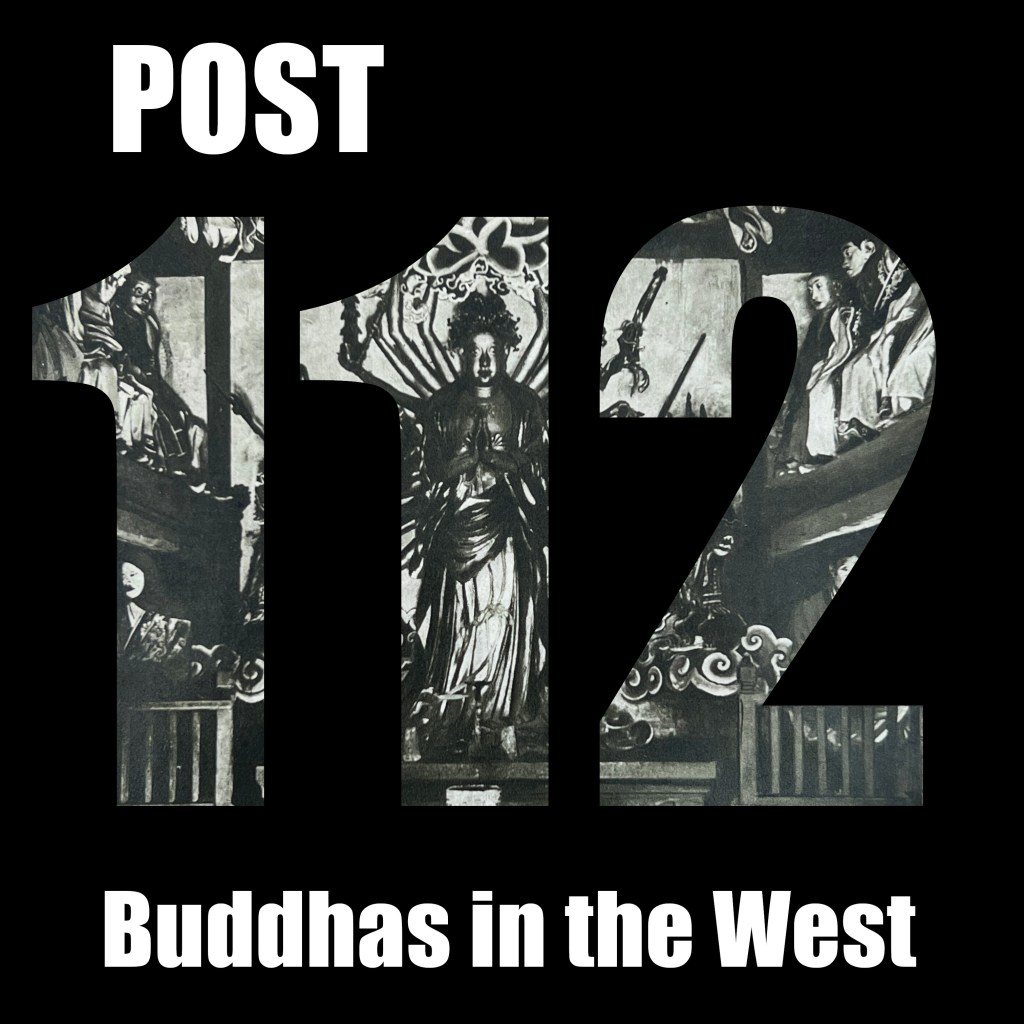
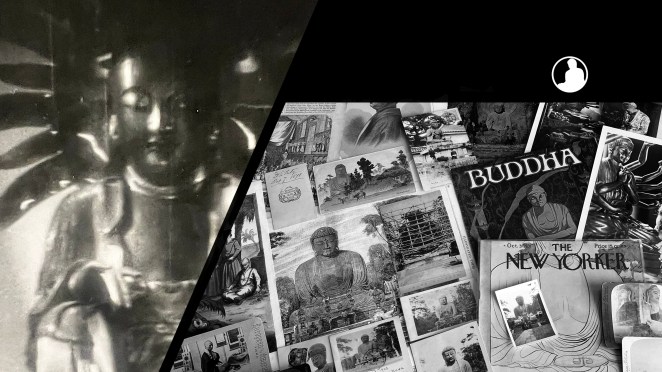
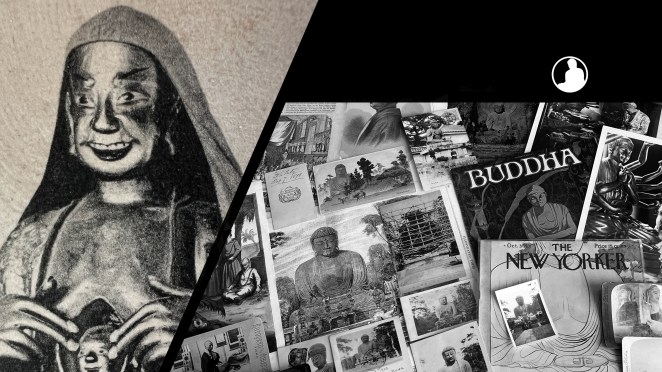
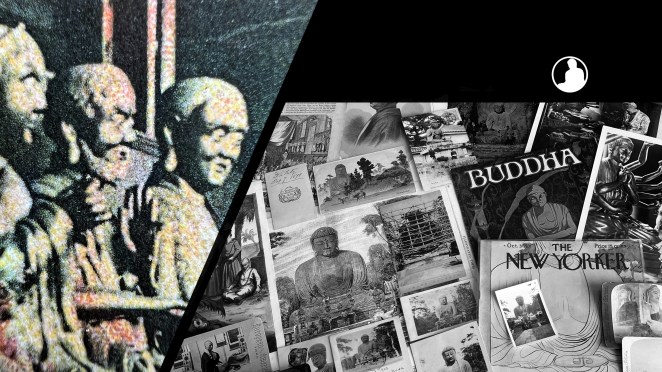
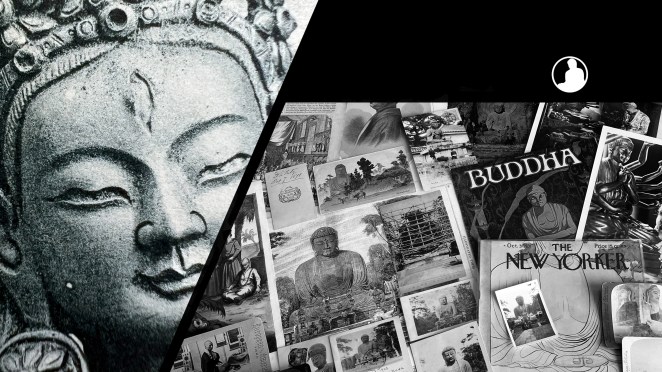
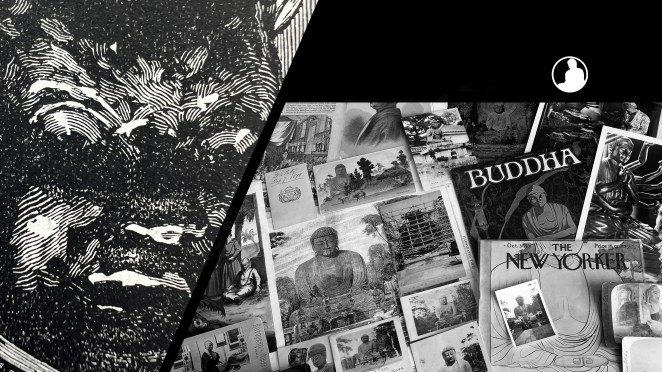
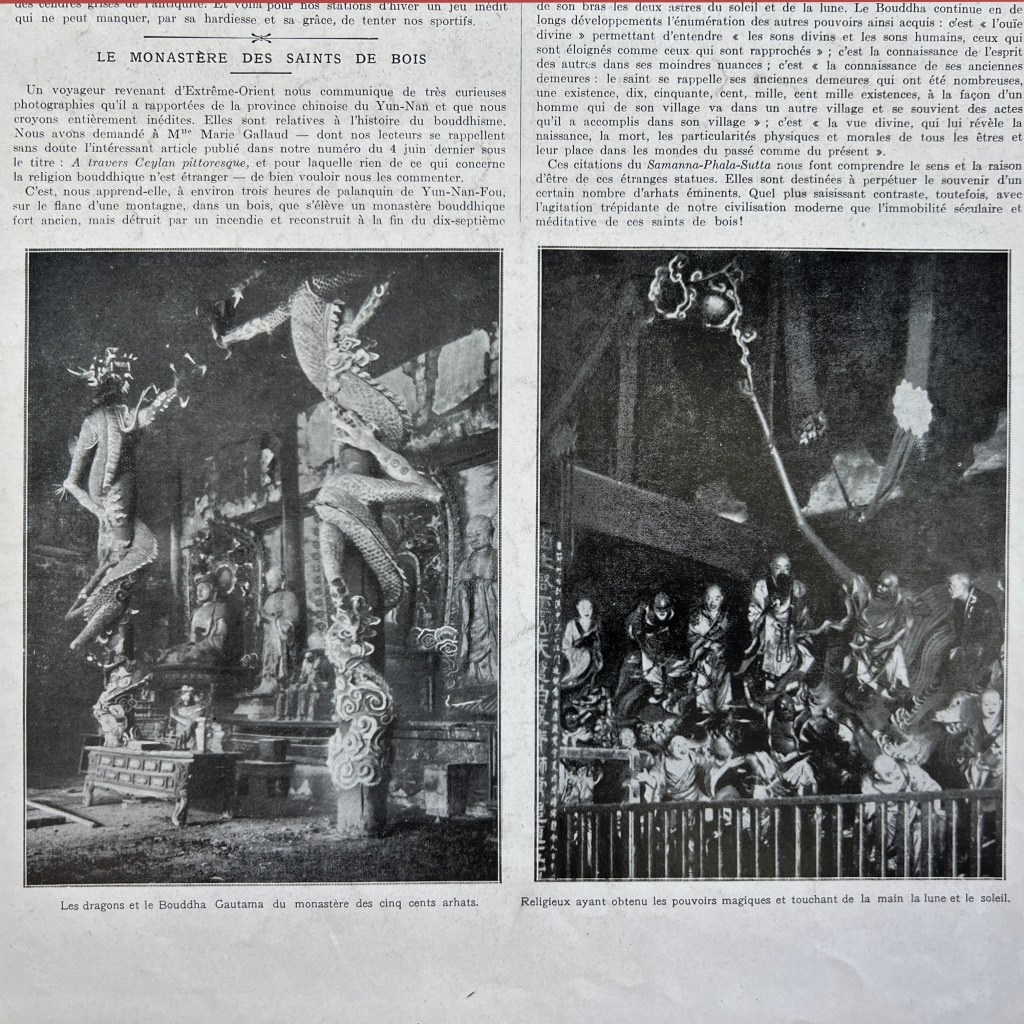
Located in the mountains of Yunnan, China, the Qiongzhu Temple (Qiongzhu si 筇竹寺) houses a collection of fantastic Buddhist statues. This Thousand-Armed Guanyin icon is surrounded by over 200 arhat disciples, comprising part of a Five Hundred Arhat collection over a century old.

While the temple was founded in the 13th century, a devastating fire allowed major reconstruction and expansion projects under the Qing Emperor Guangxu. Three new buildings, completed in the 1880s, were used to for housing newly commissioned clay statues of the Five Hundred Arhats.

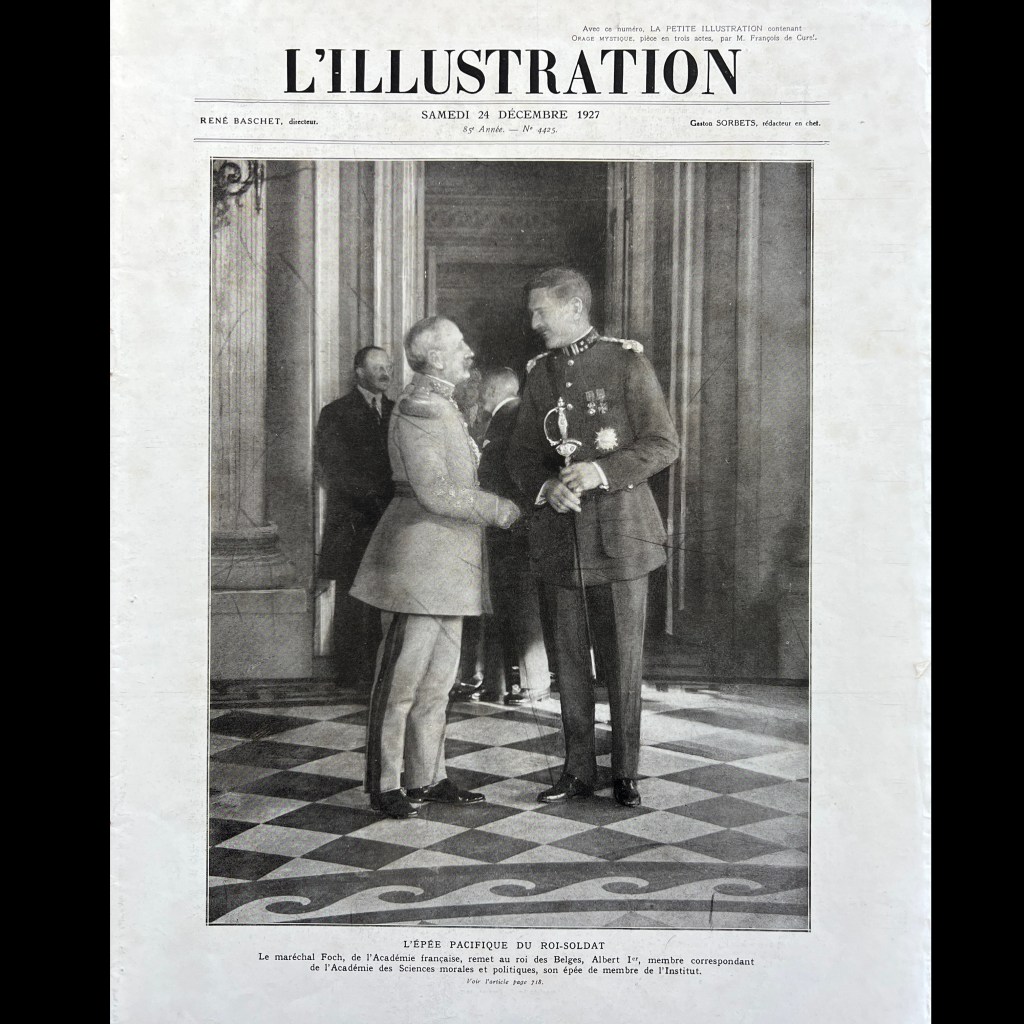
The photos seen here were printed in L’Illustration, reputedly the first international illustrated magazine published out of Paris. This issue was released in December 1927, containing what the editor believed were otherwise unpublished photographs of Qiongzhu Temple.

The French text cites the Samaññaphala Sutta to give context to the arhats, who are the Awakened disciples of the Buddha. In East Asian, the arhats are often shown as having curious physical characteristics; here we can spot one arhat with a long, craning arm reaching up to hold the moon.

In addition to the main hall, the arhat statues were further divided between two halls on temple grounds, each constructed with three rows of shelving to hold the numerous icons. Each painted statue is about one meter in height.

Records reveal the images were made by an artist from Sichuan, Li Guangxiu, who along with several assistants crafted the arhat icons over a period of seven years (1883-1890).


The Buddhas in the West Material Archive is a digital scholarship project that catalogues artifacts depicting Buddhist material culture for Western audiences. It’s comprised of prints, photos, and an assortment of ephemera and other objects. For a brief introduction to this archive, visit the main Buddhas in the West project page.


For Related Buddhas in the West Posts Featuring Guanyin:


For the Most Recent Buddhas in the West Posts:

Harper’s 1871 “Joss House” Print

For all the new Buddhas in the West posts
follow us on Bluesky & Instagram


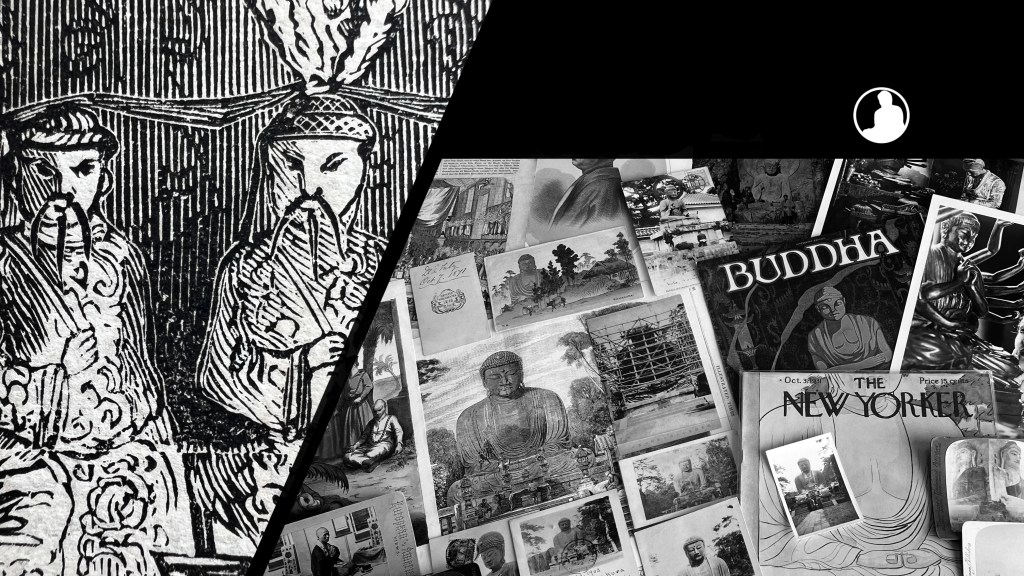
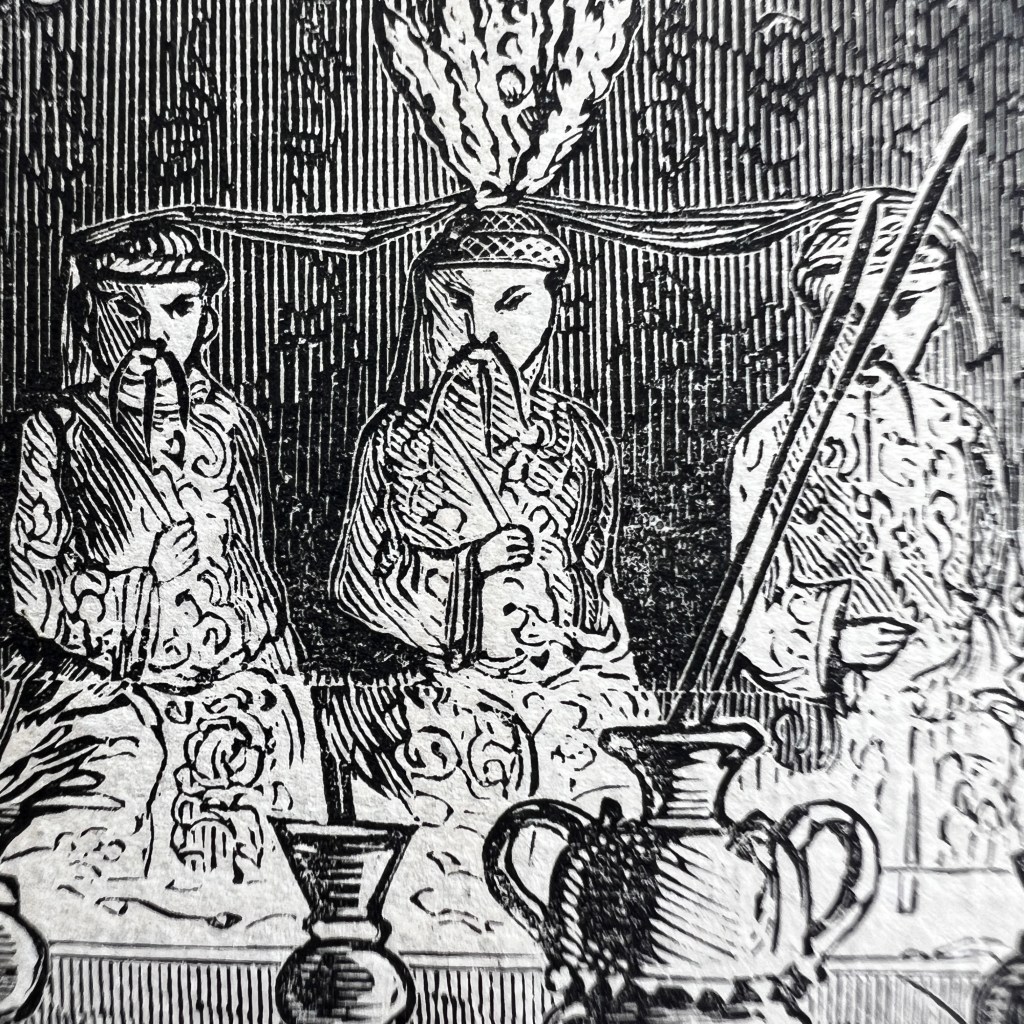
In 1871, Harper’s Weekly published a wood engraving depicting the interior of a San Francisco Chinese temple, a rare print subject before the 1906 earthquake. Clues suggest it shows the main hall of Eastern Glory Temple located off Jackson St. on St. Louis Alley.

Eastern Glory Temple was privately owned by physician Li Po Tai (1817–1893), an immigrant from Guangdong who opened a general store and apothecary across from Portsmouth Square. His temple was featured in California newspapers in February 1871, just before Harper’s illustration that March.

Despite being called a “Buddhist temple” in some popular accounts, there is no Buddhist icon displayed in the main shrine hall. The central icon is the Northern Emperor, a celestial deity popular among early Chinese immigrants from southern China.

Contemporary newspaper reports claim the icon to the far left was the “controller of fortunes” named “Choy Pah.”

The icon to the far right was a famous military general named “Tun Goa.” The next room over holds a shrine to Guanyin (not illustrated), the sole Buddhist figure, which newspapers describe as a “Cinderella” who is “treated cruelly by haughty women [and performs] act of charity.”

In addition to the Northern Emperor, the central altar displays the famous general Guandi and righteous official Hongsheng. To read more about Li Po Tai, see Tamara Venit Shelton’s Herbs and Roots: A History of Chinese Doctors in the American Medical Marketplace (2019).


The Buddhas in the West Material Archive is a digital scholarship project that catalogues artifacts depicting Buddhist material culture for Western audiences. It’s comprised of prints, photos, and an assortment of ephemera and other objects. For a brief introduction to this archive, visit the main Buddhas in the West project page.


For Related Buddhas in the West Posts Featuring Chinatown (US):


For the Most Recent Buddhas in the West Posts:


Joseph Rock’s Photographs of Zhouni (Choni) Monastery

For all the new Buddhas in the West posts
follow us on Bluesky & Instagram


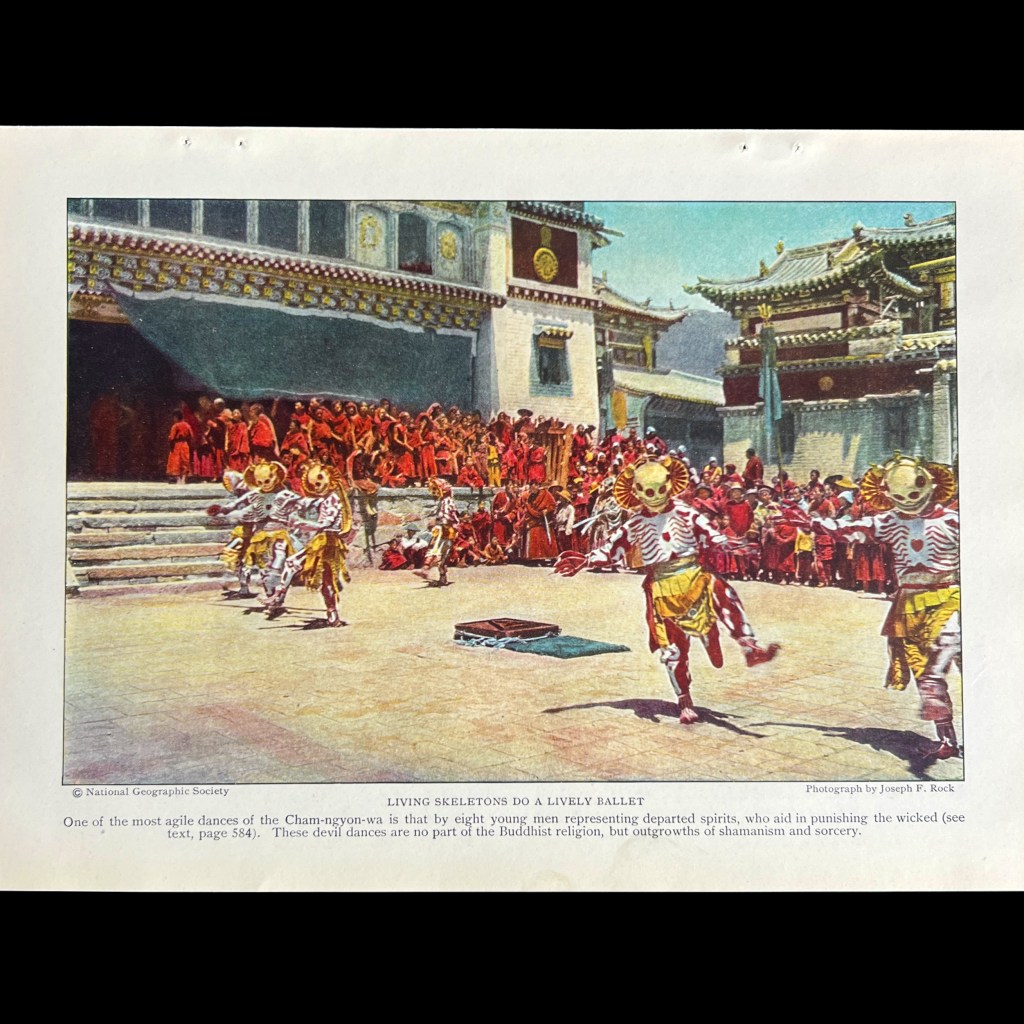
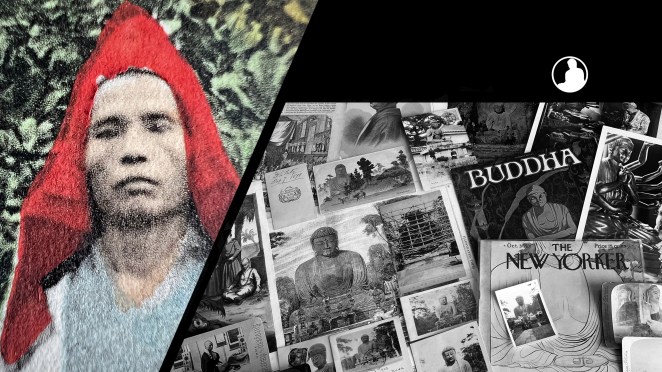
Joseph Rock took stunning photographs of the Tibet-China borderlands between 1922 and 1935, funded in part by the National Geographic Society. During this span, Rock wrote nine article for National Geographic; some were illustrated with gorgeous hand-colored prints.

Rock arrived in Zhuoni, China in April 1925 and stayed for two years, during which he wrote “Life among the Lamas of Choni” published in November 1928. Zhouni, then a Tibetan ruled chiefdom in Gansu province, was home to a bustling Buddhist monastery with hundreds of monks in residence.

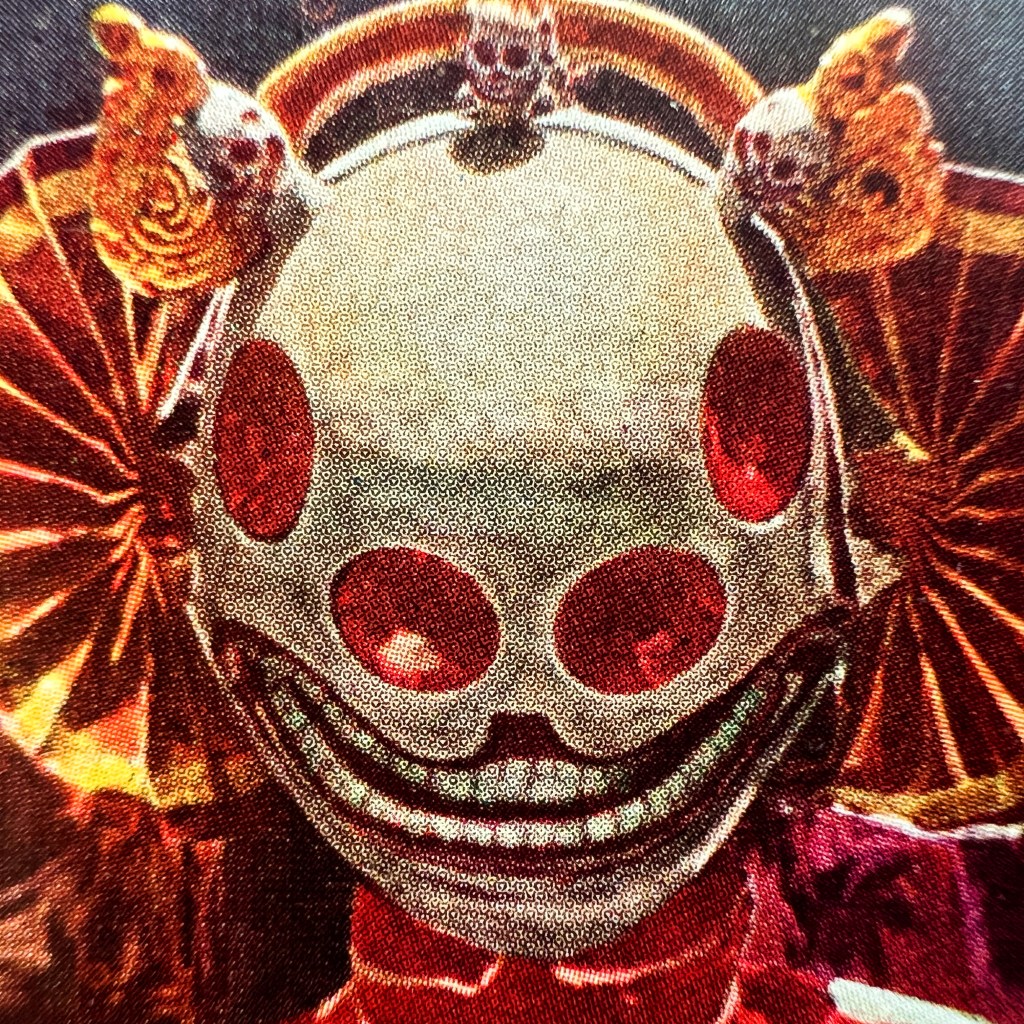
The visual centerpiece of Rock’s article were photos of the Tibetan “Old Dance,” held on the sixth day of the sixth month. Eight agile skeleton dancers were part of the festivities, representing “departed spirits” as described by Rock.

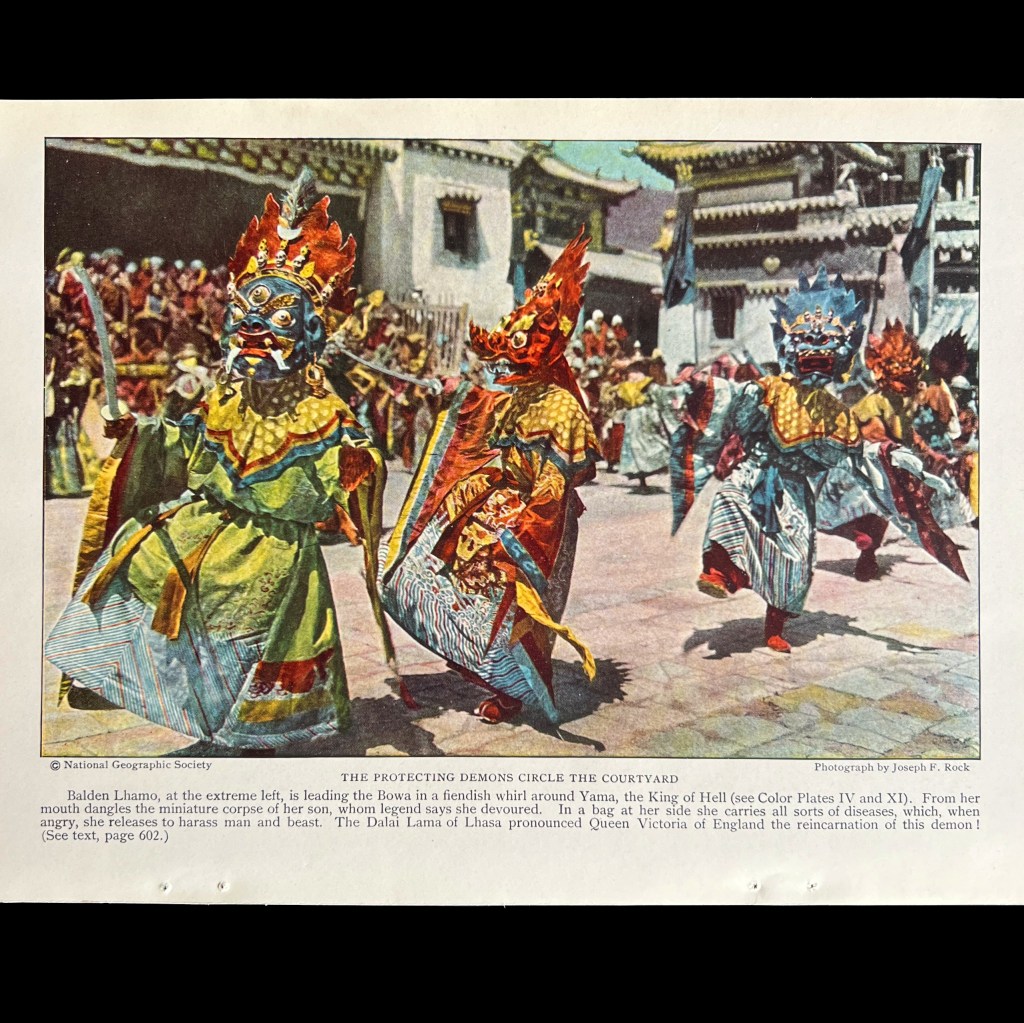
The climax of the Old Dance feature the appearance of Yama, the “grim ruler of the nether world.”

As recounted by Rock, the left-most figure here is Palden Lhamo, the wife of Yama who killed their son, seen dangling from her mouth. According to Rock, due to the British invasion of Tibet decades earlier, it was believed Queen Victoria was a reincarnation of this demon goddess.

Rock developed his own black and white glass negatives and sent them back to the United States. Artists then hand-colored the images according to detailed descriptions furnished by Rock (later, Rock would use potato starch based Autochrome color plates).

Rock was able to purchase a complete set of the Tibetan Buddhist canon printed at Choni Monastery before the printing blocks were destroyed in 1929. To read a digital version of Rock’s account of Choni Monastery in National Geographic, see tinyurl.com/4dwe2tmb.


The Buddhas in the West Material Archive is a digital scholarship project that catalogues artifacts depicting Buddhist material culture for Western audiences. It’s comprised of prints, photos, and an assortment of ephemera and other objects. For a brief introduction to this archive, visit the main Buddhas in the West project page.


For Related Buddhas in the West Posts Featuring Historical Magazines:


For the Most Recent Buddhas in the West Posts:

World Wide Magazine 1938 Laughing Buddha Cover

For all the new Buddhas in the West posts
follow us on Bluesky & Instagram


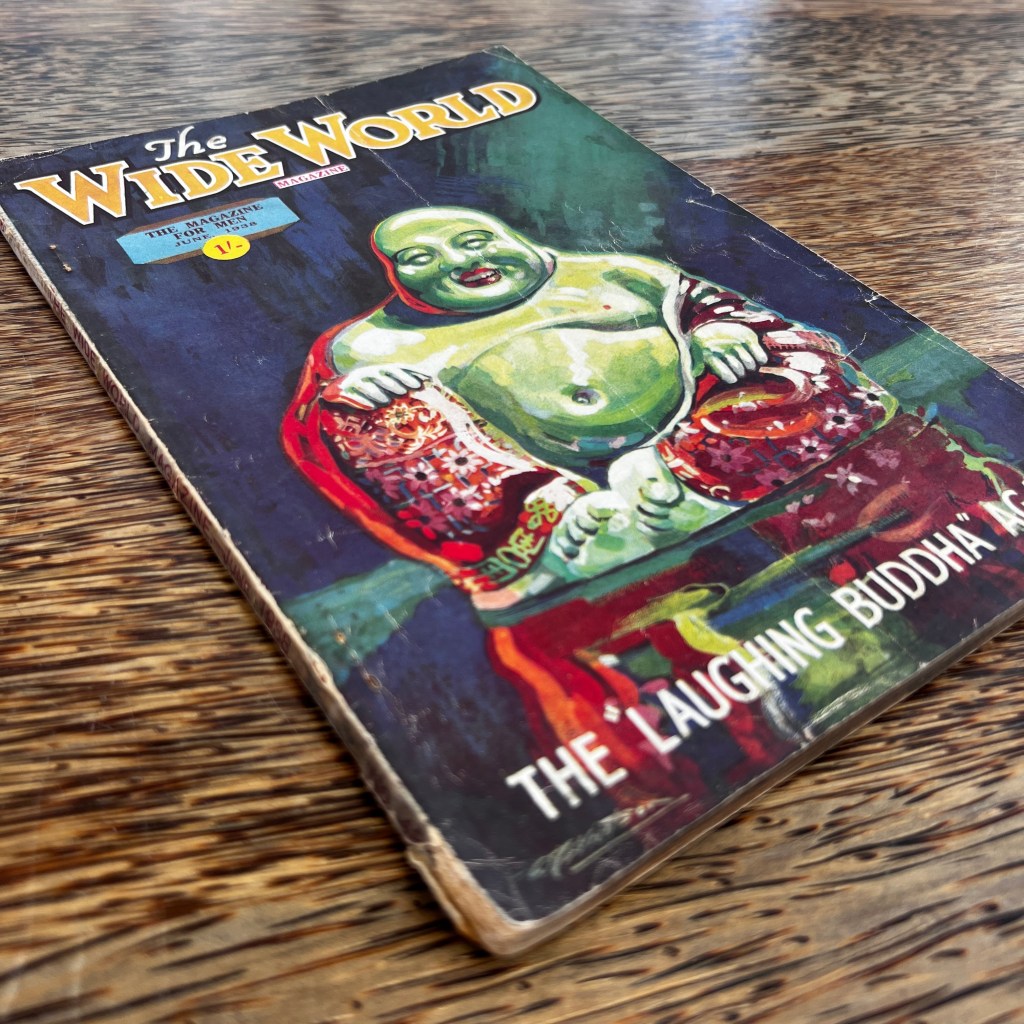
Founded in 1898, the Wide World Magazine was “devoted to romance of travel, adventure, and exploration.” Stories were promoted as “true in every detail” and submissions required a written statement by the author to this effect (they were, of course, not true).

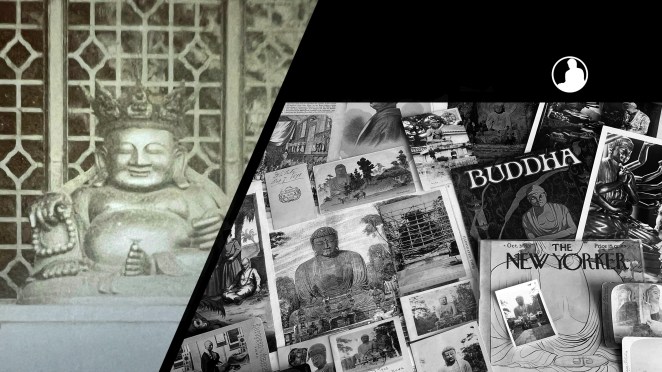
Over 150 pulp magazine titles were sold in the 1930s, thus striking cover art was critical for newsstand sales. The cover here depicts a brightly colored green-skinned Laughing Buddha statue

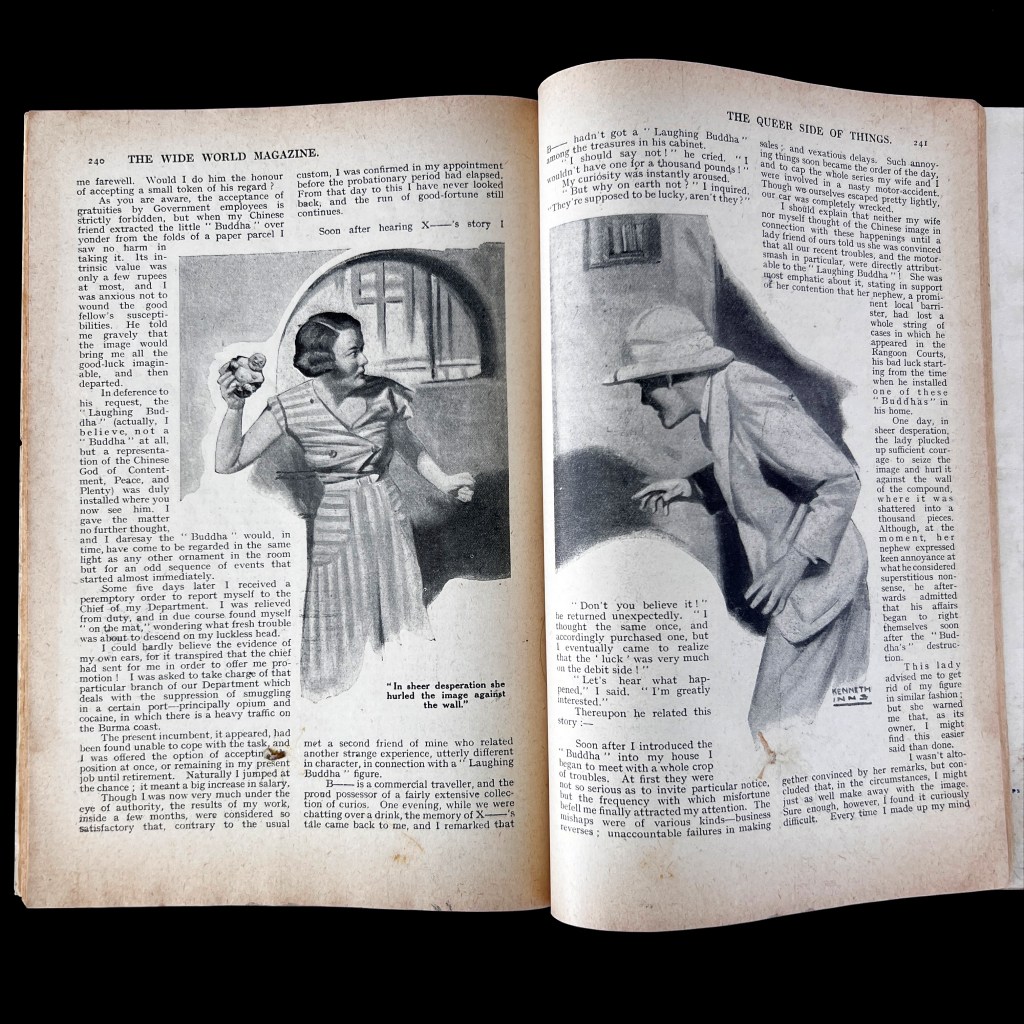
The cover story of June 1938 issue contained a report provided by one “Dennis Blake of Rangoon, Burma,” concerning the curious effects of Buddhist images.

In this report, two small Chinese Laughing Buddha statues were believed to either cause blessings or misfortune to its owners. The artwork by Kenneth Inns shows a statue about to be broken against the wall.

The stories are resolved when we are told that gifted Buddhist statues bring luck, while purchased Buddhist statues bring misfortune!


The Buddhas in the West Material Archive is a digital scholarship project that catalogues artifacts depicting Buddhist material culture for Western audiences. It’s comprised of prints, photos, and an assortment of ephemera and other objects. For a brief introduction to this archive, visit the main Buddhas in the West project page.


For Related Buddhas in the West Posts Featuring the Laughing Buddha:


For the Most Recent Buddhas in the West Posts:

Joseph Keppler’s Crafty Priests Puck Magazine Cover

For all the new Buddhas in the West posts
follow us on Bluesky & Instagram


In the 1880s Puck was America’s premier satire magazine, but the publication stood out for another reason: it was among the first periodicals to use chromolithographic printing. Puck was founded by Joseph Keppler who was also a main artist – his work from 1888 is seen here.

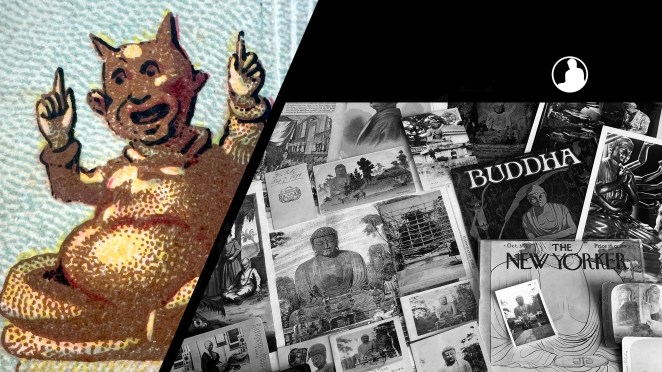
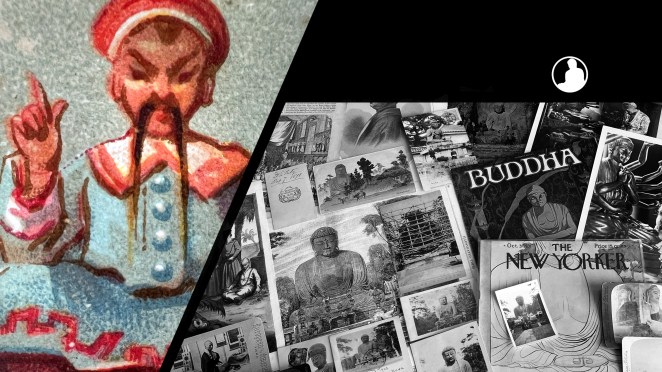
The political commentary draws upon the old trope of “crafty priests” stealing from pious believers.

The visual trope, however, uses more recently circulating popular imagery of a cross-legged multi-arm idol. The traditional Biblical imagery of the golden calf has replaced by a stereotyped golden Asian icon. Moreover, the facial features are exaggerated to look more grotesque.

A large collection of Puck political cartoons has been digitized by the Library of Congress, viewable here: https://tinyurl.com/ycde4xtc.


The Buddhas in the West Material Archive is a digital scholarship project that catalogues artifacts depicting Buddhist material culture for Western audiences. It’s comprised of prints, photos, and an assortment of ephemera and other objects. For a brief introduction to this archive, visit the main Buddhas in the West project page.


For Related Buddhas in the West Posts Featuring Historical Magazines:


For the Most Recent Buddhas in the West Posts:

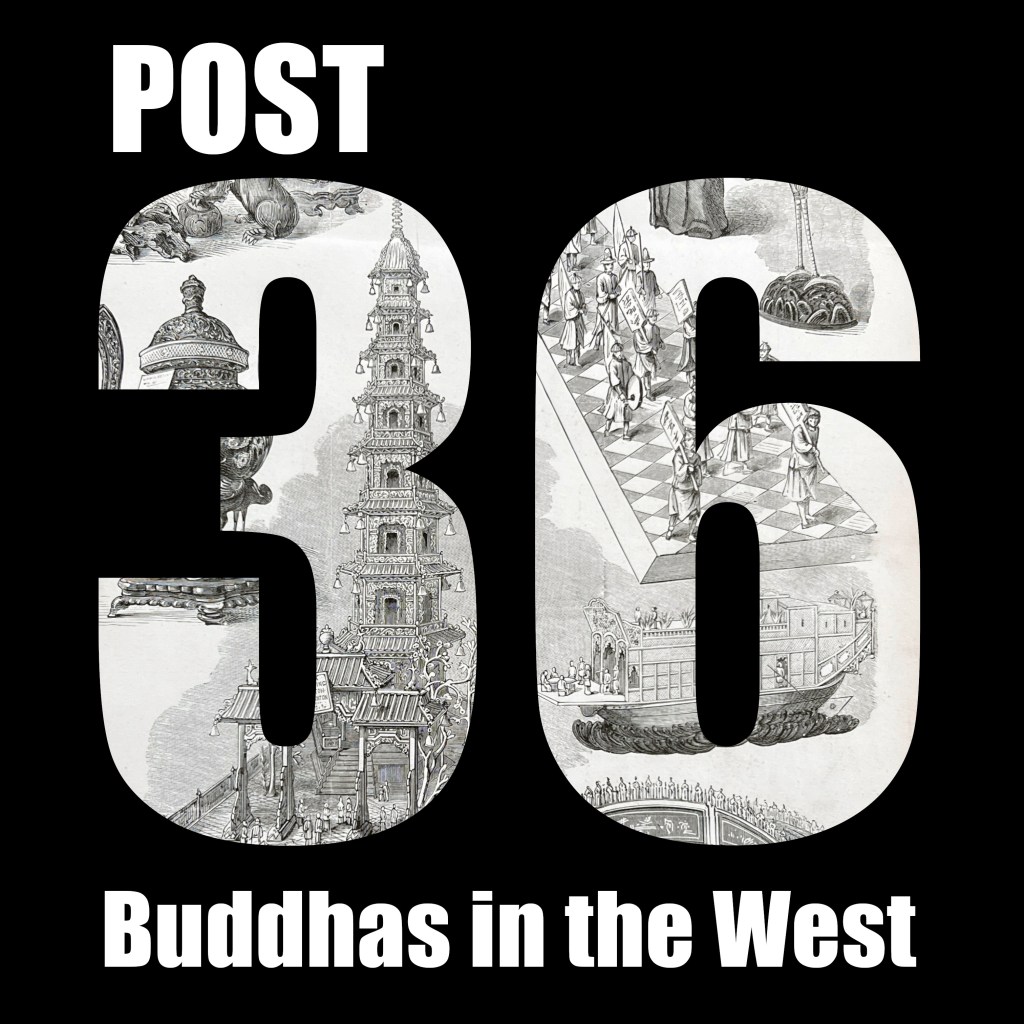
1876 Centennial Ivory Pagoda Print

For all the new Buddhas in the West posts
follow us on Bluesky & Instagram


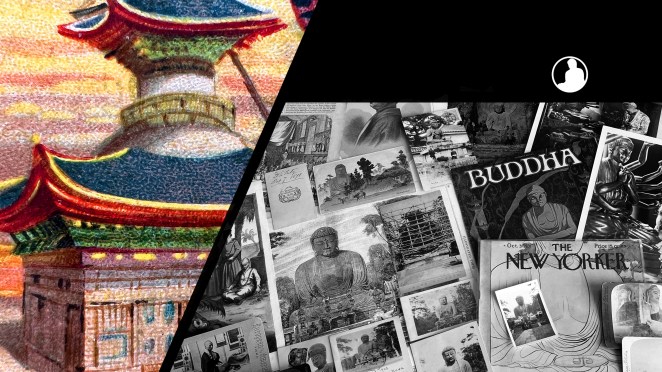
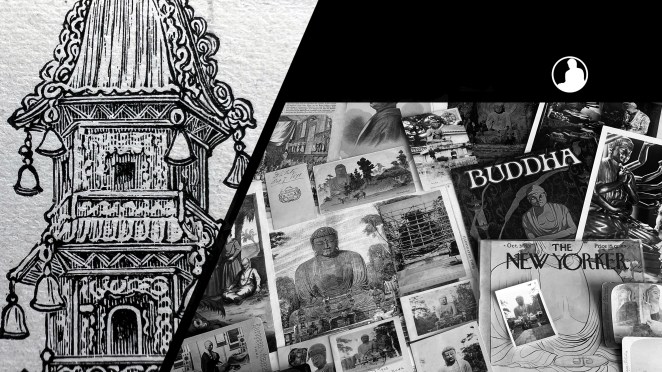
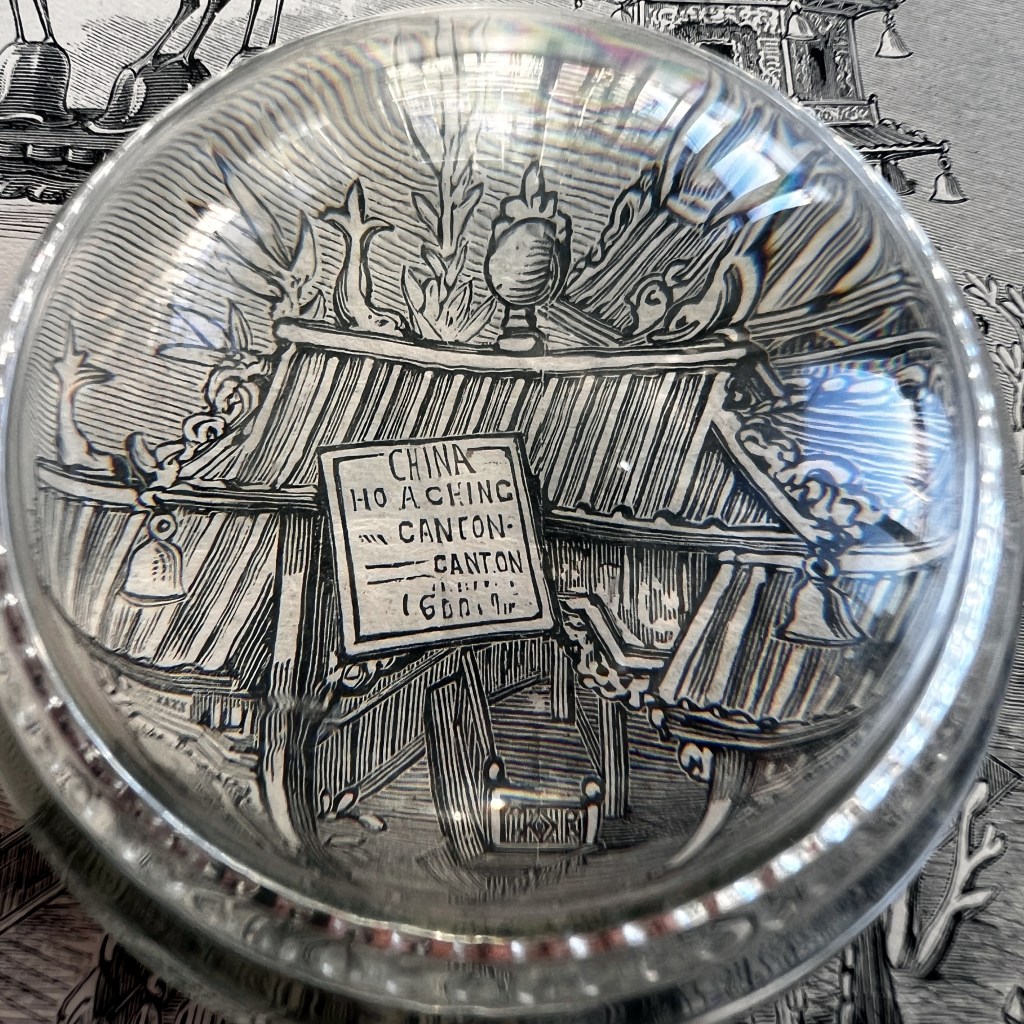
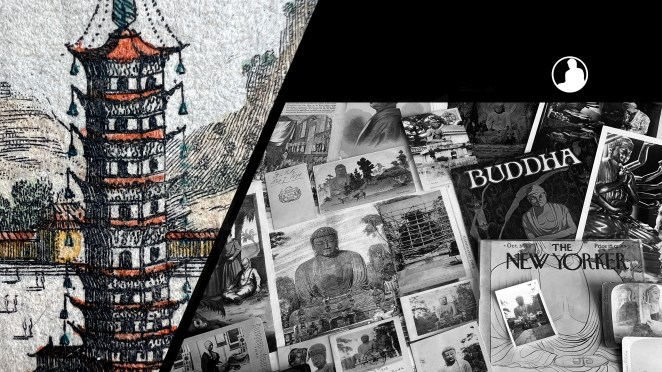
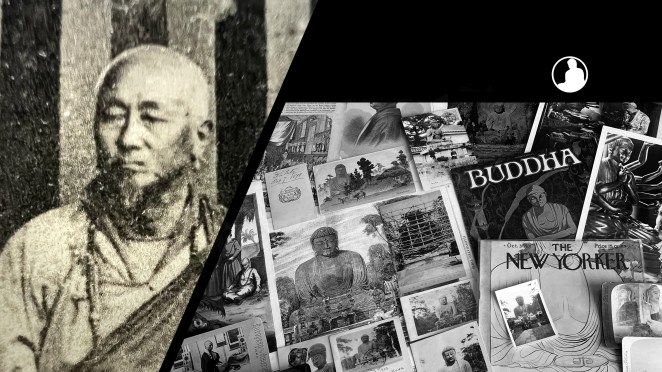
Lost Ivory Pagoda? Japan’s exhibit at the 1876 Centennial Exposition is often credited as inspiring American Japonisme. Less celebrated is China’s involvement who also made a splash with its exhibit, including an intricate 4-foot ivory pagoda.

The 1830s and 40s saw a handful of private Chinese museums open, but the Centennial included objects sent to the US by Chinese representatives. By plan, the objects chosen reflected the tastes of Chinese elite, including silks, porcelain, paintings, and fine teas.

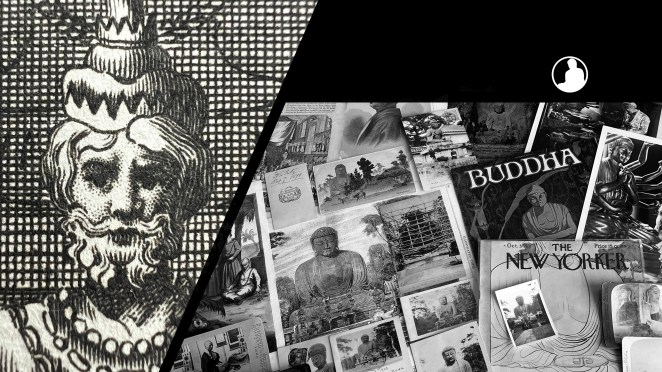
The carved ivory display merited some of the most attention, especially a fenced-in miniature pagoda surrounded by fruit trees and figurines. The artist here, working for the publisher Frank Leslie, notes the name of the Canton manufacturer, Ho A Ching.

We are told the pagoda was priced at $600. Many items were acquired by the Philadelphia Museum of Art, but I have not been able to confirm if its currently in the collection. A photo of the original pagoda can be seen here: https://tinyurl.com/mtkv2wzk.


The Buddhas in the West Material Archive is a digital scholarship project that catalogues artifacts depicting Buddhist material culture for Western audiences. It’s comprised of prints, photos, and an assortment of ephemera and other objects. For a brief introduction to this archive, visit the main Buddhas in the West project page.


For Related Buddhas in the West Posts Featuring the United States:


For the Most Recent Buddhas in the West Posts:

Argosy’s Jungle Justice Pulp Magazine Cover

For all the new Buddhas in the West posts
follow us on Bluesky & Instagram


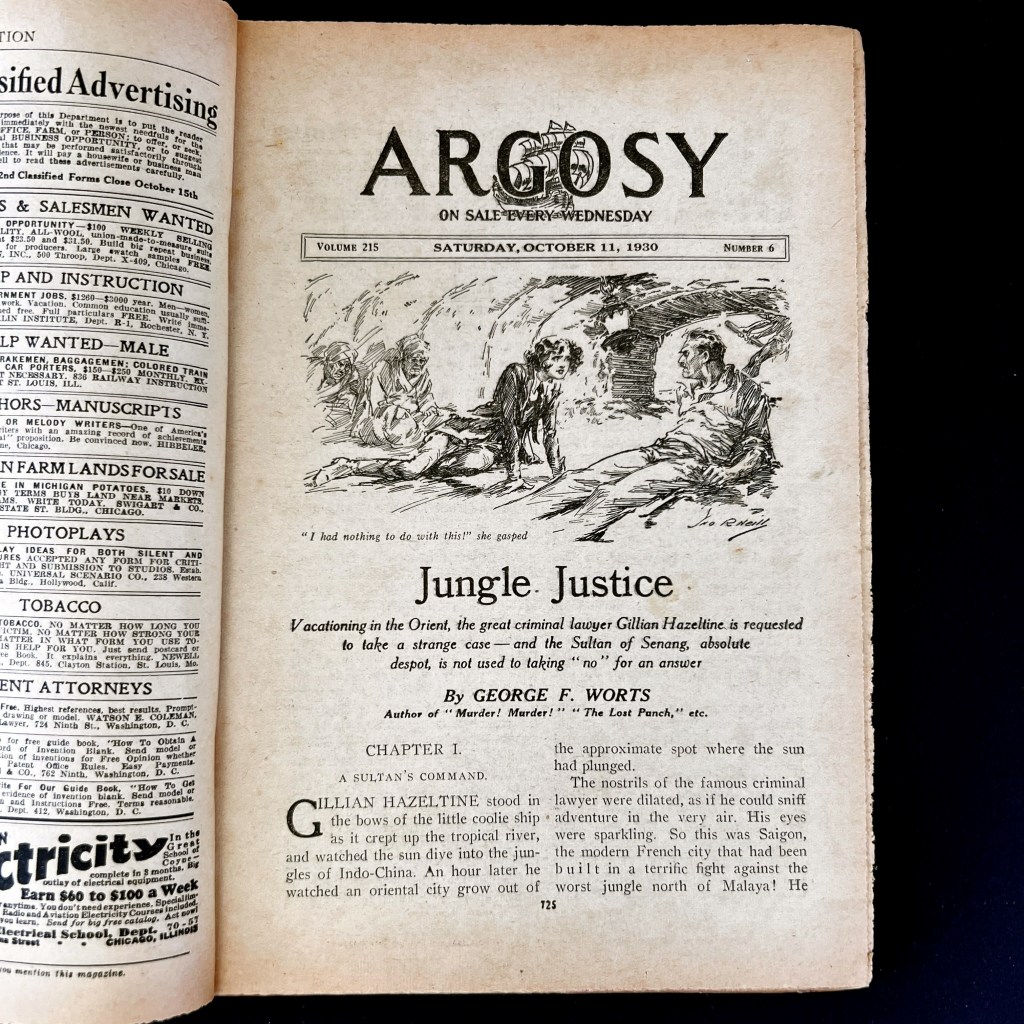
Pulp Fiction Buddhas: When editor Frank Munsey switched to inexpensive wood pulp paper in 1896, his publication, Argosy, was the first of what came to be known as pulp magazines. With over 150 publications in press by the 1930s, cover art was a critical driver for sales.

Argosy often featured episodic action and adventure stories, here starring Gillian Hazeltine as a crime solving lawyer in Jungle Justice. The cover of Paul Stahr vividly portrays the tropical setting and captures the tension between the hero and villain.

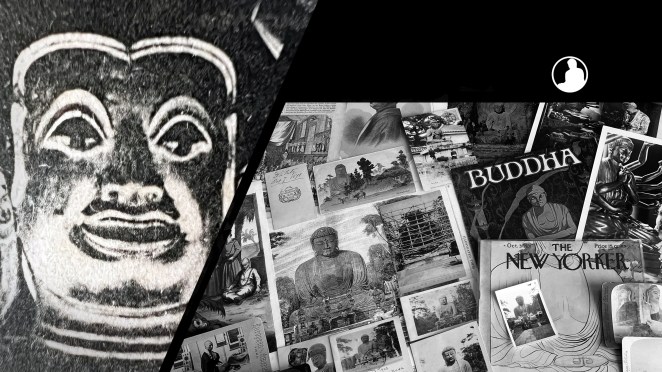
A closer look reveals a mélange of visual “Oriental” tropes: a grotesque Tibetan-style idol, a Japanese torii gate as shrine backdrop, and a turbaned menace hiding in the shadows.

The text is equally stereotypical, noting the location as “the Orient” (we are later informed its Saigon) and the villain as the “devil worshiper,” the Sultan of Senang.

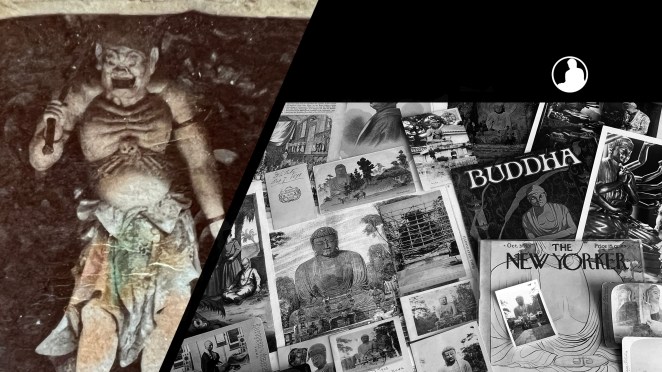
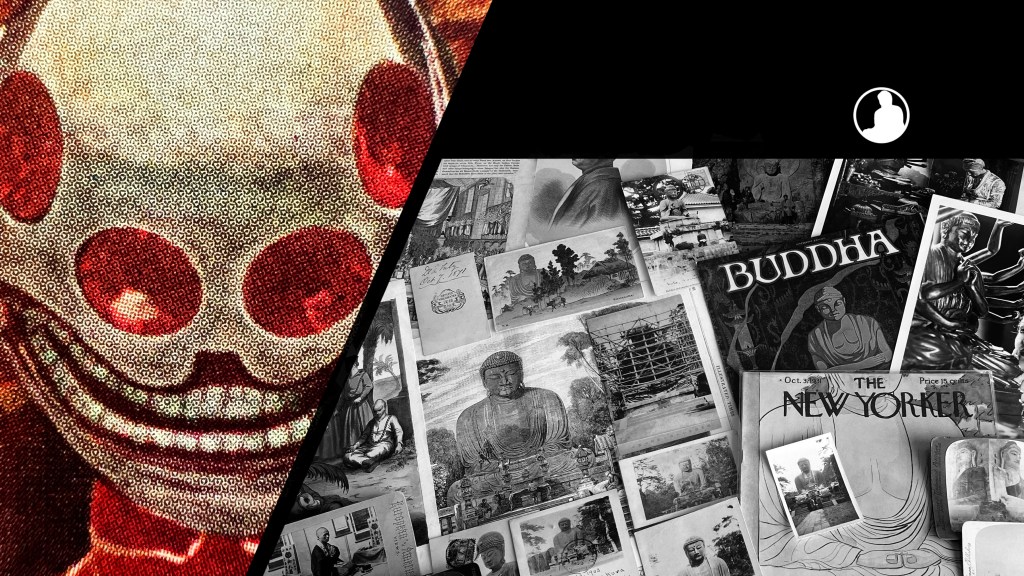
The idol’s face, likely intended to signal the Sultan’s devil worship, resembles a Tibetan Buddhist cham dance mask. Various issues from Argosy, including Jungle Justice, can be read here: https://www.pulpmagazines.org/the-argosy/.


The Buddhas in the West Material Archive is a digital scholarship project that catalogues artifacts depicting Buddhist material culture for Western audiences. It’s comprised of prints, photos, and an assortment of ephemera and other objects. For a brief introduction to this archive, visit the main Buddhas in the West project page.


For Related Buddhas in the West Posts Featuring Historical Magazines:


For the Most Recent Buddhas in the West Posts:

American Express Daibutsu Advertisement

For all the new Buddhas in the West posts
follow us on Bluesky & Instagram


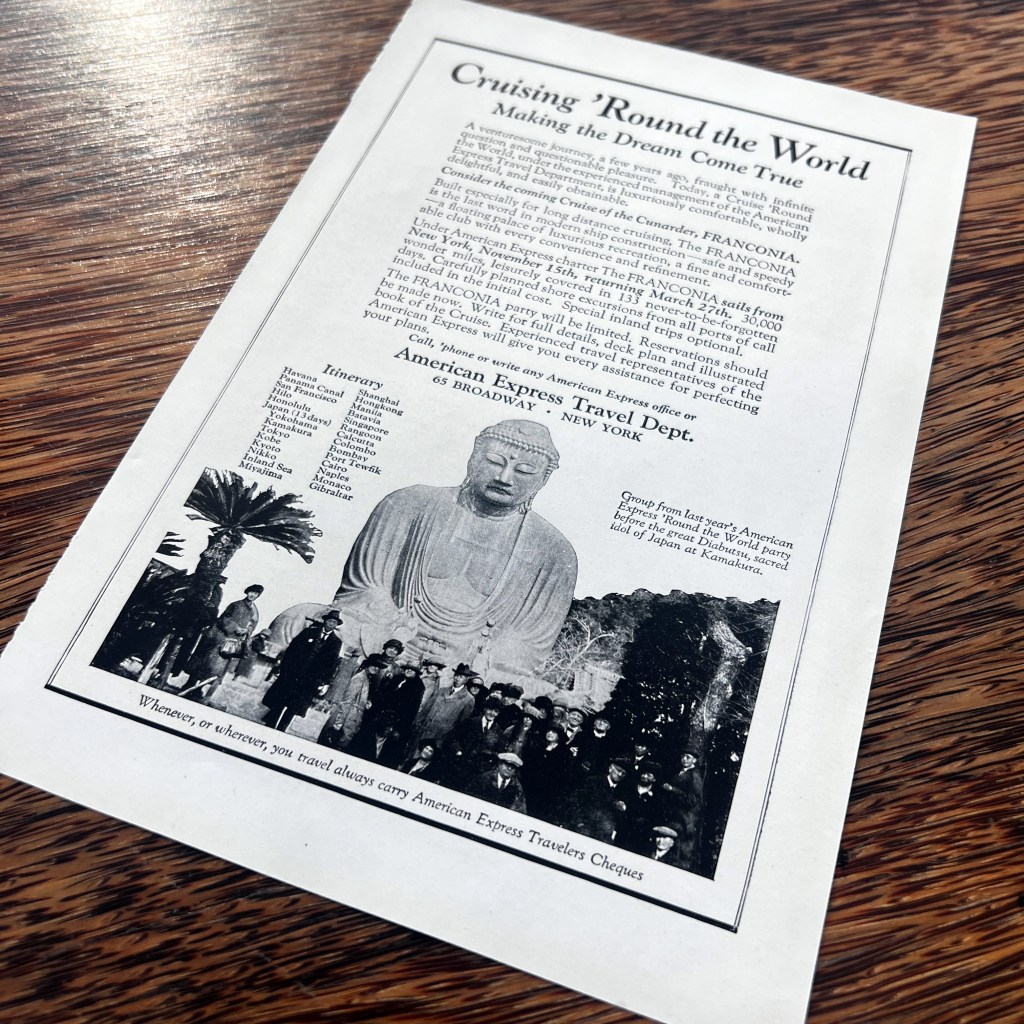
After the opening of the Panama Canal and the end of WWI, the first around-the-world commercial cruise was chartered by the American Express Company in late 1922. The following summer of 1923, American Express began advertising for its next cruise using the Great Buddha of Kamakura.

The success of the inaugural cruise is celebrated in the advertising copy. It notes how the journey is “luxuriously comfortable, wholly delightful, and easily obtainable.” The brief itinerary lists the major ports to be visited, including a long 13 day stay in Japan.

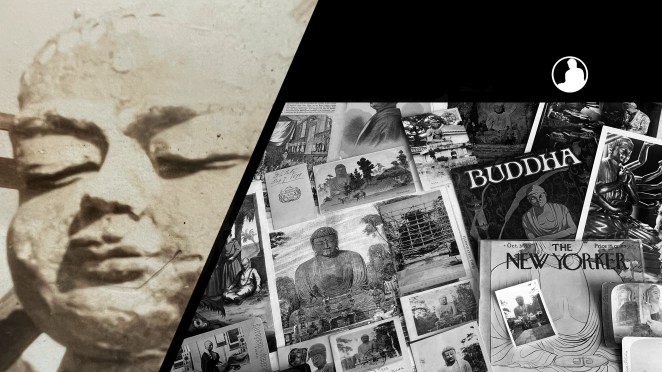
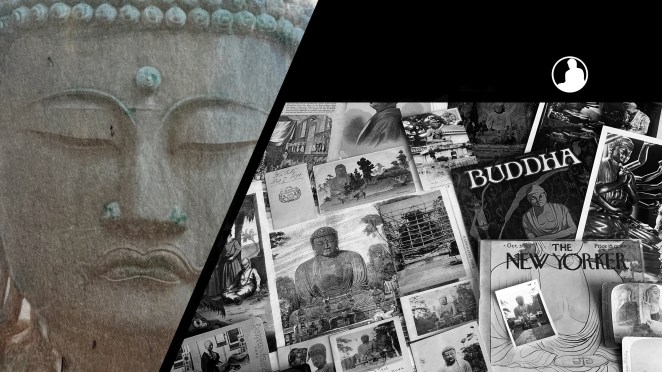
The most conspicuous element is the large cropped photo of the “sacred idol of Japan” – the Kamakura Daibutsu. Notably, the photo depicts the inaugural cruise passengers positioned in front, looking directly at the camera lens.

Unfortunately, the Great Kantō earthquake struck in September 1923, damaging the Daibutsu. The Second American Express Cruise Round the World continued, however, leaving New York in November 1923 and returning in March 1924.


The Buddhas in the West Material Archive is a digital scholarship project that catalogues artifacts depicting Buddhist material culture for Western audiences. It’s comprised of prints, photos, and an assortment of ephemera and other objects. For a brief introduction to this archive, visit the main Buddhas in the West project page.


For Related Buddhas in the West Posts Featuring Historical Advertising:

For the Most Recent Buddhas in the West Posts: