Robert Phillips’ “Thibetan Musicians” Postcard

For all the new Buddhas in the West posts
follow us on Bluesky & Instagram


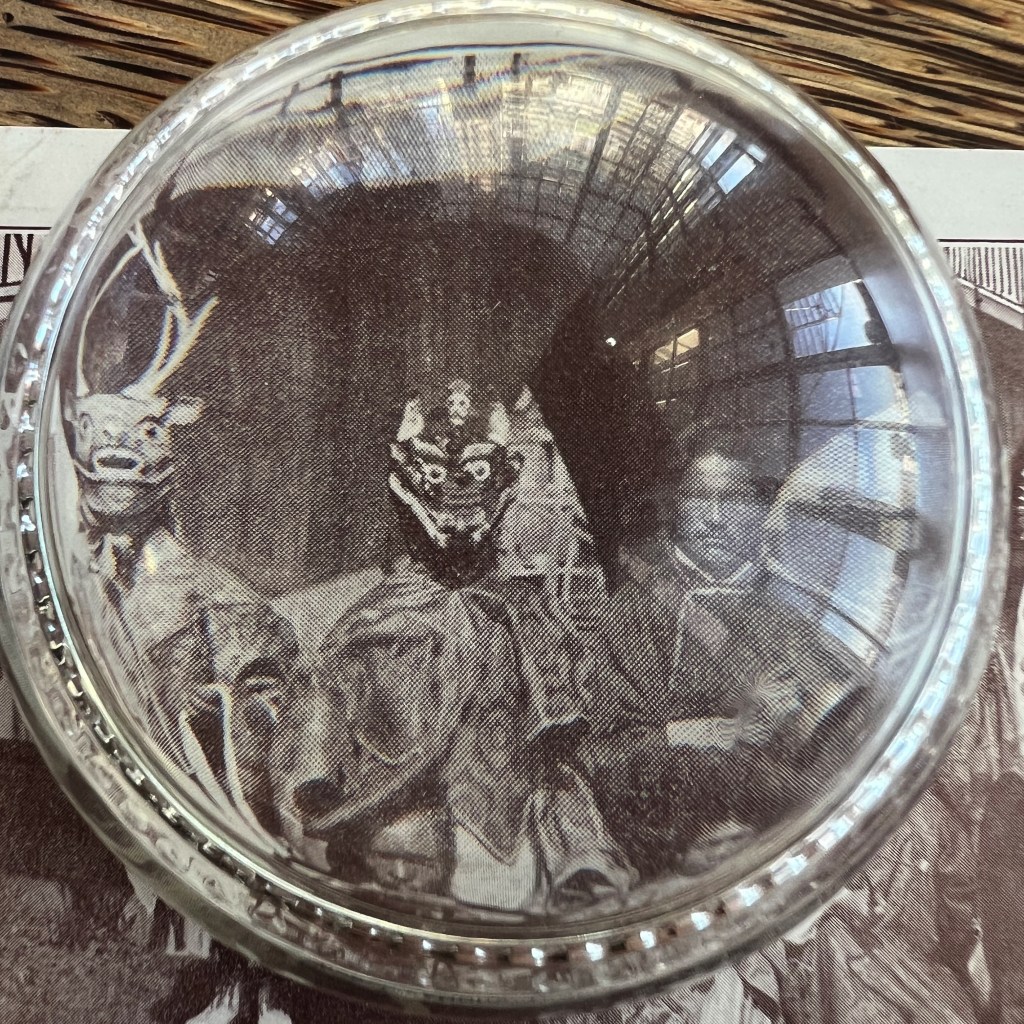
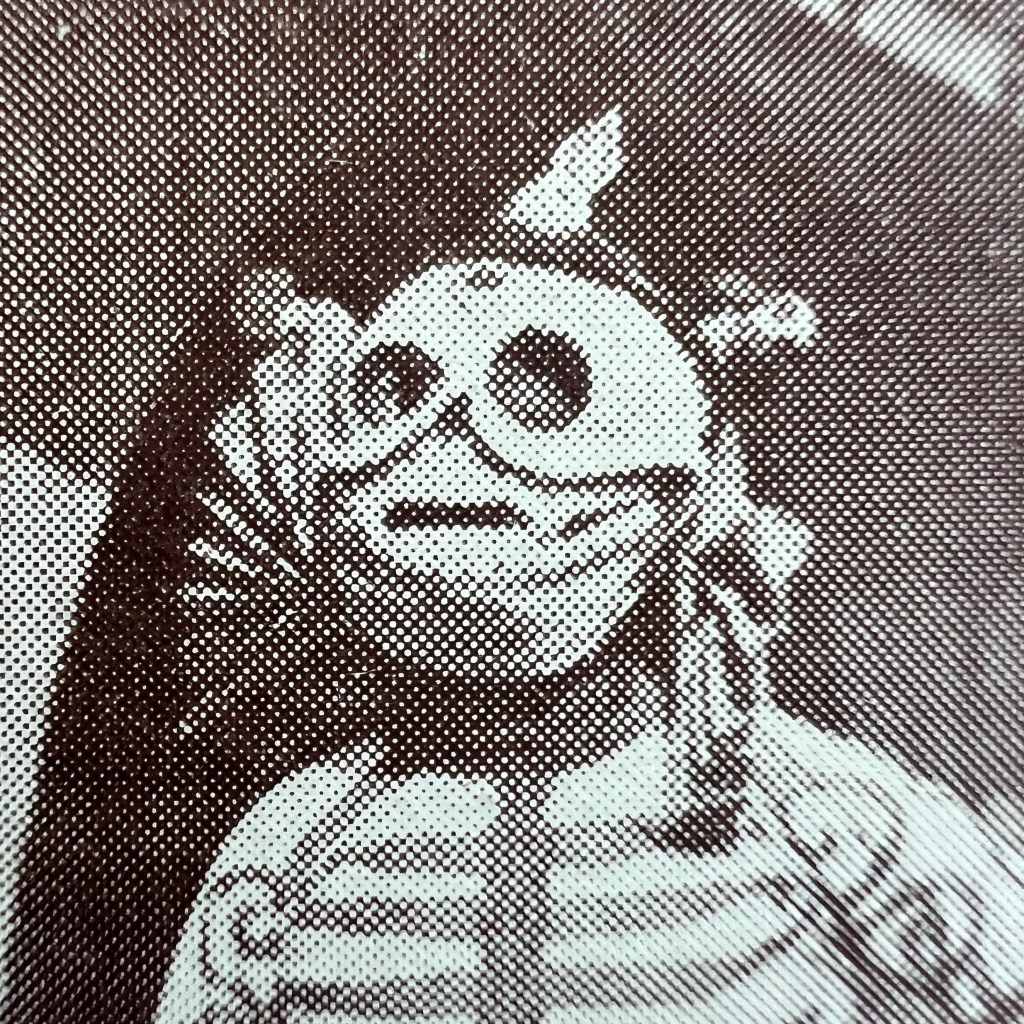
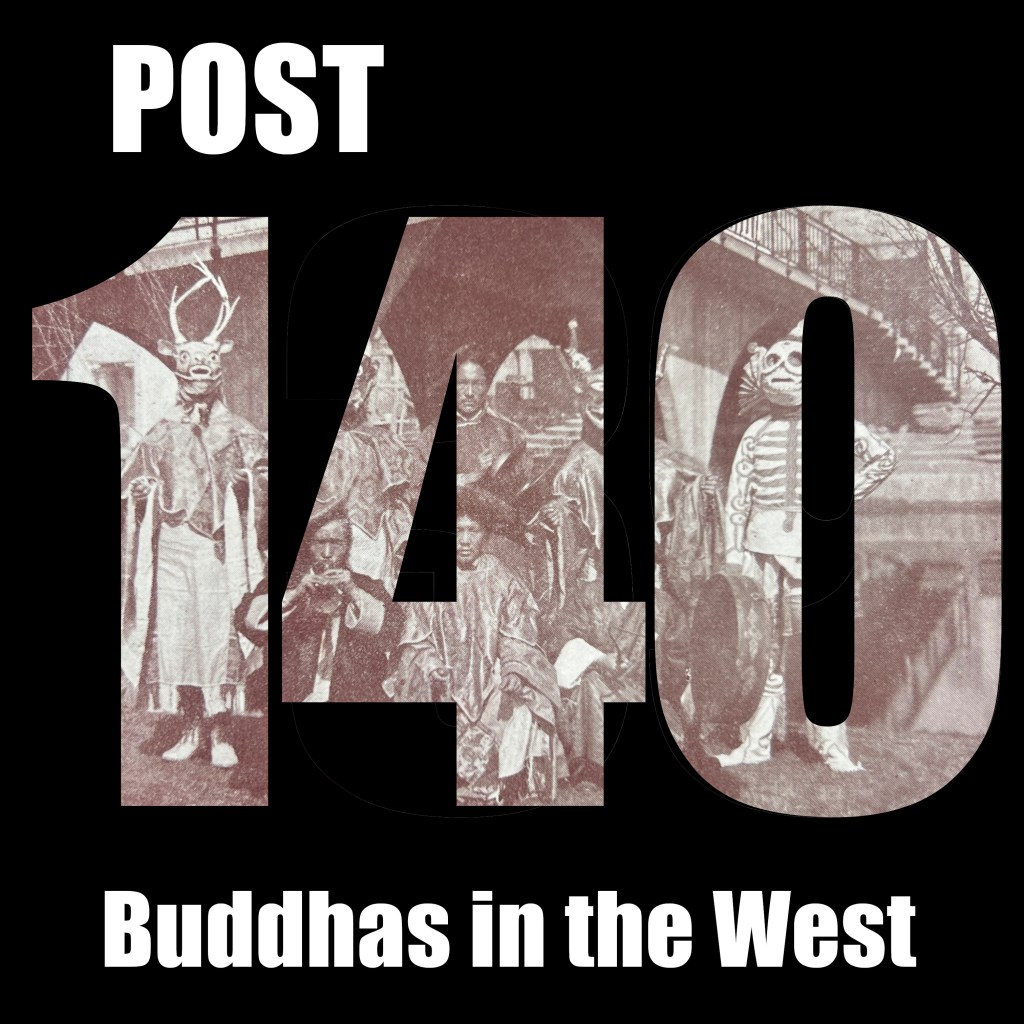
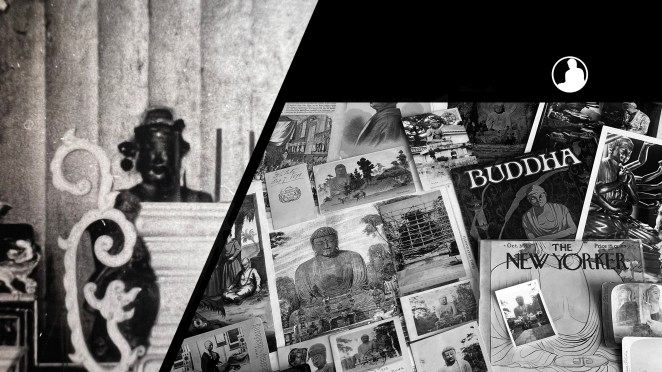
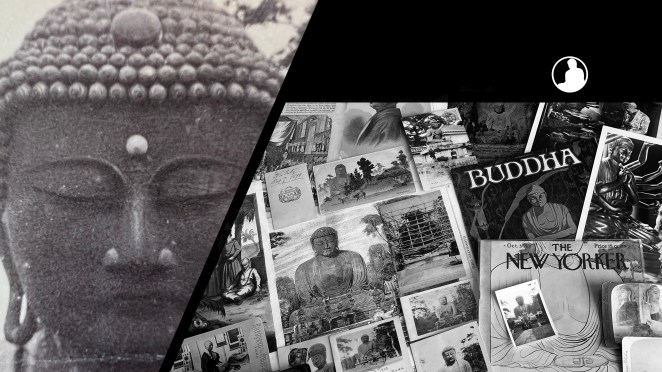
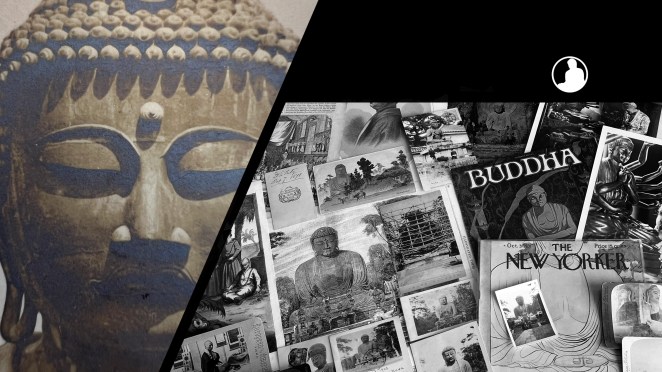
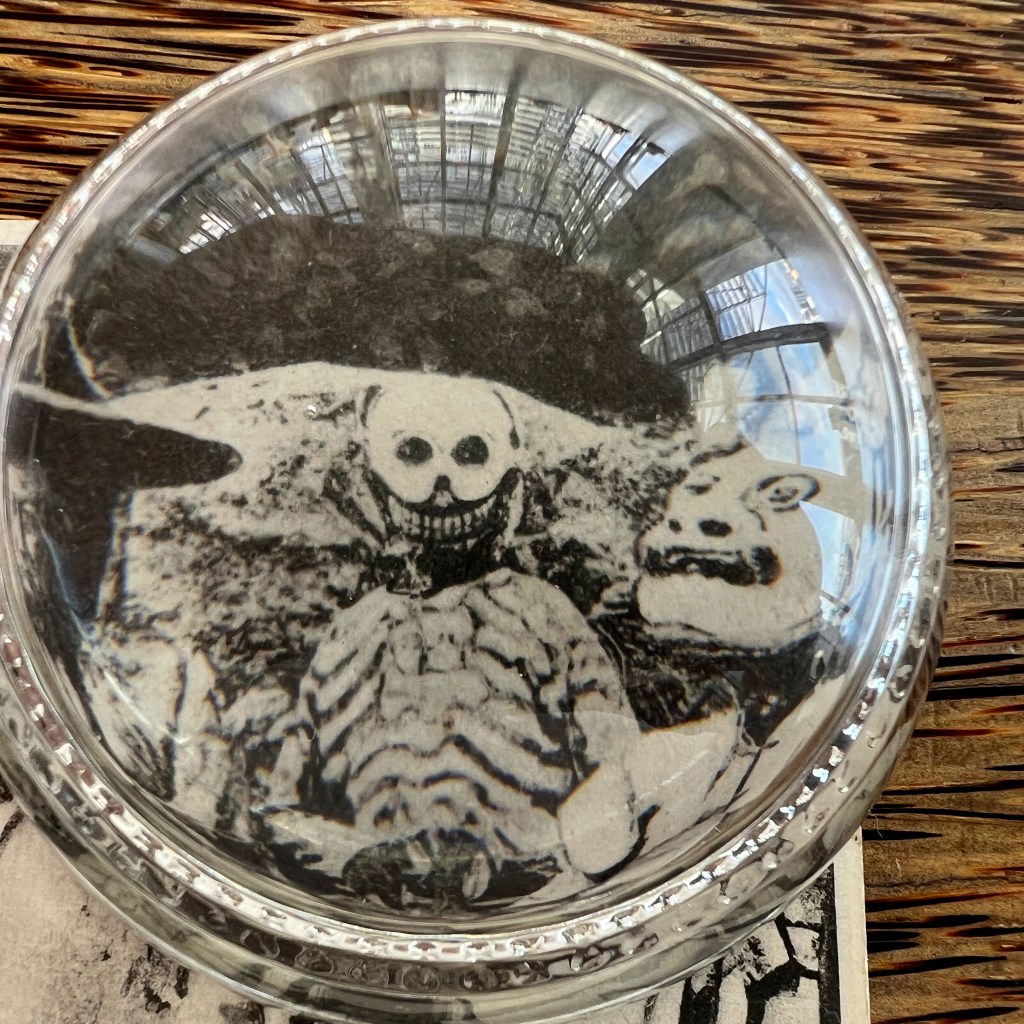
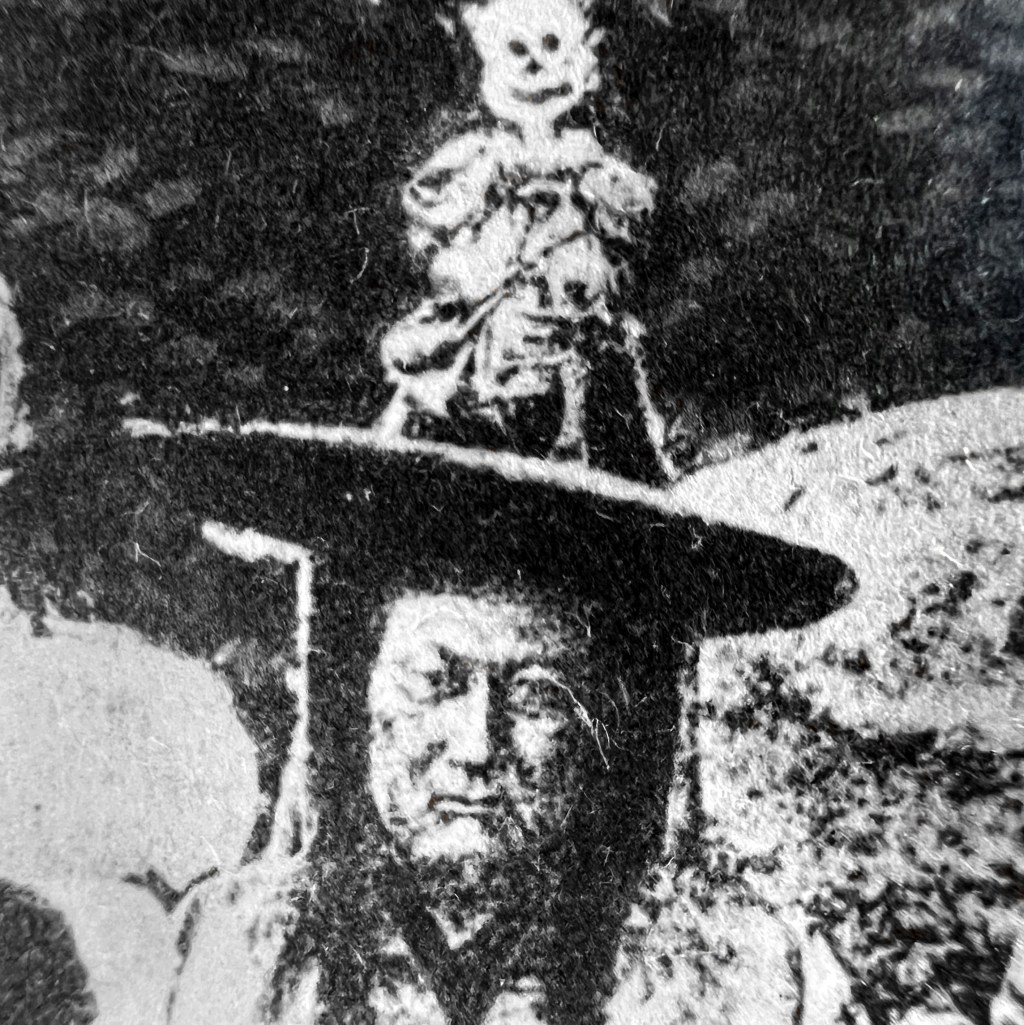
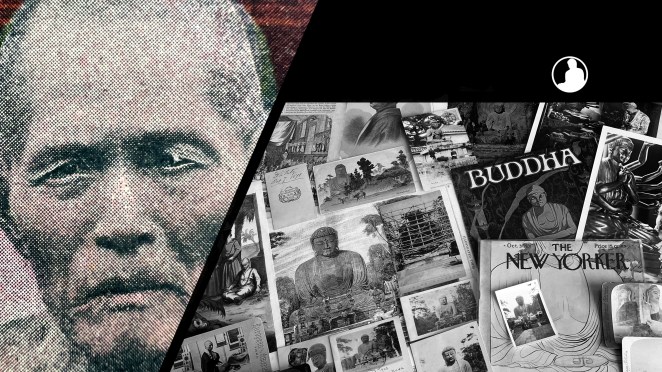
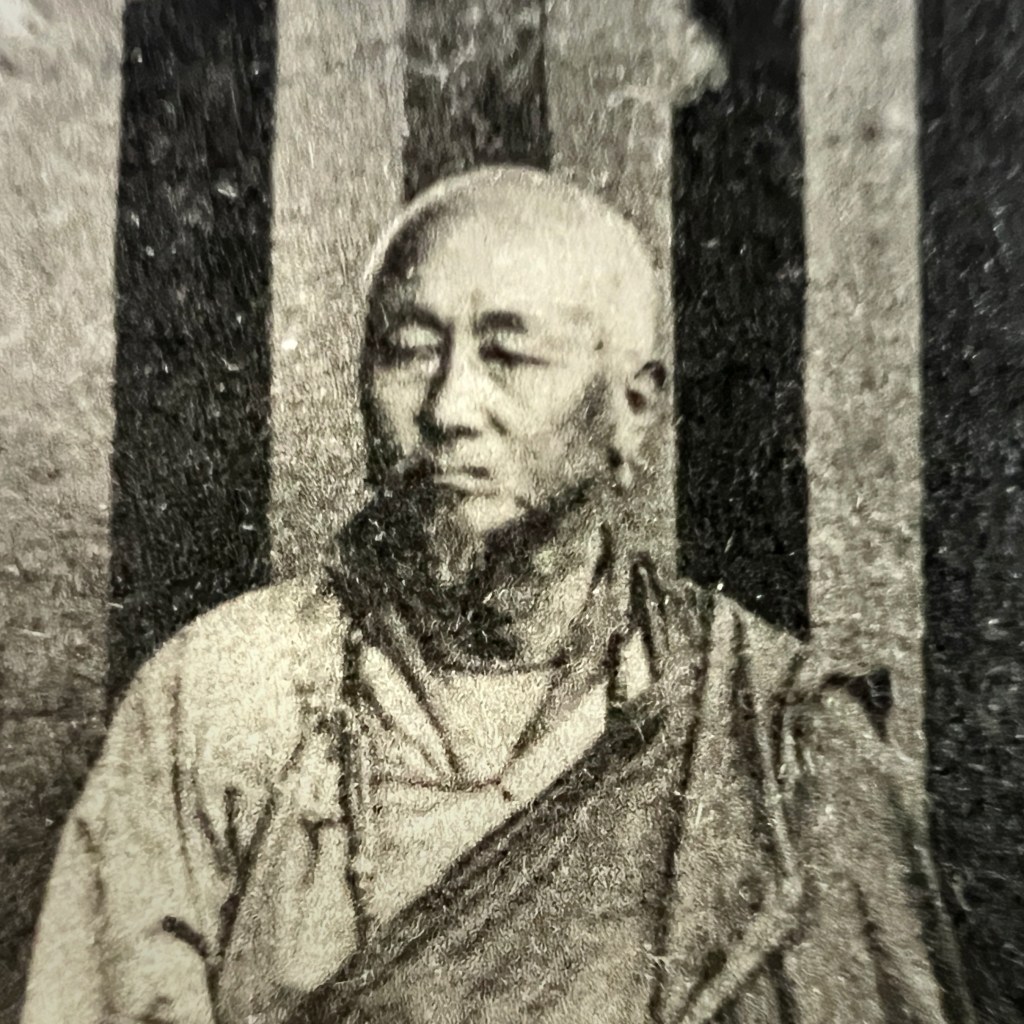
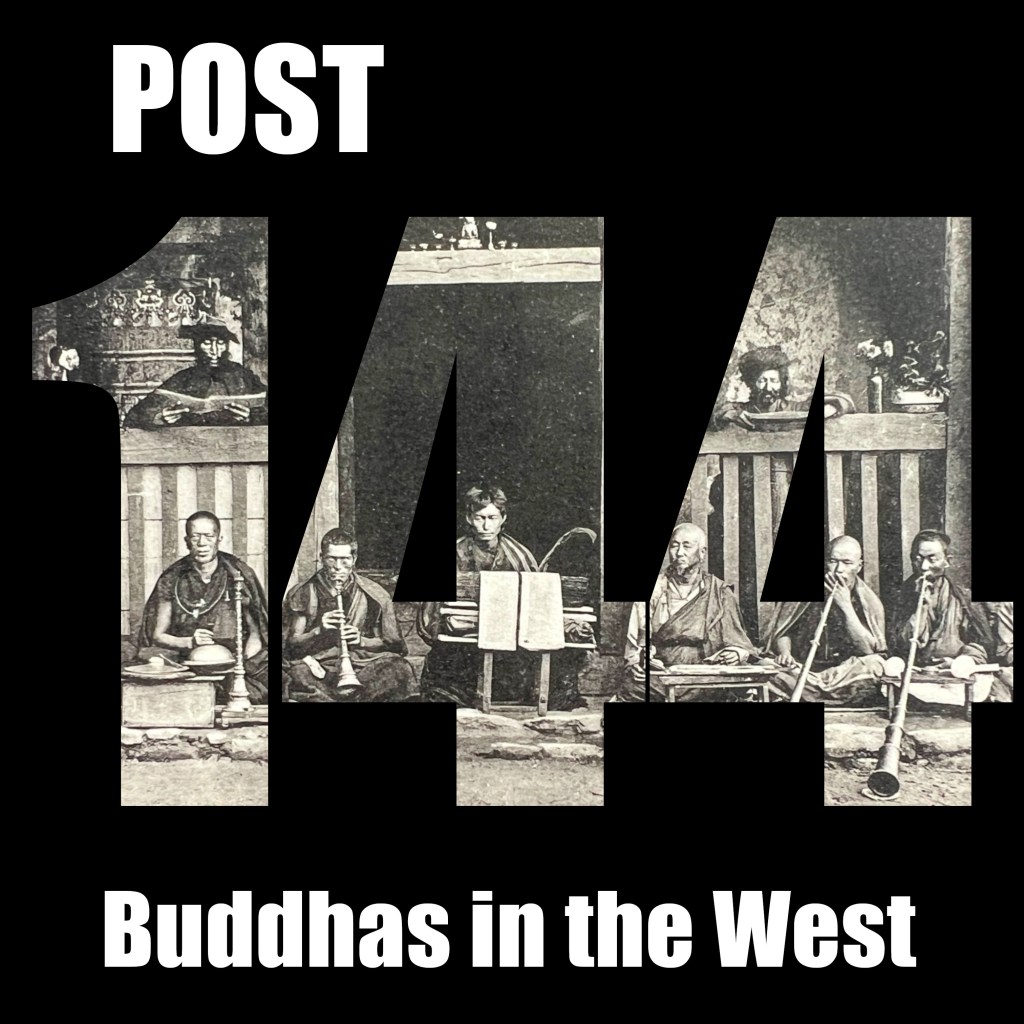
Despite the ambiguous caption—”A Group of Thibetan Musicians”—the history behind this anonymous photograph is remarkably well-documented. Taken by Robert Phillips before 1873, we see a gathering of the resident lamas at Sangchen Thongdrol Ling, a Nyingma monastery in Darjeeling.
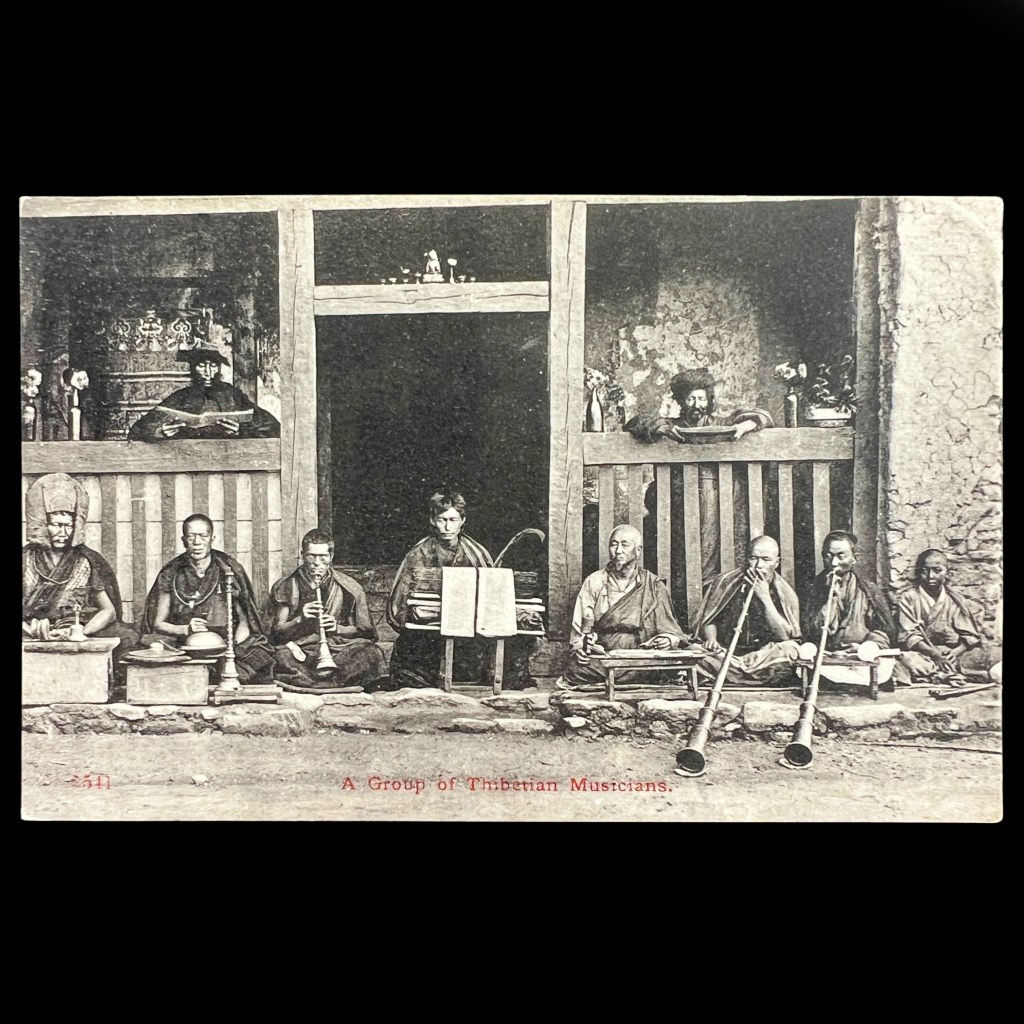
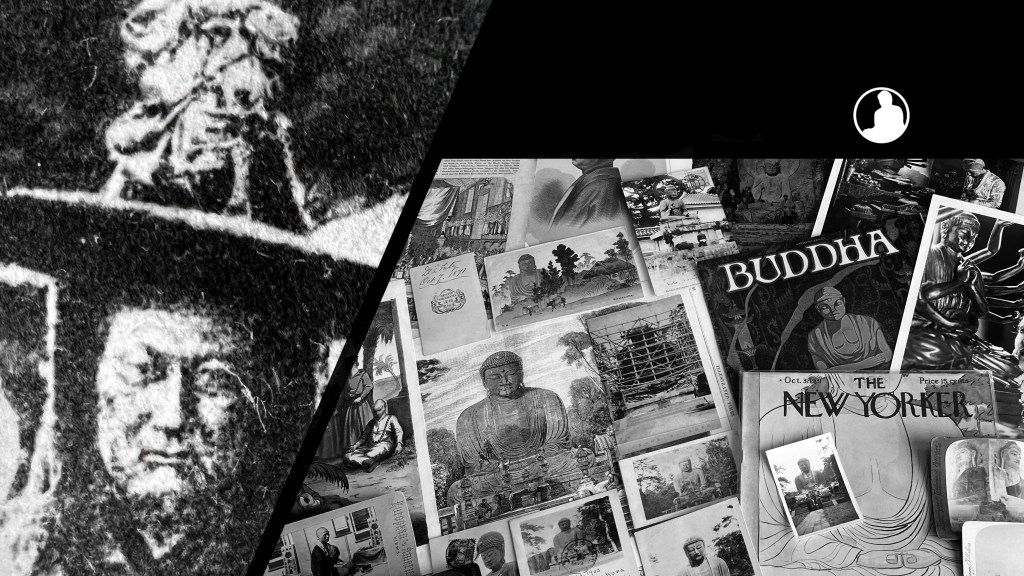
Phillips, who operated a prominent studio in the colonial hill-station, submitted his photograph to the Illustrated London News which published an engraving of this image with an accompanying article in 1873. The sitting lama are described as natives of Sikkhim posing with ritual instruments.
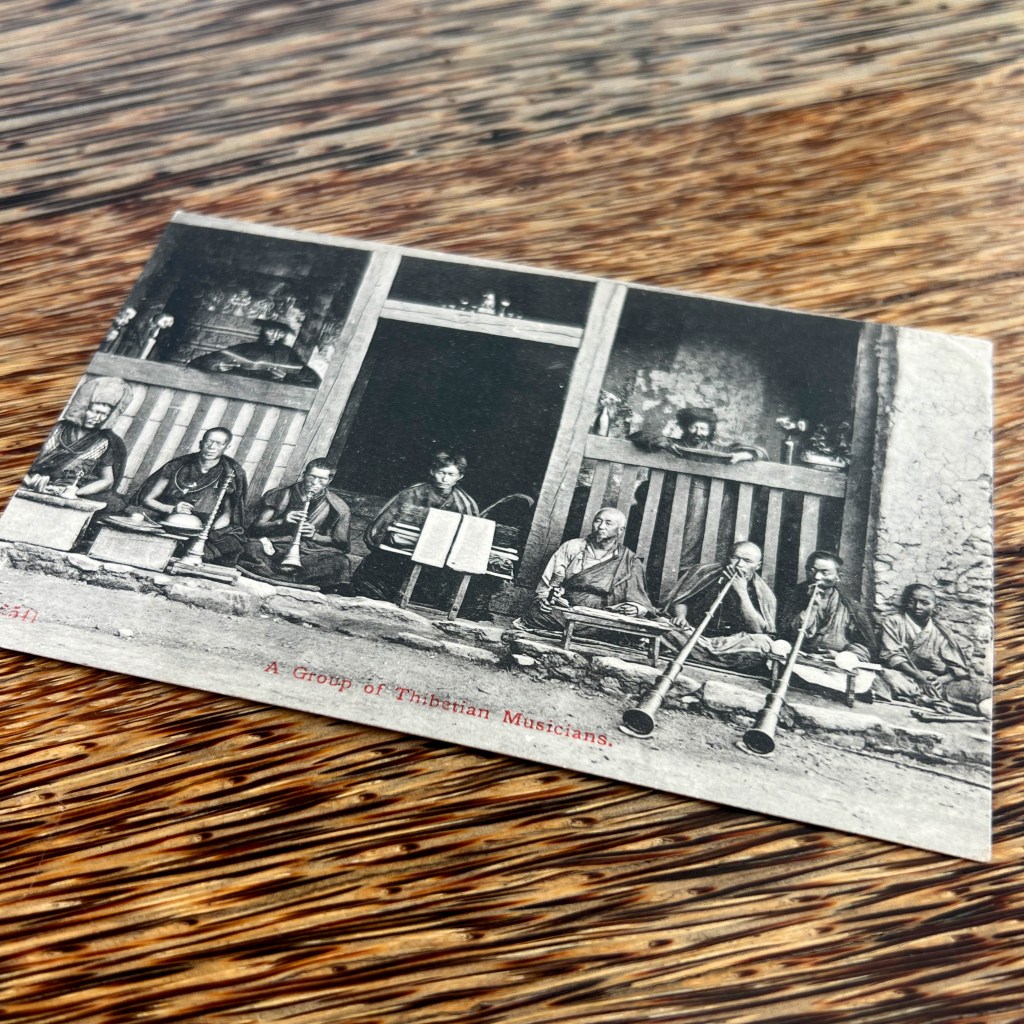
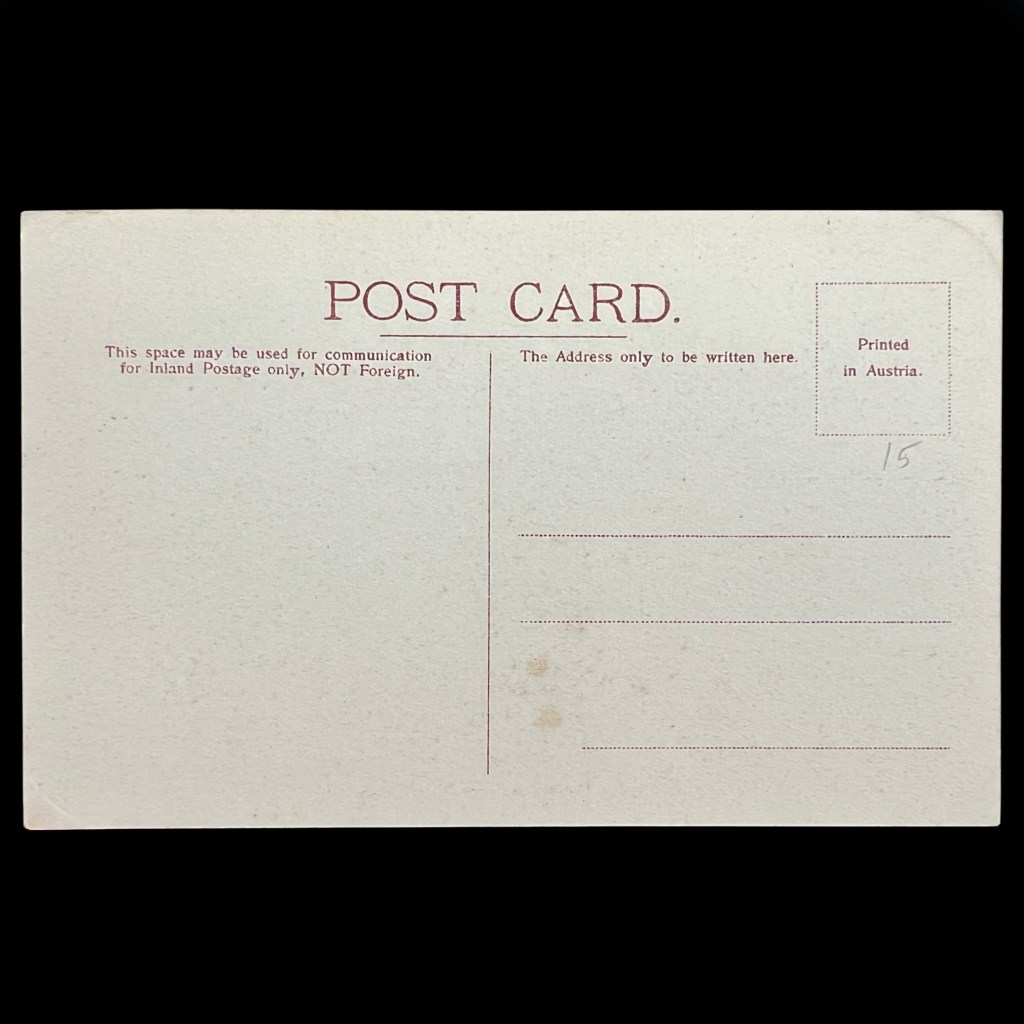
Great Britain pioneered divided back postcards in 1902, allowing messages on the address side for the first time. This innovation sparked a surge in popularity for postcards featuring full-view images—even if, as in this case, the photographs were already decades old.
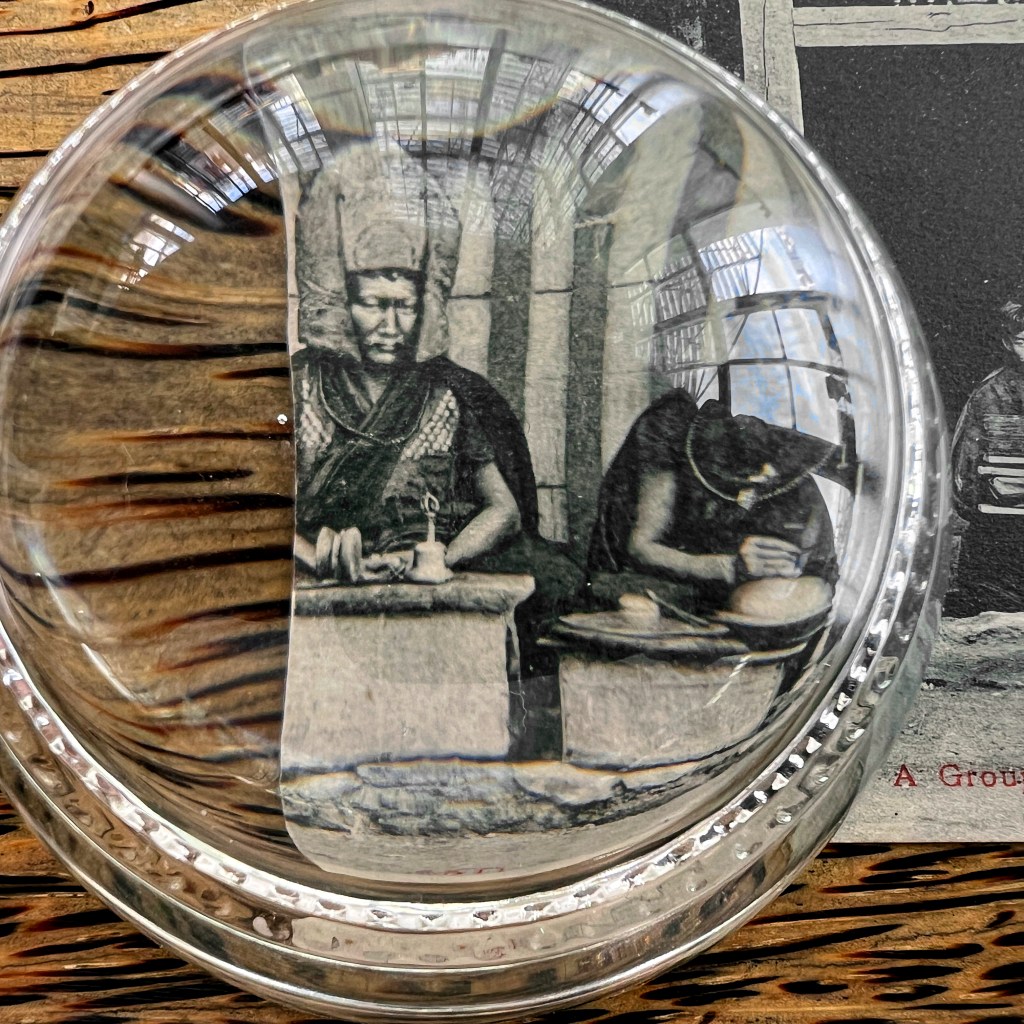
The newspaper article identifies figure on the far left as the head officiating lama. Before him are placed ritual instruments including a small hand drum, a vajra scepter, and bell.
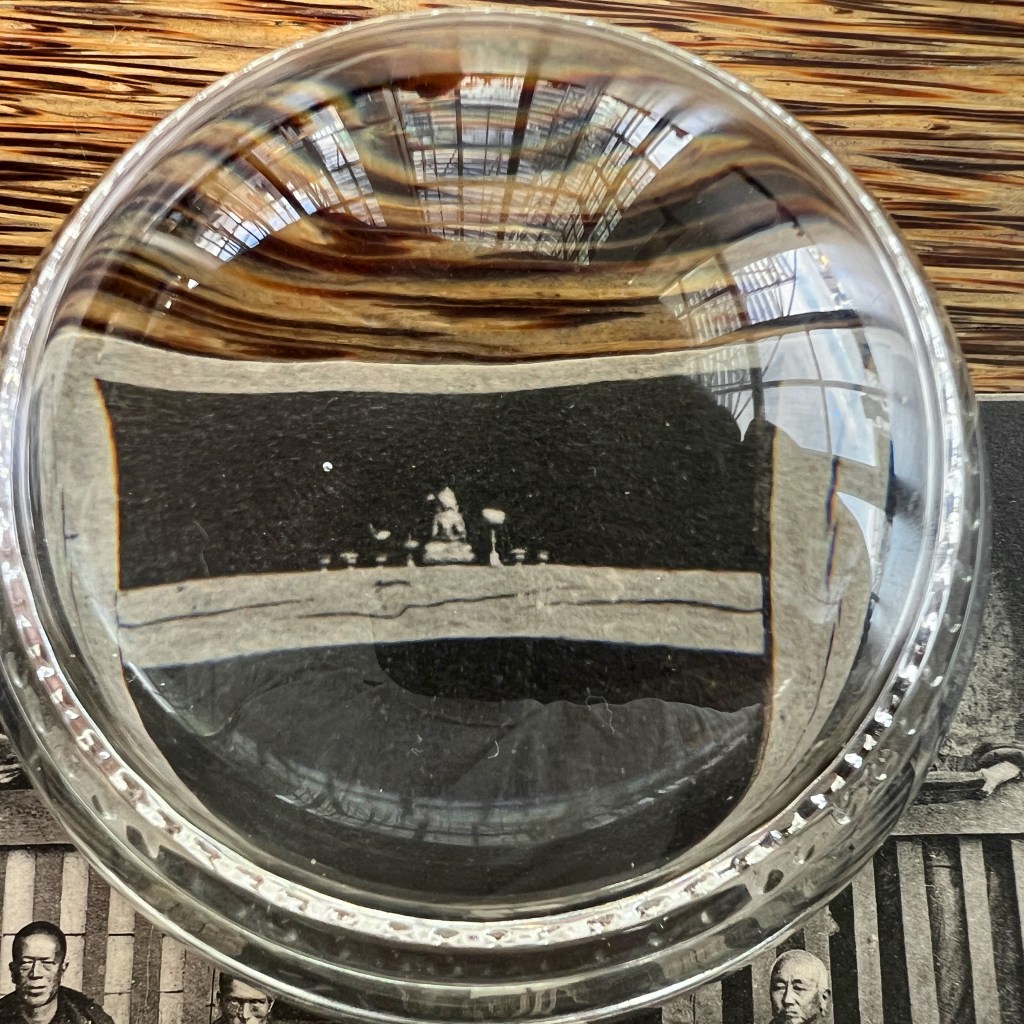
A small Buddhist icons rests above the doorway with small brass offering bowls of oil and rice set on both sides. The main altar, not visible in the photograph, reportedly enshrined an image of Padmasambhava, the Indian adept famed for introducing Tantric Buddhism into Tibet.
Often described as the oldest Buddhist monastery in Darjeeling, the temple was forced to relocate in 1879 to Ging by British authorities. To read more about details in Phillips’ photograph, consult the Illustrated London News article, viewable here: https://tinyurl.com/329mh668.
The Buddhas in the West Material Archive is a digital scholarship project that catalogues artifacts depicting Buddhist material culture for Western audiences. It’s comprised of prints, photos, and an assortment of ephemera and other objects. For a brief introduction to this archive, visit the main Buddhas in the West project page.


For Related Buddhas in the West Posts Featuring Tibet:

For the Most Recent Buddhas in the West Posts:


1924 British Empire Exhibition Tibetan Dancers Postcard

For all the new Buddhas in the West posts
follow us on Bluesky & Instagram


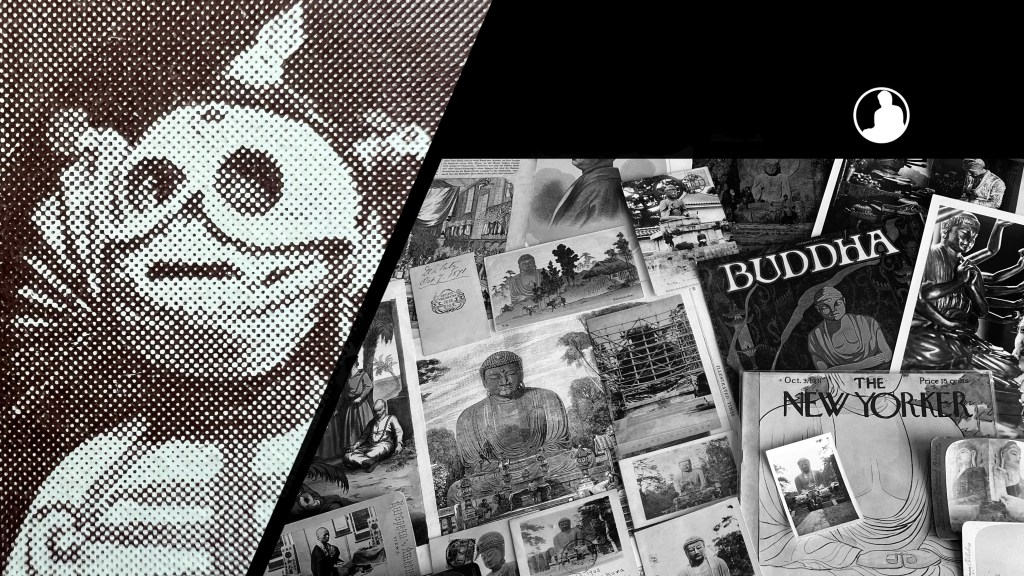
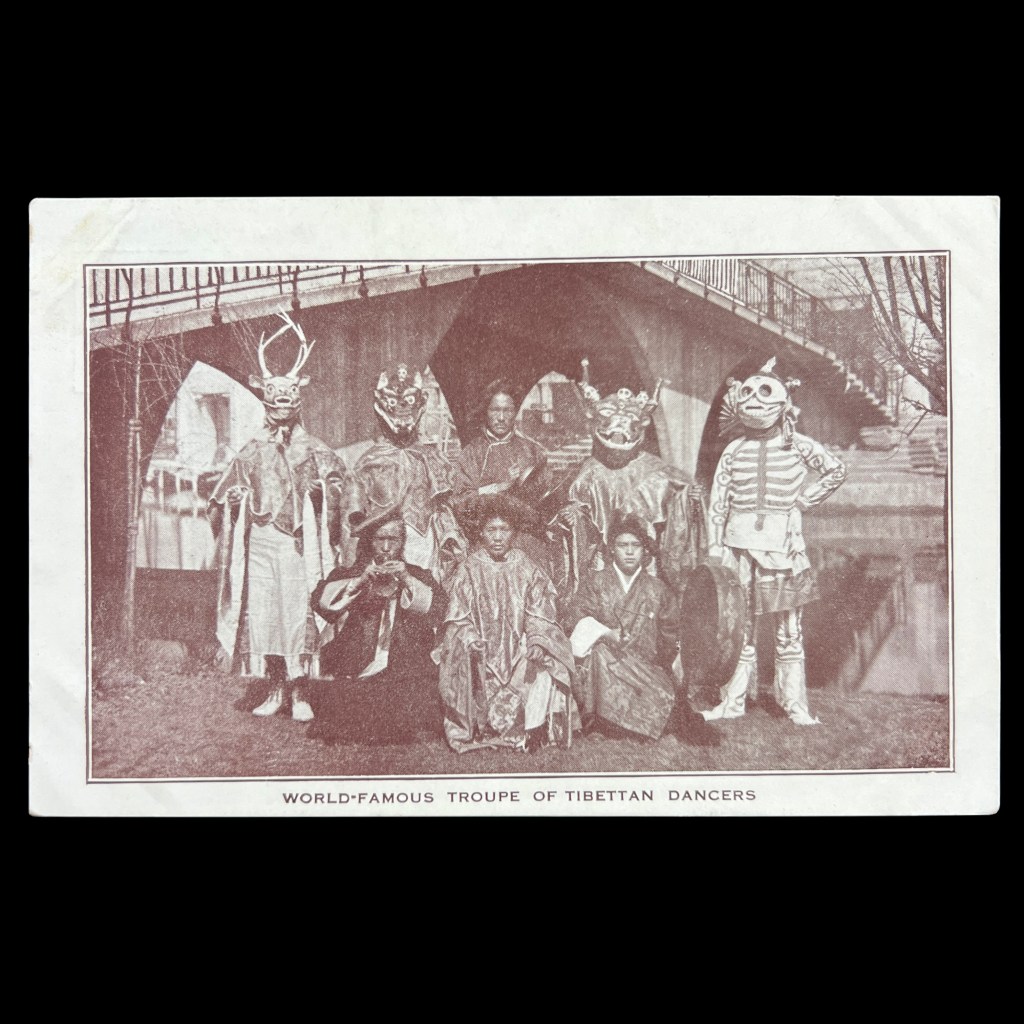
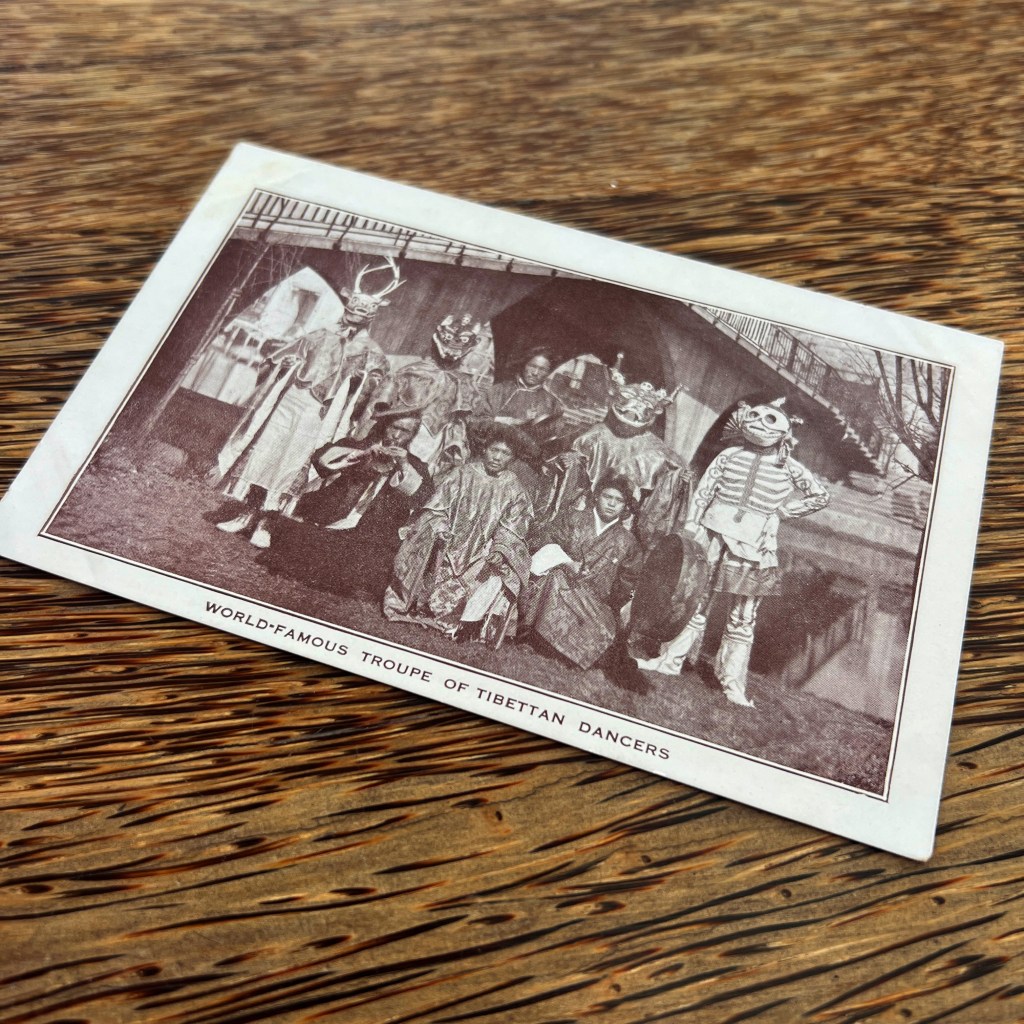
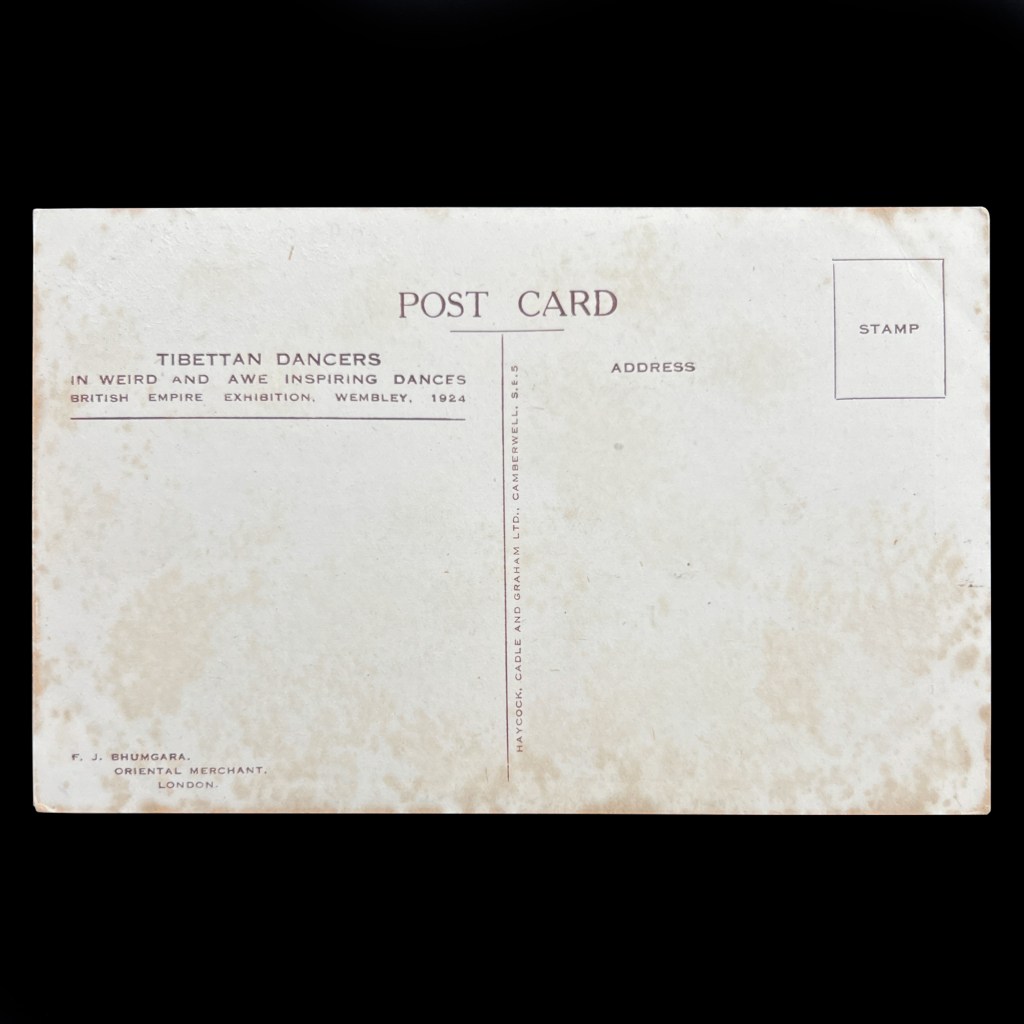
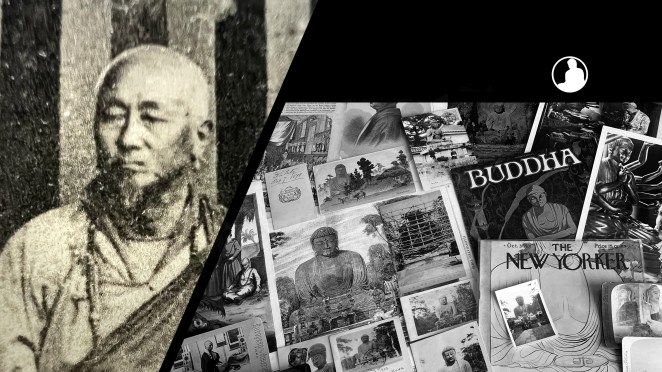
The first Tibetan Buddhist monks came to Europe amid the surge of interest over attempts to summit Mt. Everest in the 1920s. Capitalizing on this excitement, a promoter in Darjeeling recruited men to pose as Tibetan cham dancers for the British Empire Exhibition at Wembley in 1924.

Dressed in what appeared to be authentic masks and robes, the troupe performed in a theater attached to the India Pavilion. Not everyone was impressed; a Tibetan student then studying in England regarded the performances as inauthentic and insulting to both Tibet and Buddhism.

Advertised as performing “weird and awe inspiring dances,” the troupe shared the stage alongside Indian snake charmers, jugglers, and magicians. This spectacle formed part of a long-standing colonial practice of publicly displaying foreign people as part of ethnological “human zoos.”

The costumes themselves drew on figures from actual cham rituals, including the fierce Buddhist deity Yama and a sacred stag.

Despite the unease of Tibetan officials, “real” Tibetan monks were allowed to tour Europe for the 1924 premier of the Epic of Everest, performing music as part of a live prologue to the film. For more on these monks, see Peter Hansen’s “The Dancing Lamas of Everest” (1996).


The Buddhas in the West Material Archive is a digital scholarship project that catalogues artifacts depicting Buddhist material culture for Western audiences. It’s comprised of prints, photos, and an assortment of ephemera and other objects. For a brief introduction to this archive, visit the main Buddhas in the West project page.


For Related Buddhas in the West Posts Featuring Ritual Dance:


For the Most Recent Buddhas in the West Posts:


Tuck’s Henry Savage Landor Tibetan Lamas Postcard

For all the new Buddhas in the West posts
follow us on Bluesky & Instagram


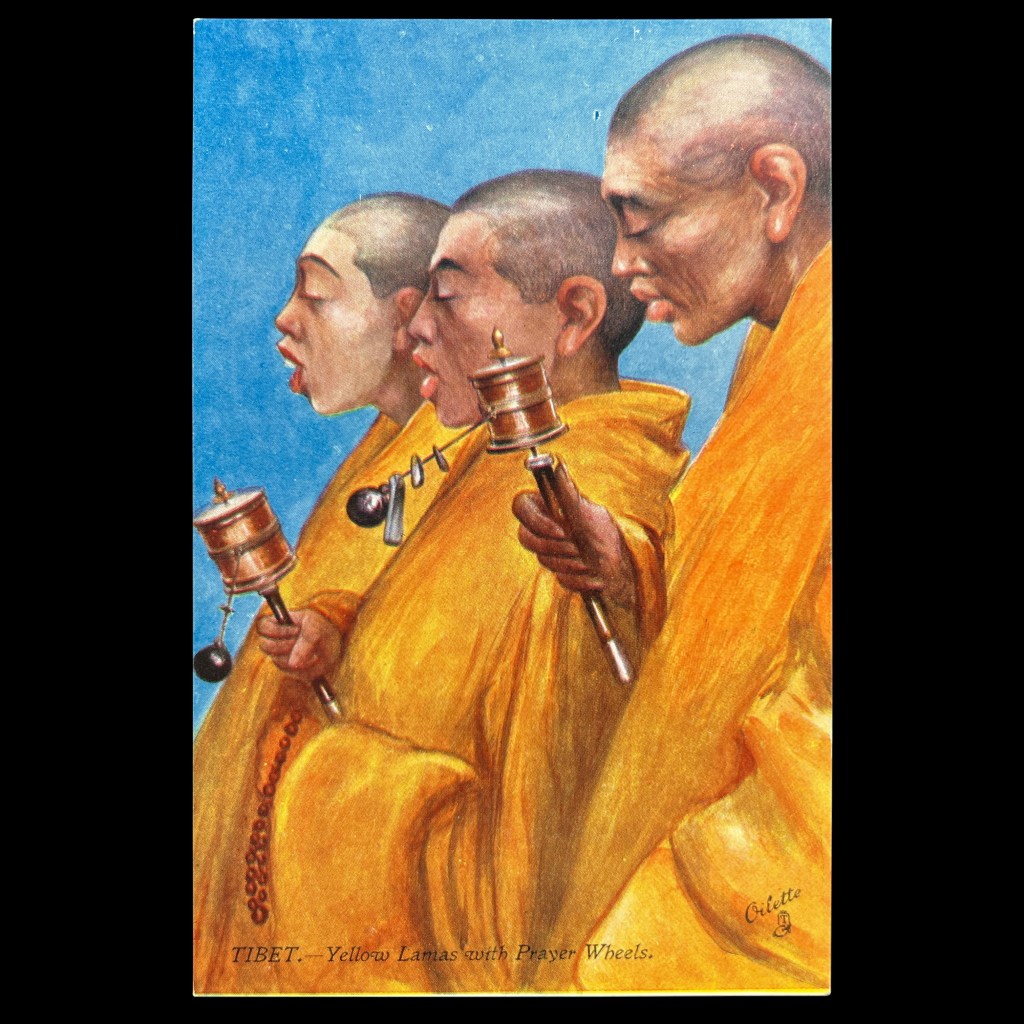
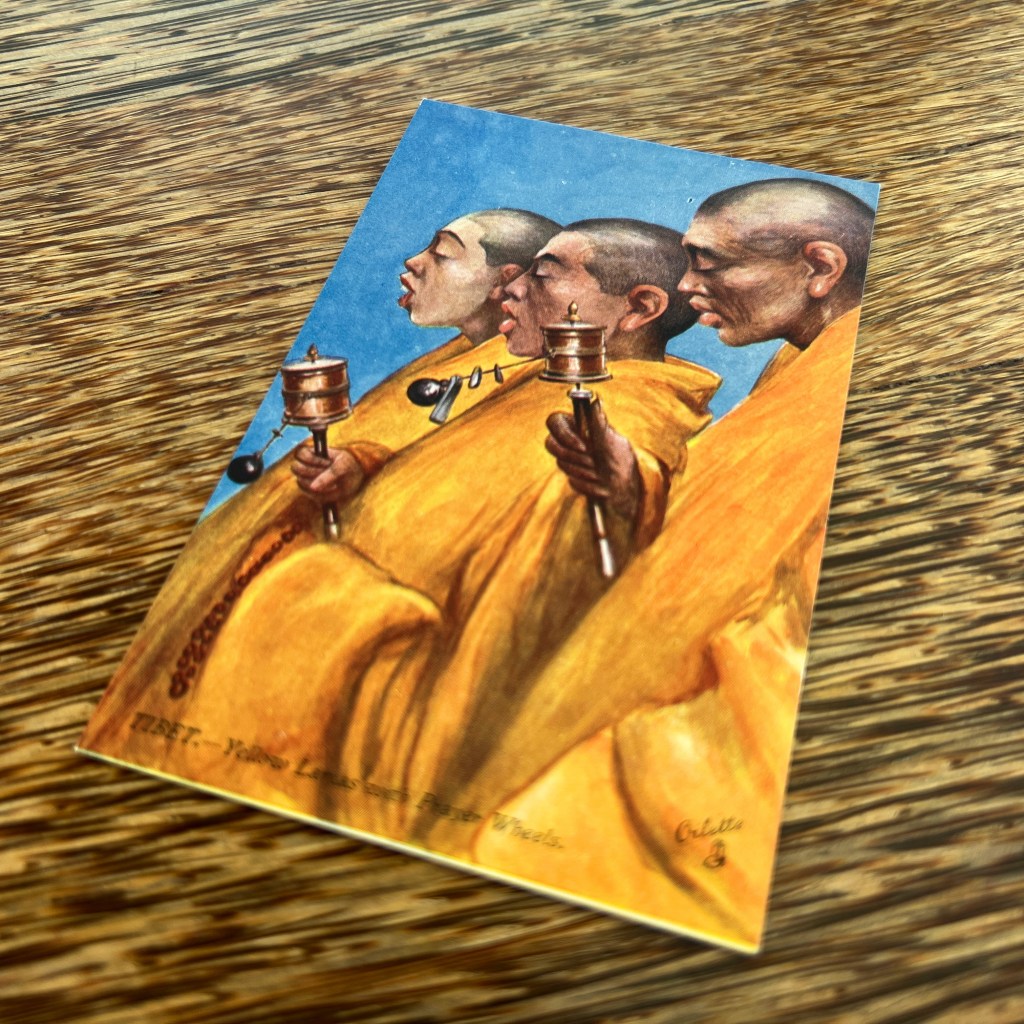
In 1903, a titan of world postcard production, England-based Raphael Tuck & Sons, set themselves further apart by issuing the vibrantly colored Oilette Series based on commissioned oil paintings. Among the first sets released was devoted to the mysterious Himalayan nation of Tibet.

Six paintings were prepared by the explorer and artist Henry Savage Landor who wrote about his travels to the region in his 1898 book, In the Forbidden Land. Tuck printed Landor’s paintings as lithograph postcards at a time when photos of Tibet were only first starting to circulate.

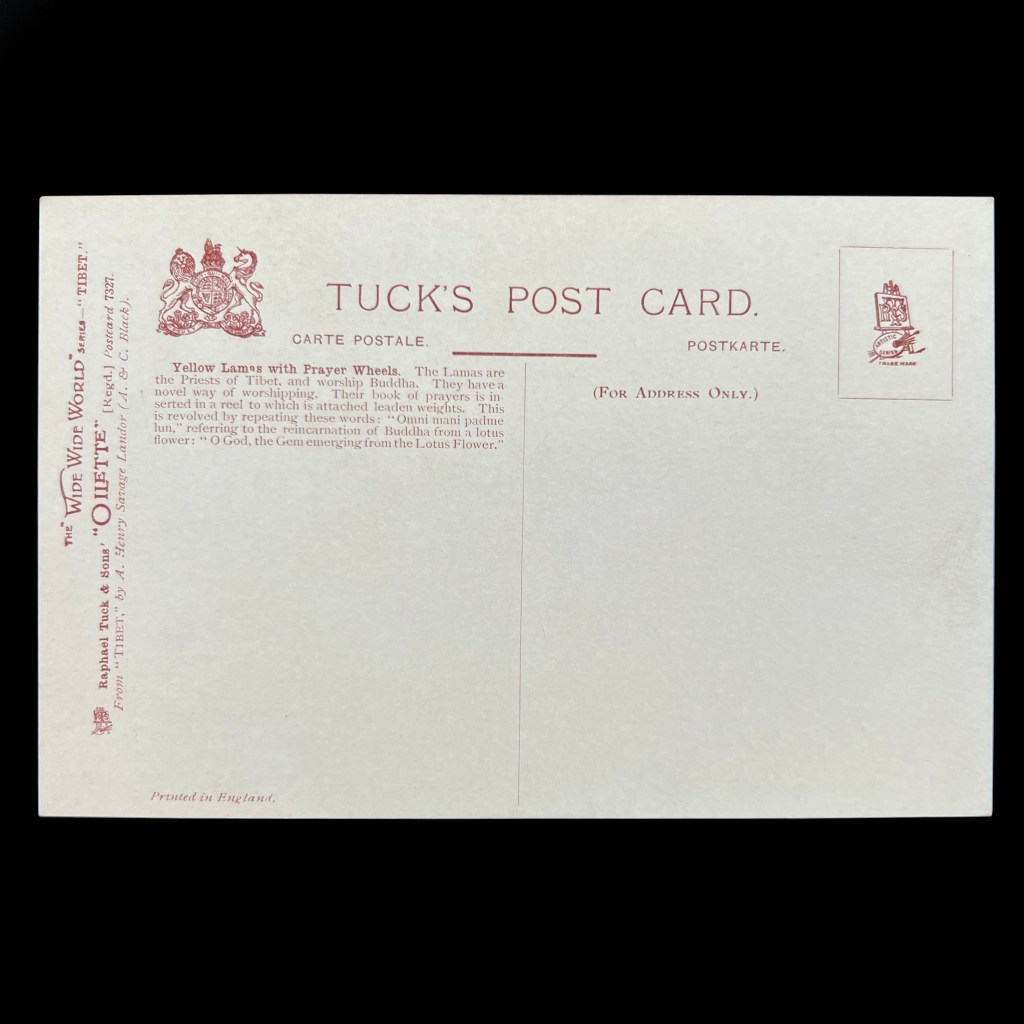
While a majority of Tuck’s pictorial stock focused on the English countryside, the Wide Wide World Series introduced colonial lands and other foreign cultures. Here the caption notes the use of Om mani padme hum, a six-syllable Sanskrit mantra common among Tibetan Buddhists.

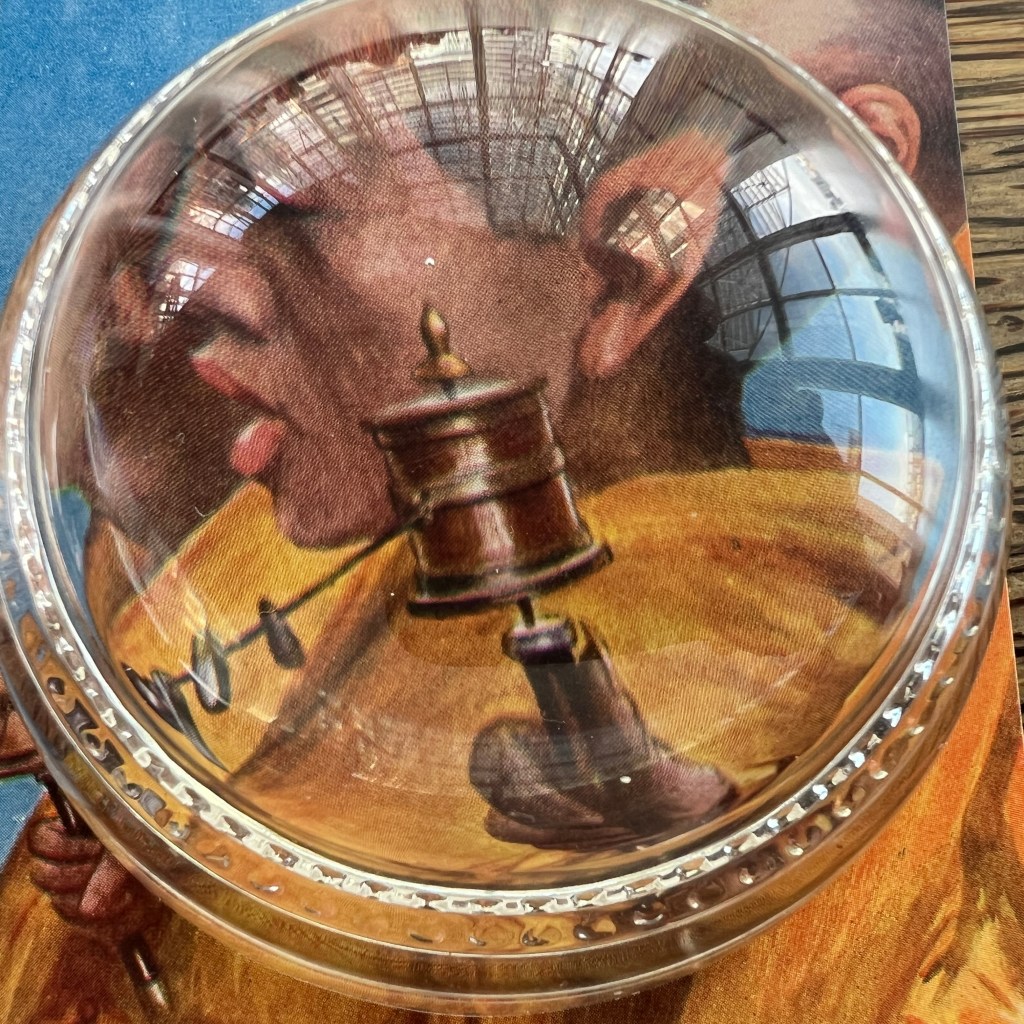
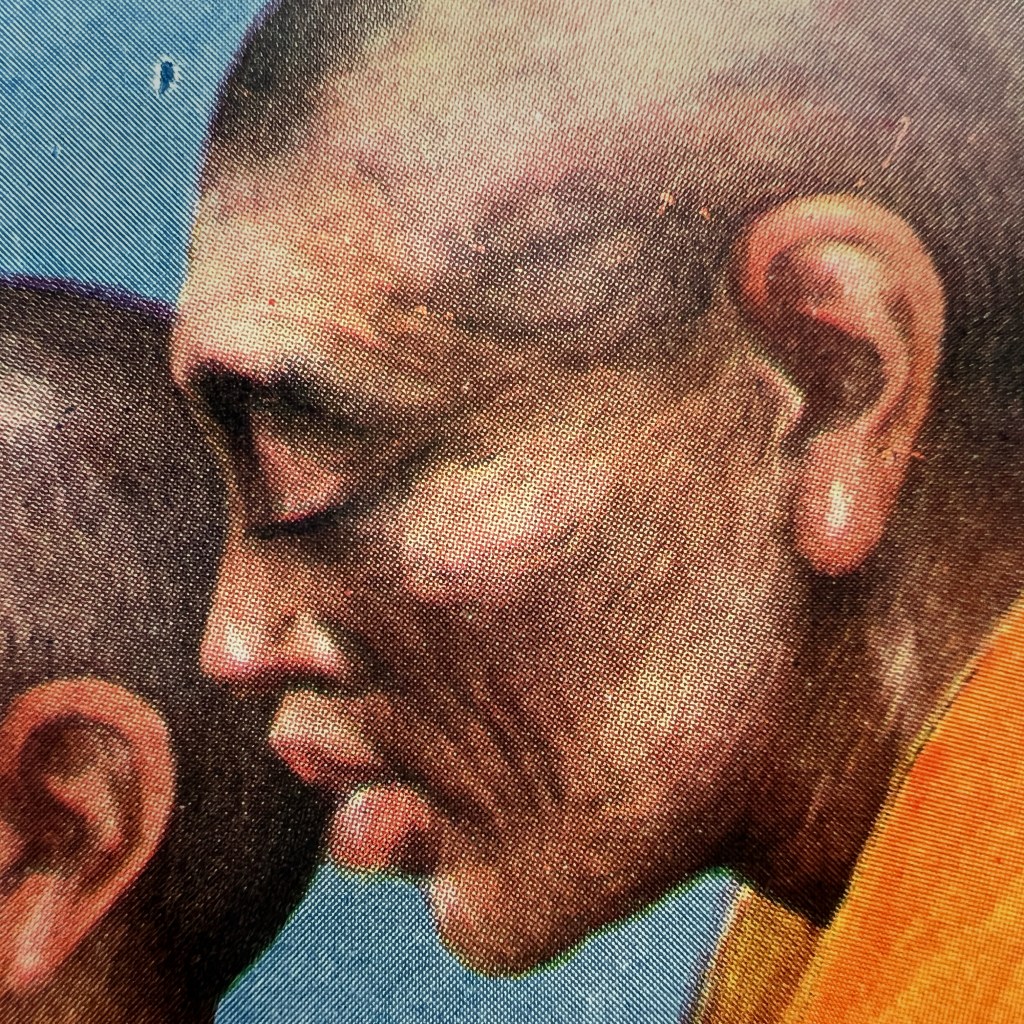
The visual focus of Landor’s painting is the monk’s use of the prayer wheel, noted as containing the Buddhist “book of prayers.” As with others of his time, Landor was fascinated by the ritual object, describing its use in his published work on Tibet.

Landor’s six card set was the only set of Tibet Tuck published before it stopped operation during WWII. For a comprehensive digitized catalogue of Tuck Oilette cards, see www.tuckdbpostcards.org.


The Buddhas in the West Material Archive is a digital scholarship project that catalogues artifacts depicting Buddhist material culture for Western audiences. It’s comprised of prints, photos, and an assortment of ephemera and other objects. For a brief introduction to this archive, visit the main Buddhas in the West project page.


For Related Buddhas in the West Posts Featuring Prayer Wheels:


For the Most Recent Buddhas in the West Posts:


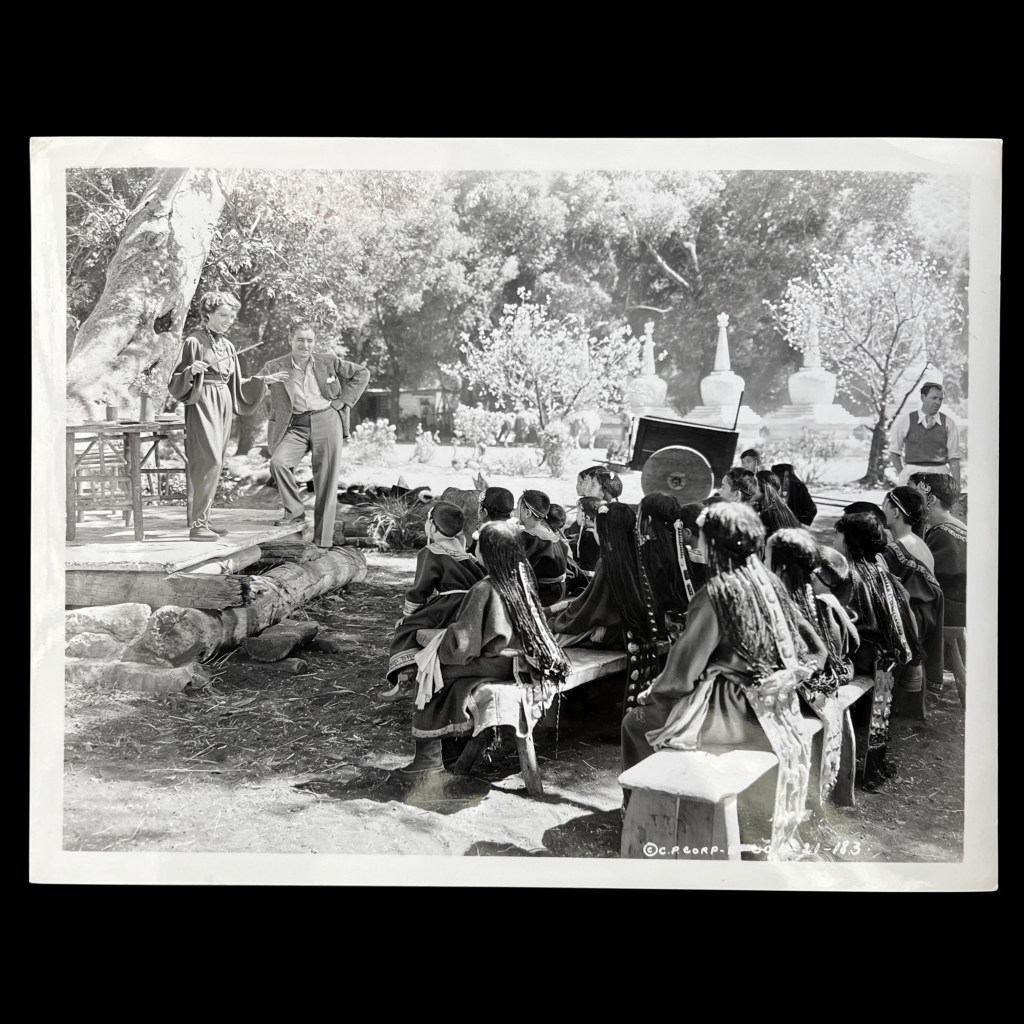
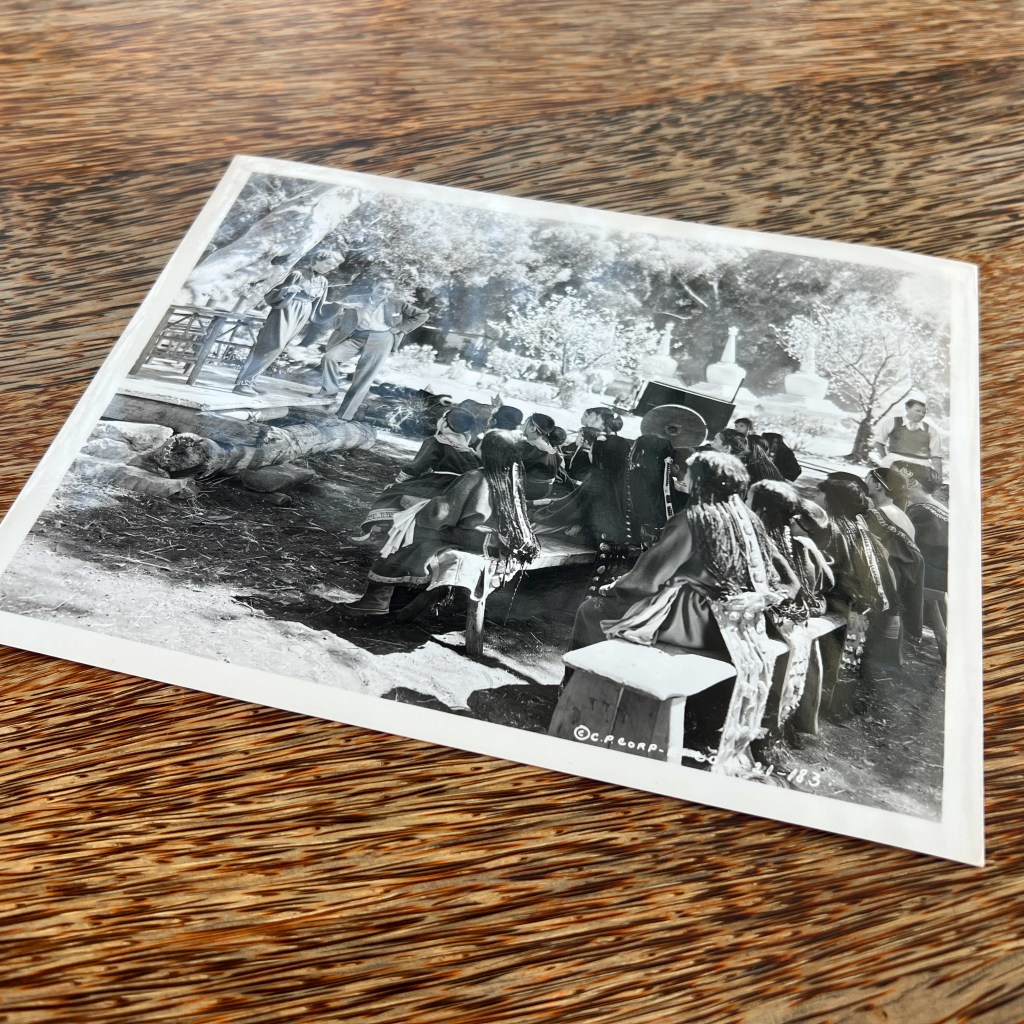
Shangri-la in Lost Horizon (1937) Production Photograph

For all the new Buddhas in the West posts
follow us on Bluesky & Instagram


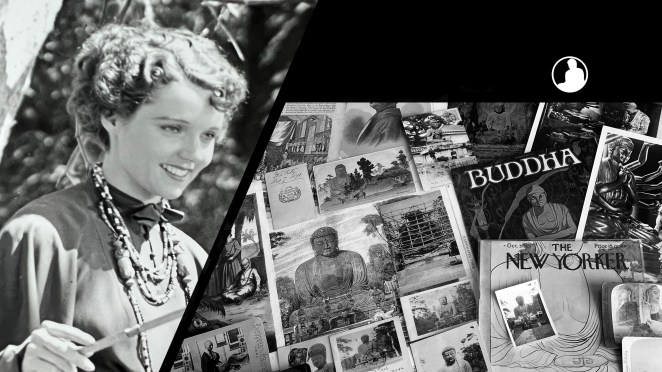
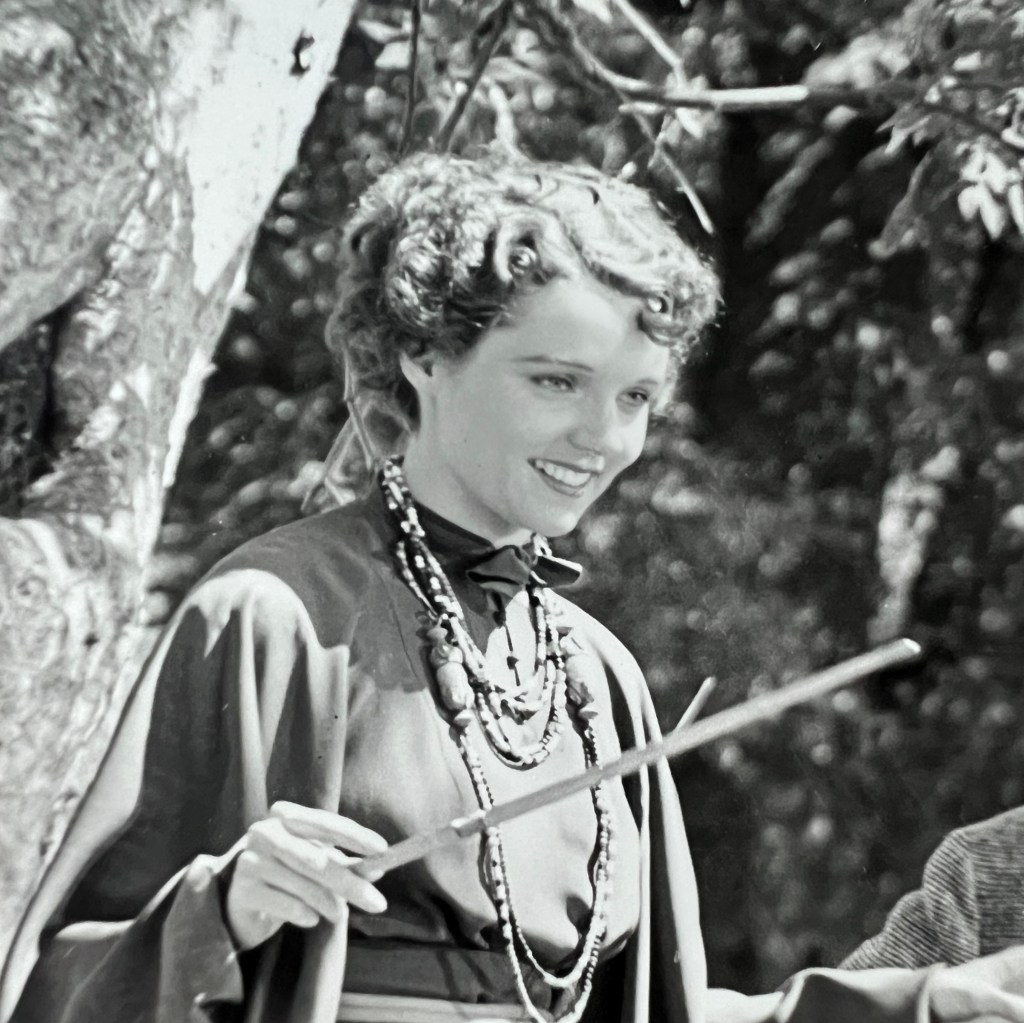
American escapist films grew in prominence during the Depression Era 1930s and Frank Capra’s 1937 film, Lost Horizon, was an important Buddhist entry to this genre. The early 20th century romantic imagery of Tibet helped raise interest in the film’s Himalayan utopia of Shangri-la.

The pristine beauty of Shangri-la as seen in Lost Horizon played to the fantasy of an enchanted landscape of the Oriental Other filled with peace and prosperity. Tibetan Buddhist lamas are initially portrayed as the protectors of this hidden mountain kingdom.

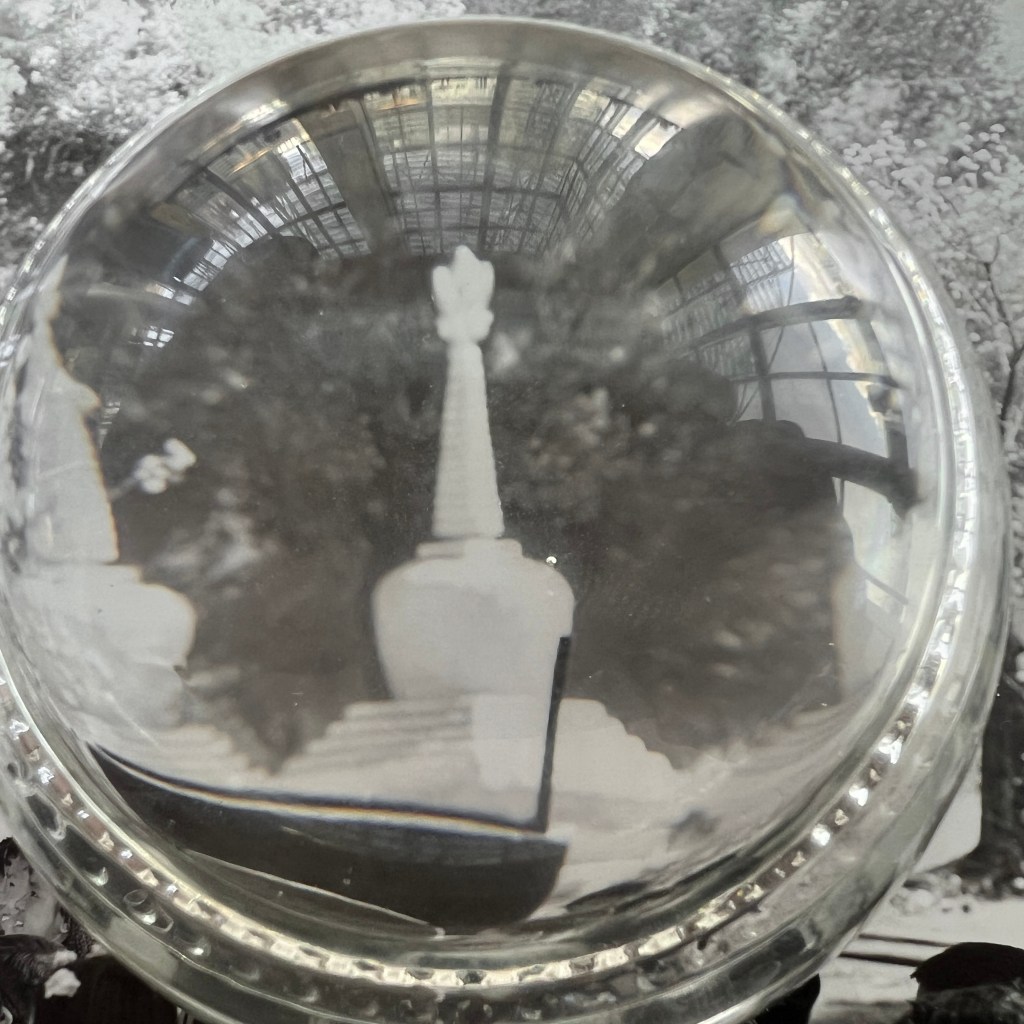
While filmed in a Hollywood back lot fitted with Streamlined Art Deco buildings, elements – such as the Tibetan-stye stūpa reliquaries – clued the appropriate Buddhist mise-en-scène.

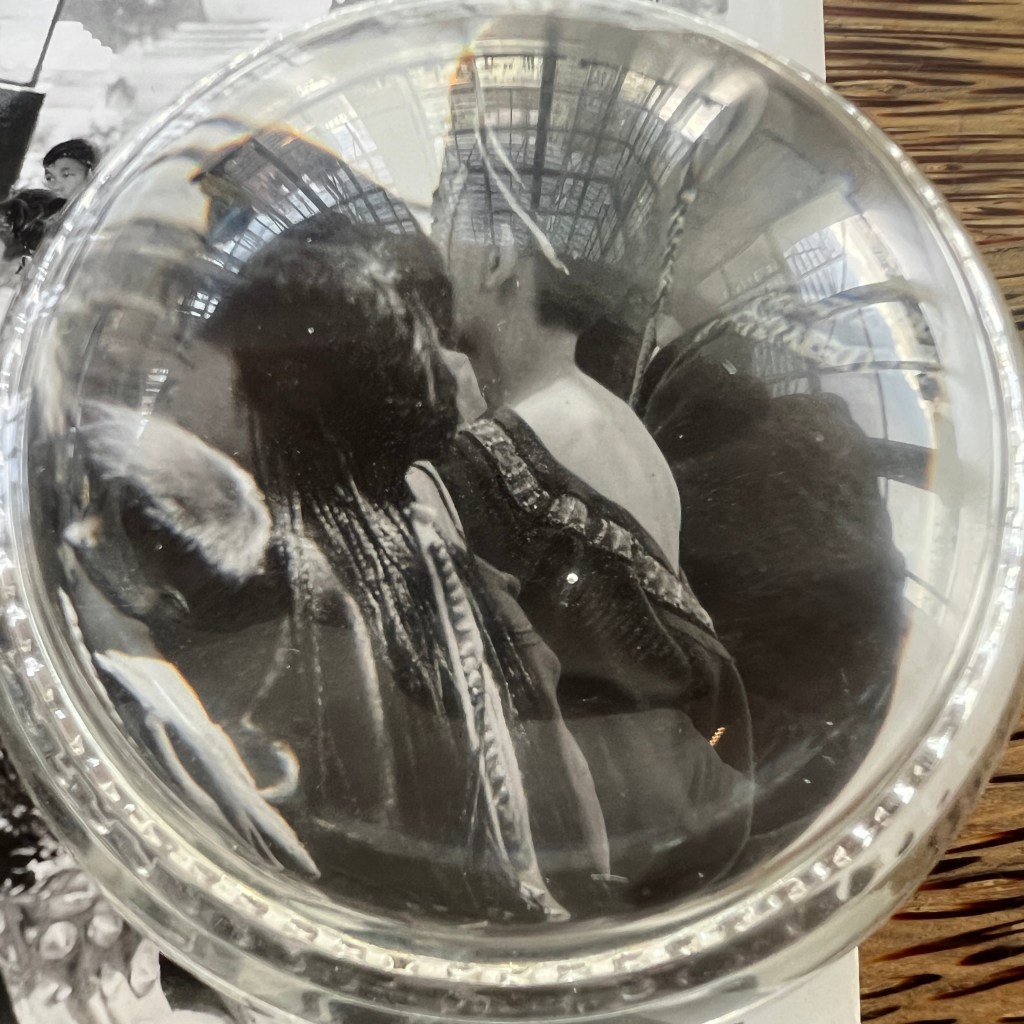
The film’s Tibetan-style costuming often showed exposed skin, suggesting the inhabitants had a child-like innocence and a pre-modern lifestyle. Ultimately we learn the High Lama is not Tibetan at all, but a Belgian Catholic priest who is the founder and caretaker of Shangri-la.

While flourishing and peaceful, Shangri-la still needed a benevolent colonial ruling hand to realize its full mission. For further exploration of the portrayal of Buddhism in American film, see Sharon Suh’s Silver Screen Buddha (2015).


The Buddhas in the West Material Archive is a digital scholarship project that catalogues artifacts depicting Buddhist material culture for Western audiences. It’s comprised of prints, photos, and an assortment of ephemera and other objects. For a brief introduction to this archive, visit the main Buddhas in the West project page.


For Related Buddhas in the West Posts Featuring Chicago:


For the Most Recent Buddhas in the West Posts:


Jean Claude White’s Panorama Photograph of Lhasa

For all the new Buddhas in the West posts
follow us on Bluesky & Instagram


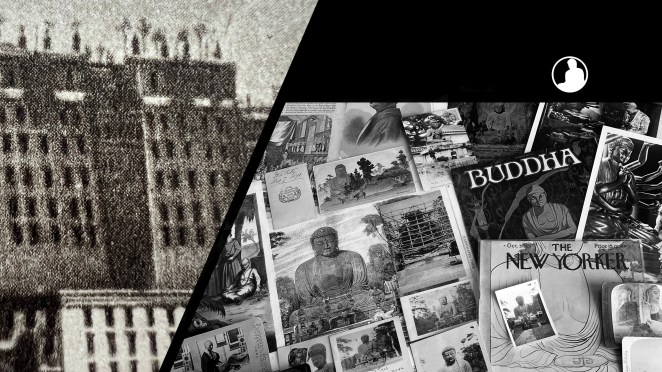
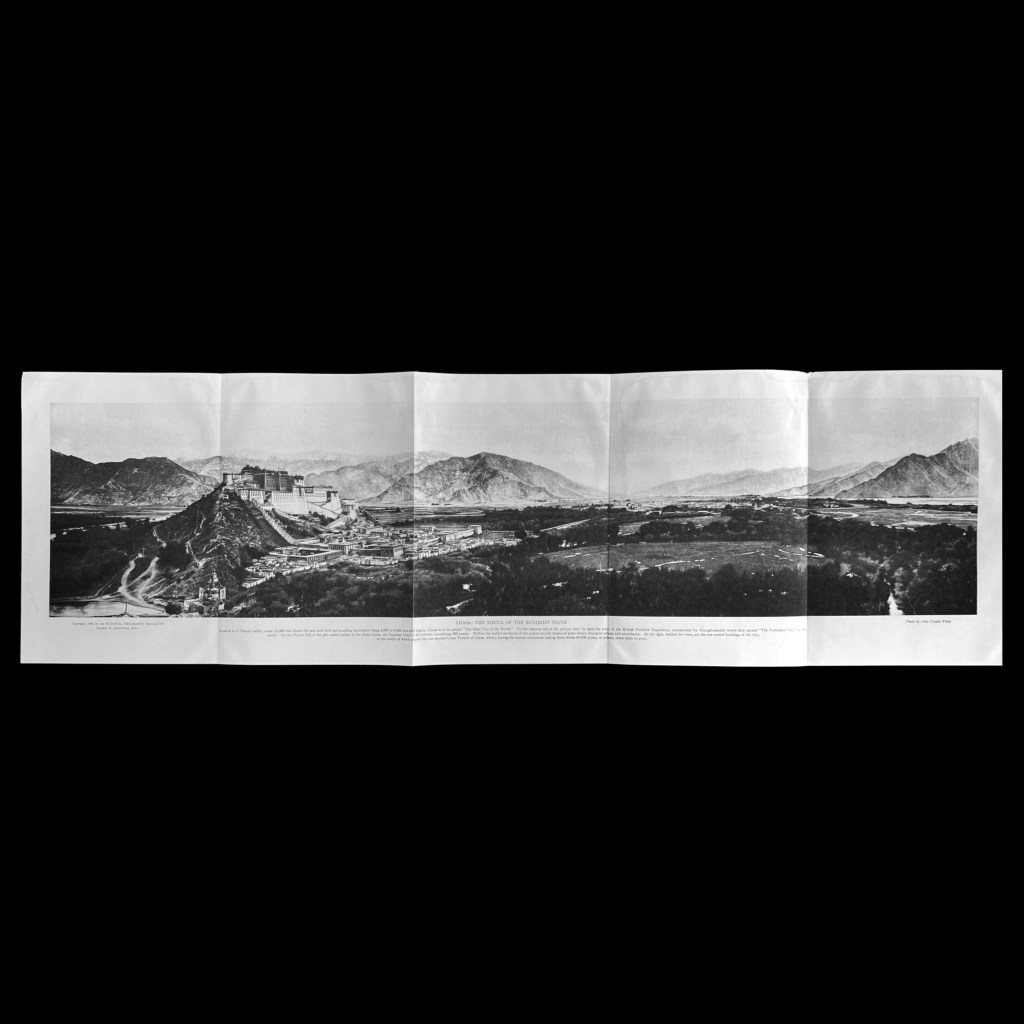
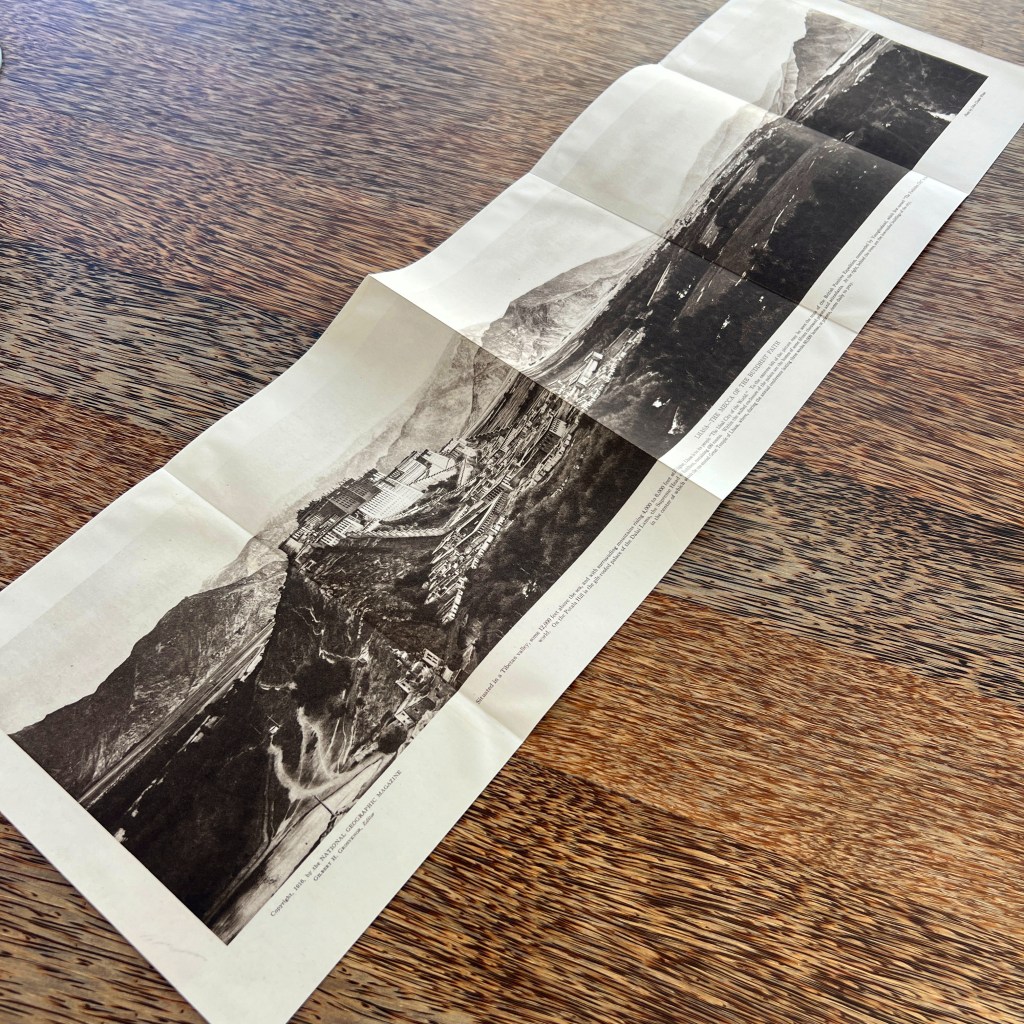
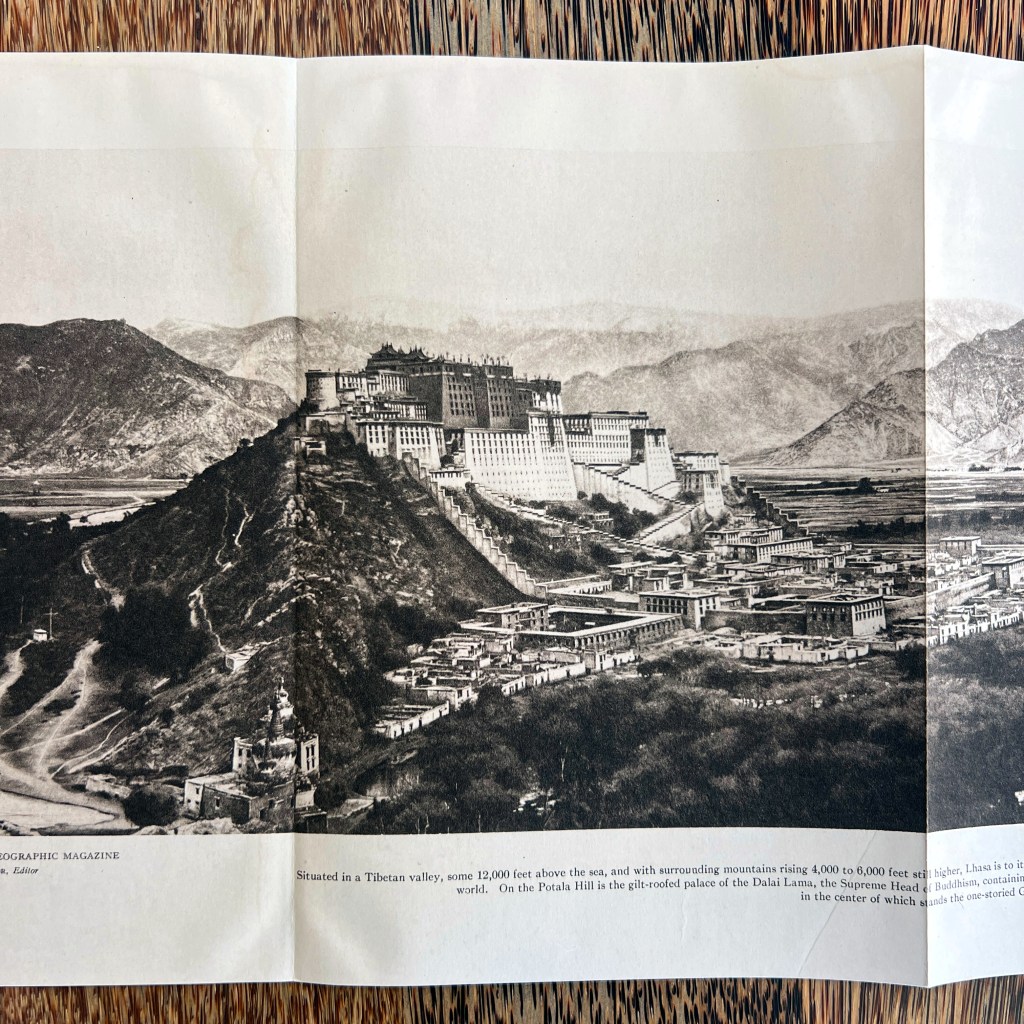
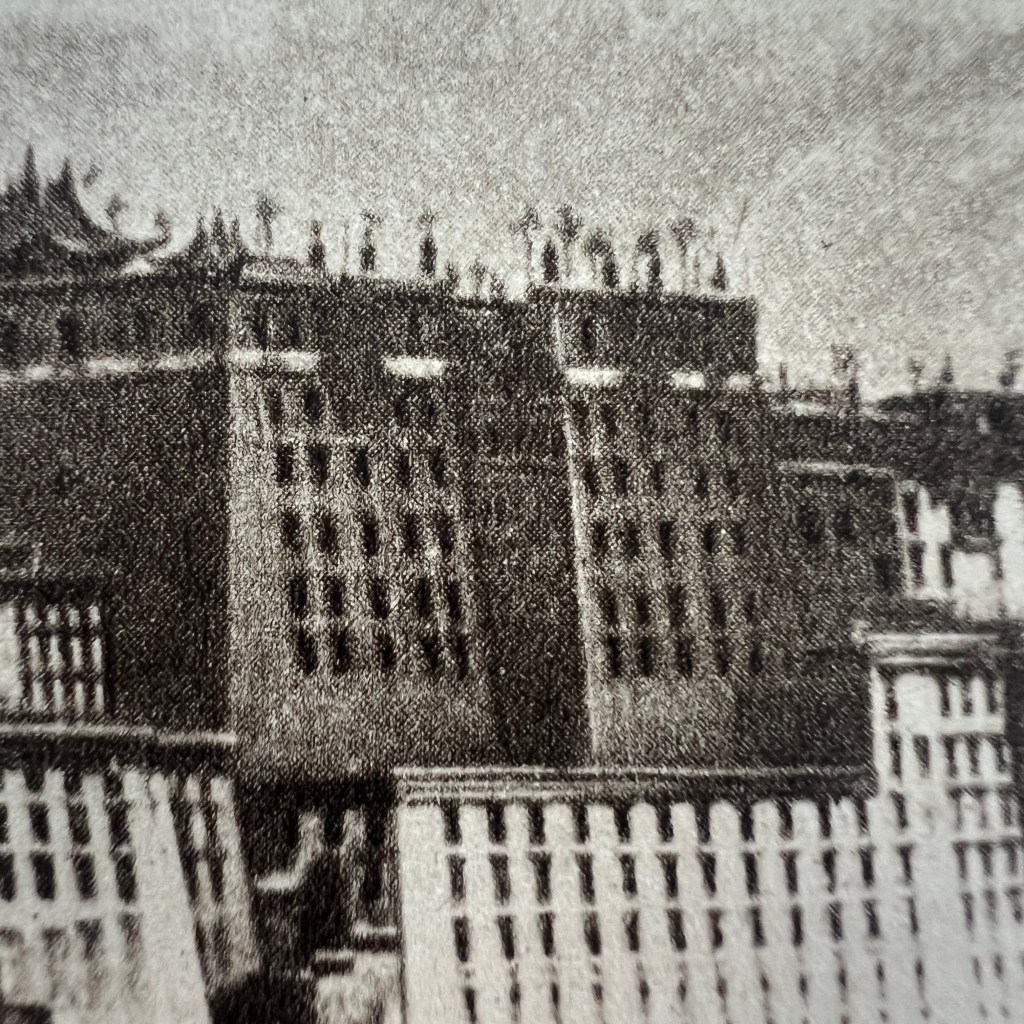
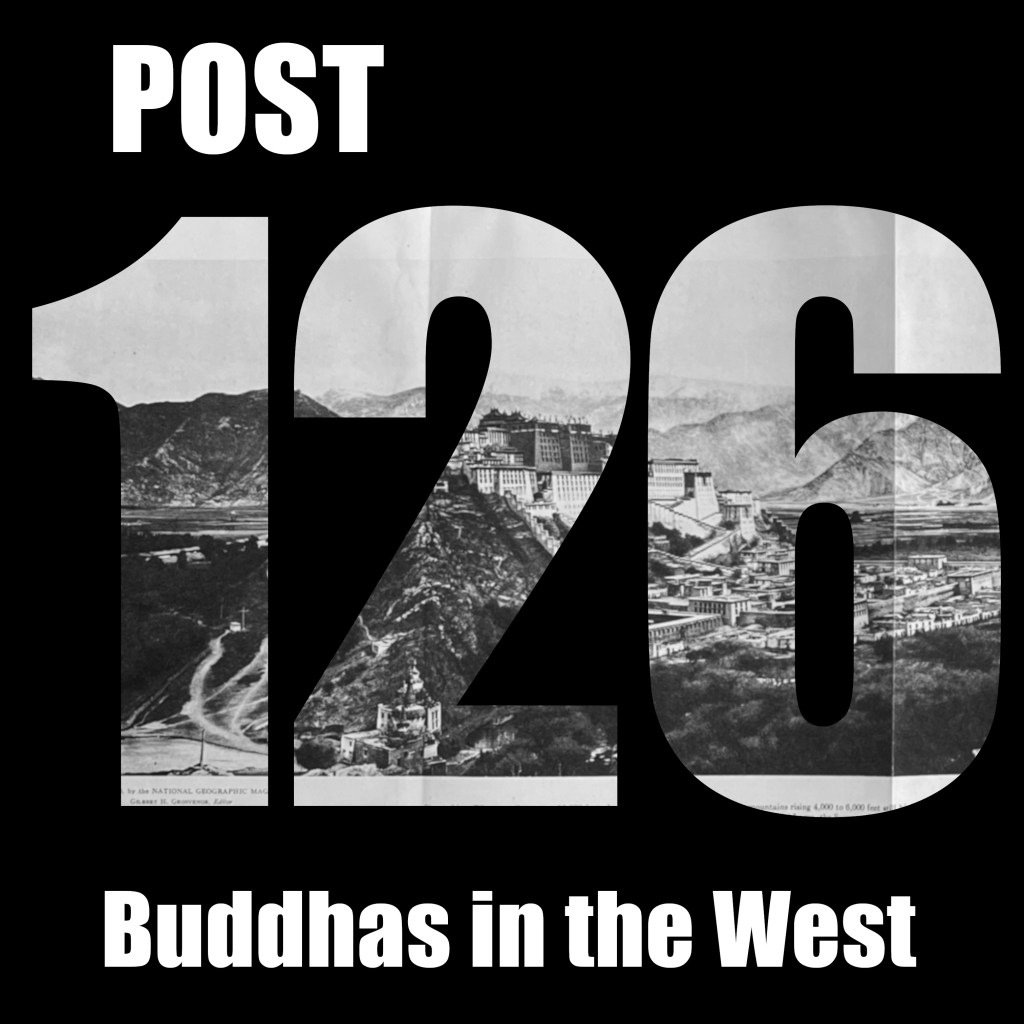
By the early 20th century there was an unofficial race to capture a photograph of Lhasa, the religious center of Tibet. In 1905 National Geographic printed a few of the first photos of the region and a decade later, in 1916, published a large panoramic insert of Lhasa’s Potala Palace.

The shot was taken by Jean Claude White, a civil servant in British India who traveled with the 1903-04 British Youghusband expedition to Tibet as the official mission photographer. National Geographic reproduced many photos White took on the expedition, including this stunning panoramic view.

The Potala dominates everything in Lhasa,” notes White in his accompanying article entitled, “The World’s Strangest Capital.” Illustrated with 19 photogravure prints, all the photos seem to have been taken during the Youghusband expedition, giving readers very early and rare views of Tibet.

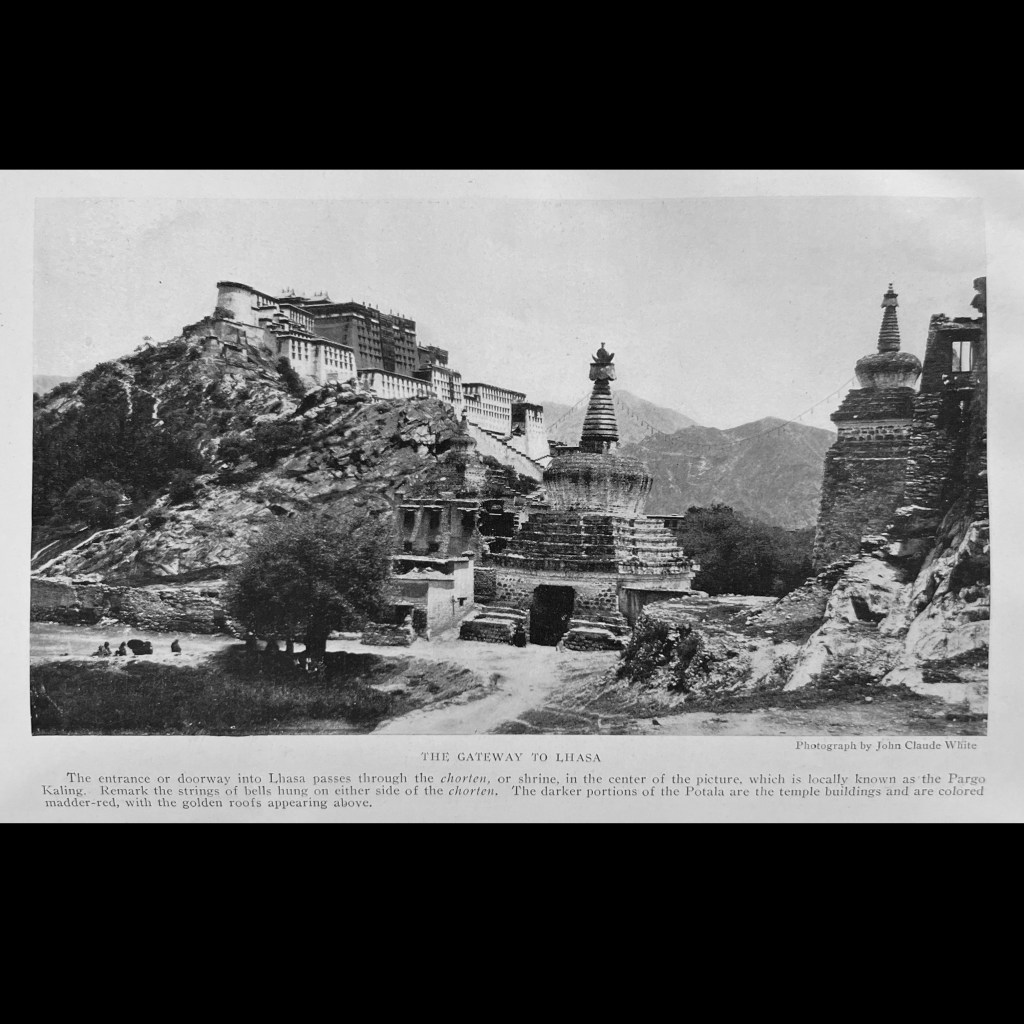
The first photo in the article shows the Western Gate to Lhasa, known as the Pargo Kaling. The structure was a large stūpa with a walkway cut through the middle.

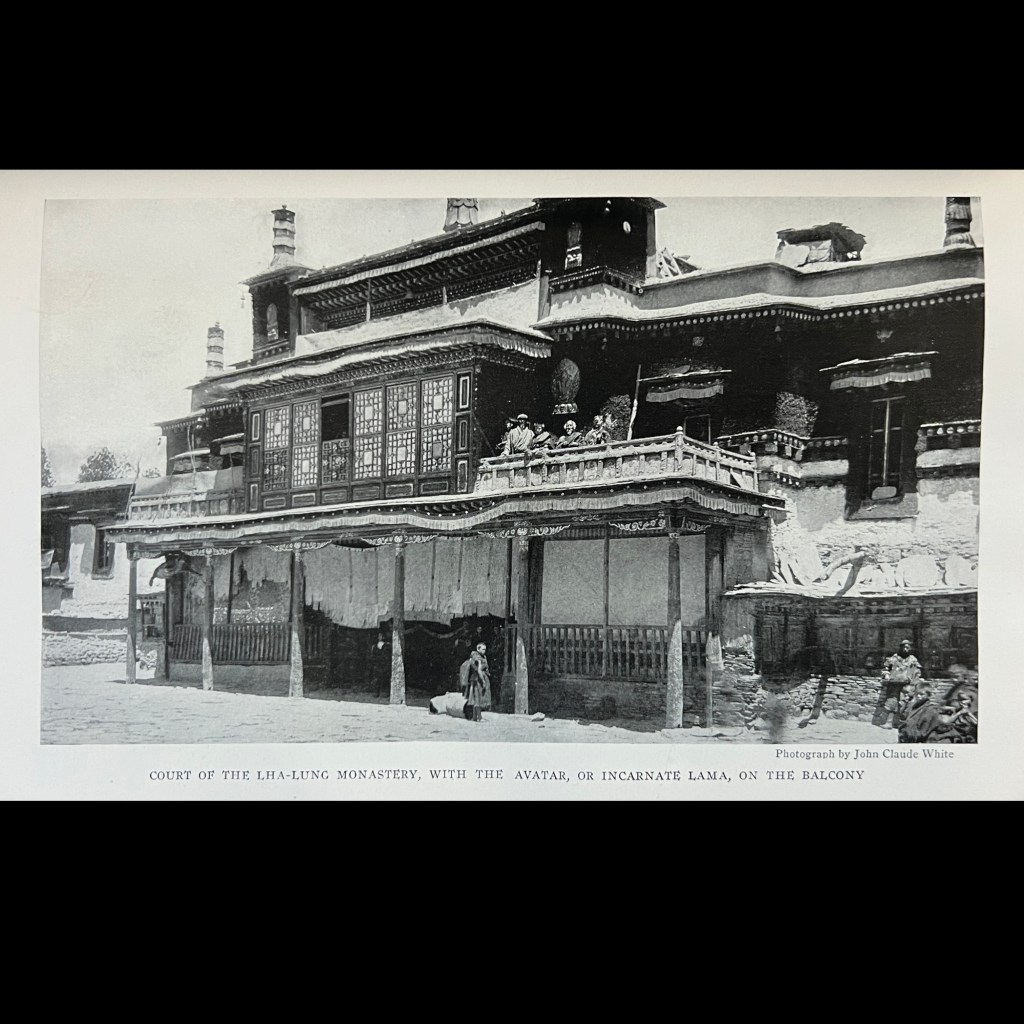
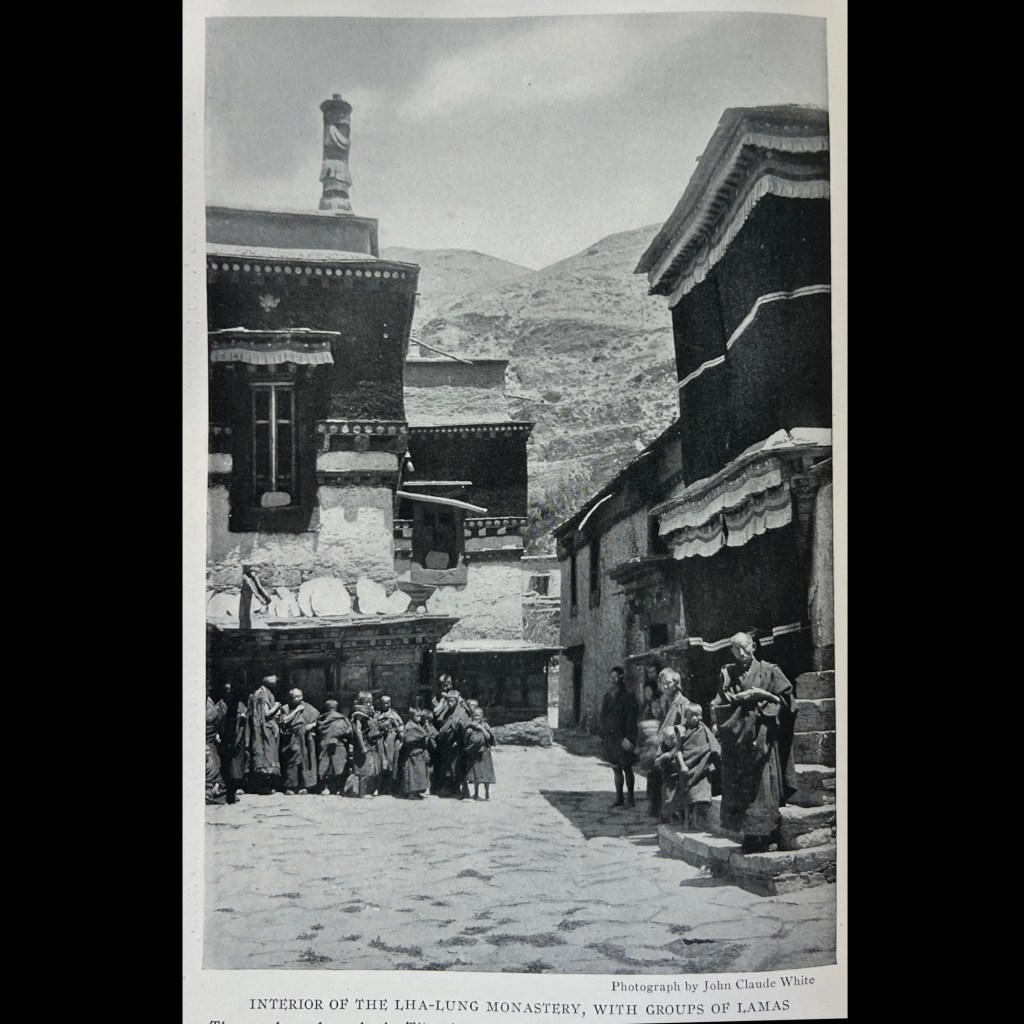
White also visited sites outside of Lhasa, including the Lhalung Monastery.

According to White’s estimate, there were 500,000 monks living in 1026 monasteries.

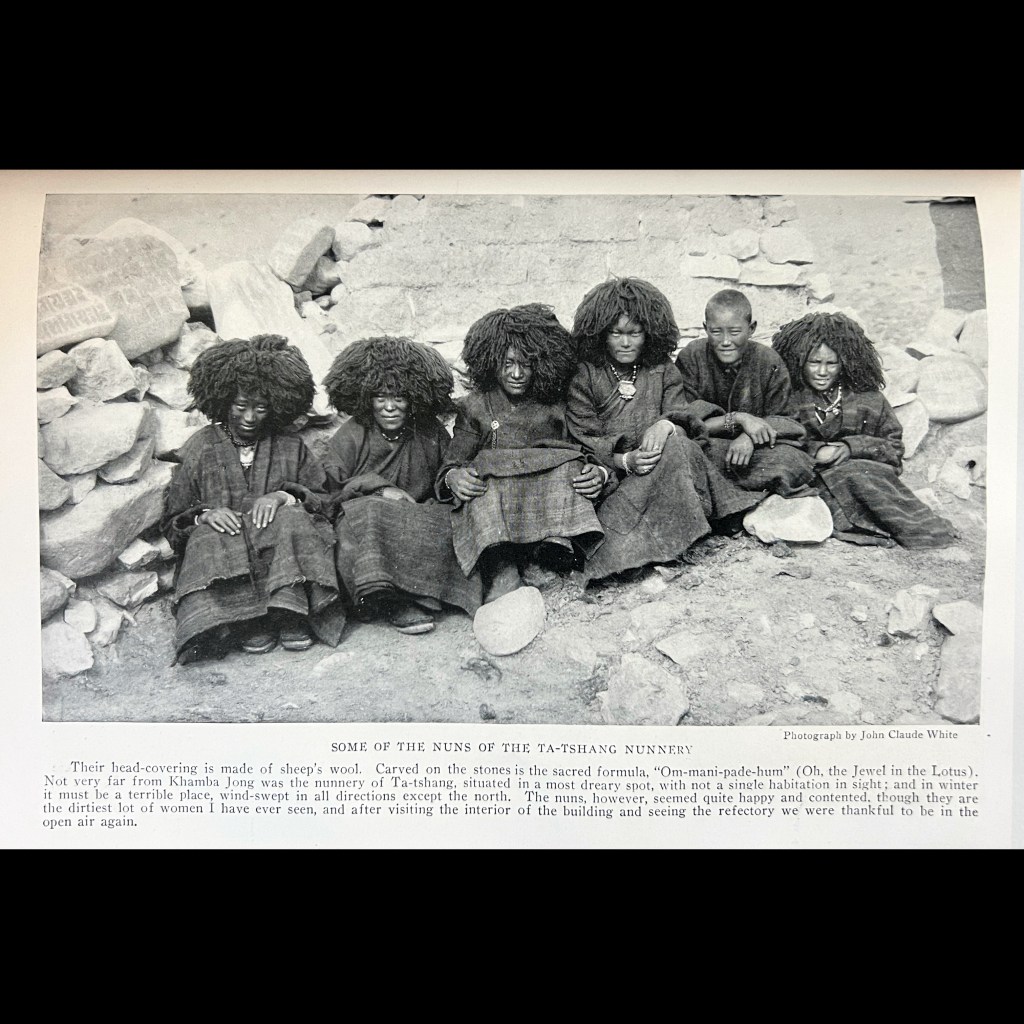
White also visited a Buddhist convent in Sikkim. The striking sheep’s wool hats were dyed red.

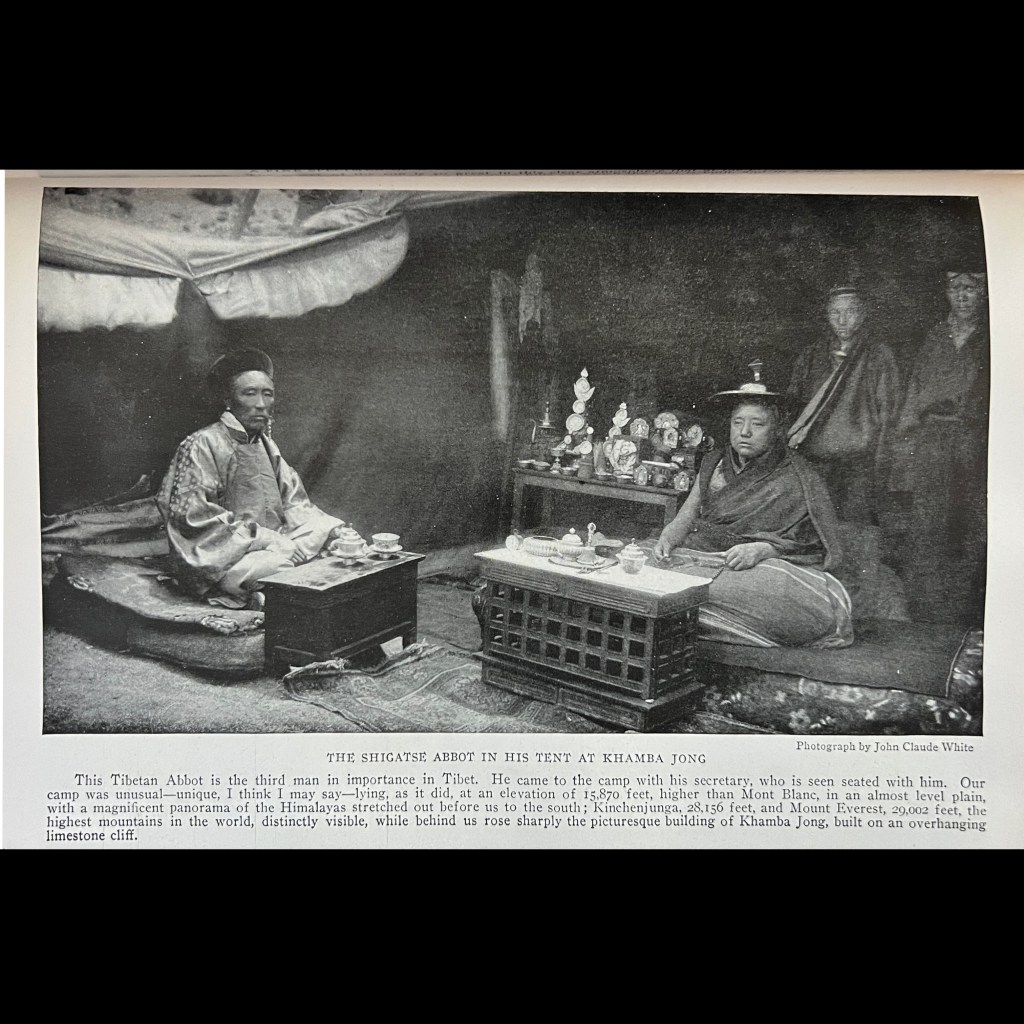
This photo was taken at Khamba Dzong, in Sikkim, where Youghusband planned to negotiate his entrance into Lhasa. The failure of talks with Tibetan officials eventually led to the forceful and bloody advance of Youghusband into Tibet.

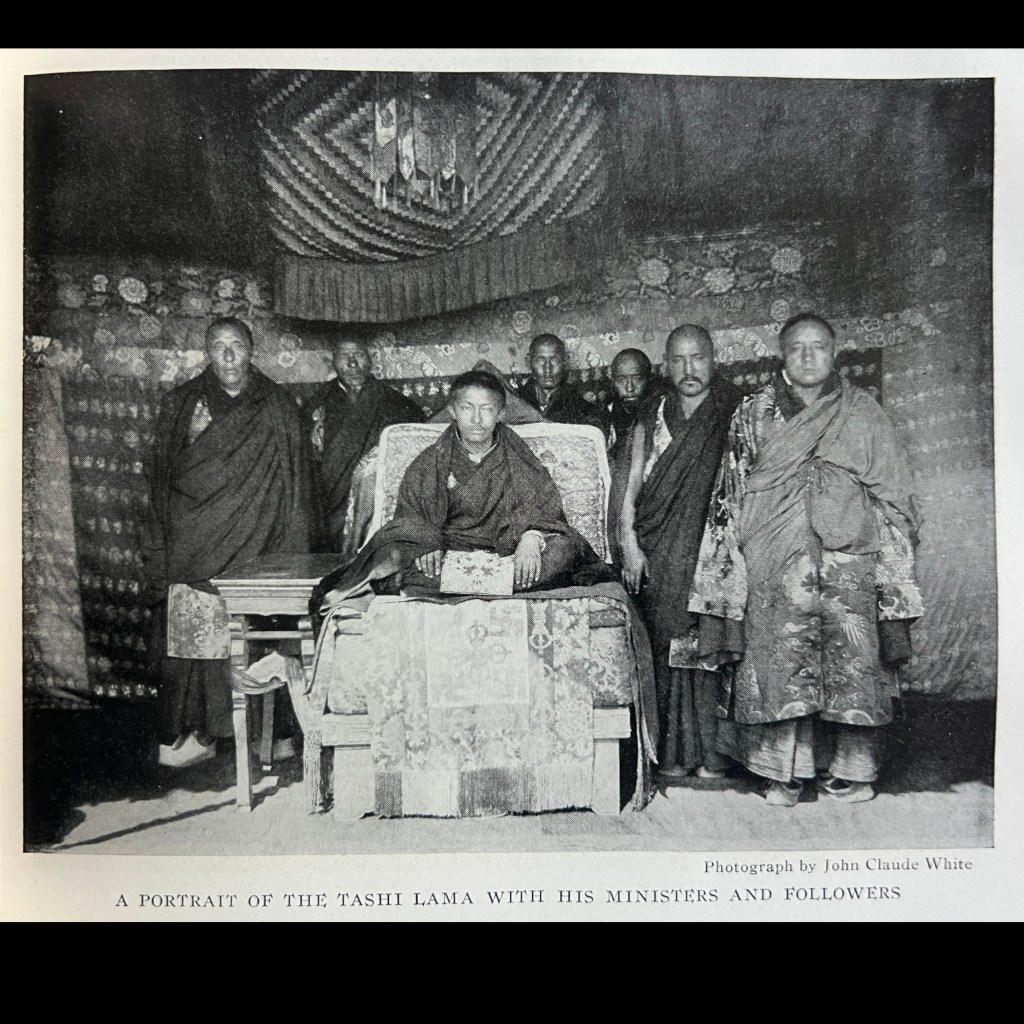
A rare photo by White of Thubten Choekyi Nyima, the 9th Panchen Lama of Tibet.

The thirteen-story Potala was based upon early Tibetan castles and fortified camps, but soon was seen by many as a symbol of Tibet itself. To read the “The World’s Strangest Capital” (without the panorama insert), see here: https://tinyurl.com/5fd596mx.


The Buddhas in the West Material Archive is a digital scholarship project that catalogues artifacts depicting Buddhist material culture for Western audiences. It’s comprised of prints, photos, and an assortment of ephemera and other objects. For a brief introduction to this archive, visit the main Buddhas in the West project page.


For Related Buddhas in the West Posts Featuring Lhasa, Tibet:


For the Most Recent Buddhas in the West Posts:


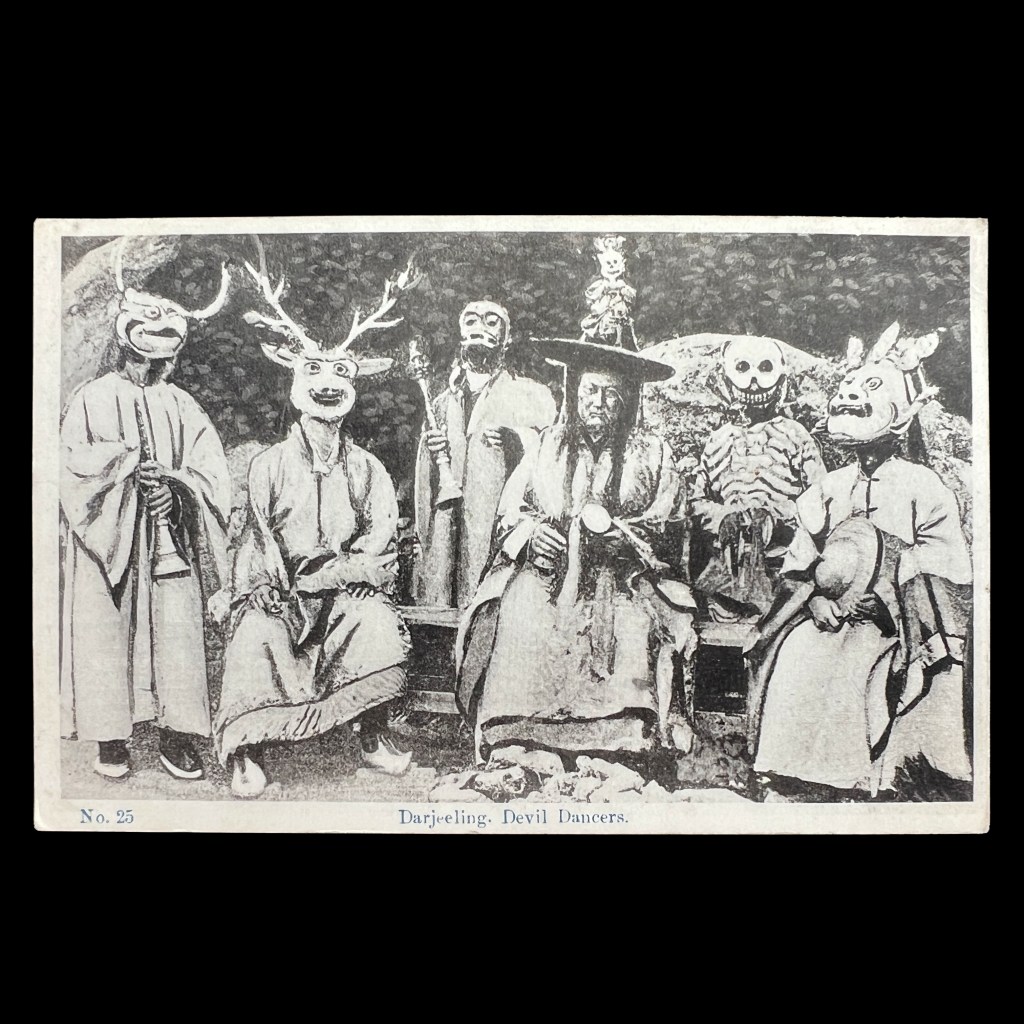
P.A. Johnston and Theodor Hoffmann’s Tibetan “Devil Dancers” Postcard

For all the new Buddhas in the West posts
follow us on Bluesky & Instagram


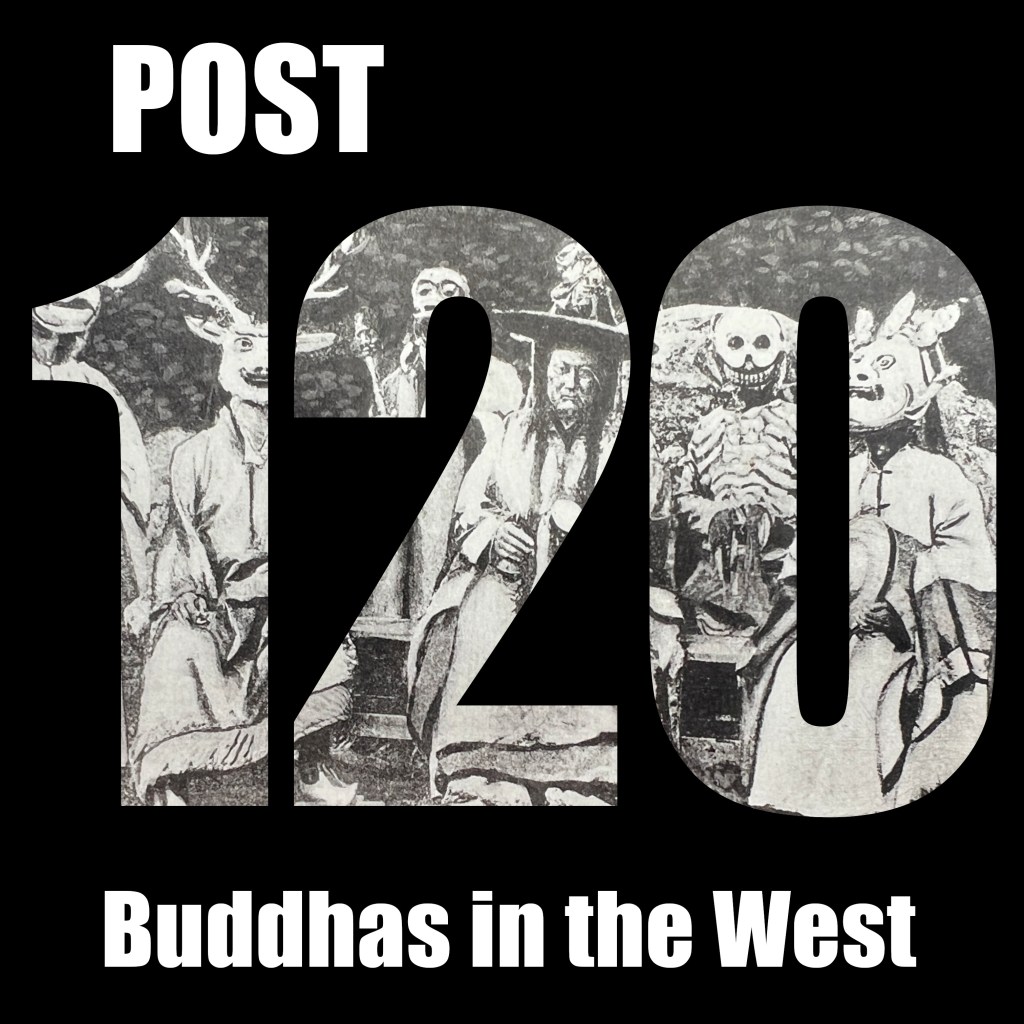
Tibetan ritual cham dances were often called “Devil Dances” by Western scholars and travelers through the turn of the 20th century. Dressed in the ceremonial regalia of masked dance, performing monks became a popular visual motif for representing Tibetan Buddhism.

Traditionally traced to the semi-legendary 8th century tantric Buddhist Padmasambhava, ritual dances are usually held as part of larger religious festivals. Performers portray a range of figures from protector deities and heroes to comic characters.

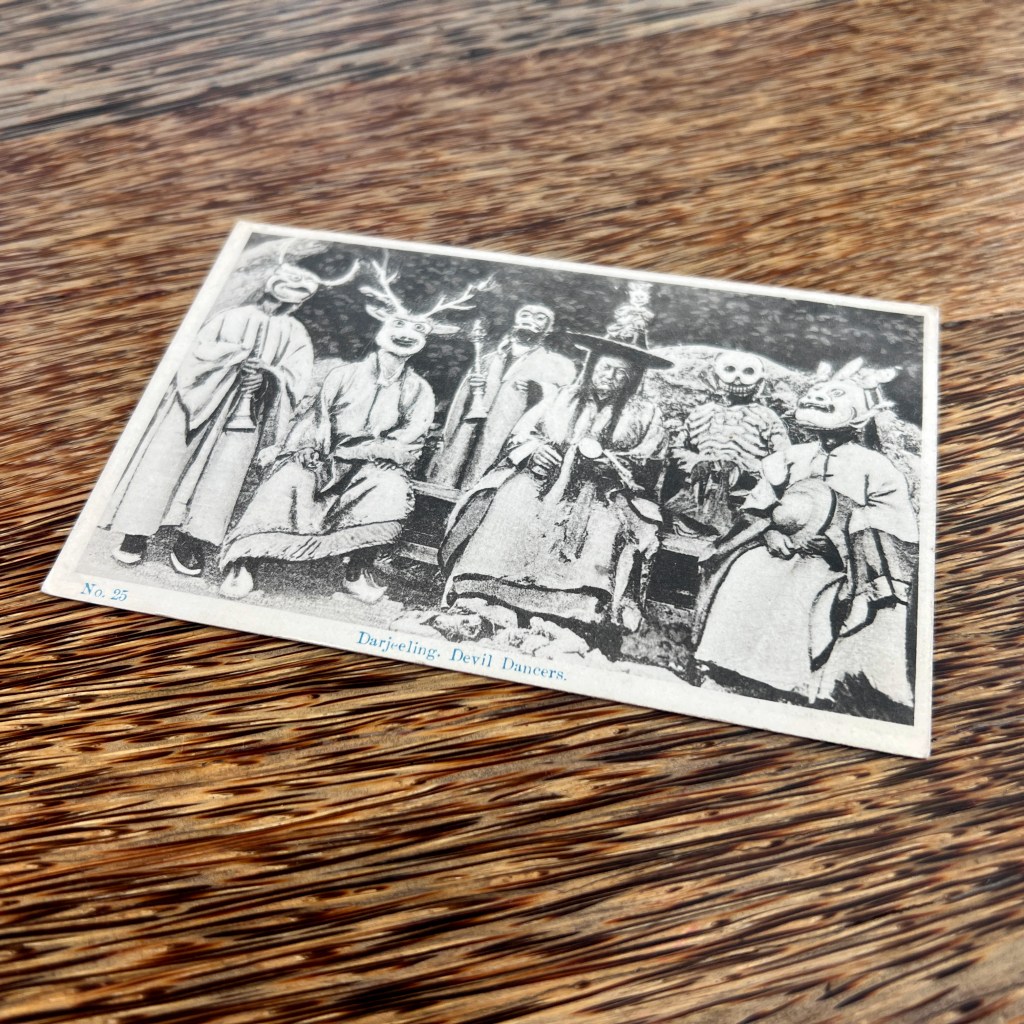
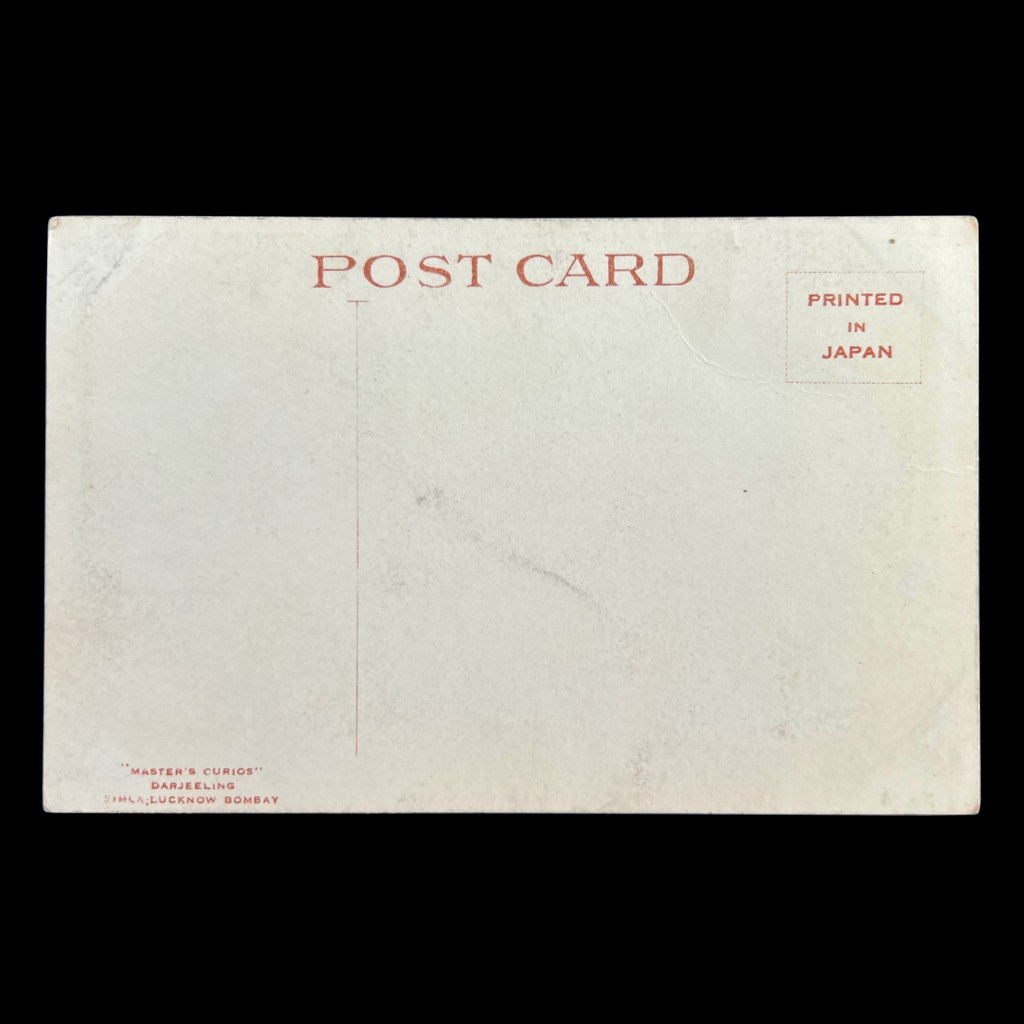
The photograph, retouched considerably here, was taken by P.A. Johnston and Theodor Hoffmann who opened a studio in Calcutta in 1882 and Darjeeling in 1890. This postcard, likely published in the 1920s, was printed in the epicenter of Asian postcard production at the time, Japan.

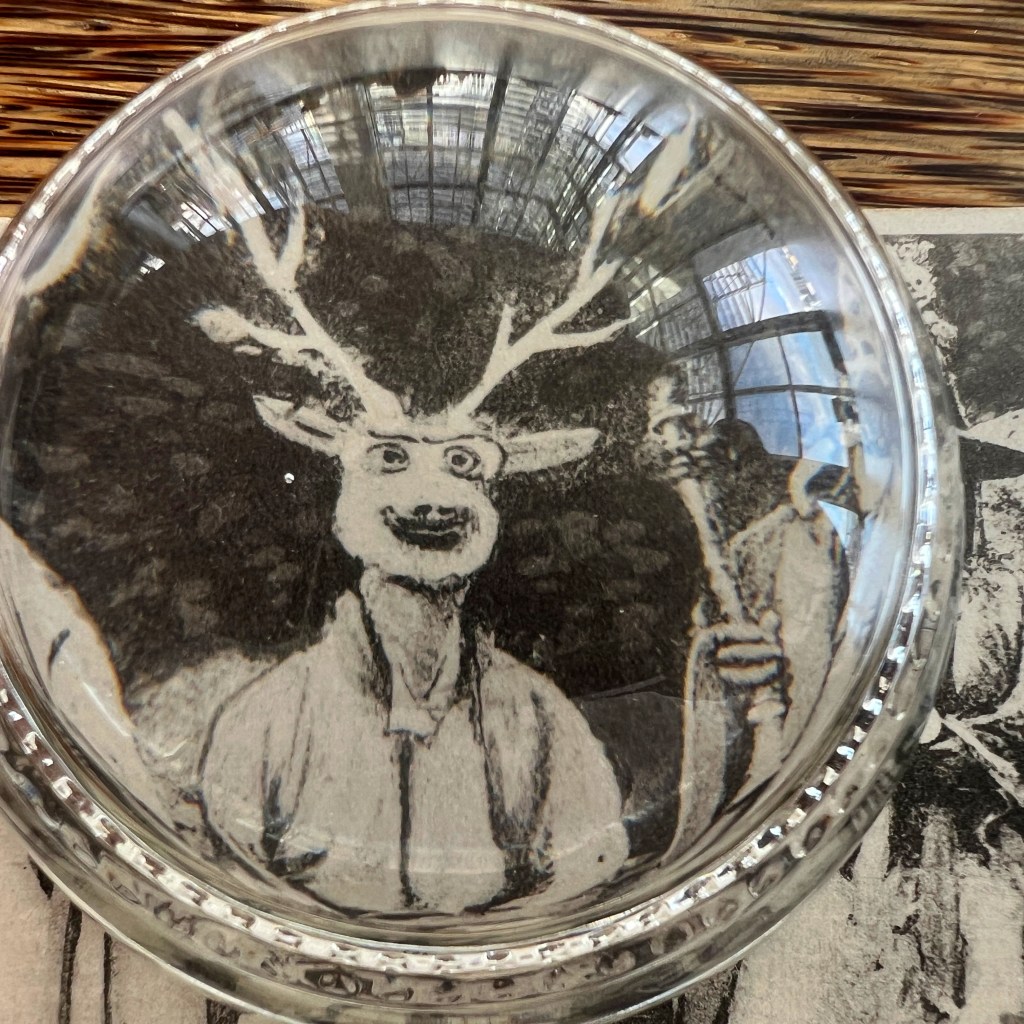
The stag mask recalls a dance symbolizing the repulsion of negative forces and the consecration of surrounding space for spiritual practice. One source claims this photo was taken in Bhutia Busty, a village in the Darjeeling district known for its cham performances at the local monastery.

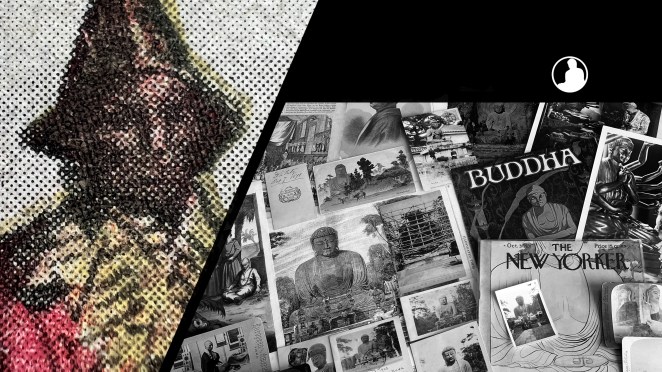
Another ritual performer, possibly a young boy, wears a skeleton mask with a blood-red suit sewn with white skeleton bones. Skeleton dancers can represent the impermanence of phenomena and sometimes play a semi-comedic role.

The central figure is representative of the Black Hat dance, sometimes seen as a celebration for the death of Langdarma, an enemy of Buddhism. For an introductory overview of Tibetan cham, see Ellen Pearlman, Tibetan Sacred Dance: A Journey into the Religious and Folk Traditions.


The Buddhas in the West Material Archive is a digital scholarship project that catalogues artifacts depicting Buddhist material culture for Western audiences. It’s comprised of prints, photos, and an assortment of ephemera and other objects. For a brief introduction to this archive, visit the main Buddhas in the West project page.


For Related Buddhas in the West Posts Featuring Ritual Dance:


For the Most Recent Buddhas in the West Posts:


Sherab Gyatso of Ghoom Monastery Postcard

For all the new Buddhas in the West posts
follow us on Bluesky & Instagram


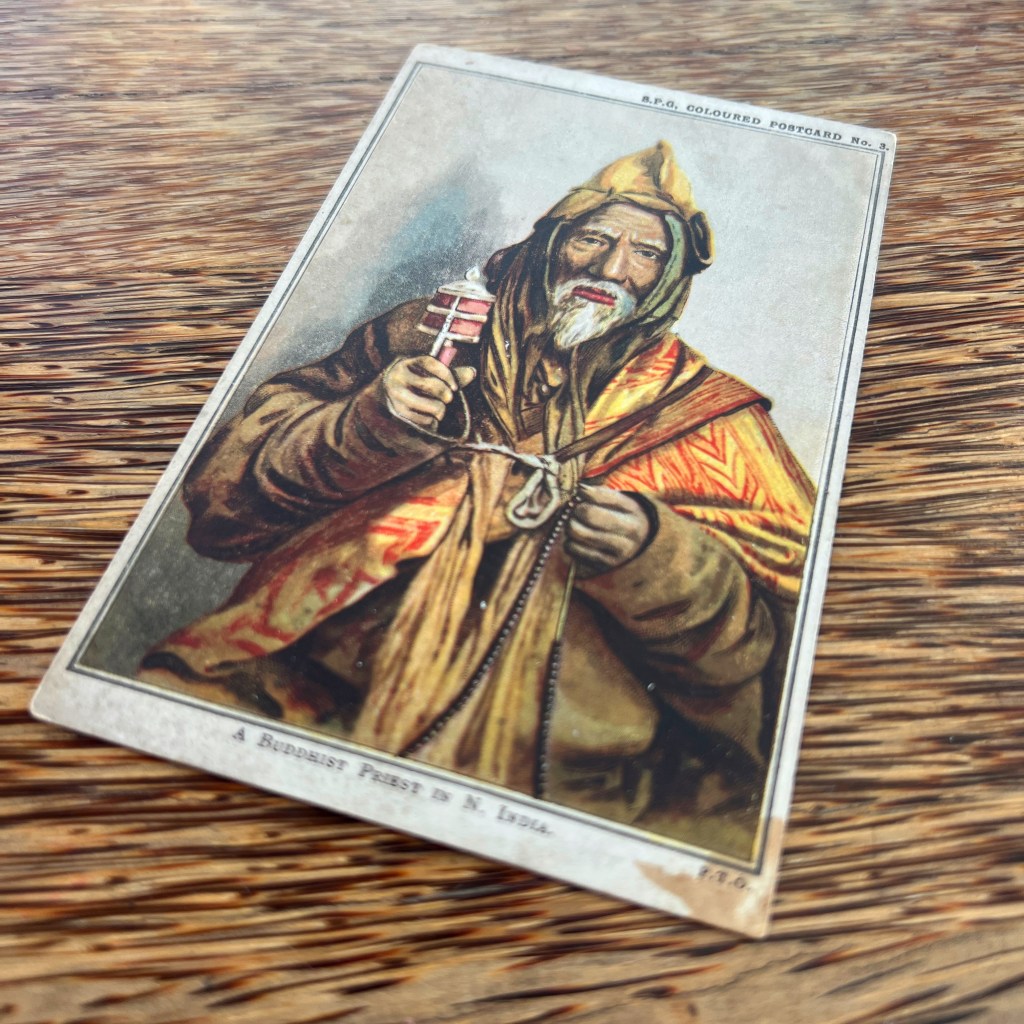
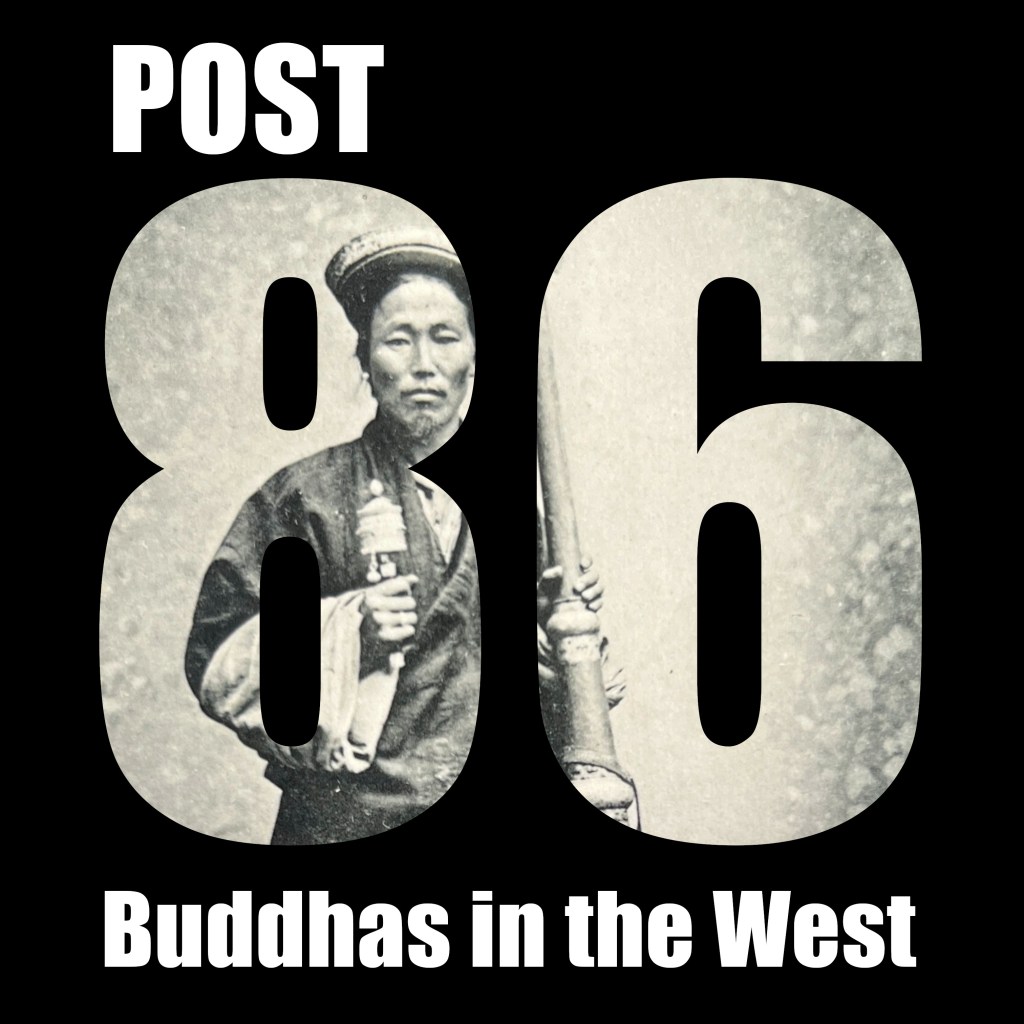
Identified as a “Buddhist priest” and holding a prayer wheel, a figure such as this would have passed for a generic Tibetan lama in the visual language of the early 20th century. In this case, however, we also know this monk’s name: Sherab Gyatso.

Scholar Clare Harris discovered an albumen print of the original photograph taken by Thomas Parr during the 1890s in Darjeeling; the negative was inscribed with the name “She-reb.” The monk was the head of the Geluk Monastery at Ghoom (Ghum) and was well known among the British as the “Mongol Lama.”

Gyatso’s image appears in a wide range of media, including travel guides, published travelogues, and postcards between 1890 and the 1910s. As noted by Harris, this monk emerged as a “poster-boy for Tibetan Buddhism” around the area of Darjeeling in northern India.

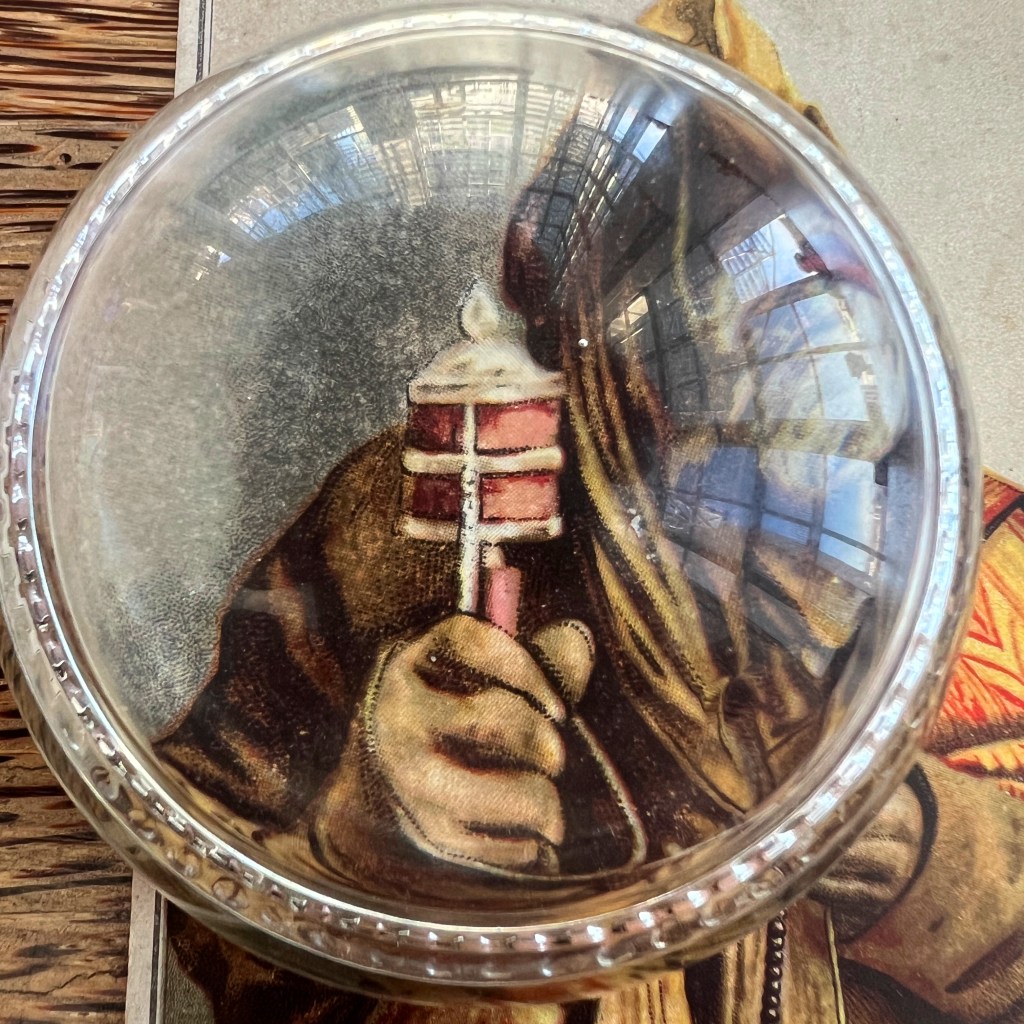
When posed for this portrait in Parr’s studio, the symbols of Tibetan ritual culture are clearly foregrounded, with one hand thumbing mala beads and the other holding a prayer wheel upright and ready for use.

Notably, a Tibetan-style painting and clay statue of Sherab Gyatso grace Ghoom’s monastery today, both derived from Paar’s photograph.

For further information of Sherab Gyatso and the history of early photography in Northern India and Tibet, see Clare Harris’ Photography in Tibet (2017).


The Buddhas in the West Material Archive is a digital scholarship project that catalogues artifacts depicting Buddhist material culture for Western audiences. It’s comprised of prints, photos, and an assortment of ephemera and other objects. For a brief introduction to this archive, visit the main Buddhas in the West project page.


For Related Buddhas in the West Posts Featuring Historical Postcards:


For the Most Recent Buddhas in the West Posts:


Bourne and Shepherd’s “Native of Thibet” Postcard

For all the new Buddhas in the West posts
follow us on Bluesky & Instagram


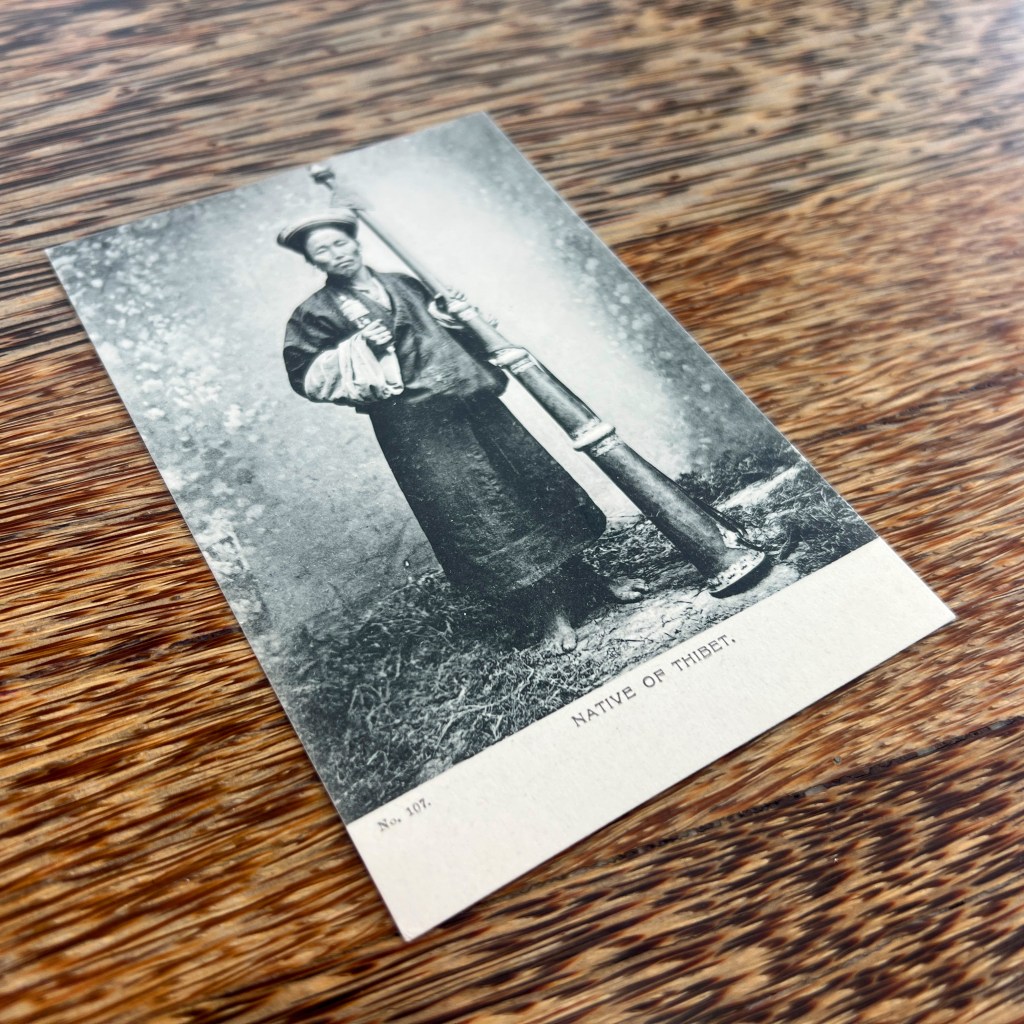
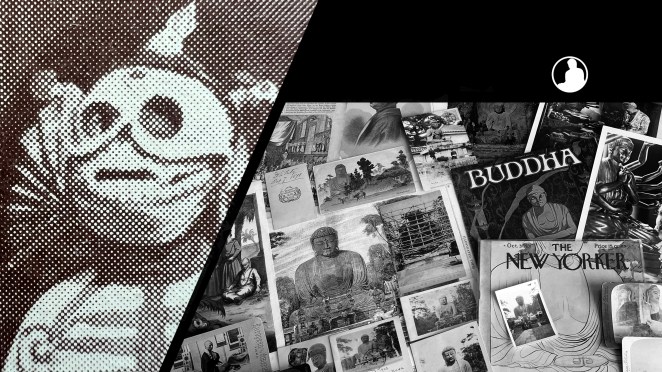
The first photographs of Tibet were not actually taken in Tibet, but were staged in British colonial India. To meet consumer demand, enterprising commercial photographers outfitted their subjects with stereotypical objects to create an easily identifiable “Tibetan” type.

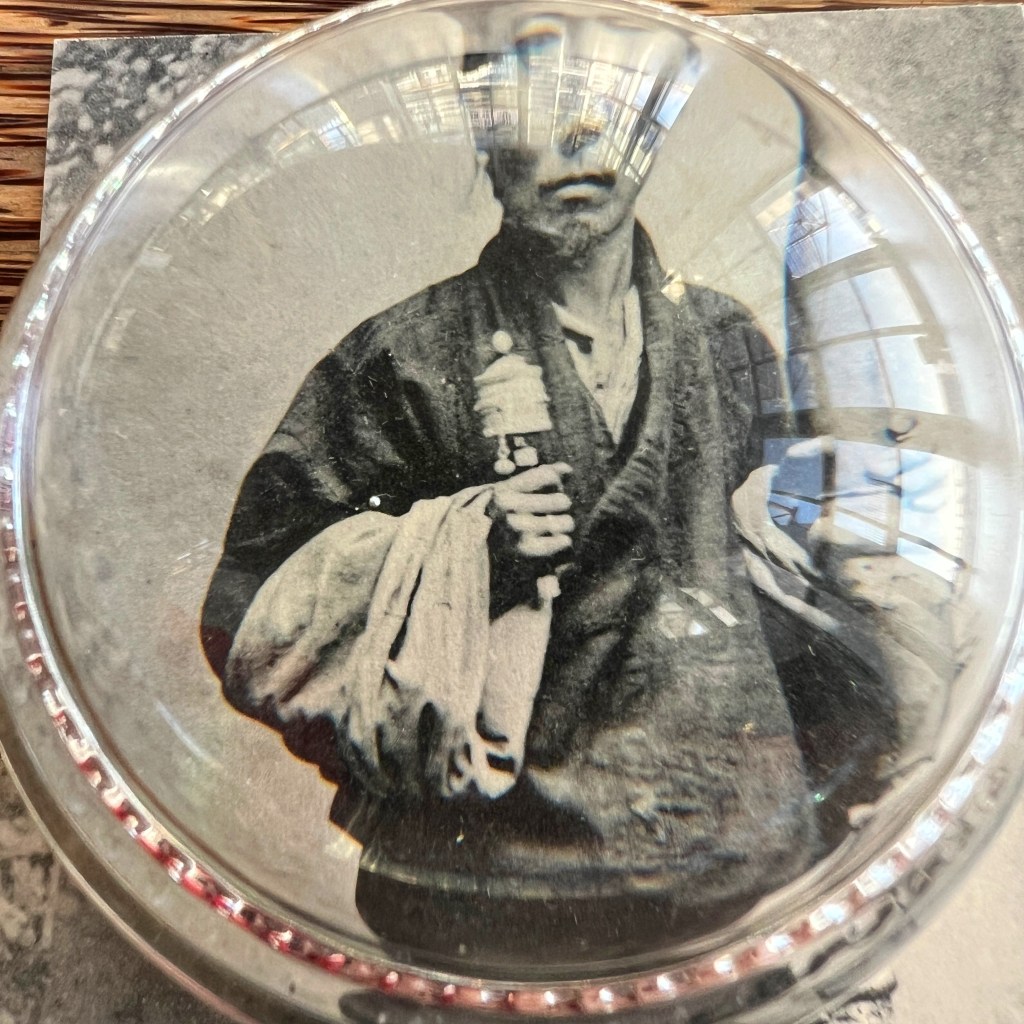
In the Victorian era, material markers of religion were often used by colonial photographers to establish “ethnic types.” The material culture of Tibetan Buddhism emerged as a clear visual sign for Tibet; here we find a “Thibetan native” holding a Buddhist prayer wheel and monastic long horn.

Charles Shepherd and Samuel Bourne formed a photography business in 1866 in Kolkata, producing prize-winning photographs of the Himalayan landscape. By the 1890s, commercial tourist photography was transferred to a new popular pictorial format: postcards.

One of the most commonly seen objects in Victoria era photographs of Tibetans is the hand-held Buddhist prayer wheel. The common portrayal of Tibetans holding ritual implements helped further embellish the fantasy of an enduring Tibetan mysticism.

Once one of the oldest operating studios, a 1991 fire destroyed much of the Bourne & Shepherd archives. For more on early photography in the Himalayas, see Clare Harris’ “Photography in the ‘Contact Zone’: Identifying Copresence and Agency in the Studios of Darjeeling” (2017).


The Buddhas in the West Material Archive is a digital scholarship project that catalogues artifacts depicting Buddhist material culture for Western audiences. It’s comprised of prints, photos, and an assortment of ephemera and other objects. For a brief introduction to this archive, visit the main Buddhas in the West project page.


For Related Buddhas in the West Posts Featuring Tibet:

For the Most Recent Buddhas in the West Posts:


Joseph Rock’s Photographs of Zhouni (Choni) Monastery

For all the new Buddhas in the West posts
follow us on Bluesky & Instagram


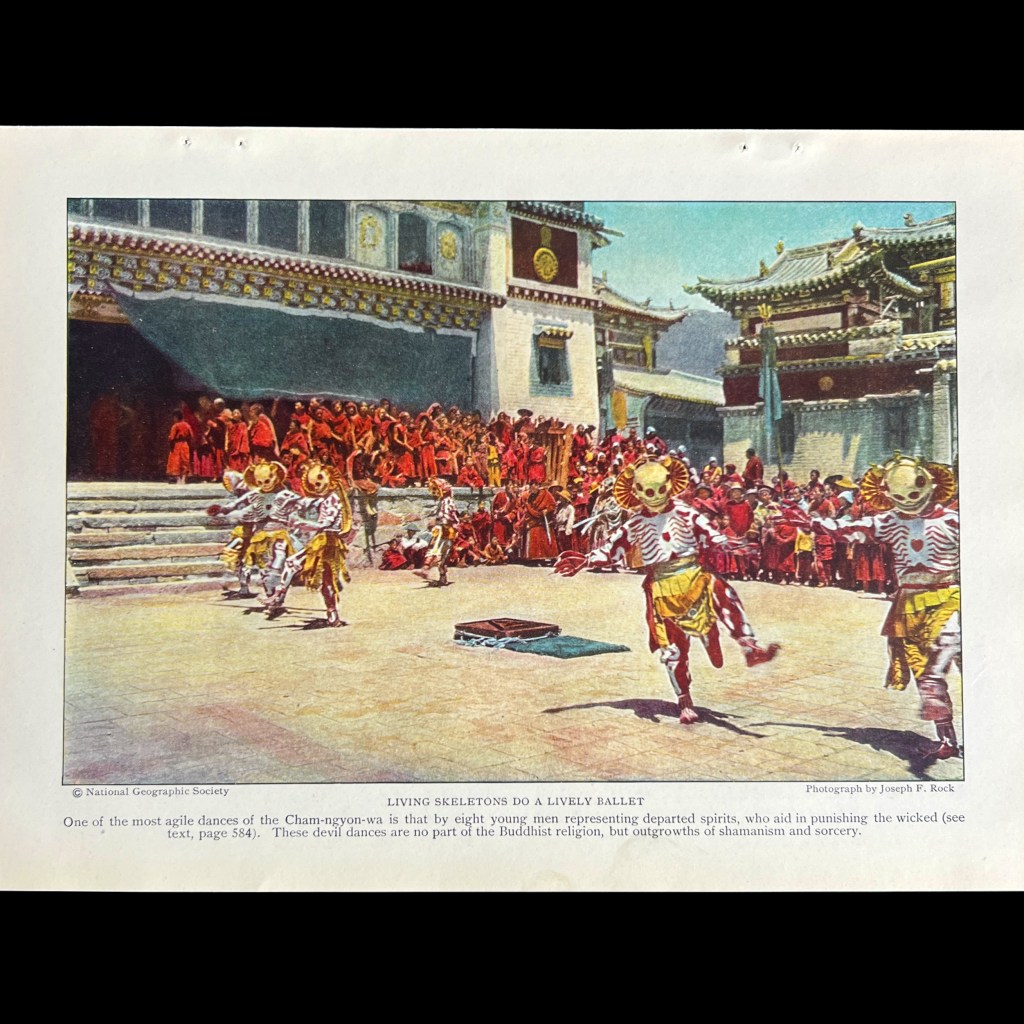
Joseph Rock took stunning photographs of the Tibet-China borderlands between 1922 and 1935, funded in part by the National Geographic Society. During this span, Rock wrote nine article for National Geographic; some were illustrated with gorgeous hand-colored prints.

Rock arrived in Zhuoni, China in April 1925 and stayed for two years, during which he wrote “Life among the Lamas of Choni” published in November 1928. Zhouni, then a Tibetan ruled chiefdom in Gansu province, was home to a bustling Buddhist monastery with hundreds of monks in residence.

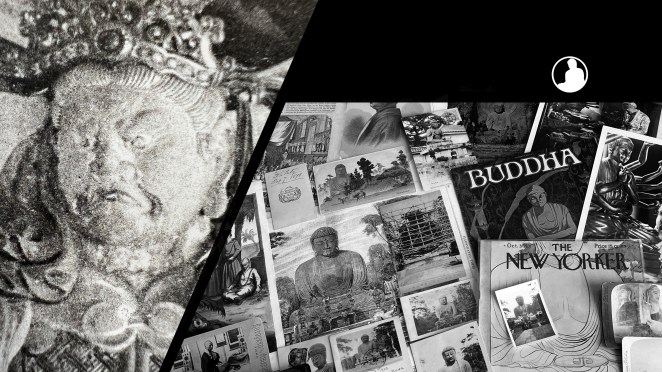
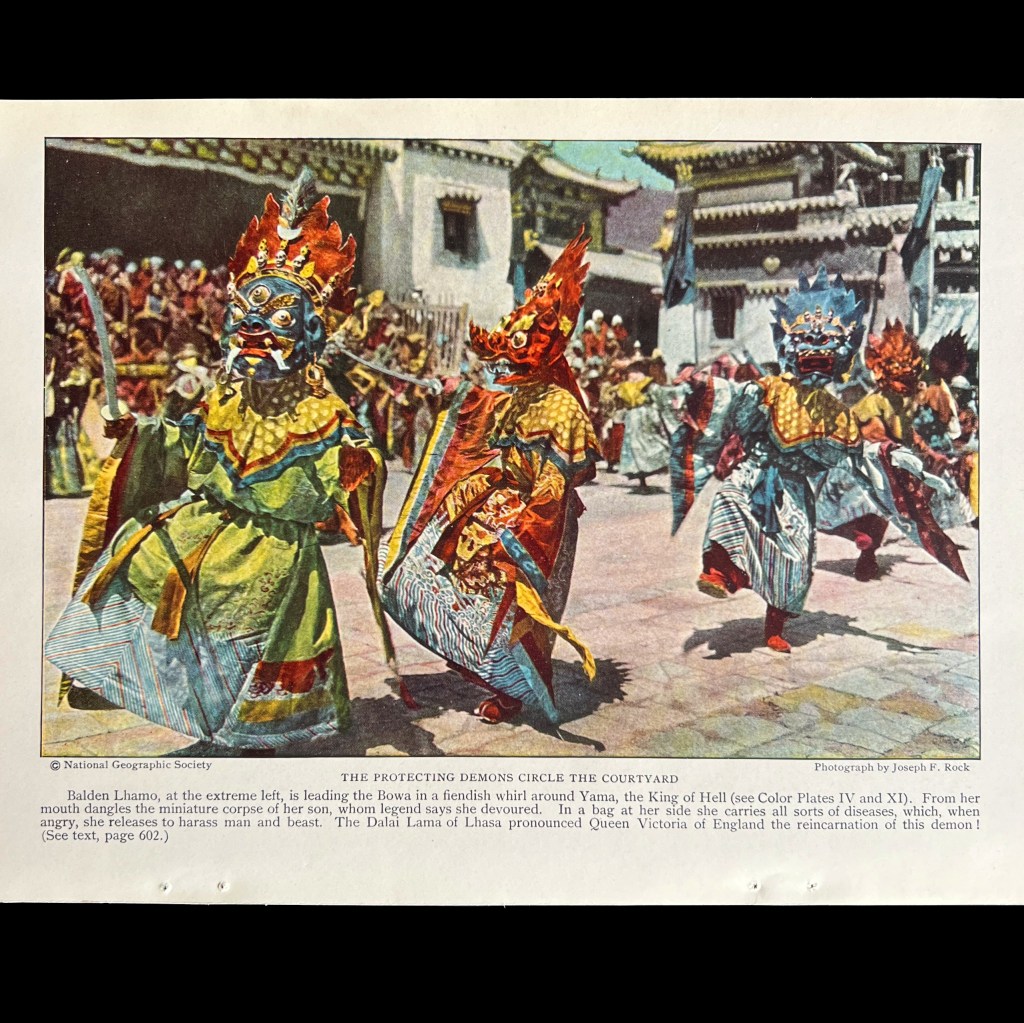
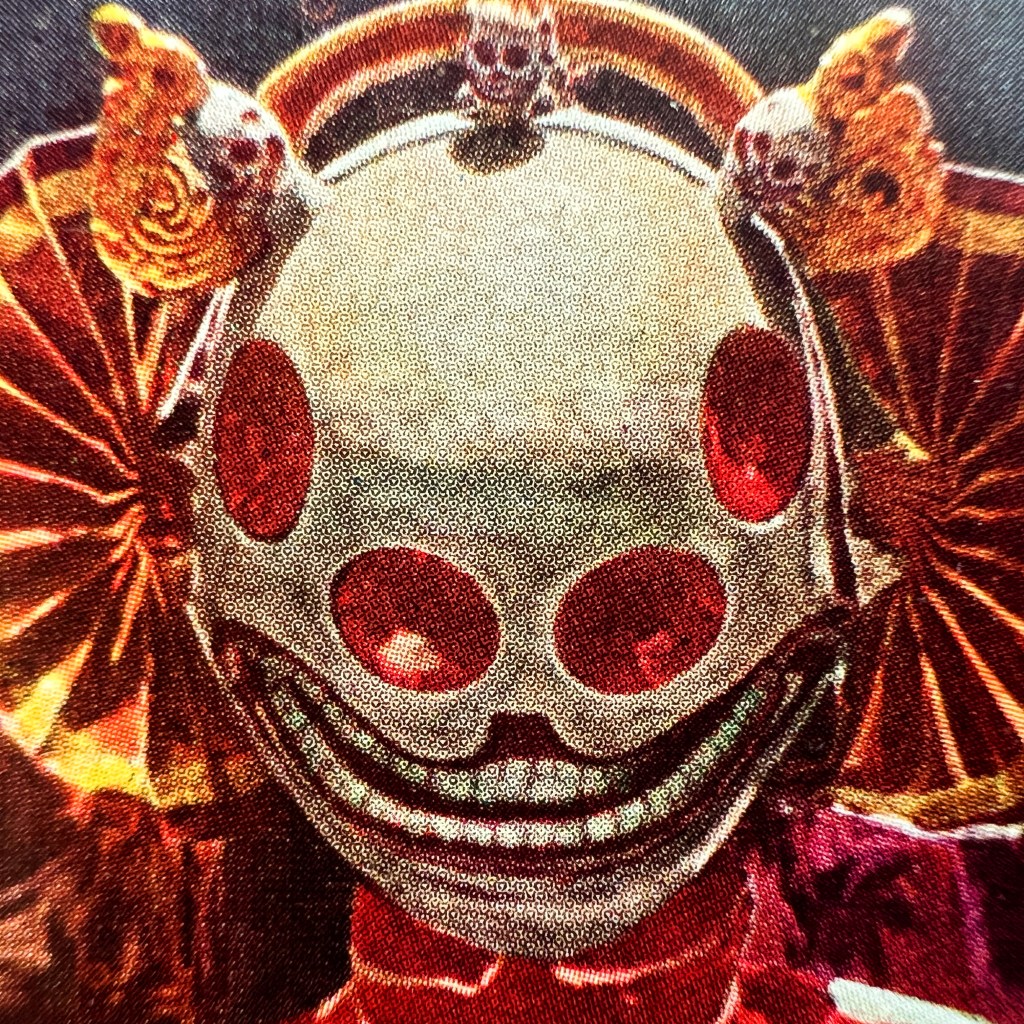
The visual centerpiece of Rock’s article were photos of the Tibetan “Old Dance,” held on the sixth day of the sixth month. Eight agile skeleton dancers were part of the festivities, representing “departed spirits” as described by Rock.

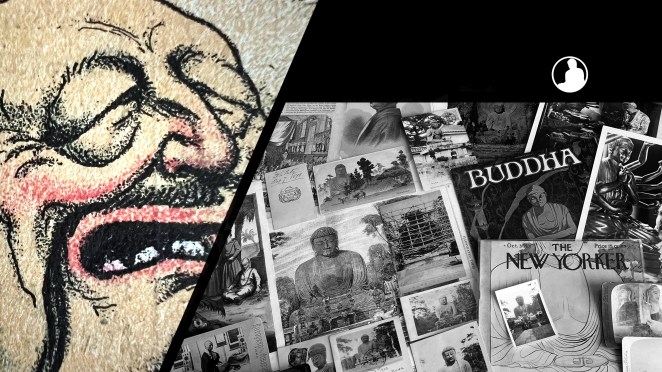
The climax of the Old Dance feature the appearance of Yama, the “grim ruler of the nether world.”

As recounted by Rock, the left-most figure here is Palden Lhamo, the wife of Yama who killed their son, seen dangling from her mouth. According to Rock, due to the British invasion of Tibet decades earlier, it was believed Queen Victoria was a reincarnation of this demon goddess.

Rock developed his own black and white glass negatives and sent them back to the United States. Artists then hand-colored the images according to detailed descriptions furnished by Rock (later, Rock would use potato starch based Autochrome color plates).

Rock was able to purchase a complete set of the Tibetan Buddhist canon printed at Choni Monastery before the printing blocks were destroyed in 1929. To read a digital version of Rock’s account of Choni Monastery in National Geographic, see tinyurl.com/4dwe2tmb.


The Buddhas in the West Material Archive is a digital scholarship project that catalogues artifacts depicting Buddhist material culture for Western audiences. It’s comprised of prints, photos, and an assortment of ephemera and other objects. For a brief introduction to this archive, visit the main Buddhas in the West project page.


For Related Buddhas in the West Posts Featuring Historical Magazines:


For the Most Recent Buddhas in the West Posts:


Liebig’s Dalai Lama Advertising Card

For all the new Buddhas in the West posts
follow us on Bluesky & Instagram


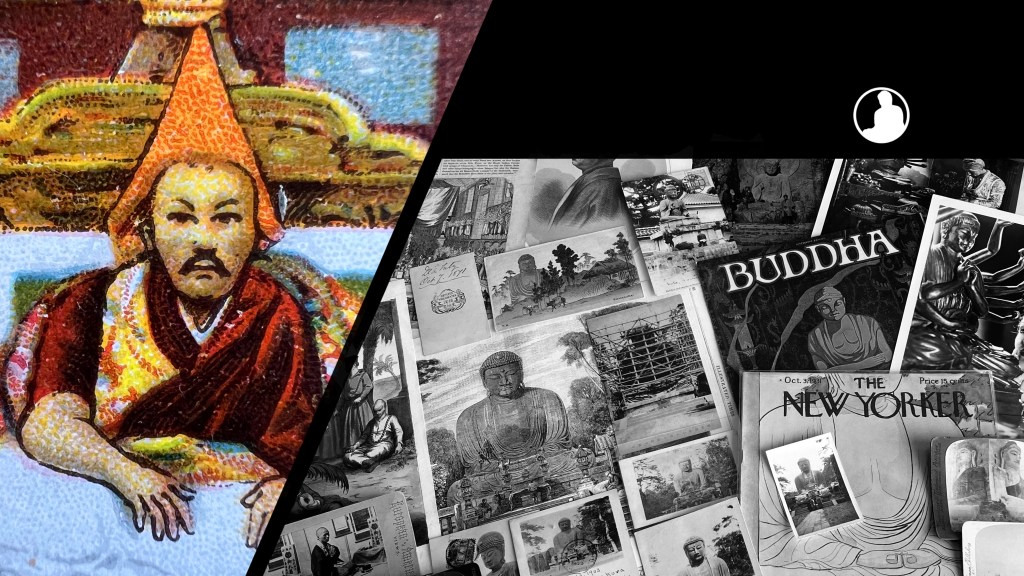
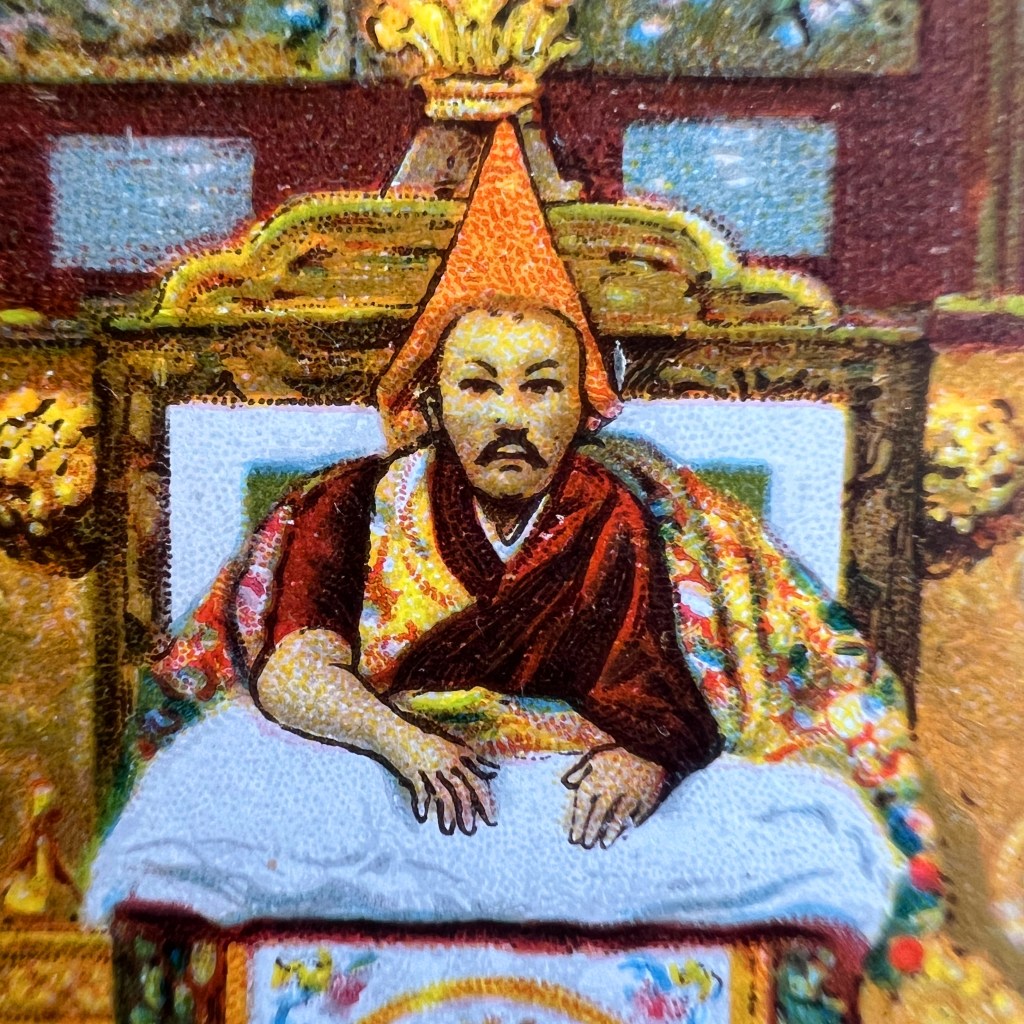
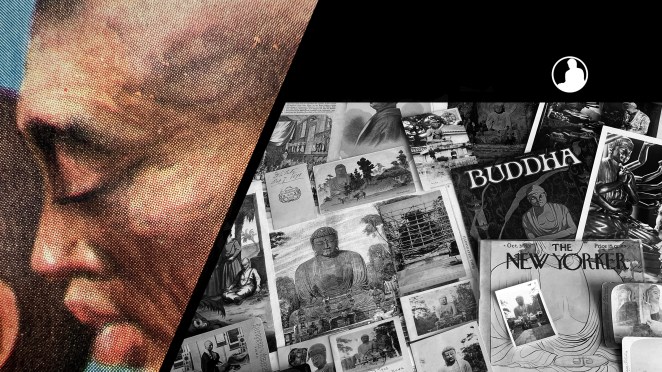
The first photograph of the Dalai Lama in Tibet was taken in 1921; it depicts “the Great Thirteenth,” Tubten Gyatso (1876–1933). The image was published in various Western media, even making its way on to a multicolor lithograph trade card for the German company Liebig in 1935.
*The first photograph of the Dalai Lama was taken in India in 1910 following the incursion of the Qing army into Tibet.

The photograph was taken by Charles Bell and Rabden Lepcha at Norbulingka, the summer palace of the Dalai Lama. Previously, images of the Dalai Lama were only spread through devotional tapestries (thangka) and gilt statues; now photographs could be shared among faithful Tibetans.

The Liebig company started printing colorful advertising cards in 1872, helping to support a popular collector’s hobby. This set from 1935 focused on Lhasa and included six cards, including an image of Potala Palace and large Tibetan prayer wheel, both iconic images in popular consciousness.

The original black and white photograph shows the Dalai Lama sitting on a throne behind an ornate dais. On the back wall hangs nine silk thangka depicting the Buddha, but the lithographic artist only loosely renders them as Buddhist images.

For a brief account of the Dalai Lama photograph and discussion on the impact of photography in Tibet, see Riga Shakya’s “Lenses of Modernity: Photography in Tibet and the Himalayas,” viewable here: tinyurl.com/bdzzcw4m.


The Buddhas in the West Material Archive is a digital scholarship project that catalogues artifacts depicting Buddhist material culture for Western audiences. It’s comprised of prints, photos, and an assortment of ephemera and other objects. For a brief introduction to this archive, visit the main Buddhas in the West project page.


For Related Buddhas in the West Posts Featuring Tibet:

For the Most Recent Buddhas in the West Posts: