Wilhelm Heine’s Whampoa Pagoda Lithograph

For all the new Buddhas in the West posts
follow us on Bluesky & Instagram


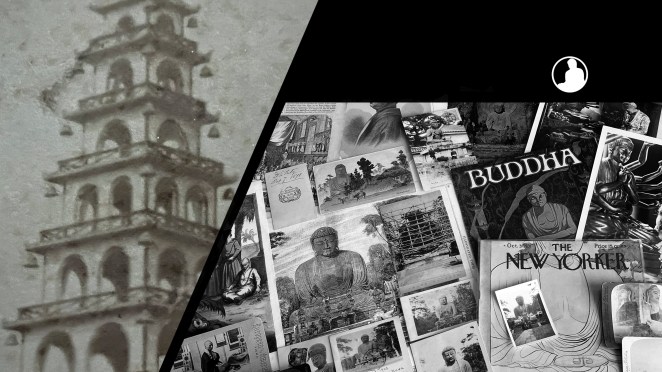
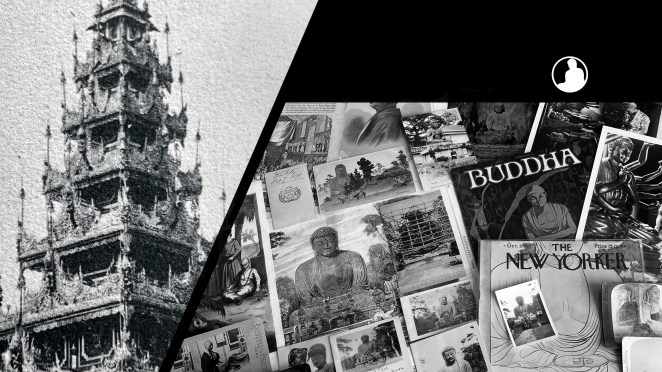
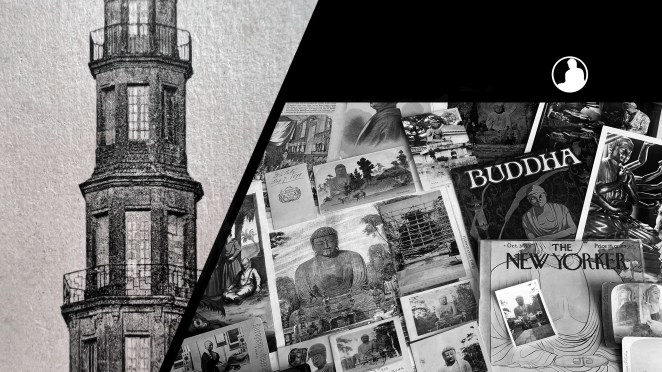
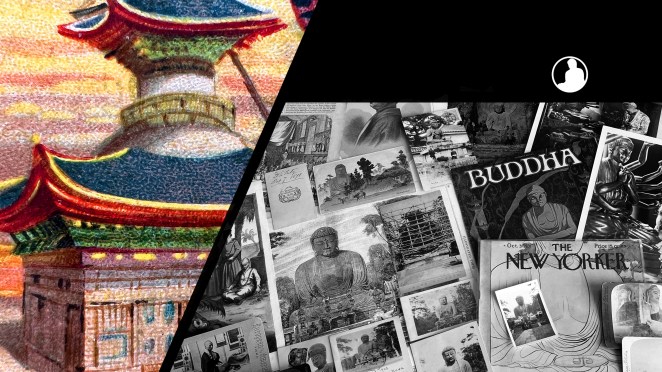
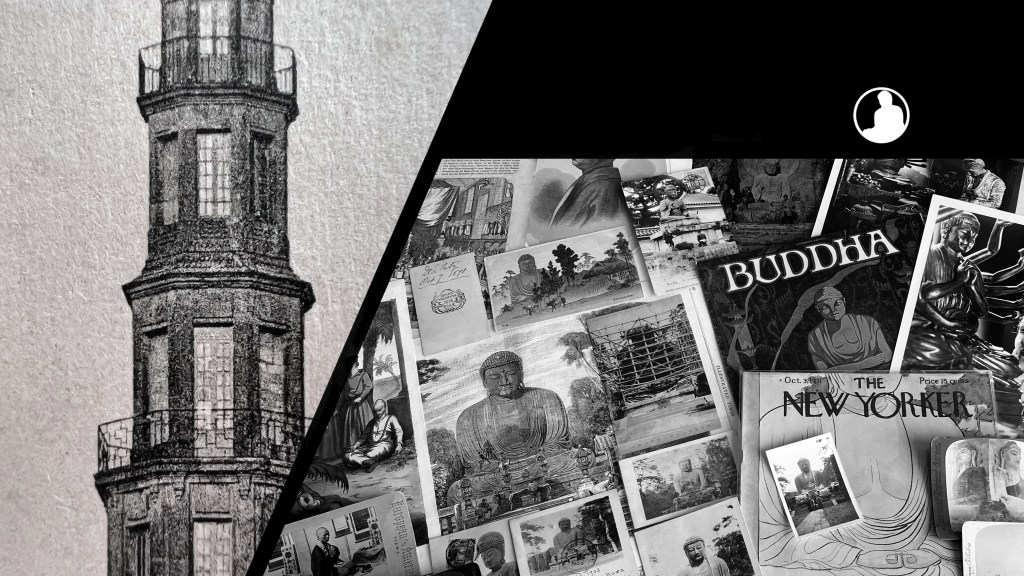
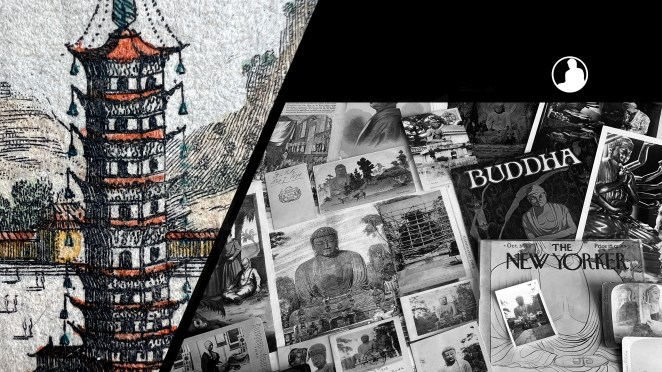
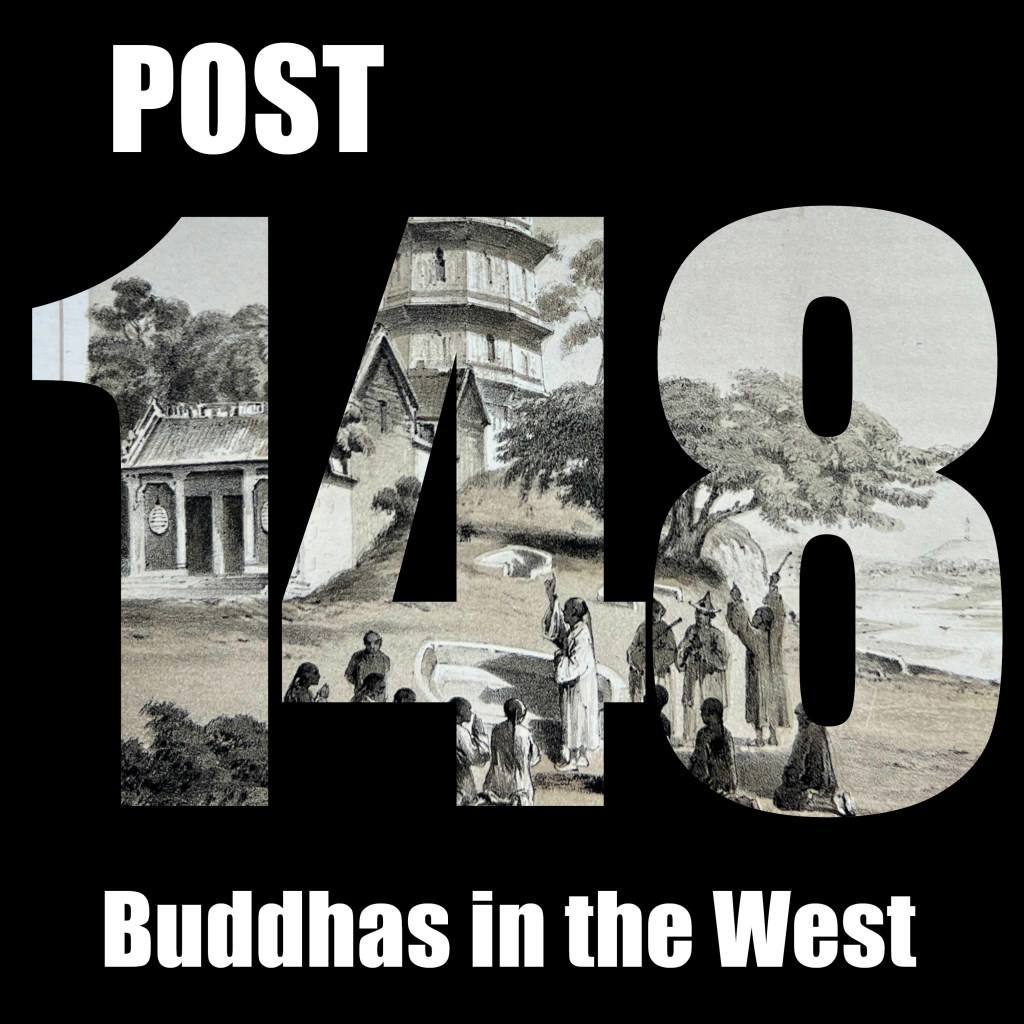
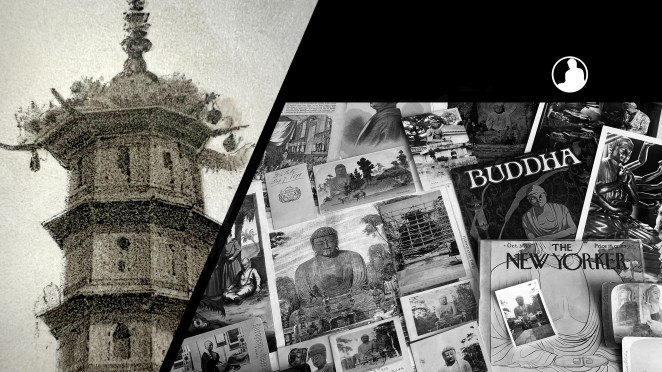
En route to Japan in 1853, the Perry Expedition stopped in Guangdong, the historic center of China’s foreign trade. Anchored in the Pearl River, expedition artist Wilhelm Heine sketched arguably one of the most famous pagodas in the world at the time: the Whampoa Pagoda.
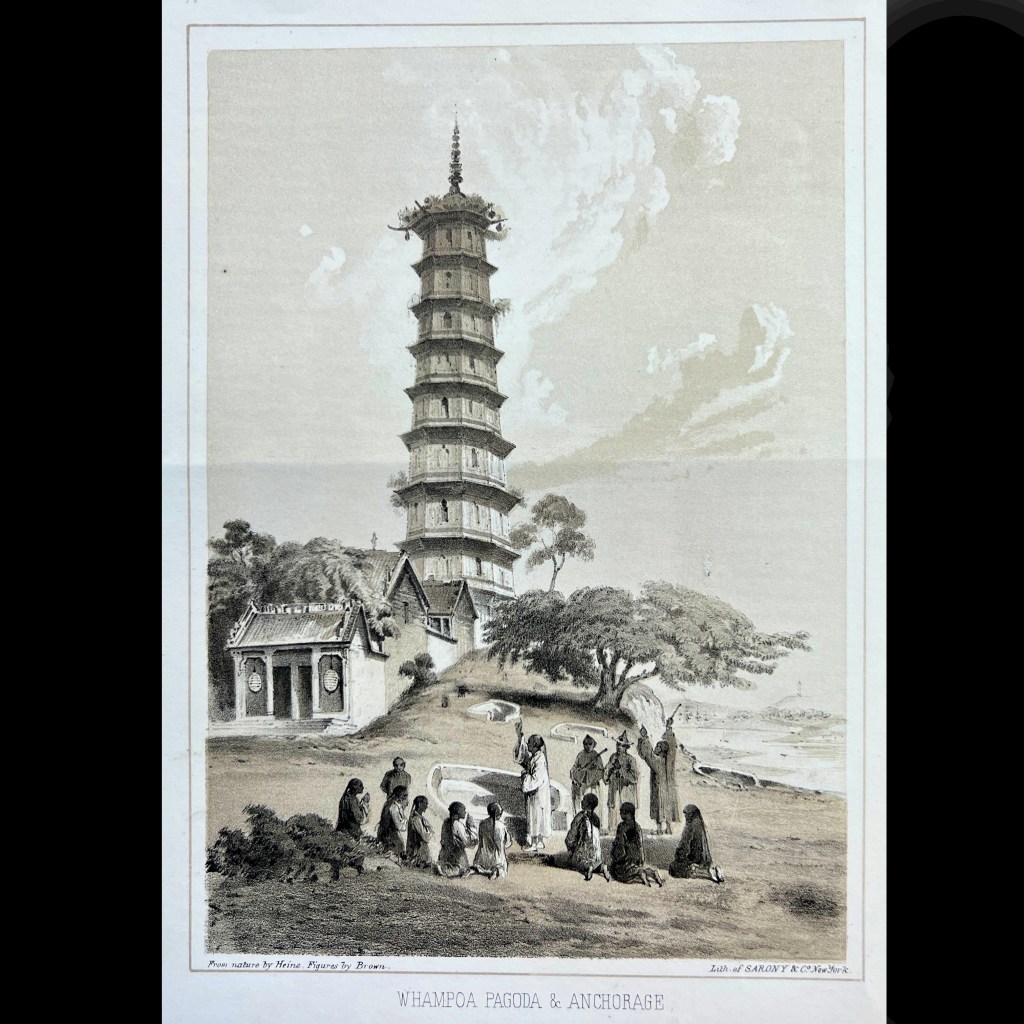
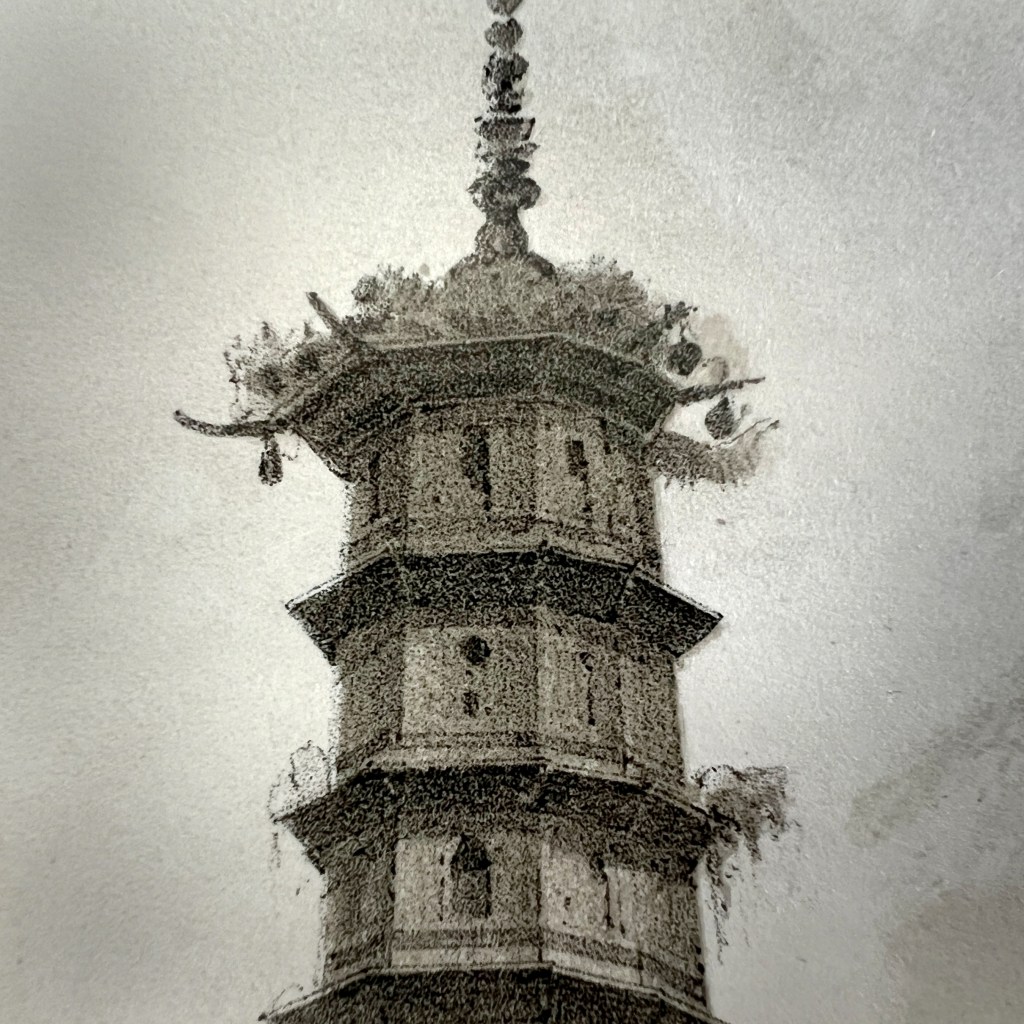
Matthew Perry noted the religious significance of the Pazhou Pagoda, as it was known in China, but also emphasized its value as a landmark, as ships “steer and anchor by its bearings.” Under the Canton System, foreign vessels often waited months at the Whampoa anchorage for Chinese cargo.
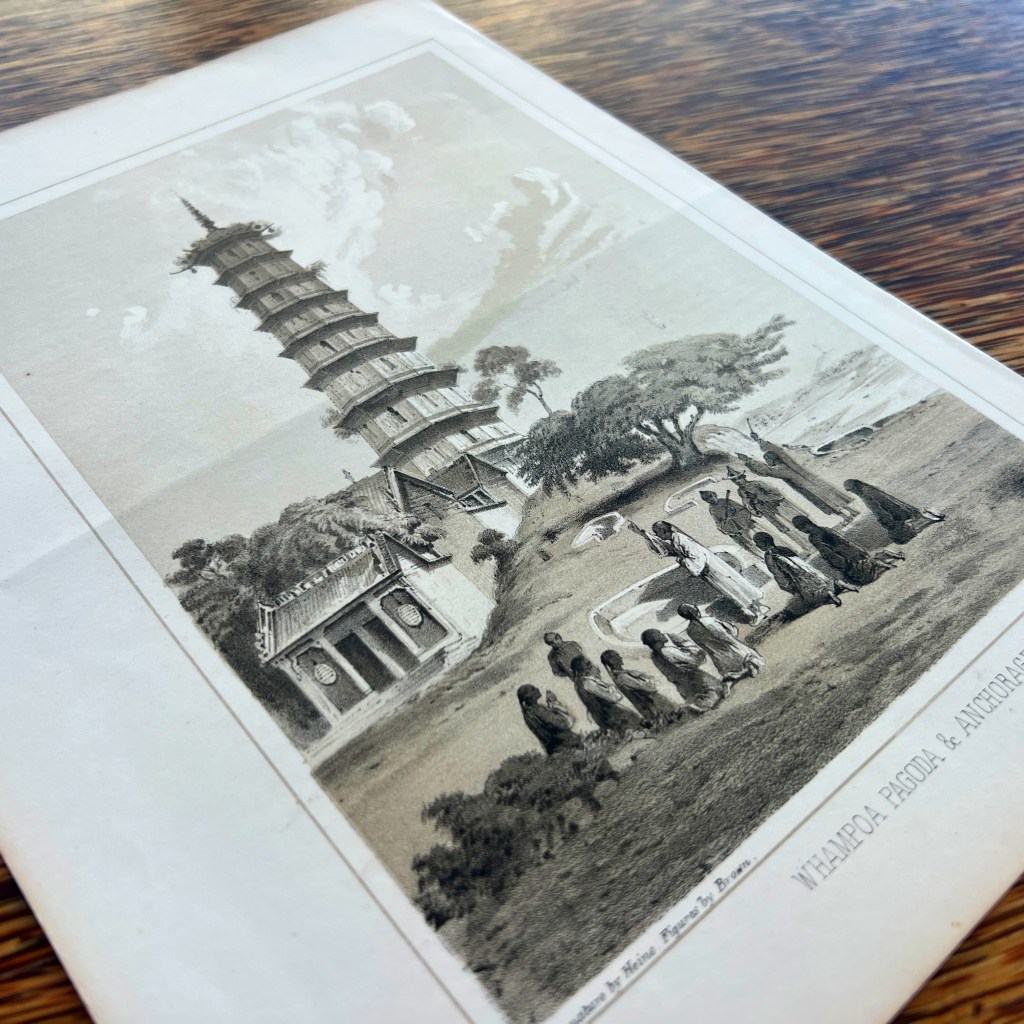
Heine’s paintings were later converted into sepia and hand-tinted stone lithographs to illustrate the official U.S. government report on the mission, Narrative of the Expedition of an American Squadron to the China Seas and Japan (1856).
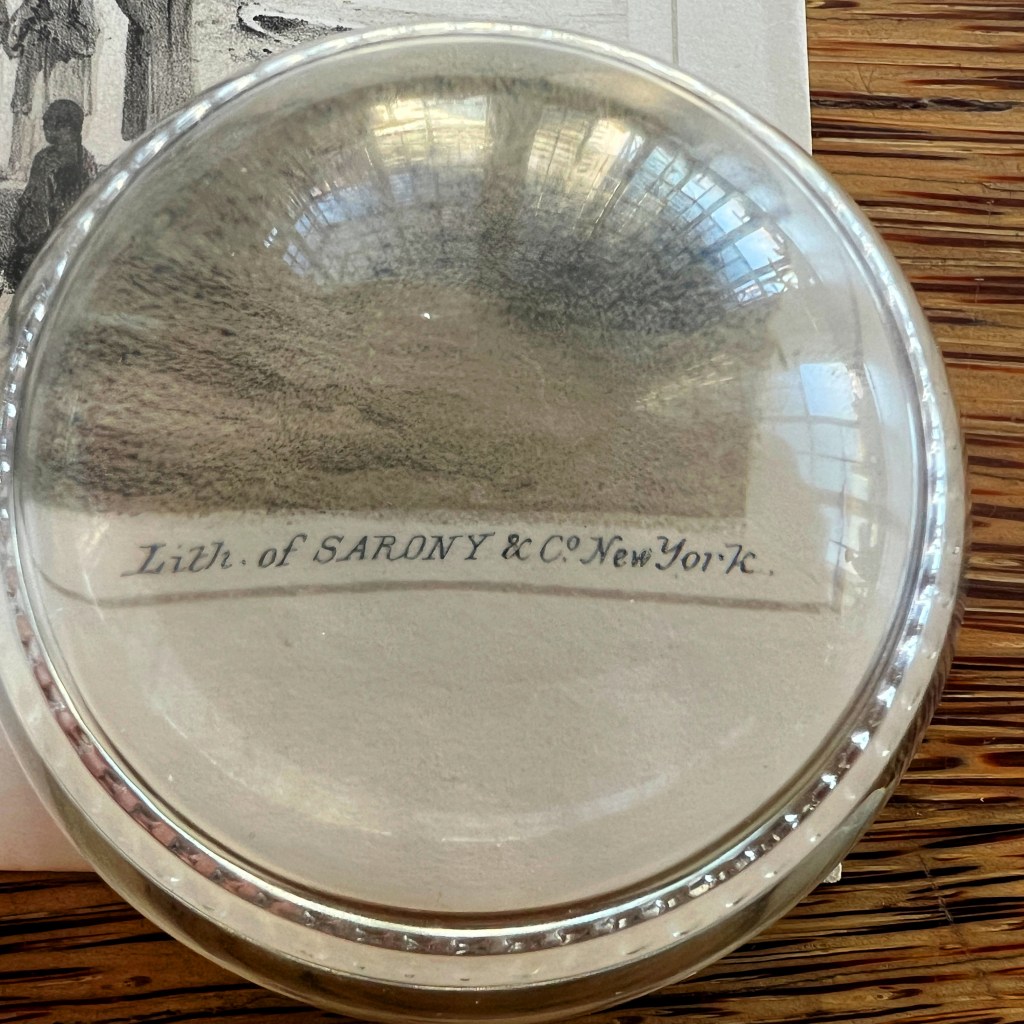
Because foreign ships spent long periods at Whampoa, the nine-story pagoda became familiar to many merchants and sailors. It also emerged as a visual emblem of China, appearing in numerous paintings, news illustrations, and on decorative objects such as porcelain and hand fans.
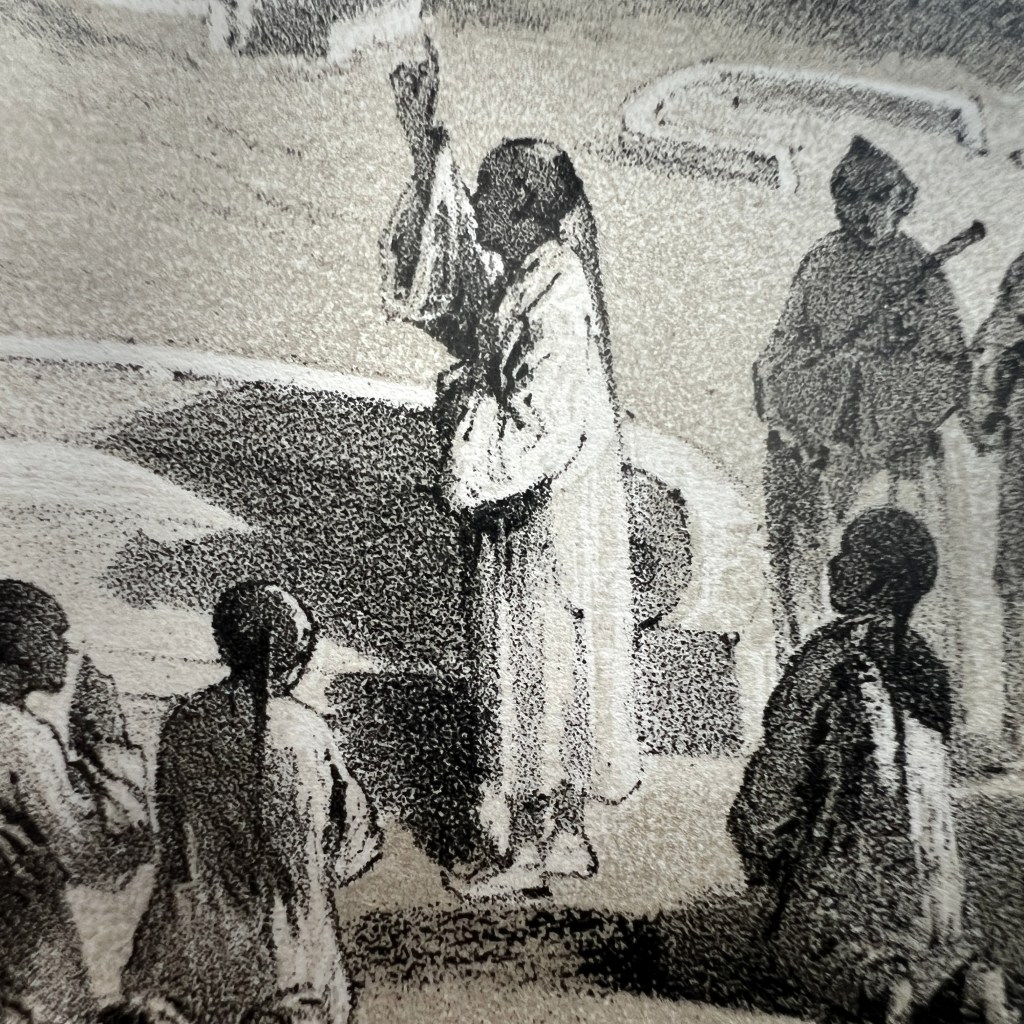
The octagonal brick pagoda, built in 1600 and rising more than 60 meters, was destroyed during the Cultural Revolution. For more on the visual importance of the Whampoa Pagoda, see Peter Perdue’s essay on the Canton System for MIT’s Visualizing Culture: tinyurl.com/46xrpkxf.
The Buddhas in the West Material Archive is a digital scholarship project that catalogues artifacts depicting Buddhist material culture for Western audiences. It’s comprised of prints, photos, and an assortment of ephemera and other objects. For a brief introduction to this archive, visit the main Buddhas in the West project page.


For Related Buddhas in the West Posts Featuring Pagodas:

For the Most Recent Buddhas in the West Posts:


Philip Klier’s Shwedagon Pagoda Postcard

For all the new Buddhas in the West posts
follow us on Bluesky & Instagram


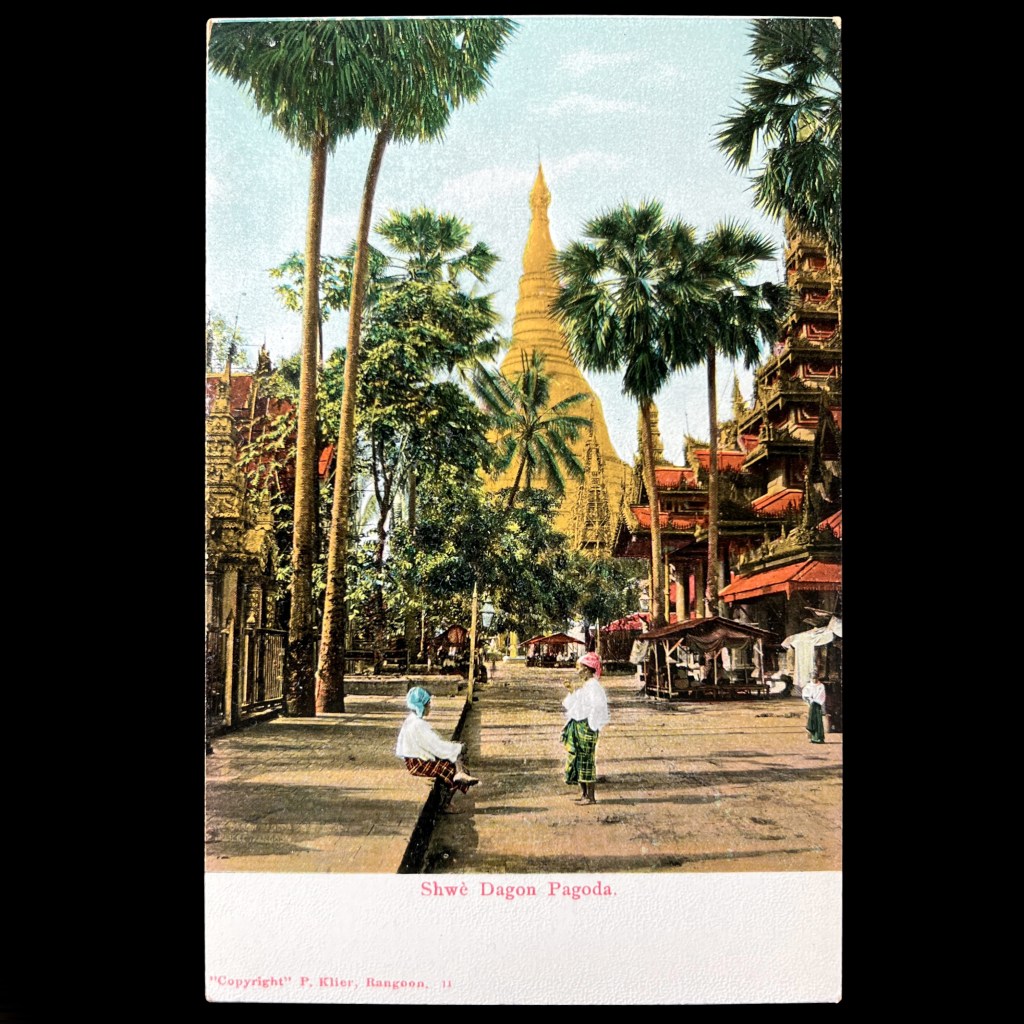
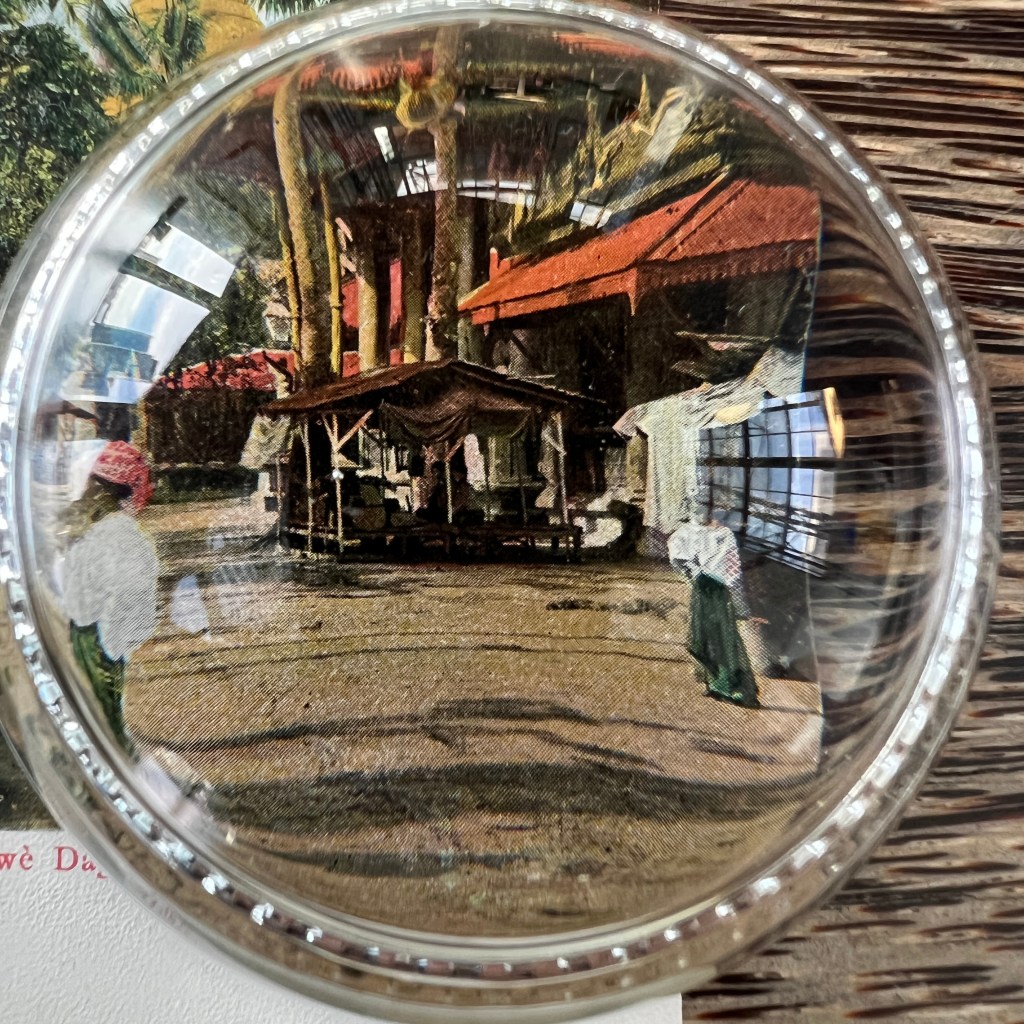
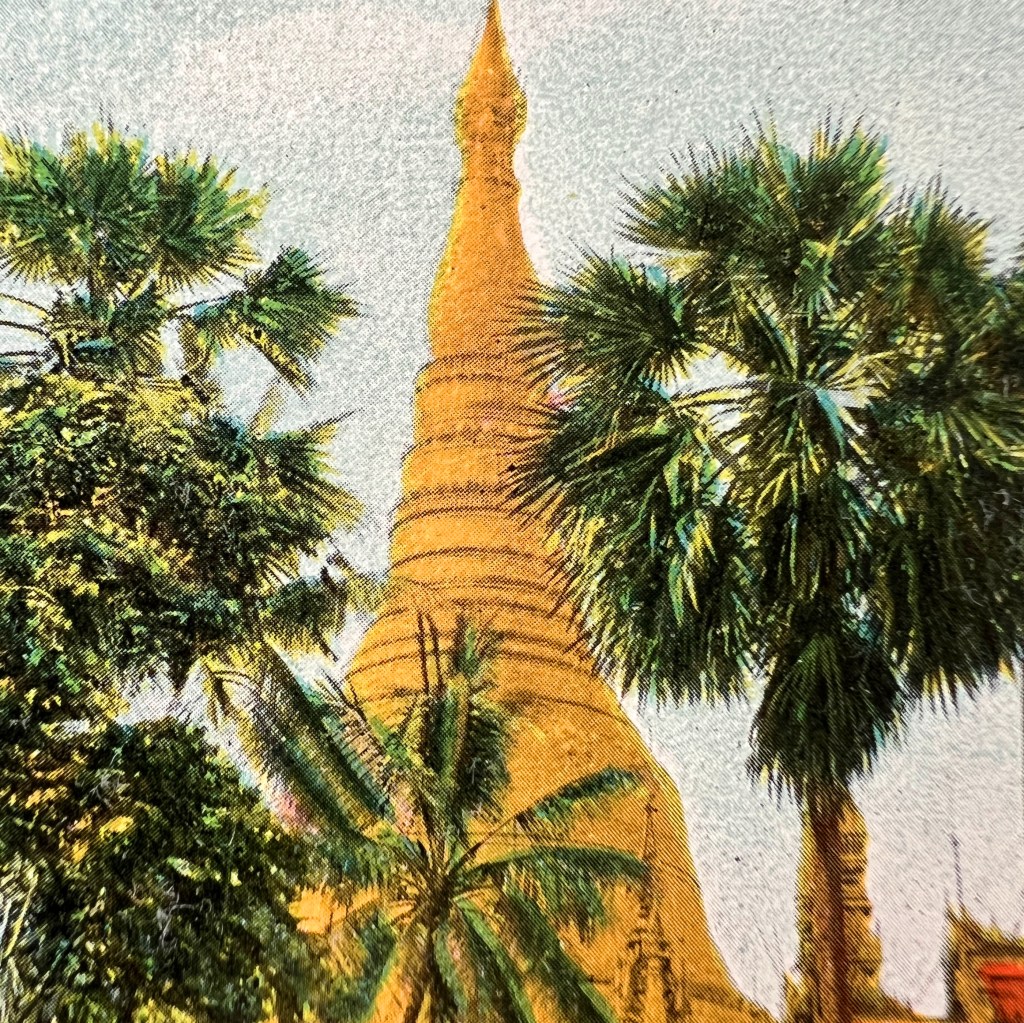
At the turn of the 20th century, tourists entering British Burma on a steamer would have looked down the Rangoon River to see the golden Shwedagon Pagoda in the far distance. Myanmar’s most sacred Buddhist site, the pagoda stands 112 m (367 ft) tall and dominates the Yangon skyline.

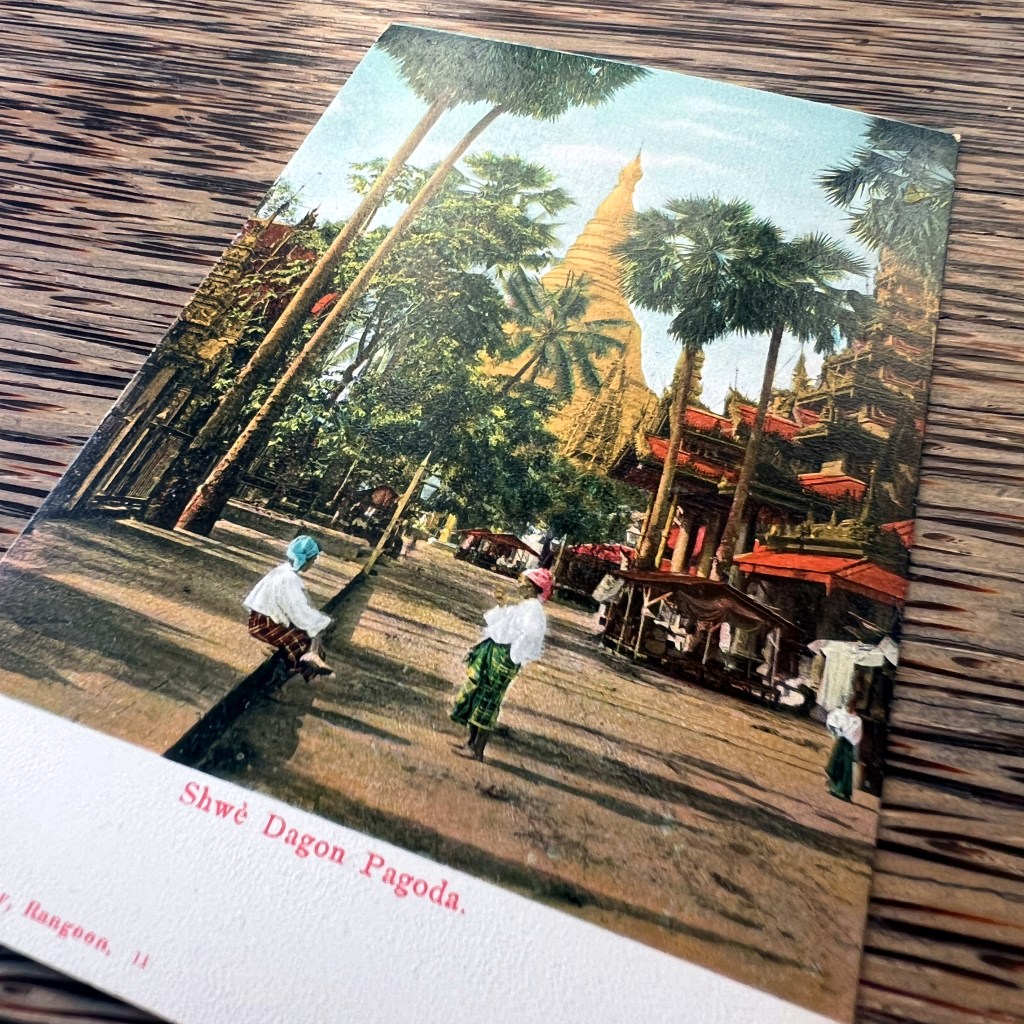
German photographer Philip Klier’s image blends monumentality with everyday life; palm trees frame the towering golden stupa while Burmese figures animate the foreground and provide scale. Klier presents an idyllic vision for colonial consumers seeking the “exotic” East.

Following the postcard boom, Klier used his studio album photographs as the basis for portable, vibrantly colored postcards. Such cards circulated through imperial mail networks, shaping how distant places like Burma were imagined by audiences in Europe and beyond.

In the colonial period, some Burmese merchants became wealthy through trade in rice and timber and sites like Shwedagon Pagoda experienced rapid growth. Newly built resting pavilions and stalls selling flowers, parasols, and curios could be seen all over the grounds.

More than kitsch souvenirs, postcards reveal how colonial interactions and photography mediated encounters between Burma and the wider world at the turn of the century. For more on colonial photography in Burma, see Noel Singer’s Burma: A Photographic Journey (1993).


The Buddhas in the West Material Archive is a digital scholarship project that catalogues artifacts depicting Buddhist material culture for Western audiences. It’s comprised of prints, photos, and an assortment of ephemera and other objects. For a brief introduction to this archive, visit the main Buddhas in the West project page.


For Related Buddhas in the West Posts Featuring the Shwedagon Pagoda:


For the Most Recent Buddhas in the West Posts:


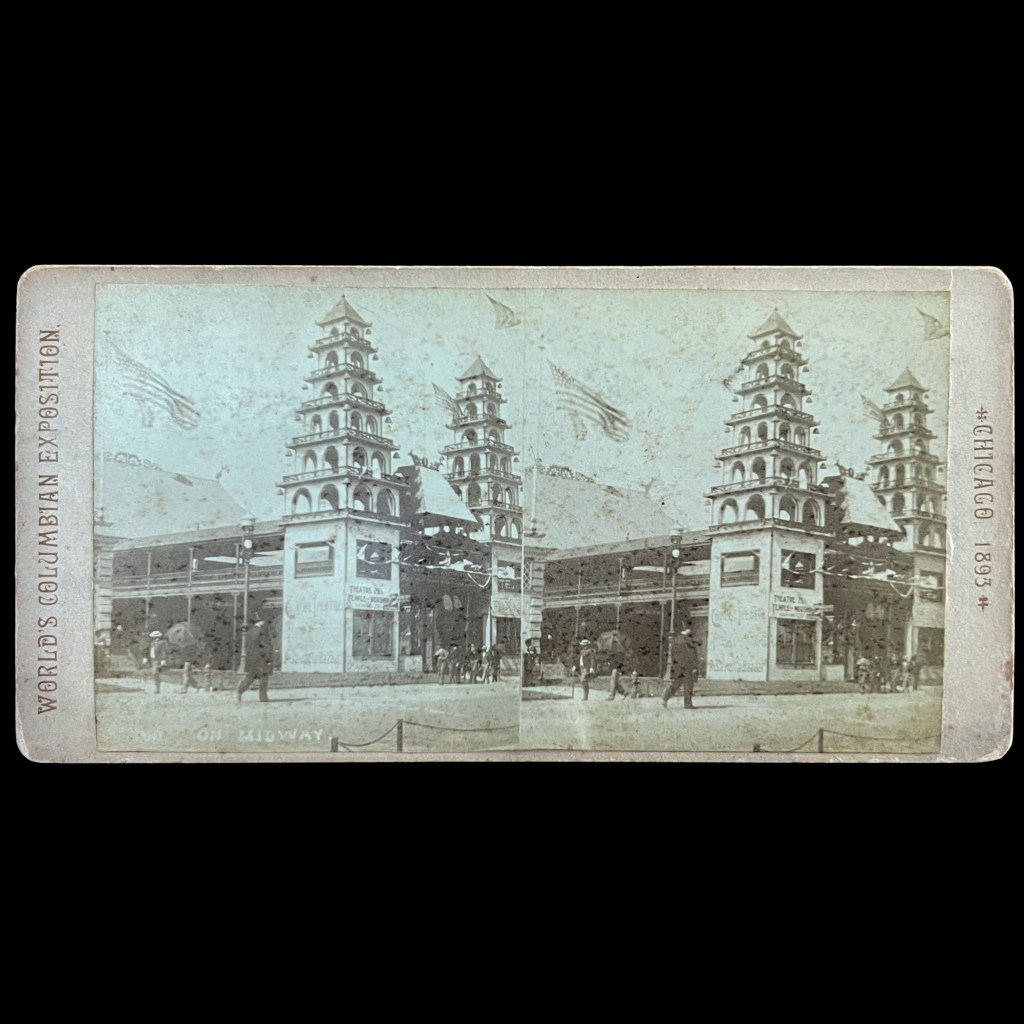
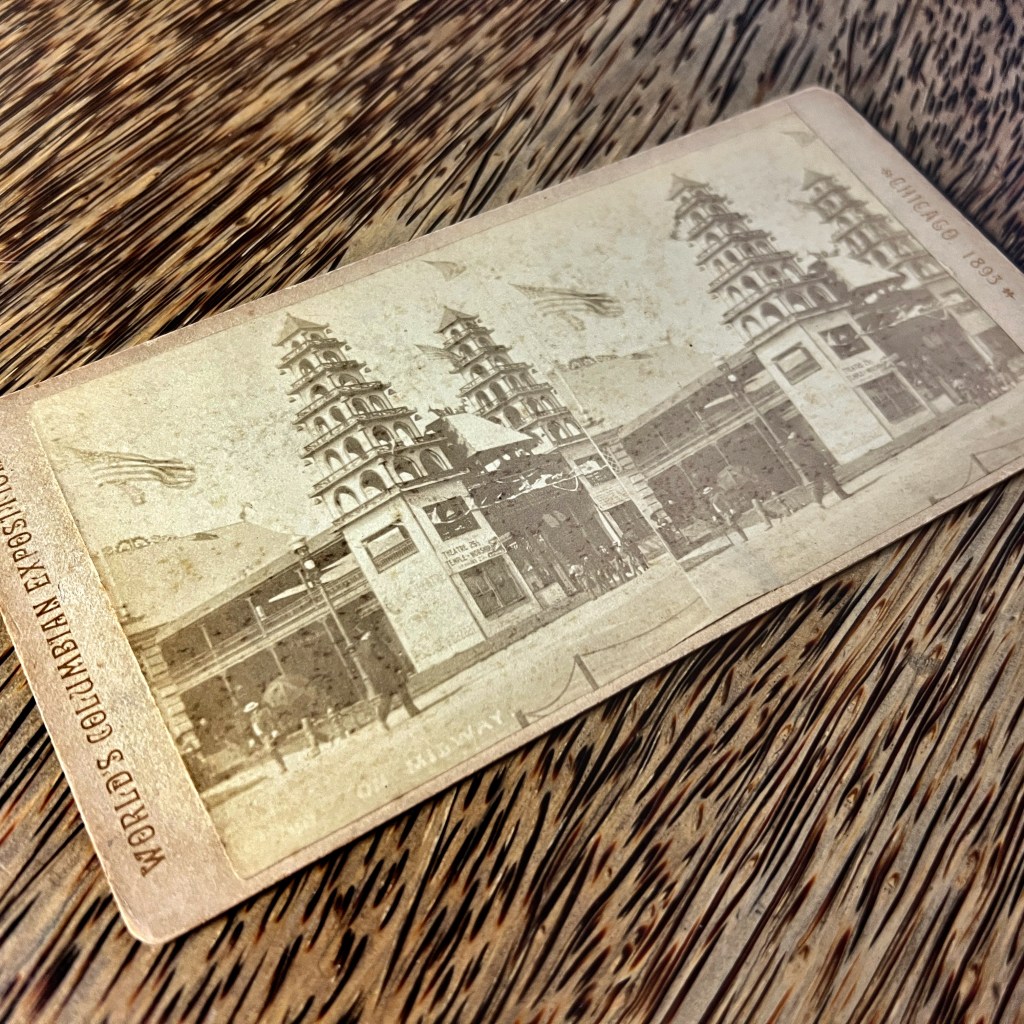
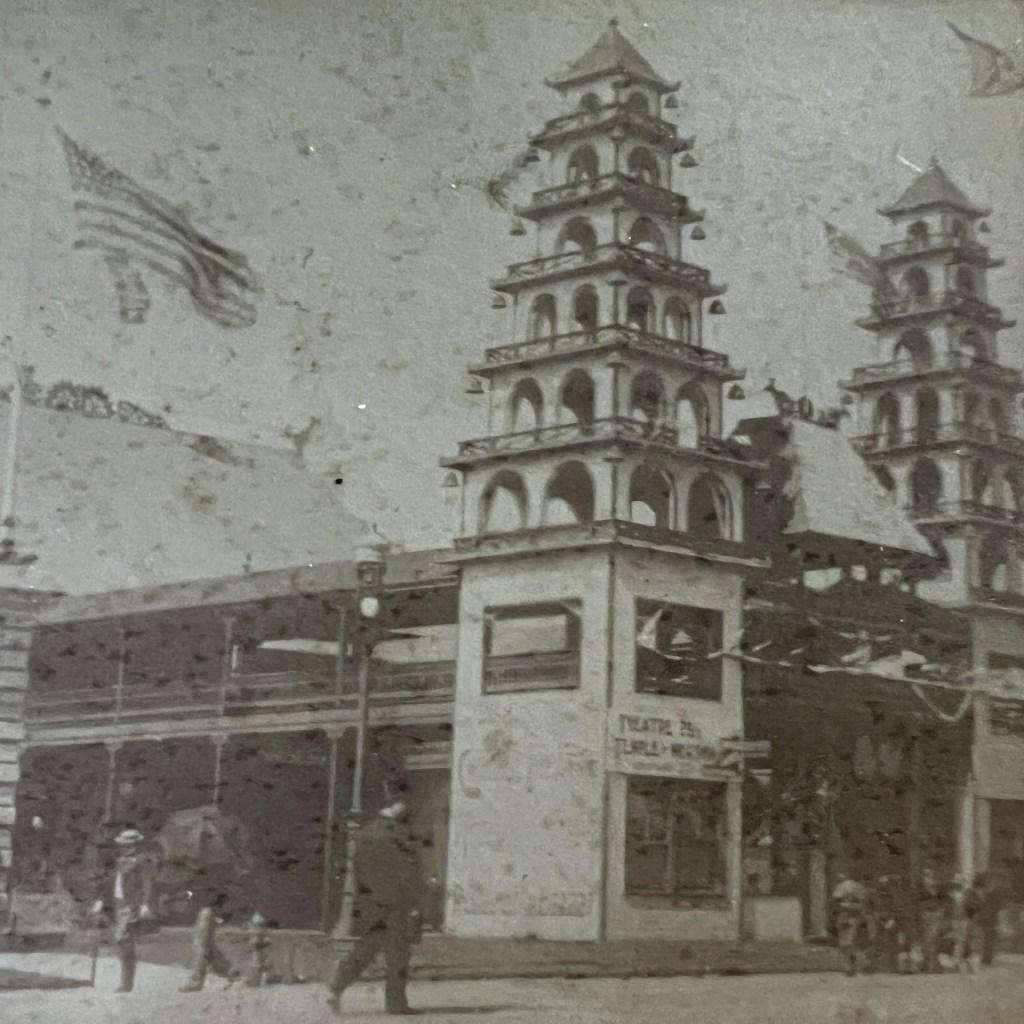
1893 Chinese Theater and Joss House Stereoview

For all the new Buddhas in the West posts
follow us on Bluesky & Instagram


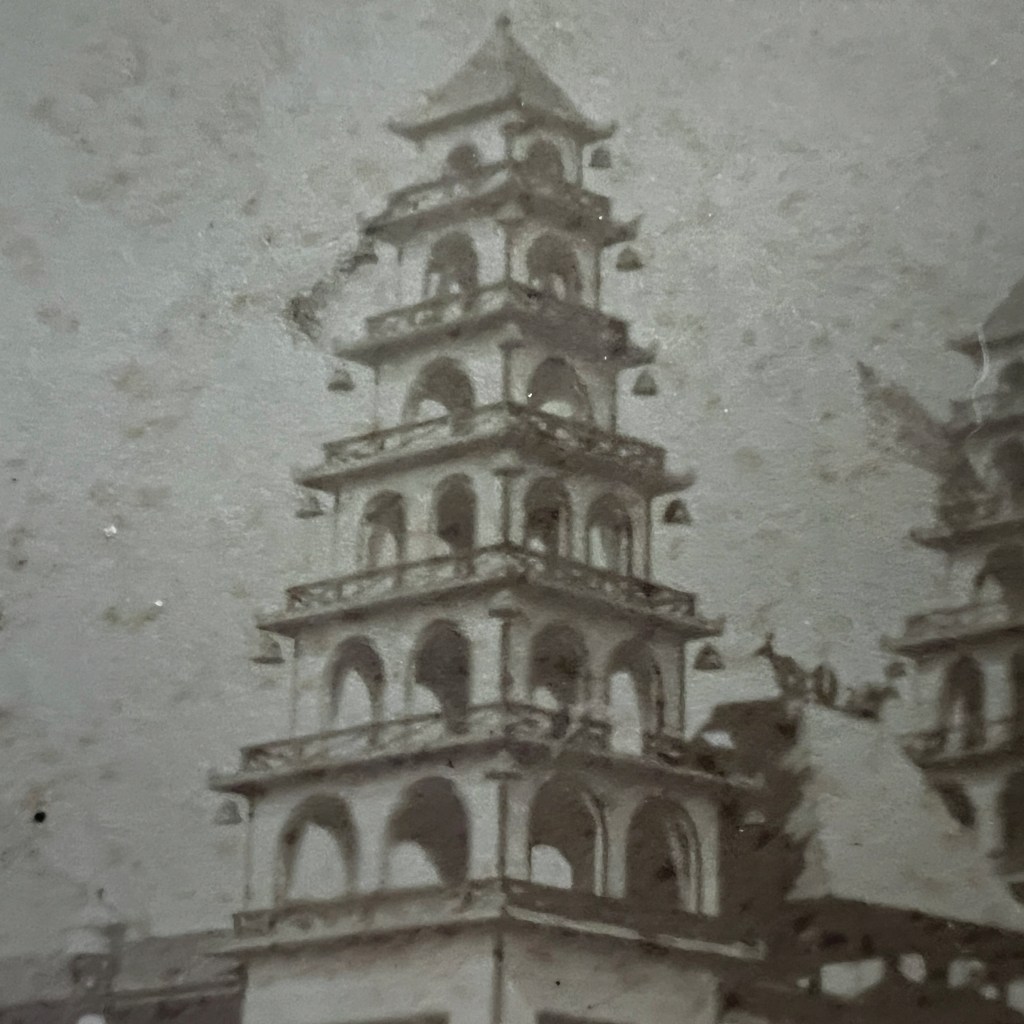
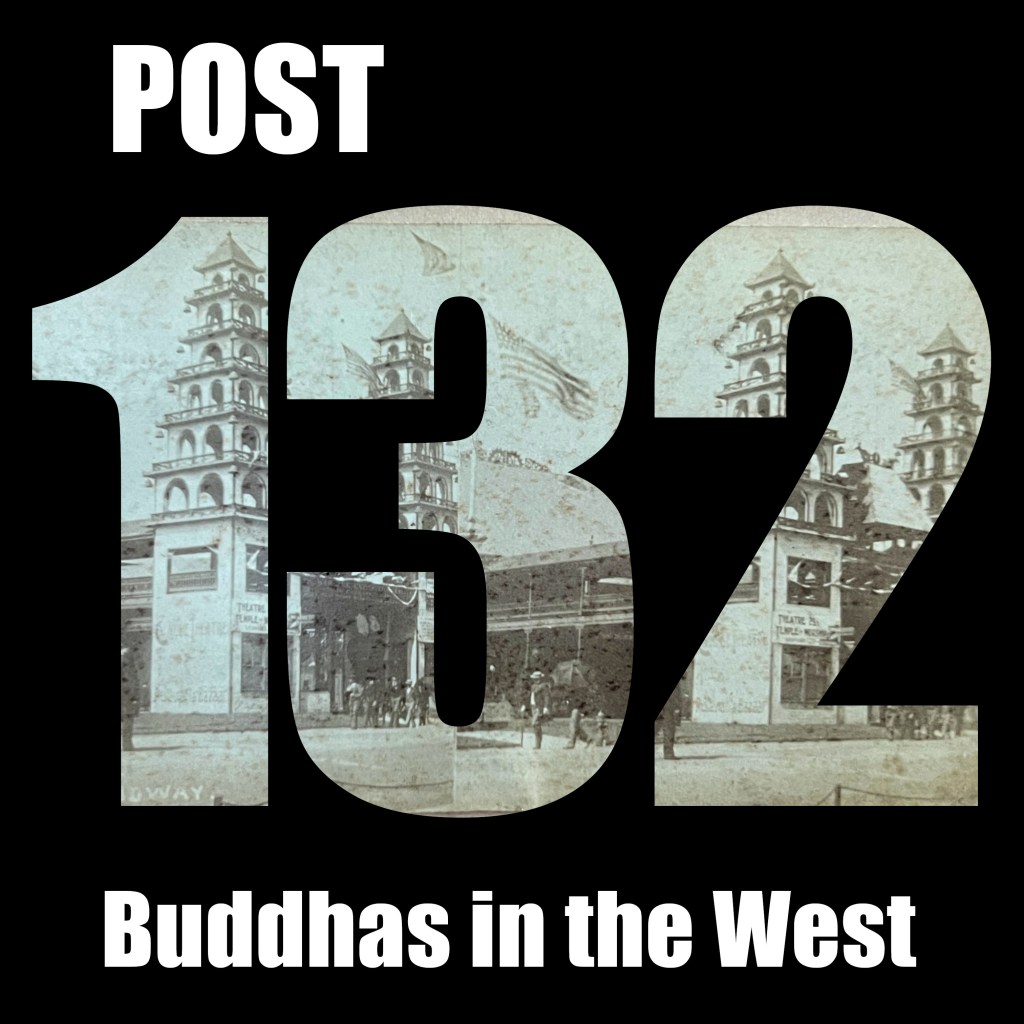
Due to the US extension of the Chinese Exclusion Act in 1892, the Chinese Qing Empire withdrew from the 1893 World’s Columbian Exposition in Chicago. This created the opportunity for local Chinese Chicagoans to build a Chinese Theatre and Joss House as an amusement concession.

The concession was financed and managed by three Chinese immigrants operating as the Wah Mee Exposition Company. The second floor held “thousands of idols” from the “Buddhist stand-point” as well as depictions of the Buddhist hells “with the many different modes of punishment.”

Charles Dudley Arnold was the official photographer of the 1893 exposition, but many other studios sold photographic souvenirs of the fair grounds. While sold as a stereoview, this card by an unknown publisher reproduces the same photograph twice, creating a pseudo-stereoscopic image.

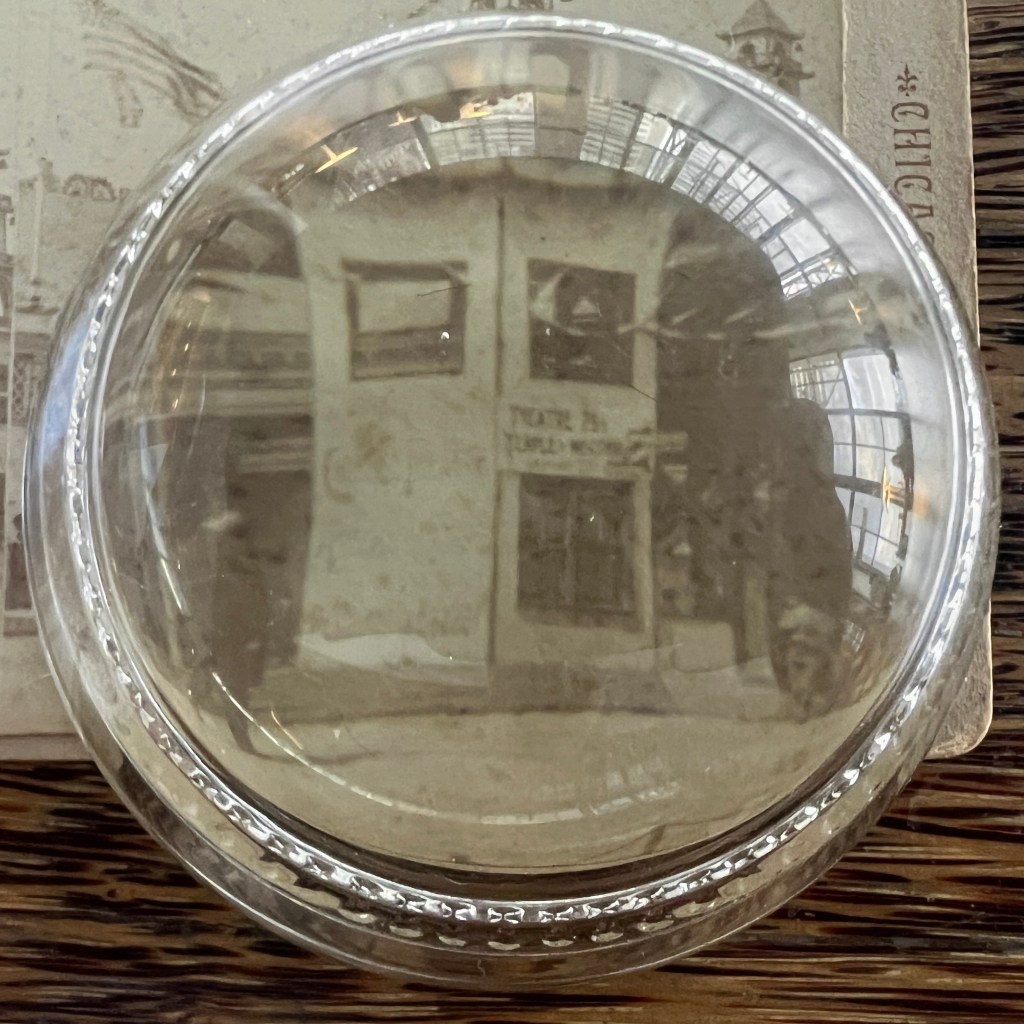
Signage notes admission to the Cantonese theater hall and temple cost 25 cents. An estimated 27 million people visited the fair in Chicago, many of whom would have walked the amusements along the Midway Plaisance where the joss house was located.

While prominent Buddhists attended the World’s Parliament of Religions in 1893, fair visitors were also exposed to Buddhism through the joss house attraction. For more on Chinese participation, see Mae Ngai’s “Transnationalism and the Transformation of the ‘Other'” (2005).


The Buddhas in the West Material Archive is a digital scholarship project that catalogues artifacts depicting Buddhist material culture for Western audiences. It’s comprised of prints, photos, and an assortment of ephemera and other objects. For a brief introduction to this archive, visit the main Buddhas in the West project page.


For Related Buddhas in the West Posts Featuring World’s Fairs:


For the Most Recent Buddhas in the West Posts:


Shangri-la in Lost Horizon (1937) Production Photograph

For all the new Buddhas in the West posts
follow us on Bluesky & Instagram


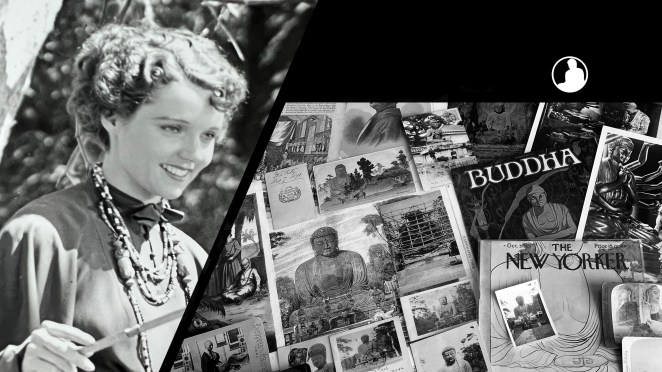
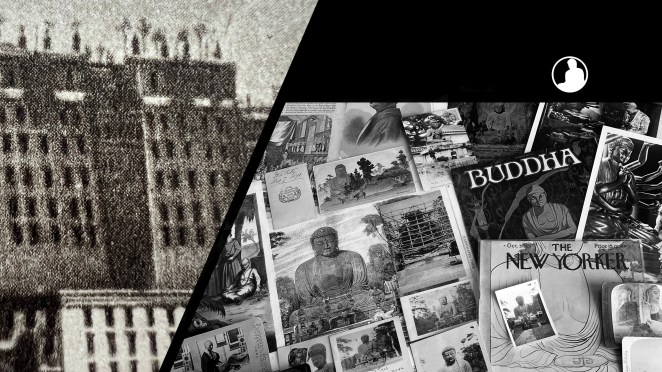
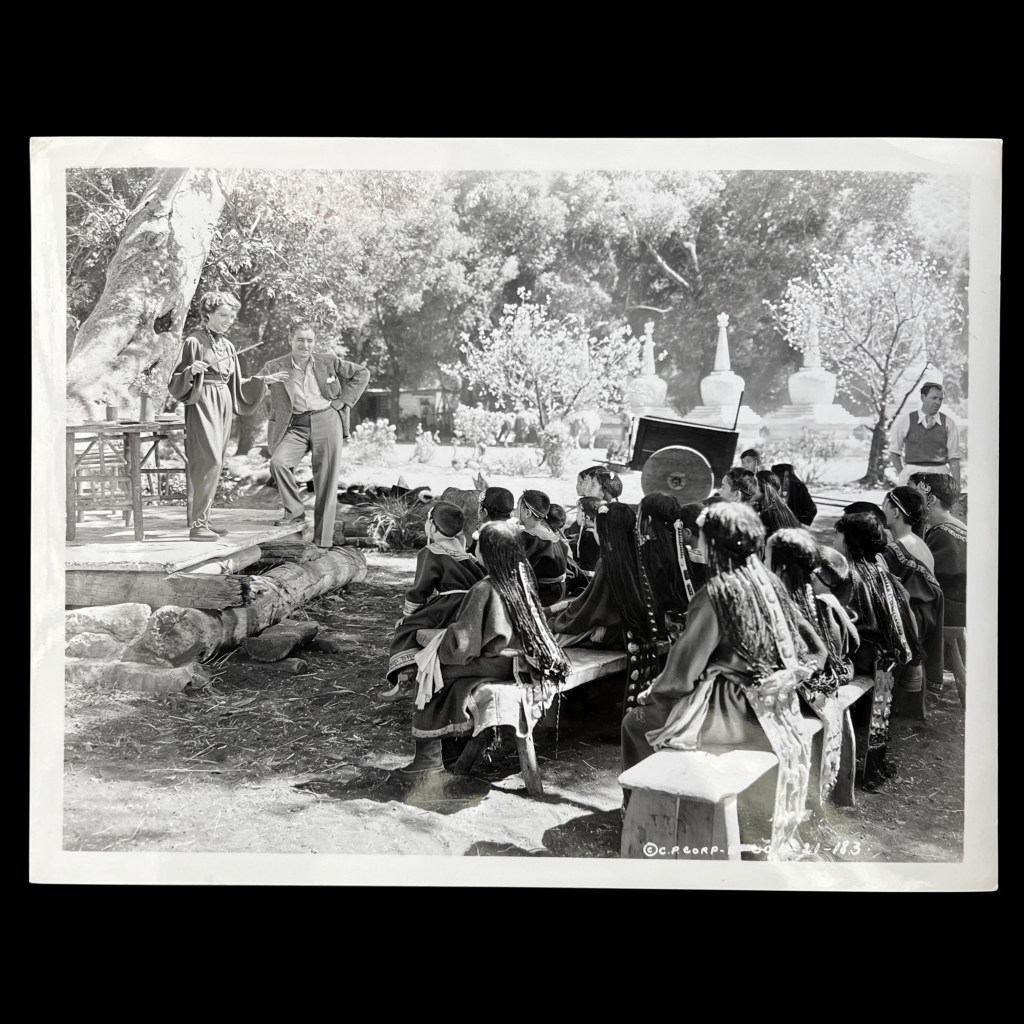
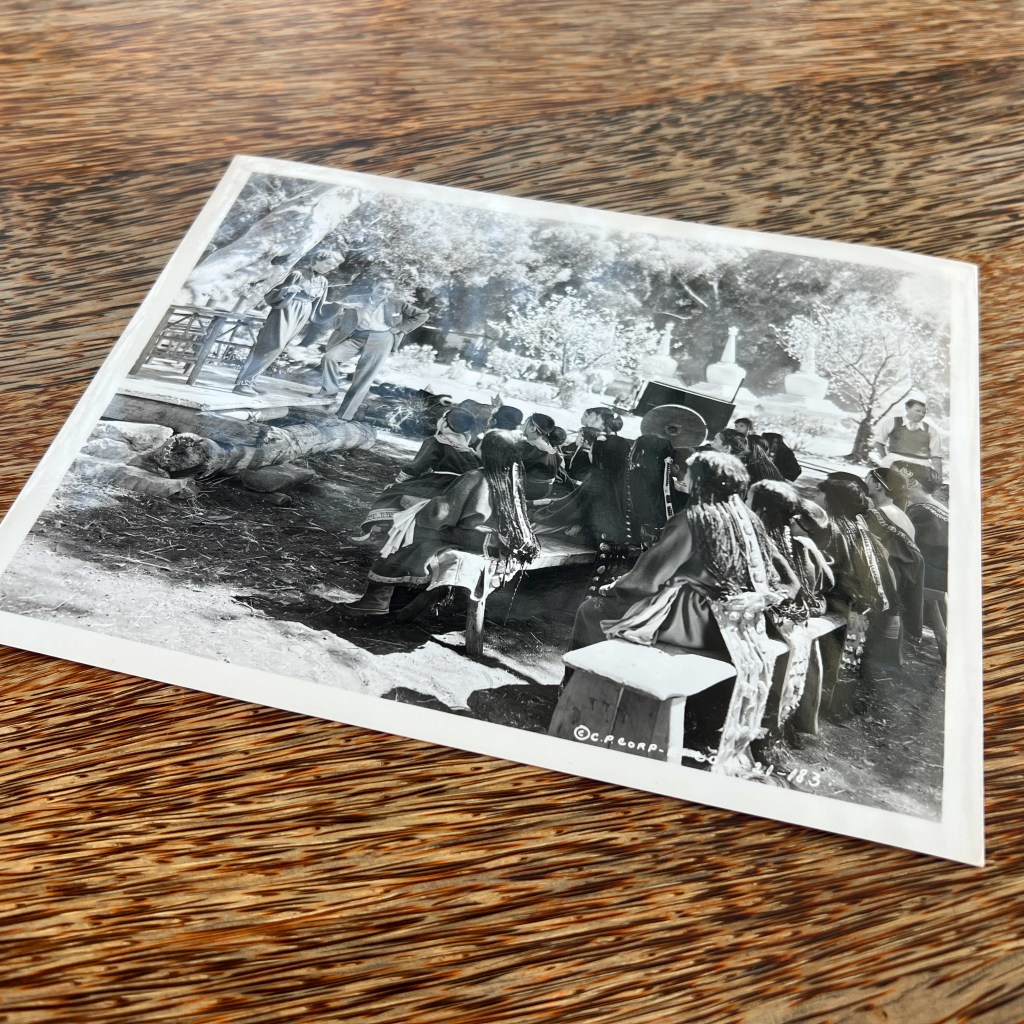
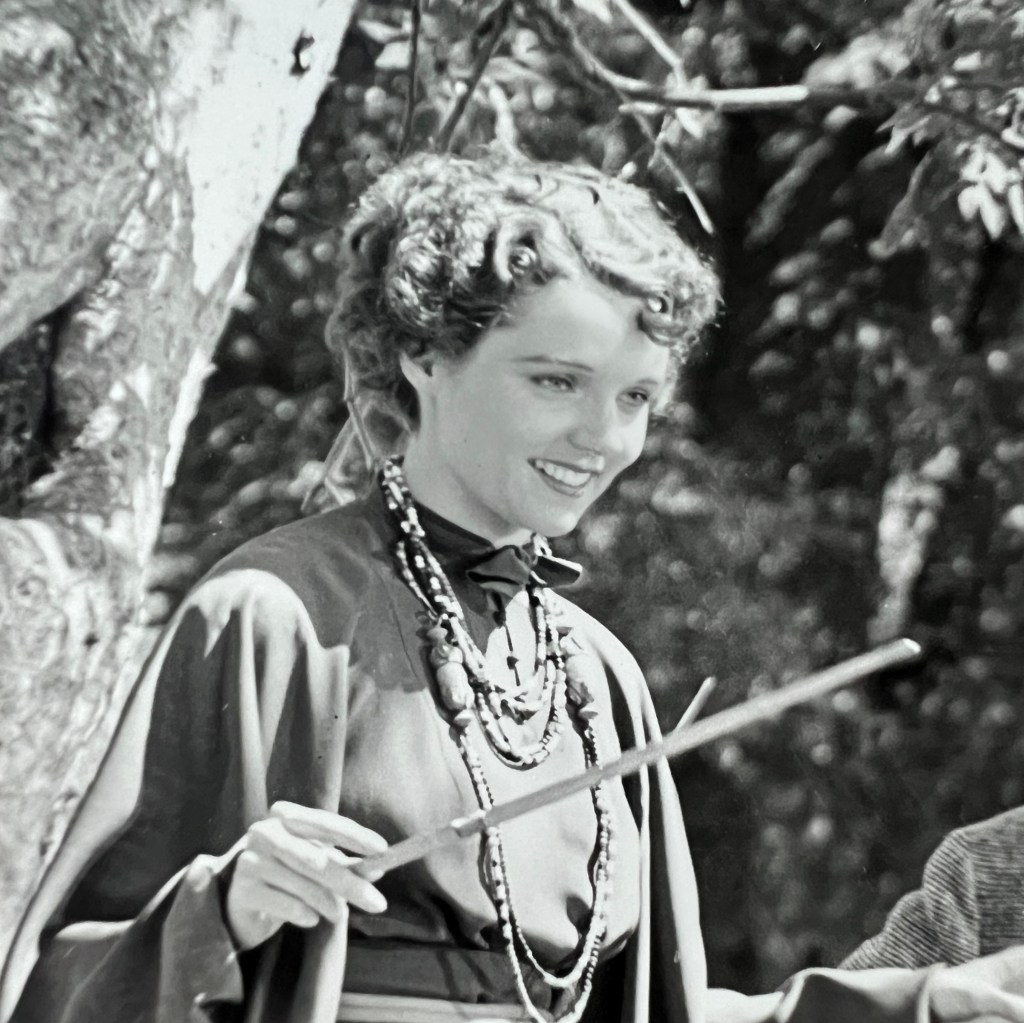
American escapist films grew in prominence during the Depression Era 1930s and Frank Capra’s 1937 film, Lost Horizon, was an important Buddhist entry to this genre. The early 20th century romantic imagery of Tibet helped raise interest in the film’s Himalayan utopia of Shangri-la.

The pristine beauty of Shangri-la as seen in Lost Horizon played to the fantasy of an enchanted landscape of the Oriental Other filled with peace and prosperity. Tibetan Buddhist lamas are initially portrayed as the protectors of this hidden mountain kingdom.

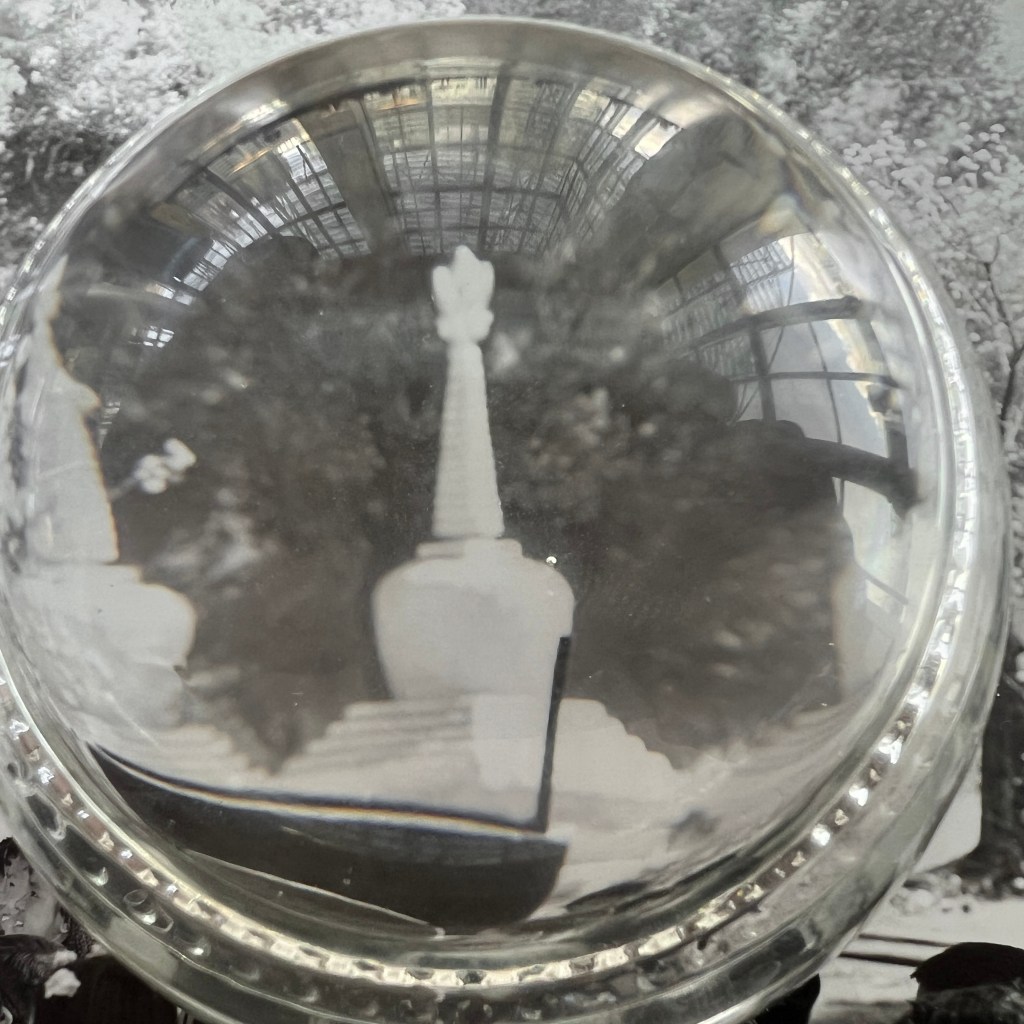
While filmed in a Hollywood back lot fitted with Streamlined Art Deco buildings, elements – such as the Tibetan-stye stūpa reliquaries – clued the appropriate Buddhist mise-en-scène.

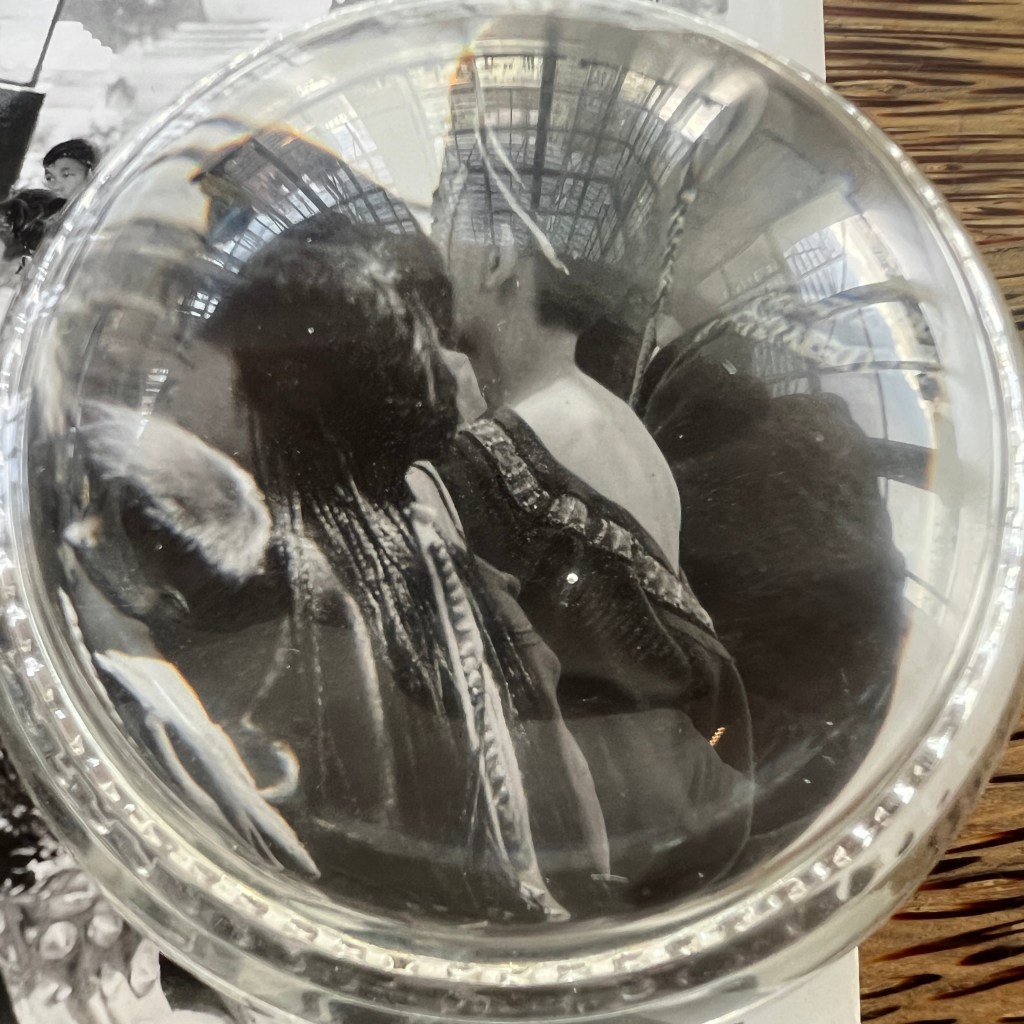
The film’s Tibetan-style costuming often showed exposed skin, suggesting the inhabitants had a child-like innocence and a pre-modern lifestyle. Ultimately we learn the High Lama is not Tibetan at all, but a Belgian Catholic priest who is the founder and caretaker of Shangri-la.

While flourishing and peaceful, Shangri-la still needed a benevolent colonial ruling hand to realize its full mission. For further exploration of the portrayal of Buddhism in American film, see Sharon Suh’s Silver Screen Buddha (2015).


The Buddhas in the West Material Archive is a digital scholarship project that catalogues artifacts depicting Buddhist material culture for Western audiences. It’s comprised of prints, photos, and an assortment of ephemera and other objects. For a brief introduction to this archive, visit the main Buddhas in the West project page.


For Related Buddhas in the West Posts Featuring Chicago:


For the Most Recent Buddhas in the West Posts:


1933 Streets of Shanghai Concession Postcard

For all the new Buddhas in the West posts
follow us on Bluesky & Instagram


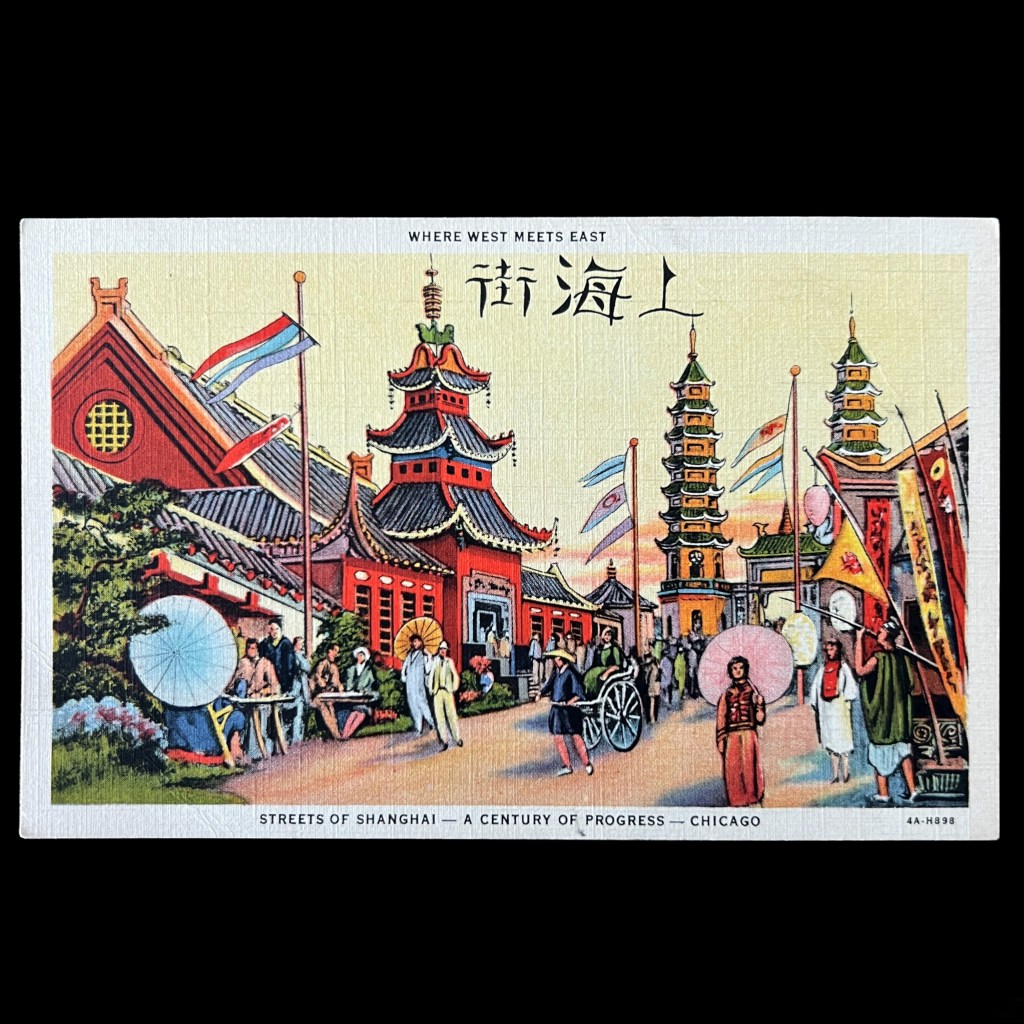
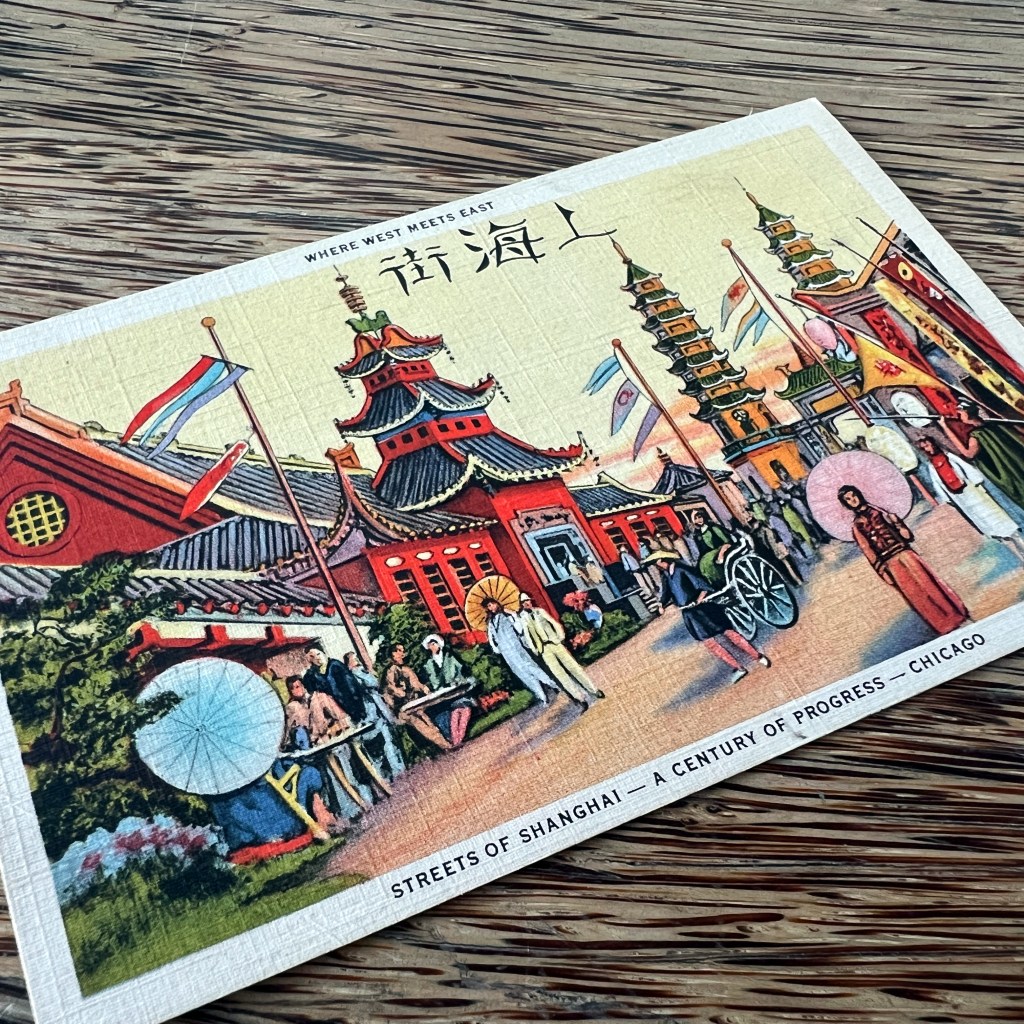
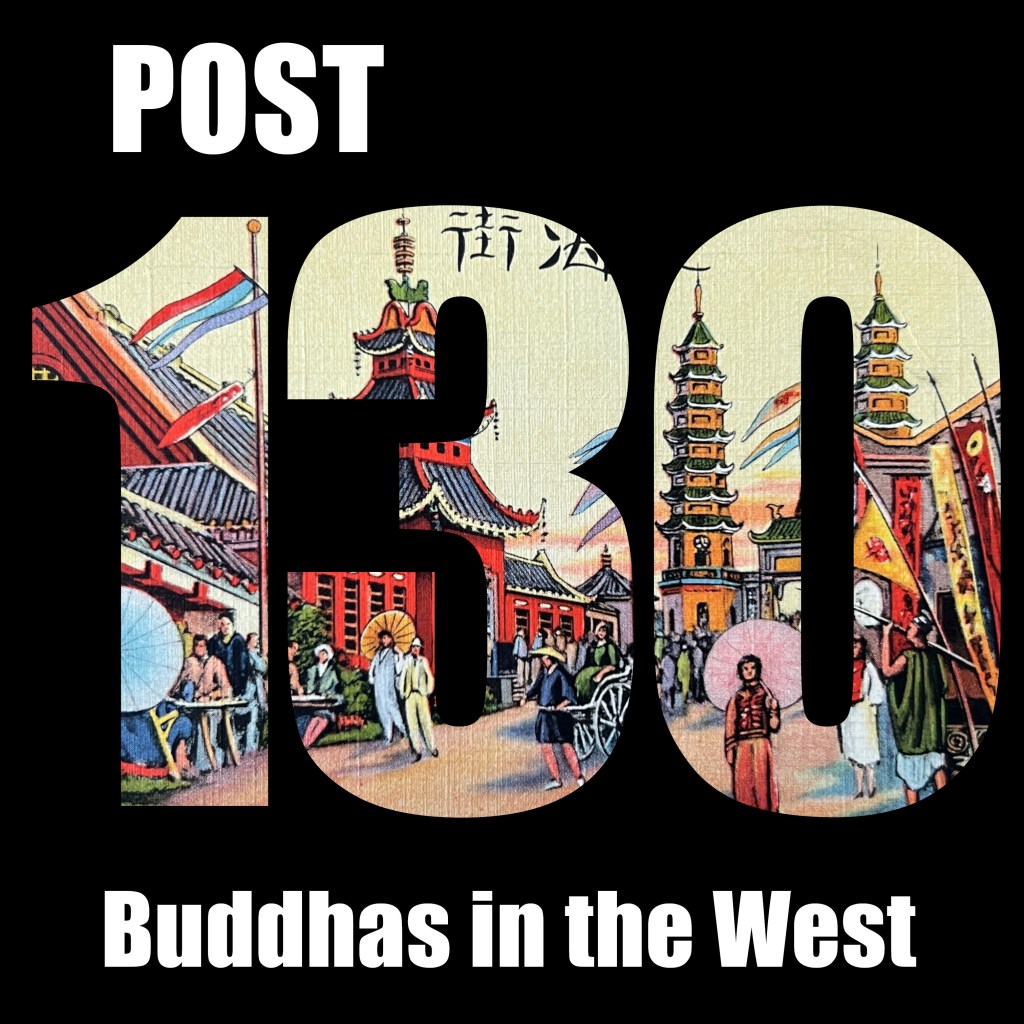
In the midst of a growing Pacific War, the young Republic of China withdrew from the World’s Fair in Chicago in 1933. Private individual ensured China’s symbolic presence, however, with local Chinatown businessmen erecting two giant pagodas for the “Streets of Shanghai” concession.

Arguably the lesser of two other China exhibits, including a Chinese pavilion and reconstruction of a Tibetan Buddhist shrine hall from Chengde, the Streets of Shanghai was one of many foreign “villages” erected on the fairgrounds. It overlooked Lake Michigan alongside the Dutch Village.

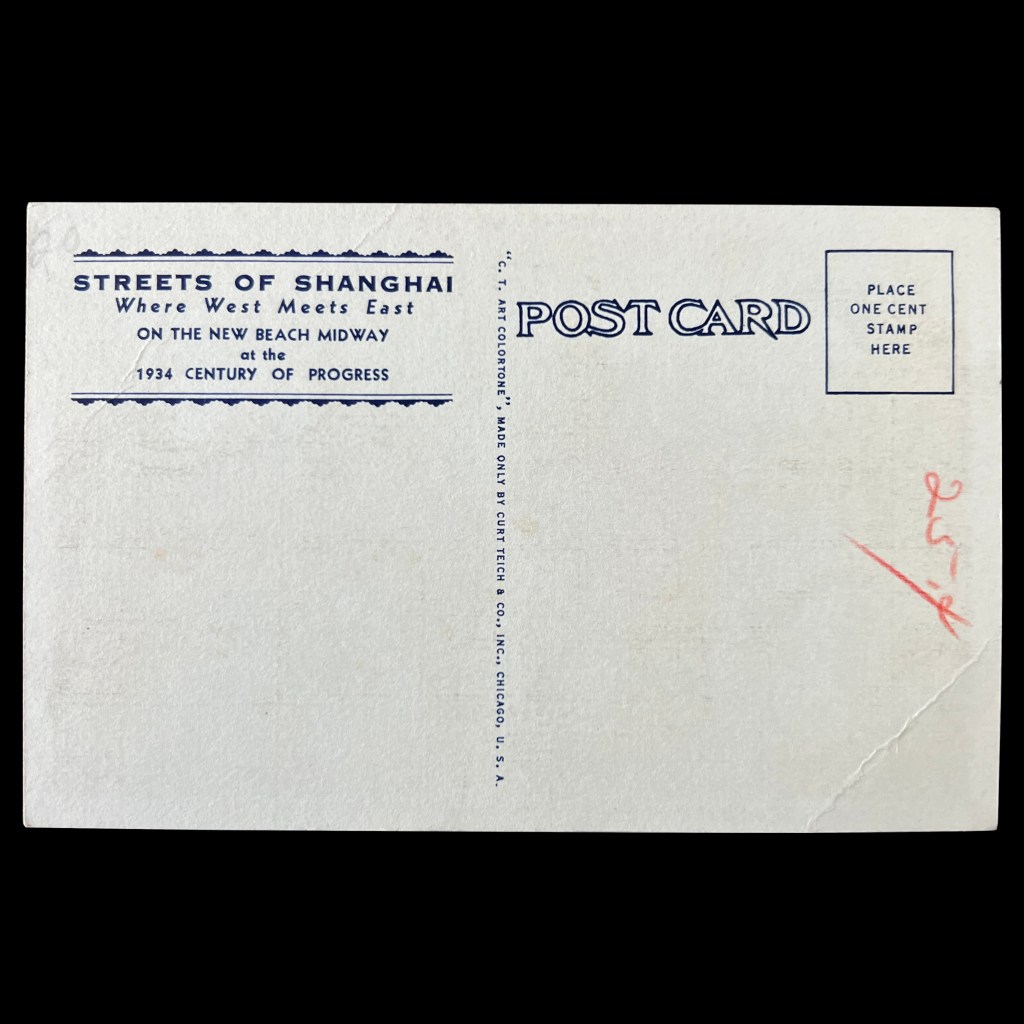
Picture postcards were issued fifty years earlier for the famous 1893 fair in Chicago and, although past their prime, remained favorite, cheap souvenirs through the Depression. Chicago-based Curt Teich was critical for the development of the vibrantly colored “linen” postcards of the 1930s.

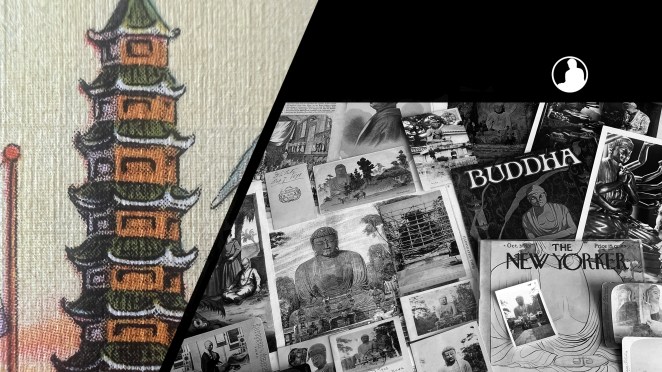
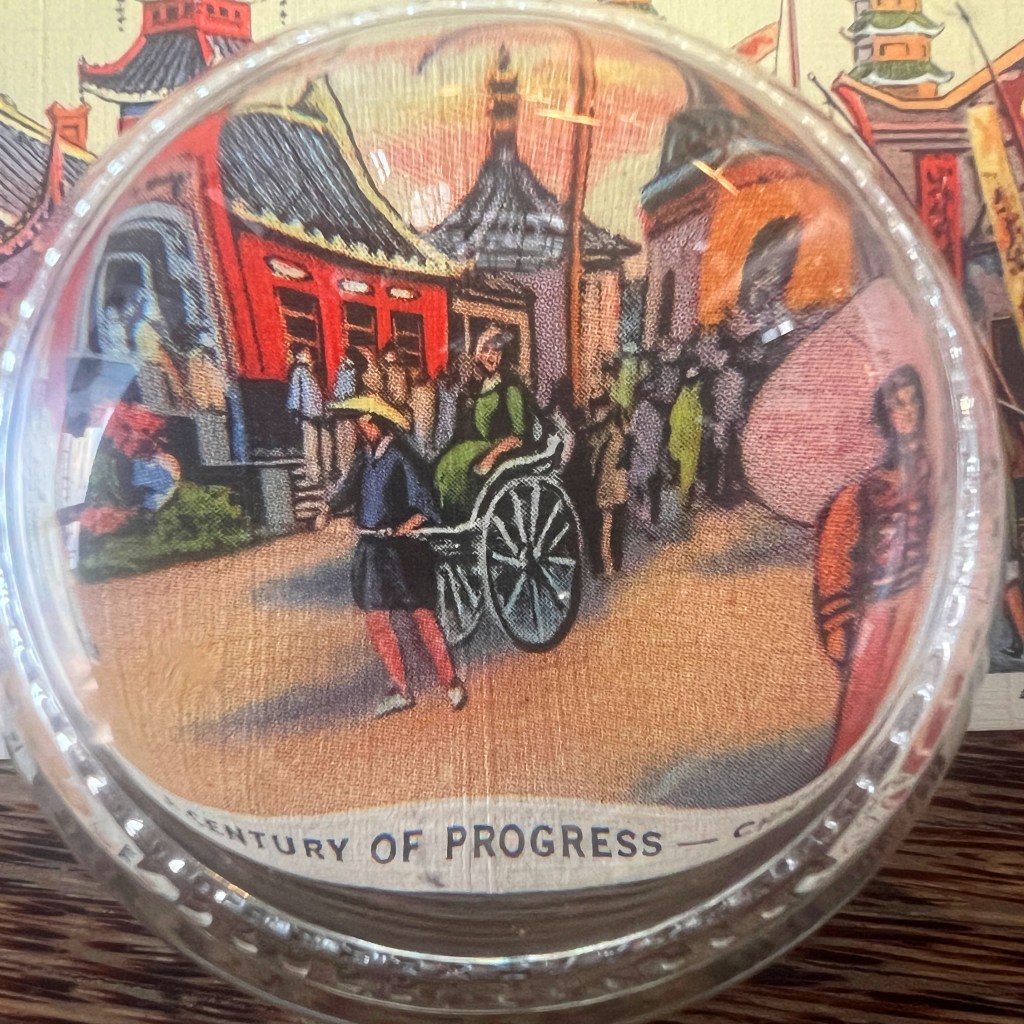
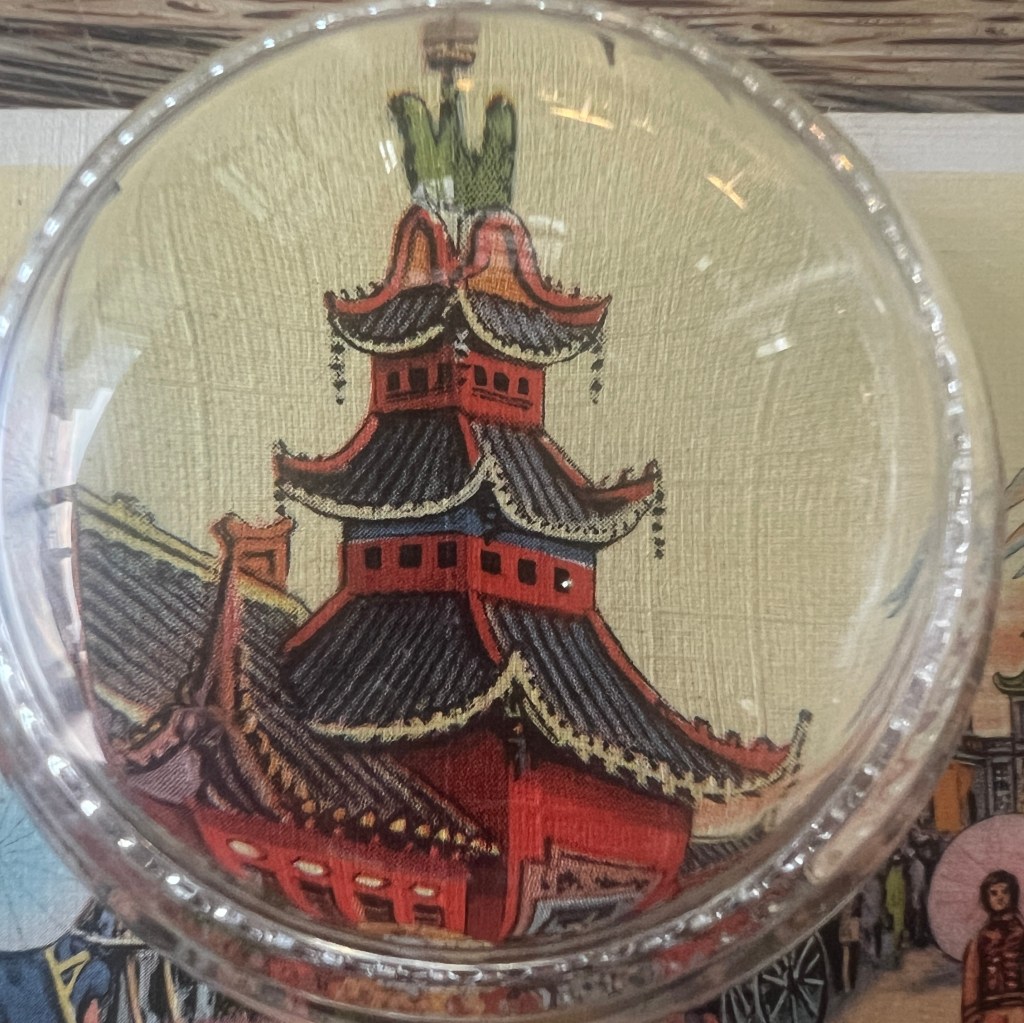
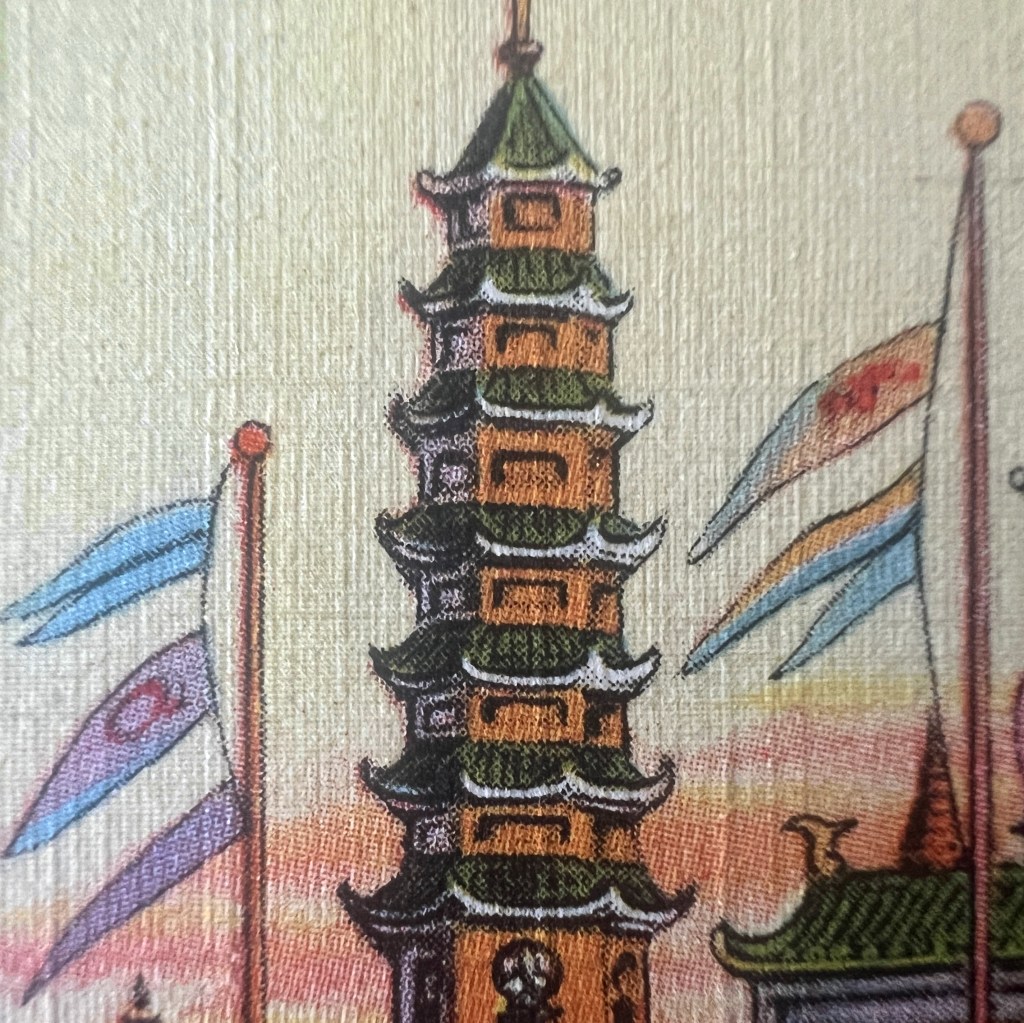
As an amusement concession with an extra admission cost, the Streets of Shanghai embraced stereotypes to drum up interest and recreate the “mysteries of a Chinese port.” The twin eight-story pagodas at the main gate were well-developed visual icons of the Orientalist Far East.

Some sources claim an interior building was a Buddhist Arhat Temple, while others claim it was a temple to Confucius. Notably, a new private museum opened in Chicago’s Chinatown to draw fair visitors to the area, also displaying elements of China’s Buddhist heritage (see postcard here: https://tinyurl.com/3wb7jfvu).

The Streets of Shangahi housed a large Chinese restaurant, an operating noodle factory, and many shops selling silks, bronzes, and porcelains. Advertised as “Where West Meets East,” the concession created a commercial fantasy land for the Century of Progress.


The Buddhas in the West Material Archive is a digital scholarship project that catalogues artifacts depicting Buddhist material culture for Western audiences. It’s comprised of prints, photos, and an assortment of ephemera and other objects. For a brief introduction to this archive, visit the main Buddhas in the West project page.


For Related Buddhas in the West Posts Featuring Chicago:


For the Most Recent Buddhas in the West Posts:


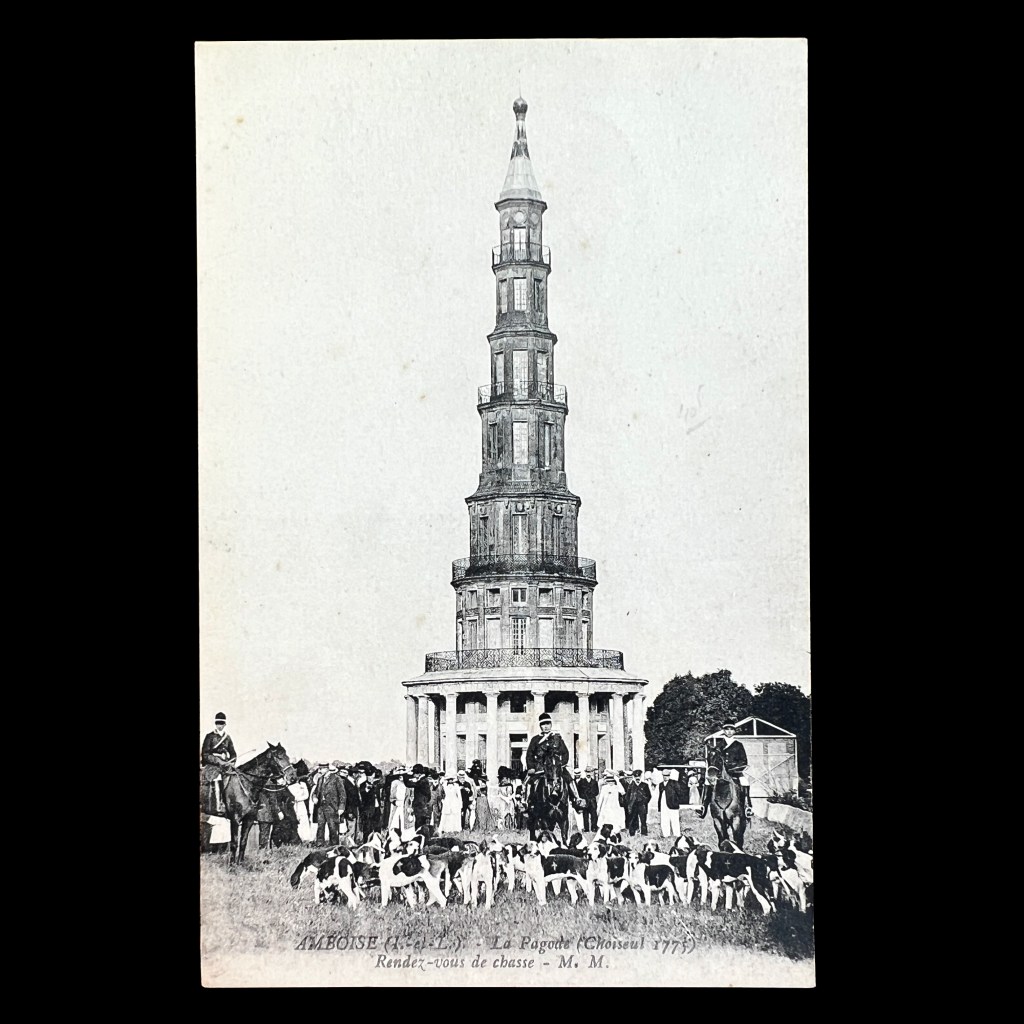
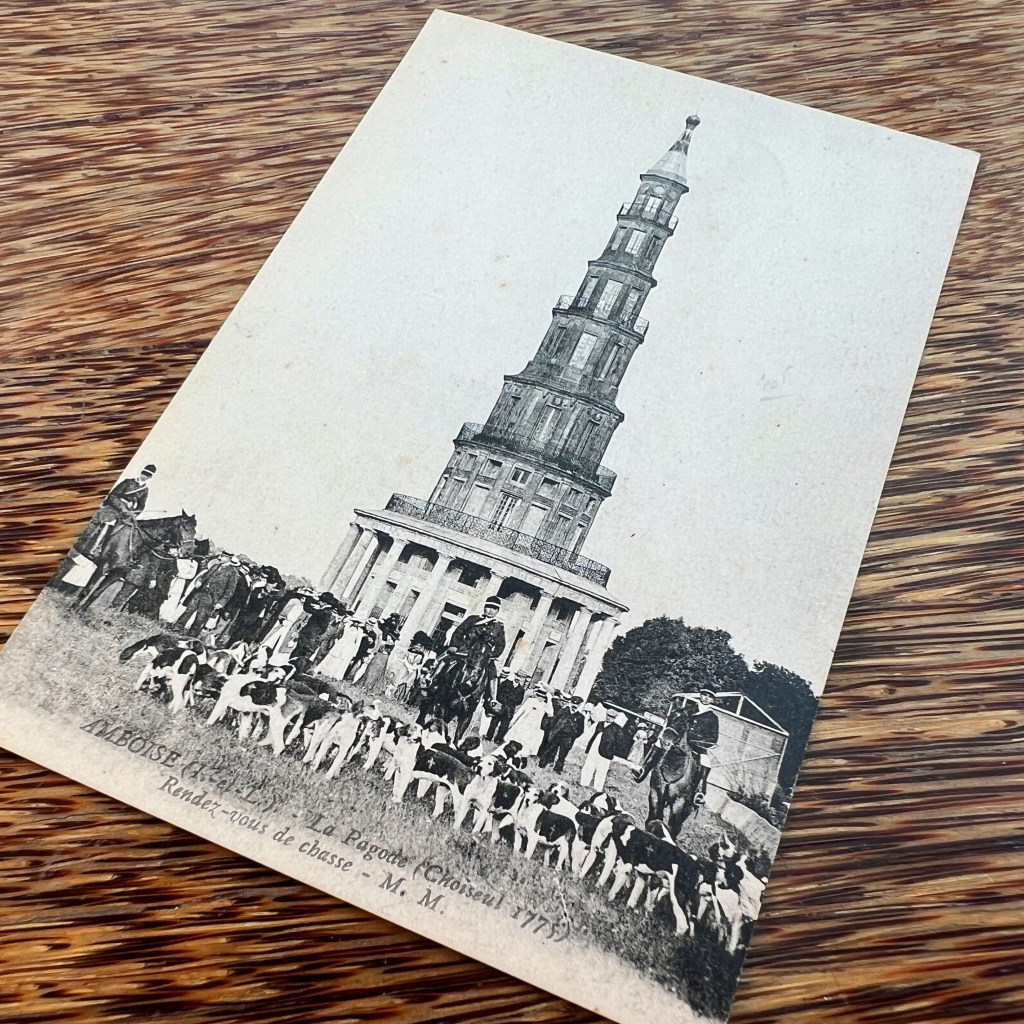
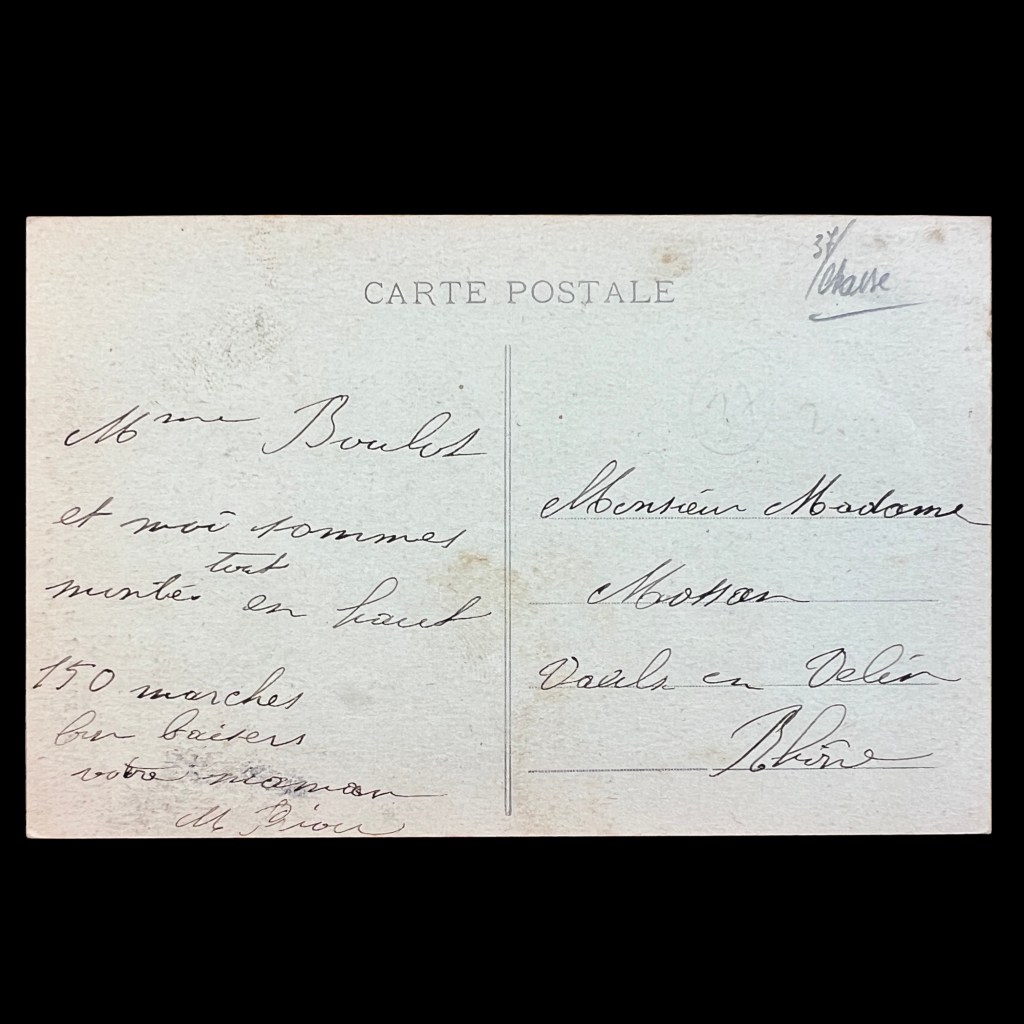
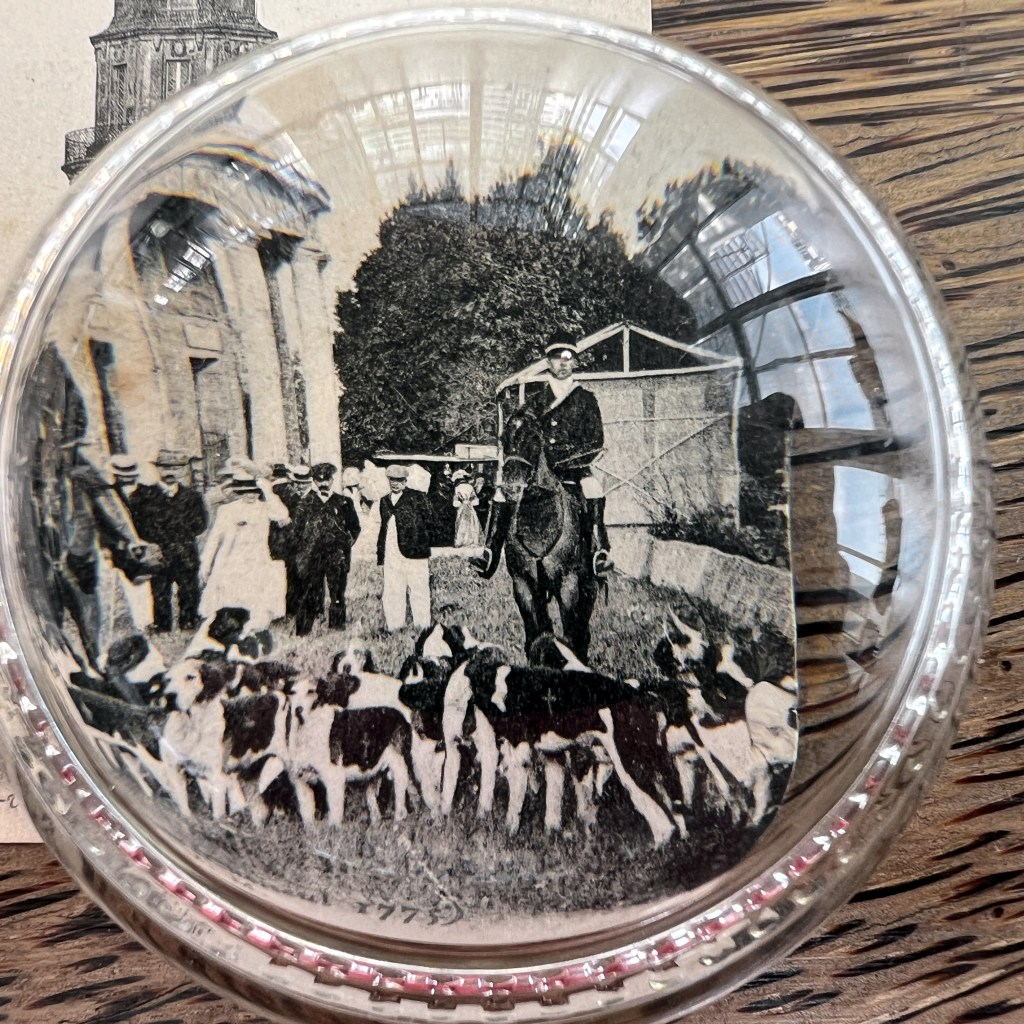
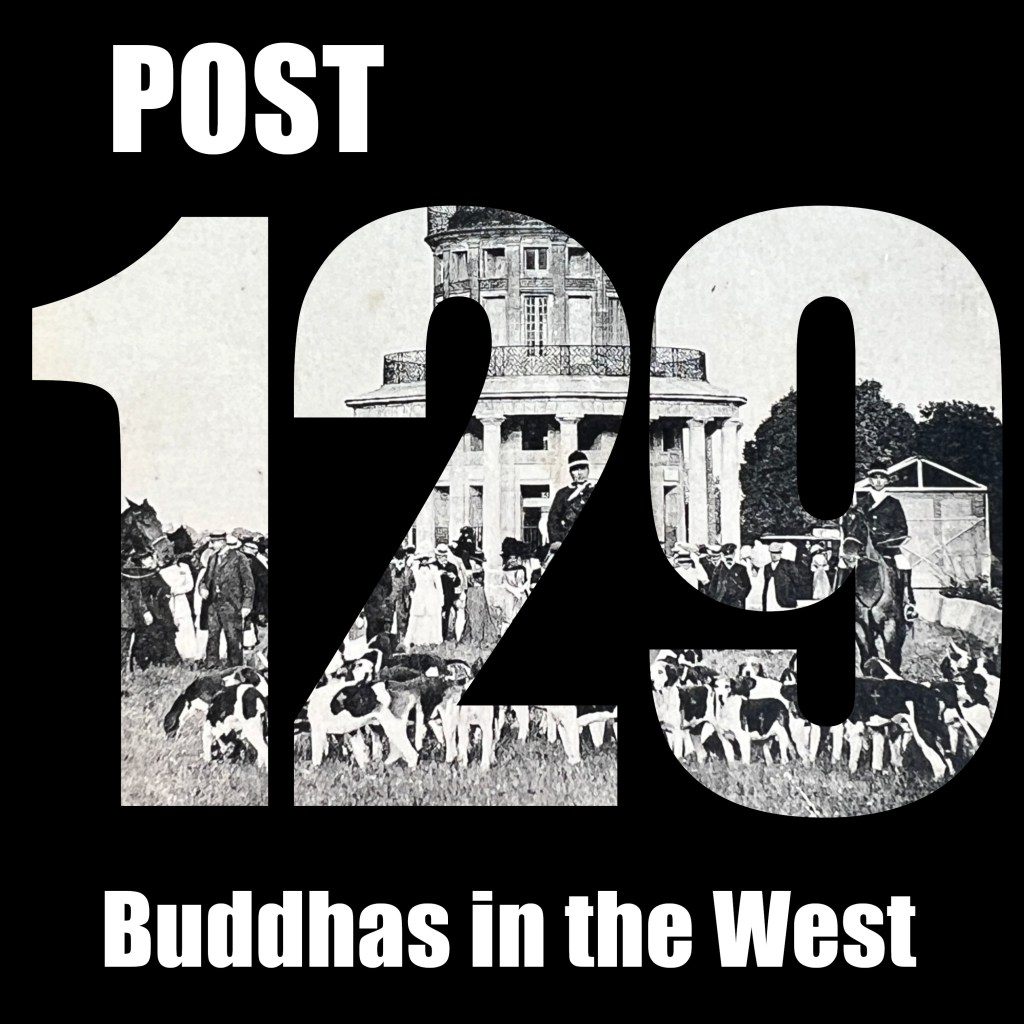
Postcard of Hunting Party at Chanteloup Pagoda

For all the new Buddhas in the West posts
follow us on Bluesky & Instagram


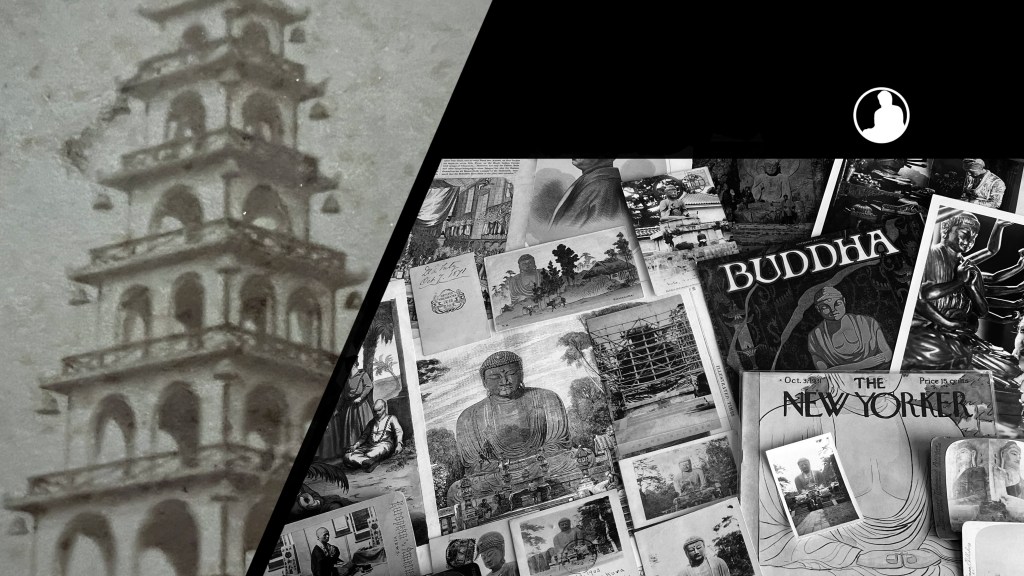
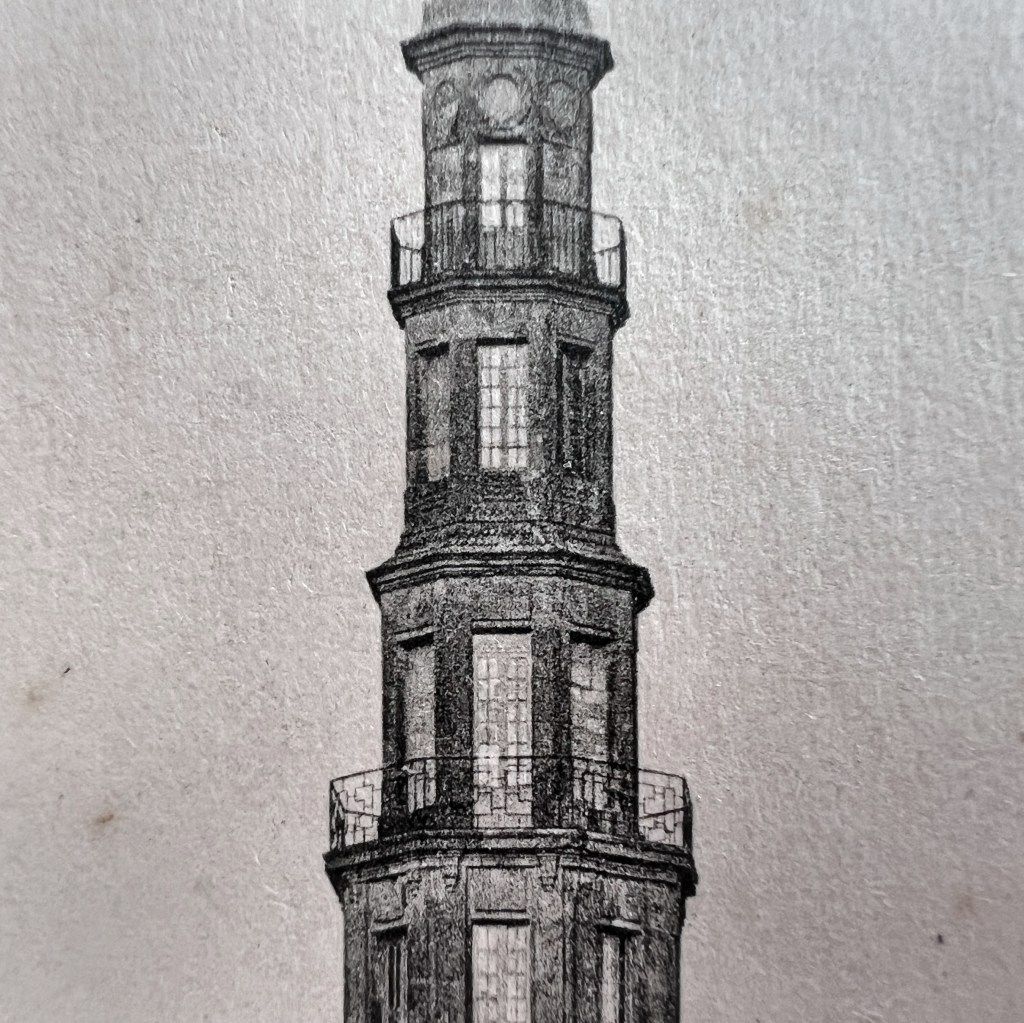
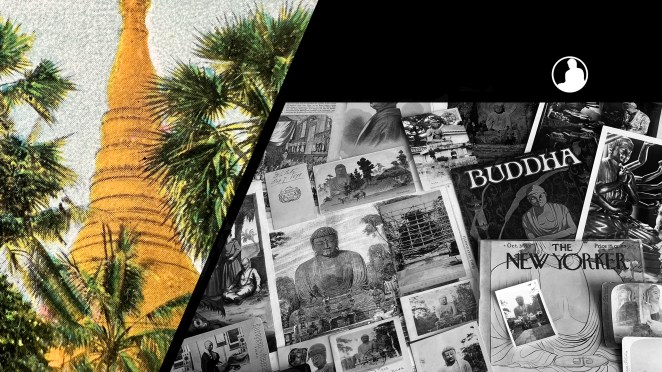
Sitting on the south bank of the river Loire, construction finished at the Château de Chanteloup in 1778 on an imposing new edifice, a seven-story Chinese-style pagoda. Built by a once-exiled French army officer, the pagoda at Chanteloup remains one of the few remnants of the palace.

Commissioned by the Duke of Choiseul, the pagoda stands 44 meters and was a focal point on the grounds, directly visible from the duke’s grand salon. One inspiration for the tower was the Porcelain Pagoda of Nanjing, which had been seen in illustrated European books of China since the 1660s.

A more direct predecessor was a pagoda design illustrated in William Chambers’ Designs of Chinese Buildings from 1757. Chambers’ sketch also inspired the famous pagoda at Kew Gardens outside London, which was completed in 1762.

Designed by Louis-Denis Le Camus, the pagoda at Chanteloup is a combination of Chinese and Greco-Roman architectural forms. The structures is supported by two round classical stories, including sixteen baseless Doric columns on the ground floor.

As noted by Kristel Smentek, the pagoda was not a mere garden ornament, but a sign of political protest against the court who exiled the duke. For more on Chanteloup’s pagoda see Smentek’s “A Prospect of China in Eighteenth-Century France: The Pagoda at Chanteloup” (2019).


The Buddhas in the West Material Archive is a digital scholarship project that catalogues artifacts depicting Buddhist material culture for Western audiences. It’s comprised of prints, photos, and an assortment of ephemera and other objects. For a brief introduction to this archive, visit the main Buddhas in the West project page.


For Related Buddhas in the West Posts Featuring Pagodas:

For the Most Recent Buddhas in the West Posts:

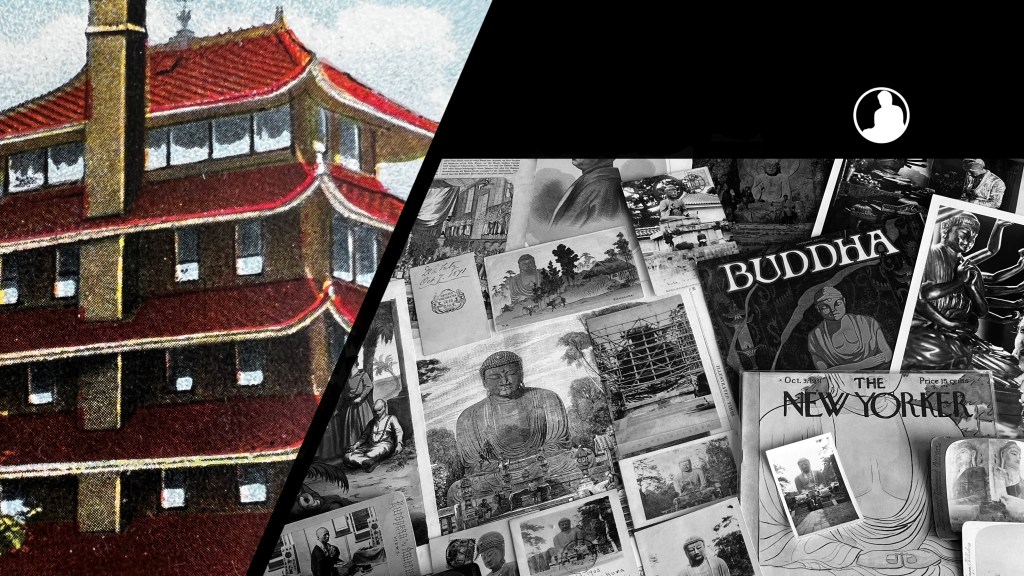
Bosselman’s Mt. Penn Pagoda Postcard

For all the new Buddhas in the West posts
follow us on Bluesky & Instagram


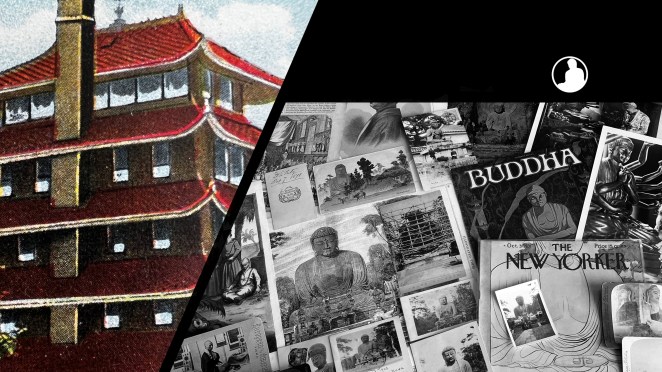
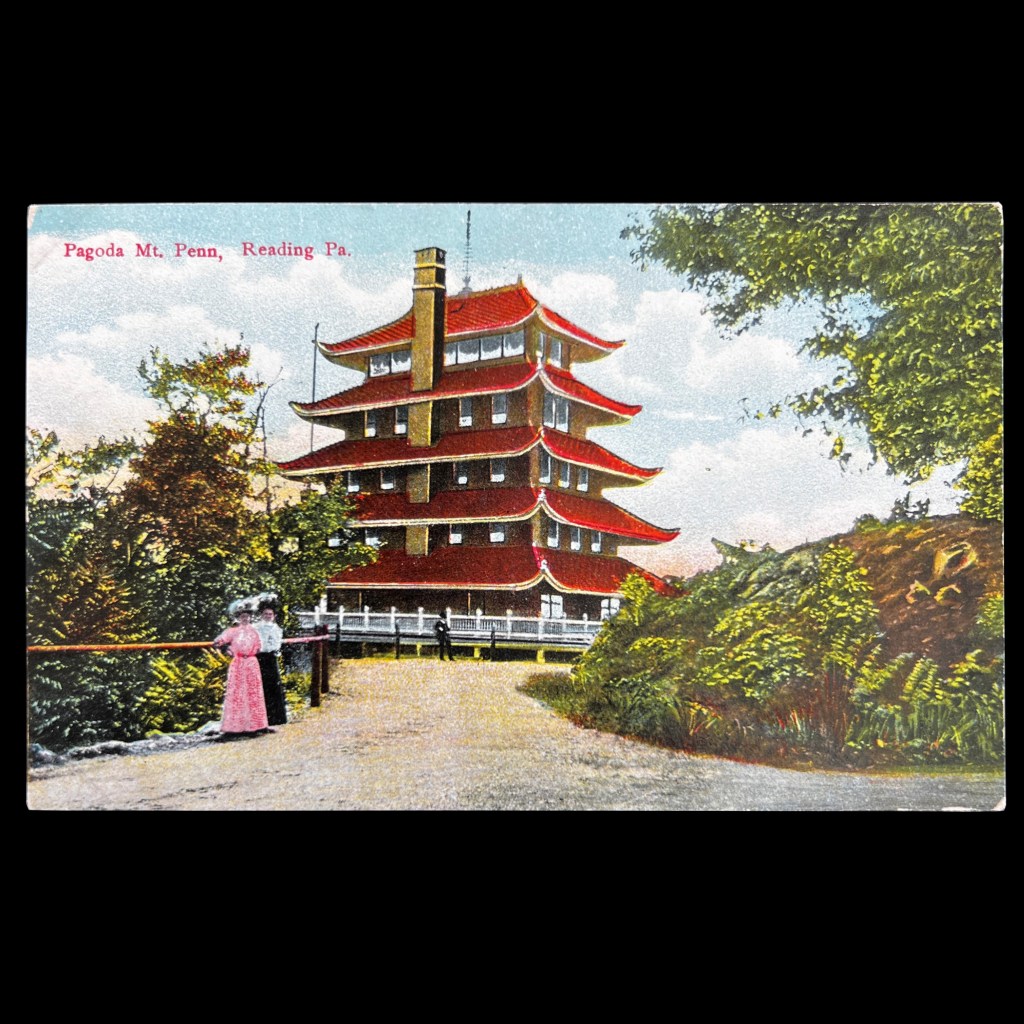
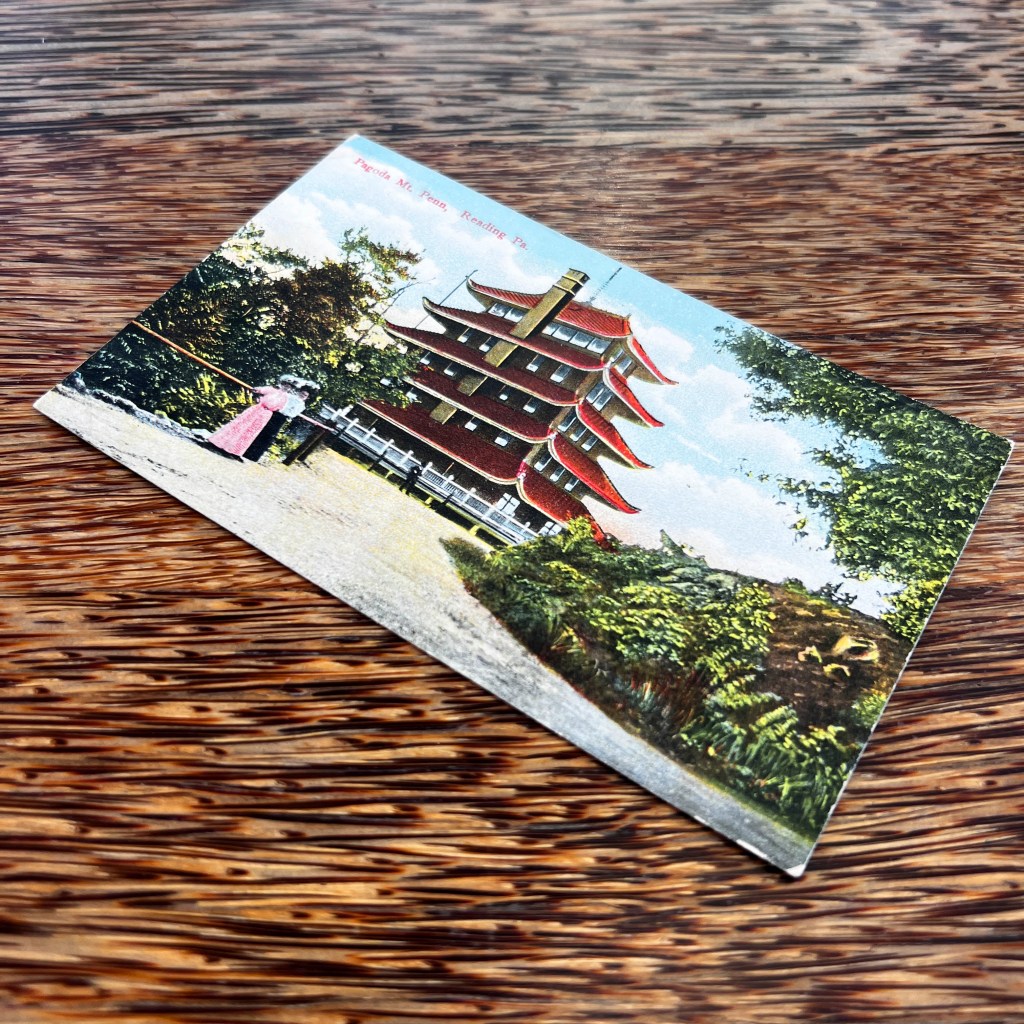
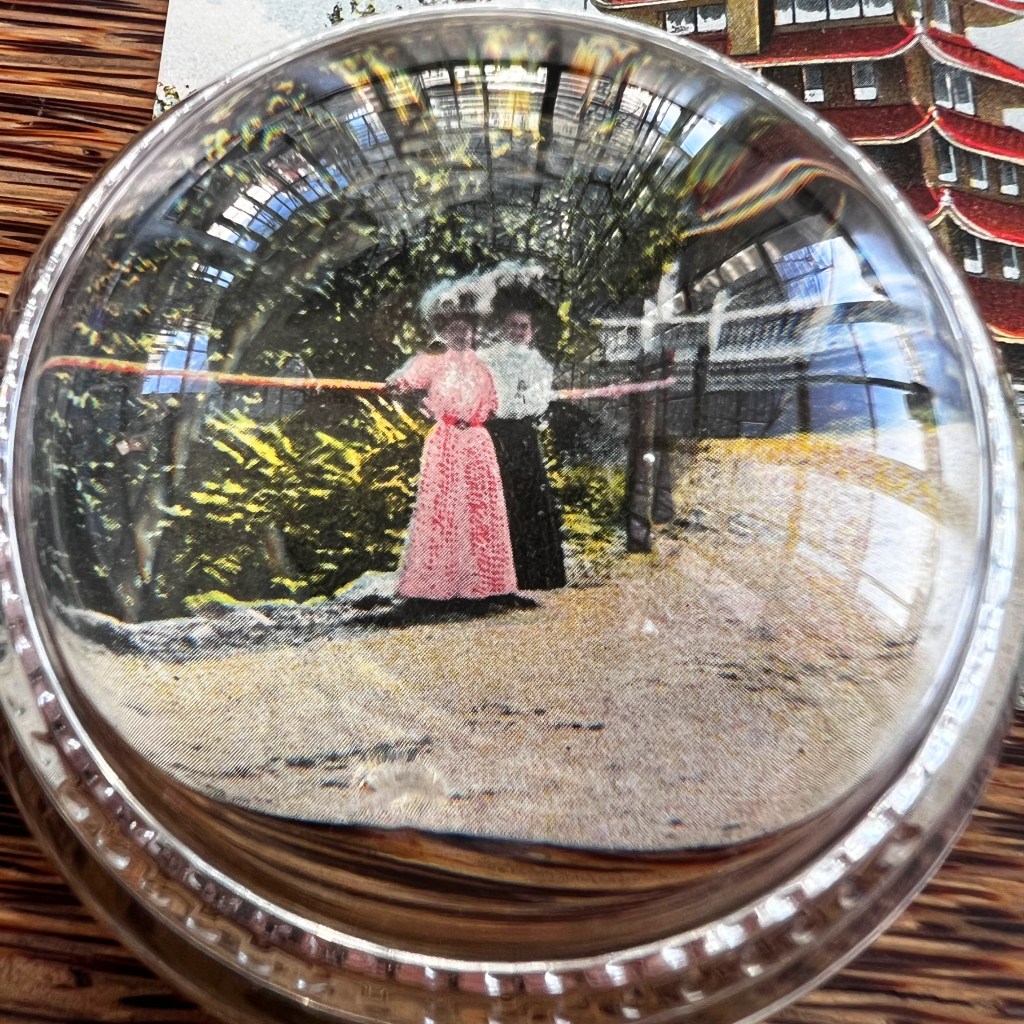
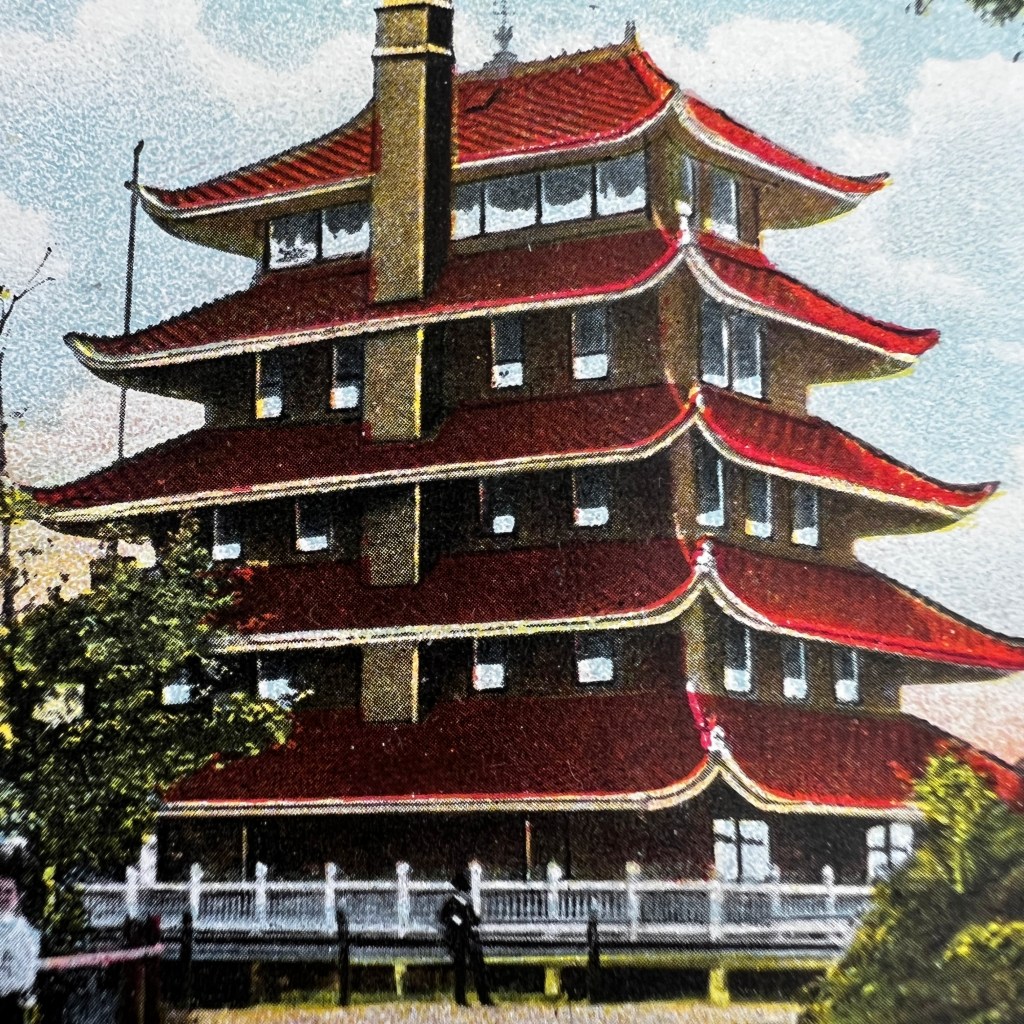
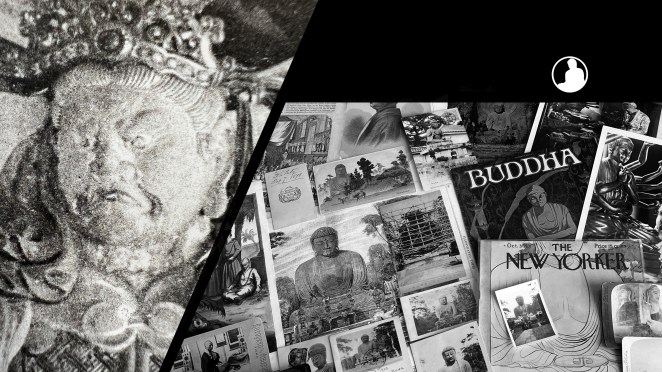
Sitting atop the southern end of Mount Penn, a seven-story wooden pagoda has overlooked Reading, Pennsylvania, since 1908. Built as part of a luxury resort, the building and land were donated to the city in 1911, making this Buddhist-inspired building a symbol of the city.

William Abbott Witman decided to construct a “Japanese pagoda” in an attempt to cover the scars of his quarrying operation on Mount Penn. After failing to obtain a liquor license, the plan to build a full resort was abandoned and the pagoda became the property of the residents of Reading.

One story claims the pagoda was modeled on a photograph (others say a postcard) of the Nagoya Castle in Japan; another yet claims it was based on an amusement park attraction in Coney Island (see Coney Island Postcard here: https://tinyurl.com/m3vshkz4).

Once opened to the public, the building interior showcased murals of Asia and articles from Japan, including a large Japanese temple bell Witman purchased and had shipped through the Suez Canal. While many of the artifacts are now lost, the temple bell still remains an attraction.

For a brief history of this site, see Michelle Nicholl Lynch’s “The Pagoda,” The Historical Review of Berks County (1995), viewable here: https://berkshistory.org/article/the-pagoda/.


The Buddhas in the West Material Archive is a digital scholarship project that catalogues artifacts depicting Buddhist material culture for Western audiences. It’s comprised of prints, photos, and an assortment of ephemera and other objects. For a brief introduction to this archive, visit the main Buddhas in the West project page.


For Related Buddhas in the West Posts Featuring the United States:


For the Most Recent Buddhas in the West Posts:

Guérin-Boutron’s Mysteries of Japan Advertising Card

For all the new Buddhas in the West posts
follow us on Bluesky & Instagram


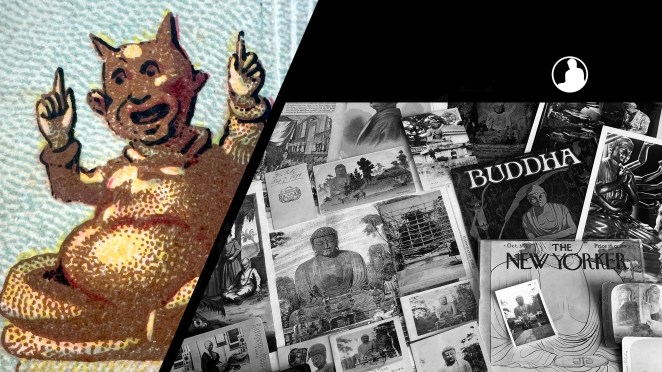
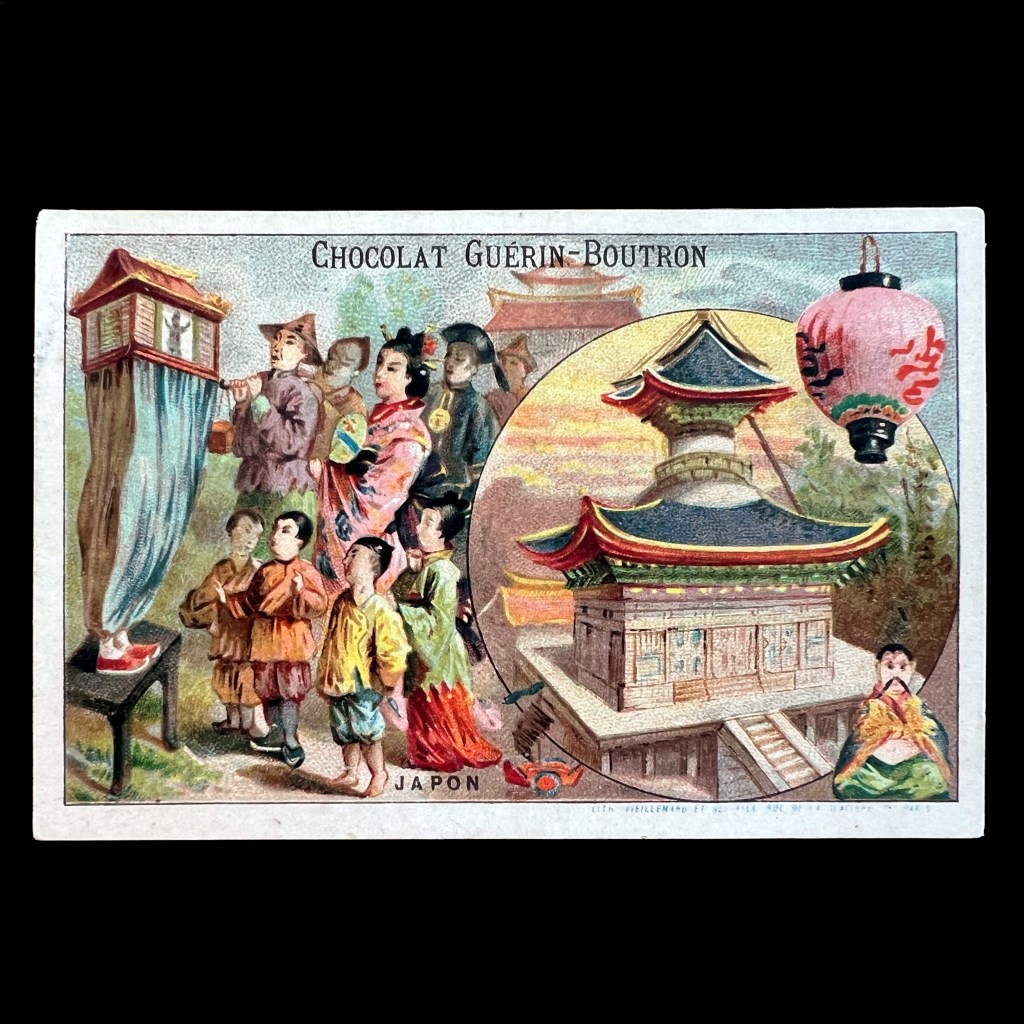
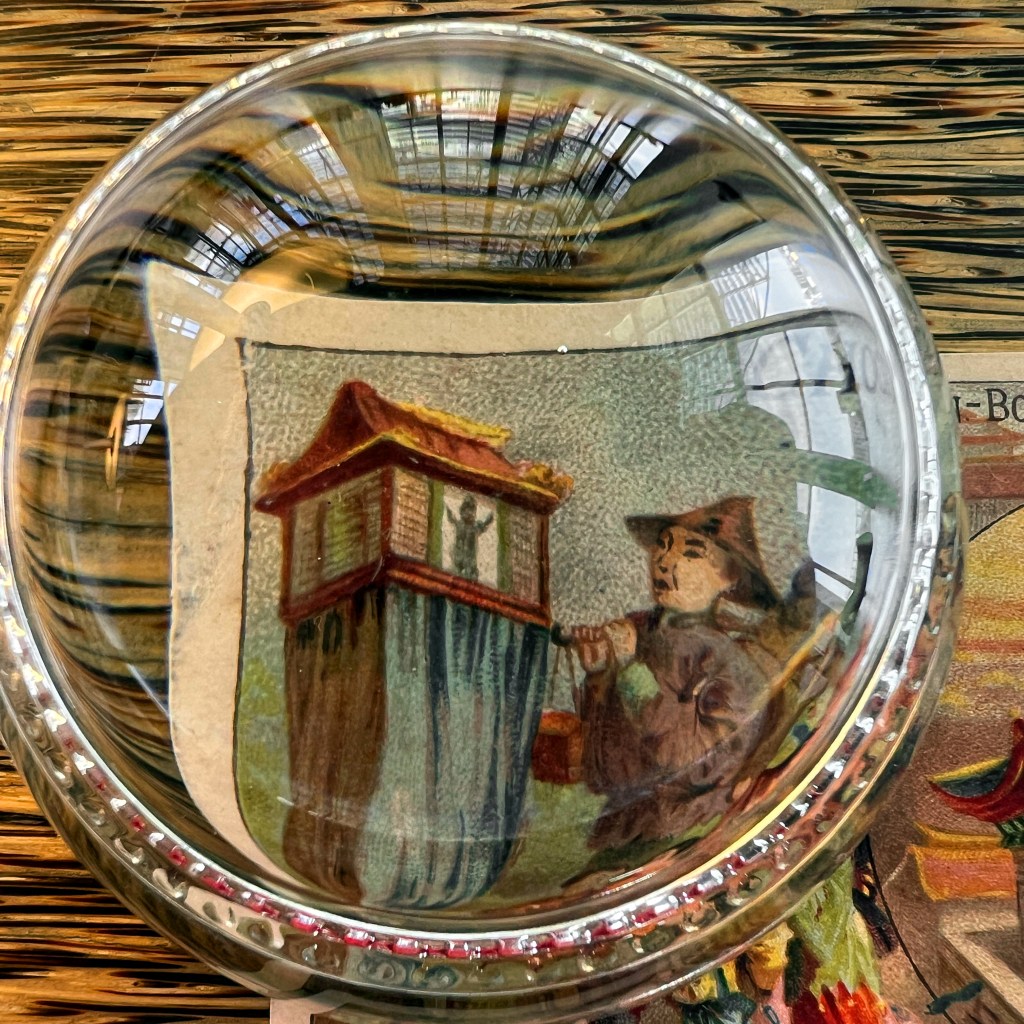
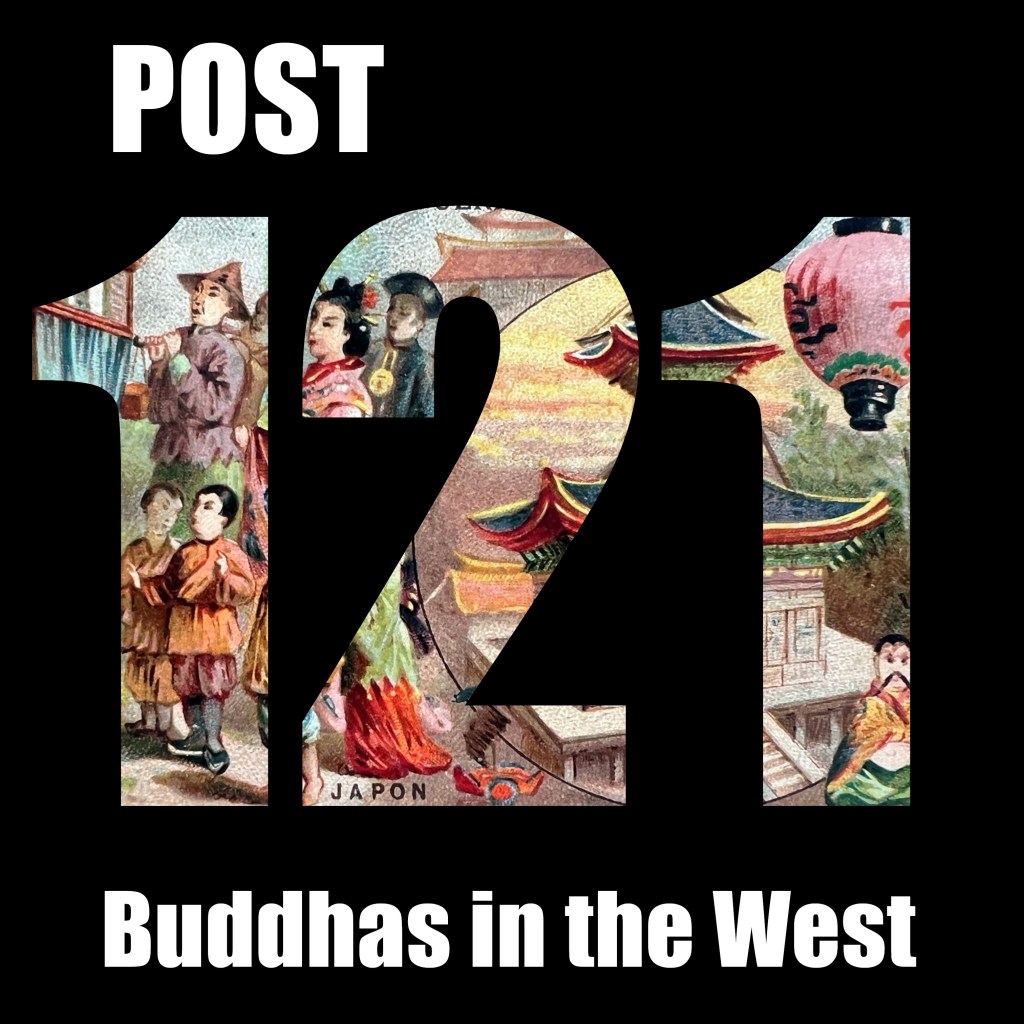
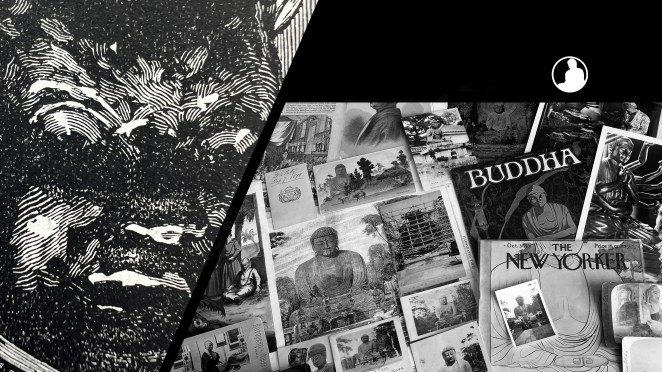
By the turn of the 20th century advertising cards were sought-after collectables, often pasted alongside other printed ephemera inside scrap books. The main visual language was the stereotype, and places like Japan were depicted as a mélange of mystery, pagodas, and odd idols.

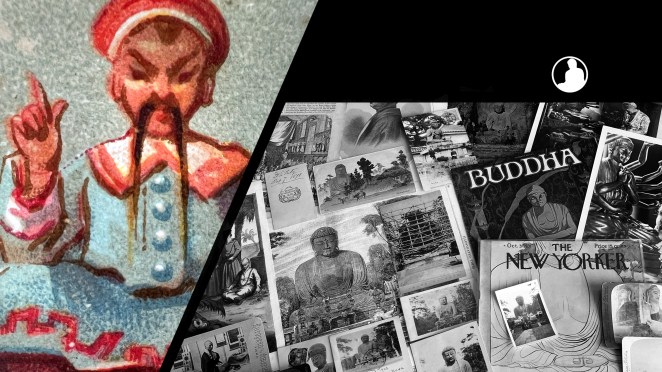
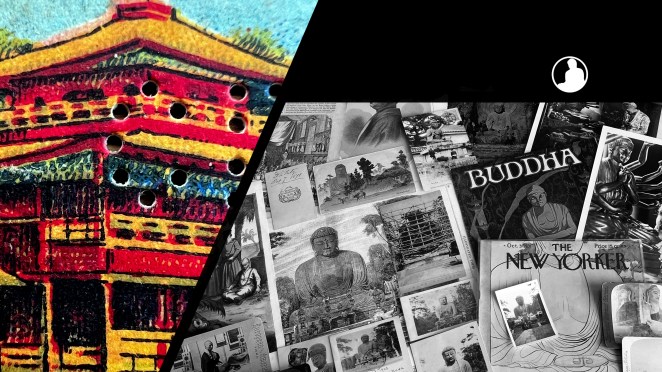
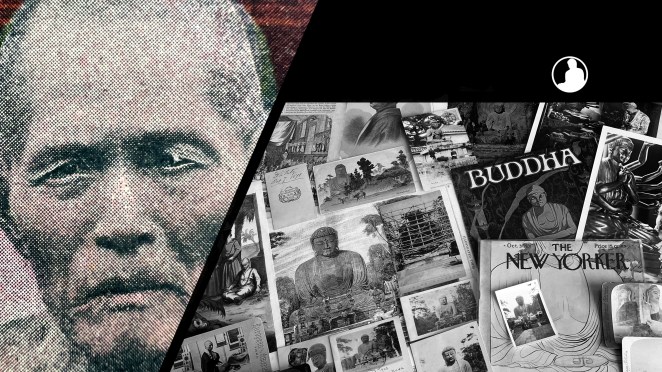
The mystery figure on the left edge is a Chinese puppeteer; distinctions between China and Japan often dissolved under the umbrella of “the Orient.” Such imagery had circulated in Europe since the late 18th century through southern Chinese export paintings depicting popular Chinese occupations.

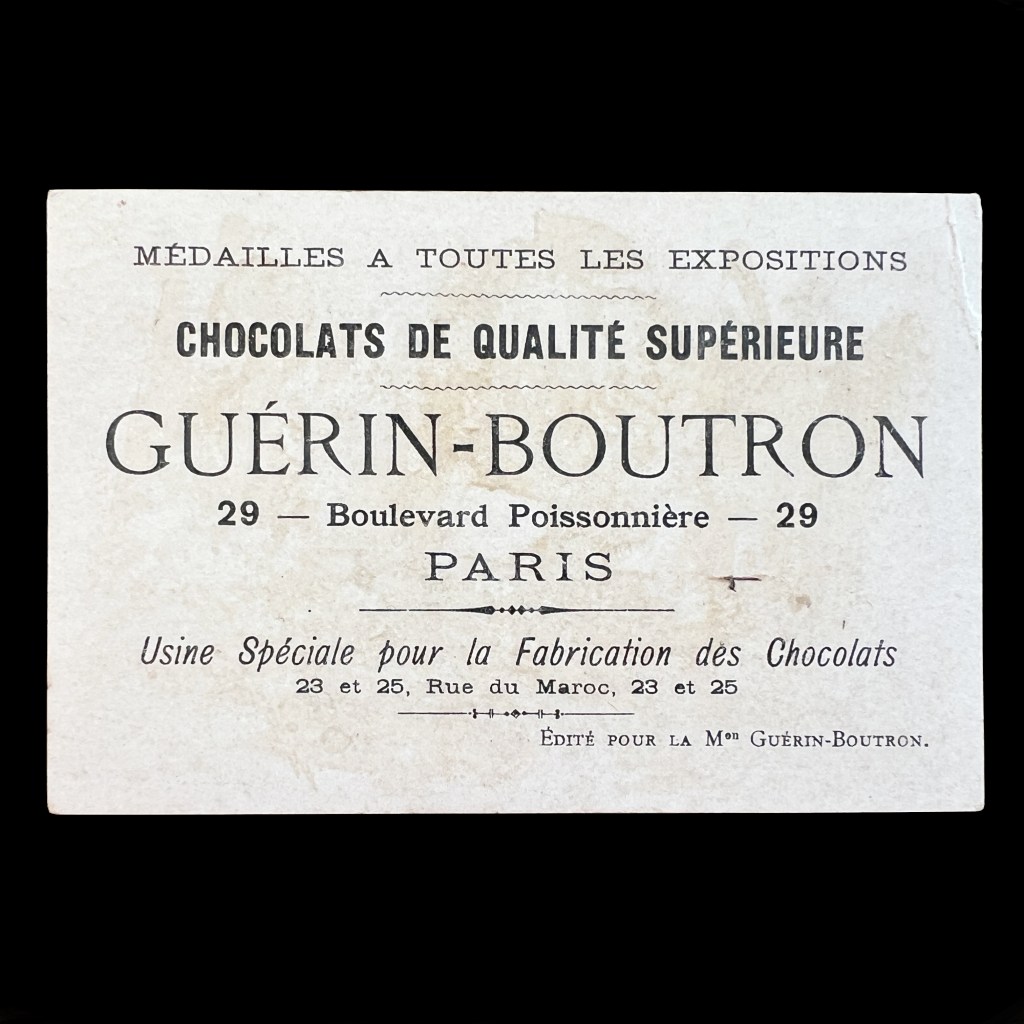
Guérin-Boutron was a luxury Parisian chocolatier and early adopter of chromolithographed trade cards, creating this set of worldwide nations and cities in the early 1900s.The printer, Vieillemard Fils & Cie, was a premier lithographer for major French trade card producers of the era.

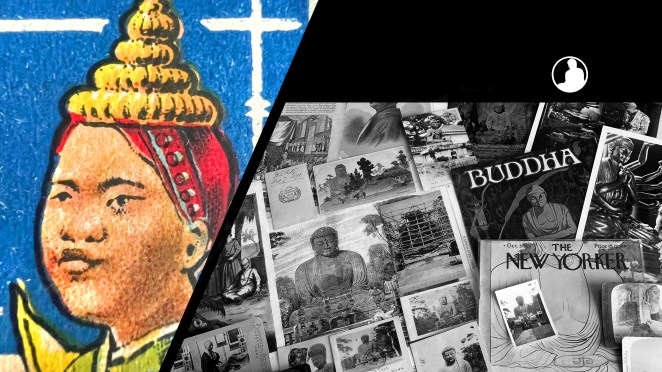
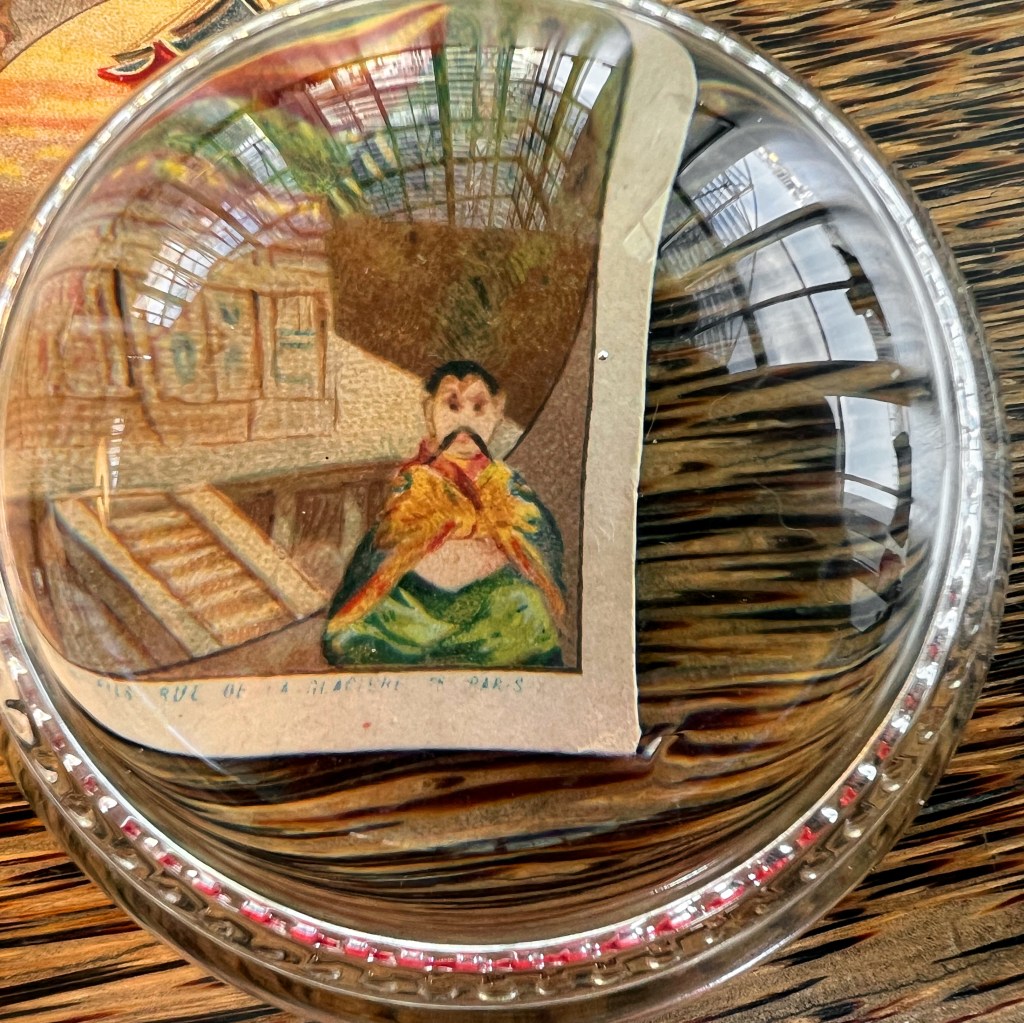
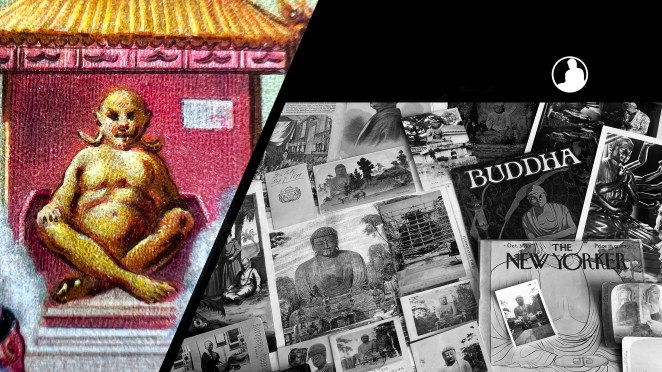
The figure in the lower right corner is a crude rendering of a seated buddha. Pronounced ethnic facial features and flowing silk garments were sometimes used to signify “authentic” Asian religions iconography.

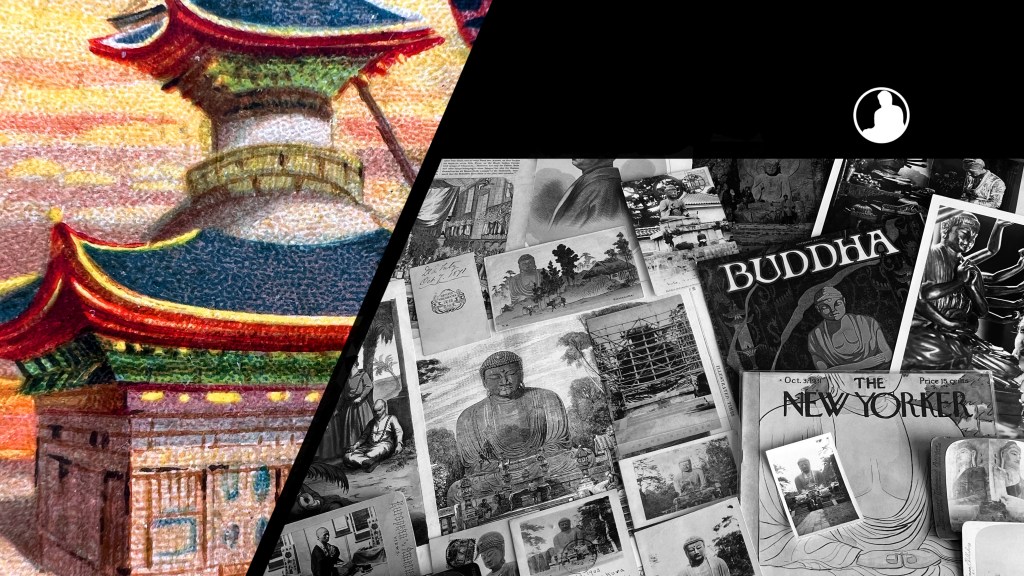
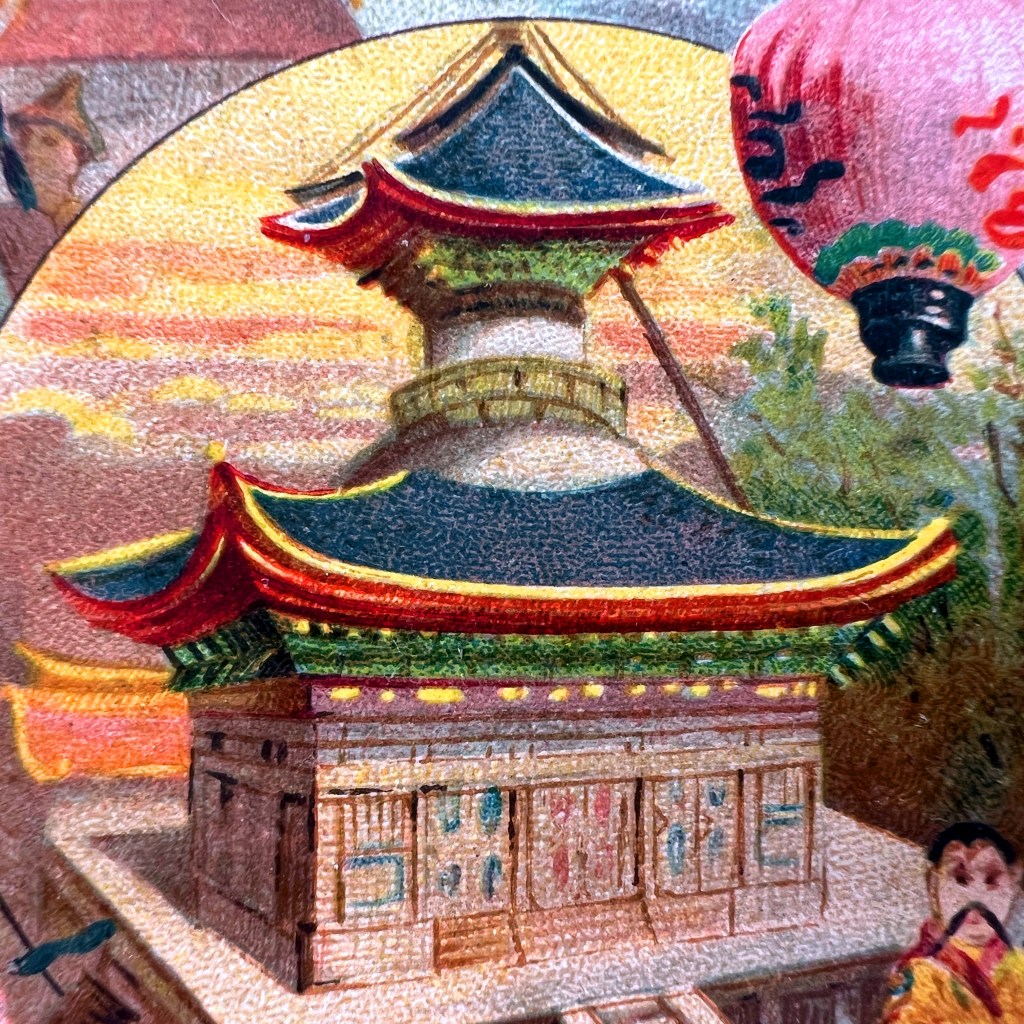
The circular insert depicts an uncommon two-story pagoda known as the Many Treasures Pagoda (tahōtō 多宝塔) described in the Lotus Sutra. This illustration shows the one built at Hachiman Shrine which was destroyed in 1870, several decades before this card was issued.


The Buddhas in the West Material Archive is a digital scholarship project that catalogues artifacts depicting Buddhist material culture for Western audiences. It’s comprised of prints, photos, and an assortment of ephemera and other objects. For a brief introduction to this archive, visit the main Buddhas in the West project page.


For Related Buddhas in the West Posts Featuring Lithography:


For the Most Recent Buddhas in the West Posts:

Philip Klier’s “Scene on the Shwe Dagon Pagoda” Postcard

For all the new Buddhas in the West posts
follow us on Bluesky & Instagram


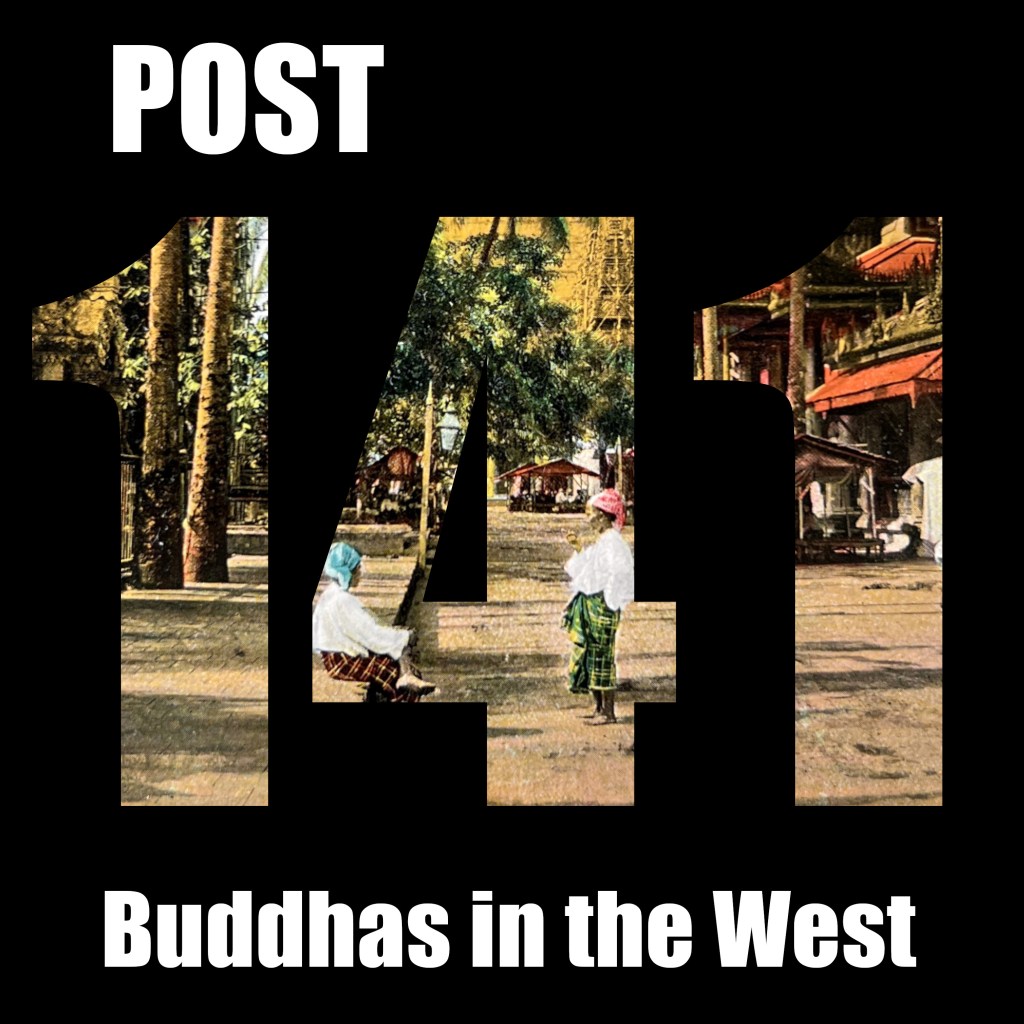
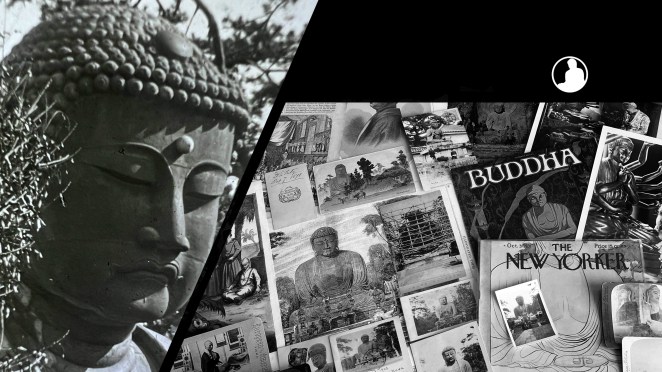
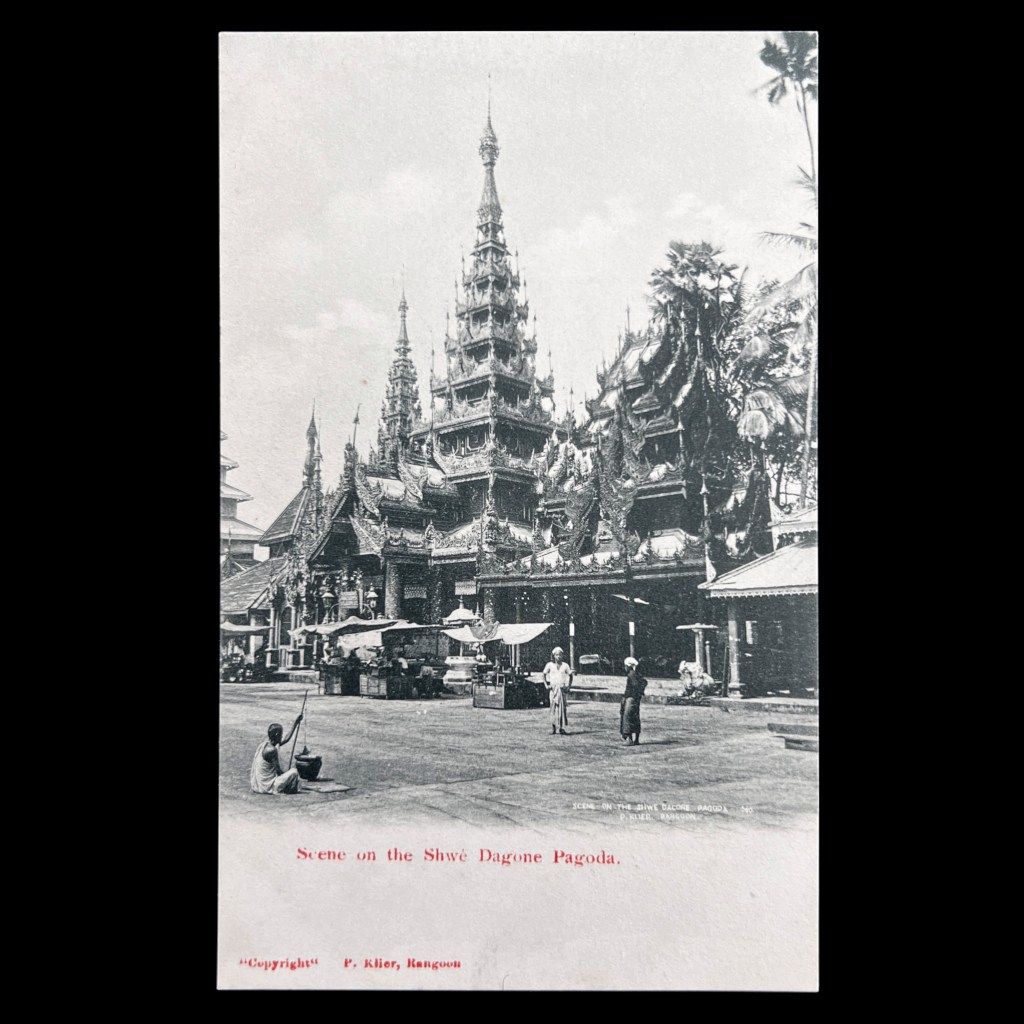
Shwedagon Pagoda is the most sacred Buddhist pilgrimage site in Myanmar, thought to enshrine eight hair strands of the Buddha. Philip Klier’s photo, taken in the 1880s, shows the activities of both monks and merchants on the main platform in front of the pagoda.

Built atop Singutarra Hill in the city of Yangon, four main entrance pavilions on the cardinal directions lead to a spacious open court where vendors sold ritual supplies. Small kiosks with shade coverings can be seen on the far side of the courtyard here.

When German photographer Philip Klier relocated to the British capital at Yangon in c. 1880, he opened a studio just south of Shwedagon Pagoda. By the turn of the century he started selling postcards of his photographs, a media popular among foreign tourists visiting the site.

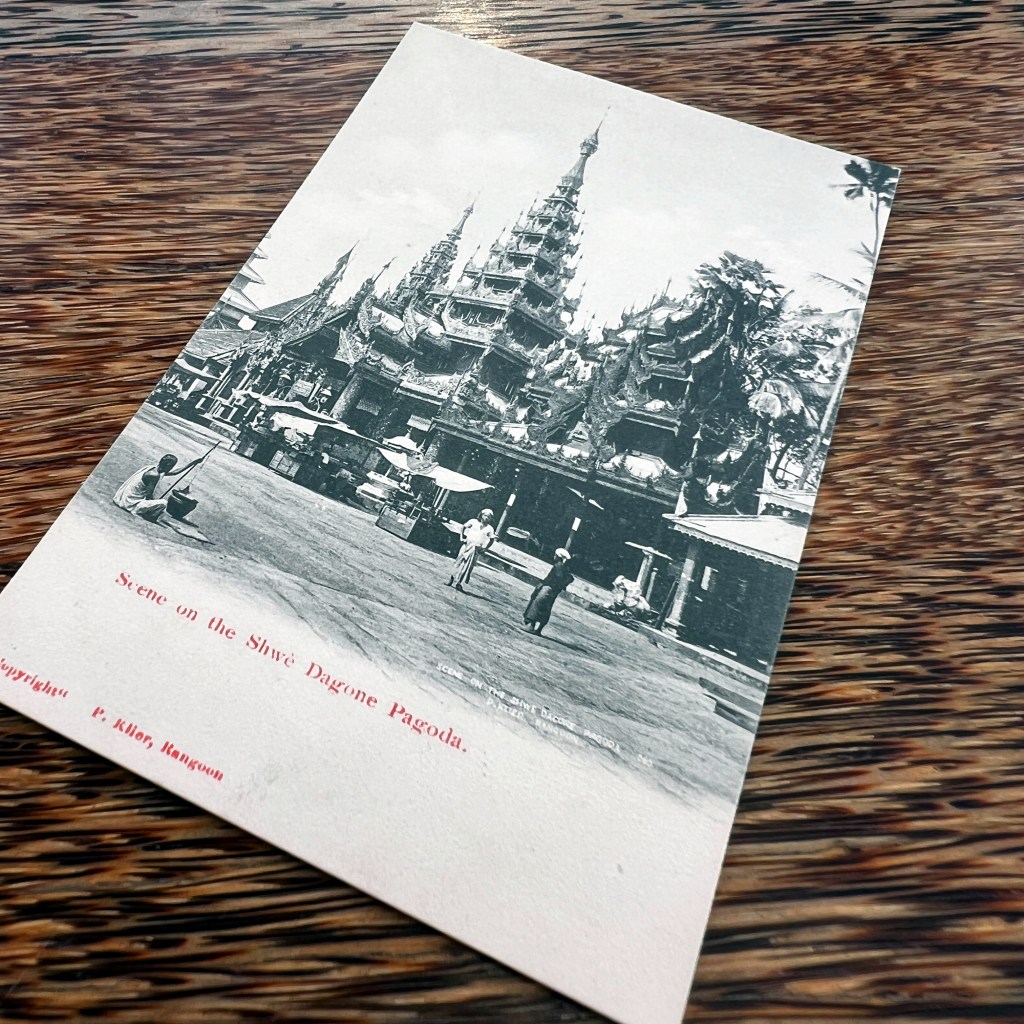
Klier’s name is inscribed on the negative with the title of his photo: “Scene on the Shwe Dagon Pagoda.” Surprisingly, the Shwedagon Pagoda is not actually in the frame of Klier’s photograph, it sits just off to the left.

In the foreground we see a Theravada monk sitting on the ground with an alms bowl.

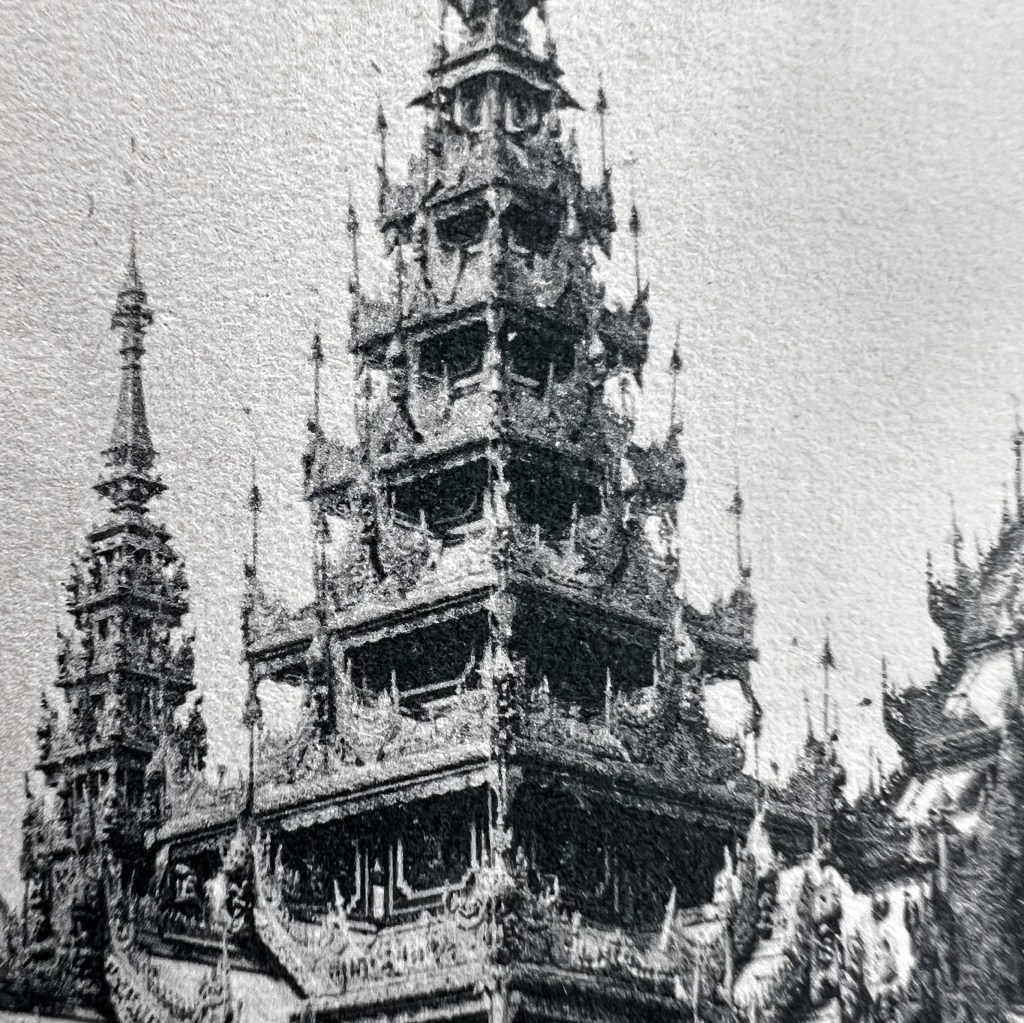
The distinctive building in the back is a seven-tiered pyatthat, characteristic of sacred Burmese architecture. For more of Klier’s photography, see the digitized collection at the National Gallery Singapore, viewable here: https://tinyurl.com/mtd9y72x.

Several of Montanus’ engravings were copied into later works on Japan, helping shape a visual lexicon for Buddhism into the 19th cent. The 1669 Dutch edition of Atlas Japannensis has been digitized by the National Library of the Netherlands, viewable here: tinyurl.com/5n6kstfy.


The Buddhas in the West Material Archive is a digital scholarship project that catalogues artifacts depicting Buddhist material culture for Western audiences. It’s comprised of prints, photos, and an assortment of ephemera and other objects. For a brief introduction to this archive, visit the main Buddhas in the West project page.


For Related Buddhas in the West Posts Featuring Myanmar / Burma:


For the Most Recent Buddhas in the West Posts:

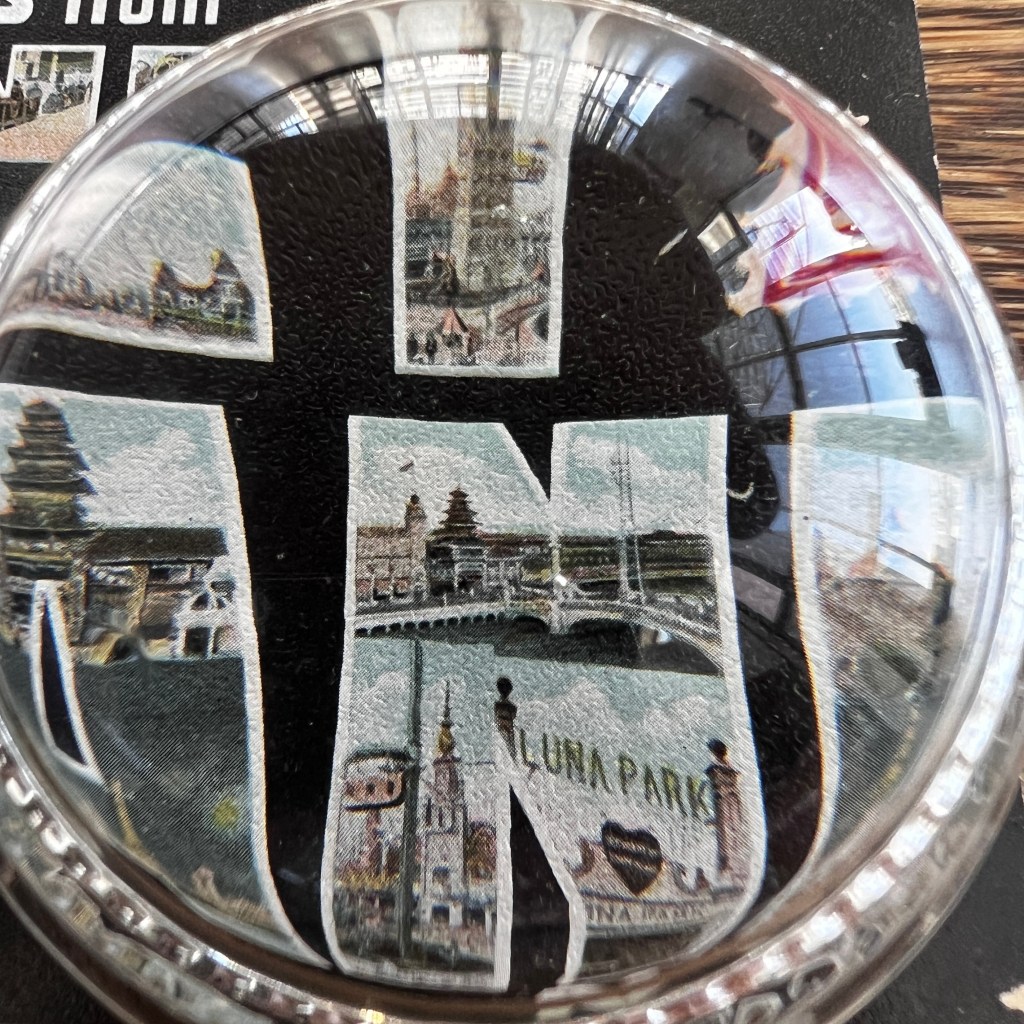
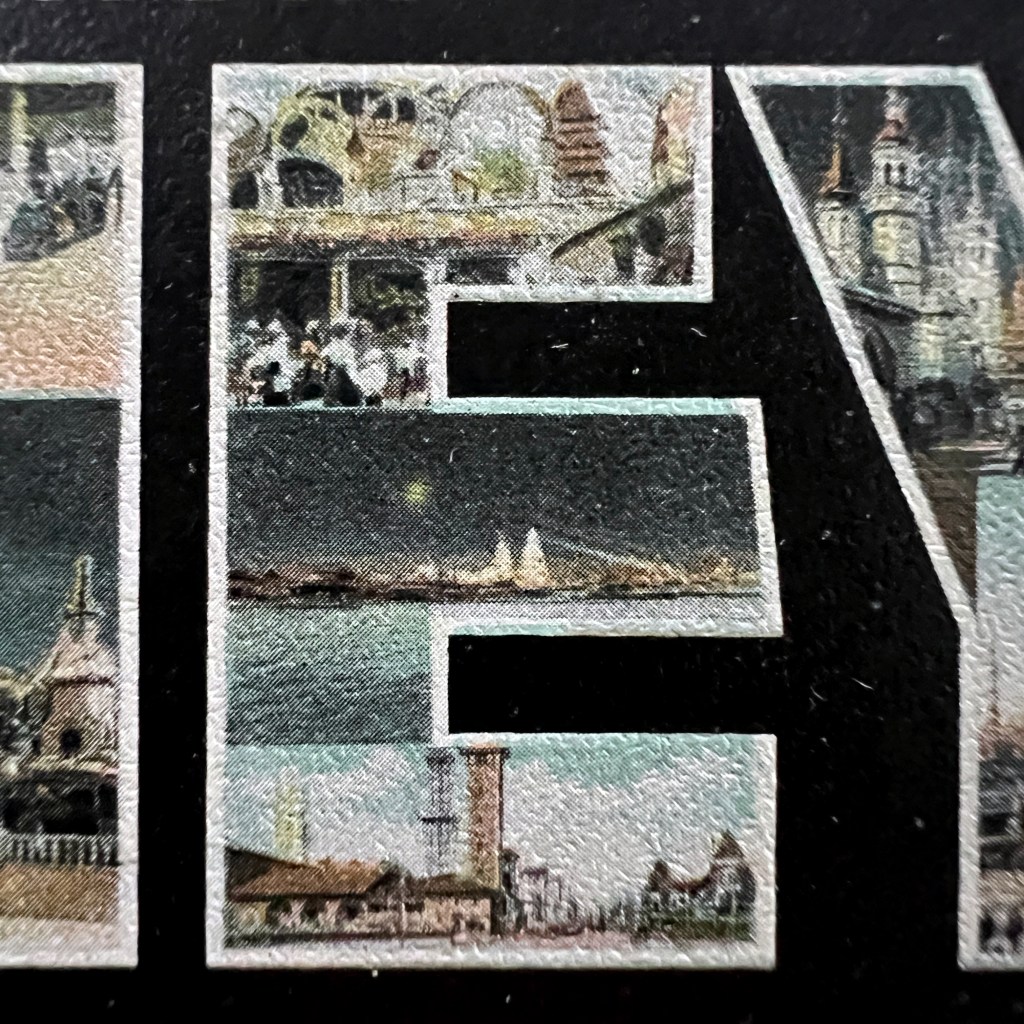
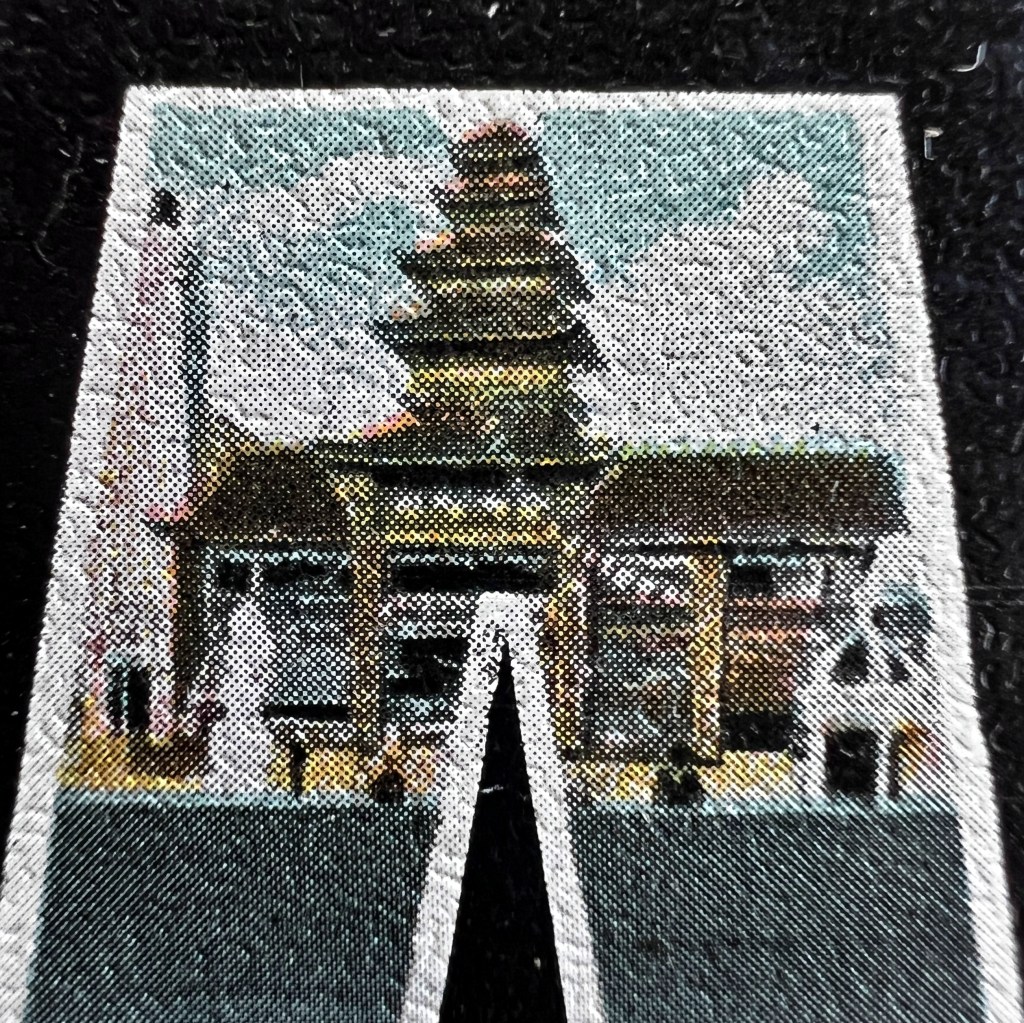
Dreamland’s Japanese Tea Garden Pagoda, “Greeting From Coney Island” Postcard

For all the new Buddhas in the West posts
follow us on Bluesky & Instagram


During the Golden Age of American amusement parks, New York’s Coney Island was king, sporting the trifecta of the Steeplechase, Dreamland, and Luna Park. Opening in May 1904, Dreamland advertised a “faithful reproduction of a Japanese temple,” attempting to pull customers away from its rivals.

The “temple” attraction was mostly bluster, but a two-story Japanese-style pavilion was built as a tea house, crowned by an additional four-level pagoda. Iconic in its own right, this pagoda is featured at least two times in this classic “Greetings from” postcard design.

Mailed from Brooklyn to Bavaria in 1912, this postcard was originally printed in Germany, the worldwide epicenter of postcard production previous to WWI. Note the stamp indicating the postage was affixed on the obverse; this allowed collectors to display the postcard in an album.

Based on World’s Fair amusement zones, the buildings at Dreamland each had their own architectural style to showcase their offerings: Canals of Venice, Coast through Switzerland, Destruction of Pompeii, etc. The pagoda’s distinctive features (seen in the “N”) identified the Japanese tea garden.

Luna Park, which opened the previous year in 1903, expanded its own Japanese Roof Garden with towering pagodas; this park’s pagoda is just visible in the top of the letter “E”. As new Luna Parks opened across the US, some added their own Japanese style pagodas.

Dreamland was destroyed in 1911 when a fire ripped through the park. An extraordinarily detailed map of Coney Island’s three parks c.1906 is available through the Library of Congress (Dreamland’s pagoda is in the lower right), viewable here: https://tinyurl.com/xvdtw8yt.


The Buddhas in the West Material Archive is a digital scholarship project that catalogues artifacts depicting Buddhist material culture for Western audiences. It’s comprised of prints, photos, and an assortment of ephemera and other objects. For a brief introduction to this archive, visit the main Buddhas in the West project page.


For Related Buddhas in the West Posts Featuring Amusements at World’s Fairs:

For the Most Recent Buddhas in the West Posts: