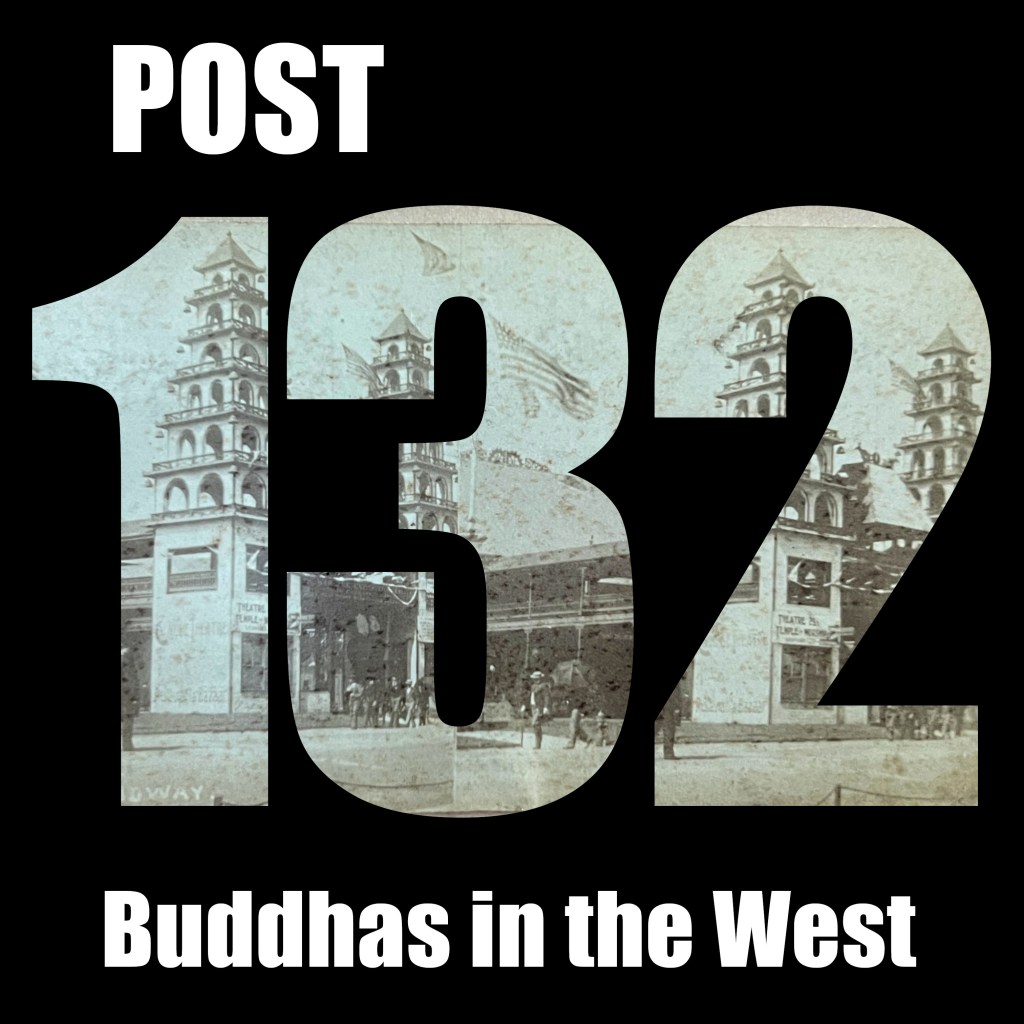
1893 Chinese Theater and Joss House Stereoview

For all the new Buddhas in the West posts
follow us on Bluesky & Instagram


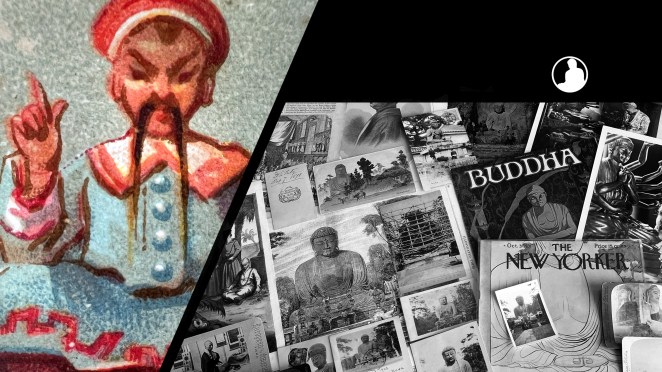
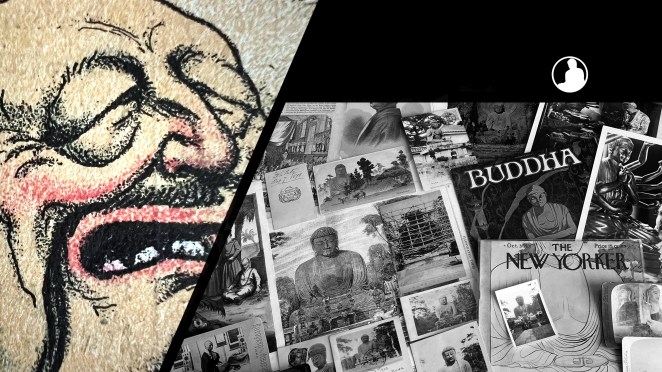
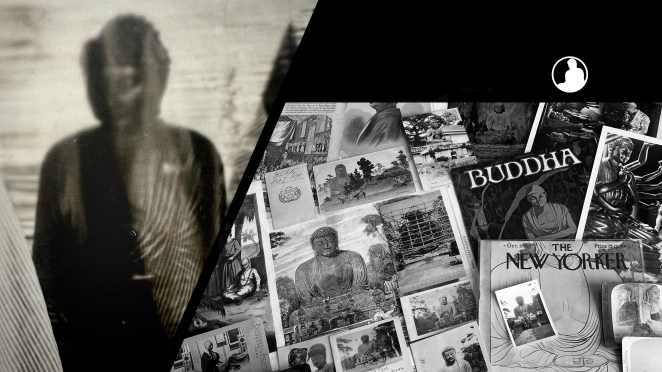
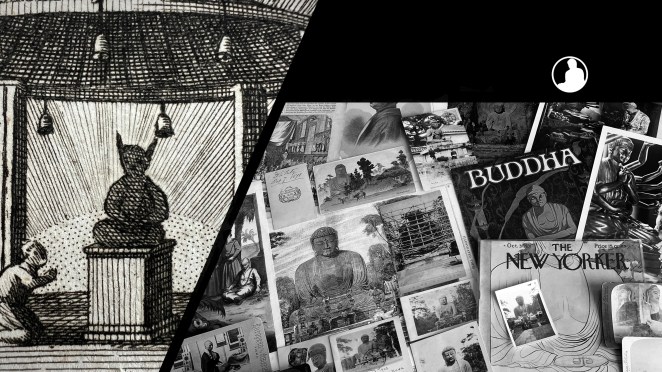
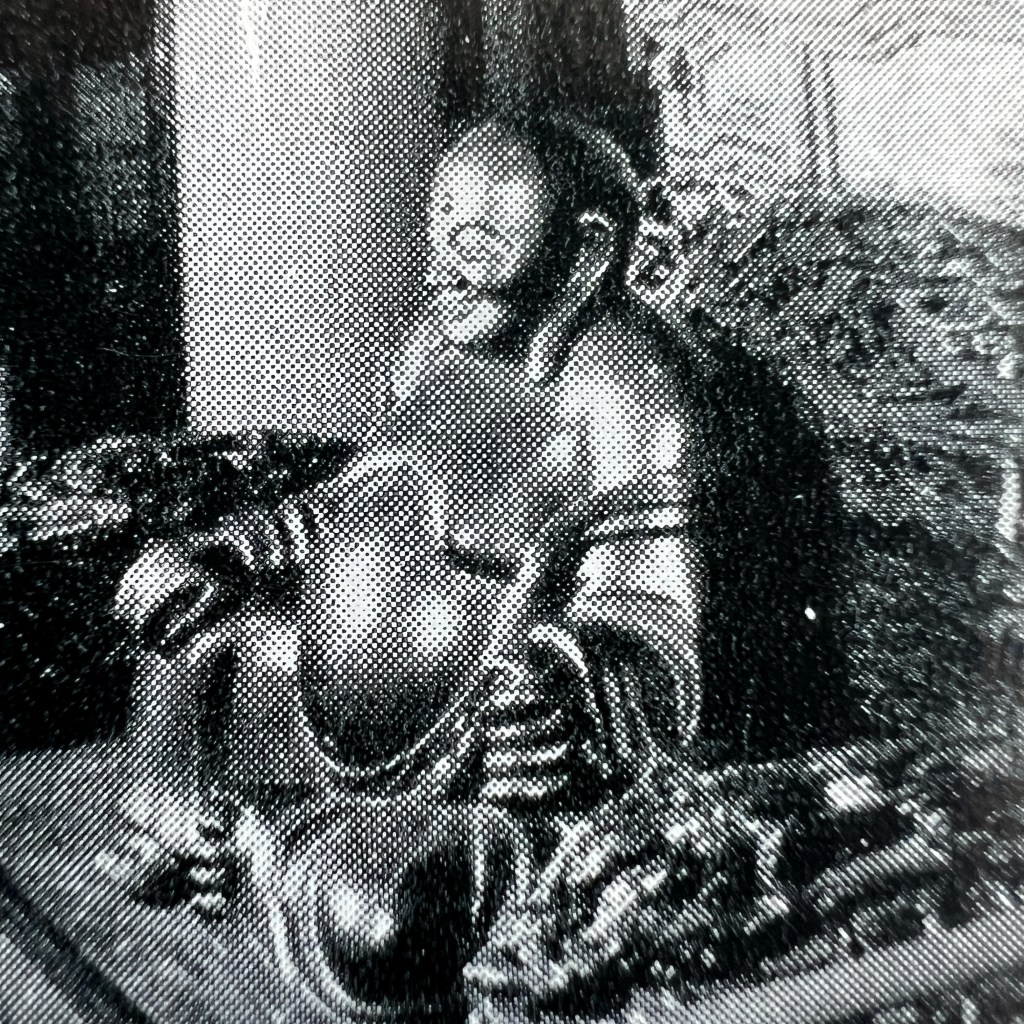
Due to the US extension of the Chinese Exclusion Act in 1892, the Chinese Qing Empire withdrew from the 1893 World’s Columbian Exposition in Chicago. This created the opportunity for local Chinese Chicagoans to build a Chinese Theatre and Joss House as an amusement concession.
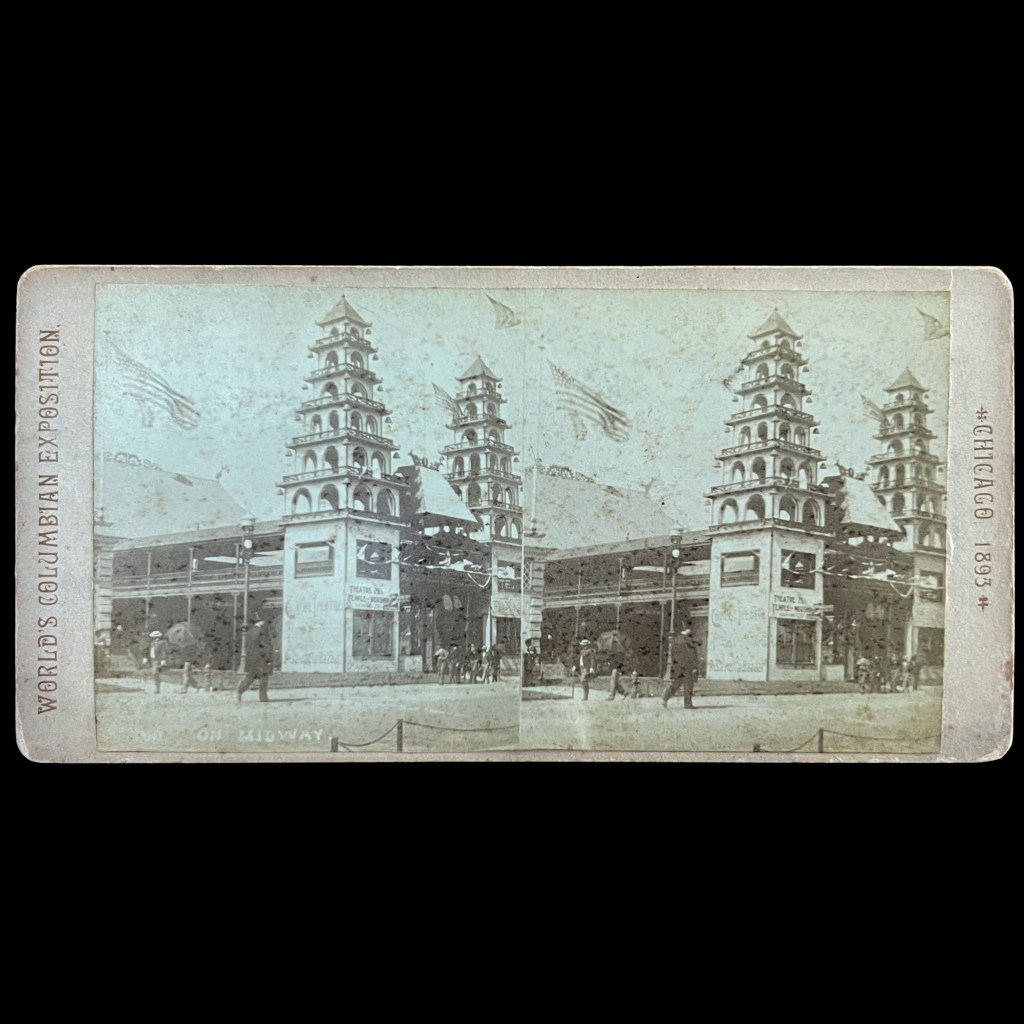
The concession was financed and managed by three Chinese immigrants operating as the Wah Mee Exposition Company. The second floor held “thousands of idols” from the “Buddhist stand-point” as well as depictions of the Buddhist hells “with the many different modes of punishment.”
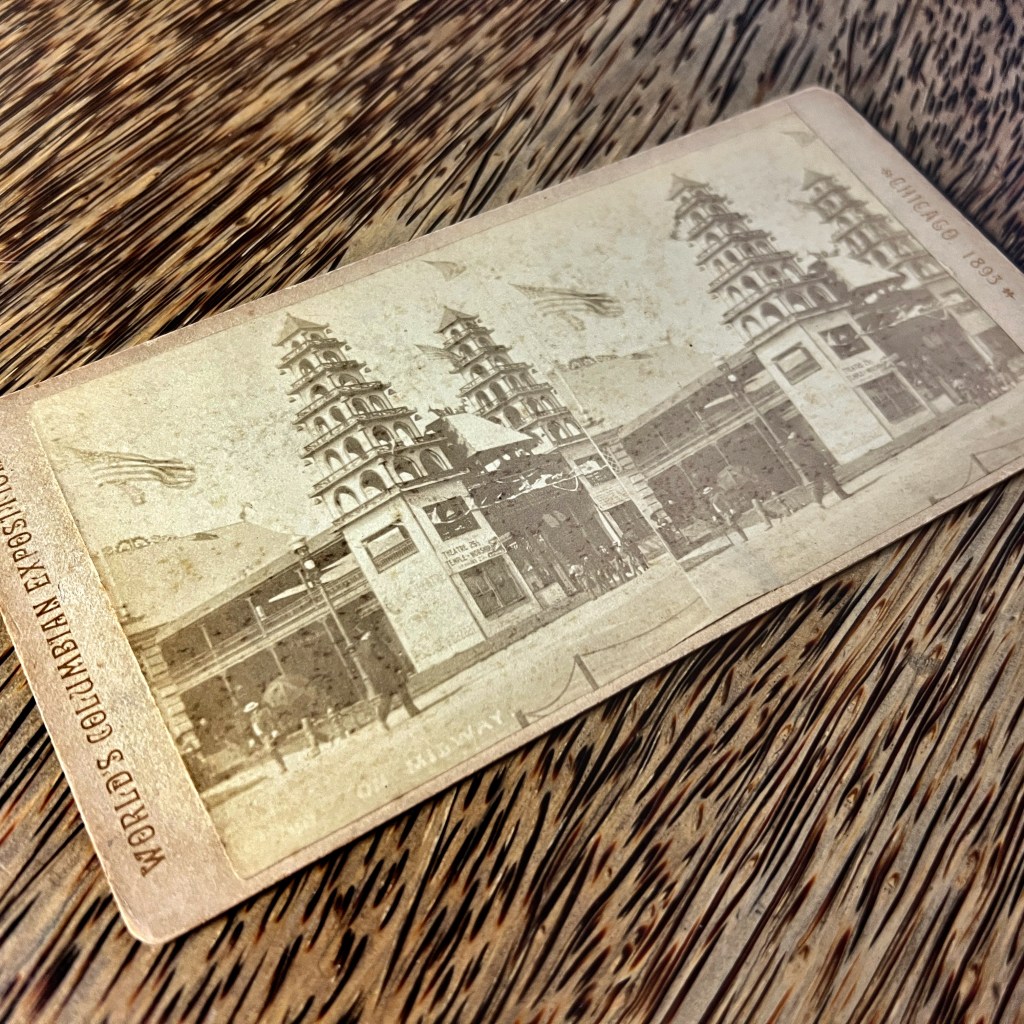
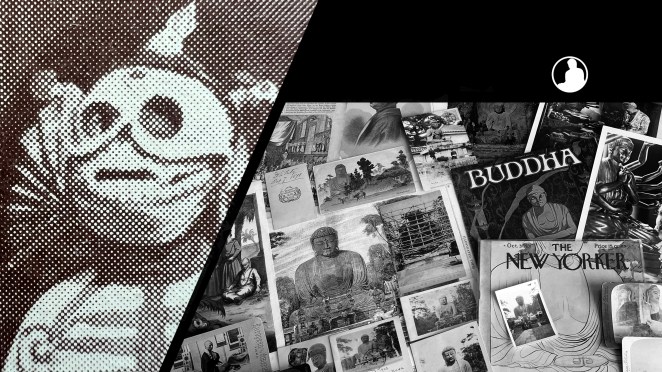
Charles Dudley Arnold was the official photographer of the 1893 exposition, but many other studios sold photographic souvenirs of the fair grounds. While sold as a stereoview, this card by an unknown publisher reproduces the same photograph twice, creating a pseudo-stereoscopic image.
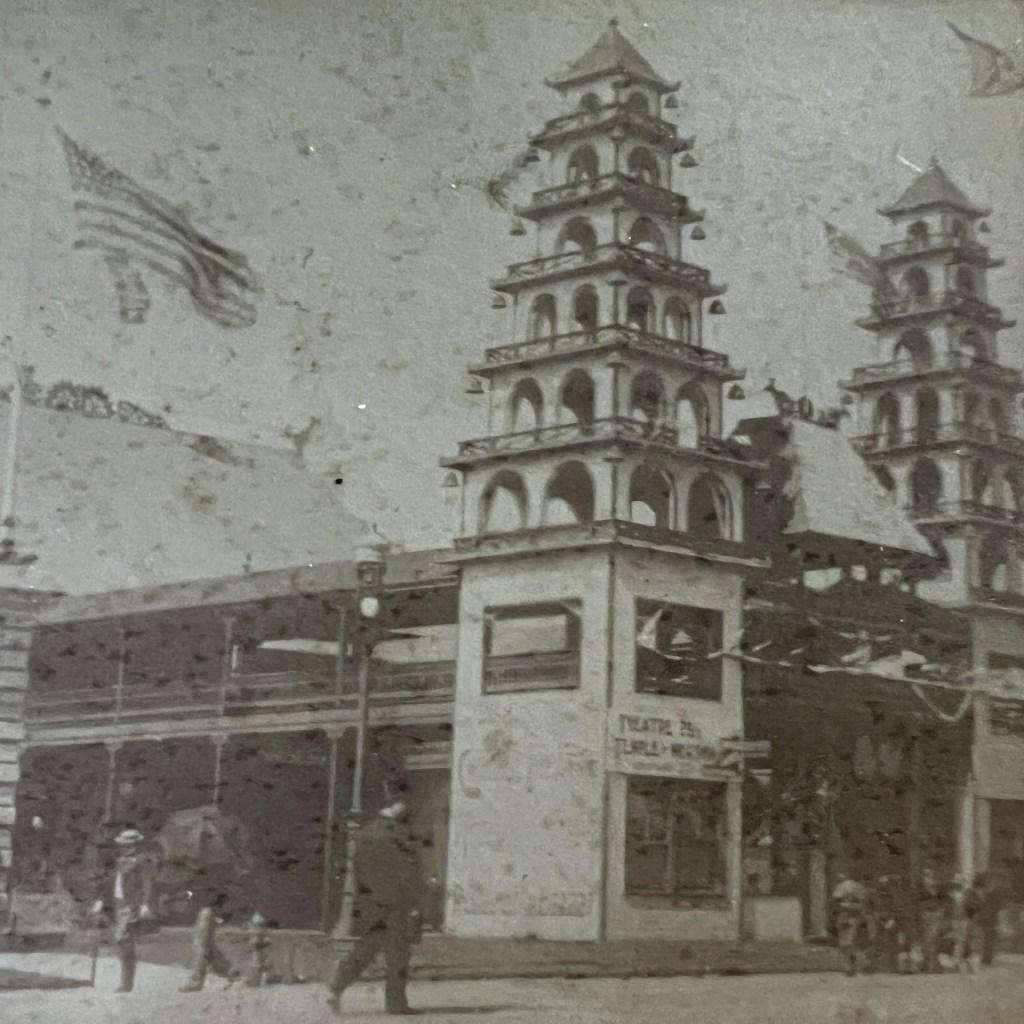
Signage notes admission to the Cantonese theater hall and temple cost 25 cents. An estimated 27 million people visited the fair in Chicago, many of whom would have walked the amusements along the Midway Plaisance where the joss house was located.
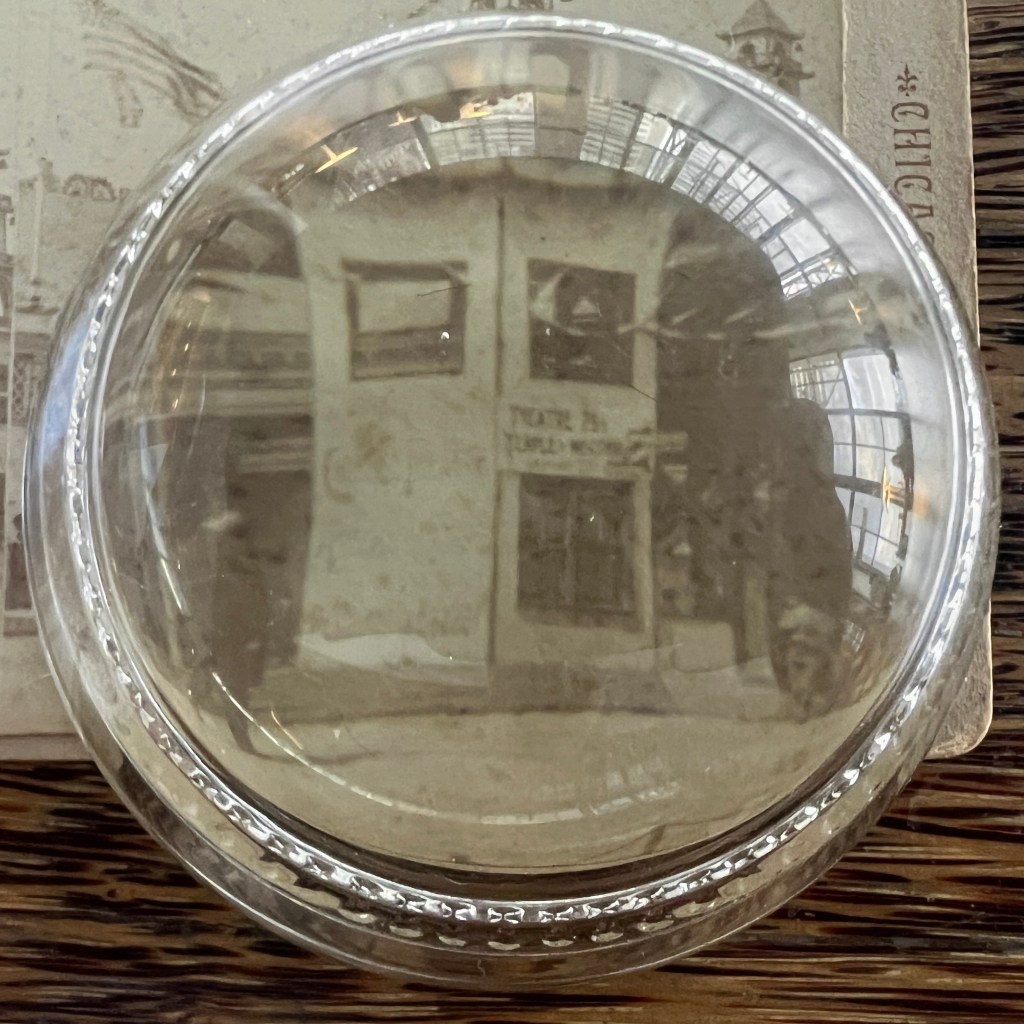
While prominent Buddhists attended the World’s Parliament of Religions in 1893, fair visitors were also exposed to Buddhism through the joss house attraction. For more on Chinese participation, see Mae Ngai’s “Transnationalism and the Transformation of the ‘Other'” (2005).
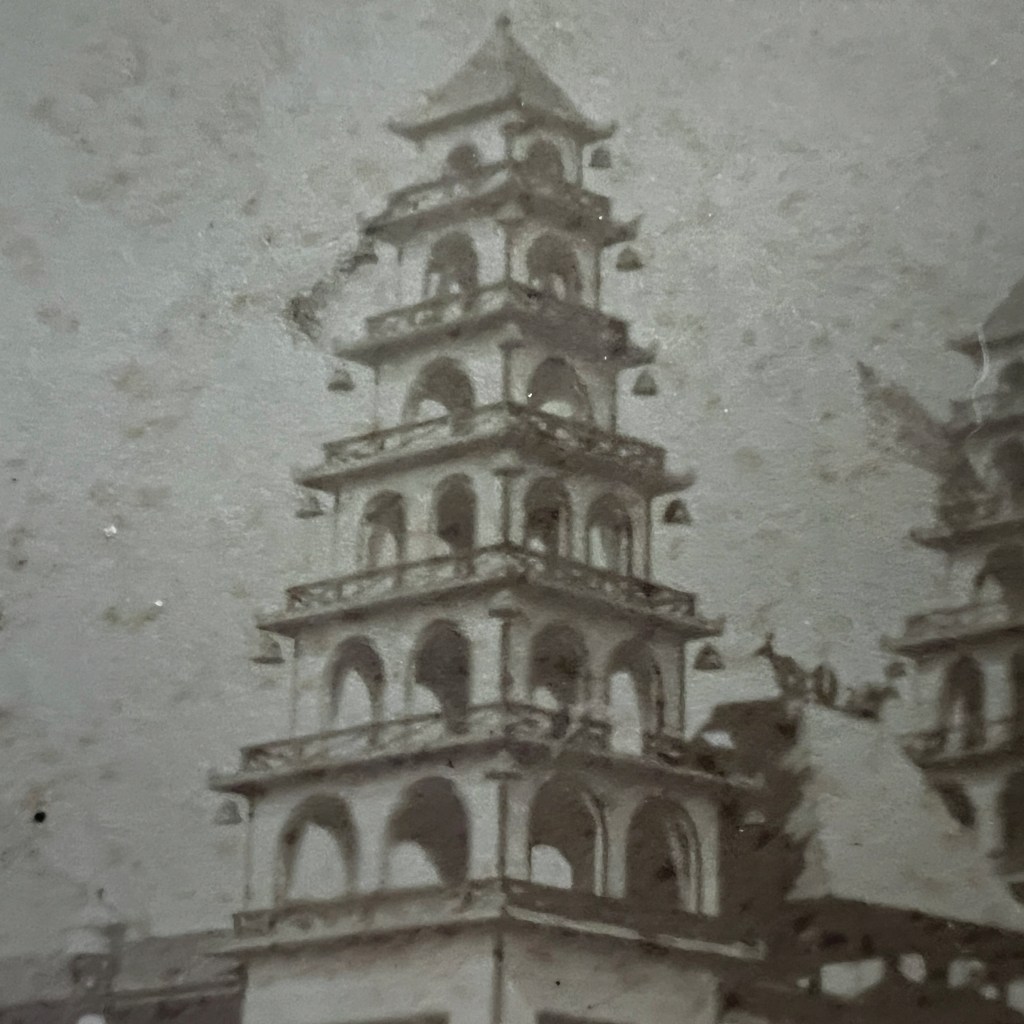
The Buddhas in the West Material Archive is a digital scholarship project that catalogues artifacts depicting Buddhist material culture for Western audiences. It’s comprised of prints, photos, and an assortment of ephemera and other objects. For a brief introduction to this archive, visit the main Buddhas in the West project page.


For Related Buddhas in the West Posts Featuring World’s Fairs:

For the Most Recent Buddhas in the West Posts:

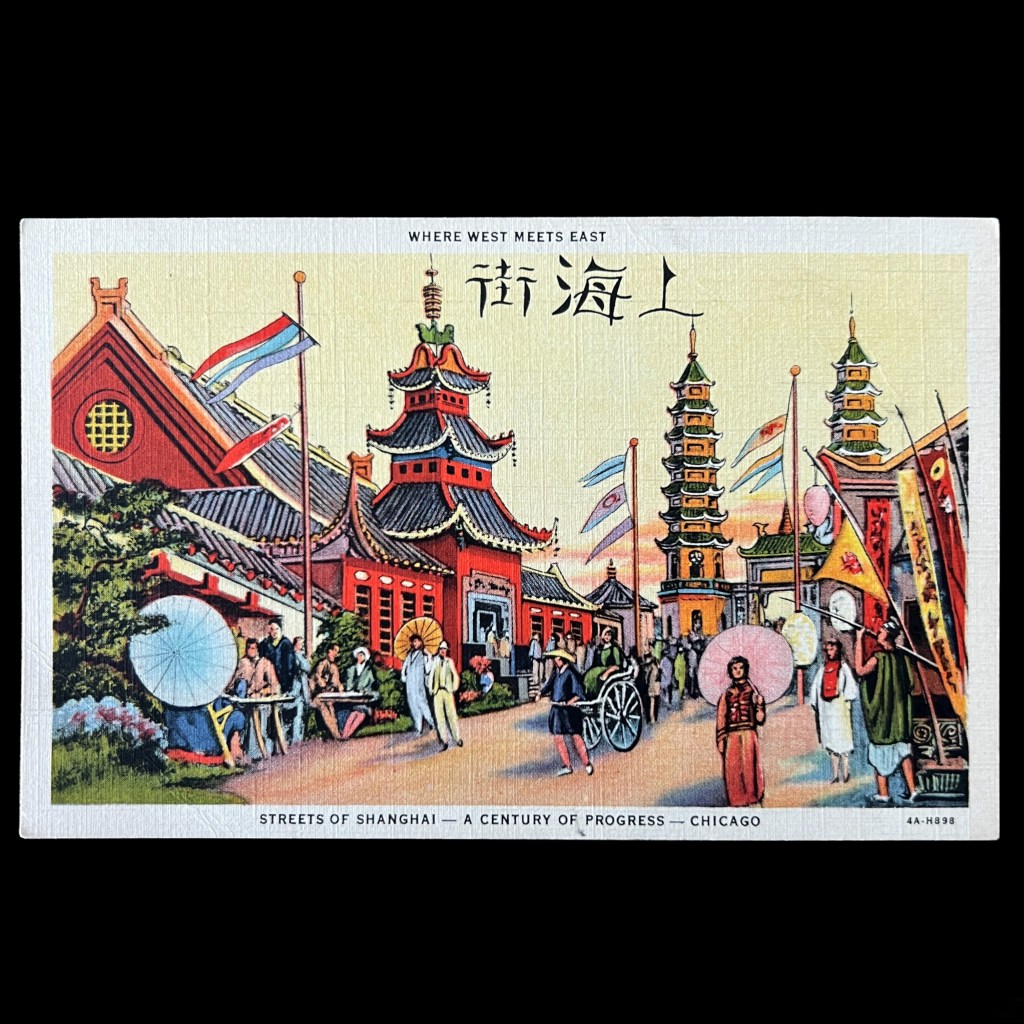
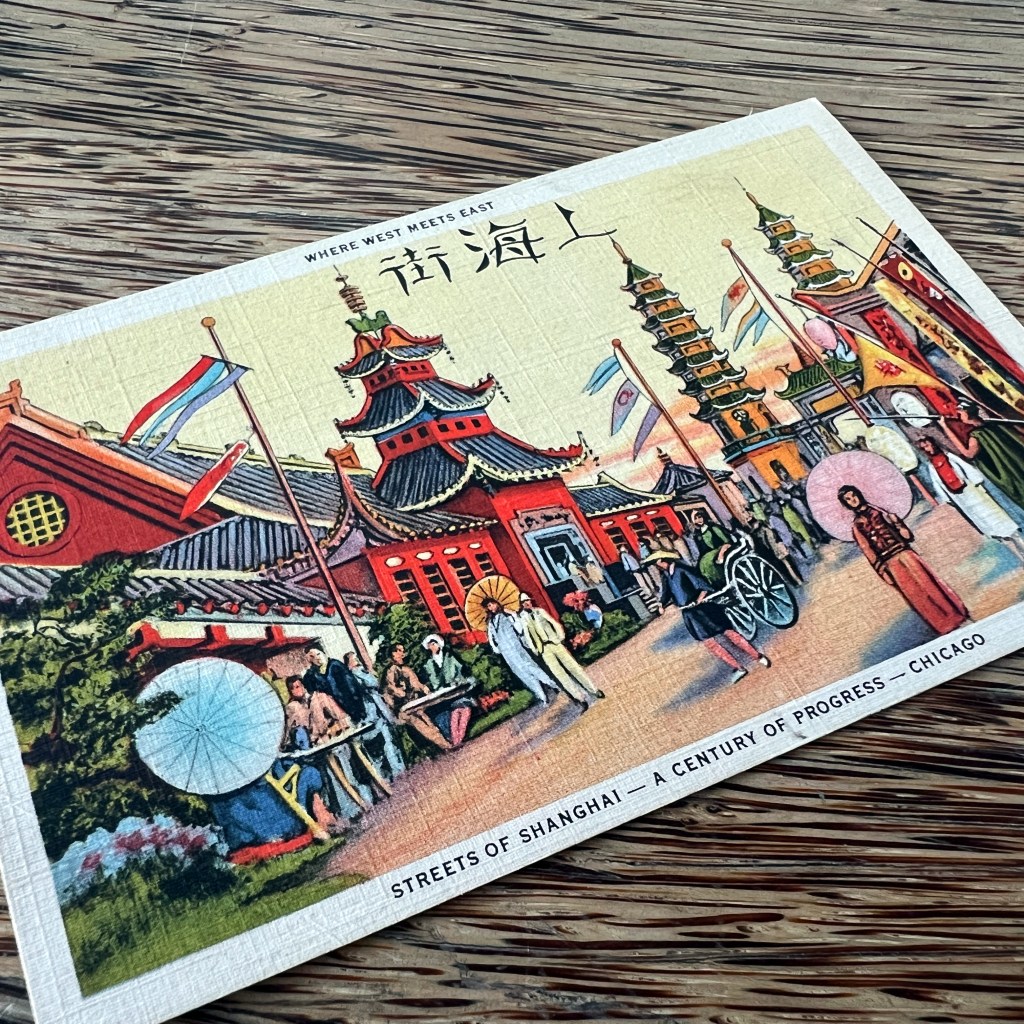
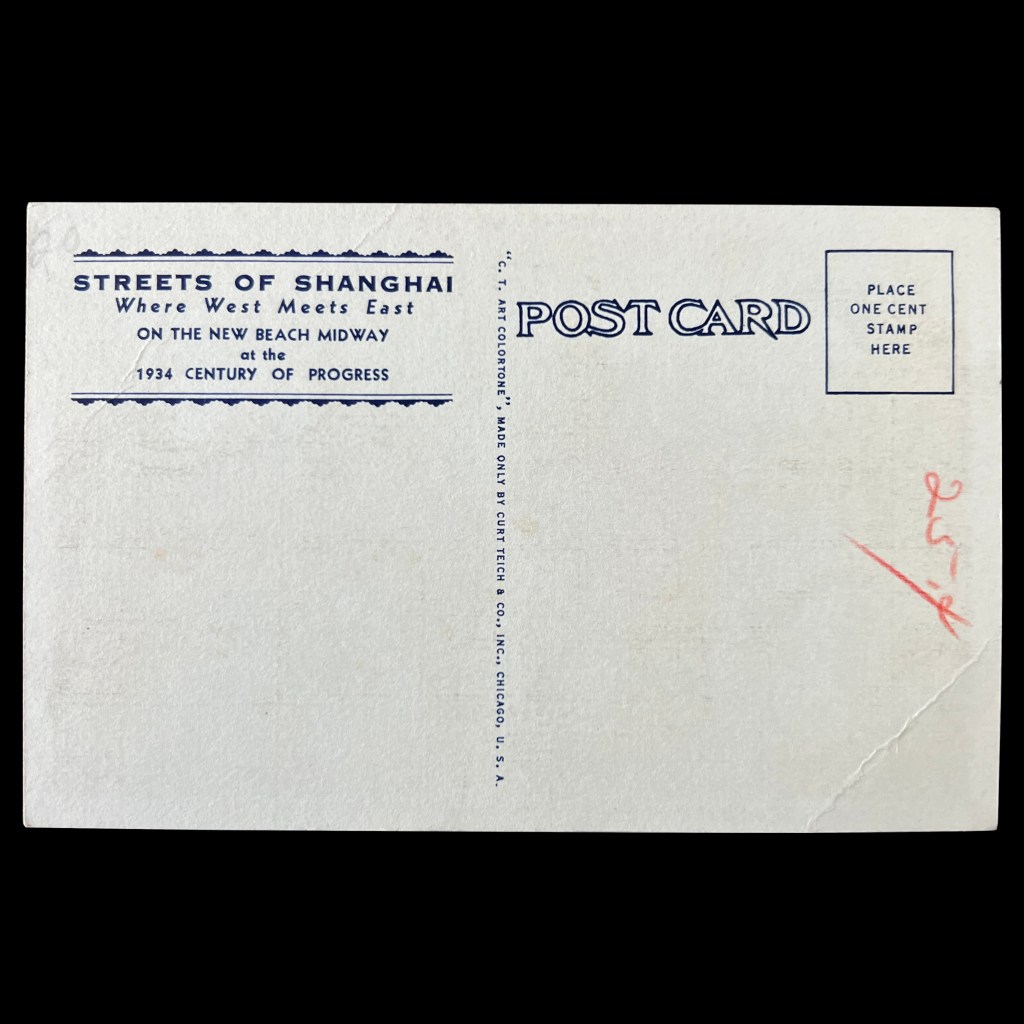
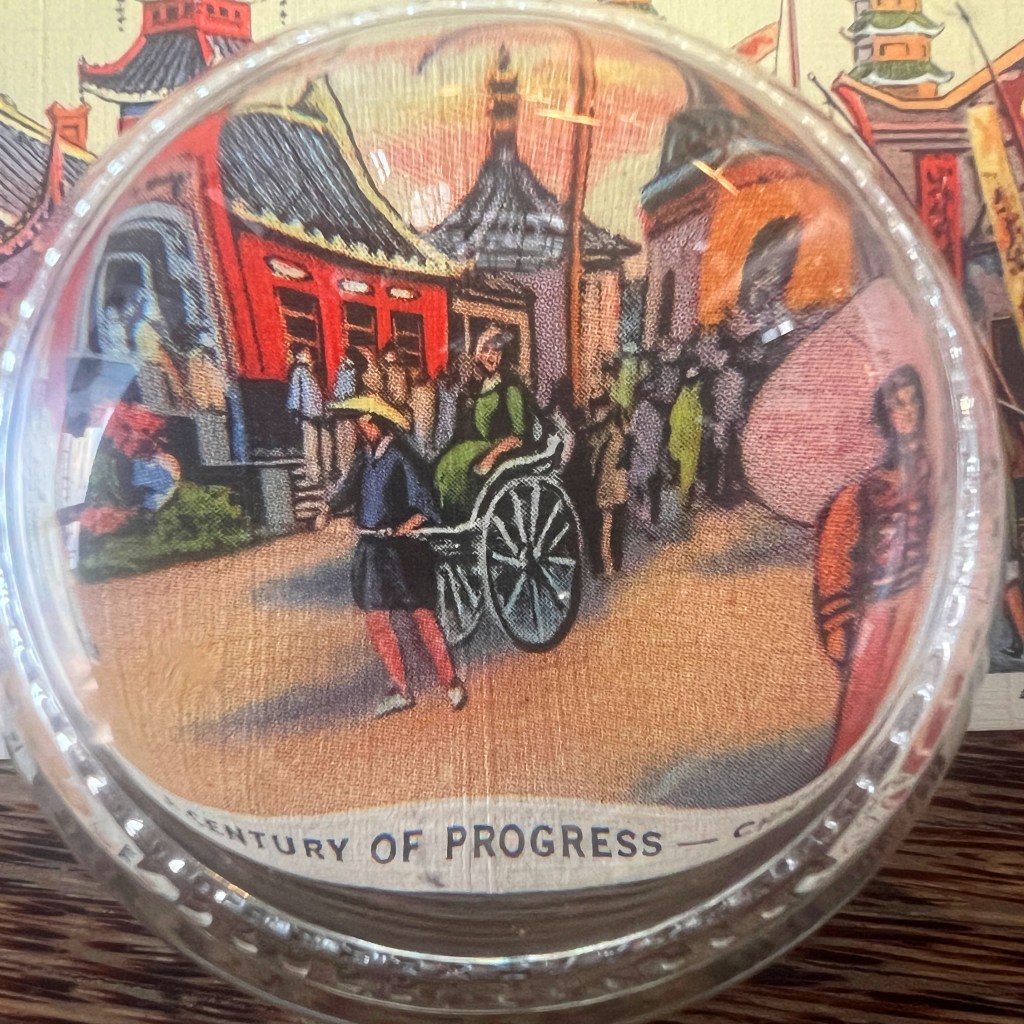
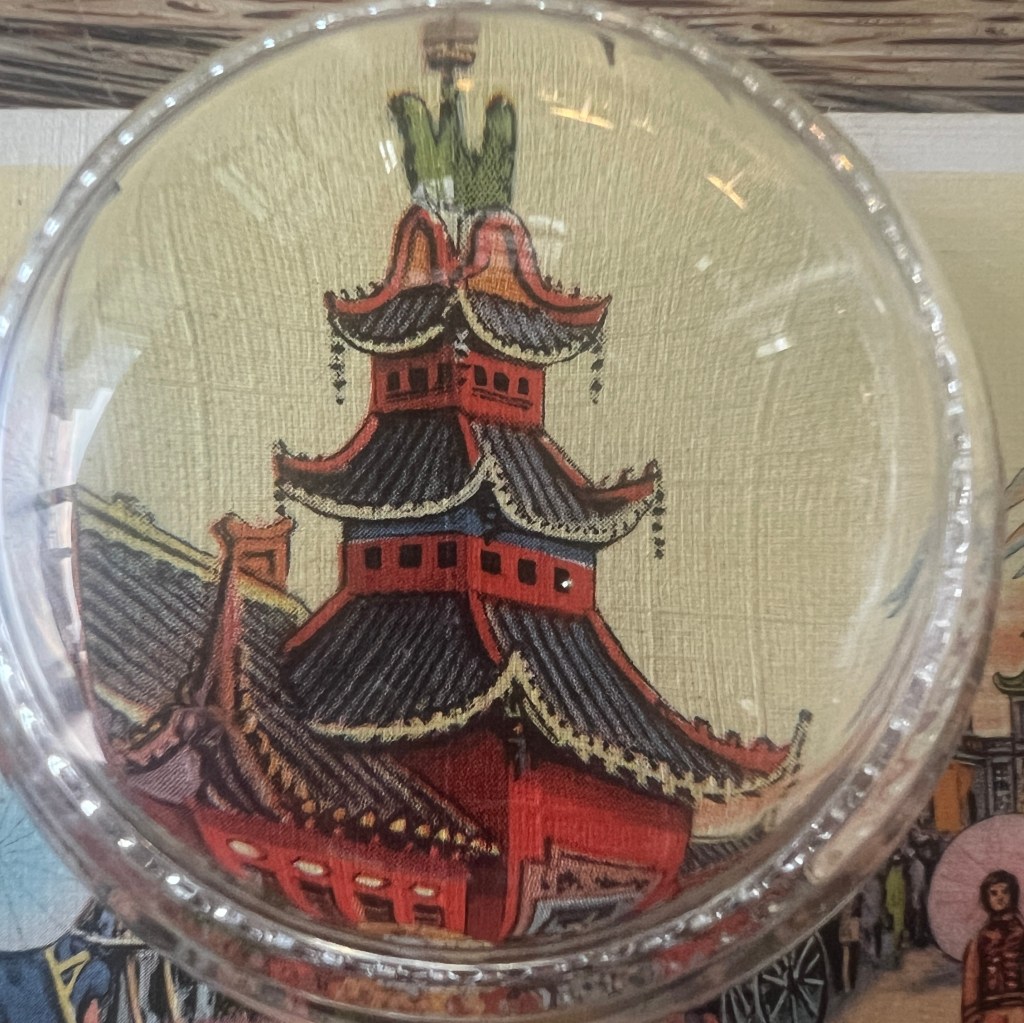
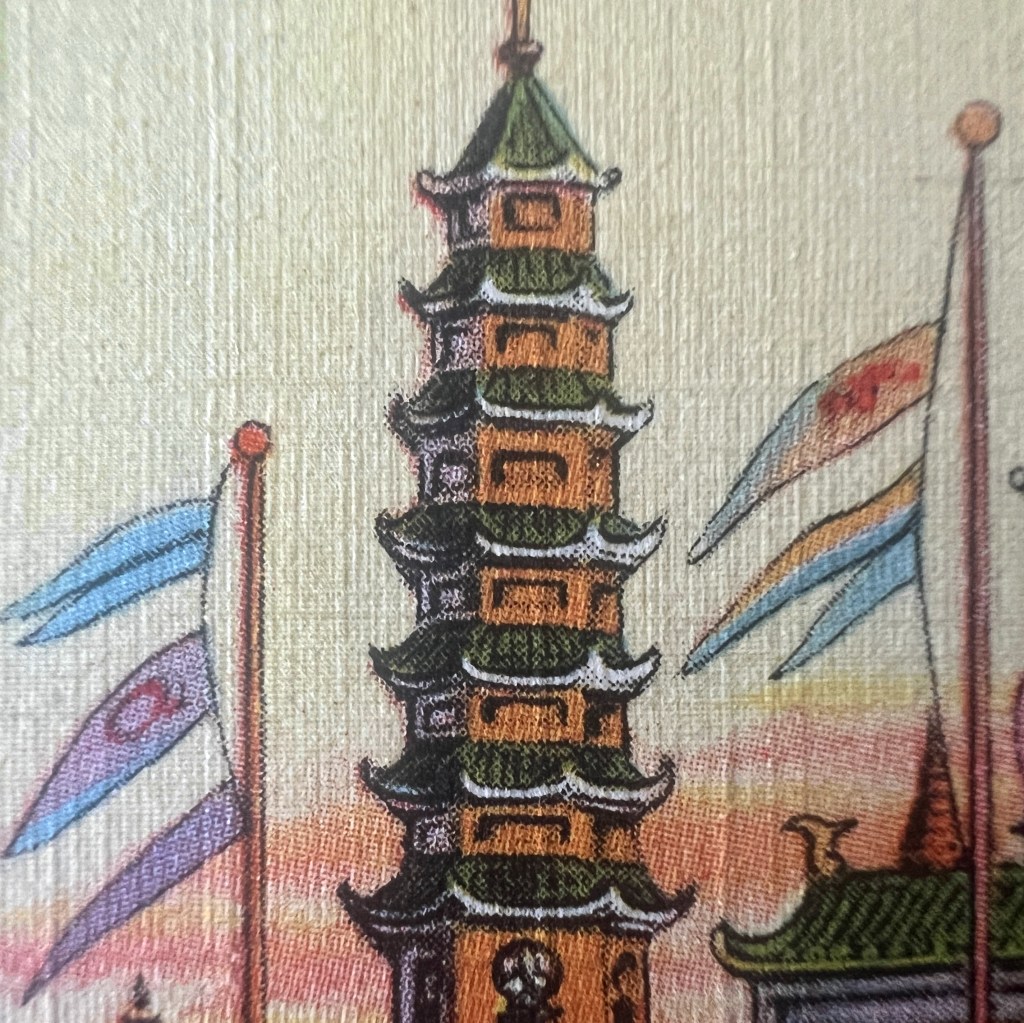
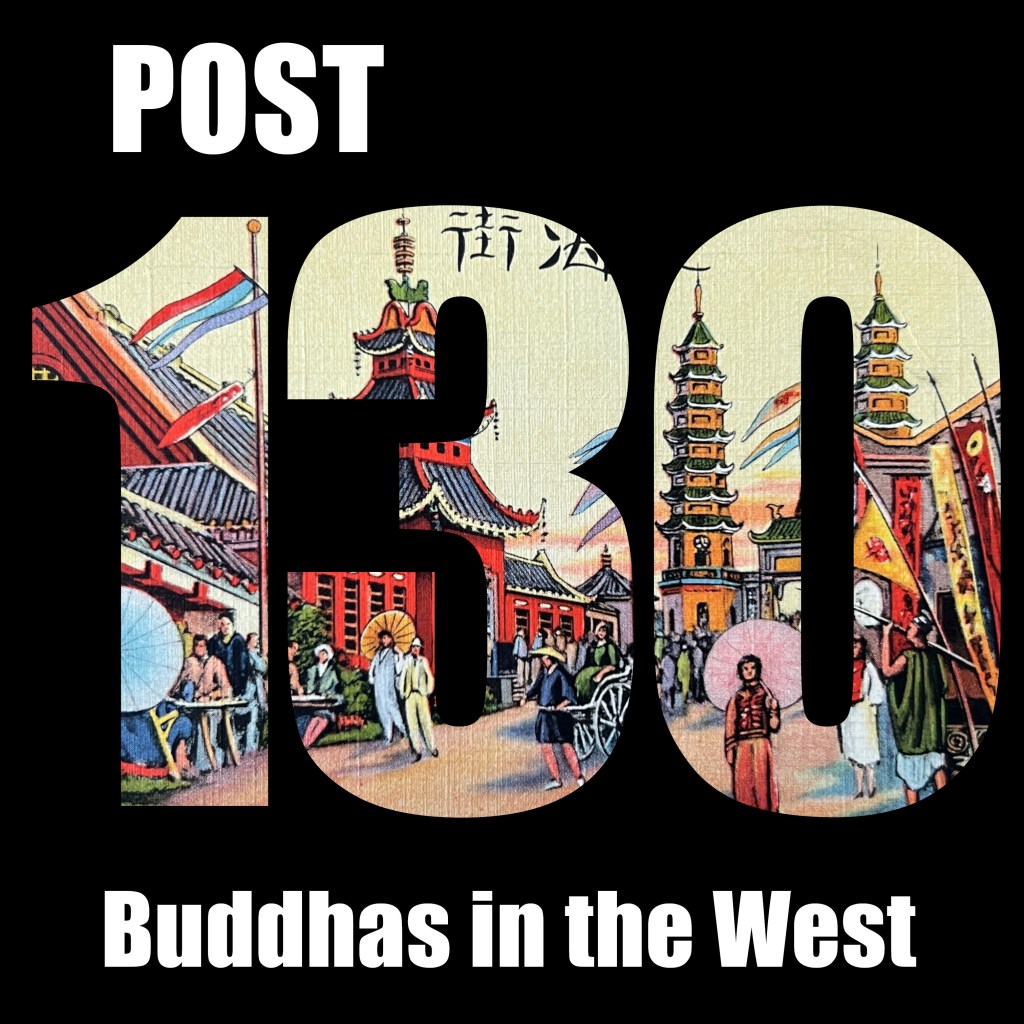
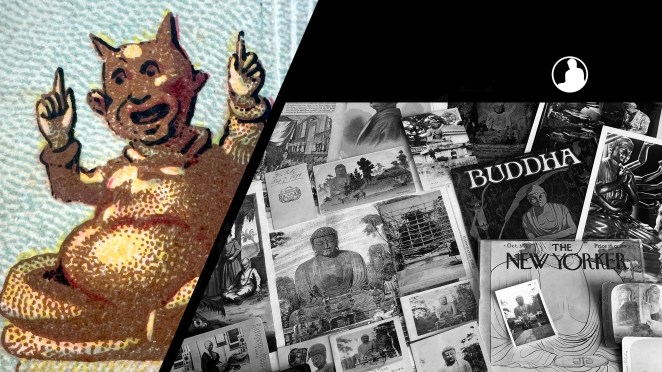
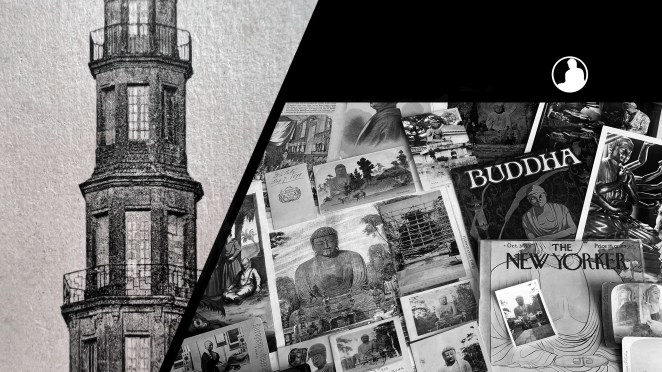
1933 Streets of Shanghai Concession Postcard

For all the new Buddhas in the West posts
follow us on Bluesky & Instagram


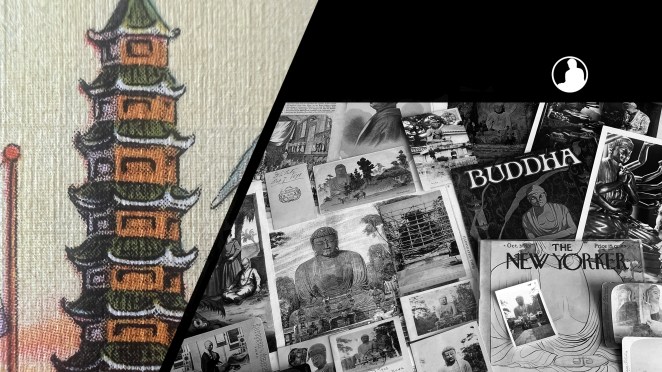
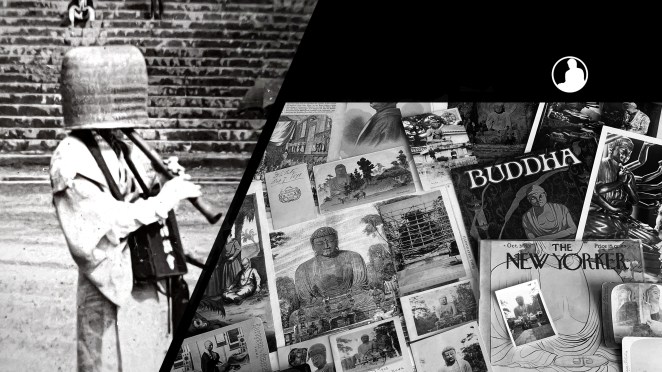
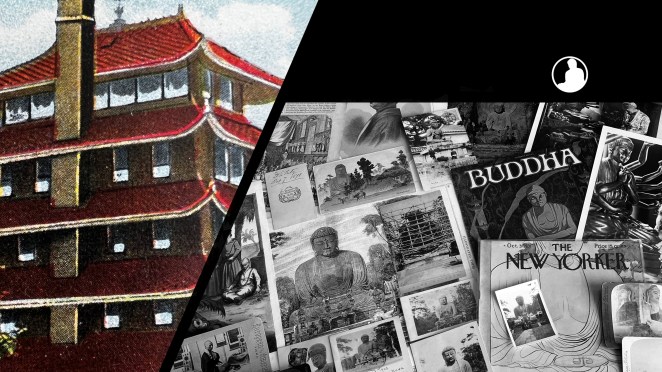
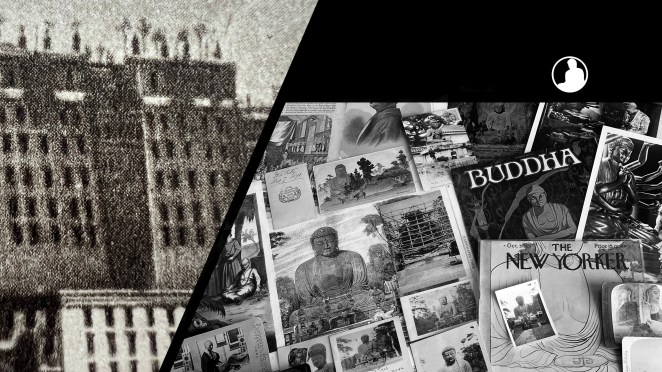
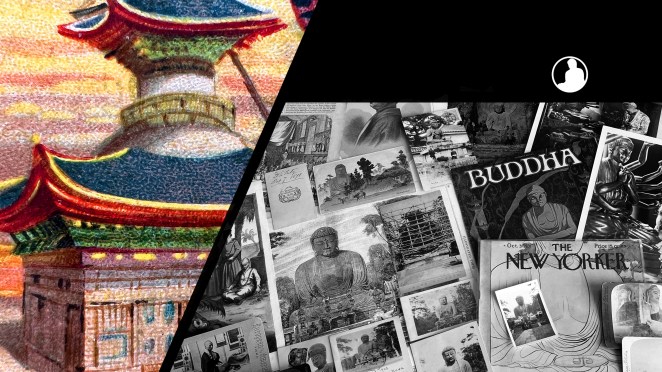
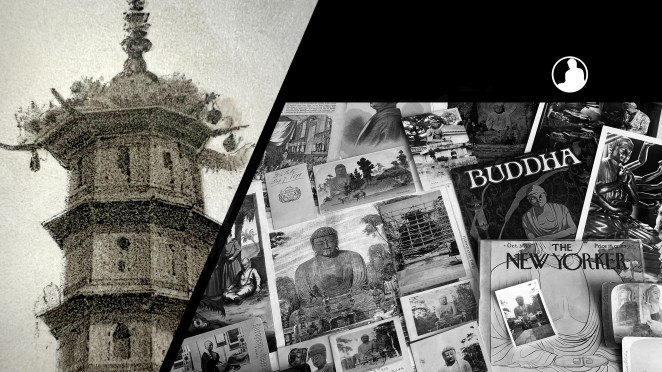
In the midst of a growing Pacific War, the young Republic of China withdrew from the World’s Fair in Chicago in 1933. Private individual ensured China’s symbolic presence, however, with local Chinatown businessmen erecting two giant pagodas for the “Streets of Shanghai” concession.

Arguably the lesser of two other China exhibits, including a Chinese pavilion and reconstruction of a Tibetan Buddhist shrine hall from Chengde, the Streets of Shanghai was one of many foreign “villages” erected on the fairgrounds. It overlooked Lake Michigan alongside the Dutch Village.

Picture postcards were issued fifty years earlier for the famous 1893 fair in Chicago and, although past their prime, remained favorite, cheap souvenirs through the Depression. Chicago-based Curt Teich was critical for the development of the vibrantly colored “linen” postcards of the 1930s.

As an amusement concession with an extra admission cost, the Streets of Shanghai embraced stereotypes to drum up interest and recreate the “mysteries of a Chinese port.” The twin eight-story pagodas at the main gate were well-developed visual icons of the Orientalist Far East.

Some sources claim an interior building was a Buddhist Arhat Temple, while others claim it was a temple to Confucius. Notably, a new private museum opened in Chicago’s Chinatown to draw fair visitors to the area, also displaying elements of China’s Buddhist heritage (see postcard here: https://tinyurl.com/3wb7jfvu).

The Streets of Shangahi housed a large Chinese restaurant, an operating noodle factory, and many shops selling silks, bronzes, and porcelains. Advertised as “Where West Meets East,” the concession created a commercial fantasy land for the Century of Progress.


The Buddhas in the West Material Archive is a digital scholarship project that catalogues artifacts depicting Buddhist material culture for Western audiences. It’s comprised of prints, photos, and an assortment of ephemera and other objects. For a brief introduction to this archive, visit the main Buddhas in the West project page.


For Related Buddhas in the West Posts Featuring Chicago:


For the Most Recent Buddhas in the West Posts:

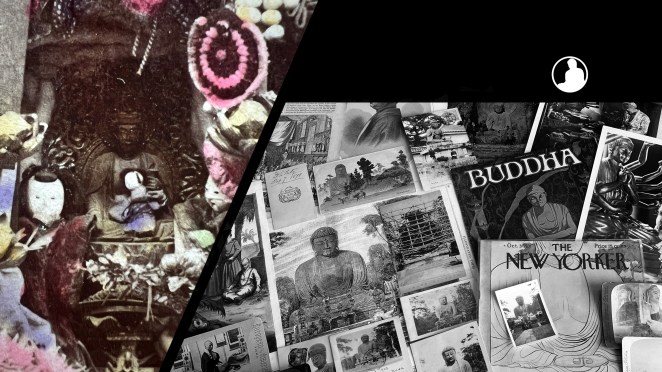
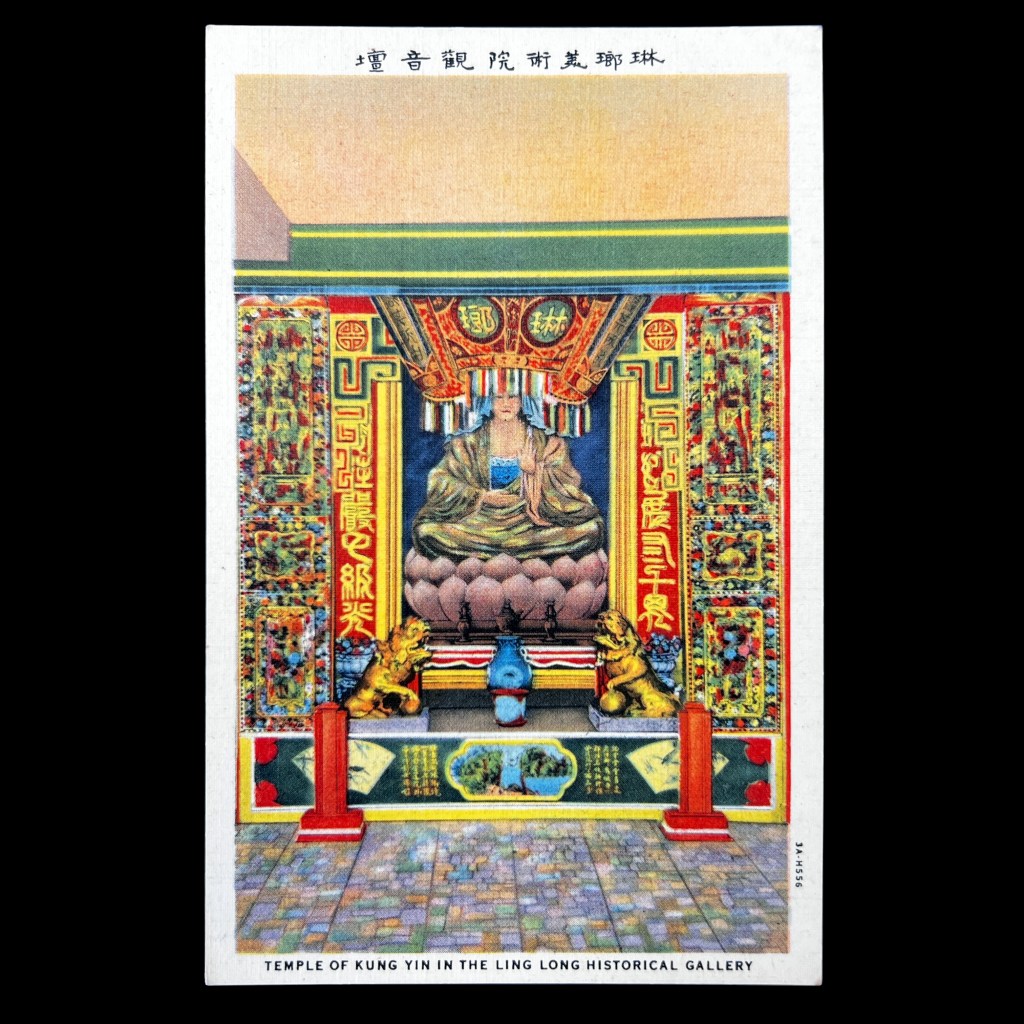
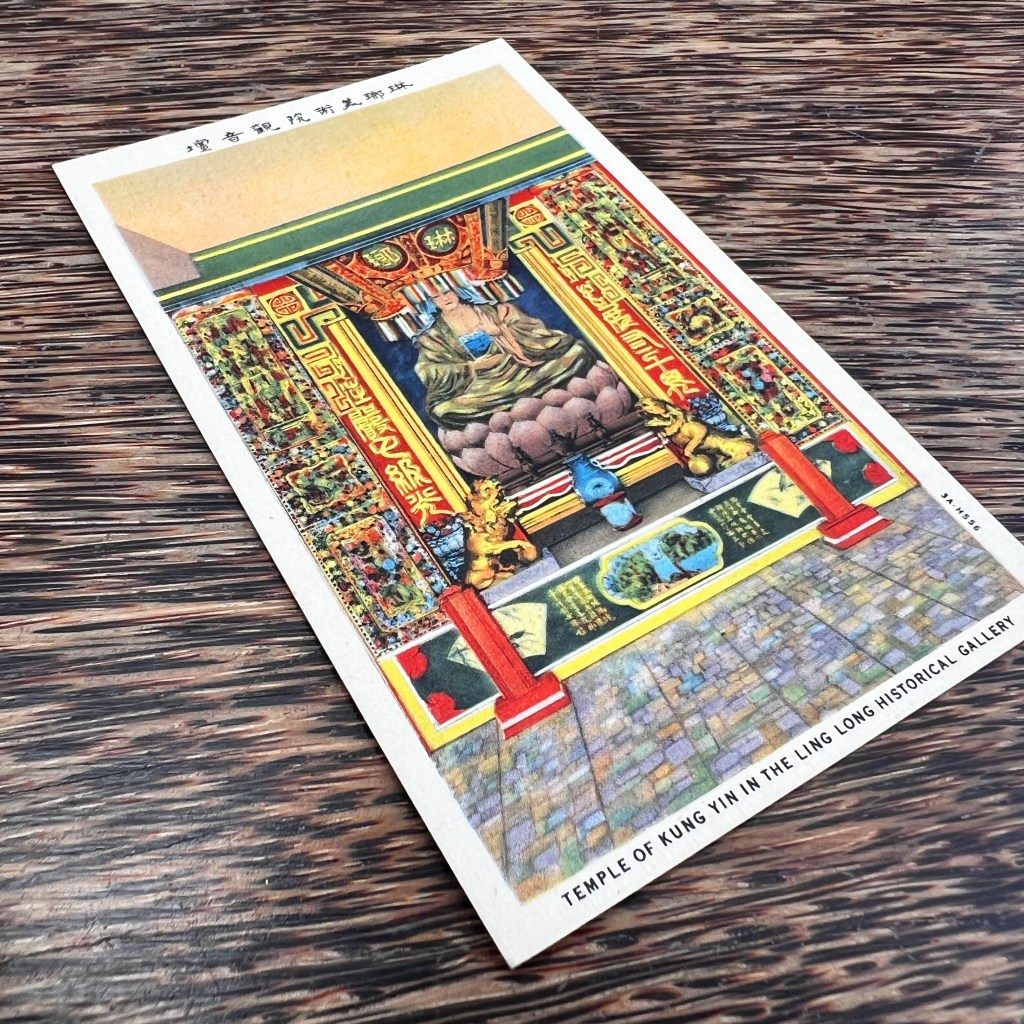
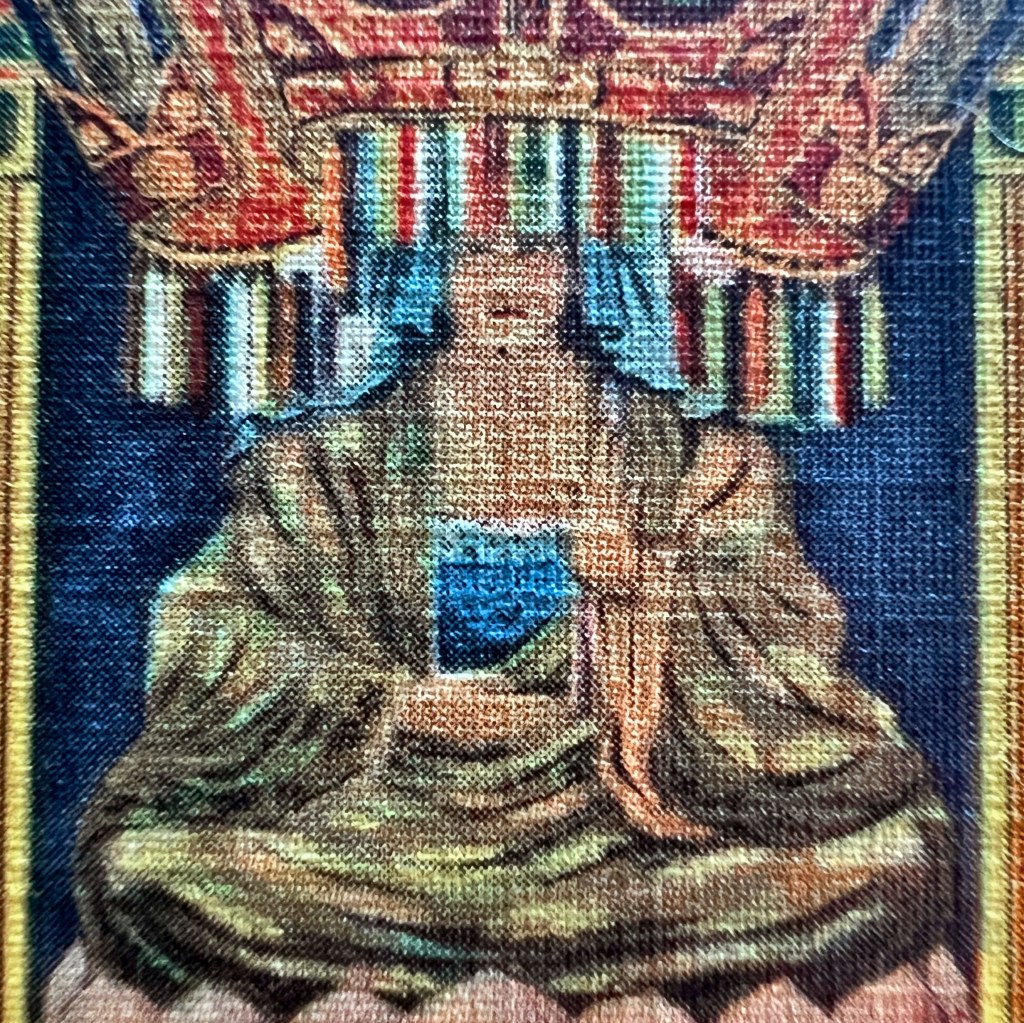
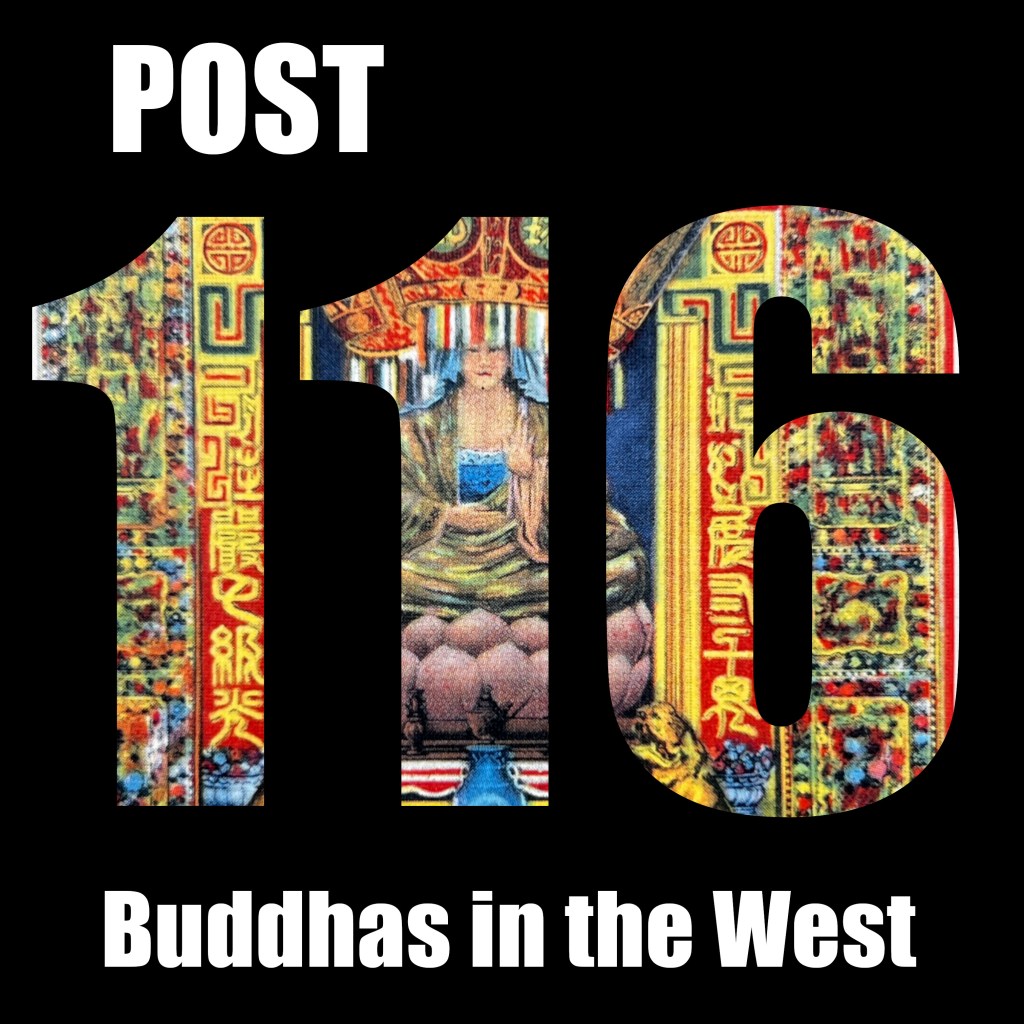
Postcard of Guanyin at Chicago’s Ling Long Chinese Museum

For all the new Buddhas in the West posts
follow us on Bluesky & Instagram


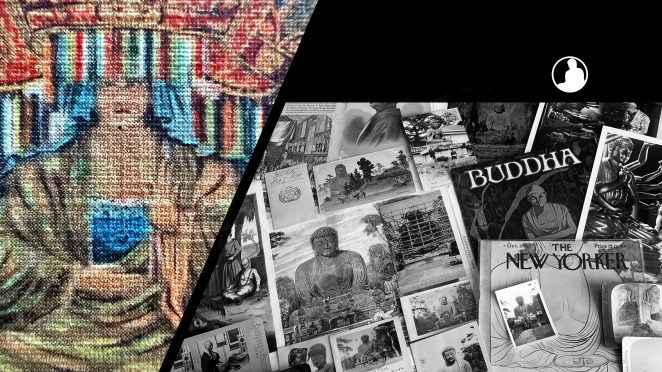
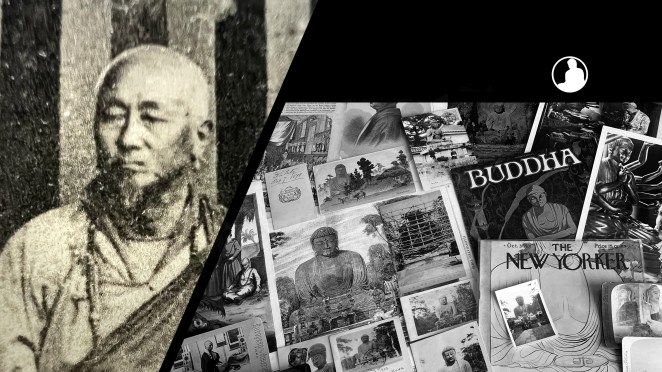
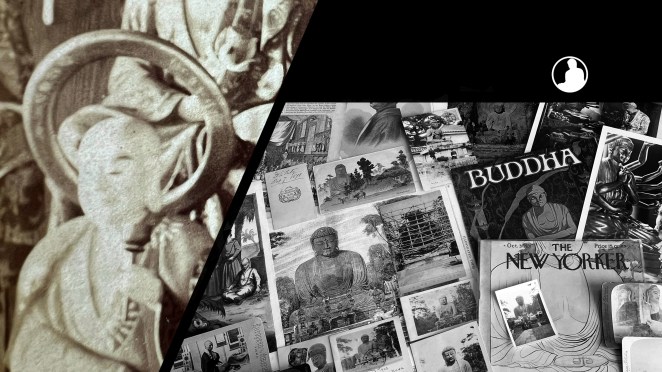
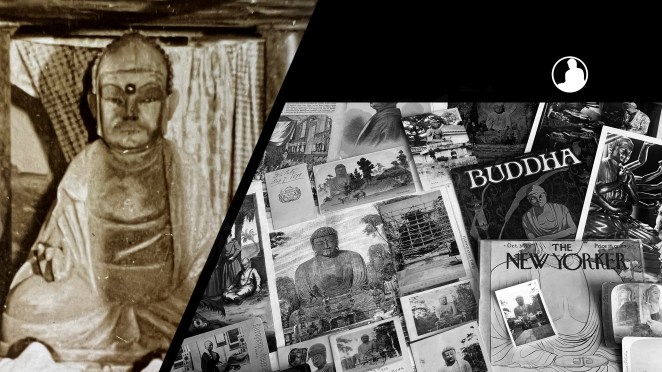
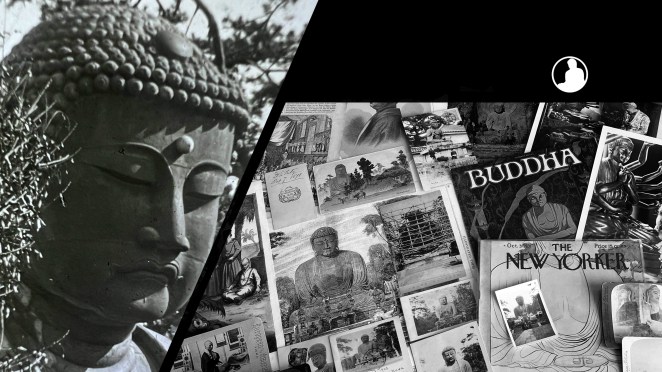
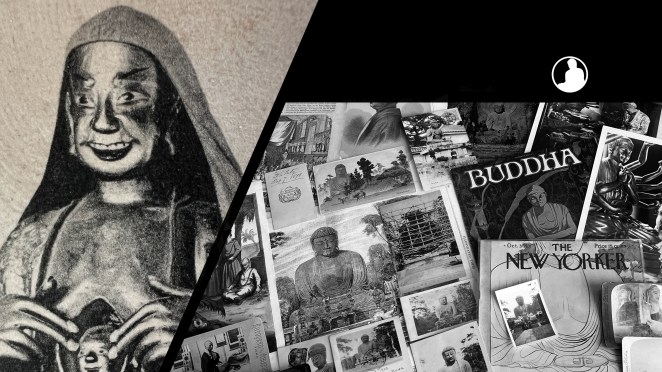
The Ling Long Chinese Museum in Chicago opened prior to the 1933 World’s Fair hoping to draw visitors and help erase the popular view that US Chinatowns were “immoral and dangerous.” The museum housed a large altar in the rear of the main arcade to enshrine an icon of Guanyin.

The was the first American museum owned and operated by Chinese immigrants. One of the main attractions were a series of twenty-four dioramas flanking the “shrine hall” that displayed historical stories and legends from China’s past.

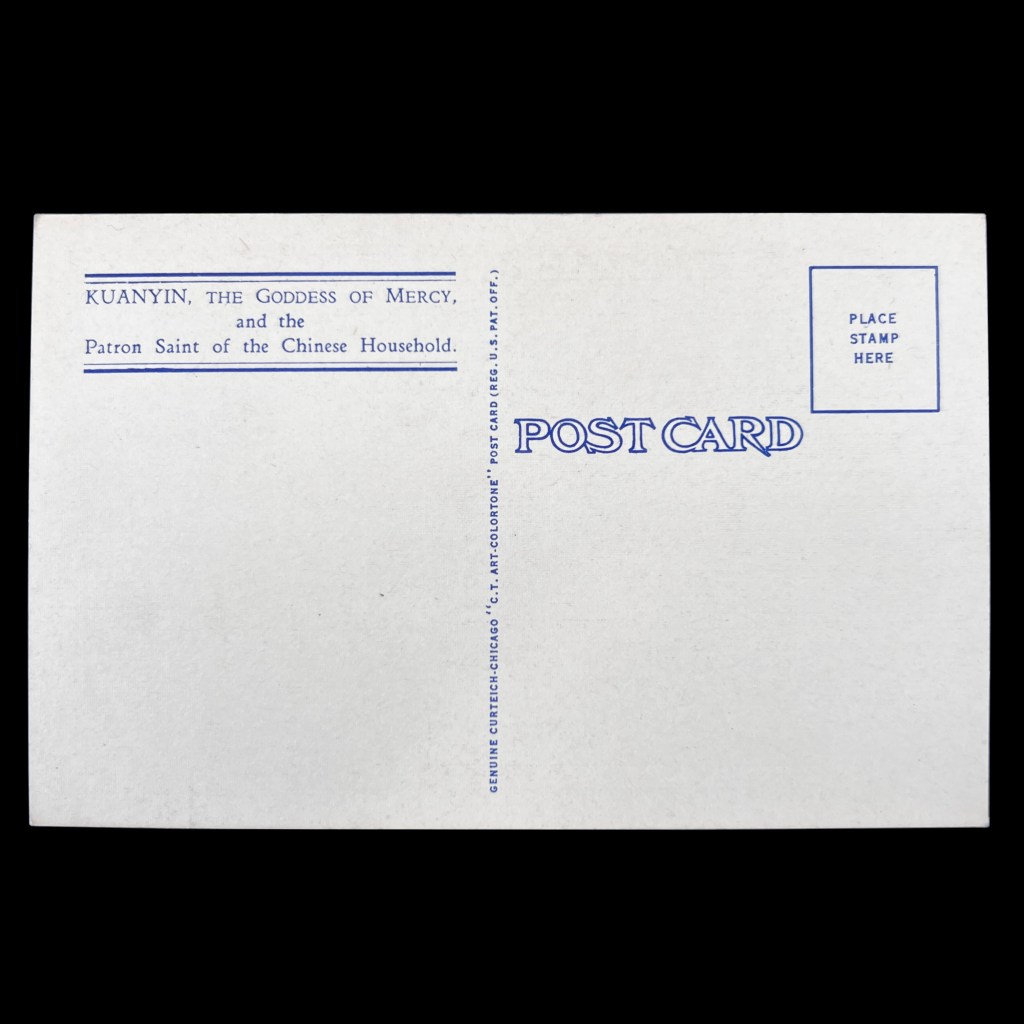
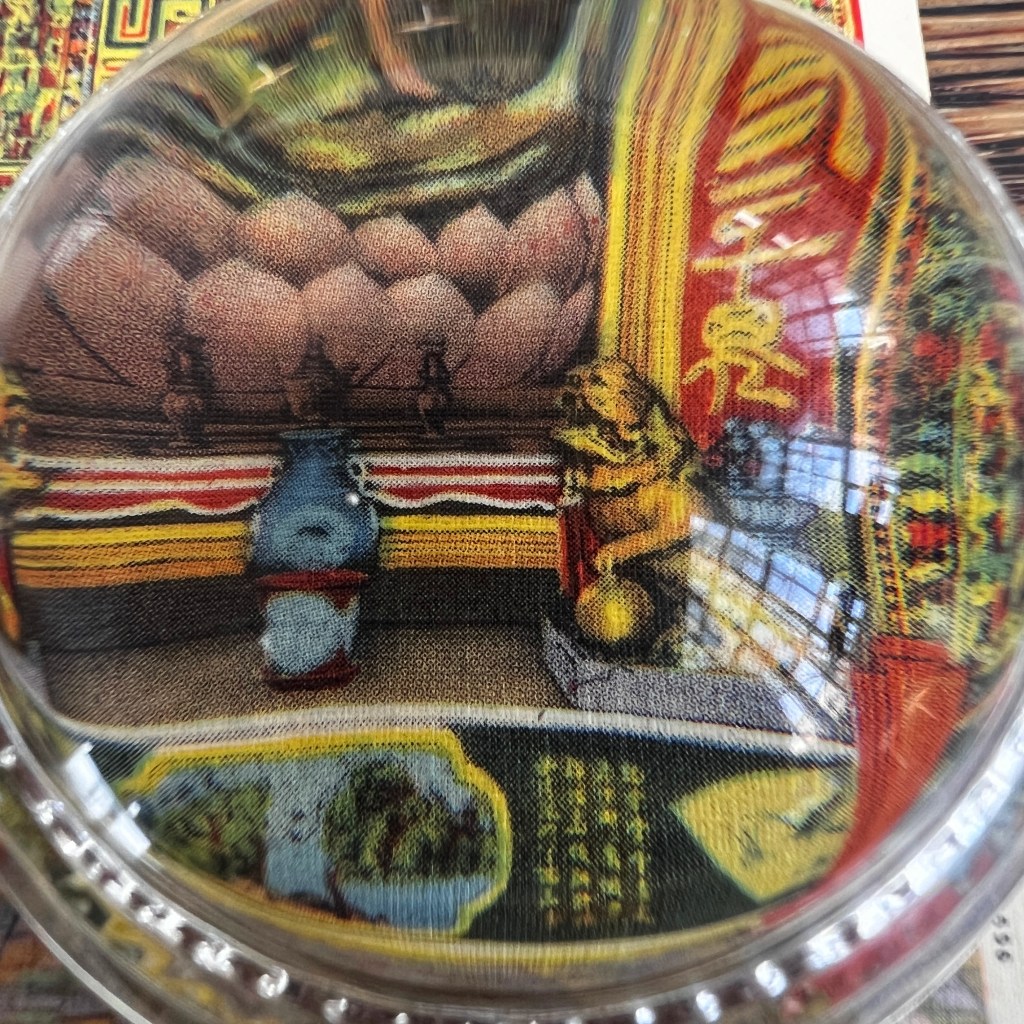
Chicago’s Curt Teich & Co. spearheaded new technology to print postcards in hyperreal colors in 1931, starting the “linen card” era that ran through World War II. Based on production numbers, we know this card was first published for the Ling Long Museum in 1933, the year it first opened.

The Guanyin altar was set-up during the period of Chinese Exclusion when many Chinatown temples across the US were closing. Even the shrine seen here displays altar arrangements not commonly seen, such as including lion statuettes.

The museum was open through the 1970s before changing over to a Chinese restaurant. Many items were moved to the Chinese-American Museum of Chicago, but a fire in 2008 destroyed much of the collection, including most of the original dioramas; the Guanyin image is presumed lost.


The Buddhas in the West Material Archive is a digital scholarship project that catalogues artifacts depicting Buddhist material culture for Western audiences. It’s comprised of prints, photos, and an assortment of ephemera and other objects. For a brief introduction to this archive, visit the main Buddhas in the West project page.


For Related Buddhas in the West Posts Featuring the United States:


For the Most Recent Buddhas in the West Posts:

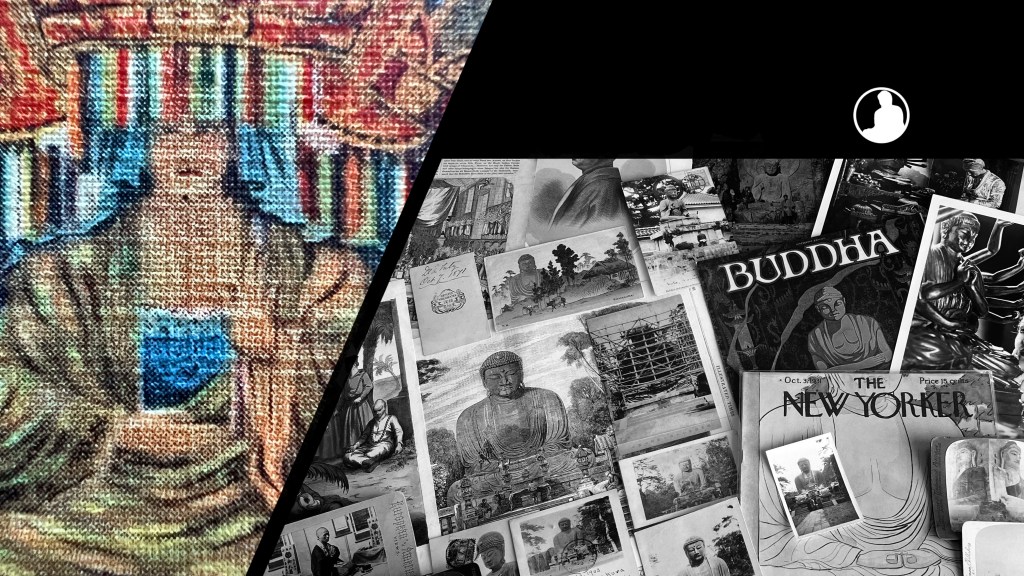
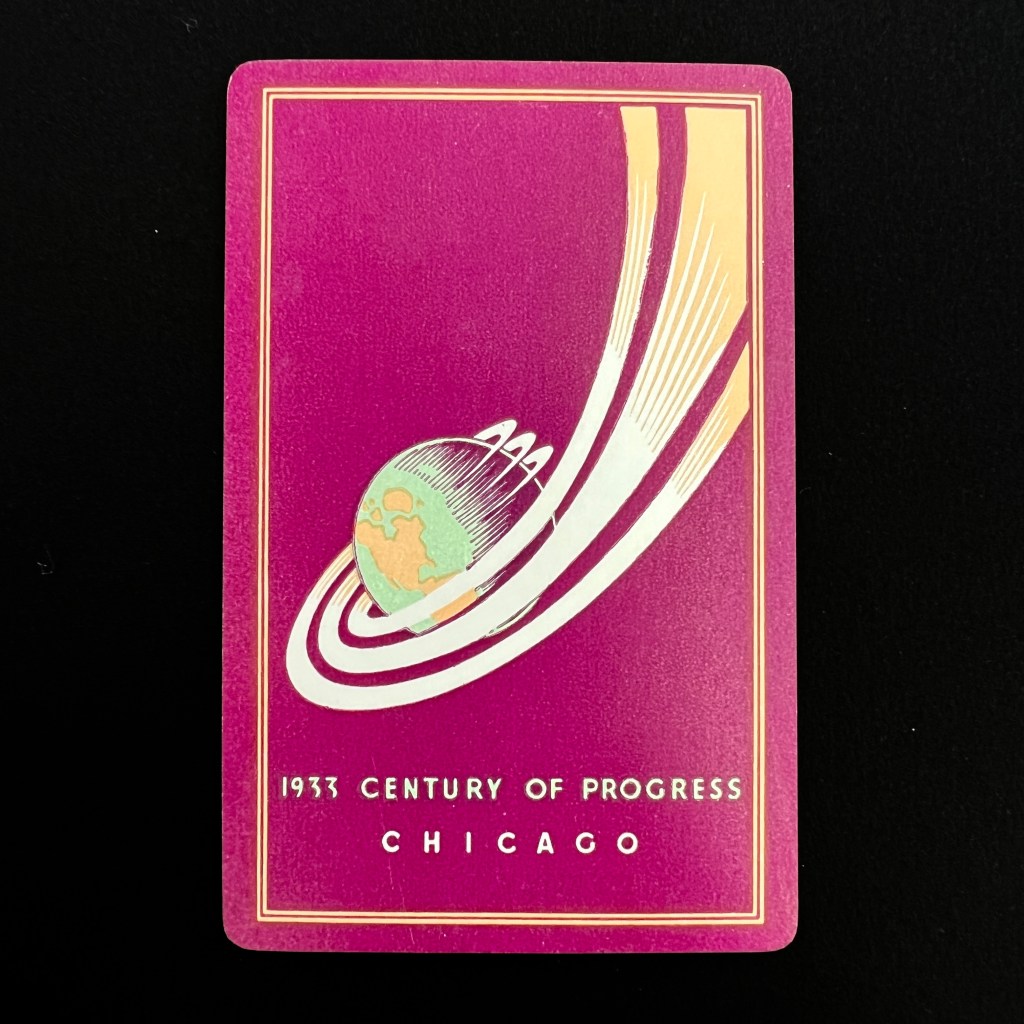
1933 Golden Pavilion Laughing Buddha Playing Card

For all the new Buddhas in the West posts
follow us on Bluesky & Instagram


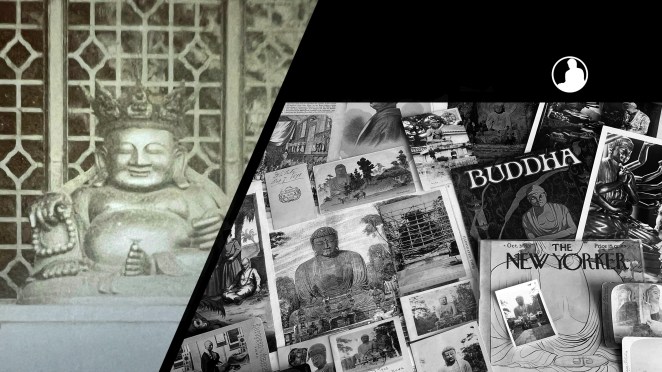
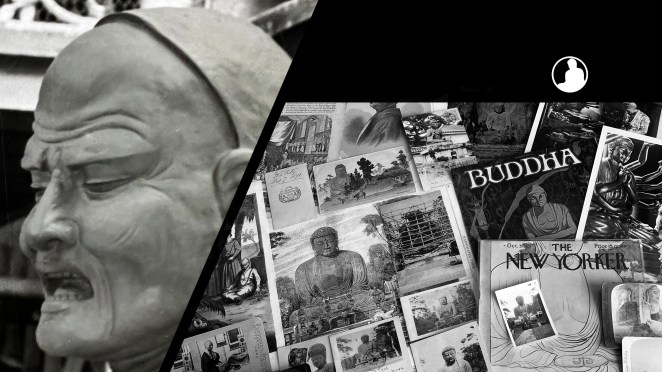
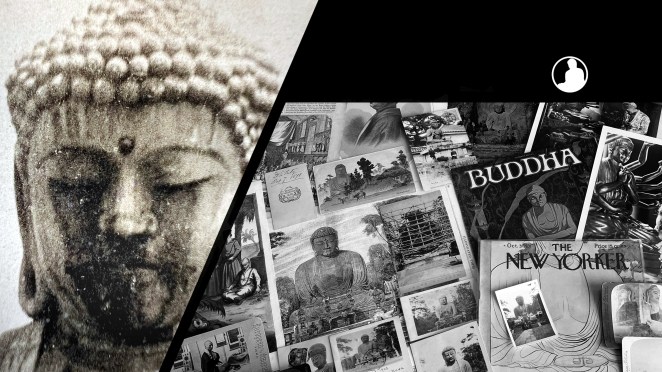
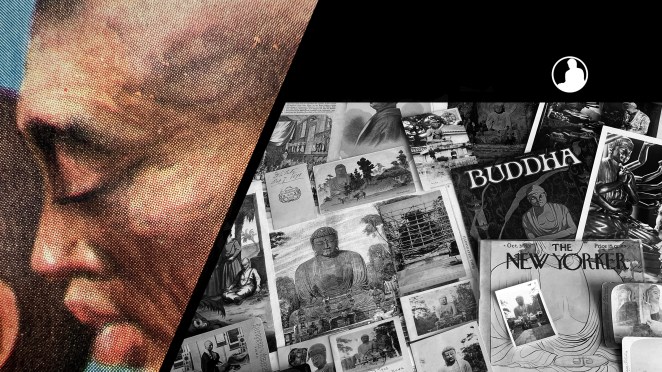
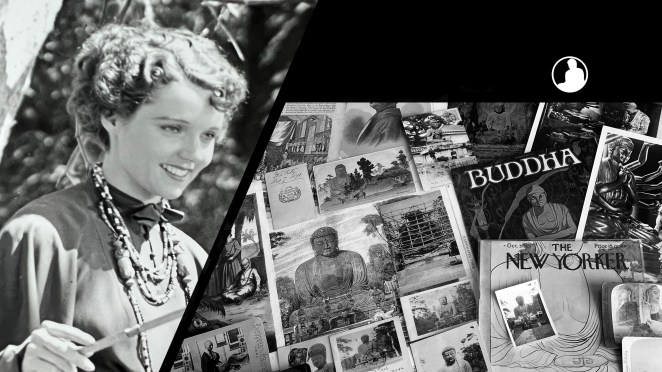
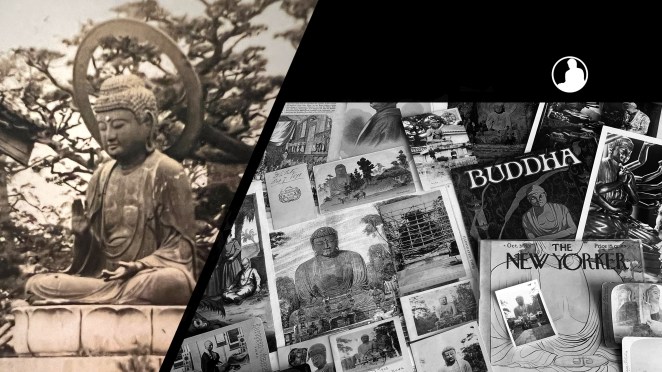
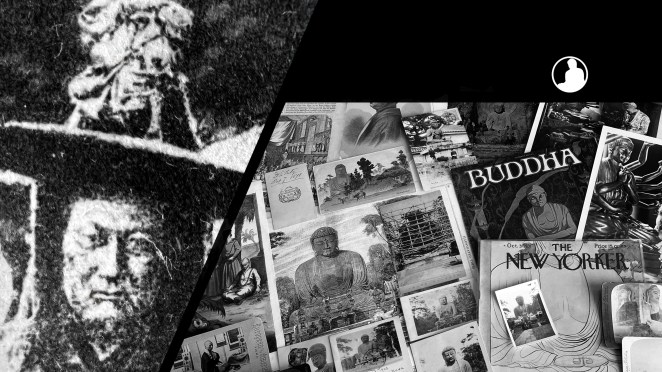
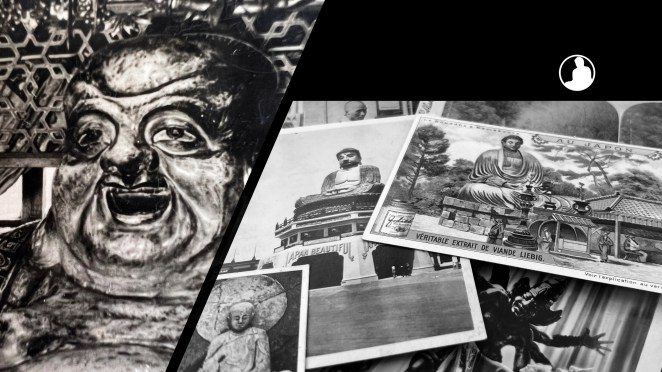
The 1933 Chicago World’s Fair held a true wonder: A Chinese replica of an 18th century Tibetan Buddhist shrine hall, the Golden Temple of Jehol. While the hall included a main shrine to Guanyin, the Laughing Buddha at the front entrance was often used in advertising.
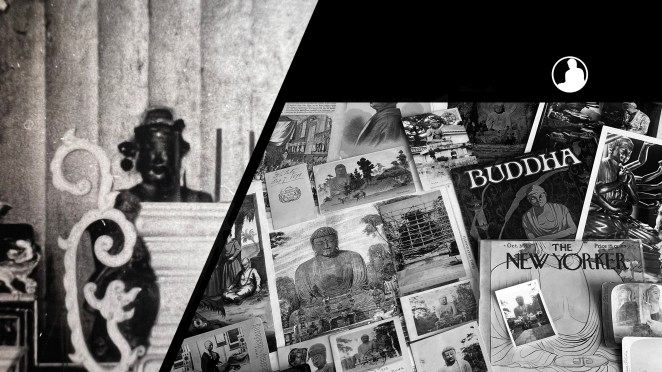
Due to growing conflict in East Asia, the Chinese government withdrew from the 1933 World’s Fair. Subsequently, organizers arranged for display of the recently acquired temple replica of Vincent Bendix, a well-known Chicago industrialist.

Bendix had funded the expedition of Sved Hedin a few years earlier to procure a replica of a Chinese Buddhist temple. The original interest was to display two replica temples with Tibetan religious objects, one in Chicago and one in Stockholm.

Only one replica was made, but Hedin acquired many ritual implements, including thankas and icons, to outfit the building. Named the Bendix Golden Temple (or Pavilion), it was a Chinese-made replica of the Wanfaguiyi Hall in present-day Chengde (Jehol).

The temple was rebuilt for the 1939 World’s Fair in New York. As of 2018 the remains of the temple hall are in Stockholm, but the ritual items and furnishing have all been lost.


The Buddhas in the West Material Archive is a digital scholarship project that catalogues artifacts depicting Buddhist material culture for Western audiences. It’s comprised of prints, photos, and an assortment of ephemera and other objects. For a brief introduction to this archive, visit the main Buddhas in the West project page.


For Related Buddhas in the West Posts Featuring Budai / Laughing Buddha:


For the Most Recent Buddhas in the West Posts: