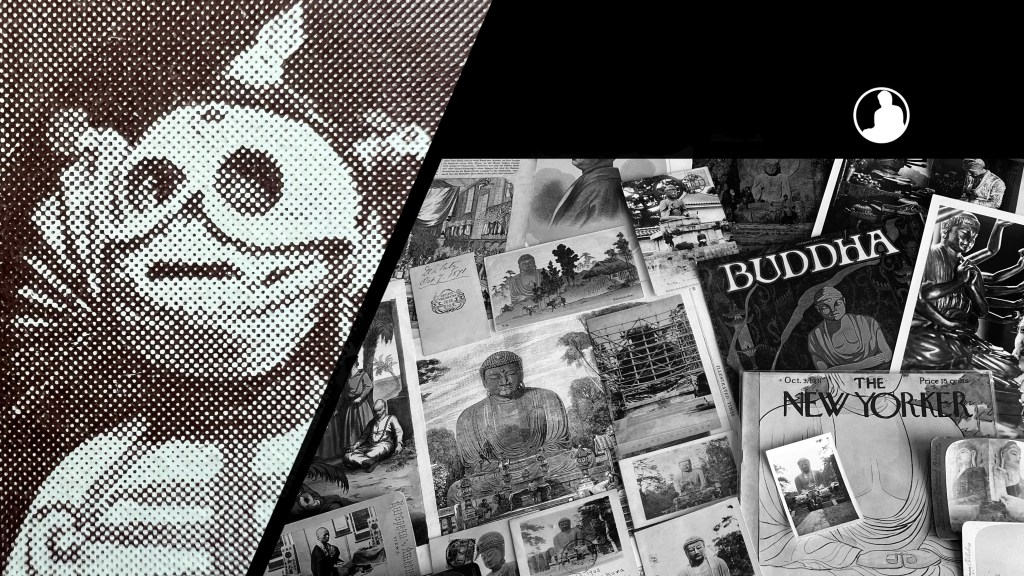
The Mask of Fu Manchu (1932) Art Studio Photograph

For all the new Buddhas in the West posts
follow us on Bluesky & Instagram


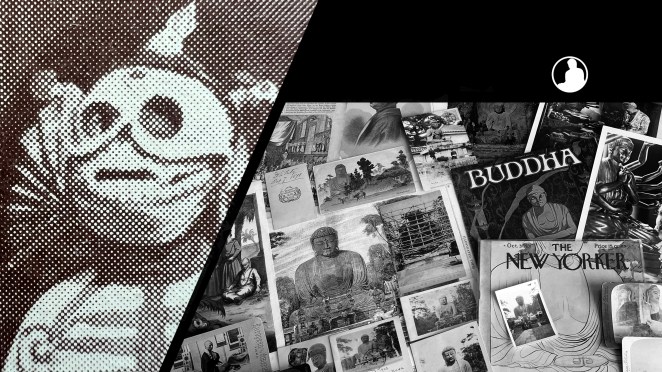
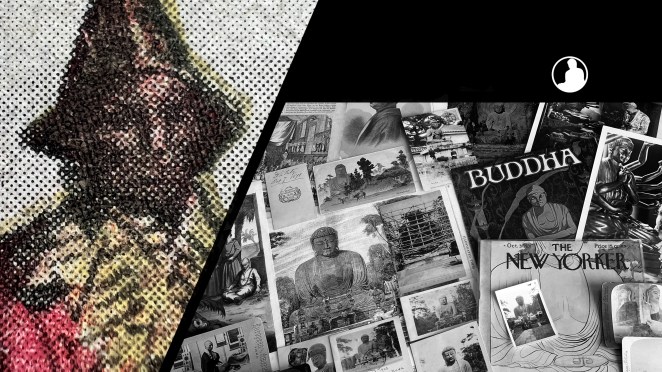
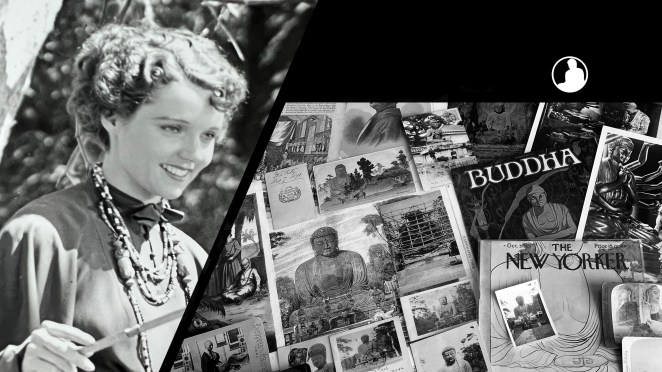
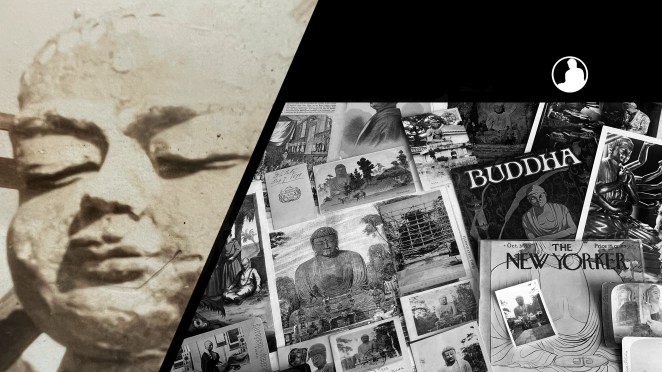
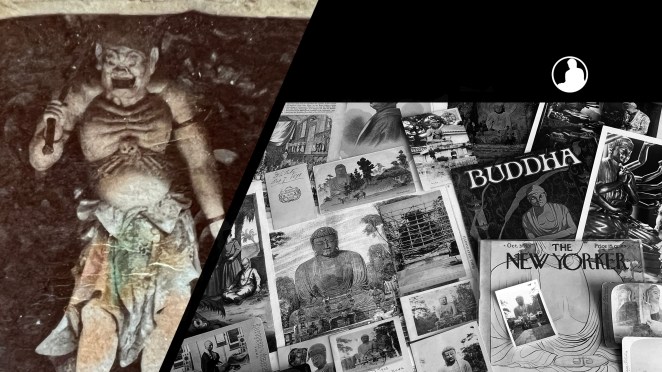
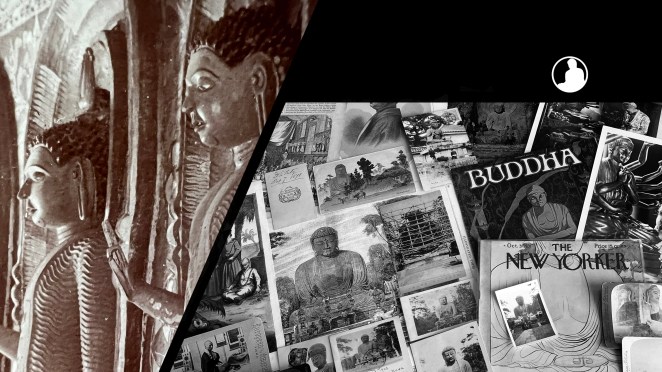
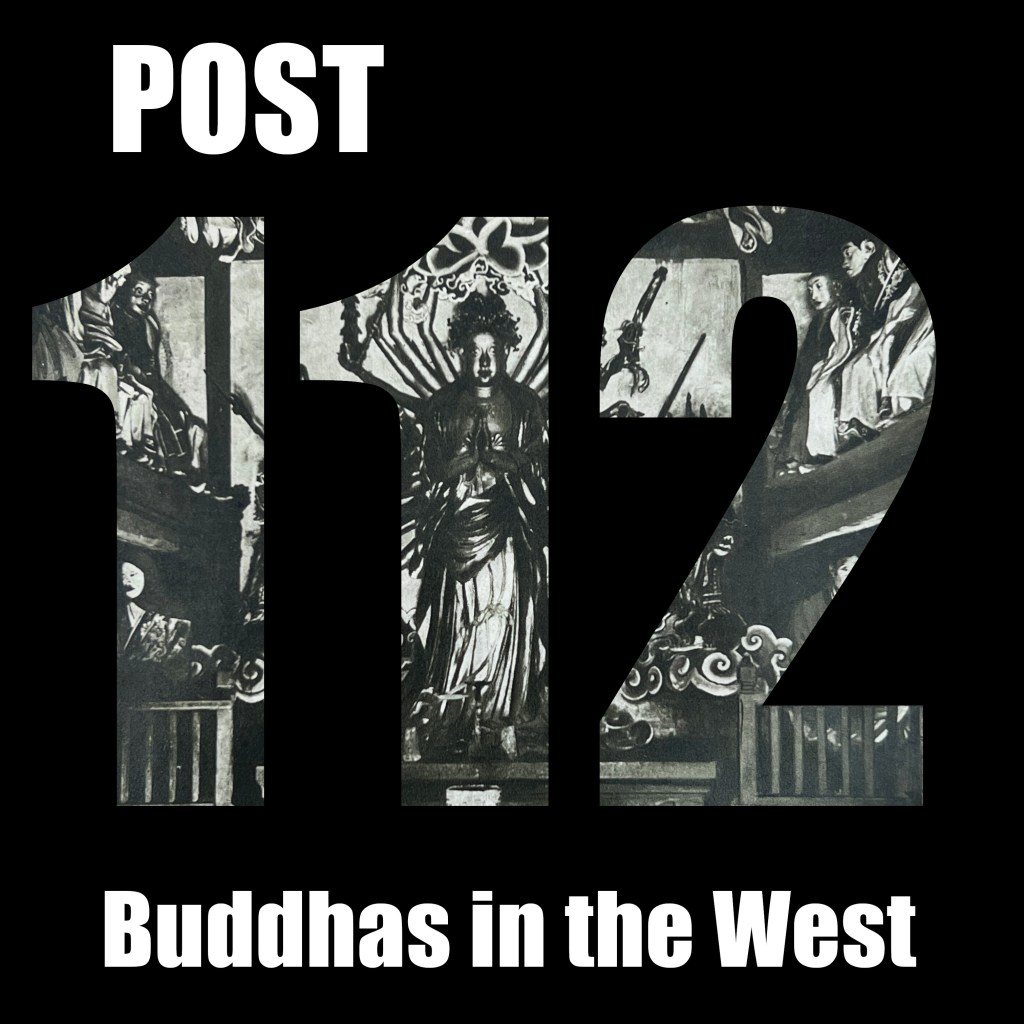
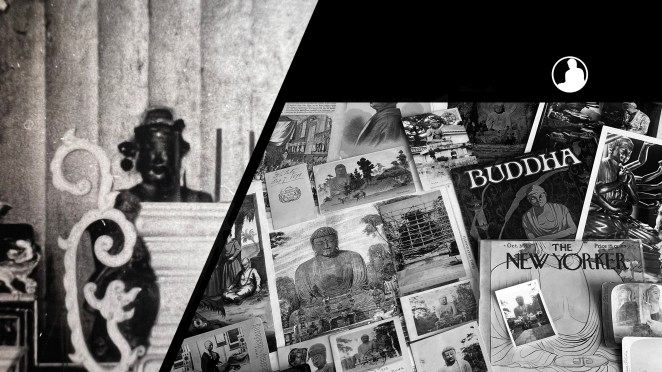
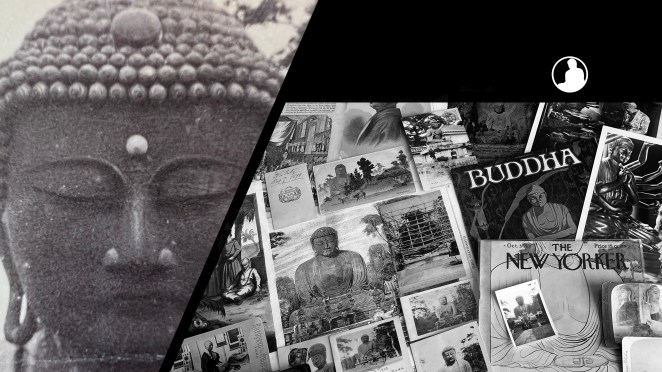
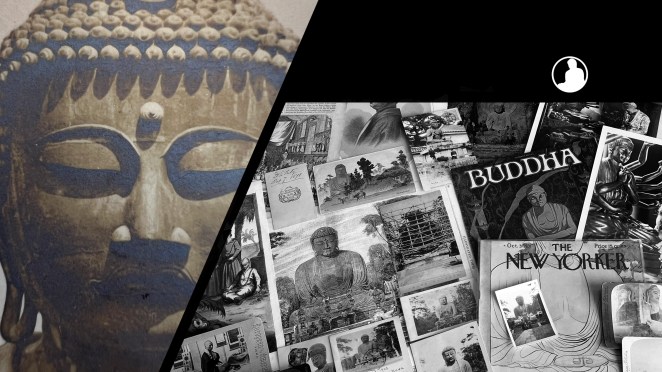
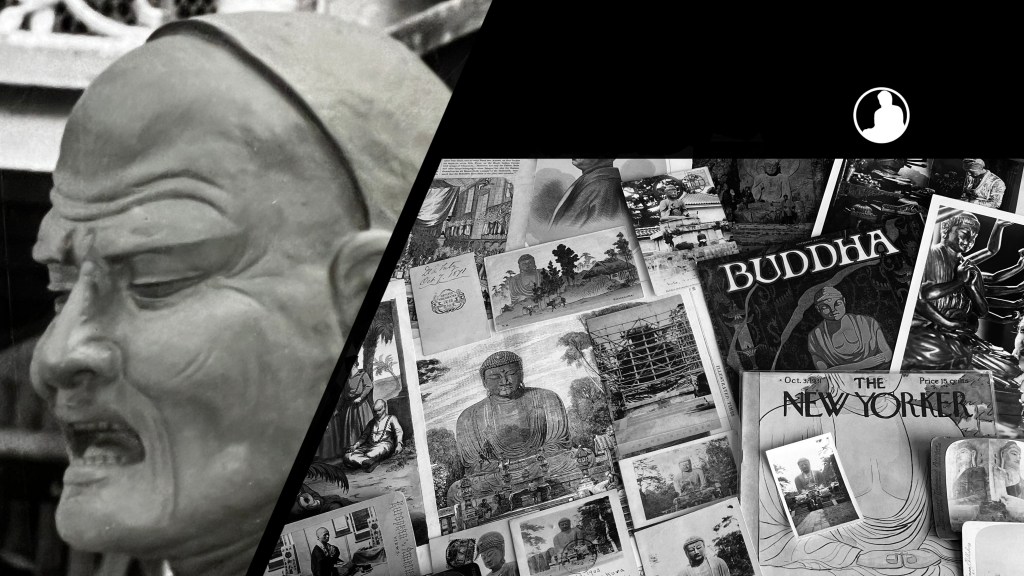
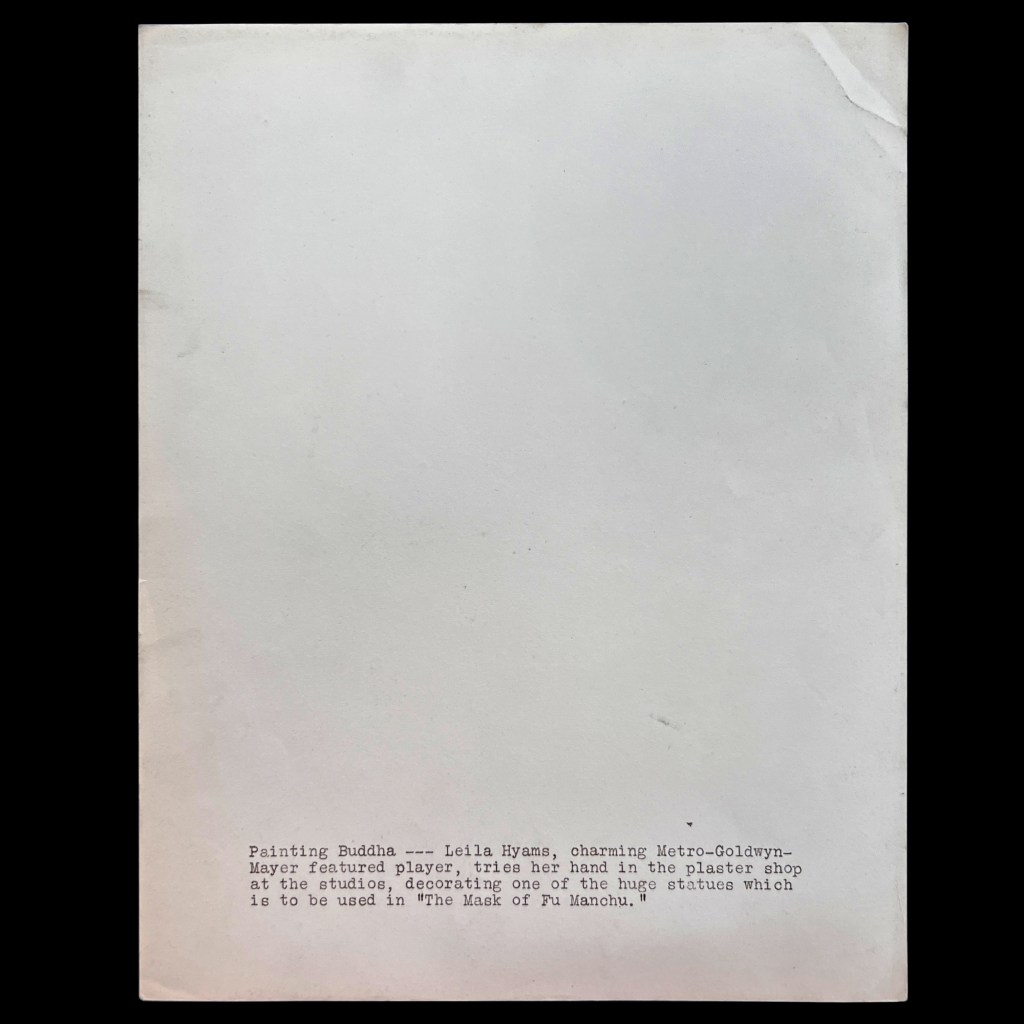
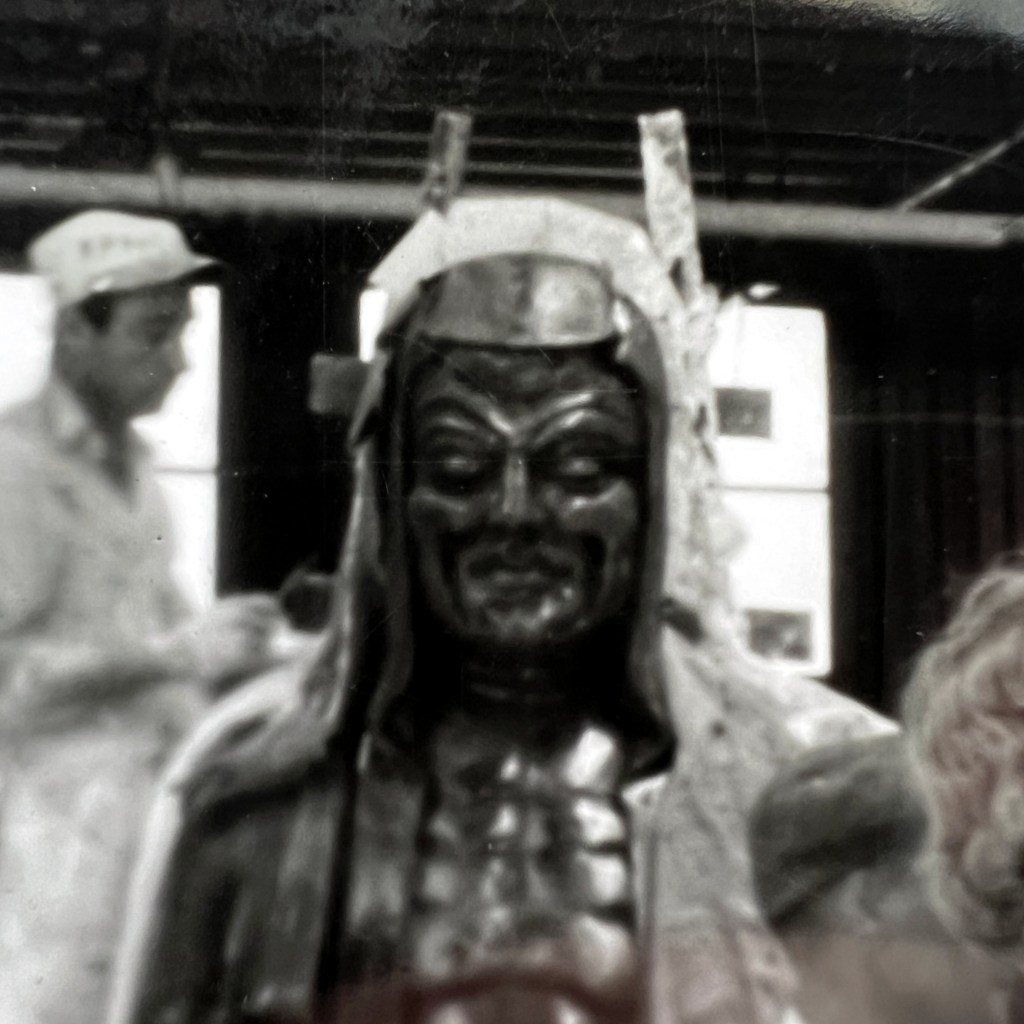
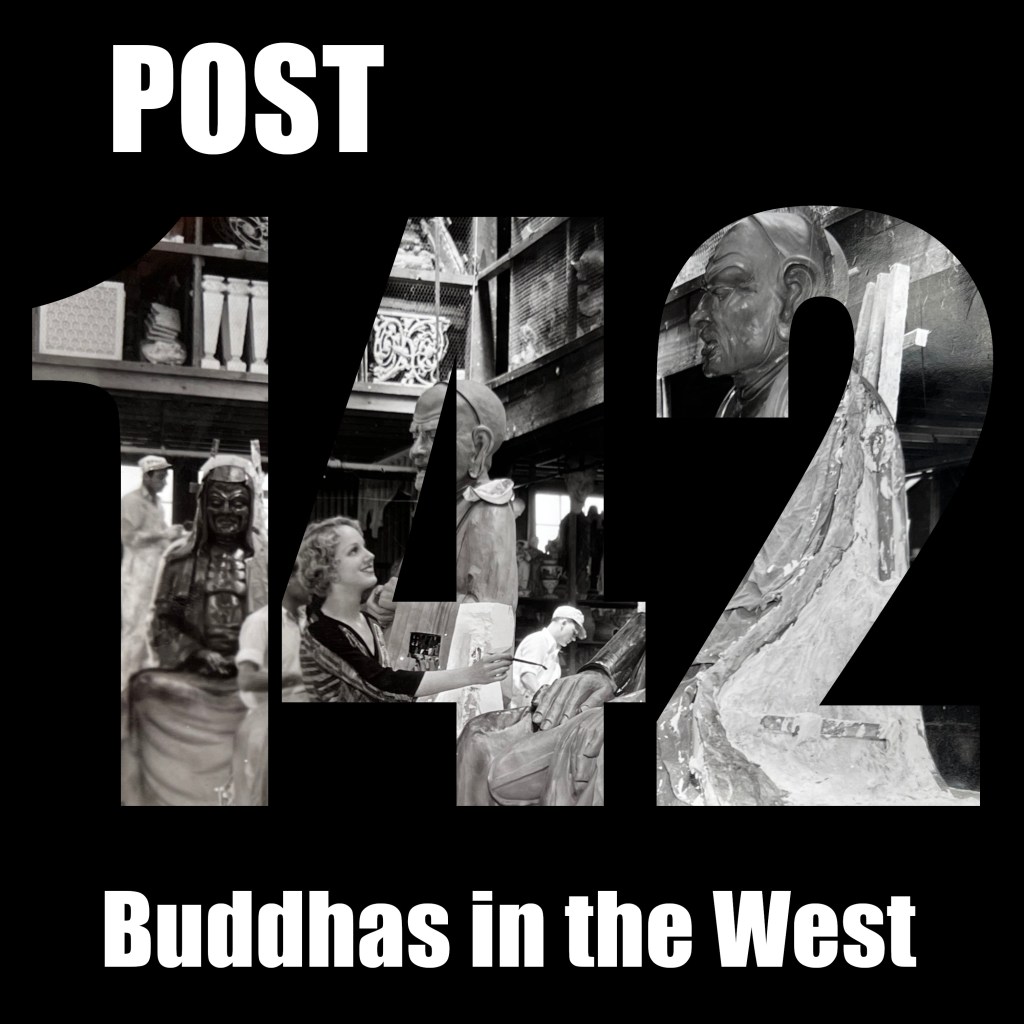
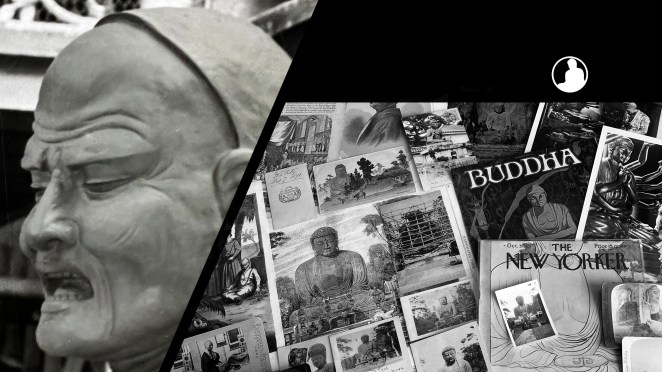
In this behind-the-scenes photo from The Mask of Fu Manchu (1932), MGM’s workshop prepares towering Buddhist statues for use as set design. Despite present-day associations with peace, art director Cedric Gibbons relied on this monumental Buddhist imagery to evoke mystery and danger.
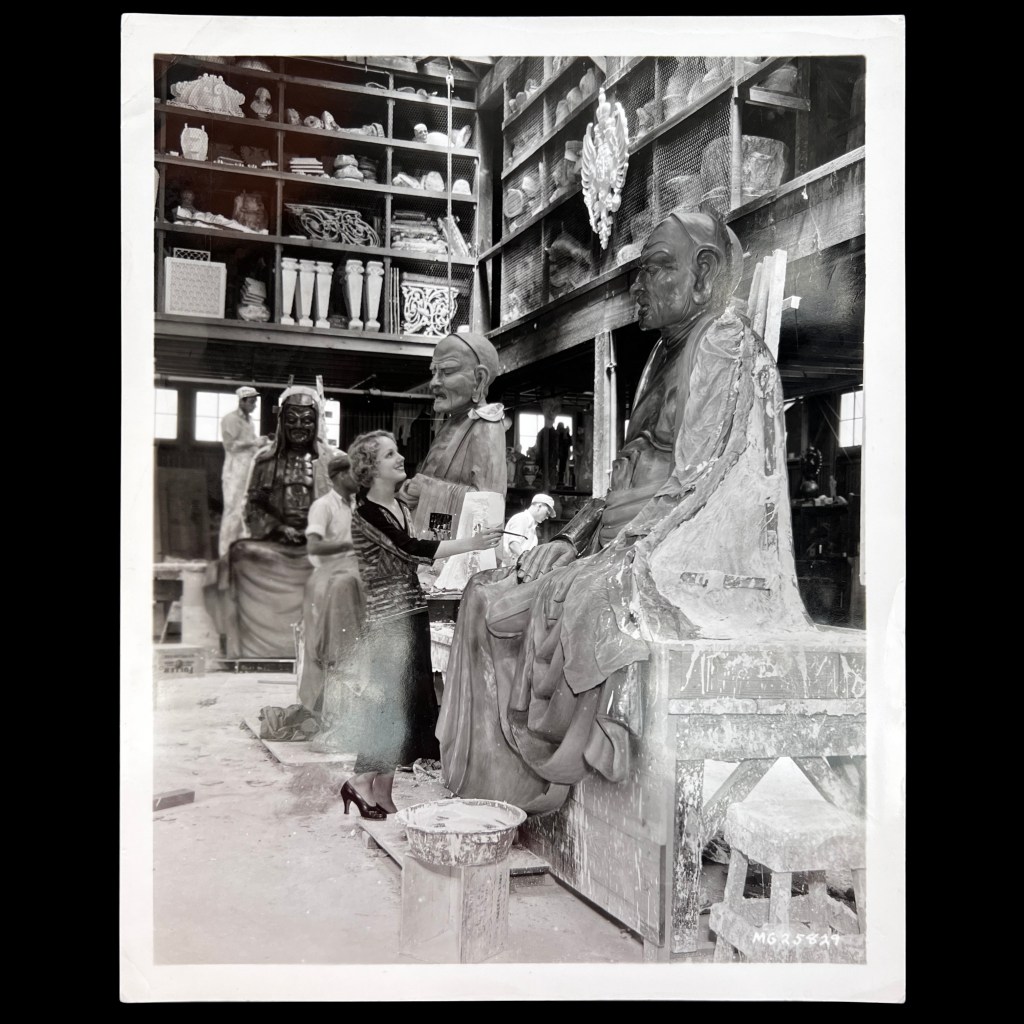
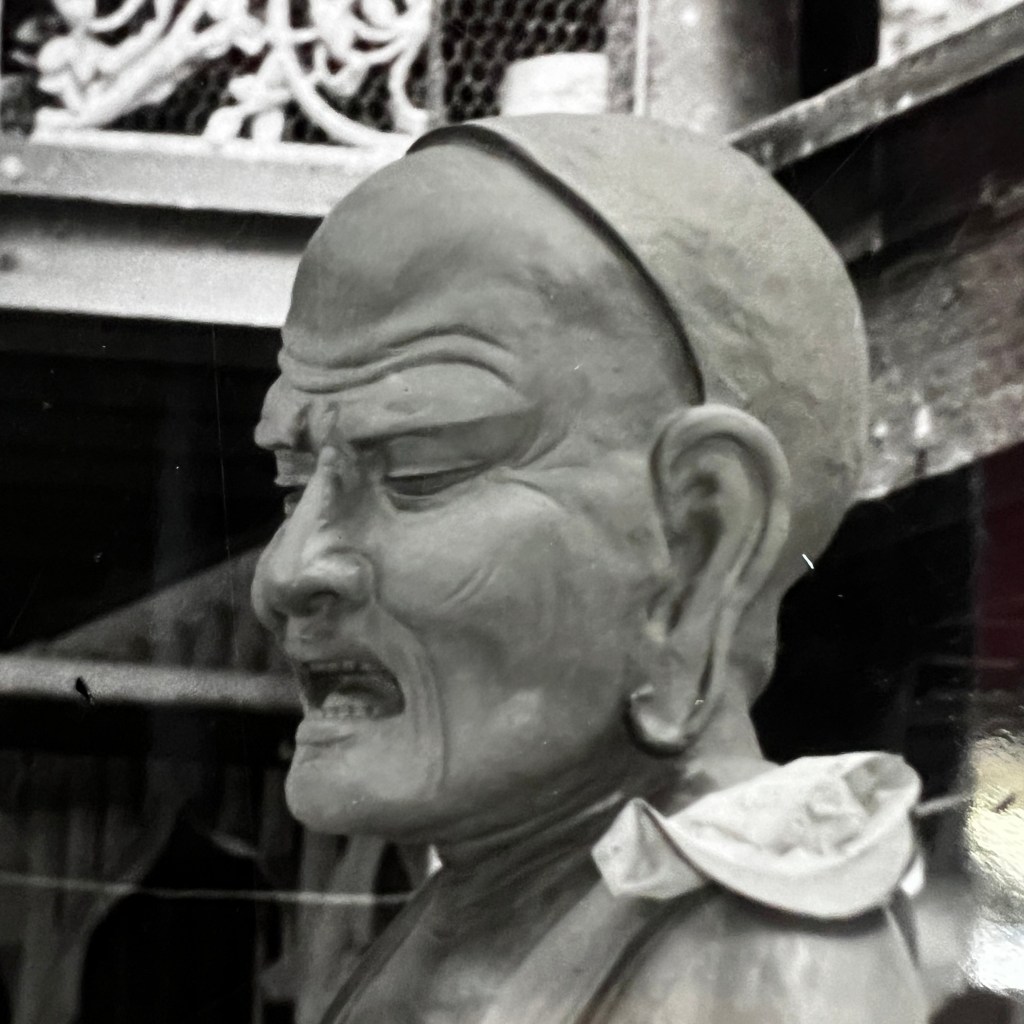
Gibbons made faithful reproductions of arhat statues, figures known in East Asia for having exaggerated and misshapen bodies and heads–signs of their supernatural attainments. These facts were unknown to most audiences who would have viewed them as expression of Fu Manchu’s grotesque villainy.
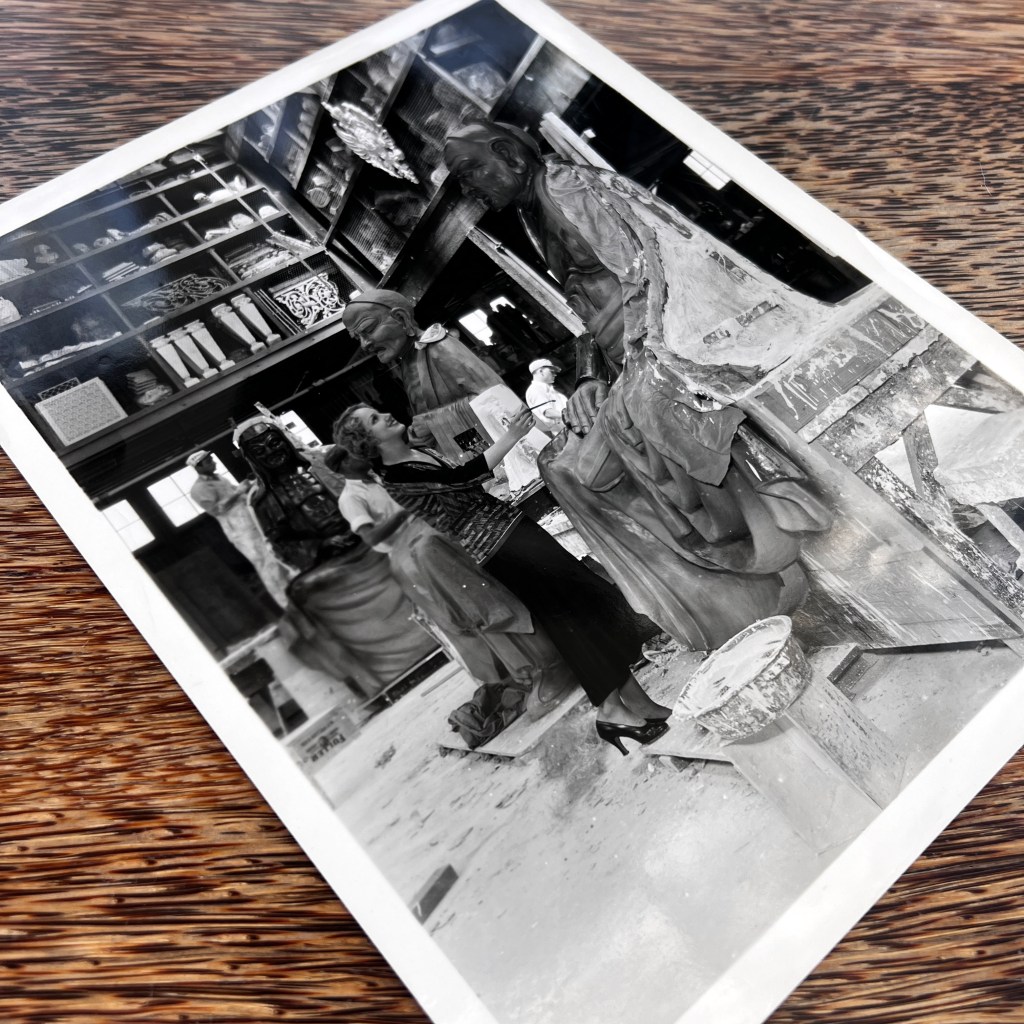
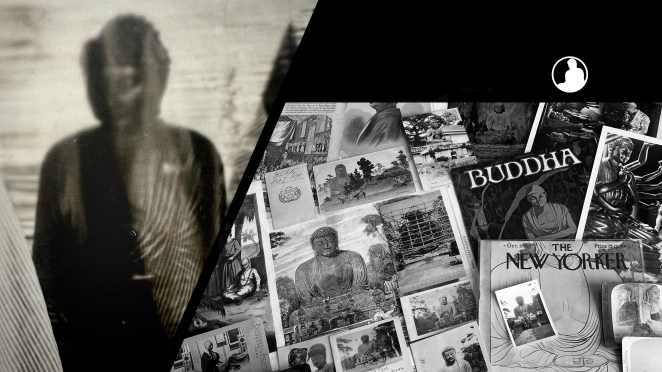
As typed on the back, the woman in the photo was Leila Hyams, an MGM studio actor who did not appear in The Mask of Fu Manchu, but had starred in MGM films since 1928.
The statue in the rear with a hood is the famous Zen patriarch, Bodhidharma (perhaps his first depiction in American film?) In East Asia, Bodhidharma was sometimes included in sets of eighteen arhats that flanked the walls of Buddhist monasteries.
These oversized temple statuary, detached from their religious context, became atmospheric props signaling an imagined Asian world to Western audiences. For further discussion of Asian representation in cinema, see Naomi Greene’s From Fu Manchu to Kung Fu Panda (2014).
The Buddhas in the West Material Archive is a digital scholarship project that catalogues artifacts depicting Buddhist material culture for Western audiences. It’s comprised of prints, photos, and an assortment of ephemera and other objects. For a brief introduction to this archive, visit the main Buddhas in the West project page.


For Related Buddhas in the West Posts Featuring Arhats:

For the Most Recent Buddhas in the West Posts:

1924 British Empire Exhibition Tibetan Dancers Postcard

For all the new Buddhas in the West posts
follow us on Bluesky & Instagram


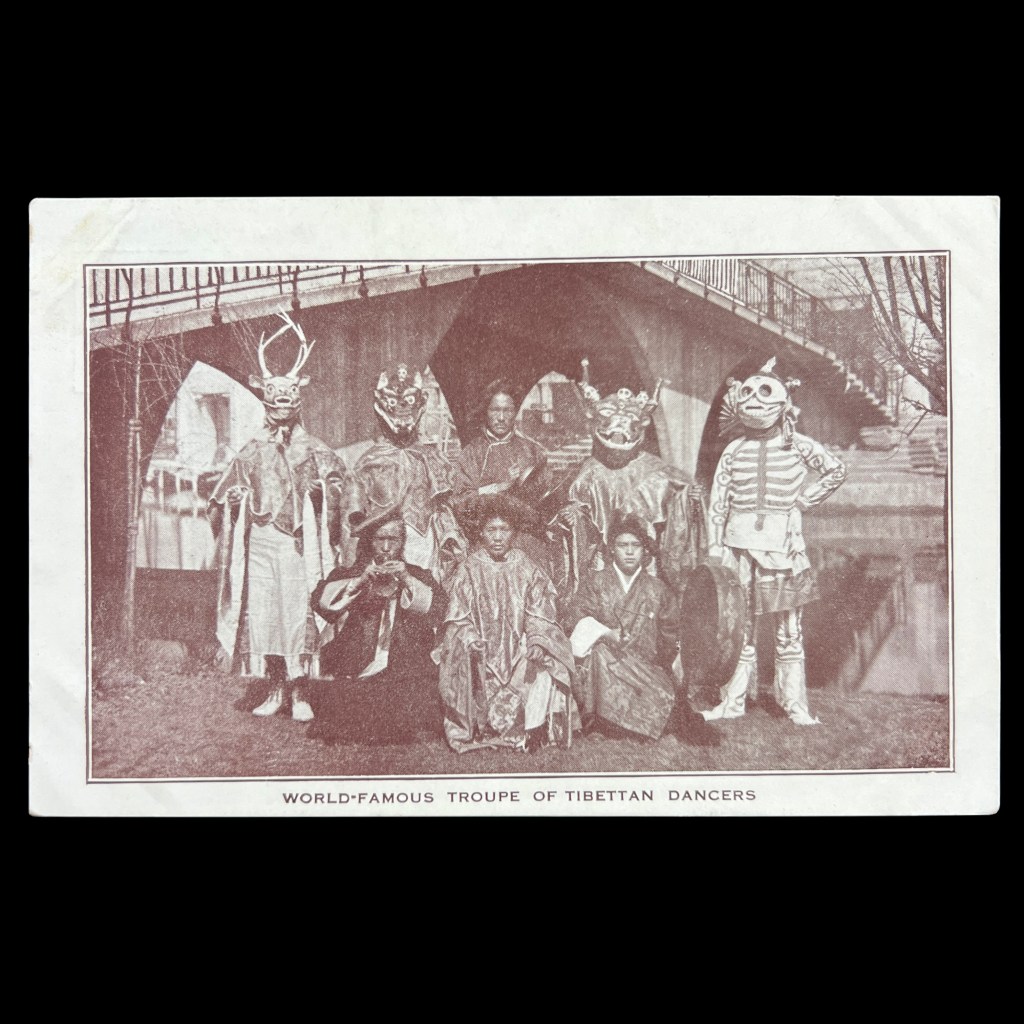
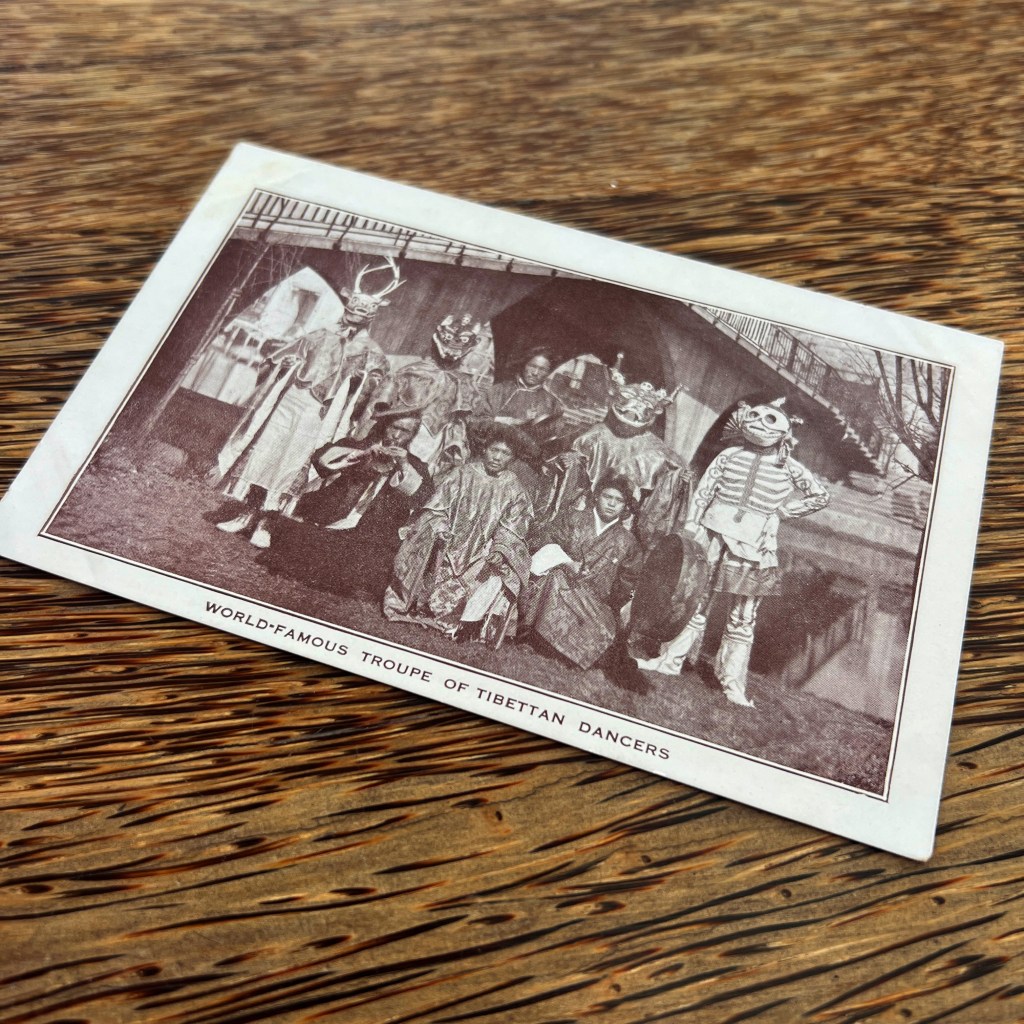
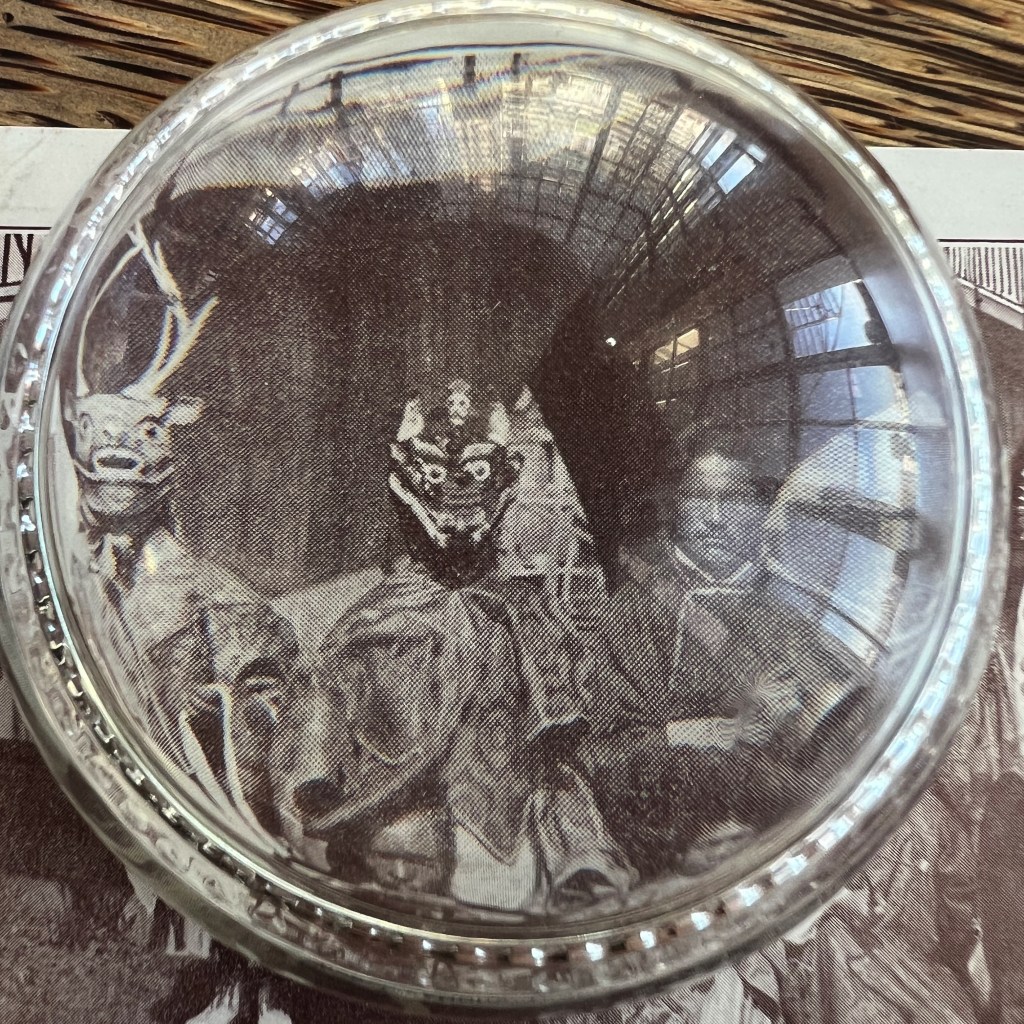
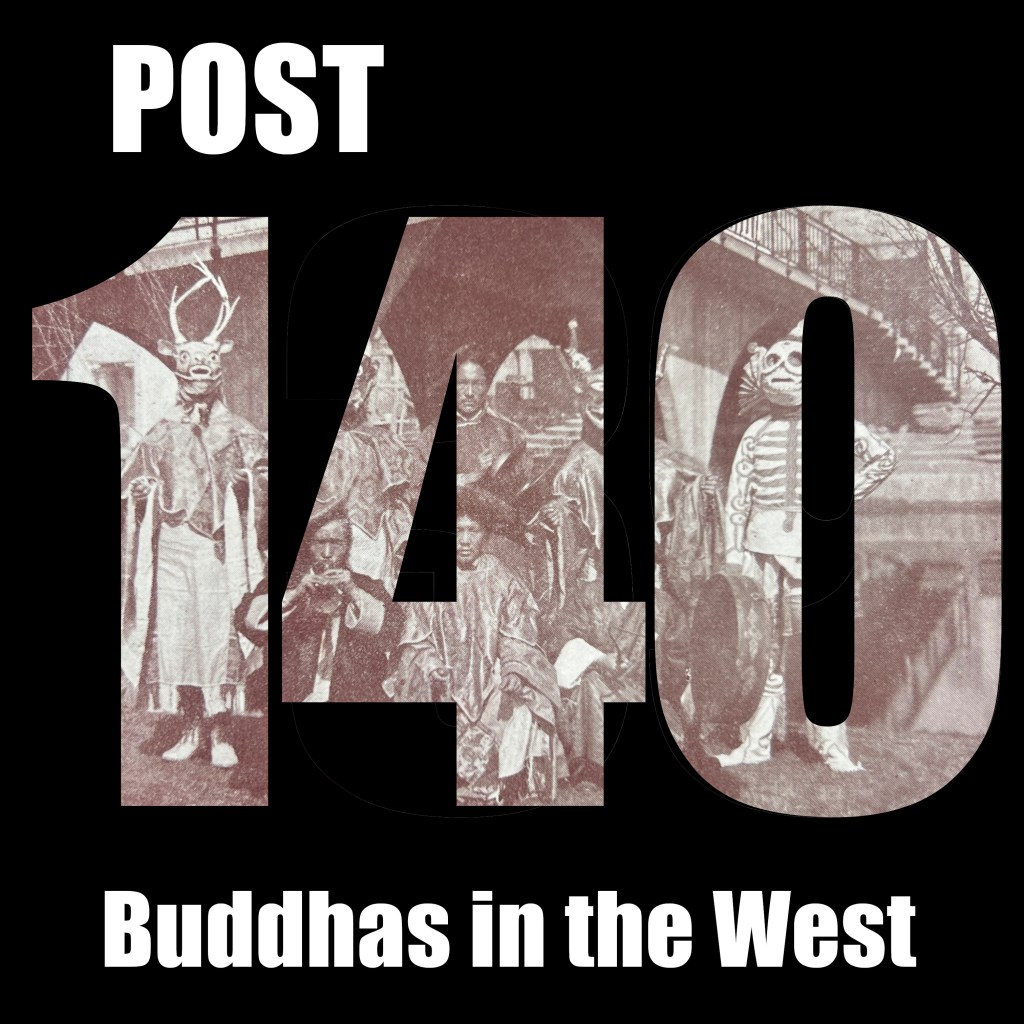
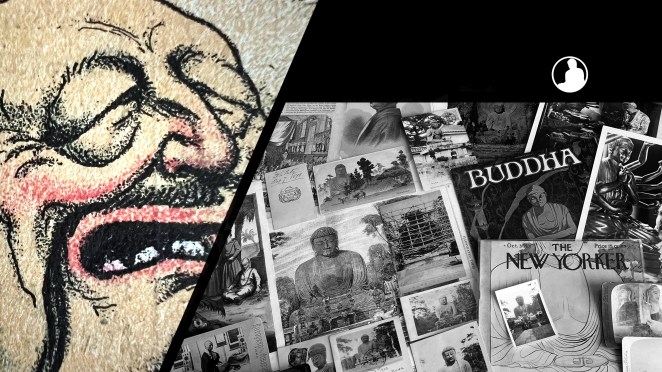
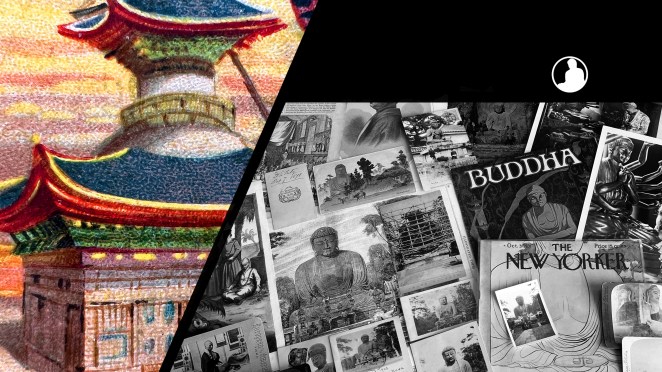
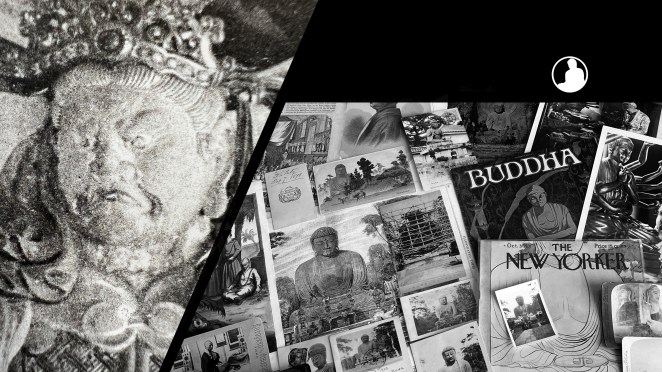
The first Tibetan Buddhist monks came to Europe amid the surge of interest over attempts to summit Mt. Everest in the 1920s. Capitalizing on this excitement, a promoter in Darjeeling recruited men to pose as Tibetan cham dancers for the British Empire Exhibition at Wembley in 1924.

Dressed in what appeared to be authentic masks and robes, the troupe performed in a theater attached to the India Pavilion. Not everyone was impressed; a Tibetan student then studying in England regarded the performances as inauthentic and insulting to both Tibet and Buddhism.

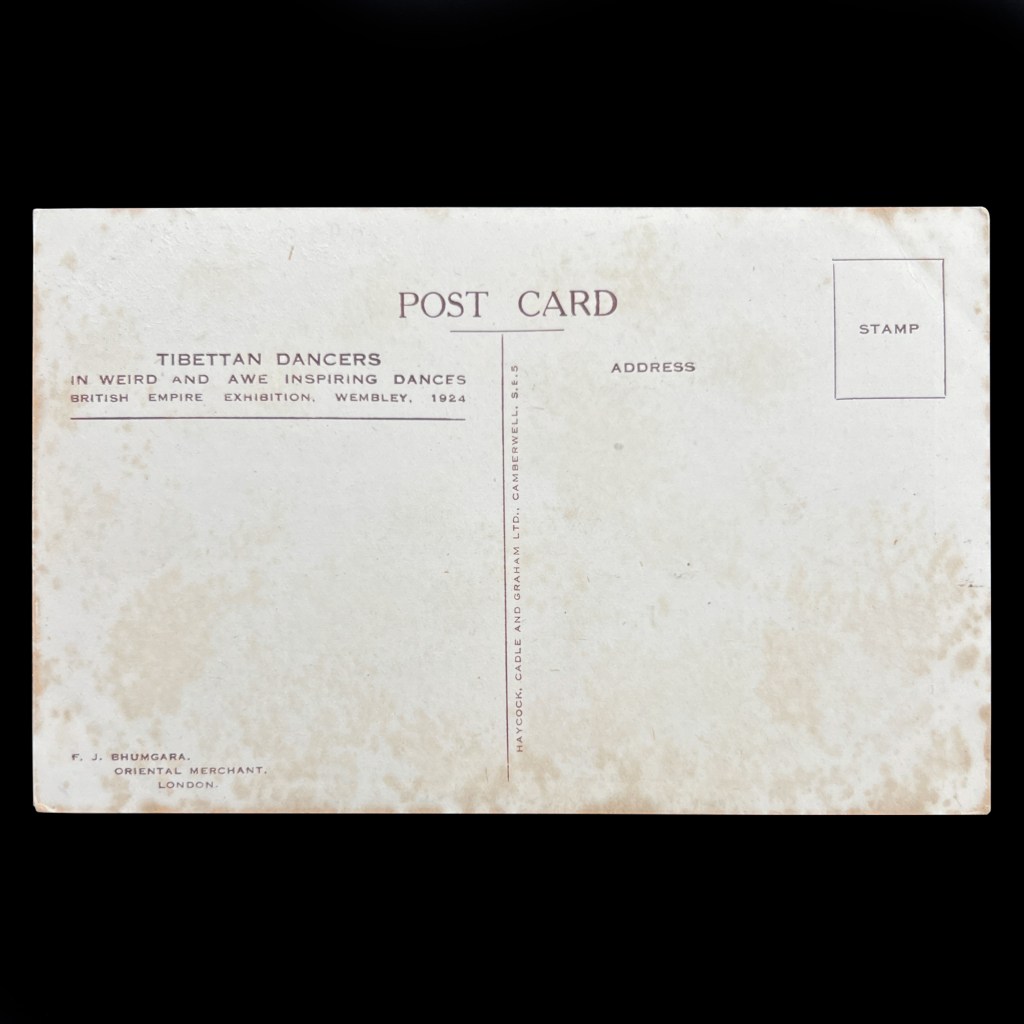
Advertised as performing “weird and awe inspiring dances,” the troupe shared the stage alongside Indian snake charmers, jugglers, and magicians. This spectacle formed part of a long-standing colonial practice of publicly displaying foreign people as part of ethnological “human zoos.”

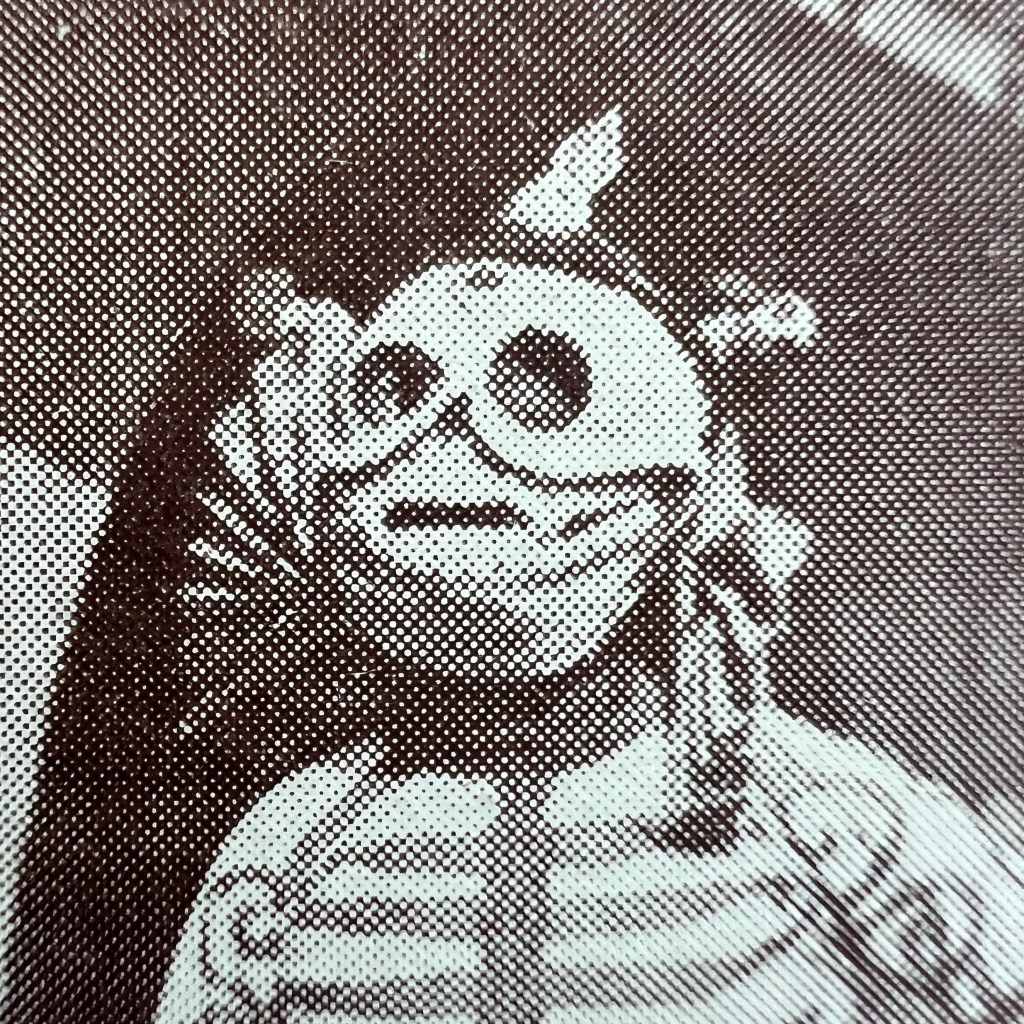
The costumes themselves drew on figures from actual cham rituals, including the fierce Buddhist deity Yama and a sacred stag.

Despite the unease of Tibetan officials, “real” Tibetan monks were allowed to tour Europe for the 1924 premier of the Epic of Everest, performing music as part of a live prologue to the film. For more on these monks, see Peter Hansen’s “The Dancing Lamas of Everest” (1996).


The Buddhas in the West Material Archive is a digital scholarship project that catalogues artifacts depicting Buddhist material culture for Western audiences. It’s comprised of prints, photos, and an assortment of ephemera and other objects. For a brief introduction to this archive, visit the main Buddhas in the West project page.


For Related Buddhas in the West Posts Featuring Ritual Dance:


For the Most Recent Buddhas in the West Posts:

Kimbei’s Five Hundred Arhats of Zenpō-ji Photograph

For all the new Buddhas in the West posts
follow us on Bluesky & Instagram


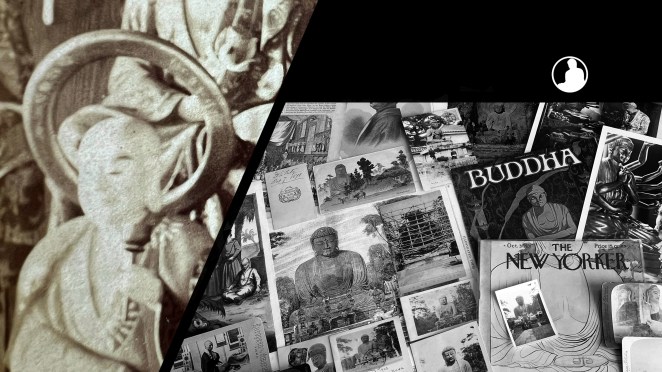
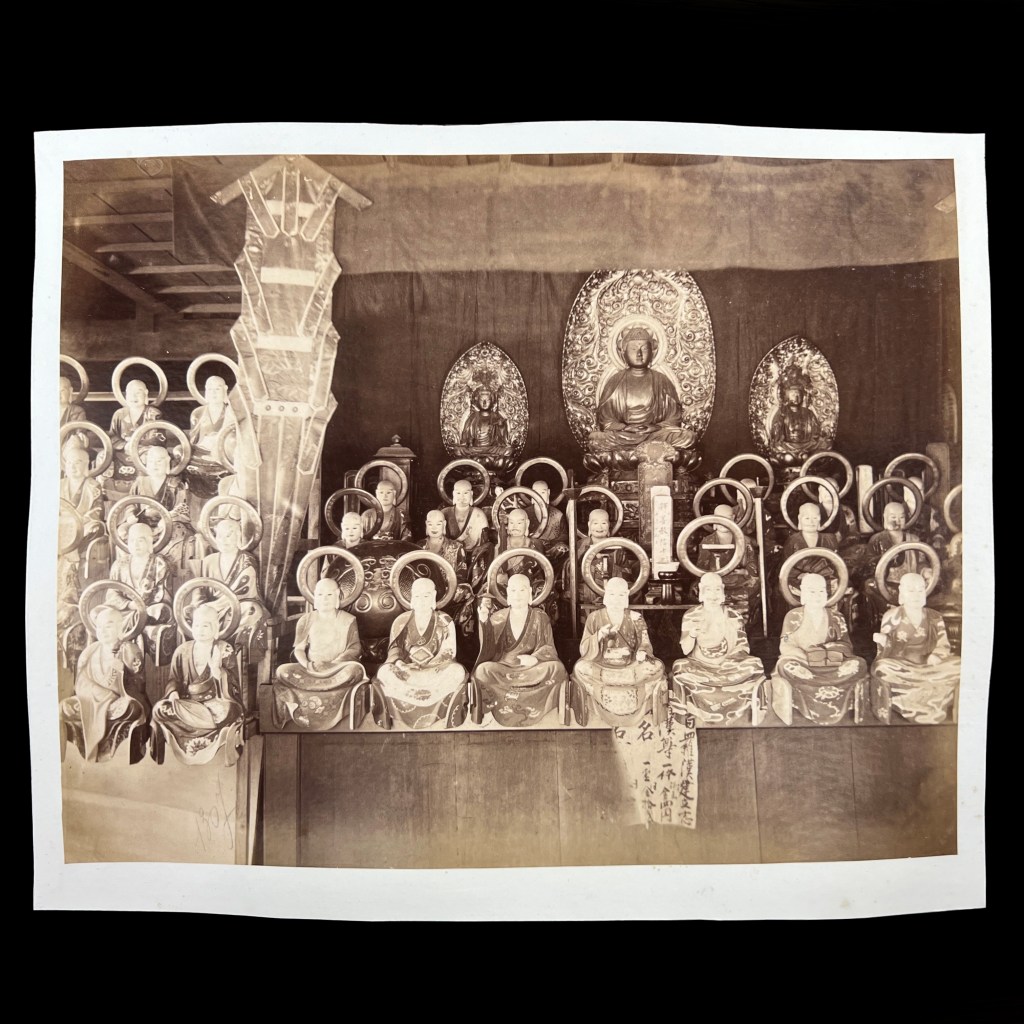
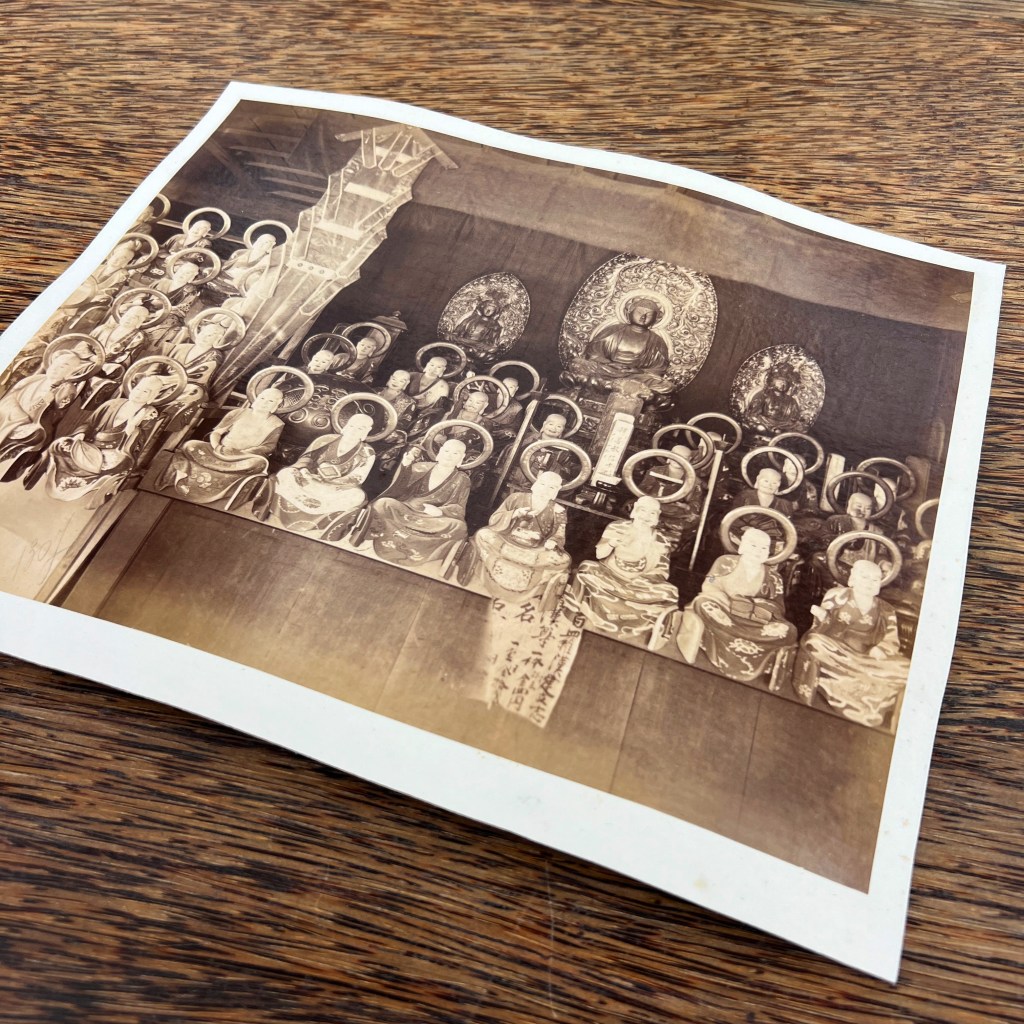
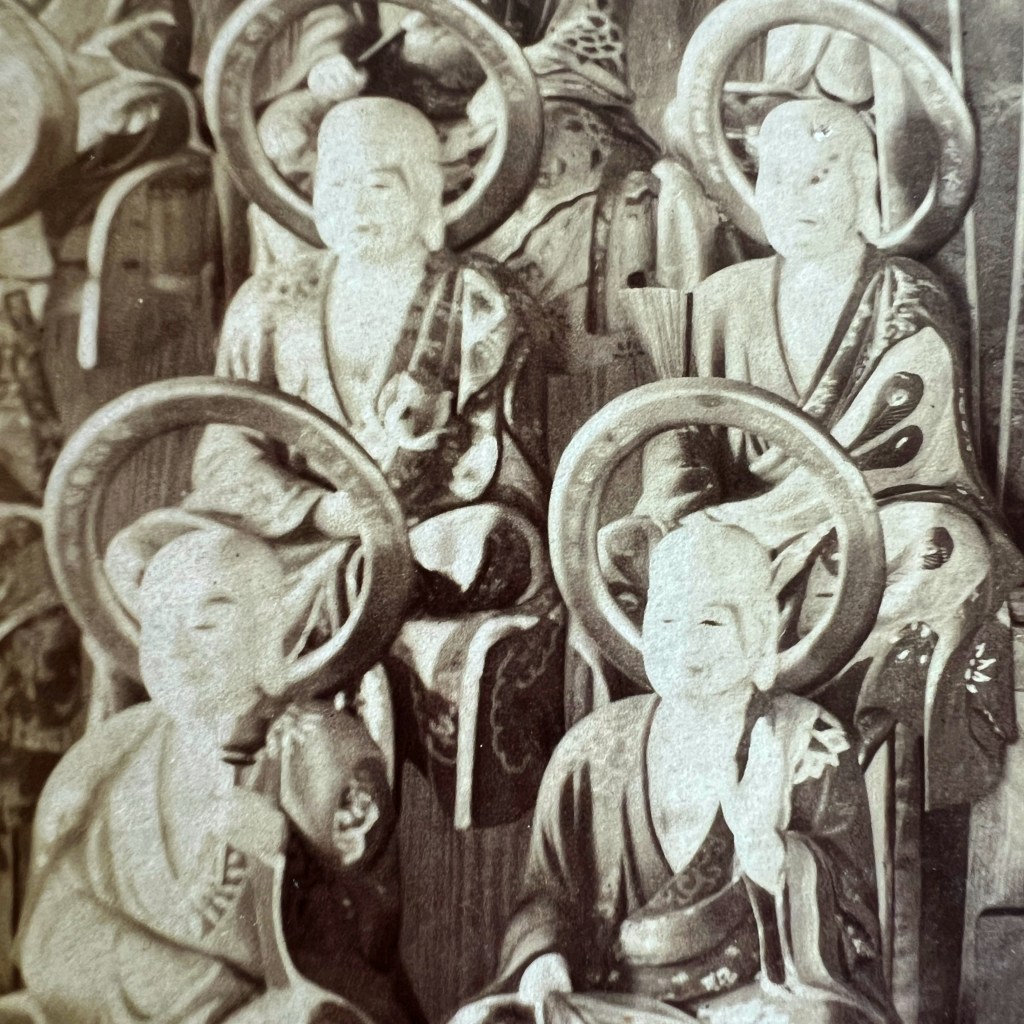
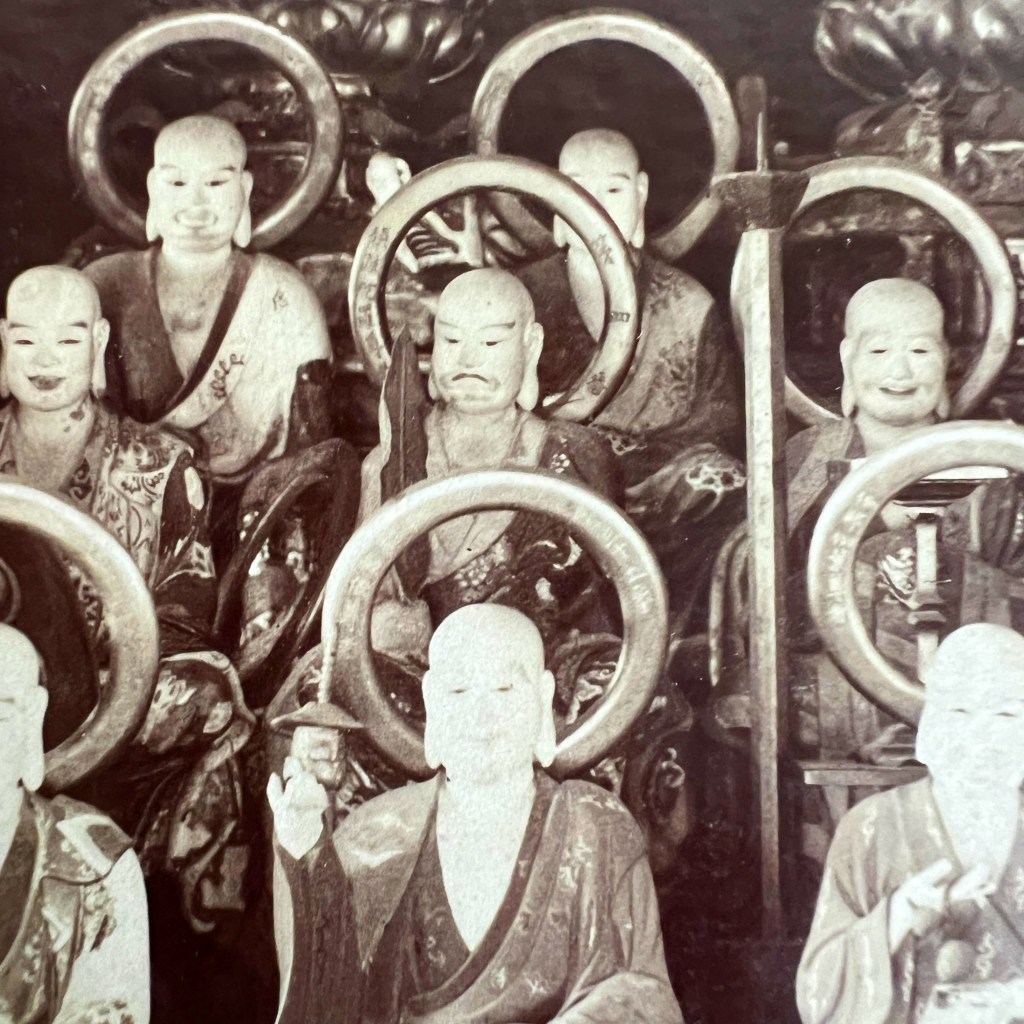
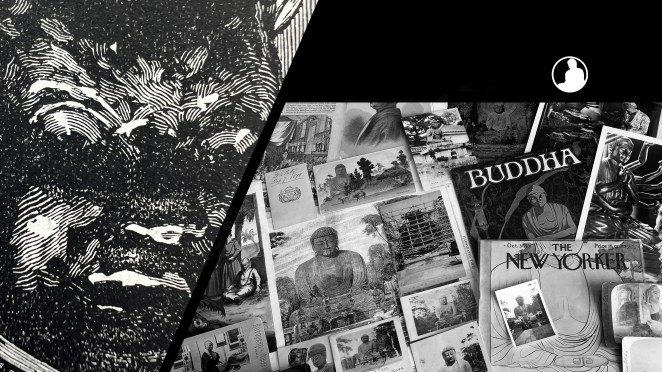
Founded in the 10th century, Zenpō-ji, a Sōtō Zen monastery, is renowned for the protective prayers its resident priests chant each day. The temple is also famous for its remarkable collection of more than five hundred arhat statues, each carved with a distinct facial expression.

Arhats, the Awakened disciples of the Buddha, are regarded in East Asia as protectors of the Buddha’s teaching. Zenpō-ji, located near Tsuruoka in northeast Japan, has 531 unique arhat statues that were carved in the early 1850s.

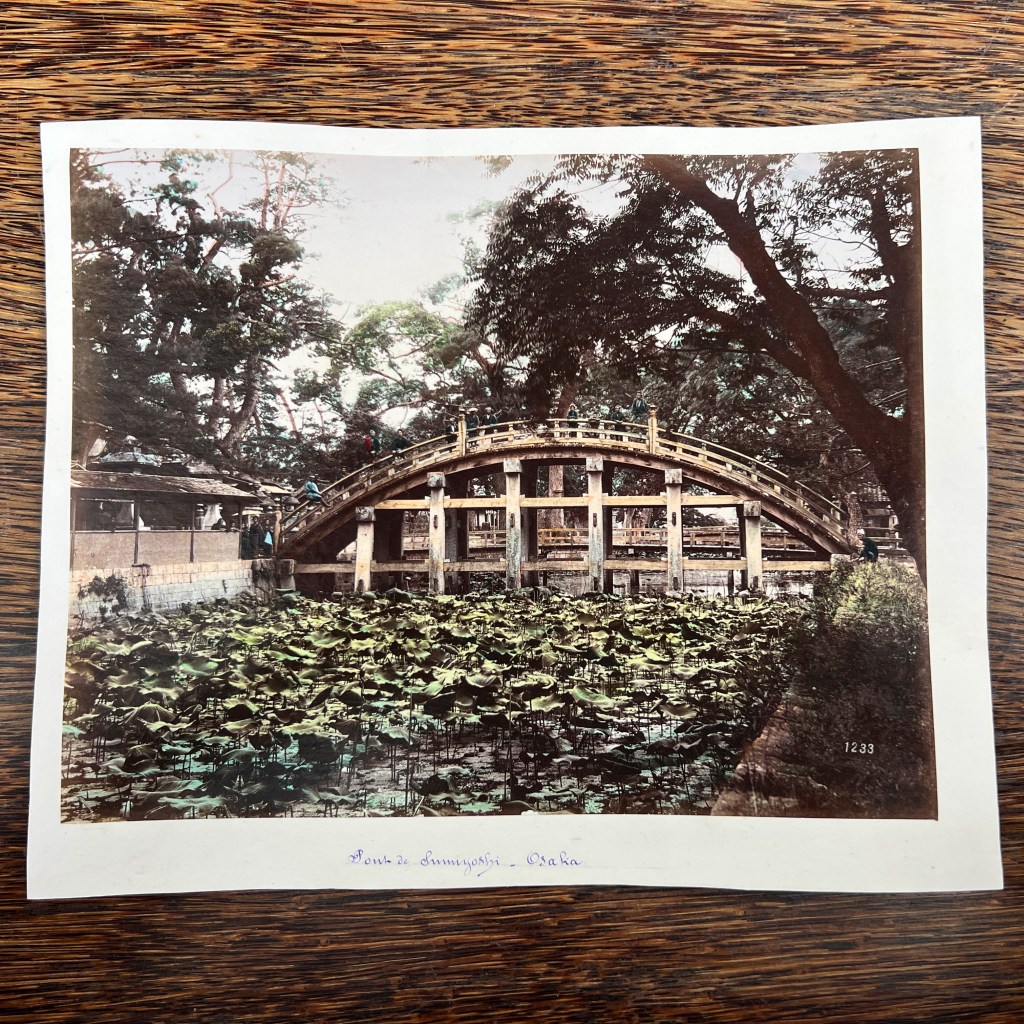
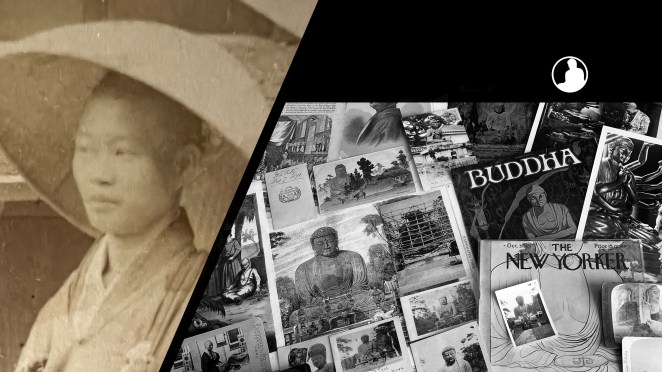
The back of the mount bears a second photo of the Drum Bridge at Sumiyoshi in Osaka, suggesting this page was extracted from a tourist album of photographs. This hand-painted photo is attributed to Kusakabe Kimbei and dates to the 1890s; the photo of Zenpō-ji may also be a Kimbei print.

According to the temple, visitors are encouraged to look among the statues for one whose features resemble those of a deceased relative and to make offerings before it.

All 531 arhat statues were recently restored and repainted. For an informative introduction to Zenpō-ji and a behind-the-scenes look at the restoration process, see the temple’s video viewable here: https://tinyurl.com/4cefw6xp.


The Buddhas in the West Material Archive is a digital scholarship project that catalogues artifacts depicting Buddhist material culture for Western audiences. It’s comprised of prints, photos, and an assortment of ephemera and other objects. For a brief introduction to this archive, visit the main Buddhas in the West project page.


For Related Buddhas in the West Posts Featuring Photography:


For the Most Recent Buddhas in the West Posts:

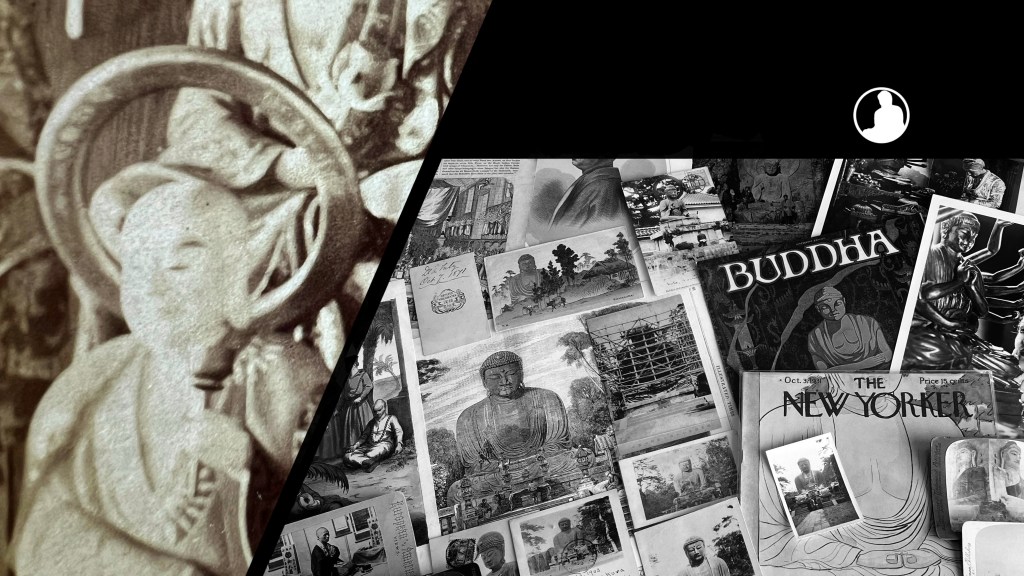
Poujade de Ladevèze’s Arhat Who Reveals His Heart Postcard

For all the new Buddhas in the West posts
follow us on Bluesky & Instagram


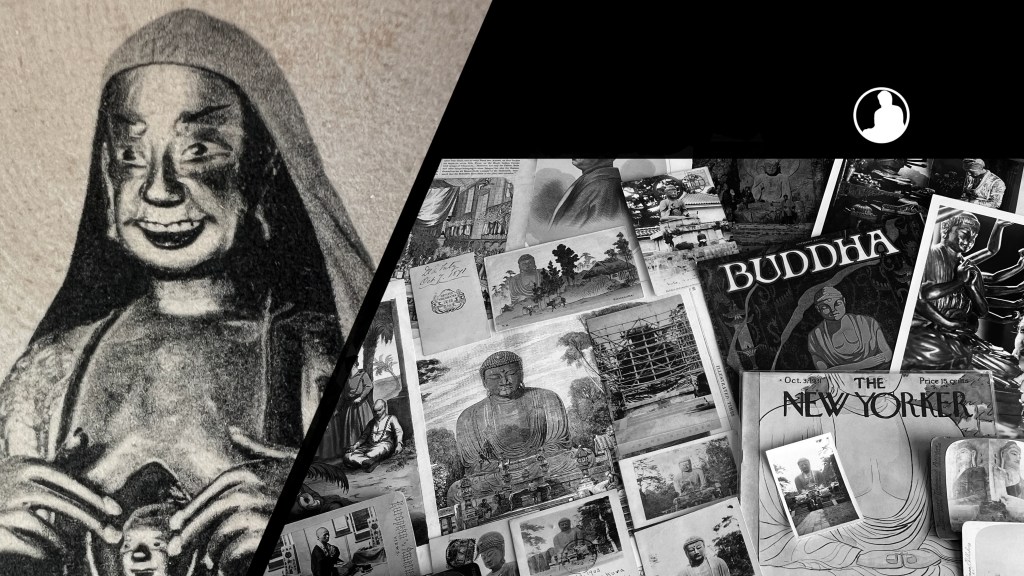
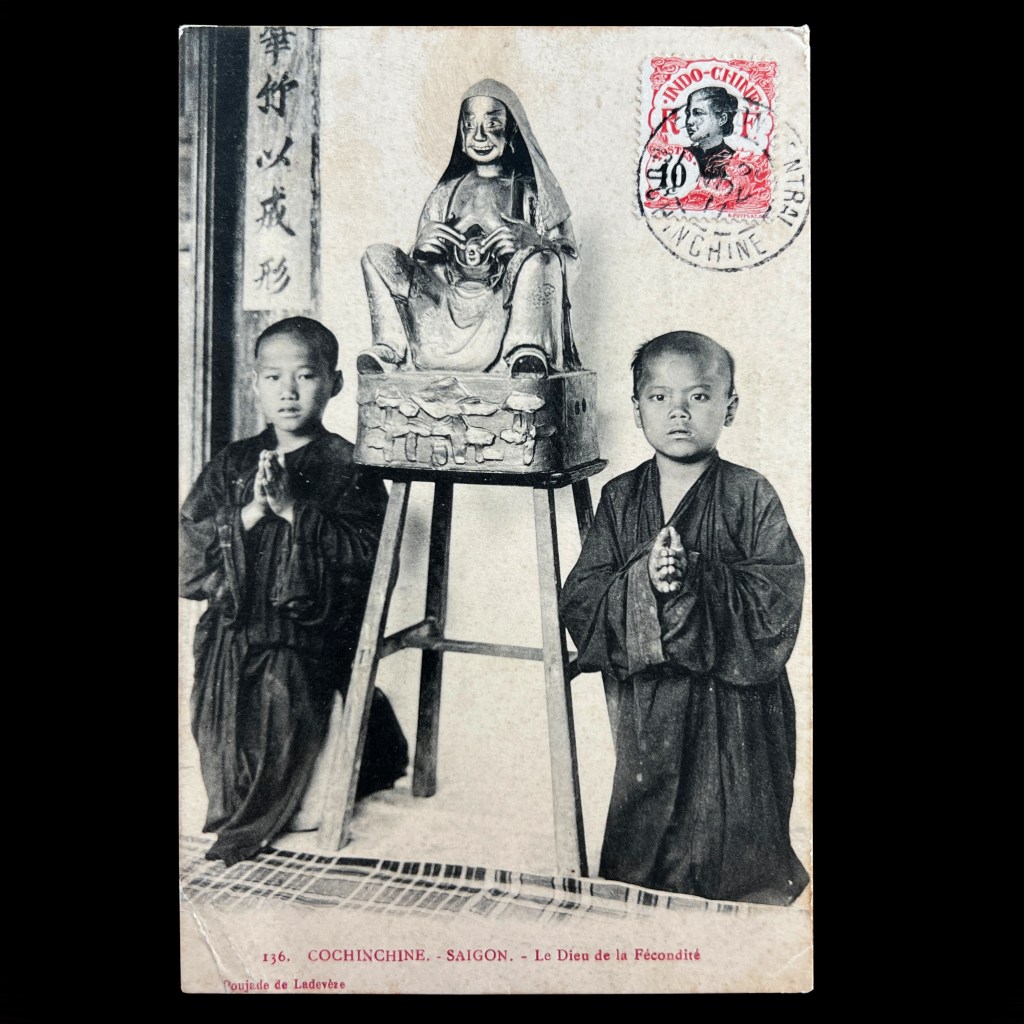
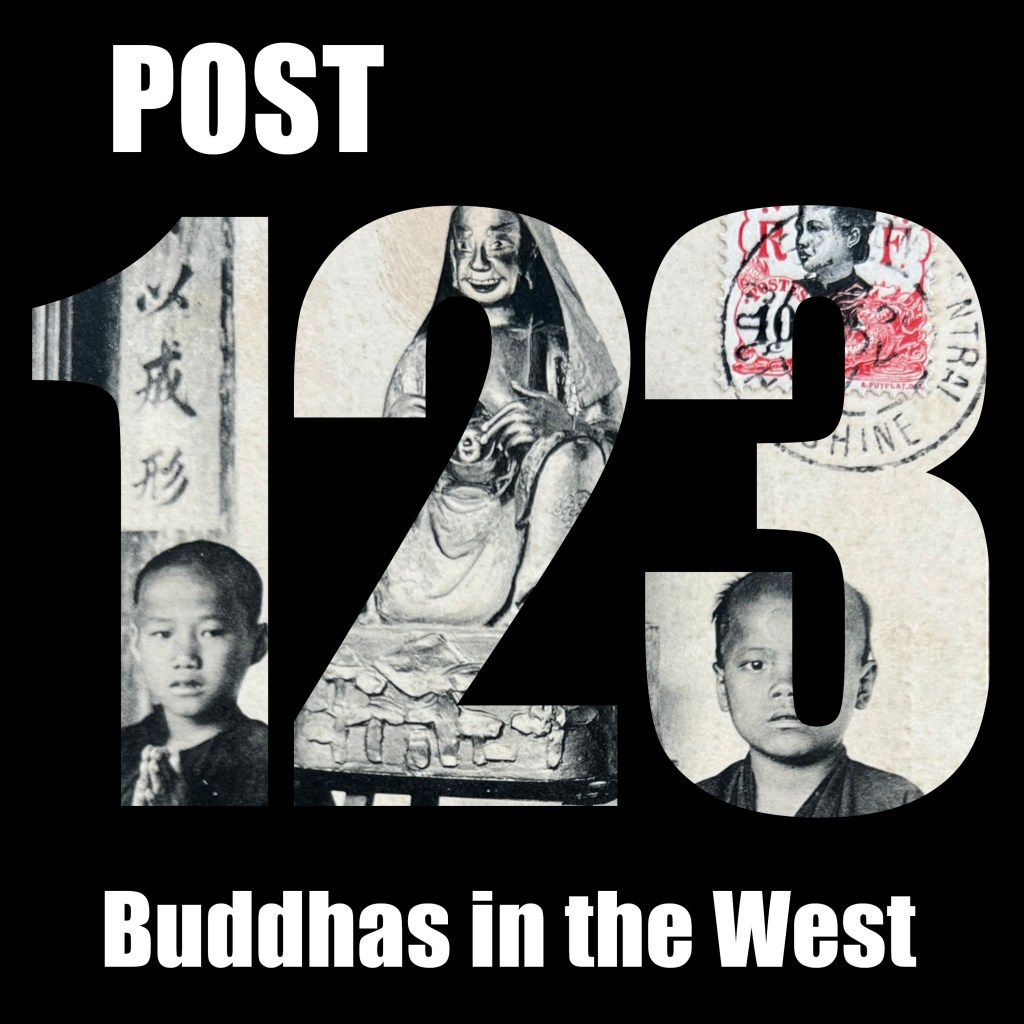
The first photos of Saigon, present-day Ho Chi Min City, were taken by French naval officers during the 1858 French invasion. The first commercial photography studios in Vietnam opened in Saigon soon afterwards, with some producing intimate views of local Buddhist temple life.

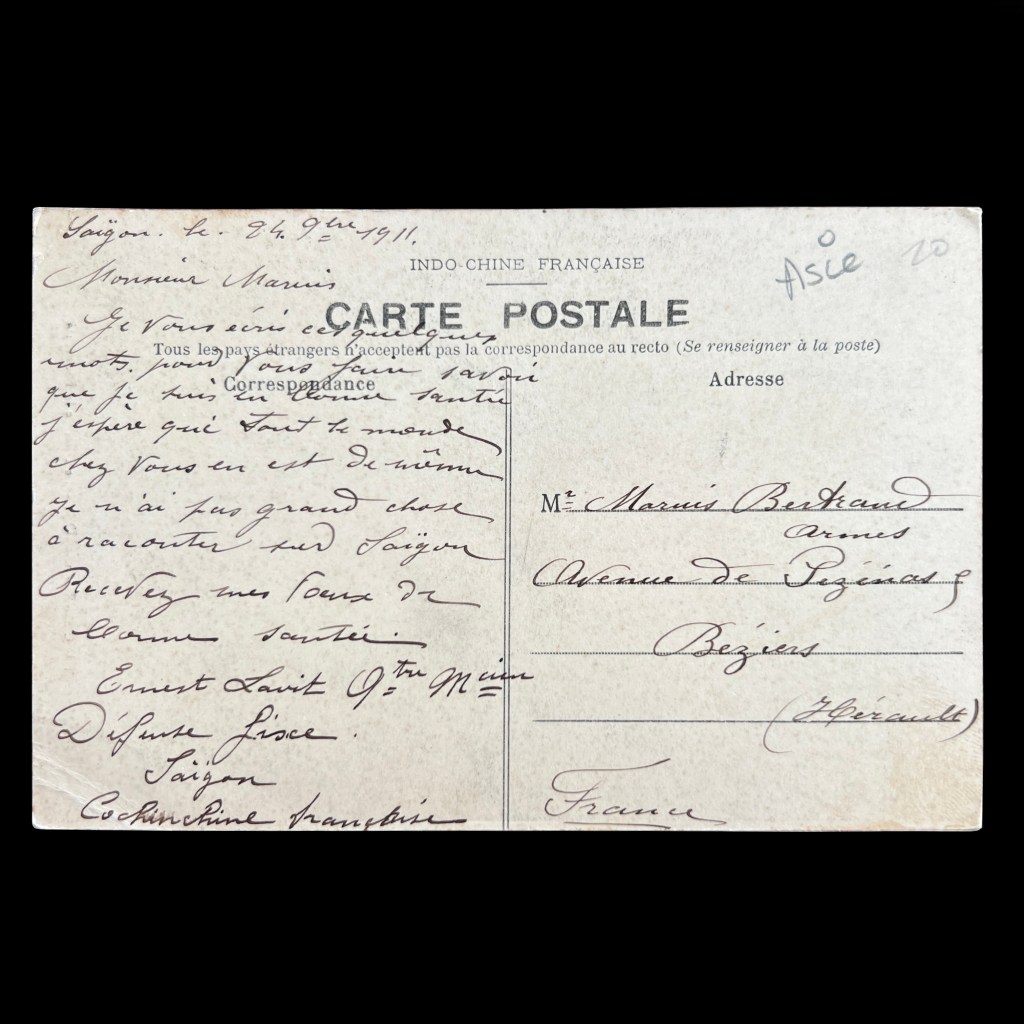
Poujade de Ladevèze, the name we see under the front caption, was an early postcard publisher in Saigon who appears in directories by 1908. Hoping to write home, French colonial soldiers were the primary clientele for postcards; this card was sent to France by an infantry member in 1911.

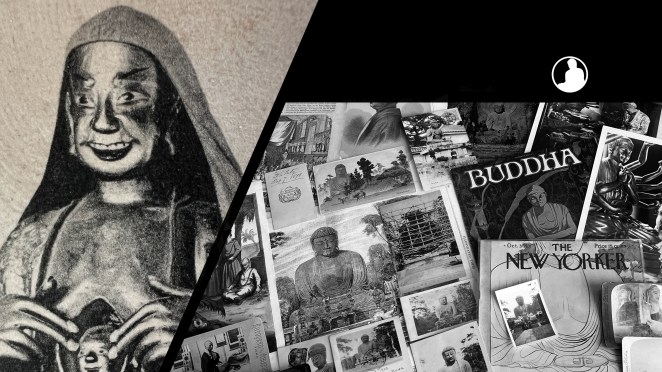
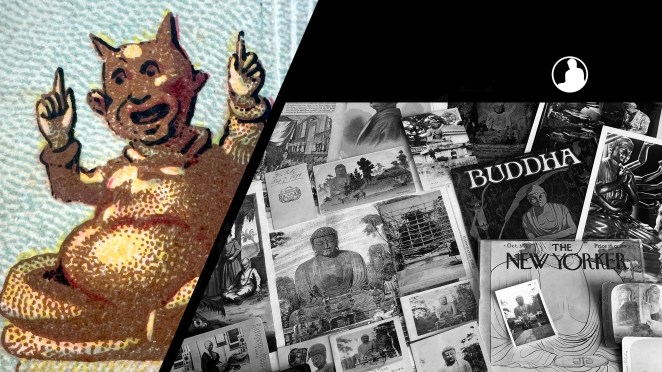
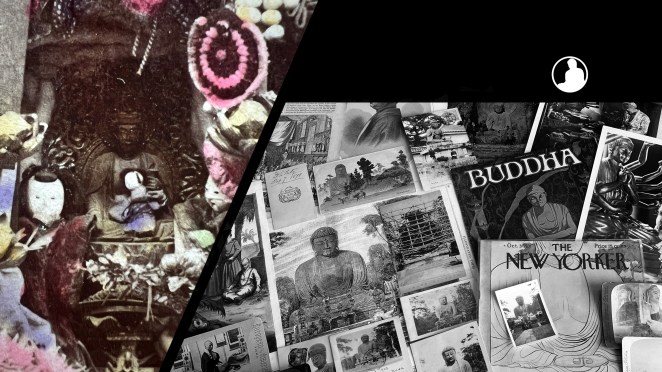
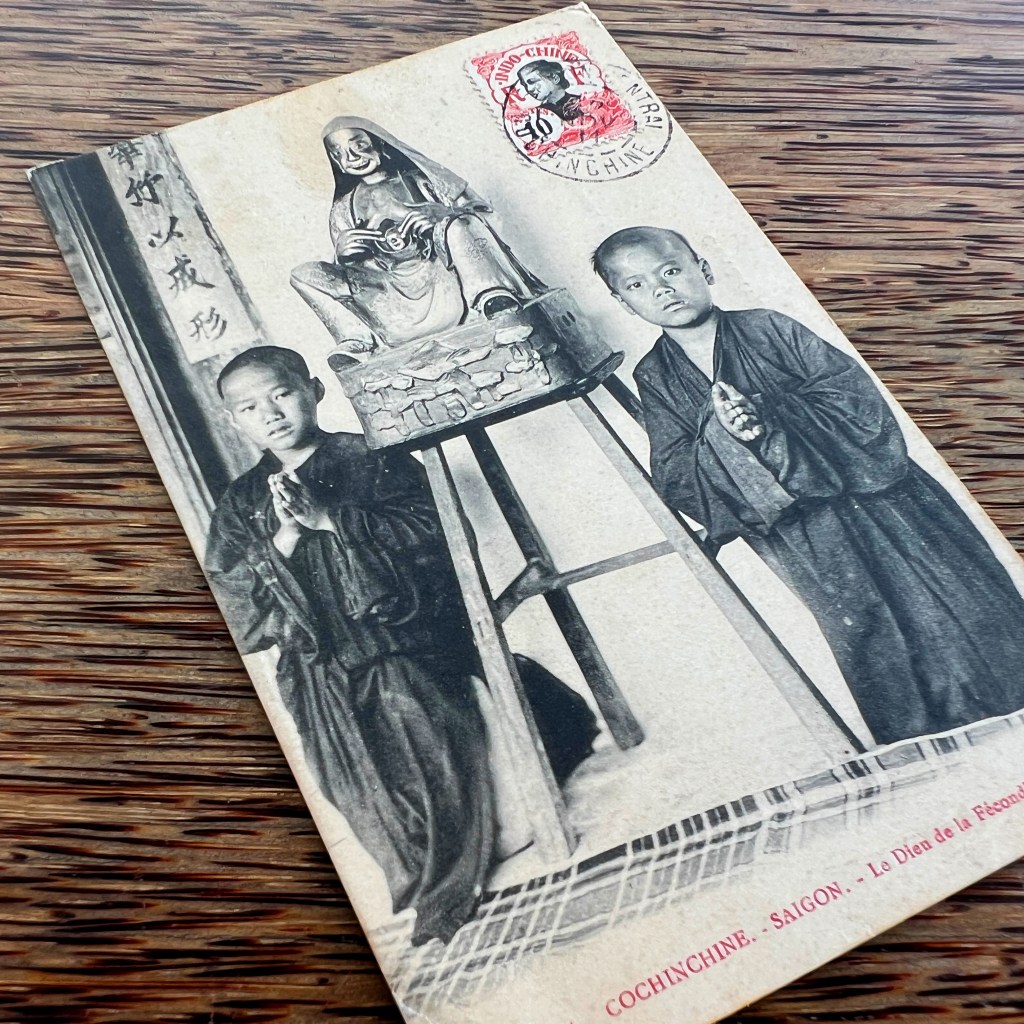
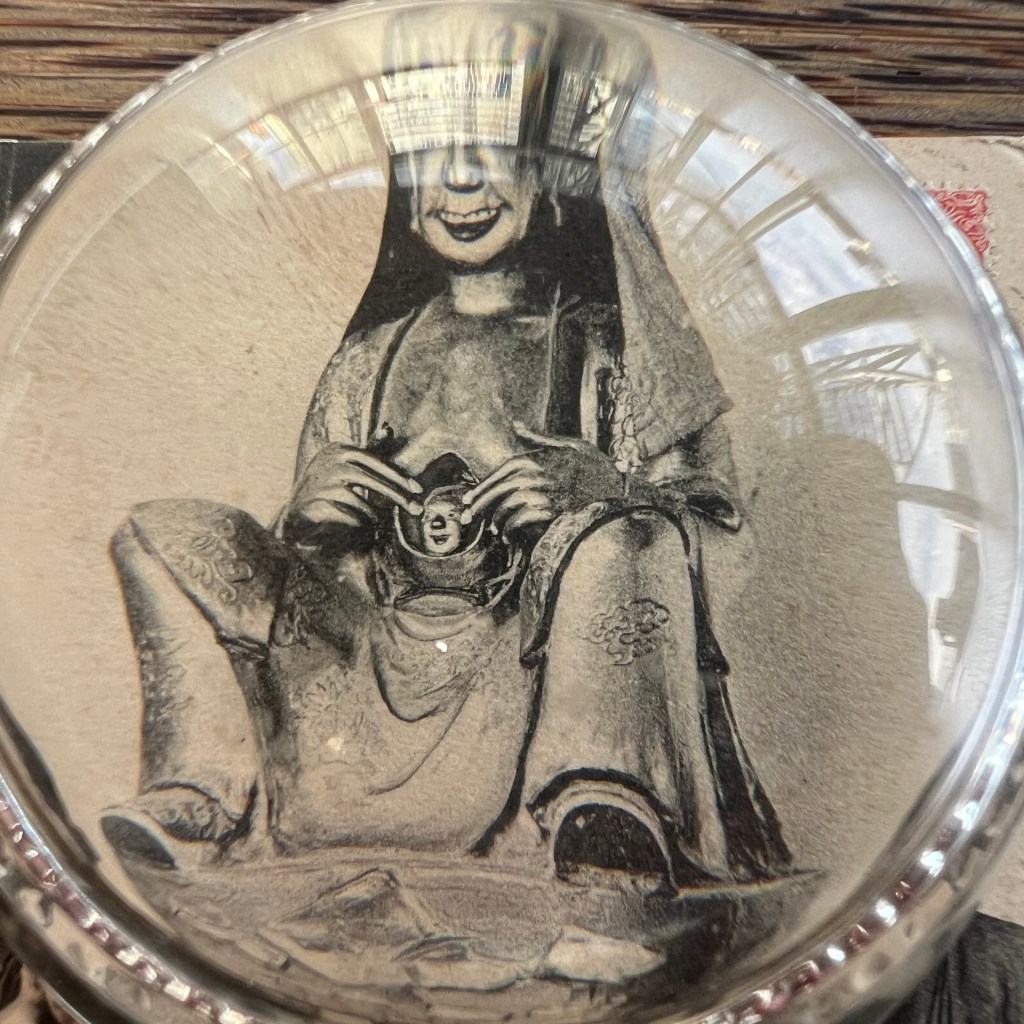
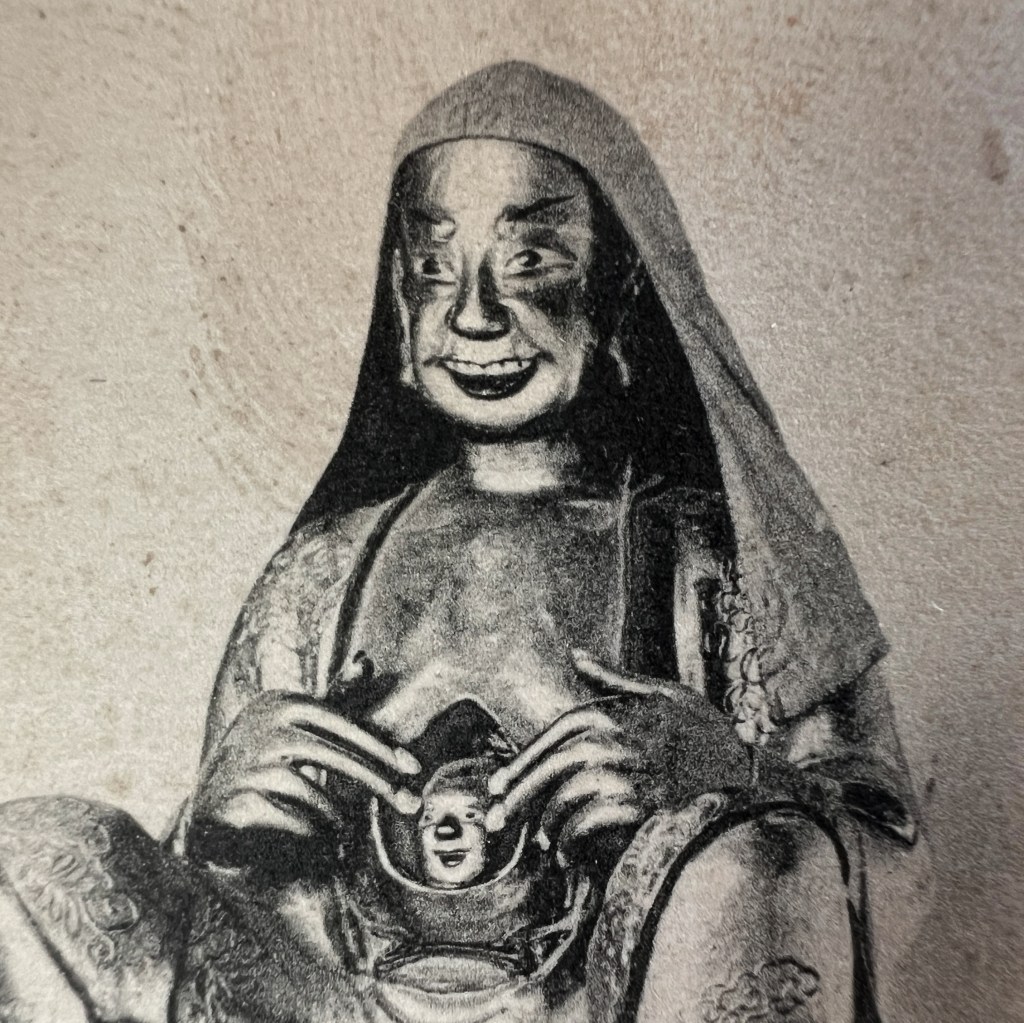
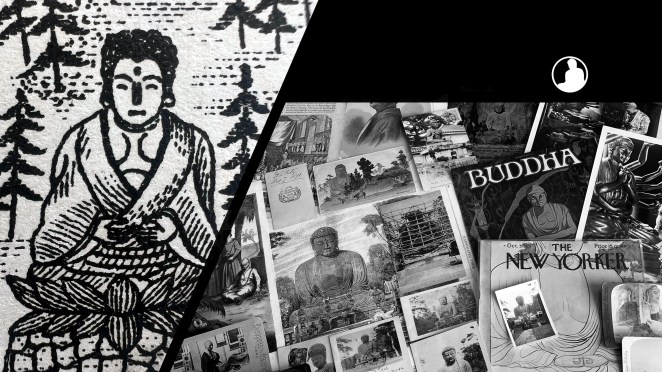
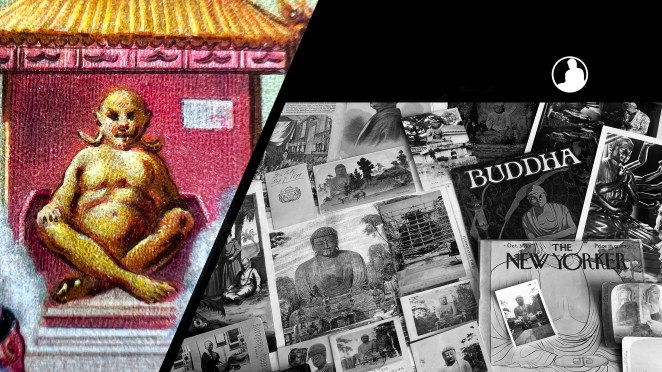
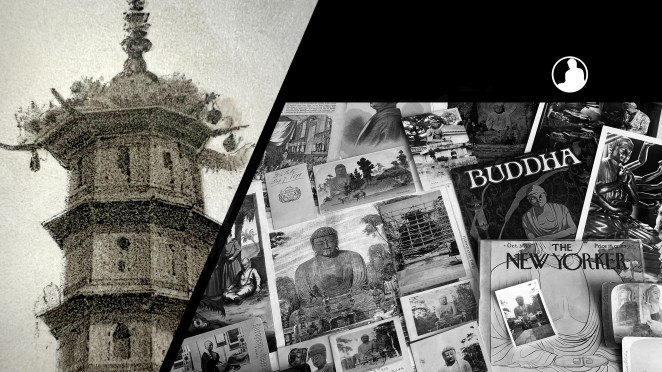
The caption presents the icon as a “god of fertility,” perhaps due to the curious head set inside the abdomen of the figure. The placement of two young novice monks adds weight to the perception this icon was the object of prayer for hopeful parents.

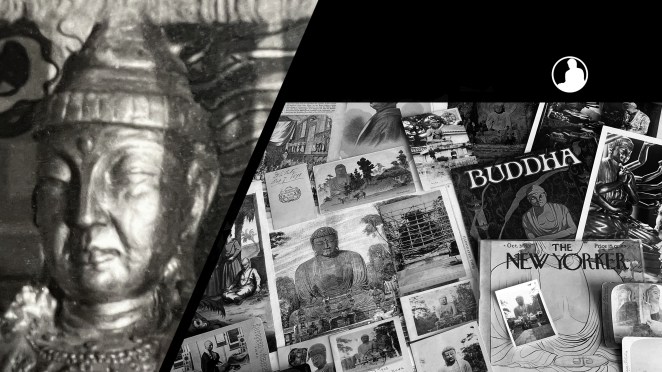
Traditionally, this figure is recognized as one of eighteen Awakened disciples of the Buddha, known as arhats, whose lore developed in medieval China. Each arhat had his own distinctive features and this figure was known as “The Arhat Who Reveals His Heart.”

This figure is often treated as a visual representation of the Buddha Nature principle, namely, that all living beings have the innate potential to become buddhas.


The Buddhas in the West Material Archive is a digital scholarship project that catalogues artifacts depicting Buddhist material culture for Western audiences. It’s comprised of prints, photos, and an assortment of ephemera and other objects. For a brief introduction to this archive, visit the main Buddhas in the West project page.


For Related Buddhas in the West Posts Featuring Vietnam:


For the Most Recent Buddhas in the West Posts:
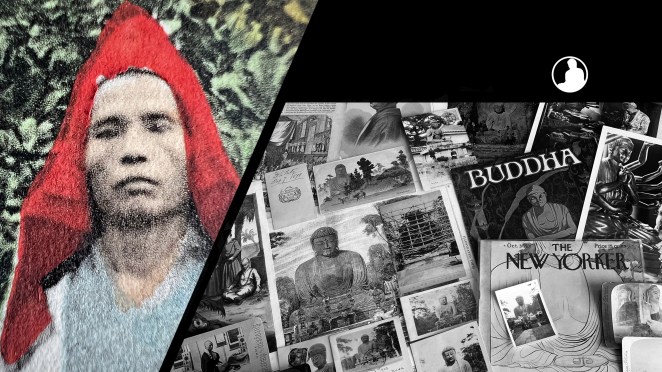

L’Illustration Photographs of Qiongzhu Temple

For all the new Buddhas in the West posts
follow us on Bluesky & Instagram


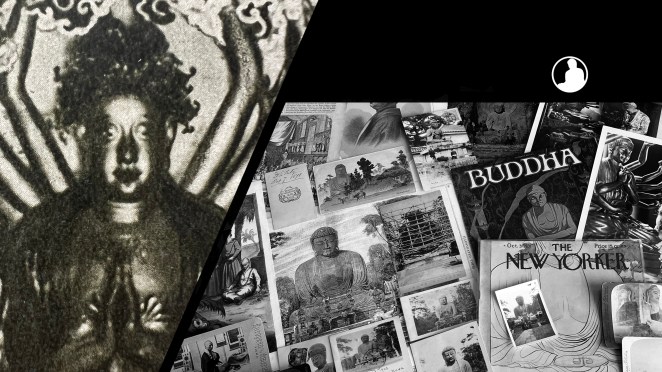
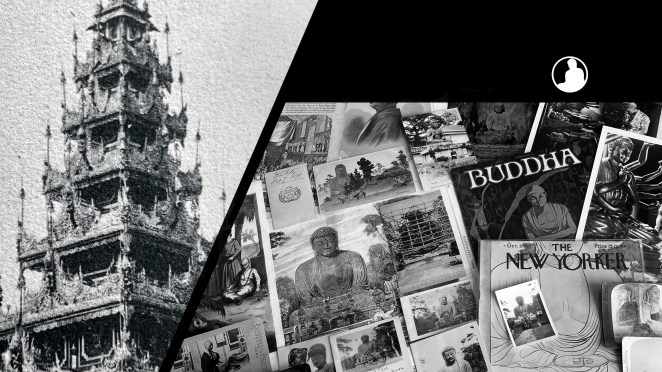
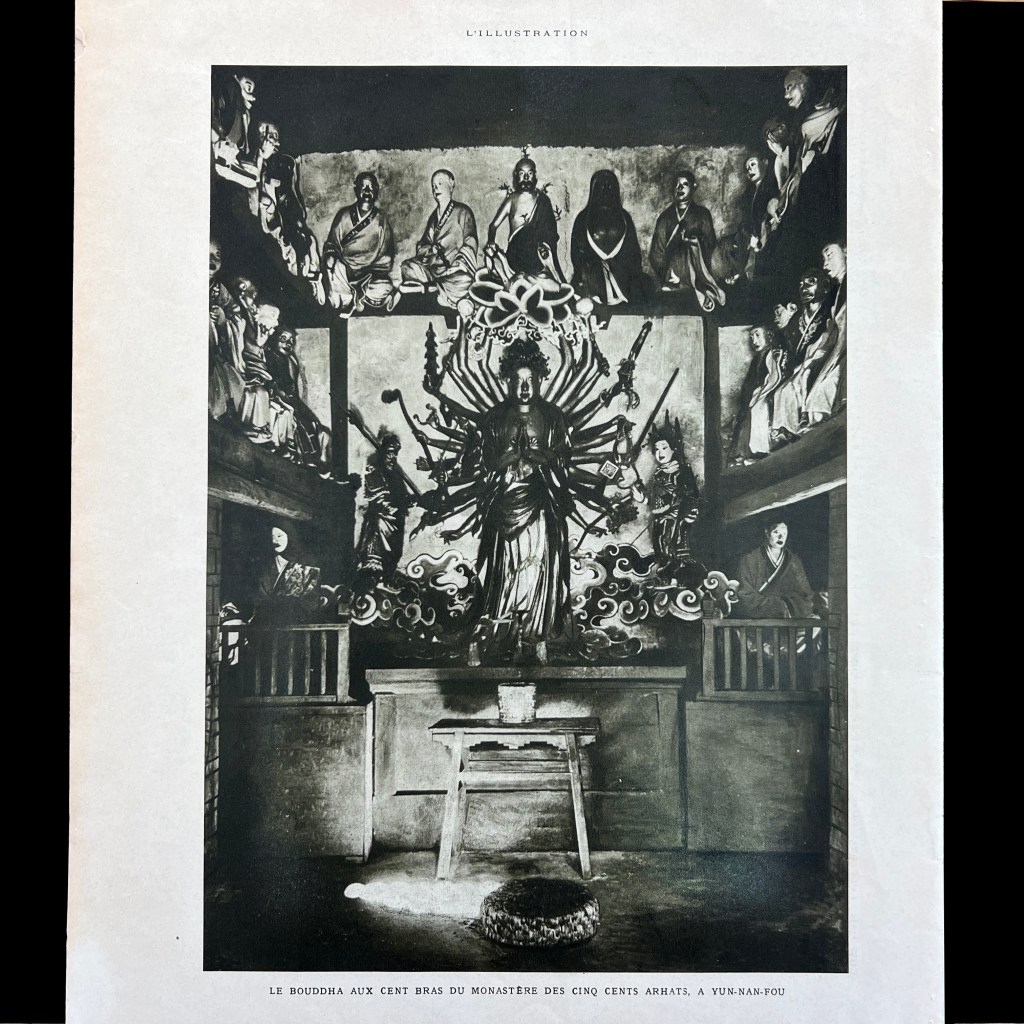
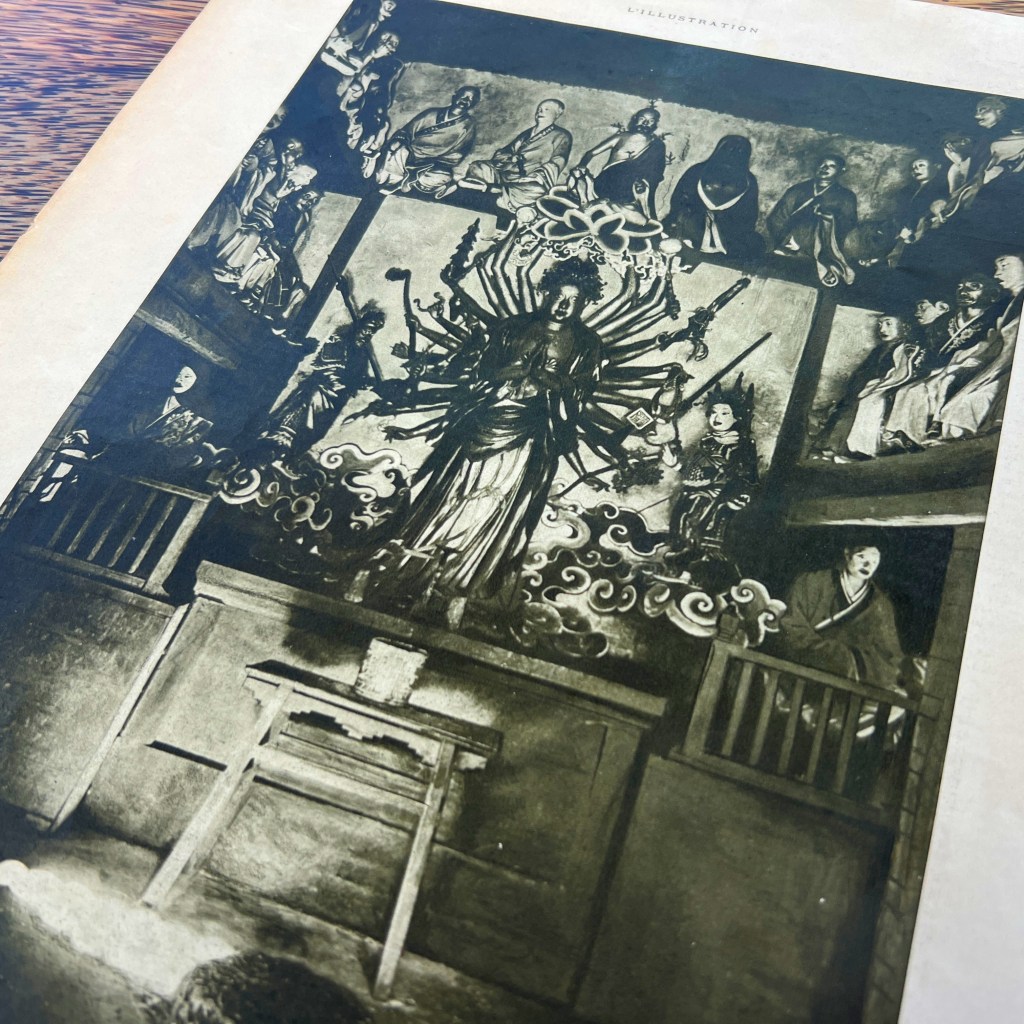
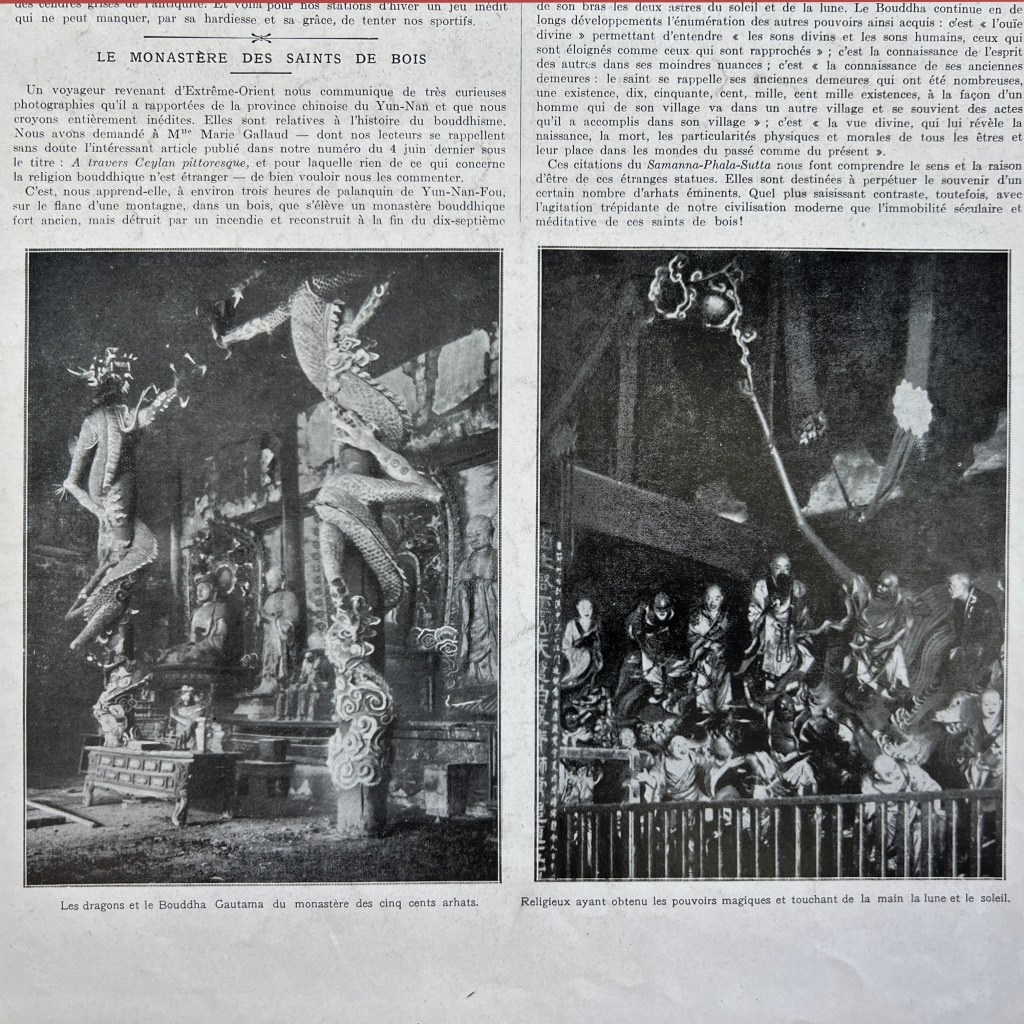
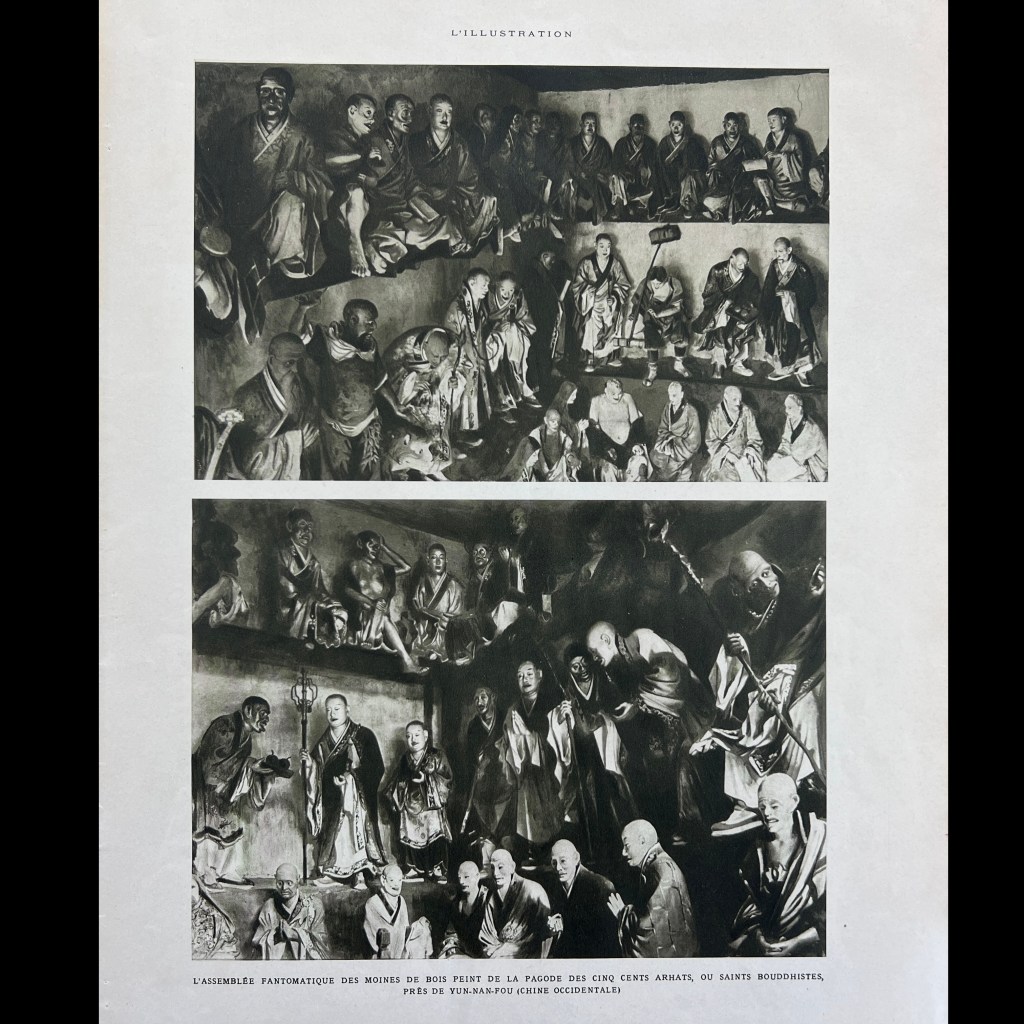
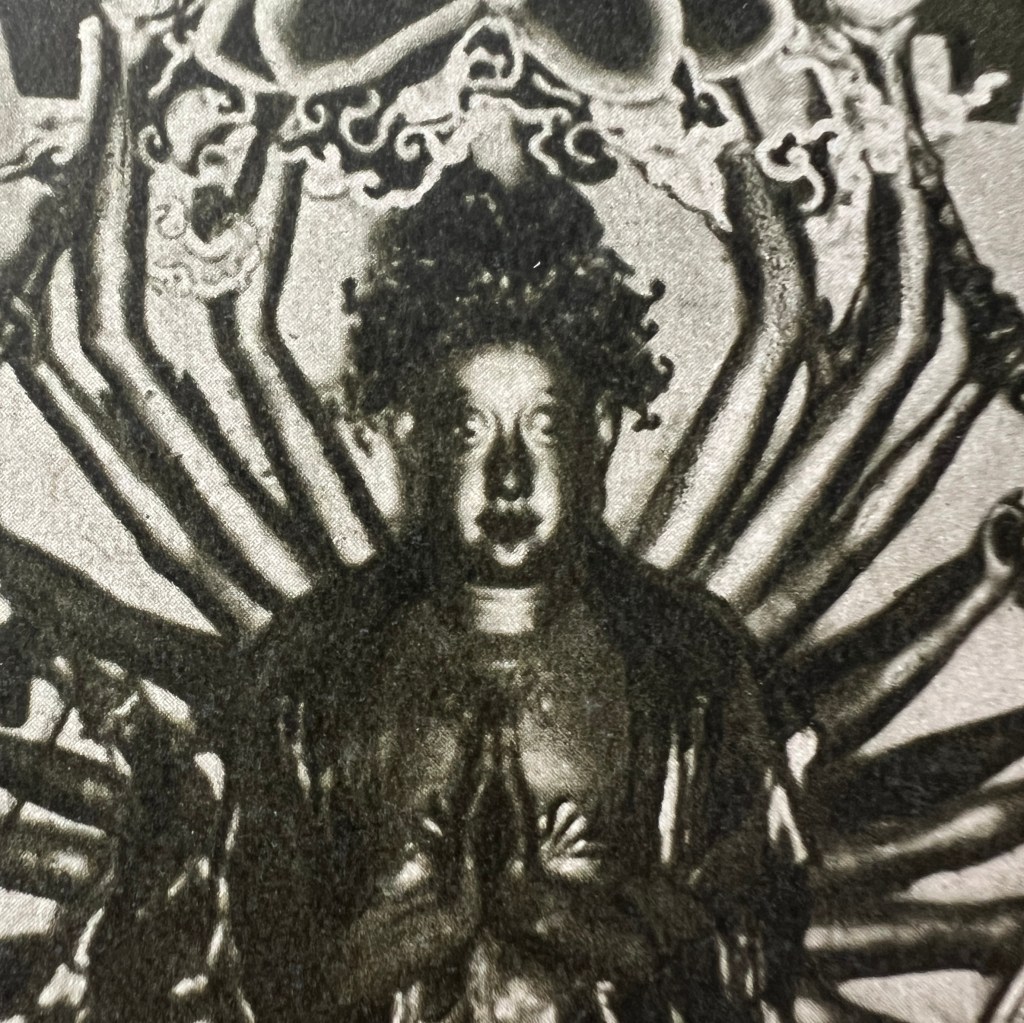
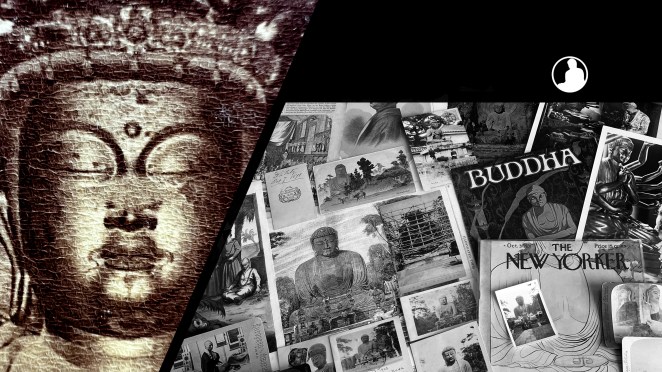
Located in the mountains of Yunnan, China, the Qiongzhu Temple (Qiongzhu si 筇竹寺) houses a collection of fantastic Buddhist statues. This Thousand-Armed Guanyin icon is surrounded by over 200 arhat disciples, comprising part of a Five Hundred Arhat collection over a century old.

While the temple was founded in the 13th century, a devastating fire allowed major reconstruction and expansion projects under the Qing Emperor Guangxu. Three new buildings, completed in the 1880s, were used to for housing newly commissioned clay statues of the Five Hundred Arhats.

The photos seen here were printed in L’Illustration, reputedly the first international illustrated magazine published out of Paris. This issue was released in December 1927, containing what the editor believed were otherwise unpublished photographs of Qiongzhu Temple.

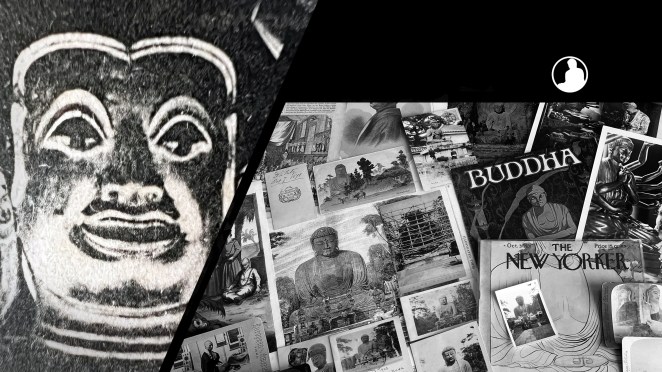
The French text cites the Samaññaphala Sutta to give context to the arhats, who are the Awakened disciples of the Buddha. In East Asian, the arhats are often shown as having curious physical characteristics; here we can spot one arhat with a long, craning arm reaching up to hold the moon.

In addition to the main hall, the arhat statues were further divided between two halls on temple grounds, each constructed with three rows of shelving to hold the numerous icons. Each painted statue is about one meter in height.

Records reveal the images were made by an artist from Sichuan, Li Guangxiu, who along with several assistants crafted the arhat icons over a period of seven years (1883-1890).


The Buddhas in the West Material Archive is a digital scholarship project that catalogues artifacts depicting Buddhist material culture for Western audiences. It’s comprised of prints, photos, and an assortment of ephemera and other objects. For a brief introduction to this archive, visit the main Buddhas in the West project page.


For Related Buddhas in the West Posts Featuring Guanyin:


For the Most Recent Buddhas in the West Posts:
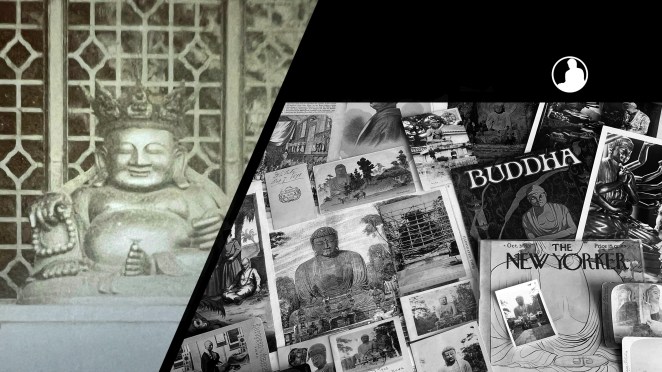

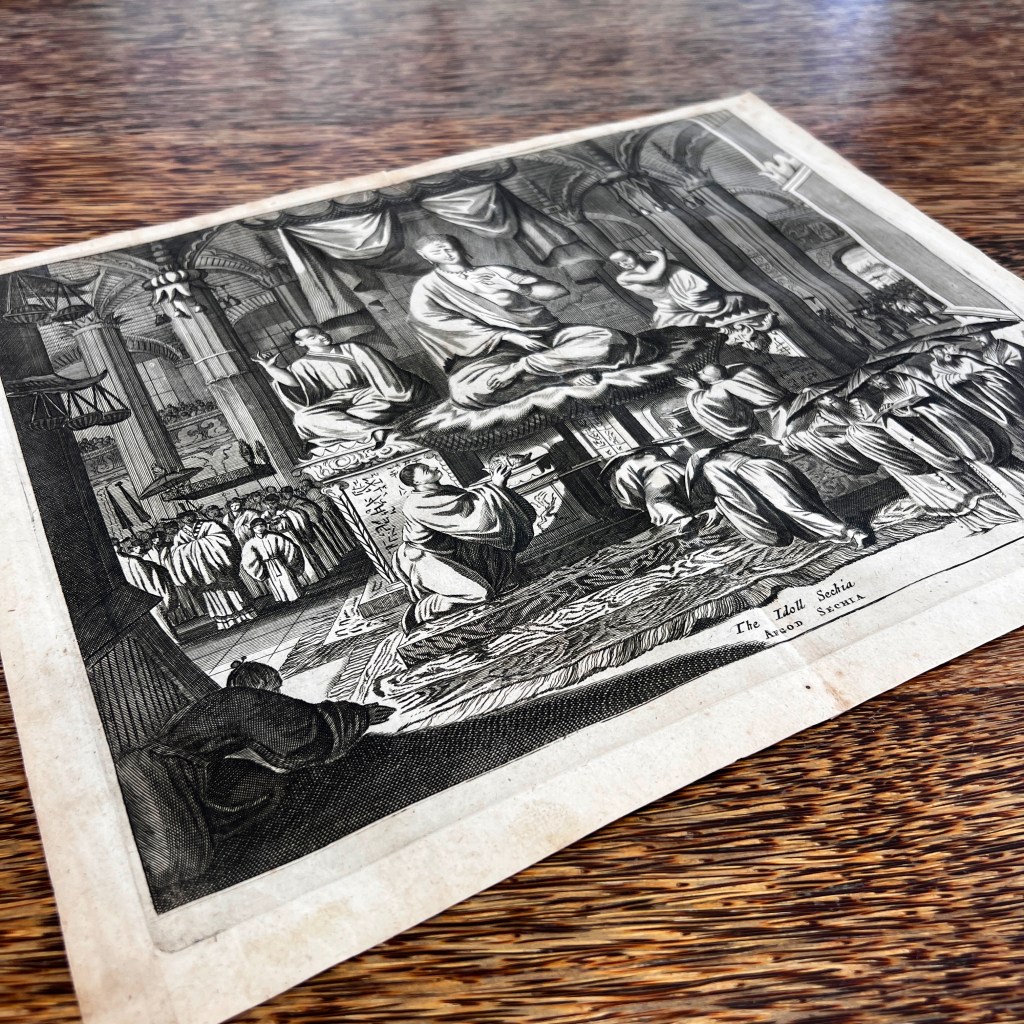
Olfert Dapper’s “The Idoll Sechia” Engraving

For all the new Buddhas in the West posts
follow us on Bluesky & Instagram


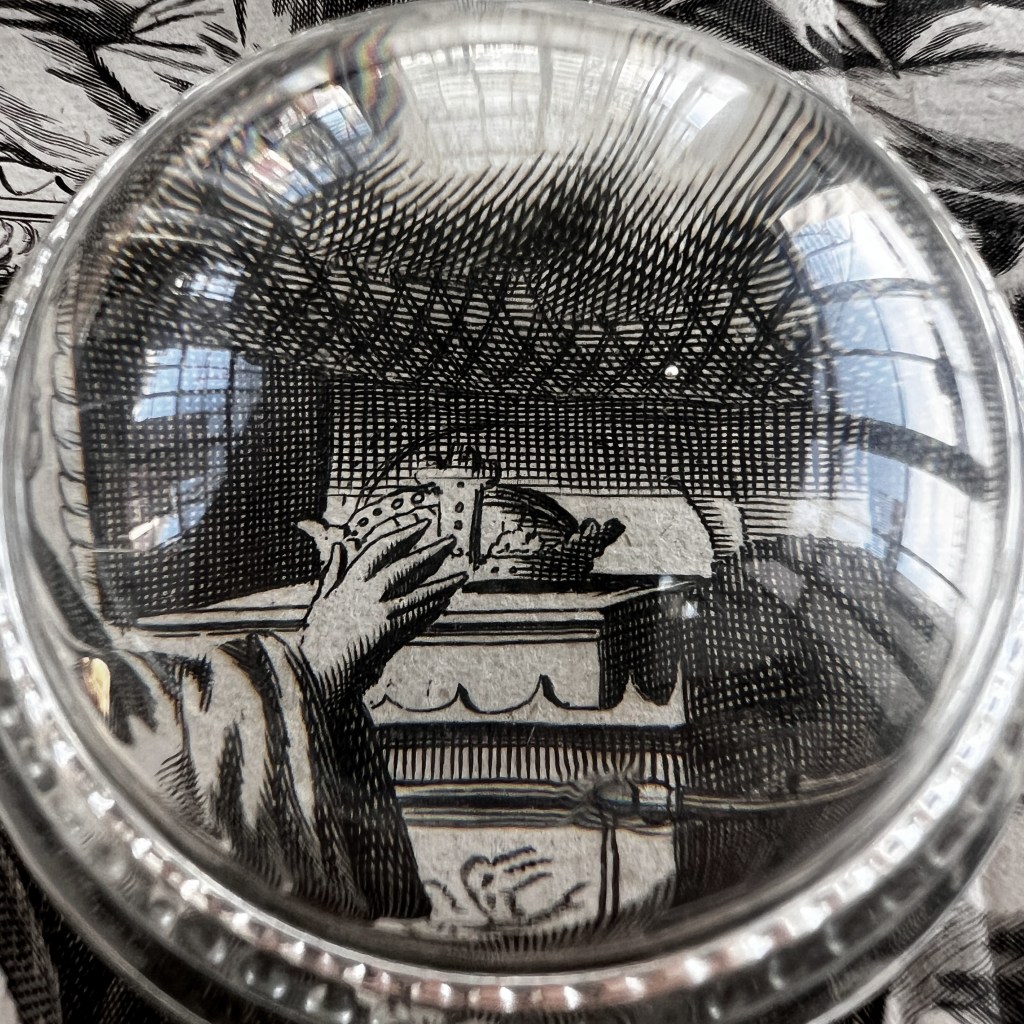
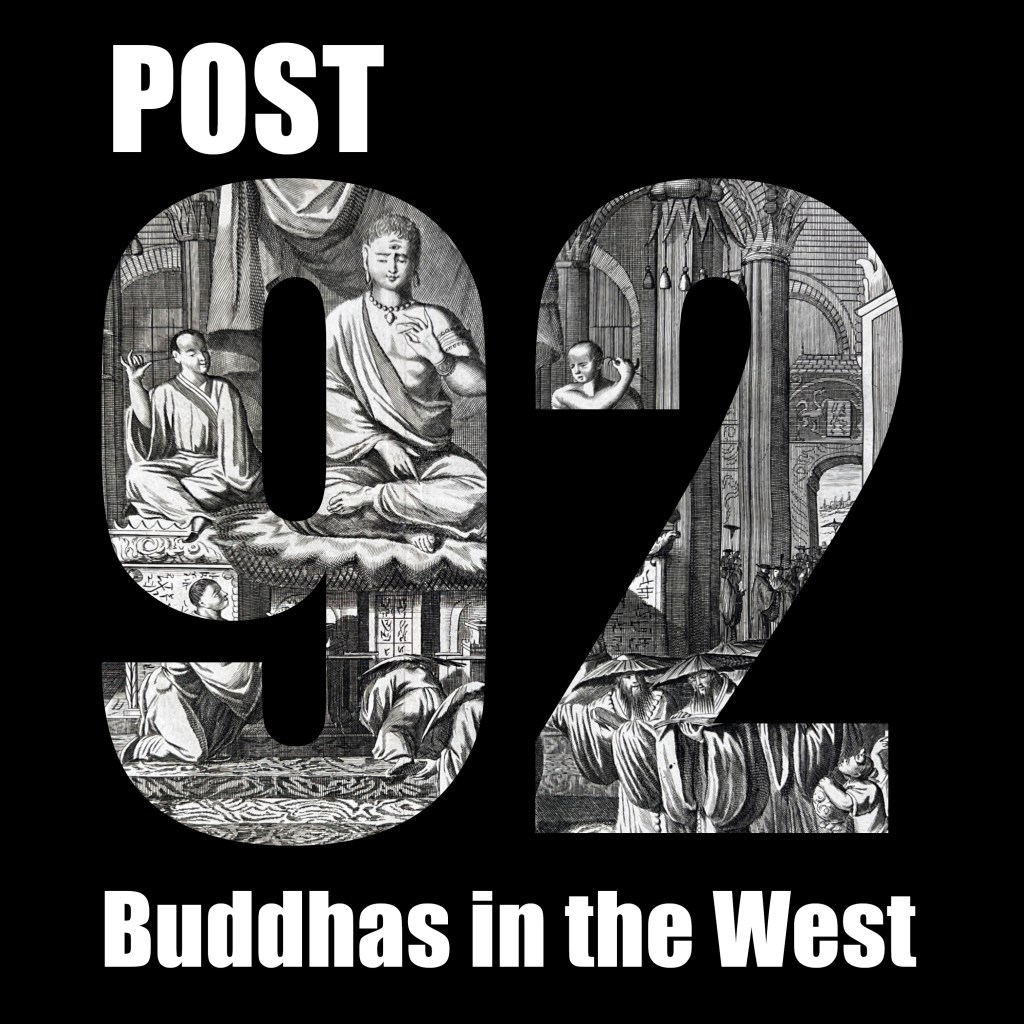
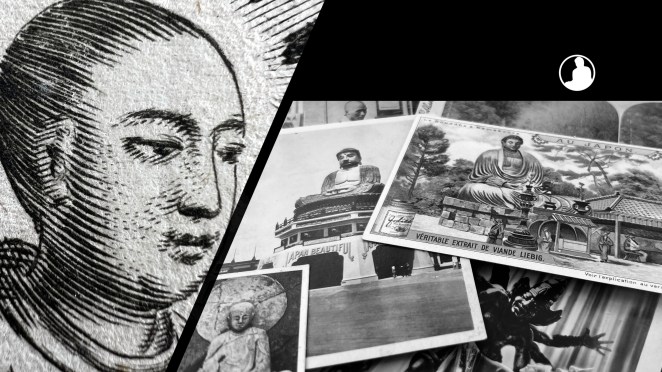
The Atlas Chinensis by Olfert Dapper (1636–1689) is among the most visually embellished European treatments of China from the late 17th century. Never traveling to Asia, Dapper used reports from the 2nd and 3rd Dutch embassies to China and consulted older Jesuit accounts.

The copperplate engravings were likely prepared in the workshop of publisher Jacob van Meurs who found reasonable success issuing illustrated books on Asia. The illustration here is from the 1674 German edition of Atlas Chinensis; it was originally published in Dutch in 1670.

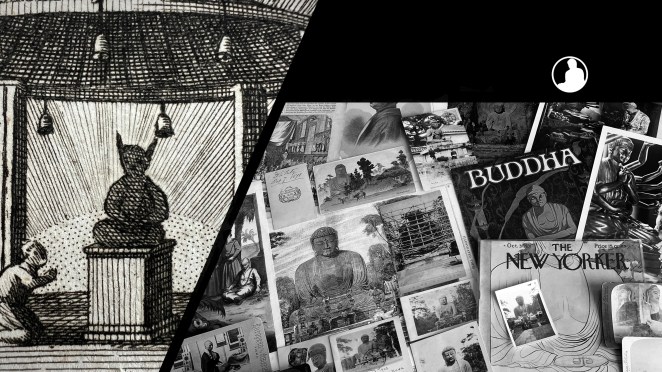
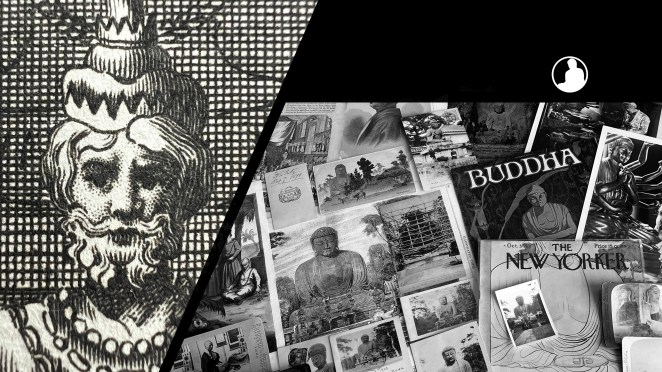
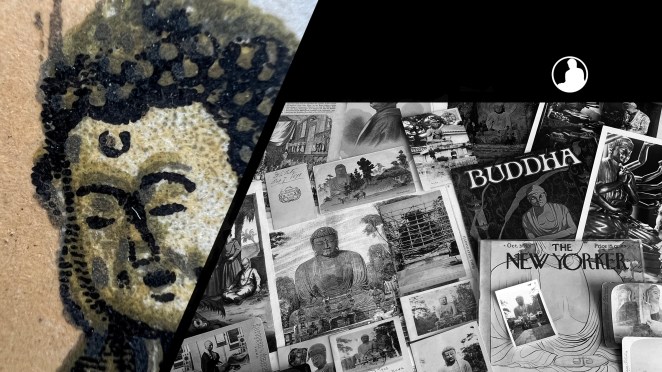
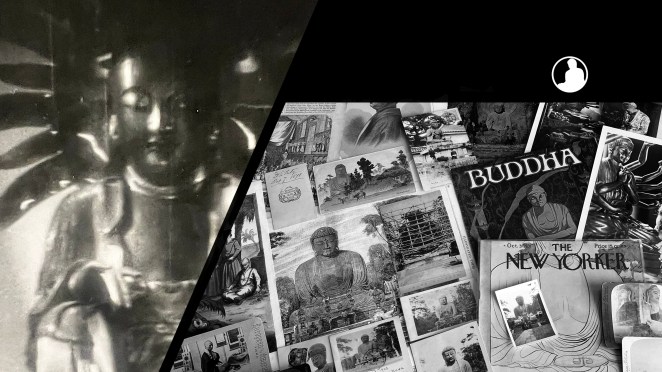
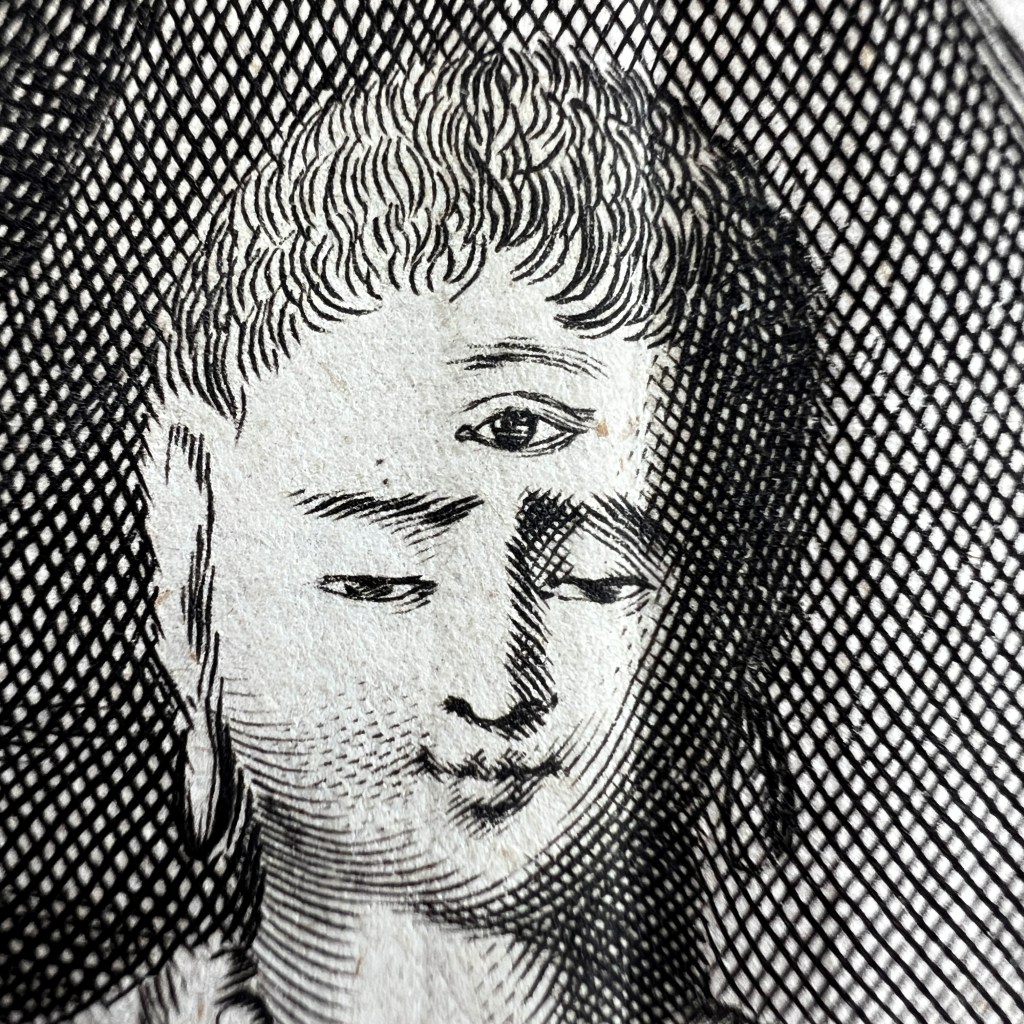
In a section describing Buddhism, Dapper notes that images of the “Idoll Sechia” (Śākyamuni) are found in temples, “in the shape of a fair Youth; with a third Eye in his forehead.” Engravers had great liberty to interpret and add further details.

Some details, such as the European-style crown at the base of the altar, suggest fabricated visual embellishments intended to make the scene more familiar to European readers.

While other details that might appear odd, such as the flanking figures scratching their ears, are actually based on authentic Buddhist imagery of the arhats (C. luohan). Unpublished Jesuit sketches available to Dapper likely informed some of these details.

An English edition of Dapper’s work, published by John Ogilby in 1671 (and curiously misattributed to Arnoldus Montanus), can be viewed through Stanford University here: tinyurl.com/ycyw93eb.


The Buddhas in the West Material Archive is a digital scholarship project that catalogues artifacts depicting Buddhist material culture for Western audiences. It’s comprised of prints, photos, and an assortment of ephemera and other objects. For a brief introduction to this archive, visit the main Buddhas in the West project page.


For Related Buddhas in the West Posts Featuring Historical Engravings:


For the Most Recent Buddhas in the West Posts:
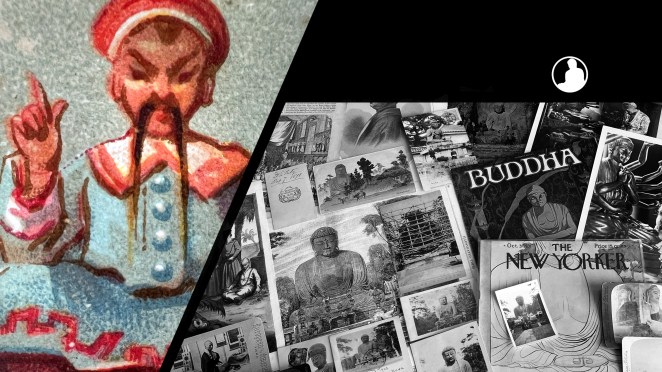

Wa Lum (Hualin) Temple 500 Arhats Hall Postcard

For all the new Buddhas in the West posts
follow us on Bluesky & Instagram


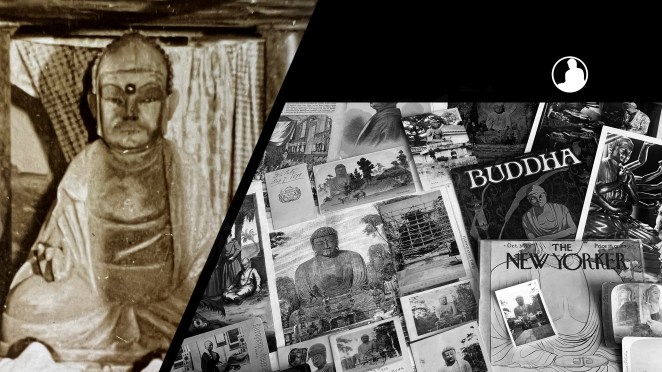
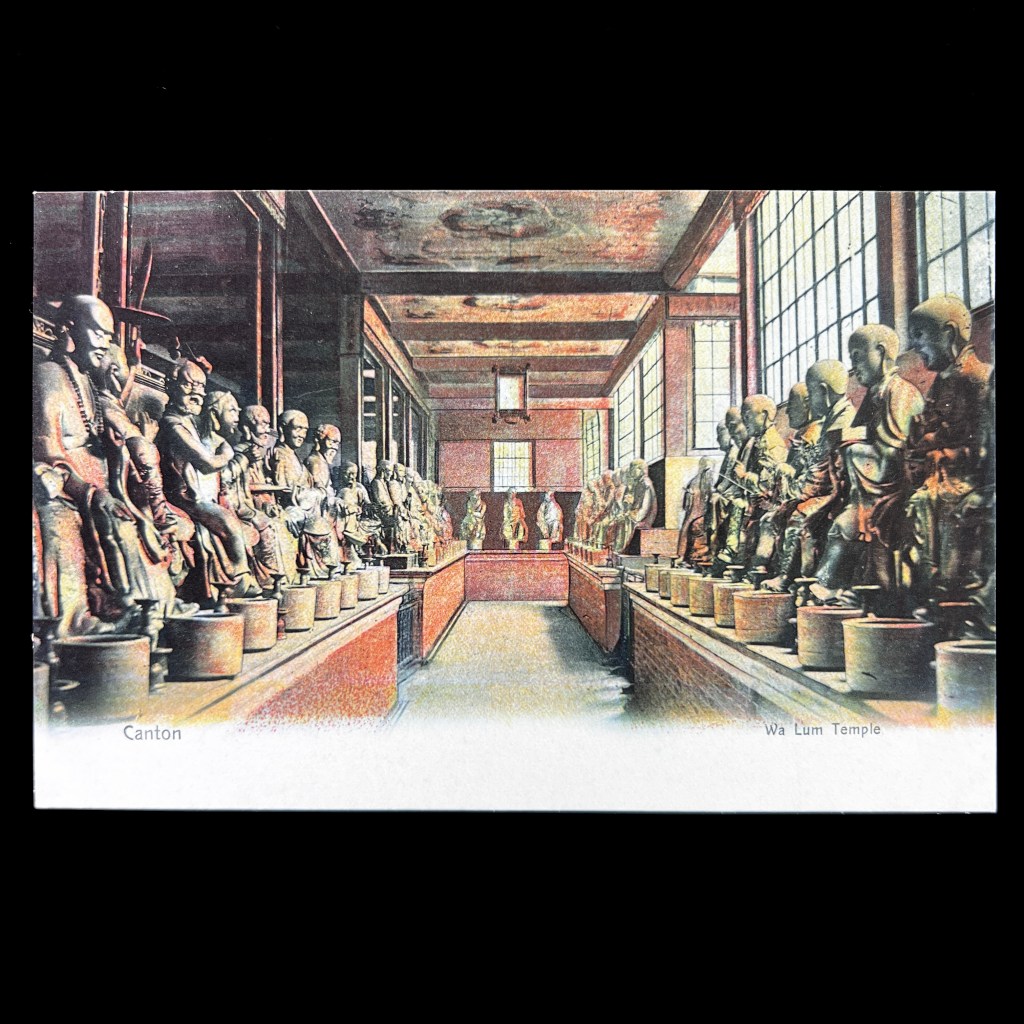
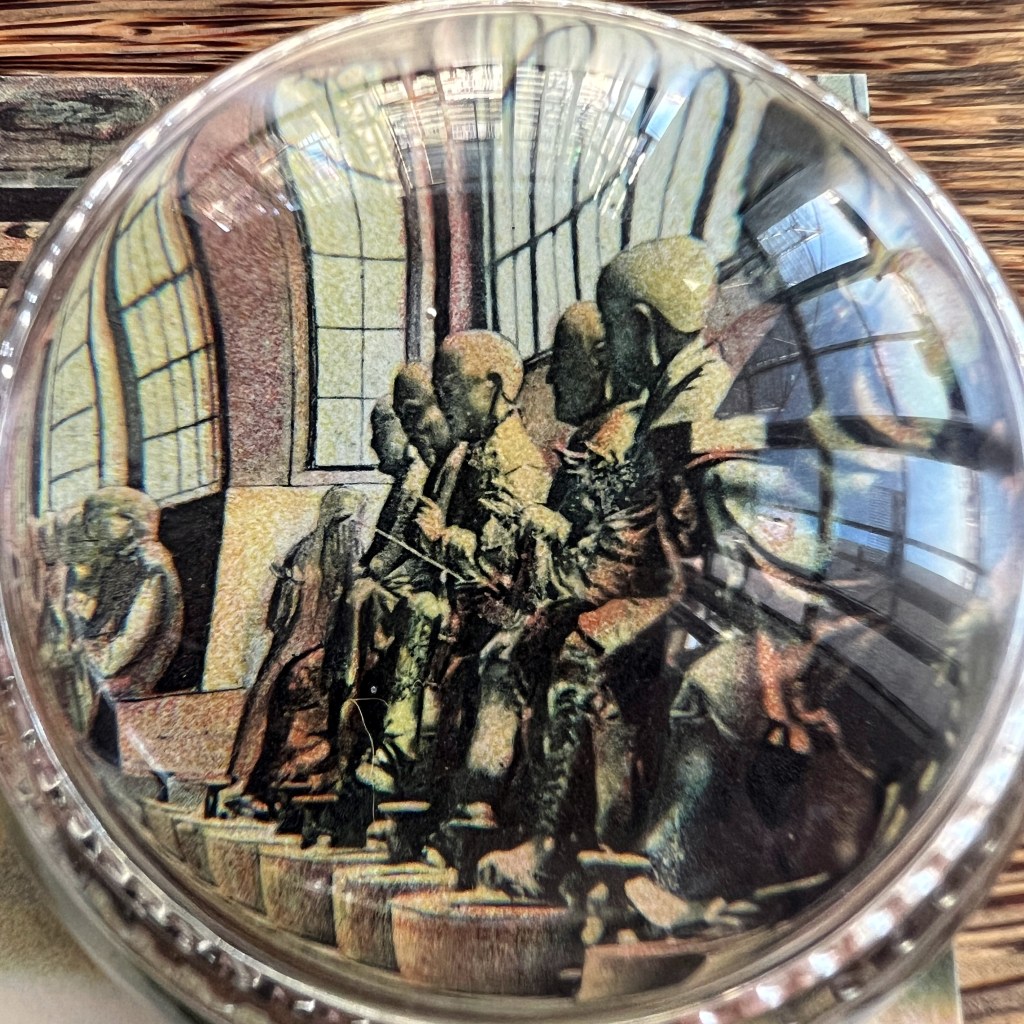
The Hualin Temple in Guangzhou, China was well known among foreign tourists at the end of the 19th century for its Hall of Five Hundred Arhats. Reportedly made of clay, the icons were installed in the early 1850s and remained until the Cultural Revolution a century later.

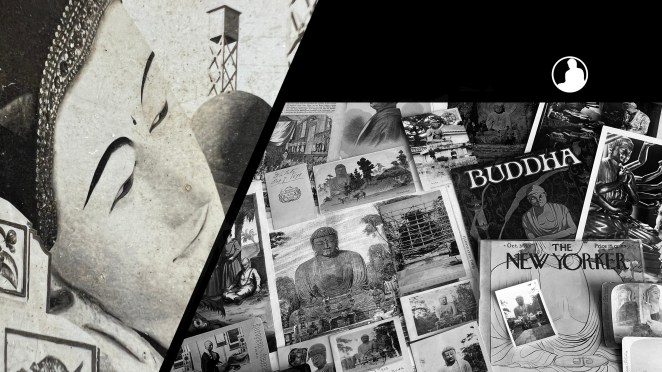
This postcard dates to c. 1910 and was published by the postcard dealer Moritz Sternberg who operated from Queen’s Road in Hong Kong. The original photo, however, is much older and is often attributed to Lai Afong, the most influential Chinese photographer of the late Qing.

While the temple has a history dating to the 6th century, the Arhat Hall was built in the late 1840s. It was one of the sites visited by the pioneering Scottish photographer John Thompson when he sojourned in China from 1868 to 1872.

By Thompson’s visit, rumor had spread that one of the arhat statues was actually an image of Marco Polo (not shown). Thompson notes “careful inquiry proves this statement incorrect,” nevertheless, the belief still persists to the present.

While the icons were replaced in the 1990s, several photographs exist of the originals that were destroyed. A copy of the original photo for this postcard is found in the Hotz Collection of Leiden University Library, viewable here: https://tinyurl.com/2syahybe
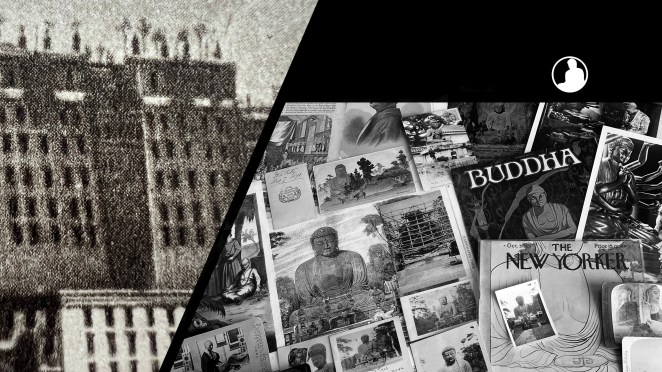

The Buddhas in the West Material Archive is a digital scholarship project that catalogues artifacts depicting Buddhist material culture for Western audiences. It’s comprised of prints, photos, and an assortment of ephemera and other objects. For a brief introduction to this archive, visit the main Buddhas in the West project page.


For Related Buddhas in the West Posts Featuring China:

For the Most Recent Buddhas in the West Posts: