Wilhelm Heine’s Whampoa Pagoda Lithograph

For all the new Buddhas in the West posts
follow us on Bluesky & Instagram


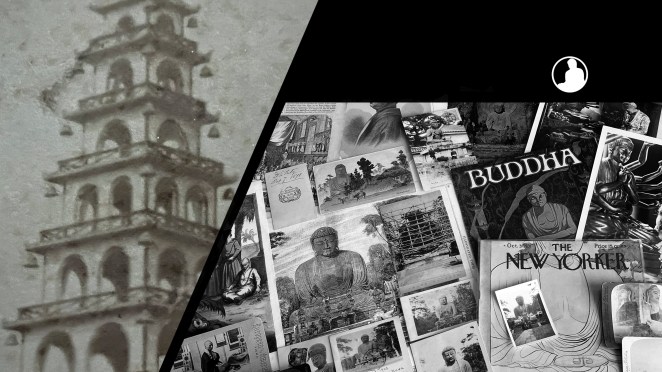
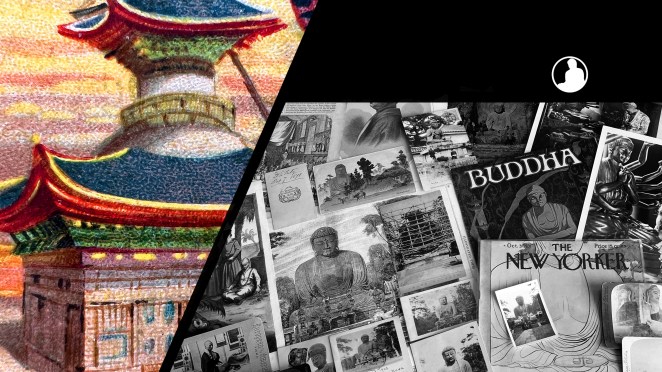
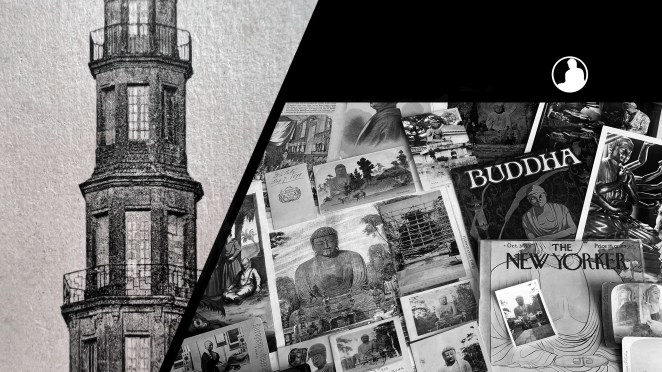
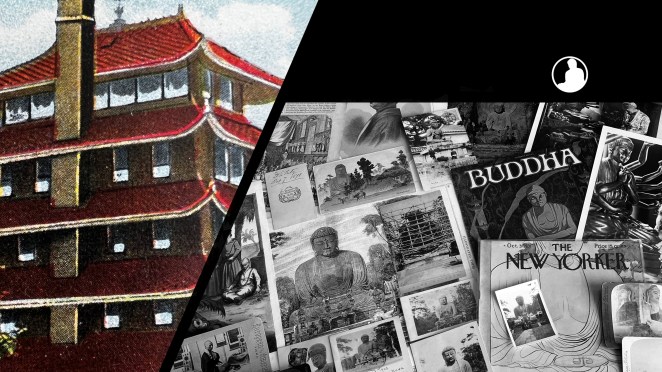
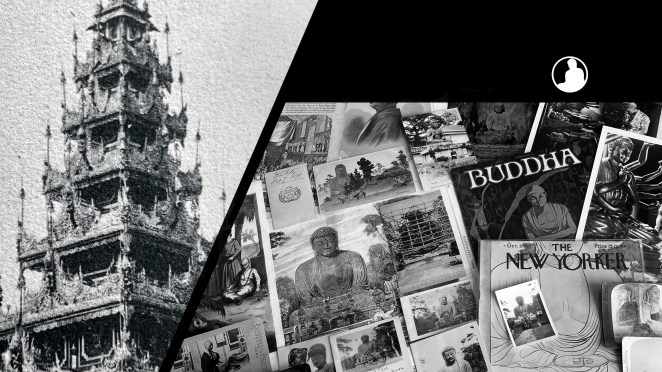
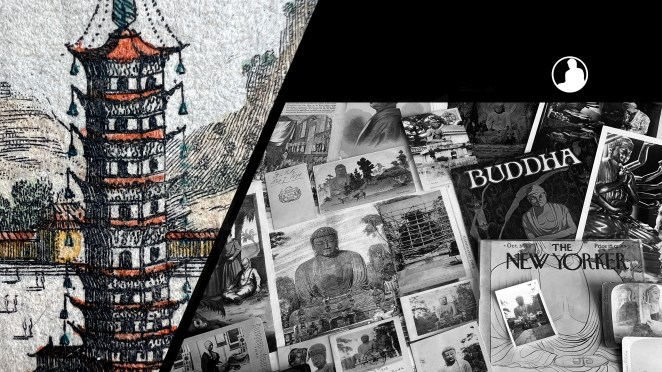
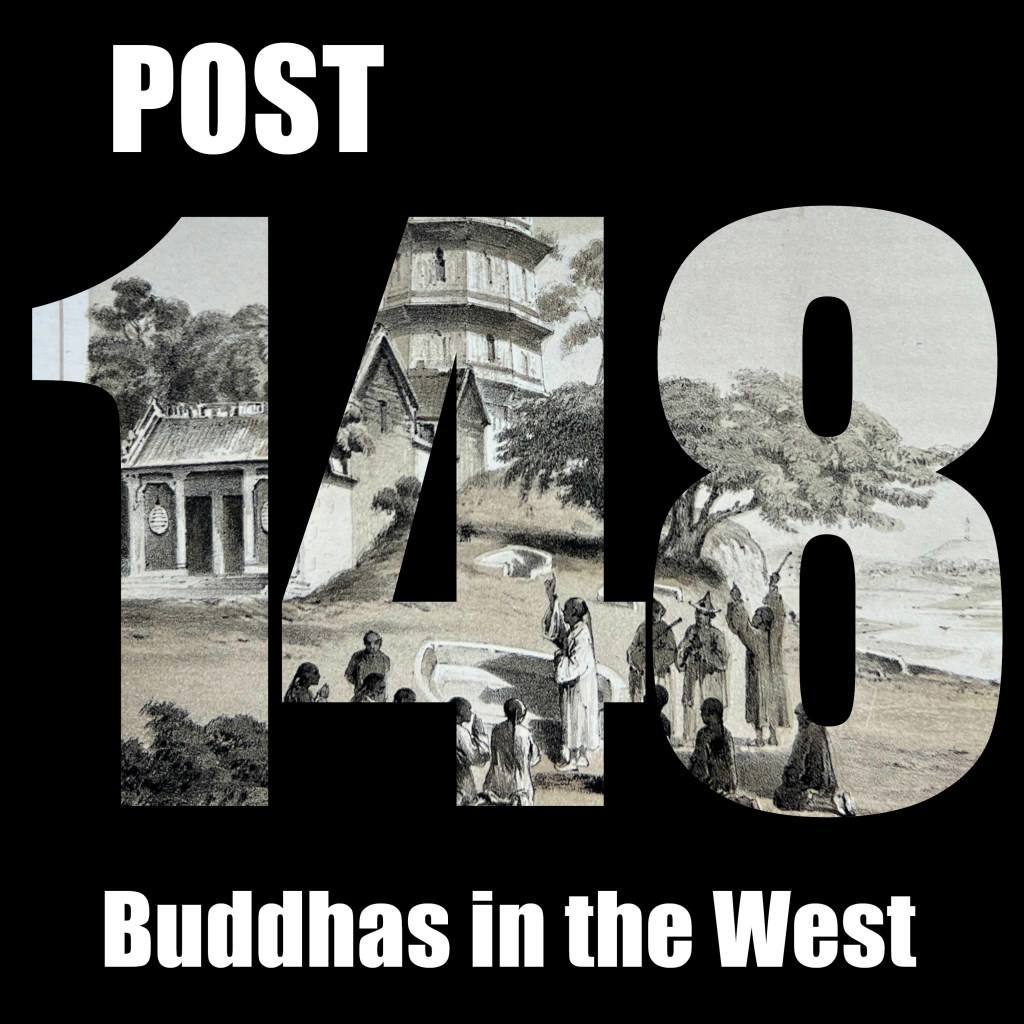
En route to Japan in 1853, the Perry Expedition stopped in Guangdong, the historic center of China’s foreign trade. Anchored in the Pearl River, expedition artist Wilhelm Heine sketched arguably one of the most famous pagodas in the world at the time: the Whampoa Pagoda.
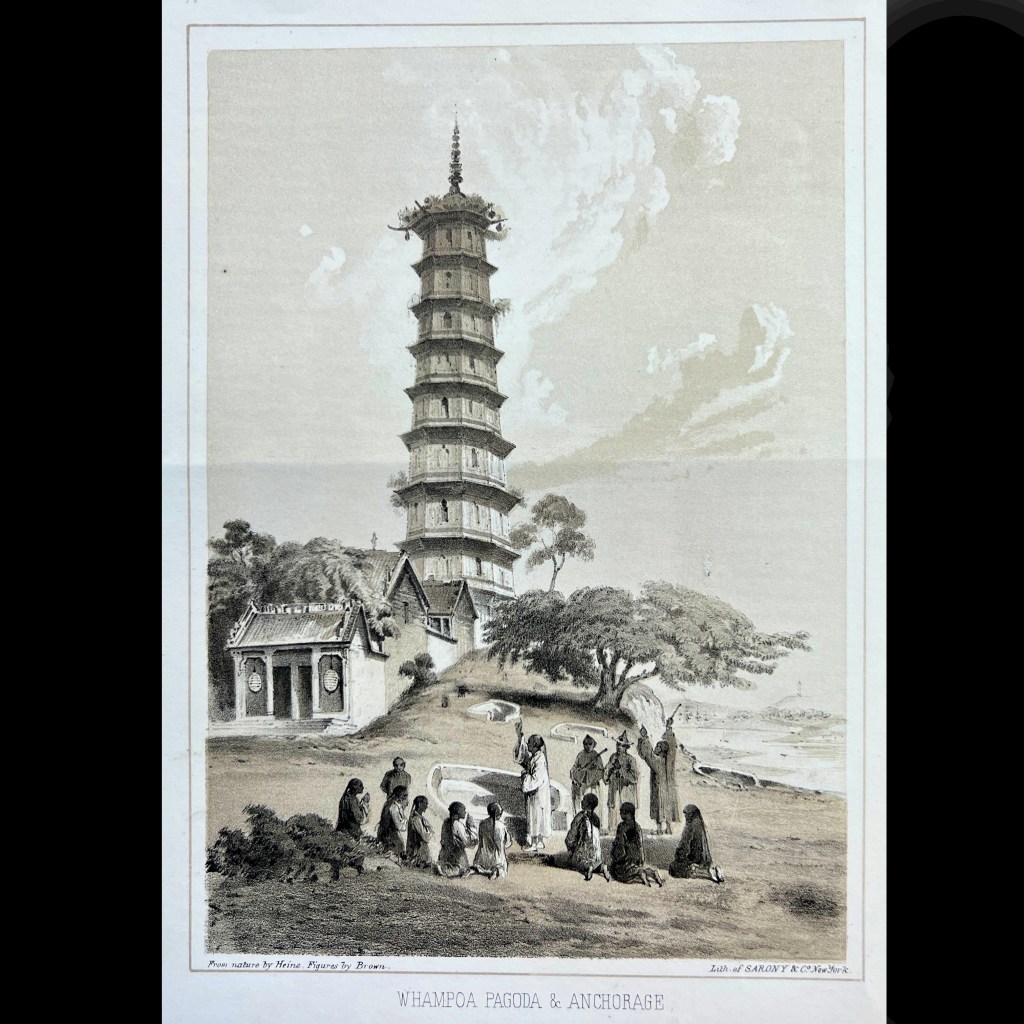
Matthew Perry noted the religious significance of the Pazhou Pagoda, as it was known in China, but also emphasized its value as a landmark, as ships “steer and anchor by its bearings.” Under the Canton System, foreign vessels often waited months at the Whampoa anchorage for Chinese cargo.
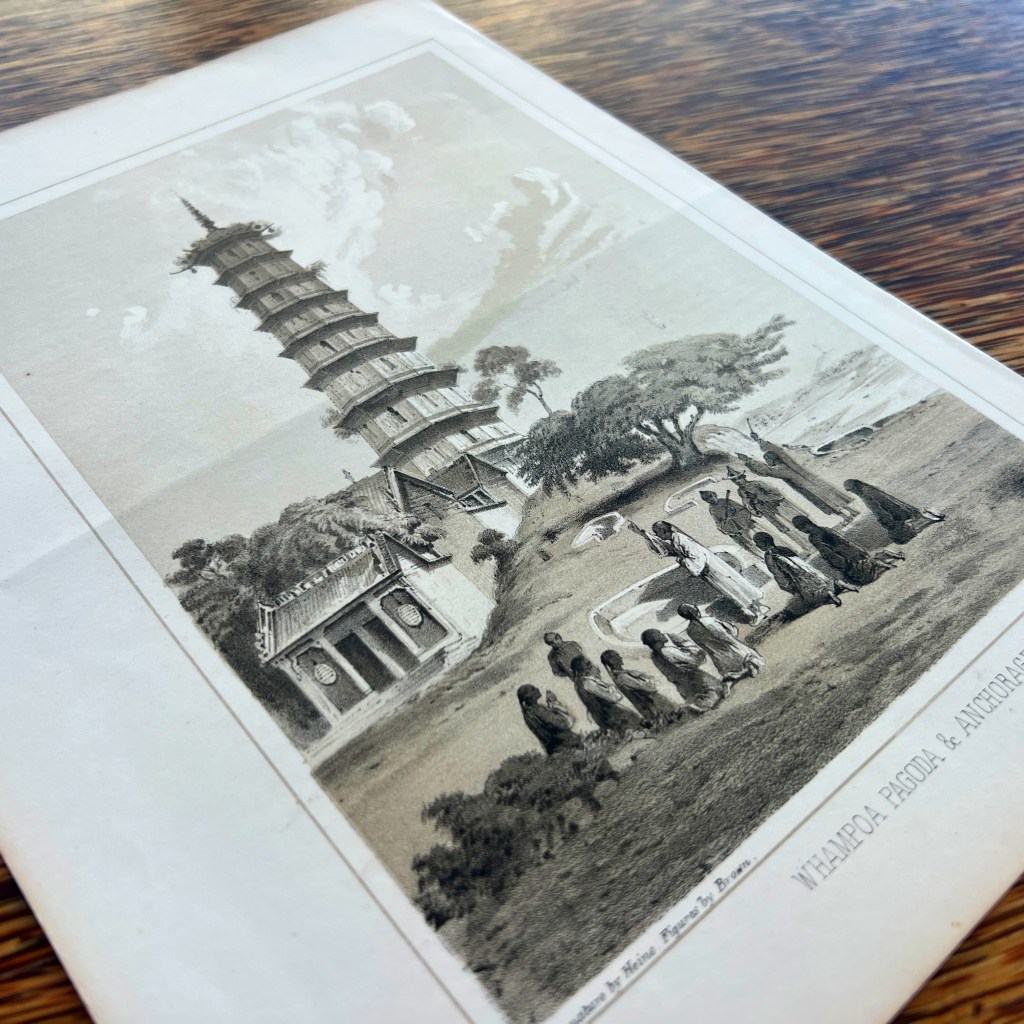
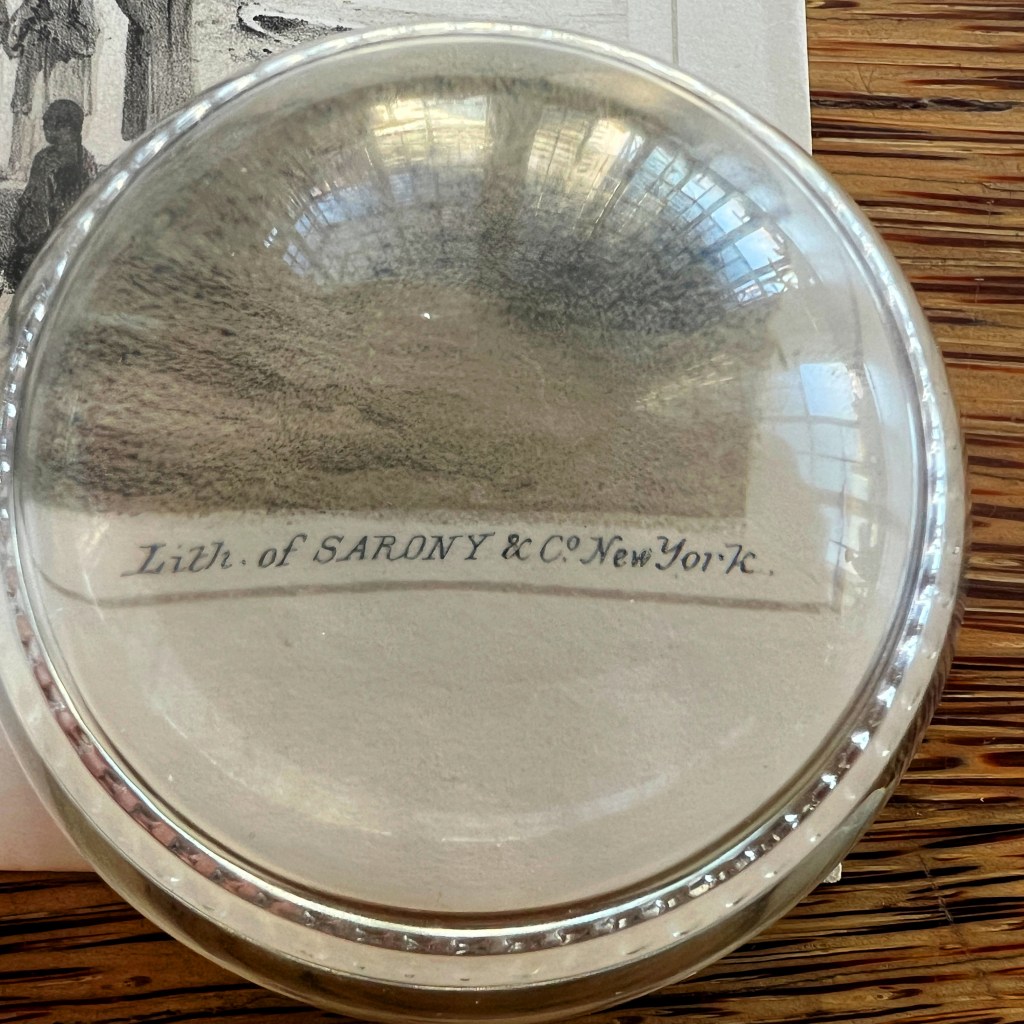
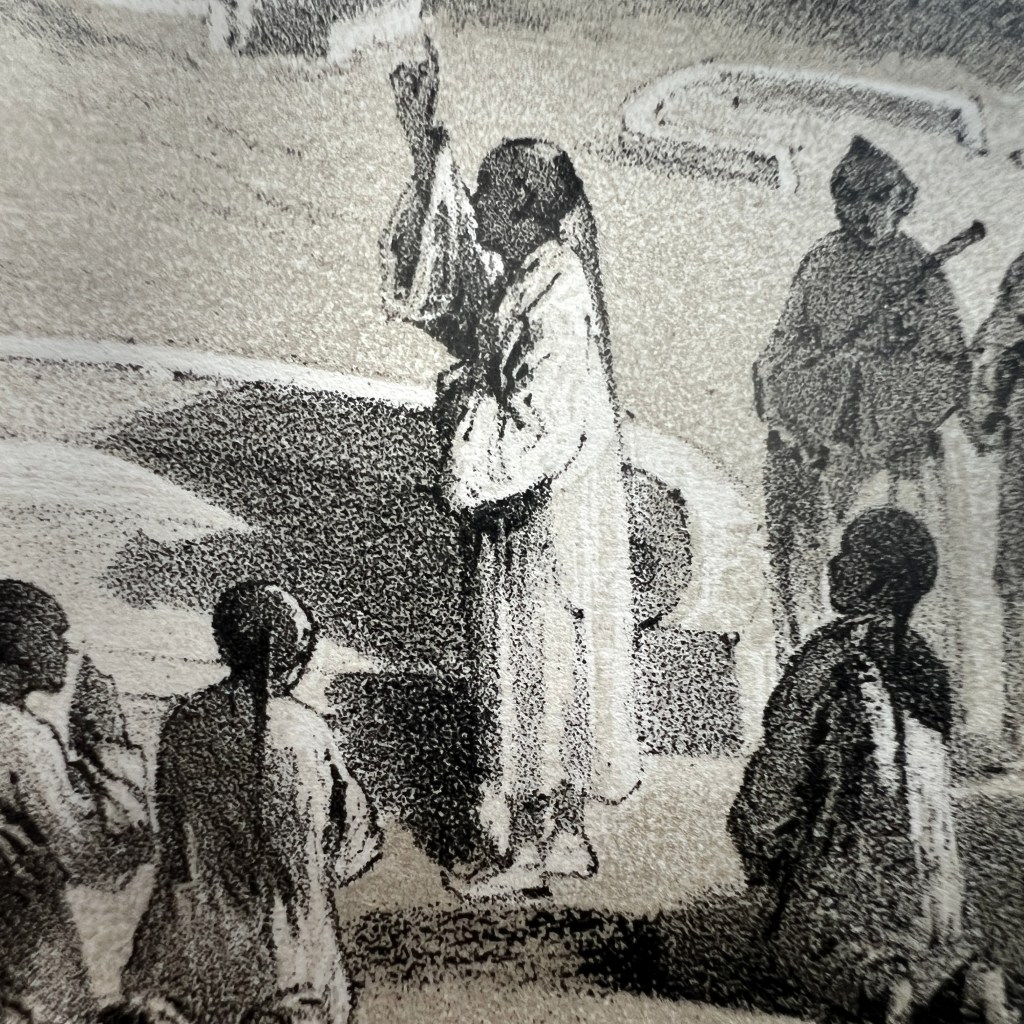
Heine’s paintings were later converted into sepia and hand-tinted stone lithographs to illustrate the official U.S. government report on the mission, Narrative of the Expedition of an American Squadron to the China Seas and Japan (1856).
Because foreign ships spent long periods at Whampoa, the nine-story pagoda became familiar to many merchants and sailors. It also emerged as a visual emblem of China, appearing in numerous paintings, news illustrations, and on decorative objects such as porcelain and hand fans.
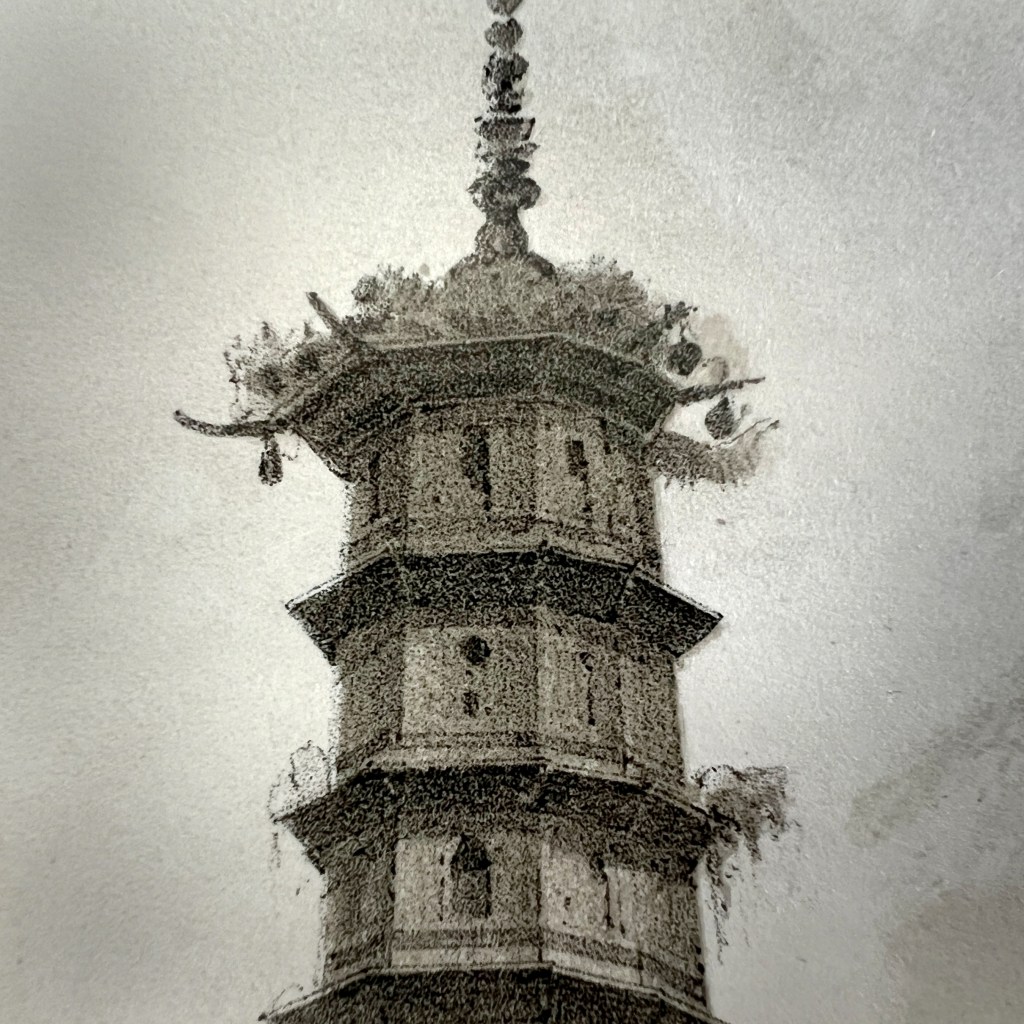
The octagonal brick pagoda, built in 1600 and rising more than 60 meters, was destroyed during the Cultural Revolution. For more on the visual importance of the Whampoa Pagoda, see Peter Perdue’s essay on the Canton System for MIT’s Visualizing Culture: tinyurl.com/46xrpkxf.
The Buddhas in the West Material Archive is a digital scholarship project that catalogues artifacts depicting Buddhist material culture for Western audiences. It’s comprised of prints, photos, and an assortment of ephemera and other objects. For a brief introduction to this archive, visit the main Buddhas in the West project page.


For Related Buddhas in the West Posts Featuring Pagodas:

For the Most Recent Buddhas in the West Posts:

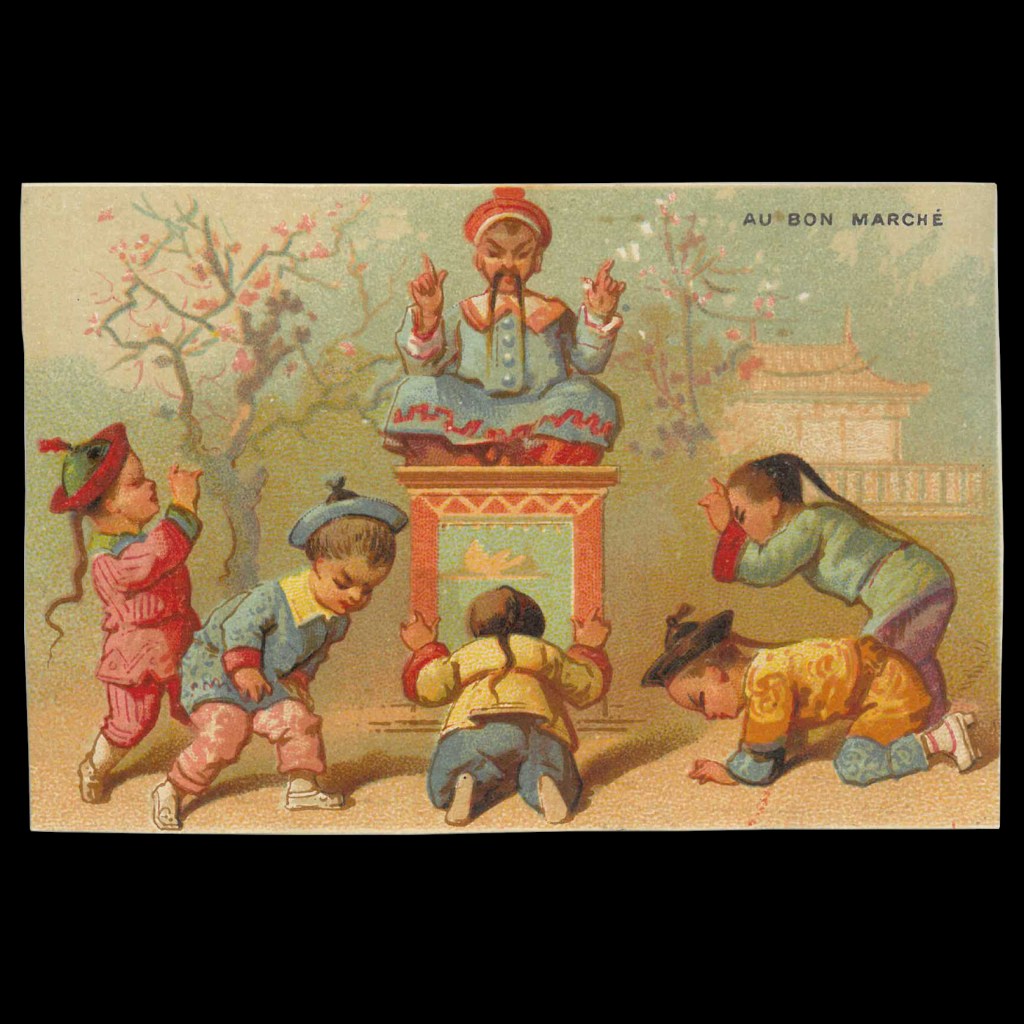
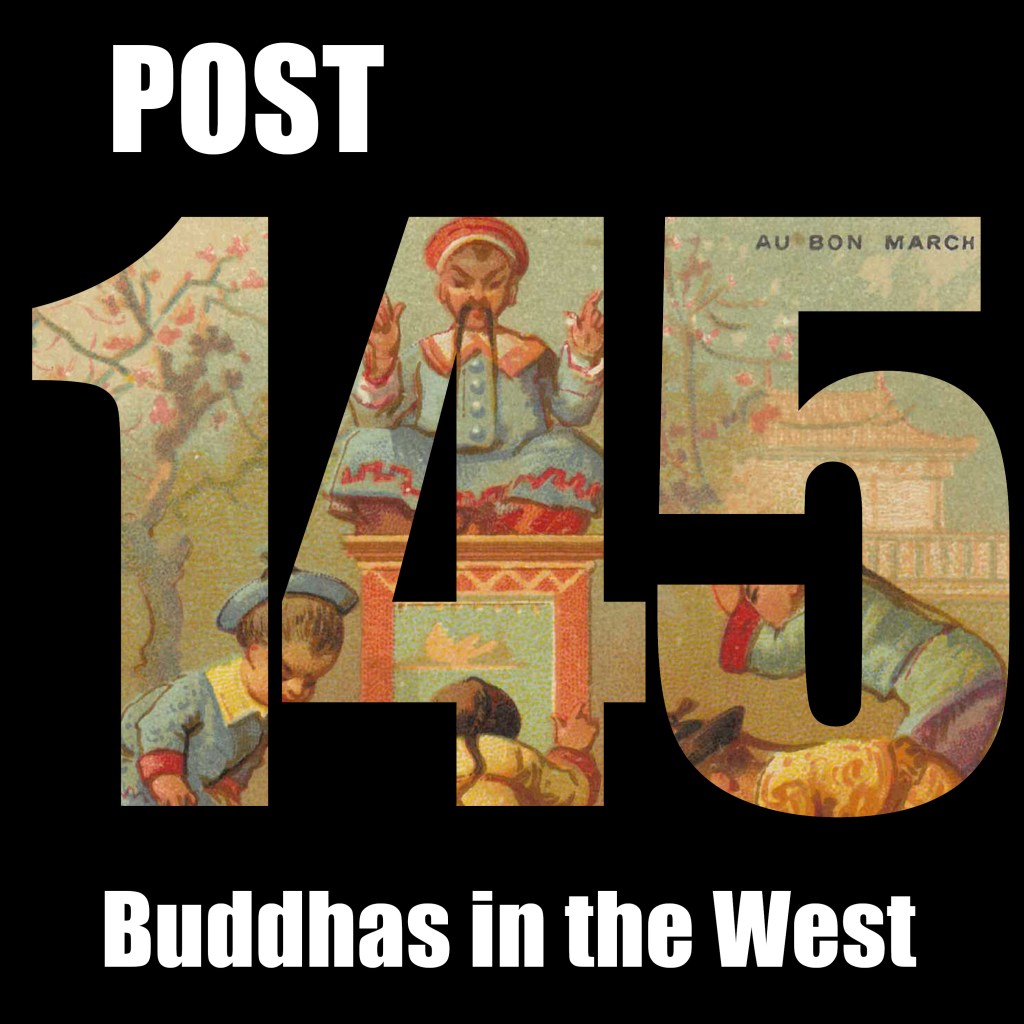
Au Bon Marché’s Chinese Idolatry Advertising Card

For all the new Buddhas in the West posts
follow us on Bluesky & Instagram


The centuries-long fascination with the Chinese-inspired aesthetic known as Chinoiserie had waned considerably by the end of the 19th century. Yet the famed Parisian department store Au Bon Marché continued to draw upon its familiar imagery for a series of popular advertising cards.

Chinoiserie offered a dreamlike vision of China, populated with pagodas, lush landscapes, and mysterious idols. After the First Opium War (1839–1842) and the expansion of colonial contact, however, depictions of China grew less romanticized, increasingly depicting the it as a land of idolatry.

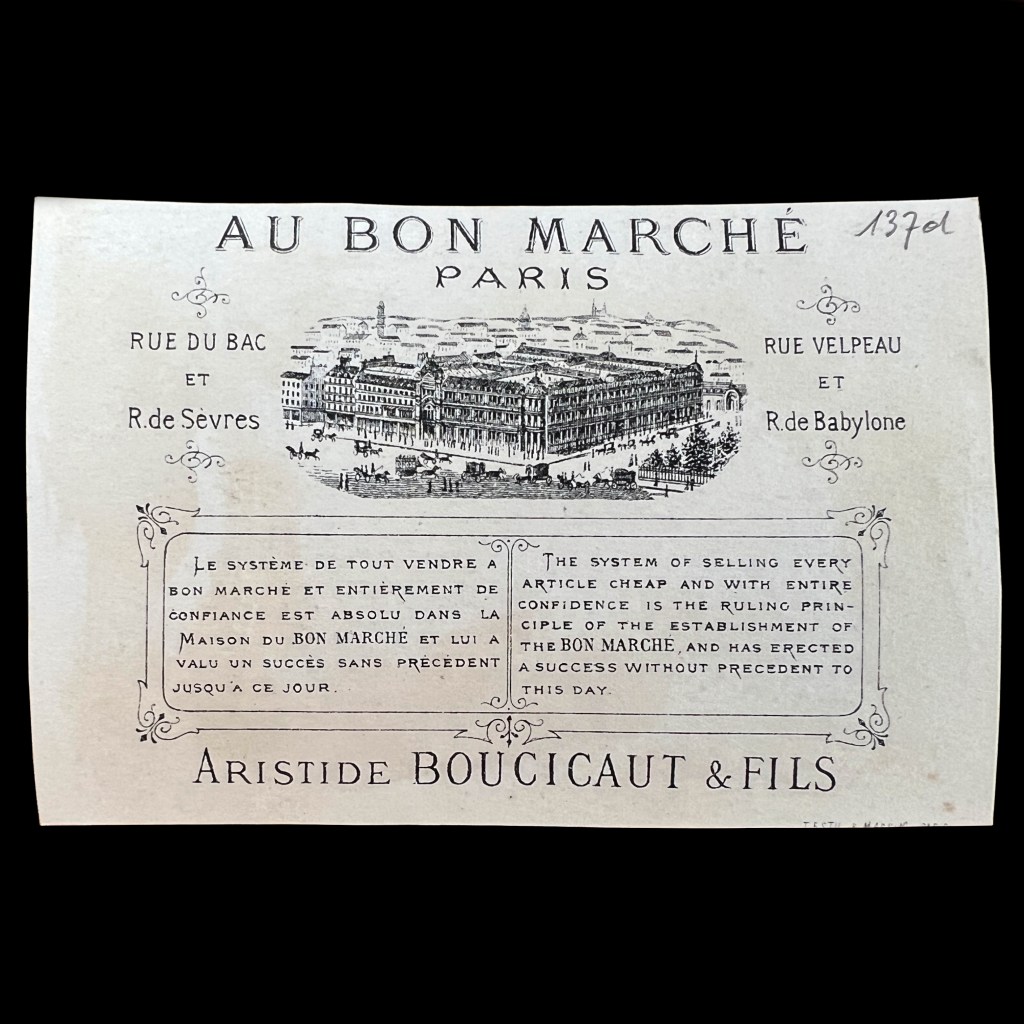
Au Bon Marché was reputedly the first store in Paris to distribute free lithographic prints to children, a practice soon adopted by other major department stores. Printed by Testu & Massin, this card belonged to a set of six illustrating various “Oriental” scenes.

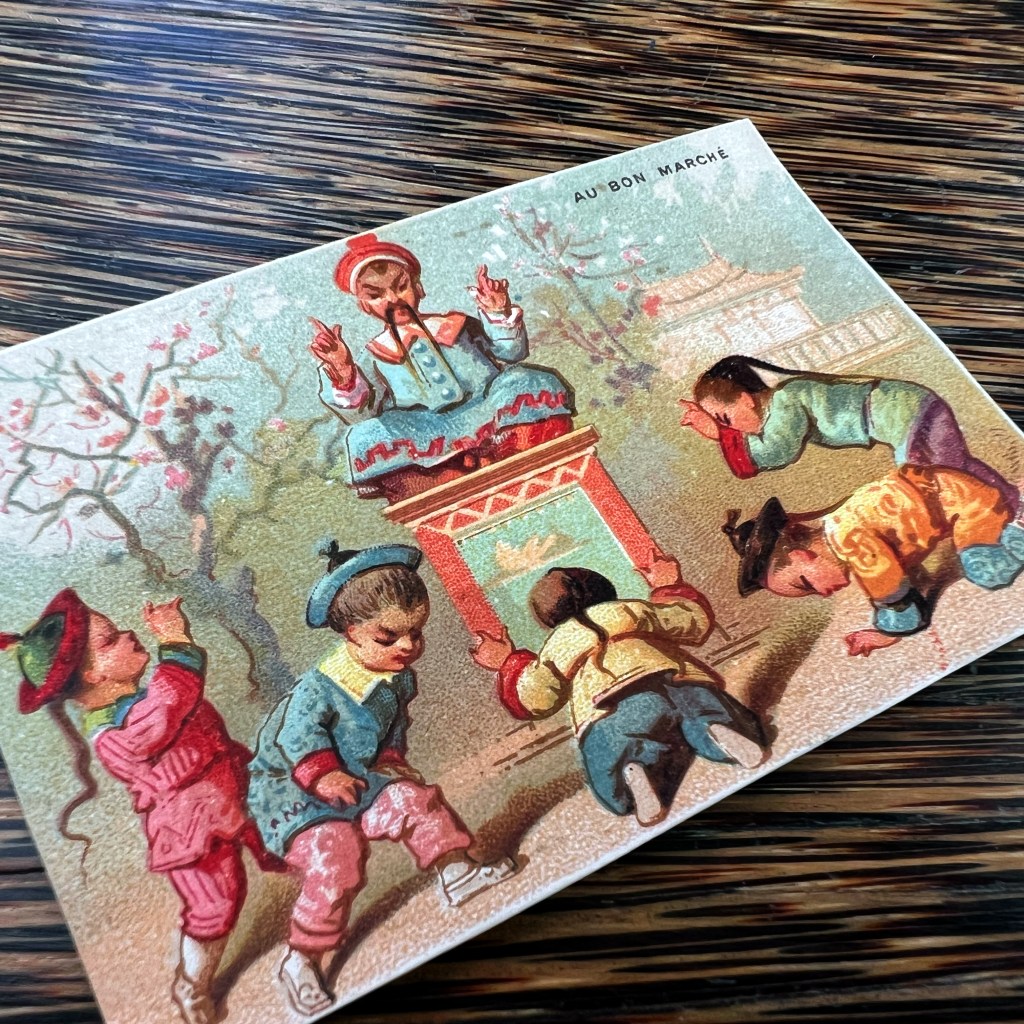
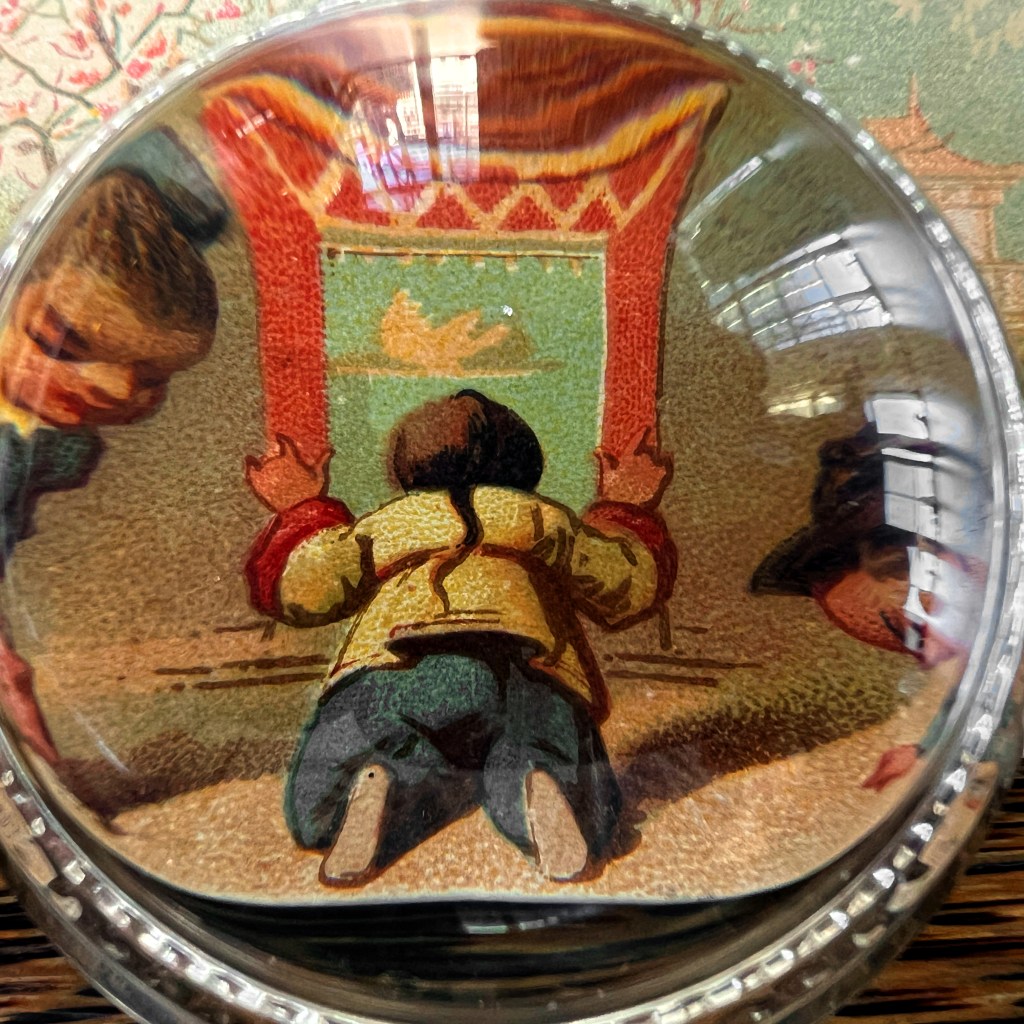
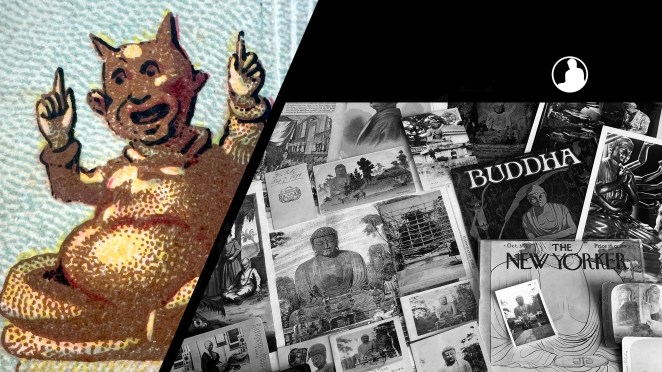
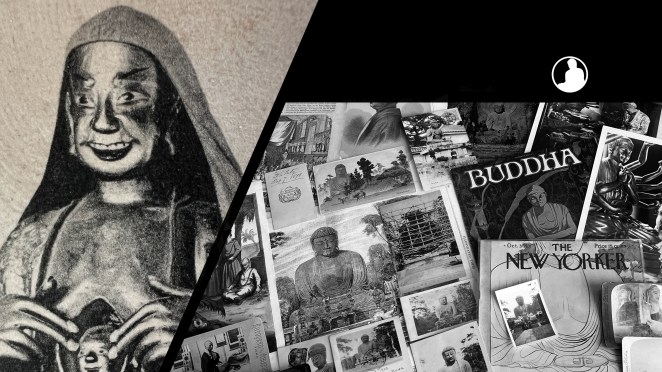
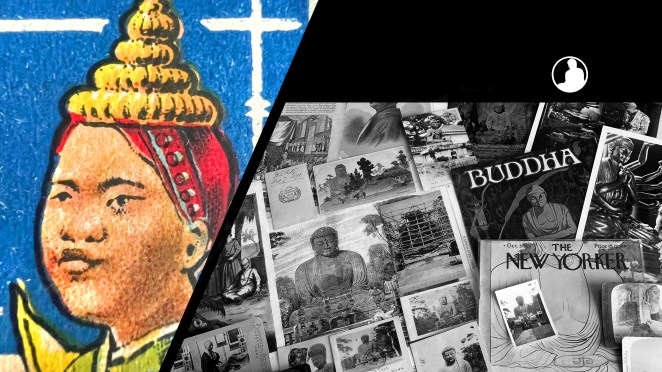
The colorful image blends the ethereal with the corporeal, showing children prostrating before a Buddhist-style idol.

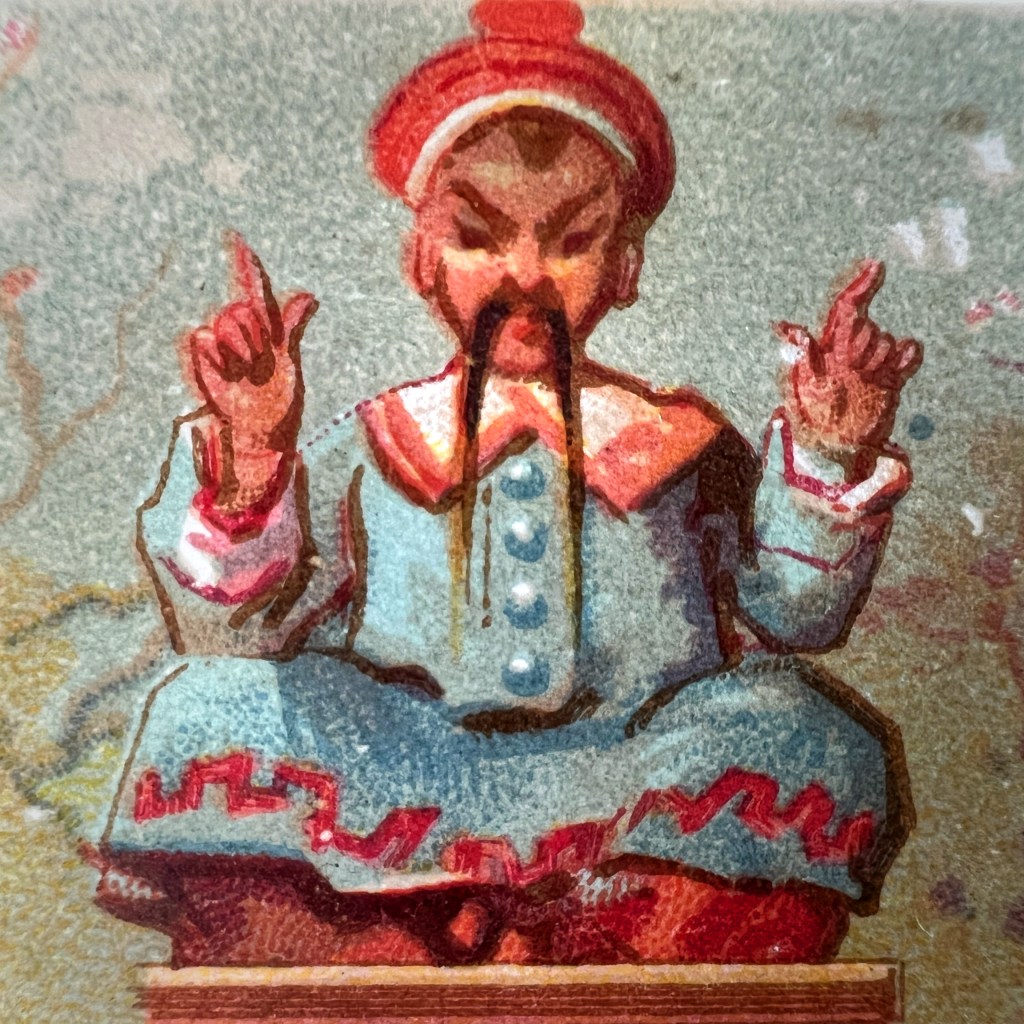
The idol itself merges a cross-legged Buddha with a racialized caricature of a Chinese man, complete with a long mustache and posed in what was known in France as the “Chinese dance.”


The Buddhas in the West Material Archive is a digital scholarship project that catalogues artifacts depicting Buddhist material culture for Western audiences. It’s comprised of prints, photos, and an assortment of ephemera and other objects. For a brief introduction to this archive, visit the main Buddhas in the West project page.


For Related Buddhas in the West Posts Featuring Advertising Cards:


For the Most Recent Buddhas in the West Posts:

Philip Klier’s Shwedagon Pagoda Postcard

For all the new Buddhas in the West posts
follow us on Bluesky & Instagram


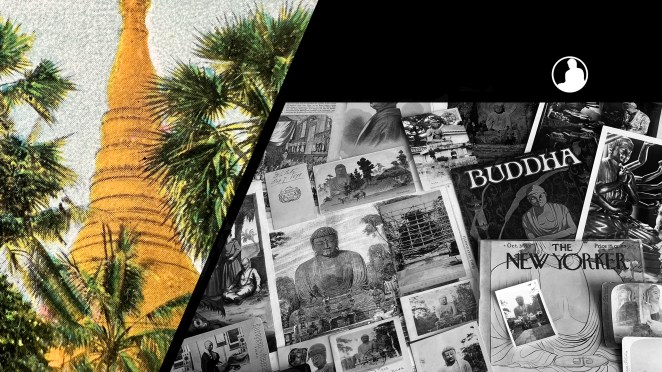
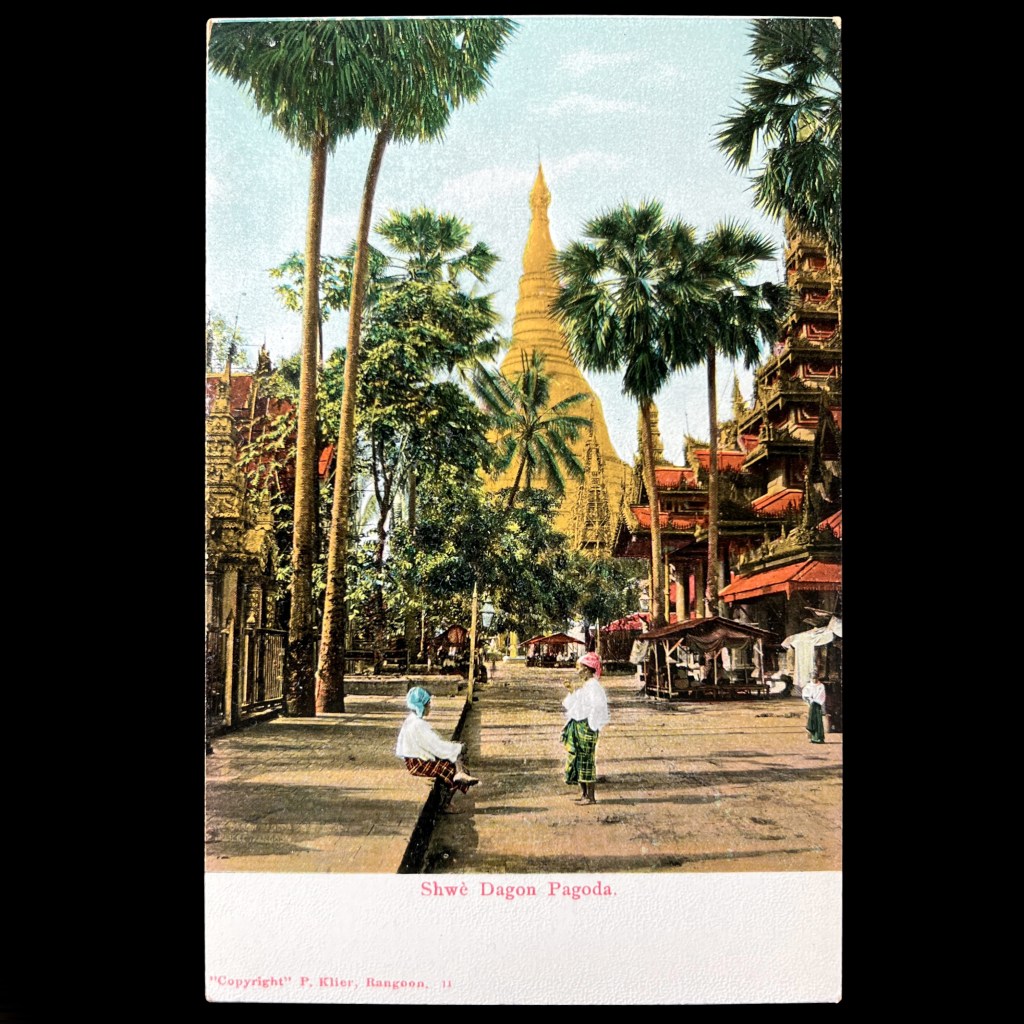
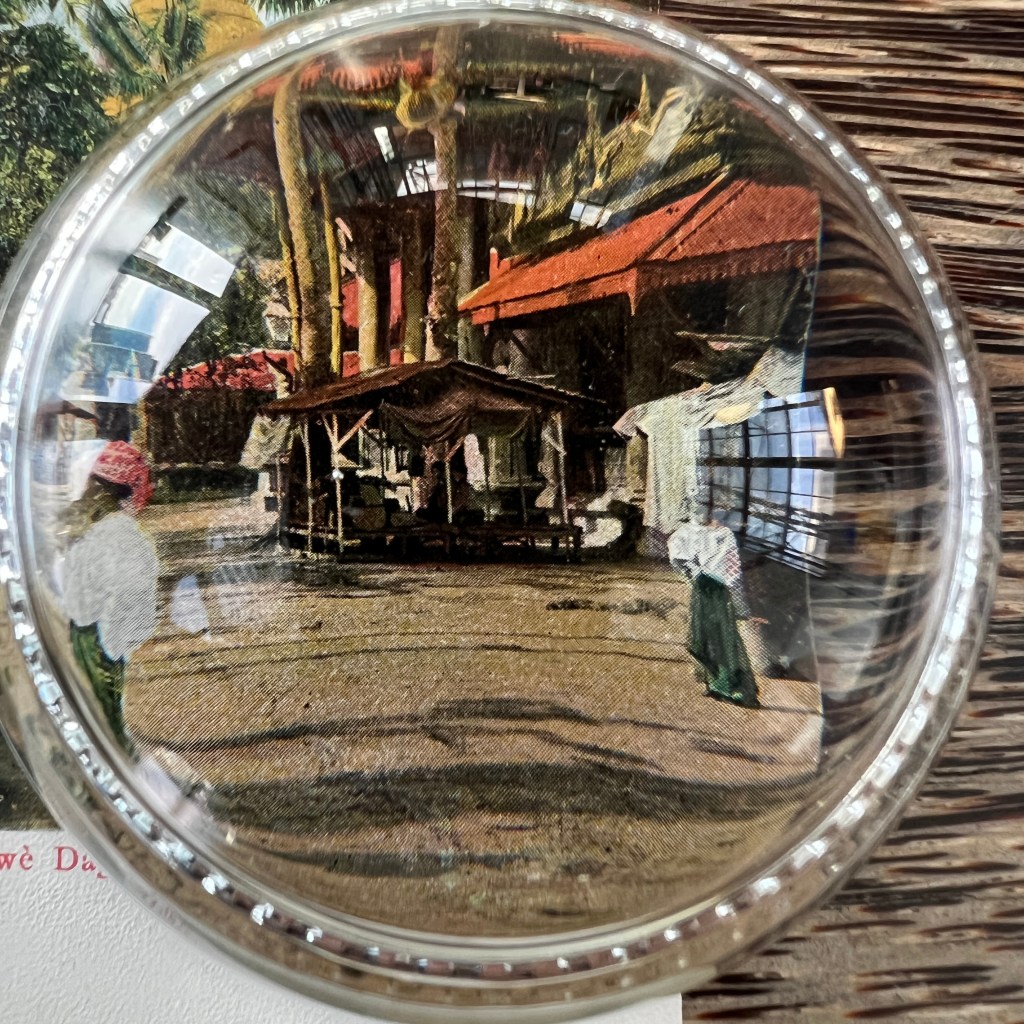
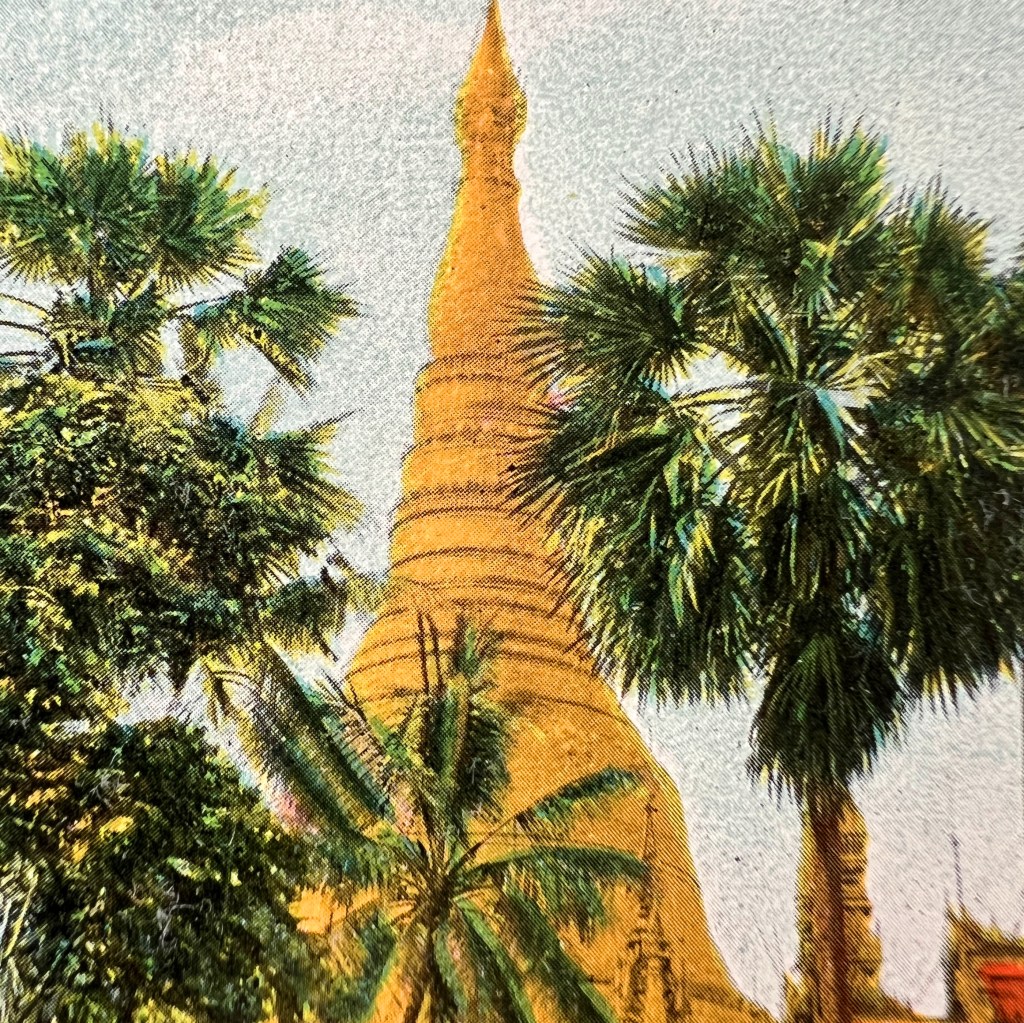
At the turn of the 20th century, tourists entering British Burma on a steamer would have looked down the Rangoon River to see the golden Shwedagon Pagoda in the far distance. Myanmar’s most sacred Buddhist site, the pagoda stands 112 m (367 ft) tall and dominates the Yangon skyline.

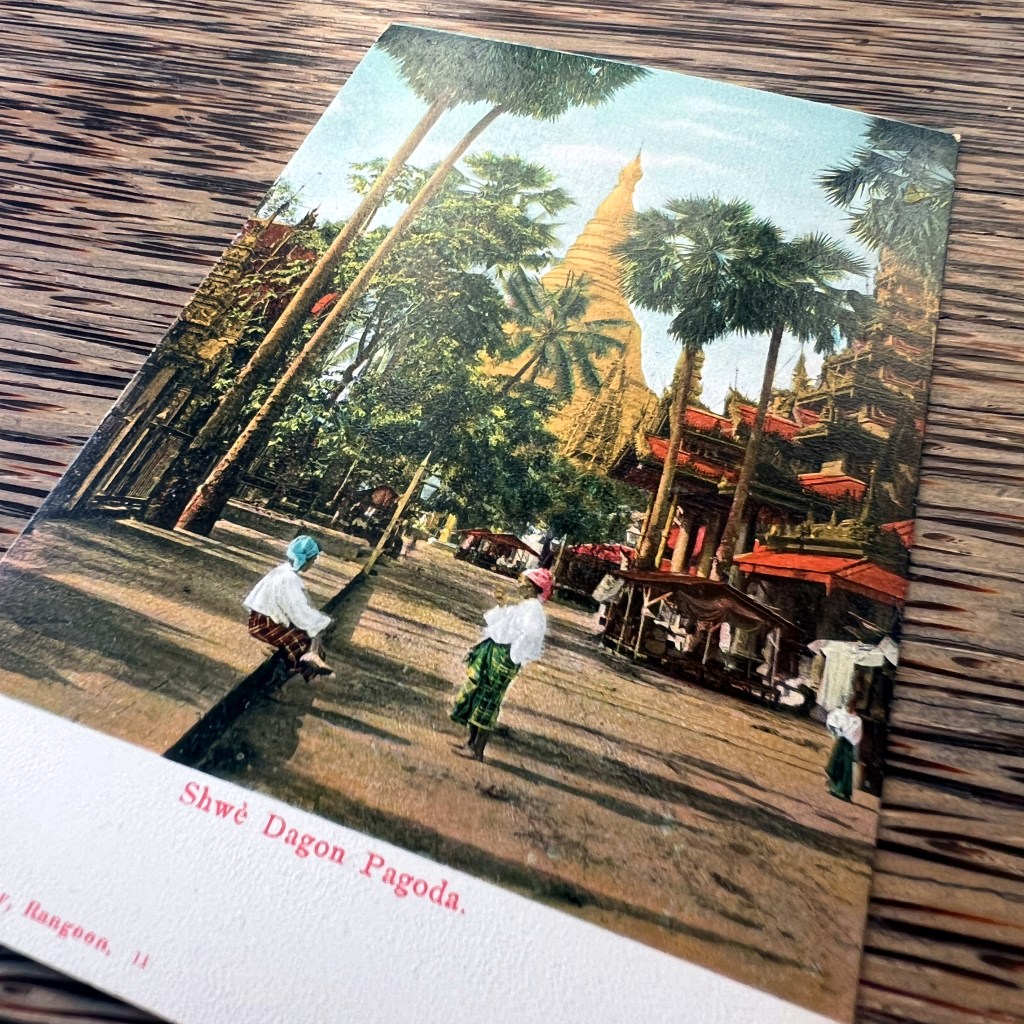
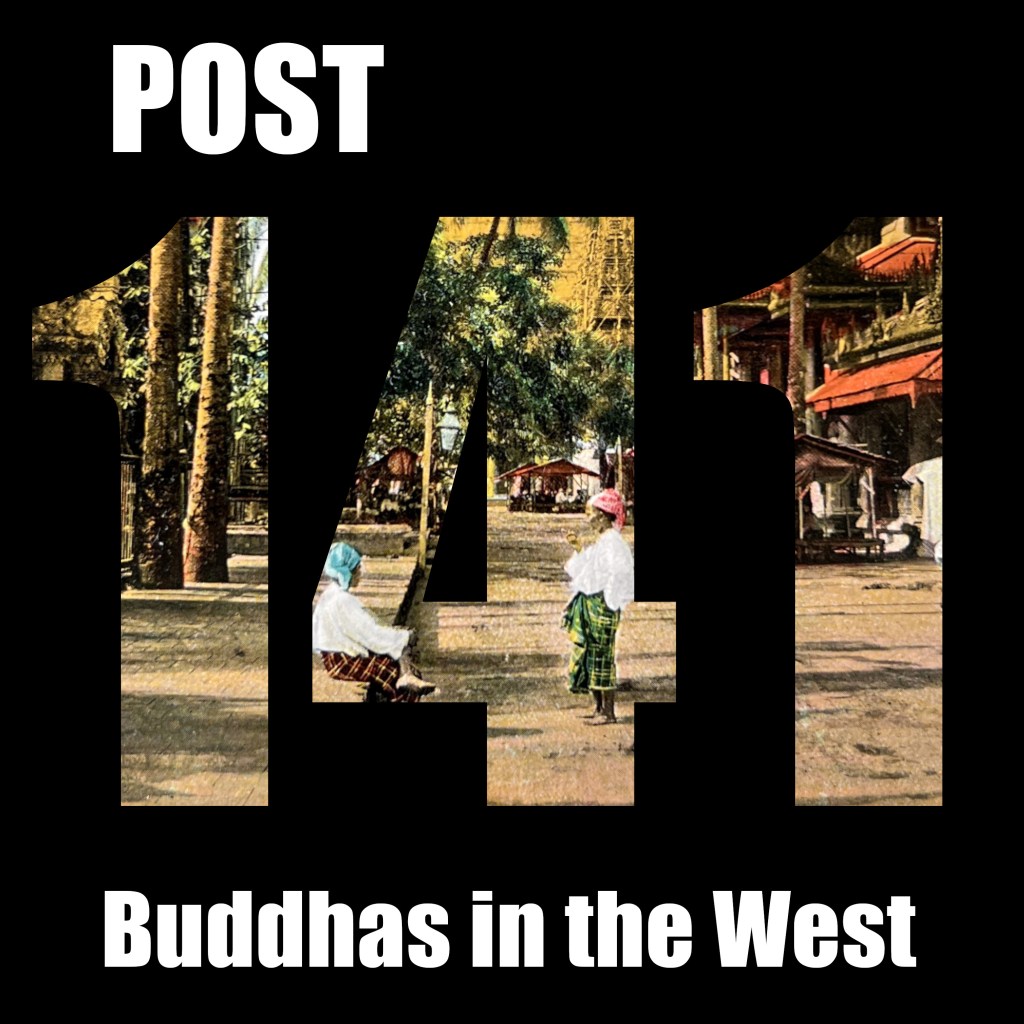
German photographer Philip Klier’s image blends monumentality with everyday life; palm trees frame the towering golden stupa while Burmese figures animate the foreground and provide scale. Klier presents an idyllic vision for colonial consumers seeking the “exotic” East.

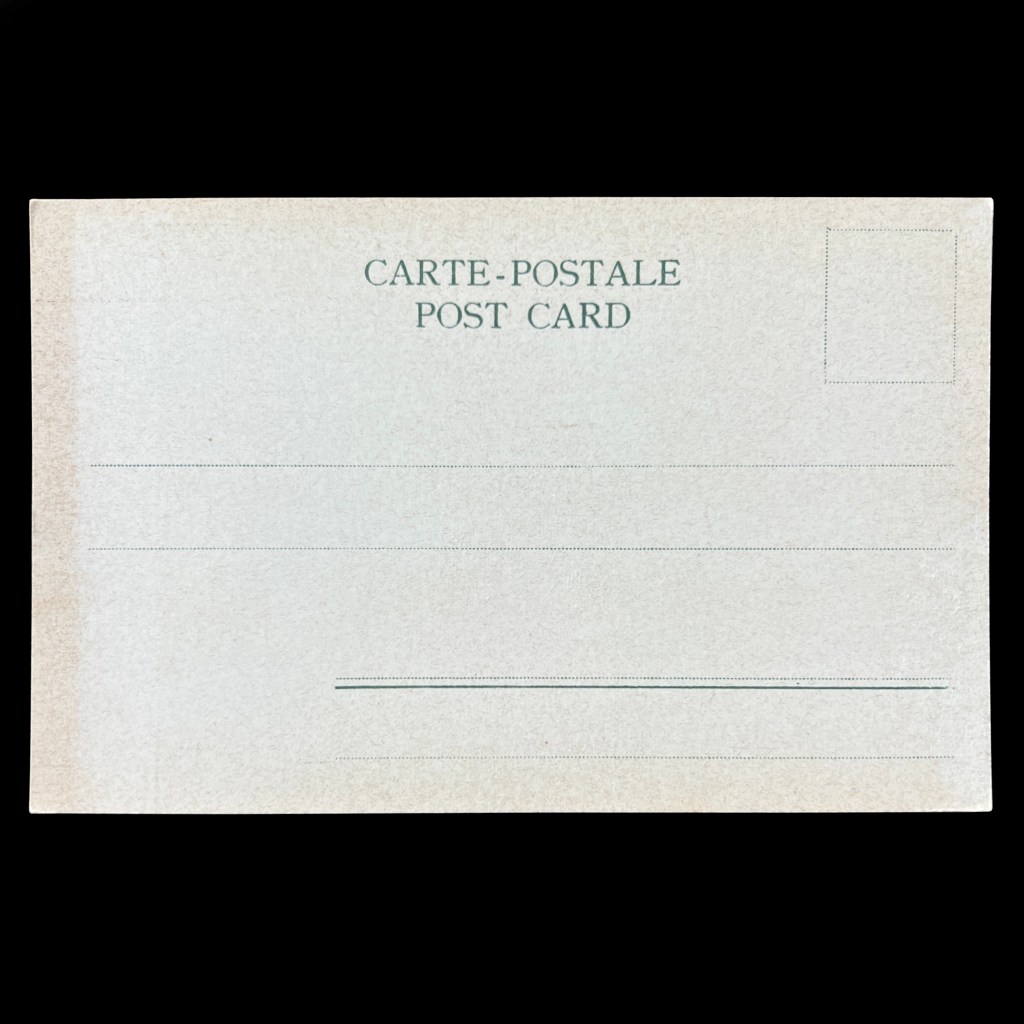
Following the postcard boom, Klier used his studio album photographs as the basis for portable, vibrantly colored postcards. Such cards circulated through imperial mail networks, shaping how distant places like Burma were imagined by audiences in Europe and beyond.

In the colonial period, some Burmese merchants became wealthy through trade in rice and timber and sites like Shwedagon Pagoda experienced rapid growth. Newly built resting pavilions and stalls selling flowers, parasols, and curios could be seen all over the grounds.

More than kitsch souvenirs, postcards reveal how colonial interactions and photography mediated encounters between Burma and the wider world at the turn of the century. For more on colonial photography in Burma, see Noel Singer’s Burma: A Photographic Journey (1993).


The Buddhas in the West Material Archive is a digital scholarship project that catalogues artifacts depicting Buddhist material culture for Western audiences. It’s comprised of prints, photos, and an assortment of ephemera and other objects. For a brief introduction to this archive, visit the main Buddhas in the West project page.


For Related Buddhas in the West Posts Featuring the Shwedagon Pagoda:


For the Most Recent Buddhas in the West Posts:
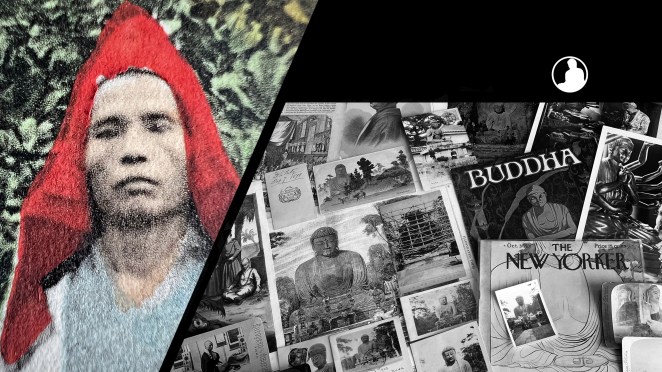

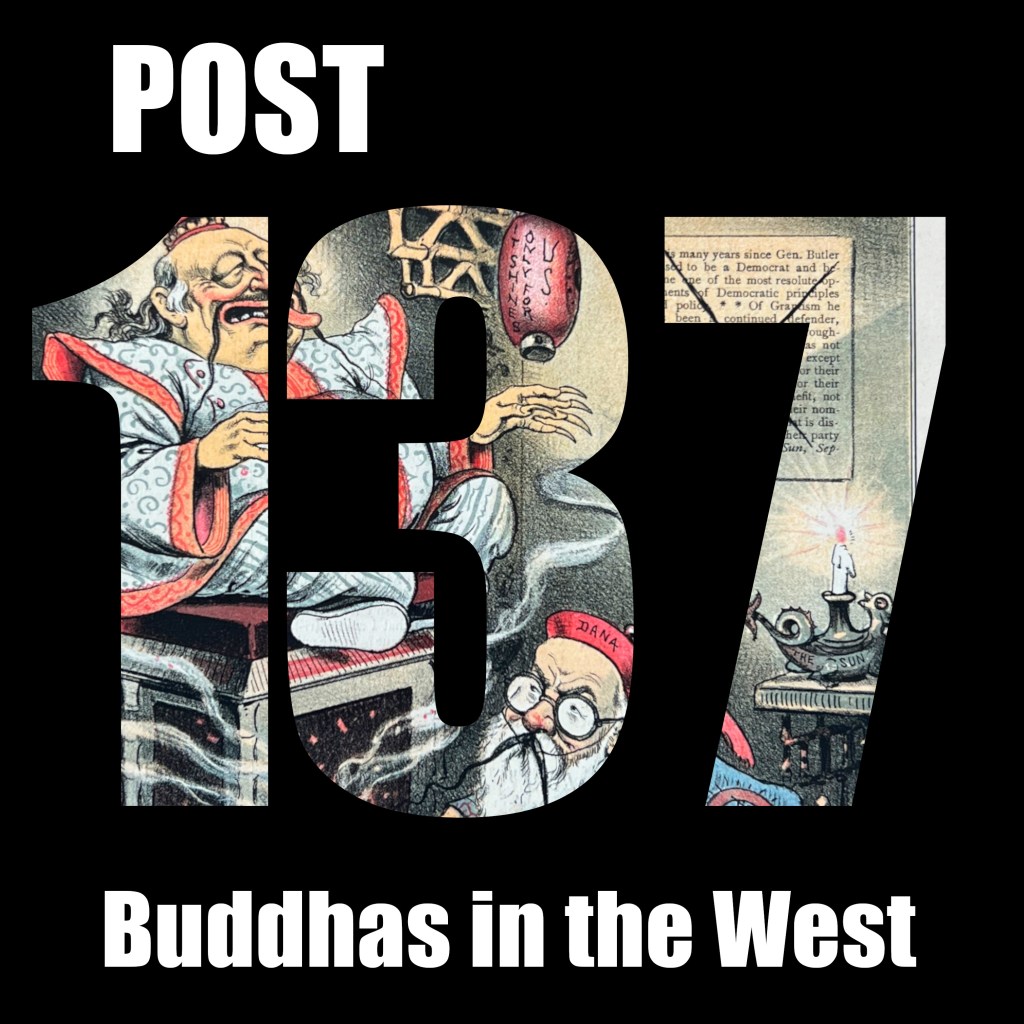
Puck Magazine’s Benjamin Butler as Joss Buddha Cover

For all the new Buddhas in the West posts
follow us on Bluesky & Instagram


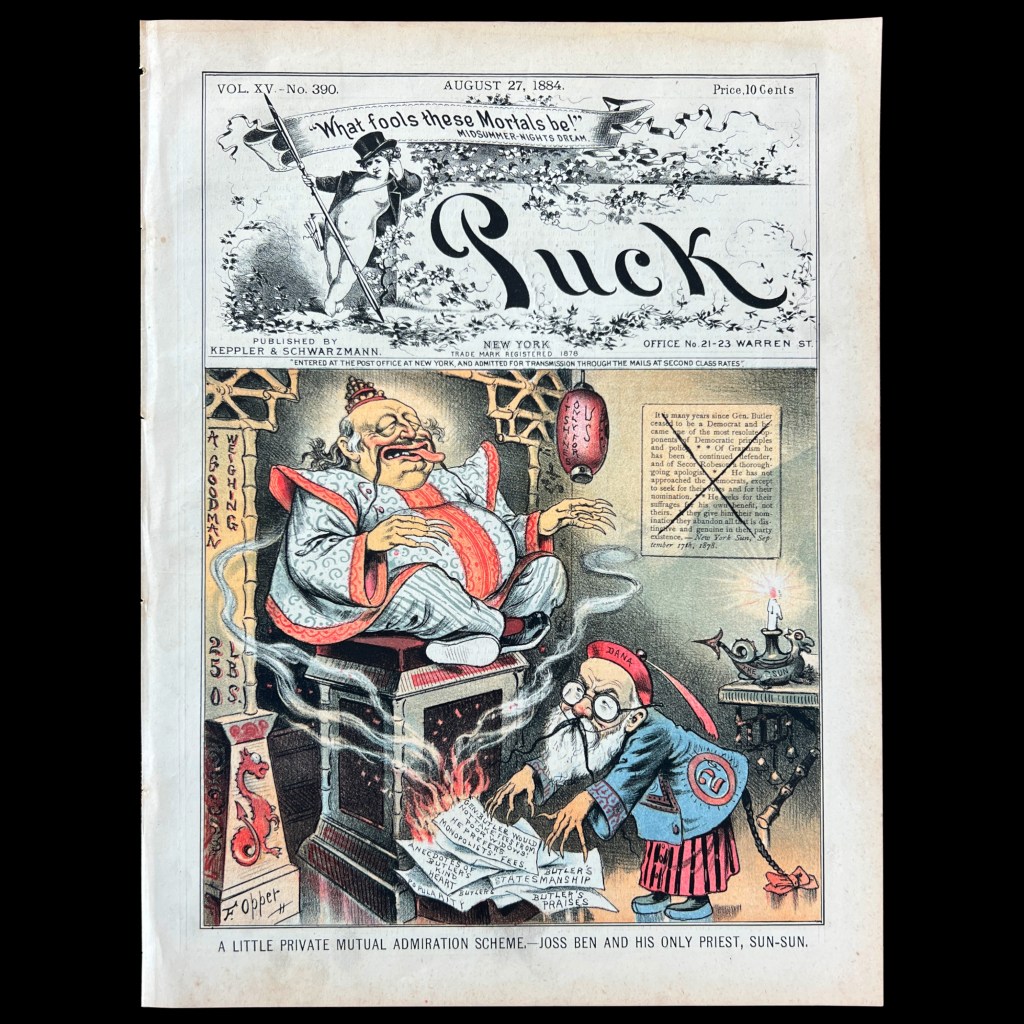
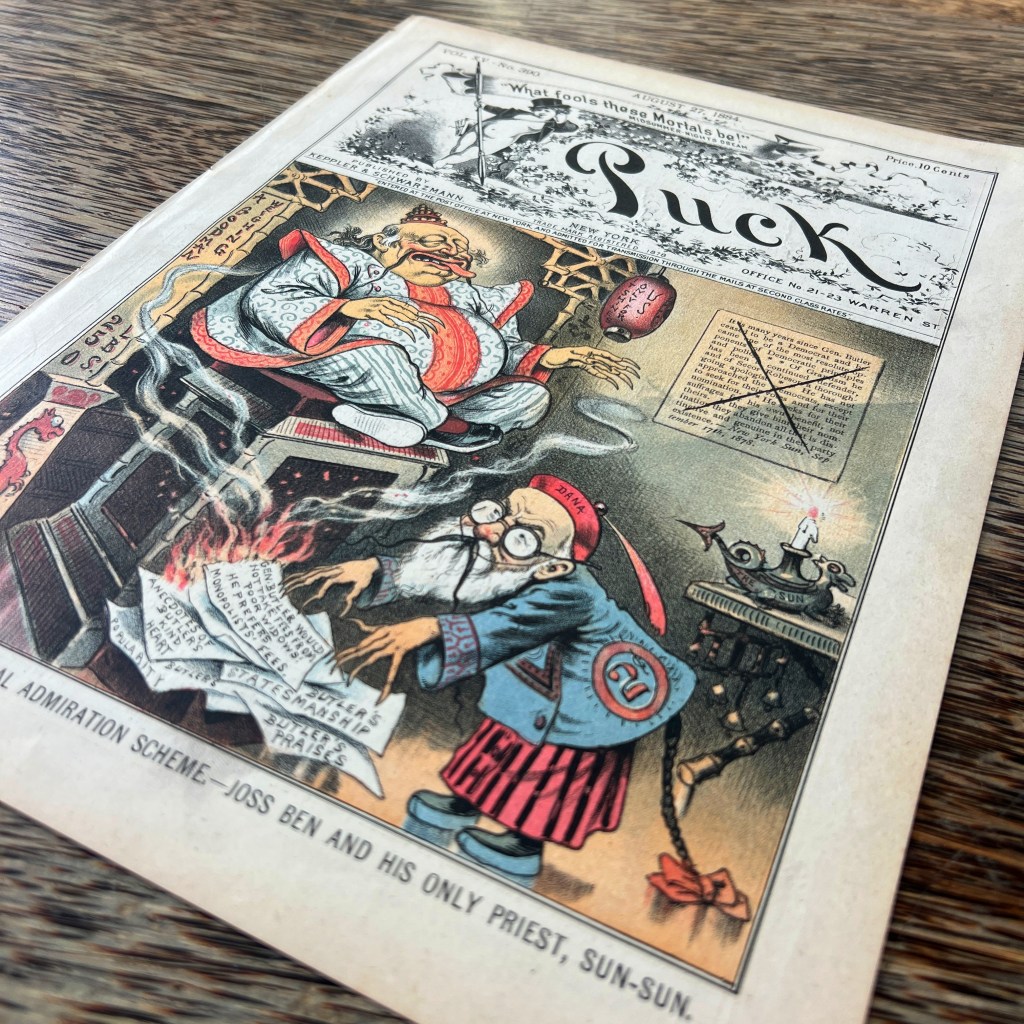
By the 1880s, Chinese American temples were sufficiently familiar to the public imagination to serve as an effective visual basis for political satire. Yet, however, the imagery was often not rooted in ethnographic realism; it remained a caricature of Western fantasy.

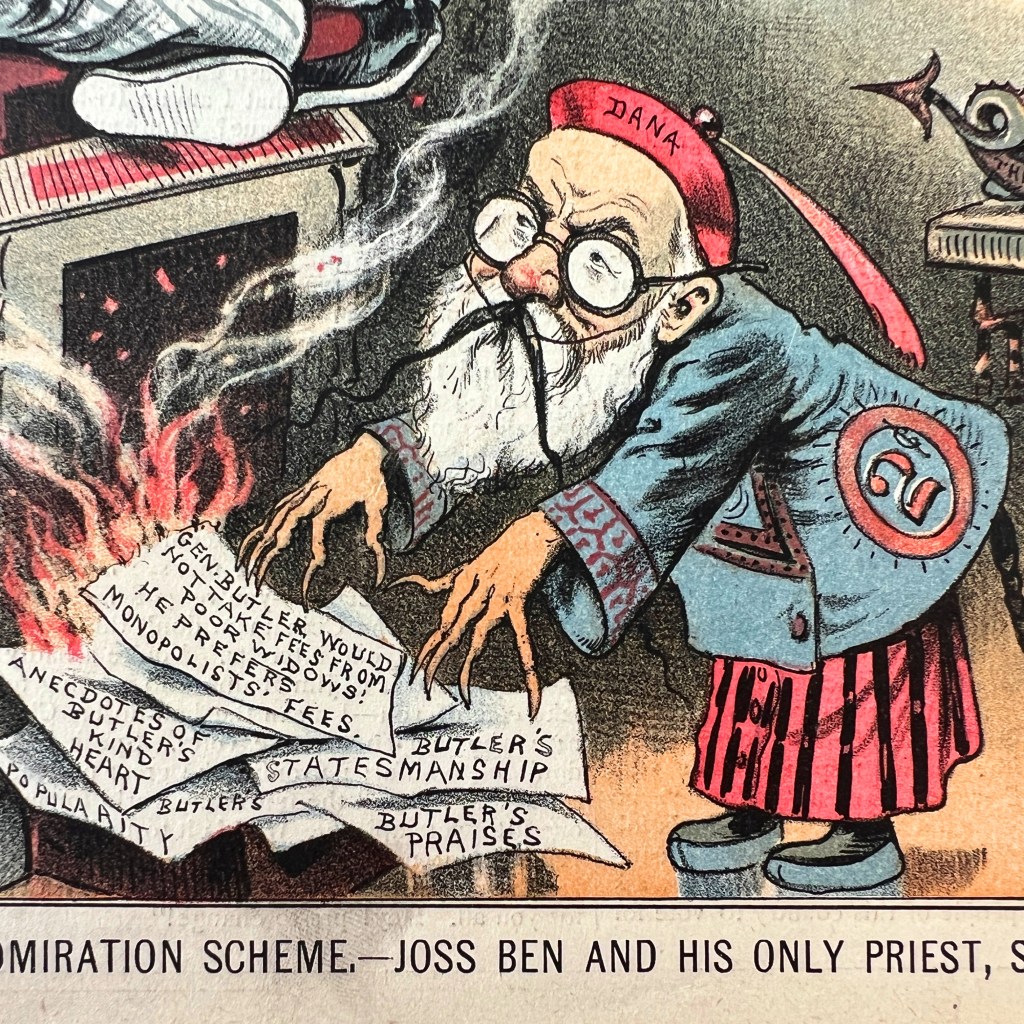
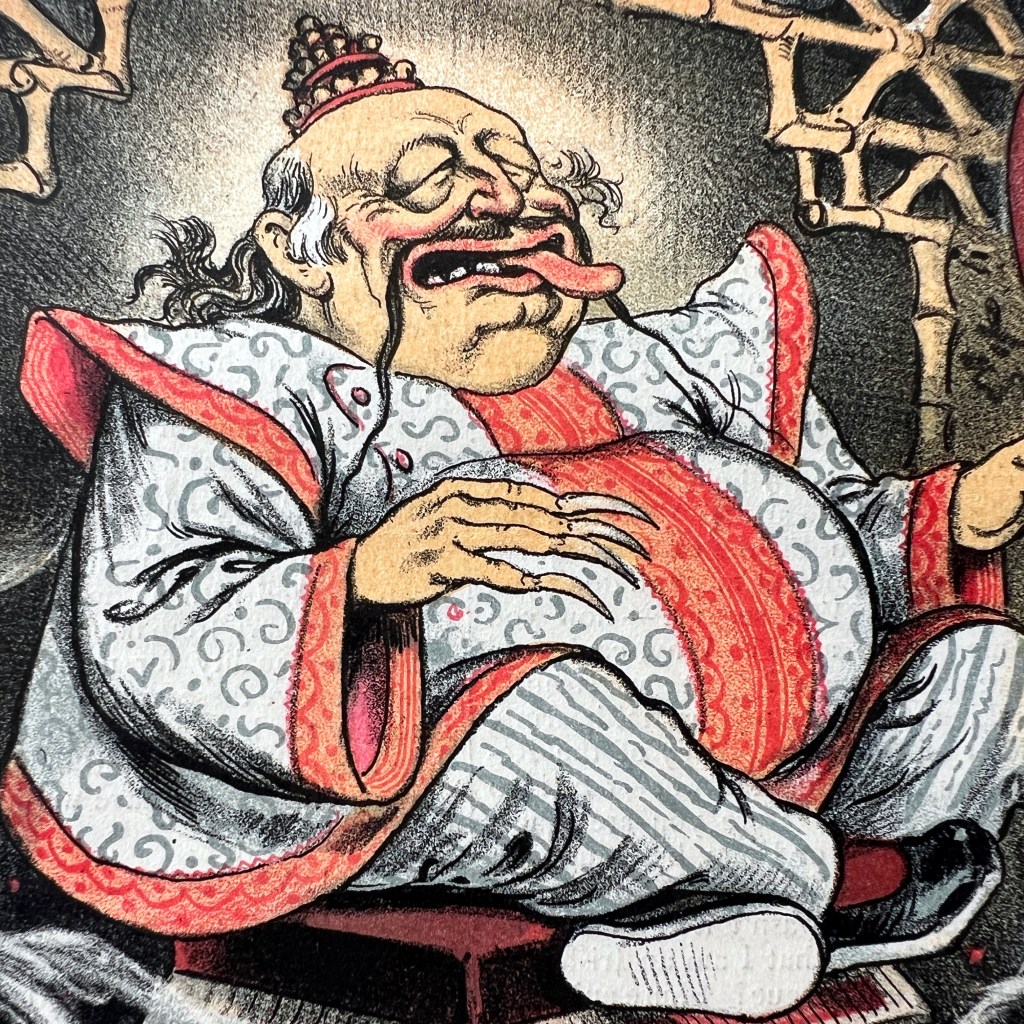
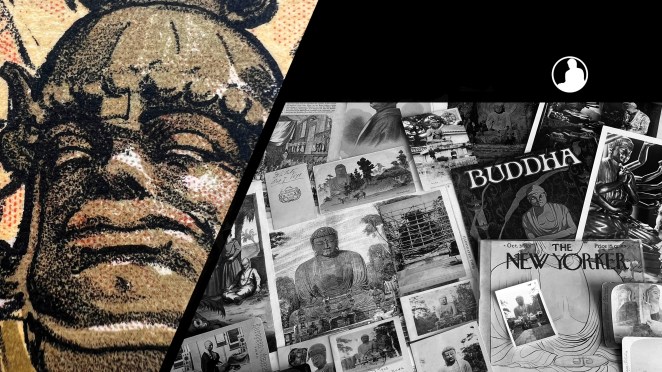
This 1884 cover of Puck depicts Gen. Benjamin Butler as a Chinese deity named “Ben Joss” receiving offerings from Charles Dana, the editor of the New York Sun, dressed in yellowface. Frederick Opper’s illustration draws attention to the effusive editorial praise Dana lavished upon Butler.

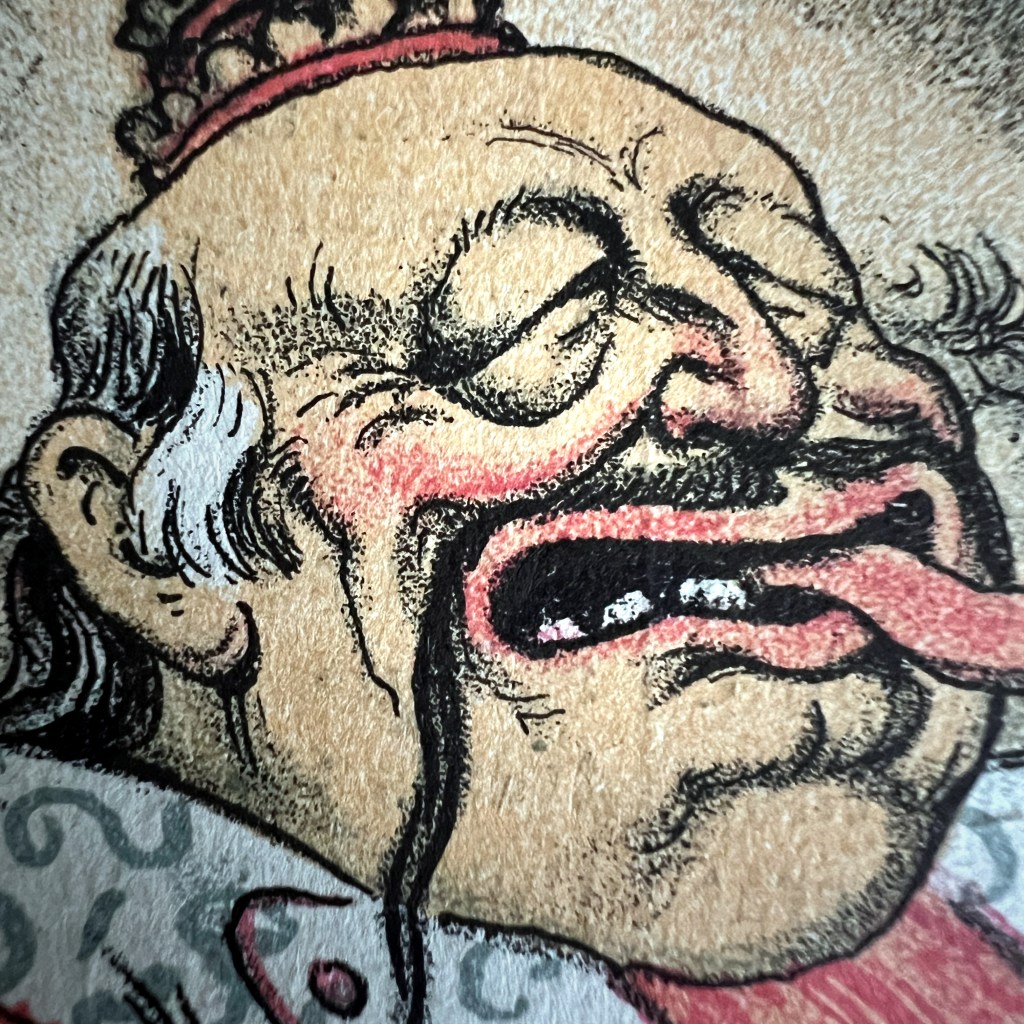
The lithograph portrays Butler as a cross-legged Buddha, but such figures were nearly non-existent in Chinese American temples of the era. In fact, the image portrays a “nodding” chinoiserie magot figurine, a European caricature of a Chinese Laughing Buddha, with bobbing hands and tongue.

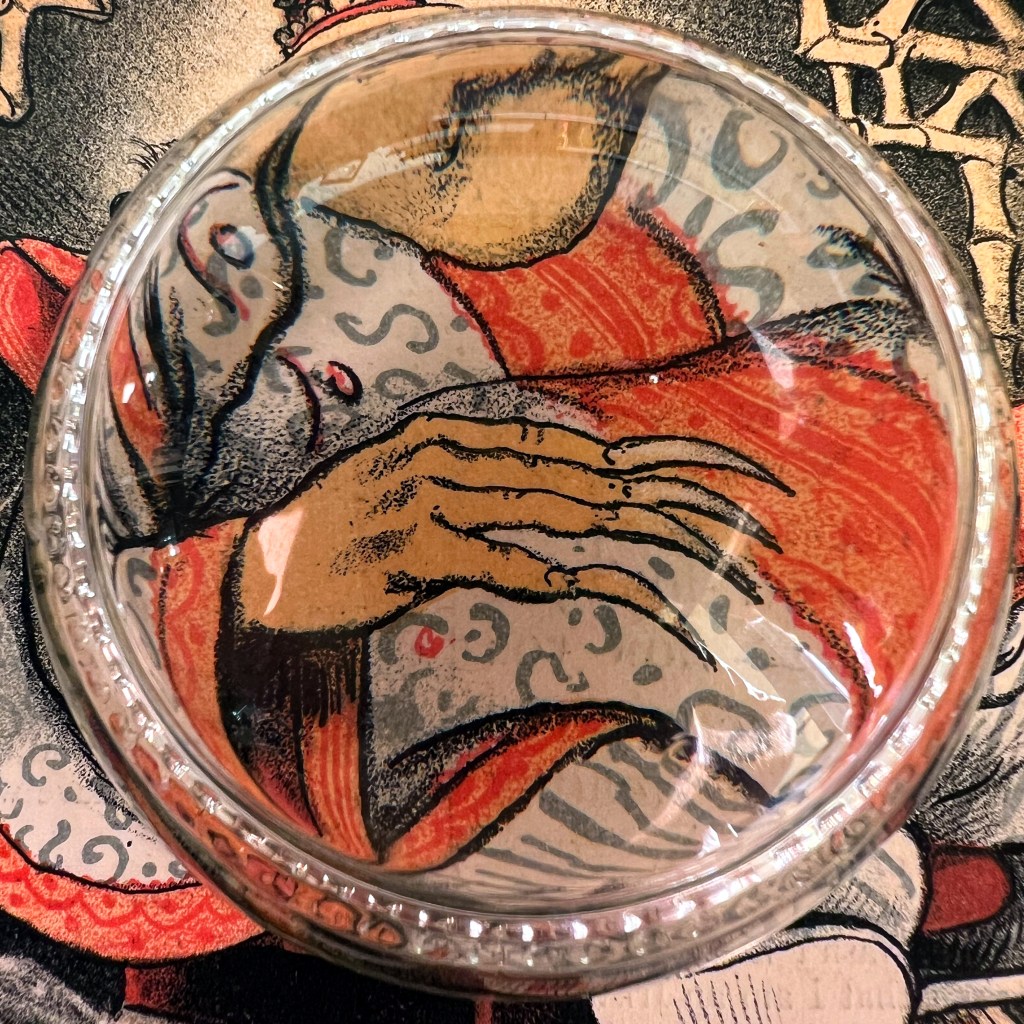
Magots were popularized in Europe as grotesque and whimsical decorative figurines, made with mechanically balanced heads, tongues, and hands that moved. Opper’s illustrations adds a string-like mustache and pointy fingernails to Butler, racialized visual cues to identify the figure as Chinese.

Even as satire, such illustrations imply buddhas were commonplace in Chinese American temples, but this was not the case. Opper’s illustration is a pastiche of visual tropes – paper lanterns, dragon candle holders, and Buddha statues – to evoke a exoticized notion of Chinese religiosity.

To see a better representation of the kinds of icons enshrined in early Chinese American temples, see the online “Map of Temples in San Francisco’s Chinatown: 1850s-1906,” viewable here: https://tinyurl.com/ykyaas2d.


The Buddhas in the West Material Archive is a digital scholarship project that catalogues artifacts depicting Buddhist material culture for Western audiences. It’s comprised of prints, photos, and an assortment of ephemera and other objects. For a brief introduction to this archive, visit the main Buddhas in the West project page.


For Related Buddhas in the West Posts Featuring Magazines:


For the Most Recent Buddhas in the West Posts:
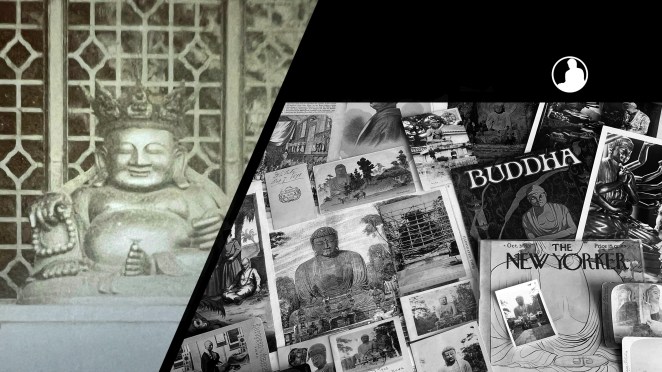

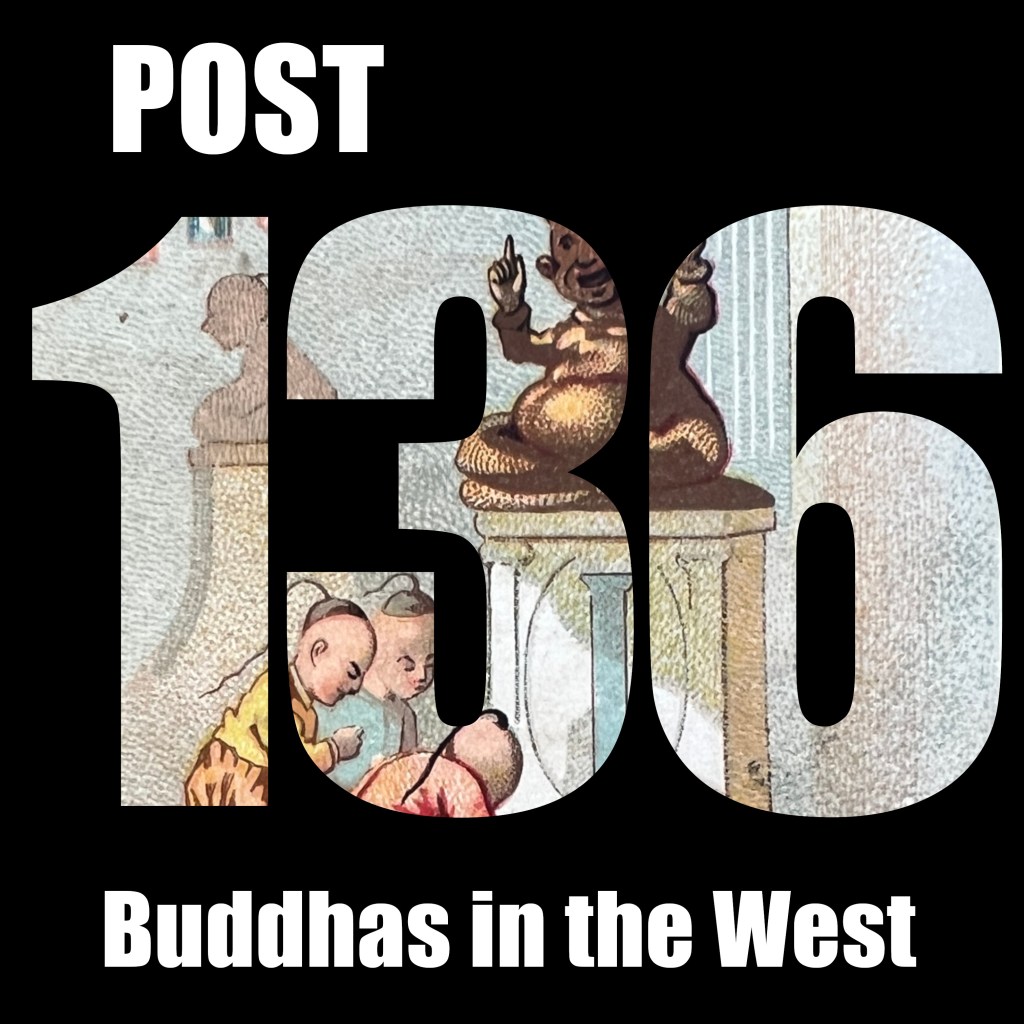
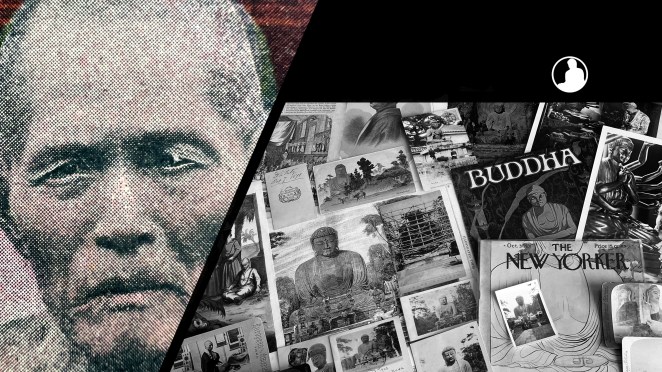
Chinese Idolatry Stock Advertising Card

For all the new Buddhas in the West posts
follow us on Bluesky & Instagram


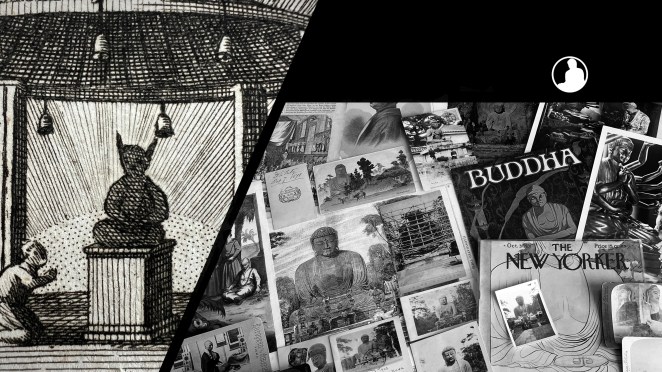
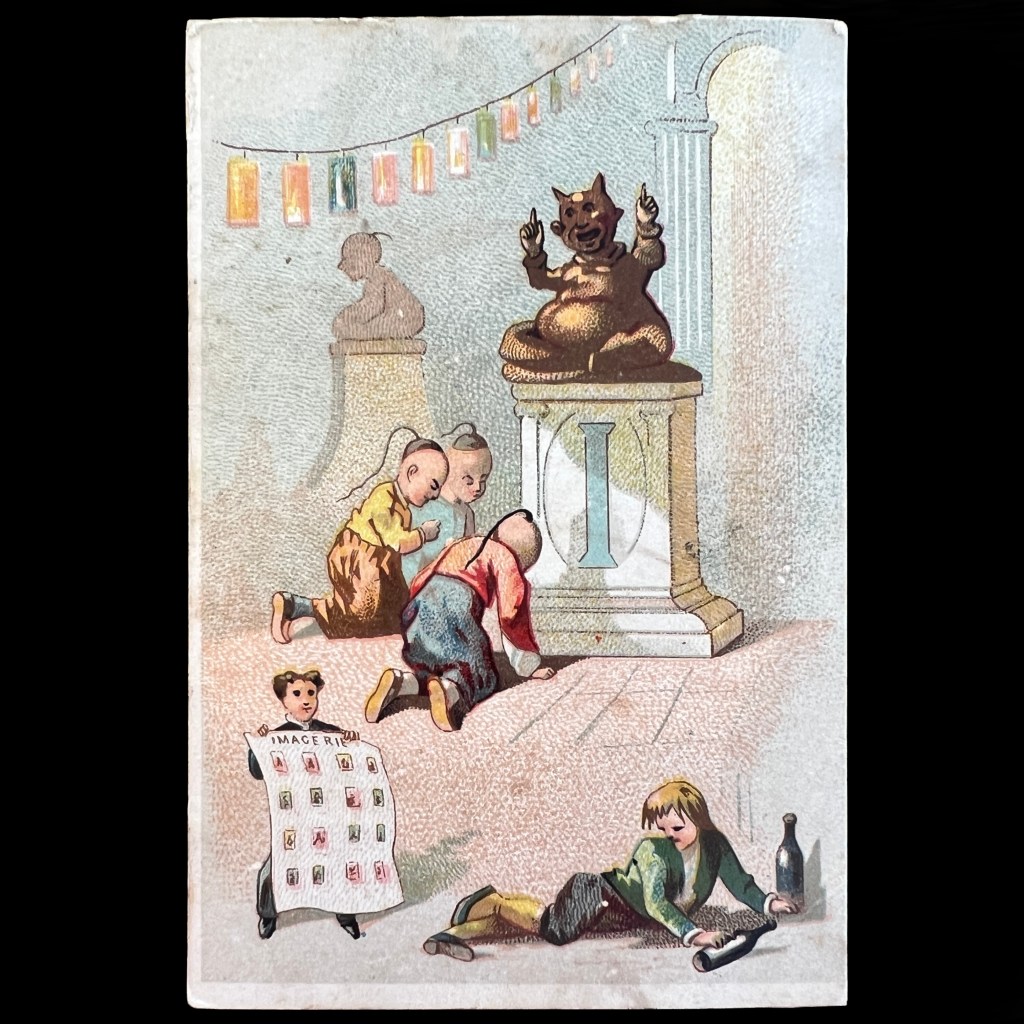
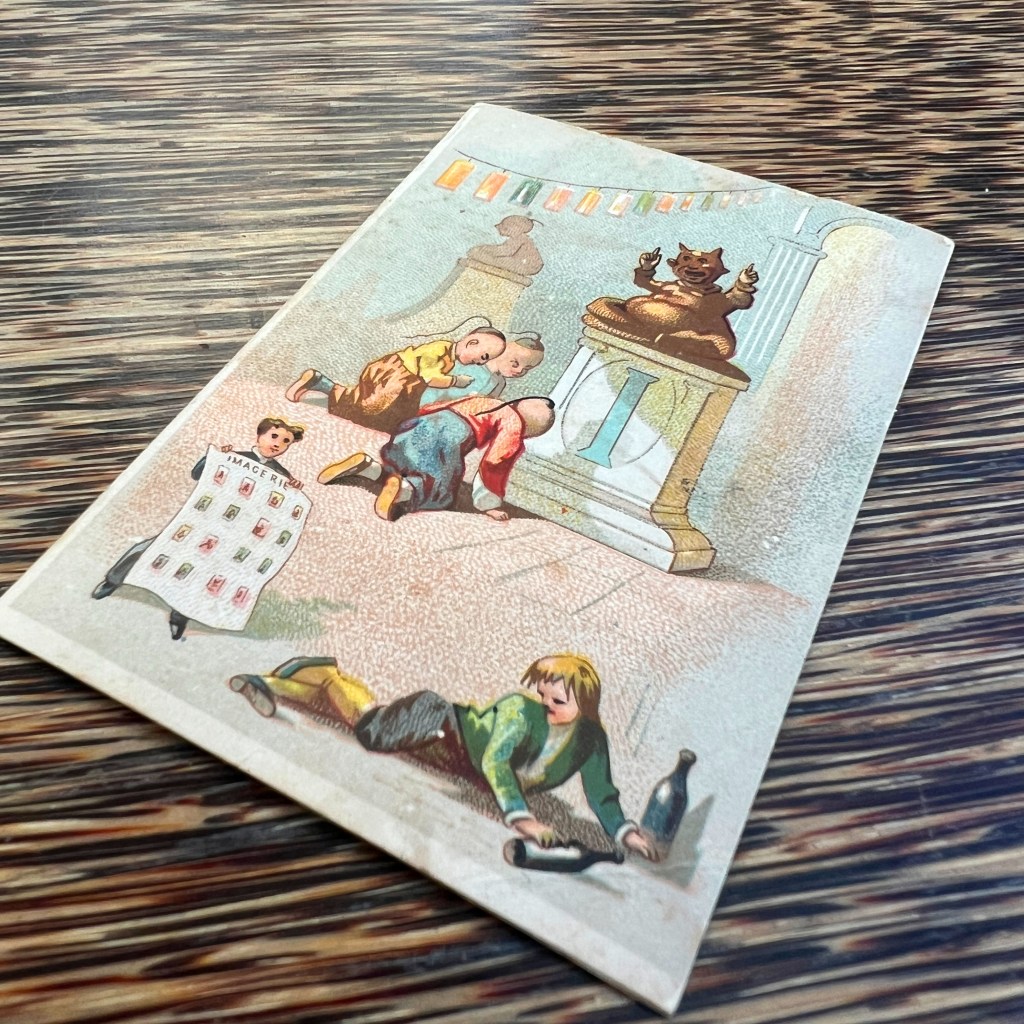
Victorian trade cards often employed the same visual language found in contemporary political cartoons. In the late 1870s and 1880s, as anti-Chinese xenophobia intensified in the US, depictions of the “heathen chinee” prostrating before Buddhist idols became more widespread.

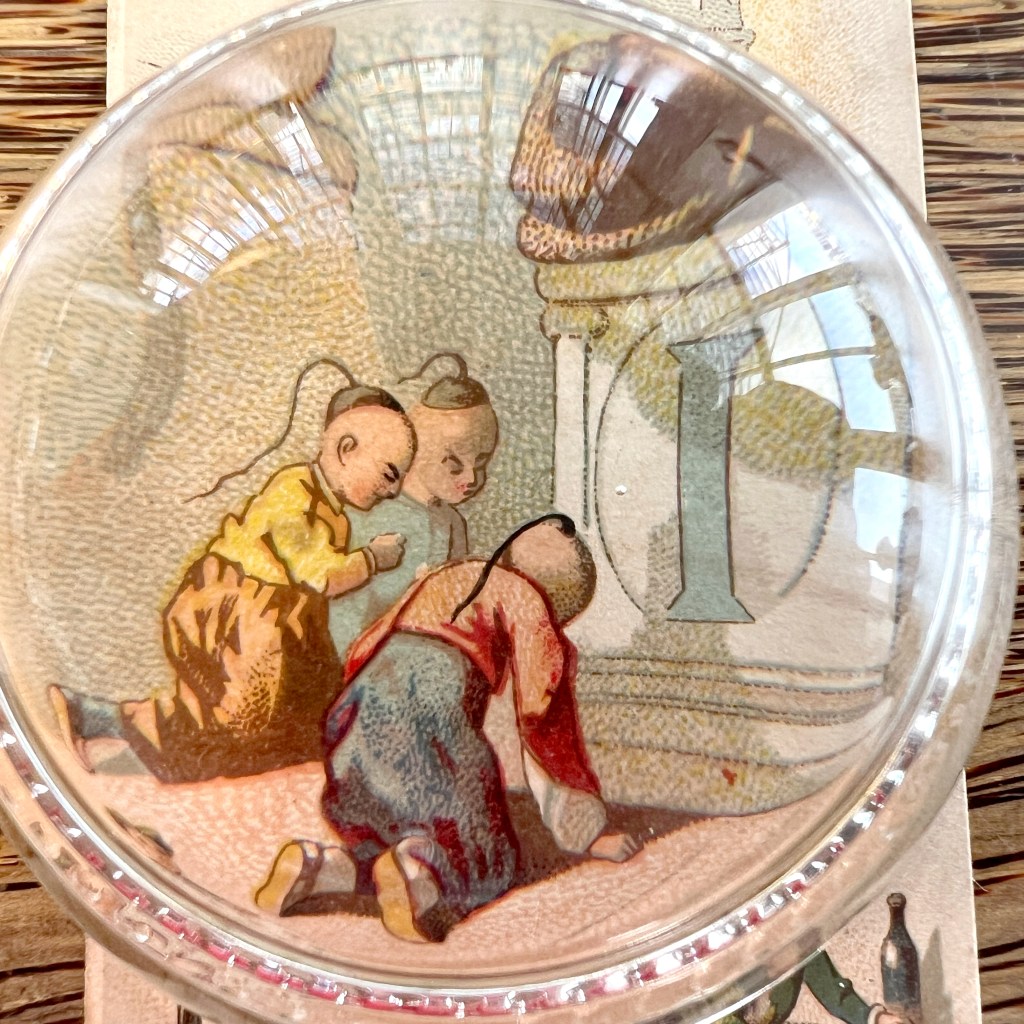
This stock card was from an alphabet primer series, appealing to one of the primary audiences for trade cards, children. The letter “I” can be spotted on the pedestal in the rear, thus asking viewers to interpret the scenes through the lens of words beginning with “I.”

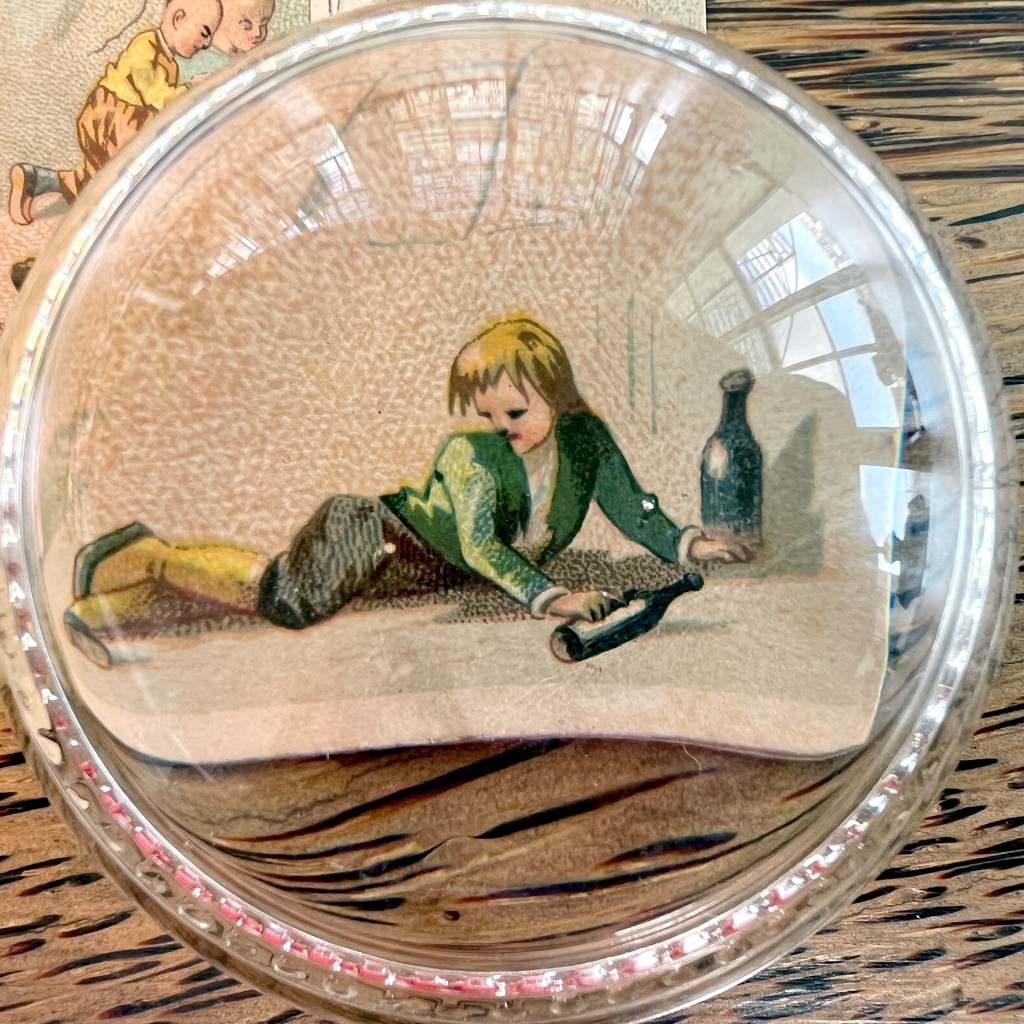
The moralizing tone of the images is apparent. In the foreground we see a child lying on the floor clutching a bottle, representing inebriation or intoxication.

The Chinese children in the background, clearly identified by their long queues and flowing garments, represent idolators practicing foreign idolatry.

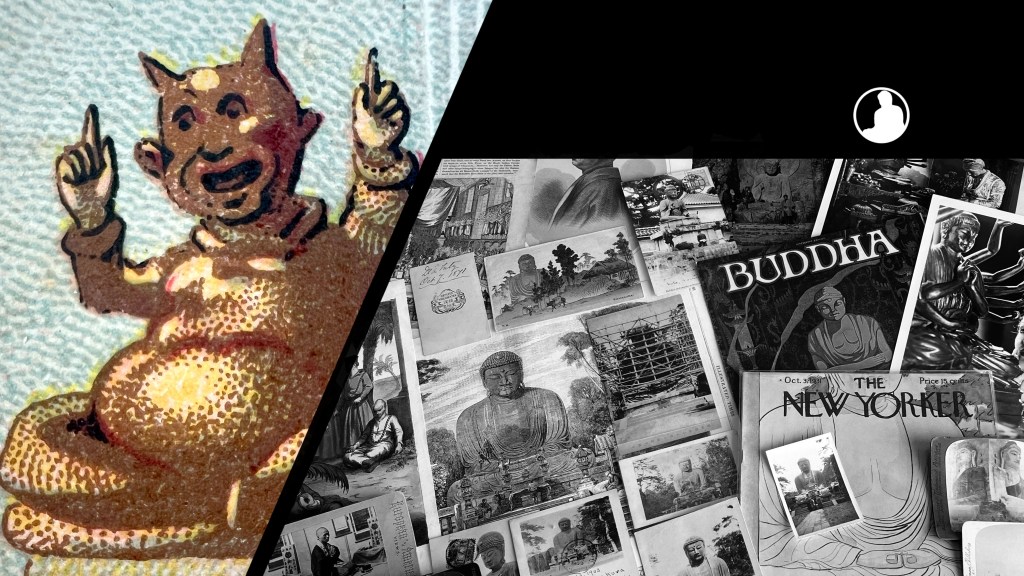
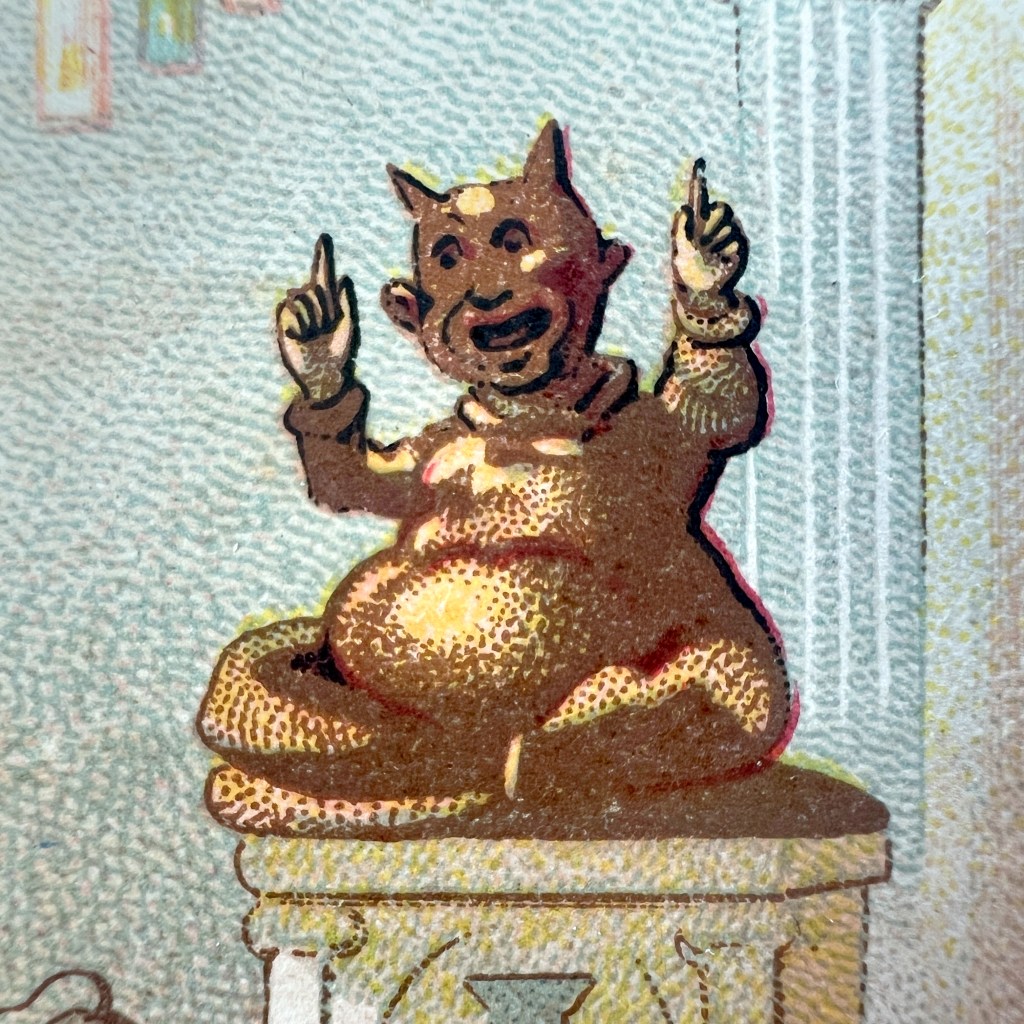
The idol is a distorted version of a sitting buddha, portrayed with horns and performing a “Chinese dance.” For more on the visual language of trade cards, see Lenore Metrick-chen, “The Chinese of the American Imagination: 19th Century Trade Card Images” (2007).


The Buddhas in the West Material Archive is a digital scholarship project that catalogues artifacts depicting Buddhist material culture for Western audiences. It’s comprised of prints, photos, and an assortment of ephemera and other objects. For a brief introduction to this archive, visit the main Buddhas in the West project page.


For Related Buddhas in the West Posts Featuring Chinese in the United States:


For the Most Recent Buddhas in the West Posts:
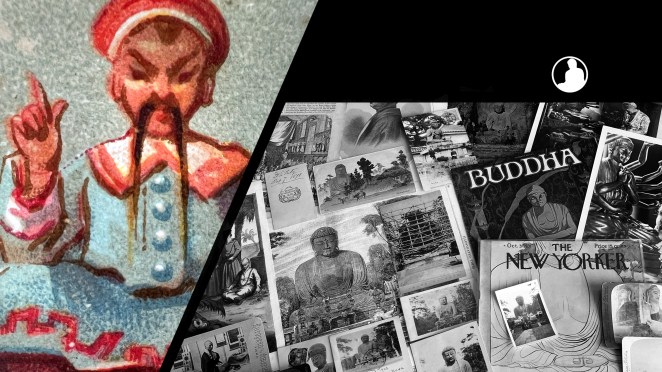

Guérin-Boutron’s Mysteries of Japan Advertising Card

For all the new Buddhas in the West posts
follow us on Bluesky & Instagram


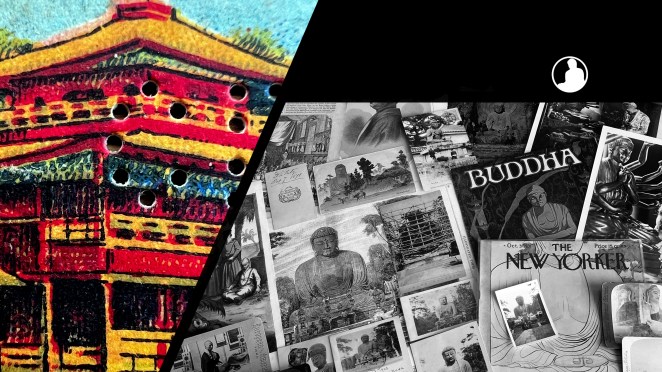
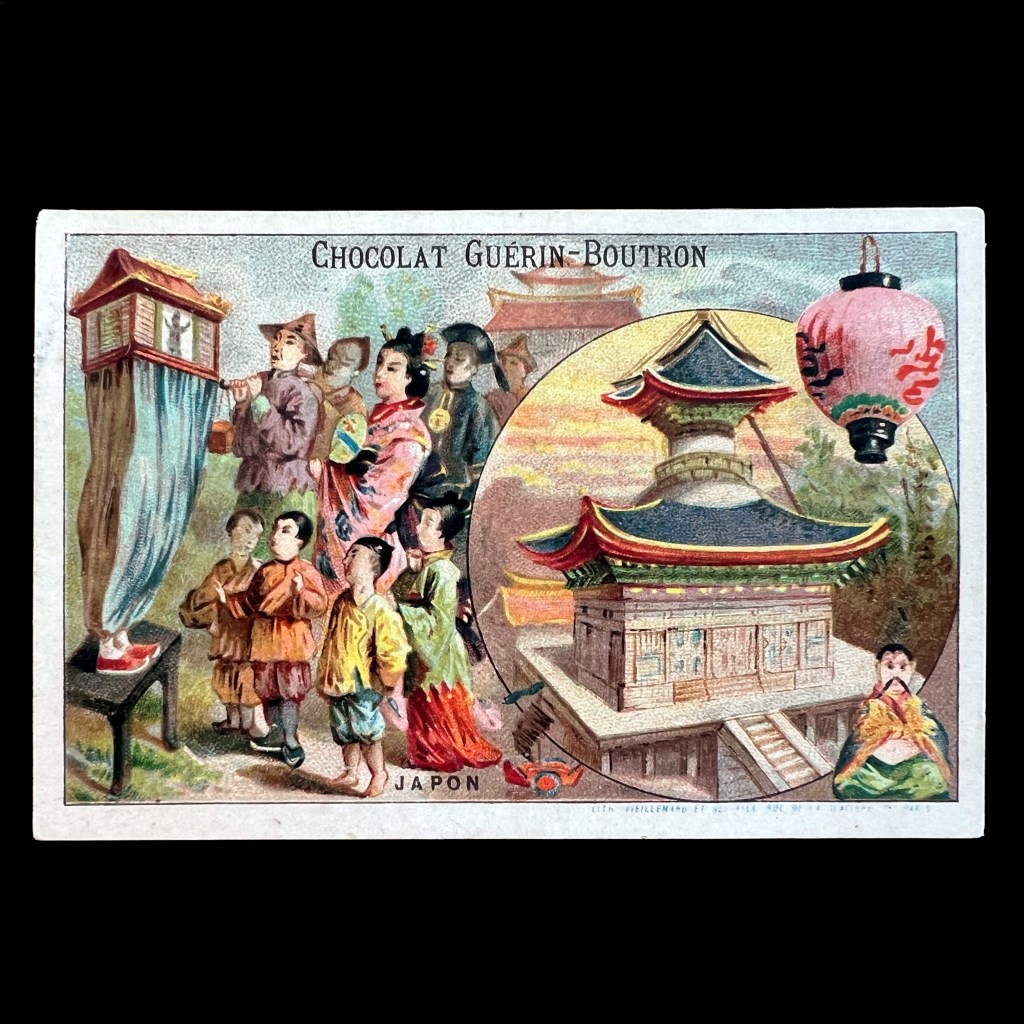
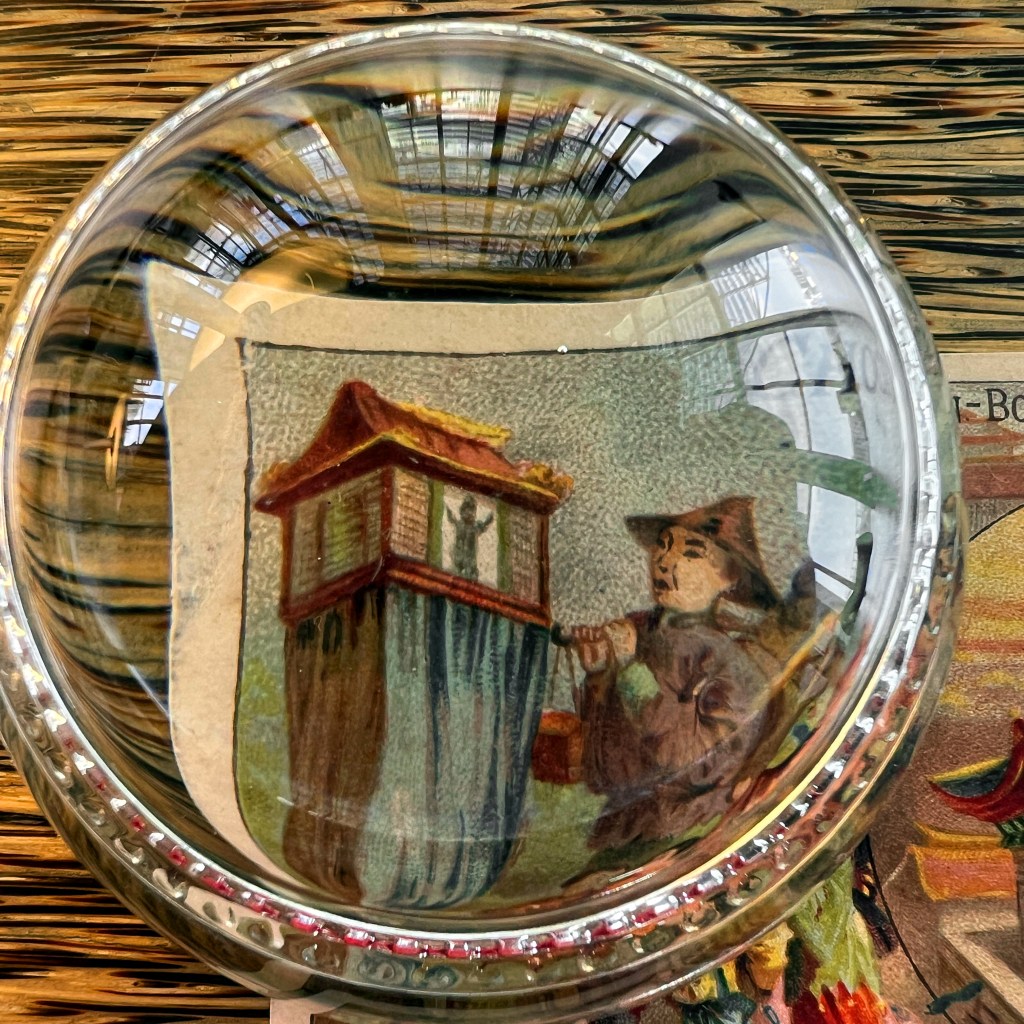
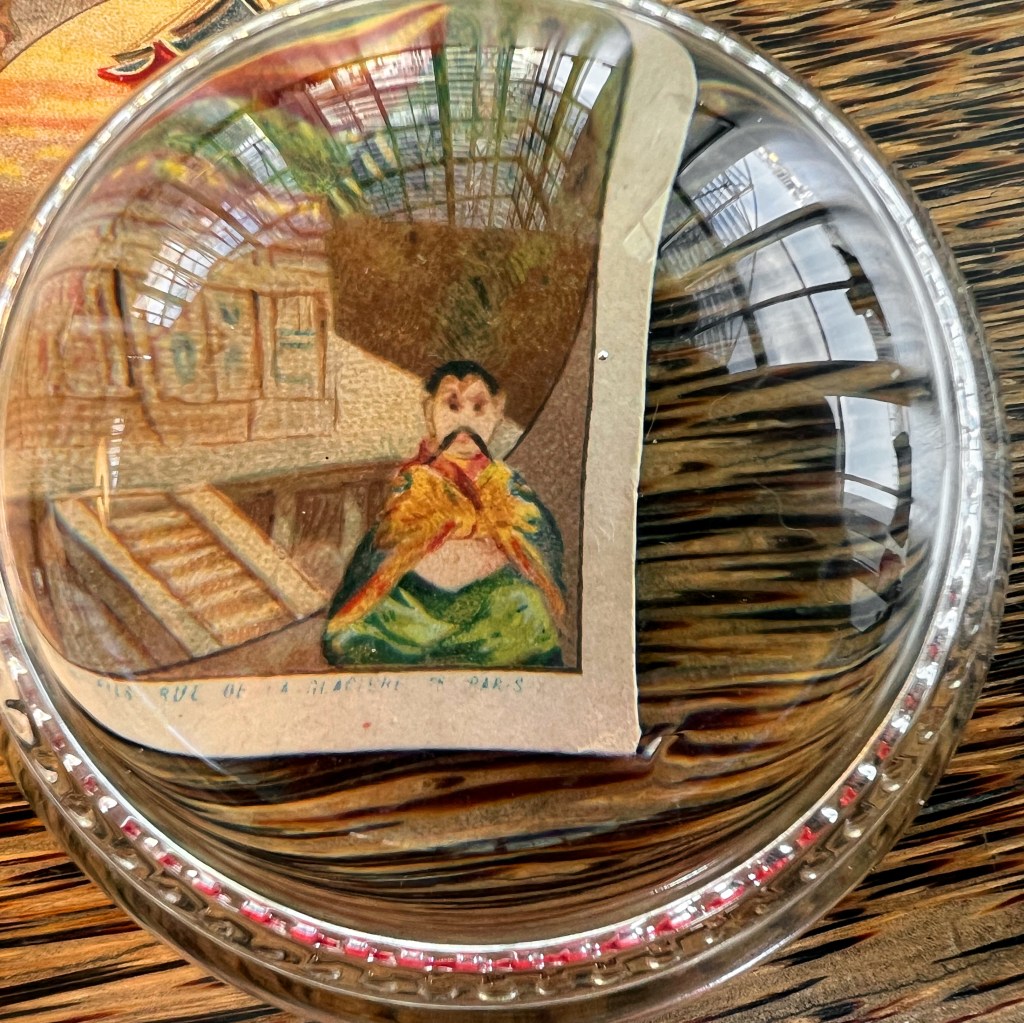
By the turn of the 20th century advertising cards were sought-after collectables, often pasted alongside other printed ephemera inside scrap books. The main visual language was the stereotype, and places like Japan were depicted as a mélange of mystery, pagodas, and odd idols.

The mystery figure on the left edge is a Chinese puppeteer; distinctions between China and Japan often dissolved under the umbrella of “the Orient.” Such imagery had circulated in Europe since the late 18th century through southern Chinese export paintings depicting popular Chinese occupations.

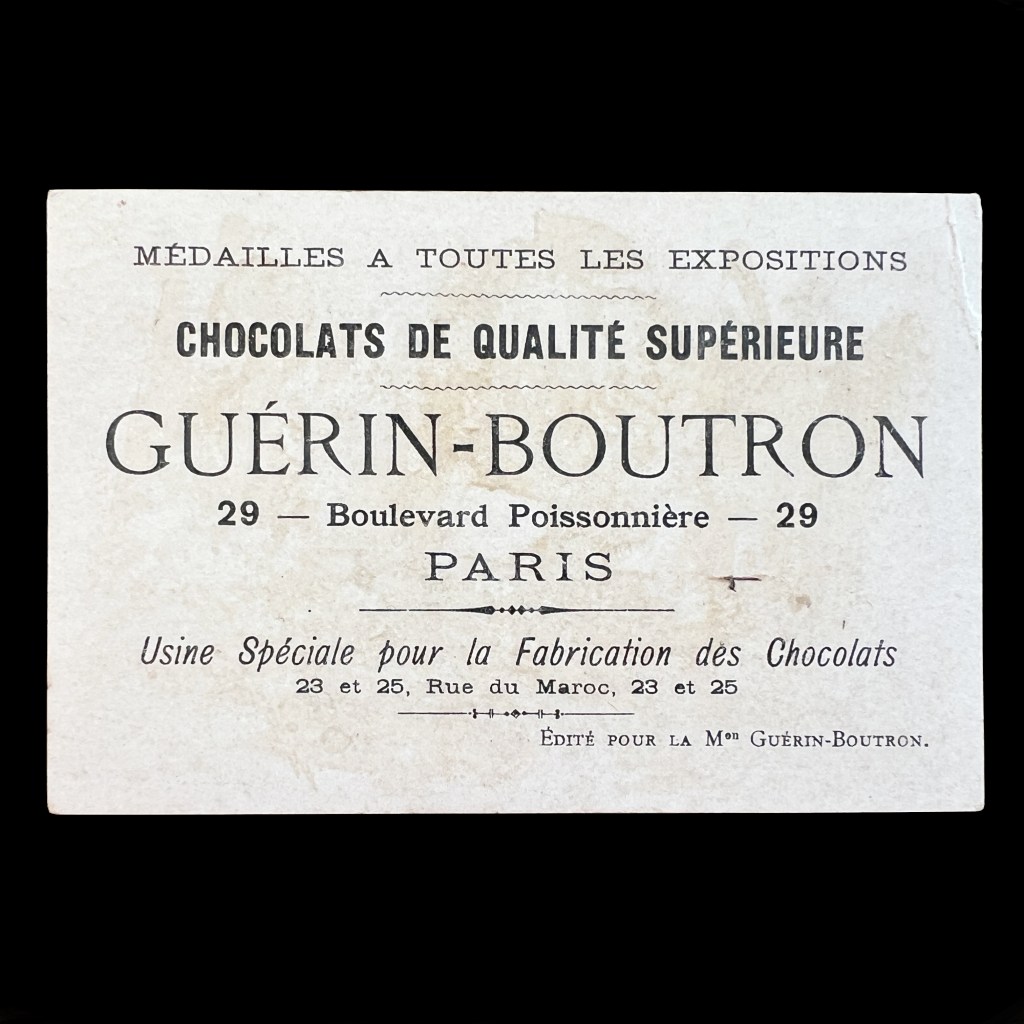
Guérin-Boutron was a luxury Parisian chocolatier and early adopter of chromolithographed trade cards, creating this set of worldwide nations and cities in the early 1900s.The printer, Vieillemard Fils & Cie, was a premier lithographer for major French trade card producers of the era.

The figure in the lower right corner is a crude rendering of a seated buddha. Pronounced ethnic facial features and flowing silk garments were sometimes used to signify “authentic” Asian religions iconography.

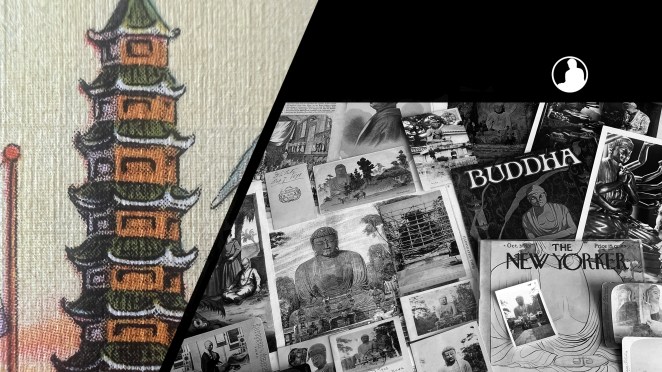
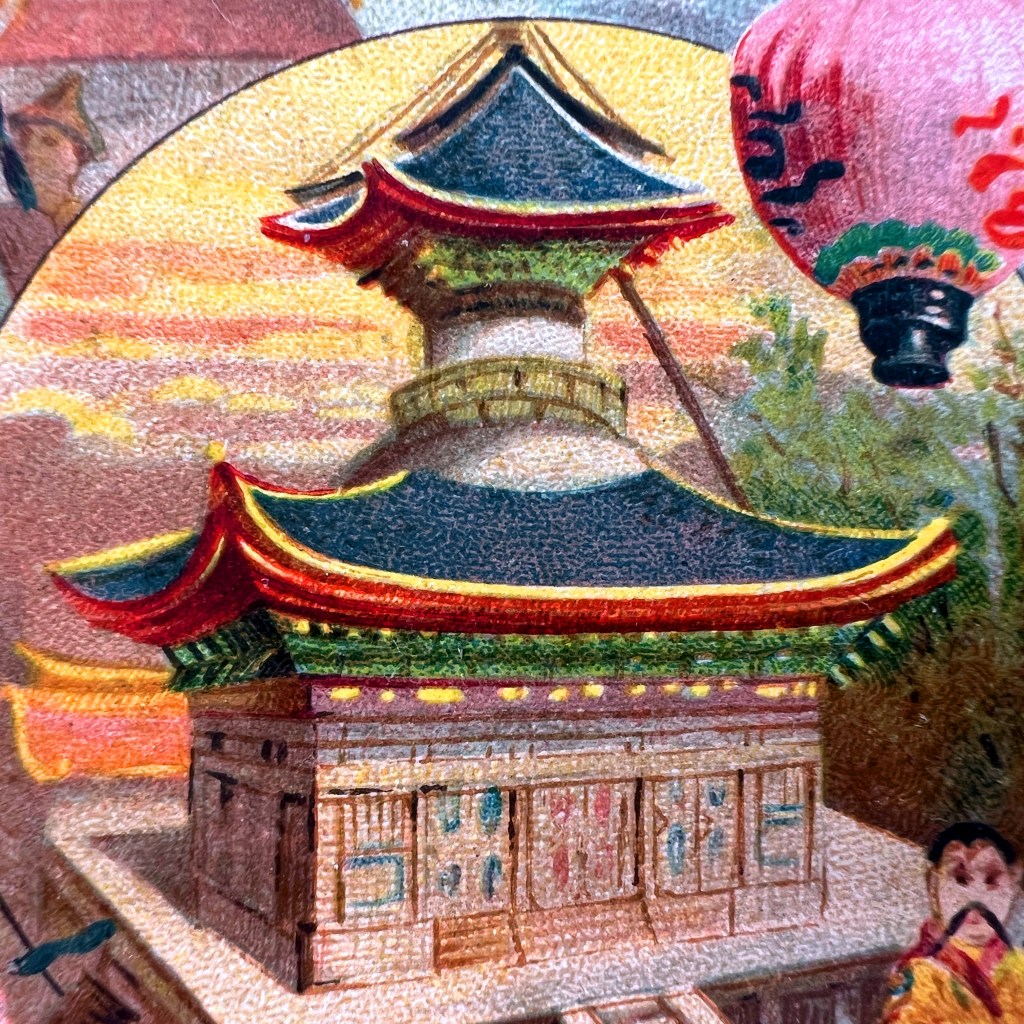
The circular insert depicts an uncommon two-story pagoda known as the Many Treasures Pagoda (tahōtō 多宝塔) described in the Lotus Sutra. This illustration shows the one built at Hachiman Shrine which was destroyed in 1870, several decades before this card was issued.


The Buddhas in the West Material Archive is a digital scholarship project that catalogues artifacts depicting Buddhist material culture for Western audiences. It’s comprised of prints, photos, and an assortment of ephemera and other objects. For a brief introduction to this archive, visit the main Buddhas in the West project page.


For Related Buddhas in the West Posts Featuring Lithography:


For the Most Recent Buddhas in the West Posts:
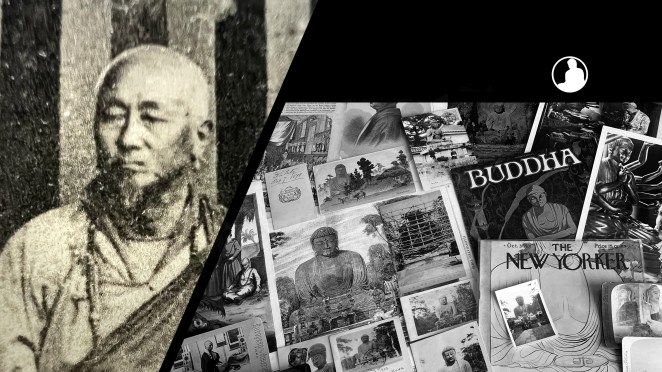

Henri Laas’ “Dieu des Amours” Advertising Card

For all the new Buddhas in the West posts
follow us on Bluesky & Instagram


Advances in chromolithography in the 1870s and 80s helped flood America and Europe with inexpensive, colorful imagery. This had the greatest impact in advertising with the introduction of trade cards, often bearing humorous or provocative images to elicit consumer interest.

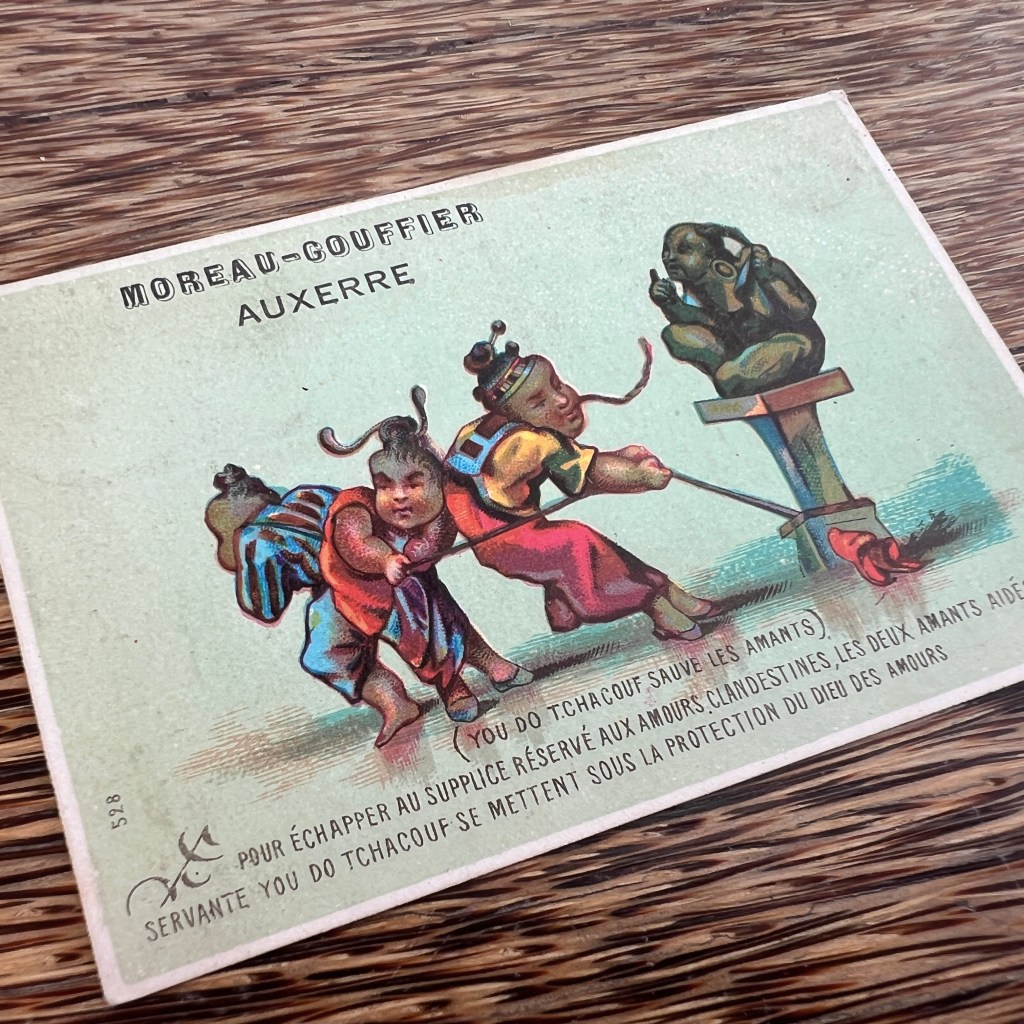
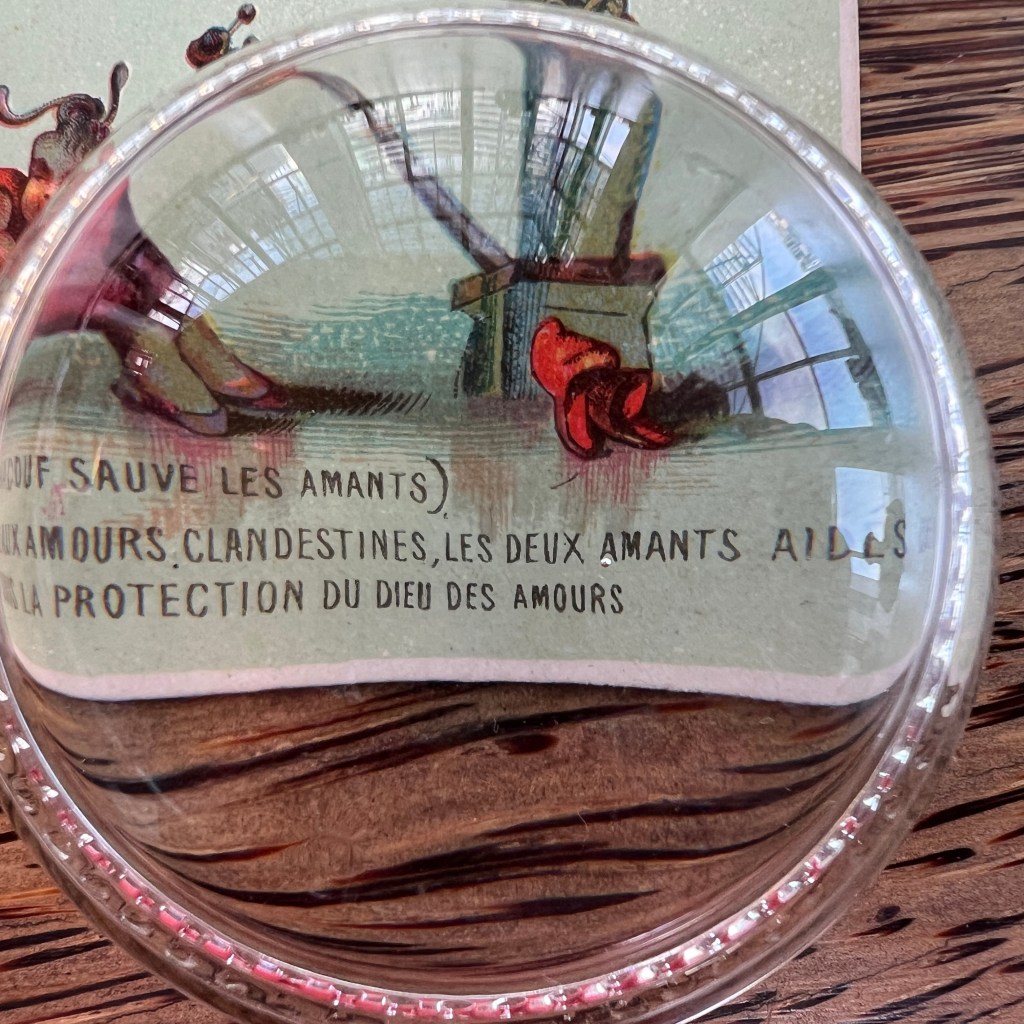
To meet demand, printers like Henri Laas in Paris, created series of stock illustrated cards which could be imprinted with a store’s name and address. The store Moreau-Gouffier, seen here, had a “specialty in shoes” and sold “articles for soldiers,” probably during the 1890s.

Stock imagery was often unrelated to the store, but instead drew upon popular visual motifs. Coinciding with the growth of trade cards, France experienced another wave of chinoiserie following the looting of the Beijing Summer Palace and creation of Empress Eugénie’s Chinese Museum in the 1860s.

Moreover, French colonial expansion into East Asia increased the circulation of imagery of the region and its people through the French illustrated press. Trade cards drew upon popular ethnic stereotypes, such as we see with the caricatures of Chinese clothing, hairstyle, and skin complexion.

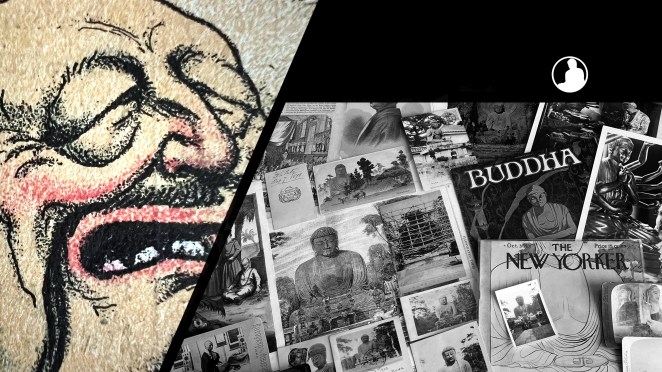
This card is part of a set that tells a story, with each scene set around a particular Chinese artifact; here we see a highly-stylized statue of a buddha. In the story, two secret lovers approach the statue, presented as a “god of love,” to seek his help.

The statue mimics a buddhist icon, but is also racially stylized with mustache and queue. To read more about the Buddhist artifacts and the looting of the Summer Palace, see Louise Tythacott’s The Lives of Chinese Objects: Buddhism, Imperialism and Display (2011).


The Buddhas in the West Material Archive is a digital scholarship project that catalogues artifacts depicting Buddhist material culture for Western audiences. It’s comprised of prints, photos, and an assortment of ephemera and other objects. For a brief introduction to this archive, visit the main Buddhas in the West project page.


For Related Buddhas in the West Posts Featuring Lithographic Prints:


For the Most Recent Buddhas in the West Posts:

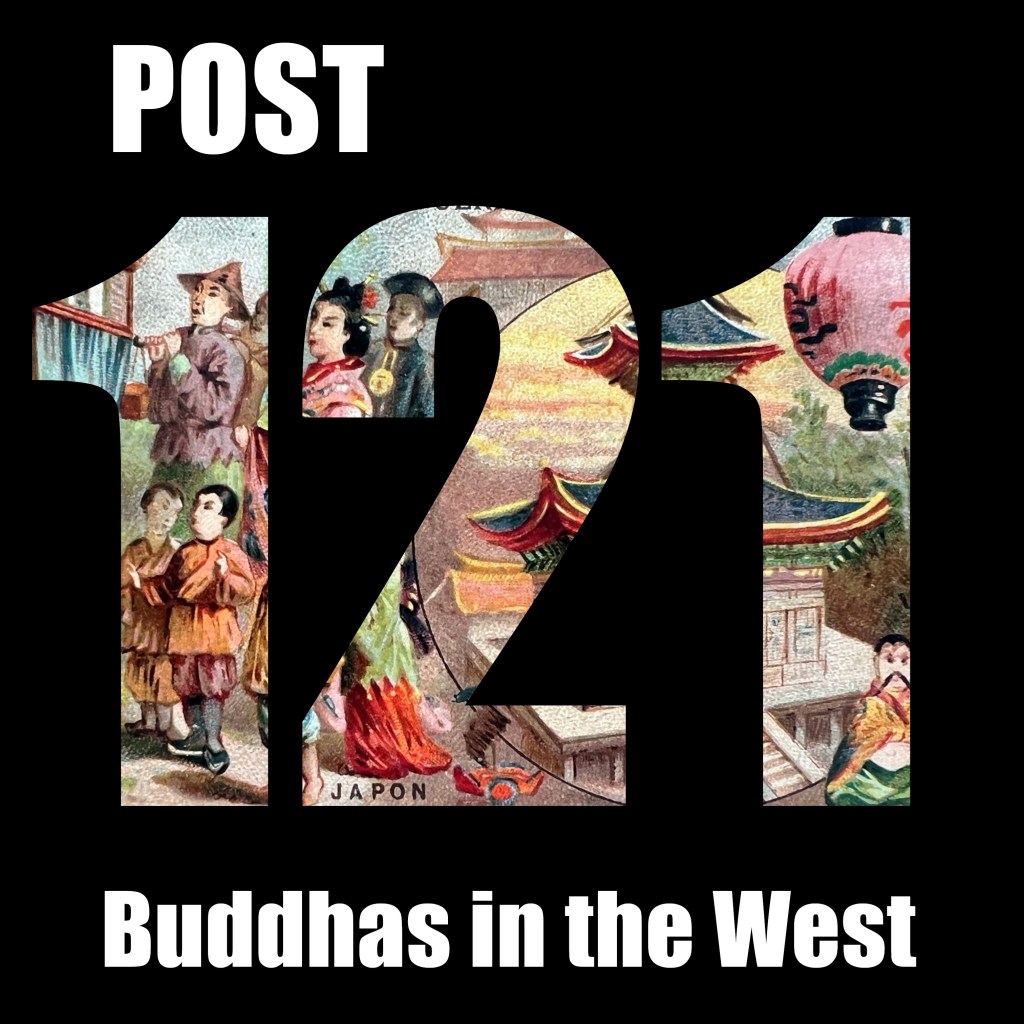
Eliphalet Brown’s Buddhist Priest at Shimoda Lithograph

For all the new Buddhas in the West posts
follow us on Bluesky & Instagram


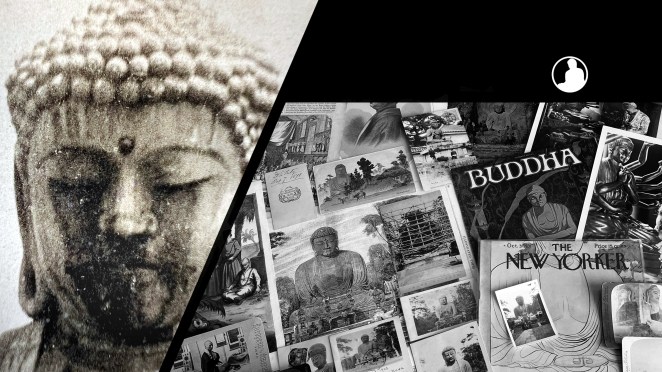
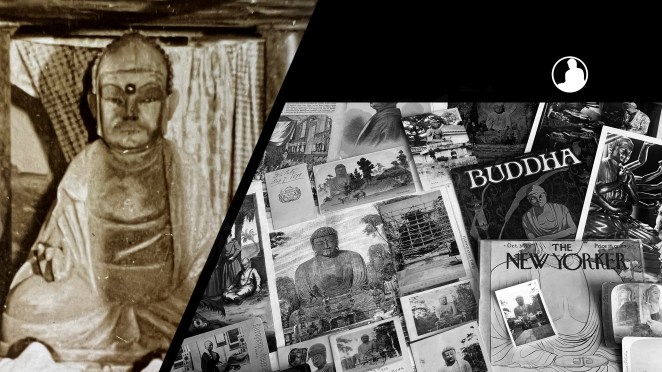
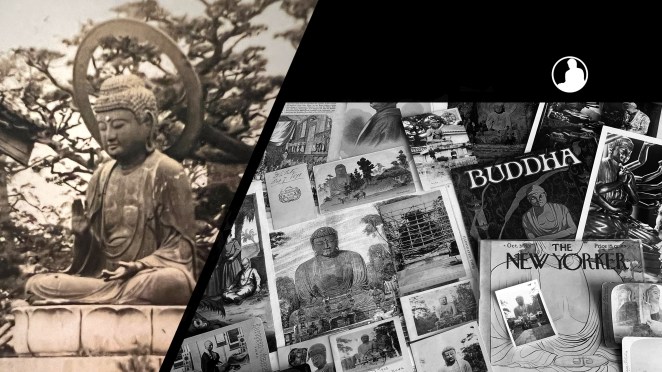
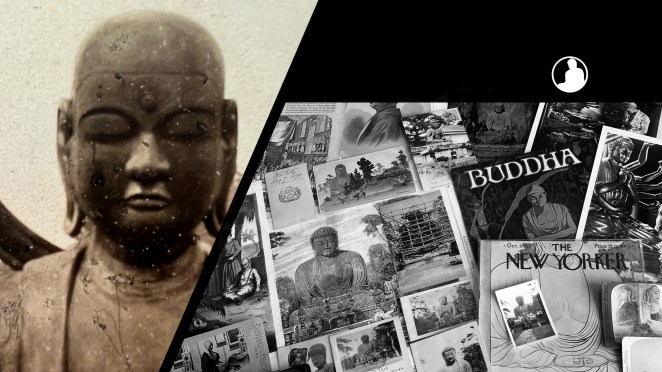
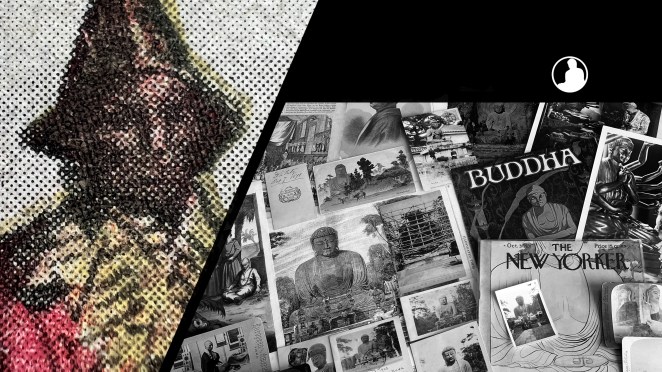
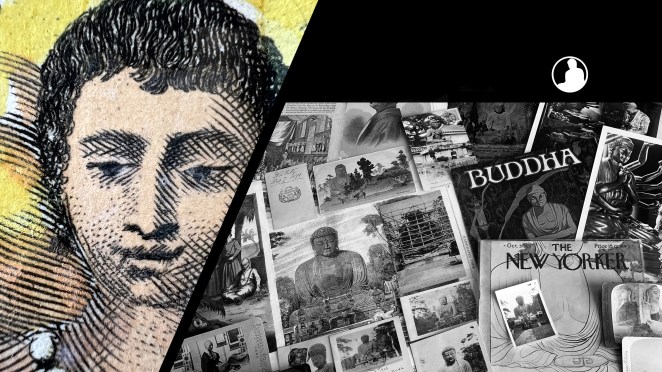
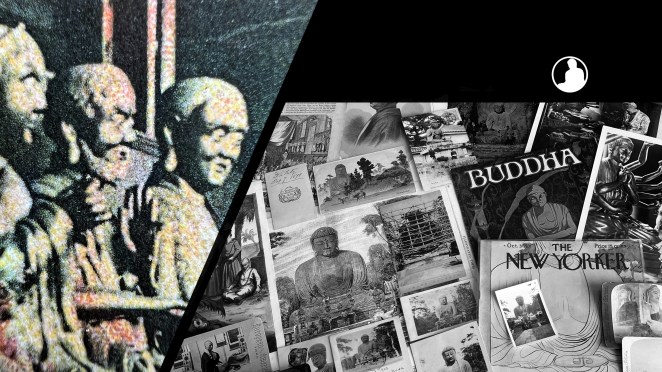
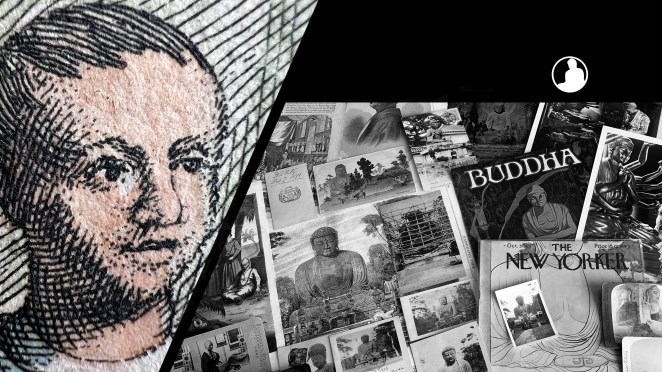
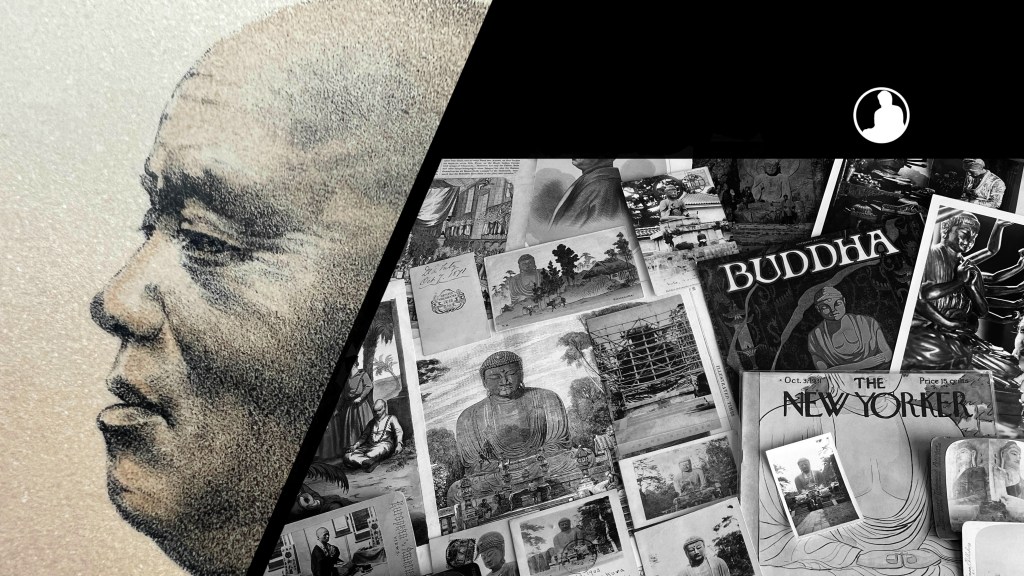
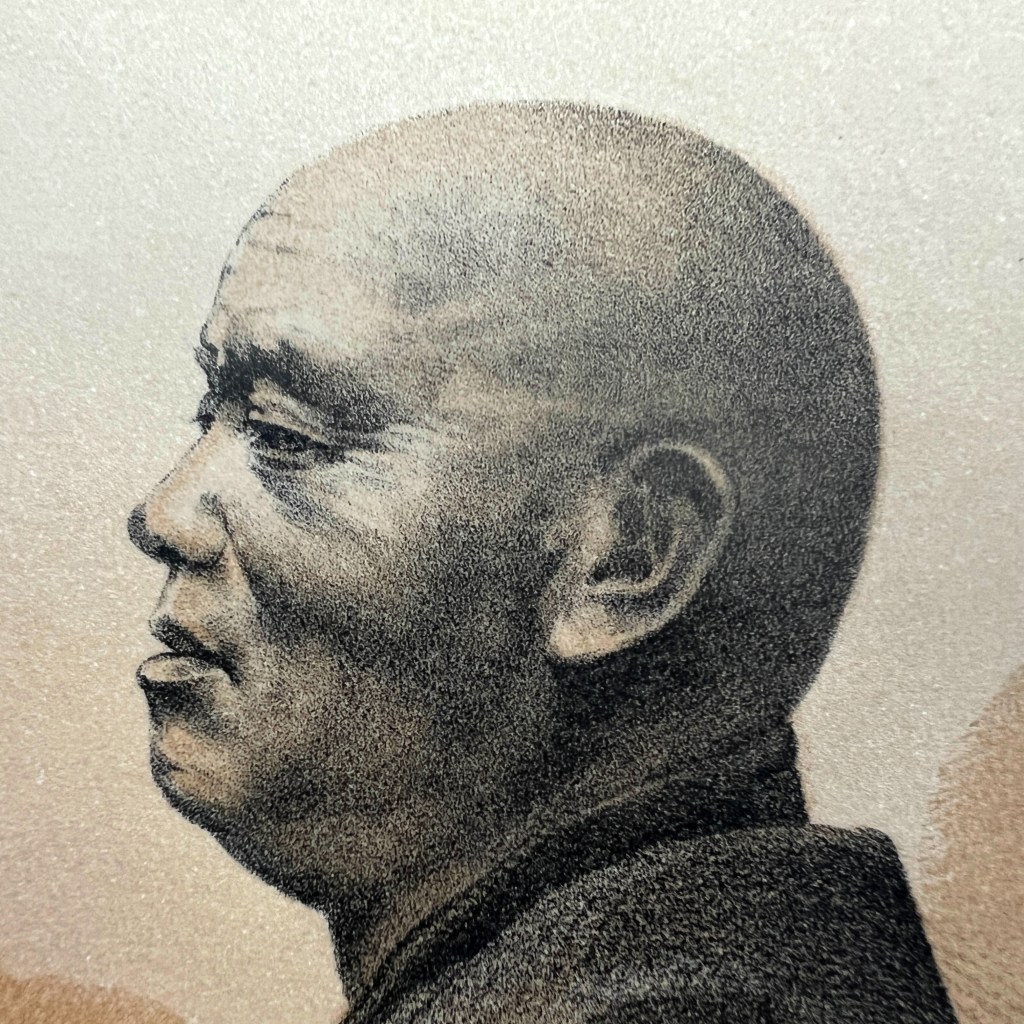
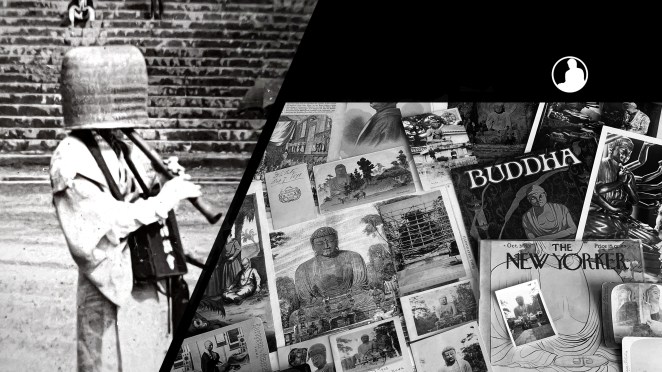
The earliest surviving photographs of Japan were shot by Eliphalet Brown as part of the Perry Expedition in 1853/54. Among many landscapes, Brown also took a few portraits, including this anonymous Buddhist priest at Shimoda – likely the earliest surviving photo of a Buddhist cleric.

Brown reportedly took more than 400 daguerreotypes during the expedition. Several dozen images, including fifteen from Shimoda, were used to illustrate the official US government report published as the Narrative of the Expedition of an American Squadron to the China Seas and Japan in 1856.

The selected daguerreotypes taken by Brown were first turned into paintings, most often by expedition artist Wilhelm Heine. These were then converted into sepia tone or color-tinted stone lithograph plates for printing; the caption below indicates this image was prepared by artist Peter Krämer.

Lithography is a printing process that uses drawings made with a waxy crayon on a stone plate. Due to a special “gumming” treatment applied to the stone, ink adheres only to the drawn lines, thus allowing prints to be made. The characteristic crayon marks can be easily seen here.

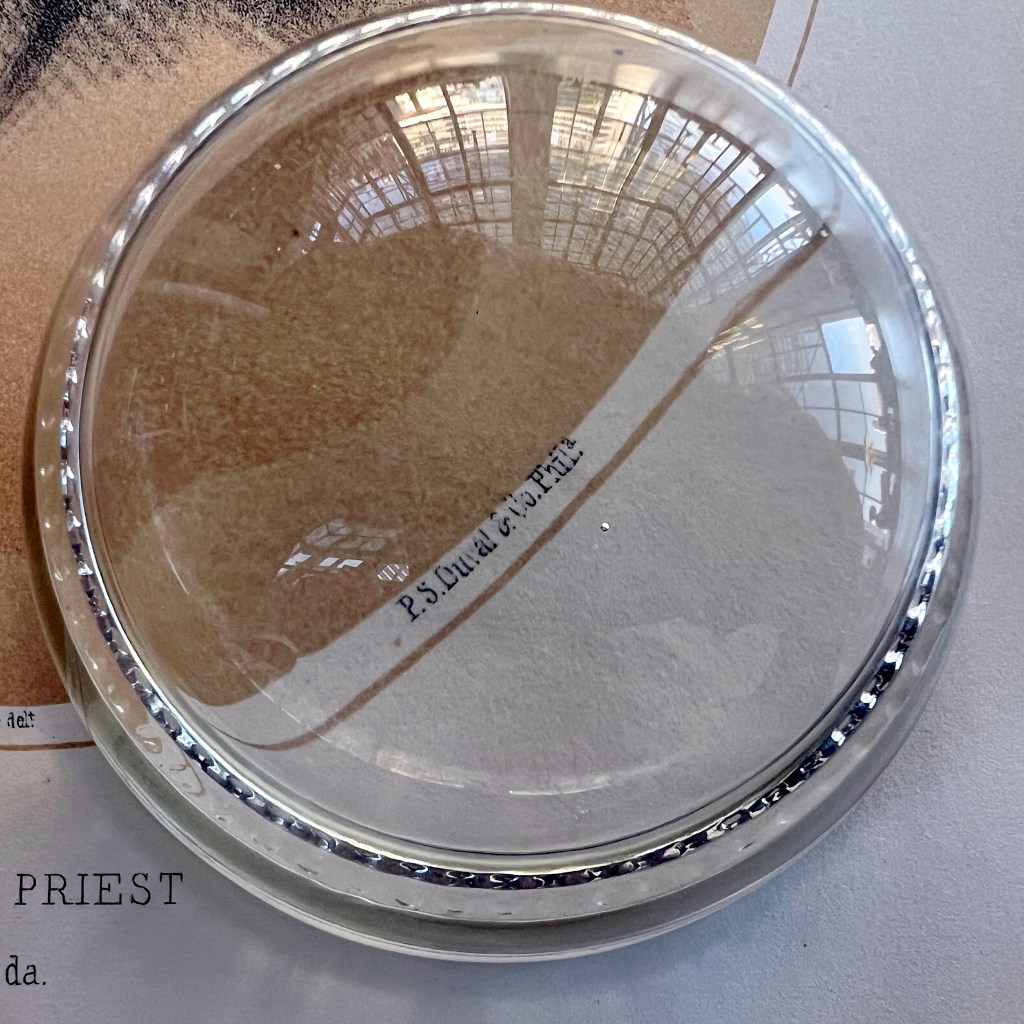
Only six of Brown’s daguerreotypes have been located; some were believed lost when the Philadelphia printer, P. S. Duval, suffered a fire in April 1856. In total, it is believed between 10,000 and 18,000 copies of Perry’s Expedition report were published.

When Perry landed in Shimoda on April 18, 1854, he reported a total of 7,000 inhabitants and nine Buddhist temples. The figure in Brown’s portrait remains unknown. The first volume of Perry’s report is viewable here: https://tinyurl.com/3rpscp9h.


The Buddhas in the West Material Archive is a digital scholarship project that catalogues artifacts depicting Buddhist material culture for Western audiences. It’s comprised of prints, photos, and an assortment of ephemera and other objects. For a brief introduction to this archive, visit the main Buddhas in the West project page.


For Related Buddhas in the West Posts Featuring Buddhist Clerics:


For the Most Recent Buddhas in the West Posts:

Chocolat Pupier’s “Le Japon ancien” Trade Card

For all the new Buddhas in the West posts
follow us on Bluesky & Instagram


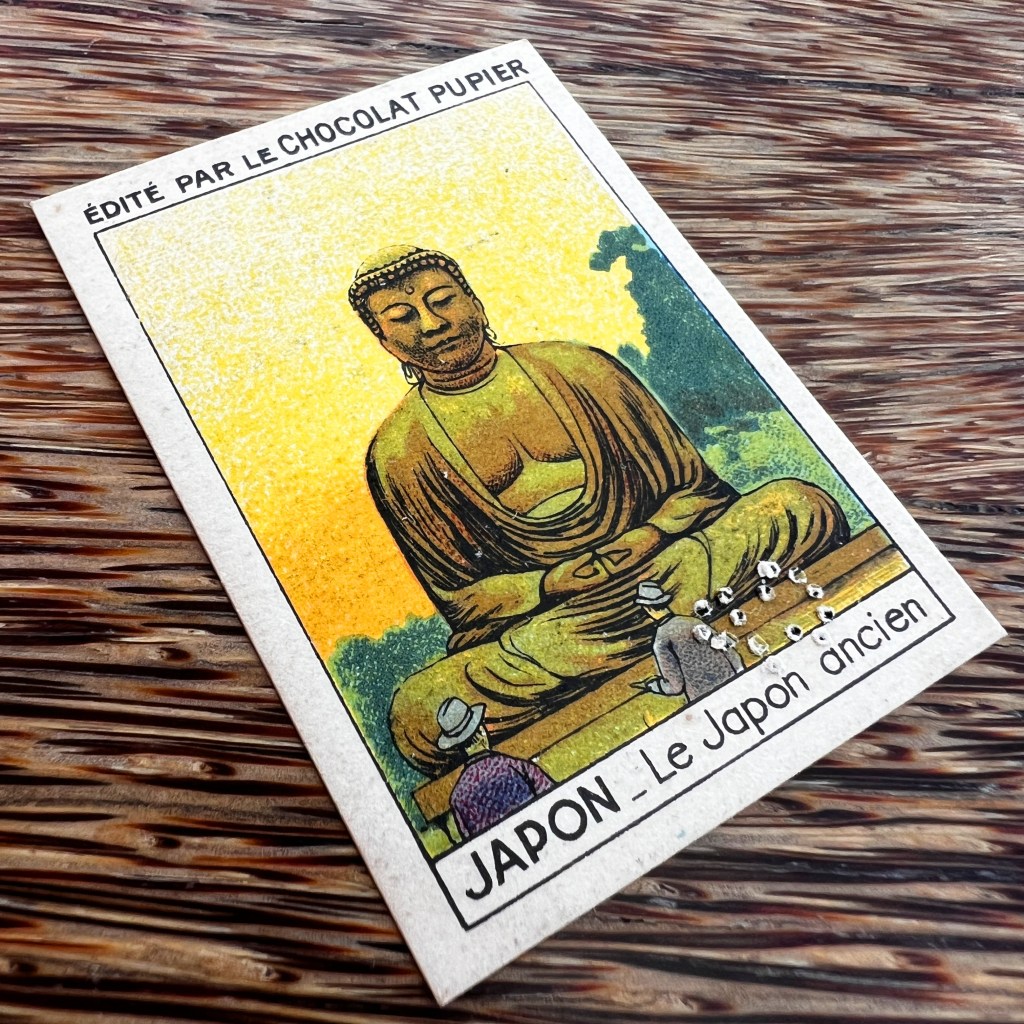
European and American chocolatiers were among the businesses that embraced the use of beautifully illustrated advertising trade cards. To inspire collection, the cards often depicted romantic, if not highly stereotyped, imagery.

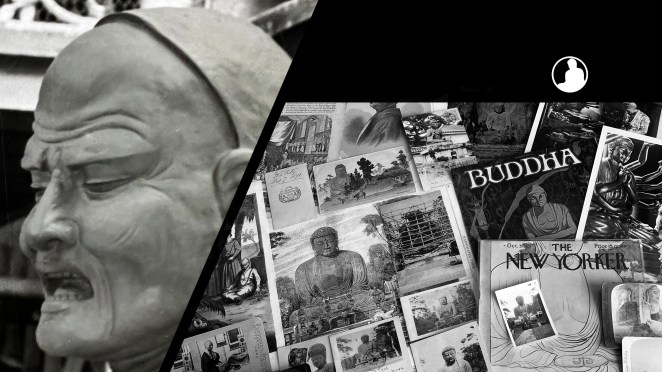
Looking closely, we can see the Kamakura Daibutsu is seemingly portrayed as a sightseeing destination, not a religious icon; the onlookers in Western attire hint more at curious observation than reverence.

Moreover, the caption of “ancient Japan” plays to the idea of an ancient and mystical “Orient,” thus we might read the Buddhist icon as a quaint relic of the distant past, not part of a living religious tradition.

French confectioner Chocolat Pupier was a major producer of chromolithographed trade cards. An “Asia” album with 252 card slots could be purchased to display your collection (we see this is card number 140).

The rise of the postcard at the turn of the twentieth century and the growth of magazine advertising ended the widespread use of trade cards. For more on trade cards, see “The Short Rise and Fall of the Crazy-for-Cocoa-Trade Cards Craze,” viewable here: tinyurl.com/yc2a9y4b.


The Buddhas in the West Material Archive is a digital scholarship project that catalogues artifacts depicting Buddhist material culture for Western audiences. It’s comprised of prints, photos, and an assortment of ephemera and other objects. For a brief introduction to this archive, visit the main Buddhas in the West project page.


For Related Buddhas in the West Posts Featuring Historical Lithographic Prints:


For the Most Recent Buddhas in the West Posts:

D.A. Ahuja’s Kaunghmudaw Pagoda Postcard

For all the new Buddhas in the West posts
follow us on Bluesky & Instagram


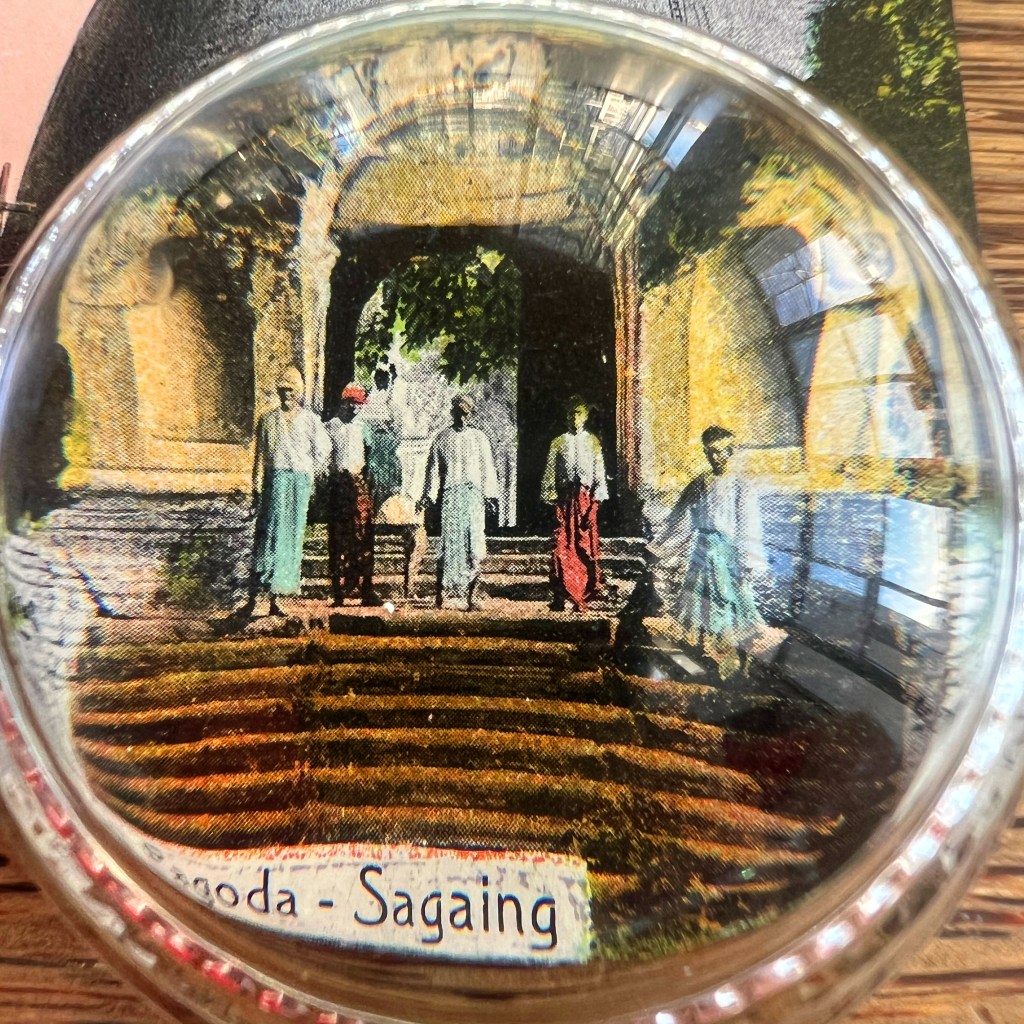
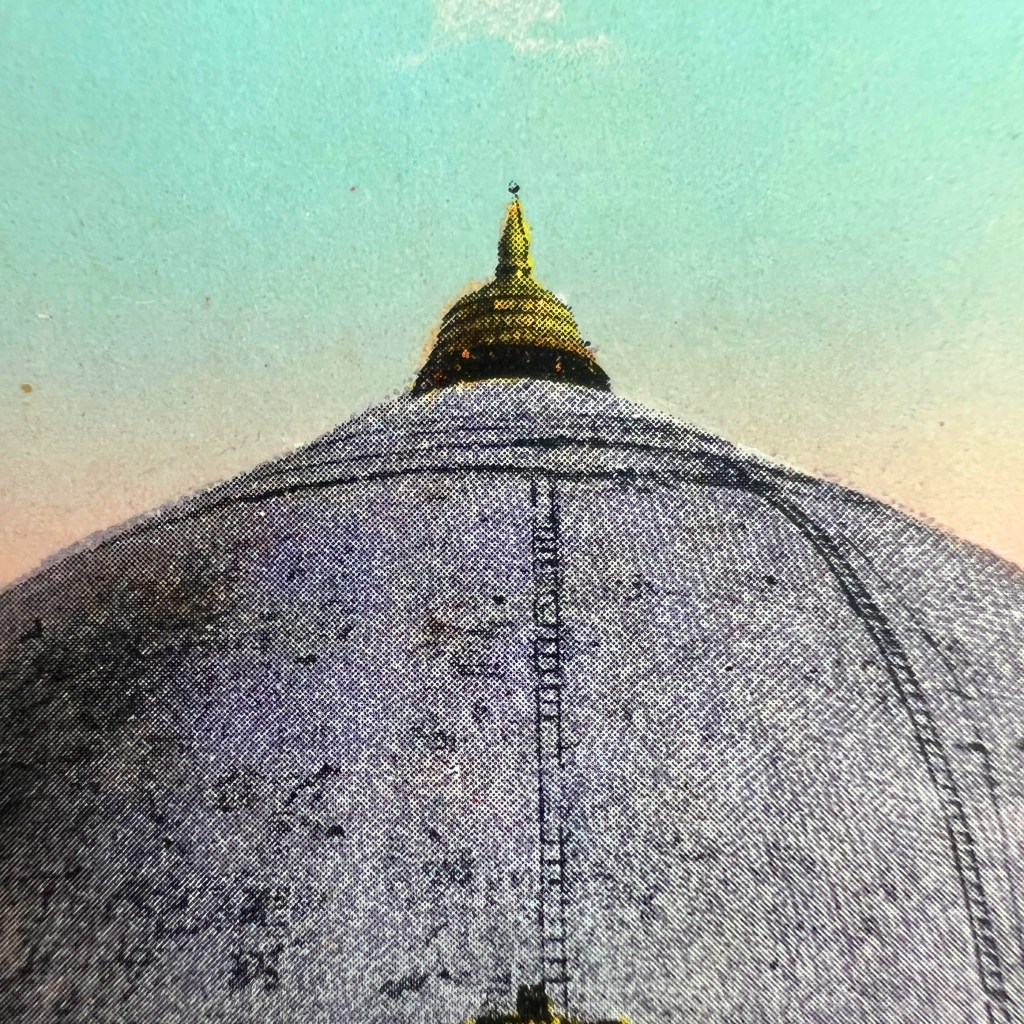
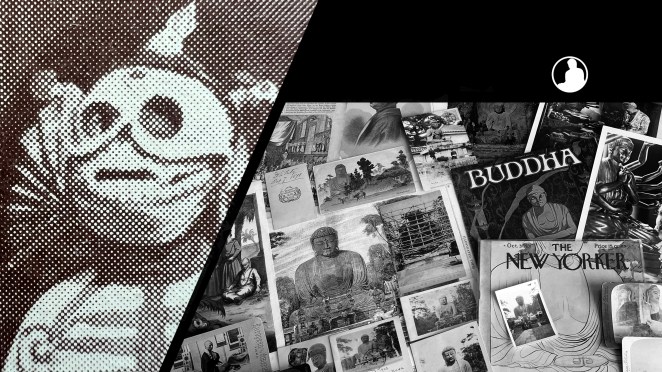
At the height of the worldwide postcard craze, no one produced more vibrant imagery of the Buddhist world than D.A. Ahuja. Here we see Myanmar’s 17th century Kaunghmudaw Pagoda with unique hemispherical dome – most Burmese pagodas are pyramidal structures.

According to Burmese chronicles, the Kaunghmudaw Pagoda enshrines the Buddha’s tooth relic among other religious treasures. This pagoda was intended to resemble Sri Lanka’s Maha Thupa, a structure reputed to hold the largest single cache of the Buddha’s relics.

The image was printed using a lithographic-halftone hybrid process, whereby a black halftone screen was applied on top of a multi-color lithographic substrate. The “divided back” design suggests the card was printed by Ahuja around 1910; he operated out of present-day Yangon.

Constructed in the Sagaing Hills, the Kaunghmudaw Pagoda houses a large marble statue of the Buddha hewn from the local quarry. The dome sits at a height of just over 150 feet (46m).

The use of a white dome was meant to symbolize a connection to the ancient past of Buddhist architecture. Just over a decade ago, however, the military government repainted the dome gold, against the outcry of local Buddhists.


The Buddhas in the West Material Archive is a digital scholarship project that catalogues artifacts depicting Buddhist material culture for Western audiences. It’s comprised of prints, photos, and an assortment of ephemera and other objects. For a brief introduction to this archive, visit the main Buddhas in the West project page.


For Related Buddhas in the West Posts Featuring Stūpas / Pagodas:

For the Most Recent Buddhas in the West Posts: