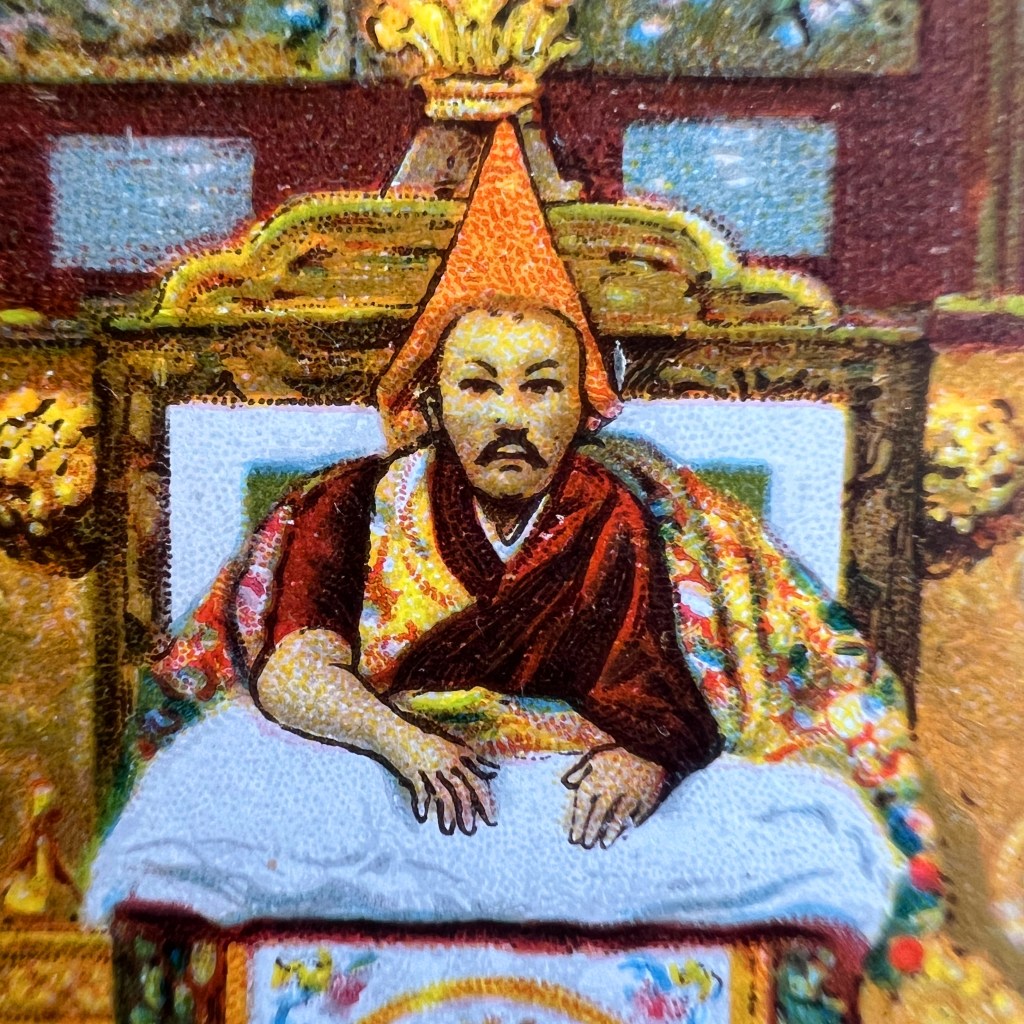
Liebig’s Dalai Lama Advertising Card

For all the new Buddhas in the West posts
follow us on Bluesky & Instagram


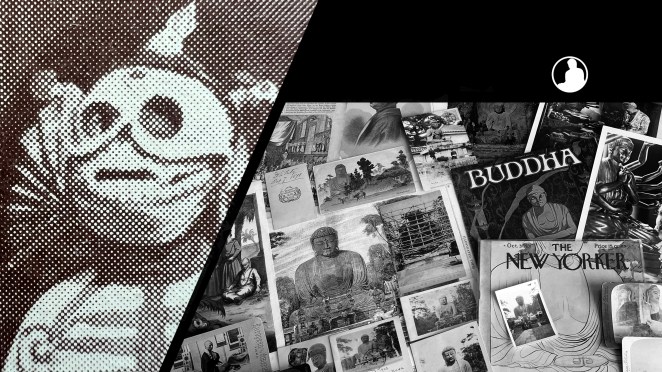
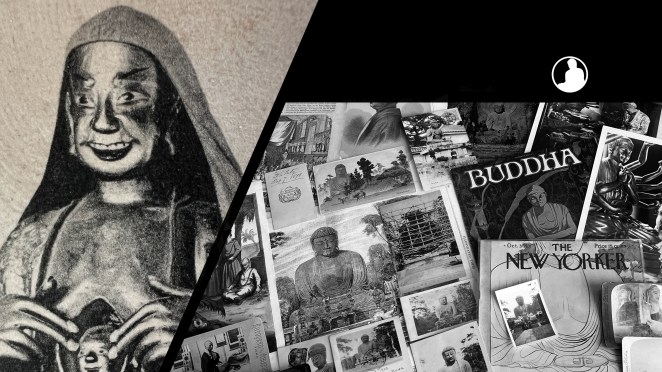
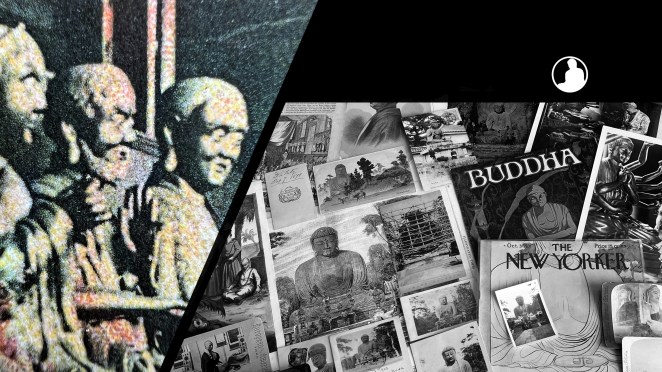
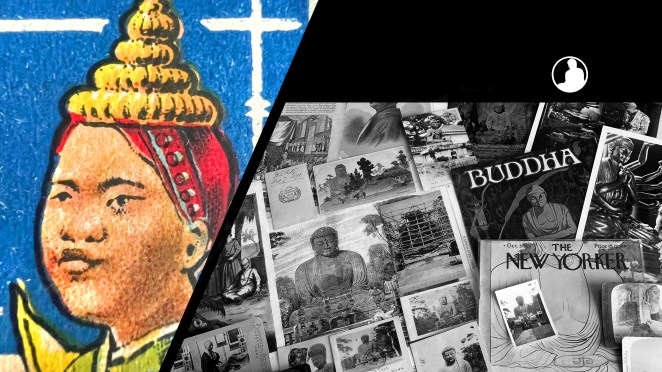
The first photograph of the Dalai Lama in Tibet was taken in 1921; it depicts “the Great Thirteenth,” Tubten Gyatso (1876–1933). The image was published in various Western media, even making its way on to a multicolor lithograph trade card for the German company Liebig in 1935.
*The first photograph of the Dalai Lama was taken in India in 1910 following the incursion of the Qing army into Tibet.

The photograph was taken by Charles Bell and Rabden Lepcha at Norbulingka, the summer palace of the Dalai Lama. Previously, images of the Dalai Lama were only spread through devotional tapestries (thangka) and gilt statues; now photographs could be shared among faithful Tibetans.

The Liebig company started printing colorful advertising cards in 1872, helping to support a popular collector’s hobby. This set from 1935 focused on Lhasa and included six cards, including an image of Potala Palace and large Tibetan prayer wheel, both iconic images in popular consciousness.

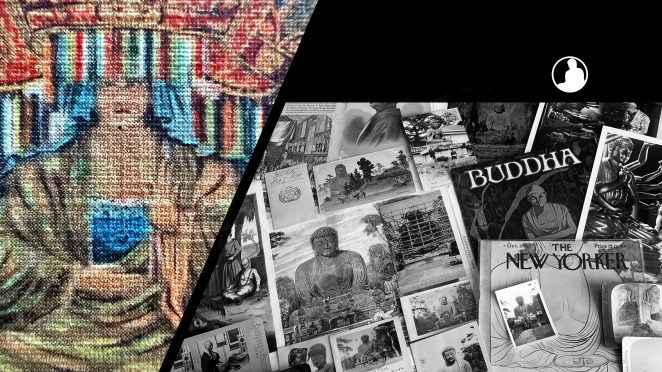
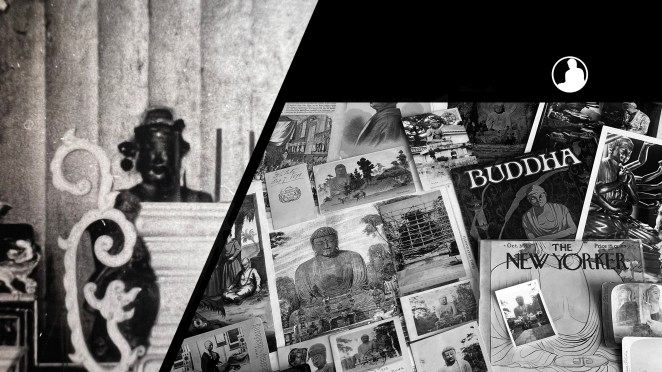
The original black and white photograph shows the Dalai Lama sitting on a throne behind an ornate dais. On the back wall hangs nine silk thangka depicting the Buddha, but the lithographic artist only loosely renders them as Buddhist images.

For a brief account of the Dalai Lama photograph and discussion on the impact of photography in Tibet, see Riga Shakya’s “Lenses of Modernity: Photography in Tibet and the Himalayas,” viewable here: tinyurl.com/bdzzcw4m.

The Buddhas in the West Material Archive is a digital scholarship project that catalogues artifacts depicting Buddhist material culture for Western audiences. It’s comprised of prints, photos, and an assortment of ephemera and other objects. For a brief introduction to this archive, visit the main Buddhas in the West project page.


For Related Buddhas in the West Posts Featuring Tibet:

For the Most Recent Buddhas in the West Posts:

Chocolat Pupier’s Kinkaku-ji Trade Card

For all the new Buddhas in the West posts
follow us on Bluesky & Instagram


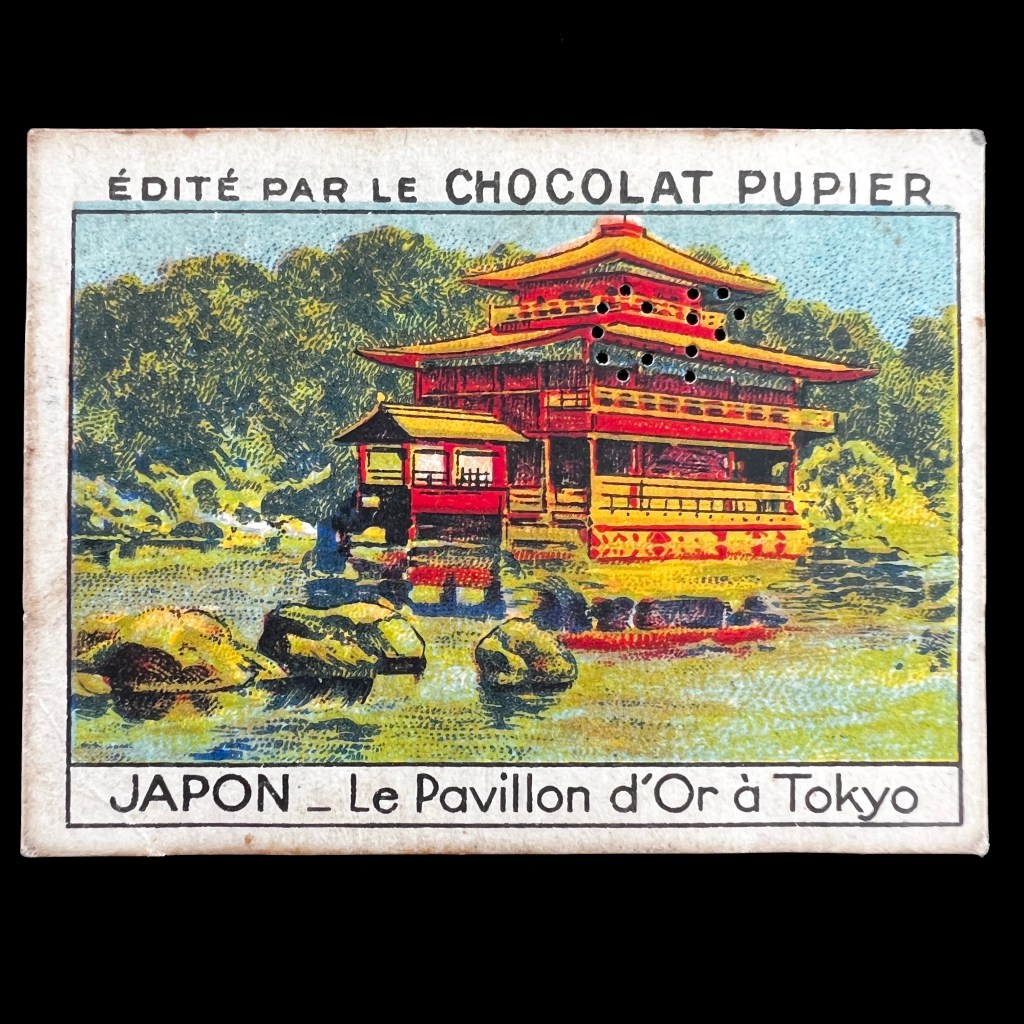
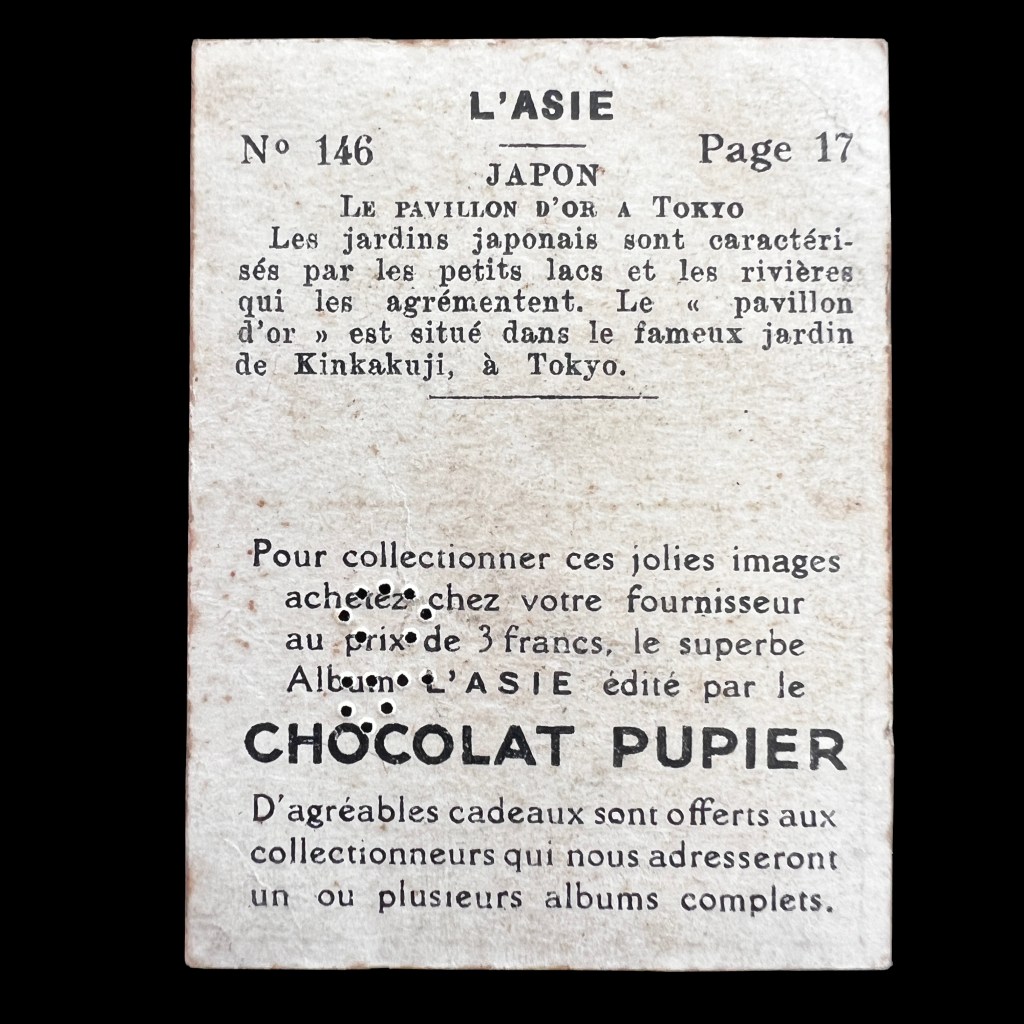
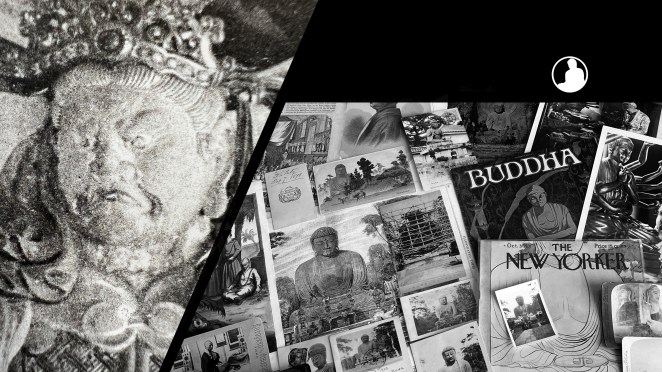
Turn of the century French chocolatiers took advantage of the popularity of colorful trade cards and included them with their products. In 1936 the Chocolat Pupier company created a collectable Asia series with several illustrations of Buddhist material culture.

An album with 252 card slots could be purchased to display your collection. If completed, Chocolat Pupier offered a gift to the consumer.

Chromo-lithographic printing offered an inexpensive way to mass produce colorful imagery. There is an error on this card, however, can you spot it?

The Gold Pavilion Temple, Kinkaku-ji, is not in Tokyo, buy Kyoto. In addition to Asia, Chocolat Pupier made cards related to Europe, North America, and Africa.

A small collection of Chocolat Pupier card was recently acquired by Duke University Library, see here: https://archives.lib.duke.edu/catalog/chocolatpupier.


The Buddhas in the West Material Archive is a digital scholarship project that catalogues artifacts depicting Buddhist material culture for Western audiences. It’s comprised of prints, photos, and an assortment of ephemera and other objects. For a brief introduction to this archive, visit the main Buddhas in the West project page.


For Related Buddhas in the West Posts Featuring Historical Trade Cards:


For the Most Recent Buddhas in the West Posts:

D.A. Ahuja’s Buddhist Priest Portrait Postcard

For all the new Buddhas in the West posts
follow us on Bluesky & Instagram


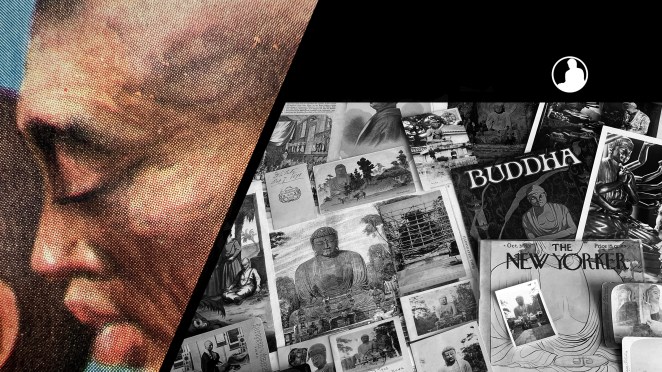
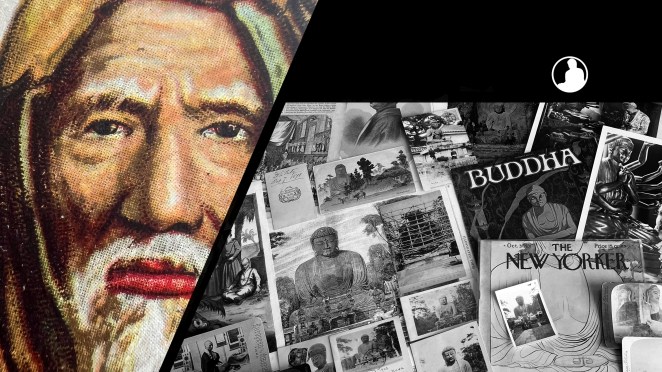
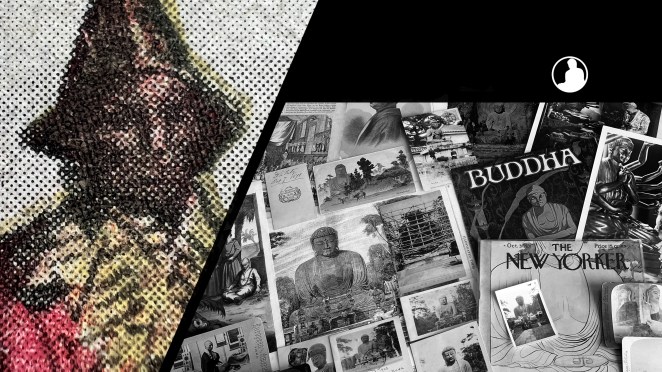
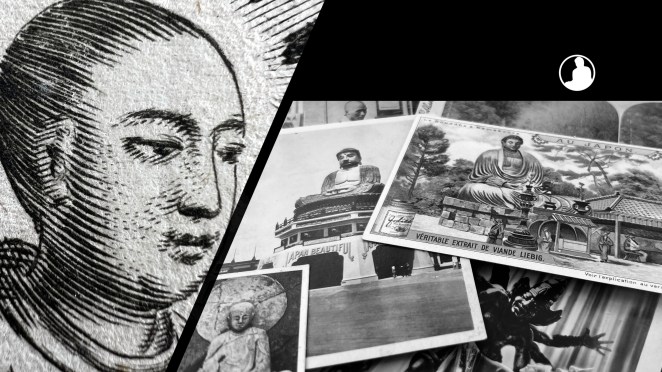
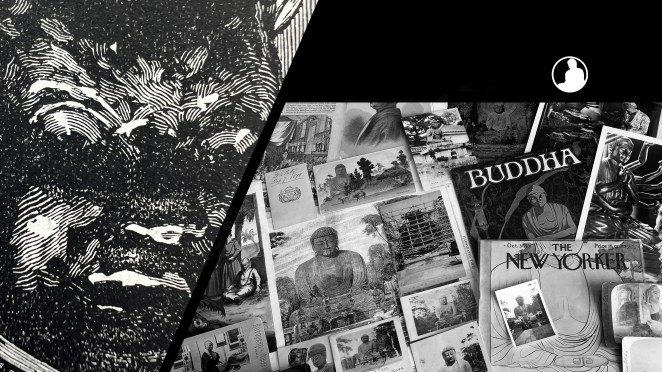
At the turn of the twentieth century, photographer D. A. Ahuja was integral in creating a visual canon of British colonial Burma. His picture postcards were among the most reprinted images of the era, including this portrait of an unnamed “Burmese priest.”

The image was made by a lithographic-halftone hybrid process, whereby a black halftone screen was applied on top of a multi-color lithographic substrate. The “divided back” design suggests Ahuja printed this card around 1910.

Burmese pagodas and monks were common enough to warrant claiming they constituted their own visual genre of “Burmese religious life.” The colorist here inaccurately represented the monk’s robes, combining the two most common colorways – saffron and maroon – into one.

Somewhat unique to his oeuvre, Ahuja photographs his subject in formal portraiture, sitting in an ornate wooden chair on top of carpet. Holding a Buddhist mala, the elderly monk poses, without facial expression, for the camera.

Was he a highly regarded monk – as his portraiture might suggest? A collection of Burmese postcards has recently been digitized by Stanford University, available here: https://exhibits.stanford.edu/missionarypostcards


The Buddhas in the West Material Archive is a digital scholarship project that catalogues artifacts depicting Buddhist material culture for Western audiences. It’s comprised of prints, photos, and an assortment of ephemera and other objects. For a brief introduction to this archive, visit the main Buddhas in the West project page.


For Related Buddhas in the West Posts Featuring Buddhist Monastics:


For the Most Recent Buddhas in the West Posts:

Joseph Keppler’s Crafty Priests Puck Magazine Cover

For all the new Buddhas in the West posts
follow us on Bluesky & Instagram


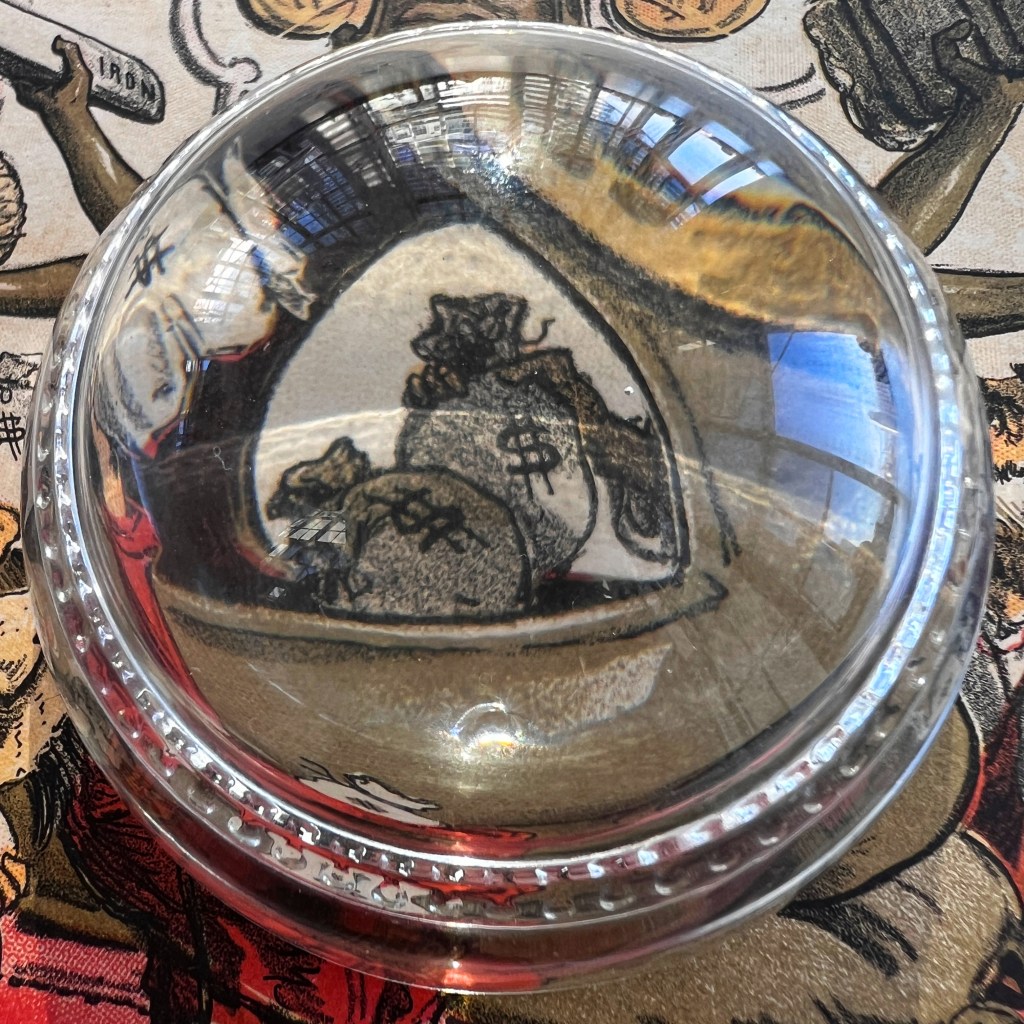
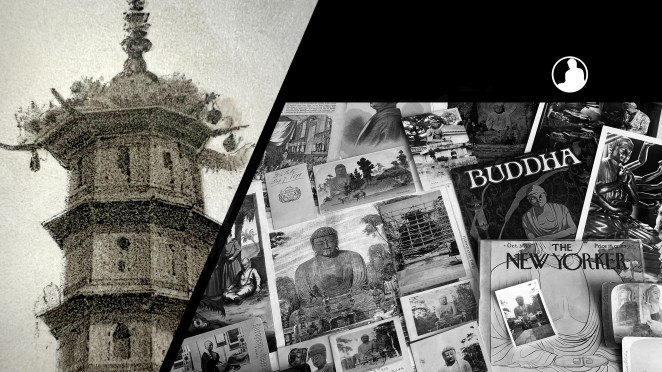
In the 1880s Puck was America’s premier satire magazine, but the publication stood out for another reason: it was among the first periodicals to use chromolithographic printing. Puck was founded by Joseph Keppler who was also a main artist – his work from 1888 is seen here.

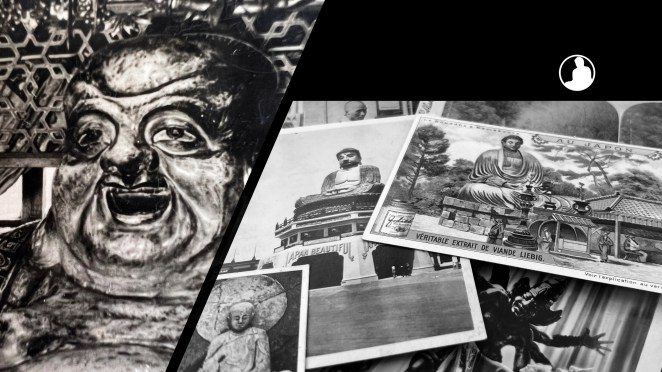
The political commentary draws upon the old trope of “crafty priests” stealing from pious believers.

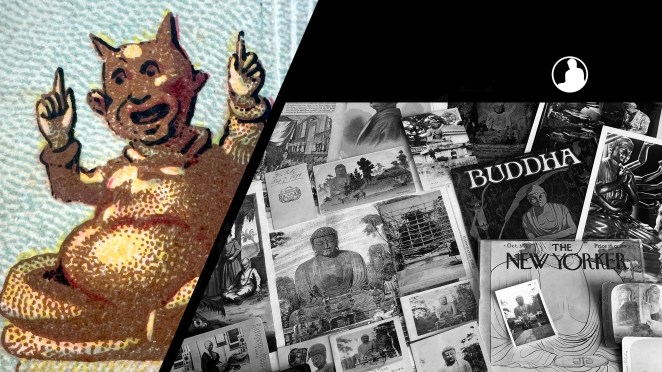
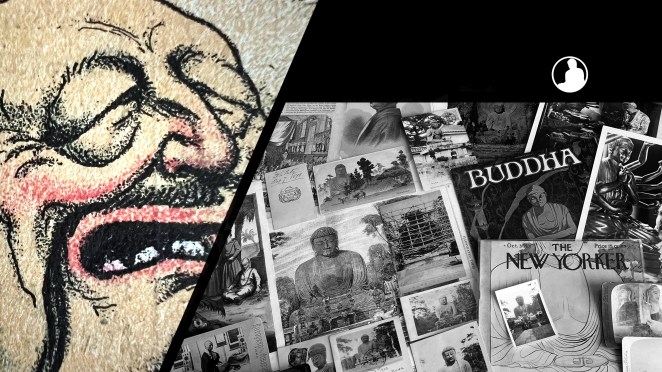
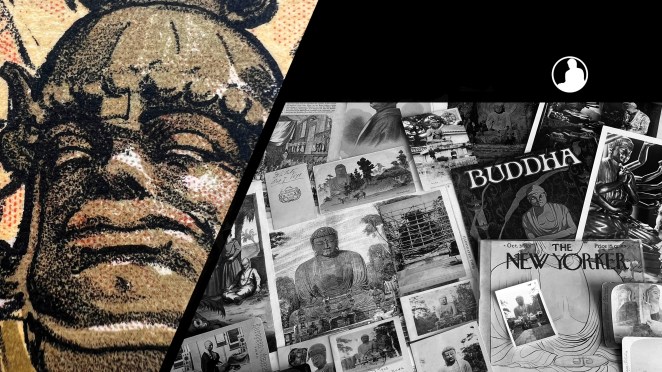
The visual trope, however, uses more recently circulating popular imagery of a cross-legged multi-arm idol. The traditional Biblical imagery of the golden calf has replaced by a stereotyped golden Asian icon. Moreover, the facial features are exaggerated to look more grotesque.

A large collection of Puck political cartoons has been digitized by the Library of Congress, viewable here: https://tinyurl.com/ycde4xtc.


The Buddhas in the West Material Archive is a digital scholarship project that catalogues artifacts depicting Buddhist material culture for Western audiences. It’s comprised of prints, photos, and an assortment of ephemera and other objects. For a brief introduction to this archive, visit the main Buddhas in the West project page.


For Related Buddhas in the West Posts Featuring Historical Magazines:


For the Most Recent Buddhas in the West Posts:

Liebig’s Chinese Buddha Advertising Card

For all the new Buddhas in the West posts
follow us on Bluesky & Instagram


Gods of Antiquity: In the early age of black and white mass market publications, chromolithography ushered in a new era of visual media. From massive broadside to Victorian trade cards, vibrant color was the future and the British Liebig company capitalized on this market.

Liebig started producing trade cards in 1872 and by the turn of the century their cards were printed in several languages. Several different sets were made each year and these sets soon became collector’s items, predating hobbies such as baseball card collecting.

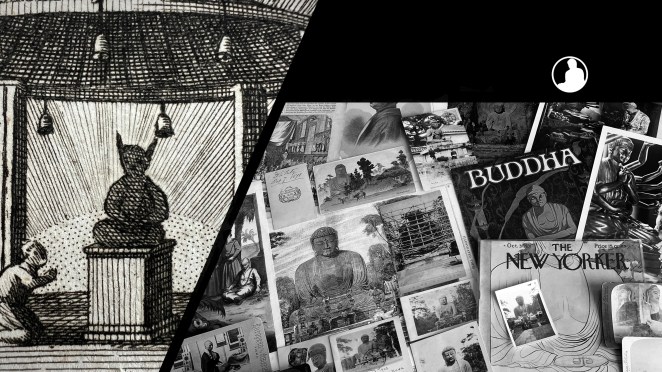
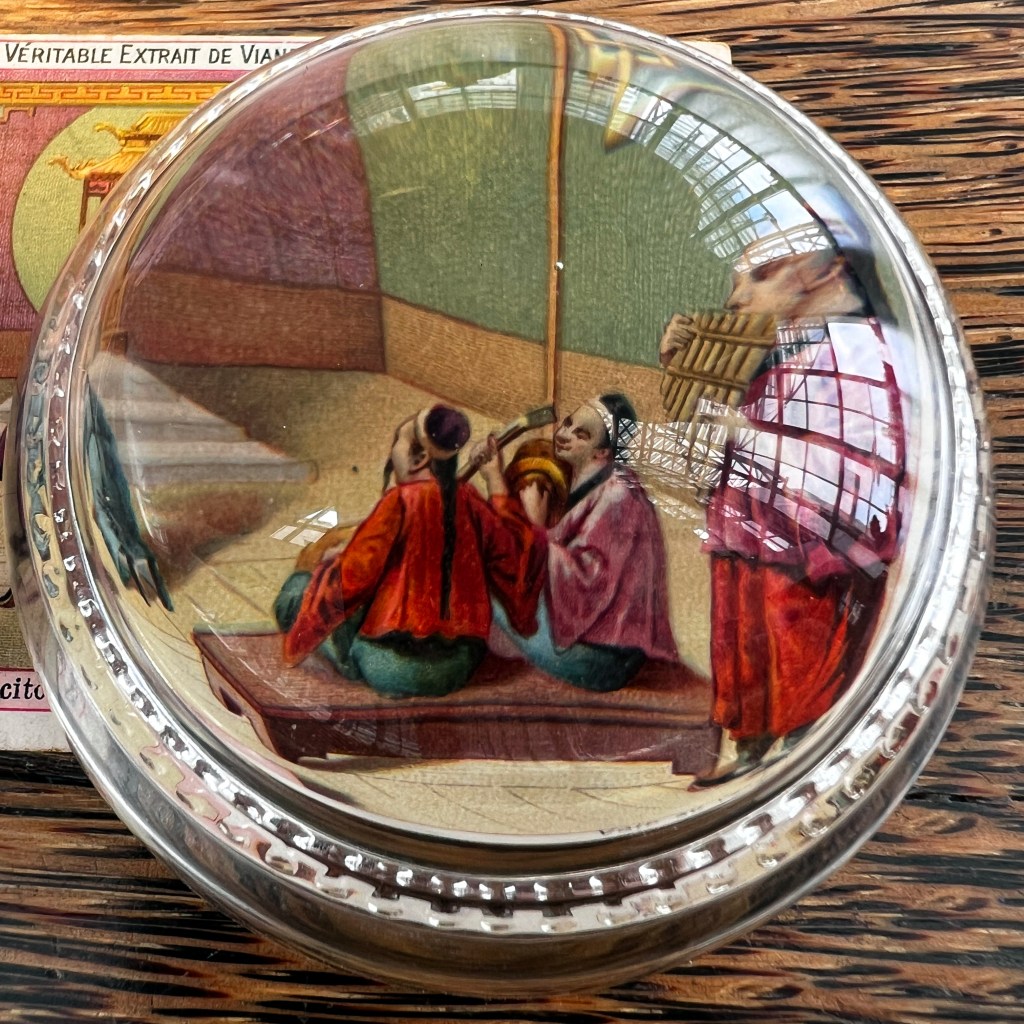
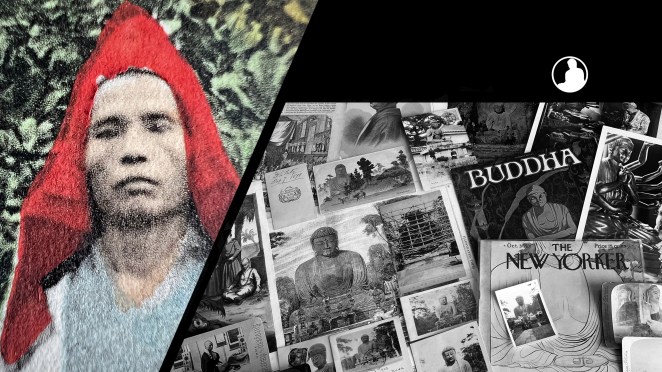
In 1895 Liebig released the Gods of Antiquity set, with the card here showing the worship of the Buddha by “Chinese nobles.” The scene is mostly a hodge-podge of turn of the century Chinese stereotypes.

A gold Buddha, sitting awkwardly with legs crossed, takes center stage in this imaginary temple scene.

Chinese Buddhist rituals use instruments, but not of the kind depicted here.

For a short introduction to the Liebig Company’s trade cards by Princeton University’s Firestone Library, follow this link: https://tinyurl.com/3nzvs6mh.


The Buddhas in the West Material Archive is a digital scholarship project that catalogues artifacts depicting Buddhist material culture for Western audiences. It’s comprised of prints, photos, and an assortment of ephemera and other objects. For a brief introduction to this archive, visit the main Buddhas in the West project page.


For Related Buddhas in the West Posts Featuring China:


For the Most Recent Buddhas in the West Posts:

Paris’ Panorama du Tour du Monde Advertising Card

For all the new Buddhas in the West posts
follow us on Bluesky & Instagram


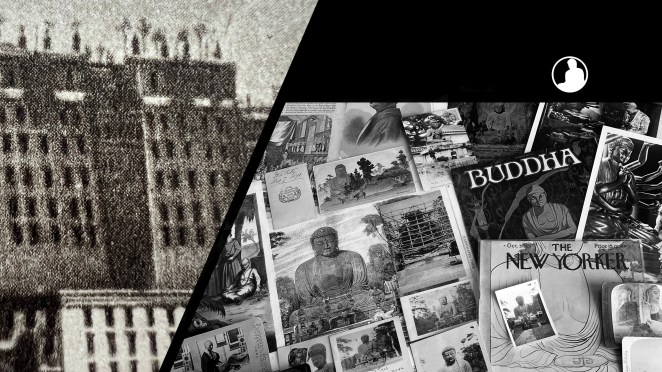
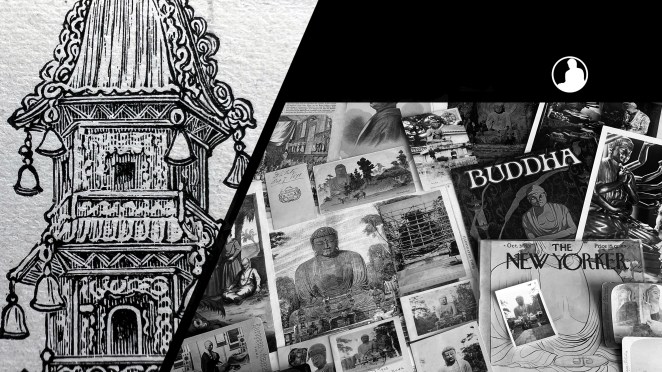
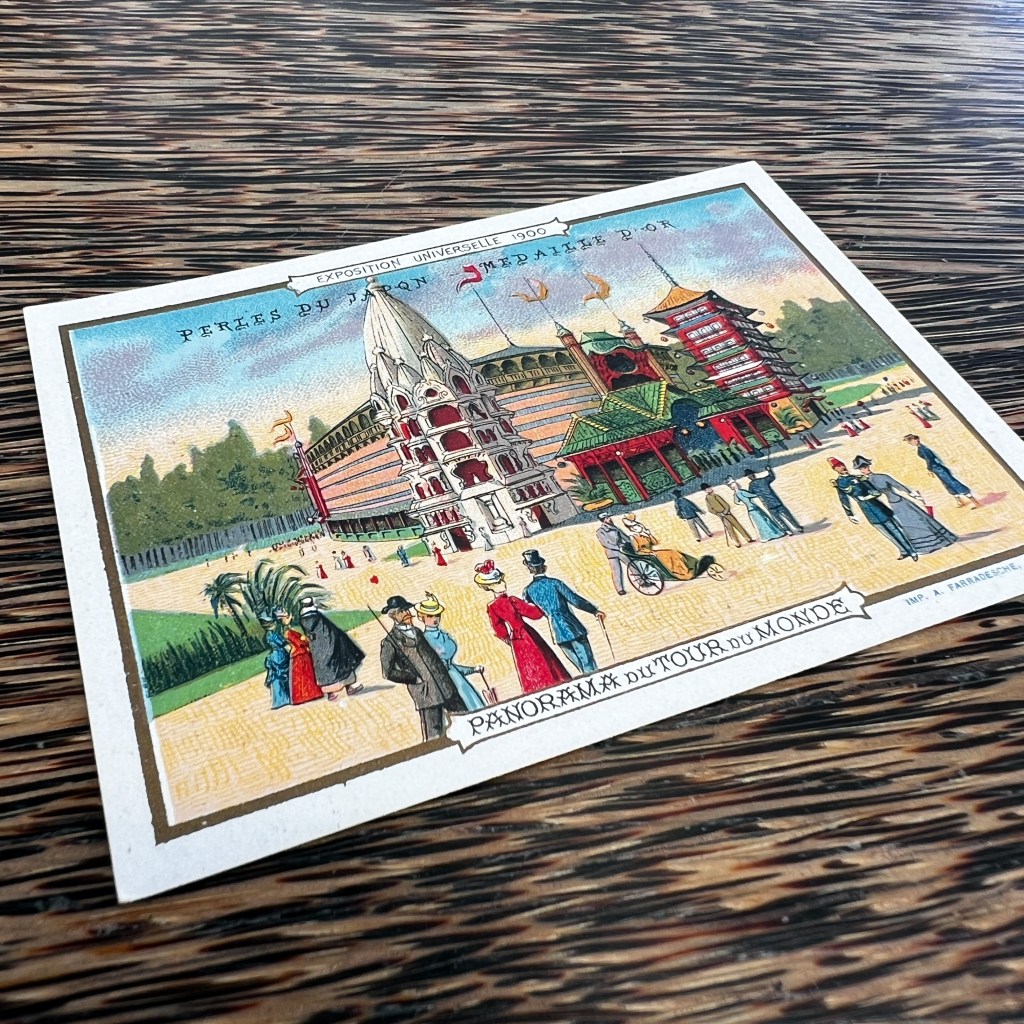
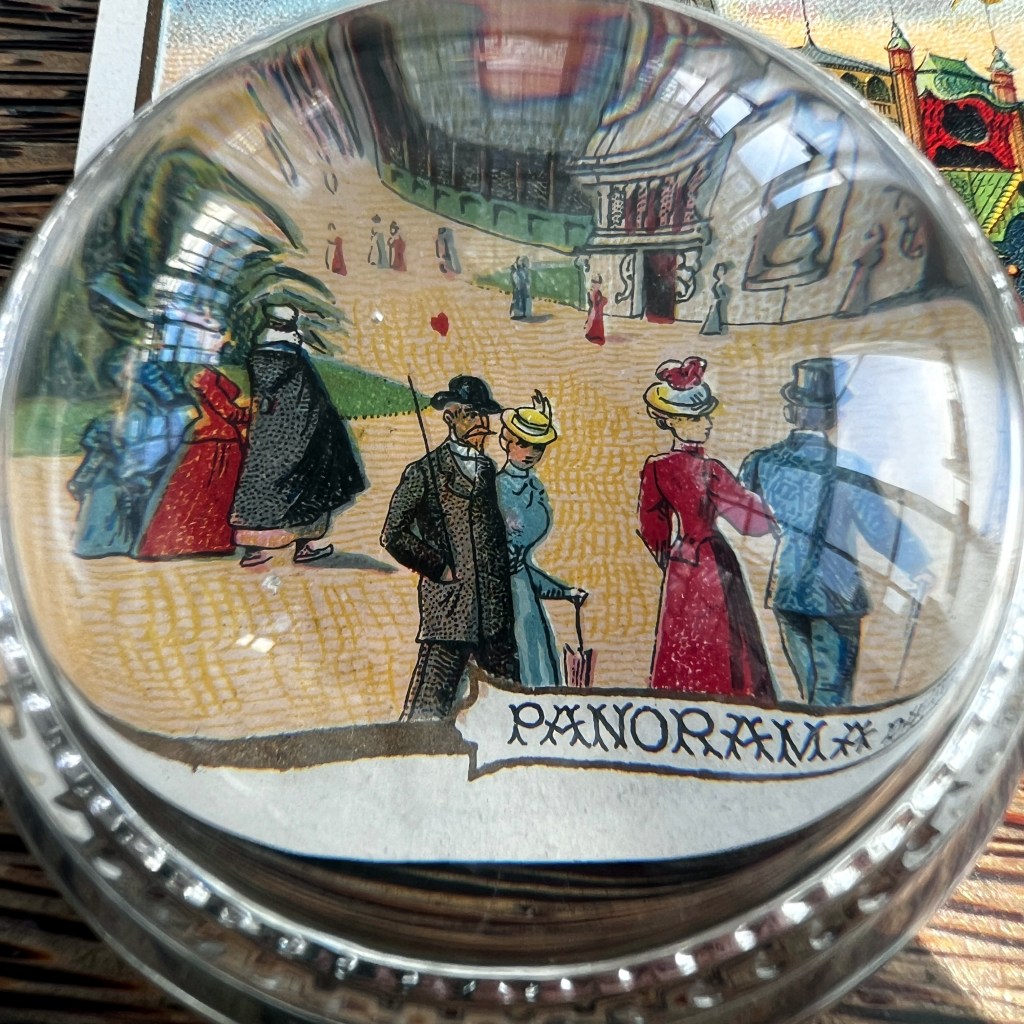
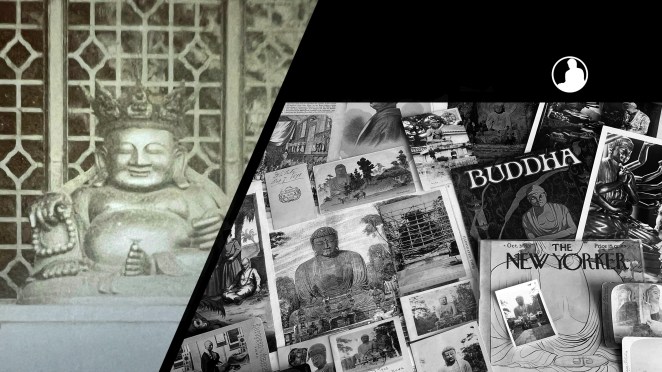
Panorama du Tour du Monde: By the 1900 Paris Exposition, amusement concessions were a major draw for all exposition visitors. Not far from the foot of the Eiffel Tower one found the Panorama du Tour du Monde which took patrons on a virtual voyage from Spain to Japan.

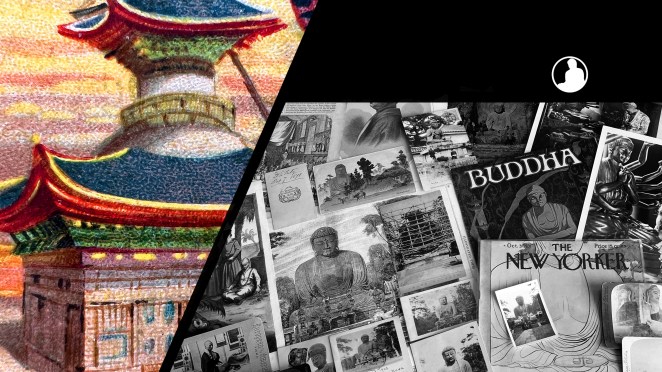
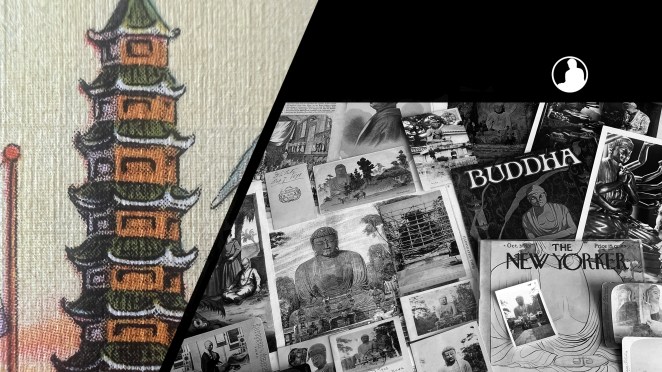
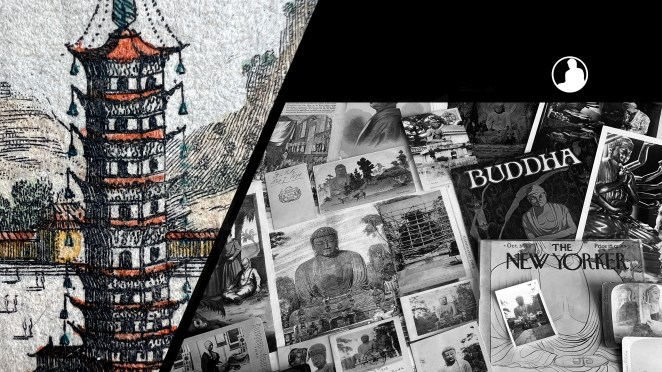
Built by Alexandre Marcel for a French sea-transport company, the architecture called to mind exotic locales with Asian-inspired structures. The main entrance was modeled on the Tōshō-gū in Nikkō, Japan. Some sources claim the red pagoda was based on a Chinese model.

Visitors were drawn in by large panoramic paintings of various foreign countries to give a sense of virtual travel. More astonishingly, the concession integrated many indigenous performers who engaged in various trades while wearing traditional foreign costumes

The beautiful lithographic print was part of an advertising campaign for a French company selling tapioca pearls, called “perles du Japon.”

King Leopold II was so struck by the building, he had Marcel build the Japanese Tower in Brussels. For more on the Tour du Monde exhibition, see https://tinyurl.com/2vbmr3c7.


The Buddhas in the West Material Archive is a digital scholarship project that catalogues artifacts depicting Buddhist material culture for Western audiences. It’s comprised of prints, photos, and an assortment of ephemera and other objects. For a brief introduction to this archive, visit the main Buddhas in the West project page.


For Related Buddhas in the West Posts Featuring France:


For the Most Recent Buddhas in the West Posts:

Liebig’s Komusō Advertising Card

For all the new Buddhas in the West posts
follow us on Bluesky & Instagram


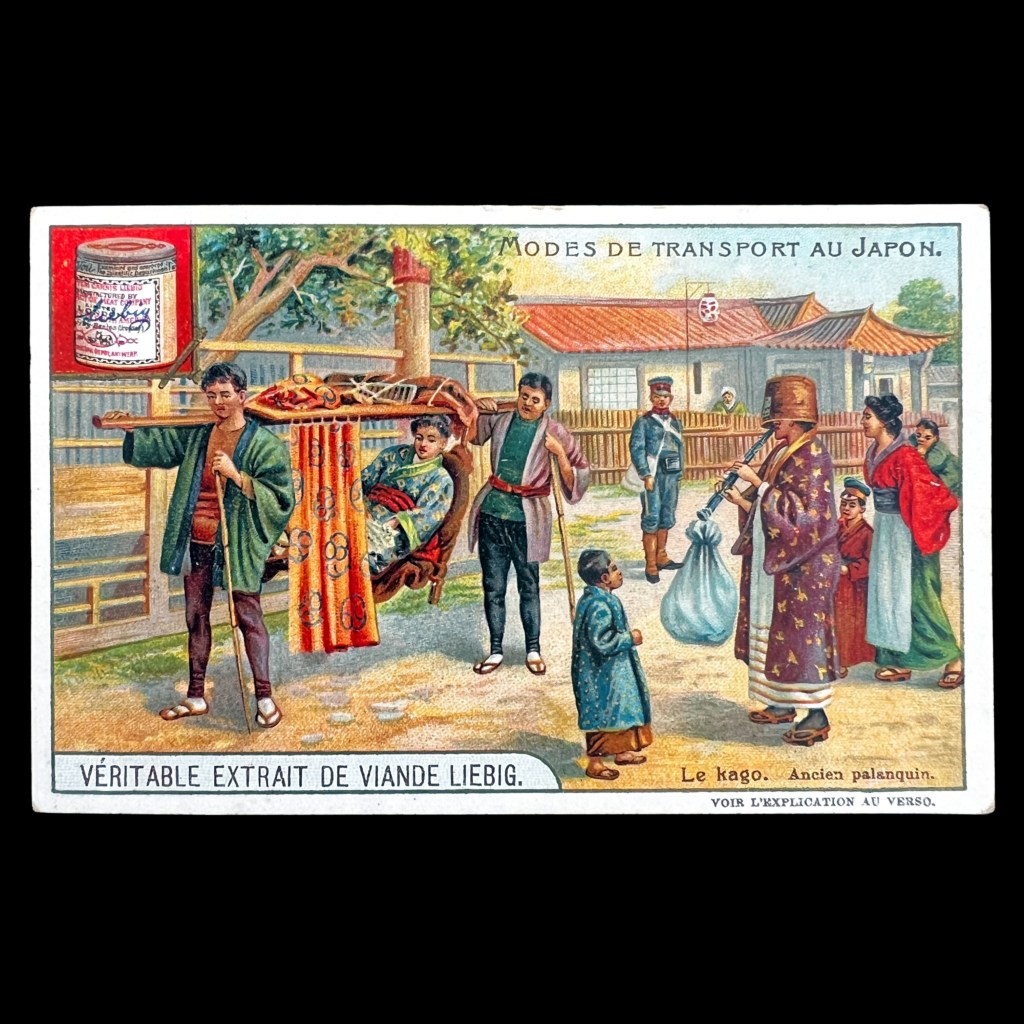
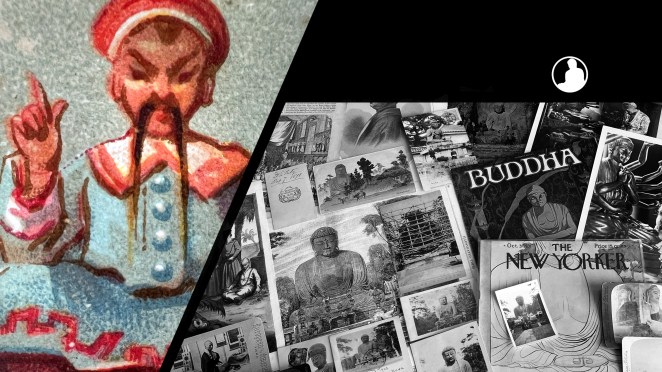
Komusō 虚無僧: Victorian trade card illustrations leaned into stereotypes to create collectables with easily identifiable cultures and peoples. With the 1905 Japanese modes of transportation series, the setting is provided a curious Buddhist figure: a flute playing monk.

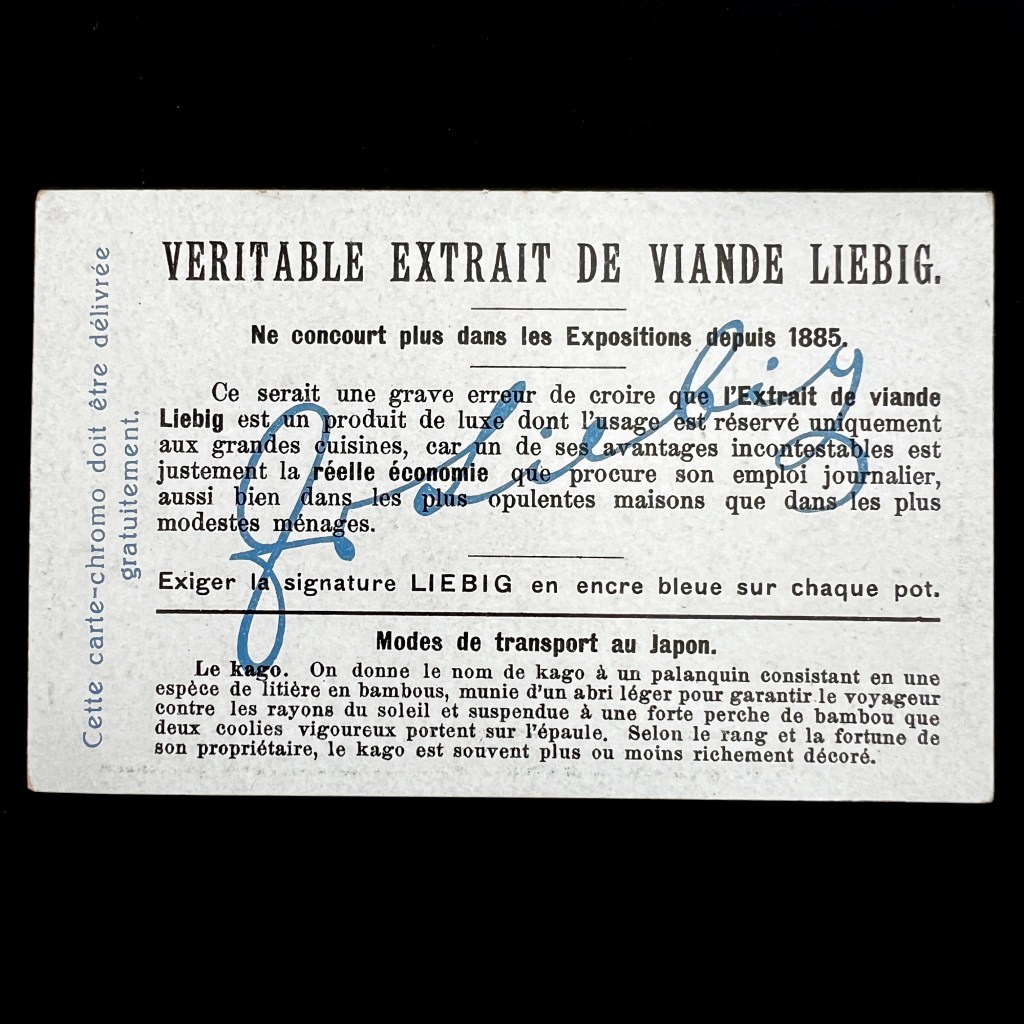
The British Liebig company started producing trade cards in 1872 and by the turn of the century the vibrant chromolithographic prints were widely popular and printed in several languages. This set comprised six cards, with the one here focusing on the Japanese palanquin.

The faceless Komusō – monks of nothingness – were depicted in woodblock prints of the late Edo period and were seen in souvenir photographs of Yokohama studios in c.1890s. Consequently they became one among the visual icons of Japan for Western tourists.

The Fuke school of the komusō was prohibited in 1871, but lay shakuhachi flute players continued the tradition of playing in public while dressed in full garb.


The Buddhas in the West Material Archive is a digital scholarship project that catalogues artifacts depicting Buddhist material culture for Western audiences. It’s comprised of prints, photos, and an assortment of ephemera and other objects. For a brief introduction to this archive, visit the main Buddhas in the West project page.


For Related Buddhas in the West Posts Featuring Historical Trade Cards:


For the Most Recent Buddhas in the West Posts:

D.A. Ahuja’s Buddhist Priests Postcard

For all the new Buddhas in the West posts
follow us on Bluesky & Instagram


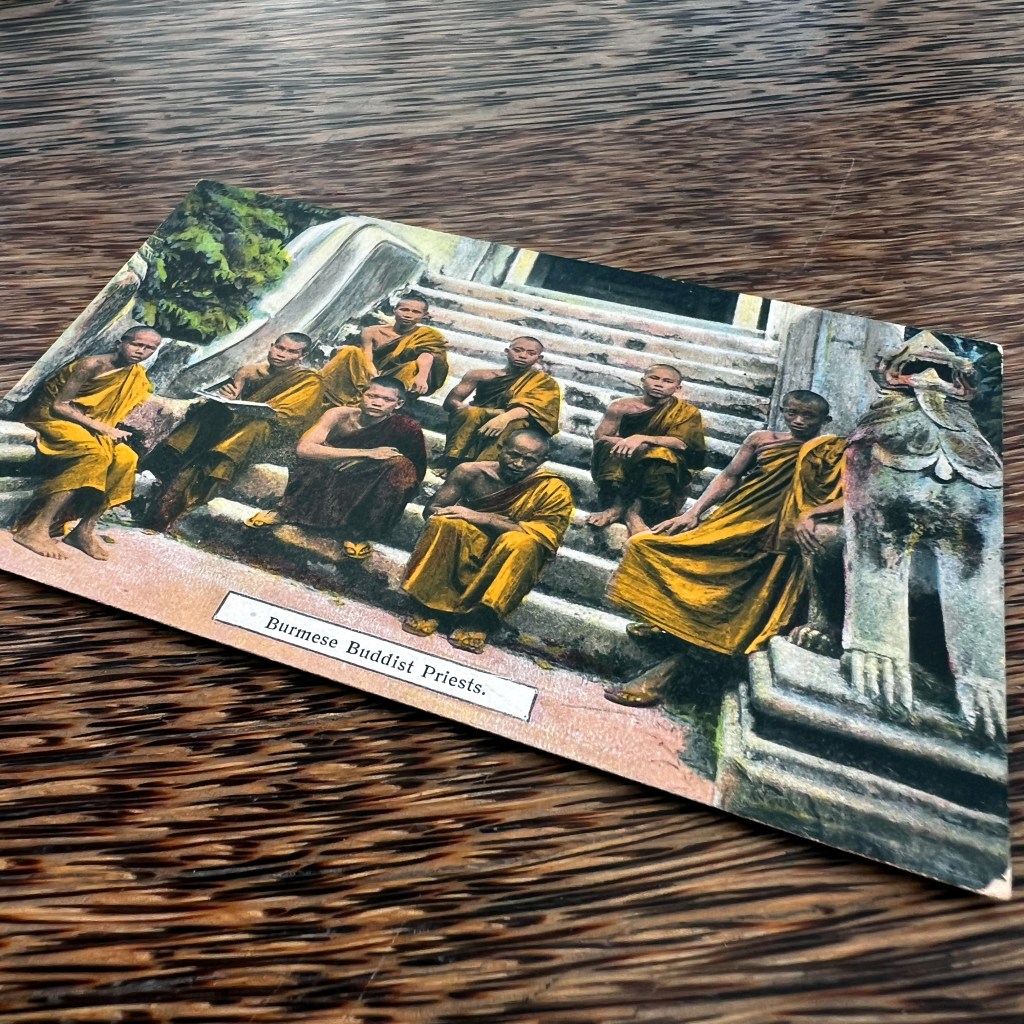
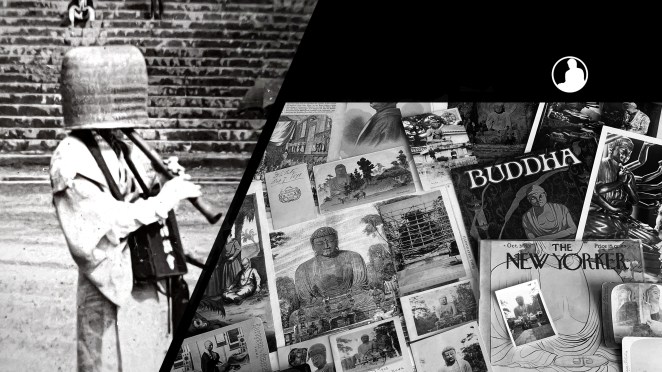
Buddhists & the British Crown: When Ceylon became a colony in 1815, the first Buddhist monks became subjects of the Crown. Burmese monks were added to their ranks in 1885. Victorian reports said the total Buddhist population was 500 million, nearly 40% of the global population.

British newspapers of the time printed engravings of the expanding empire, often focusing on exotic architecture and the clothes and customs of new subjects. The shaven heads and golden robes of Burmese monks, called poongyis in the press, garnered some of this attention.

Consequently, when D. A. Ahuja (c.1865–c. 1939) started publishing colorized postcards of Burma, monks dressed in colorful robes were a popular theme. This is card is a German lithographic-halftone print published circa 1910.

The popular press often described Burmese monks as indolent, but never-the-less kind-hearted. While Ahuja’s licensed photograph (taken by Philip Klier) seems to depict monks at rest on the stairs of a temple, it’s noteworthy one studious monk holds a notebook and pencil.

For further reflections on how Burmese Buddhism was represented in Victorian mass media, see Eiben, Emily Rose. “Representing Buddhism in British Media and Popular Culture, 1875-1895.” Ph.D dissertation, Ludwig Maximilian University, 2016


The Buddhas in the West Material Archive is a digital scholarship project that catalogues artifacts depicting Buddhist material culture for Western audiences. It’s comprised of prints, photos, and an assortment of ephemera and other objects. For a brief introduction to this archive, visit the main Buddhas in the West project page.


For Related Buddhas in the West Posts Featuring Historical Postcards:


For the Most Recent Buddhas in the West Posts:

Lambert and Butler’s Kamakura Daibutsu Cigarette Card

For all the new Buddhas in the West posts
follow us on Bluesky & Instagram


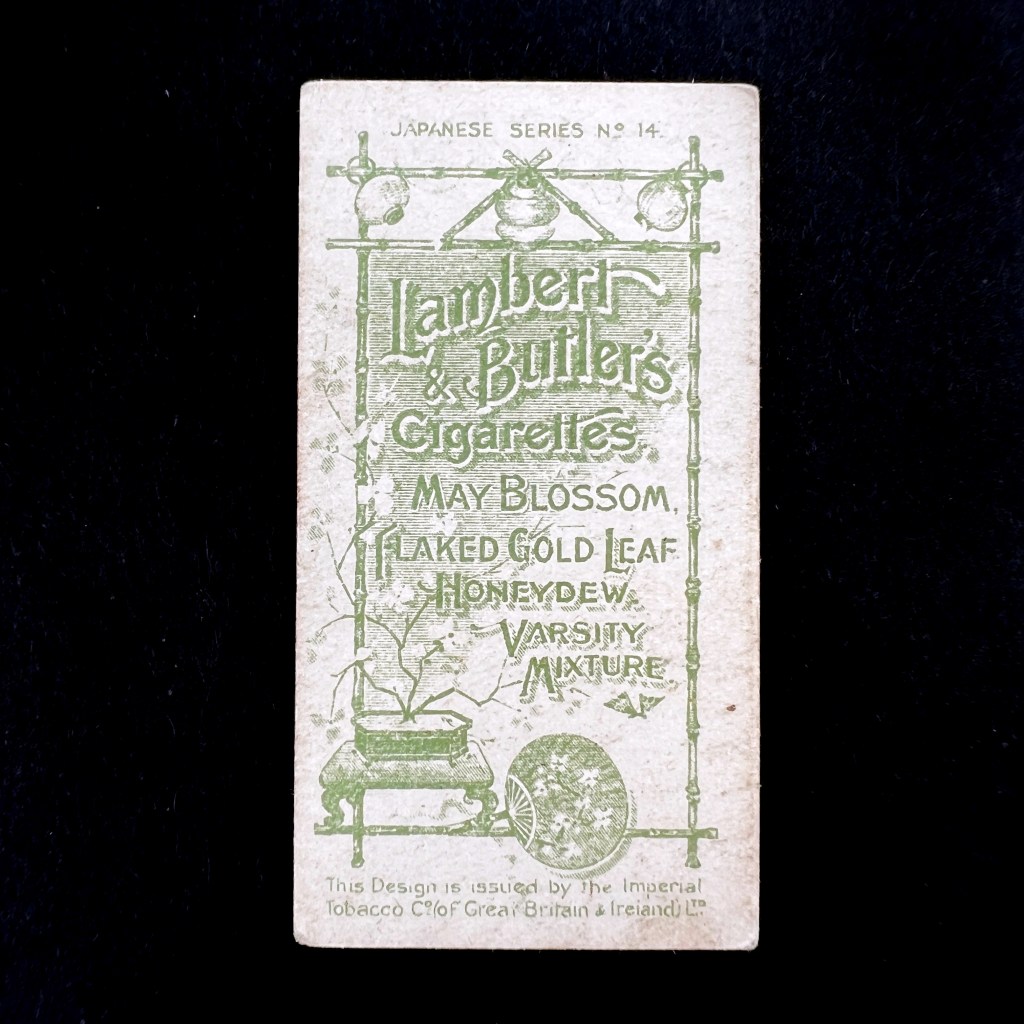
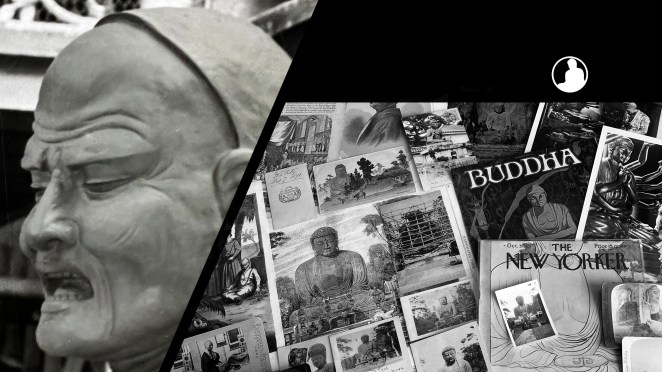
The Buddha’s “rookie” card? In the US, “cigarette cards” are perhaps best known for their early depiction of baseball players. These cards jump started a baseball card collecting phenomenon.

Tobacco companies drew upon a much larger visual repertoire than sports for their advertising cards. This sometimes included exotic locales. Intended to fit inside cigarette packs, these cards were relatively small.

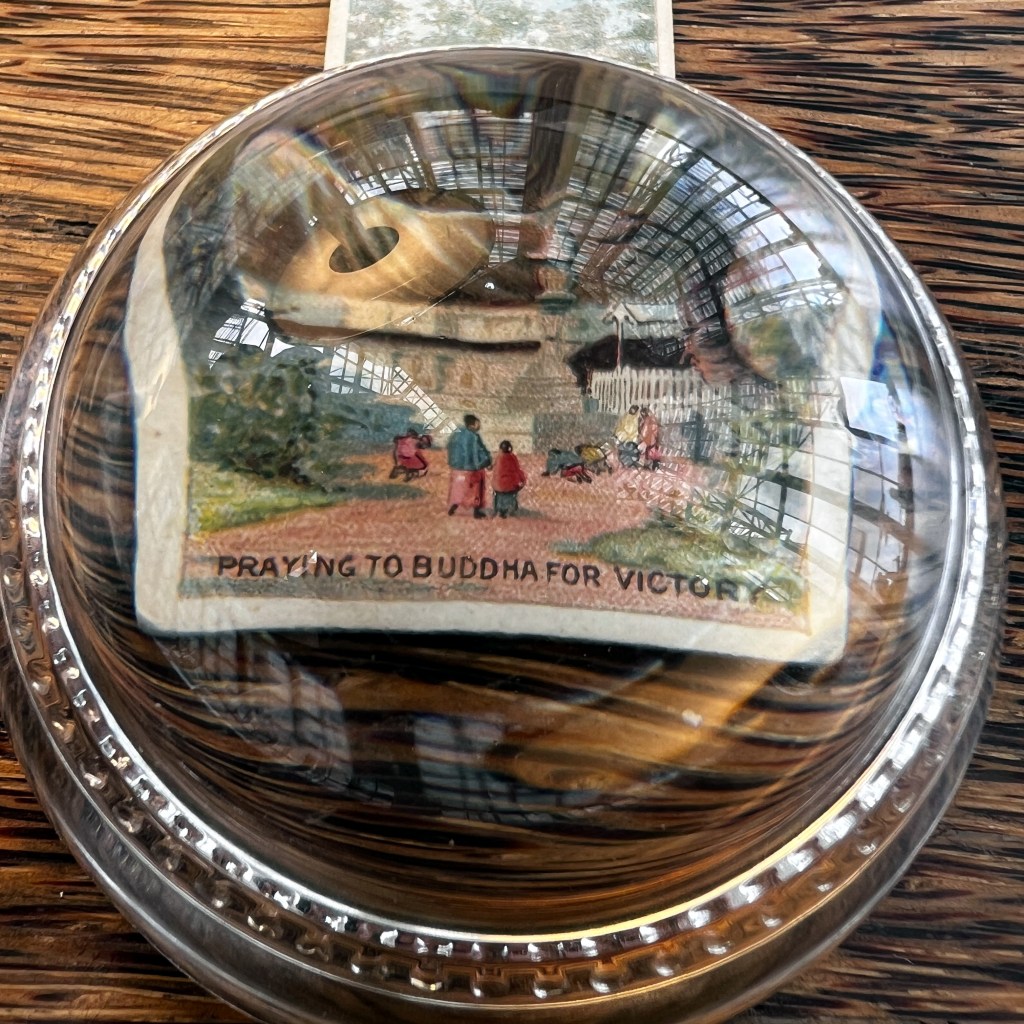
Lambert & Butler was a former English tobacco manufacturing company that made a “Japanese Series” in 1904-1905.

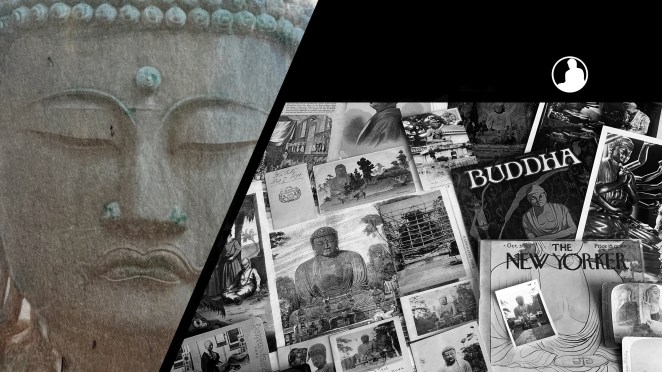
It memorialized the Russo-Japanese War. Thus we see a depiction of Japanese citizens praying at the foot of the Kamakura Daibutsu.

Similar to other Victorian trade cards, this was a colorful lithographic print. You can browse the collection of cigarette cards held by the NY Public Library here: https://tinyurl.com/cn23wud8.


Additional Archived Posts for the Buddhas in the West Project

The Buddhas in the West Material Archive is a digital scholarship project that catalogues artifacts depicting Buddhist material culture for Western audiences. It’s comprised of prints, photos, and an assortment of ephemera and other objects. For a brief introduction to this archive, visit the main Buddhas in the West project page.


For Related Buddhas in the West Posts Featuring Historical Trade Cards:


For the Most Recent Buddhas in the West Posts:

D.A. Ahuja’s Arakan Mahāmuni Postcard

For all the new Buddhas in the West posts
follow us on Bluesky & Instagram


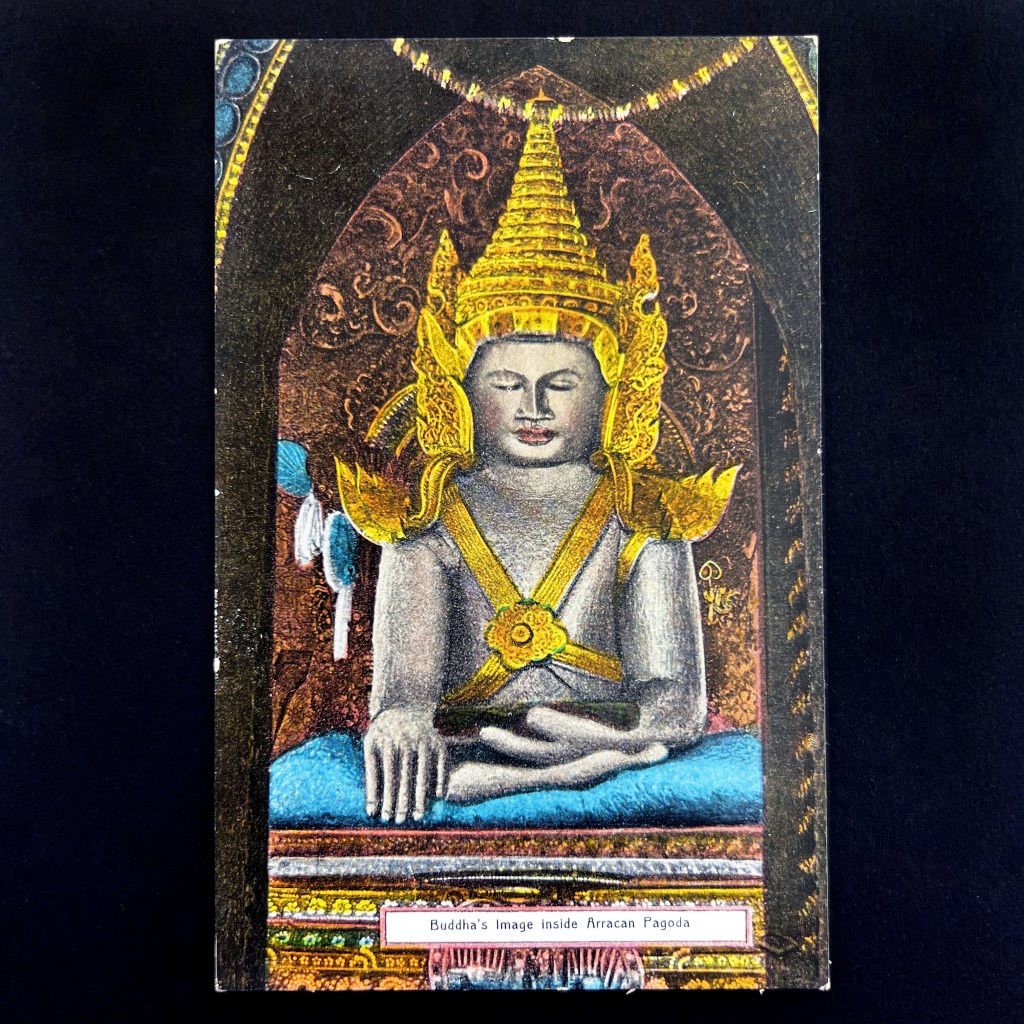
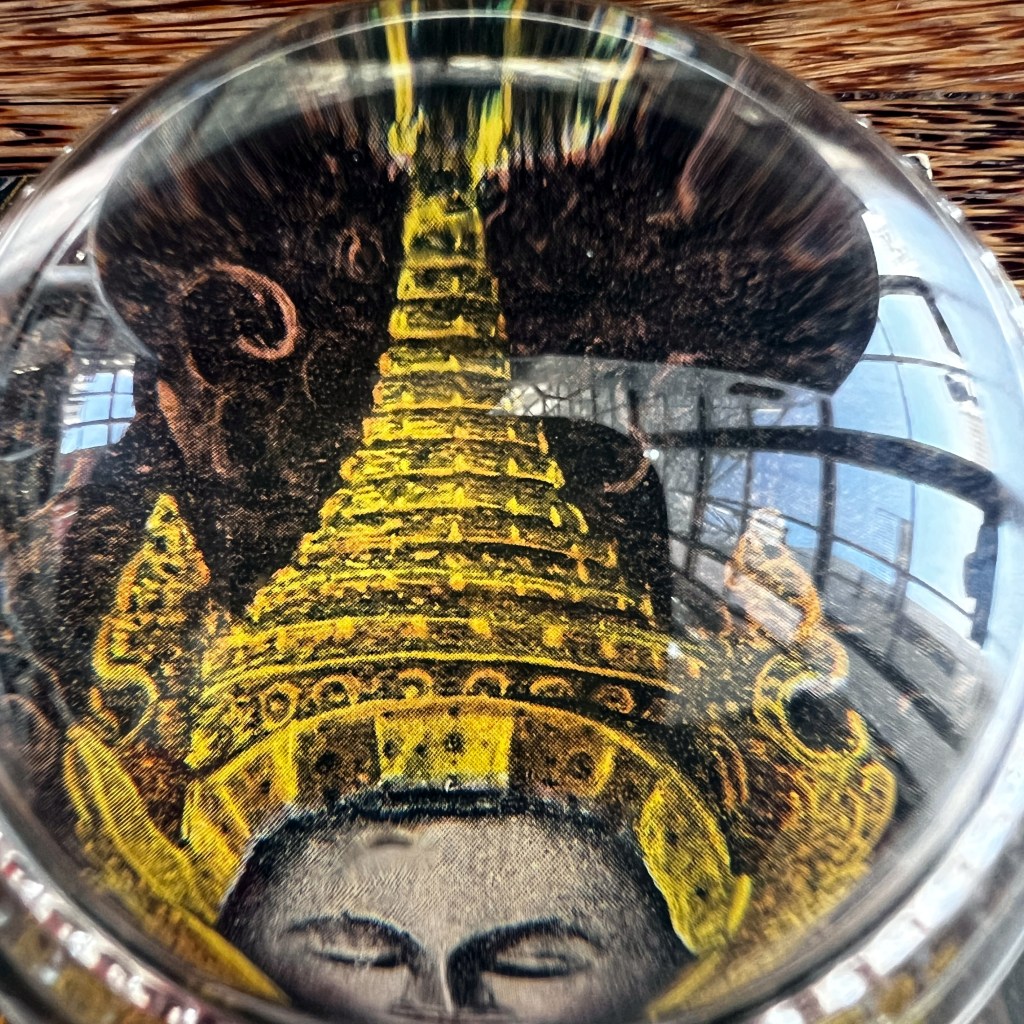
An image consecrated by the Buddha himself? The Mahāmuni image is among the most venerated in Burma. According to myth, the statue was cast during the lifetime of the Buddha and was “enlivened” to act as counsel to kings in the Buddha’s absence.

Originating in the coastal region of Arakan, the statue was moved to Upper Burma, into present-day Mandalay, at the turn of the 19th century.

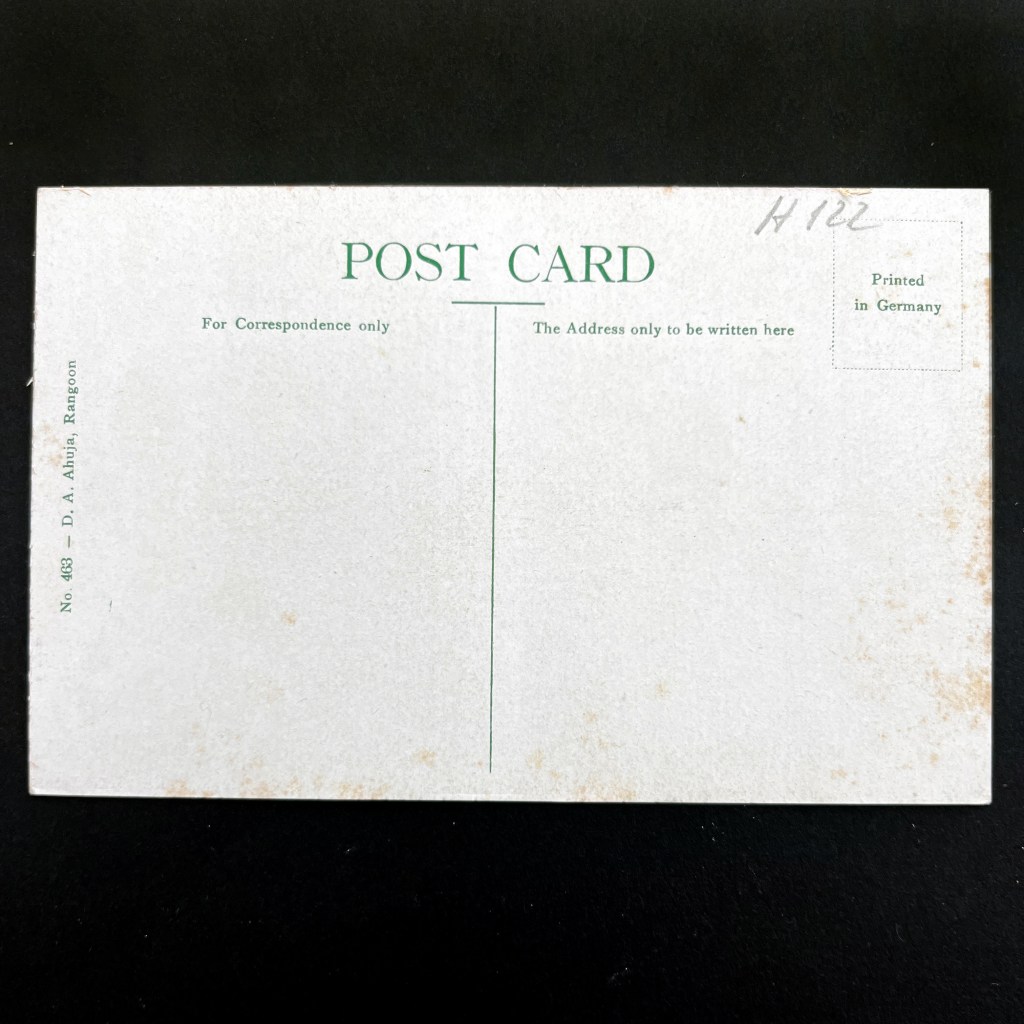
The colorful postcard is a German lithographic-halftone print published by D. A. Ahuja circa 1910. Postcards emerged as highly valued souvenirs during the period of British colonial rule and helped spread knowledge of Buddhist material culture into the West.

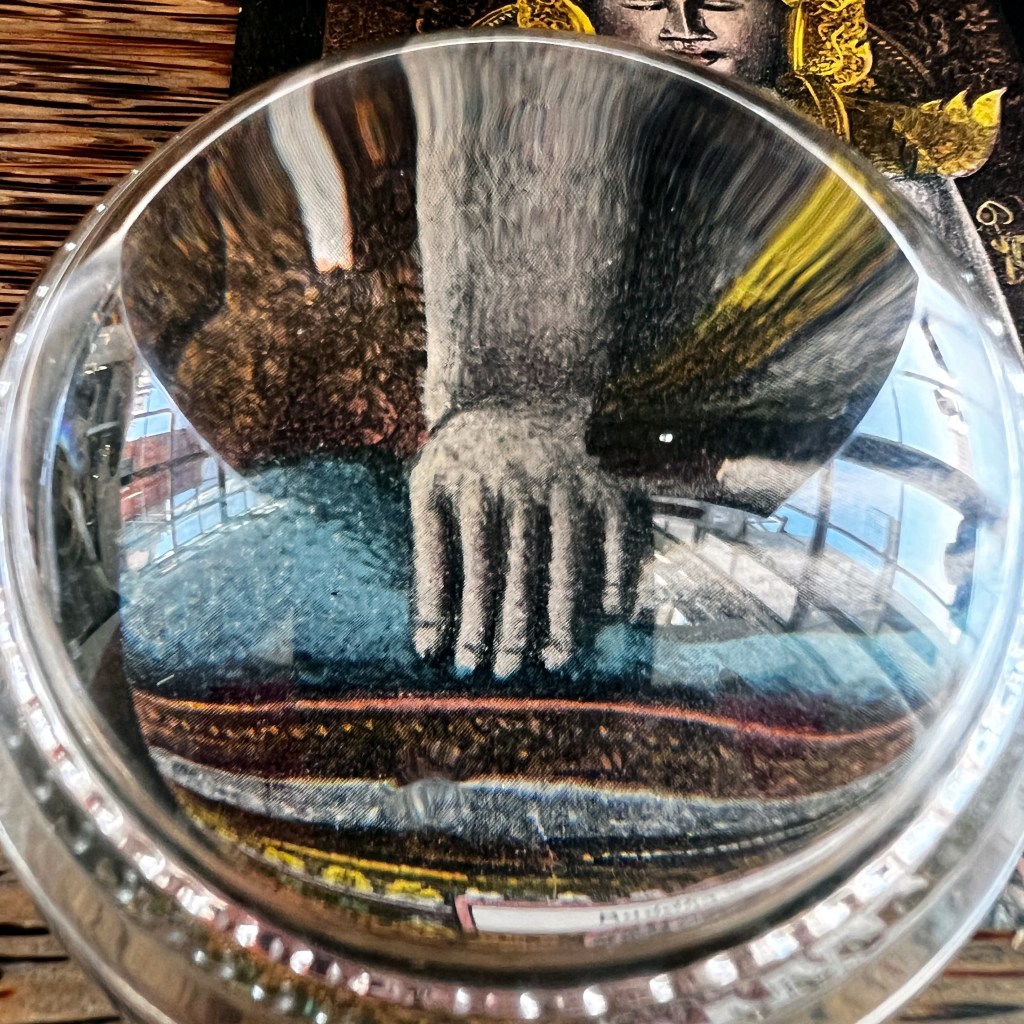
The brass statue depicts the moment when the Buddha calls upon the earth to testify to his generosity and to defeat Mara; this is symbolized by his right hand touching the ground.

Over 12 feet in height, the image is topped by a crown – typical of the Jambupati style – and is intended to display the grandeur of the Buddha and his message.

F

or more on a Burmese Buddhist statue in a similar style, see the Asian Art Museum website here: https://tinyurl.com/mpvxn8j9.

The Buddhas in the West Material Archive is a digital scholarship project that catalogues artifacts depicting Buddhist material culture for Western audiences. It’s comprised of prints, photos, and an assortment of ephemera and other objects. For a brief introduction to this archive, visit the main Buddhas in the West project page.


For Related Buddhas in the West Posts Featuring the Historical Buddha / Gautama:

For the Most Recent Buddhas in the West Posts: