Esaki Reiji’s Pilgrims with Portable Shrine Photograph

For all the new Buddhas in the West posts
follow us on Bluesky & Instagram


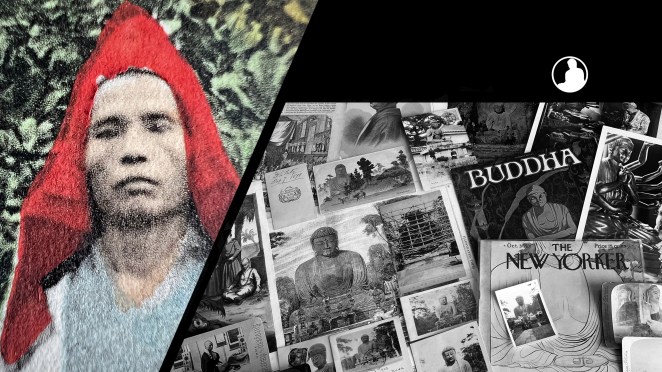
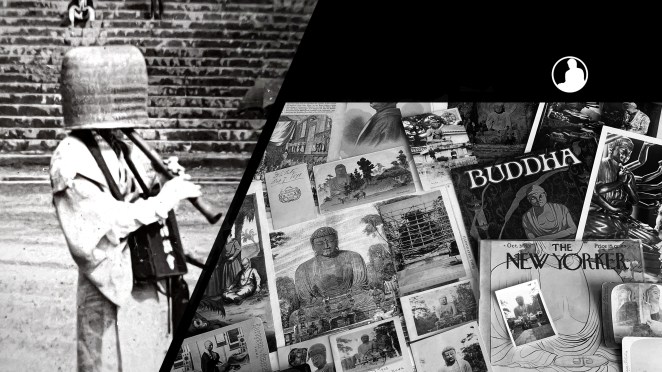
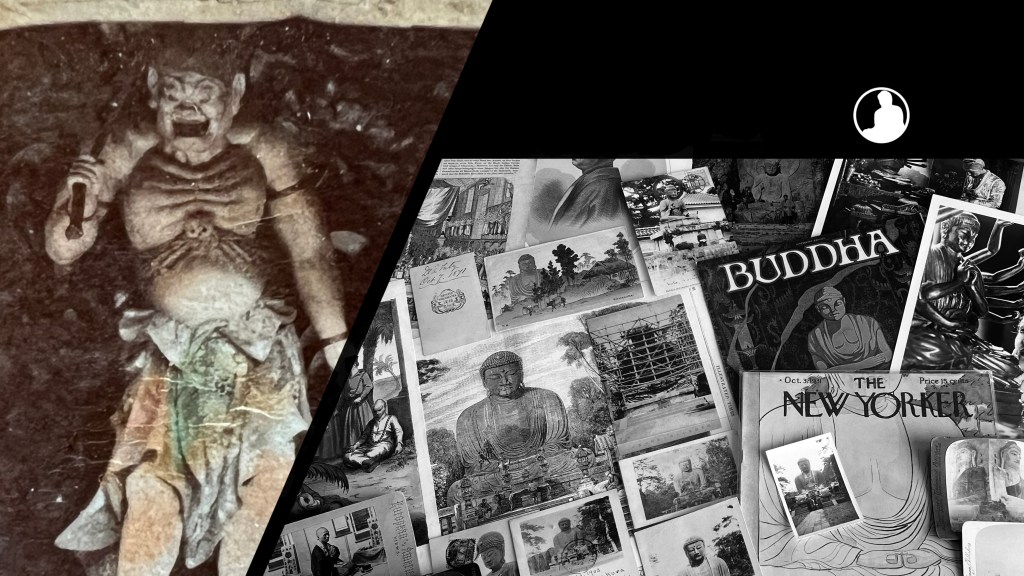
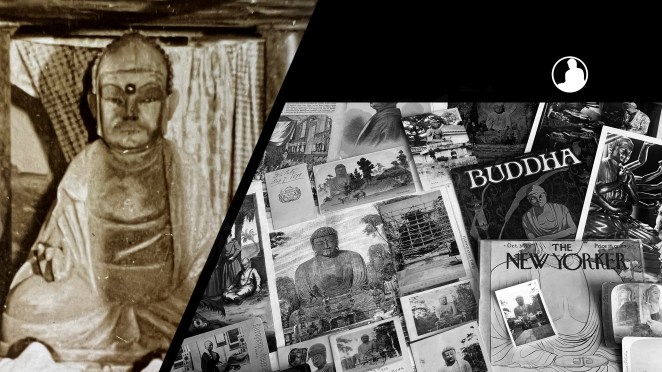
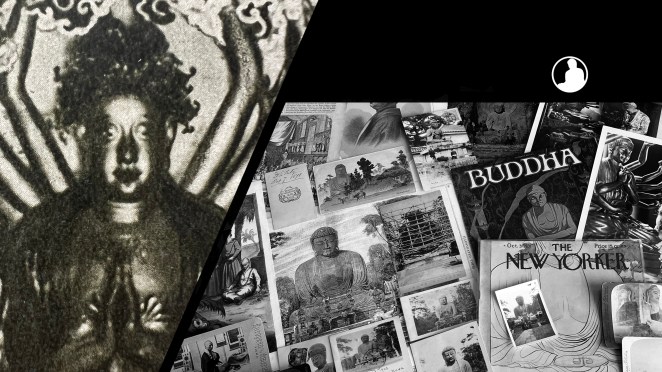
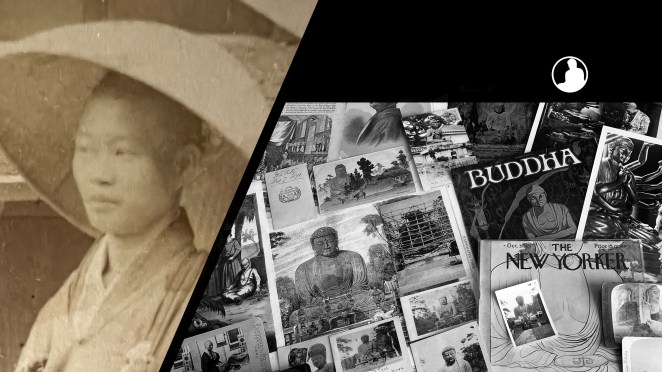
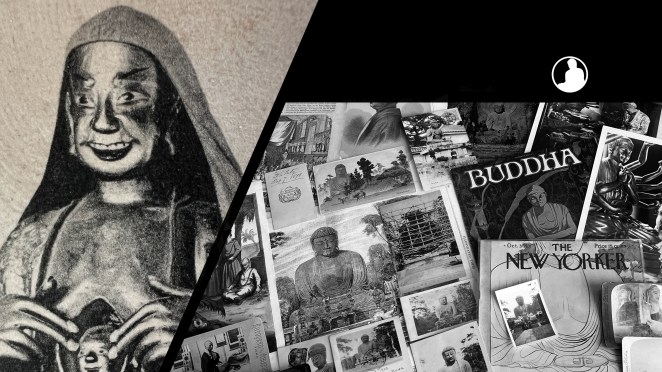
While temple visitors might view Buddhist images as immovable fixtures, Meiji-era photography reveals the remarkable portability of Buddhist icons. Here we see a pair of Japanese pilgrims with their portable shrine traveling through Nikko, a sign of Buddhist faith on the move.
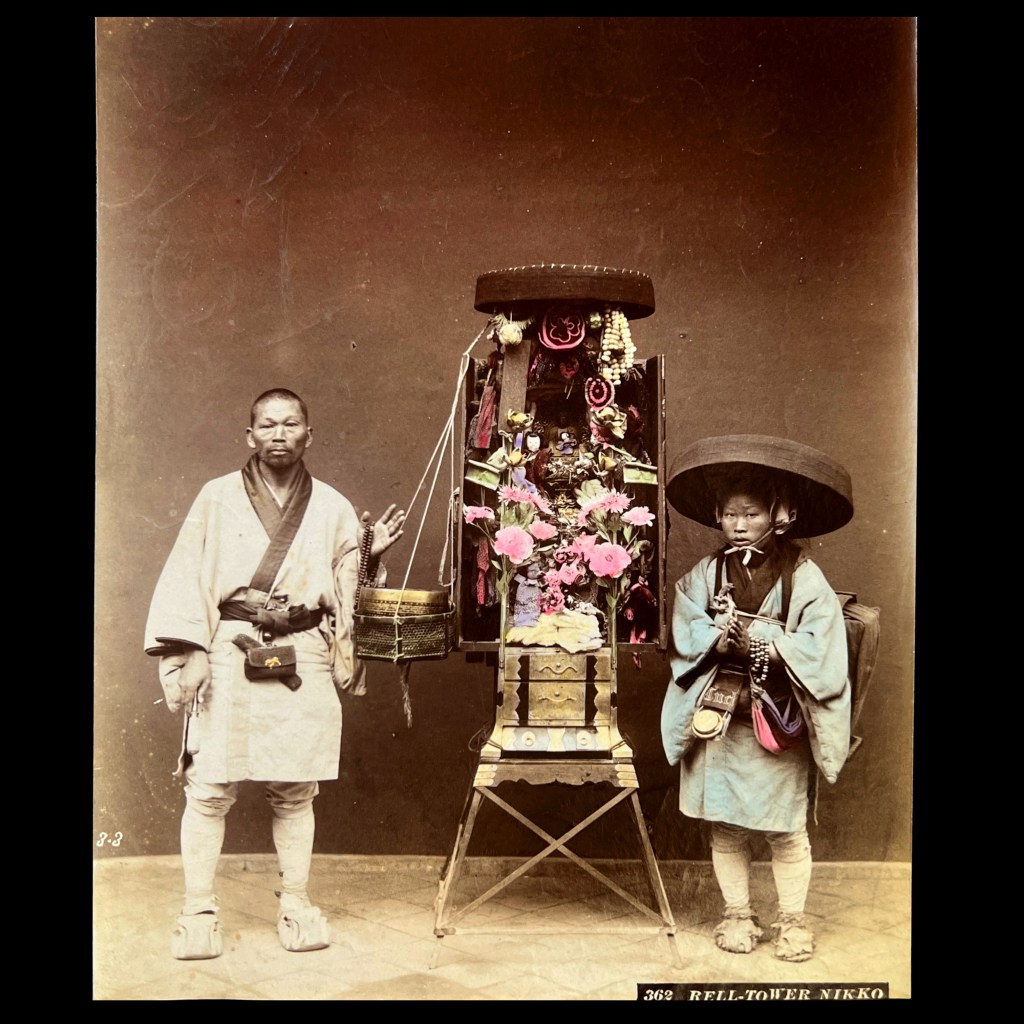
The studio stock number (362) is currently unattributed, but fits within a sequence of numbers for photos taken in Nikko by Esaki Reiji, likely in the late 1880s or 1890s. Esaki was a prominent souvenir album photographer in Asakusa, a tourist-friendly area of Tokyo.
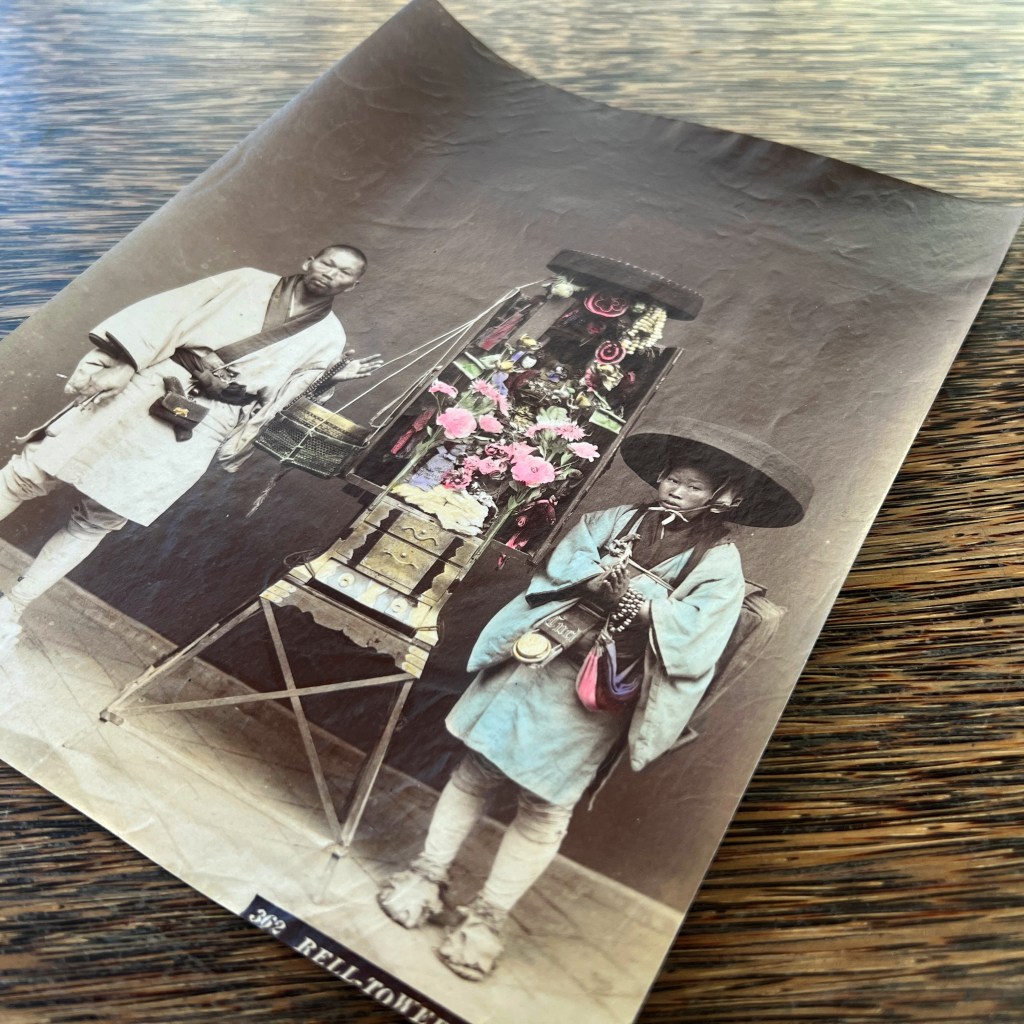
As described by Chun-Wa Chan, portable Buddhist shrines were already in use by the 5th century in the region of Gandhara and were introduced into Japan a few centuries later. Portable Japanese shrines (zushi) were often ornately decorated and fitted with doors to conceal the icon inside.
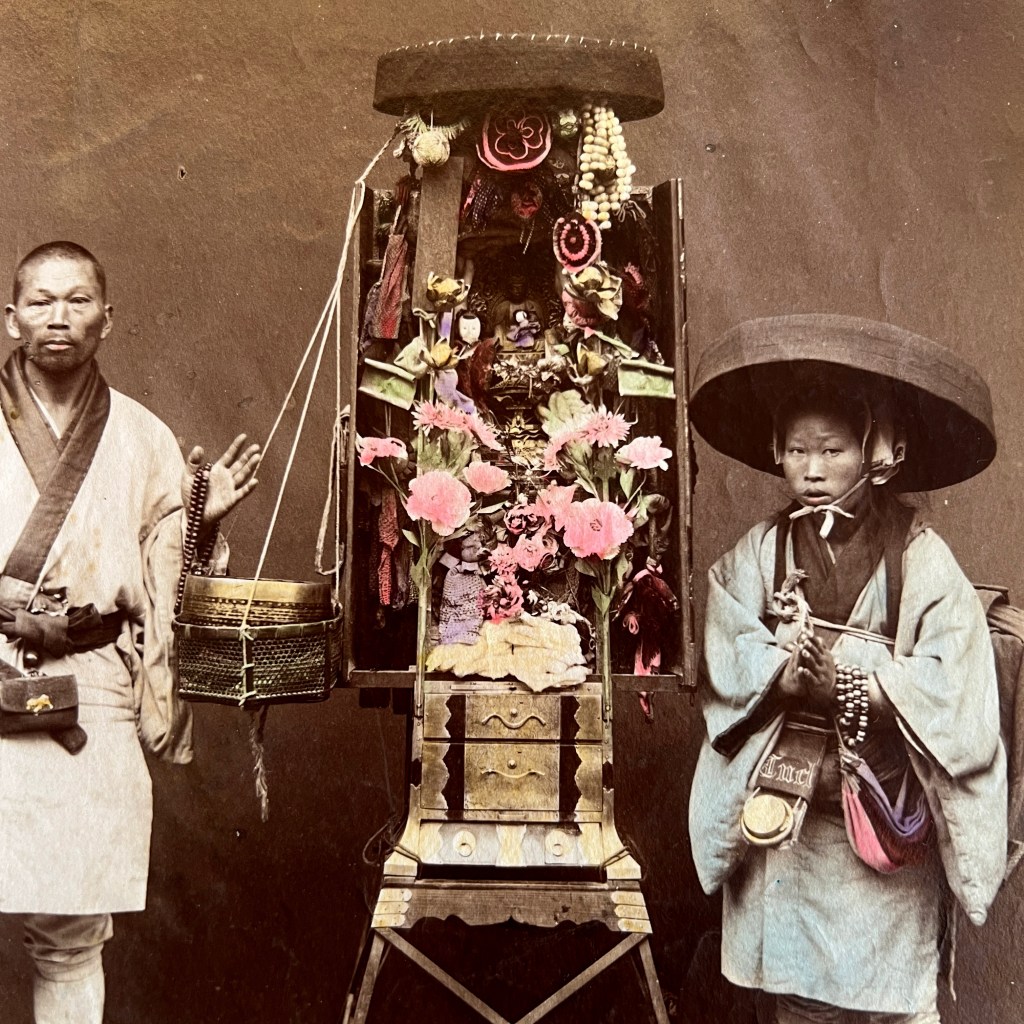
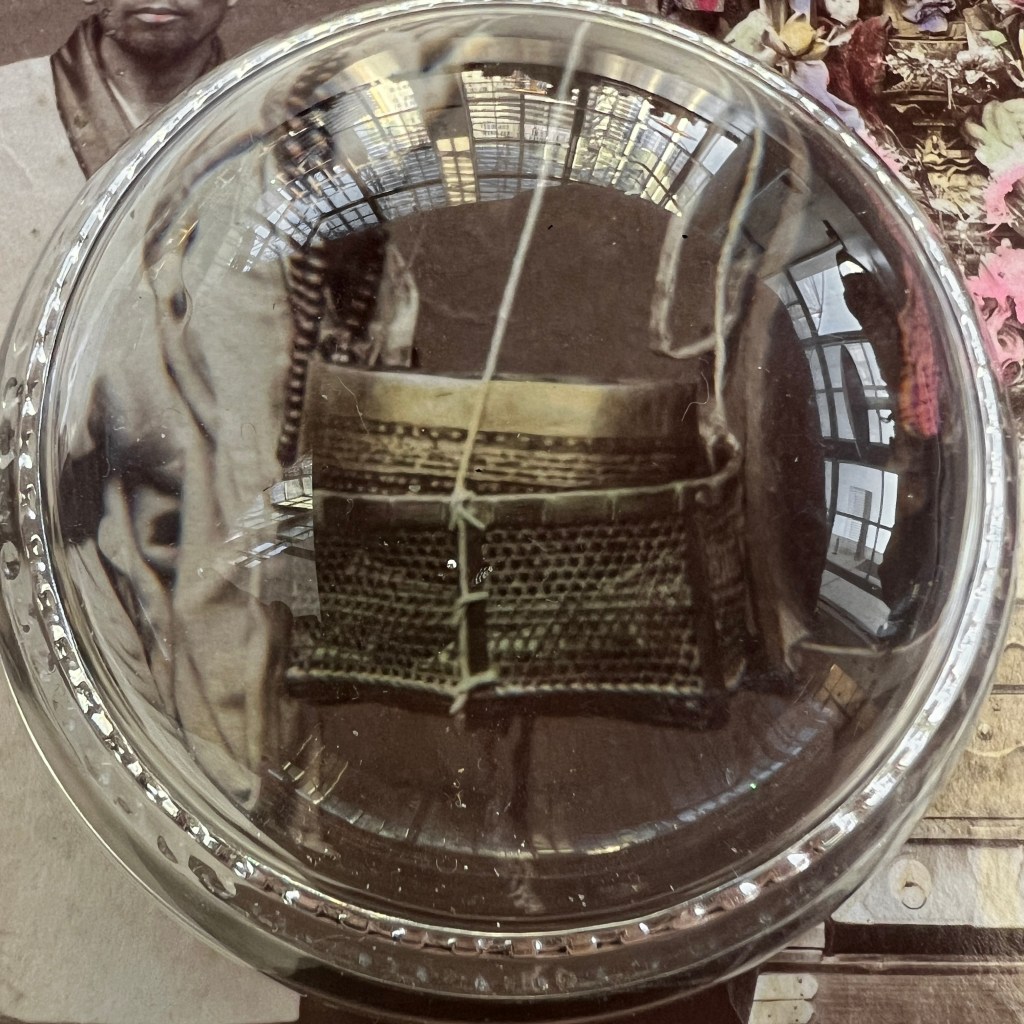
Pilgrims would carry the frame on their backs as they moved from one location to the next. A large bell rests in a basket hung off the side, ready to be struck by a mallet held in the pilgrim’s hand on the left. His other hand holds a long string of mala beads.
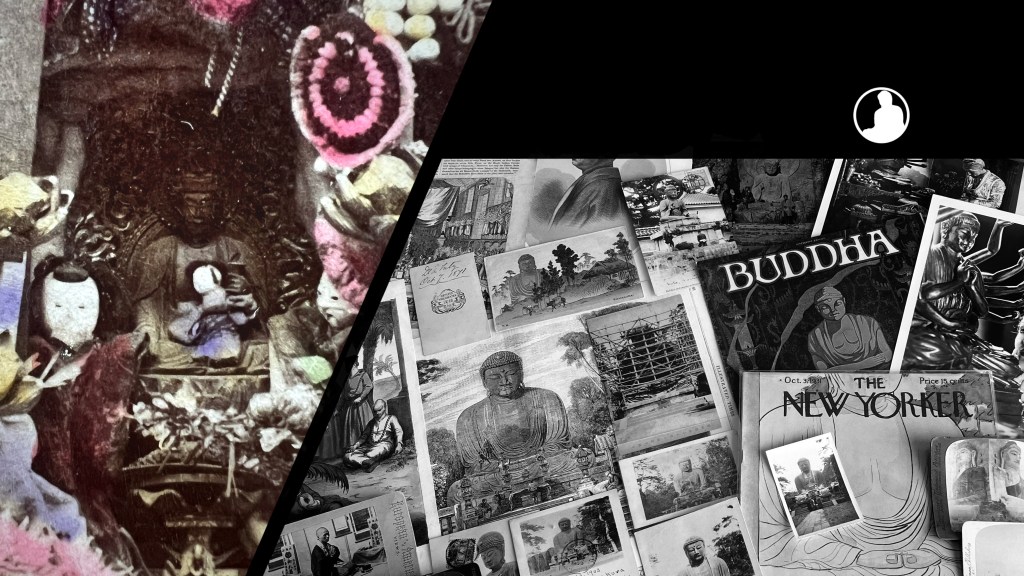
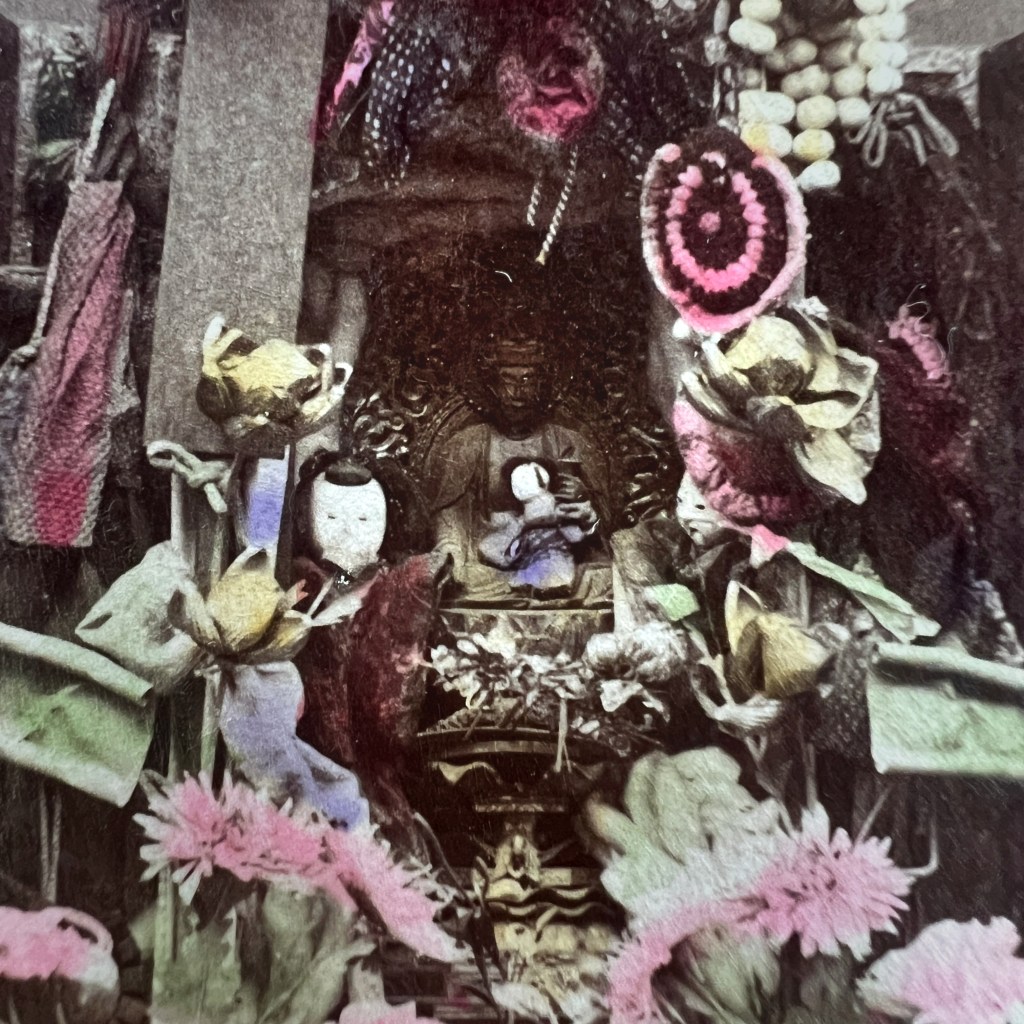
Obscured by flower offerings, the Buddhist icon sits at just above eye level in the shrine. For more on this topic, see Chan’s “Portable Faith: Toward a Non-Site-Specific History of Buddhist Art in Japan,” viewable here: https://tinyurl.com/3tde394d.
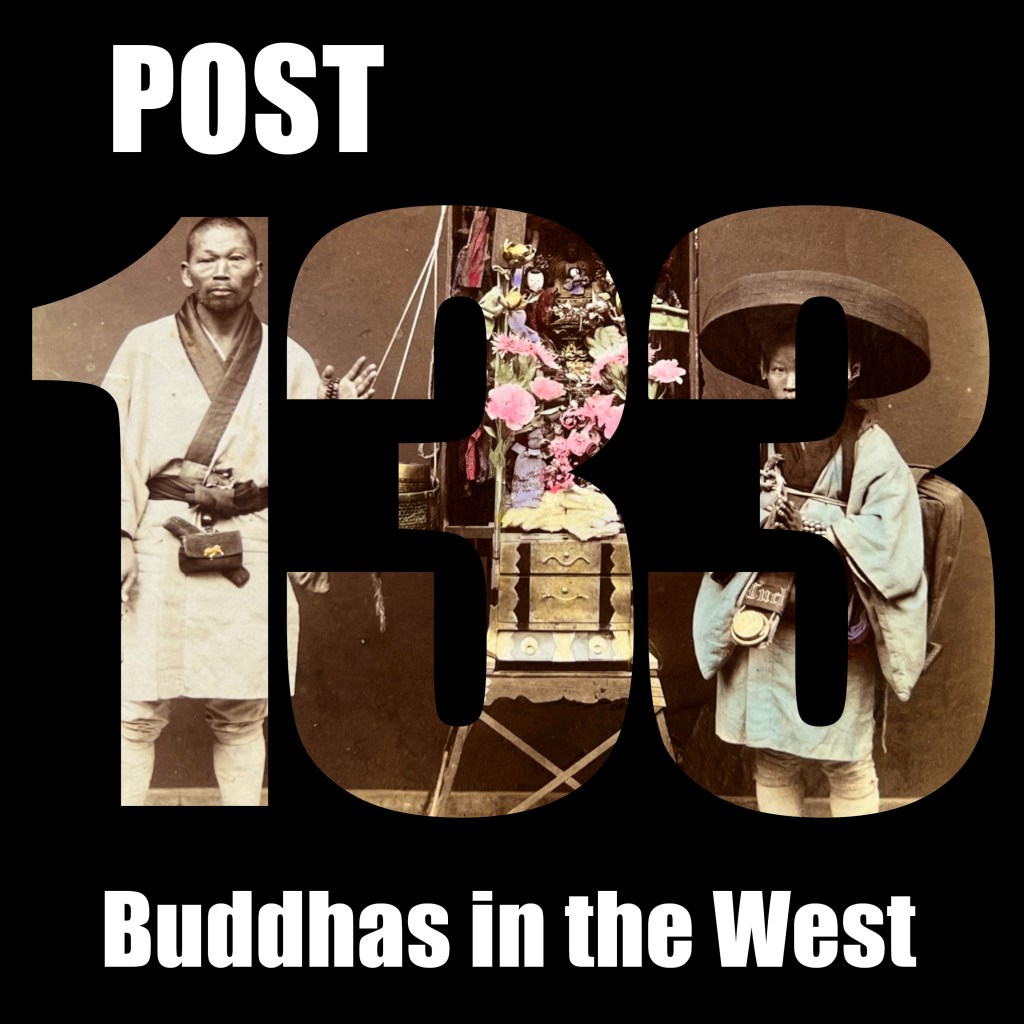
The Buddhas in the West Material Archive is a digital scholarship project that catalogues artifacts depicting Buddhist material culture for Western audiences. It’s comprised of prints, photos, and an assortment of ephemera and other objects. For a brief introduction to this archive, visit the main Buddhas in the West project page.


For Related Buddhas in the West Posts Featuring Nikko:
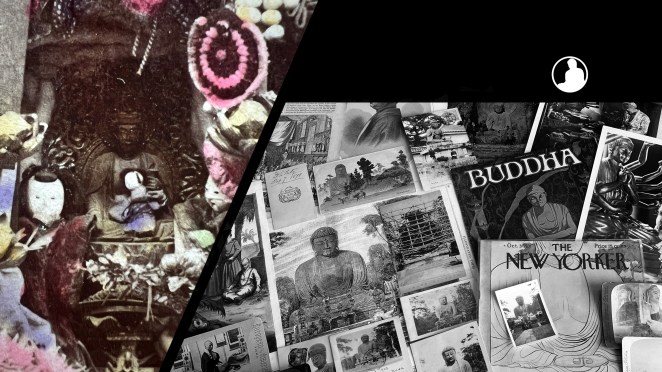

For the Most Recent Buddhas in the West Posts:
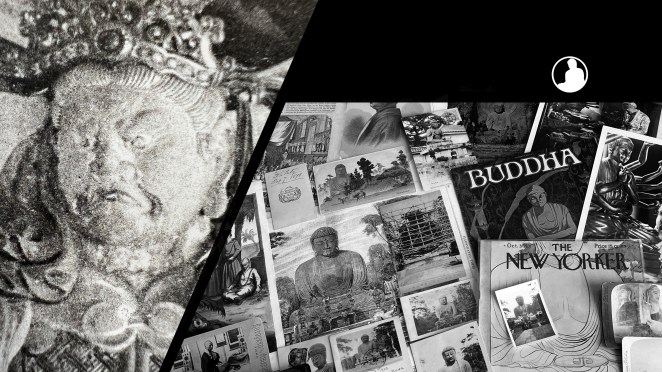

Nikko’s Yashamon “Demon Gate” Photograph

For all the new Buddhas in the West posts
follow us on Bluesky & Instagram


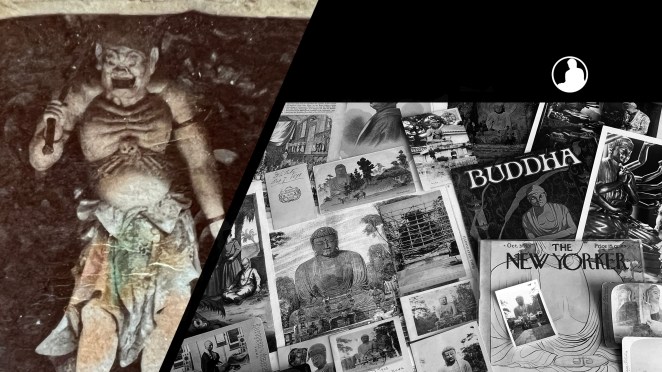
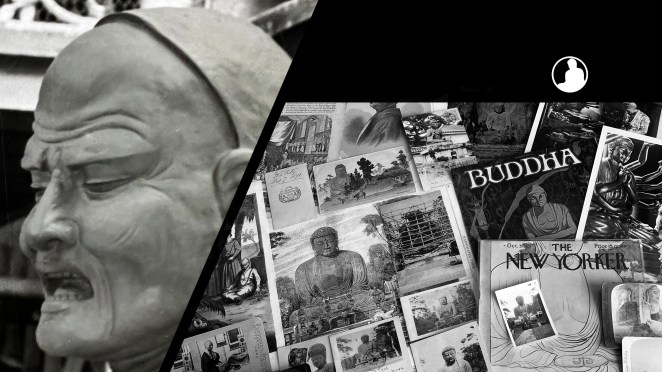
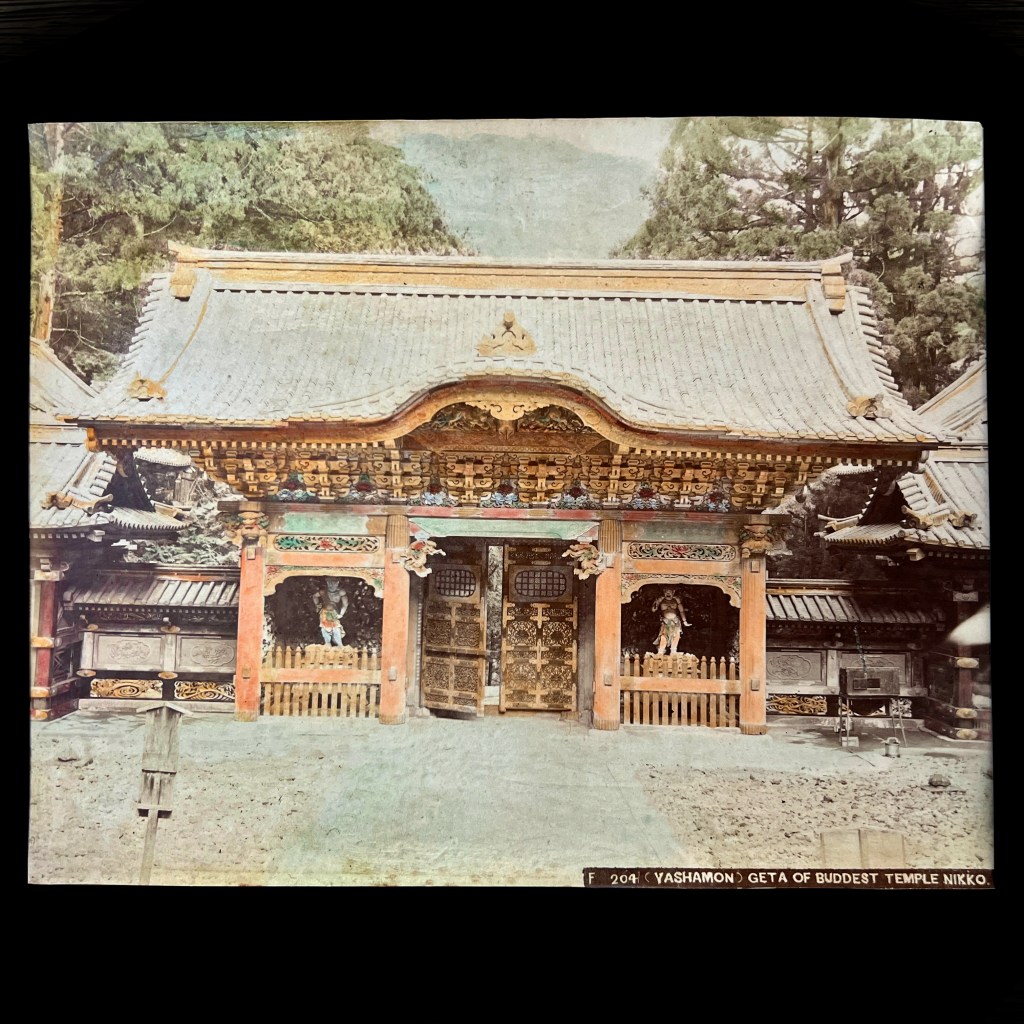
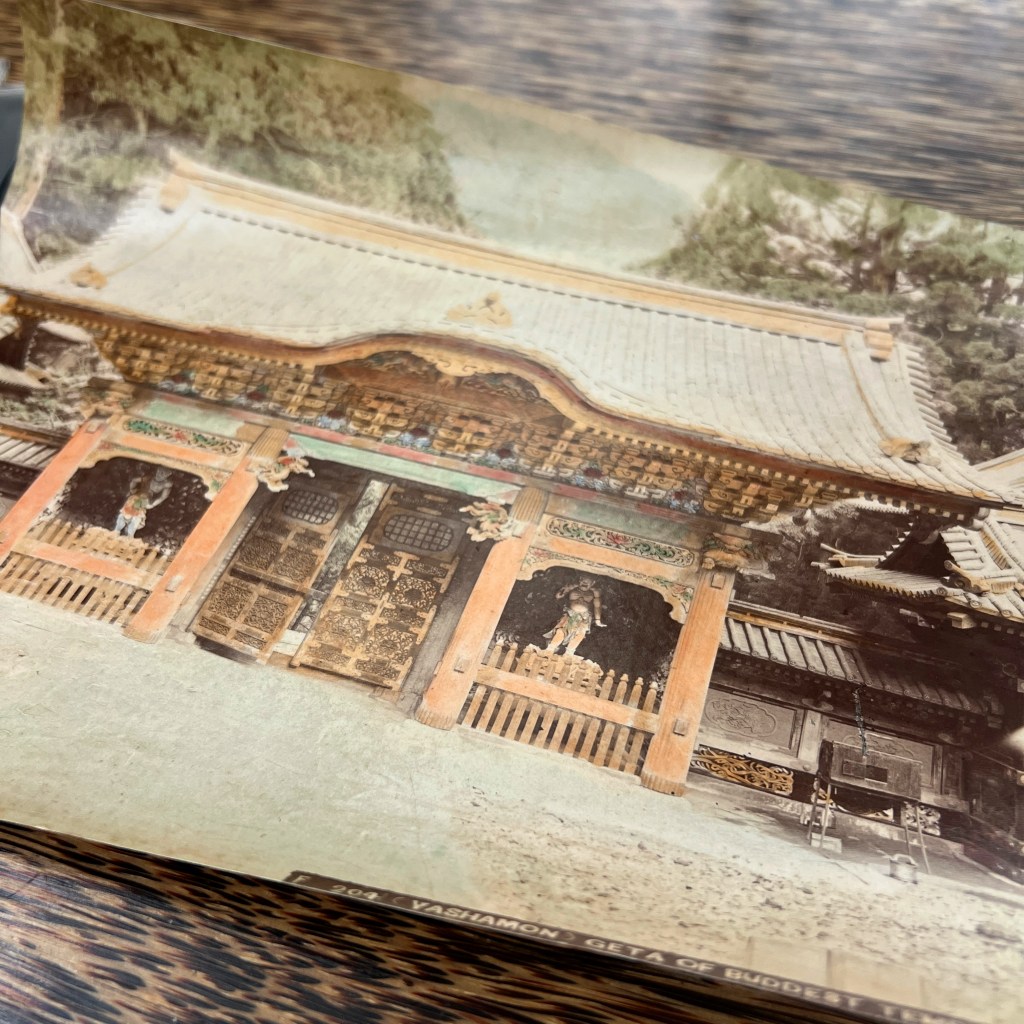
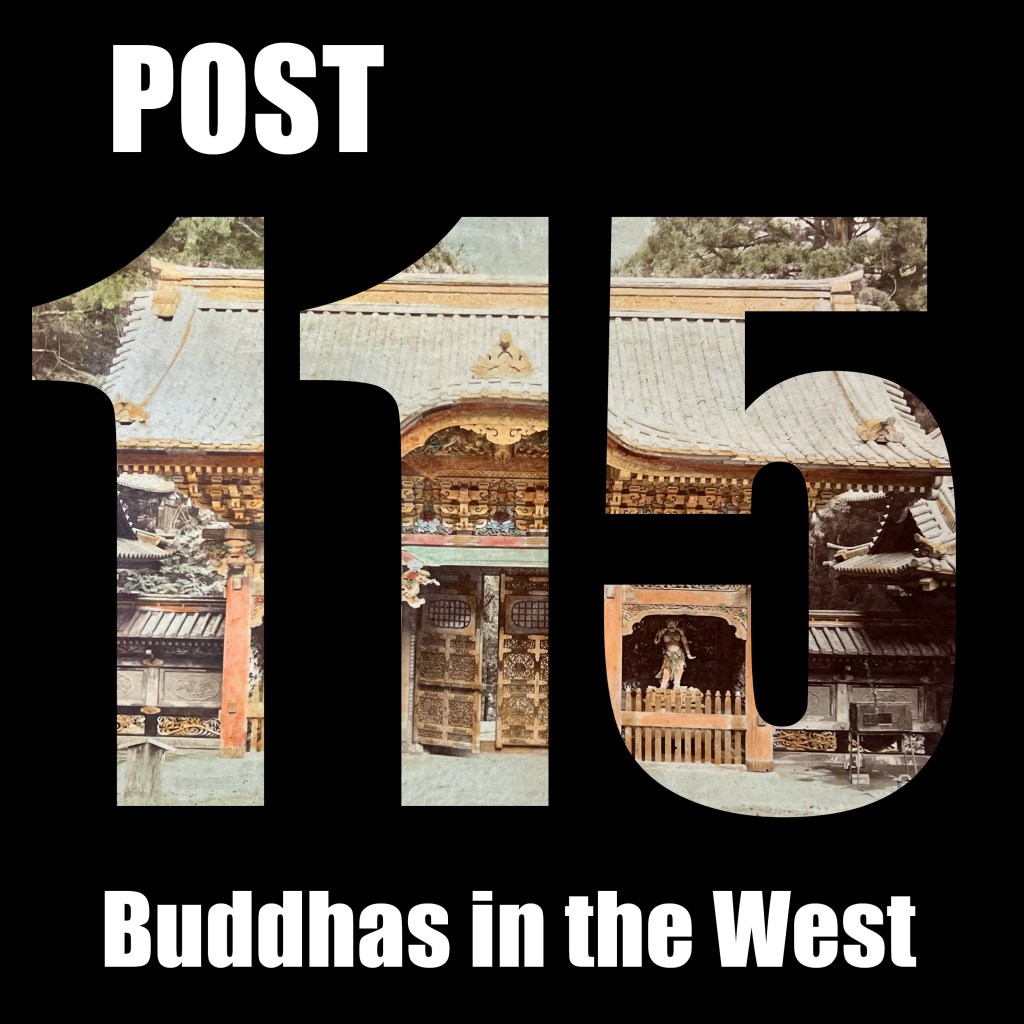
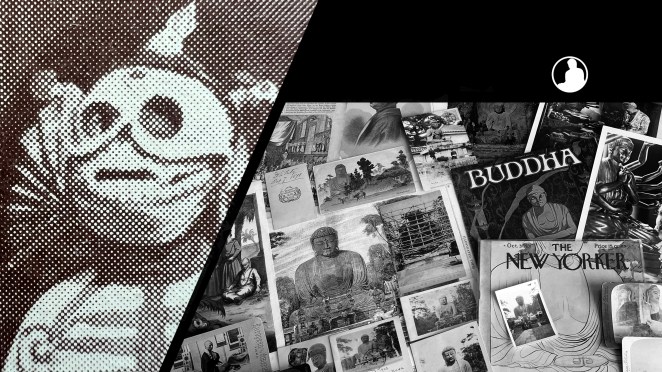
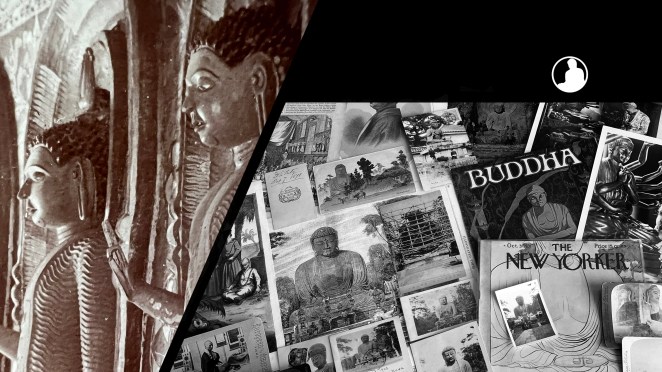
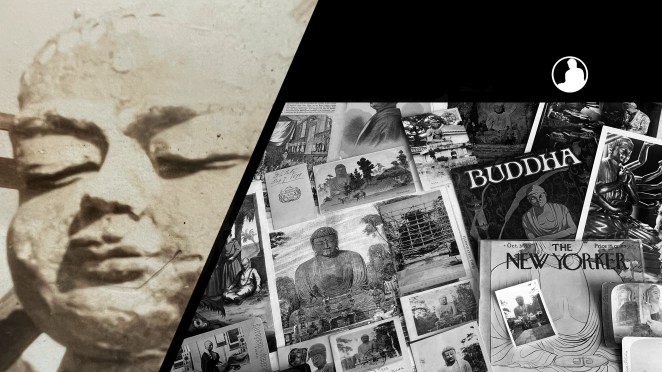
The Taiyū-in Shrine, in idyllic Nikko, is the final resting place of shōgun Tokugawa Iemitsu, one of the “Great Unifiers” of Japan. The compound is punctuated by several ornate gate houses, including the one here known as Yashamon for the Buddhist guardian figures protecting it.

Completed in 1653, Iemitsu’s mausoleum blends both Shinto and Buddhist architectural styles and elements. The Yashamon is the third gate within the compound and houses four icons of weapon-wielding yakṣa (J. yasha) who have history in Buddhist Asia as temple guardians.

This photograph was taken in the late 1880s or 1890s and most likely reflects one of the many Japanese-owned photography studios that catered to foreign visitors.

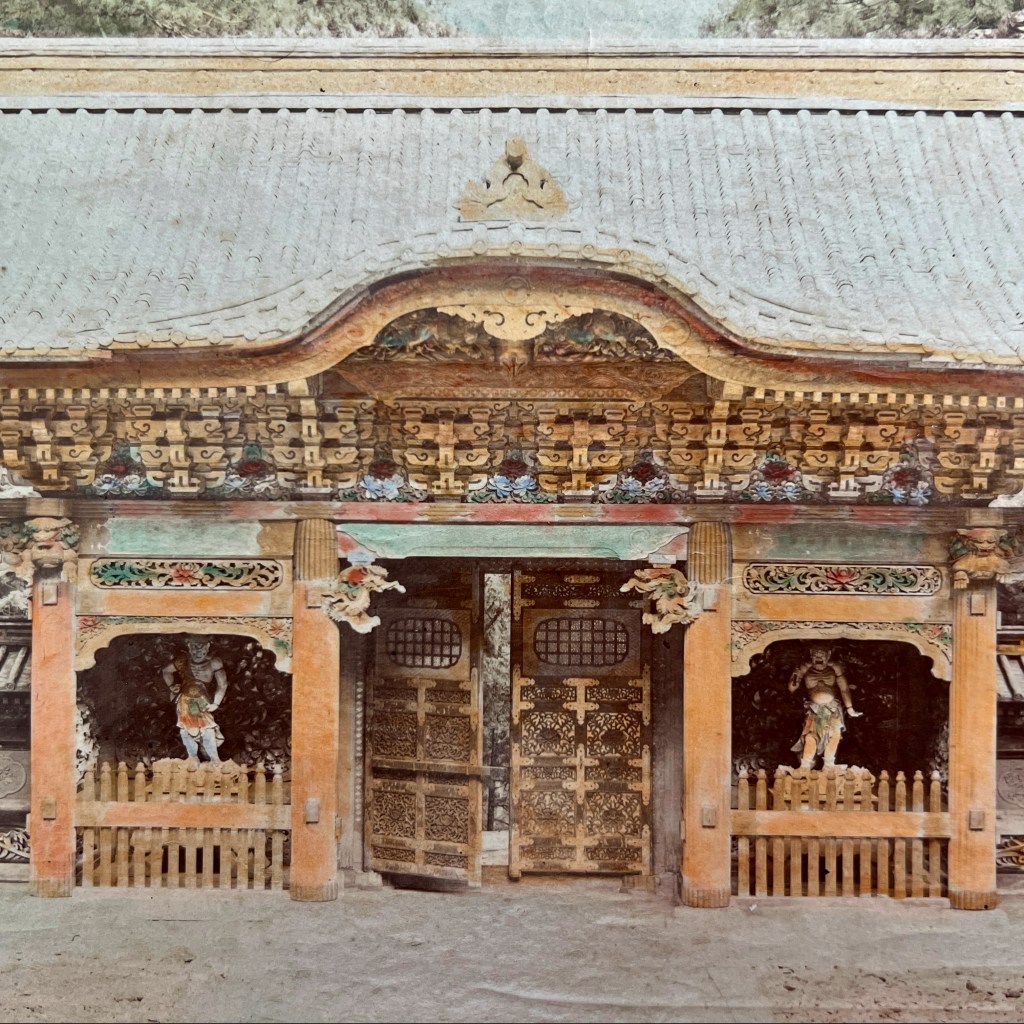
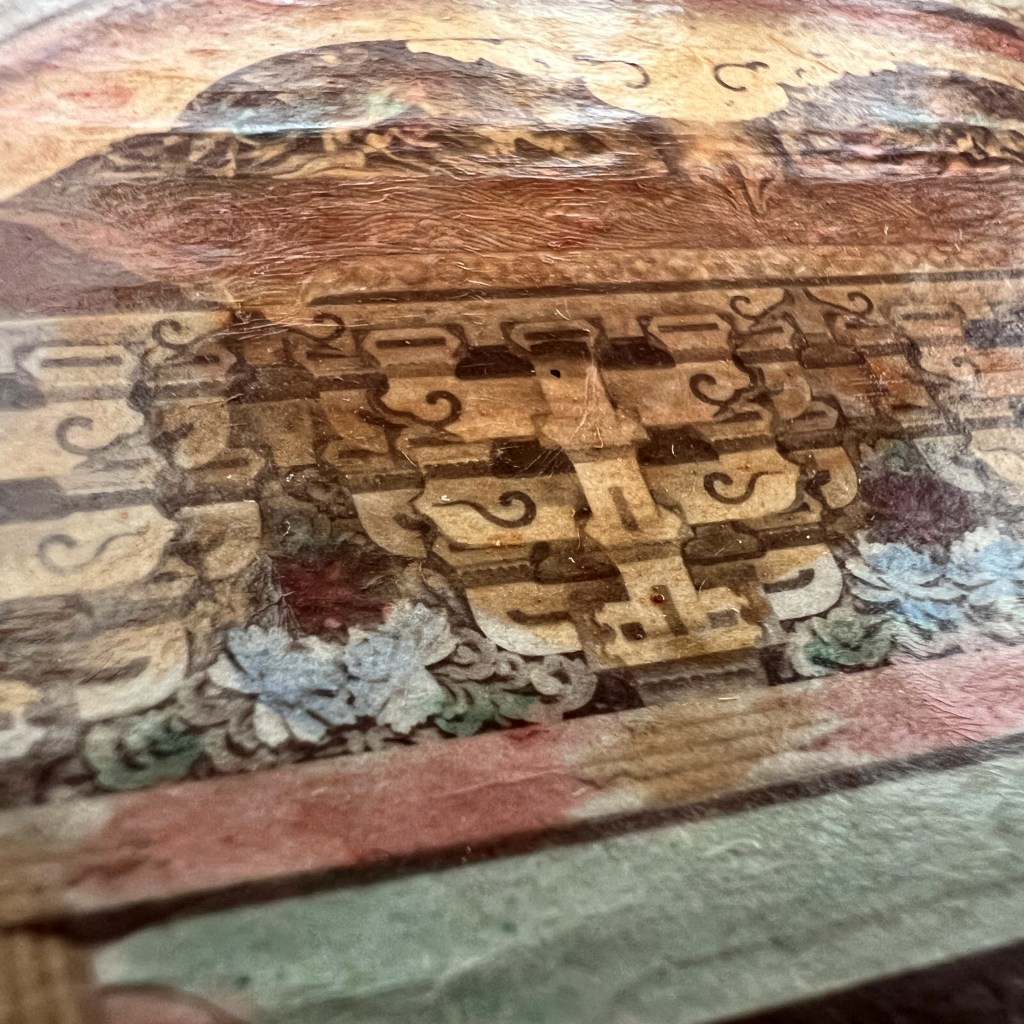
Not as grand or sophisticated as Nikko’s main attraction, Tōshō-gū, the Taiyū-in Shrine still displays highly skilled craftsmanship.Looking closely, the Yashamon is covered with delicately carved peonies (painted light blue on the photo), and thus is also called Botanmon, or the Peony Gate.

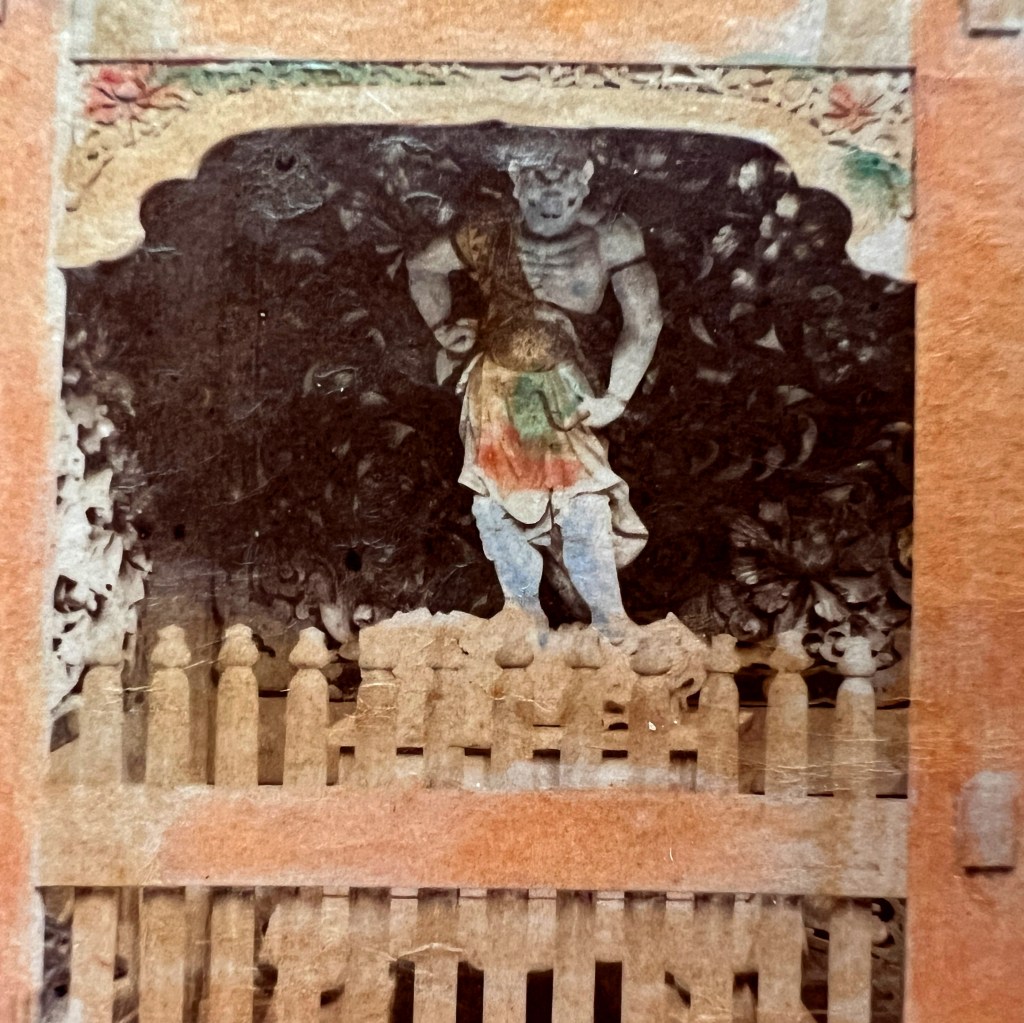
As one walks through Taiyū-in Shrine, the Yashamon is first seen atop a flight of steps, but if you cross the threshold and turn around, two yakṣa peer back at you. The blue figure on the left is Umarokya holding a bow and arrow.

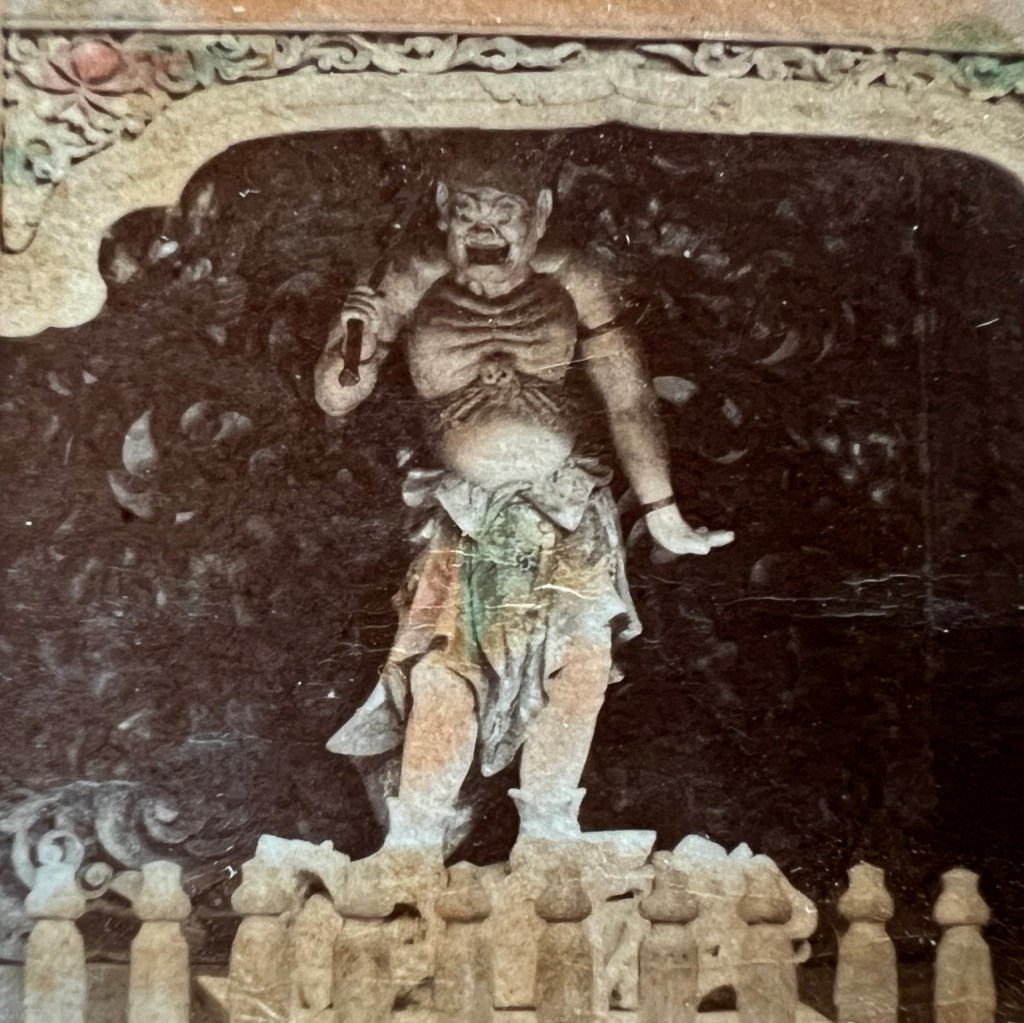
The fierce white-skinned yakṣa on the right is Kendara who carries a weapon on his shoulder.Due to the warrior nature of these images another name for this gate was sometimes used in turn-of-the-century guidebooks: the Demon Gate.


The Buddhas in the West Material Archive is a digital scholarship project that catalogues artifacts depicting Buddhist material culture for Western audiences. It’s comprised of prints, photos, and an assortment of ephemera and other objects. For a brief introduction to this archive, visit the main Buddhas in the West project page.


For Related Buddhas in the West Posts Featuring the Buddhist Temples:


For the Most Recent Buddhas in the West Posts:

Henry Strohmeyer’s Jizō Statues Stereoview

For all the new Buddhas in the West posts
follow us on Bluesky & Instagram


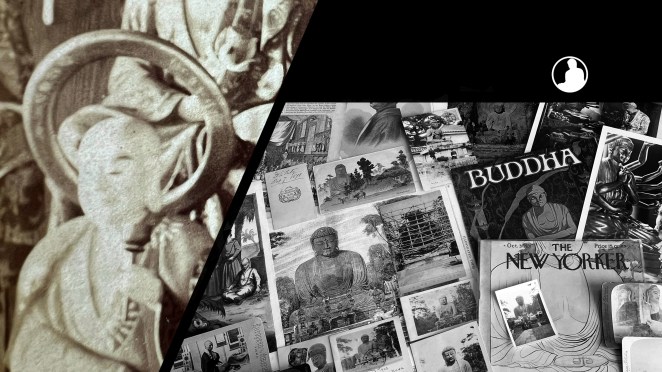
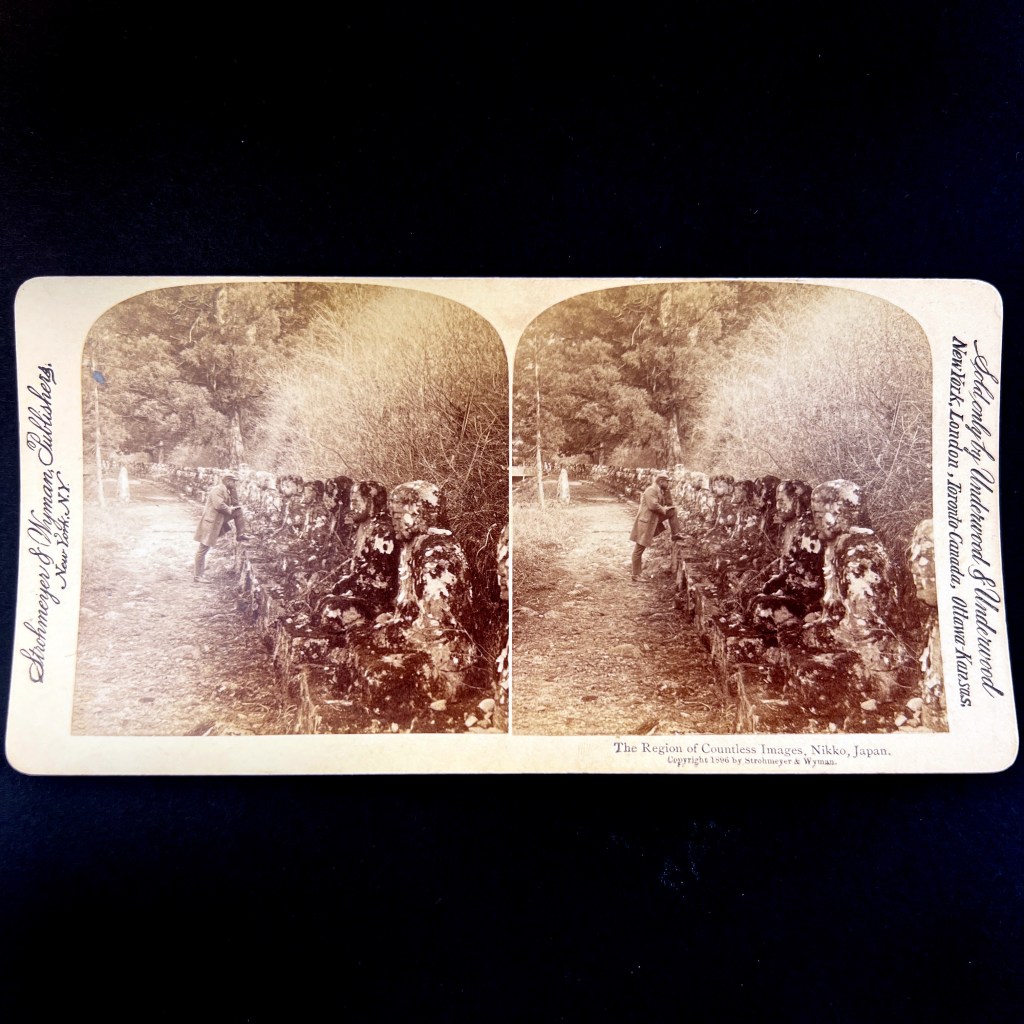
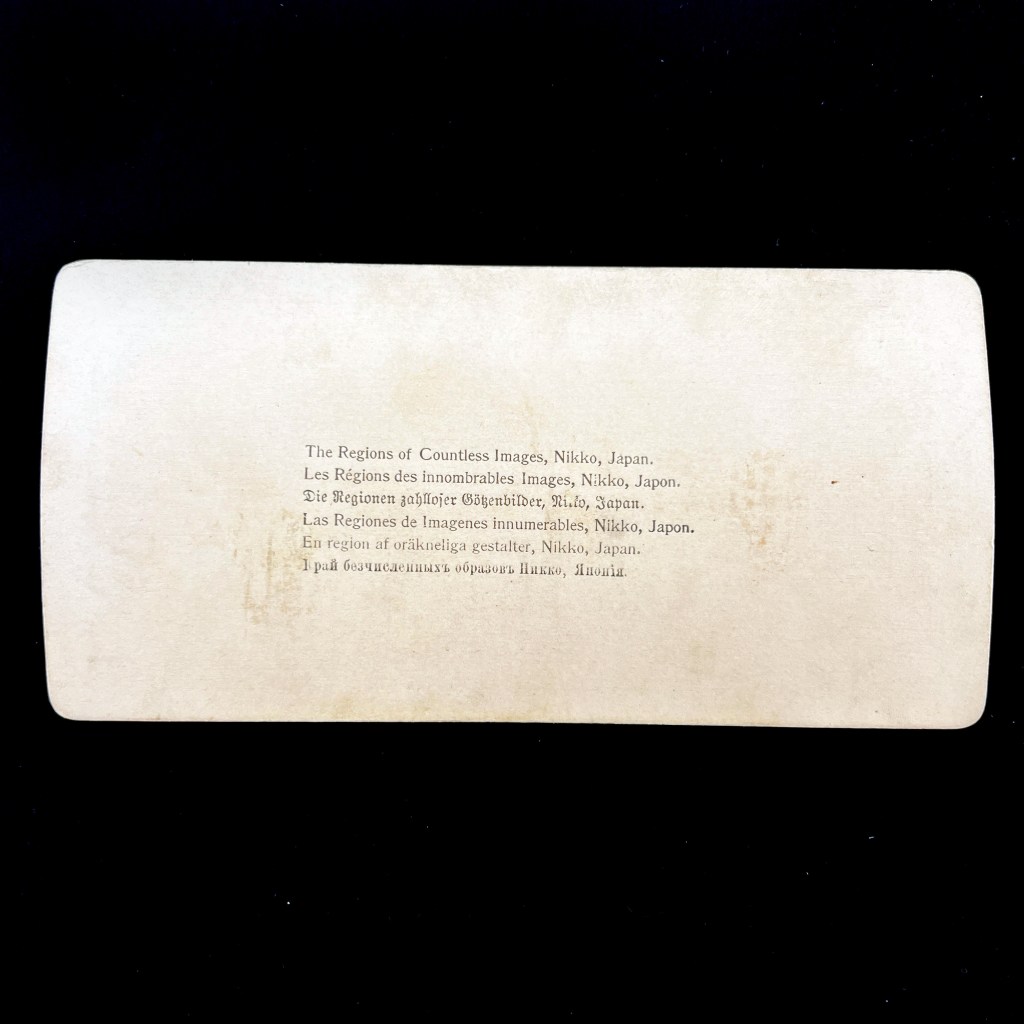
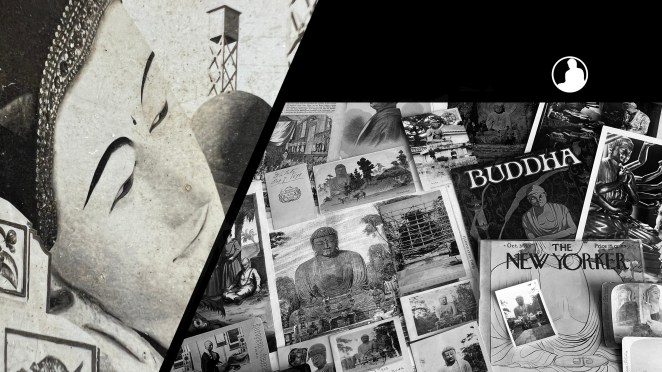
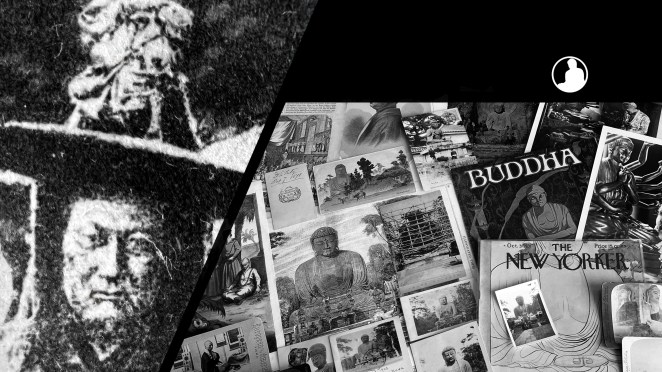
Countless Jizō: Tourist books from the early 20th century say no person could count the same number of Jizō statues in Nikko, Japan. In early 1896, Henry Strohmeyer left for an around-the-world tour and took this stereoscopic image; he left no report on how many he counted.

A dual-photograph stereoview card produces a single three-dimensional image when using a simple handheld device fashioned with special lenses (first invented by Oliver Wendell Holmes).

This was fashionable – and cutting edge – parlor room entertainment at the end of the nineteenth century for many American homes.

It provided people with the means for virtual reality travel and stereoviews were soon marketed to schools for educational purposes.

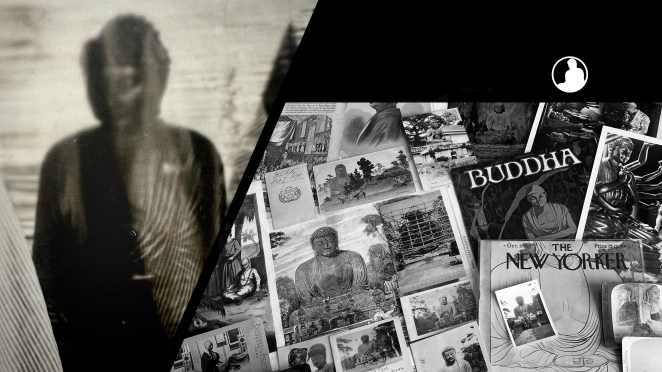
This card is a rare instance of where the cultural voyeurism is broken and we see a man in Western attire. It is believed this is Strohmeyer himself – a stereoscopic selfie.

For an insightful online illustrated essay on Strohmeyer’s impact on travel photography, see the exhibit by Tulane University here: https://tinyurl.com/5n7a28kf.


The Buddhas in the West Material Archive is a digital scholarship project that catalogues artifacts depicting Buddhist material culture for Western audiences. It’s comprised of prints, photos, and an assortment of ephemera and other objects. For a brief introduction to this archive, visit the main Buddhas in the West project page.


For Related Buddhas in the West Posts Featuring Historical Stereophotography:


For the Most Recent Buddhas in the West Posts: