For all the new Buddhas in the West posts
follow us on Bluesky & Instagram
A theatrical still of Greta Garbo in the 1934 film The Painted Veil gazing upon a standing image of Guanyin. Looking closely, we see Garbo’s hand touching the shoulder of Guanyin, a moment of contact between the “icons.”
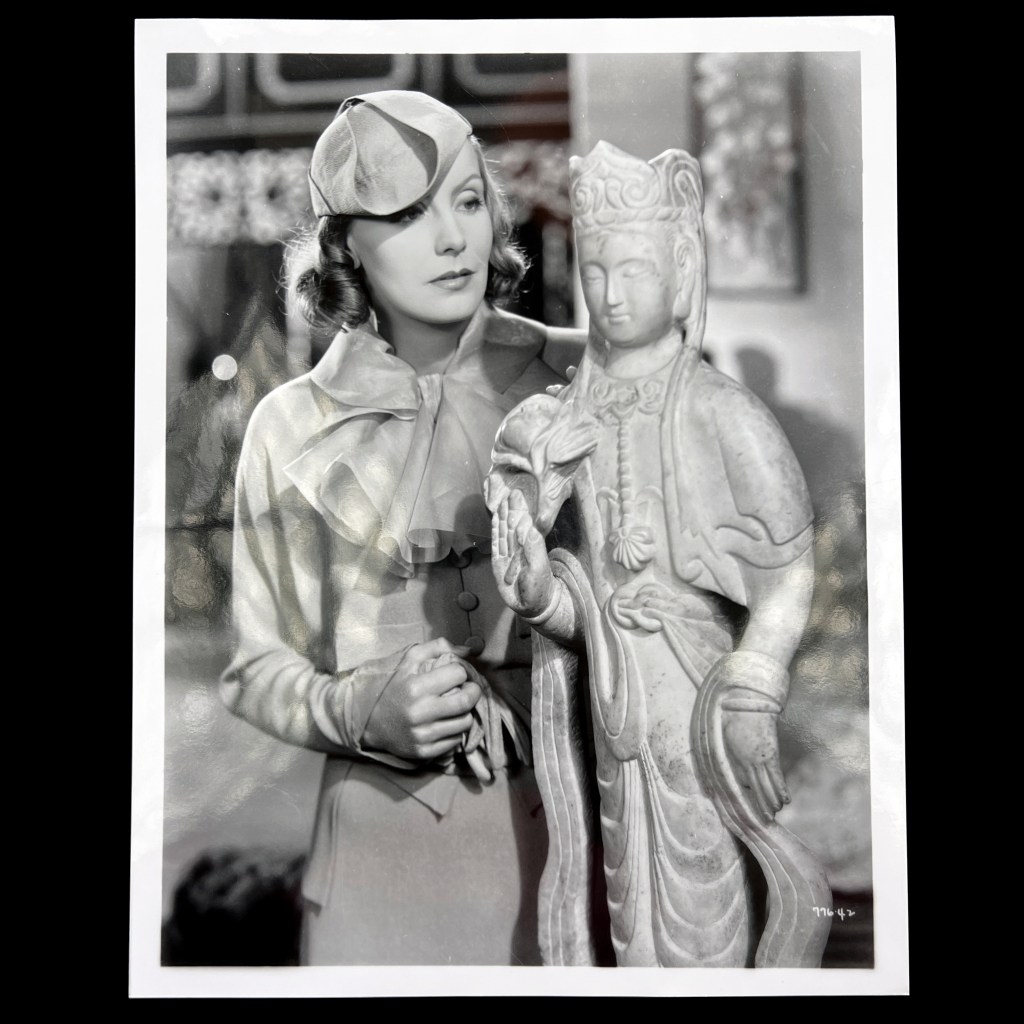
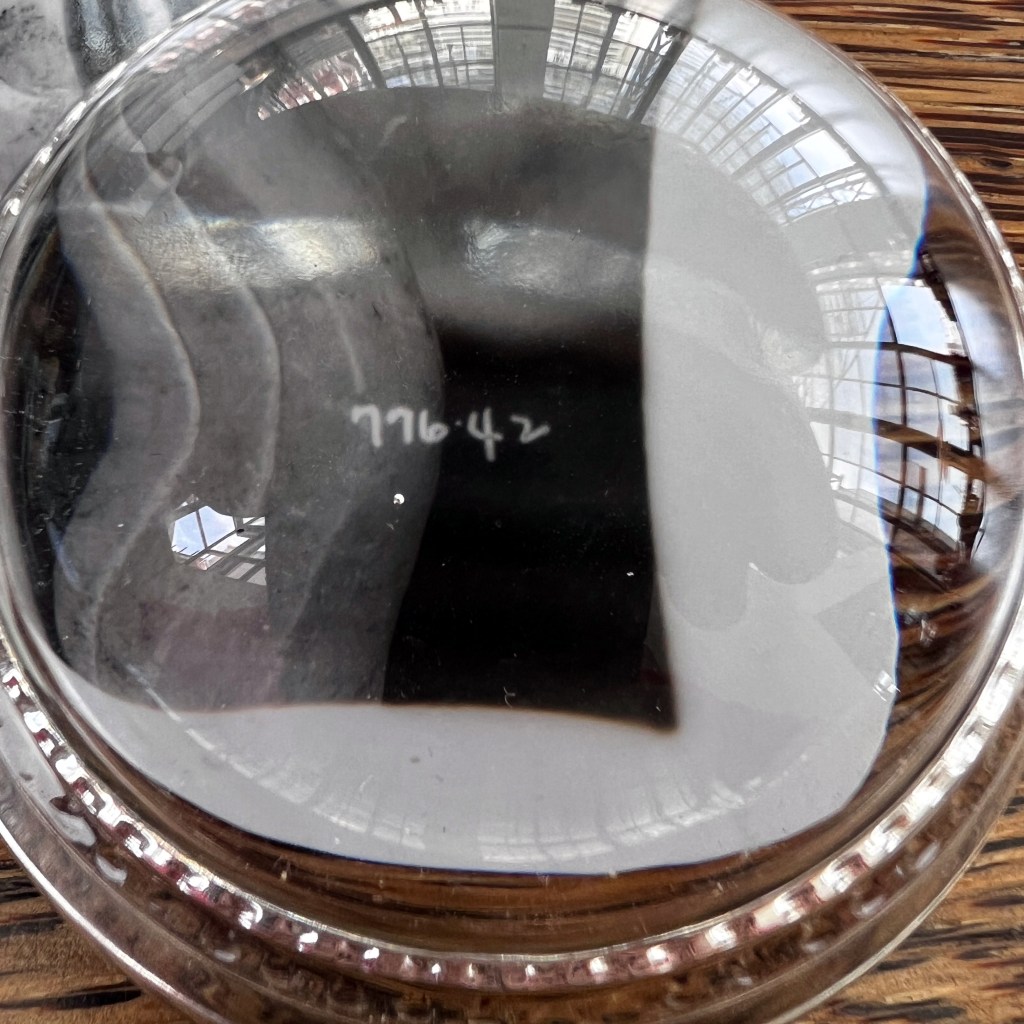
Theatrical stills – shot since the advent of feature films in the 1910s – are production photographs. Many were kept by the studio in albums called keybooks, while others were printed for promotional purposes, often marked with a code (here we see 776–42).
As advertising material, stills would often picture “tension, struggle, action,” but not reveal main elements of the plot, as noted by David Shields.

The scene here is not in the final edit of The Painted Veil, but would have occurred when Garbo’s character arrived in rural China during a cholera outbreak. The touch of the shoulder signaled an arrival into a far-away land, reflected in the materiality of the Buddhist icon.

For more on the history and interpretation of early film still photography, see David S. Shields’ Still: American Silent Motion Picture Photography (2013).

The Buddhas in the West Material Archive is a digital scholarship project that catalogues artifacts depicting Buddhist material culture for Western audiences. It’s comprised of prints, photos, and an assortment of ephemera and other objects. For a brief introduction to this archive, visit the main Buddhas in the West project page.
For Related Buddhas in the West Posts Featuring Historical Film Photography:


For the Most Recent Buddhas in the West Posts:





 Personal Site of Peter Romaskiewicz