
For all the new Buddhas in the West posts
follow us on Bluesky & Instagram
Is this the first stereoscopic 3D portrait of a Buddhist abbot? While many Japanese Buddhist priests were photographed for stereoviews by 1905, the year this card was issued, this is a rare occasion where we have an indication of the priest’s identity.
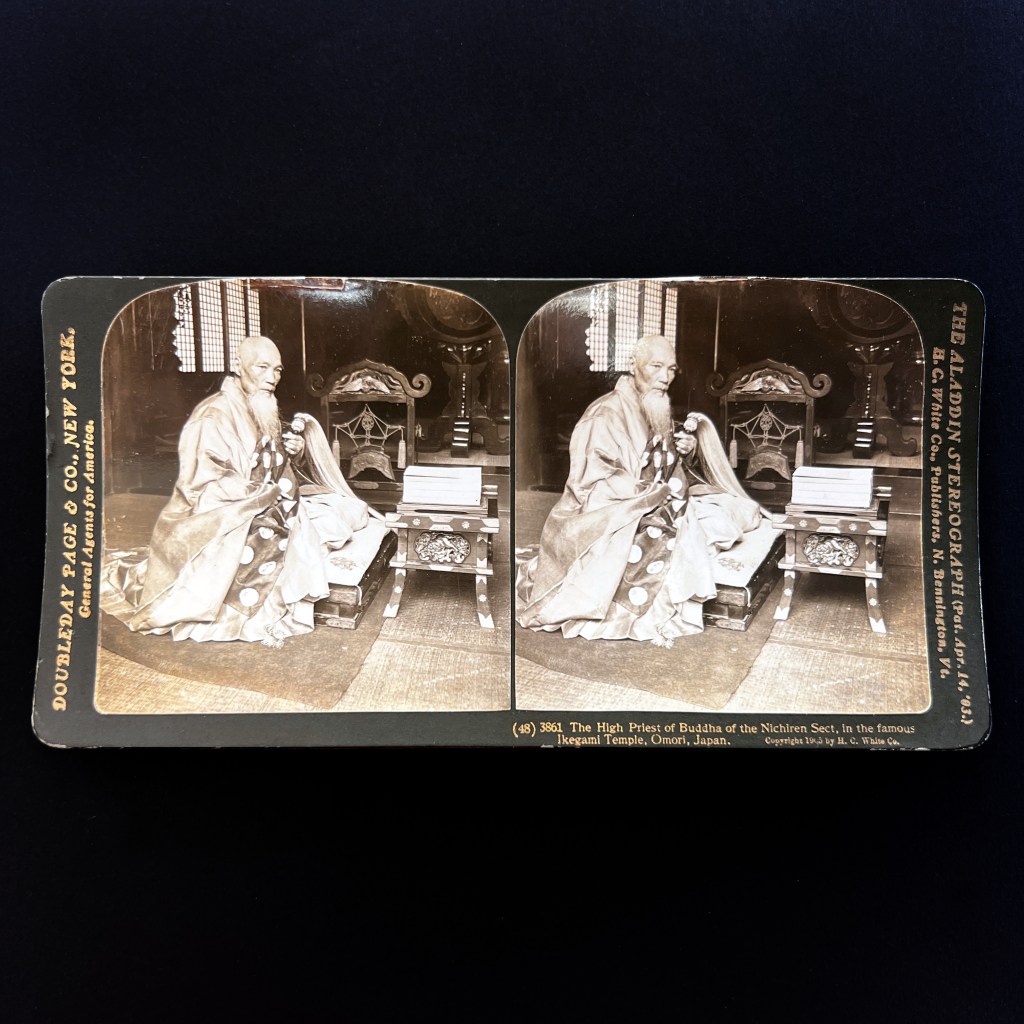
The caption tells us the priest is the head of Ikegami Temple (Honmon-ji #本門寺) of the Nichiren school. We also know the photographer, Herbert Ponting, was hired by H.C. White to take photos of the Russo-Japanese War and he toured Japan through the end of 1906.
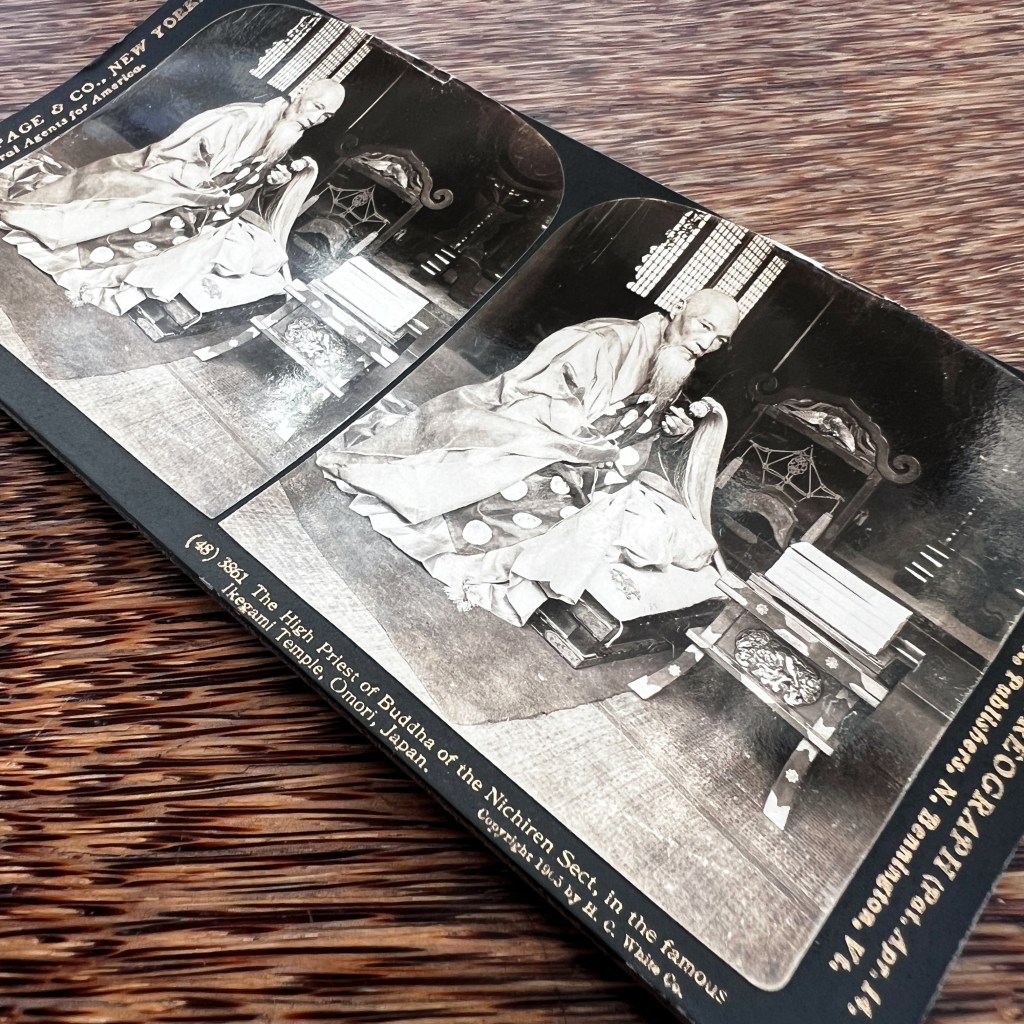
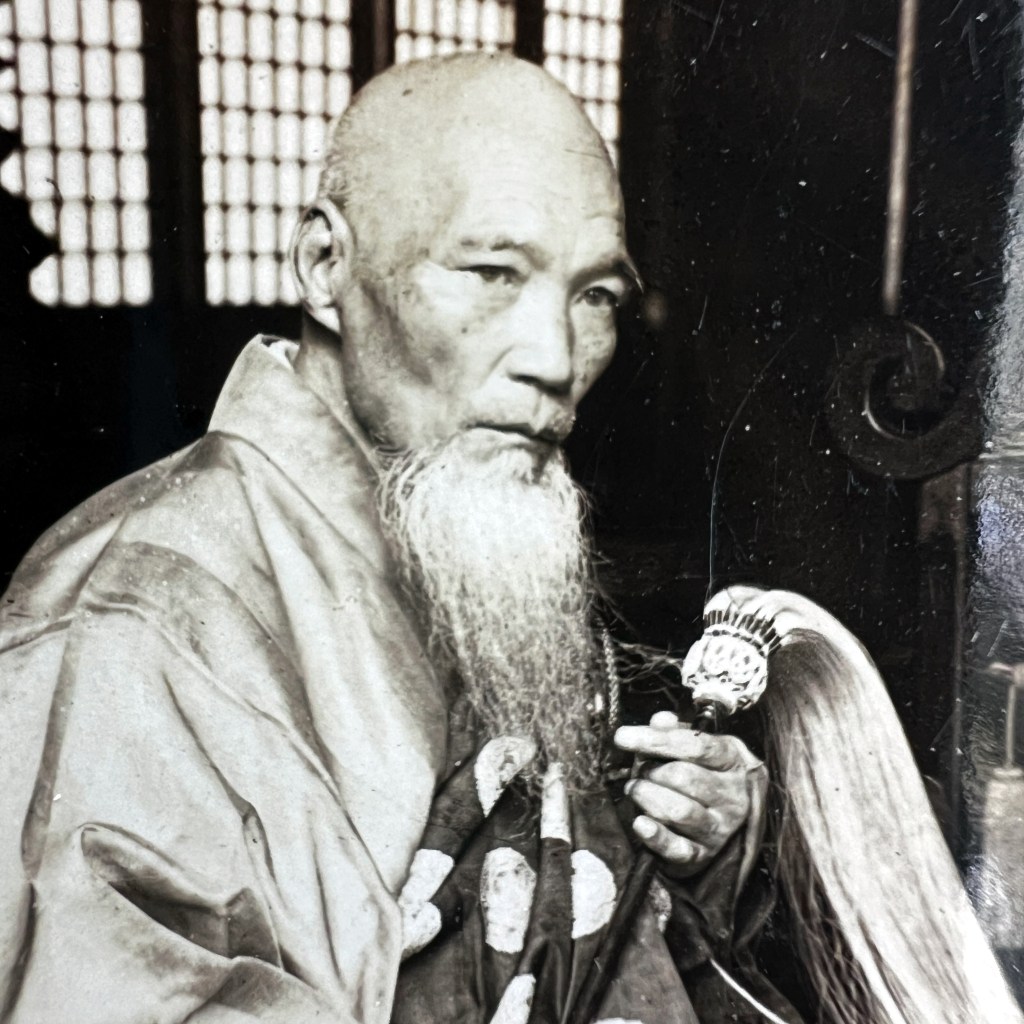
There are two potential identifications of this priest, but it is likely Kubota Nichiki 久保田日亀(1841–1911), who became the 68th generation abbot in 1899. He holds a fly-whisk, a sign authority.

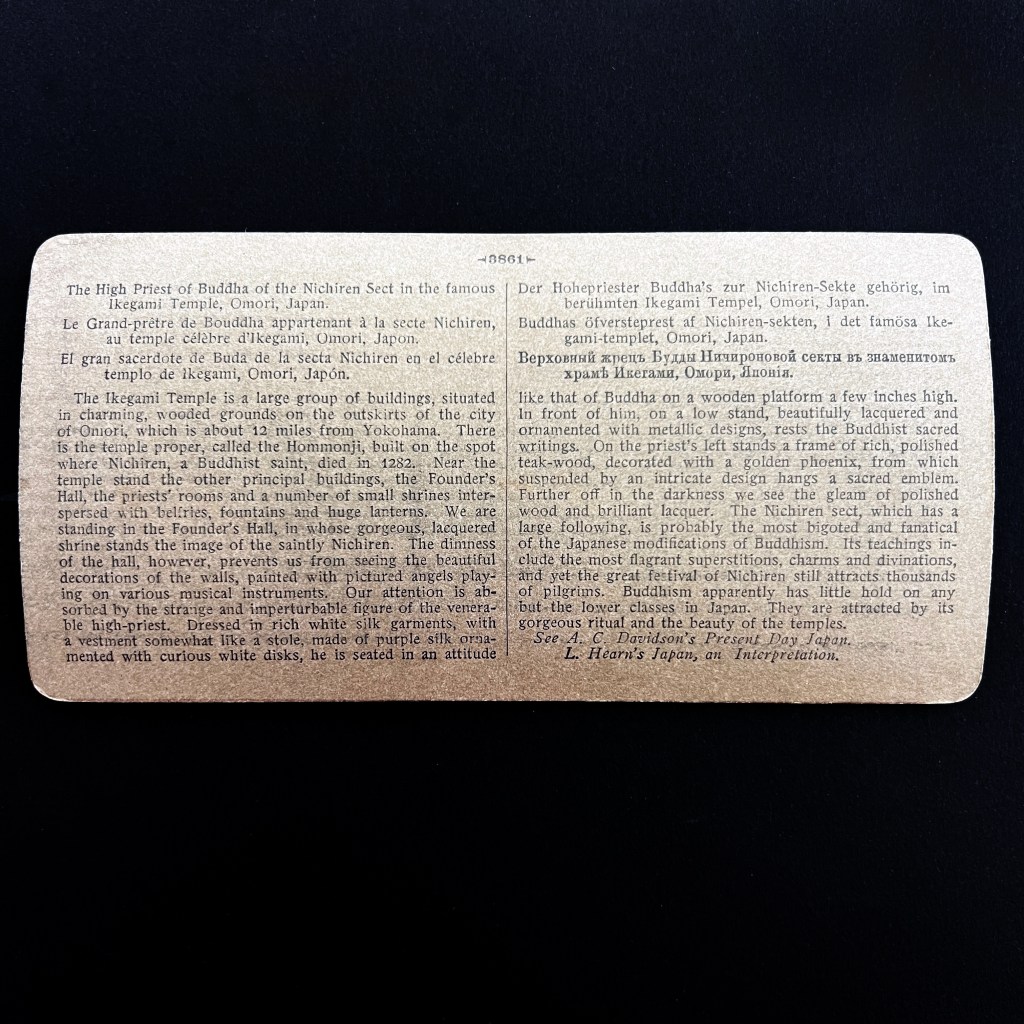
By the 20th century, stereoviews were seen as important educational tools and the backs of many cards were imprinted with information, sometimes reflecting contemporary views and biases. This description notes the Nichiren school emphasized “the most flagrant superstitions.”
Ponting would eventually author a book on his travels in Japan, entitled In Lotus-Land Japan, illustrated with photos he had originally taken as stereoviews. The book can be read here: https://tinyurl.com/hhzhsnm9
Additional Archived Posts for the Buddhas in the West Project

The Buddhas in the West Material Archive is a digital scholarship project that catalogues artifacts depicting Buddhist material culture for Western audiences. It’s comprised of prints, photos, and an assortment of ephemera and other objects. For a brief introduction to this archive, visit the main Buddhas in the West project page.
For Related Buddhas in the West Posts Featuring Historical Stereophotography:



For the Most Recent Buddhas in the West Posts:




 Personal Site of Peter Romaskiewicz