
For all the new Buddhas in the West posts
follow us on Bluesky & Instagram
The original Hyōgo Daibutsu 兵庫大仏 was dismantled as part of Japanese war efforts during WWII. It was motivated by the Ordinance on the Collection of Metals issued in 1941. At the time, it was the third largest Buddhist statue in Japan.
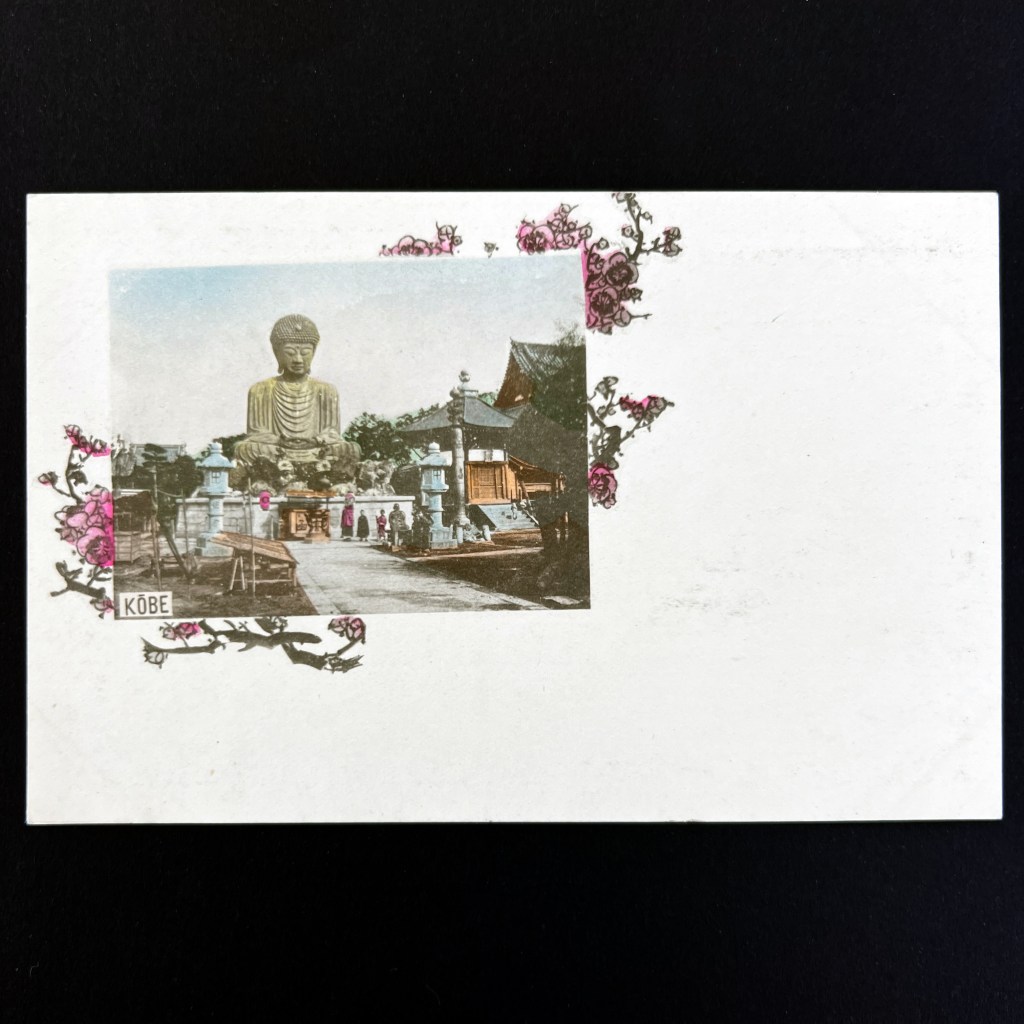
Constructed in 1891, photographs of the Hyōgo Daibutsu were often printed on Japanese postcards of the era. Based on the design on the back of this card we know it was published before 1907.
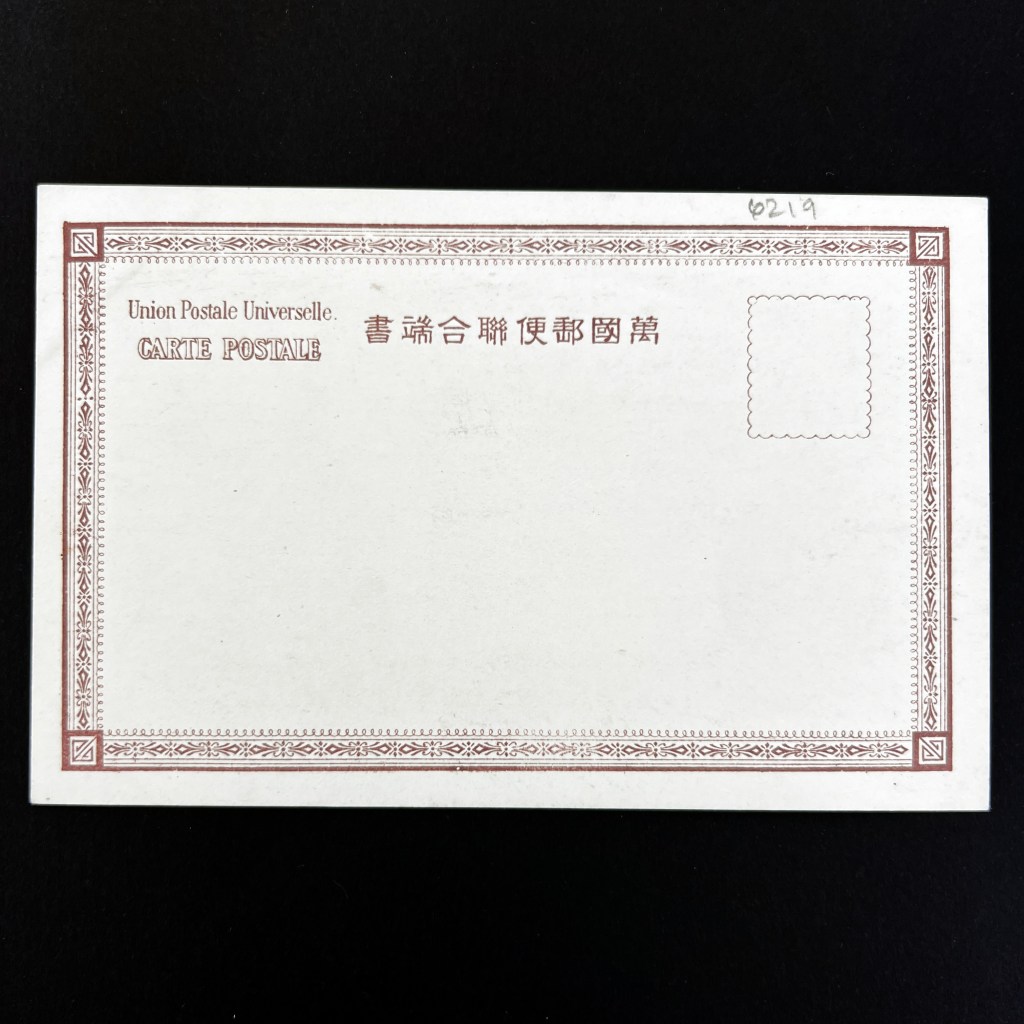
The blank space on the front of this card was intended for the written message. The reverse was saved for the address only.

This card is uncommon because it combines a collotype print with an added pink cherry blossom frame. The angular band of discoloration on the corner reveals it was stored in a postcard album.
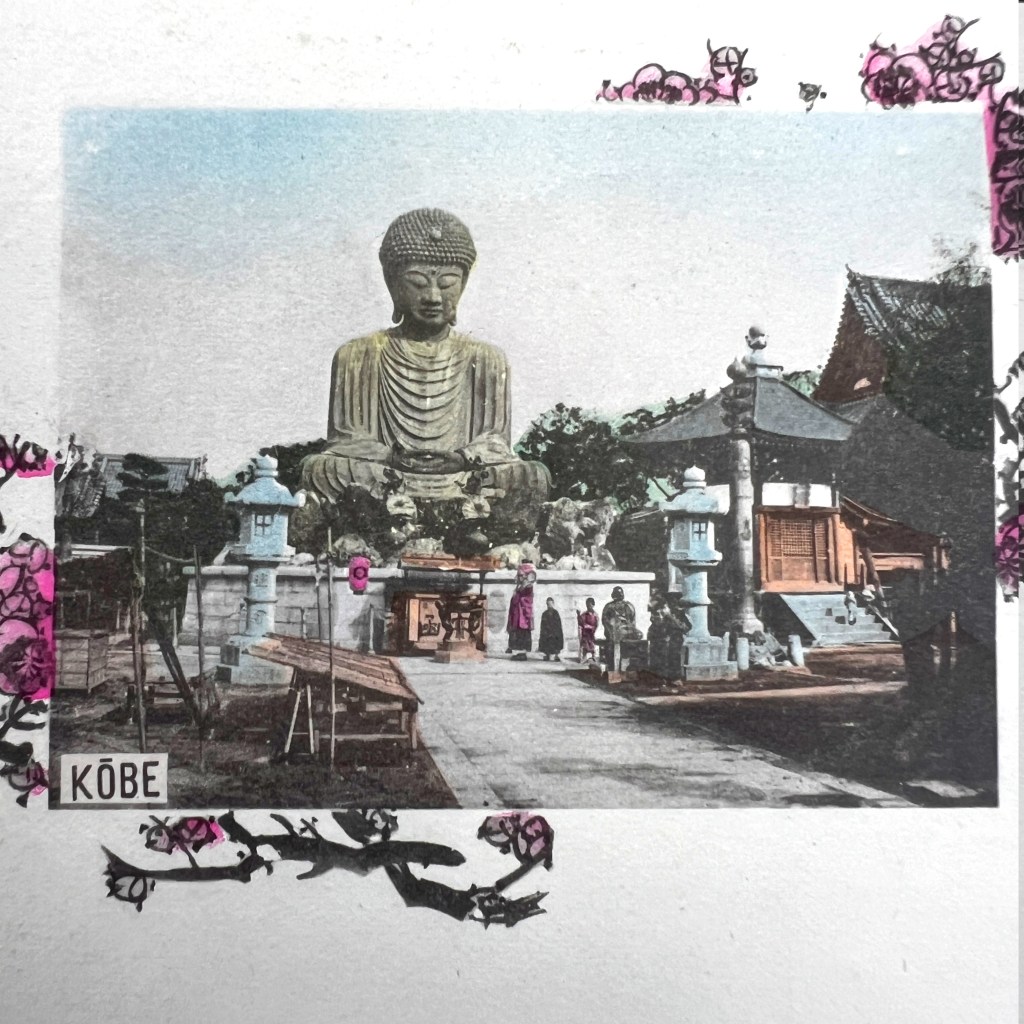
Most photographic Japanese post cards of this period were individually hand-painted. This continued into the 1910s until multi-color printing became more commonplace.


The Buddhas in the West Material Archive is a digital scholarship project that catalogues artifacts depicting Buddhist material culture for Western audiences. It’s comprised of prints, photos, and an assortment of ephemera and other objects. For a brief introduction to this archive, visit the main Buddhas in the West project page.
For Related Buddhas in the West Posts Featuring Historical Postcards:



For the Most Recent Buddhas in the West Posts:




 Personal Site of Peter Romaskiewicz