For all the new Buddhas in the West posts
follow us on Bluesky & Instagram
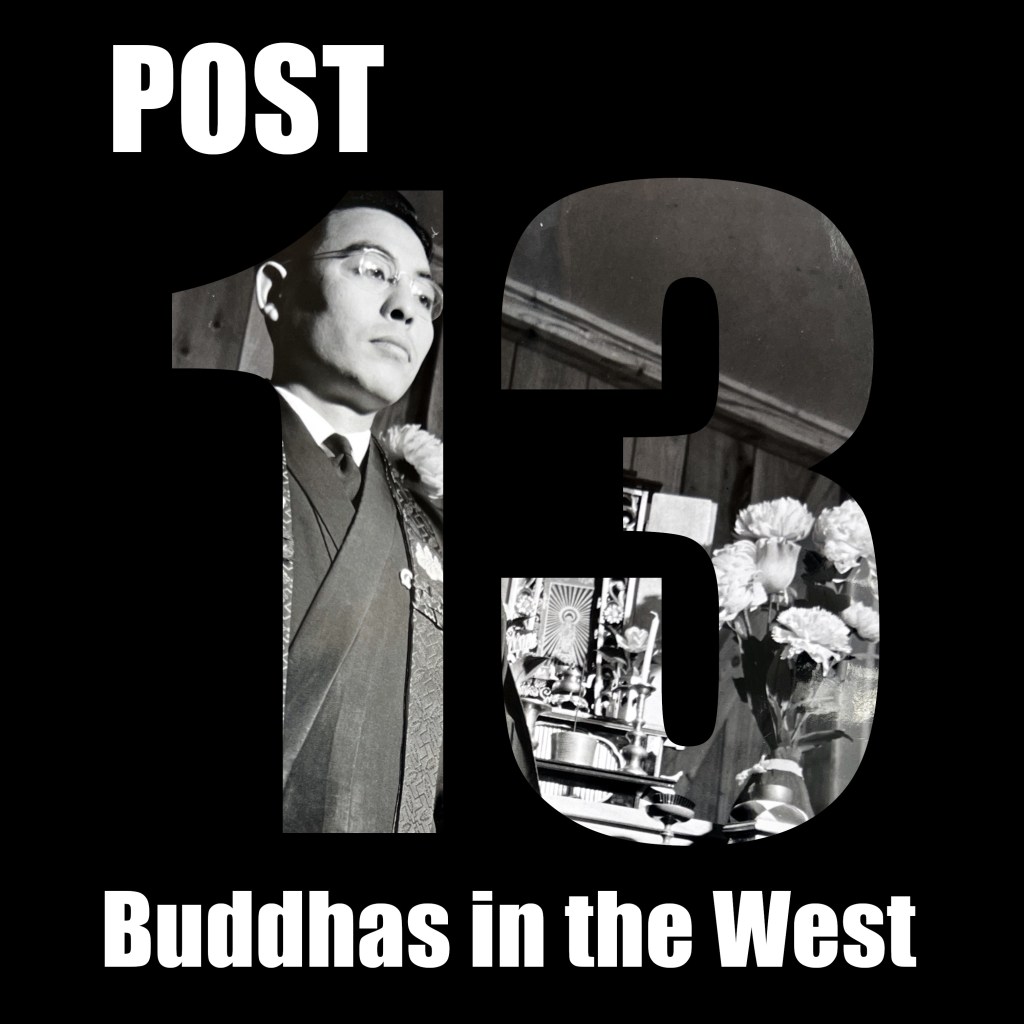
Barbed-wire Buddhas: Buddhist objects were precious – and rare – at American Japanese internment camps during WWII. Here, issei Buddhist priest Rev. Gyōdō Kōno, stands in front of a small shrine to Amida Buddha at the Jerome relocation camp in Arkansas.

In February 1942, Executive Order 9066 was authorized, forcing the incarceration of more than 110,000 Americans of Japanese descent. Most were Buddhist. Japanese Buddhist temples on American soil were closed and only a few small religious items could be brought to the camps.

Often, items like shrines (butsudan), altar tables, and other ritual implements were made from scraps of wood with delicate care.

Buddhist rosaries (o-nenju), like the one held by Rev. Kōno, were important ritual items for the Jodo Shinshu sect.

After leaving the Jerome camp, Rev. Kōno relocated to Chicago and founded the Midwest Buddhist Temple which is still open today.

The Smithsonian National Museum of American History owns one of the internment camp Buddhist shrines from Jerome along with other items from the internment era. The shrine can be viewed here: https://tinyurl.com/yvb3heut

The Buddhas in the West Material Archive is a digital scholarship project that catalogues artifacts depicting Buddhist material culture for Western audiences. It’s comprised of prints, photos, and an assortment of ephemera and other objects. For a brief introduction to this archive, visit the main Buddhas in the West project page.
For Related Buddhas in the West Posts Featuring Historical Photographs:

For the Most Recent Buddhas in the West Posts:



 Personal Site of Peter Romaskiewicz