For all the new Buddhas in the West posts
follow us on Bluesky & Instagram
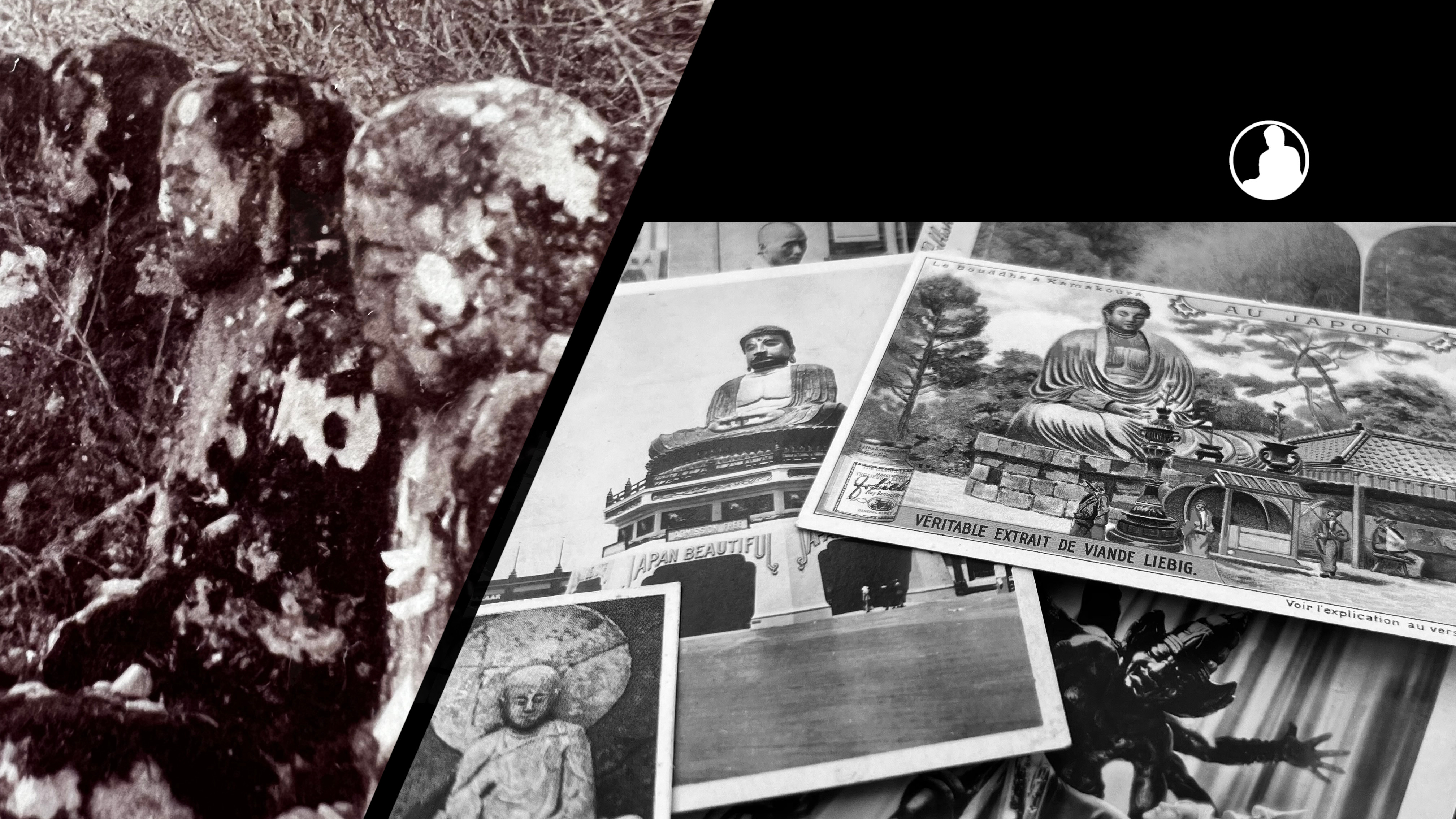
Countless Jizō: Tourist books from the early 20th century say no person could count the same number of Jizō statues in Nikko, Japan. In early 1896, Henry Strohmeyer left for an around-the-world tour and took this stereoscopic image; he left no report on how many he counted.
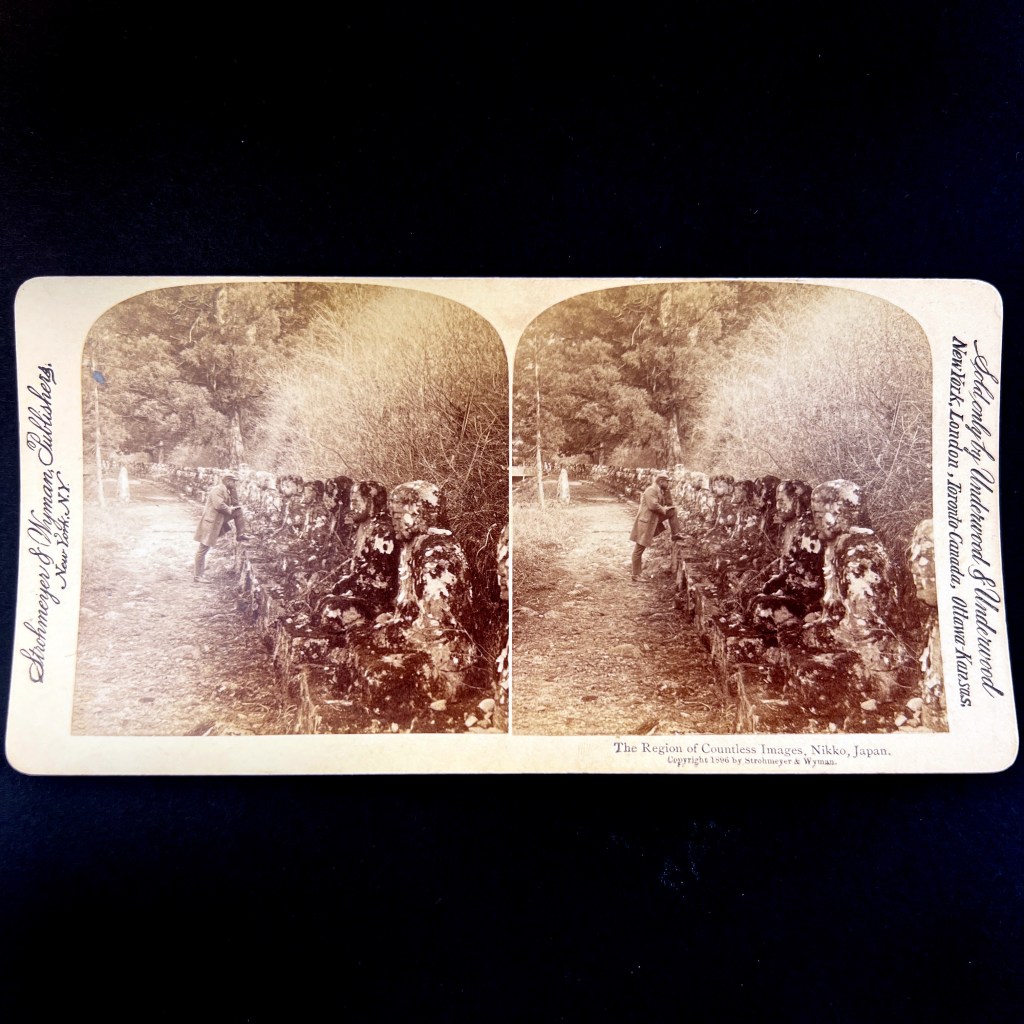
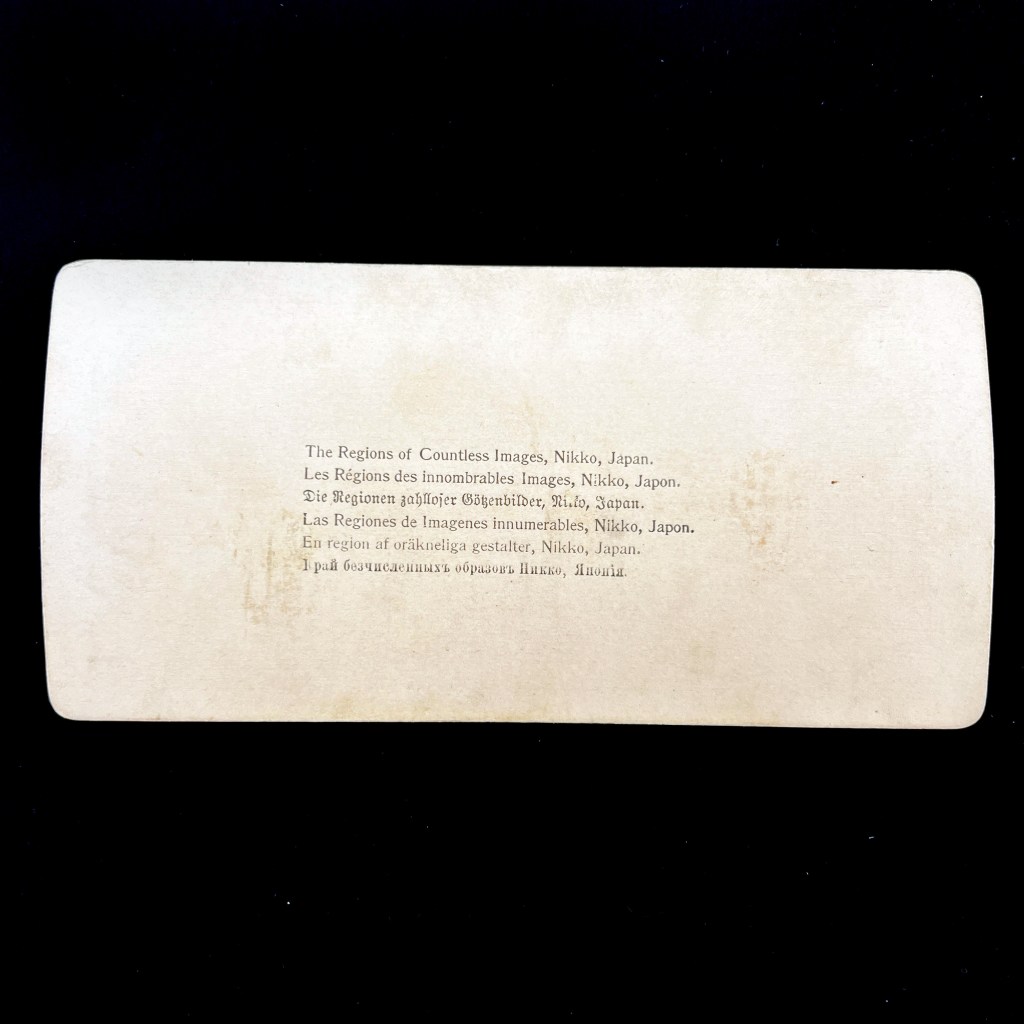
A dual-photograph stereoview card produces a single three-dimensional image when using a simple handheld device fashioned with special lenses (first invented by Oliver Wendell Holmes).

This was fashionable – and cutting edge – parlor room entertainment at the end of the nineteenth century for many American homes.

It provided people with the means for virtual reality travel and stereoviews were soon marketed to schools for educational purposes.
This card is a rare instance of where the cultural voyeurism is broken and we see a man in Western attire. It is believed this is Strohmeyer himself – a stereoscopic selfie.

For an insightful online illustrated essay on Strohmeyer’s impact on travel photography, see the exhibit by Tulane University here: https://tinyurl.com/5n7a28kf.


The Buddhas in the West Material Archive is a digital scholarship project that catalogues artifacts depicting Buddhist material culture for Western audiences. It’s comprised of prints, photos, and an assortment of ephemera and other objects. For a brief introduction to this archive, visit the main Buddhas in the West project page.
For Related Buddhas in the West Posts Featuring Historical Stereophotography:



For the Most Recent Buddhas in the West Posts:




 Personal Site of Peter Romaskiewicz