For all the new Buddhas in the West posts
follow us on Bluesky & Instagram
Buddhists & the British Crown: When Ceylon became a colony in 1815, the first Buddhist monks became subjects of the Crown. Burmese monks were added to their ranks in 1885. Victorian reports said the total Buddhist population was 500 million, nearly 40% of the global population.

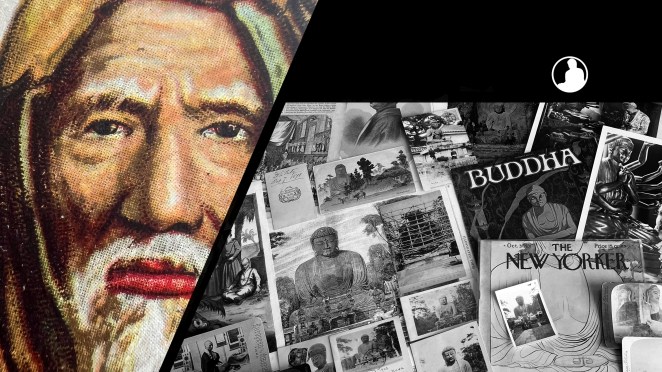
British newspapers of the time printed engravings of the expanding empire, often focusing on exotic architecture and the clothes and customs of new subjects. The shaven heads and golden robes of Burmese monks, called poongyis in the press, garnered some of this attention.
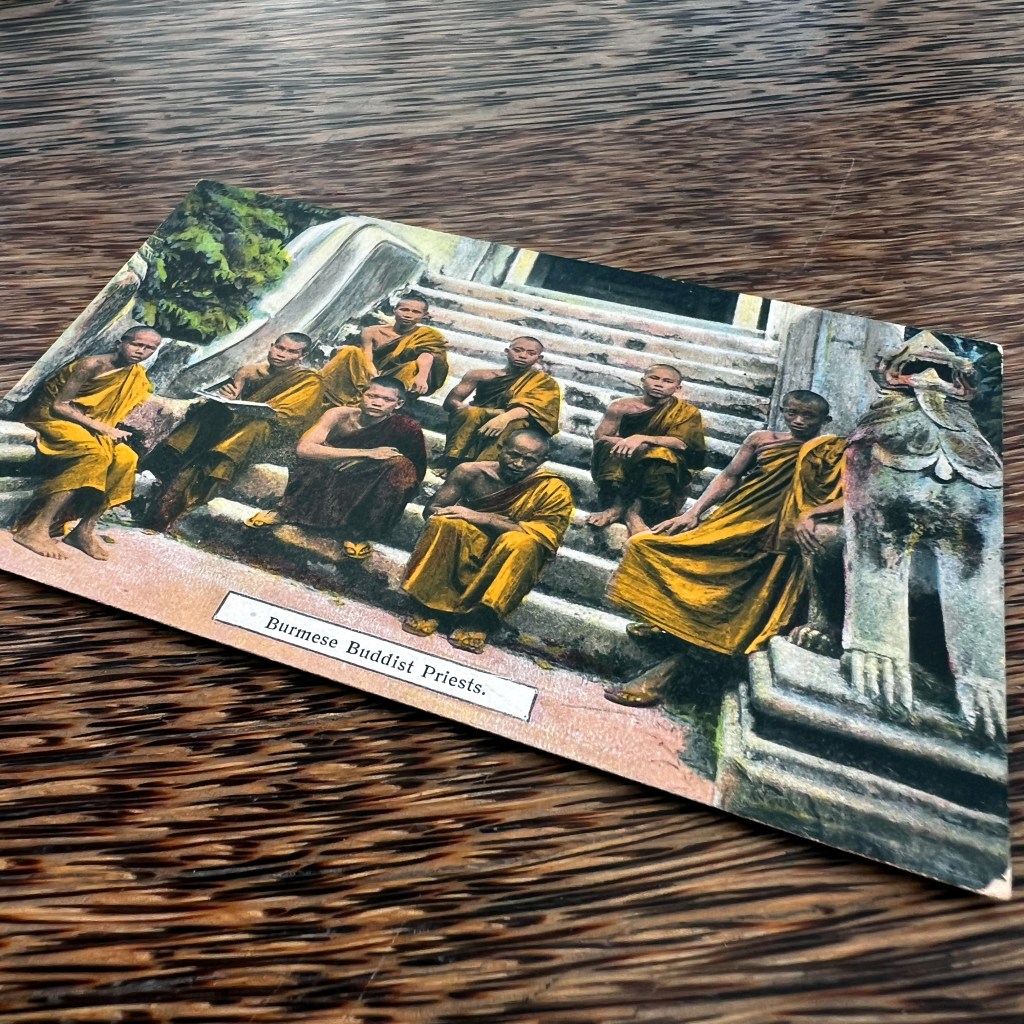
Consequently, when D. A. Ahuja (c.1865–c. 1939) started publishing colorized postcards of Burma, monks dressed in colorful robes were a popular theme. This is card is a German lithographic-halftone print published circa 1910.

The popular press often described Burmese monks as indolent, but never-the-less kind-hearted. While Ahuja’s licensed photograph (taken by Philip Klier) seems to depict monks at rest on the stairs of a temple, it’s noteworthy one studious monk holds a notebook and pencil.

For further reflections on how Burmese Buddhism was represented in Victorian mass media, see Eiben, Emily Rose. “Representing Buddhism in British Media and Popular Culture, 1875-1895.” Ph.D dissertation, Ludwig Maximilian University, 2016

The Buddhas in the West Material Archive is a digital scholarship project that catalogues artifacts depicting Buddhist material culture for Western audiences. It’s comprised of prints, photos, and an assortment of ephemera and other objects. For a brief introduction to this archive, visit the main Buddhas in the West project page.
For Related Buddhas in the West Posts Featuring Historical Postcards:



For the Most Recent Buddhas in the West Posts:




 Personal Site of Peter Romaskiewicz