For all the new Buddhas in the West posts
follow us on Bluesky & Instagram
As new imagery of British colonial Burma circulated in the early 20th century, one trade received heightened interest: idol carving. The marble quarries north of Mandalay provided sufficient raw materials for the local carving industry centered around the village of Sagyin.

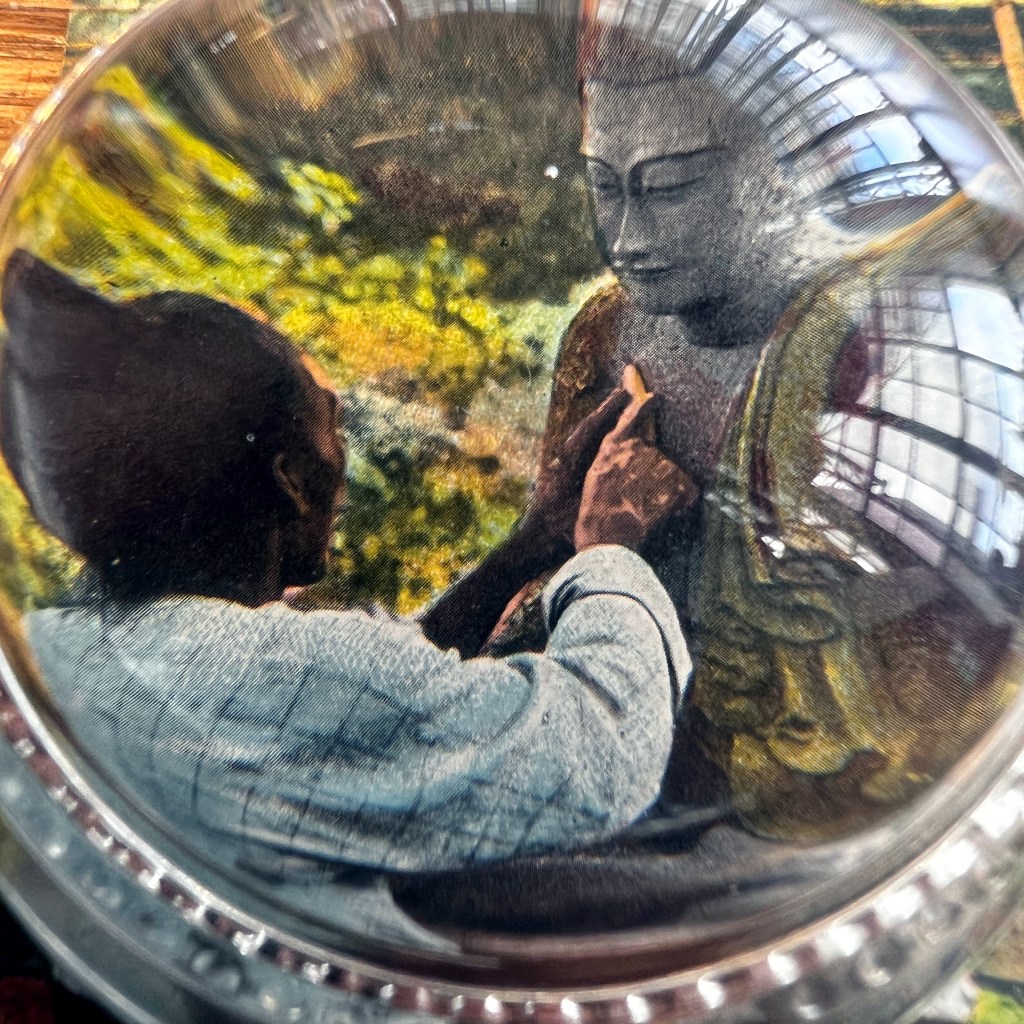
An active stone-workers’ quarter in Mandalay meant foreign travelers could encounter Burmese carvers working on Buddhist statuary. This postcard by D.A. Ahuja captures the crafting of a Mandalay-style marble Buddha, with thick garment folds and a band around the head.
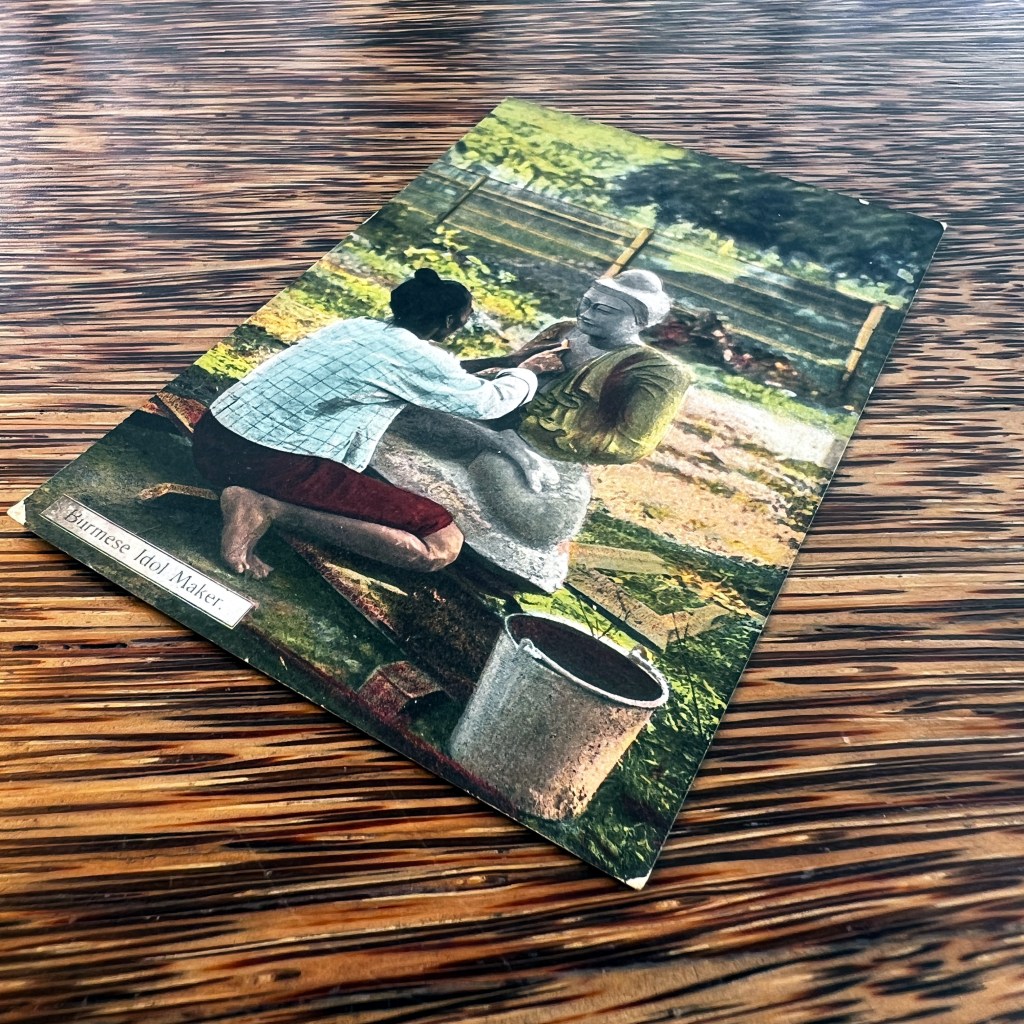
The card reveals a lithographic-halftone hybrid process, whereby a black halftone screen was applied on top of a multi-color lithographic substrate. The reverse design suggests this card was printed around 1910.

Burmese white marble has been fashioned into Buddhist statuary since the Konbaung Dynasty (1752–1885). The trade continues in and around Sagyin and Mandalay today.
For further info on the history of Burmese marble carving and the early spread of Burmese Buddhas into China, see Deng, Beiyin. “Reimagining a Buddhist Cosmopolis: Conveying Marble Buddhas from Burma to China, 1890s-1930s.” Journal of Global Buddhism 24, no. 1 (2023): 25–46.


The Buddhas in the West Material Archive is a digital scholarship project that catalogues artifacts depicting Buddhist material culture for Western audiences. It’s comprised of prints, photos, and an assortment of ephemera and other objects. For a brief introduction to this archive, visit the main Buddhas in the West project page.
For Related Buddhas in the West Posts Featuring Myanmar / Burma:


For the Most Recent Buddhas in the West Posts:





 Personal Site of Peter Romaskiewicz