
For all the new Buddhas in the West posts
follow us on Bluesky & Instagram
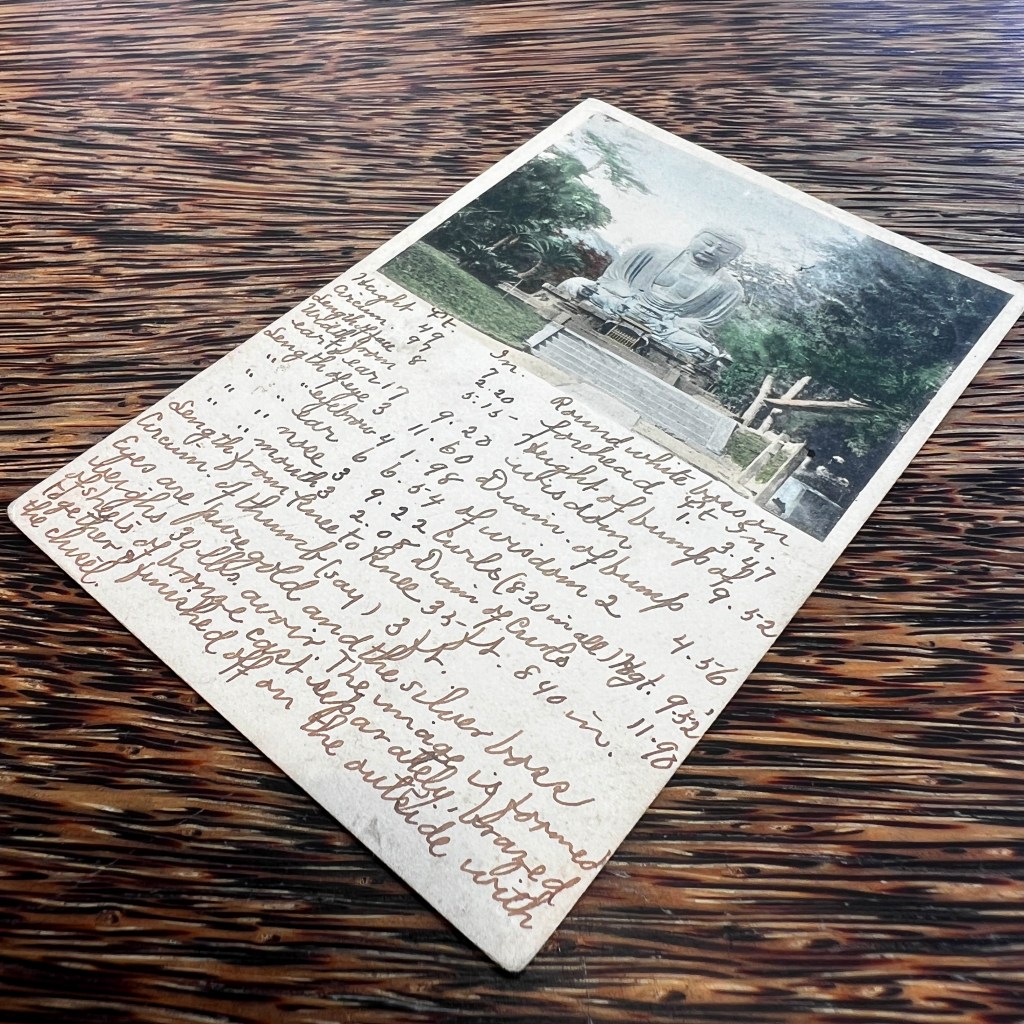
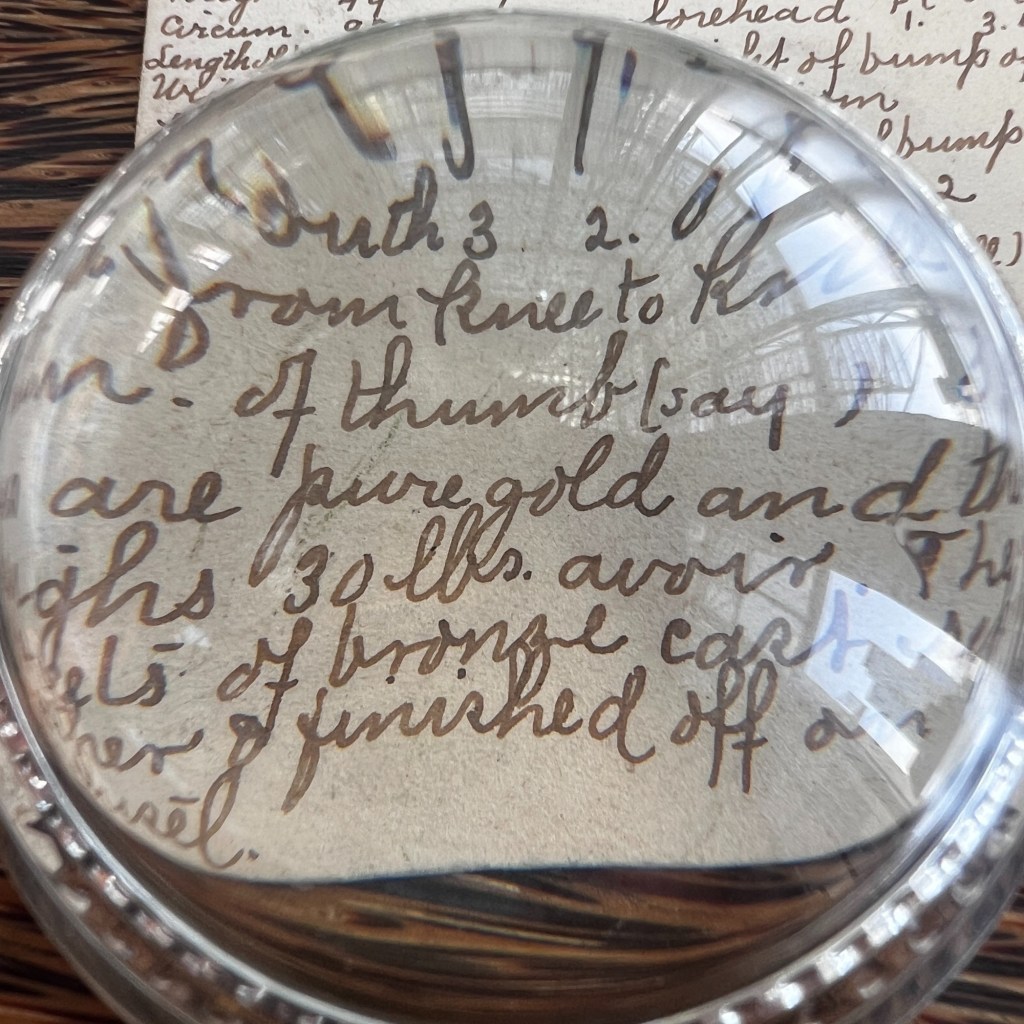
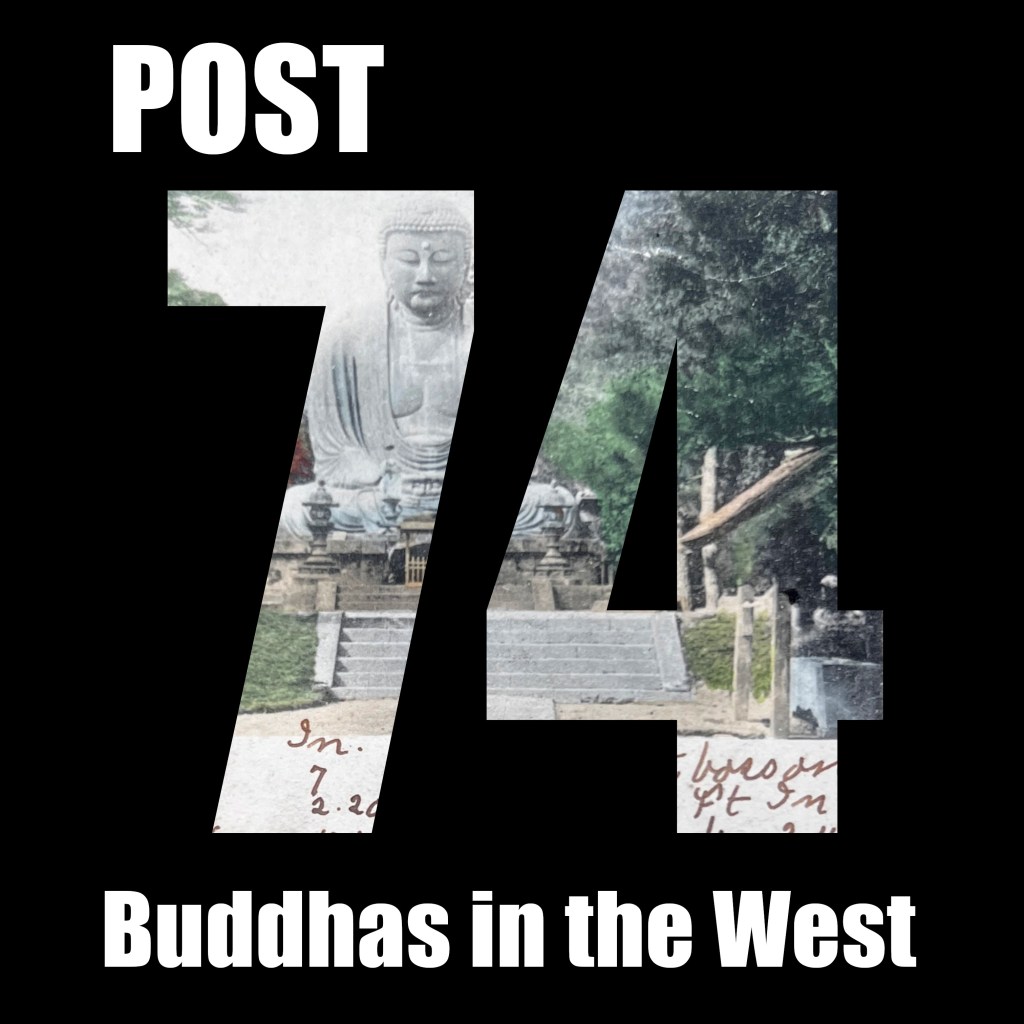
In 2025, seven of the top ten tallest freestanding statues in the world are Buddhist figures (as well as 31 of the top 50). The colossal size of Buddhist statuary is nothing new; foreign travelers in Asia have often noted this fact, as we see in this postcard message from 1906.

Used postcards are valuable because they reveal which aspects of the Kamakura Daibutsu site in Japan were more salient to visitors. The exact measurements given here were not taken on site by the visitor, but were likely copied from one of the popular Japan tourism guides.
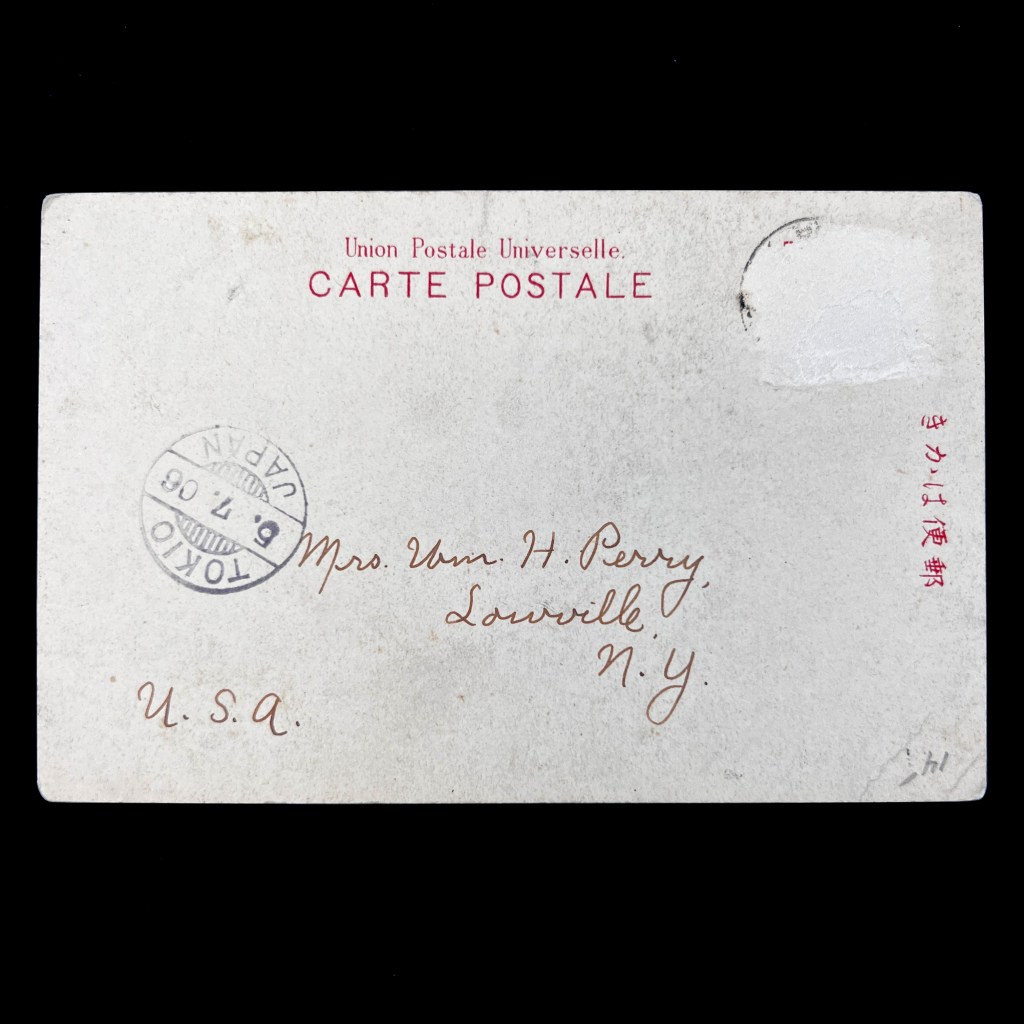
The reverse gives us some insight into the “extended biography” of the postcard after its departure from Tokyo. Notably, the missing postage stamp suggests it was prized by a philatelist – a stamp collector.
The focus on the size, craftsmanship, and materials of the statue minimize the religious importance of such an icon and highlight its value as fine art.
Teaching Resource: For a brief introduction to material analysis that uses this postcard as an example, see the post and handout: Making Materials Speak: Performing a Material Analysis, viewable here: tinyurl.com/nhhuh4nk.
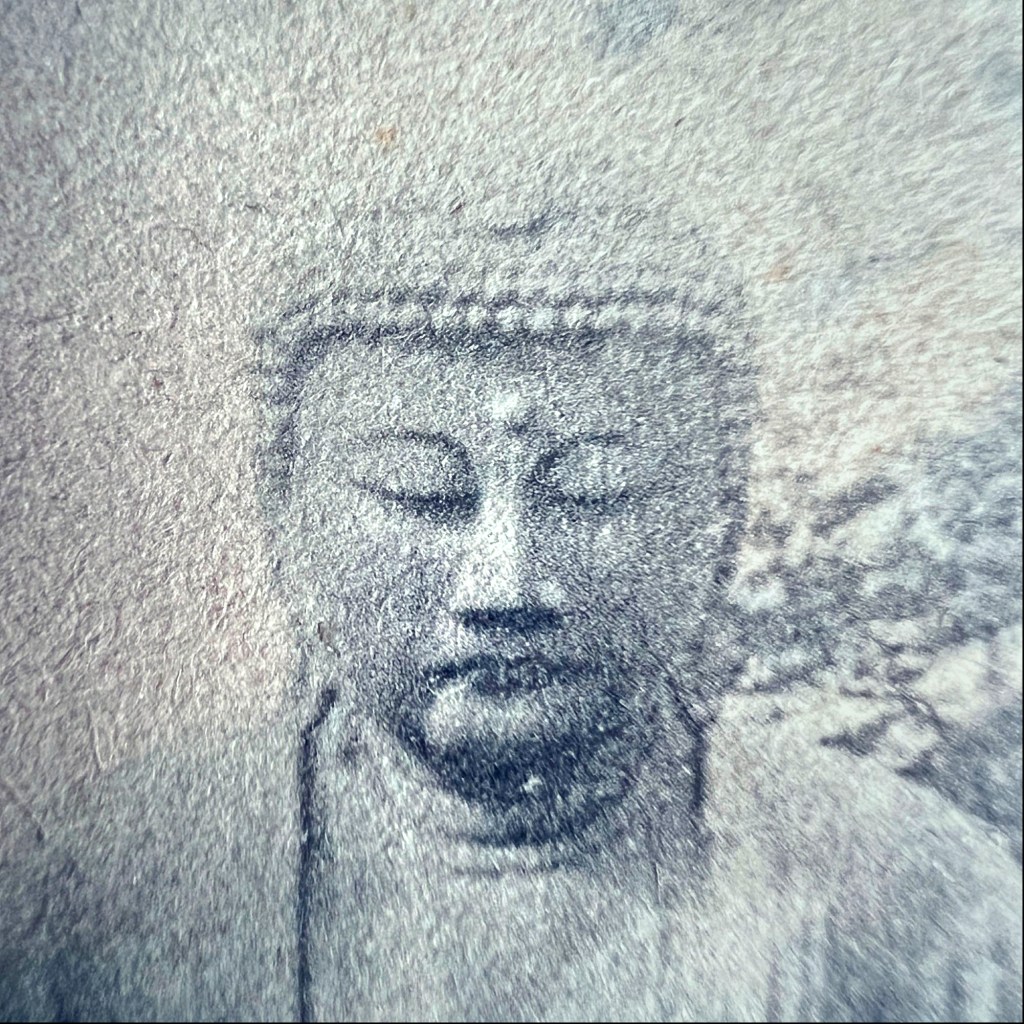
The Buddhas in the West Material Archive is a digital scholarship project that catalogues artifacts depicting Buddhist material culture for Western audiences. It’s comprised of prints, photos, and an assortment of ephemera and other objects. For a brief introduction to this archive, visit the main Buddhas in the West project page.
For Related Buddhas in the West Posts Featuring Historical Postcards:




For the Most Recent Buddhas in the West Posts:







 Personal Site of Peter Romaskiewicz