
For all the new Buddhas in the West posts
follow us on Bluesky & Instagram
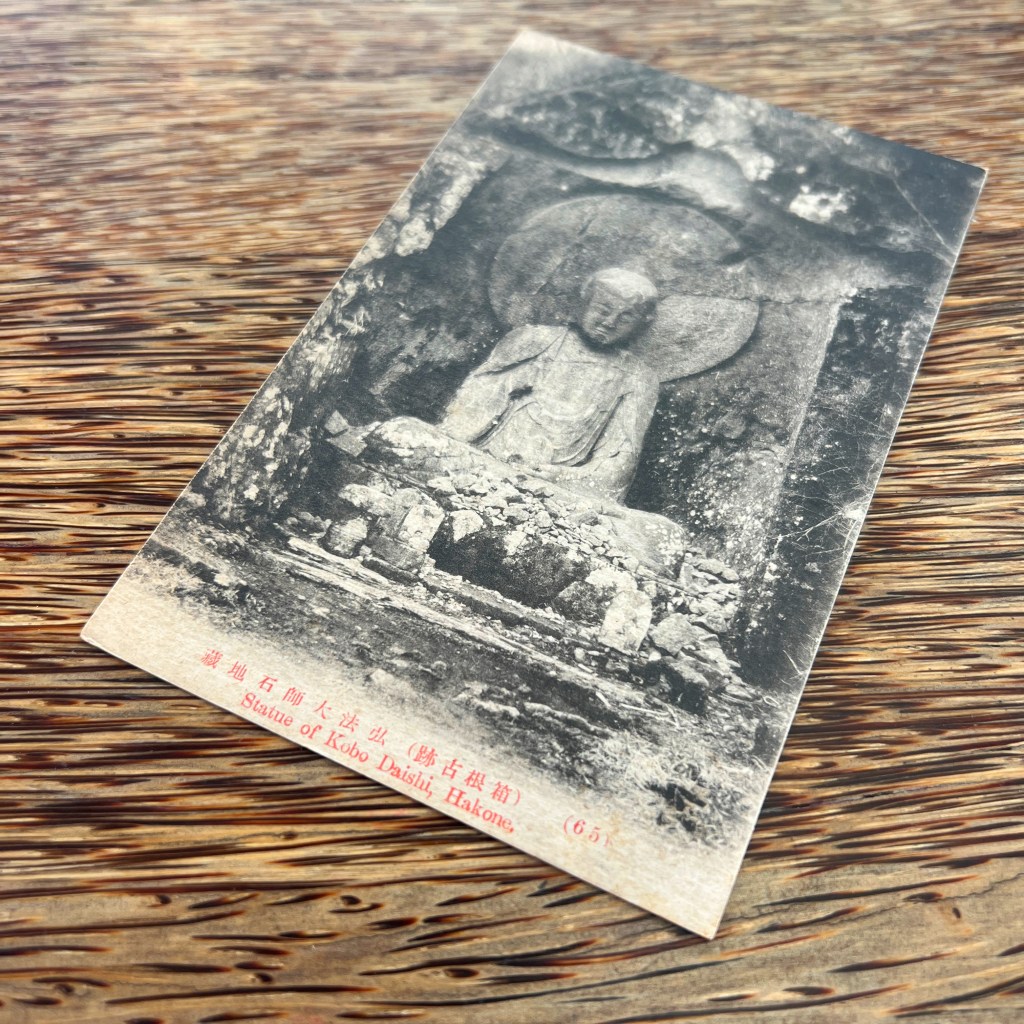
Despite the English caption, this is not a statue of the 9th century Buddhist monk Kōbō Daishi, otherwise known as Kūkai. As the Japanese caption reads, this is a stone relief carving of the bodhisattva Jizō at Hakone, attributed to Kūkai’s skilled craftsmanship.

The lore of Kūkai’s craftsmanship was known to 19th c. art historian Ernest Fenollosa: “This is said to have been carved by Kōbō himself on his journey to the North; yet…he hardly would have spared time for its execution.” Today, the statue is dated to the 13th century, well after Kūkai’s death.
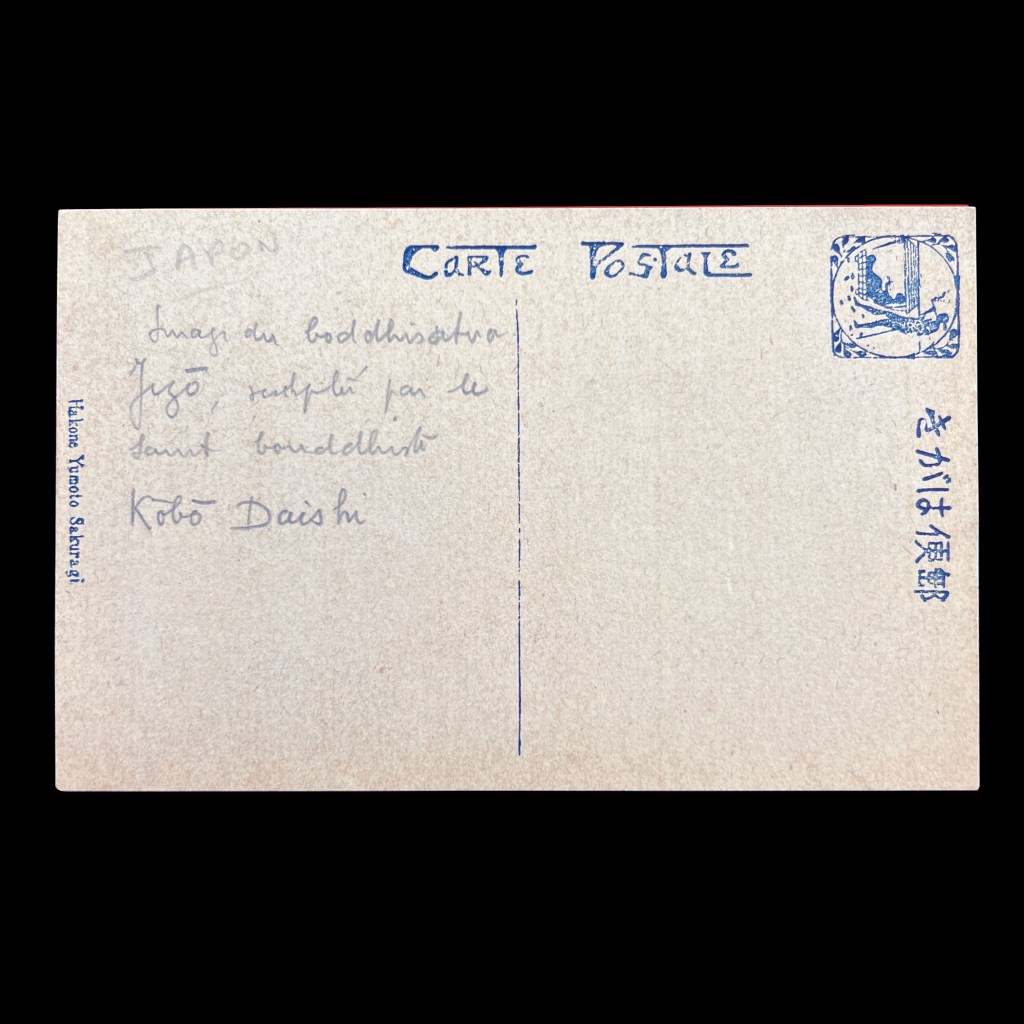
The note on the back, possibly written by a French tourist as a personal reminder, clarifies the English caption saying the image of Jizō was “sculpted by the Buddhist saint Kōbō Daishi.” The design of the reverse dates this Japanese postcard to between 1933 and 1945.
The pile of stones and pebbles on Jizō’s lap were common votive offerings presented by passing travelers and pilgrims.

Carved into the rock face, this statue still stands today in Hakone, sheltered by a small shrine. For more on Jizō and this particular icon, see Hank Glassman, The Face of Jizo: Image and Cult in Medieval Japanese Buddhism, 2012.

The Buddhas in the West Material Archive is a digital scholarship project that catalogues artifacts depicting Buddhist material culture for Western audiences. It’s comprised of prints, photos, and an assortment of ephemera and other objects. For a brief introduction to this archive, visit the main Buddhas in the West project page.
For Related Buddhas in the West Posts Featuring Jizō / Kṣitigarbha:


For the Most Recent Buddhas in the West Posts:





 Personal Site of Peter Romaskiewicz