For all the new Buddhas in the West posts
follow us on Bluesky & Instagram
Tien Mu Temple, located in the city of Hue, is among the most historically important Buddhist sites in Vietnam. For its modern political importance, Tien Mu Temple emerged as the center of anti-government protest and was home to Thich Quang Duc who self-immolated in 1963.

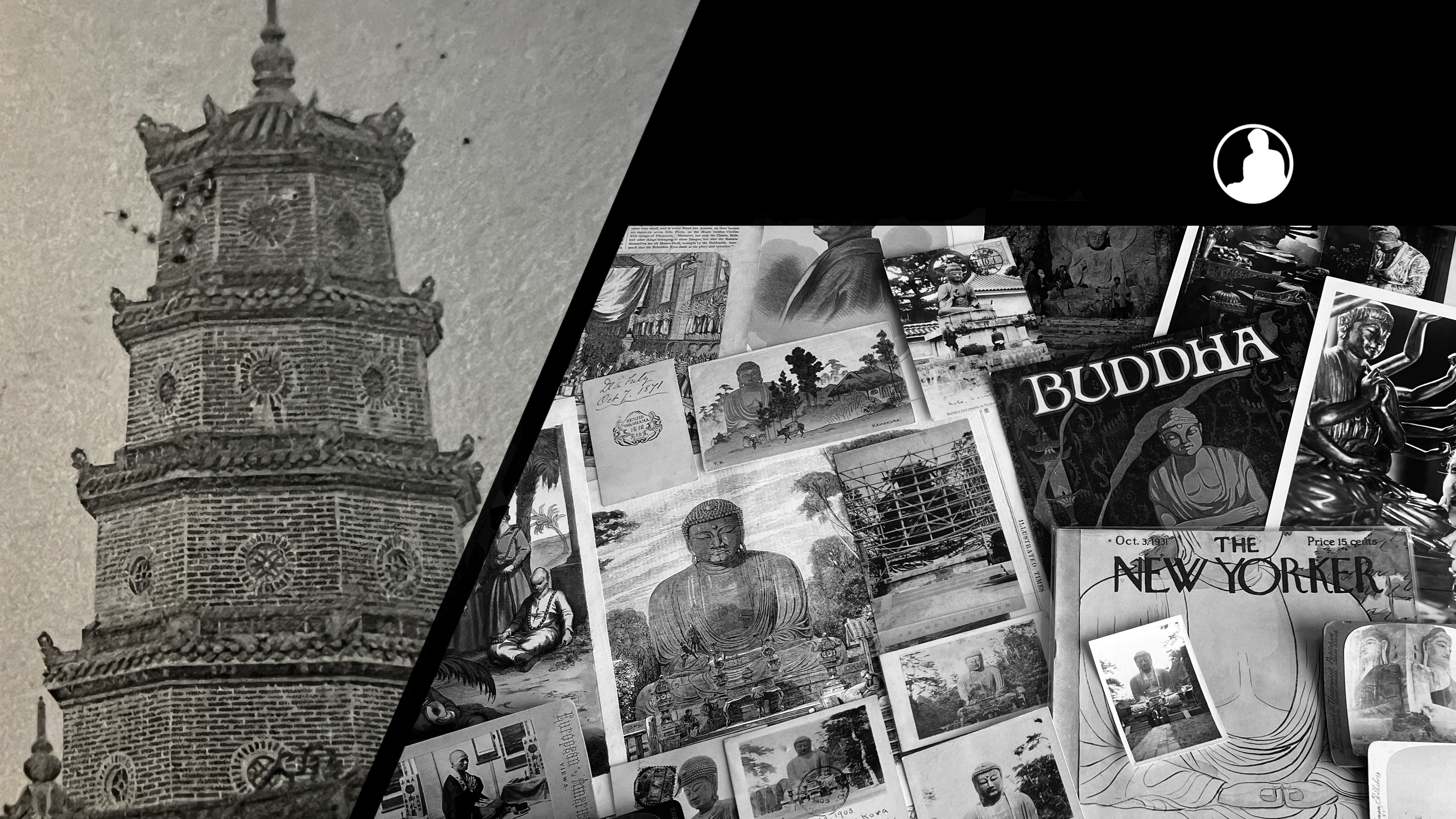
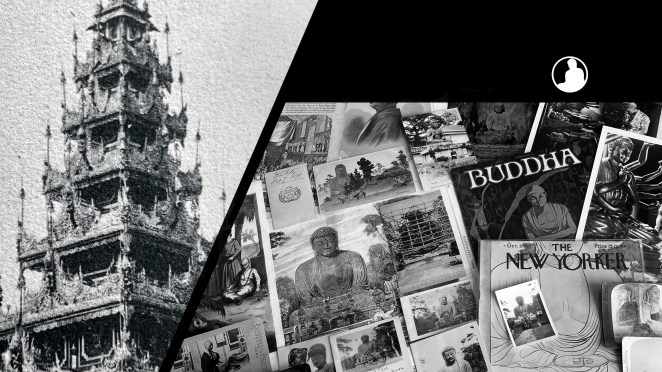
Tien Mu Temple, seen here, was founded in 1601, but replaced a much older shrine to local Cham deity, Po Nagar. The seven-story pagoda, now a popular symbol of Hue, was built in 1844 and is nearly 70 ft (21 m) tall; it was originally named the Pagoda of Compassion and Benevolence.
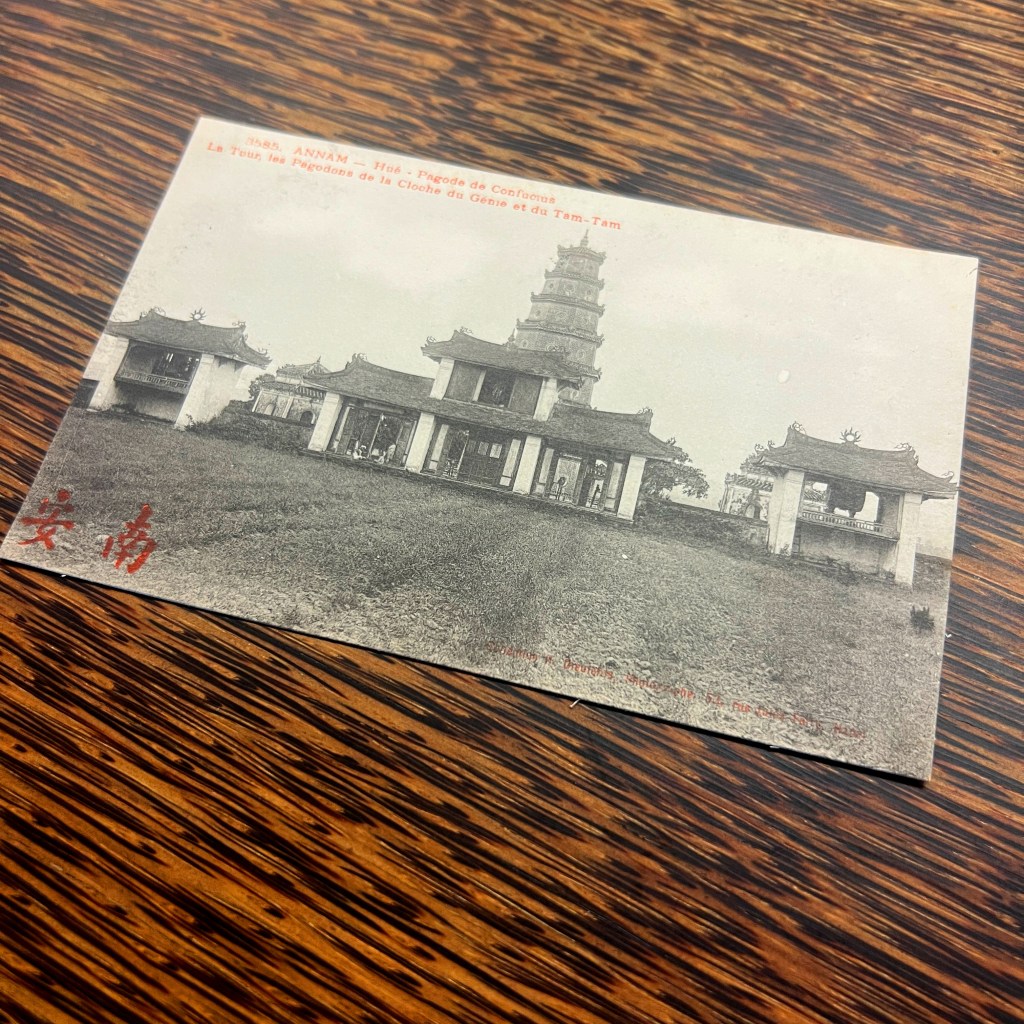
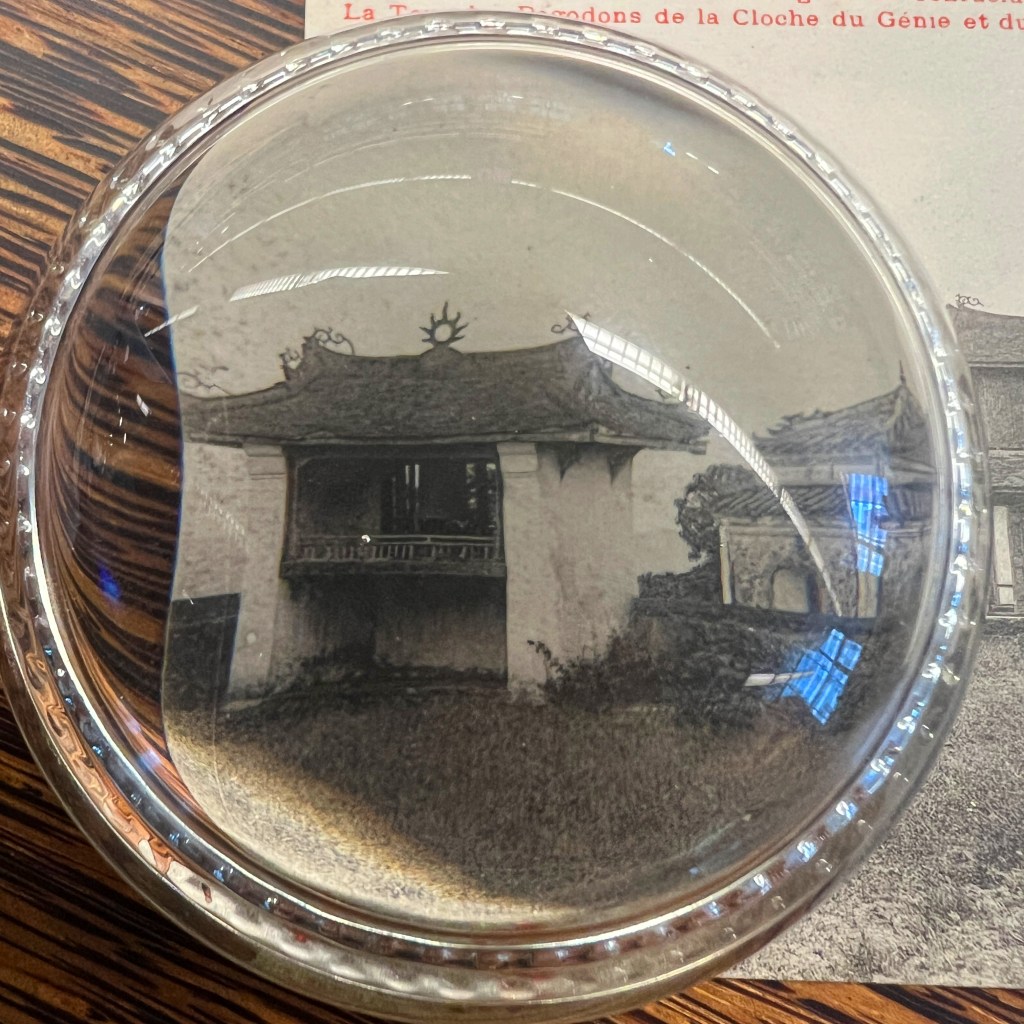
Photographer Pierre Dieulefils opened a studio in Hanoi 1885 and spent the next three decades visually chronicling French Indochina; picture postcards became his specialty. It’s possible the photograph seen on the obverse was taken before a 1904 storm damaged many of the temple structures.

Often misnamed the “Pagoda of Confucius” by turn of the century foreign visitors, the drum and bell tower were also of popular tourist interest. The temple bell was cast in 1710 and is considered an important cultural relic.
The powder blue Austin Westminster car that drove Thich Quang Duc to Saigon in 1963, also seen in the famous photographs of his act of protest against the Diem regime, remains today on display at Tien Mu Temple, a “contact relic” of the venerated monk.


The Buddhas in the West Material Archive is a digital scholarship project that catalogues artifacts depicting Buddhist material culture for Western audiences. It’s comprised of prints, photos, and an assortment of ephemera and other objects. For a brief introduction to this archive, visit the main Buddhas in the West project page.
For Related Buddhas in the West Posts Featuring Historical Temples:


For the Most Recent Buddhas in the West Posts:


 Personal Site of Peter Romaskiewicz