Buddhist Huadu Temple Incense Blend

Introduction

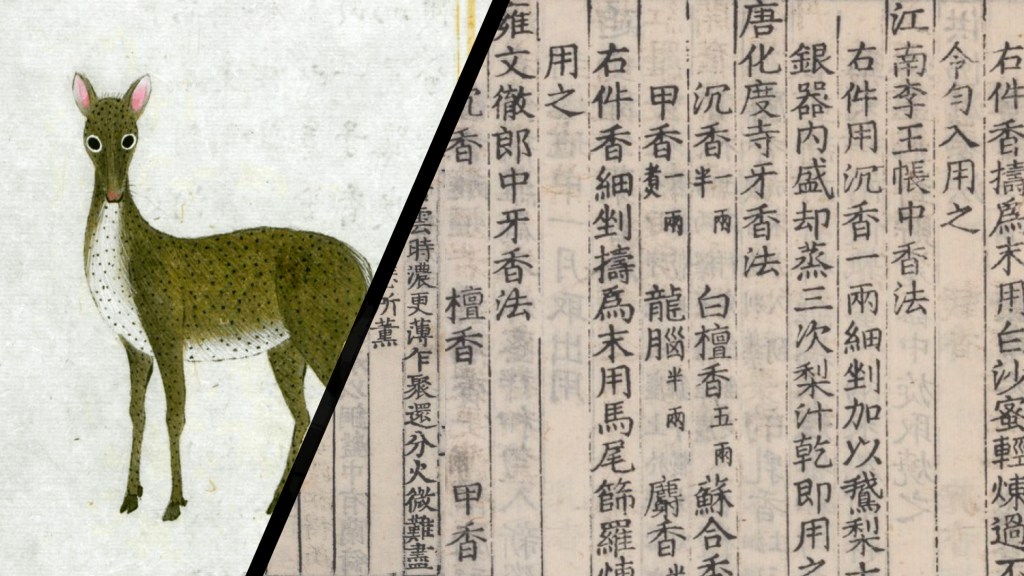
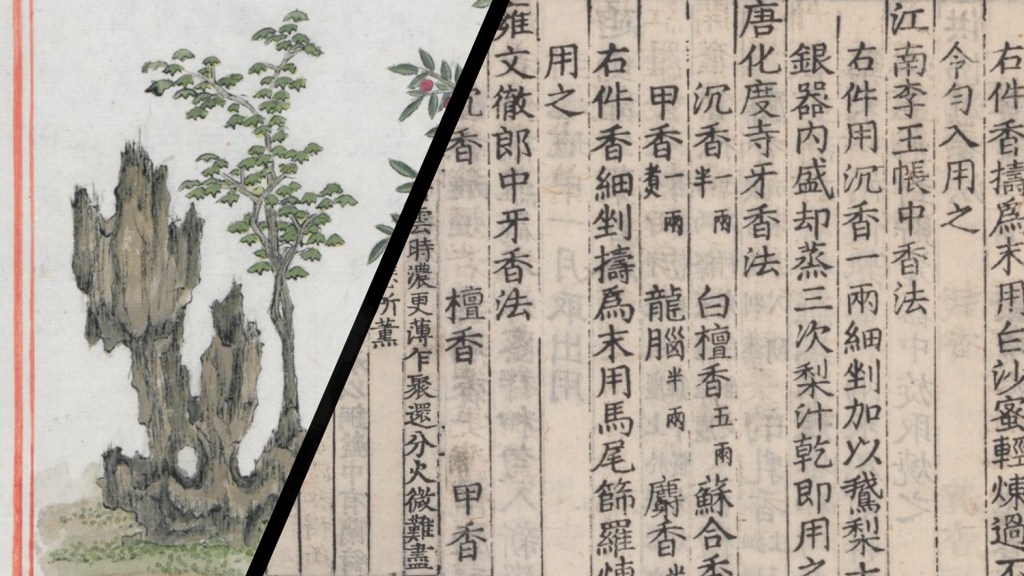
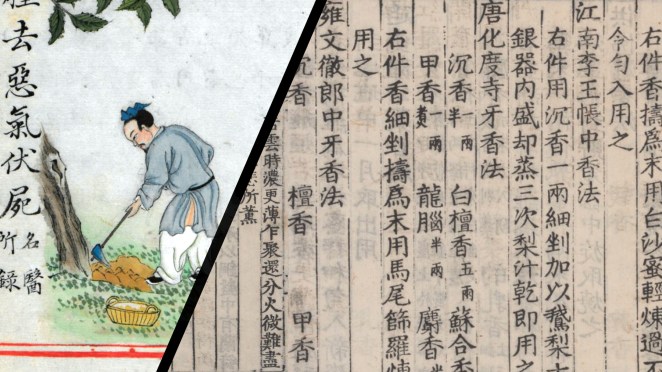
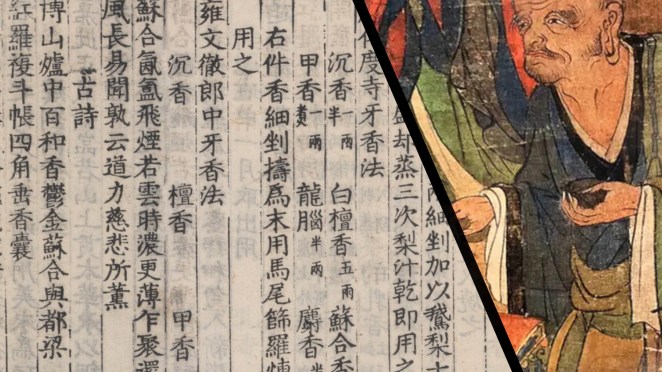
The “Recipe for Blended Incense from Tang Huadu Temple” (Tang Huadu si yaxiang fa 化度寺牙香法) is first recorded in Hong Chu’s (1066–c.1127) Materia Aromatica (Xiang pu 香譜). Hong Chu’s text is the earliest extant Chinese perfuming catalogue and was compiled in the early twelfth century. The six-ingredient recipe (plus honey) is shown here as it appears in the two fascicle Materia Aromatica preserved in the Baichuan xuehai 百川學海 collectanea originally published in 1273 (the image here is from a xylographic print issued after 1501).

Buddhist blending recipes are also scattered throughout the Chinese Buddhist canon, but nothing precisely matches the one recorded by Hong Chu during the Song. Furthermore, there are other Huadu Temple blends preserved in later medieval Japanese perfuming catalogues, yet these contain additional ingredients. Thus, we are left to presume the recipe discussed here is a genuine Tang-era artifact associated with the famed Buddhist Huadu Temple.

Facts and Features: Huadu Temple

The Huadu Temple (Huadu si 化度寺) was a monastic compound located in the medieval capital city of Chang’an, present day Xi’an. The temple grounds were located in the northwest part of the city, positioned east of the southern gate to Yining Ward [red circle on map]. This location was not far from the famed Western Market where foreign merchants sold and exchanged exotic imported goods [blue box on map].

The temple was first constructed as Zhenji Temple (Zhenji si 真寂寺) in 583. It was renamed Huadu Temple under the first Tang emperor in 619. Then in 846, after rebuilding in the wake of the Huichang Persecution of Buddhism, the monastery complex was renamed Zhongfu Temple (Zhongfu si 崇福寺). If we are to take the name of the blending recipe at face value, we can presume it became closely connected to this Buddhist site between 619 and 846 when the monastery was still named Huadu Temple.

During the Sui and early Tang the wealth of Huadu Temple was considerable and well-known among all in the capital. This was the location of the Inexhaustible Storehouse (wujin zangyuan 無盡藏願), a treasury used to pay for the repair of temples and monasteries all over the country and to provide loans to the subjects of the capital. The treasury was confiscated by the imperial house in 721. Following this seizure the temple never returned to its former wealth and glory. For the sake of discussion, I will speculatively hold the Huadu Temple blending recipe dates approximately to the year 700, before the temple lost is vast holdings. Moreover, it is during this time when Huadu Temple held its No-Barrier Festivals, great public celebrations of generosity held under the auspices of the imperial house. As we will see, the combination of exotic aromatics clearly signals wealth and conspicuous consumption.    

Translation


Recipe for Blended Incense from Tang Huadu Temple 唐化度寺牙香法

aloeswood liang*沈香 一兩半
sandalwood5 liang白檀香五兩
storax1** liang蘇合香一兩
onycha1 liang (reduced)甲香一兩煮
camphor½ liang龍腦 半兩
musk½ liang麝香半兩

File and grind the above aromatics into a powder. Use a horse tail mesh to sift. Incorporate and mix with refined honey, then it is ready to use.
右件香細剉擣為末,用馬尾篩羅,煉蜜溲和得所用之。


*During the Tang, one liang, the “Chinese ounce,” was equivalent to 1.31 ounces (37.3 grams)
**Listed as 2 liang in the Newly Compiled Materia Aromatica (Xinzuan xiang pu 新纂香譜)


Comments: The Huadu Temple blend is a historical snapshot of exotic aromatics circulating in China during the height of the Tang Dynasty. Storax came from the Mediterranean (violet on map below), camphor likely came from the Malayan Peninsula (crosshatched white), sandalwood likely came from southern India (orange), and aloeswood likely came from the tropical south in the vicinity of present-day Vietnam (blue). Musk, from the musk deer, probably arrived from the mountains of the Tibetan and Yungui plateaus (lavender), while onycha was made from gastropod mollusks found along the coasts of southeastern and southern China and the Gulf of Tonkin (light blue). Chang’an (red dot) was connected to all of China’s major cities through a network of roads and canals which further channeled foreign goods from distant markets and ports. (Areas of distribution* overlap are barred.)

In the medieval world, aromatics were also part of larger webs of significance that might go overlooked from our modern vantage point. For example, all of the raw materials in the Huadu Temple blend are found in the Newly Revised Materia Medica (Xinxiu bencao 新修本草) published in 659. Consequently, in addition to scenting the air, each material was also believed to have therapeutic properties. Within this pharmacological context, however, these drugs would typically have to be ingested as there is no recorded medieval Chinese practice of aromatherapy in the modern sense. If we broaden our scope to a wider range of medieval textual genres, including translated Buddhist scriptures, regional gazetteers, and dynastic histories, all of the aromatic ingredients appear to have been known in China by the early fourth century. In such cases they appear as ritual items of religious power, tributary gifts from foreign states, and regional commodities of high economic value. The six-ingredient Huadu Temple blend thus helps provide a glimpse into a vast supra-regional trade flowing into medieval China as well as the multiple layers of significance reflected through possession of these aromatics.


* The map is intended as a general heuristic for distribution and range, it reflects selected data from modern scientific research and descriptions from medieval Chinese materia medica and gazetteers

For further information and additional references, see: Peter M. Romaskiewicz, “Sacred Smells and Strange Scents: Olfactory Imagination in Medieval Chinese Religions.” Ph.D. dissertation, University of California, Santa Barbara, 2022.
Musk (she xiang 麝香) in Medieval China

Introduction

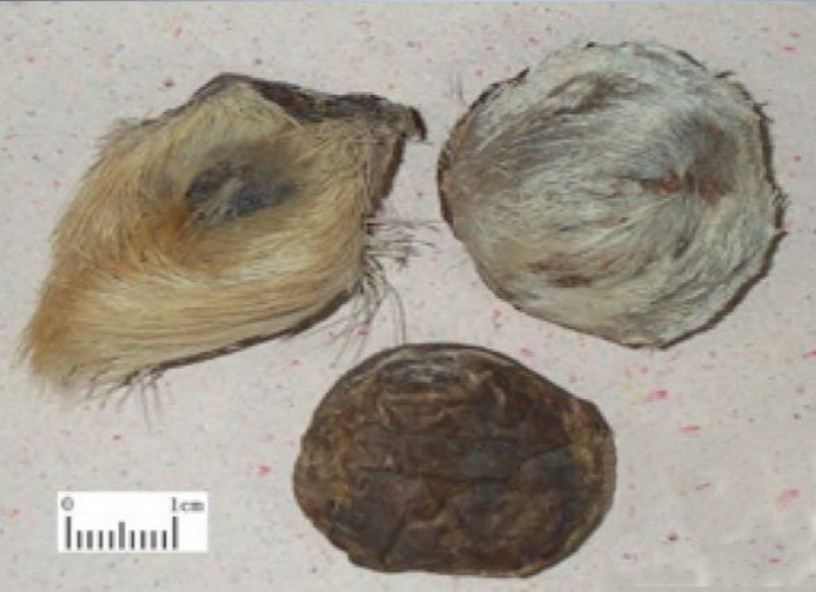
Musk is among the most expensive materials derived from an animal, worth more by weight than gold. The intensely scented dark granular paste comes from the male musk deer of the genus Moschus. Produced by a scent gland on the abdomen, the deer uses the scent to attract mating partners and mark territory. The smell of musk is pungent with a warn and powdery, yet bitter, scent profile. Its chemical characteristics translated into its use as a fixative in medieval perfumery which continues through today. Several species of musk deer are native to the forested Chinese highlands: the M. berezovskii has the greatest range in China, spreading from western central China down into northern Vietnam, the M. sifanicus covers some of this range and extend into the Tibetan plateau, the M. fuscus and M. chrysogaster roam the Himalayas and eastern Tibet, and the M. moschiferus lives in north China. In the early medieval period the Chinese knew the musk deer as primarily inhabiting the regions of Shaanxi, southern Gansu, Sichuan, and Yunnan, all regions far from the old capital cities in the Central Plain. Consequently, musk retained a sense of the semi-exotic in the medieval period.

Facts and Features

  • Medieval Chinese Name: musk (she xiang 麝香)
  • Common English Name: musk, deer musk
  • Animal Origin: paste derived from the dried contents of the preputial scent gland of several species in the Moschus genus
  • Range: Himalayan region (Northern India, Nepal, Bhutan, Tibet), northern Myanmar, northern Vietnam, southwestern China, western central China, north China [approximate range* of musk deer is shown in lavender below; range of M. moschiferus extends northward to Arctic Circle]

  • Collection Process: male musk deer is captured and killed, then the scent gland is removed and dried, turning the interior into a dark granular paste

  • Earliest Chinese Citation: 3rd–1st century BCE (lexicographic work: Approaching Elegance [Erya 爾雅])
  • Earliest Chinese Medicinal Use: 1st c. BCE – 1st century CE (Classic of Materia Medica of the Divine Husbandman [Shennong bencao jing 神農本草經])

Comments: The Chinese character for musk is found among the oracle bone corpus and a simple graphemic analysis shows a bowhunter shooting an arrow (she 射) and a deer (lu 鹿). The interpretation offered by Li Shizhen in the sixteenth century is that the musk deer projects, or shoots (she), its fragrance over a long distance. Chinese texts have the earliest citations to musk, but they appear with greater frequency around the turn of the common era. For example, musk does not appear in the traditional ritual canon of the Shang and Zhou, nor does it appear in the Mawangdui medical manuscripts from the second century BCE. Starting by at least the first century (if not earlier), musk is regularly encountered in prescriptions, formularies, and materia medica throughout the medieval period. For example, the early fourth century herbalist Ge Hong considered musk one of approximately two dozen drugs to have constantly on hand and prescribed the use of musk pellets to repel snakes in the mountains.

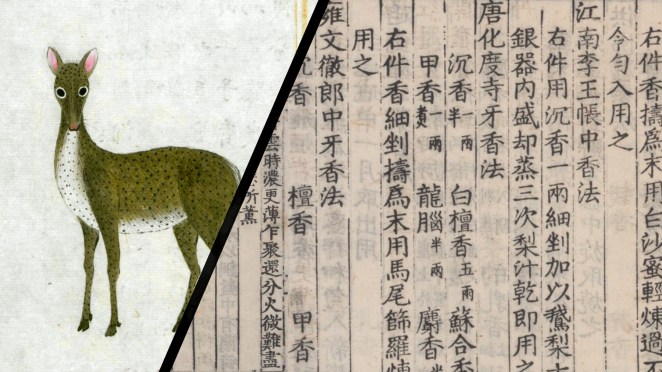
If we turn to the Classified Essentials of Materia Medica (Bencao pinhui jingyao 本草品彙精要) from 1503 we find an illustration of the musk deer. It is depicted accurately without antlers and upon close inspection we can find two small canine tusks jutting downward from the mouth.

Musk does not appear in Indic textual sources until a few centuries into the common era. This is somewhat surprising given the musk deer roamed the Indian side of the Himalayan range. Musk is also missing from classical Greek and Latin sources, including the first century Periplus Maris Erythraei, a handbook of Greco-Roman trade. Looking first at India, musk is found in the Caraka Saṃhitā, but it appears in a section that may reflect the last stratum of composition sometime around the fourth or fifth centuries. The seventh century Harṣacarita contains a clear reference to musk using what became the standard Sanskrit term kastūrī.

Curiously, however, kastūrī is a loanword from the Greek castoreum, which refers to a different animal-derived aromatic. How a Greek term came to name a natural material available in the Himalayas is difficult to understand, but it was perhaps Greek trade that spurred or supported an early Indian interest in musk. The earliest Western Asia reference to musk possibly does not come until the Byzantine Empire, such as we see in the writings of the mid-sixth century Alexandrian Greek merchant Cosmas Indicopleustes. Otherwise, another early citation to musk outside Chinese sources is found in the collection of Sogdian letters recovered in the Tarim Basin and dating to the early fourth century. Musk was included as one of the items of Sogdian trade, suggesting Sogdian merchants could have been one of the early bridges taking musk westward from China and Tibet.


* The map is intended as a general heuristic for distribution and range, it reflects selected data from modern scientific research and descriptions from medieval Chinese materia medica and gazetteers

For further information and additional references, see: Peter M. Romaskiewicz, “Sacred Smells and Strange Scents: Olfactory Imagination in Medieval Chinese Religions.” Ph.D. dissertation, University of California, Santa Barbara, 2022.


Sandalwood (tan xiang 檀香) in Medieval China

Introduction

Known for its characteristic earthy and warm scent, sandalwood is arguably the most common aromatic used in South Asian religious practice. The term sandalwood most typically refers to the fragrant heartwood of the Santalum album tree, although other Santalum species produce wood historically traded under the name sandalwood. Due to different levels of oil saturation, sandalwood’s color ranges from pale yellow to brownish red. Moreover, because the oil helps in preservation and due to the wood’s naturally close grain, sandalwood is also ideal for making finely carved objects. The heartwood closest to the tree root contains the most oil, consequently sandalwood harvesting typically requires the destruction of the tree. Curiously, the S. album tree may not have been native to southern India, but was indigenous to the eastern parts of the Indonesian archipelago. Archaeobotanical wood charcoal remains, identified as Santalum, were found in the southern Deccan and have been dated to ca. 1300 BC, suggesting the tree was cultivated by humans very early in southern India. When sandalwood was introduced to China sometime during the Han Dynasty, the Chinese apparently considered it a type of native rosewood and used that tree’s name, tan 檀, to translate the foreign aromatic wood.

Facts and Features

  • Medieval Chinese Name: “Rosewood” Aromatic (tan xiang 檀香), Chantan Aromatic (chantan xiang 旃檀香; approximating Sanskrit candana)(among others)
  • Common English Name: sandalwood
  • Botanical Origin: oil-saturated heartwood of several species in the Santalum genus, but most typically the Santalum album tree
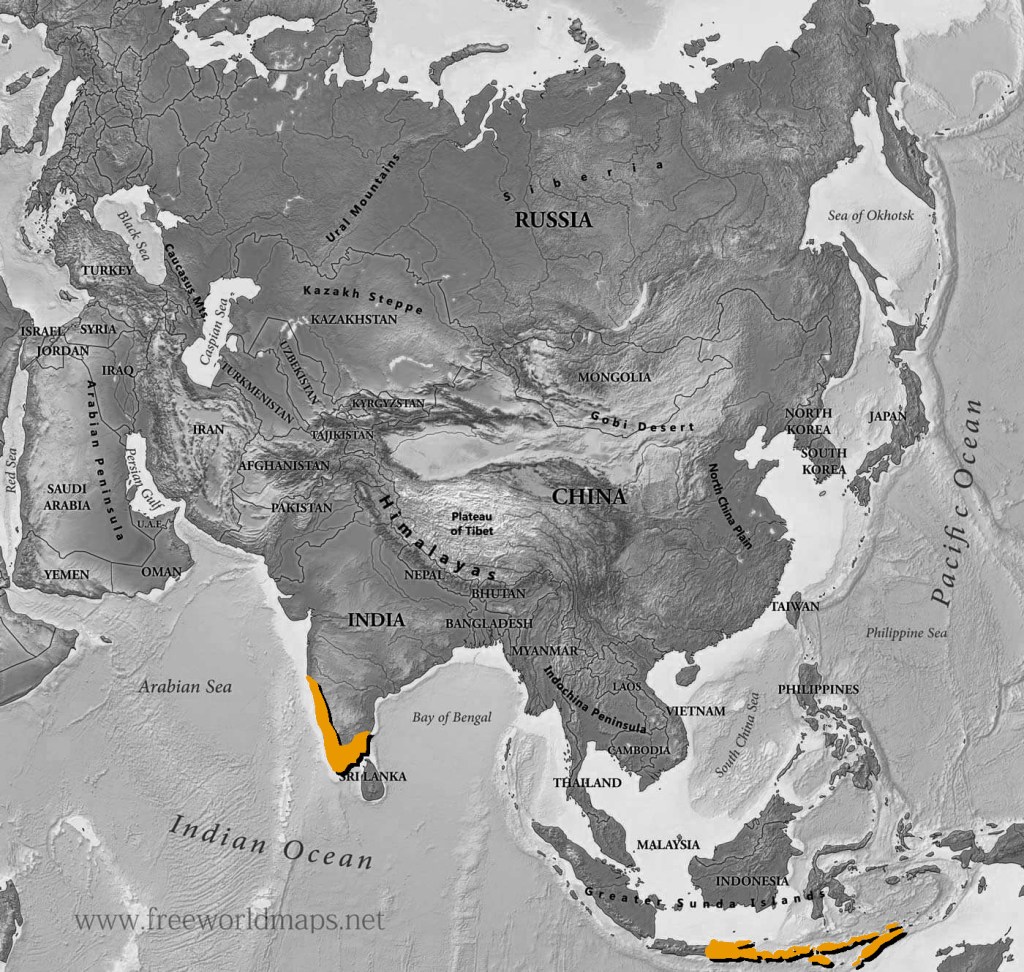
  • Phytogeographic Distribution: (S. album) Indonesian archipelago (eastern Java, Lesser Sunda Islands, and Timor), cultivated in southern India [approximate distribution* is shown in orange below]

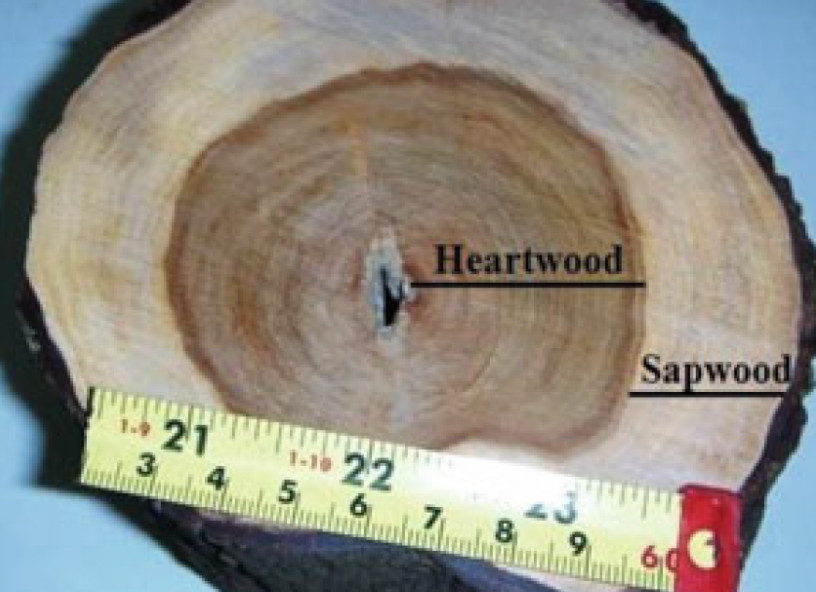
  • Harvesting Process: Yellowish fragrant heartwood is cut away from the lighter colored, non-scented sapwood; this processes often requires the destruction of the tree as the greatest concentration of oil is near its base and especially in its roots

  • Earliest Chinese Citation: late 2nd century (in translated Buddhist sutras: e.g. Daodi jing 道地經 (Yogācārabhūmi)[possibly earlier Western Han sources?]
  • Earliest Chinese Medicinal Use: late 5th century (Collected Annotations on the Classic of Materia Medica of the Divine Husbandman [Shennong bencao jing jizhu 神農本草集注])

Comments: Despite the cultural and religious prominence of sandalwood in medieval India, especially among Buddhists, Chinese citations to this important aromatic are relatively sparse well into the fifth century. This comes into a more stark relief when compared to early Chinese citations to Mediterranean storax, Moluccan cloves, Vietnamese aloeswood, Arabian frankincense, and Indian costus root during this same period. Even into the Tang, the source of imported sandalwood, either from southern India or the eastern end of the Indonesian archipelago, remain obscure in Chinese sources. Nevertheless, this should not be mistaken for total ignorance, as sandalwood emerges in China as an important religious and artistic medium, especially with the circulation of the legend of the Udayana Buddha sandalwood image starting at the end of the fourth century.

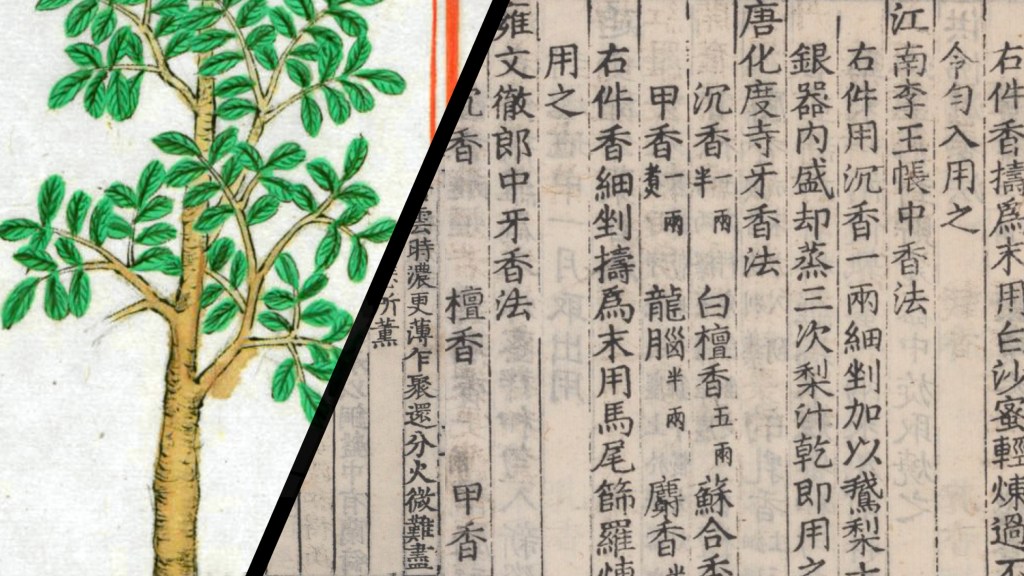
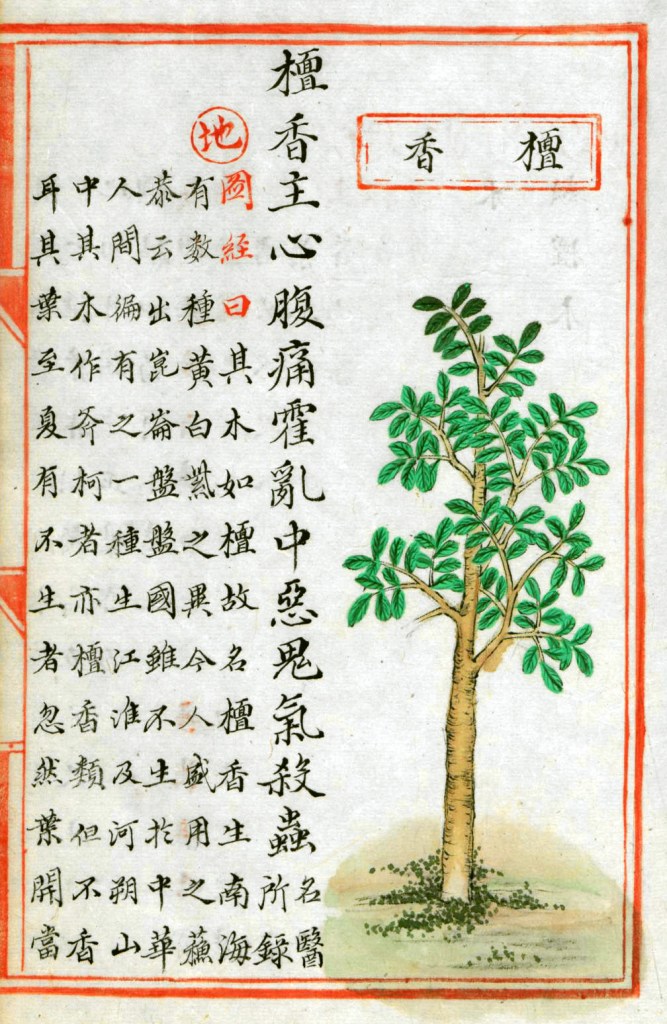
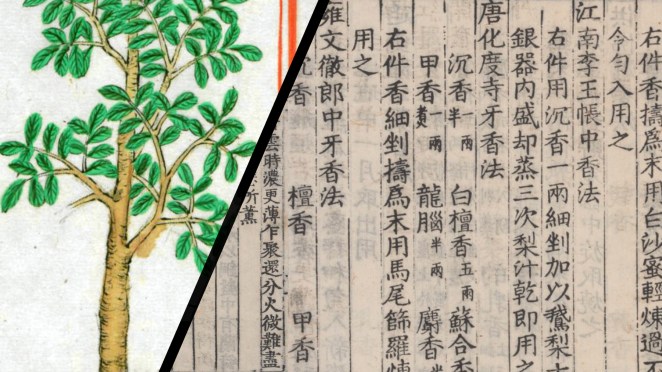
If we turn to the Classified Essentials of Materia Medica (Bencao pinhui jingyao 本草品彙精要) from 1503 we find an illustration of the sandalwood tree. It bears a resemblance to the relatively small S. album of Southern India with lanceolate-elliptic leaf anatomy.

Older scholarship had claimed sandalwood was cited in the Old Testament as a building material for Solomon’s temple, but this view has largely been abandoned. Equally, the claim that Egyptians employed sandalwood during the embalming process of mummies was poorly documented and has been rejected as unlikely. Turning to Greek and Roman sources, the purported citation to sandalwood in the first century Periplus Maris Erythraei has recently been emended, with good evidence, to teak. It also appears neither Pliny nor Dioscorides mention sandalwood in their first century works. Based on the strongest available evidence, it is only in the mid-sixth century when the Alexandrian Greek merchant Cosmas Indicopleustes indisputably refers to Indian sandalwood.  

The Sanskrit term for sandalwood, candana, has long textual history in India and can be found in Yāska’s Nirukta which was compiled before the third century BCE. In the final compilation of the Arthaśāstra, conservatively dated to the first century, sixteen different types candana are listed (all may not properly refer to sandalwood). In terms of use, both the Mahābhārata and the Ramāyaṇa, which may be of a later date, speak of candana made into a paste and smeared on the body.


* The map is intended as a general heuristic for distribution and range, it reflects selected data from modern scientific research and descriptions from medieval Chinese materia medica and gazetteers

For further information and additional references, see: Peter M. Romaskiewicz, “Sacred Smells and Strange Scents: Olfactory Imagination in Medieval Chinese Religions.” Ph.D. dissertation, University of California, Santa Barbara, 2022.


Camphor (longnao xiang 龍腦香) in Medieval China

Introduction

Medieval camphor was sourced from a relatively confined area in the South China Seas, but was nevertheless well-known across all of South and East Asia as well as the Eastern Mediterranean. Camphor was famous for its crystalline appearance and bright, cooling smell. Historically, medieval camphor needs to be distinguished from modern common camphor which has a similar appearance and smell, but which derives from an entirely different family of tree. Medieval camphor was primarily solidified oleoresin crystals that formed within the cavities of the Dryobalanops aromatica tree. Not all trees contained pockets of camphor crystals, making the aromatic rare and highly valued. For reasons that are not well understood, the medieval Chinese name for camphor, Dragon Brain Aromatic, was named after the draconic anatomy. Dragons had long been associated with water, so perhaps the origin of camphor in the seas to the far south of China helped shape this peculiar name.  

Facts and Features

  • Medieval Chinese Name: Dragon Brain Aromatic (longnao xiang 龍腦香) (among others, including names for different commercial grades)
  • Common English Name: camphor, Borneo camphor, borneol
  • Botanical Origin: solidified oleoresin that forms in cavities of the Dryobalanops aromatica tree
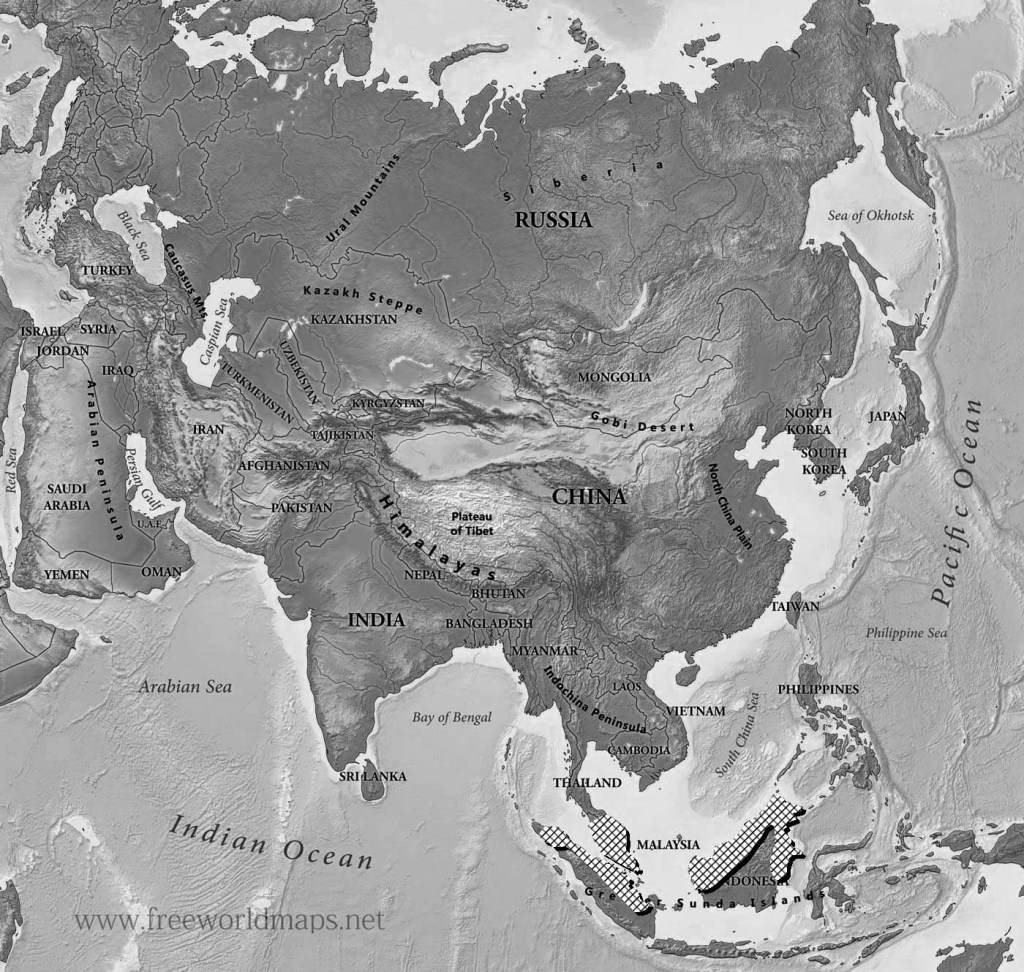
  • Phytogeographic Distribution: northern Sumatra, the southern Malay Peninsula, northern Borneo [approximate distribution* is shown in crosshatched white below]

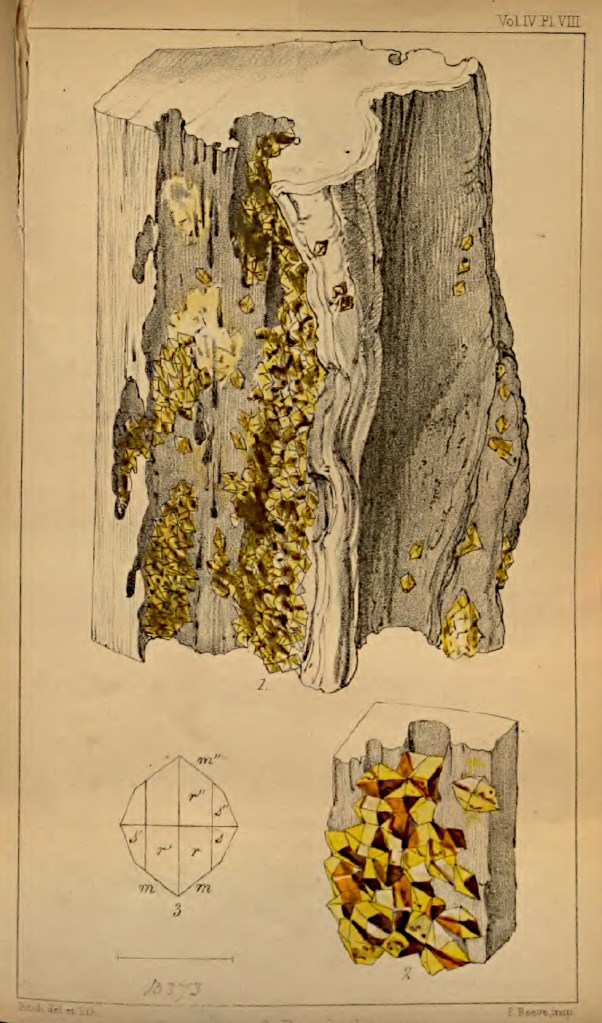
  • Harvesting Process: Tree is felled and split into logs allowing crystalline camphor deposits to be removed, sometimes a viscous oleoresin that smells of camphor is also collected [NB: the gold tinting of the illustration below is stylistic, camphor crystals are clear-white]

  • Earliest Chinese Citation: early 6th century (translated Buddhist sutras: e.g. Miscellaneous Collection of Dhāraṇī [Tuoluoni zaji 陀羅尼雜集]); mid-7th century (dynastic history: Book of Liang [Liangshu 梁書])
  • Earliest Chinese Medicinal Use: late 5th century? (Collected Annotations on the Classic of Materia Medica of the Divine Husbandman [Shennong bencao jing jizhu 神農本草集注]); mid-7th century (Newly Revised Materia Medica [Xinxiu bencao 新修本草])

Comments: In medieval China camphor was first known as an export from kingdoms along the Malay Peninsula. Another camphor product known the Ointment of Barus was a viscous oleoresin “oil” often associated with Sumatra. Not all of the towering Dryobalanops aromatica tress produce camphor crystals or camphor oil, however, thus adding to the difficulty in acquiring these highly-valued aromatics. It is likely this rarity spurred the creation of sublimated and distilled common camphor which comes from the Cinnamomum camphora (zhang 樟) found in southern and eastern China, as well as northern Vietnam, Taiwan, and Japan. When this shift started to happen is not well documented, but the mid-to-late eleventh century bears some indications of this change.

If we look at the Classified Essentials of Materia Medica (Bencao pinhui jingyao 本草品彙精要) from 1503, we find a depiction of camphor collecting. Against expectation, however, the tree is cited as growing in Guangzhou, an impossibility for the D. aromatica. It appears the illustrator conflated it with the native C.camphora. Nevertheless, the illustration shows how portions of the D. aromatica tree were cut off to expose the pockets of camphor. The collector could then scrape the crystals from the wood into a collection basket.

Reconstructing the history of the circulation of camphor in the medieval world has been hampered in part by the confusion between camphor from the D. aromatica and the C.camphora. For example, it was thought the residue of C.camphora camphor was found wrapped inside a second century BCE Egyptian mummy, but such a claim is without warrant. The chemical residue more likely came from some East African flora that has the same chemical profile, such as Ocotea usambarensis (East African camphorwood) or Ocimum kilimandscharicum (East African camphor basil).

The medieval camphor under main consideration here was not known to Western Asia until the Byzantine Empire when it was noted by Aetius of Amida (ca.500–ca. 575). The history of camphor in India is rather complex as it seems there was an abundance of trade throughout the medieval period whereby India was sometimes portrayed as producing camphor, perhaps using a native Indian substitute. Most of these speculations remain poorly supported. As it stands, the earliest Indic citation to camphor may be the Great Compendium (Bṛhatsaṃhitā) of Varāhamihira in the mid-sixth century. The earliest world-wide citation to camphor, however, is curious and just-so happens to place it in medieval China. By happenstance, a bundle of letters was discovered in western China in the early twentieth century composed in Sogdian. One letter talks about purchasing camphor at Loulan at the eastern end of the Tarim Basin. The bundle of letters have been dated to the early part of the fourth century.


* The map is intended as a general heuristic for distribution and range, it reflects selected data from modern scientific research and descriptions from medieval Chinese materia medica and gazetteers

For further information and additional references, see: Peter M. Romaskiewicz, “Sacred Smells and Strange Scents: Olfactory Imagination in Medieval Chinese Religions.” Ph.D. dissertation, University of California, Santa Barbara, 2022.


Aloeswood (chen xiang 沈香) in Medieval China

Introduction

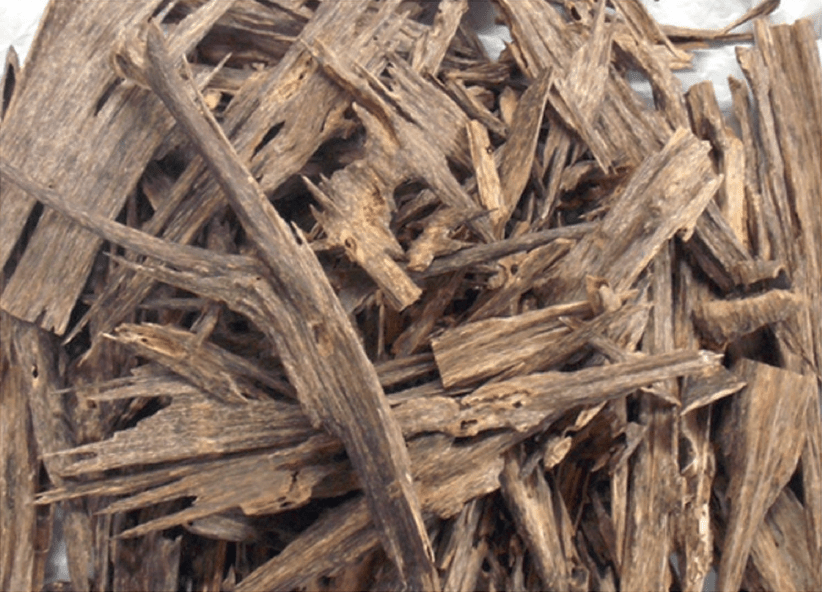
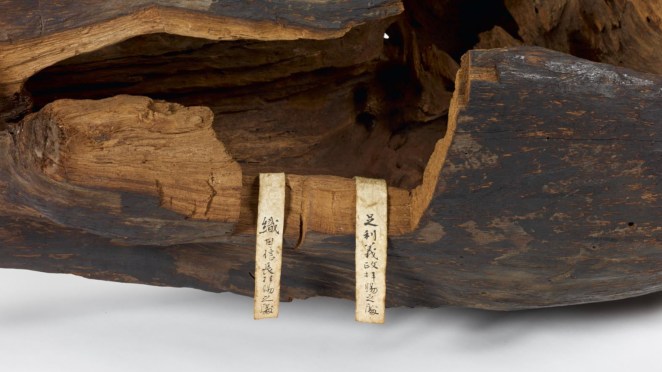
Aloeswood has long been considered among the premier perfuming and incense ingredients in East Asia, arguably similar to the historical importance of frankincense in West Asia and Europe. Aloeswood remains the costliest wood in the world and is known for it rich and complex scent profile. Notably, the creation of fragrant resin-infused aloeswood occurs only under specific conditions of stress upon the tree. Moreover, aloeswood forms unevenly within the tree’s wood fibers, thus harvested aloeswood pieces can be relatively small and irregular in shape. As a consequence, aloeswood pieces have been graded in terms of resin content, color, and scent quality since the early medieval period. The most densely resinous pieces of aloeswood will sink in water, a peculiar characteristic that gave rise to the medieval Chinese name, Sinking in Water Aromatic.

Facts and Features

  • Medieval Chinese Name: Sinking in Water Aromatic (chenshui xiang 沈水香), Sinking Aromatic (chen xiang 沈香; J. jinkō) (among others, including names for different commercial grades)
  • Common English Name: aloeswood, agarwood, gharuwood
  • Botanical Origin: Resin-infused heartwood produced by several species in the Aquilaria genus (esp. A. malaccensis, A. crassna, A. sinensis)
  • Phytogeographic Distribution: Northeast India into the Malay Peninsula, Indonesian Archipelago, Indochinese Peninsula, southern China, eastern Borneo, Philippines [approximate distribution* is shown in blue below]

  • Harvesting Process: Darker colored fragrant aloeswood is cut away from the lighter colored, non-scented sapwood; this incurs considerable damage to the tree as its limbs are hewn off or the tree is felled and cut apart

  • Earliest Chinese Citation: late 2nd century (translated Buddhist sutras: e.g. Daodi jing 道地經 [Yogācārabhūmi]); mid-to-late 3rd century (regional gazetteers: e.g. Treatise on Strange Things of the Southern Regions [Nanzhou yiwu zhi 南州異物志])
  • Earliest Chinese Medicinal Use: 3rd/4th– late 5th century (Supplementary Record by Famous Physicians [Mingyi bielu 名醫別錄] and Collected Annotations on the Classic of Materia Medica of the Divine Husbandman [Shennong bencao jing jizhu 神農本草集注])

Comments: In early medieval China, aloeswood was known as an export of the Indochinese Peninsula, especially from what is now central and southern Vietnam. Aquilaria trees also grow in the southern Chinese tropics and I suggest it was as early as the mid-fifth century when domestic harvesting of aloeswood begins. China continued to received imports and tributes of aloeswood through the Tang and Song dynasties and supplemented with goods obtained from native trees in the far south.

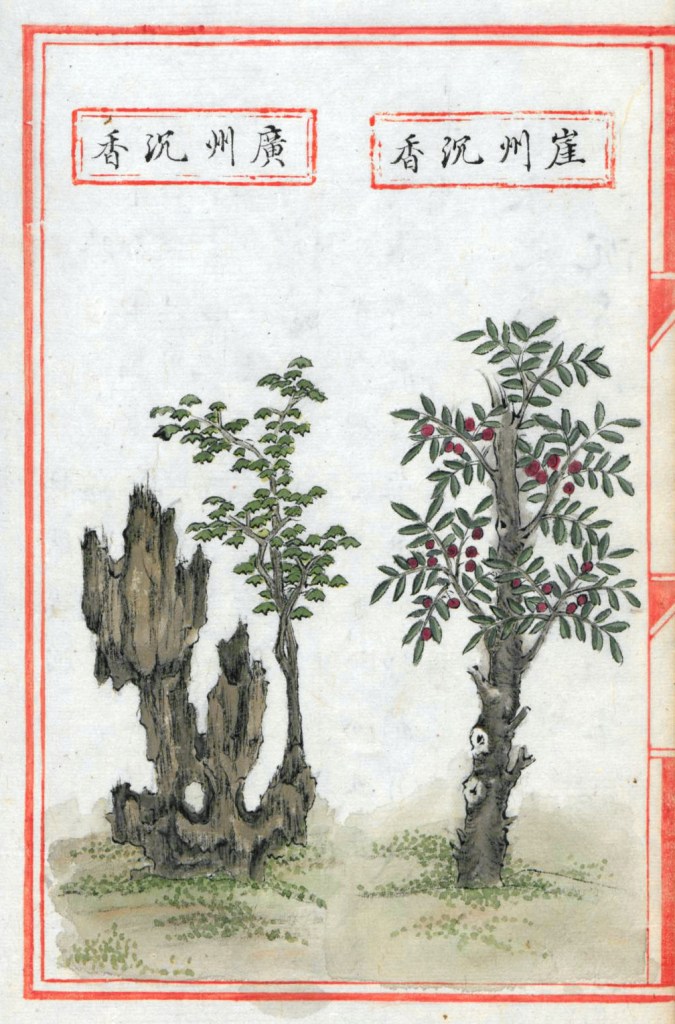
If we look at the Classified Essentials of Materia Medica (Bencao pinhui jingyao 本草品彙精要) from 1503, we see two illustrations of aloeswood, one labelled (on the right) as being from Yazhou 崖州, present day Sanya on southern Hainan Island, and the other labelled (on the left) Guangya 廣州, the present day region around Guangzhou. By the late medieval period aloeswood from Hainan was considered superior to the continental variety. It is worth noting at the outset that this pair of illustrations depict two very different types of tree. The illustration on the right shows a fruiting tree with simple (unlobed) ovate leaves, while the illustration on the left show a smaller tree or sapling with distinctive tri-lobed leaves.

It is also worth noting that both illustrations may suggest aloeswood harvesting. For example, the tree on the right has lost its lower branches, reflecting a method of harvesting associated with Hainan in the late medieval period. The illustration on the left might depict, rather crudely, the more ruinous harvesting practices associated with continental China. At the very least, the larger irregular tree section resembles a carved out aloeswood piece.

Older scholarship has claimed aloeswood was used by the Egyptians for embalming and was further referenced in the Old Testament, but these views have been largely abandoned. A more firm identification can be found in the first century when the Greek physician Dioscorides describes aloeswood as a product of India and Arabia (likely via transshipment). Aloeswood is mentioned in several classic Indic texts, such as the Mahābhārata, Arthaśāstra, Suśruta Saṃhitā, and Caraka Saṃhitā. The earliest citations are conservatively placed in the first few centuries of the common era. Moreover, Indic sources associate the aromatic wood with northeastern India, the only regional area where Aquilaria trees classically occurred.


* The map is intended as a general heuristic for distribution and range, it reflects selected data from modern scientific research and descriptions from medieval Chinese materia medica and gazetteers

For further information and additional references, see: Peter M. Romaskiewicz, “Sacred Smells and Strange Scents: Olfactory Imagination in Medieval Chinese Religions.” Ph.D. dissertation, University of California, Santa Barbara, 2022.


88* Questions to Ask an Artifact

Download a PDF of this webpage here!
Revised Summer 2024

Instructions

Once you have a material artifact at hand you can being interrogating it. Below are a series of 88 questions (give-or-take) you can use to begin this process.

First, turn to the category of questions on Materiality and answer them by closely inspecting the artifact and thinking about your relationship to it.

Next, extend your analysis by attempting to infer answers to the questions under the second and third categories of Production and Consumption. You may find it worthwhile to do additional research beyond simple inspection to answer these.

The last category, Webs of Signification, attempts to create bridges between earlier questions. The overall point of this analysis method is to start small and build out larger networks of meaning that converge upon the artifact.


Category One: Materiality
  • What are the artifact’s most salient sensorial properties?
    • Visual characteristics: What do you notice about line and shape (two-dimensional) and/or form (three-dimensional)? What do you notice about color (hue, shade, vibrancy, &c.), texture (porous, reflective, matte), and pattern (plain, banded, spotted, &c.)?
    • Tactile characteristics: What do you notice about dimension and shape (flat, round, angular, &c.) and/or texture (tacky, smooth, rough, &c.)? What do you notice about density (soft, hard, malleable, &c.) and temperature (cool, warm)?
    • Aural characteristics: Does the object seem like it is intended to make a sound? Is that sound pleasant or unpleasant? Does it sound like something (wind, music, birds, voices, &c.)?
    • Olfactory characteristics:Does the object have a noticeable smell? Is it pleasant or unpleasant? Does it smell like something (flowers, citrus fruit, soil, &c.)?
    • Gustatory characteristics: Does the object seem like it is intended to be ingested? Is the taste pleasant or unpleasant? Does it taste like something?
  • What are the artifact’s most salient physical properties?
    • Materials: What is the object is made from (paper, wood, stone, metal, plastic, &c.)?
    • Size: What are the object’s measurements (length, height, depth, volume) or what can you say about its size (portable, awkward to grasp, imposing, &c.)?
    • Weight: What is the object’s weight or what can you say about its weight (light, moderately heavy, immovable, &c.)
    • Orientation: How is the object oriented? Is there a distinct front, back, top, bottom, inside, outside?
    • Integration: Is the object one part or is it made up of many parts? Is there organization among the parts? Do parts move, open, or connect?
    • Addition/Inscription: Are there parts or elements that seem to be added at later stages of the object’s life (inscriptions, stamps, modifications, &c.)?
    • Subtraction/Wear: Are there parts or elements or that seem to have been broken, worn off, or rearranged?
  • What is your initial relationship to the artifact?
    • Do you have an emotional response to the artifact? What is distinctive, salient, or special about the artifact? How do you interpret or explain the artifact? Do you feel others would interpret or explain it in similar ways?
    • How might the artifact impel people to act? Does the materiality (sensory and physical properties) of the artifact provoke a particular kind of response, action, or performance? Does its materiality (size, weight, odor, &c.) invite or restrain certain kinds of responses or uses?

Category Two: Production
  • What do we know about the artifact’s physical origins?
    • Fons et origo: Was the artifact human made, created through natural processes, or a meaningful combination of both? Is the artifact considered complete or is it part of something larger (part of an object, part of a set, &c.)? Is the object considered an original work or a copy (derivative of an original)? If the latter, what differences are there between the original (model) and the copy (derivation)?
    • Maker: Was the artifact signed or can it be attributed? Was more than one person involved in its creation? Who was the maker (artist, craftsperson, publisher, &c.)? Was the object designed by a different person or entity?
    • Age: When was the object created? Was it made in different stages and thus have different ages?
    • Place: Where was the object created (country, workshop, publishing house, &c.)? Does this place have a close relationship (cultural, economic, religions, &c.) to this type of object?
  • What do we know about the artifact’s creation process?
    • Creation: What skills, methods, and techniques were necessary to create this object? What tools or technology were required? How long did production take?
    • Materials: What raw materials were used to make the object or were otherwise crucial to its production? Are the materials rare, costly, or difficult to acquire? Did they have to be transported long distances to get to the object’s place of production?
    • Timing: Was the object made during a special time? Was it made in response to a specific historical event or during a specific occasion?
    • Uniqueness: Is the object singular or mass produced? It is part of a larger group or set of objects? Does the object have a special relationship to other objects? Is it part (or an expression) of a broader genre of item?

Category Three: Consumption
  • What do we know about the artifact’s physical destination?
    • Audience/Consumer: Was the object owned or used by a known individual or institution? Who is the type of person that would typically own or use this object?
    • Acquisition: Where did the consumer purchase or acquire the object? Was it close to where the object was produced? Was the object new or old at the time of acquisition?
    • Cost: What did this object cost? Was is relatively expensive, inexpensive, or free? Can appreciable cost be attributed to the object’s rarity, material composition, or the skill/time required in its production? What else might contribute to the cost of the object?
    • Placement: Where was the object located during acquisition? Was it placed in different locations at different times (from artist studio to temple altar, from store display to bookshelf, &c.)? Was it transported a long distance from its place of production? Was it kept in a private space (home, workspace, personal shrine, &c.) or public space (outside, museum, temple, &c.)? Was it kept in isolation or displayed with other objects?
  • What do we know about the artifact’s use?
    • Material-use: How was the object used by the owner (held, displayed, hidden, &c.)? Does the object display signs of material use (oxidation, wear, modification, &c.)? Was the object used individually or collectively with others? Was it used by non-human species (eaten, buried and decomposed, &c.)?
    • Time-use: When was this object used by its owner? Was it used daily/regularly or only during special occasions (holidays, festivals, &c.)?
    • Place-use: Where was the object used by its owner? Is this location different from where it is stored? Was it used in private or public spaces?

Category Four: Webs of Signification
  1. Does some known aspect of the artifact’s origin (maker, material, age, &c.) provoke certain kinds of responses or uses? Does the singularity or mass production of the artifact impact its reception or use? How does the artifact existing as either an original or derivation (copy) impact its reception or use?
  2. Who is the intended audience of this artifact? Does possession or use of the object signal one or more group identities or affiliations (religion, class, race, gender, sexuality, nationality, &c.)?
  3. What is the intended purpose of this artifact? Does it signify other concepts, meanings, or associations? What roles does it play within social, religious, and economic systems? Does possession or use of the artifact convey (or confirm) power or agency (human or divine)?
  4. What is the artifact’s current context and relevance? What do we know about its provenance (history of ownership)? How might the current contexts differ from the artifact’s intended meaning, audience, use, and purpose?
  5. Questions of a “religious” nature:
    • Does a divine presence “hold,” interact with, or inhabit the artifact? Does the object equate to divine presence (i.e. is the object an index of divinity)? Are there times when the divine presence is absent in regards to the artifact (i.e. profanation) ?
    • Does possession or use of the artifact signify divinity or elevated status in the user? Do all people have equal access to this divinity or status?
    • Do you feel the artifact, in its current material state and physical location, is adequately “religious”?
    • Does a religious message “travel through” this material object?
    • How does media shape the message of religion through this object?
    • How does replicability or non-replicability of the artifact impact its religious meaning?
    • Does the material object inspire belief or convey sacrality, divine power, or specialness?

*These questions were devised as part of a university course that explored religion and material culture. Feel free to use and adapt to your needs. Email: peter.romaskiewicz@gmail.com.


Related Posts

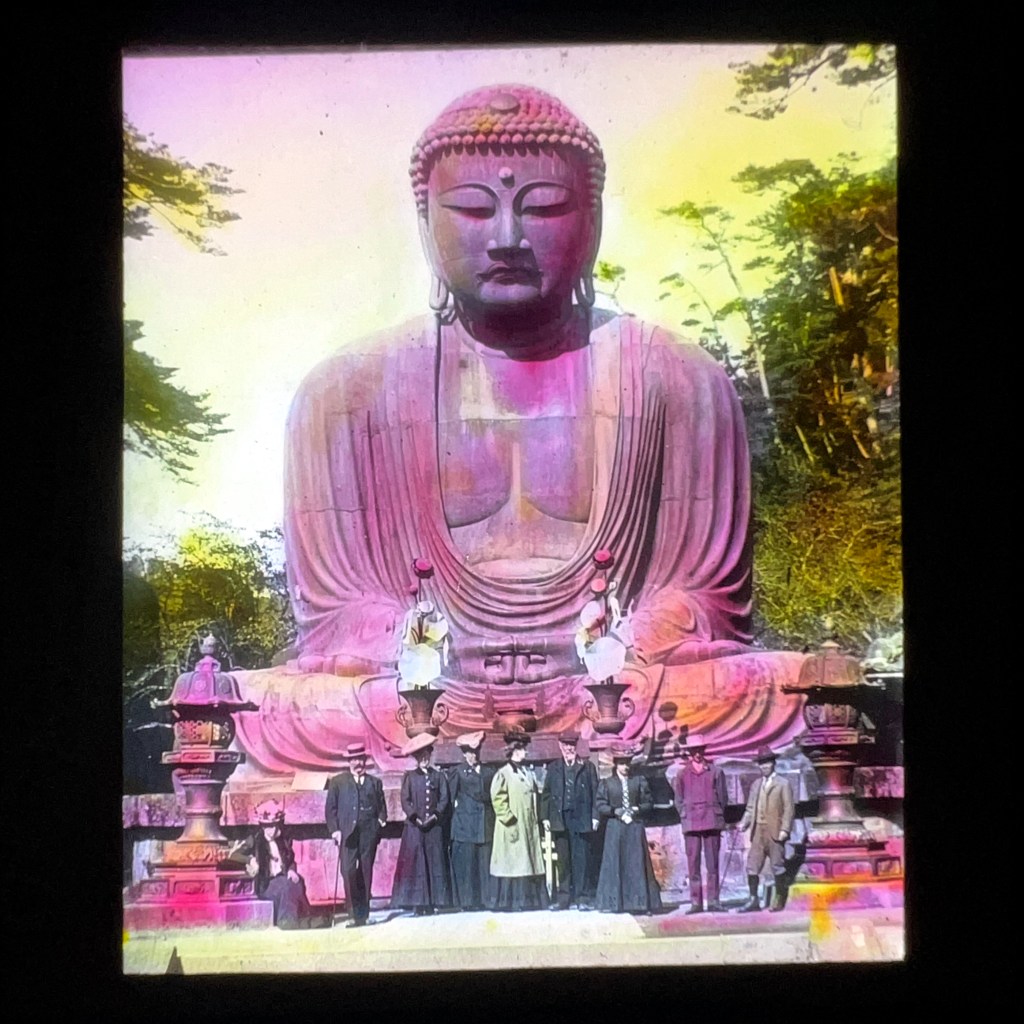
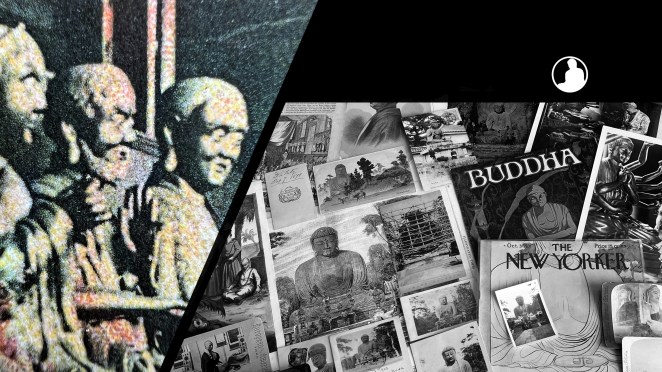
Daibutsu and Tour Group Glass Lantern Slide

For all the new Buddhas in the West posts
follow us on Bluesky & Instagram


In the pre-film era, magic lantern slides were a part of popular entertainment alongside panoramas and mechanical theaters. Many amateur lecturers who returned from a trip would book a church hall or town theater to show slides illustrating their personal travel narrative.

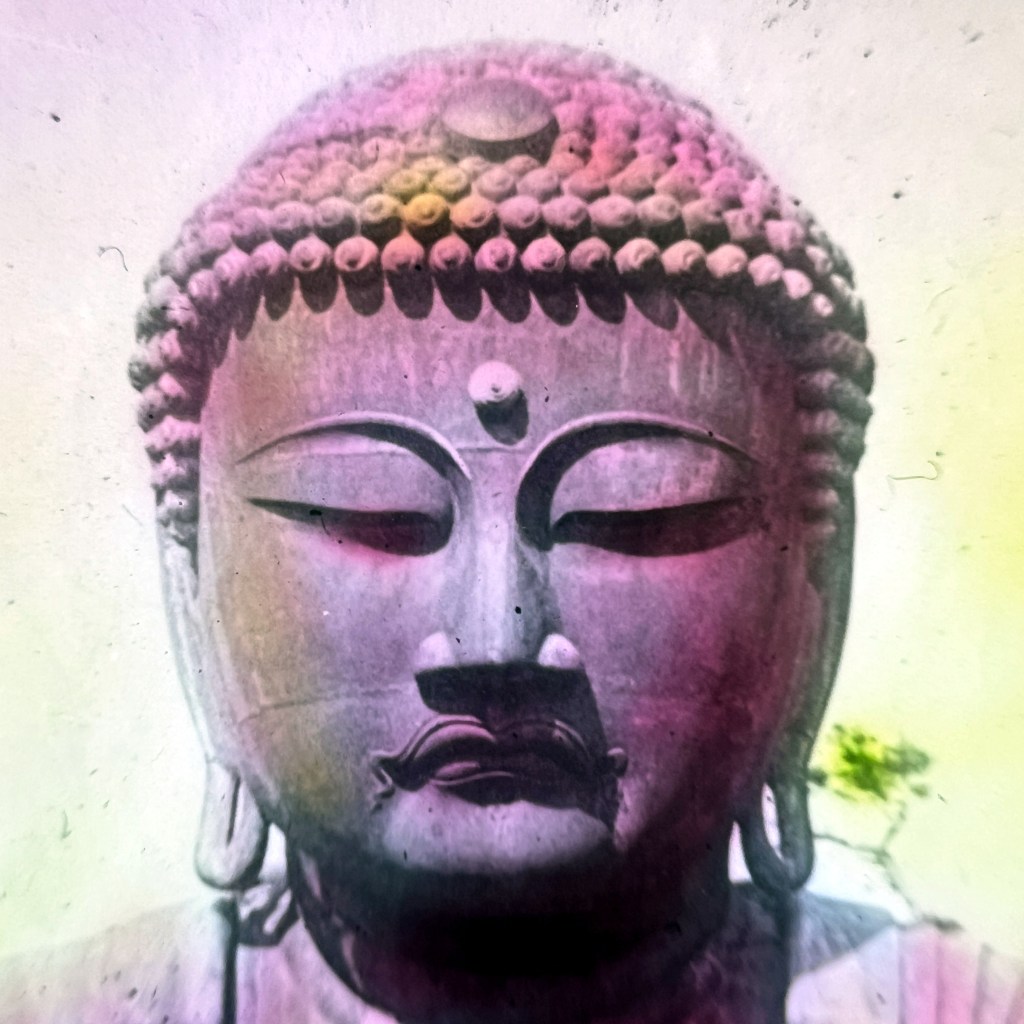
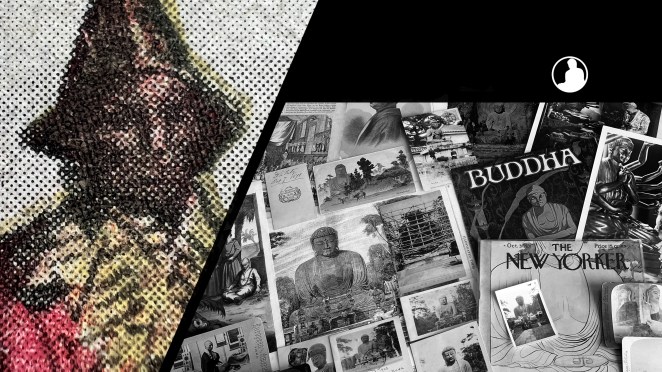
While photos and postcards were shared with friends in the home, glass lantern slides were also intended for showy public display. Consequently, glass slides were often hand-painted in eye-catching color; here we see the bronze Kamakura Daibutsu in uncharacteristic magenta.

Two pieces of glass, one of which bears the positive photographic print, sandwich the image to keep it safe from scratches and debris. Unlike the exemplar here, the publisher would often print their name on the matting around the image.

Based on the layout of the Daibutsu grounds, this photo was taken around 1910.

The University of Hawaii at Manoa has a large collection of slides as part of their Japan Collection, viewable here: https://tinyurl.com/8hdvfzad


The Buddhas in the West Material Archive is a digital scholarship project that catalogues artifacts depicting Buddhist material culture for Western audiences. It’s comprised of prints, photos, and an assortment of ephemera and other objects. For a brief introduction to this archive, visit the main Buddhas in the West project page.


For Related Buddhas in the West Posts Featuring Historical Glass Lantern Slides:


For the Most Recent Buddhas in the West Posts:


A.W. Plâté’s Reliquary Offering Postcard

For all the new Buddhas in the West posts
follow us on Bluesky & Instagram


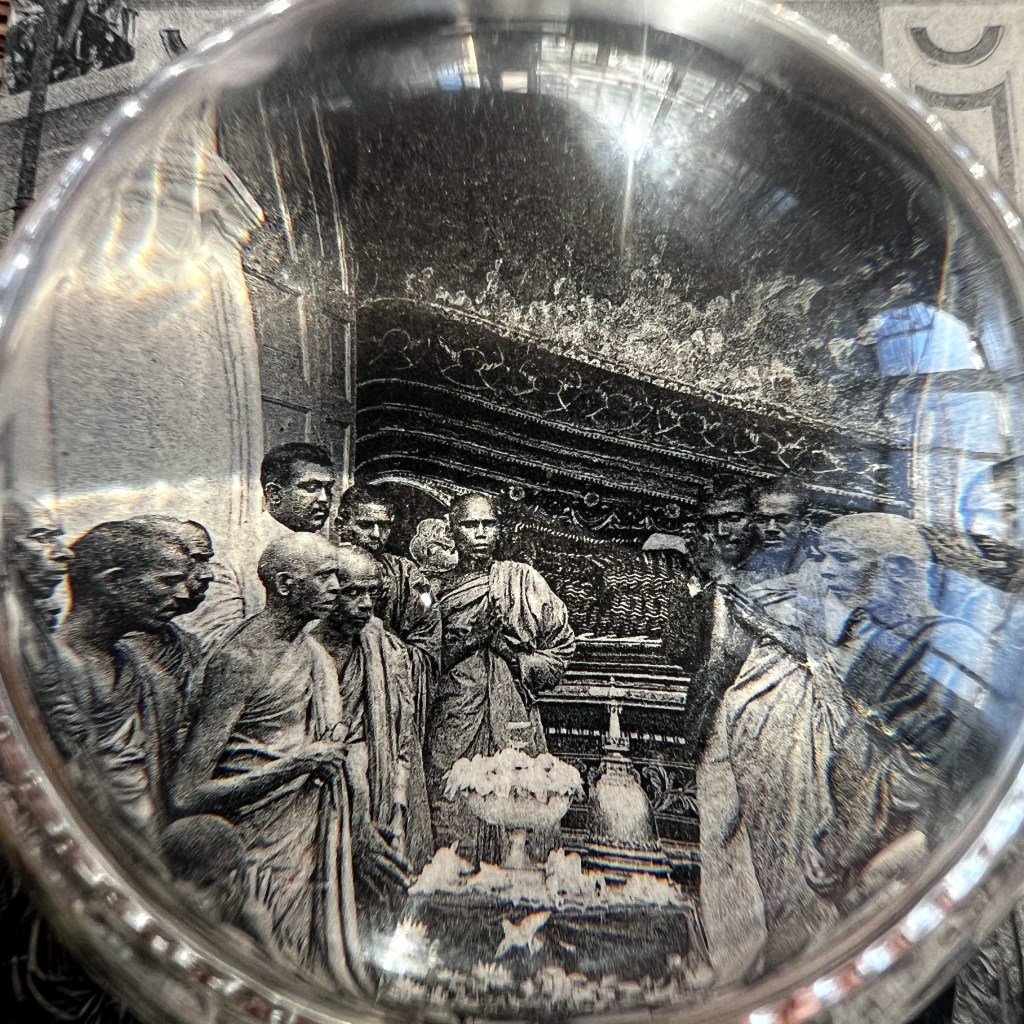
The first private company to sell Singhalese postcards was A. W. Plâté & Co. In 1890 Plâté first opened his photography studio and by 1907 he dominated the domestic postcard market, selling half a million cards that year.

As was common in many parts of the world, this card was printed in Germany, here identified with a rubber stamp. The hand written note describes the colors of the monk’s robes, suggesting this was purchased as an inexpensive photographic souvenir with no intention to mail.

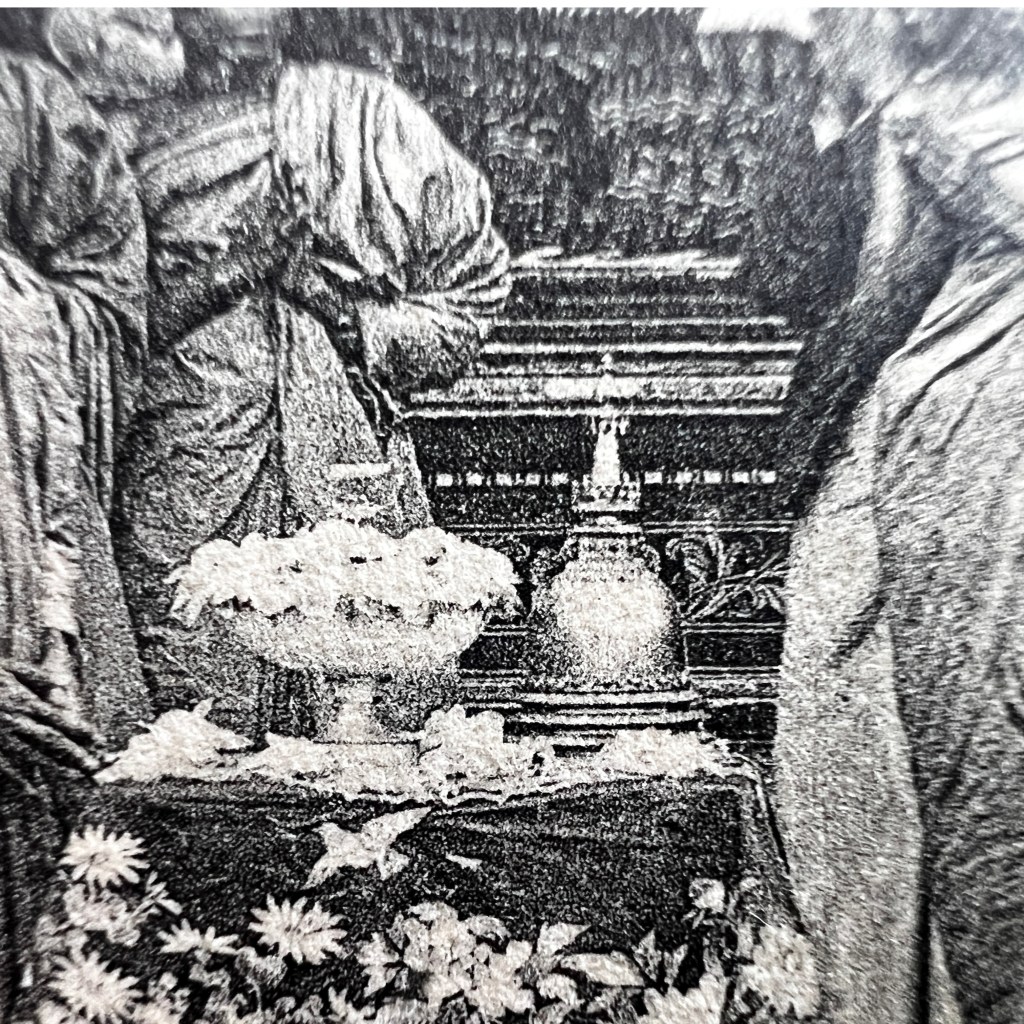
Still in operation, Plâté’s photographic archives are a trove of Singhalese visual records. Can you find the partly obscured Buddha statue among the group of worshiping monks?

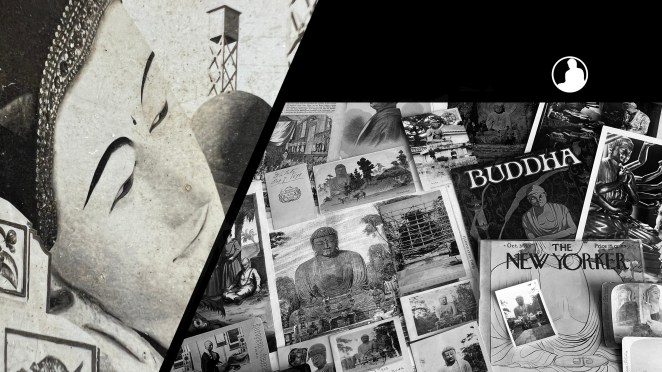
There is a Sleeping Buddha statue in just inside the temple doorway.

The monks pay homage to a small reliquary shrine that is dressed with flower offerings. For a discussion of Plâté’s legacy in the history of Singhalese photography, see the article by Benita Stambler here: https://tinyurl.com/sytn2mmd.


The Buddhas in the West Material Archive is a digital scholarship project that catalogues artifacts depicting Buddhist material culture for Western audiences. It’s comprised of prints, photos, and an assortment of ephemera and other objects. For a brief introduction to this archive, visit the main Buddhas in the West project page.


For Related Buddhas in the West Posts Featuring Historical Postcards:


For the Most Recent Buddhas in the West Posts:


Vantine’s Buddha Sandalwood Incense Tin

For all the new Buddhas in the West posts
follow us on Bluesky & Instagram


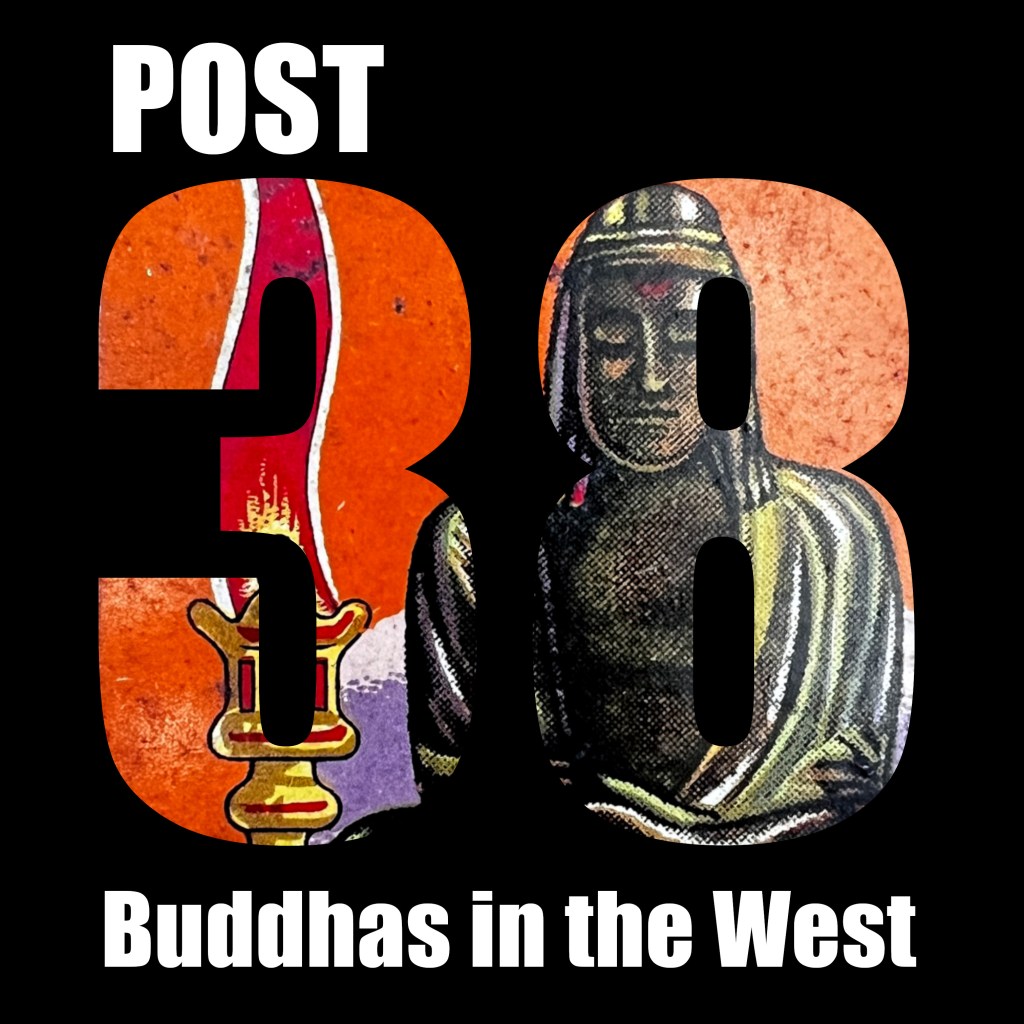
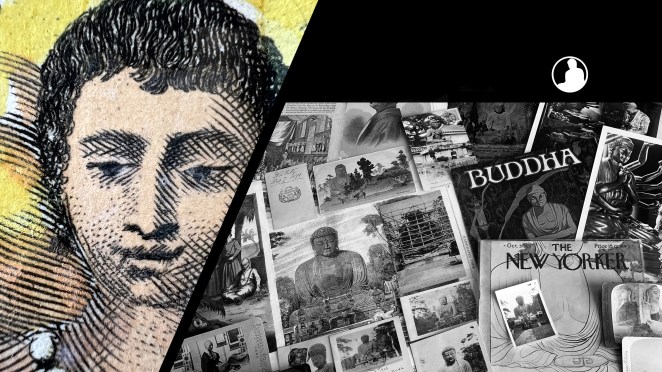
An Art Deco Buddha: Ashley Vantine arrived in the newly opened port of Yokohama in 1861 looking to start an American import business. By the turn of the 20th century, A.A.Vantine & Co. had become one of the most influential importers of “Oriental” goods into the US.

First positioning itself as an authority of Japanese goods, by the 1890s Vantine’s shifted to a more eclectic mass-market approach. With a famous flagship store on Broadway in New York and a successful mail order business, Vantine’s goods circulated across the US.

By the 1910s it was becoming commonplace for more Americans to display Buddhist statuary in their homes to signify exotic taste. Vantine’s helped supply this growing market.

As the cosmetics market blossomed after WWI, Vantine’s shifted to perfumes and incense, often advertised with Buddhist imagery.

Valuable materials from the Vantine’s company are held by the Winterthur Museum Library. A mail order catalogue from 1914 is viewable here: https://tinyurl.com/4a7mhtst


The Buddhas in the West Material Archive is a digital scholarship project that catalogues artifacts depicting Buddhist material culture for Western audiences. It’s comprised of prints, photos, and an assortment of ephemera and other objects. For a brief introduction to this archive, visit the main Buddhas in the West project page.


For Related Buddhas in the West Posts Featuring Historical Trade Cards:


For the Most Recent Buddhas in the West Posts:


Paris’ Panorama du Tour du Monde Advertising Card

For all the new Buddhas in the West posts
follow us on Bluesky & Instagram


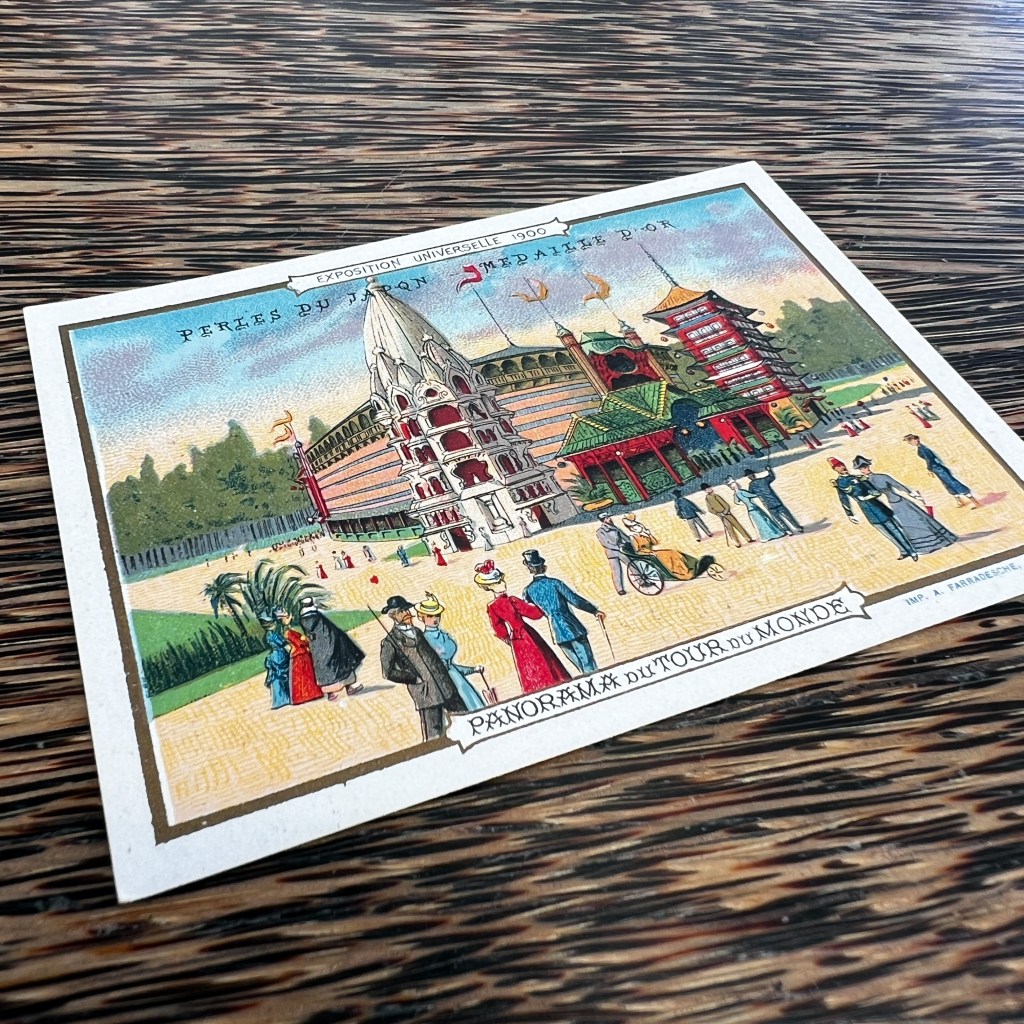
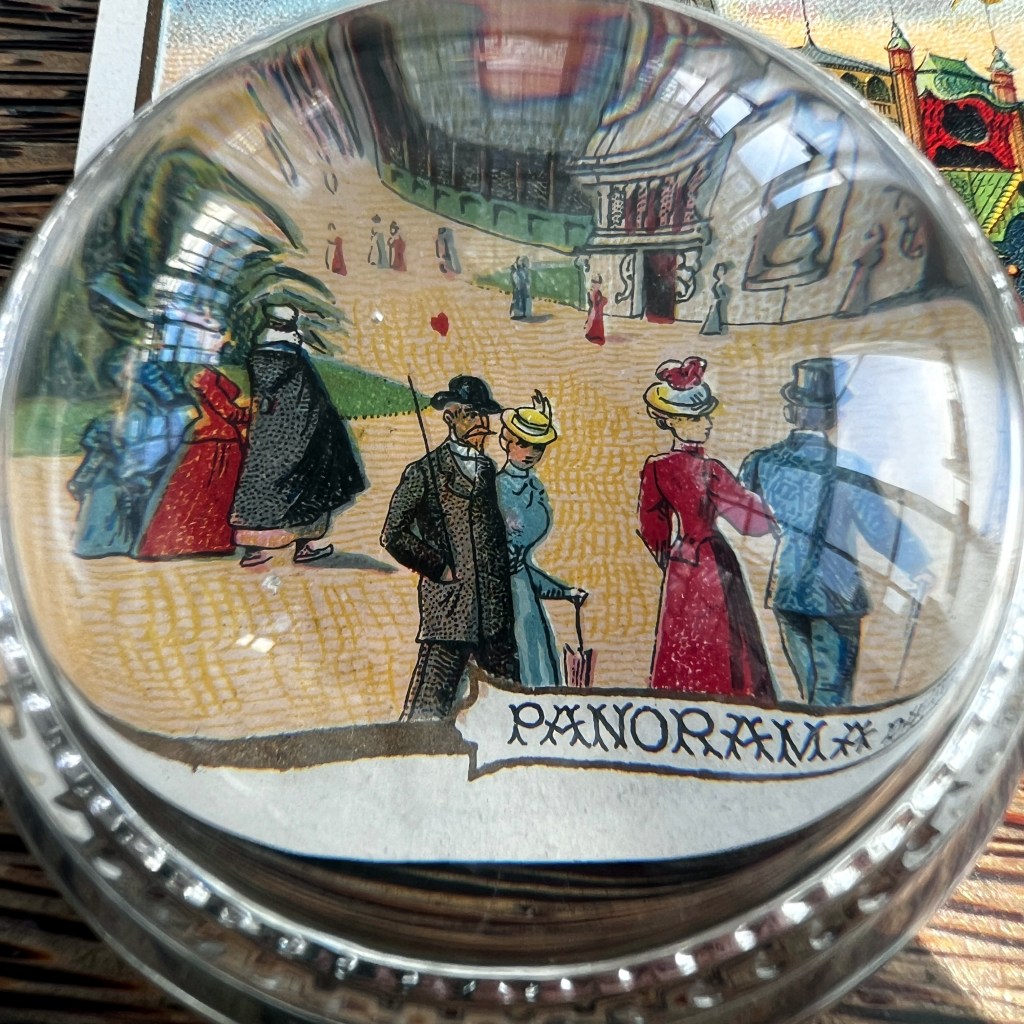
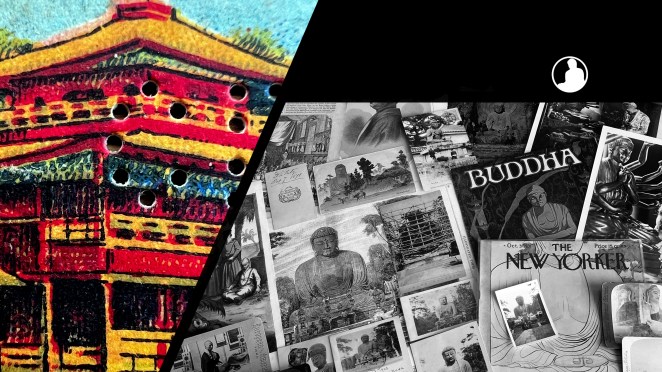
Panorama du Tour du Monde: By the 1900 Paris Exposition, amusement concessions were a major draw for all exposition visitors. Not far from the foot of the Eiffel Tower one found the Panorama du Tour du Monde which took patrons on a virtual voyage from Spain to Japan.

Built by Alexandre Marcel for a French sea-transport company, the architecture called to mind exotic locales with Asian-inspired structures. The main entrance was modeled on the Tōshō-gū in Nikkō, Japan. Some sources claim the red pagoda was based on a Chinese model.

Visitors were drawn in by large panoramic paintings of various foreign countries to give a sense of virtual travel. More astonishingly, the concession integrated many indigenous performers who engaged in various trades while wearing traditional foreign costumes

The beautiful lithographic print was part of an advertising campaign for a French company selling tapioca pearls, called “perles du Japon.”

King Leopold II was so struck by the building, he had Marcel build the Japanese Tower in Brussels. For more on the Tour du Monde exhibition, see https://tinyurl.com/2vbmr3c7.


The Buddhas in the West Material Archive is a digital scholarship project that catalogues artifacts depicting Buddhist material culture for Western audiences. It’s comprised of prints, photos, and an assortment of ephemera and other objects. For a brief introduction to this archive, visit the main Buddhas in the West project page.


For Related Buddhas in the West Posts Featuring France:


For the Most Recent Buddhas in the West Posts: