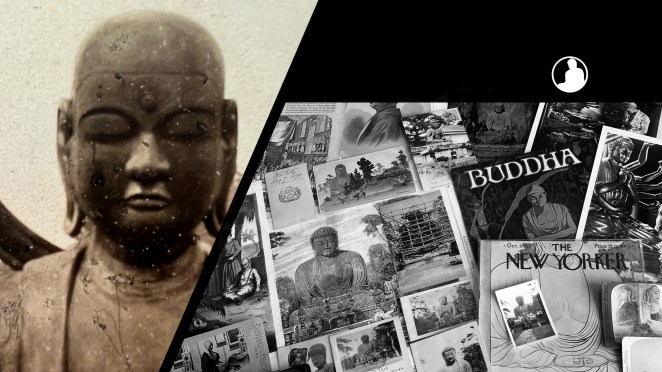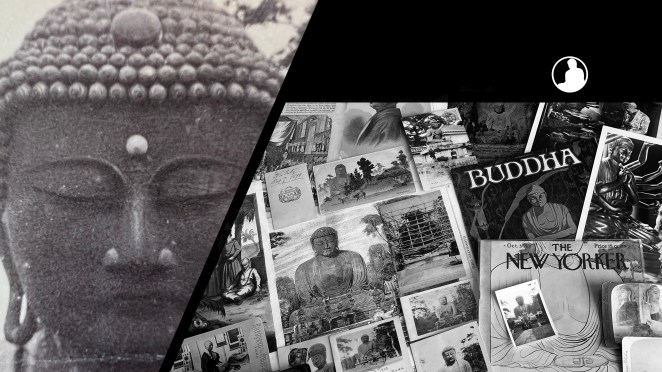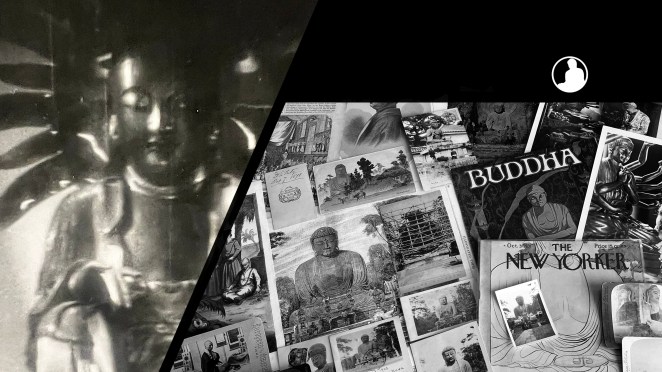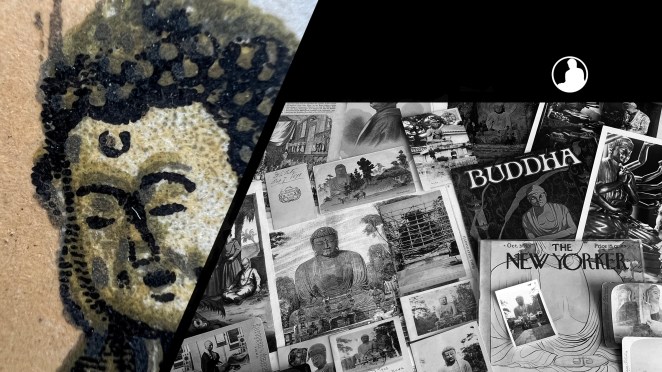
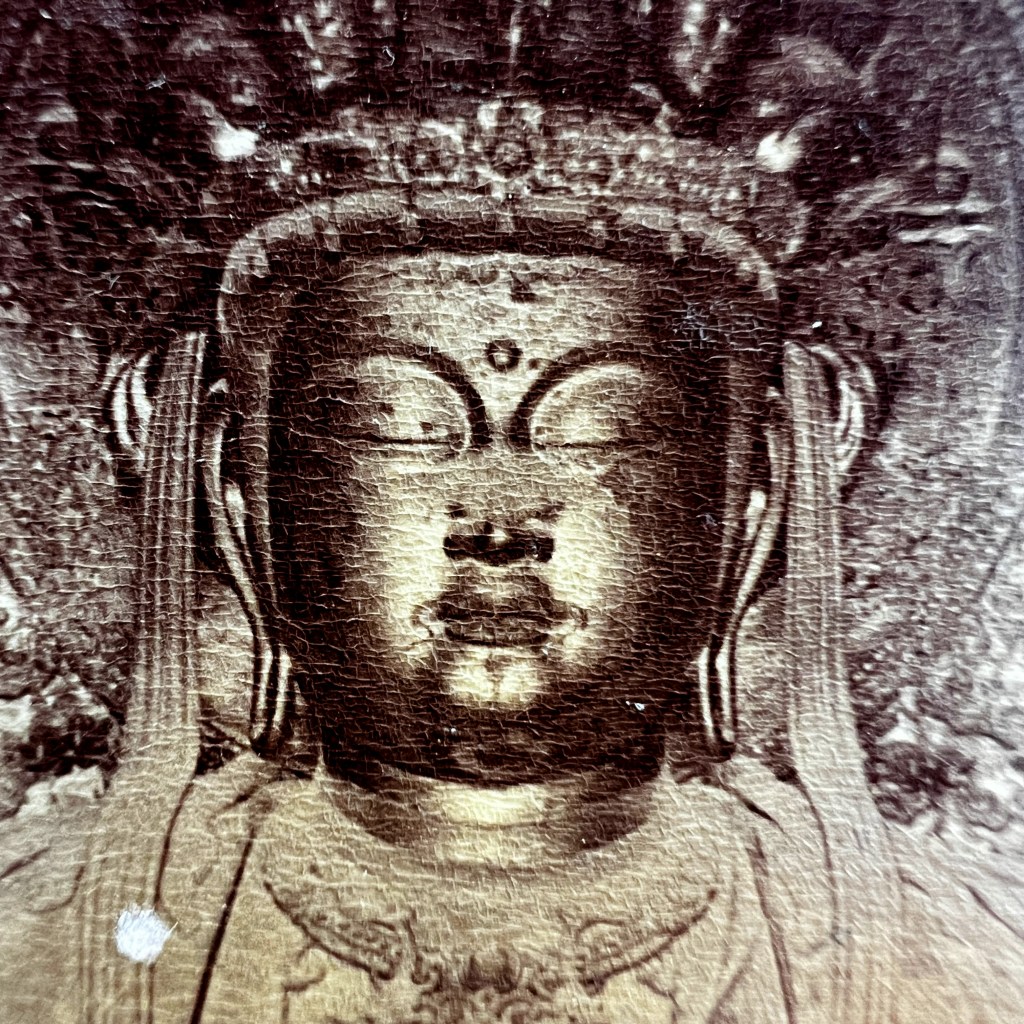
Albumen Photograph of Sanjūsangen-dō Kannon

For all the new Buddhas in the West posts
follow us on Bluesky & Instagram


For visitors to Japan in the 1860s, Kyoto was seen as brimming with dangerous anti-foreign samurai. This changed in the 1870s when it was transformed by tourism, driven in part by foreign photography studios who were allowed to shoot the city for the 1872 Kyoto Exposition.

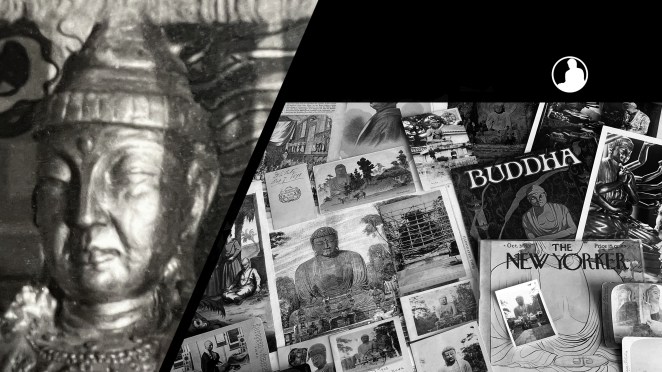
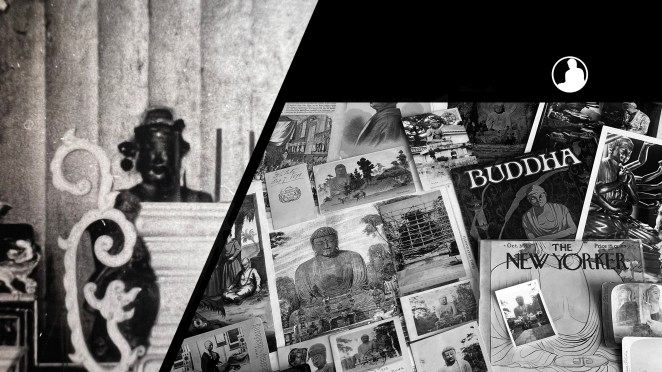
While Europeans knew of Kyoto’s Sanjūsangen-dō through late 17th century book engravings, the first photographs of the temple likely did not circulate until the early 1870s. This albumen print is by an unknown commercial photographer and likely dates to the 1880s.

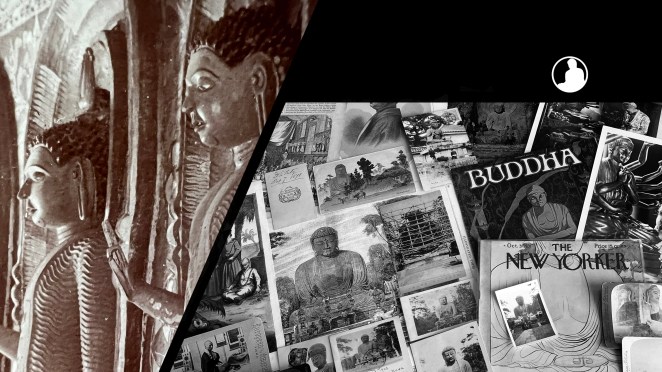
The central icon is a Thousand-armed Kannon from the 13th century and is recognized as a National Treasure of Japan.

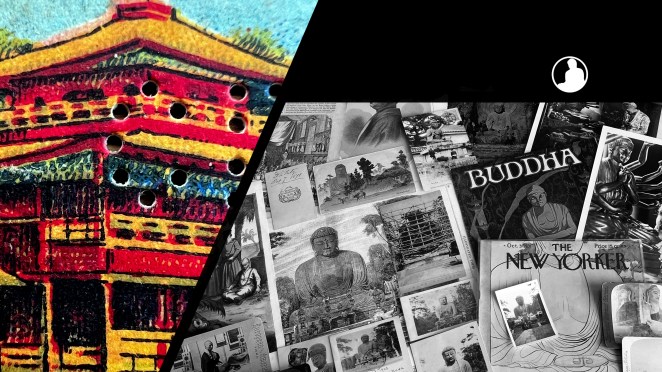
There appears to be a double exposure in this photograph, with a priest kneeling in front of the icon. The colorist gave the priest’s robes a wash of blue, but the paint did not cover over the woodwork designs of the altar.

Baron von Stillfried was among the foreign studio owners who photographed Kyoto in 1872. One of his albums, with views of Kyoto, can be seen through the Metropolitan Museum of Art here: https://tinyurl.com/yuuf52u9.

The Buddhas in the West Material Archive is a digital scholarship project that catalogues artifacts depicting Buddhist material culture for Western audiences. It’s comprised of prints, photos, and an assortment of ephemera and other objects. For a brief introduction to this archive, visit the main Buddhas in the West project page.


For Related Buddhas in the West Posts Featuring Kyoto, Japan:


For the Most Recent Buddhas in the West Posts:


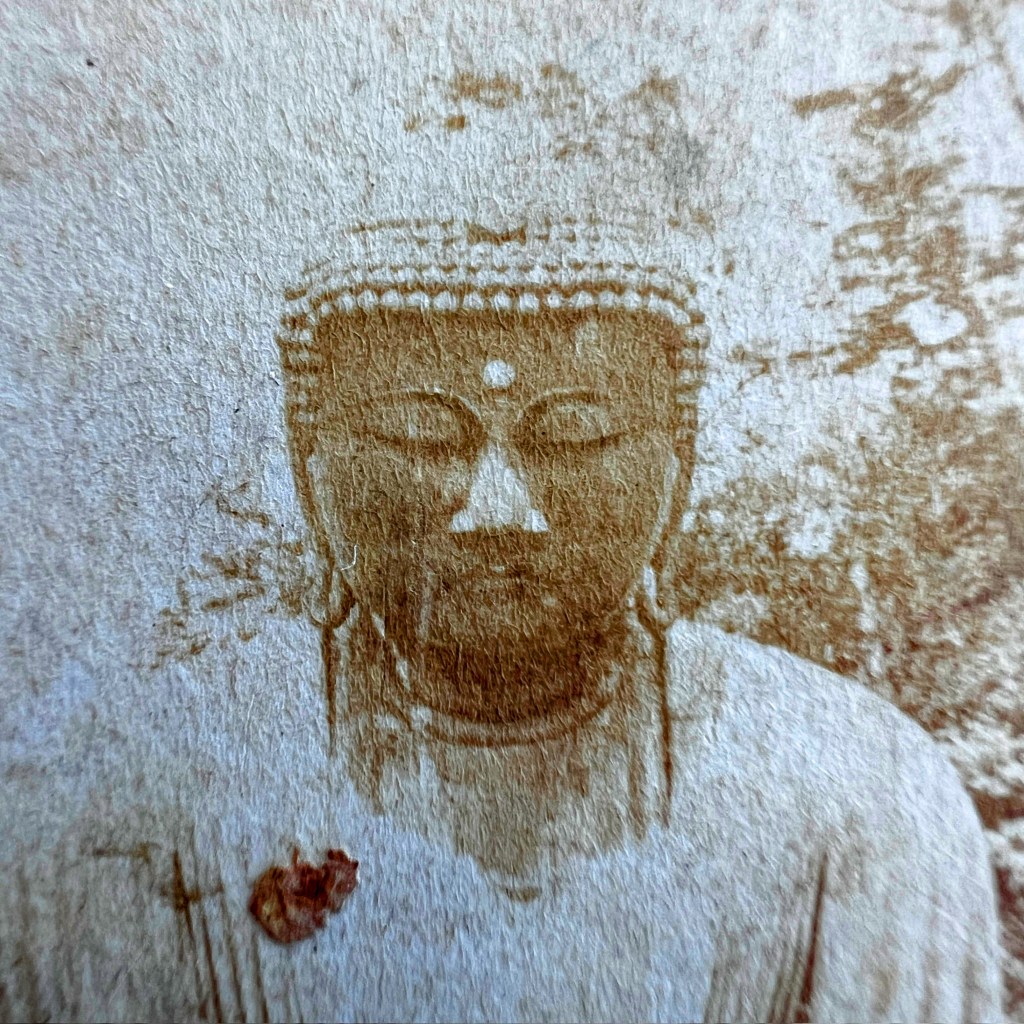
Baron Raimund von Stillfried’s Daibutsu Carte de visite

For all the new Buddhas in the West posts
follow us on Bluesky & Instagram


Early Photographic Souvenirs: When Baron Raimund von Stillfried (1839–1911) opened his Yokohama studio in 1871, globe-trotting was becoming the rage among wealthy elite. This phenomenon was reflected in Jules Verne’s Around the World in 80 Days, published in 1873.

A decade earlier, the small format carte-de-visite had emerged as one of the most popular products of commercial photography studios. Originally used as inexpensive family portraits carried in jacket pockets, they soon turned into common tourist souvenirs.

The 19th century globe-trotting circuit included port in Yokohama, the first landfall as you came west across the Pacific. Stillfried’s souvenir photo bears a handwritten note:
This is Diaboots
The Japanese God
what they worship
he is a big size

“Diaboots” refers to Daibutsu.

Stillfried became well known for his Japanese landscapes, a genre that was also popular among foreign globe-trotters.He would carefully frame Japanese people into his shots to underscore elements of foreignness.

Stillfried also published larger format prints bound into albums. An early exemplar from 1872, titled Views and Costumes of Japan, is held by the Metropolitan Museum of Art, viewable here: https://tinyurl.com/yuuf52u9.


The Buddhas in the West Material Archive is a digital scholarship project that catalogues artifacts depicting Buddhist material culture for Western audiences. It’s comprised of prints, photos, and an assortment of ephemera and other objects. For a brief introduction to this archive, visit the main Buddhas in the West project page.


For Related Buddhas in the West Posts Featuring Historical Photography:


For the Most Recent Buddhas in the West Posts: