
Introduction
Medieval camphor was sourced from a relatively confined area in the South China Seas, but was nevertheless well-known across all of South and East Asia as well as the Eastern Mediterranean. Camphor was famous for its crystalline appearance and bright, cooling smell. Historically, medieval camphor needs to be distinguished from modern common camphor which has a similar appearance and smell, but which derives from an entirely different family of tree. Medieval camphor was primarily solidified oleoresin crystals that formed within the cavities of the Dryobalanops aromatica tree. Not all trees contained pockets of camphor crystals, making the aromatic rare and highly valued. For reasons that are not well understood, the medieval Chinese name for camphor, Dragon Brain Aromatic, was named after the draconic anatomy. Dragons had long been associated with water, so perhaps the origin of camphor in the seas to the far south of China helped shape this peculiar name.
Facts and Features
- Medieval Chinese Name: Dragon Brain Aromatic (longnao xiang 龍腦香) (among others, including names for different commercial grades)
- Common English Name: camphor, Borneo camphor, borneol
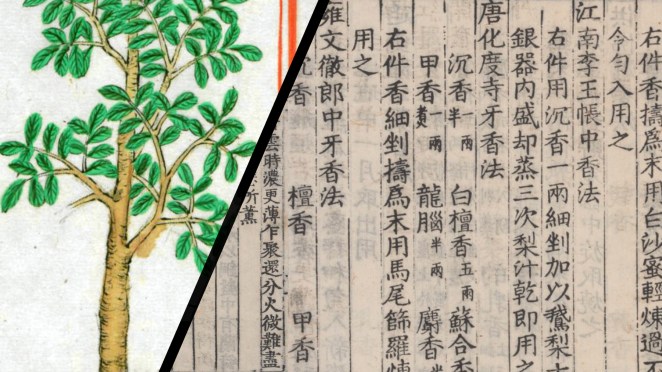
- Botanical Origin: solidified oleoresin that forms in cavities of the Dryobalanops aromatica tree
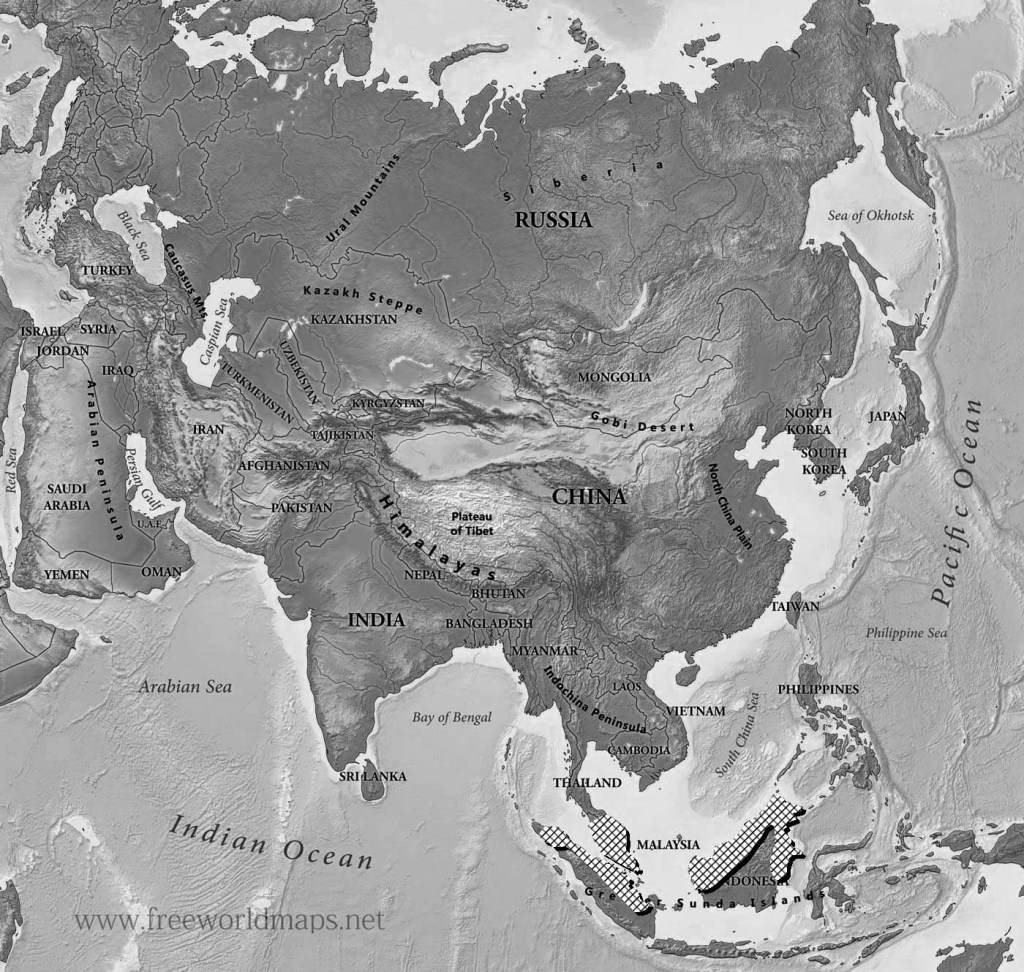
- Phytogeographic Distribution: northern Sumatra, the southern Malay Peninsula, northern Borneo [approximate distribution* is shown in crosshatched white below]
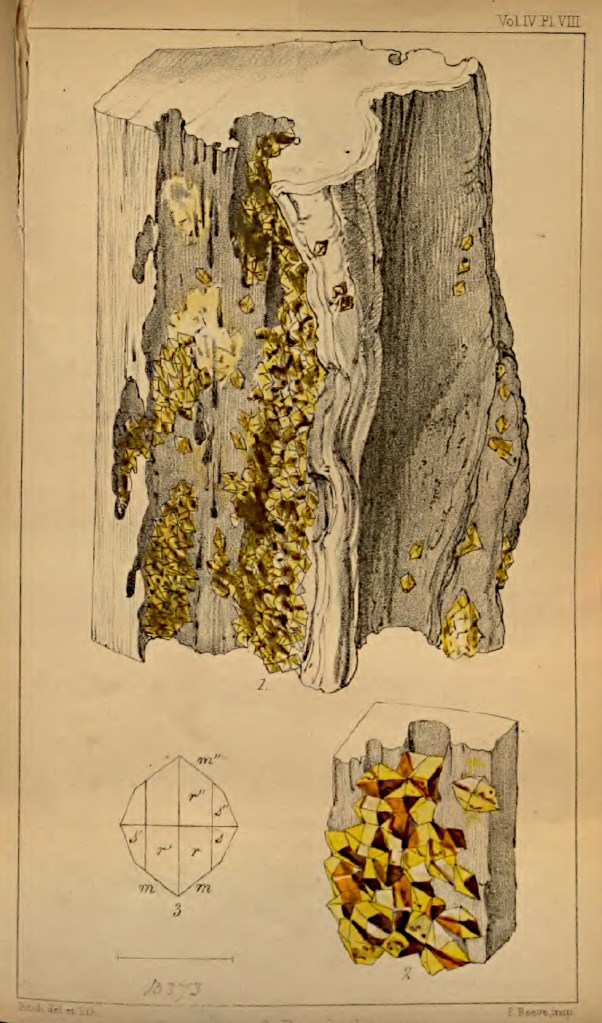
- Harvesting Process: Tree is felled and split into logs allowing crystalline camphor deposits to be removed, sometimes a viscous oleoresin that smells of camphor is also collected [NB: the gold tinting of the illustration below is stylistic, camphor crystals are clear-white]
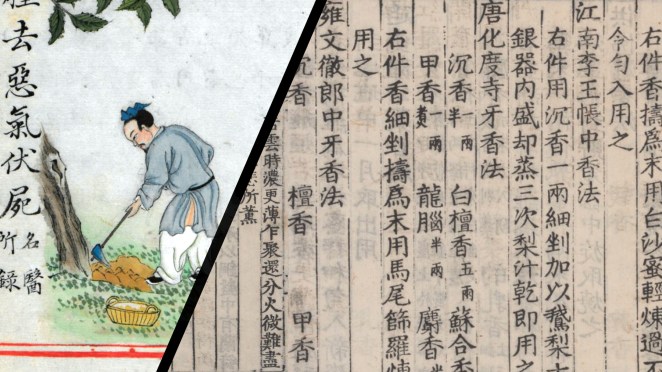
- Earliest Chinese Citation: early 6th century (translated Buddhist sutras: e.g. Miscellaneous Collection of Dhāraṇī [Tuoluoni zaji 陀羅尼雜集]); mid-7th century (dynastic history: Book of Liang [Liangshu 梁書])
- Earliest Chinese Medicinal Use: late 5th century? (Collected Annotations on the Classic of Materia Medica of the Divine Husbandman [Shennong bencao jing jizhu 神農本草集注]); mid-7th century (Newly Revised Materia Medica [Xinxiu bencao 新修本草])
Comments: In medieval China camphor was first known as an export from kingdoms along the Malay Peninsula. Another camphor product known the Ointment of Barus was a viscous oleoresin “oil” often associated with Sumatra. Not all of the towering Dryobalanops aromatica tress produce camphor crystals or camphor oil, however, thus adding to the difficulty in acquiring these highly-valued aromatics. It is likely this rarity spurred the creation of sublimated and distilled common camphor which comes from the Cinnamomum camphora (zhang 樟) found in southern and eastern China, as well as northern Vietnam, Taiwan, and Japan. When this shift started to happen is not well documented, but the mid-to-late eleventh century bears some indications of this change.
If we look at the Classified Essentials of Materia Medica (Bencao pinhui jingyao 本草品彙精要) from 1503, we find a depiction of camphor collecting. Against expectation, however, the tree is cited as growing in Guangzhou, an impossibility for the D. aromatica. It appears the illustrator conflated it with the native C.camphora. Nevertheless, the illustration shows how portions of the D. aromatica tree were cut off to expose the pockets of camphor. The collector could then scrape the crystals from the wood into a collection basket.

Reconstructing the history of the circulation of camphor in the medieval world has been hampered in part by the confusion between camphor from the D. aromatica and the C.camphora. For example, it was thought the residue of C.camphora camphor was found wrapped inside a second century BCE Egyptian mummy, but such a claim is without warrant. The chemical residue more likely came from some East African flora that has the same chemical profile, such as Ocotea usambarensis (East African camphorwood) or Ocimum kilimandscharicum (East African camphor basil).
The medieval camphor under main consideration here was not known to Western Asia until the Byzantine Empire when it was noted by Aetius of Amida (ca.500–ca. 575). The history of camphor in India is rather complex as it seems there was an abundance of trade throughout the medieval period whereby India was sometimes portrayed as producing camphor, perhaps using a native Indian substitute. Most of these speculations remain poorly supported. As it stands, the earliest Indic citation to camphor may be the Great Compendium (Bṛhatsaṃhitā) of Varāhamihira in the mid-sixth century. The earliest world-wide citation to camphor, however, is curious and just-so happens to place it in medieval China. By happenstance, a bundle of letters was discovered in western China in the early twentieth century composed in Sogdian. One letter talks about purchasing camphor at Loulan at the eastern end of the Tarim Basin. The bundle of letters have been dated to the early part of the fourth century.
* The map is intended as a general heuristic for distribution and range, it reflects selected data from modern scientific research and descriptions from medieval Chinese materia medica and gazetteers
For further information and additional references, see: Peter M. Romaskiewicz, “Sacred Smells and Strange Scents: Olfactory Imagination in Medieval Chinese Religions.” Ph.D. dissertation, University of California, Santa Barbara, 2022.


 Personal Site of Peter Romaskiewicz