Here’s a short list of resources for university instructors and students that have been published or initiated – or have belatedly appeared on my radar – over the past week. It’s purposefully broad in scope, some pedagogical development, some personal development, some general (essential) reading.
For a very thoughtful discussion about the limitations of sharing anti-racist reading lists without further pedagogical guidance, see What Is an Anti-Racist Reading List For? by Lauren Michele Jackson. I think it strikes at the core mission of university instructors to foster new ways of thinking and cultivate new habits, not just deposit facts to those who are poorly prepared to think through them. [NB: There is a selection bias below for the humanities and religious studies.]
Syllabus Content/Readings
1. Institutionalized Racism: A Syllabus[JSTOR Daily]
“The United States has seen escalating protests over the past week, following the death of George Floyd while in custody of the Minneapolis police. Educators everywhere are asking how can we help students understand that this was not an isolated, tragic incident perpetrated by a few bad individuals, but part of a broader pattern of institutionalized racism…The following articles, published over the course of JSTOR Daily’s five years try to provide such context.”
2. 8 Minutes and 46 Seconds: Selections from the Archives of City & Society on Racism, Policing, and Protest [“Virtual issue” of journal City & Society containing free access articles, edited by Julian Brash, Sheri Lynn Gibbings, and Derek Pardue]
“In keeping with our responsibility to cultivate a national and international community of critical scholars of urban life, the editors of City & Society offer this selection of articles, accessible to all, from our archives as a small act of solidarity with all of those outraged and bereaved by the unjust deaths of George Floyd, Ahmaud Arbery, Breonna Taylor, Tony McDade and so many others.”
1. Naming Resistance and Religion in the Teaching of Race and White Supremacy: A Pedagogy of Counter-Signification for Black Lives Matter[article by Martin Nguyen for Race & Pedagogy Journal, Vol. 4, No. 3]
“The need to bring religion into our teaching of race and white supremacy is critically important, but by simply naming it, we take the first step in inviting our students to understand the how’s and why’s of it. The pedagogy of naming described herein, which is inspired by the #BlackLivesMatter movement, is theoretically grounded in the theory of signification and counter-signification developed by scholars of religion, Charles H. Long and Richard Brent Turner…Specifically, the study draws upon teaching units from my Black Lives Matter course in order to address how a critical analysis of Christian privilege and Christonormativity, Islam, and religious history can figure into critical engagements with race and white supremacy.”
2. Journal of the American Academy of Religion – Roundtable on “Religio-Racial Identity”[Vol. 88, No. 2; six articles plus introduction, need institutional access]
“Religious studies has a race problem. If recognition of a problem is the first step in addressing it, then calling out our race problem should draw our attention to the seemingly self-evident categories, questions, and modes of analysis through which we study ‘religion.'” (Laura McTighe)
3. Scaffolded Antiracism Resources [Google Doc via Anna Stamborski, Nikki Zimmermann, and Bailie Gregory]
“This is a working document for scaffolding anti-racism resources. The goal is to facilitate growth for white folks to become allies, and eventually accomplices for anti-racist work.”
Chart used as part of an “Integration” activity in the above resource. Derived from Dwight Turner’s “‘You Shall Not Replace Us,’ White Supremacy, Psychotherapy, and Decolonization,” British Journal of Medical Psychology 18(1), pp. 1-12.
4. Essential BLM Reading [Google Doc]
A tightly curated and annotated bibliography (with links) to several influential authors, including works on pedagogy (Freire, Fanon, Baldwin, Davis, etc.)
Massive list of links to websites and other resources regarding potential donations locations, useful organizations, important petitions, protest resources, and general anti-racism resources.
I have attempted to curate this list with new resources or items that speak directly to the current protest movements arising around the globe. There is a history of excellent research on anti-racist/decolonizing education that I do not attempt – nor would I have the requisite knowledge – to cover here; I suggest searching for phrases such as: “anti-racism syllabus,” “anti-racist pedagogy,” “decolonizing the syllabus,” and “protest as pedagogy,” among others, as a start. Endless gratitude to my friends and colleagues who alerted me to the existence of several of the resources above.
Given the widespread preference for asynchronous low-bandwidth teaching during the COVID-19 pandemic, here’s a quick primer on trying to keep some person-to-person interaction in your not-really-designed-to-be-online online course.
In the hopes of being pragmatic, I discuss what I do and why I do it. There are other ways of running online discussion, this is only one example. A more theoretical, yet still highly informative, discussion of running online forums by Ester Trujillo can be found here. Another article with useful tips published recently in Inside Higher Ed can be found here.
The ideas I discuss below approach more of an ideal scenario with plenty of time for planning, but several different ideas here can be cobbled together for a completely serviceable experience for everyone. Lastly, I’ll admit I describe a fairly programmatic approach to running discussion forums, some may feel more comfortable with a more open-ended approach that suits their teaching style.
What software can I use?
All major college and university Learning Management Systems (LMS), such as Canvas, Moodle, or Blackboard, are designed with a discussion forum where students can reply directly to one another.
Other chat-room or messaging software possibilities include Slack, Packback, Flipgrid, or Discord, among many others. Of these, I’ve only used Slack and it’s pretty great. Slack is available as a free desktop app or free mobile app and was designed for collaboration and project management across different groups. Because of this functionality Slack works perfectly well within an educational context where peer-communication is important. Students can interact in “channels” (essentially, discussion rooms) that are set up to handle specific topics, readings, lectures, etc. There is a very minimal learning curve and I know some instructors who prefer Slack over the discussion forums found in their LMS.
Packback is specifically designed for educators, while Flipgrid is a higher bandwidth option for interacting with short videos. Discord is popular among gamers and thus many students may be familiar with how it operates. I’ve also seen some instructors suggest using private Facebook groups, Reddit, or Twitter.
What about basic logistics, like frequency of assignments and due times?
In the past, I’ve had students post before every face-to-face (F2F) class meeting, including during summer sessions that met four days a week. Otherwise, to lessen some of the work burden when teaching a writing intensive course, I would not have students post on days when a writing assignment was also due. In an online environment, it is more likely these discussion posts will form the backbone of the virtual classroom experience and thus will be assigned with regularity.
When I use discussion forums in F2F classes, I use class time to have small group discussions. For online courses, this peer-to-peer interaction occurs by having students post comments on other students’ posts. Because of student workload, I would suggest allowing at least one full day, if not two full days or more for everyone to comment (certainly more than a few hours). For example, if an assignment is sent out Monday, the posts would be due by Wednesday and comments due by Friday. As I will discuss below, I think it is worthwhile for the instructor to provide some comments about the entire discussion at the end of the week, more-so than commenting on every individual student post.
I would also recommend dividing students into small groups (of 3-5 students), either for the duration of the course or for shorter intervals of time. This can be done easily with the software noted above and gives the opportunity to create a better sense of community among members of the small groups. This can also help develop deeper dialogues between students over the long run.
How can I assess students’ posts?
Providing guidance to student on how to think critically and share ideas in online discussion forums is important. The directions you provide should give insight to the kind of critical thinking you want your students to perform. Do you want students to synthesize information or analyze it? Do you want them to offer critiques of arguments or to ask questions? Do you want students to make connections to real life scenarios or to tie ideas back to integral course themes? Do you want students to exhibit creativity or to show command of the material?
Broadly speaking, your means of assessment must be transparent and clear, thus the directions you give should be chosen carefully. If the directions are clear, you can create an easy rubric for students as well. Here are a few considerations.
Quantity: You will likely want to establish a minimum number or words (or sentences, perhaps) that each student’s post will contain. Between 100 words and 250 words is reasonable, but this depends on your goals for the assignment. I would suggest the limit is equally about how much time you can devote to reading every student post on a regular basis – longer is not necessarily better.
Quality: While some may prefer to leave student responses more open-ended, I would strongly suggest having structure. For example, because cultivating citation habits are important in my courses, I require students to include the page numbers of the passages they comment upon. This is in addition to several other aspects I incorporate:
“1BT”: If you are going to ask students to answer specific questions about a reading, try to make sure those questions are open-ended. Do not ask questions about specific content, this turns the entire exercise into a search for a few key terms in order to answer the prompt. I will often assign what I call the 1BT, the “1 Big Thing” (thanks, Scott Van Pelt), where I ask the students to comment on their biggest takeaway from the reading, what they think they will remember for a long time, or why they think I assigned the reading. Sometimes, I will reframe the 1BT as the “1 Big Theme” and I will ask the students to locate a course theme in the reading, often when it is not explicit in the reading.
“3CQs”: In addition to the 1BT above, I will also ask students to answer the 3CQs, or “3 Critical Questions.” These are simply noting what information was new and interesting, what information was old or already discussed in our class (or elsewhere), and what information was odd or confusing. Each of these responses has to be justified or explained in some detail (X was interesting because Y). I would also encourage students to speculate answers to the questions they posed about what they found confusing. (Only in writing this did I discover that Jenn Stewart-Mitchell developed a similarly named “3C&Q model” in relationship to commenting on student posts, see here.)
Other: One could also ask students to summarize the main points of a reading (synthesis), or identify the thesis or conclusion along with the main pieces of evidence (analysis), or isolate what they think is the weakest piece of evidence (critique). I’ve found asking students to make analogies to be the best conversation starters, namely asking student to link the reading to something in the real world, or something in their personal experience, or something they’ve learned previously.
How can I assess students’ comments on posts?
In order to avoid simple compliments (Great idea!) or critiques (I disagree), some structure should also be given to comments.
Quantity: You should decide the minimum number of interactions per assignment. Two or three comments per student is reasonable. The word count will typically be significantly less than posts, maybe 30 or 50 words.
Quality: I generally take the position that a comment should either add (agree), subtract (disagree), or clarify. By “adding,” I mean the comment explains how the post generated new ideas or helped create new links to other information for the commenting student. By “subtracting,” I mean the comment critiques the claims in the post in some manner or sets forth an argument for a different interpretation of the reading. By clarifying, I mean the comment poses a question about the post or asks if a certain interpretation of the post (explained in the comments) is what the original post author intended.
How can I grade students’ discussion posts? Do I need a grading rubric?
I would strongly suggest you use a simple 2-level grading scale, like pass/not-pass. The more intricate the grading system, the more time you will spend grading, so keep it simple. This is especially true if you will be grading hundreds of these discussion forum posts over the duration of the course. Many may still prefer a 3-level system, such as excellent/satisfactory/fail. This is fine, just make sure to clearly articulate the difference between an excellent and satisfactory grade.
I more typically use a mastery/redo scale. If the student does not meet all of my criteria for mastery, they have to redo, or in many cases refine, their work. Only if they do not redo the work will they fail that assignment. Of course, this means the first assignment or two requires close attention and more feedback on my part, but I’ve found that front-loading my efforts pays off in the long run.
If your expectations and directions are clear enough, a rubric will be simple enough to craft. And while you do not need a rubric, at least your expectations should be made clear. Below is what my discussion rubric looks like based on the discussion above.
What type of feedback should I provide?
Individual feedback for the first week or two is important to make sure every students knows how to properly engage with quality commentary in the discussion forums. This means making sure students are following directions or are interacting in appropriate ways. Otherwise, my commentary on individual posts is minimal. Sometime I will jump in to stir the pot, or to challenge a claim, or to offer praise, but more often I will let students discussions move forward naturally.
At the end of a block (or week, or module, or whatever), I would suggest making a few summary comments about the discussions that occurred. This means trying to find trends that cut across groups (if you use groups), highlight anything that stuck out as exemplary (and ask students to model, perhaps), and otherwise note how those discussions will build to the following week’s work. It’s also nice to point out when discussion moved in direction that you didn’t expect – what topic or themes emerged that were not originally obvious to you, or what ideas or concepts were not covered by the students that you thought were important.
What if students are rude to one another?
It’s definitely worth having a “netiquette” discussion early. If possible, have students themselves craft “rules of engagement.” Some ideas can be found here.
*If you are looking for other resources related to university teaching during the COVID-19 pandemic, see my earlier post here.
Below is a short list of resources for university teachers and students to help plan the remainder of the 2020 academic year. We got this.
Disclaimer: While many of the resources are helpful for all disciplines, there is a bias towards the humanities in my selections. Additionally, if you are looking for more technical advice about using your school’s LMS or various online platforms, I’d suggest joining the new pedagogy communities forming in places like Facebook (see list at bottom of this post). One more housekeeping note: I’ve recently posted a primer about creating online student discussion forums.
First, the Fun Stuff…
Pandemic Pedagogy Meme [Renea Frey]
The Pandemic Pedagogy Theme Song [Michael Bruening, I Will Survive (Coronavirus Version)]
Crowdsourced Syllabus Content for COVID-19 and Related Themes
1. Treating Yellow Peril: Resources to Address Coronavirus Racism
“As we continue to track the development of the coronavirus, racial fears and anxieties have become a dominant frame in which people evaluate the concerns over the ongoing COVID-19 coronavirus infection. This page is intended to gather textual and digital resources to provide easy access to material useful for teach-ins, talking points, and classroom teaching.”
“To help us think and teach about contagion, global health, and community in a time of social distancing and fear, we are collecting contributions to this crowd-sourced syllabus, which focuses on literary, historical, philosophical/religious, and cultural aspects of current health crisis and its history.”
“This is a working/crowd-sourced document that originated from the facebook group Queer Ph.D. Network as a resource for those looking for scholarship that provides a queer analysis/response/context to the COVID-19/Coronavirus pandemic of 2020.”
2. The COVID-19 Online Pivot: The Student Perspective – Blog post offering general advice (and links) for students who are studying in a new learning environment
1. Please Do a Bad Job of Putting Your Courses Online – By Rebecca Barrett-Fox, this blog post has quickly become the manifesto for fast transitioning to remote teaching [NB: the post is more constructive than the title suggests]
2. Inclusion, Equity, and Access While Teaching Remotely [really important!]
“Remote teaching presents a number of challenges for faculty, including the logistics–both pedagogical and technological–of how to transition course lectures, discussions, and lab or studio learning experiences online. One issue that needs particular attention is that of equitable access to the learning environment.”
4. Creative Assignment Ideas for Teaching at a Distance[one of my favorite resources here]
“Faculty still need to decide what we will actually do with our students online, asynchronously and at a distance — which is why we developed this list of assignment ideas, which offer ways of rethinking how students might meaningfully engage with course content under these differently mediated circumstances.”
5. National Communication Association: Online Learning Resources
“In response to the COVID-19 pandemic, more and more colleges and universities are shuttering their physical campuses and ordering instructional faculty to migrate courses online. NCA’s Teaching & Learning Council has developed this list of online teaching & learning resources; please return for updates and new resources in the days/weeks to come.”
It’s worth, first, marveling at the relative newness of grading. In fact, the now-standard letter-grading system only gained widespread popularity in US schools in the 1940s. This was partly a response to a decades-long concern over creating a standard of uniformity across institutions, thus standardized grading emerged as an administrative tool for inter-institutional coordination. Today, however, grading (or “evaluative feedback”) is mostly conceived as a pedagogical tool that operates as a source of communication to students and as a hotly debated source of student motivation.[1]
Over time, several different grading systems have developed, including non-grading (or un-grading) systems that see evaluative feedback as a detriment to student learning. Scholarly research on educational assessment is bewilderingly extensive, nevertheless here is a relatively short, curated list of several non-traditional methods of grading employed in higher education.
What is “Traditional Grading”?
We should note at the outset that there is no traditional “traditional grading” system, it’s an amorphous and ultimately abstract entity. Many instructors have vastly different grading policies and practices suited to their personal educational interests or tailored to their students’ needs. Yet, working from within a criteria-referenced paradigm, traditional grading could be characterized by its attempts to evaluate student work fairly, accurately, and uniformly across a class (and perhaps between classes or across time). Additionally, students earn points as assignments, projects, exams, and so forth, are completed to a certain level of quantified competency throughout the term. Lastly, a final grade is assigned based on these points values (often averaged) and a variety of other factors (like attendance, participation, extra credit, etc.).
Several concerns raised about this system include the perception that instructors are forced to inhabit the role of a grade “gate-keeper,” consequently engendering the distrust of their students. Some complain that the system encourages student grade performance over their learning mastery, a finding backed by research. Moreover, some question the ability for grades to be assignedfairly and uniformly across a class. Others will point to the potential waste of time for instructors who are forced to teach students who are satisfied with only the most minimal competency in a topic. Lastly, some would like to see a meaningful way to incorporate student effort in addition to student competency in any grading system.
Because of concerns like these, alternative grading systems have been proposed. While non-traditional systems are often promoted as better for learning and teaching, there is no value-neutral grading system. The mechanisms of the system will direct or encourage certain types of learning (and teaching) behaviors over others. Furthermore, certain grading systems may be more (or less) time-intensive for instructors or students, or cause efforts to be front-loaded or back-loaded in comparison to traditional systems. Because of this, it is worth making an informed decision on which grading system we employ, whether it’s a traditional or a non-traditional variety.
Wait…Aren’t these “Non-Traditional” Grading Systems Just Fads?
This is a fair question. Radical departures from norms may only seem “better” because they are new. One of the following examples, contract grading, has been widely studied since the 1970s and has been regularly found to have beneficial impacts on student learning and motivation. Additionally, both specifications grading and levels grading are built upon elements that have sound research behind them, even though, as entities, they have not yet been the focus of empirical research.
Specifically, and this applies to all three systems, a focus is placed on evaluation transparency, where the purpose of the exercise or assessment is clearly explained, the task is clearly described, and the evaluation criteria is clearly delineated (perhaps think of a grading rubric) and provided in advance so as to help students with self-evaluation.
In some ways, these three alternative grading systems are designed to fully operationalize the principle of transparency, a relatively simple teaching intervention that has been shown to demonstrably enhance student success, including academic performance, student mastery of skills, student confidence, a sense of belonging leading to better retention. This does not represent the totality of these grading systems, but helps to explain their particular design. Non-grading (which could also incorporate transparency) has long been shown to be a better motivator of student effort and allows instructors to put their time and energy into areas that have a more appreciable impact on learning. Overall, these are not transitory fads, but systems built on the best available research in educational psychology and instructional design. With that being said, the individual implementation of these systems can be quite varied (any investigation into the literature on these will quickly reveal this fact) and as such rely heavily on the specific interests, purposes, and needs of the instructor.
Contract Grading
With its origins in the early 1970s, this form of grading has been championed by Peter Elbow, whose work has left a lasting mark in the field of composition studies. Due in part to Elbow, contract grading is most commonly used in composition and rhetoric courses, although it has wide application across disciplines. In an attempt to move student interest away from the commodity of the grade and towards nurturing more essential learning skills and behaviors, contract grading is based on establishing an agreement with students regarding the quantity and quality of work they need to complete, among other criteria, which is correlated to a particular grade. These agreements can be negotiated with individual students as they propose activities and projects, which, when completed, receive the agreed-upon grade. Contract grading can also be non-negotiable, or applied equally to the whole class with instructors providing the specified criteria and the related grading output.[2]Jane Danielewicz and Peter Elbow have outlined the latter method by establishing a B-grade set of criteria (attending class regularly, participating in all in-class activities, providing thoughtful peer-feedback, etc.) for students to work on for most of the semester (see resource below). Only with the submission of a final portfolio would a final grade higher than a B be considered for students who fulfilled the contract. Grades lower than a B are possible, but as the authors note, “we are frankly trying to badger and cajole every student into getting a B.” Some recent research by Dana Lindemann and Colin Harbke suggests this grading system succeeds in discouraging students from failing a course and also provides students with higher competency in the desired skills and topics. Of the non-traditional systems noted here, contract grading has received by far the most research.
Resources:
Danielewicz, Jane & Elbow, Peter. 2009. “A Unilateral Grading Contract to Improve Learning and Teaching,” College Composition and Communication, Vol. 61, No. 2, pp. 244-268. [here]
Inoue, Asao B. 2014. “A Grade-less Writing Course that Focuses on Labor and Assessing.” In Teague, D. & Lunsford, R. (Eds.), First-Year Composition: From Theory to Practice. West Lafayette: Parlor Press, pp. 71-110. [despite the title, the focus is on implementing contract grading][here]
Lindemann, D. F., & Harbke, C. R. 2011. “Use of Contract Grading to Improve Grades Among College Freshmen in Introductory Psychology.” SAGE Open. [here]
This is a more recent grading system – not entirely unrelated to contract grading – proposed by Linda Nilson and most robustly discussed in her 2015 work Specifications Grading: Restoring Rigor, Motivating Students, and Saving Faculty Time. At its core, “spec grading” relies on the establishment of clear and detailed specifications for what constitutes a passing piece of work (for Nilson, typically, B-level work or better). This is not unlike creating a grading rubric, but one only needs to detail a “satisfactory” set of criteria, not a full range of grading possibilities. Assignments are bundled and the more advanced bundles represent more complex skills and/or content. Students are graded only pass/fail for individual assignments or tests and progress as they receive passing grades. Bundles, however, are tied to overall course grades, thus spec grading allows students to determine which grade/bundle they want to compete. Also incorporated is the rather interesting idea of tokens. These are allotted at the beginning of the term to each student and can be redeemed to revise an unsatisfactory assignment, hand in work 24-hours late, take a make-up exam, and so forth. Given the limited number of tokens, students need to think about how to use tokens strategically.
Adkison, Stephen & Tchudi, Stephen. 1997. “Grading on Merit and Achievement: Where Quality Meets Quantity”in Alternatives to Grading Student Writing, Stephen Tchudi, ed., National Council of Teachers of English, pp. 192-208. [not spec grading specifically, but discusses the importance of establishing clear criteria and using a credit/no credit grading scale]
Modeled on video game mechanics, Dustin Locke has recently developed a grading system similar to specification grading, but with different nuances. There are a total of three levels, each of which consists of a larger, more complex project, and which are each evaluated on a four-tier system: complete, almost, good effort, and not much progress. A student progresses to the next project/level only when they have received a “complete” on the previous project/level. Like the spec system by Nilson, a student needs to gain a certain competency or mastery of a skill or content before moving on to the next project. Importantly, there are specific windows when students can attempt to complete levels, thus the project/level any given student needs to be adaptable to the content that is being covered at that time in the course. The final evaluation a student receives on a level is correlated to a final course grade. This system is currently growing among philosophy instructors.
Not necessarily a fully reconceived grading system (eg. it is used as part of Peter Elbow’s contract grading system), portfolio assessment grew in popularity in the 1990s as interest gathered around alternative assessment techniques. In its simplest form, a portfolio is a collection of student work that exhibits their effort and progress in a course. It includes student-selected documents, learning products, or artifacts that they feel represent their best work, and as such, it usually represents work they have revised, sometimes significantly, and reflects their learning processes. Often students will be asked to include reflective documents, such as cover letters describing the selection process and the pieces the choose to include. Oftentimes perceived as an “authentic assessment” tool, this is very common in composition courses.
There have been many calls for the abolishment of grades, and there’s good research to suggest this is a wise pedagogical decision. In the broadest strokes, evaluative feedback (grades) alone, where students are essentially ranked in accordance to one another, doesn’t provide any valuable information about how to improve their understanding or competency nor has it been shown to provide any positive motivation for students to truly master a topic or take intellectual chances. Alfie Kohn, one of the most vocal proponents for diluting and removing grading, has made a career on this topic.
One point of confusion, however, is that by removing grading one removes all evaluation. This is not true. Emphasis shifts to descriptive evaluation where pertinent information related to improving student competency is shared and discussed. And while evaluative feedback and descriptive feedback are often coupled in practice in traditional grading systems, research cited by Kimberly Tanner and Jeffrey Schinske in their provocative “Teaching More by Grading Less (or Differently)” suggests that students are less likely to read comments that are paired with grades. Providing only descriptive feedback had been shown to be the most efficient for student learning and is also preferential to some students.
One of the most characteristic aspects of non-grading or ungrading is metacognition and self-assessment. Jesse Stommel, who has reflected thoughtfully on his practice of ungrading, has his students regularly engage in self-reflection through “process letters,” which open up a space of dialogue “not just about the course, but about their learning and about how learning happens.” This allows both for the instructor to provide constructive feedback and encouragement and for the student to cultivate the skills of critical self-assessment and future planning. Of course, working in a traditional institution, he needs to assign final course grades so Stommel has students grade themselves. He reserves the right to alter any grades his student submit, but he claims the most common alteration he makes is from an A- to an A, for the students who are too modest in their self-assessment.
McDonnell, Charles. 1997. “Total Quality: A Farewell to Grades”, in Alternatives to Grading Student Writing, Stephen Tchudi, ed., National Council of Teachers of English, pp. 210-223.
These alternatives are all reactions to dissatisfaction with traditional grading systems. From a bird’s eye view, these all emphasize pedagogical approaches that we should all immediately appreciate, including careful and strategic scaffolding of lesson plans and assignments, creating transparent and detailed evaluation rubrics, encouraging students to engage in metacognitive activity, and giving students a sense of purpose and ownership over their own learning. Several systems (perhaps my selection bias) foreground student competency or mastery that happens in stages, which in turn can allow for the implementation of a simpler evaluative feedback consisting of a two-tier pass/no pass (or pass/revise). In almost all cases, some power and authority is wrestled away from the instructor and placed in the hands of the student.
Other Resources on Grading
Docan, Tony N. 2006. “Positive and Negative Incentives in the Classroom: An Analysis of Grading Systems and Student Motivation, Journal of Scholarship of Teaching and Learning, Vol. 6, No. 2, pp. 21-40. [here]
Elbow, Peter. 1994. “Ranking, Evaluating, Liking: Sorting Out Three Forms of Judgment.” College English, Vol. 55, No. 2, pp. 187–206. [here]
Kohn, Alfie. 1999. Punished by Rewards: The Trouble with Gold Stars, Incentive Plans, A’s, Praise, and Other Bribes. Rev. ed. Boston: Houghton Mifflin.
Tanner, Kimberly & Schinske,, 2014. “Teaching More by Grading Less (or Differently),” CBE Life Science Education, Vol. 13, No. 2, pp. 187-206. [here]
Tchudi, Stephen, ed. 1997 (2011). Alternatives to Grading Student Writing. National Council of Teachers of English [here][this has been a constant source of inspiration for me]
Winkelmes, Mary-Ann; Bernacki, Matthew; Butler, Jeffrey; Zochowski, Michelle; Golanics, Jennifer & Weavil, Kathryn Harriss. 2016. “A Teaching Intervention that Increases Underserved College Students’ Success,” in Peer Review, Vol. 18, No. 1/2. [here]
Walvoord, Barbara E. and Virginia Johnson Anderson. Effective Grading: A Tool for Learning and Assessment. San Francisco: Jossey-Bass, 1998
Notes
[1] For a defense of the pedagogical utility of grading, see Walvoord & Anderson 1998. For a brief survey on the literature regarding the positive and negative motivating effect of grades, see Docan 2006. Evaluative feedback is often distinguished from descriptive feedback which provides specific information about how a student can become more competent. Often these are used in conjunction. Grades are also used in an organizational manner, such that they are used to partition lessons, units, or terms. In this context grades are seen as a “summative assessment,” in contrast to a “formative assessment” which places more focus on informal tests of students’ understanding before administering a summative assessment.
[2] These two broad forms of contract grading are described in the 1971 work, Wad-Ja-Get? The Grading Game in American Education, by Howard Kirschenbaum, Sidney B. Simon, and Rodney W. Napier. Incidentally, when contract grading was increasingly discussed as an alternative grading system in the early 1970s, the idea of instituting a two-tier pass/fail grading system in contrast to the A-to-F system was also discussed widely. We will see that the combination of elements from both contract grading and a two-tier grading system are found in some of the most common alternative systems circulating today.
As a trained historian who has (rather belatedly) developed an interest in Instructional Design, I grew curious about its historical origins and development. Quite frankly, The more I learned about various teaching techniques the more I became interested in tracing the trajectories and relationships between specific theories and concepts. This is a cursory attempt to make sense of this field of study and place it in relation to the Scholarship of Teaching and Learning, the concept of Active Learning, and the advancements of Educational Technology.
Early Years
The origins of “Instructional Design” (ID) are often traced to the creation of training materials for the military during World War II. Yet, it was not until the 1960’s that a more systematic approach to effective teaching began to appear. This included combining aspects of task analysis, learning objective specification, and criterion testing – all hallmarks of modern higher education – into an overarching model for effective instruction. The elementary principles were derived from the works of psychologists such as B.F. Skinner, Benjamin Bloom, Robert Gagné, and Robert Mager.[1] At this stage, there was interest in creating an overarching “systems approach” to teaching and learning, thus creating what may be now considered a specialized field of study.
As a result of these advances, in the early 1970’s many universities started funding instructional improvement centers (with names such as the “Instructional Systems Development Center”) to help faculty improve the quality of their instruction. In 1977, the first peer-reviewed journal devoted to ID, the Journal of Instructional Development, was published.[2] Moreover, in the same year, the Association for Education Communication and Technology (AECT; originating as the Department of Visual Instruction in 1923) proposed a formal definition of ID centered on five core elements: analysis, design, development, implementation, and evaluation (ADDIE).[3] Thus, ID was founded on a specific methodology focused on improving teaching efficacy.
The interest in teaching instruction faltered in higher education, however, in the 1980s and many of the improvement centers were defunded or disbanded. Furthermore, the Journal of Instructional Development ceased publication in 1988 due to “fiscal austerity.”[4] The 1990s proved to be an important juncture for the study and practice of teaching in higher education.
Constructivism and “Active Learning”
One of the important shifts in the 1990s was the growing interest in constructivism as a learning theory. Constructivism, viewed most broadly, has roots in epistemology, psychology, and sociology, and attempts to explain how people come to know the world around them.[5] Constructionist perspectives on learning are oriented around several principles:
learning is an active, adaptive process
knowledge is idiosyncratically constructed through personal filters of experience, beliefs, or goals
knowledge is socially constructed
effective learning requires meaningful, authentic (“real world”), open-ended, and challenging problems for the learner to work through[6]
Overall, the constructivist theory of learning is commonly positioned in opposition to the older behaviorist model, where learning is characterized as a passive stimulus-response to highly controlled surroundings. Following this new theoretical approach, learners are no longer treated as inert, empty vessels to be filled with knowledge, but active participants who try to develop effective ways to solve novel problems. While some have criticized this simplistic characterization of behaviorism and the “traditional” views of learning, it cannot be denied that this new interest in constructivism in the 1990s spurred a novel wave of research into optimizing the learning environment for this new conception of the “engaged” learner.[7] Since knowledge (or, anything beyond low-order memorization) cannot be simply be transferred from one mind to another according to this new framework, this leads to an inconvenient reality, namely, “we can teach, even well, without having students learn.”[8] Consequently, developing a full repertoire of teaching strategies based on sound research became ever more important. This coincided with a broader interest in teaching-related scholarship (discussed below).
It should be remembered that constructivism is not an ID theory. Instructional Design attempts to adopt relevant learning theories and develop a systematic approach to effective teaching. It should also be noted that instructional design aims to develop a range of pedagogical techniques – a proverbial pedagogical toolbox – thus, constructivism is only one learning theory that has been adopted. Nevertheless, the 1990s saw a growth in literature speaking to constructivist-based “active learning” environments, so much so that many of the most common teaching best practices today reflect, or have been reinforced by, the so-called constructivist movement.
One of the most well-known targets of active learning proponents is the classical lecture, now sometimes framed (unjustly) as an out-of-date modality of instruction. In 1991, Charles Bonwell and James Eison, authors of the seminal work Active Learning: Creating Excitement in the Classroom, proclaimed that “the exclusive use of the lecture in the classroom constrains student learning.” Instead, they promoted instructional activities “involving students in doing things and thinking about what they are doing.” Critics will often interpret this to mean that all lecturing activities need to be replaced by student-led learning initiatives. This is a misunderstanding of the application of active learning. The concern of Bronson and Eison was directed towards the exclusive use of lecturing, where students only take notes and follow directions. To enhance learning, they recommend routinely engaging in activities throughout the lecture where students can reflect upon, analyze, evaluate or synthesize the material that was presented.
These activities can vary greatly, but the general goal is to have students engage in higher-order thinking through reading, writing, and discussing. These can be very simple activities (such as employing think-pair-share) or more complex (such as providing a new reading where a recently learned theory needs to be applied). In practice, these activities are not significantly different from what Michael Scriven called “formative evaluation” (or formative assessment) in 1967. These are assessment procedures performed during the learning process, as opposed to “summative evaluation” (or summative assessment) which takes place at the completion of a learning activity (often measured by exams).[9] A wide range of these activities which provide crucial feedback to students are often placed under the category of Classroom Assessment Techniques (CATs), first coined by K. Patricia Cross and Thomas Angelo in 1988.[10]
The point is to puncture lectures with moments of student activity in order to break the line of one-way transmission in exchange for more interactive moments of cognitive processing. This can occur between instructor and student, between students, or function as an individual reflective exercise. While there is no pre-determined time frame to engage active learning activities, the common recommendation is to allow time for reflection and processing every 12-20 minutes of lecture. The timing depends on the complexity, density, and novelty of the information as well as the goals of the instructor. In practice, the instructor revolves between two roles in the active classroom setting, functioning first as the “sage on the stage” by providing important information or modeling procedural knowledge, then acting as a “guide on the side” by coaching and providing feedback to assist in the students’ development.
Teaching Informed by Scholarship
A second shift in the 1990s was the interest in developing scholarly literature that focused on teaching and learning in higher education. The theoretical underpinnings were outlined in Ernst Boyer’s Scholarship Reconsidered: Priorities of the Professorate in 1990. Boyer was the president of the Carnegie Foundation for the Advancement of Teaching and called for faculty to expand beyond their traditional roles as scholars and consider how to better serve college and university missions to educate an increasingly diverse student population. Boyer proposed re-conceiving scholarship (“the work of the professoriate”) as four distinctive types: scholarship of discovery (e.g. traditional research in one’s discipline), scholarship of integration (e.g. composing introductory textbooks), scholarship of application (e.g. applied research), and scholarship of teaching.[11] It was this last category, scholarship of teaching, where Boyer argued that teaching should not merely be “tacked on” to the duties of faculty, but should be treated as an active area of intellectual exploration where instructors plan, evaluate, and revise their pedagogical approaches based on a rigorous understanding of relevant literature. In other words, teaching and research should not be seen as representing opposing scholarly interests because the research of teaching in higher education is a valuable contribution to scholarship in itself.
Soon after Boyer’s influential publication, other scholars such Robert B. Barr and John Tagg started to highlight the limitations of perceiving higher education as mere access to instruction and suggested examining the value of improving student learning. The suggestions of Barr and Tagg presumed a constructivist theory of education where the focus was centered on the learner.[12] Consequently, the following president of the Carnegie Foundation, Lee Schulman, formally incorporated “learning” into Boyer’s “scholarship of teaching,” thus creating the field of the Scholarship of Teaching and Learning (SoTL, often pronounced “sō-tul”) as it is known today.[13]
While there is no formal criteria for research to fall under the rubric of SoTL, one working definition has been suggested by Michael Potter and Erica Kustra: “the systematic study of teaching and learning, using established or validated criteria of scholarship, to understand how teaching (beliefs, behaviours [sic], attitudes, and values) can maximize learning, and/or develop a more accurate understanding of learning, resulting in products that are publicly shared for critique and use by an appropriate community.”[14] Generally, however, SoTL is rather broad and encompasses any approach to teaching and learning in higher education that mirrors traditional research, namely having defined goals, appropriate methods, significant results, and appropriate presentation.
I have seen no attempts to try and define the relationship between ID and SoTL. Even though they have disparate origins, they tend to share common methods and goals. In practice, because of the specific initiatives of the Carnegie Foundation, SoTL appears to represent the scholarly output of disciplinary specialists interested in researching teaching practices in higher education, while ID represents the pragmatic work done in departments found on campuses (e.g. holding workshops, publishing SoTL-oriented journals [see below], managing informative websites on pedagogy, etc.). These departments often appear under a wide range of names such as the Center for Teaching, Center for Excellence in Teaching and Learning, and Teaching Commons.[15] Perhaps the largest distinction is that historically ID has been interested in all levels of education (including training for business and the military), of which higher education was just one dimension. Additionally, ID has historically shown a closer affiliation with instructional media and technology (see below).
Ultimately, SoTL has become a recognized field of research both within individual disciplines and as a stand-alone discipline. Since 1990, there has been rapid growth in the publication of discipline-neutral journals exploring effective teaching. Below is an incomplete list of running publications falling under the SoTL rubric (including publications that existed previous to Boyer’s publication):
College Teaching (1953-, formerly Improving College & University Teaching)
Journal of Effective Teaching in Higher Education (1996-, formerly Journal of Effective Teaching, Center for Teaching Excellence and Center Faculty Leadership at the University of North Carolina Wilmington)
[*A much longer list of journals related to higher education can be found here*]
Numerous disciplines also have a history of studying how students learn within their fields, such as history (Teaching History, 1969-), sociology (Teaching Sociology, 1973-), or philosophy (Teaching Philosophy, 1975-), among many others. While SoTL research tends to be less tied to specific disciplinary domains, some will include these publications under the SoTL rubric. A helpful list of journal publications devoted to teaching and sorted by discipline is published digitally by the University of Saskatchewan Library (here).
Educational Technology and Instructional Media
A third shift in the 1990’s, which I will only discuss briefly here, was the growing interest in using computers and eventually the internet, for instructional purposes. Historically, we could trace the origins of ID to pre-World War II interests in technological advancements perceived as having an application for teaching. This would include early twentieth-century school museums and new visual media such as magic lantern slides and stereoview cards. In the coming decades, this interest would shift to the use of video and television.[16] This focus on researching (and adopting) the newest technology for the classroom is revealed in the name of one of the oldest professional groups dedicated to ID, the Association for Education Communication and Technology (AECT), which was started in 1923 as the Department of Visual Instruction. Additionally, many of the earliest journals dedicated to ID, published under the editorial supervision of the AECT, had titles such as A[udio] V[isual] Communication Review, Tech Trends, Media Management, and School Learning Resources. After World War II, Educational Technology (also known as Instructional Media, among other names) was increasingly seen as separate from the research interests of the newly developing field of ID. While these fields clearly overlap, they also covered specific, complementary niches.[17]
Some of the more recent interests of this field are the development and management of university Learning Management Systems (LMS) and the designing of online or blended classrooms, especially for long-distance courses. This has spawned a new major in several American colleges and universities called Learning Design and Technology (LDT).
TL;DR
Many Instructional Development departments in colleges and universities operate useful, information-rich websites. If I had to choose just one on the merits of providing ample, practical information about university pedagogy while also providing some historical context, it would be the Vanderbilt University Center for Teaching (if you navigate to the Center for Teaching home page, look for the Teaching Guides menu).
Notes
[1] I am indebted to Reiser 2001a and Reiser 2001b for this synoptic history of Instructional Design.
[2] The use and study of various forms of instructional media, such as audio-visual materials, is often treated as a parallel area of study to instructional design, with the recent focus on the use of computers and long-distance education.
[3] For discussion on the various definitions of Instructional Design see Branch & Dousay 2015: 14-8, and Reiser 2001a: 53-4. Robert Reiser offers a more nuanced definition of Instructional Design: “The field of instructional design and technology encompasses the analysis of learning and performance problems, and the design, development, implementation, evaluation and management of instructional and noninstructional processes and resources intended to improve learning and performance in a variety of settings, particularly educational institutions and the workplace. Professionals in the field of instructional design and technology often use systematic instructional design procedures and employ a variety of instructional media to accomplish their goals. Moreover, in recent years, they have paid increasing attention to noninstructional solutions to some performance problems. Research and theory related to each of the aforementioned areas is also an important part of the field.” See Reiser 2001a and 2001b. Some have suggested that instructional development mirrors the scientific method, see Andrews & Goodson 1980.
[4] Higgins et. al. 1989: 8. Technically, the Journal of Instructional Development was combined with Educational Communication and Technology Journal (titled previous to 1978 as A[udio] V[isual] Communication Review) and consolidated as Educational Technology Research and Development. Additionally, the publications Tech Trends, Media Management, and School Learning Resources were also consolidated, see Higgins et. al. 1989, also see Dick & Dick 1989: 87.
[5] The figures most prominently associated with constructivism are Lev Vygotsky and Jean Piaget. See, e.g. Owen-Smith 2018: 17-8.
[6] There is no consensus definition of the constructivist theory of learning, but a survey of the literature suggests a polythetic dimension. For delineations of the elements of constructivism see, among others, Fox 2001: 24, Reiser 2001b: 63, and Karagiorgi & Symeou 2005: 18.
[7] For a summary overview of critiques against the novelty of constructivism, see Fox 2001. I agree with Fox that it is highly unlikely any “traditionalist” view of learning proposed the learning process to be entirely passive. For a list of scholarship exploring the relationship between constructivism and more “traditional approaches, see Reiser 2001b: 63. Furthermore, in the camp of constructivism, there are more radical and more conservative views regarding the relative importance the external environment and internal, individual frameworks; see the brief discussion in Karagiorgi & Symeou 2005: 19.
[12] Barr and Tagg differentiate between the Instruction Paradigm and the Learning Paradigm, see Barr & Tagg 1995.
[13] This is also reflected in the Carnegie Academy for the Scholarship of Teaching and Learning (CASTL) launched in 1998. For Shulman’s analysis of the importance of learning, see Shulman 1999. A brief history of SoTL can be found here (by Mary Huber) and here (by Nancy Chick).
Andrews, Dee H. & Goodson, Ludwika A. 1980. “A Comparative Analysis of Models of Instructional Design.” Journal of Instructional Development, pp. 161-82.
Barr, Robert B. & Tagg, John. 1995. “From Teaching to Learning: A New Paradigm for Undergraduate Education,” Change, Vol. 27, No. 6, pp. 13-25.
Bonwell, Charles & Eison, James. 1991. Active Learning: Creating Excitement in the Classroom. ASHE-ERIC Higher Education Reports.
Boyer, Ernst. 1990. Scholarship Reconsidered: Priorities of the Professoriate. The Carnegie Foundation for the Advancement of Teaching: Princeton University Press.
Branch, Robert Maribe & Dousay, Tonia A. 2015. Survey of Instructional Design Models. Bloomington: Association for Educational Communication and Technology.
Cambre, Marjorie A. 1981. “Historical Overview of Formative Evaluation of Instructional Media Products,” Educational Communication and Technology, Vol. 29, No. 1, pp. 3-25.
Chin, Jeffrey. 2018. “Defining and Implementing the Scholarship of Teaching and Learning,” in Learning from Each Other: Refining the Practice of Teaching in Higher Education, eds. Michele Lee Kozimor-King, Jeffrey Chin, Berkeley: University of California Press, pp. 304-11.
Cross, K. Patricia & Angelo, Thomas. 1988 [1993]. Classroom Assessment Techniques: A Handbook for Faculty, 2nd edition. San Francisco: Jossey-Bass.
Dick, Walter & Dick, W. David. 1989. “Analytical and Empirical Comparisons of the Journal of Instructional Development and Educational Communication and Technology Journal.” Educational Technology Research and Development, Vol. 37, No. 1, pp. 81-87.
Fox, Richard. 2001. “Constructivism Examined,” Oxford Review of Education, Vol. 27, No. 1, pp. 23-35.
Higgins, Norman; Sullivan, Howard; Harper-Marinick, Maria & López, Cecilia. 1989. “Perspectives on Educational Technology Research and Development,” Educational Technology Research and Development, Vol. 37, No. 1, pp. 7-18.
Karagiorgi, Yiasemina & Symeou, Loizos.2005. “Translating Constructivism into Instructional Design: Potential and Limitations,” Journal of Educational Technology & Society , Vol. 8, No. 1, pp. 17-27.
Owen-Smith, Patricia. 2018. The Contemplative Mind in the Scholarship of Teaching and Learning. Bloomington: Indiana University Press.
Potter, Michael K. & Kustra, Erika D.H. 2011. “The Relationship between Scholarly Teaching and SoTL: Models, Distinctions, and Clarifications,” International Journal for the Scholarship of Teaching and Learning, Vol. 5, No. 1, Art. 23.
Reiser, Robert A. 2001a. “A History of Instructional Design and Technology: Part I: A History of Instructional Media,” Educational Technology Research and Development, Vol. 49, No. 1, pp. 53-64.
Reiser, Robert A. 2001b. “A History of Instructional Design and Technology: Part II: A History of Instructional Media,” Educational Technology Research and Development, Vol. 49, No. 2, pp. 57-67.
“I have painted several thousand Bodhidharmas, yet have never depicted his face. This is only natural, for the moment I spread the paper to draw him, the original form disappears. All of you, what is this Bodhidharma that cannot be drawn?” Zen Master Hakuin[1]
In the fall of 1817, a large crowd gathered in the northern courtyard of the Nagoya branch of Hongan-ji Temple 本願寺 to witness a spectacle. A low fence was erected to separate the crowd from a carefully constructed sheet of paper, covering an area of 120 tatami mats, or approximately 2200 square feet – a size that would have dwarfed the average Japanese house of the time. This was the canvas and performance space for Katsushika Hokusai 葛飾北斎 (1760-1849), a 57-year-old print maker from the capital of Edo who was still over a decade away from true fame with his publication of Thirty-six Views of Mount Fuji 富嶽三十六景 in 1831. At this stage in his career Hokusai was still an avid self-promoter, creating artworks on a scale that would dazzle his contemporaries. In 1804, he had devised a similar painting spectacle at Gokoku-ji Temple 護国寺 in Edo. The subject was the same both in Edo and Nagoya – a colossal painting of Bodhidharma, the reputed founder of Zen Buddhism.[2]
In Nagoya, accounts tell us that Hokusai and his pupils, dressed in special attire, set up the paper and prepared the ink all morning, slowly gathering a crowd in the process. The paper was several times thicker than normal stock and was carefully placed atop a bed of straw. The ink was stored in vats and carried in metal buckets; the brushes, by necessity, were the size of brooms [Fig. 1]. When preparations finished in the afternoon, Hokusai wielded a huge brush flush with black ink and started to deftly maneuver it across the blank expanse of paper. He first drew Bodhidharma’s nose and then his right and left eyes. He then continued to his mouth, ear, and head. Switching to a different brush made of wiry palm fibers, Hokusai then filled in his bristly hair and beard, giving Bodhidharma some of his most iconic facial features. Hokusai then used his largest brush, a sack of rice soaked in ink, and dragged it with a rope to create the thick folds of Bodhidharma’s robe. Finally, Hokusai and his students painted the robe bright red, mopping up the excess ink with rags as they finished their work at dusk [Fig. 2]. For an added touch of flair, the 60-foot long portrait was lashed to a wooden beam which was connected to a pully system atop scaffolding. A team of men lifted the painting into the air, fully displaying the Zen patriarch to the astonished and admiring audience [Fig. 3].
Figure 1
From Kōriki Enkōan 高力猿猴庵 (1756-1831), Detailed Illustrations of Hokusai’s Large Scale Sketches 北斎大画即書細図 [1817]
Figure 2
From Kōriki Enkōan 高力猿猴庵 (1756-1831), Detailed Illustrations of Hokusai’s Large Scale Sketches 北斎大画即書細図 [1817]
Figure 3
From Kōriki Enkōan 高力猿猴庵 (1756-1831), Detailed Illustrations of Hokusai’s Large Scale Sketches 北斎大画即書細図 [1817]
This spectacle was not an improvised performance. In addition to getting the various materials prepared and gathered, including erecting the large scaffolding to hold up the colossal image of Bodhidharma, Hokusai promoted the event through handbills he circulated around the city, some of which still survive today [Fig. 4].[3] The promotional bills were illustrated with a simple portrait of Bodhidharma, but Hokusai highlighted the magnitude of the promised work, stating, for example, that Bodhidharma’s eye would be six feet wide and his nose nine feet long. He also noted, should it rain, interested spectators should return on a sunny day. This colossal painting of a rather eccentric Buddhist monk was not a performance one could bear to miss. But why paint a gigantic Bodhidharma?
A person who may have seen Housai’s advertisement or viewed the finished image on display would have immediately recognized Bodhidharma, the “Great Master” 達摩大師, a Buddhist figure who rapidly evolved into a popular icon of the Edo period (1603-1868).[4] Buddhist texts since the Tang (618-907) had recounted the famed exploits of the Indian monk, slowly folding accretions into his legendary biography.[5] On one level, Bodhidharma was revered by Buddhists for bringing Zen (C. chan 禪) to China and ultimately to the rest of Easy Asia. The stories that developed around him depicted him as a paradigmatic Zen monk: resilient in meditative cultivation, cunningly wise, and curiously iconoclastic. In the growing urbanism of the Edo era, however, it became increasingly common to parody (or “re-envision“ 見立て) the pious formalism and celibacy of Buddhist monks, and Bodhidharma emerged as a common target for that ribaldry.[6] Even though Hokusai’s painting did not reflect the irreverence or sexual innuendos found in the work of his contemporaries, the sheer scale of the portrait, along with sight of Hokusai and his students trotting back and forth over Bodhidharma’s enormous face, would have given the event a carnivalesque atmosphere. As such, the Edo-era popular persona of Bodhidharma as a beloved holy fool would have complemented the tone of Hokusai’s performance.
Hokusai’s particular rendition of Bodhidharma in a three-quarter bust portrait was also true to contemporary convention. Bodhidharma bust portraits (C. banshen xiang, J. hanshin zō 半身像), the genre I will focus on here, had been common among painters in East Asia since at least the thirteenth century.[7] Importantly, however, the characteristic features portrayed in these portraits developed more than five hundred years after Bodhidharma reputedly lived (passing away in the sixth century, perhaps at the age of 150), thus they should not be taken to represent real physical attributes.[8] Moreover, the earliest extant attempts at drawing the first Zen patriarch, dating to the eleventh and twelfth centuries, do not depict Bodhidharma with his characteristic bulky frame, dour demeanor, and bushy beard. Instead, these images portray Bodhidharma as a regular monk with slender build and Chinese facial features. Moreover, he is commonly paired with his first disciple and eventual successor, Huike 慧可 [Fig. 5]. This artistic representation emphasizes the notion of a Zen lineage, placing the master-disciple relationship at the core of the mind-to-mind transmission (C. yixin chuanxin, J. ishin denshin 以心傳心) originating with the Buddha. Bodhidharma’s persona, and by extension his iconoclastic biography, is overshadowed by the dramatic portrayal of patriarchal succession, here depicted between a high-seated Bodhidharma and his devoted disciple seated on the ground.[9]
Figure 5
Anonymous, Portraits of the Six Patriarchs 六組像 [close up], Kōzan-ji 高山寺 [13th century, based on 1054 original]
By the thirteenth century, however, artistic conventions had shifted and Bodhidharma developed his most eccentric features. [10] His hirsute face and bushy eyebrows, protruding nose, bulging eyes, and large-gauge earrings became iconic of his visual appearance [Figs. 6-7].[11] These stereotypical attributes all reflected an important aspect of Bodhidharma’s identity – his non-Chinese heritage. They functioned as easily distinguishable visual cues to identify Bodhidharma as a foreigner, thus authenticating the Zen tradition’s claim as being transmitted from India, Bodhidharma’s native home.[12] In other words, the efforts to explicitly portray Bodhidharma as a foreigner in the late Song Dynasty also implicitly cast him as a faithful transmitter of a non-textual Zen lineage. Additionally, the focus on Bodhidharma’s eccentric appearance would more easily call to mind the iconoclastic episodes of his biography, a corpus of legends that was still growing throughout the Song when his new physical image was being formulated.[13]
Among the artists from China and Japan who painted Bodhidharma throughout history, none was perhaps more admiring than Japanese Zen priest Hakuin Ekaku 白隠慧鶴 (1686-1769[14]). A prodigious artist and calligrapher, Hakuin likely produced more than one hundred images of Bodhidharma now in collections throughout the world. These portraits exhibit a slow evolution of Hakuin’s remarkable personal style. An early depiction of Bodhidharma, produced at the age of 36 recently after Hakuin was installed as the head of Shōin-ji Temple 松蔭寺, reflects an aesthetic from the earlier Muromachi period (1336-1573) that can be ultimately traced back to Song era examples [Fig. 8].[15] Bodhidharma’s face and hair is delineated with fine brushwork, using deliberate lines to create a refined, yet stern portrait. This is reminiscent of the “plain outline” (C. baimiao 白描) style employed in the images depicting patriarchal succession, as well as the early Chinese bust portraits of Bodhidharma. These brush strokes are in stark contrast to the bold, calligraphic strokes of Bodhidharma’s robe, created with a brush soaked in ink and quickly maneuvered to depict the cloth gathered around the Zen master’s arms. This play between meticulous and casual brushwork and between fine and bold lines suggests the mastery of Hakuin’s buoyant artistry.
This traditionalist aesthetic would soon be modified in favor of a more powerful and personal portrayal that would become Hakuin’s hallmark. At the age of 67, Hakuin produced a much more expressive Bodhidharma, using carefree, bold brushstrokes to create a rounded head, bulbous eyes, and protruding nose [Fig. 9]. The robe has also become more abstract, transformed into a flowing “s”-shaped curve which conceals the patriarch’s hands.[16] This is a more playful and softer rendering of Bodhidharma with a special emphasis placed on his face and eyes. In many of Hakuin’s later works, the eyes in particular are rendered prominent through heavy brushwork and a round, unnatural size [Figs. 10-11]. The pupils are also often (though hardly always) placed in such a manner that Bodhidharma is looking above his head or over his shoulder, creating tension in the viewer and projecting a sense of suspicion onto the Zen patriarch.
This particular medium and method for depicting Bodhidharma portraits since the thirteenth century should not be overlooked. Monochromatic ink wash painting (C. shuimo hua 水墨畫, J. suiboku ga 水墨画) was first developed in China, but was brought to Japan by at least the fourteenth century. The use of bold ink strokes and washes allowed artists to minimize fine detail and find expression through powerful brush strokes that revealed the essence or “spirit” of the subject.[17] Thus, the conventions of Chinese painting, and ink wash painting in particular, eliminated the value of mimesis and contributed to the highly caricatured and evocative forms of Bodhidharma’s appearance. In painting an iconoclastic Zen master from a foreign country, artists such as Hakuin could continue to experiment with artistic whimsy.[18]
One may argue that a natural trajectory of this artistic tradition is towards complete abstraction. Indeed, a minimalist tradition did develop around the use of a single brush stroke (J. ippitsu 一筆), a technique dating to at least the fourteenth century.[19] Perhaps unsurprisingly, the creation of a single stroke Bodhidharma (J. ippitsu Daruma 一筆達磨) also gained in popularity. Some of the earliest versions depict a full-body Bodhidharma seated in meditation, with hood pulled over head. In an image possibly attributed to Shōkai Reiken 性海霊見 (1315-1396), the brush stroke beings at the chest of Bodhidharma and loops around his head before outlining his crossed legs. The line finishes by creating the silhouette around Bodhidharma’s shoulders and body and ends with a wavy flourish by his proper right knee. Facial features are lightly added to give the amorphous shape a more human-like appearance [Fig. 12]. By the Edo period the use of the single stroke technique emerged as a way enterprising artists could advertise their deft handling of a brush. In a collection of one stroke sketches, Hokusai himself created an image of the patriarch following a different brush path than Shōkai, yet complete with eyes peering out of a darkened hood [Fig. 13].
From Katsushika Hokusai 葛飾北斎 (1760-1849), Album of Drawing with one Stroke of the Brush 傳神開手一筆畵譜 [close up][1823]
Another, more abstract method of producing a one stroke Bodhidharma also emerged. In these renderings, Bodhidharma is often depicted from the side or back, eliminating the need to draw the cloth around his legs or opening of the hood. Hakuin offers some of the most important examples of this highly minimalist expression. With a proverbial flick of his wrist, Hakuin could depict Bodhidharma sitting in meditation through a combination of straight and curved segments of a continuous line. Yet, Hakuin may have been more devious than simply rendering Bodhidharma into near oblivion. Hakuin is known to have engaged in the visual game of word-pictures (J. moji-e 文字絵), or creating visual images based on the structure or special arrangement of East Asian characters (J. kanji 漢字).[20] In the first example [Fig. 14], Bodhidharma is a highly abstracted rendering of the character nin 忍, “forbearance” (S. kṣanti). A central Buddhist virtue, the meaning of “forbearance” is also relevant to the image depicted, namely, Bodhidharma engaged in meditation for a duration of nine years. Because Hakuin was also a master as expressive “grass style” (J. sōsho 草書) calligraphy , he had a deep knowledge of the structure of characters and could manipulate the brush strokes – or in this case, a single stroke – to form a highly suggestive shape. Quite amazingly, Hakuin shows that a variety of characters could be used for this purpose of depicting a person in meditation. The second example [Fig. 15], while looking very similar to the first, is in fact a different word, gu 愚, “delusion” (S. moha)[notice the closed circles representing the head and body].[21] Often cited as one of the root mental afflictions that needs to be eliminated, the choice of “delusion” is not, at first, entirely obvious. Yet, it seems that Hakuin was not attempting to depict Bodhidharma in this instance, but the renowned Zen master, Gudō Tōshoku 愚堂東寔 (1577–1661), whose family names shares the word gu.[22] At this stage was see the humorous nature of Hakuin coming into full view, as he plays with our expectations. These vague renderings are so amorphous they are truly, as Neil McFarland has pointed out, “but a short step away from the traditional ensō, 円相 the circle signifying nothingness or emptiness.”[23]
Figure 14
Hakuin Ekaku 白隠慧鶴 (1686-1769), Wall-Gazing Daruma in [Shape of] the Character Nin 忍字面壁達磨図, Ginshu Collection
Before we turn to the complete erasure of Bodhidharma’s image, let’s make an unexpected jump to postwar “superflat” pop art and see how this artistic tradition continued. In a move that was not expected based on the widespread popularity of his cartoonish smiling flowers, Japanese artist Murakami Takashi 村上隆 (b. 1962) embraced the timeworn attempt at painting the first Zen patriarch’s image.[24] Exhibited at the Gagosian Gallery in New York in 2007, Murakami’s Bodhidharma took several forms, but they all reflected the canonical portrait genre first developed in the thirteenth century [Figs. 16-17]. Most notably, Murakami employed bright colors in his renderings, a sharp departure from traditional monochromatic ink wash painting, although black line-work still formed the backbone of the imagery. Most evocative are the dazzling rainbow-colored eyes of Bodhidharma, which stare hypnotically, almost mindlessly, into space. The bodily heft, protruding nose, and wild eyebrows and hair remain faithful to their visual ancestors, however, ensuring both Hakuin and Hokusai would recognize their artistic muse.
Figure 16
Murakami Takashi 村上隆 (b. 1962), I open wide my eyes but I see no scenery. I fix my gaze upon my heart., [2007] Photo: Peter Romaskiewicz, 2007.
Figure 17
Murakami Takashi 村上隆 (b. 1962), In the heart’s eye, a universe., [2007] Photo: Peter Romaskiewicz, 2007.
While some have posited that highly abstract painting to be a particular “Zen speciality,” there is also a long tradition in Chinese portraiture of trying to capture the “living spirit” (C. shen 神) of a subject beyond his manifest appearances.[25] Transcending flesh to get at the unique spirit of a person may have motivated many Bodhidharma portraitists, resulting in a variety of forms that attempted to seize upon his iconoclastic biography. Moreover, from a strict Buddhist perspective, the attempt to truly “capture” any phenomenon, in language or through visual representation, is foolhardy. The flux of an impermanent reality cannot be adequately captured in static forms. This deconstructive aspect of Buddhist emptiness rhetoric is echoed in Huakuin’s quote from the epigraph. The “original form” of Bodhidharma is precisely no form, that is why it disappears once manifested on paper. Trying to draw the Bodhidharma that cannot be drawn is an impossible quest, which is precisely why so many continue to attempt it.
[1] Taken with minor alterations from Seo, Addiss & Fukushima 2010: 97.
[2] The story of Hokusai’s feat was told by Kōriki Enkōan 高力猿猴庵 (1756-1831), a Nagoya artist who published an illustrated account in 1817, entitled Detailed Illustrations of Hokusai’s Large Scale Sketches 北斎大画即書細図. Another illustrated account can be found in the 1893 Biography of Katsushika Hokusai 葛飾北齋傅 by Iijima Hanjūrō 飯島半十郎 (1841-1901) (See Anonymous 1898). Lastly, Odagiri Shunkō 小田切春江 (1810-1888) included the illustration Hokusai’s Image of a Colossal Bodhidharma 北斎席画の大達磨 as an appendix to his 1853 publication, TheIllustrated Guide to Famous Places in Owari 尾張名所図会. Odagiri’s illustration is of Hokusai’s 1804 masterpiece, while the images in Kōriki and Iijima are derived from the 1817 event. Thankfully, the relevant text from these works is extracted and published online here: http://www.ne.jp/asahi/kato/yoshio/kobetuesi/nagoya-hokusai-daruma.html.
[3] Hokusai’s original large-scale painting was also saved, but was regrettably destroyed when Nagoya was firebombed in 1945.
[4] This name, Damo dashi 達摩大師, which is used on Hokusai’s promotional handbill, is common in Japan. It became common in China to shorten Bodhidharma’s translated name Putidamo 菩提達磨 to simply Damo 達磨, or in Japanese pronunciation, Daruma. In Japan, an honorific was sometimes added, giving us Daruma Sama 達磨様 (Mr. Daruma) or the name used by Hokusai above. Faure notes that Bodhidharma is considered among the “deities in vogue” (J. hayarigami 流行神) from the Edo period, see Faure 2011: 46, 62.
[5] It moves beyond the purposes of this essay to talk about the changing biography of Bodhidharma, of which the secondary literature is as expansive and varied as the primary sources. This notwithstanding, McRea 2014 is a good place to start.
[6] See McFarland 1986 and Faure 2011 for more innovative and risqué expressions of Bodhidharma in the Edo period.
[7] Brinker et al. 1996: 210, Seo, Addiss & Fukushima 2010: 95. Due to the standard placement of patriarch portraits in Ch’an public monasteries, odd-numbered patriarchs (with Bodhidharma counted as number one) would typically face towards the left, see Sharf & Foulk 1993: 175-6, 187 and Brinker et al. 1996: 155. We will see, however, there is a difference between the formal chinzō 頂相 portraits of eminent Zen masters and the often monochromatic images of Bodhidharma. See Sharf and Foulk 1993 for the compositional characteristics of the chinzō genre.
In addition to “bust portraits,” it also became common to depict episodes in the life of Bodhidharma, such as “Wall Gazing Bodhidharma” (C. mianbi Damo; J. menpeki Daruma面壁達磨), “Reed Bodhidharma” (C. luye Damo, J. royō Daruma 蘆葉達磨), and “Single Shoe Bodhidharma” (C. zhilü Damo, J. sekiri Daruma隻履達磨)[NB: While this imagery appears to have originally developed in China, art historians tend to solely use the Japanese to denotes these particular artistic renderings]. Except for the highly stylized Wall-Gazing Bodhidharma, I will not be addressing these latter artistic forms here. The history of Bodhidharma in Korea is being studied by Beatrix Mecsi in several publications.
[8] Sharf and Foulk (1993) speculate that a portrait of Bodhidhamra may have been installed in the Hall of Seven Patriarchs 七祖堂 constructed by Puji 普寂 (651-739) at Shaolin Temple 少林寺in the attempt to position his master, Shenxiu 神秀 (606?-706), as the principal Dharma heir of Hongren 弘忍 (600-674)(see esp. p. 172). Additionally, it is known that Shenhui 神慧 (684-758) constructed his own Portrait Hall 真堂 around 752, commemorating the unbroken line of succession back to Bodhidharma, see Sharf & Foulk 1993: 174-5. It remains unknown what these portraits may have looked like. The Dunhuang version of the Platform Sutra (c. 830), however, notes that placed in a three section corridor 三間房廊 of Hongren’s temple were “paintings of the five great patriarchs transmitting the robe and Dharma” 畫五祖大師傳授衣法 (T.2007.337b18-9). While there is no reason to take this as a true reflection of Hongren’s temple, it may recall the images installed previously by Puji and Shenhui. In any case, the transmission of the robe from master to disciple is the iconic event captured in the purported illustrations, not merely a portrait of a Zen master. For a brief discussion on these early transmission depictions see Lachman 1994: 245-253.
[9] We also see Huike’s severed left arm on the ground, reflecting the widespread story of his attempt to garner Bodhidharma favor. An analysis of these older images of Bodhidharma can be found in Chapin 1945 and Lachman 1994.
[10] Paul (2009) argues that Chan (Zen) “eccentric monks” 異僧, such as Hanshan 寒山, Shide 拾得, and Budai 布袋, developed their iconic features during the Southern Song and Yuan, comprising a unique category of visual representation (see esp. pp. 65-6). While Paul separates Chan eccentrics from orthodox patriarchs such as Bodhidharma, the late Song and early Yuan seems to be a fertile period for exploring these new eccentric visual paradigms for Buddhist figures. Faure (1991) also seems to bracket the “trickster” figures of Hanshan, Shide, and Budai from the “thaumaturge” Bodhidharma (see esp. pp. 115-8), but it would seem that Bodhidharma represents a more complex meld of idealized types, especially in terms of his visual portrayal. Additionally, the development of the image of Bodhidharma seems to have occurred with the emergence of “Śākyamuni Emerging from the Mountains” (C. chushan Shijia, J. shussan Shaka 出山釋迦) motif, especially in relation to the “Reed Bodhidharma” motif, see Brinker 1973b and Brinker et al. 1996: 150-1.
[11] The hanging scroll from Myōshin-ji 妙心寺 is sometimes listed as part of a triptych 三幅 by Li Que 李確 [v.l.确](active mid-13th century), consisting of the additional scrolls depicting Fengang 豊干 and Budai 布袋. Brinker et al. 1996 lists it as anonymous (pp. 210-11, cf. 220-1).
[12] Traditionally, Bodhidharma is considered to have originated from Southern India 南天竺, although older Chinese sources claim he is from Bosi 波斯 (a region in the Hindu Kush), mistakenly taken to be Persia by later scholars, see McRea 2014: 130 (and footnote therein).
[13] The older images of Bodhidharma engaging in the drama of patriarchal succession likely developed among debates over claims to the authentic one-to-one lineage transmission (see note above). These newer images of Bodhidharma, placing an emphasis on his appearance, no longer function with the same visual rhetoric. While they still carry an import vis-à-vis lineage transmission, they also firmly announce the iconoclastic persona of Bodhidharma that evolved in Chan literature. One might speculate that Bodhidharma’s presence no longer spoke to an internal Tang-era Chan debate over authentic lineage, but to external Song-era critiques of a supposed “wordless” Chan transmission stemming back to the Buddha himself.
[14] Alternative dates of 1685-1768 are sometimes used since Hakuin was born and died at the end of twelfth month of the lunar calendar.
[15] According to Hakuin, he burned his entire collection of artwork and calligraphy in his twenties. This portrait of Bodhidharma remains his oldest extant work, see Aviman 2014: 36. For more on Hakuin’s changing Bodhidharma styles, see Aviman 2014 and Seo, Addiss & Fukushima 2010: 95-104. A third portrait which is conveniently dated to Hakuin’s age 83 provides a nice trajectory for the evolution of his work, see e.g. Aviman 2014: 43.
[16] The symbolic importance of this shape, kokoro 心, is examined in Yoshizawa & Waddell 2009: 207-12.
[17] McFarland 1986: 168 also notes this important factor in the artistic tradition of depicting Bodhidharma.
[18] When tinted, Bodhidharma is most often presented wearing a bright red robe, a pictographic tradition stemming back to the thirteenth century. In the Edo period, Bodhidharma’s association with the color red helped recast him as a smallpox deity, see Faure 2011.
[20] I am unsure if moji-e, which typically uses a fast cursive script that is often made with a single line, would formally qualify as ippitsu. It seems Hakuin’s work is sometimes categorized under both.
[21] Hakuin is known to have used even a third character in these abstract representations of Bodhidharma, in (or kakushi) 隱, “concealed” (Seo, Adiss & Fukushima 2010 use in, while Onishi 2014 uses kakushi). Taken from Hakuin’s own name, he would omit the kozato 阝 radial to produce a the shape of a person in meditation. This person is believed to be Hakuin himself, see Onishi 2014:63. Notice all characters, nin, gu, and in have a “heart” (kokoro 心) radical at their base, allowing Hakuin to use it to represent the flowing hem of the robe.
[22] See Seo, Adiss & Fukushima 2010: 201 and Onishi 2014: 63.
[24] Murakami’s depictions of Bodhidharma, as their relation to “Zen art,” have been touched upon briefly by Levine 2017. Murakami also painted another traditional episode in the life of Bodhidharma, “Huike Amputating His Arm” (C. Huike duanbi, J. Eka danpi 慧可断臂). To produce this image Murakami reproduced a closely cropped image or Huike’s arm from the famous painting by Sesshū 雪舟 (1420-1506) at Sainen-ji斎年寺.
[25] The category of “Zen art,” often thought as an spontaneous expression of No Mind 無心, has recently been examined by the works of Gregory Levine, see e.g. Levine 2017. I quote the infelicitous wording of McFarland (1986: 186) as but one example of the widespread belief that Zen and art share a special relationship. Sharf & Foulk (1993, esp. pp.158-63, 202-6) outline the basic concerns in Chinese and Chan/Zen art regarding the tensions between representation and reality.
Bibliography:
Anonymous. 1898. “The Biggest Picture on Record,” in The Strand Magazine, Vol. 15, No. 89 (May 1898), pp. 558-562.
Aviman, Galit. 2014. Zen Painting in Edo Japan 1600-1868: Playfulness and Freedom in the Artwork of Hakuin Ekaku and Sengai Gibon. London: Routledge.
Brinker, Helmut. 1973a. “Ch’an Portraits in a Landscape.” Archives of Asian Art, Vol. 27, pp. 8-29.
Brinker, Helmut. 1973b. “Shussan Shaka in Sung and Yüan Painting.” Arts Orientalis, Vol. 9, pp. 21-40.
Brinker, Helmut, Hiroshi Kanazawa, and Andreas Leisinger. 1996. Zen Masters of Meditation in Images and Writings. Zurigo: Artibus Asiae Publishers.
Bush, Susan H., and Mair, Victor 1977/78. “Some Buddhist Portraits and Images of the Lu and Ch’an Sects in Twelfth- and Thirteenth-Century China.” Archives of Asian Art, Vol. 31, pp. 32-51.
Chapin, Helen. 1946 “Three Early Portraits of Bodhidharma.” Archives of the Chinese Art Society of America, Vol. 1, No. 66-67, pp. 75-78.
Faure, Bernard. 1986. Le Taité de Bodhidharma: Première anthologie du bouddhisme Chan. Paris: Seuil.
Faure, Bernard. 2011. “From Bodhidharma to Daruma: the Hidden Life of a Zen Patriarch,” Japan Review, Vol. 32, pp. 45-71.
Fontein, Jan and Hickman, Money L. 1970. Zen Painting & Calligraphy: An Exhibition of Works of Art Lent by Temples, Private Collectors, and Public and Private Museums in Japan, Organized in Collaboration with the Agency for Cultural Affairs of the Japanese Government. Boston: Museum of Fine Arts. [not consulted]
Foulk, T. Griffith and Sharf, Robert H. 1993. “On the Ritual Use of Ch’an Portraiture in Medieval China.” Cahiers d’Extrême-Asie, Vol. 7, pp. 149-219.
Kido Chūtarō 木戶忠太郎. 1932. Daruma to sono shosō 達磨と其諸相 [Bodhidharma and His Appearances]. Tokyo: Heigo Shuppan-sha. [Classic work on the evolution of Daruma in popular culture, not consulted; this work is outlined in Chapin 1945]
Lachman, Charles. 1993. “Why Did the Patriarch Cross the River? The Rushleaf Bodhidharma Reconsidered.” Asia Major, Vol. 6, pp. 237-68.
Levine, Gregory. 2017. Long Strange Journey: On Modern Zen, Zen Art, and Other Predicaments. Honolulu: University of Hawai’i Press.
Levine, Gregory, Yukio Lippit, Naomi Noble Richard, and Melanie B. D. Klein. 2007. Awakenings: Zen Figure Painting in Medieval Japan. New York: Japan Society. [not consulted]
McRae, John R. 2014. “The Hagiography of Bodhidharma: Reconstructing the Point of Origin of Chinese Chan Buddhism,” in Indian in the Chinese Imagination: Myth, Religion, and Thought, John Kieschnick and Meir Shahar, eds.), pp. 125-138. Philadelphia: University of Pennsylvania Press.
McFarland, H. Neil 1986. “Feminine Motifs in Bodhidharma Symbology in Japan.” Asian Folklore Studies, Vol. 14, pp. 167–91.
McFarland, H. Neill (1987). Daruma: The Founder of Zen in Japanese Art and Popular Culture. Tokyo and New York: Kodansha International Ltd. [not consulted]
Onishi Masanari 尾西正成. 2014. “Hakuin Ekaku ‘menpeki daruma’ to moji-e no shūhen 白隠慧鶴「面壁達磨」と文字絵の周辺 [“Wall-Gazing Bodhidharma” by Hakuin Ekaku and the Edges of Pictorial Calligraphy].” Shogaku shodō-shi kenkyū書学書道史研究 [Calligraphic Studies], Vol. 24, pp. 59-73,117-116.
Paul, Paramita. 2009. “Wandering Saints: Chan Eccentrics in the Art and Culture of Song and Yuan China.” PhD dissertation, Leiden University.
What is the quality of your students’ lecture notes?
If you were to read the research on this topic, you might think the answer was unbelievable. Yet, studyafterstudy confirms the unbelievable: most students, especially first-years, do not possess the skills necessary to take quality notes. Students routinely miss more than 50% of the critical information in lecture, sometimes reported as a 70% loss of crucial content. We can chalk this up to a variety of potential factors, such as the newness of the lecture format (in comparison to high school), the complexity of the content (and resulting cognitive fatigue), the student’s inability to identify main points, or the lecturer’s inattentiveness to signaling important information amid a mass of presented material (often as text on lecture slides, or “death by PowerPoint”).
Lecture note-taking should be recognized as a multi-faceted challenge for many first-year students. Unsurprisingly, note-taking skills are rarely taught explicitly and it is worth outlining a “best-practices” for your students dependent upon your teaching methods, materials, and lecture structure.[1] Another important intervention for poor note-taking is the wise and timely use of handouts.
Handout as Concept Organizers
A handout is just another tool in your pedagogical toolkit. Ideally, it complements the other items in your teaching arsenal, namely your oral presentation, lecture slides (or board work), readings, and classroom discussions. Taken together, these different modalities help students to build robust conceptual models and form a deeper understanding of the material.
Below, I offer several of the slides I presented for a workshop organized by my university’s Summer Teaching Institute for Associates program. I will also provide some commentary and context to the slides themselves. My “Handout of Handouts” can be found here –> [The Handout of Handouts].
Using Mentimeter, I first asked the workshop participants about their current attitudes towards using handouts. Interestingly, among our small cohort, most regularly provided their class lecture slides to students (the yellow bar below), which as we will see has its benefits and drawbacks.
Based on the literature I summarized above, I was curious to see what our participants believed about their first-year students’ note taking abilities. While everyone believed students could benefit from additional training, few were able to predict the dire assessment of the research, namely that students would routinely miss more than 50% of the critical information.
After review the research findings we assessed the possible interventions for students, leading to the potential value in helping students take notes through the strategic use of handouts. Overall, I addressed nine different types of handout, loosely categorized under the headings of advanced organizers, worksheets, and graphic organizers (the first and last being “jargon-appropriate” if you want to do more research).
Advanced Organizers
The first grouping of handouts can be placed under the category of “advanced organizers,” which as their name implies allows information to be presorted to allow easier integration and less taxation of the students’ cognitive load. This includes the circulation of lecture slides and detailed class outlines. While numerous research papers show these kinds of handouts are preferred by students, anyone who has implemented this practice may come across the problems of decreased attendance. More importantly, it is likely that students will not learn effective note-taking habits and skills since they work is already done for them. Thus, it is incumbent upon the instructor to develop effective teaching strategies when using these types of handouts. For example, it’s generally a good practice to not have the oral lecture be redundant to the slides (text or image), meaning that students should need to take notes on what is said in class (and also tested on it). Or, the handouts could be limited in their content, only providing vocabulary terms or names and dates of historical figures. These still serve the purpose in helping the students organize information, but also require their focused attention. Additionally, by incorporating blank spaces in the handouts, it requires students to remain attentive thorughout the lecture, filling in answers as they are discussed.
Worksheets
The next grouping of handouts I categorized under the generic name of worksheets, perhaps the prototypical type of handout in many STEM classes. This includes the use of “adjunct questions” sheets, or test-like items preceding or following certain content. These can be used to cover the entire lecture, but are more regularly used for certain classroom activities, like reading a passage or watching a short video. It is important to note that questions will cue students to certain information, which will lead to retention, but it will also limit their focus on more global (or incidental) issues and potentially limit the types of questions they bring to the material. When providing problem sets (or passages to read and respond to), this encourages the application of knowledge, and when used in conjunction with group activities, these will reflect more active learning environments. I also included the popular classroom assessment techniques (CATs) of the “minute paper” and “muddiest point paper” as different types of effective worksheet handouts, especially for students’ reflection on their learning progress.
Graphic Organizers
The last grouping covered “graphic organizers,” which visually represent relationships between concepts. Concentrated research on graphic organizes only began in the late 1960’s (when they were originally called advanced organizers) and developed with the schema theory of knowledge which posits that newly acquired information is accepted and assimilated into existing cognitive structures. This means a focus is placed on relational knowledge. This is important because notes are often organized linearly as lists or outlines (a format encouraged by digital note-taking), while a graphic organization of information is far better for retention and recall. Most student will only reread or recopy their notes when studying for an exam, but instead of employing redundant strategies students should re-organize their notes, looking for associations between ideas. By providing graphic organizers, blank or partially filled out, this would help students in this process. We ended the workshop by looking at a variety of examples and discussing their potential uses in our courses.
Notes
[1] This is worth more discussion than I can provide here. It is not uncommon to find students only taking notes of lecture slides, and nothing else. Instructors need to decide if this is sufficient, or if they need to train students to take notes on what is also verbally presented, or the insightful comments of other students, among other considerations (class activities, videos, readings, and so forth). In addition, note-taking is not transcription. Students need to appreciate the cognitive value in taking notes, a particular method of information processing and meaning-making. A handout on effective note taking for students is included at the end of this paper.
As I’ve discussed before, “punctuated lecturing” has its rightful place in the repertoire of a university instructor. When we lecture, however, we are often placed in the role of answering questions posed by students. An equally important skill is the ability to ask probing questions of students.
When we want to stimulate class discussion, having the ability to generate, hold, and gently direct conversation requires a bit of mental dexterity and social finesse. But these aspects are built upon a foundation of effective questioning strategies.
I’ll freely admit, discussion can be a slog at times. But having a range of questioning strategies can make us better prepared to face the wilds – and natural beauty – of the discussion-based classroom.
Below, I offer several of the slides I presented for a workshop organized by my university’s Instructional Development program. I will also provide some commentary and context to the slides themselves.
Crib Notes: Of the strategies I’ve found easiest to implement are Checking for Understanding questions and Redirection questions (third section below). Arguably of greater importance, however, is creating a classroom culture of student discussion. This is often developed through other strategies discussed below, such as Priming the Pump, and well as structured, time-constrained Group Activities.
1. Setting the Stage
Using Mentimeter, I first asked the workshop participants “Why should we ask students questions? (Why not just lecture at them all the time?)” This was a not-so-sly way to introduce two different techniques I would discuss: Entrance Tickets (“Priming the Pump,” see below) and the critical rephrasing of questions (“Stirring the Silence”). Nevertheless, I was not expecting such thoughtful, insightful replies created on the spot (I should have known better):
After recapping some of the comments (and asking about some of the jargon in the responses), it was clear the room was already actively engaged, which is the purpose of an exercise such as this. After noting the importance of using questions to drive and develop student thinking, we dove into several actionable strategies. Overall, I planned to address six different sets of techniques and protocols.
2. Priming & Phrasing
The first group of strategies was oriented around fielding potential discussion topics and priming the students to think about the day’s material. Moreover, asking questions as soon as students arrive in class creates an expectation that they need to engage and, hopefully, contribute to our discussion (if not individually, in small groups).
Priming the Pump Strategies
The second grouping of strategies concerned the general phrasing of questions. Several very common forms of questions, while valid in certain contexts, can also sometimes be squealing-brake showstoppers. These are potential problems that need solutions.
Phrasing Effective Questions Strategies
3. Understanding & Redirection
We next moved to a series of strategies developed to provoke more complex conceptual processes. These form a broad category of questions sometimes called Checking Questions or Checking for Understanding Questions. When wielded artfully, these can turn a rather blasé response into a moment of valuable class reflection. Truthfully, many of us already have these in our repertoire, with the most common simply being the follow-up question, “why?” (under “justification” in the slide below).
Checking for Understanding Strategies I
Checking for Understanding Strategies II
The next set of techniques are used to try and “decenter” the classroom from the instructor. The back-and-forth “yo-yo” pattern between student and instructor is modified to include more inter-student “cross-talk.” In many cases, the instructor still remains the moderator, but that largely depends on the purpose of the discussion exercise.
Redirection Strategies
4. Stirring the Silence & Reviving the Dead
The last pair of strategies were protocols I’ve casually developed when consulting with other TA’s and instructors about how they handle general classroom unresponsiveness. Specifically, when a question to the class appears to be “dead-on-arrival.”
Stirring the Silence Strategies
Reviving the Dead Strategies
In the last few minutes of our workshop, we turned to the potentially awkward social scenario of a “wrong” or “non-optimal” student response to one of our questions (I prepared no slides for this, I preferred to hear what others thought). We discussed some ways that we’ve maneuvered through this scenario, always mindful of not chastising or “isolating” the student. Depending on the type of question, I’ve often found asking “why?” helps to determining the student’s reasoning. In some cases the rationale may be sound, but just not what I am “looking for,” and thus allows me to thank the student (“That’s a good take, I didn’t think of that”) and pivot to another response. Otherwise, if there’s a problem in the rationale, I may try to give clues to see if the student can find his or her own mistake (or problematic assumption) and offer a chance to respond again. Other times, I may ask for another student to provide a counterargument. In the end, I usually try to validate some aspect of the student’s original response, if possible. (Particularly sensitive or controversial views may need a different approach, but that’s a discussion for another workshop.)
I closed our workshop by handing out “Exit Tickets” – providing a moment of reflection for people to think about something that was meaningful or even unclear to them. I was curious which strategies were the most helpful to my workshop attendees; I received a range of replies. Around half explicitly noted the value of Redirection. Another large chunk approved of the Reviving the Dead, and the rest were evenly split between Checking for Understanding and Priming the Pump (Mentimeter is frequently a hit).
Last Thoughts: This was my last Instructional Development workshop for the academic year and the amount I’ve learned in the process has been quite gratifying. Of the workshops I’ve given, this was probably the most time intensive and interesting for me to think about, as well as the best attended (with Managing Teaching Anxiety being a close second). Is it just coincidence that the two workshops I’ve offered that most directly deal with student interactions were the most attended? Nevertheless, I will now be transitioning into my role as a facilitator for the Summer Teaching Institute for Associates, more workshop planning abounds!
I know. Student writing is horrible. The sky is falling. Doomsday has come. I’ve had several conversations with colleagues about the sordid state of student writing. I once hooped and hollered atop that bandwagon too. It was so easy to blame high school teachers and college writing instructors (or anyone else) for not preparing students adequately in the fine art of written argumentation.
Then, I got a job as a university writing instructor. I’ve come to see that the problem partly lies with me and my curmudgeon colleagues (its a blight that extends beyond religious studies). It’s our duty to teach writing too, we just don’t want to do it.[1] Student writing is also not that bad, if you give students a fighting chance.
I’m a traitor to the “but-I-don’t-teach-writing” cause. I know.
If I haven’t angered you to rage-close the browser tab, then let me explain. At one level, writing is a skill, not a “fact”; all students know how to write, but some may not be proficient at it. They need more practice – and guidance in The Writing Process.
When I say instructors need to teach writing, I really mean they need to apportion time and structure activities that allow students to critique and develop their own ideas. Once students thoughtfully struggle with their ideas and arguments, they are more likely to want to “own” those ideas. As a result, almost magically, their writing will get better. In our religious studies courses (or humanities more broadly), we do not need to formally “teach writing,” as much as we need to give students the opportunity to work out their ideas in a strategic and structured manner. Teaching “writing” is just code for teaching critical thinking skills.
One of the key aspects of my writing courses focuses on (re)shaping student writing habits. We talk at length about “The Writing Process” and students develop their own ideal Process. While many facets are individual – some do their best writing in the library, some in their rooms; some listen to background music, some prefer silence; and so forth – other facets are non-negotiable. My writing course is structured around these non-negotiable facets, namely drafting, peer-review, and revision (see below). Ideally, my goal is to have students incorporate these elements into their natural Process, but like many new habits, they can be hard to adopt.[2]
In the non-teaching-writing classroom, it can be easy to omit drafting, peer-review, and revision activities (hereafter DPR). But these are precisely what students – and us scholars – need to produce our best writing. If done skillfully, DPR can all be handled by students themselves; there is no extra work for our already-exhausted teaching souls. I will admit, however, it does take time to devise drafting prompts, structured peer-review sessions, and direction for revision. Undoubtedly, these activities will go wrong before experience teaches us how to make them right (online research will certainly help too, or, gasp, conversations with colleagues about our failures).
Of course, I do think students benefit greatly from our expert insights on their ideas. If we can provide verbal, recorded audio, or written commentary at early stages in the Process, this will greatly assist students in developing their ideas. Spending time to get students to talk about their research in class with other is also valuable.
Overall, here are some thoughts about incorporating writing good critical thinking habits into your non-teaching-writing-classroom based around DPR.
Drafting: A simple recipe for disaster is to assign a big writing project due at the end of the term which does not also formally schedule several “checking-in” assessments along the way. These formative assessments could be a simple conversation with individual students or classroom activities where students discuss the early stages of their work. Drafting is another option. This does not have to be a full draft of the final essay. I’ve seen colleagues assign small segments of the essay that are due regularly throughout the term, such as drafting the introduction with a thesis, or body paragraphs with solid evidence, or the conclusion with the potential significance of the findings. More commonly, I’ve seen colleagues assign research proposals or annotated bibliographies, which discuss proposed research questions and potential lines of argument. Personally, I prefer (when possible) to assign smaller writing assignments that allows students to work on certain facets of their larger argument for their final paper. This works best if students don’t have an open-ended final research project, but are expected to address a pre-determined topic or theme at the end of the term (but I’m sure savvy instructors could still craft prompts that function in an open-ended manner). Overall, there are plenty of drafting options to help stimulate student thinking along the way, including daily writing reflections, for example. [3]
Peer-Review: It is important to remember that drafts can also be read by other students (even as homework), if reading students’ work is too time consuming for an instructor. Peer-review can be tricky to run effectively, however. One thing to keep in mind is that students will need assistance on how to critique the work of others; offering truly constructive criticism and thoughtful insight on writing is a skill in itself (as I’ve painfully learned as a writing instructor). Consequently, review sessions need to be highly structured. Provide a commentary rubric or the grading rubric you would use for evaluating the assignment. Or, at the very least, provide a list of things for students to pay attention to. I’d suggest saving the best papers from each term and sharing them during subsequent peer-review sessions. The entire class can read and comment upon the paper(s), thus helping to align expectations about the review process. I’d also strongly suggest having student converse with each other after providing written commentary; talking can easily clarify confusions on both sides. There are numerousdiscussions of running peer-review online, I’d suggest finding a method that might work best with your class and tinker with it.
Revision: The purpose of doing the above activities is so students think through their ideas and potentially see how others attempt to tackle the same or similar issues. Depending on the drafting assignment (suggestions above), you would have to decide how to have students build off of their initial insights. In other words, what is the next step in the Process? Does their thesis statement need to be re-thought (and possibly re-drafted)? Does their research proposal need to be more focused and peer-reviewed again? Is their annotated bibliography missing an important work? Will students’ smaller writing assignments dovetail cleanly into their larger argument or are there potential flaws which need to be redressed? While some of these interventions can be performed by other students, instructor commentary (or even better, conversation) will prove invaluable. Importantly, only work that will be revised merits extensive feedback, there is little pedagogical value in heavy commentary on final products – the real critical thinking work has already been done.
A final note: There are numerous other suggestions to consider as well when focusing on the Writing Process. One that was not immediately apparent to me was “exposing” myself as a writer to my students. I now regularly tell my classes about all of the writing projects I need to engage professionally as a writer: conference proposal, book review, dissertation chapter, journal submission, and so forth. I share with them the struggles, setbacks, and new insights gained through developing my work. It’s important for students to see or hear about writing that isn’t published, that isn’t perfect, that needs further reflection. By seeing the care that goes into our professional work, students can come to emulate that process.
[1]Duty might seem like a strong word, but I’ve used it purposefully. If we consider our course goals to include cultivating critical thinking skills, this almost certainly includes (there are reasonable exceptions) some form of writing assessment. As you will see, I do not consider the teaching of writing in the non-teaching-of-writing-classroom to be a review of low-level mechanics or refinement of diction, but the critique and development of ideas that normally happens in the Writing Process. In this case, the teaching of writing is, simply, the teaching of critical thinking.
[2] I’ll say it again, but now as a footnote: So-called “good writing” is not the memorization of facts. Most students are fully aware of the elements of a good thesis or how to make a strong argument. In many circumstances, what limits them is not their misunderstanding of these facts, but the underdeveloped ideas they have. By spending time on their ideas (researching, conversing, debating, refining, reflecting, etc. ) students generally come to care for those ideas. When folks don’t care about their ideas, they hand in “poorly written” work or plagiarize it.
[3] Even regular, short responses to readings can include a few comments by students on their relevance to a proposed final project. In other words, responses to readings don’t always need to be simple summary.
Further References:
Wingate, Ursula; Andon, Nick & Cogo, Alessia. 2011. “Embedding Academic Writing Instruction into Subject Teaching: A Case Study.” Active Learning in Higher Education, Vol. 12, No. 1., pp. 69–81.
Once, over the course of five weeks, I graded – and commented upon – just over four hundred student papers.
It was mind-blistering work. I was asked by a colleague if this experience passed a cost-benefit analysis. Many of these papers were drafts (or important student reflections) and thus demanded more care; students would be building their ideas off my comments.
In the end, their final papers – which received minimal comments from me – were mostly enjoyable to read. In my assessment, my work had paid off. Ultimately, efficient and effective grading requires the front-loading of instructor effortas well as strategic off-loading to students.
After several years, I like to think I’ve become better at offering constructive criticism of student writing and becoming more effective at helping students write critically. Below, I offer some of the slides I presented on this topic for our university’s Instructional Development program for TAs and add some additional commentary.
The workshop was divided into three discussion themes: Before Grading, While Grading, and After Grading. (The slides below carry most of the information.)
Setting the Scene
Our workshop was fairly small so I started by surveying our group’s attitudes towards elements of the writing process. Using Mentimeter, the first question asked the attendees to rate their opinions of the importance of drafting, peer-review, and creating rubrics:
Question 1: On scale of 1-5, how necessary would you evaluate each action/activity: student rough drafts, creating grading rubric, student peer-review.
The numbers above represent the averages of the individual responses (“5” being the most “necessary”). Of those, creating grading rubrics was deemed the most important among our group. Happily, this aligned with the work-shopping component of my presentation. Drafting and peer review require some “experience” (ahem, failures) on the teacher’s part to get it “right.” Nevertheless, I consider all three to be closely related, I’ll return to this below.
The second question asked the participants to do a cost-benefit analysis of creating rubrics, setting up peer-review, and giving ample commentary:
Question 2: What is your relative impact-effort evaluation of each action/activity: student rough drafts, creating grading rubric, student peer-review.
Not surprisingly, providing feedback was the most time-intensive, but it’s value was on par with crafting a good rubric. As I noted above, there’s an inverse value to feedback as the semester progresses. It’s most valuable early in the term, when students can adjust their habits and styles (and build their ideas); there is minimal value on maximal feedback at the end of the term.
The final question was more straightforward: how long does it take to read, comment significantly, and grade a five-page paper?
Question 3: How long does it take for you to comment on a 5-page student paper?
I asked this question to get a sense of how others operate – we instructors often don’t talk about these types of things with each other. At the very least, I think its important to have an internal estimate of our grading times so we do not go overboard with commenting.
Personally, I have not been able to break the 15 minute barrier for five-page papers. I average about 18 minutes.
As such, I set a timer for each paper I read at 20 minutes and always try to “beat” it. (Perhaps I can call this a variant of the Pomodoro Technique.)
Before Grading
Before diving into my presentation formally, my favorite suggestions for managing paper load comes from Shelley Reid’s insightful thoughts posted in her “Shelley’s Quick Guides for Writing Teachers.” Many of Reid’s principles are sprinkled into my presentation here.
I start by asking why instructors should assign papers at all. Its important to keep in mind the value of writing for recruiting “higher orders” of thinking: applying, evaluating, creating, etc. This kind of thinking is impossible to access, for example, through multiple choice exams.
It’s also important to think about which orders of thinking your writing prompt(s) address; some writing prompts may only ask students to list elements of a concept or theory. This remains in the lower order of “remembering” (see Bloom’s Taxonomy below).
It is, of course, harder to evaluate, comment upon, and grade higher orders of thinking.
Slide 1
Instructors can do several things to off-load more of the conceptual “heavy lifting” to students – and thus have them build more of the conceptual “muscle.”
Having students draft is an important step in the writing process because it allows them to develop (and become more invested in) their ideas. If you pair this with a structured peer-review, there is actually minimal work for the instructor. Of course, peer-review requires structure and guidance. Students need to practice and learn the skill of critical reading and constructive criticism.
This is important to keep in mind if you are the only one providing commentary on student writing, you are doing some of the “muscle-building work” students could – should? – be doing themselves.
I offer the next few slides with minimal comment, but feel free to review the text in each one.
Slide 2
Slide 3
Slide 4
“Before you Grade” considerations
After reviewing the basic components of grading rubrics (criteria, description, scale), we spent time looking for relevant rubric templates online – there is no need to re-invent the wheel! There are many resources available that can inspire your rubric divisions. I provided the following handout for consultation: Creating Grading Rubrics Handout.
After discussing some strategies “before you grade,” I switch to pragmatic suggestions “while you grade.”
While Grading
Slide 5
Slide 6
Slide 7
“While you Grade” considerations
I have long been a covert to audio commentary and have suggested it to many of my colleagues. If you have the space (the one limiting factor is you need a generally quiet location), it’s worth a try. Finally, I ended with a few thoughts on “after you grade.”

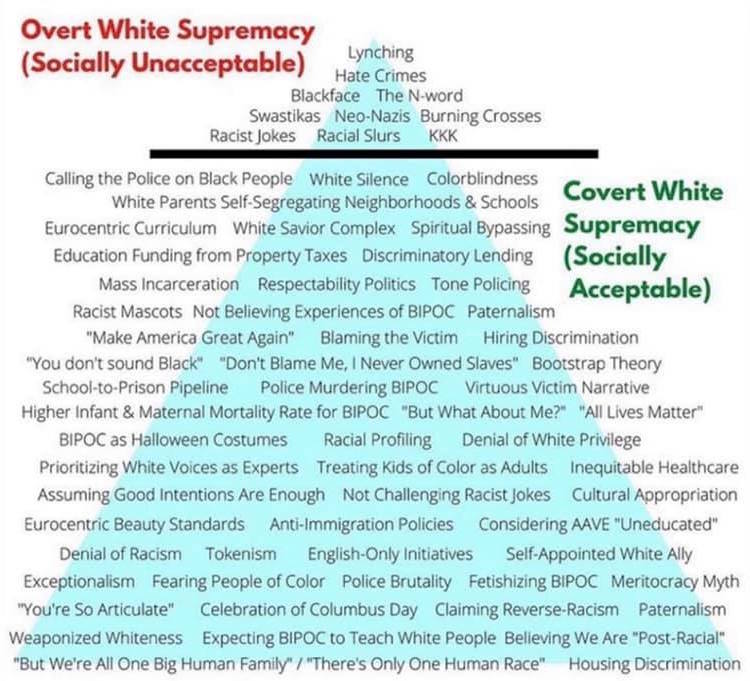






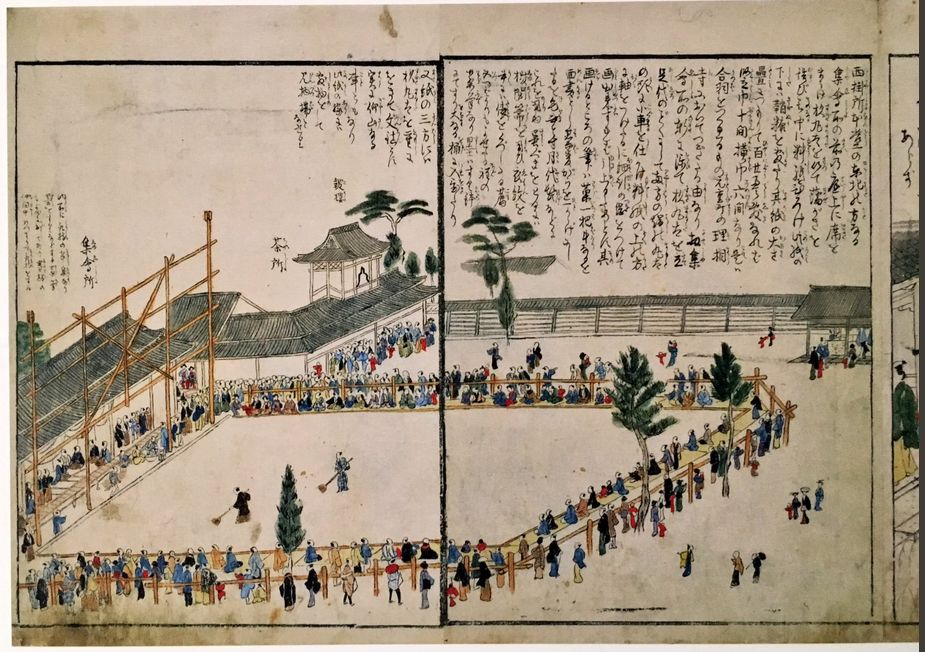
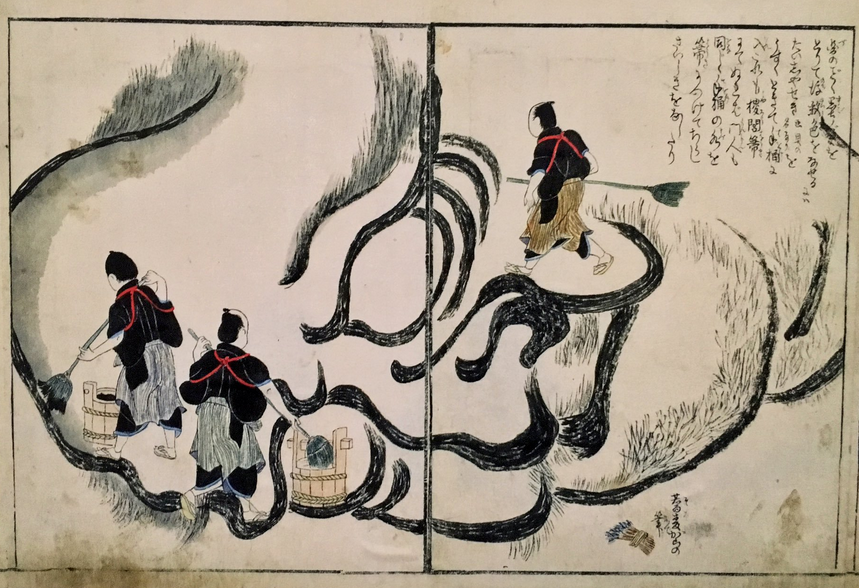
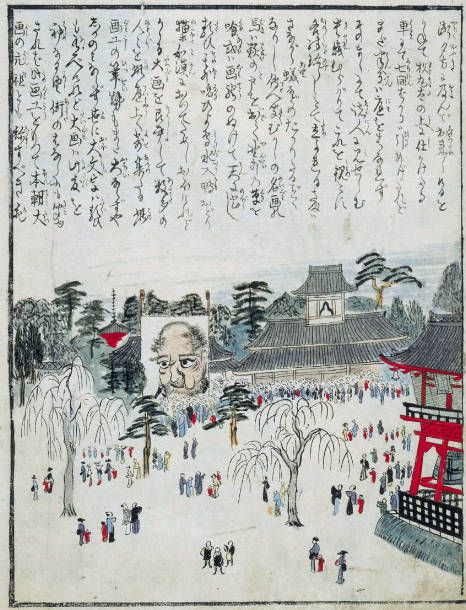
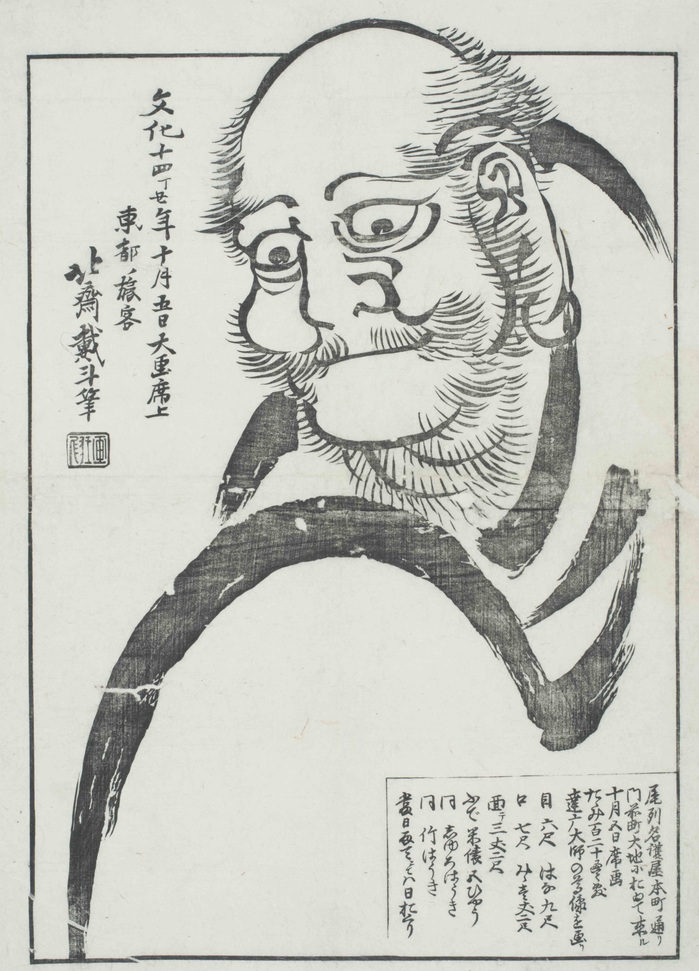
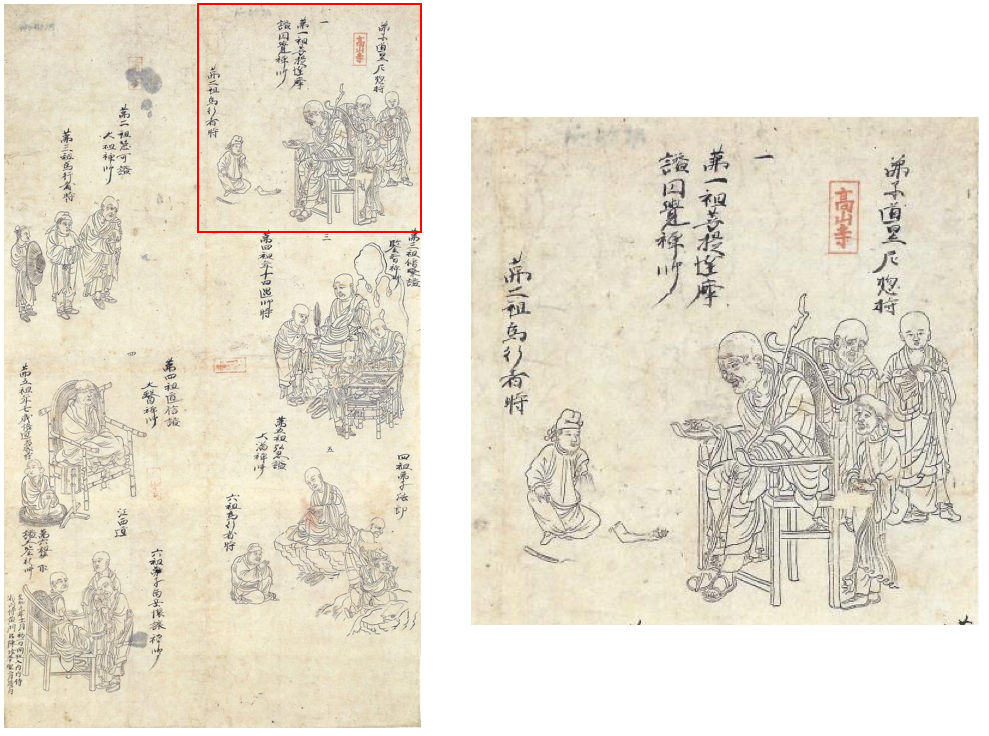
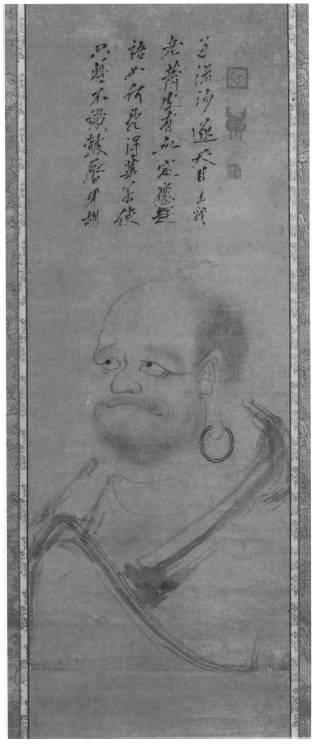
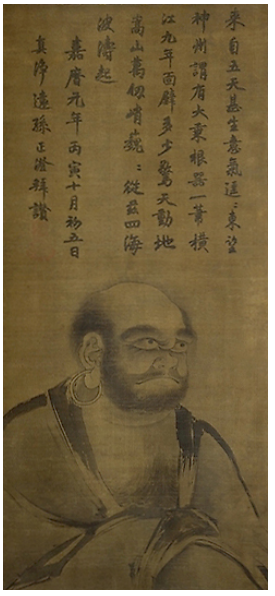
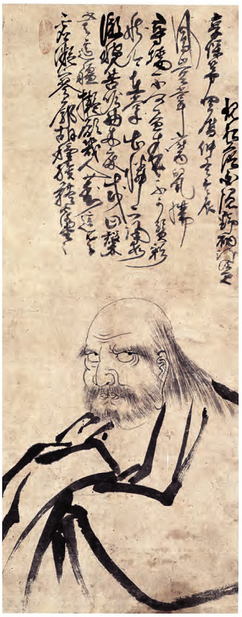
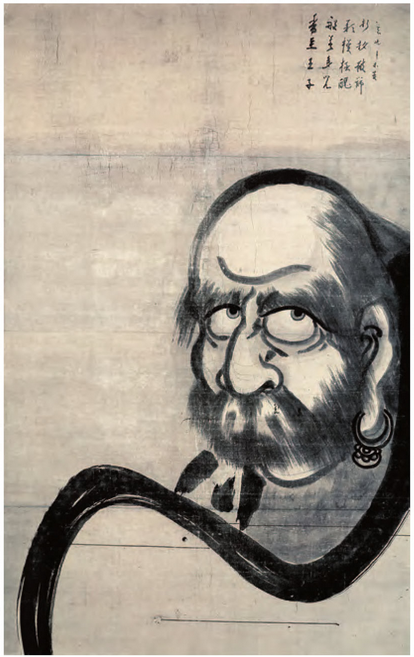
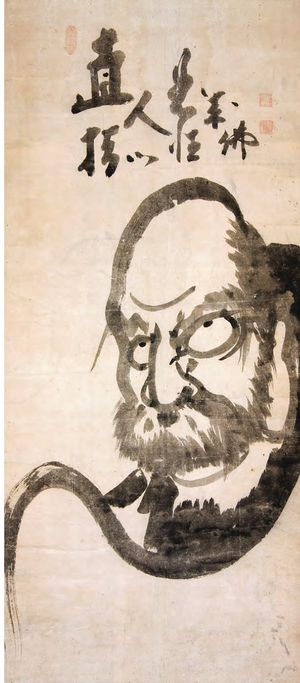
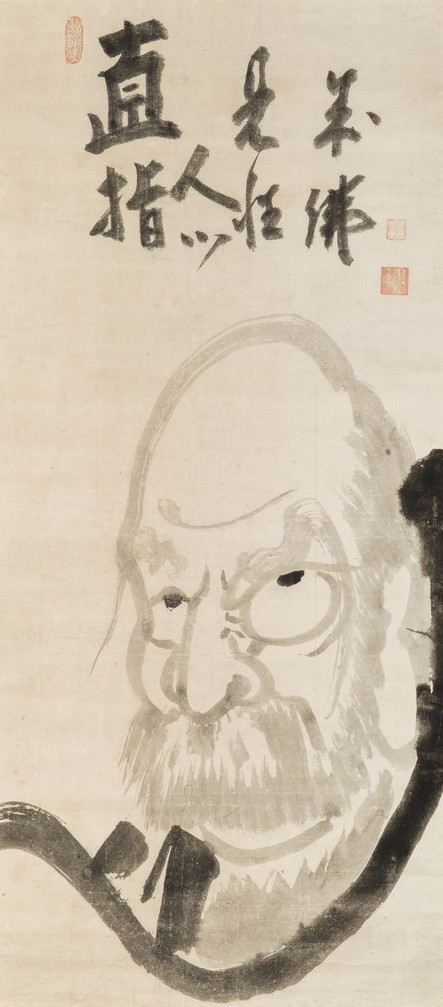
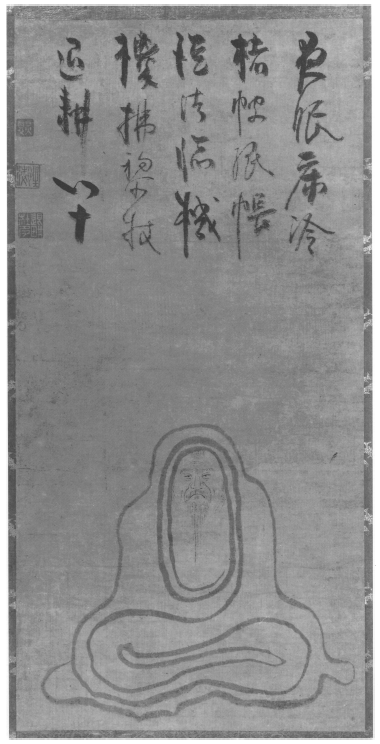
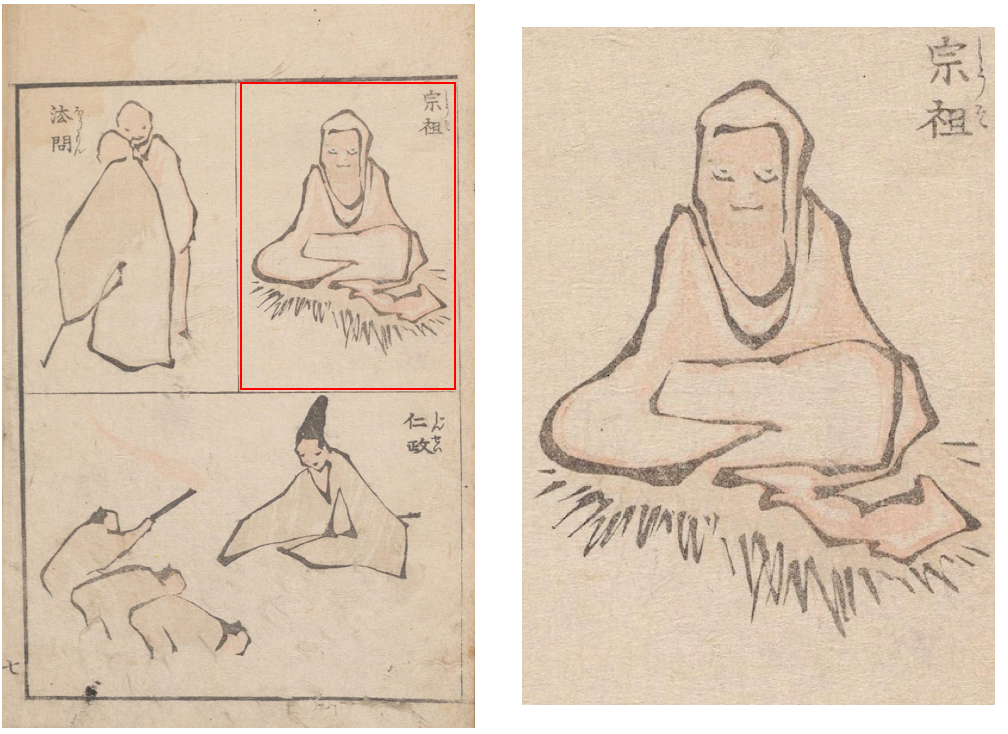
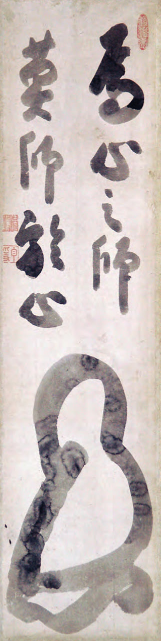
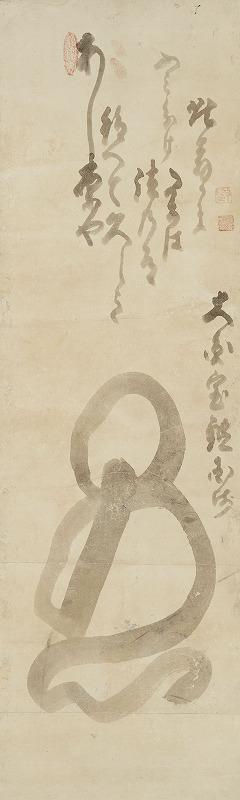
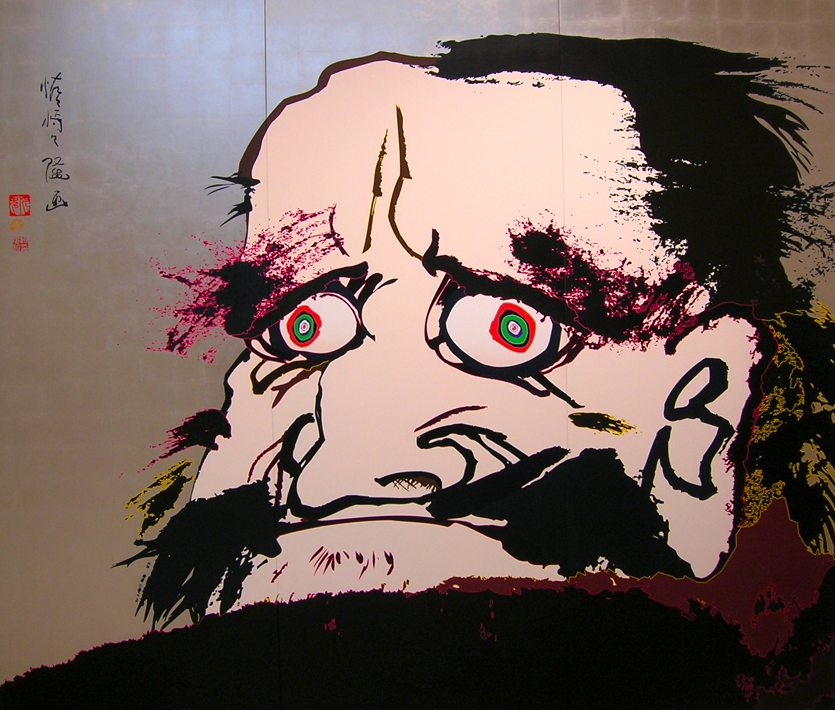

![student Bodhidharma 05 [PC-Peter Romaskiewicz]](https://peterromaskiewicz.com/wp-content/uploads/2019/08/student-bodhidharma-05-pc-peter-romaskiewicz.jpg)


























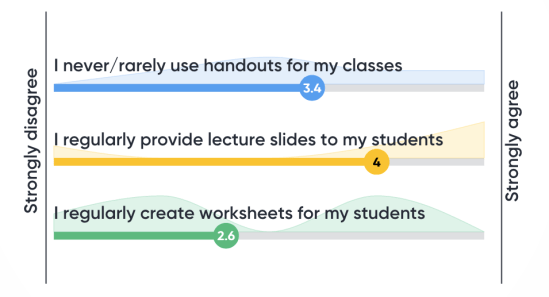
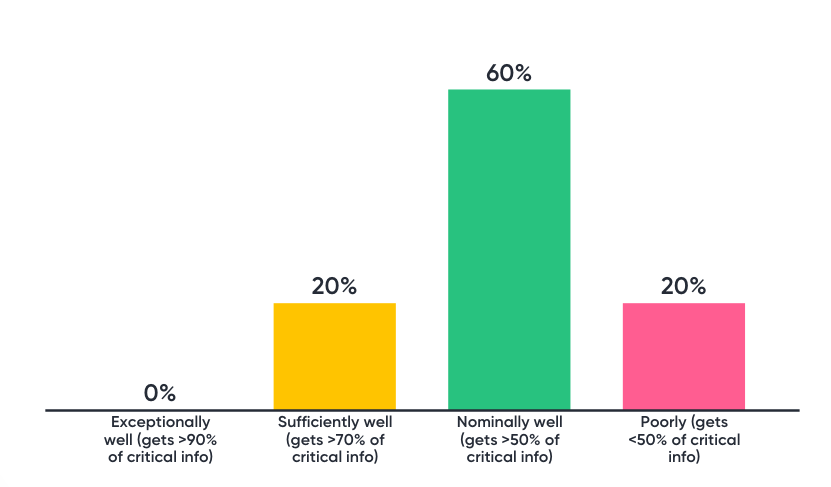

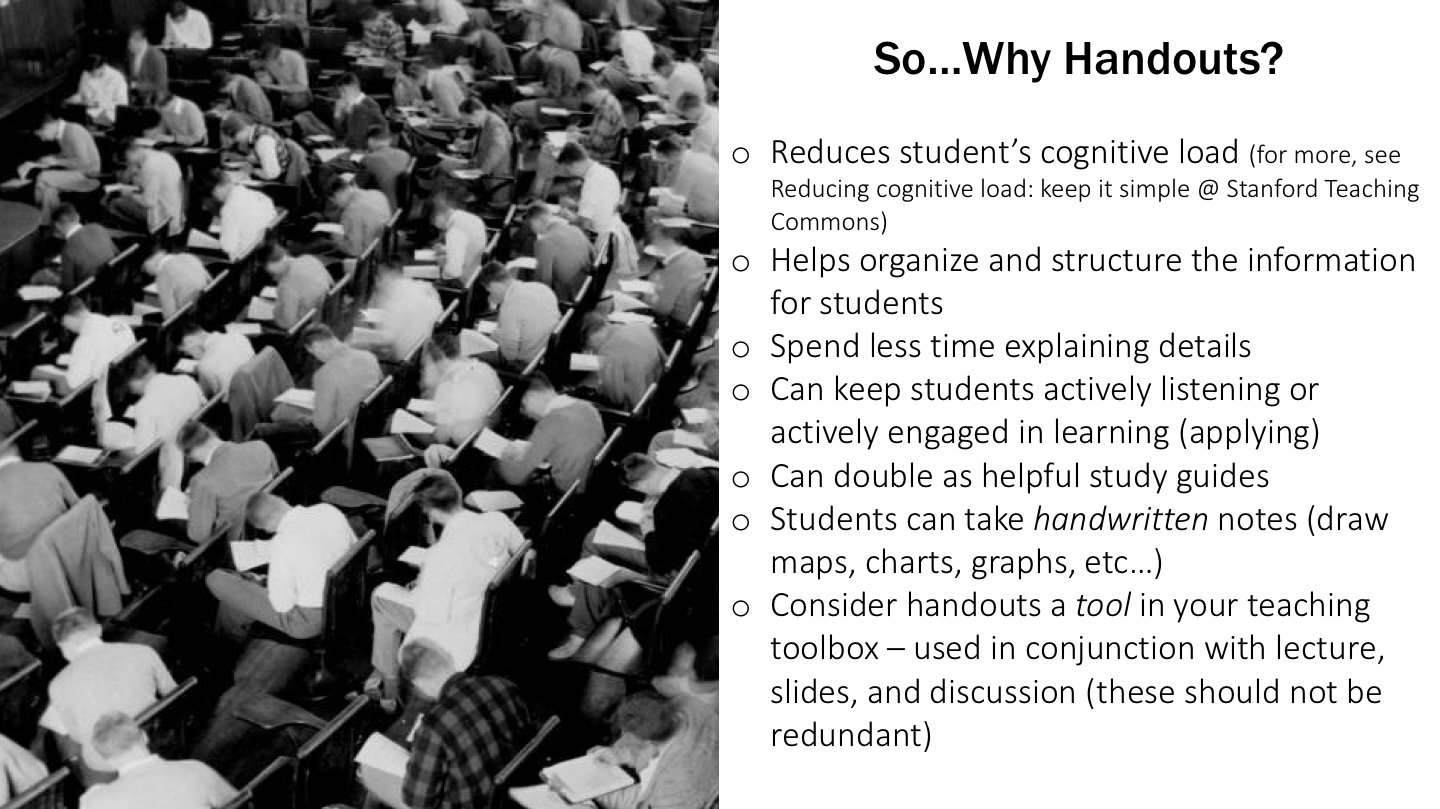



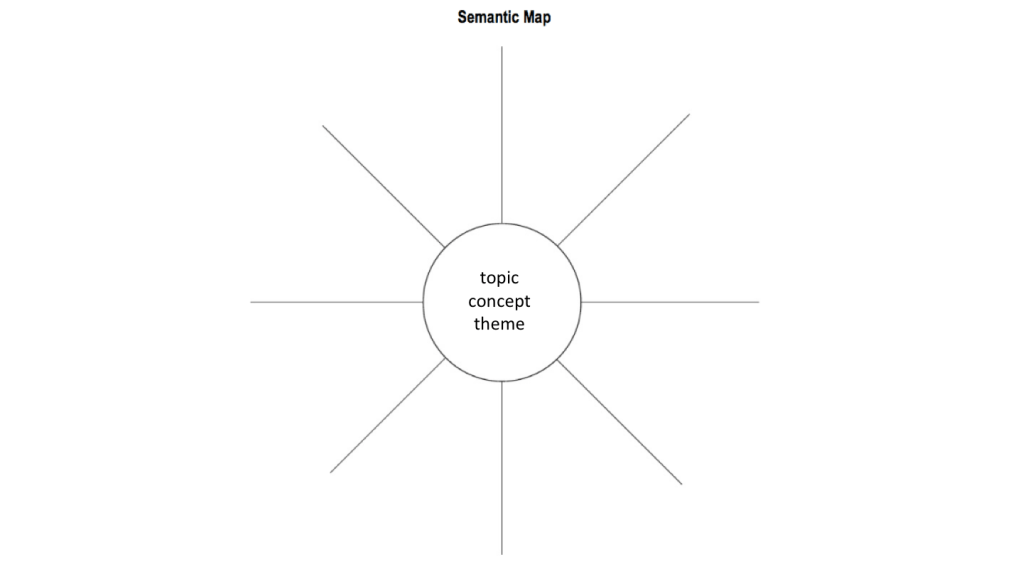




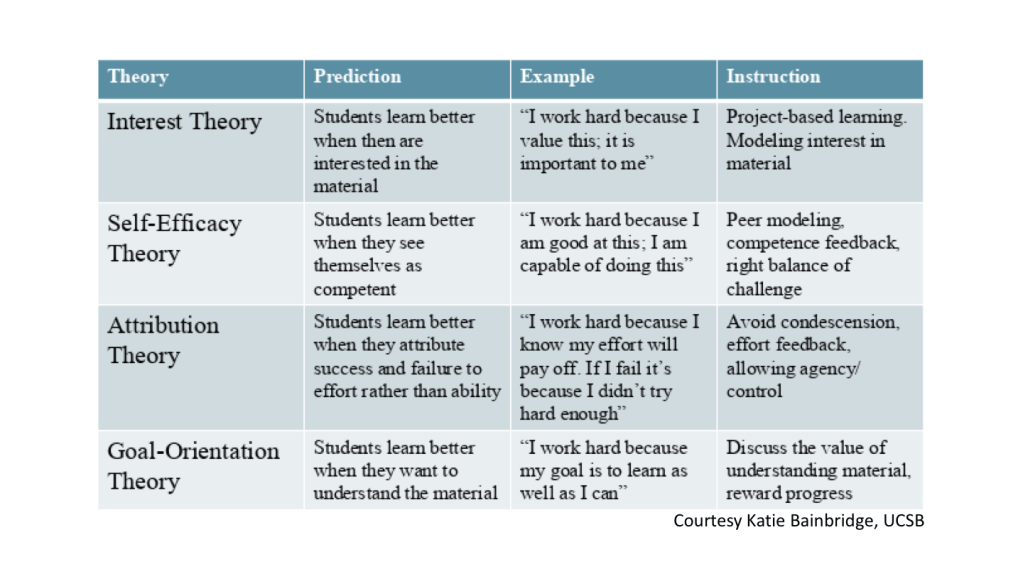
















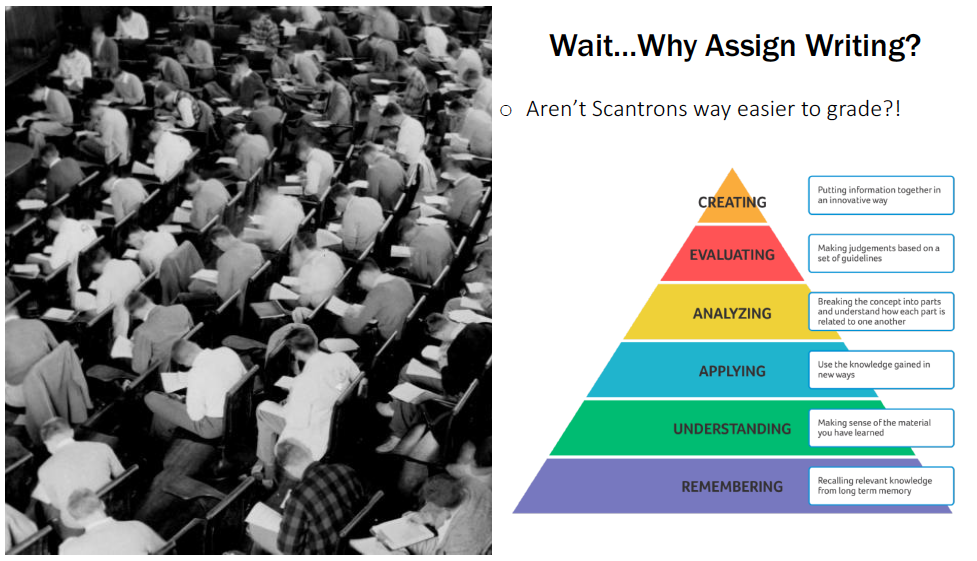


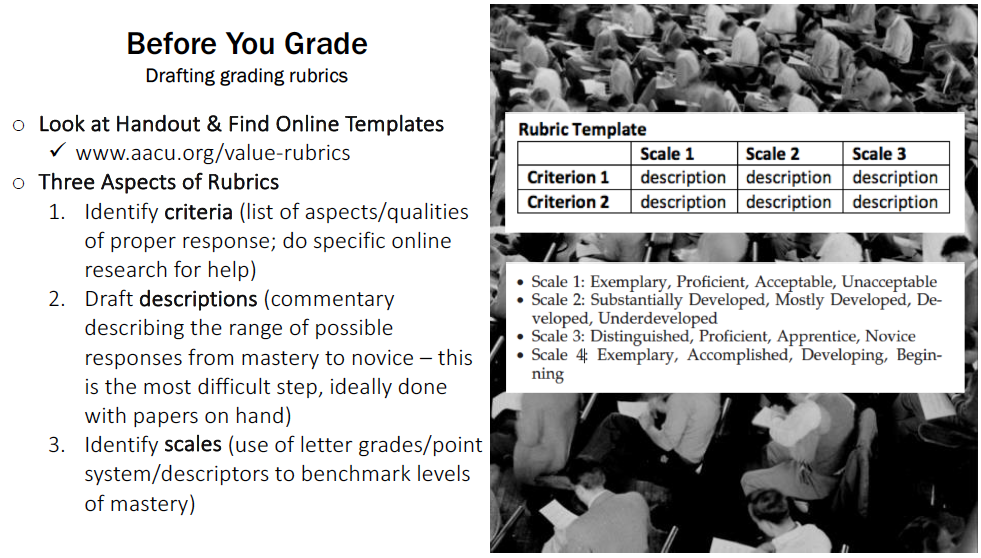




 Personal Site of Peter Romaskiewicz