Anna Eva Faye’s Śiva Mascot Token

For all the new Buddhas in the West posts
follow us on Bluesky & Instagram


A rather unique mixture of religion, science, and stage magic was playing out on the Vaudeville circuit at the end of the 19th century. Anna Eva Faye, billed as the “Indescribable Phenomenon,” played to full houses with her other-worldly displays of mentalism.

As a souvenir of her show and a token of good luck (the generic sense of “mascot”), Faye sold coins bearing the image of the multi-armed Indian icon Śiva. The AEF below the figure refers to Anna Eva Faye.

The reverse bears a wreath (common to US coins of the era) enclosing the magic letters: AYX-7OD-77O. The coin reflects how the religious import of Śiva is funneled into larger American beliefs in occult power during this period.

This souvenir coin shows a decent amount of rub wear. This suggests the coin was a trusty good luck companion for someone in the past. The coin is about the size of a US quarter.

For a curated list of old newspaper articles about Anna Eva Faye, see the offering presented by the Library of Congress here: https://tinyurl.com/3jhkjsze.


The Buddhas in the West Material Archive is a digital scholarship project that catalogues artifacts depicting Buddhist material culture for Western audiences. It’s comprised of prints, photos, and an assortment of ephemera and other objects. For a brief introduction to this archive, visit the main Buddhas in the West project page.


For Related Buddhas in the West Posts Featuring Historical Advertising:

For the Most Recent Buddhas in the West Posts:

The Cheat (1923) Production Photograph

For all the new Buddhas in the West posts
follow us on Bluesky & Instagram


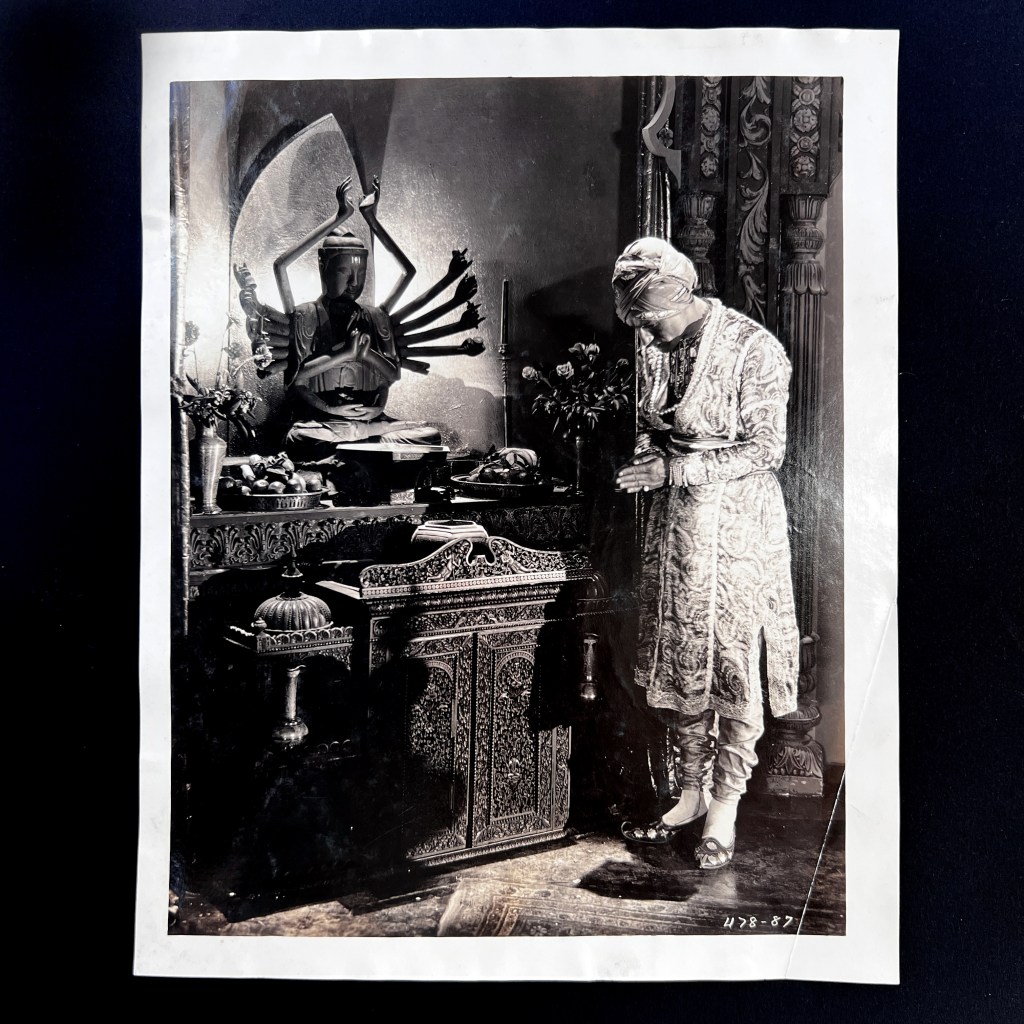
A Lost Film: The remake of The Cheat in 1923 starred Pola Negri in her second American film; she gave rise to the cinematic femme fatale. As with many silent films of the era, The Cheat is considered lost and theatrical stills are some of the only pictorial documents remaining.

Theatrical stills – shot since the advent of feature films in the 1910s – are simply production photographs. Over the last century they have become highly collected artifacts, here we can see where the photo was affixed to an album page.

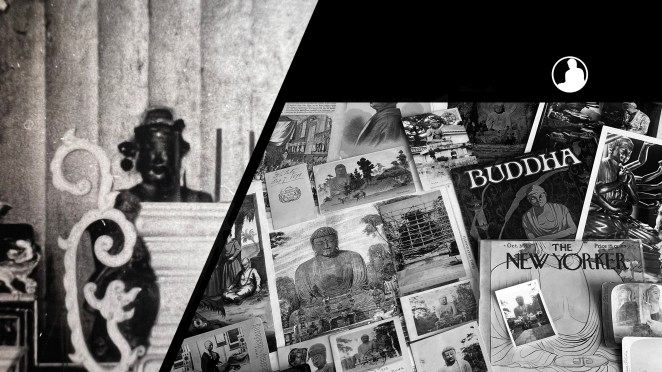
The image here shows Charles de Rochefort playing a cunning art dealer masquerading as an East Indian Prince. The set design uses a multi-arm statue to underscore his foreign, and potentially nefarious, identity.

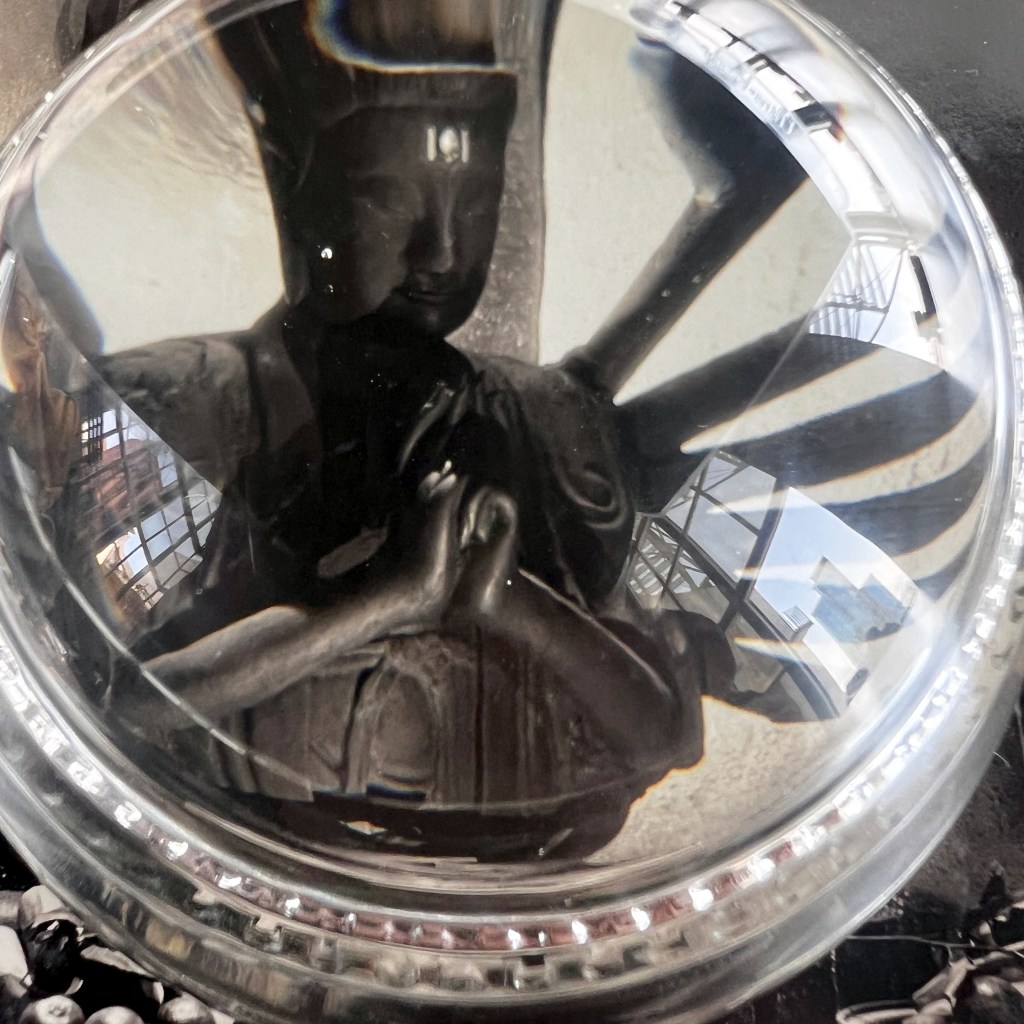
Looking closely at the statue, is does not appear to be a studio-made prop. The features and style suggest an authentic East Asian icon.

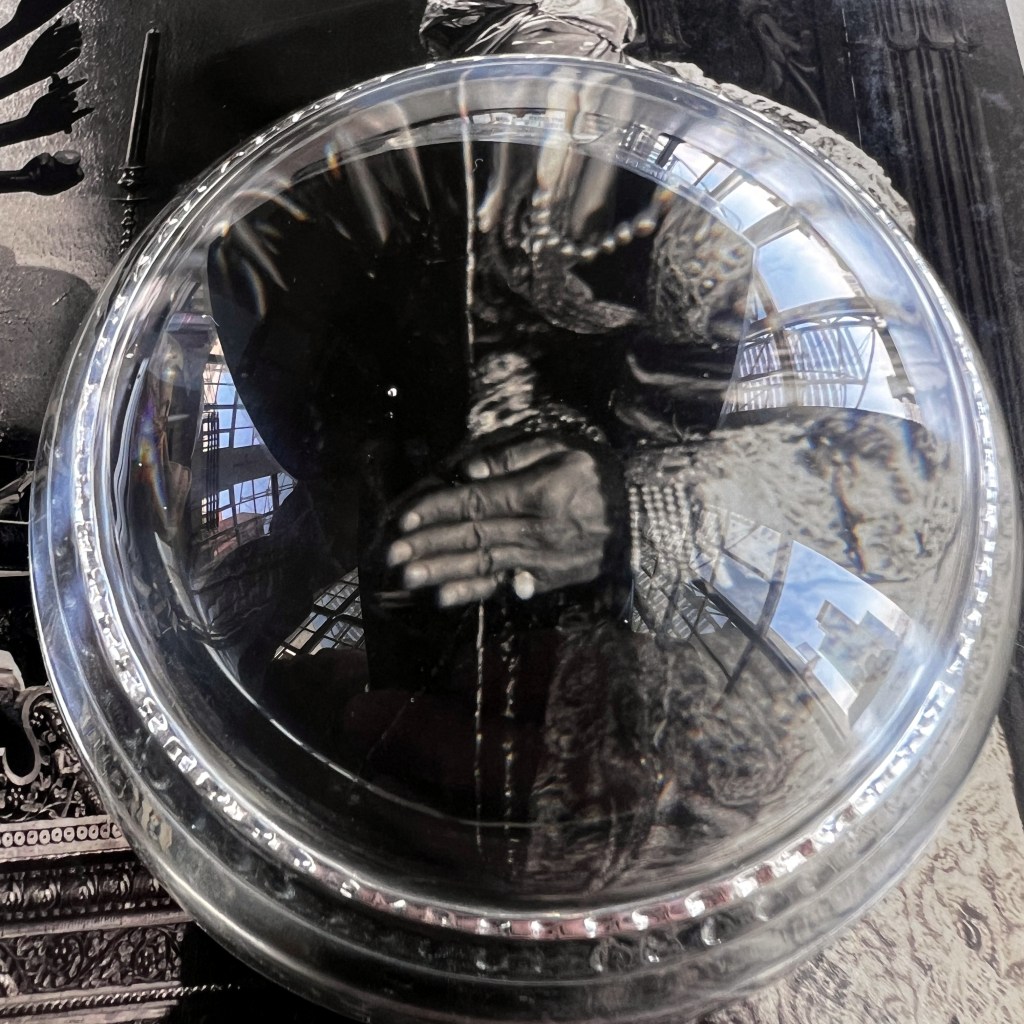
The richly brocaded costuming hints at the character’s royal pedigree, while his posture of reverence reveals his non-Christian religious allegiance.

A similar icon was photographed by German photographer Hedda Morrison in China between 1933–1946. It is viewable through Bristol’s Visualizing China project here: https://hpcbristol.net/visual/Hv08-085


The Buddhas in the West Material Archive is a digital scholarship project that catalogues artifacts depicting Buddhist material culture for Western audiences. It’s comprised of prints, photos, and an assortment of ephemera and other objects. For a brief introduction to this archive, visit the main Buddhas in the West project page.


For Related Buddhas in the West Posts Featuring Historical Photography:


For the Most Recent Buddhas in the West Posts: