Hyōgo Daibutsu Vignette Postcard

For all the new Buddhas in the West posts
follow us on Bluesky & Instagram


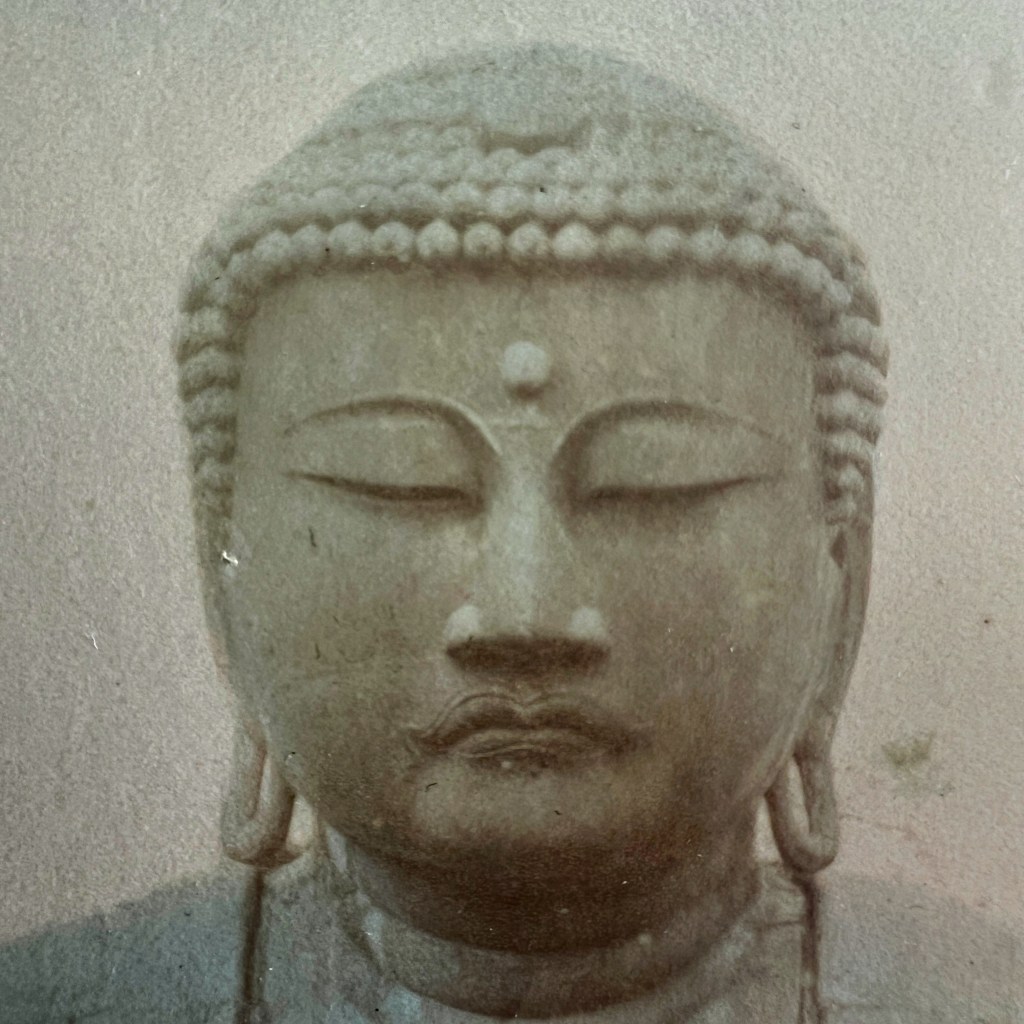
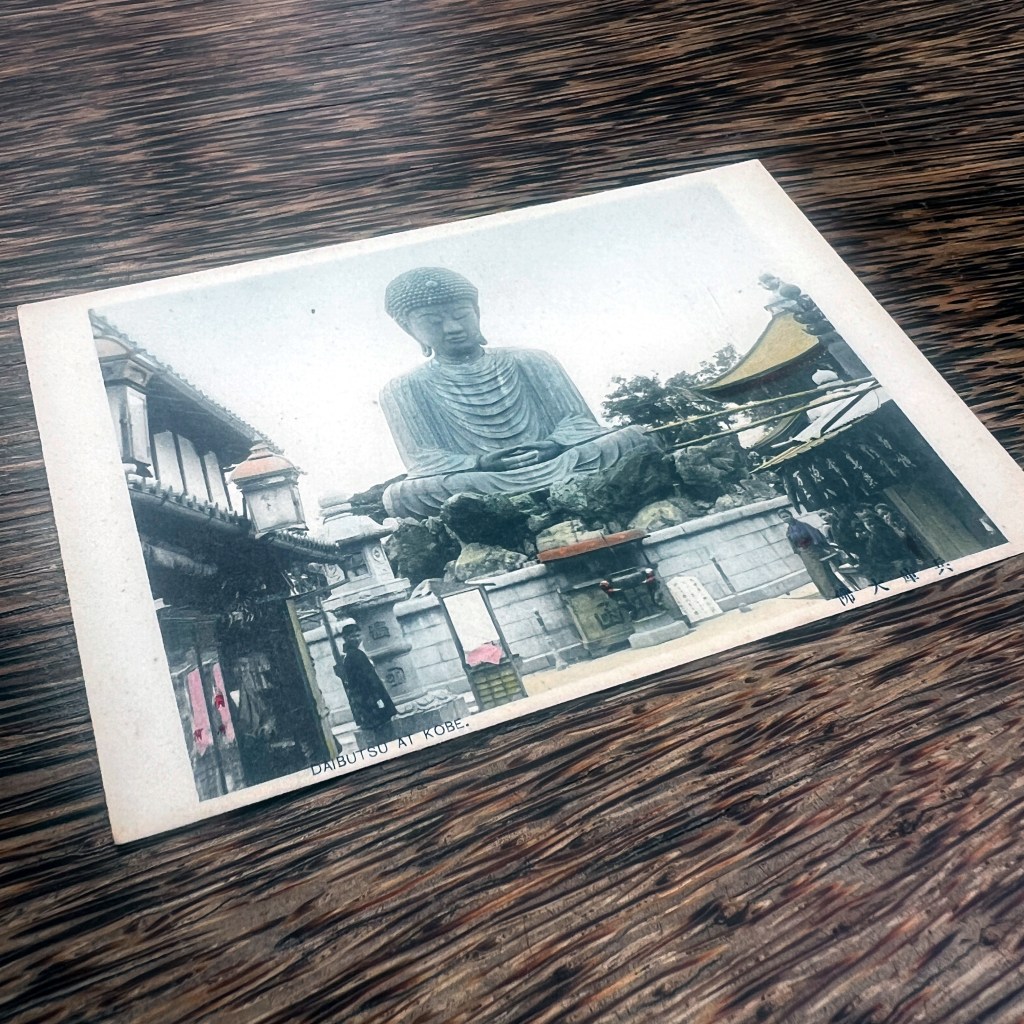
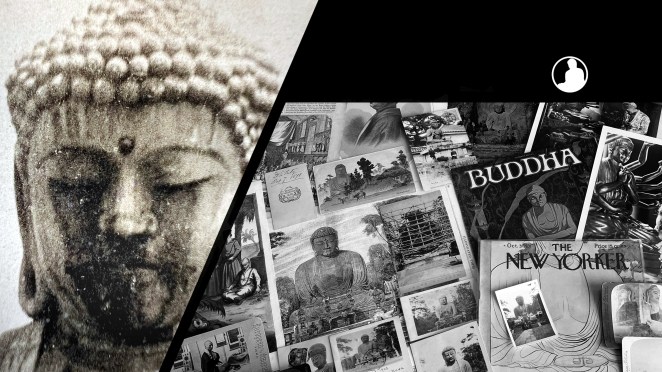
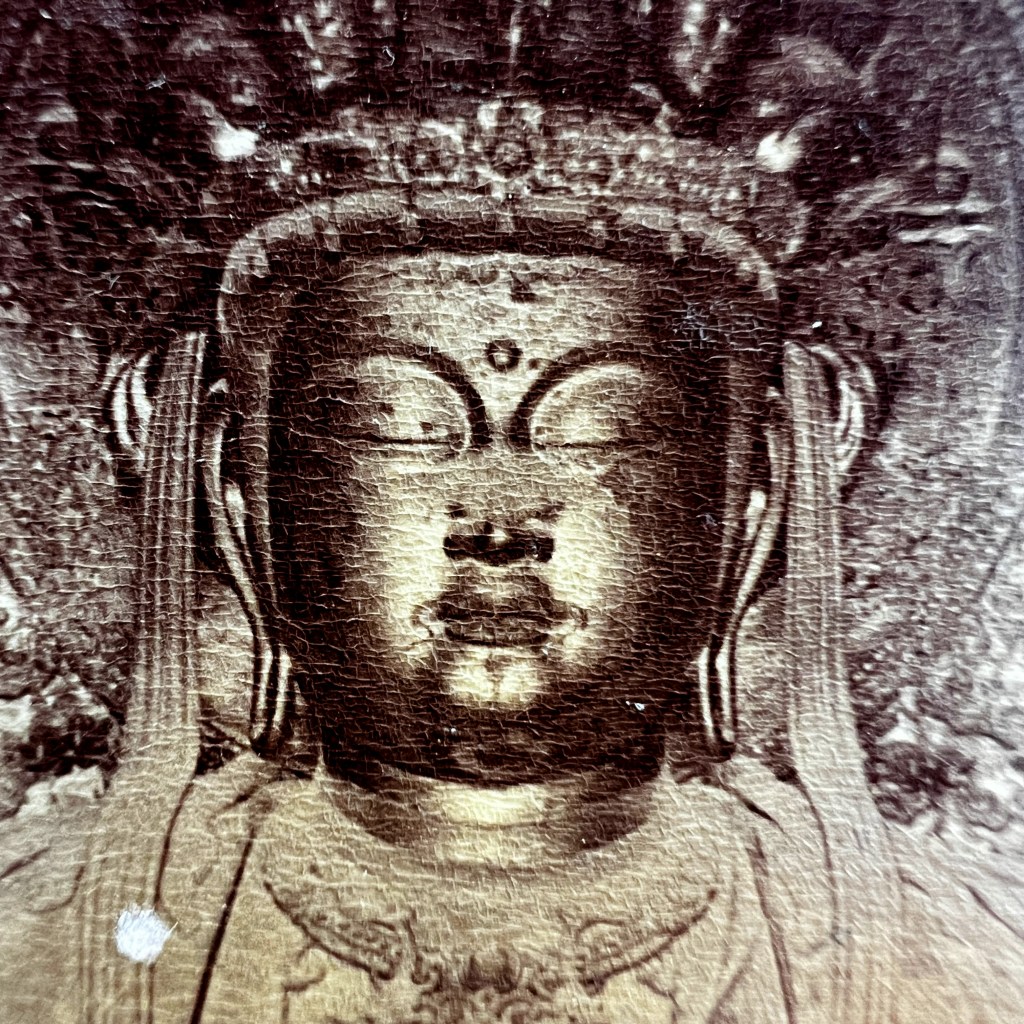
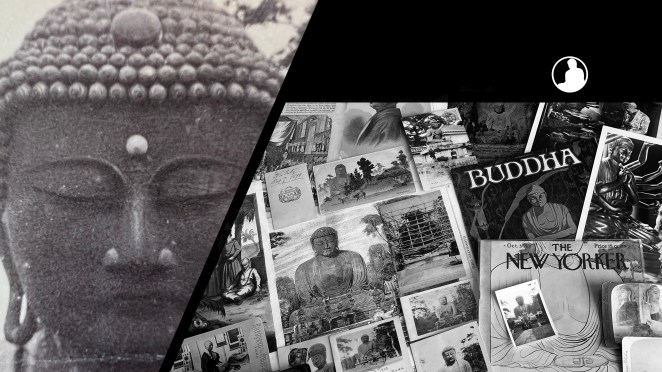
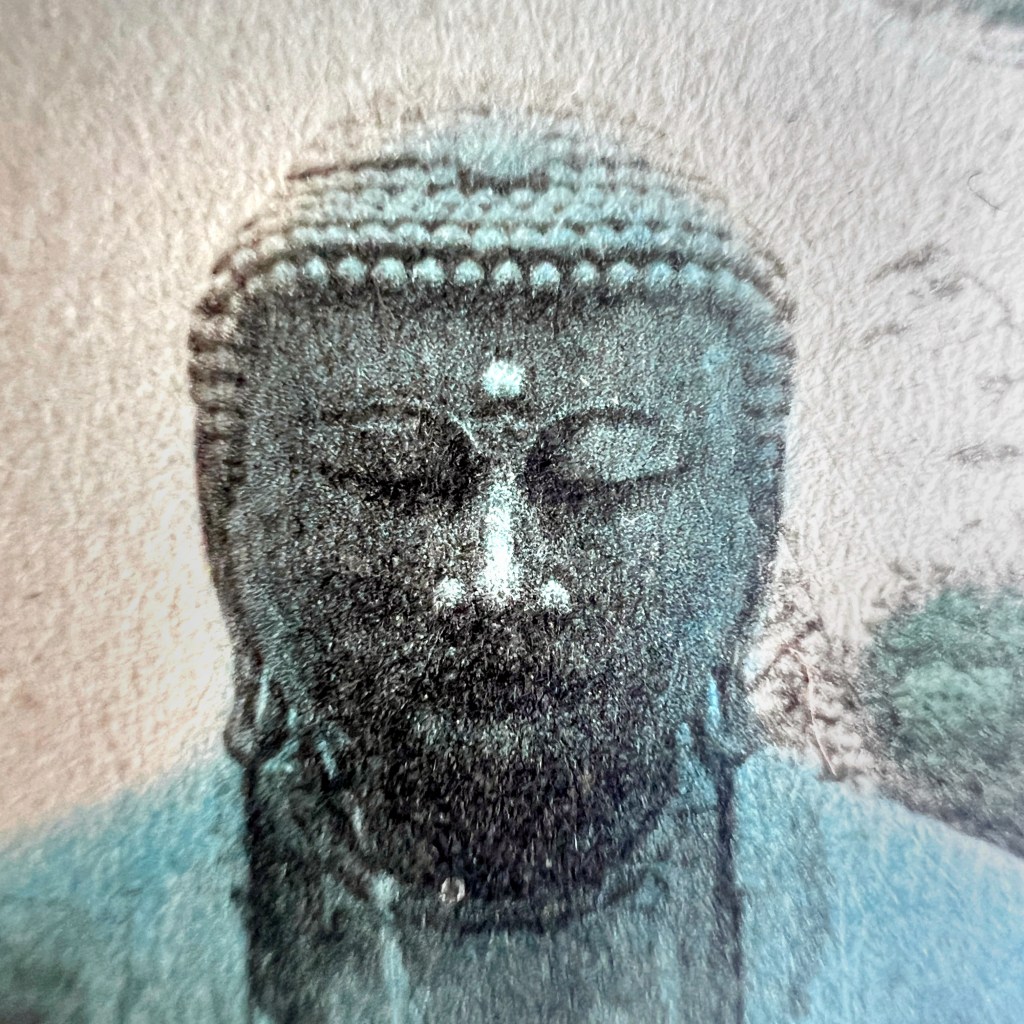
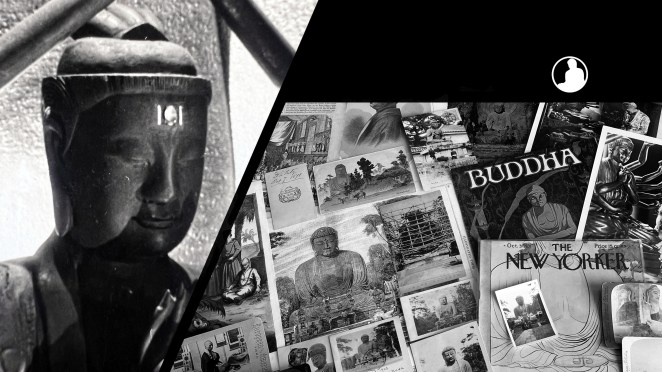
The original Hyōgo Daibutsu 兵庫大仏 was dismantled as part of Japanese war efforts during WWII. It was motivated by the Ordinance on the Collection of Metals issued in 1941. At the time, it was the third largest Buddhist statue in Japan.

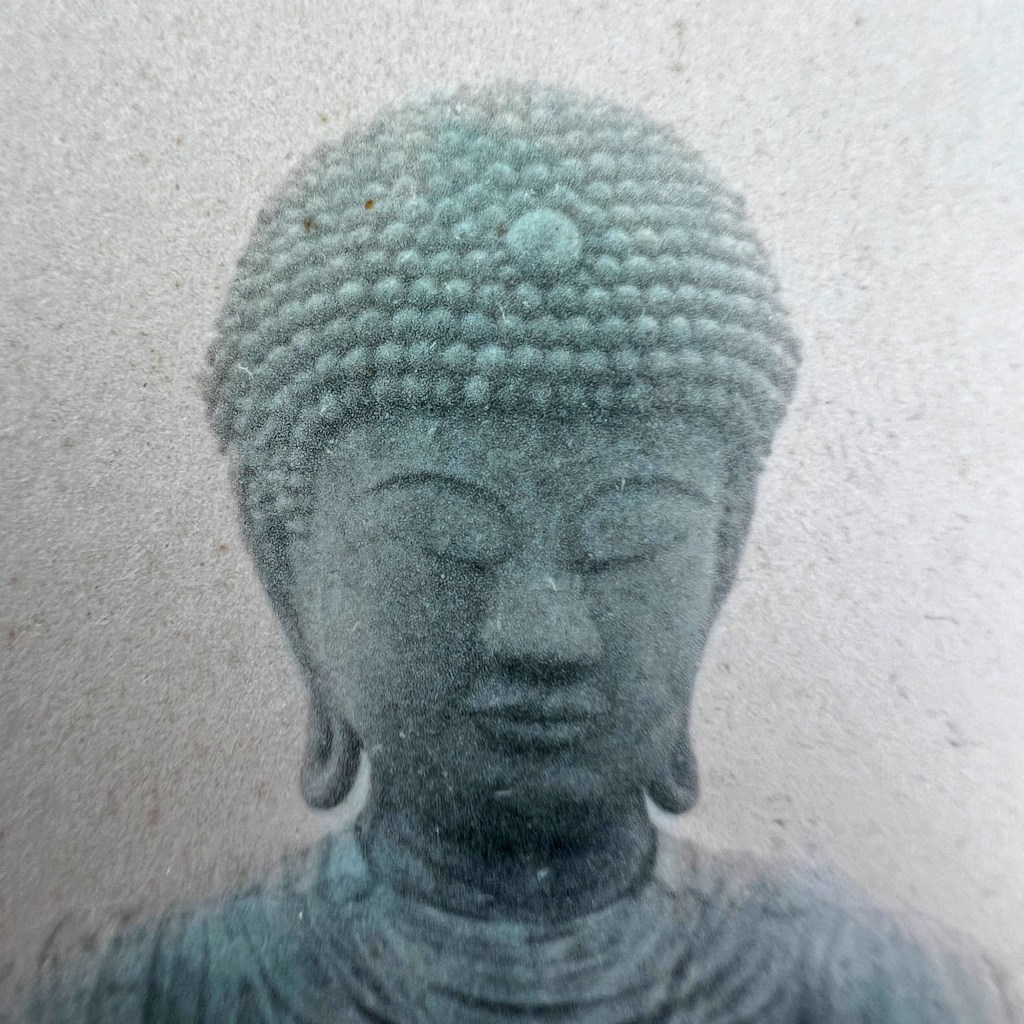
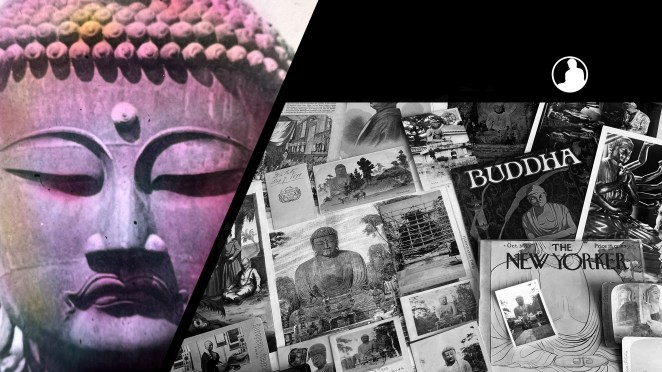
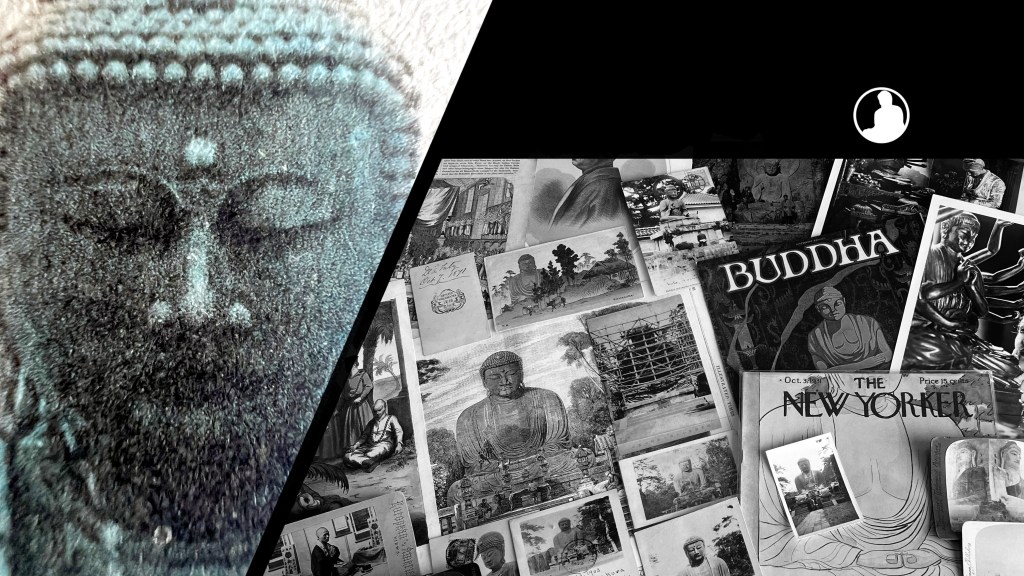
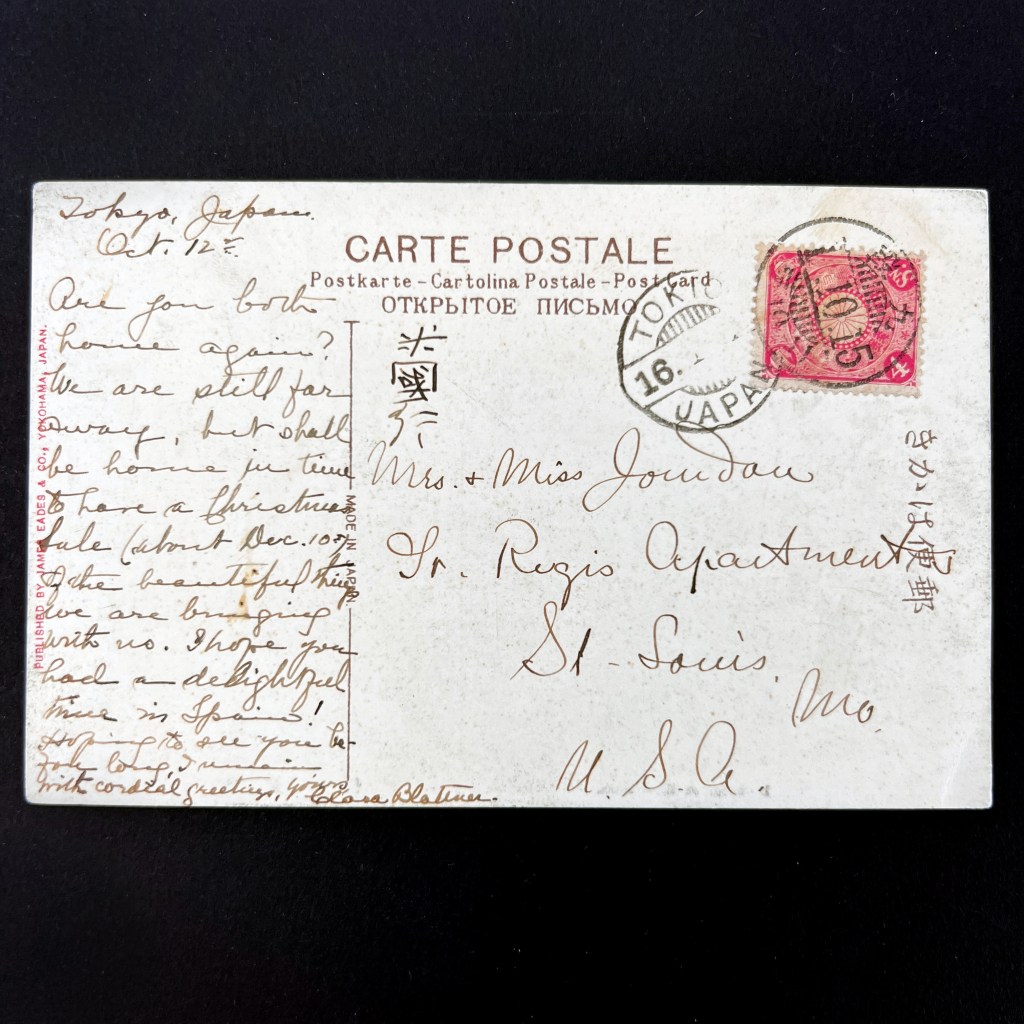
Constructed in 1891, photographs of the Hyōgo Daibutsu were often printed on Japanese postcards of the era. Based on the design on the back of this card we know it was published before 1907.


The blank space on the front of this card was intended for the written message. The reverse was saved for the address only.


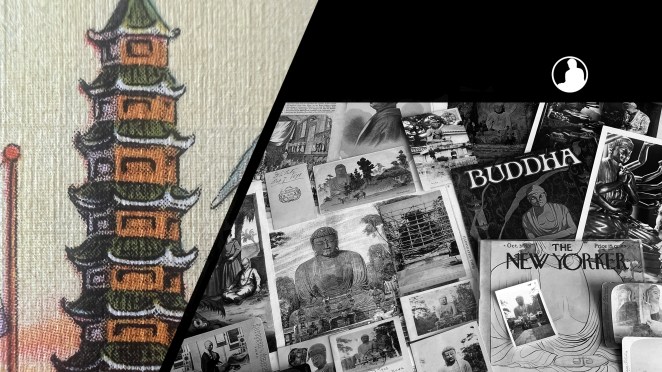
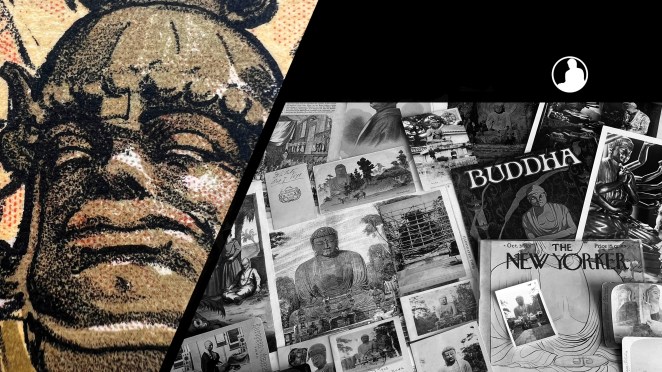
This card is uncommon because it combines a collotype print with an added pink cherry blossom frame. The angular band of discoloration on the corner reveals it was stored in a postcard album.


Most photographic Japanese post cards of this period were individually hand-painted. This continued into the 1910s until multi-color printing became more commonplace.


The Buddhas in the West Material Archive is a digital scholarship project that catalogues artifacts depicting Buddhist material culture for Western audiences. It’s comprised of prints, photos, and an assortment of ephemera and other objects. For a brief introduction to this archive, visit the main Buddhas in the West project page.


For Related Buddhas in the West Posts Featuring Historical Postcards:


For the Most Recent Buddhas in the West Posts:


Herbert Ponting’s Nichiren Priest Stereoview

For all the new Buddhas in the West posts
follow us on Bluesky & Instagram


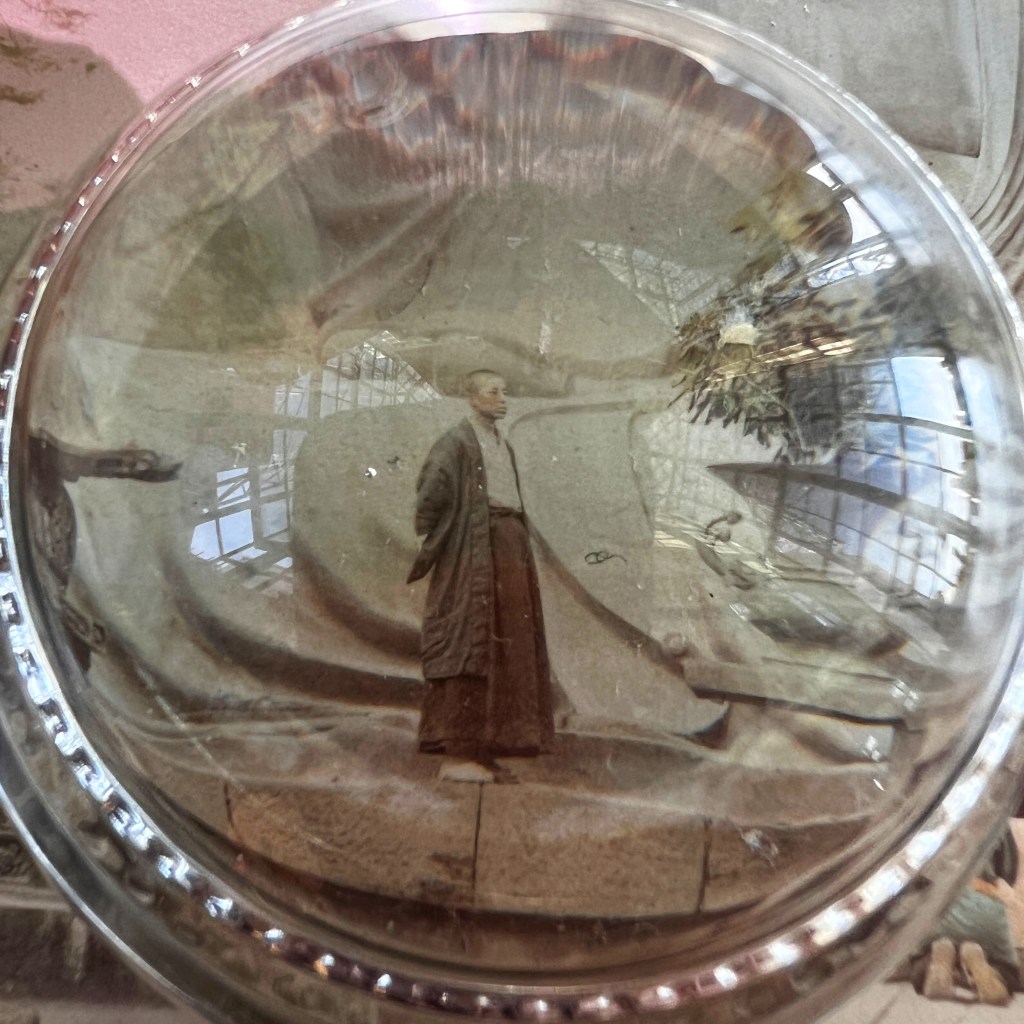
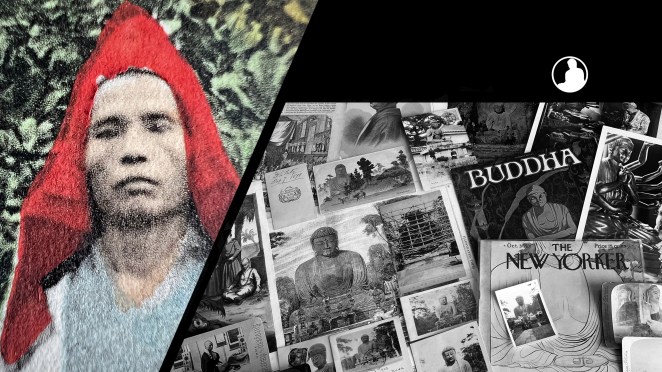
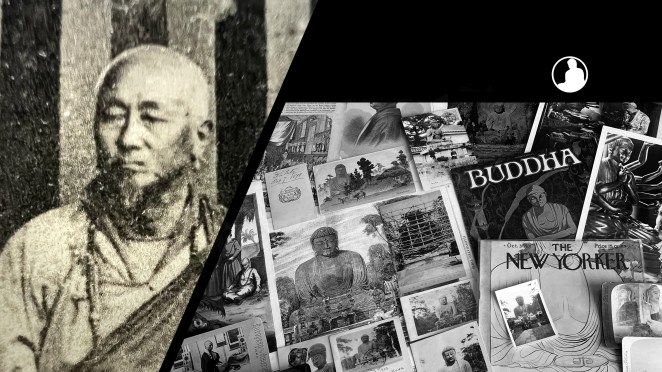
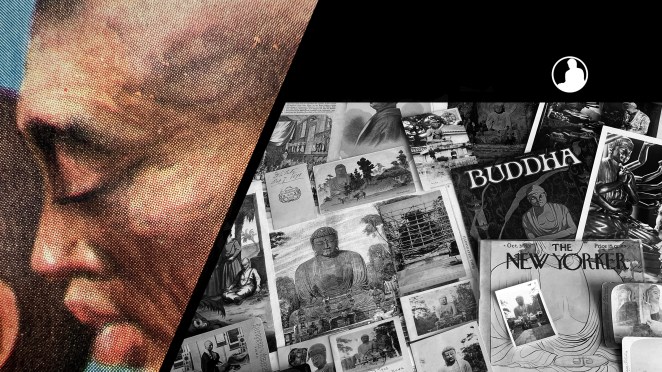
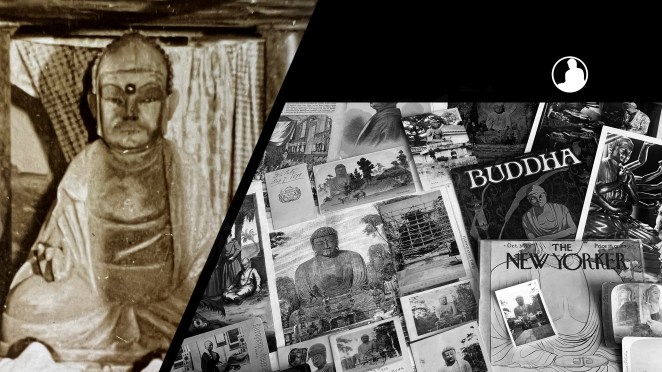
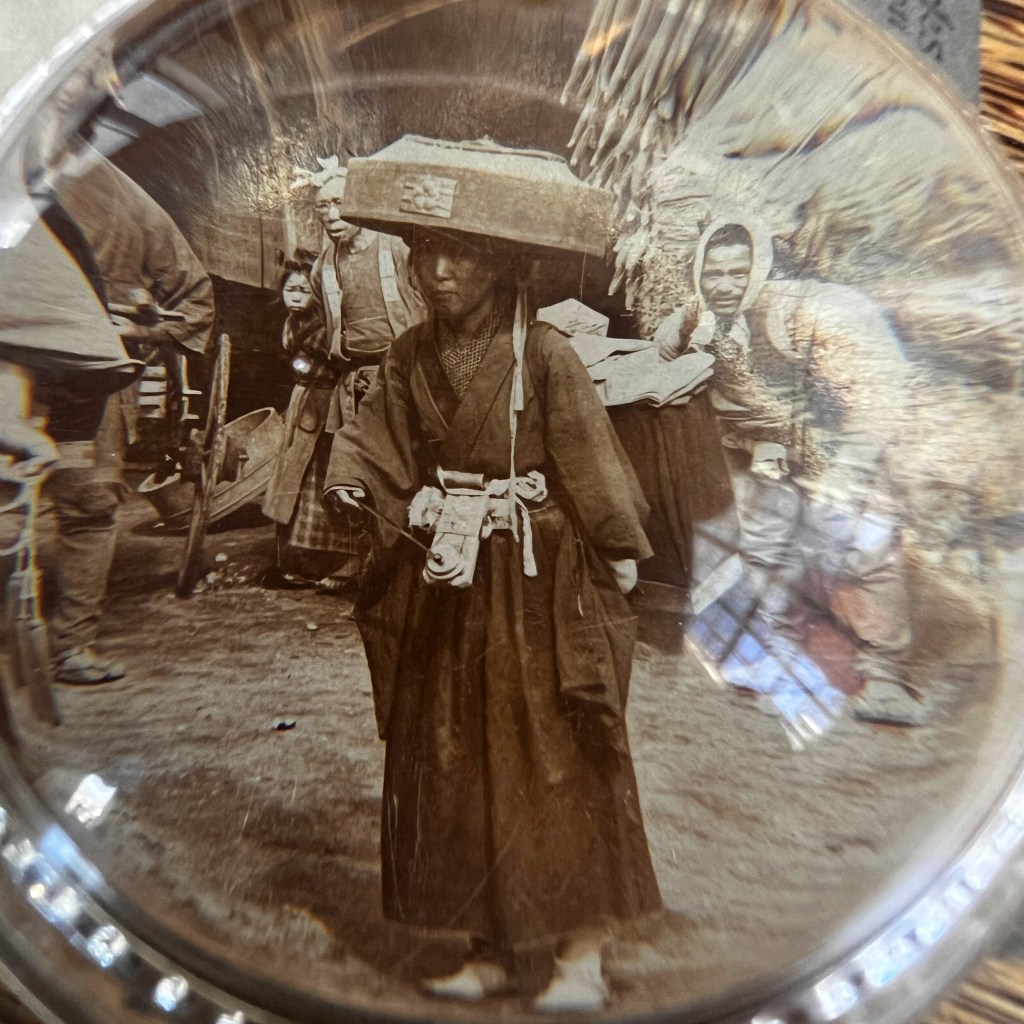
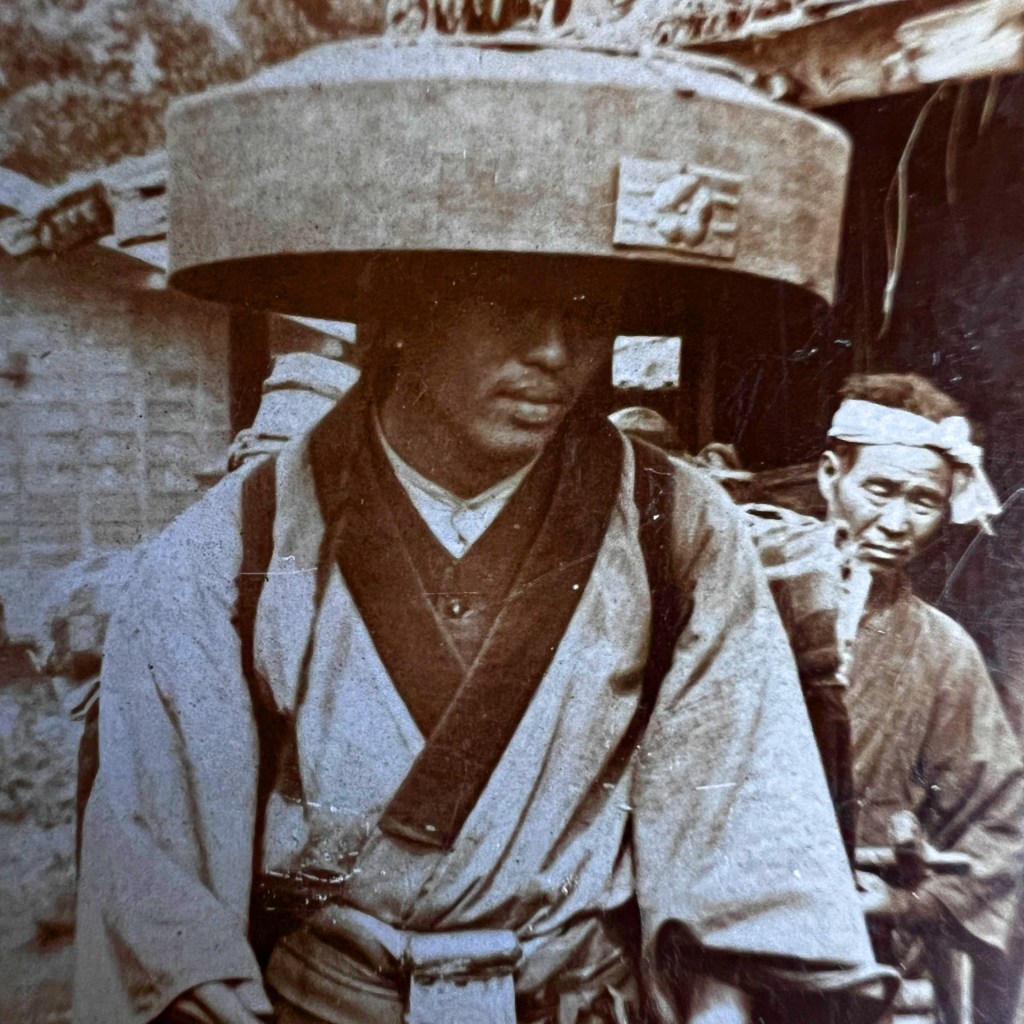
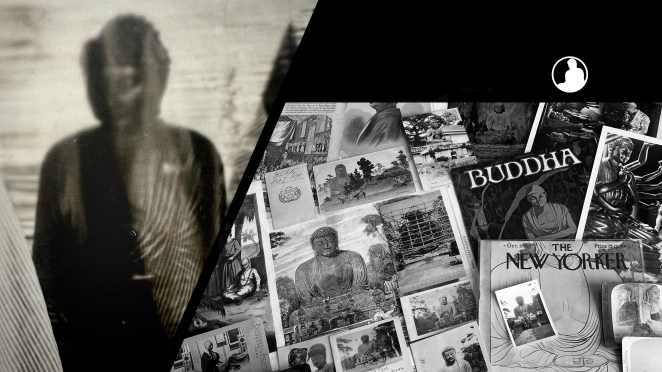
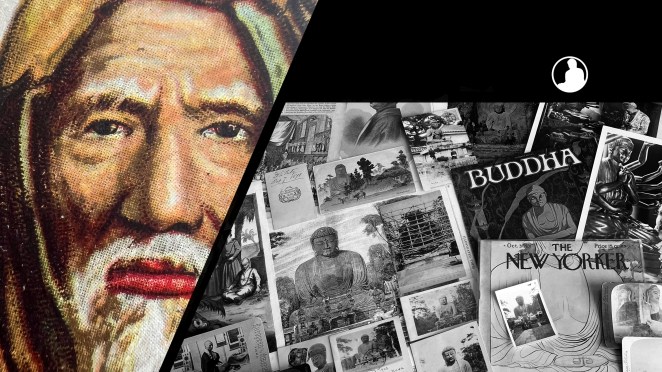
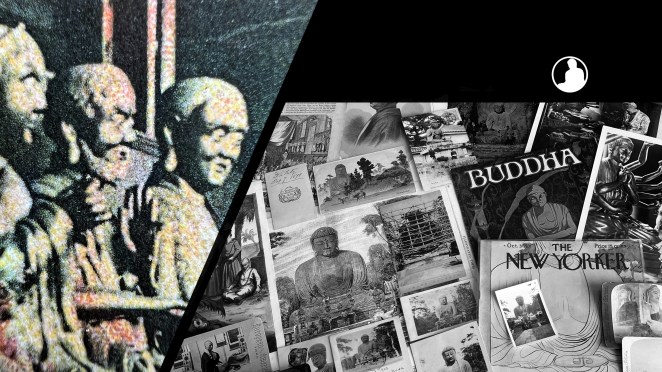
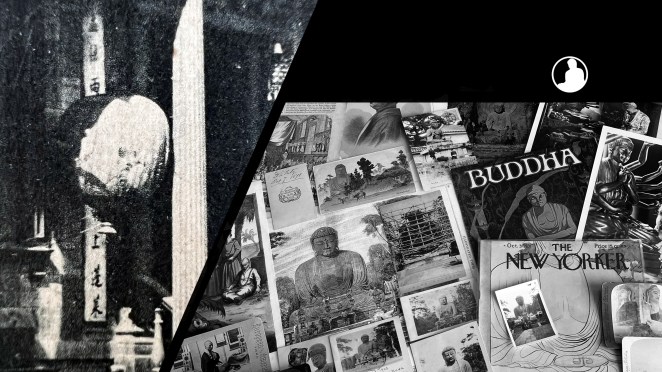
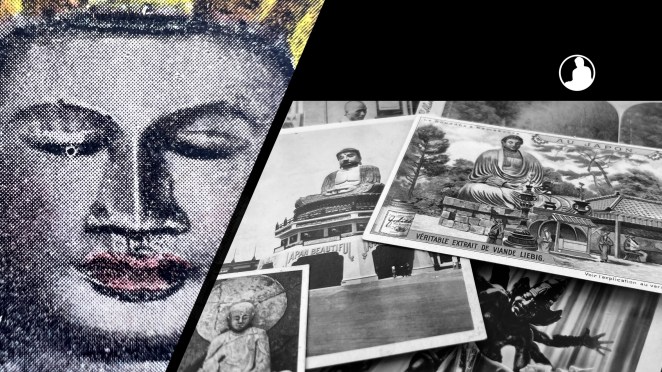
Is this the first stereoscopic 3D portrait of a Buddhist abbot? While many Japanese Buddhist priests were photographed for stereoviews by 1905, the year this card was issued, this is a rare occasion where we have an indication of the priest’s identity.

The caption tells us the priest is the head of Ikegami Temple (Honmon-ji #本門寺) of the Nichiren school. We also know the photographer, Herbert Ponting, was hired by H.C. White to take photos of the Russo-Japanese War and he toured Japan through the end of 1906.

There are two potential identifications of this priest, but it is likely Kubota Nichiki 久保田日亀(1841–1911), who became the 68th generation abbot in 1899. He holds a fly-whisk, a sign authority.

By the 20th century, stereoviews were seen as important educational tools and the backs of many cards were imprinted with information, sometimes reflecting contemporary views and biases. This description notes the Nichiren school emphasized “the most flagrant superstitions.”

Ponting would eventually author a book on his travels in Japan, entitled In Lotus-Land Japan, illustrated with photos he had originally taken as stereoviews. The book can be read here: https://tinyurl.com/hhzhsnm9


Additional Archived Posts for the Buddhas in the West Project

The Buddhas in the West Material Archive is a digital scholarship project that catalogues artifacts depicting Buddhist material culture for Western audiences. It’s comprised of prints, photos, and an assortment of ephemera and other objects. For a brief introduction to this archive, visit the main Buddhas in the West project page.


For Related Buddhas in the West Posts Featuring Historical Stereophotography:


For the Most Recent Buddhas in the West Posts:


Postcard from the Old Shinkōji Daibutsu

For all the new Buddhas in the West posts
follow us on Bluesky & Instagram


It’s said the postcard was the first truly democratic photograph, providing people with images of places and things for the cost of a few pennies. In 1913, Japanese postal carriers delivered 1.5 billion cards, second only to Germany with 1.8 billion cards delivered.

In Japan, postcards of Buddhist temples, priests, and other elements of religious practice were popular as both domestic and foreign souvenirs as well as collector’s items (postcard collecting is known as deltiology).

Collecting picture postcards (ehagaki 絵葉書) for display in albums was commonplace. In the case of the postcard here, the stamp is affixed to the image side of the card – this allows the stamp and postal mark to be displayed when the card is attached to an album page.

According to the postal mark, the stamp was cancelled on October 1, 1925 (Taisho 14) in Kobe, the same location as the statue in the image. The cost of international postage for postcards at this time was four sen. The final destination of this card was France.

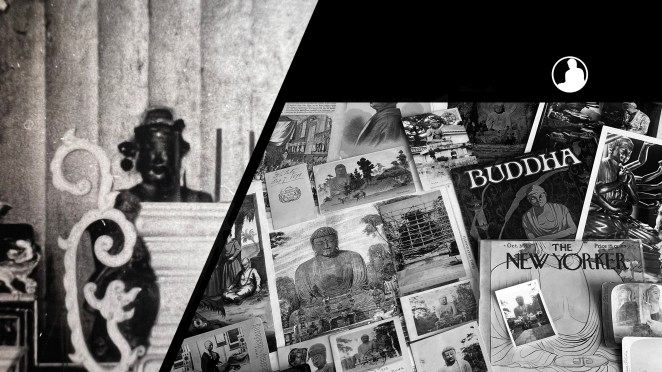
The composition of the photograph includes people thus helping us gauge the size of the Buddhist state. As far as I can tell, this state was destroyed in World War II by allied firebomb attacks on Kobe in March 1945.

Joanne Bernardi has curated a wonderful collection of Japanese postcards at the University of Rochester, available to be viewed here: https://tinyurl.com/57fae58f.


The Buddhas in the West Material Archive is a digital scholarship project that catalogues artifacts depicting Buddhist material culture for Western audiences. It’s comprised of prints, photos, and an assortment of ephemera and other objects. For a brief introduction to this archive, visit the main Buddhas in the West project page.


For Related Buddhas in the West Posts Featuring Japan:


For the Most Recent Buddhas in the West Posts:


Shimooka Renjō’s Daibutsu Carte-de-visite

For all the new Buddhas in the West posts
follow us on Bluesky & Instagram


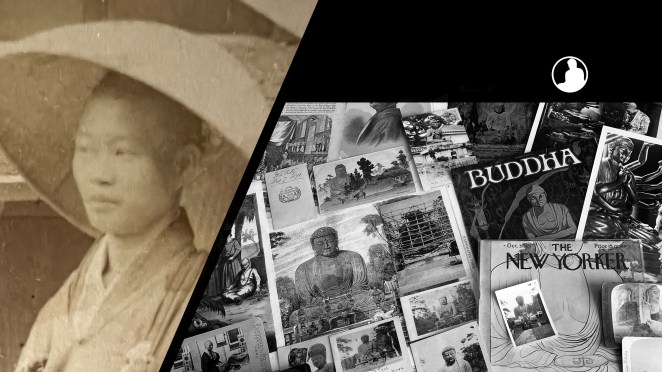
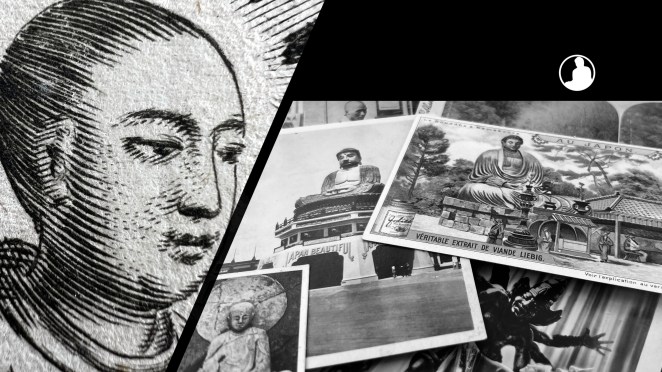
Shimooka Renjō 下岡蓮杖 was one of the first Japanese to practice commercial photography, opening a studio in Yokohama in 1862. A treaty port teaming with globetrotting tourists, Yokohama was also in close proximity to the Kamakaura Daibutsu.

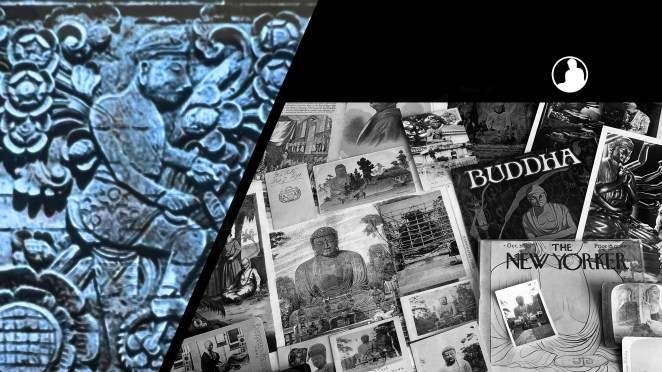
This is a bronze statue of Amida Buddha dating to the 13th century. The small format carte-de-visite (CDV) print shown here is hand dated to October 7, 1871 – possibly the date when a tourist visited the Daibutsu site. Renjō’s stamp identifies him as the photographer.

The portability of the CDV made them good souvenirs of travel, especially before the picture postcard industry blossomed a few decades later. The thin photosensitized print was affixed to thicker card stock for added durability.

Even small details can be captured by the relatively early wet-plate photographic process.

For an excellent introduction to early Japanese photography and 19th century tourist photography see the collection at Harvard Library here: https://tinyurl.com/yfsbj7du.


The Buddhas in the West Material Archive is a digital scholarship project that catalogues artifacts depicting Buddhist material culture for Western audiences. It’s comprised of prints, photos, and an assortment of ephemera and other objects. For a brief introduction to this archive, visit the main Buddhas in the West project page.


For Related Buddhas in the West Posts Featuring Historical Photography:

For the Most Recent Buddhas in the West Posts: