Buddhist Temple of Los Angeles Postcard

For all the new Buddhas in the West posts
follow us on Bluesky & Instagram


Inspired by the success in San Jose and Sacramento, Izumida Junjō 泉田準城 (1866–1951) arrived in Los Angeles in 1904 and opened the city’s first Buddhist temple for Japanese immigrants. After raising funds and purchasing land, a newer and larger temple was opened in 1911 on Savannah Street.

Associated with Nishi Hongan-ji, a Jōdo Shinshū Buddhist organization headquartered in Kyoto, Izumida organized the Rafu Bukkyō-kai 羅府仏教会, the Buddhist Mission of Los Angeles. It was meant to meet Japanese immigrants’ needs for funerals, memorial services, and spiritual guidance.
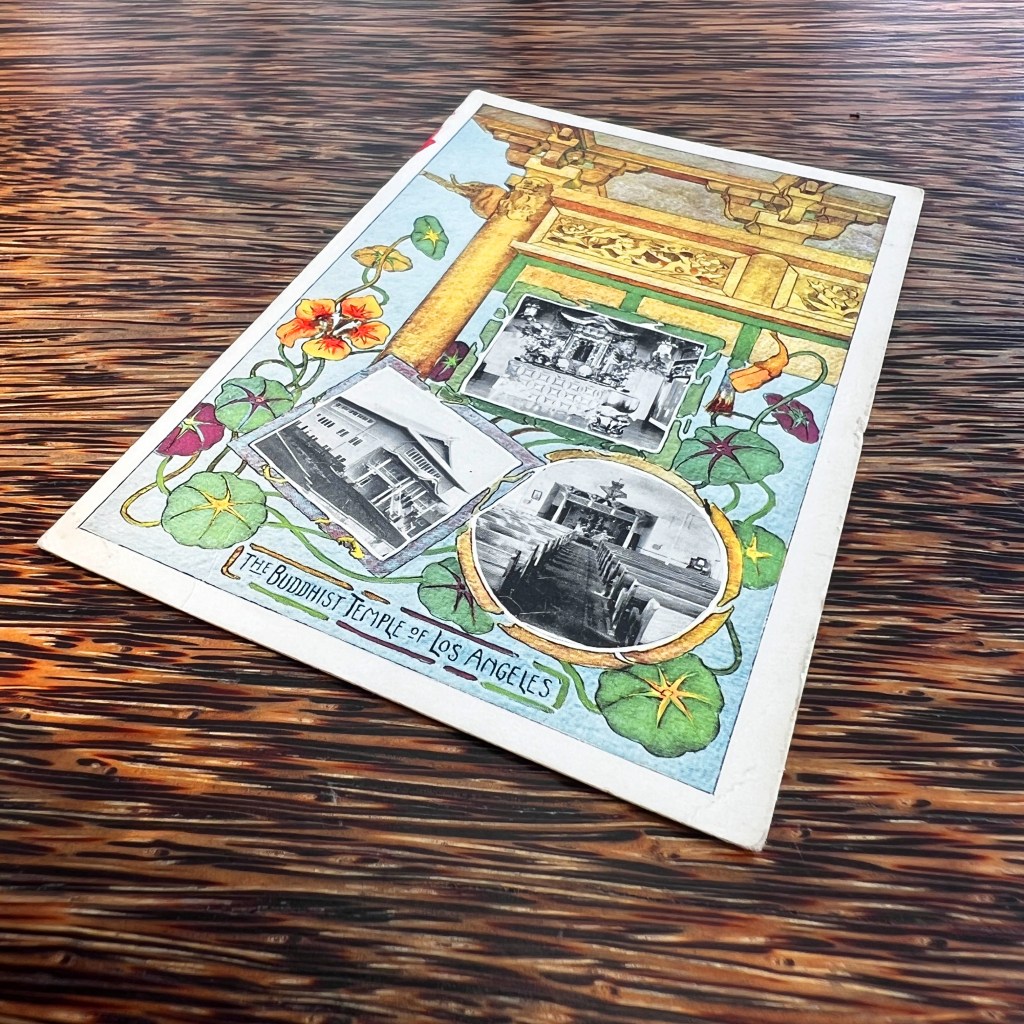
Possibly in celebration and promotion of the new temple, the Mission issued picture postcards highlighting both the interior and exterior of the building. The colorful illustrated elements on the front reveal an Arts and Crafts influence popular in the early 20th century.

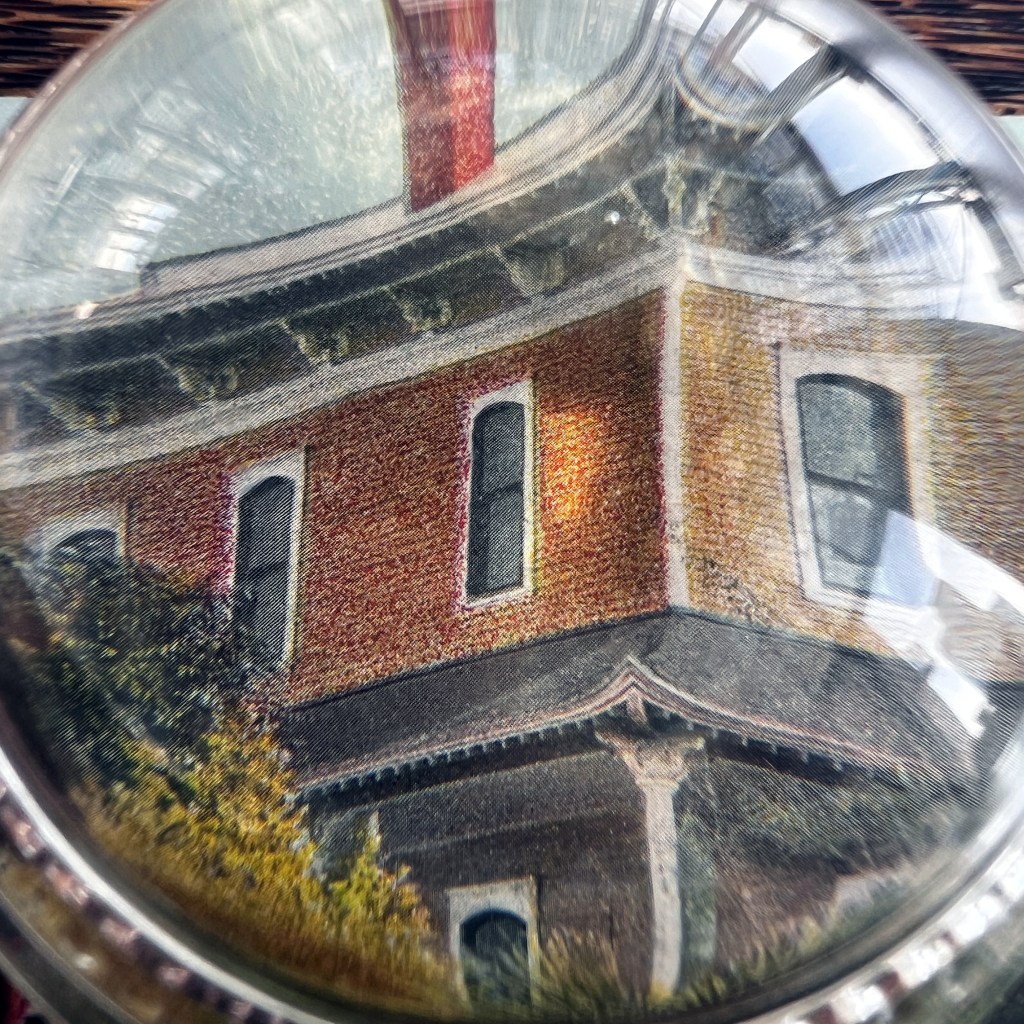
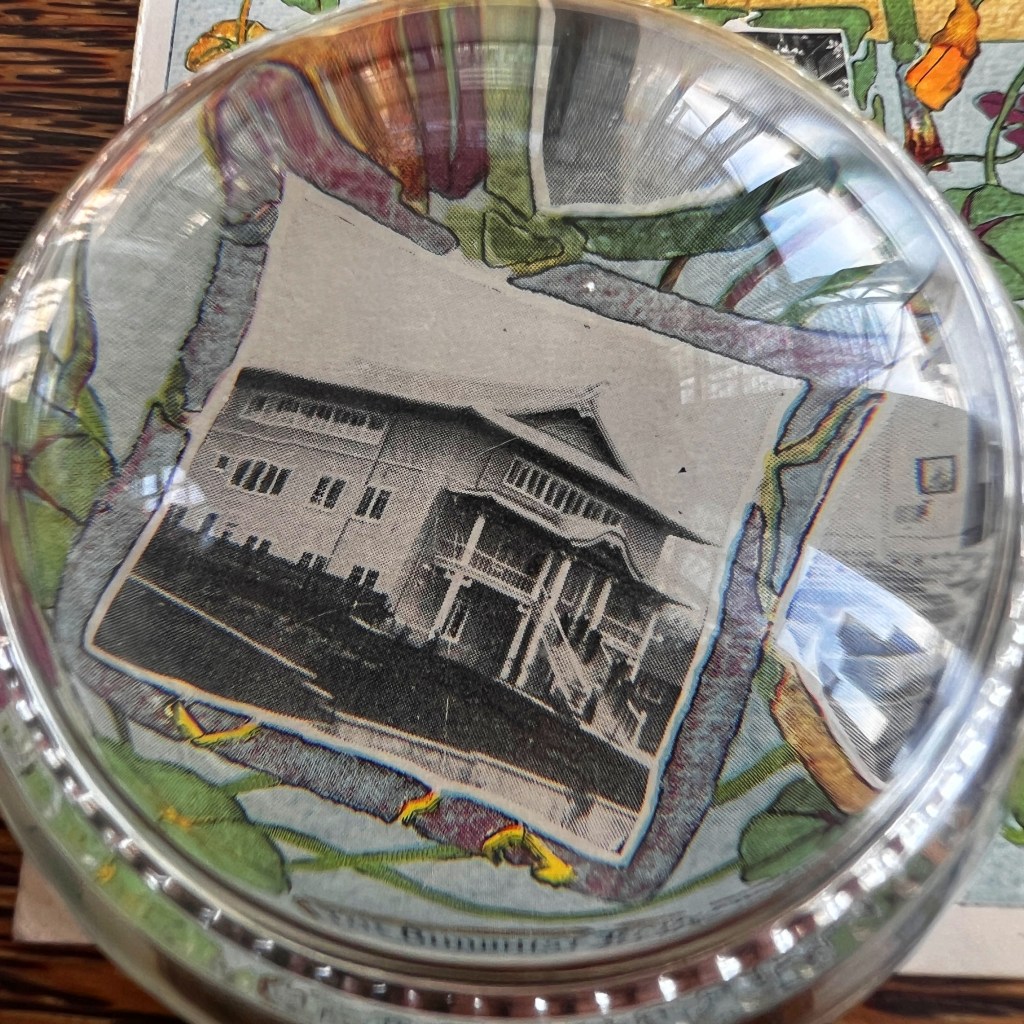
The building was meant to reflect both American residential architecture and Japanese temple architecture. The latter can be seen in the curved eaves on the roof and the temple-style gate over the front porch.
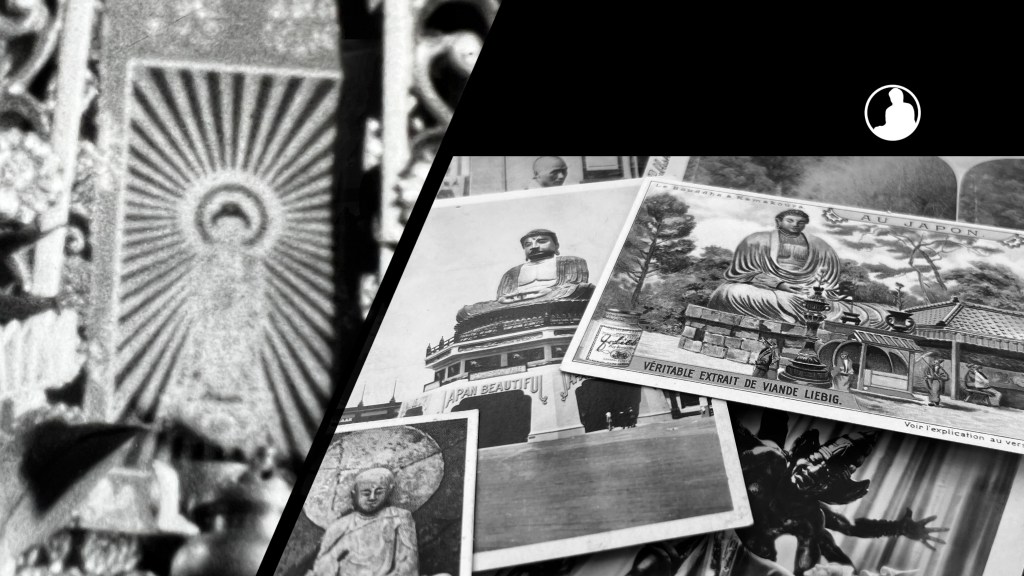
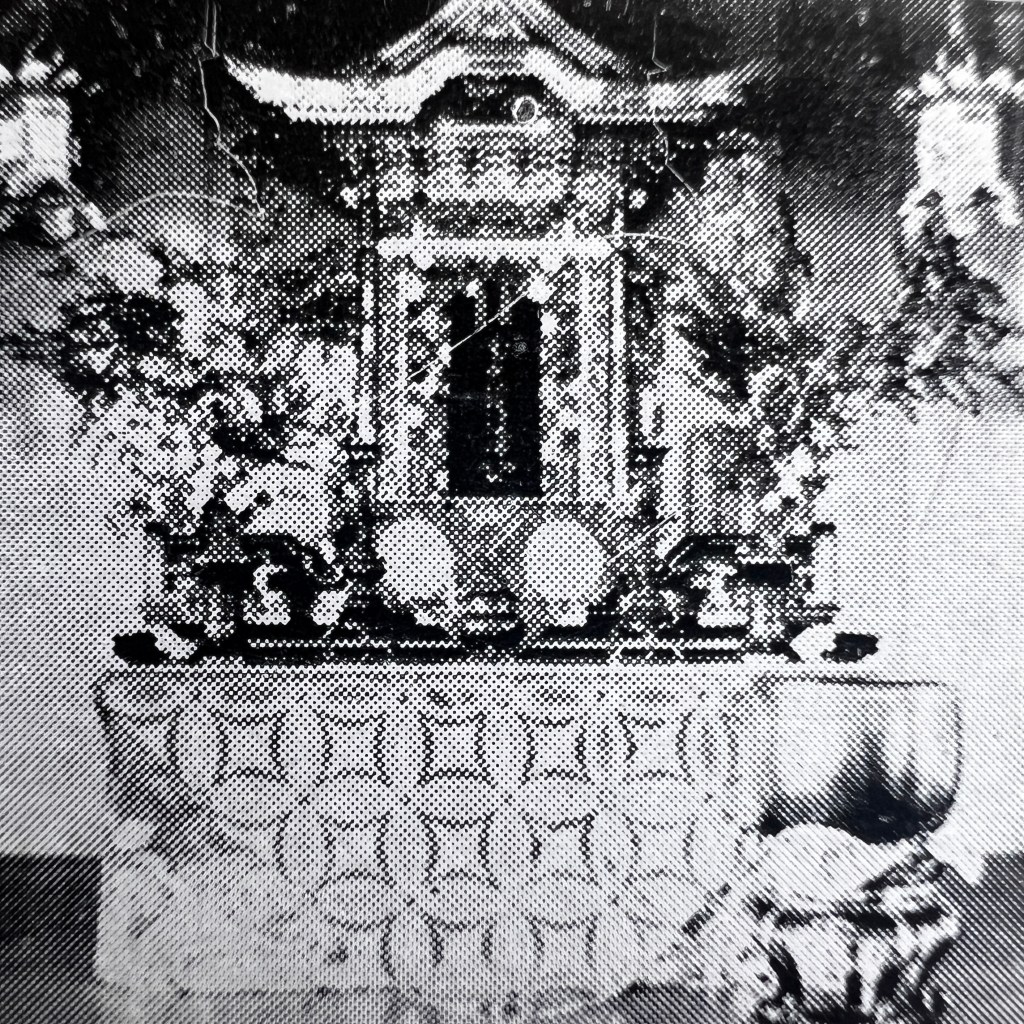
The interior also shows a hybrid style, with church-like pews set in front of a traditional Japanese Buddhist altar.

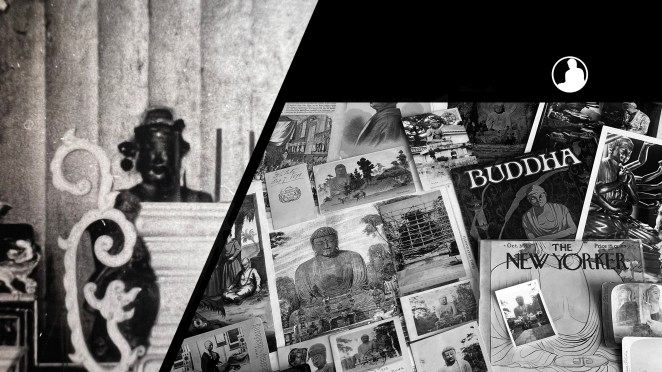
As a Jōdo Shinshū temple, the shrine is dedicated to Amida Buddha, here with a scroll bearing his name. For more on the history of this LA temple, see Michihiro Ama, Immigrants to the Pure Land: The Modernization, Acculturation, and Globalization of Shin Buddhism (2011).

The Buddhas in the West Material Archive is a digital scholarship project that catalogues artifacts depicting Buddhist material culture for Western audiences. It’s comprised of prints, photos, and an assortment of ephemera and other objects. For a brief introduction to this archive, visit the main Buddhas in the West project page.


For Related Buddhas in the West Posts Featuring Historical Trade Cards:


For the Most Recent Buddhas in the West Posts:


Fresno Japanese Buddhist Temple Postcard

For all the new Buddhas in the West posts
follow us on Bluesky & Instagram


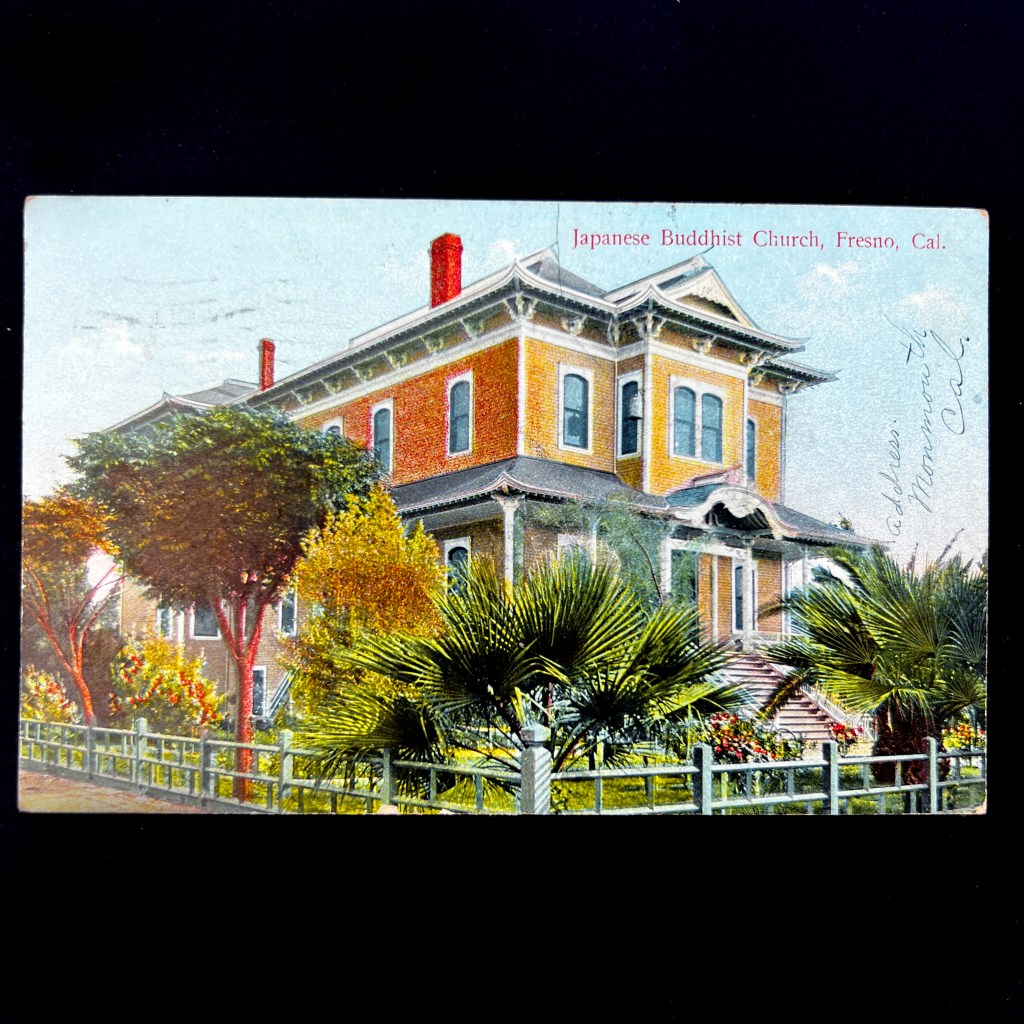
First Buddhist Temple Constructed on Mainland US: Two Japanese Buddhist temples were dedicated in San Francisco and Sacramento by 1900, but these were old converted residences. The Fresno temple was the first constructed to primarily function as a Buddhist temple.

The Fresno Buddhist Church was designed by the Japanese immigrant Kuninosuke Masumizu (1849-1915), a temple and shrine architect. The three-story wood structure was built on 1340 Kern Street and opened April 8, 1902. Construction continued through 1904.

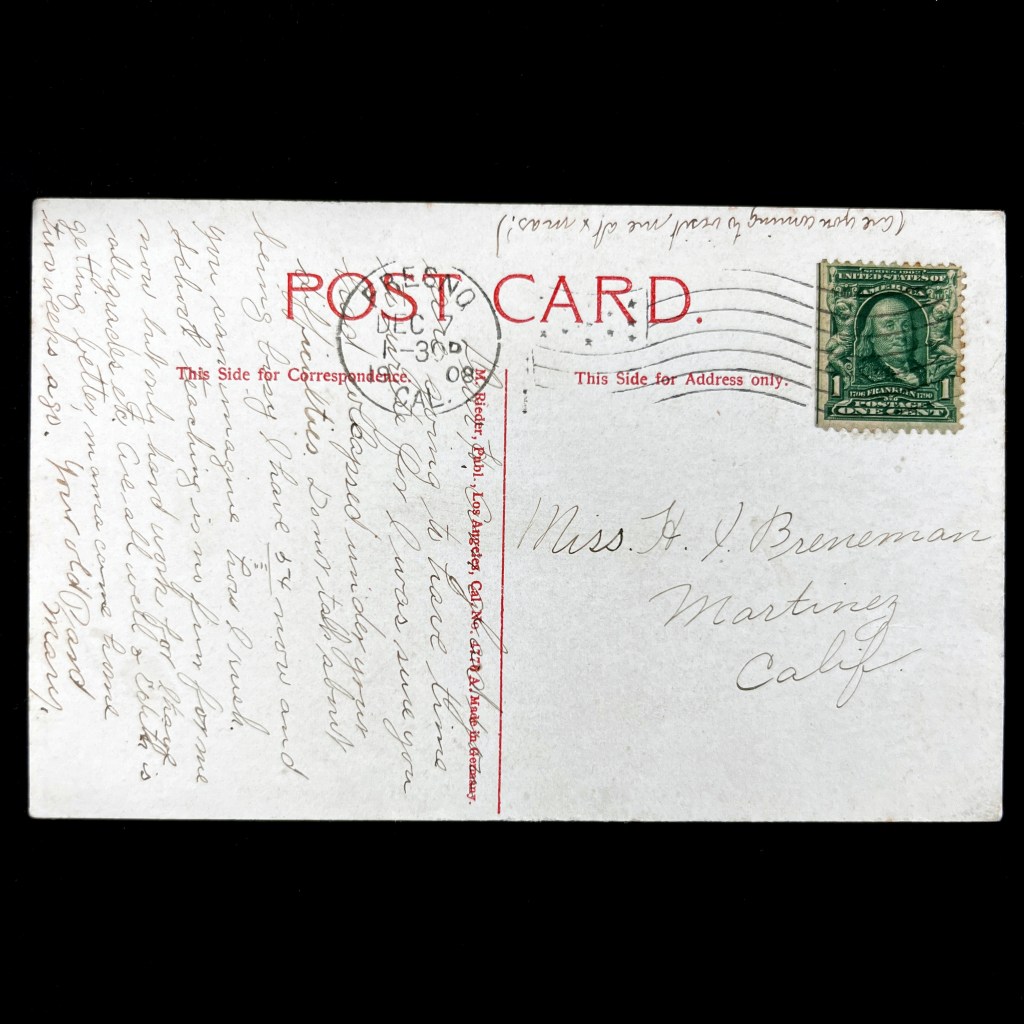
This postcard is one of a few remaining photographs of the original building, it burned down in 1919. This card was postmarked in 1908 and was printed in Germany, the leader in photomechanical postcard printing of the era.

Reports describe the temple as having a Japanese style. In truth, the style is rather hybrid, with upward sloping eaves on the roof and a temple-style gate for the front porch. Overall, however, the building could easily blend into the residential architecture of the period.

The Fresno Buddhist Church was rebuilt in 1920. This building was sold in 2018 to local Burmese Americans and is now the Mrauk Oo Dhamma Center. The Japanese Jōdo Shinshū congregation built a new temple that opened in 2022.


The Buddhas in the West Material Archive is a digital scholarship project that catalogues artifacts depicting Buddhist material culture for Western audiences. It’s comprised of prints, photos, and an assortment of ephemera and other objects. For a brief introduction to this archive, visit the main Buddhas in the West project page.


For Related Buddhas in the West Posts Featuring the United States:


For the Most Recent Buddhas in the West Posts:

Jerome Camp Amida Shrine News Photograph

For all the new Buddhas in the West posts
follow us on Bluesky & Instagram


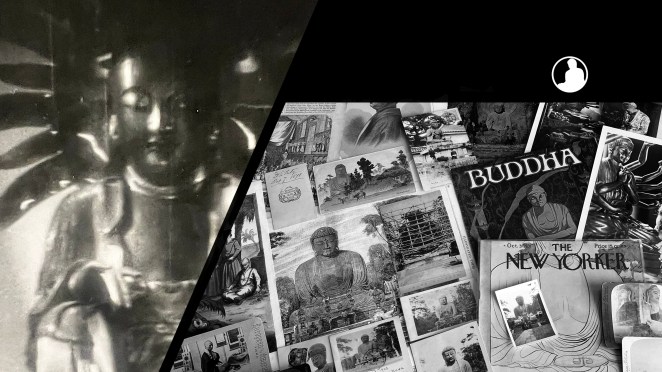
Barbed-wire Buddhas: Buddhist objects were precious – and rare – at American Japanese internment camps during WWII. Here, issei Buddhist priest Rev. Gyōdō Kōno, stands in front of a small shrine to Amida Buddha at the Jerome relocation camp in Arkansas.


In February 1942, Executive Order 9066 was authorized, forcing the incarceration of more than 110,000 Americans of Japanese descent. Most were Buddhist. Japanese Buddhist temples on American soil were closed and only a few small religious items could be brought to the camps.


Often, items like shrines (butsudan), altar tables, and other ritual implements were made from scraps of wood with delicate care.


Buddhist rosaries (o-nenju), like the one held by Rev. Kōno, were important ritual items for the Jodo Shinshu sect.

After leaving the Jerome camp, Rev. Kōno relocated to Chicago and founded the Midwest Buddhist Temple which is still open today.

The Smithsonian National Museum of American History owns one of the internment camp Buddhist shrines from Jerome along with other items from the internment era. The shrine can be viewed here: https://tinyurl.com/yvb3heut


The Buddhas in the West Material Archive is a digital scholarship project that catalogues artifacts depicting Buddhist material culture for Western audiences. It’s comprised of prints, photos, and an assortment of ephemera and other objects. For a brief introduction to this archive, visit the main Buddhas in the West project page.


For Related Buddhas in the West Posts Featuring Historical Photographs:


For the Most Recent Buddhas in the West Posts: