Arnoldus Montanus’ Icon with Thirty Arms Engraving

For all the new Buddhas in the West posts
follow us on Bluesky & Instagram


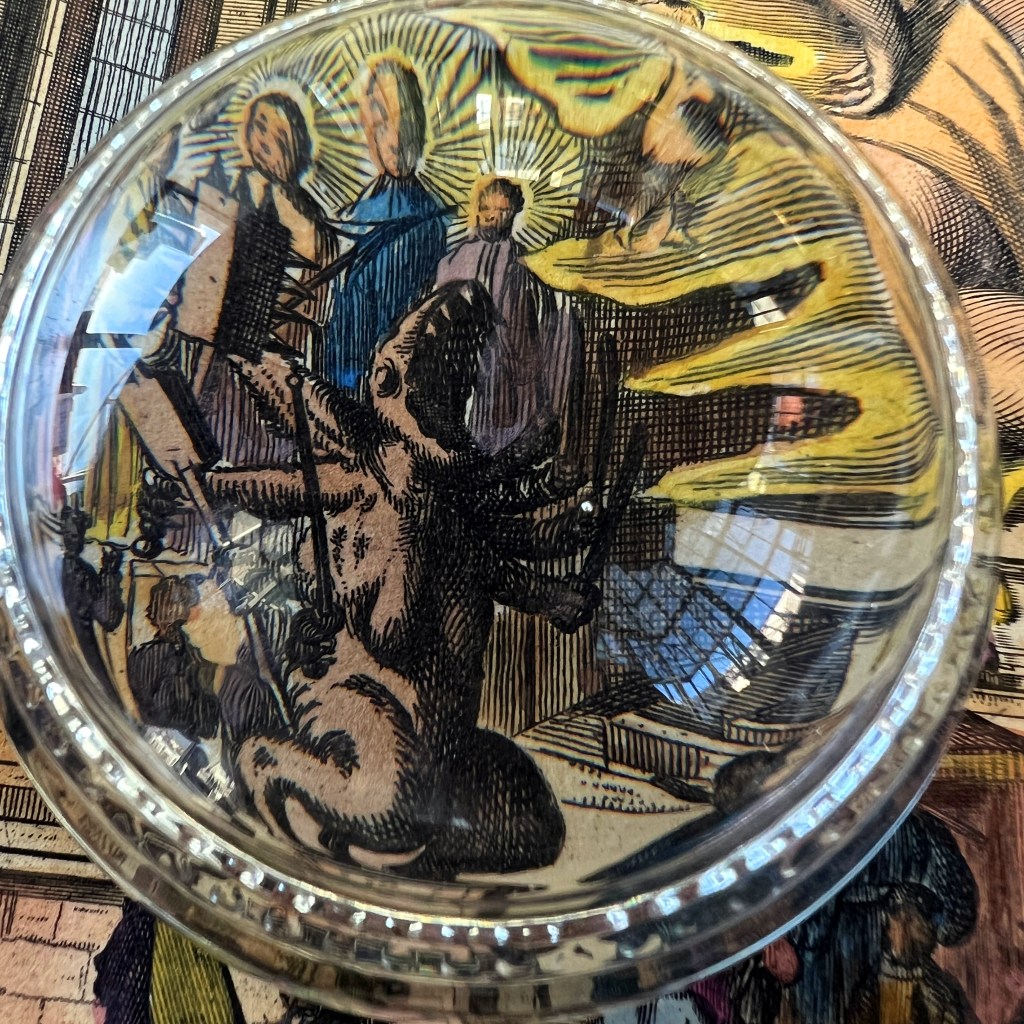
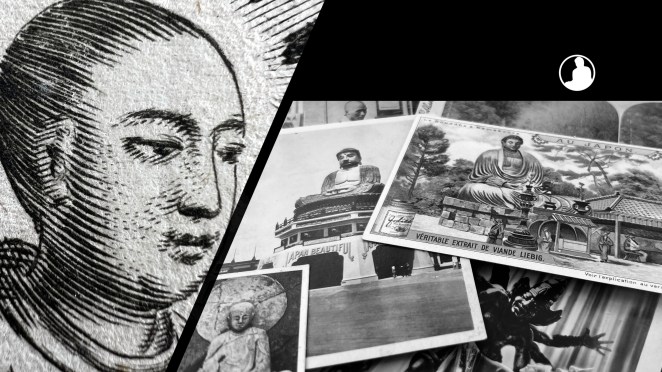
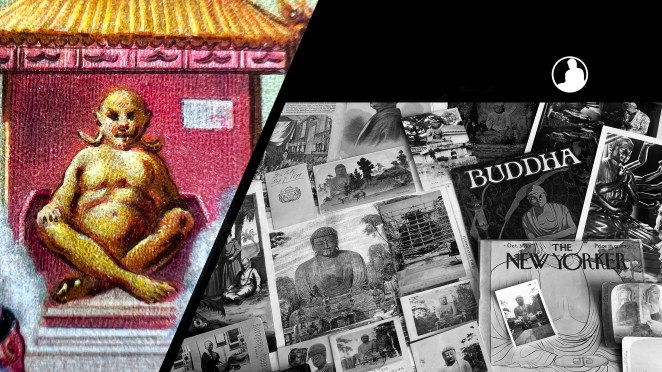
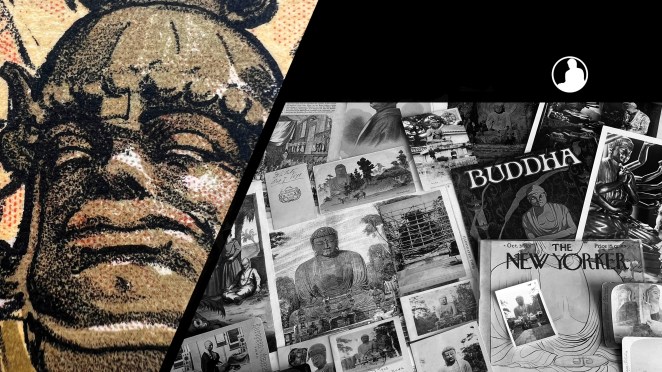
Following a pair of successful illustrated works on China, publisher Jacob van Meurs secured the rights to issue an illustrated book on Japan in 1669. The engravings, such as we see with the curious Buddhist icon here, were criticized for departing “a long way from the truth.”

Compiled by Arnoldus Montanus, a Protestant Minister who never left Holland, the engravings in Atlas Japannensis draw from both textual descriptions and an older European visual language of Asian idolatry. The work includes 23 large plates and 71 smaller vignettes set within the text.

As for the icon here, the English translation of 1670 reads, “This Image hath thirty Arms, and as many Hands, in each two Arrows, a Face representing a handsome Youth, on his Breast seven humane Faces, with a Crown of Gold, richly inchas’d with Peals, Diamonds, and all sorts of Precious Gems.”

While multi-armed and multi-headed figures are not uncommon in Buddhism, the particular configuration here appears rather fanciful. Nevertheless, we are informed the illustration here represents the Bodhisattva Kannon, further curiously identified in the text as the son of Amida Buddha.

The markings on the pedestal are meant to signify non-alphabetic East Asian writing, but none can be resolved into legible characters.

Kannon’s temple is said to be located on a Buddhist mountain just east of Kyoto, most likely pointing to Mt. Hiei. The fires indicate part of Mt. Hiei’s history, as described by Montanus, when Oda Nobunaga razed Buddhist temples in the region in 1571.

Several of Montanus’ engravings were copied into later works on Japan, helping shape a visual lexicon for Buddhism into the 19th cent. The 1669 Dutch edition of Atlas Japannensis has been digitized by the National Library of the Netherlands, viewable here: tinyurl.com/5n6kstfy.


The Buddhas in the West Material Archive is a digital scholarship project that catalogues artifacts depicting Buddhist material culture for Western audiences. It’s comprised of prints, photos, and an assortment of ephemera and other objects. For a brief introduction to this archive, visit the main Buddhas in the West project page.


For Related Buddhas in the West Posts Featuring Historical Engravings:


For the Most Recent Buddhas in the West Posts:


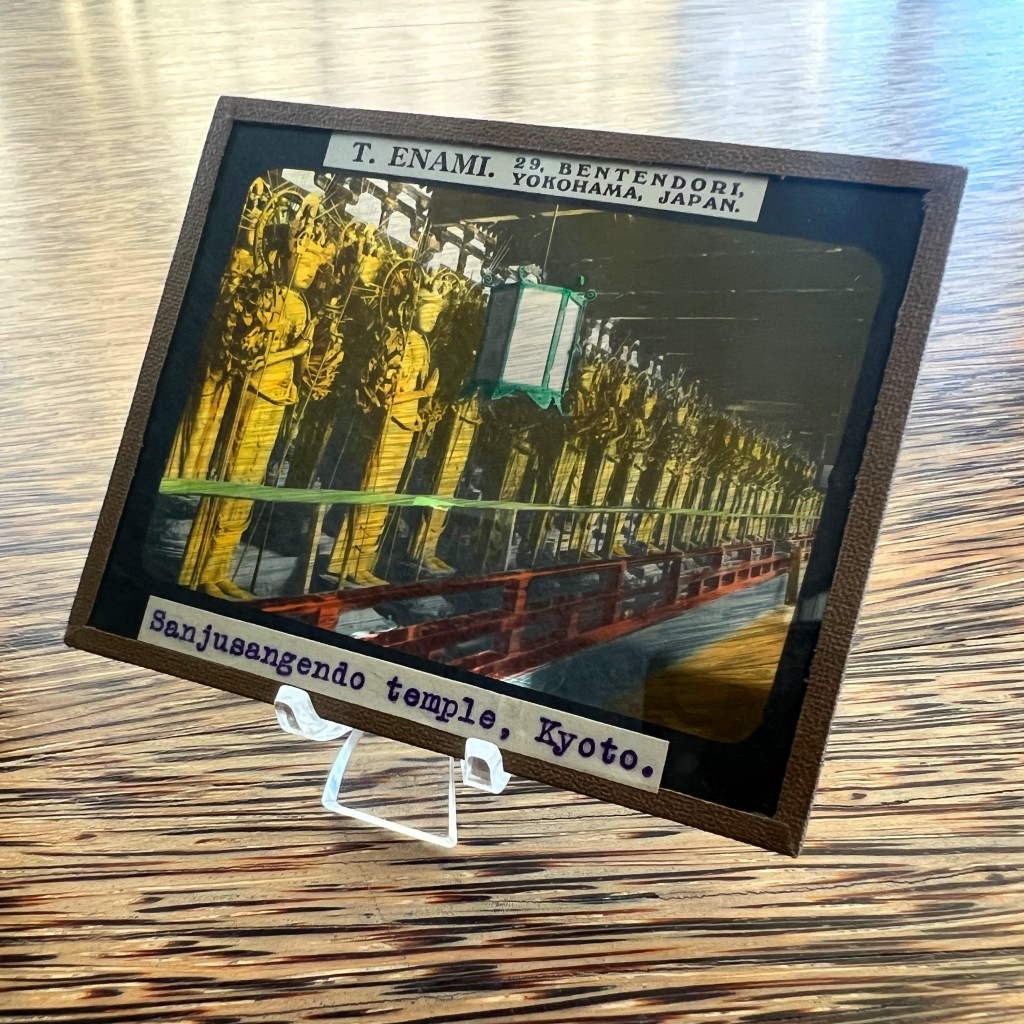
T. Enami’s Sanjūsangen-dō Lantern Slide

For all the new Buddhas in the West posts
follow us on Bluesky & Instagram


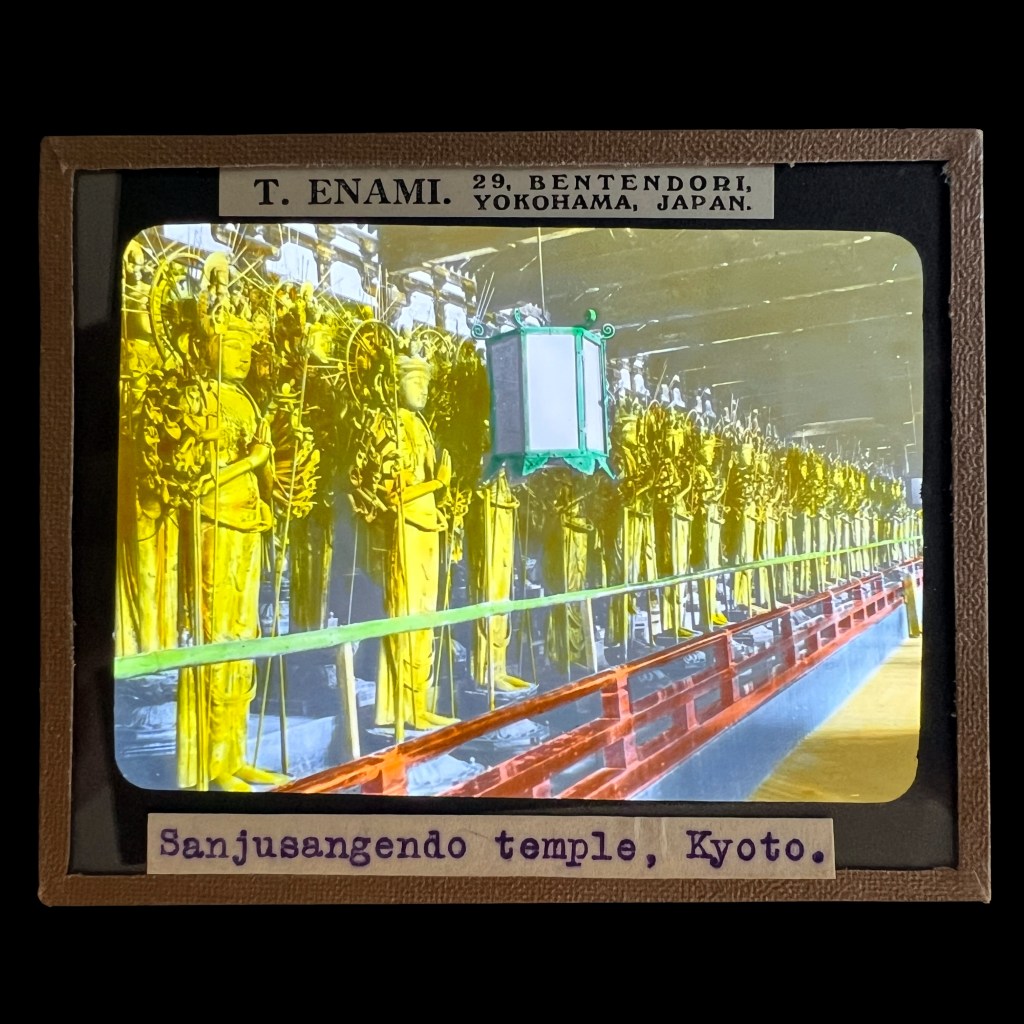
Before nickelodeons and cinema halls, “magic lantern” shows were an important part of popular American entertainment. Hand tinted glass slides were used by children’s story tellers, stage magicians, and traveling public lecturers in town and cities across the United States.

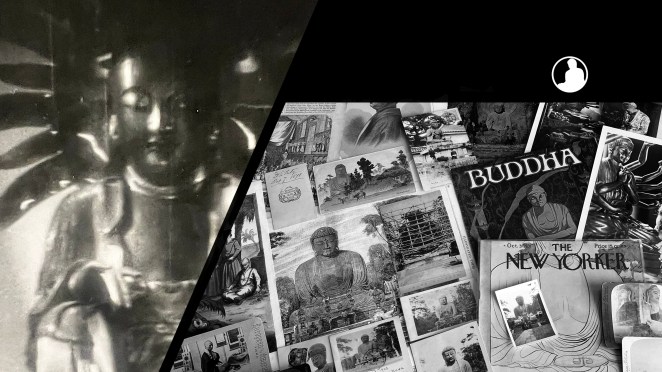
Enami Nobukuni, known professionally as T. Enami, opened his Yokohama photography studio in 1892 and by 1915 offered a very large glass slide portfolio. Objects such as this would have been sold as visual aids for public presentations or parlor room entertainment.

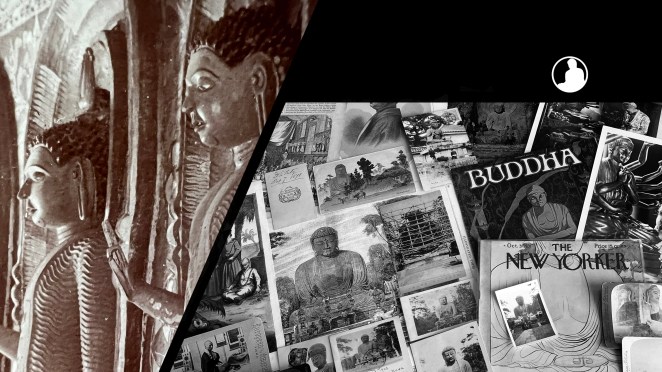
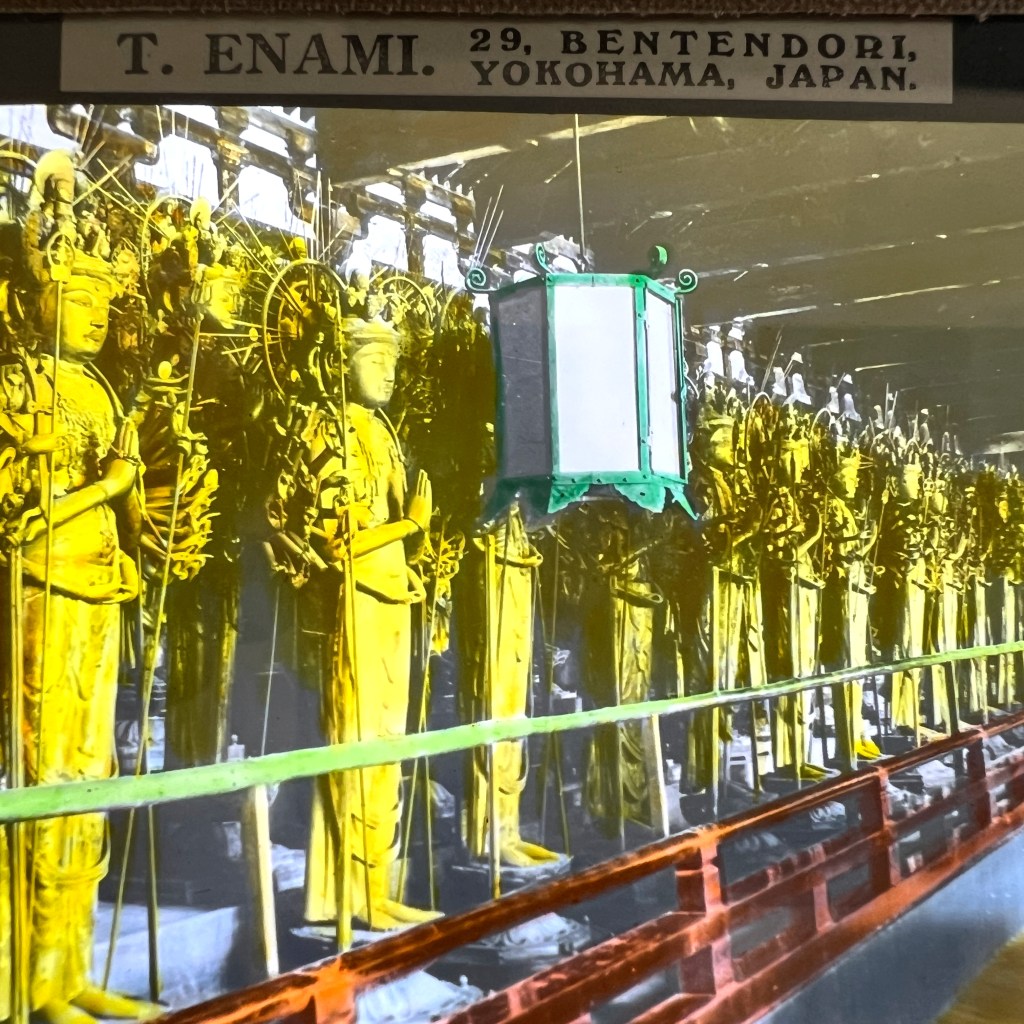
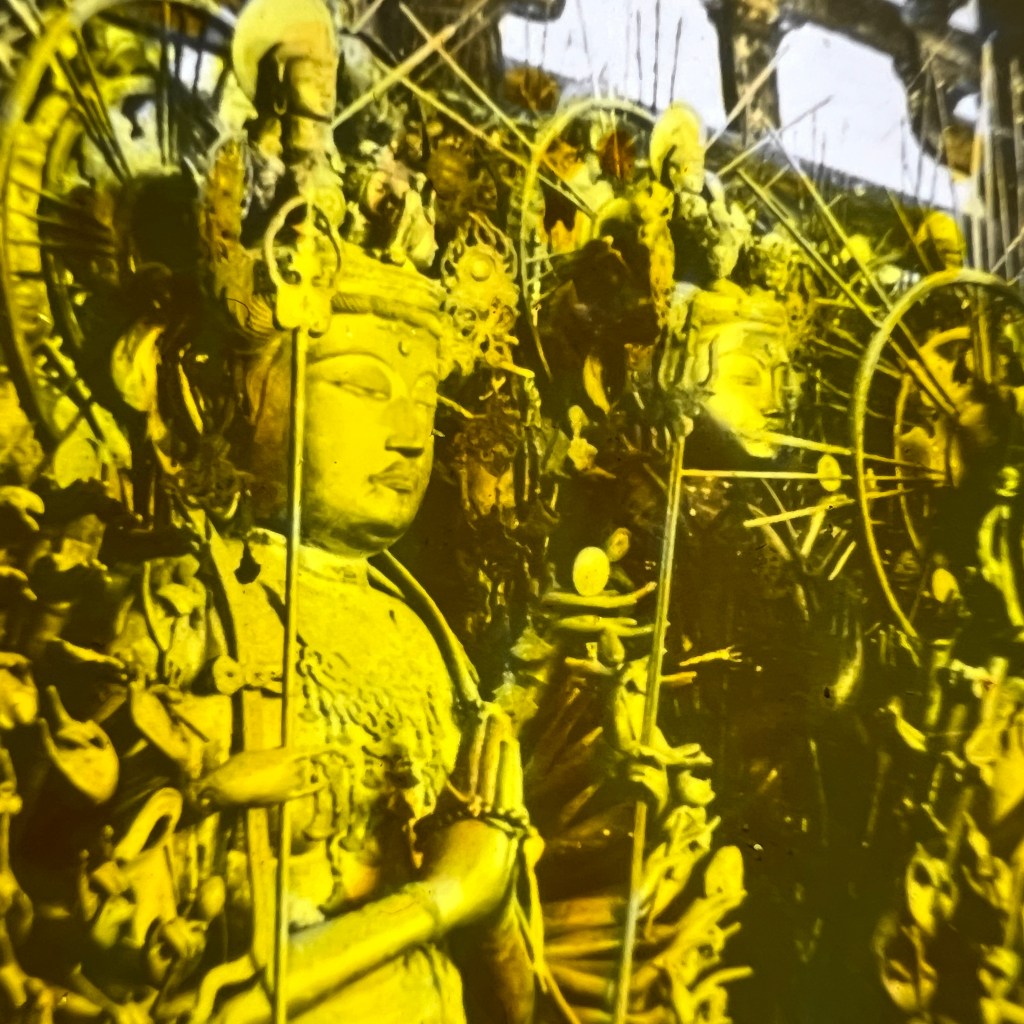
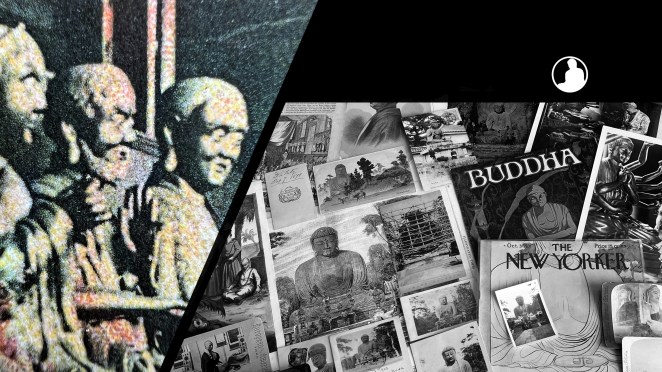
This slide shows a grouping of the famous one thousand Kannon statues of Sanjūsangendō in Kyoto, one of the most commonly photographed tourist sites in Japan during the late Meiji and Victorian periods.

Enami was celebrated for the beautiful hand tinting of his slides, but the coloring here suggests this slide was produced after his death in 1929, when his son took over the business and did not have an eye for finer detail like his father.

Enami was Japan’s most prolific producer of small format photographs and was often showcased in National Geographic Magazine. To view a selection of Enami’s photographs, see the digitized collection of Kjeld Duits, viewable here: tinyurl.com/245skpf8.


The Buddhas in the West Material Archive is a digital scholarship project that catalogues artifacts depicting Buddhist material culture for Western audiences. It’s comprised of prints, photos, and an assortment of ephemera and other objects. For a brief introduction to this archive, visit the main Buddhas in the West project page.


For Related Buddhas in the West Posts Featuring Lantern Slides:


For the Most Recent Buddhas in the West Posts:


Arnoldus Montanus’ Great Buddha of Hōkō-ji Engraving

For all the new Buddhas in the West posts
follow us on Bluesky & Instagram


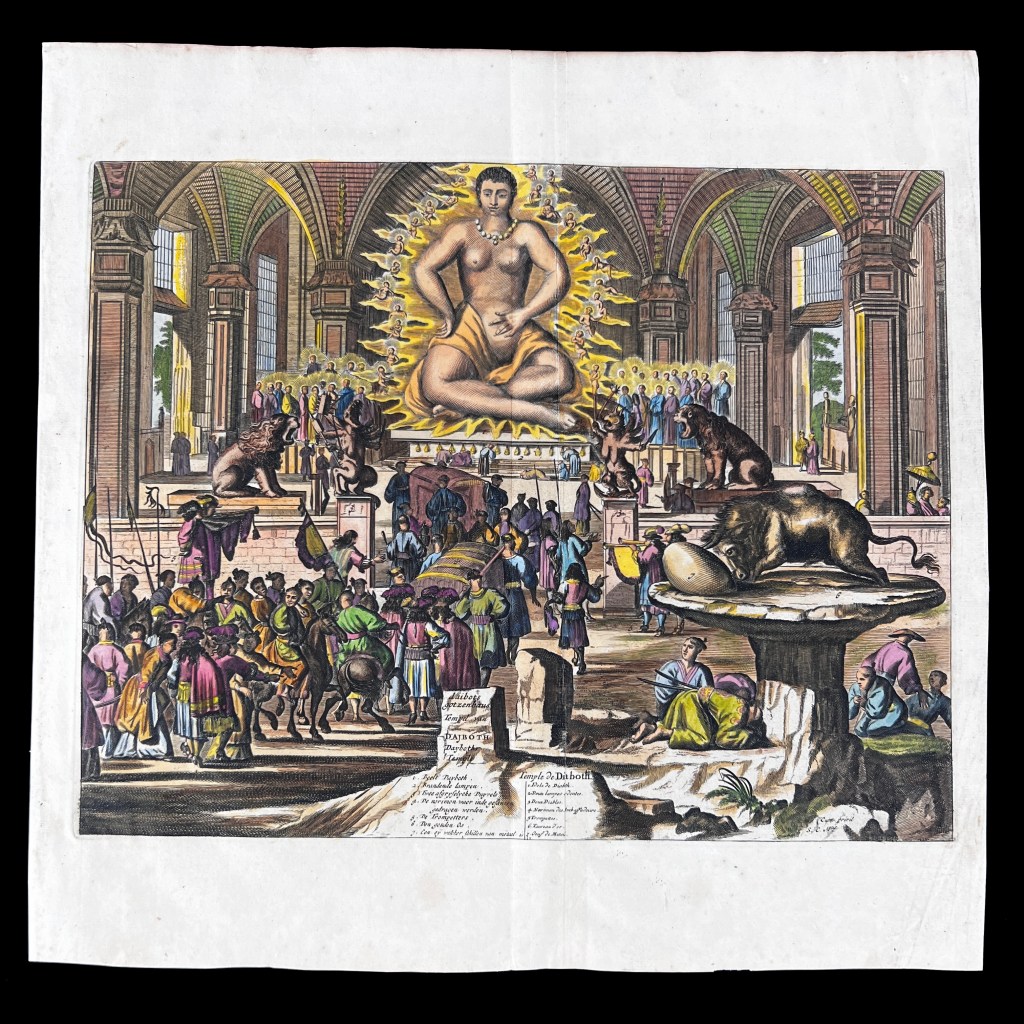
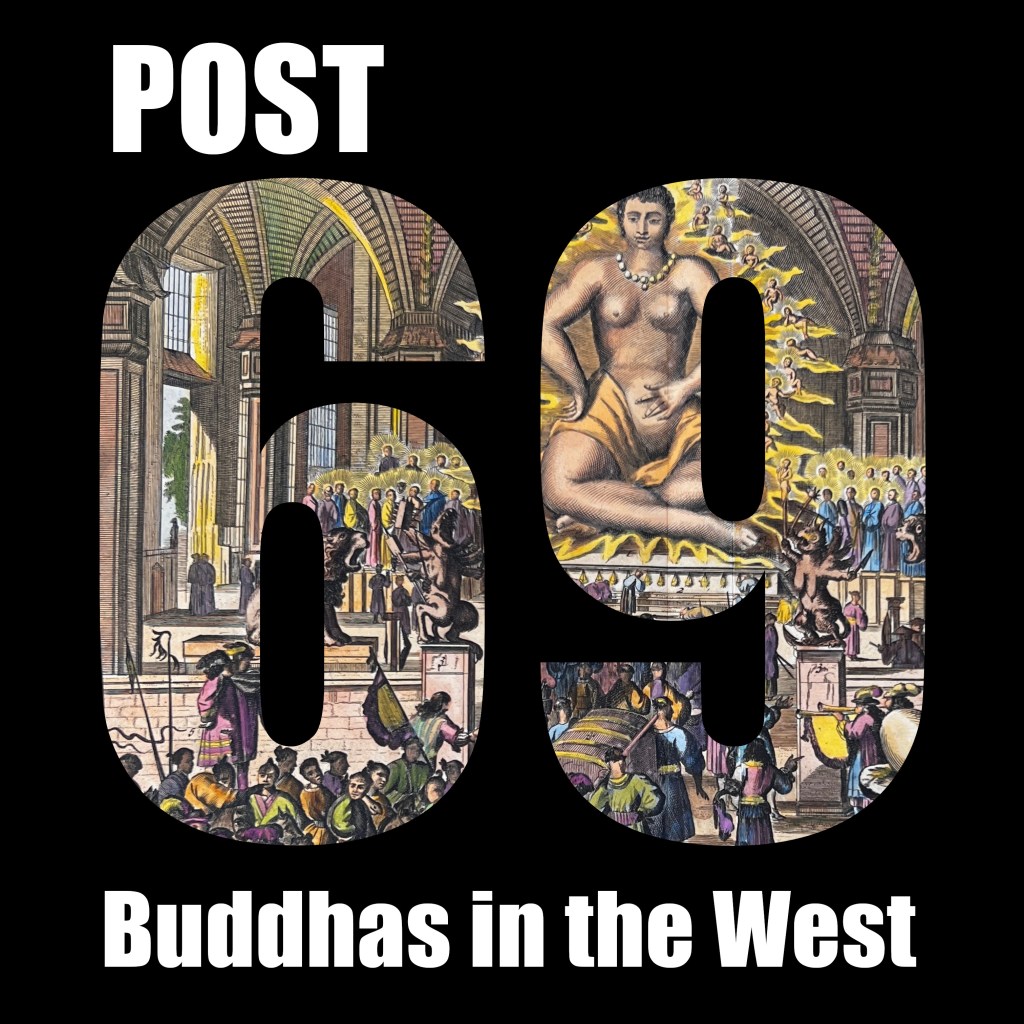
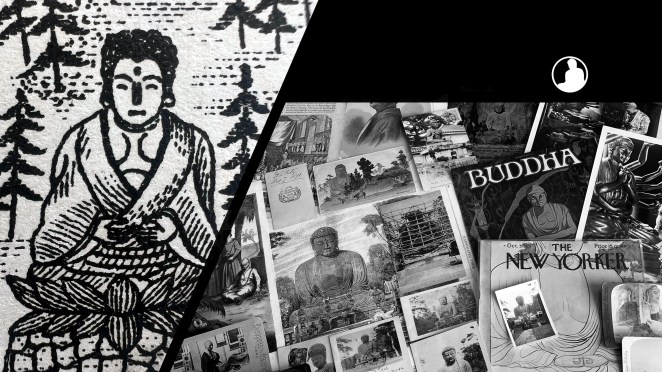
In 1649, while traveling from Nagasaki to Edo (modern Tokyo), the visiting Dutch Embassy made an obligatory stop in Kyoto where they saw the Great Buddha of Hōkō-ji. The Great Buddha stood nearly 60 feet tall and was completed in 1612, replacing an older destroyed icon.

The original Dutch report by Andries Frisius was eventually published by Arnoldus Montanus in 1669 as part of his Atlas Japannensis. Based in part on the report of Frisius, the printer, Jacob van Meurs, had a large copperplate engraving made to illustrate the embassy’s visit.

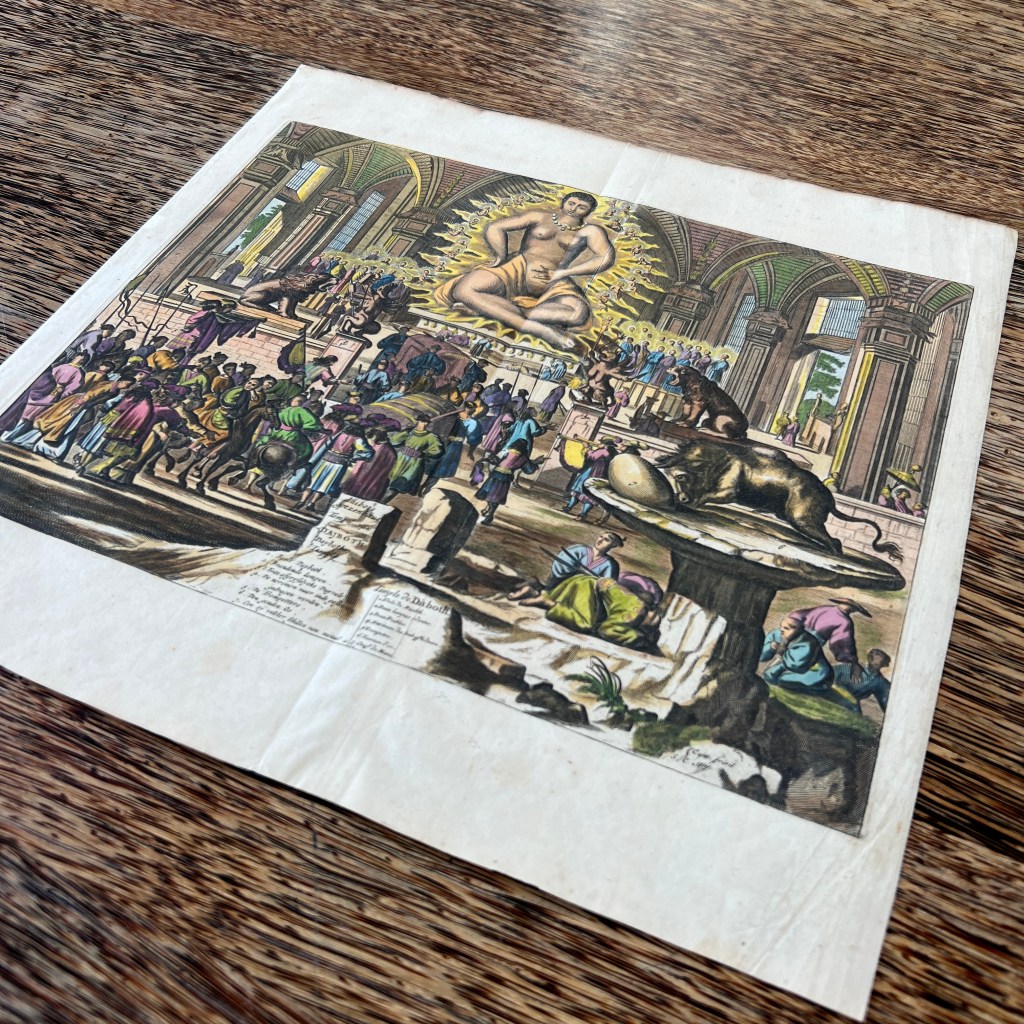
The temple icon was Vairocana Buddha which was described by Montanus as a “terrible Image… with his Legs across under him.” Furthermore, “the whole statue represents a Woman sitting in a Ring of Darting beams richly gilded.”

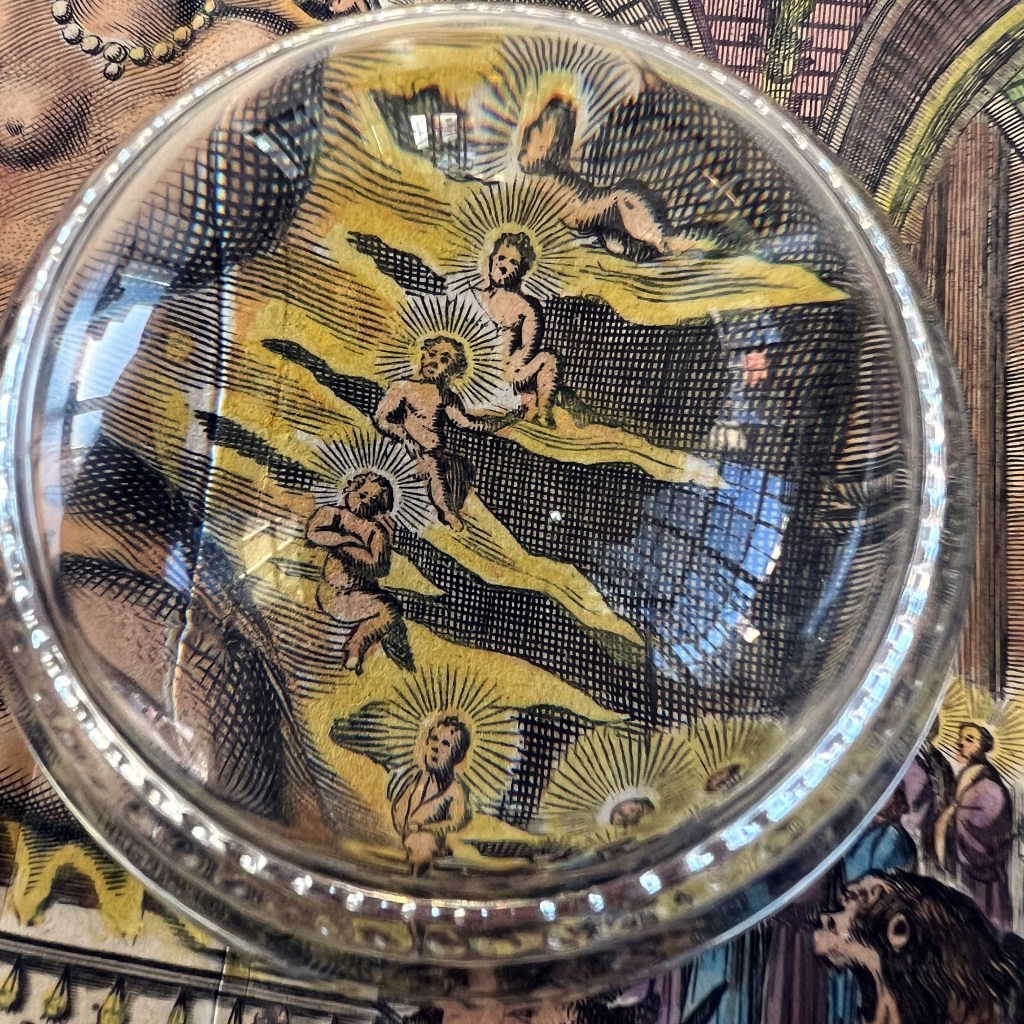
Van Meurs’ engravers seemingly took inspiration from the text, but also had to draw upon their own visual repertoire to fill in details. This includes the masonry columns in the back of the temple as well as playful cherub-like figures in the “Ring of Darting beams.”

“Two horrible Fiends, with Stiletto’s in their hands” – certainly the fearsome Niō – are described a guarding the temple entrance. The engraver places these grotesque figures inside the main temple hall.

Atlas Japannensis was first published in Dutch in 1669; an English version came the following year. The hand-colored print shown here came from the French edition of 1680. As noted by Isa van Eeghen, the English legend was burnished off of the plate and re-inscribed in French.

By the time of printing, the colossal Buddha of Hōkō-ji had been destroyed by an earthquake in 1662; a wooden image replaced it in 1667. The 1669 Dutch edition of Atlas Japannensis has been digitized by the National Library of the Netherlands, viewable here: tinyurl.com/5n6kstfy.


The Buddhas in the West Material Archive is a digital scholarship project that catalogues artifacts depicting Buddhist material culture for Western audiences. It’s comprised of prints, photos, and an assortment of ephemera and other objects. For a brief introduction to this archive, visit the main Buddhas in the West project page.


For Related Buddhas in the West Posts Featuring Historical Engravings:


For the Most Recent Buddhas in the West Posts:


Chocolat Pupier’s Kinkaku-ji Trade Card

For all the new Buddhas in the West posts
follow us on Bluesky & Instagram


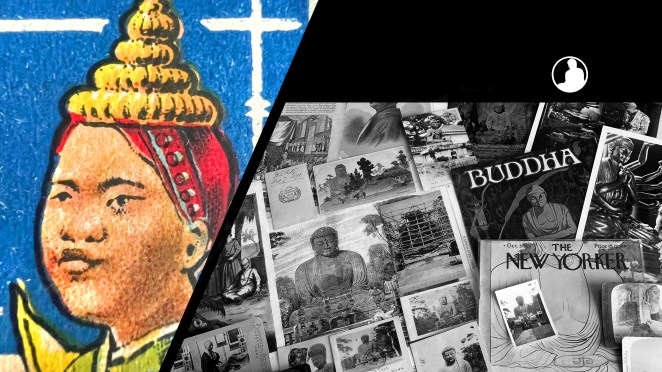
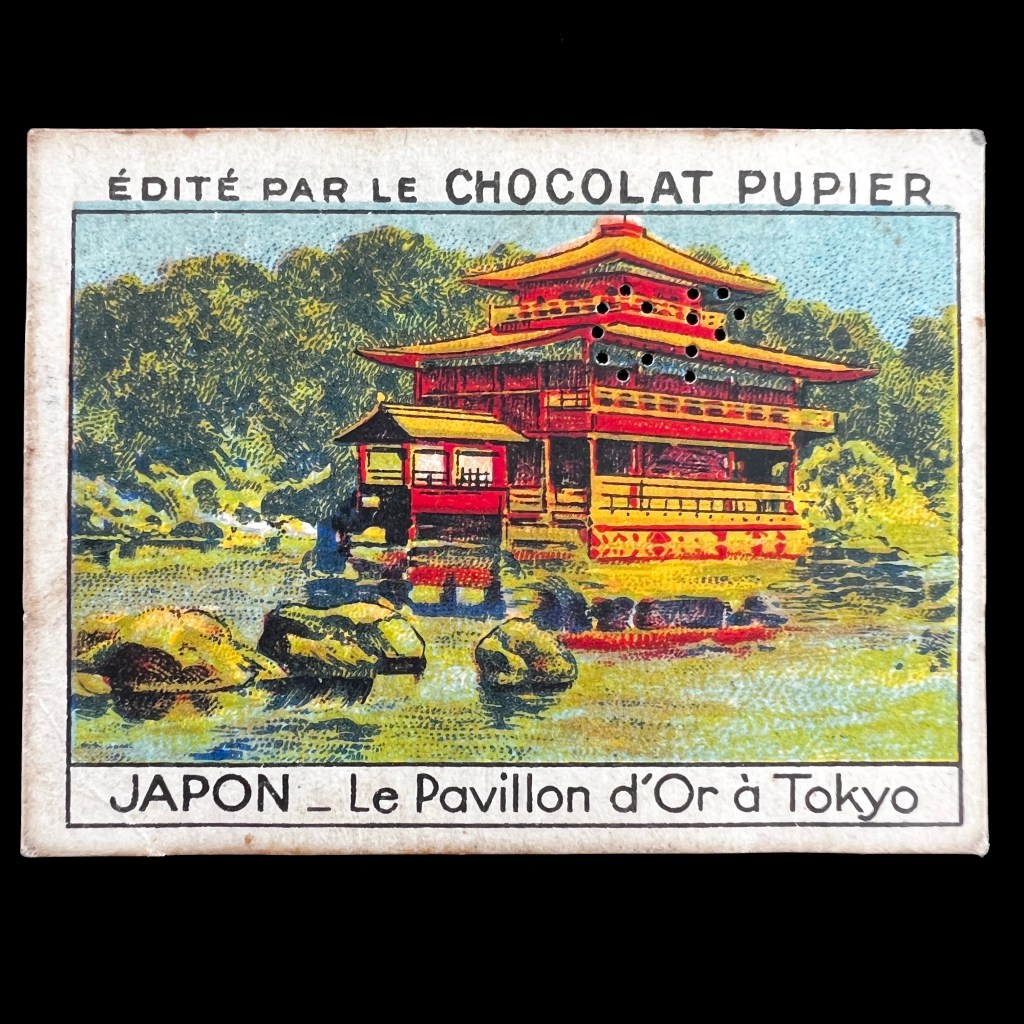
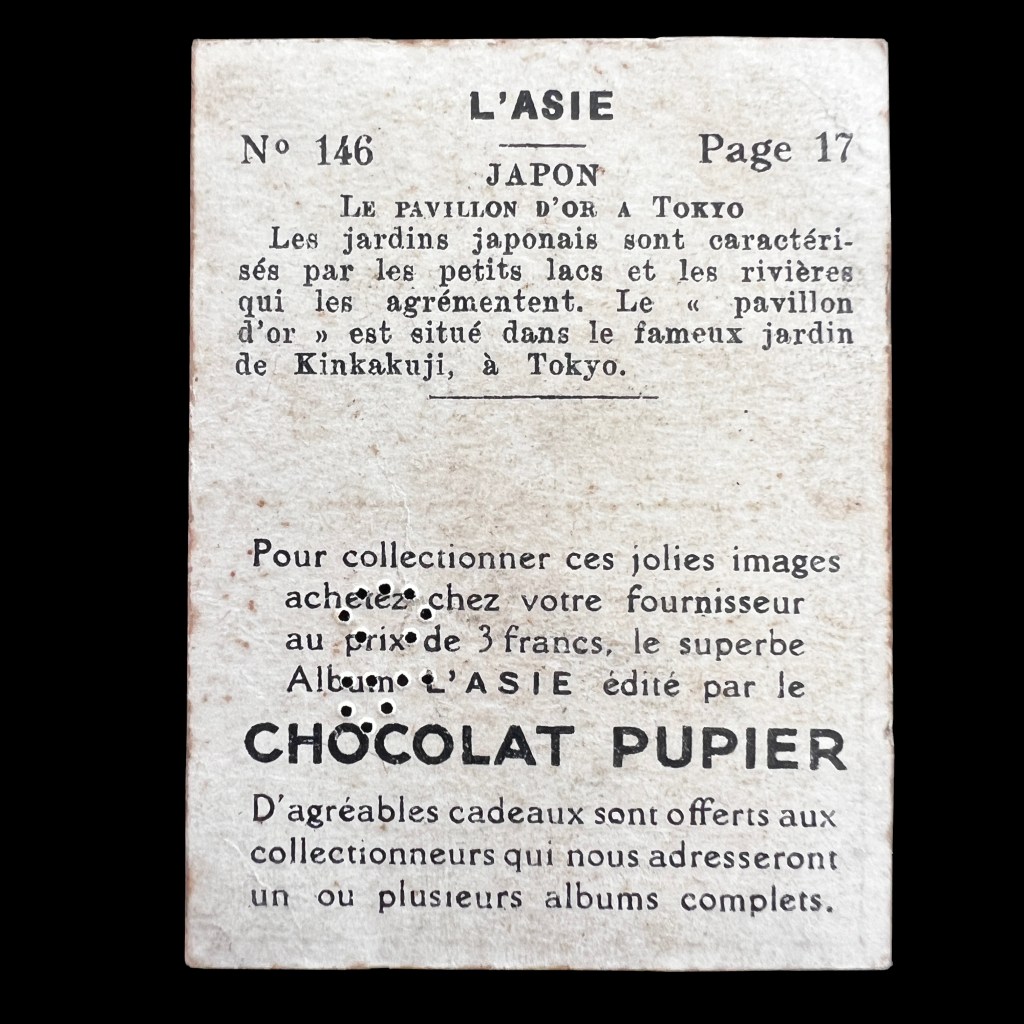
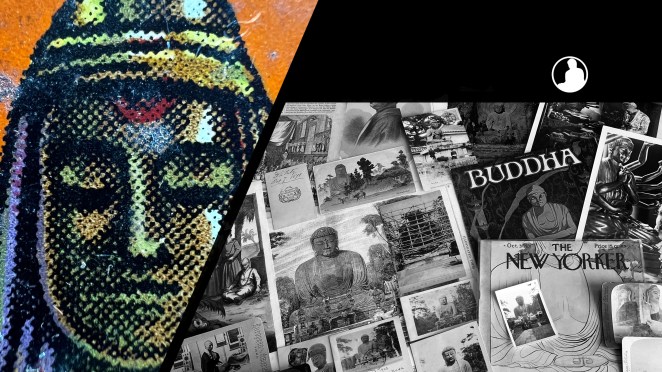
Turn of the century French chocolatiers took advantage of the popularity of colorful trade cards and included them with their products. In 1936 the Chocolat Pupier company created a collectable Asia series with several illustrations of Buddhist material culture.

An album with 252 card slots could be purchased to display your collection. If completed, Chocolat Pupier offered a gift to the consumer.

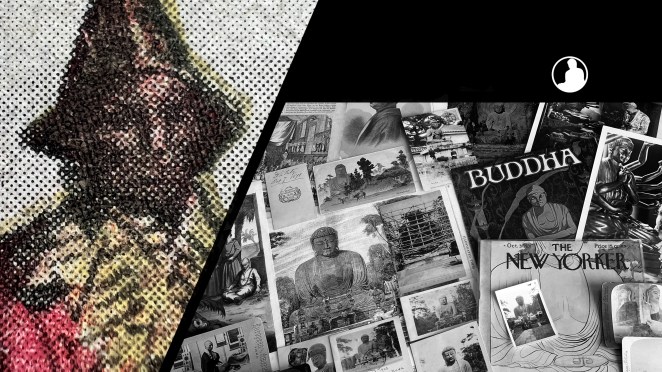
Chromo-lithographic printing offered an inexpensive way to mass produce colorful imagery. There is an error on this card, however, can you spot it?

The Gold Pavilion Temple, Kinkaku-ji, is not in Tokyo, buy Kyoto. In addition to Asia, Chocolat Pupier made cards related to Europe, North America, and Africa.

A small collection of Chocolat Pupier card was recently acquired by Duke University Library, see here: https://archives.lib.duke.edu/catalog/chocolatpupier.


The Buddhas in the West Material Archive is a digital scholarship project that catalogues artifacts depicting Buddhist material culture for Western audiences. It’s comprised of prints, photos, and an assortment of ephemera and other objects. For a brief introduction to this archive, visit the main Buddhas in the West project page.


For Related Buddhas in the West Posts Featuring Historical Trade Cards:


For the Most Recent Buddhas in the West Posts:

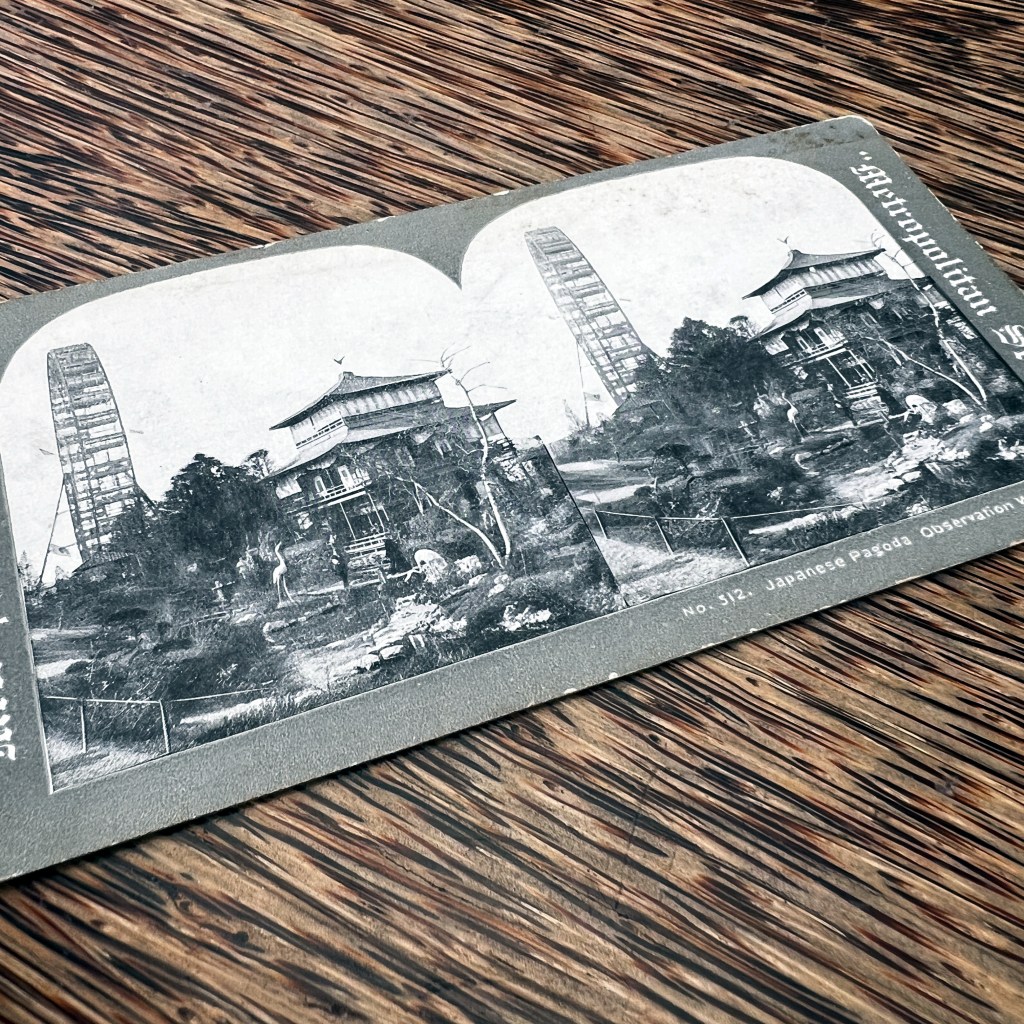
1904 Metropolitan Series “Japanese Pagoda” Stereoview

For all the new Buddhas in the West posts
follow us on Bluesky & Instagram


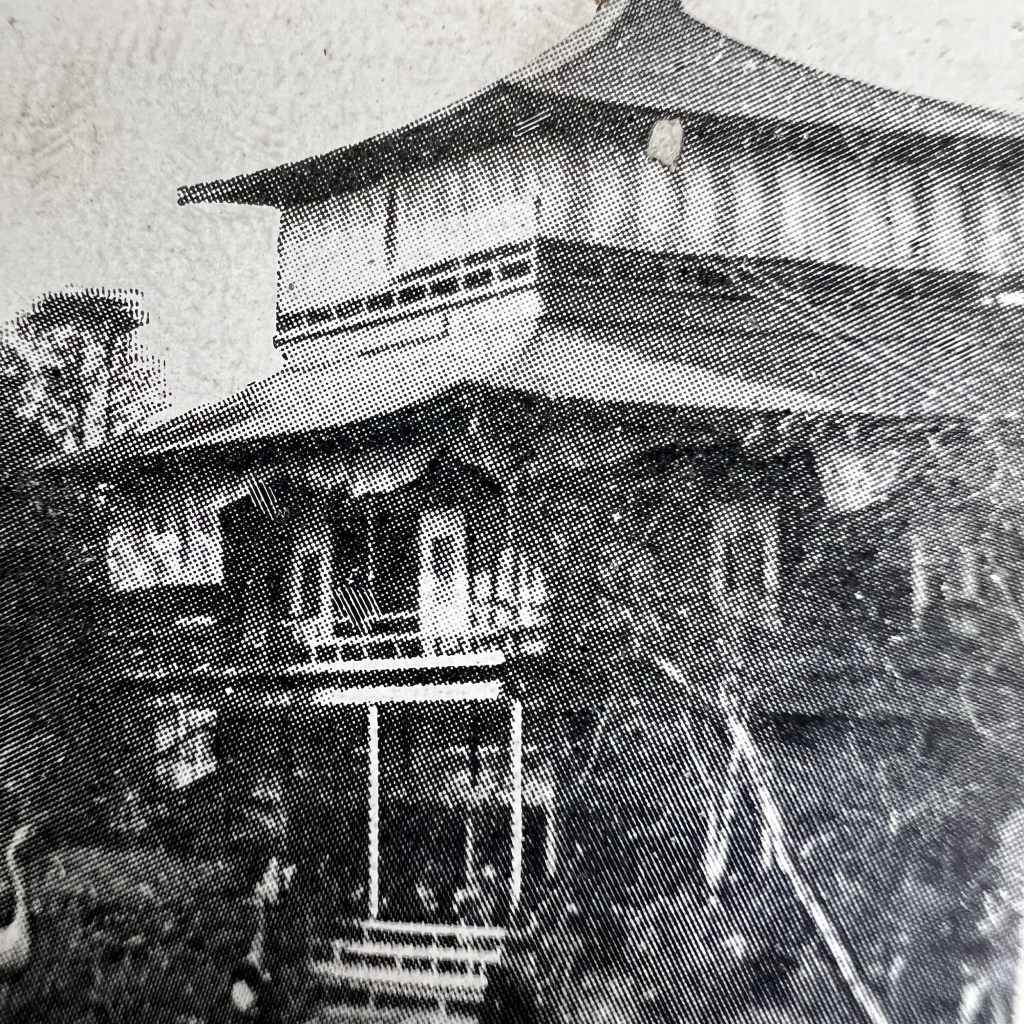
This is not an AI rendered image – it’s a Ferris Wheel towering over Kyoto’s famed Temple of the Golden Pavilion, known as Kinkaku-ji. More accurately, it’s a replica of Kinkaku-ji built for the 1904 St. Louis World’s Fair advertised as a Japanese imperial gardens pagoda.

The Kyoto original, dating to 1400, houses Buddhist relics while the St. Louis replica was built to serve Japanese tea. In both cases the respective buildings are surrounded by a garden and topped with a phoenix roof ornament.

The St. Louis garden was designed by the Japanese landscape architect Yukio Ichikawa 市川之雄.

Japan’s exhibitions were well attended, in part by the generally positive newspaper coverage as well as the publicity of the ongoing Russo-Japanese War. Many companies made stereoviews of the 1904 fairgrounds, with the Metropolitan Series sold through Sears catalogues.

Many attendees of the St. Louis fair expressed a sense of awe at Japan’s exhibitions. For more digitized photos of the St. Louis fair, see the offerings at the State Historical Museum of Missouri here https://tinyurl.com/5d7jcupa


The Buddhas in the West Material Archive is a digital scholarship project that catalogues artifacts depicting Buddhist material culture for Western audiences. It’s comprised of prints, photos, and an assortment of ephemera and other objects. For a brief introduction to this archive, visit the main Buddhas in the West project page.


For Related Buddhas in the West Posts Featuring Kyoto:


For the Most Recent Buddhas in the West Posts:


Albumen Photograph of Sanjūsangen-dō Kannon

For all the new Buddhas in the West posts
follow us on Bluesky & Instagram


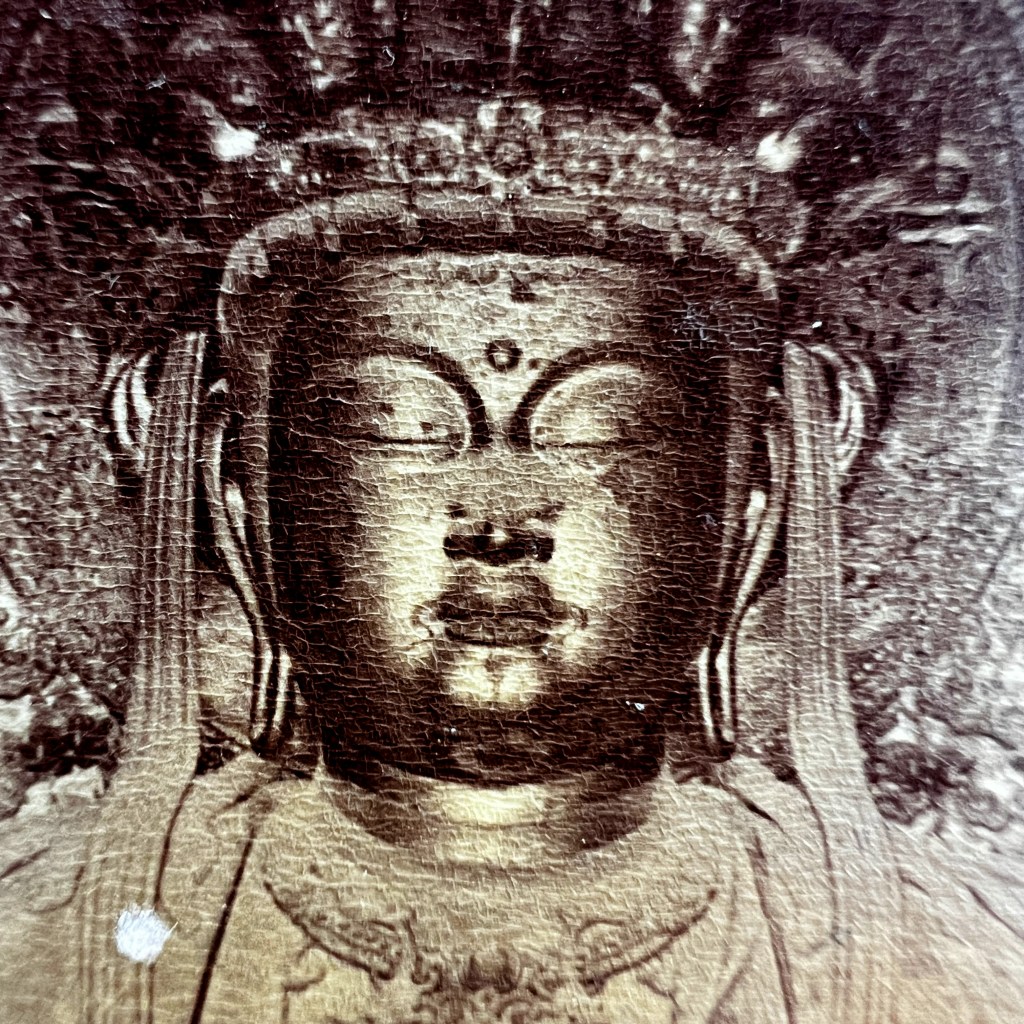
For visitors to Japan in the 1860s, Kyoto was seen as brimming with dangerous anti-foreign samurai. This changed in the 1870s when it was transformed by tourism, driven in part by foreign photography studios who were allowed to shoot the city for the 1872 Kyoto Exposition.

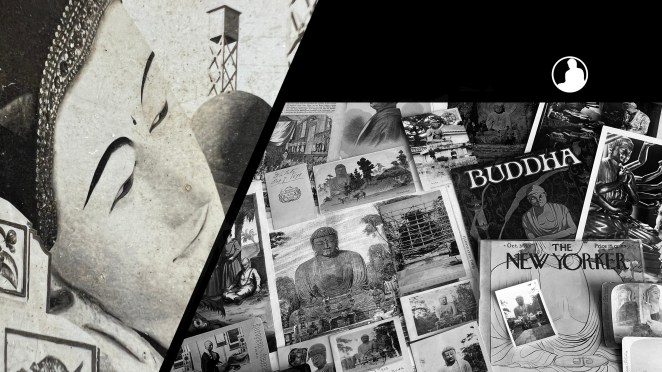
While Europeans knew of Kyoto’s Sanjūsangen-dō through late 17th century book engravings, the first photographs of the temple likely did not circulate until the early 1870s. This albumen print is by an unknown commercial photographer and likely dates to the 1880s.

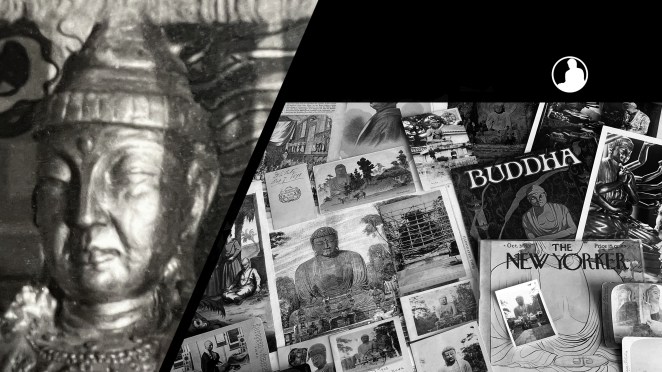
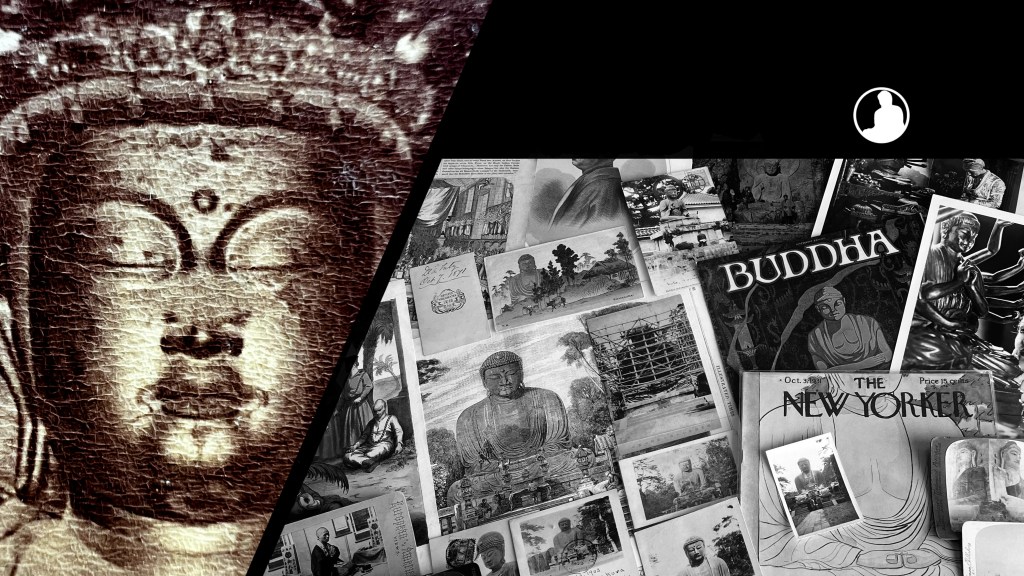
The central icon is a Thousand-armed Kannon from the 13th century and is recognized as a National Treasure of Japan.

There appears to be a double exposure in this photograph, with a priest kneeling in front of the icon. The colorist gave the priest’s robes a wash of blue, but the paint did not cover over the woodwork designs of the altar.

Baron von Stillfried was among the foreign studio owners who photographed Kyoto in 1872. One of his albums, with views of Kyoto, can be seen through the Metropolitan Museum of Art here: https://tinyurl.com/yuuf52u9.


The Buddhas in the West Material Archive is a digital scholarship project that catalogues artifacts depicting Buddhist material culture for Western audiences. It’s comprised of prints, photos, and an assortment of ephemera and other objects. For a brief introduction to this archive, visit the main Buddhas in the West project page.


For Related Buddhas in the West Posts Featuring Kyoto, Japan:


For the Most Recent Buddhas in the West Posts: