
For all the new Buddhas in the West posts
follow us on Bluesky & Instagram
Colonized Korean Landscapes: This statue, known as Eunjin Mireuk 恩津彌勒, is on the grounds of Gwanchoksa Temple in South Korea. At just over 18 meters (60 feet), it is the tallest Buddhist statue in Korea.
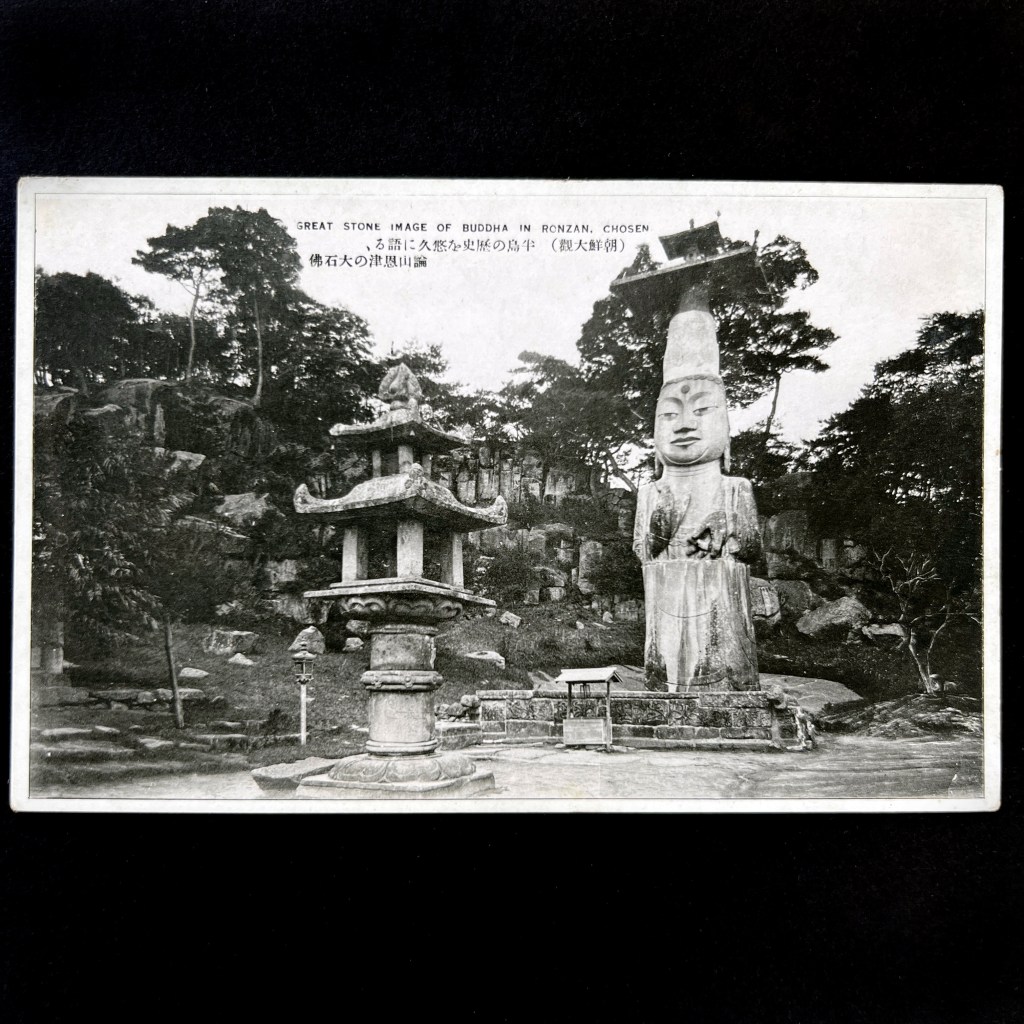
During the Korean colonial period (1910–1945) postcards were made by various Japanese entities. One of the largest private publishers was Taishō Shashin Kōgeisho, headquartered in Wakayama (see logo in stamp box). The design tells us this card was printed between 1933 and 1945.

Hyung Gu Lynn has argued that images of Japan’s colonies were often depicted as backwards or in stasis. This included depicting rural villages and ancient historical locations. Does this Japanese postcard fit into this discourse?
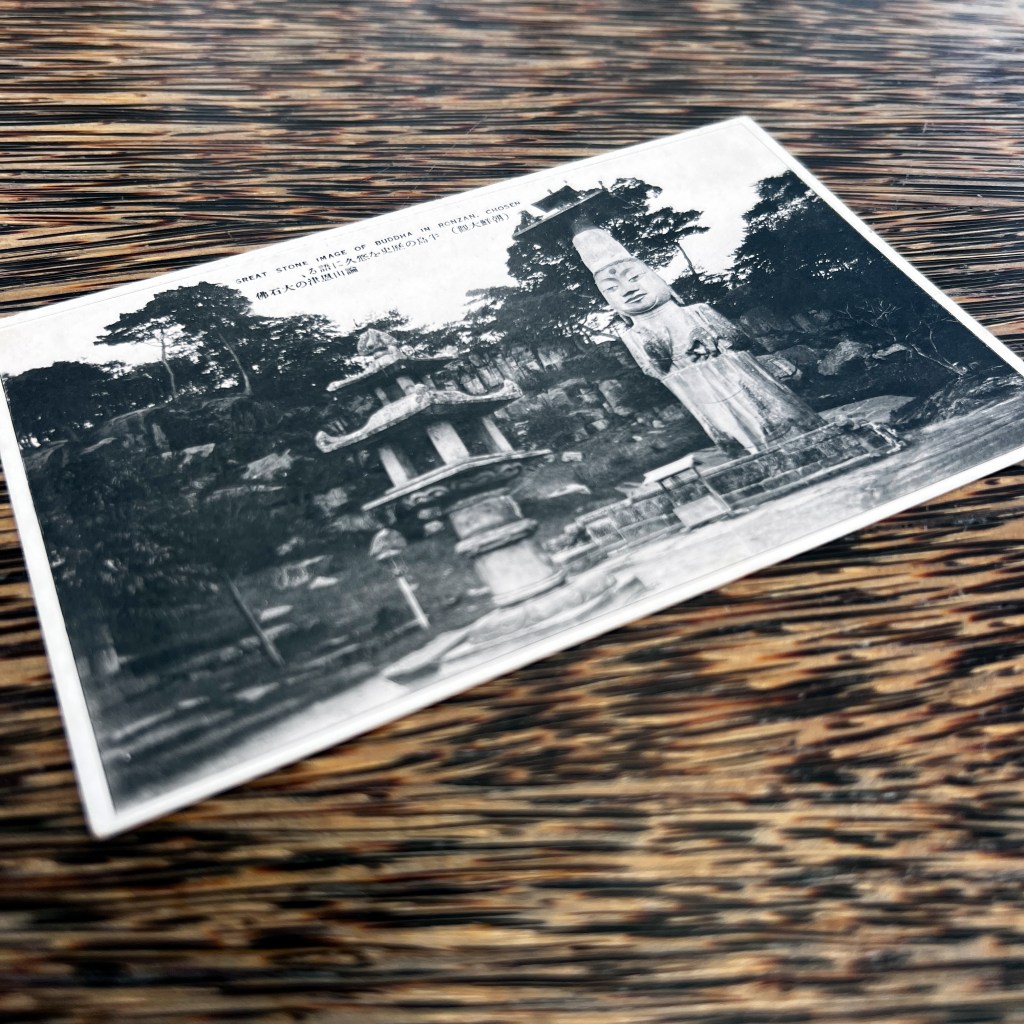
The name “Mireuk” points to the bodhisattva Maitreya. The hands on this statue, however, are suggestive of an East Asian Guanyin. The Eunjin Mireuk is example of early Goryeo era (918–1392) sculpture and reflects an unusual regional style.

A photo was taken of this statue by US navy officer George Clayton Foulk in the mid-1880s. It has been digitized by the Library of Congress and can be viewed here: https://tinyurl.com/bdh7pwvc.


The Buddhas in the West Material Archive is a digital scholarship project that catalogues artifacts depicting Buddhist material culture for Western audiences. It’s comprised of prints, photos, and an assortment of ephemera and other objects. For a brief introduction to this archive, visit the main Buddhas in the West project page.
For Related Buddhas in the West Posts Featuring Historical Buddhist Statues:

For the Most Recent Buddhas in the West Posts:





 Personal Site of Peter Romaskiewicz