
For all the new Buddhas in the West posts
follow us on Bluesky & Instagram
Before nickelodeons and cinema halls, “magic lantern” shows were an important part of popular American entertainment. Hand tinted glass slides were used by children’s story tellers, stage magicians, and traveling public lecturers in town and cities across the United States.
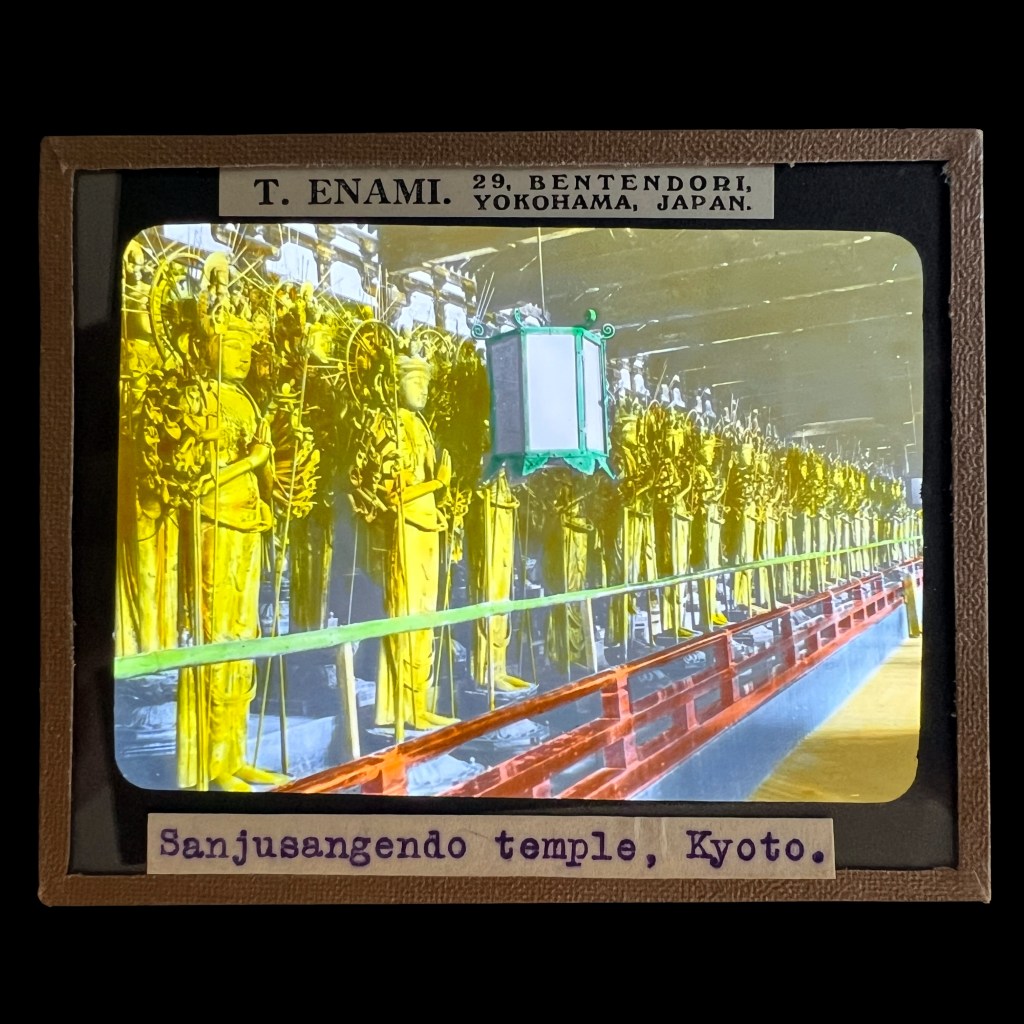
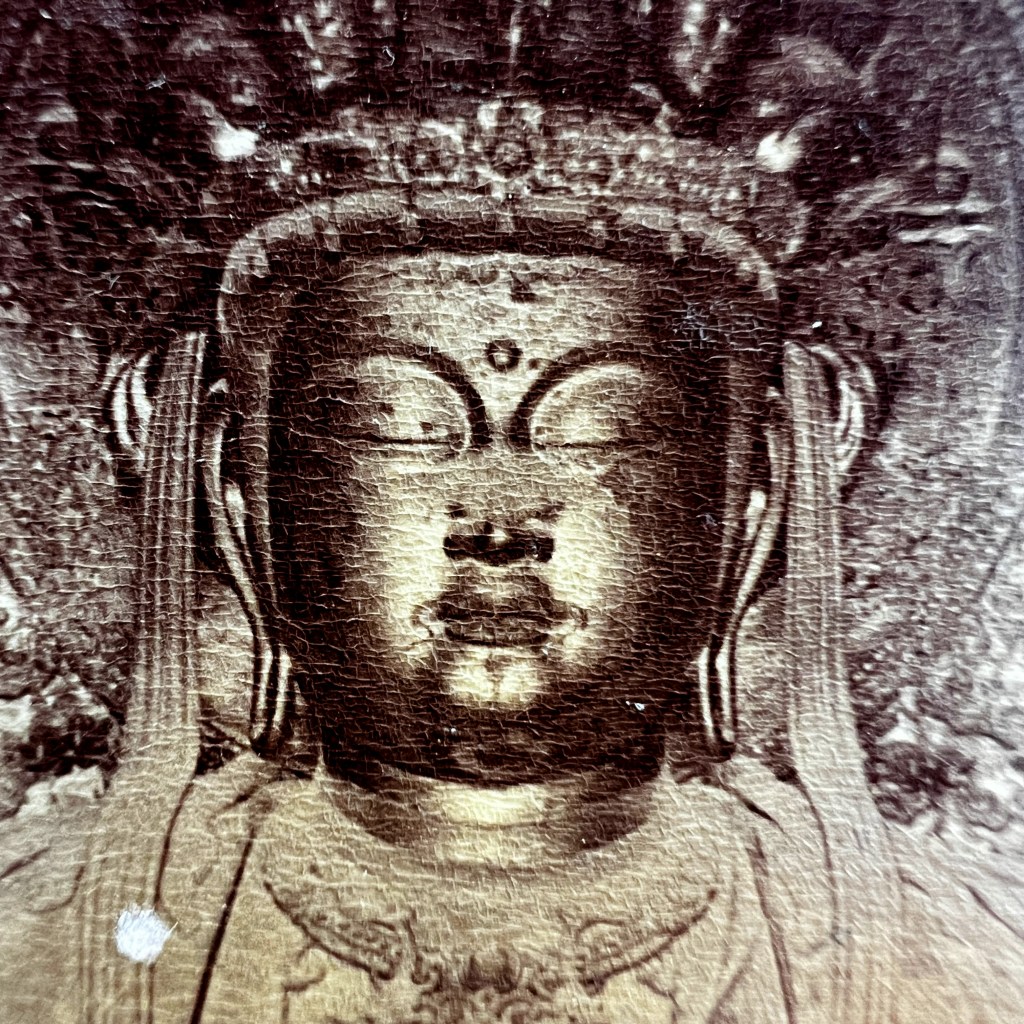
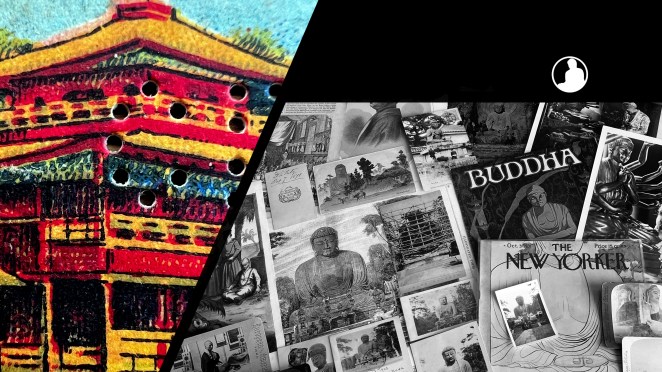
Enami Nobukuni, known professionally as T. Enami, opened his Yokohama photography studio in 1892 and by 1915 offered a very large glass slide portfolio. Objects such as this would have been sold as visual aids for public presentations or parlor room entertainment.
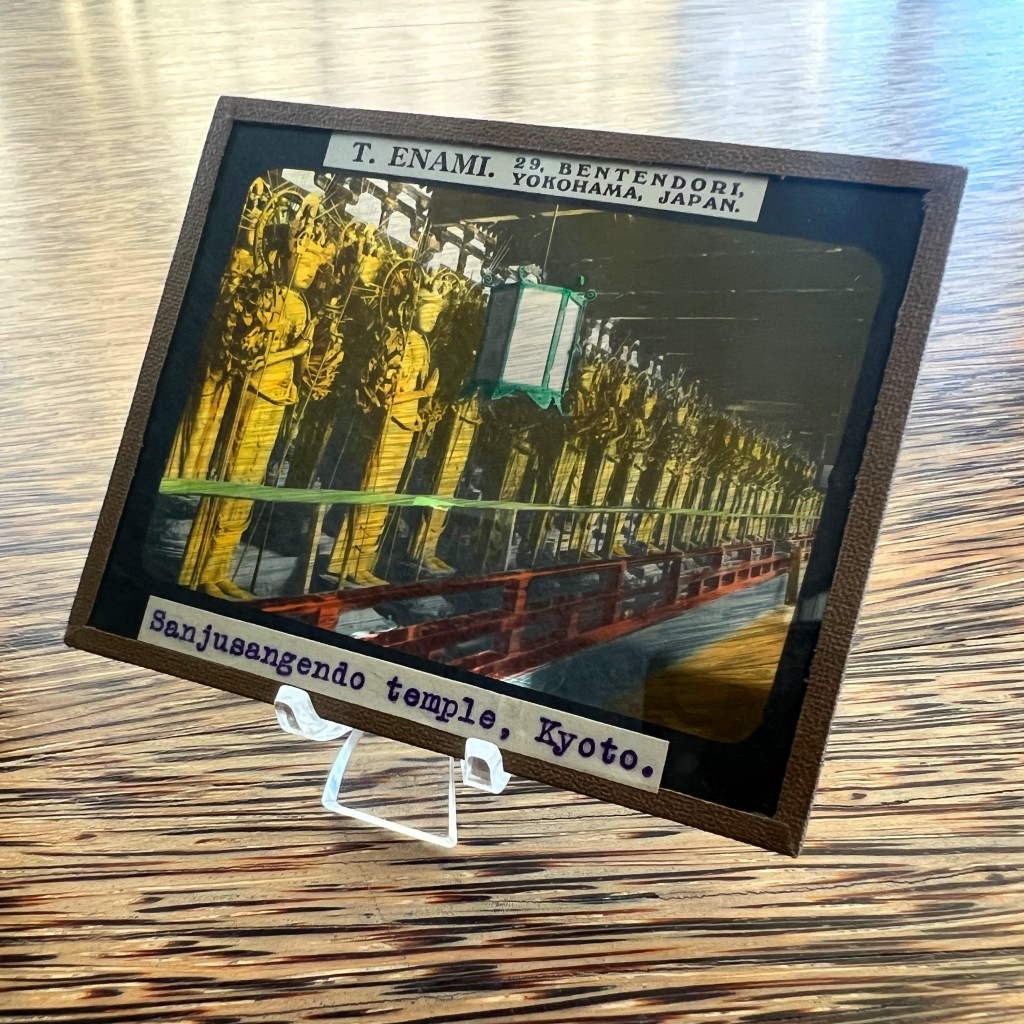
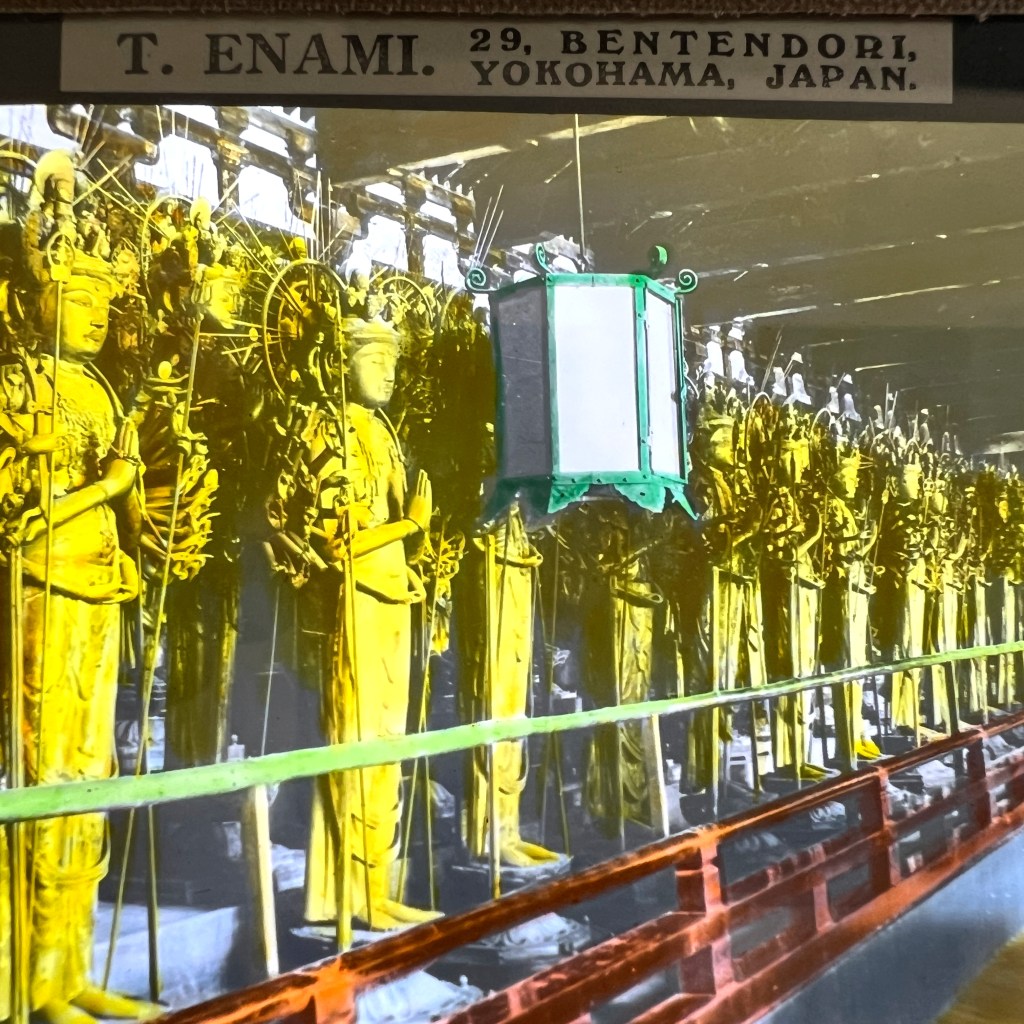
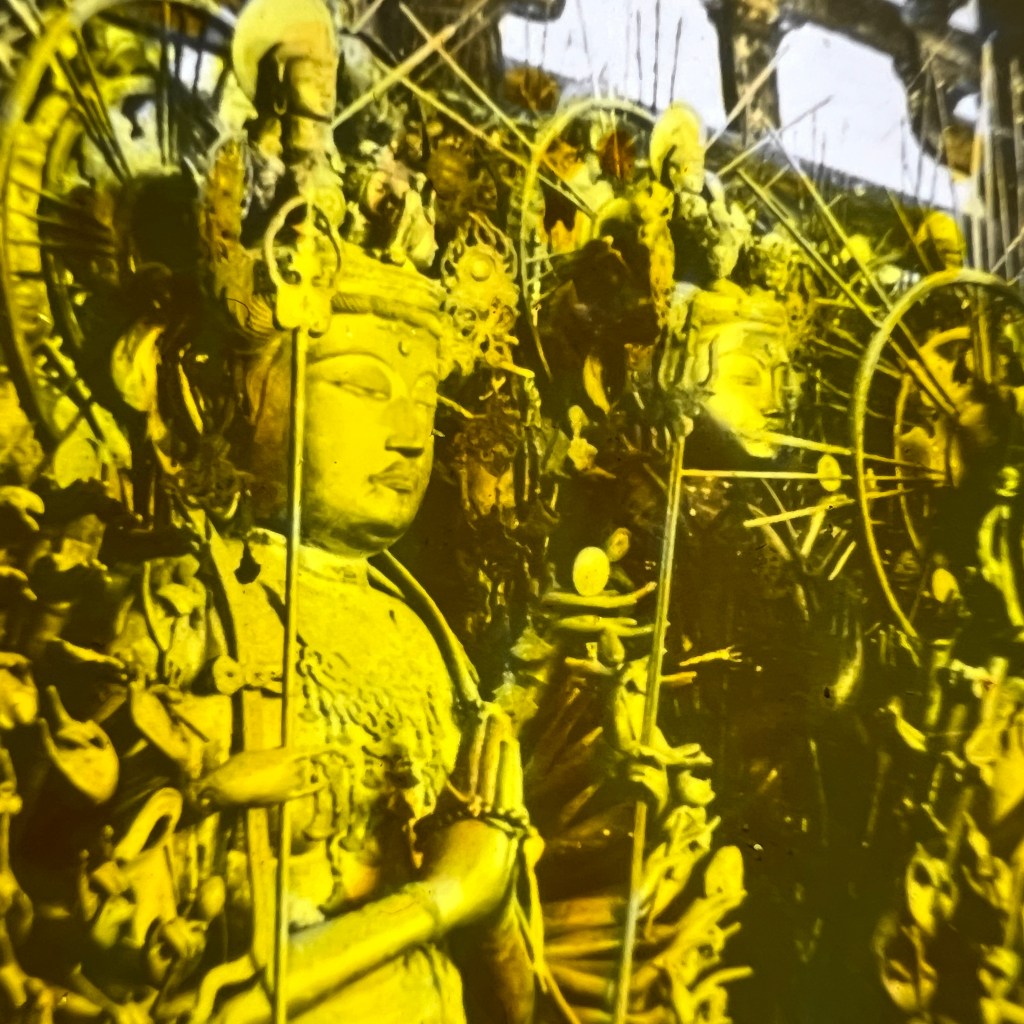
This slide shows a grouping of the famous one thousand Kannon statues of Sanjūsangendō in Kyoto, one of the most commonly photographed tourist sites in Japan during the late Meiji and Victorian periods.

Enami was celebrated for the beautiful hand tinting of his slides, but the coloring here suggests this slide was produced after his death in 1929, when his son took over the business and did not have an eye for finer detail like his father.
Enami was Japan’s most prolific producer of small format photographs and was often showcased in National Geographic Magazine. To view a selection of Enami’s photographs, see the digitized collection of Kjeld Duits, viewable here: tinyurl.com/245skpf8.

The Buddhas in the West Material Archive is a digital scholarship project that catalogues artifacts depicting Buddhist material culture for Western audiences. It’s comprised of prints, photos, and an assortment of ephemera and other objects. For a brief introduction to this archive, visit the main Buddhas in the West project page.
For Related Buddhas in the West Posts Featuring Lantern Slides:


For the Most Recent Buddhas in the West Posts:














 Personal Site of Peter Romaskiewicz