
For all the new Buddhas in the West posts
follow us on Bluesky & Instagram
The five-reel Mystery of Wall Street was a 1920 entry of the short-lived Tex, the Elucidator of Mysteries, film series by Arrow Film Company. One scene, set in New York’s Chinatown, is used for the photo illustration of the film’s promotional trade handbook.

Played by Glenn White, Tex was a private detective who had been previously jailed on circumstantial evidence, thus his mission was to vindicate victims of injustice. Wall Street Mystery investigates the unresolved murder of a New York trade broker.

Eventually Tex is led to the broker’s Japanese valet who frequents Chinatown’s opium dens. Philippa Gates has demonstrated the popularity of the “Chinatown opium film” genre of the 1910s: “Opium dens…were a shorthand in American film to connect Chinatown to…criminality.”
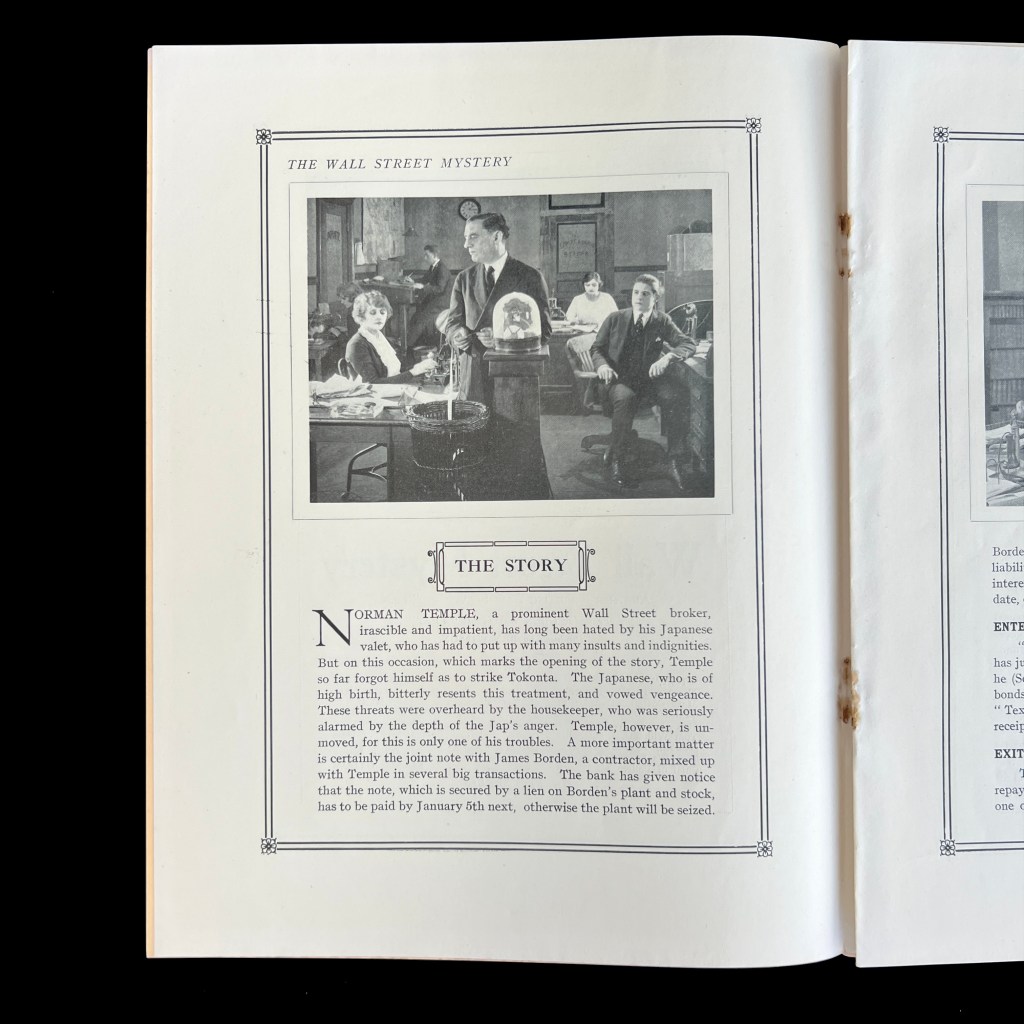
Tex visits Chinatown’s opium den in disguise and a fight soon breaks out. The valet, who Tex had suspected for the murder, is found to be innocent based on his fingerprints; the case against him had proven to be mere circumstantial evidence.

Early film trade handbooks, like the one seen here, revealed the entire story to help the theater owner decide to purchase the reels. This included advertising and publicity suggestions.

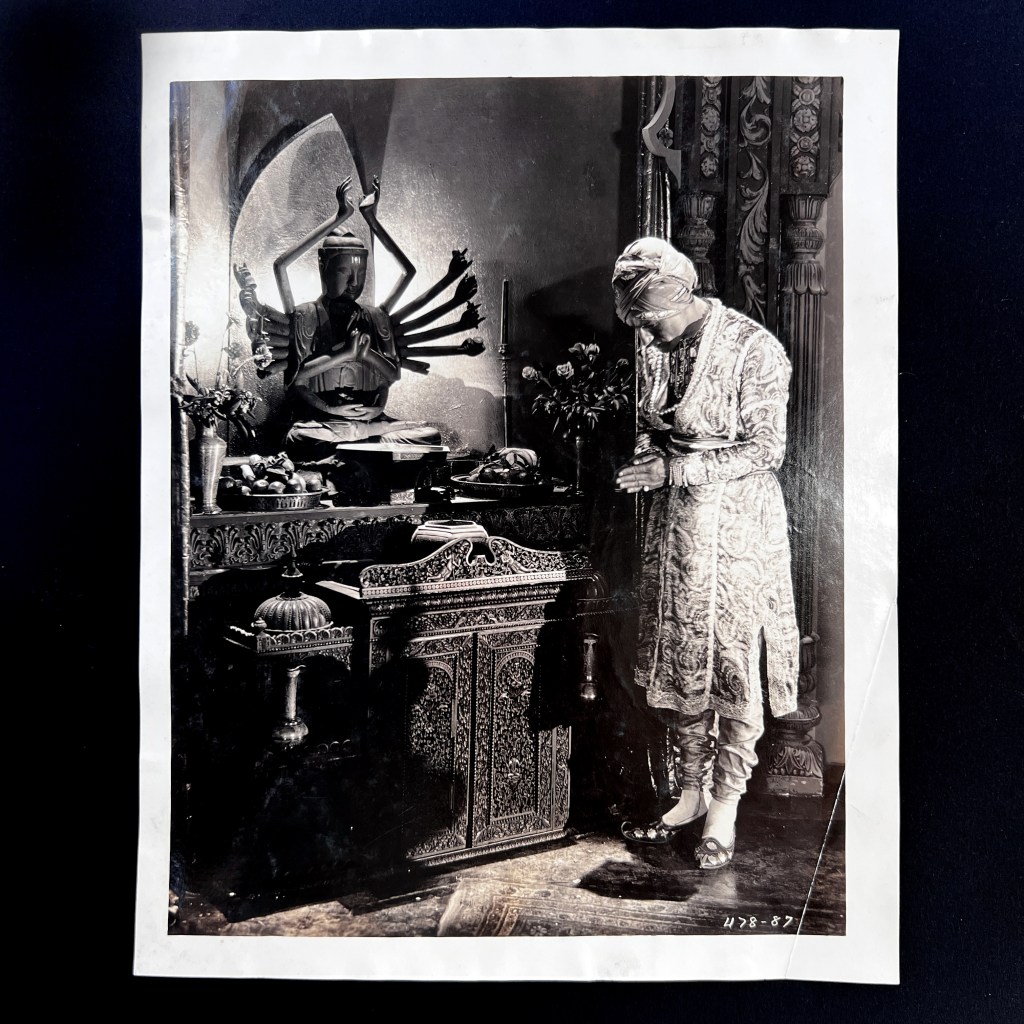
The statue of the Buddha on the cover visually supports both the sense of mystery and the Chinatown locale. See also Philippa Gates, Criminalization/Assimilation: Chinese/Americans and Chinatowns in Classical Hollywood Film (New Brunswick: Rutgers, 2019).


The Buddhas in the West Material Archive is a digital scholarship project that catalogues artifacts depicting Buddhist material culture for Western audiences. It’s comprised of prints, photos, and an assortment of ephemera and other objects. For a brief introduction to this archive, visit the main Buddhas in the West project page.
For Related Buddhas in the West Posts Featuring Historical Advertising:



For the Most Recent Buddhas in the West Posts:

























 Personal Site of Peter Romaskiewicz