
For all the new Buddhas in the West posts
follow us on Bluesky & Instagram
Pulp Fiction Buddhas: When editor Frank Munsey switched to inexpensive wood pulp paper in 1896, his publication, Argosy, was the first of what came to be known as pulp magazines. With over 150 publications in press by the 1930s, cover art was a critical driver for sales.

Argosy often featured episodic action and adventure stories, here starring Gillian Hazeltine as a crime solving lawyer in Jungle Justice. The cover of Paul Stahr vividly portrays the tropical setting and captures the tension between the hero and villain.

A closer look reveals a mélange of visual “Oriental” tropes: a grotesque Tibetan-style idol, a Japanese torii gate as shrine backdrop, and a turbaned menace hiding in the shadows.

The text is equally stereotypical, noting the location as “the Orient” (we are later informed its Saigon) and the villain as the “devil worshiper,” the Sultan of Senang.
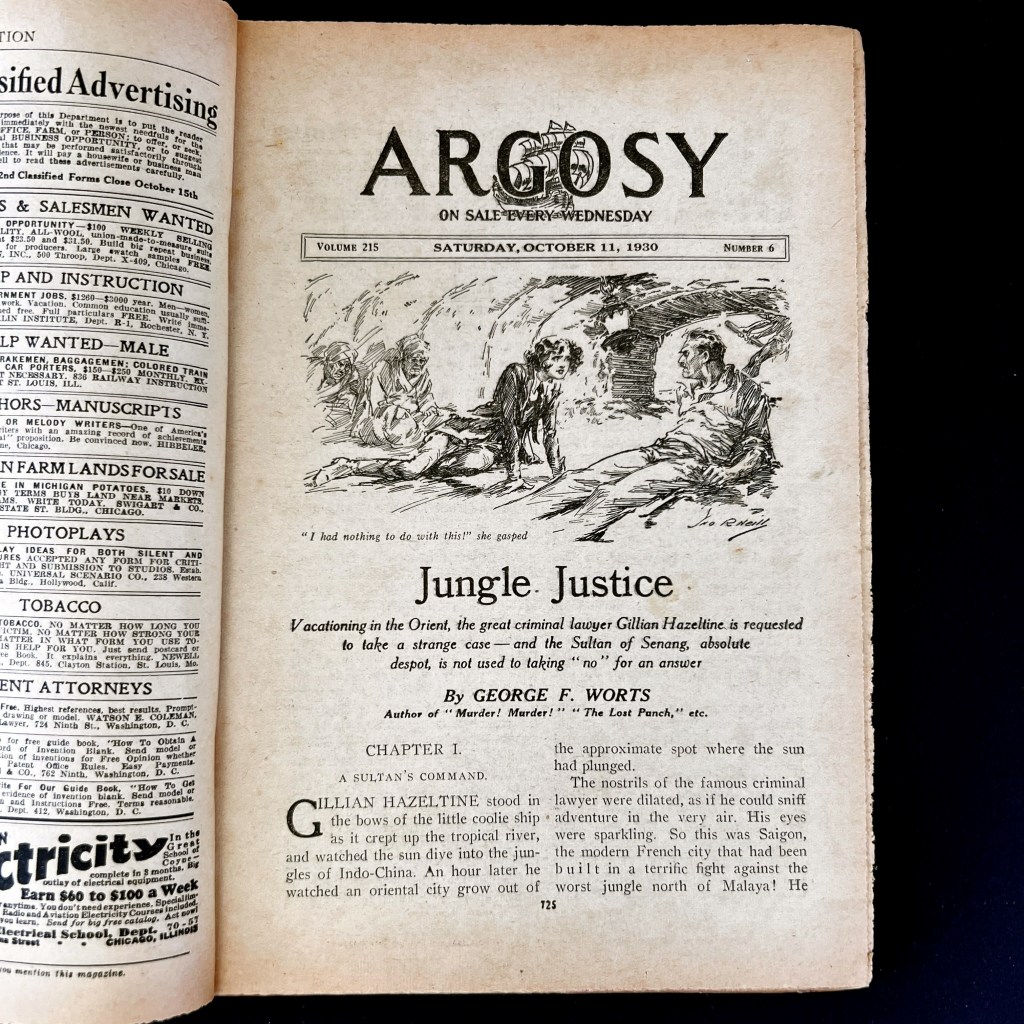
The idol’s face, likely intended to signal the Sultan’s devil worship, resembles a Tibetan Buddhist cham dance mask. Various issues from Argosy, including Jungle Justice, can be read here: https://www.pulpmagazines.org/the-argosy/.


The Buddhas in the West Material Archive is a digital scholarship project that catalogues artifacts depicting Buddhist material culture for Western audiences. It’s comprised of prints, photos, and an assortment of ephemera and other objects. For a brief introduction to this archive, visit the main Buddhas in the West project page.
For Related Buddhas in the West Posts Featuring Historical Magazines:


For the Most Recent Buddhas in the West Posts:
















 Personal Site of Peter Romaskiewicz