
For all the new Buddhas in the West posts
follow us on Bluesky & Instagram
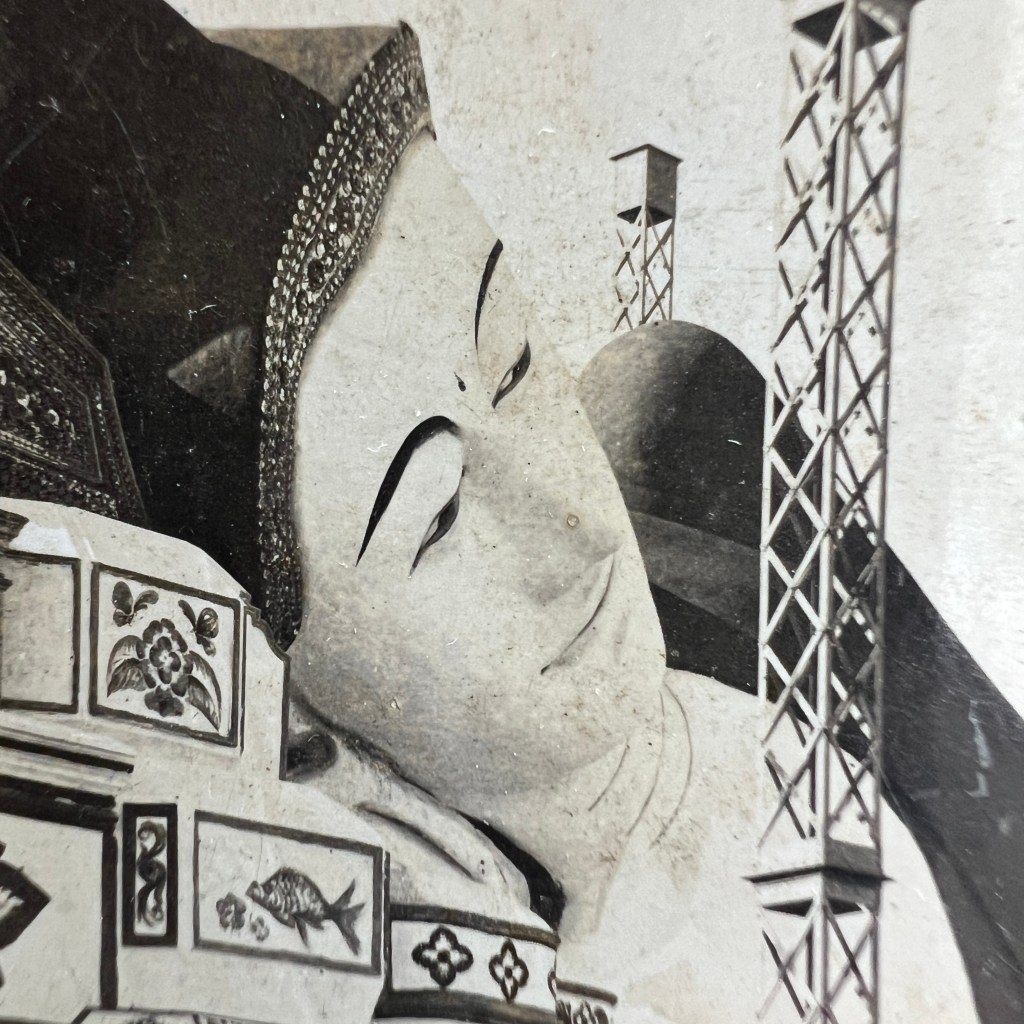
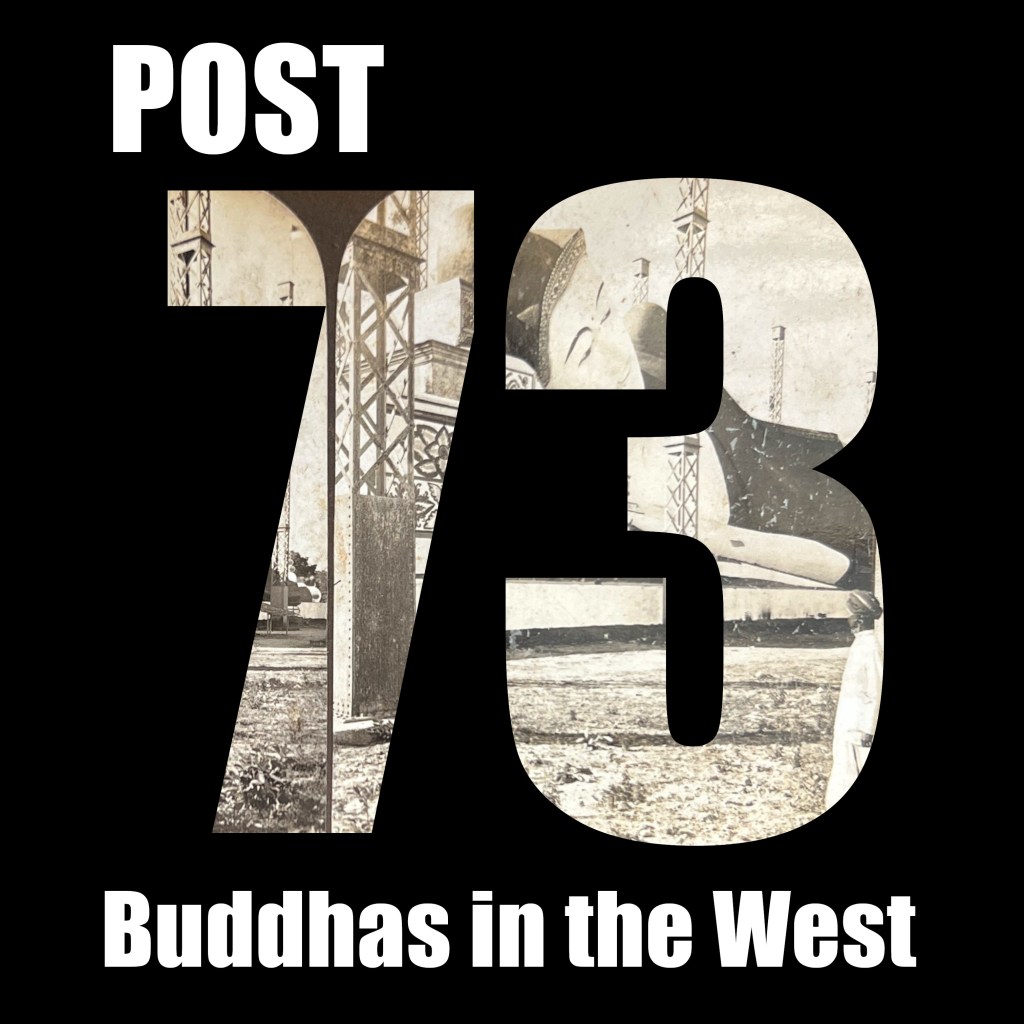
This colossal Sleeping Buddha was lost to the jungle when the Burmese city of Bago fell to invading forces in 1757. The statue was recovered in 1881 after railroad workers began digging through a tree-covered mound looking for scrap stone.

At 55 meters (180 ft) long and 16 meters (52 ft) high at the shoulder, the Shwethalyaung Buddha is among the largest reclining Buddha statues ever constructed. Made of brick and stucco, it is believed to have been built in the late tenth century under the patronage of a local king.

This stereograph was taken by Herbert Ponting who had returned from Manchuria after photographing the Russo-Japan War for publisher H. C. White.

Ponting had an expert eye; his placement of the man in the foreground produces a strong three-dimensional depth effect when viewed stereoscopically.

An earlier photograph of the Shwethalyaung Sleeping Buddha before decoration was published in Julius Smith’s Ten Years in Burma from 1902, viewable here: tinyurl.com/5n85dsxn.
The Buddhas in the West Material Archive is a digital scholarship project that catalogues artifacts depicting Buddhist material culture for Western audiences. It’s comprised of prints, photos, and an assortment of ephemera and other objects. For a brief introduction to this archive, visit the main Buddhas in the West project page.
For Related Buddhas in the West Posts Featuring Myanmar / Burma:



For the Most Recent Buddhas in the West Posts:













 Personal Site of Peter Romaskiewicz