Online Philosophy Videos

p02b14w0.jpg

I am currently enrolled in the Online Teacher Training Course in Canvas (OTTCC) through Ventura Community College, a local school where I (irregularly) teach. This course is designed to train teachers in the online MOOC platform Canvas which was recently adopted by the California Community Colleges as their course management system. Planning an online course is significantly different than a traditional course, and this training is meant to provide a best practices approach so as to facilitate more teachers effectively using the platform. As I go through the training I’ll post here a few observations relevant to the training.

One of the more noticeable differences in designing courses for online platforms is the “chuncking” of material, online educations speaks of “modules” quite frequently, of which several could be taught in an entire week or over the course of several weeks. Most frequently, however, these modules are smaller in scope and could be envisioned as elements one would have in a single lecture class.

The Online Education Initiative rubric, which was developed by the California Community Colleges, assesses “content presentation” along a list of thirteen criteria. One of those criteria is “student centered teaching” of which “alignment” is gained through the use of a variety of modalities such as text, audio, video, and imagery.

Since one of the courses I am planing is in philosophy I thought compliance with this criterion would be a good opportunity to gauge what types of online video content could be used in various modules of my course. My criteria for selection were quite simple: 1) the video had to focus on a narrow philosophical topic, 2) it had to be less than 10 minutes short, ideally 6(ish) minutes, 3) include more than just a talking head (thus some type of animation, imagery, or at least a very lively and compelling speaker.

I was surprised by the amount of quality videos that were published on YouTube. Some of the channels I found useful include: TedEd, BBC Radio 4, Wireless Philosophy, CrashCourse, Wisecrack, PBS Idea Channel, and Philosophy Tube.

Of these, TedEd is my favorite. The topic is focused, it does no often go longer than 5-6 minutes, and the production value is outstanding. The PBS Idea Channel (unfortunately no longer uploading new videos as of summer 2017) takes a different approach by looking at philosophical arguments and applying them to pop culture, for example would Kant consider a meme art? Overall, there is a wide range of purposes and intended audiences in the above list of videos.

I also hope to supplement these video with my own. I plan to use screen cast software to record my computer screen to walk through some portions of the modules. Of course, learning is a social act, thus the ability to build interest and community is one of the challenges faced by online education. Using these videos as tools in an educational setting – not replacing the educational setting – I think will be central for my course development.


Setting Student Expectations and Intentions

While designing my course syllabus, I was focused on all of the traditional aspects: crafting learning outcomes, deciding on course content, selecting class readings, figuring out student assessment, and so forth. It never occurred to me to think about syllabus design, meaning graphic design. This is all the more strange because I was a graphic designer.

I was lucky enough to stumble across this blog by Tona Hangen (Update, also Zac Wendler) which had a profound impact on my syllabus design (I’ll discuss this more in-depth at another time). Her design reminded me of newsletters I created in the past and that insight led me to reconsider the purpose of a course syllabus. I wanted to make a document that was more than a course “contract” that was squirreled away and never thought about again.

One aspect, which I will discuss here, was the role a syllabus played in helping to frame the intentions of students. Hangen’s post does a great job of analyzing three different types of learners in her class, those who need to acquire basic knowledge, those that have that knowledge already, but want to expand their knowledge, and those who have extensive knowledge and who can analyze and assess at higher levels. Her syllabus  utilized the metaphor of scuba diving to describe the different “depths” her students would reach. I adapted these categories to the content of my course, dividing them between arhat, bodhisattva, and buddha.

Screen Shot 2017-10-22 at 22.16.25.pngDuring our first class meeting, these ideas are approached through conversation with my students about why they are taking my class (I’ve yet to have a religious studies major in any of my classes; I’m lucky if I have anyone whose major is in the humanities!). Typically, after listening to several comments on how this class fulfills several requirements, I begin to ask slightly more probing questions: Why this class? (Surely other classes fulfilled these requirements too!) Undoubtedly, a few start to open up about personal interests or express their genuine curiosity. I use those insights to propel discussion about the potential value of Religious Studies classes and how students can approach our class. For this summer class, I then introduced them to the three levels of aspiration (above) and asked them where they thought they might fall in the spectrum.
This is more of a reflection exercise to establish expectations and intentions than anything else. Overall I find this to be a much better introductory conversation than asking students about their majors or hometowns.

Meditation or Mind Lab?

Screen Shot 2017-10-18 at 16.25.13.png
Slide introducing a Mind Lab Exercise

I arrived on campus a few days before classes began to find my classroom. The room number suggested that I had to go to the gym to find my classroom, so I was curious. After being directed by a few students on the basketball team, I came to find that I was slated to teach my Zen class in a dance recital room, complete with mirror and ballet barre…and no desks what-so-ever.

I immediately went to the department to see if I could switch rooms, I had no idea how I could conduct a religious studies class there. I was told that room was selected because the previous instructor  – someone I knew was wildly popular – had requested to teach there. It immediately made sense – his Zen class was all about the practice of Zen (meditation) while mine was going to be about the history of Zen (myth, lineage & literature).

This immediately struck me. I love when I find someone who has a completely different approach to the same material. I talk a lot about the history of meditation in my classes on Buddhism, delving into its correlation with cosmology, the debates over non-cognitive states, the endlessly varied terminology the English term “meditation” masks, the arguments over the modern mindfulness movement, and so forth. I encourage students to seek out meditation clubs or to sit on their own time, but I dutifully omit much meditation practice in class. Perhaps when I discuss the Seven Point Vairocana Posture and ānāpānasmṛti (Mindfulness of Breathing) will I ask students to briefly engage in sitting – to get the flavor of it.

Part of this reasoning is simply practical. Much of my lecturing on the history of meditation was developed while students were actively engaged in sitting regularly during the Woodenfish program. My lectures tried to give context to their practice – they did not need me to teach them the practice as well.

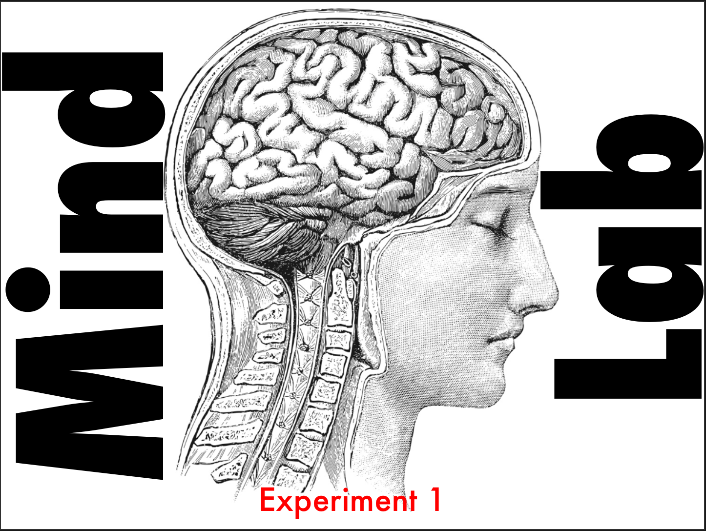
Buoyed by the potential expectations of my students who planned to meet in the dance hall, I decided to introduce what I had been calling Mind Labs – quick and simple exercises to help get students to develop their own personal phenomenology of mind. (I suppose one could call these Thought Experiments too, but I prefer Mind Labs…)

For example, when the Abhidharmists claim that mental events can only occur in quick succession, and not simultaneously, I prefer to do an exercise which asks students to determine what they think first. Another question I like to ask is whether or not students always have an affective coloring to their thoughts (for Theravādin Abhidharmists, unless a highly achieved practitioner, the answer is typically “yes”).

Screen Shot 2017-10-18 at 16.31.13.png
Slide introducing a Mind Lab Exercise

For all Mind Lab questions I ask that students write down responses and hand them in to me for tallying. I try to quantify the results the best that I can and identify patterns of belief. During our next meeting I will have a small discussion about the results and try to relate the discussion back to the “standard” Buddhist position.

Thus while I do not typically engage in much meditation practice during class time, I feel that there are numerous other philosophical exercises of mind that may touch upon similar aspects.

Zen and the Art of Multiple Choice Exams

Multiple choice exams are universal on college campuses. But how do they stack up against other kinds of assessment, especially in courses where higher-level thinking (application, analysis, evaluation), and not mere memorization (recognition and recall), are emphasized?

Crafting good multiple choice (MC) stems (questions) and conceiving plausible distractors (wrong answers) are skills in themselves. Yet, when artfully done, MC exams can be effective in testing higher-level cognitive abilities – it just takes time and effort in the creation process.

A few years ago it dawned on me that students could shoulder some of these question-crafting responsibilities to good pedagogical effect.

Coming up with plausible – dare I say artful? – distractors is part of the practice I so thoroughly enjoy about writing MC exams. I try to imagine the reasons why a student may choose a incorrect answer: is X conceptually close to Y?, is it easy to confuse X for Y?, is X actually the opposite of Y?, does X actually negate Y?, is X spelled similarly as Y?, and so forth. These questions develop the pool of candidates from which I select distractors that are, for the most part, plausible and rationally derived.

Indeed, through this very exercise of crafting questions with good distractors I’ve built a better understanding of the relationships between concepts and a better appreciation of where conceptual pitfalls might appear. In other words, this activity helped me build a network of reinforced meanings which allowed me to better understand the materials at hand. This is precisely what I want students to do!

Thus, I decided to unveil a new extra-credit option for my Zen Buddhism class: students can craft five of their own MC questions following the criteria I set out for them. Some may be used on our midterm and final exams. From my perspective, this exercise has the following benefits:

  1. Students create their own webs of meaning between conceptually similar ideas or confusing terms. Creating plausible distractors causes students to study in a new manner.
  2. Students post their MC questions on an online forum and thus have the opportunity to take student-created mini practice tests.
  3. By selecting a handful of the best questions for class MC exams, students feel they had a sense of agency in the learning process.
  4. It can save time on my end in crafting MC questions.

Multiple choice exams will never replace the value of writing sustained, well-reasoned prose, but having students write well-reasoned multiple choice questions is a step in the same direction.


Review

Overall, about 50% of my class took me up on the extra-credit offer. I provided a hand-out outlining the requirements of a good question and an “artful” set of distractors. I offered 5 extra credit points for five well-crafted questions and sets of answers. I retained the option to withhold extra credit points should a question-answer set not be handled with sufficient attention to the directions. All submissions met my basic criteria and all students received full extra-credit.

Many of the MC questions did not match my highest standards – but, honestly, not all of my questions are perfect! Several were thoughtful and well-crafted and thus were incorporated into our exams.

Would I do anything different in the future? I would consider having students explain why they selected each distractor, laying bare the relationships I noted above or other critical logic. If I wanted to take this creative exercise more seriously, I could require students to produce MC questions, perhaps first as drafts, and practice with them during class review sessions before exams.