For all the new Buddhas in the West posts
follow us on Bluesky & Instagram
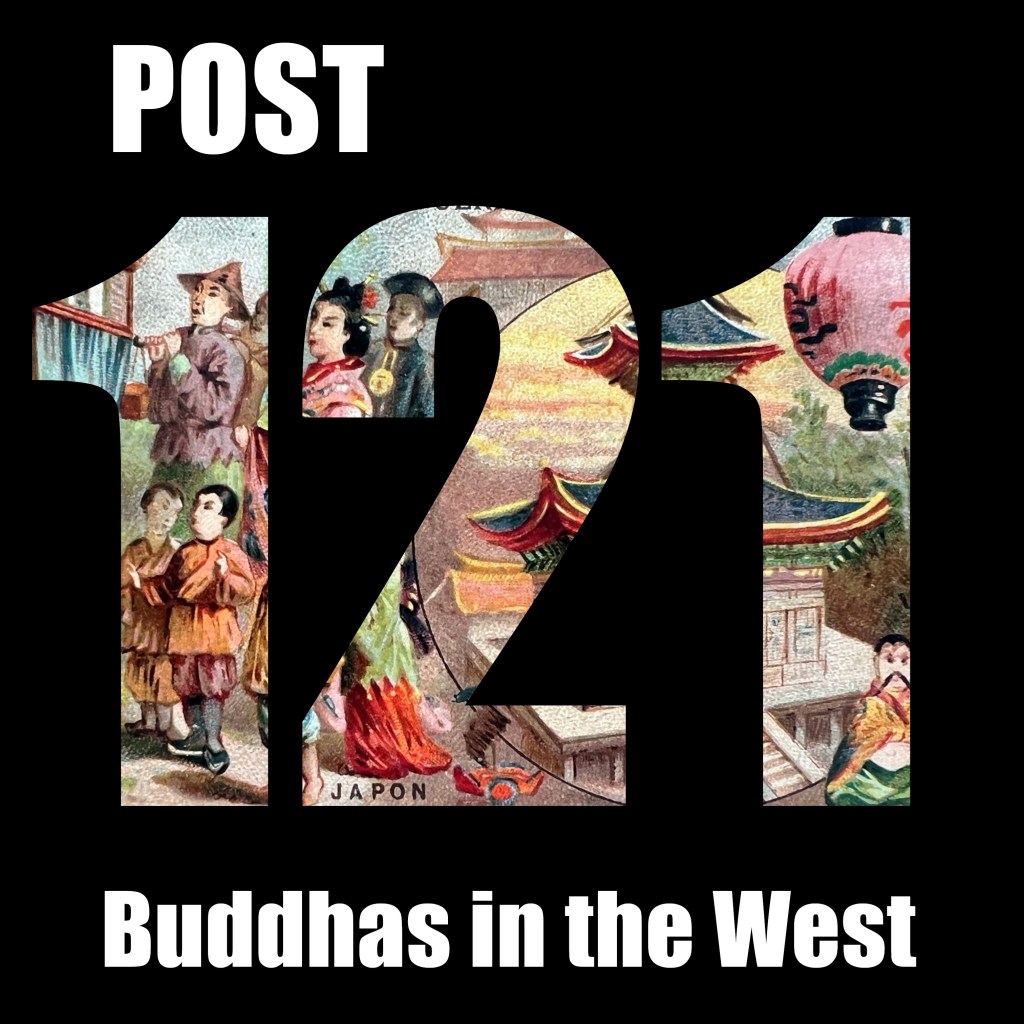
By the turn of the 20th century advertising cards were sought-after collectables, often pasted alongside other printed ephemera inside scrap books. The main visual language was the stereotype, and places like Japan were depicted as a mélange of mystery, pagodas, and odd idols.
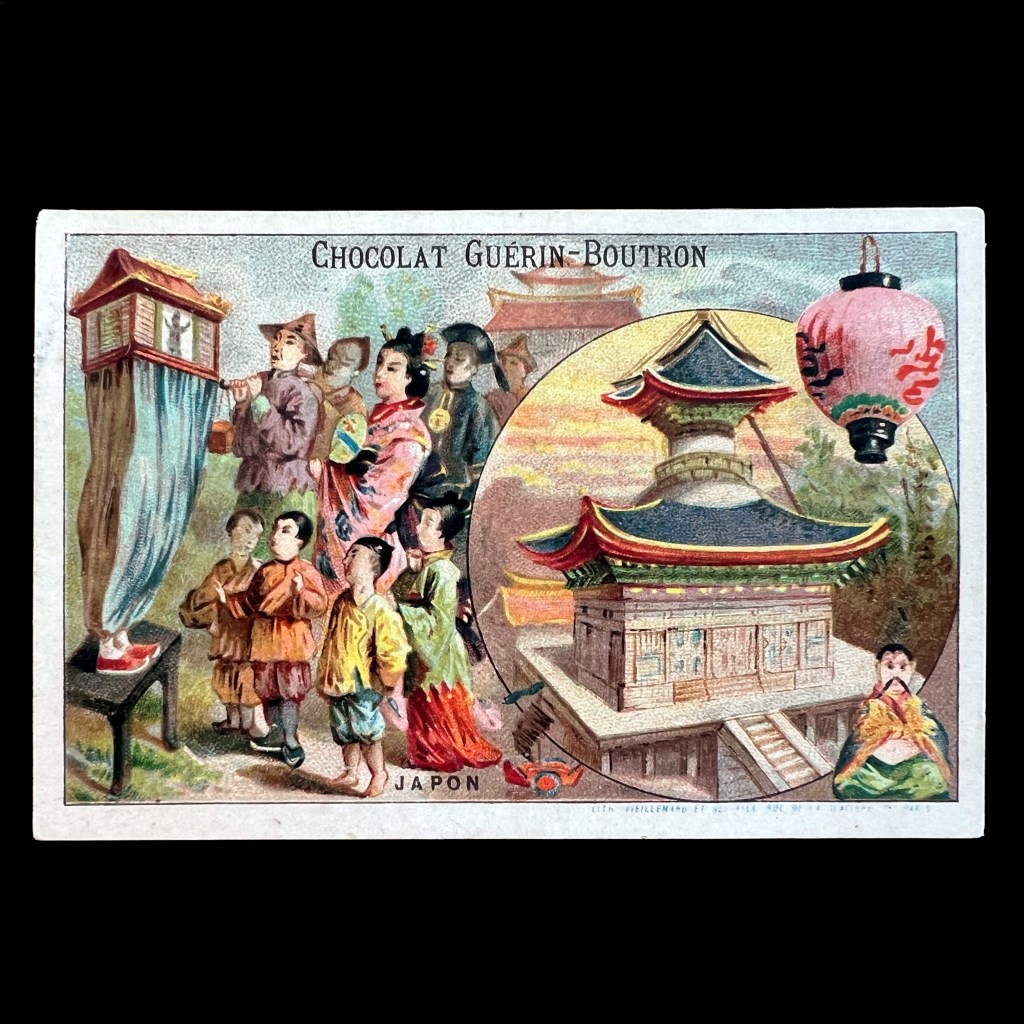
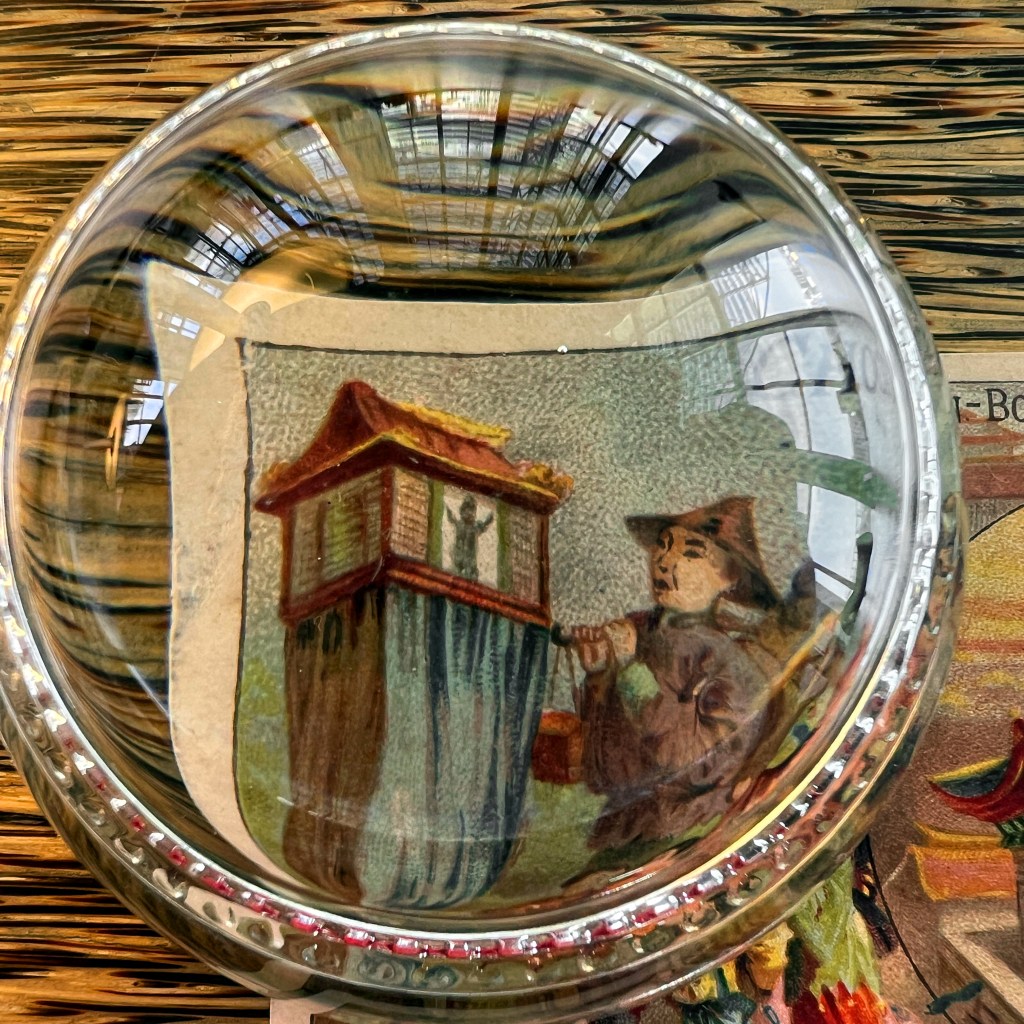
The mystery figure on the left edge is a Chinese puppeteer; distinctions between China and Japan often dissolved under the umbrella of “the Orient.” Such imagery had circulated in Europe since the late 18th century through southern Chinese export paintings depicting popular Chinese occupations.
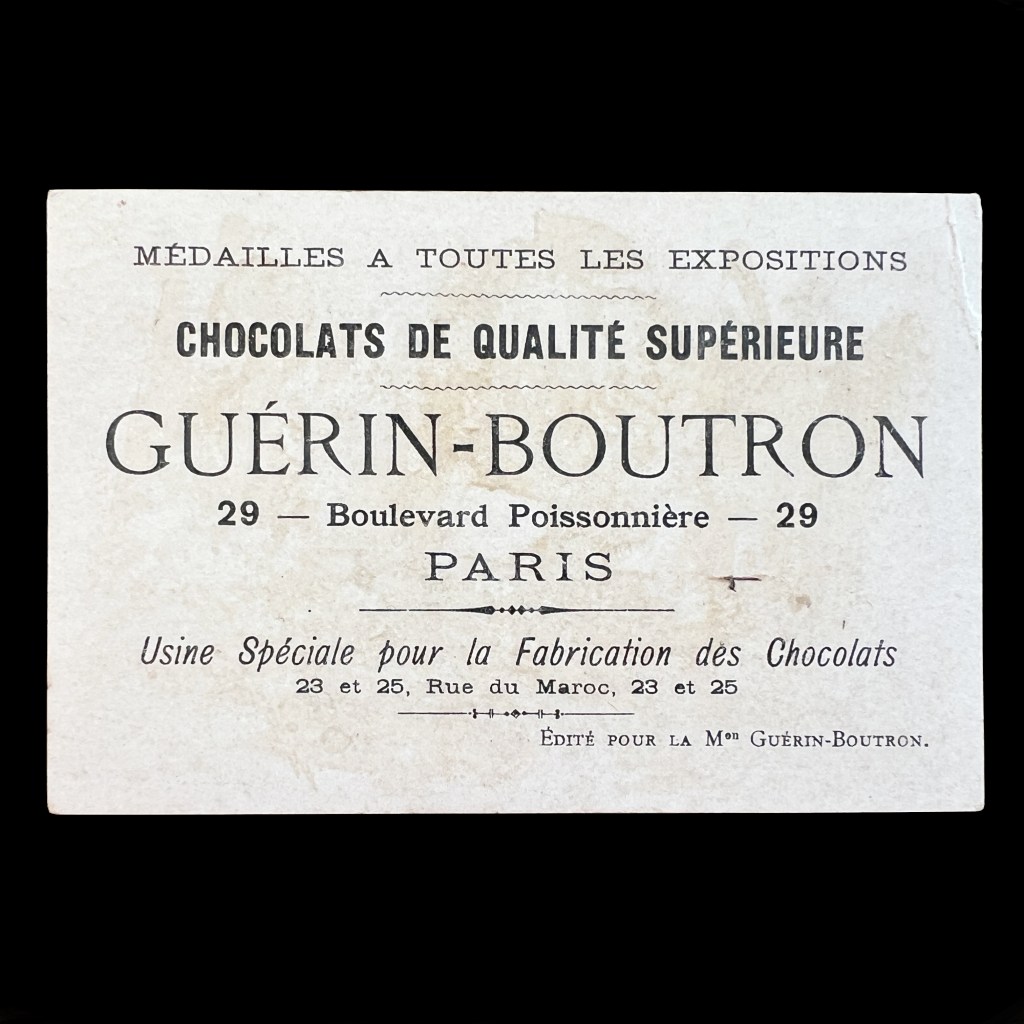
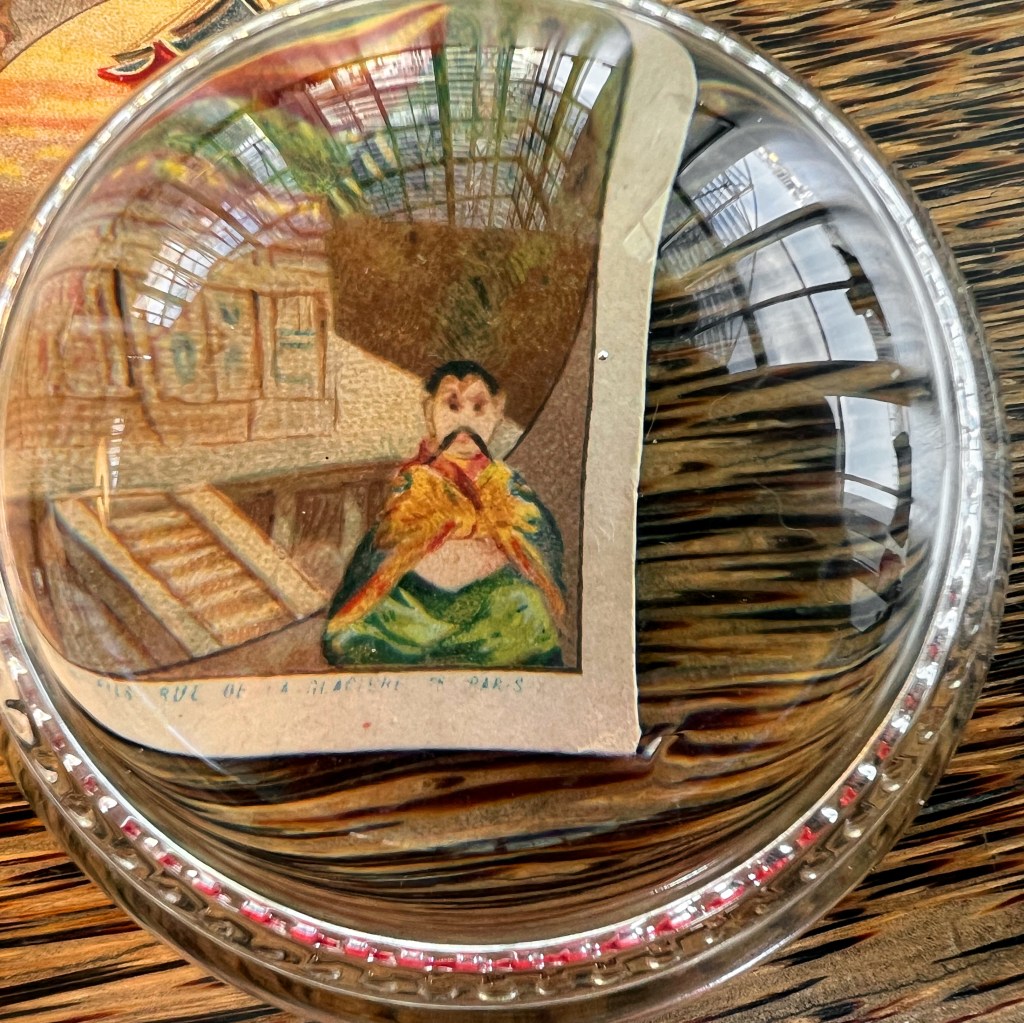
Guérin-Boutron was a luxury Parisian chocolatier and early adopter of chromolithographed trade cards, creating this set of worldwide nations and cities in the early 1900s.The printer, Vieillemard Fils & Cie, was a premier lithographer for major French trade card producers of the era.
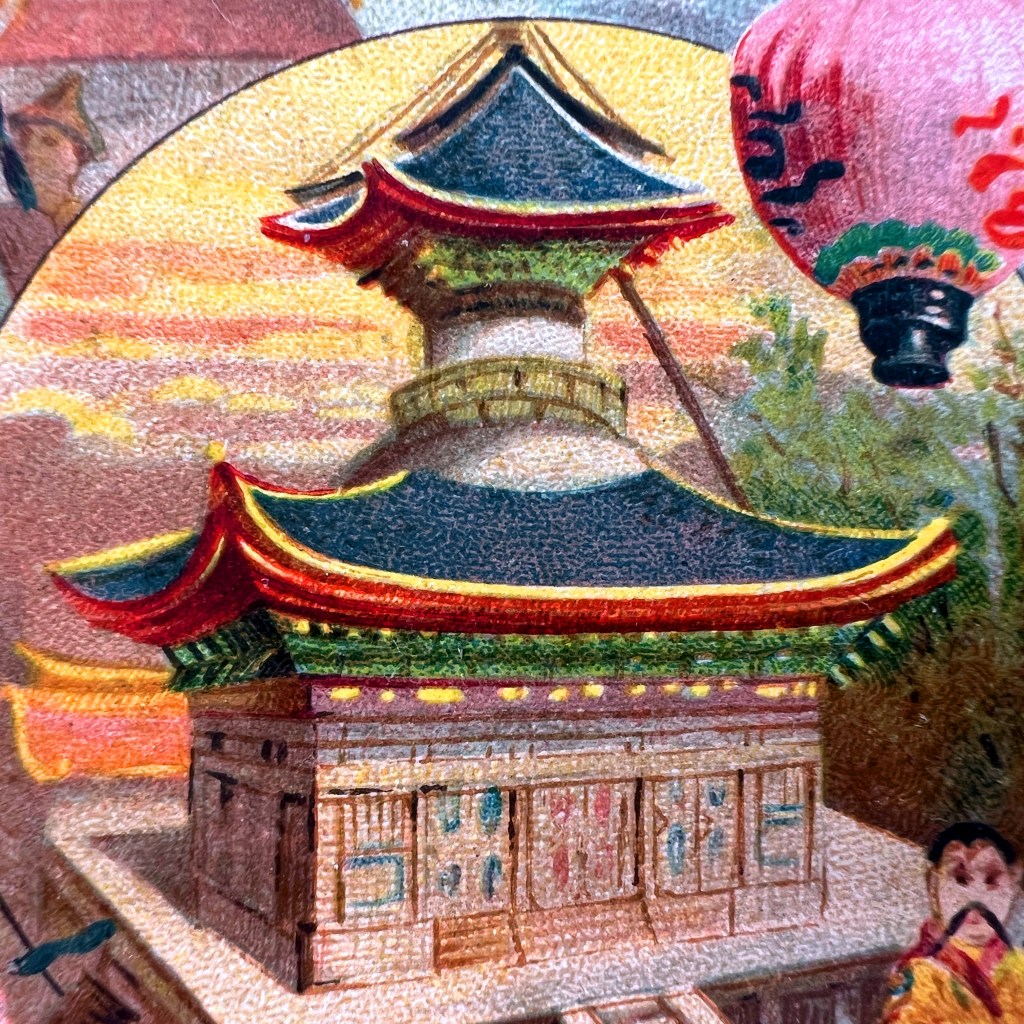
The figure in the lower right corner is a crude rendering of a seated buddha. Pronounced ethnic facial features and flowing silk garments were sometimes used to signify “authentic” Asian religions iconography.
The circular insert depicts an uncommon two-story pagoda known as the Many Treasures Pagoda (tahōtō 多宝塔) described in the Lotus Sutra. This illustration shows the one built at Hachiman Shrine which was destroyed in 1870, several decades before this card was issued.
The Buddhas in the West Material Archive is a digital scholarship project that catalogues artifacts depicting Buddhist material culture for Western audiences. It’s comprised of prints, photos, and an assortment of ephemera and other objects. For a brief introduction to this archive, visit the main Buddhas in the West project page.
For Related Buddhas in the West Posts Featuring Lithography:


For the Most Recent Buddhas in the West Posts:
 Personal Site of Peter Romaskiewicz