For all the new Buddhas in the West posts
follow us on Bluesky & Instagram
The Golden Age of Hollywood expanded the theatrical tradition of set design to create a more immersive world on screen. Through the 1920s studio art directors built bigger sets and fine Buddhist statuary that was once purchased or borrowed was increasingly made of wood and plaster.
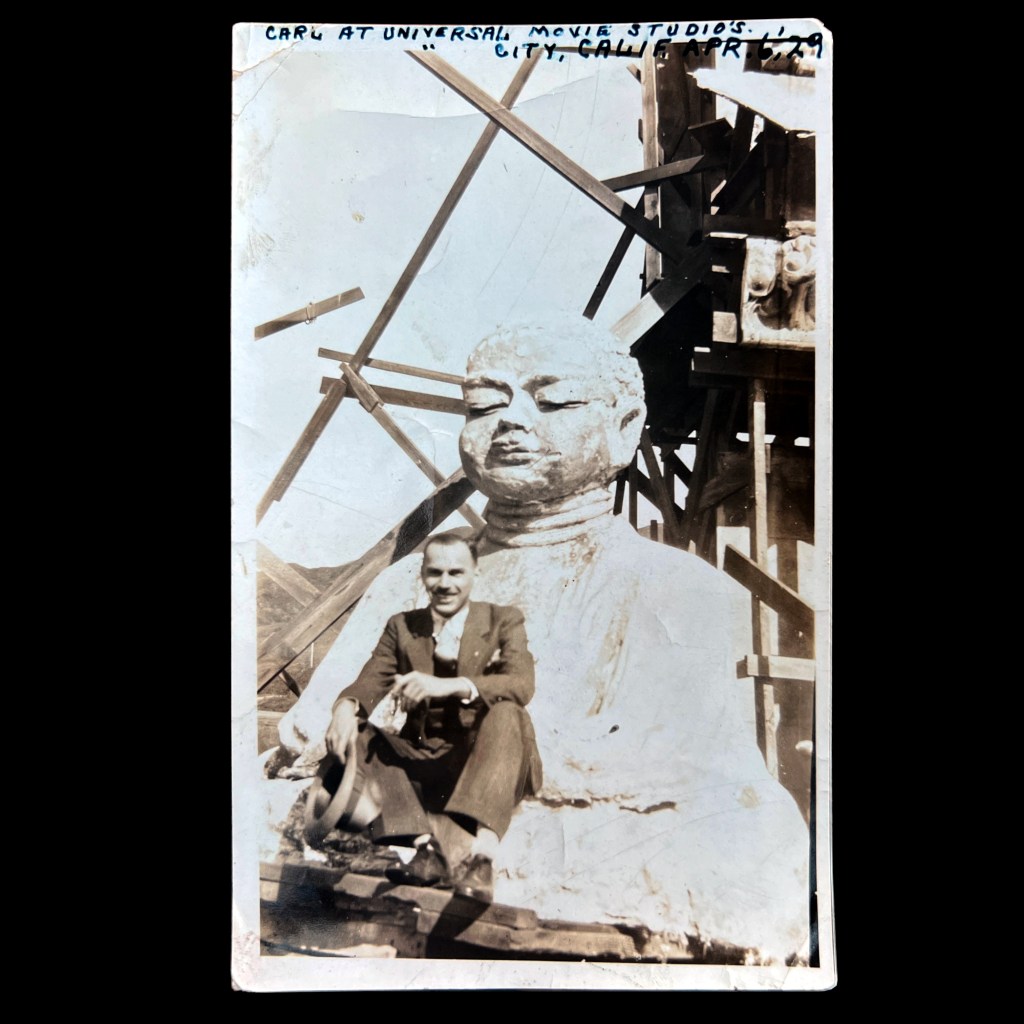
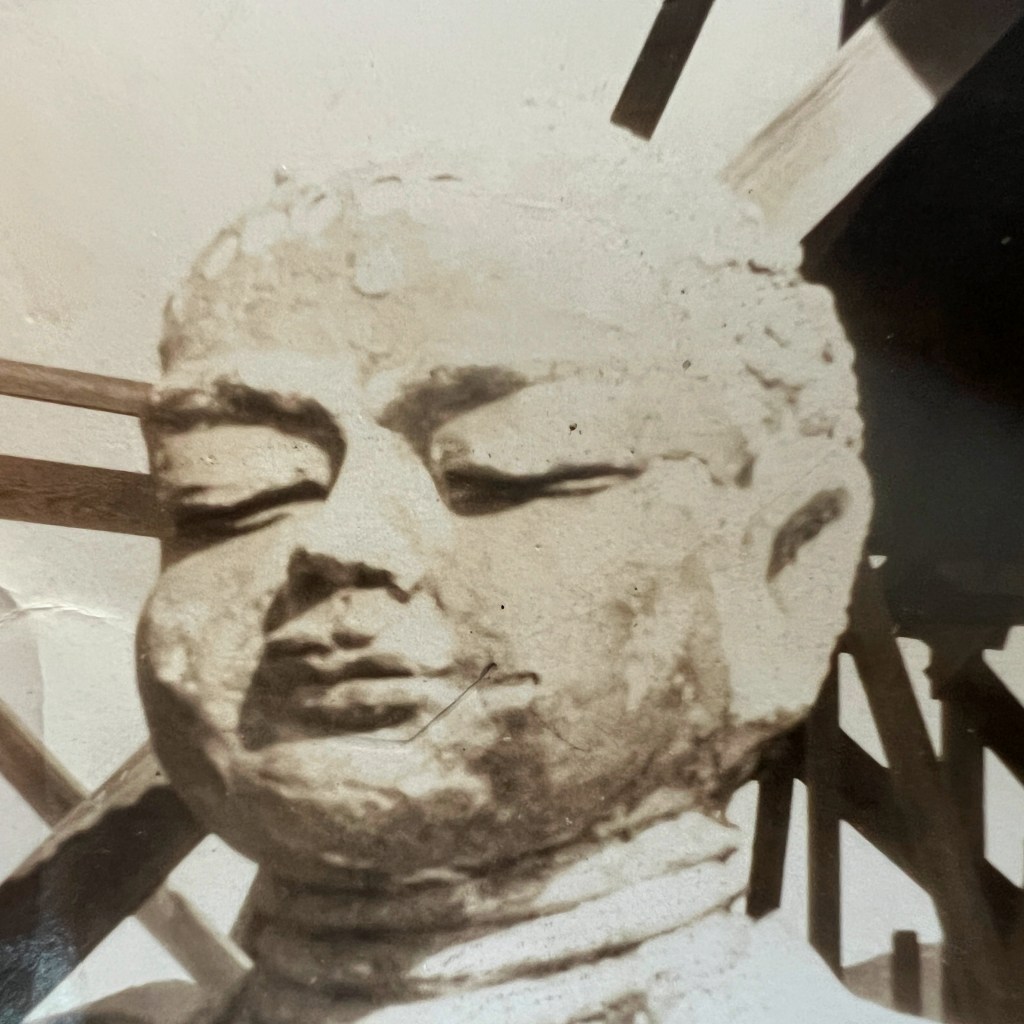
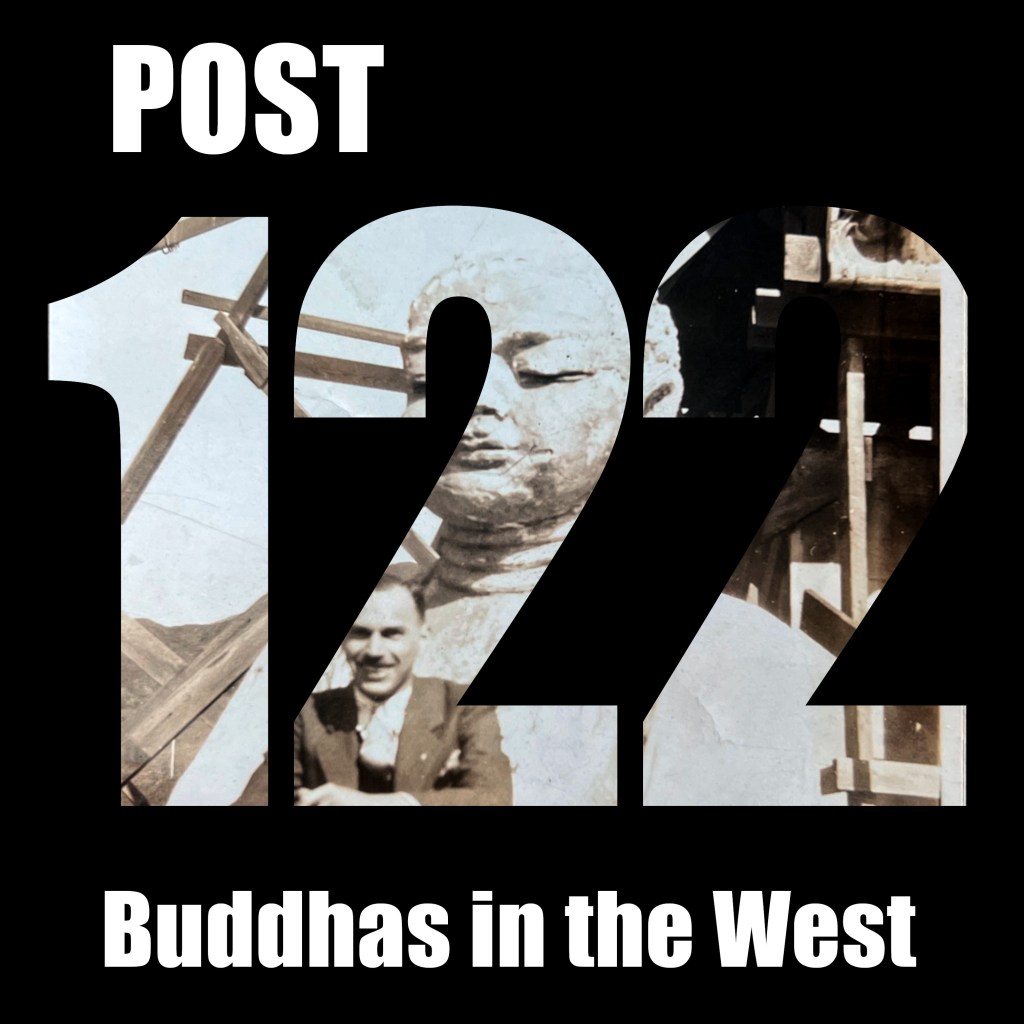
When Carl Laemmle opened Universal City in 1915, it garnered such public acclaim he decided to make studio tours a permanent attraction. Here we see a photograph (and duplicate) of the Universal back lot where a visitor sizes up one of the plaster buddhas on display.
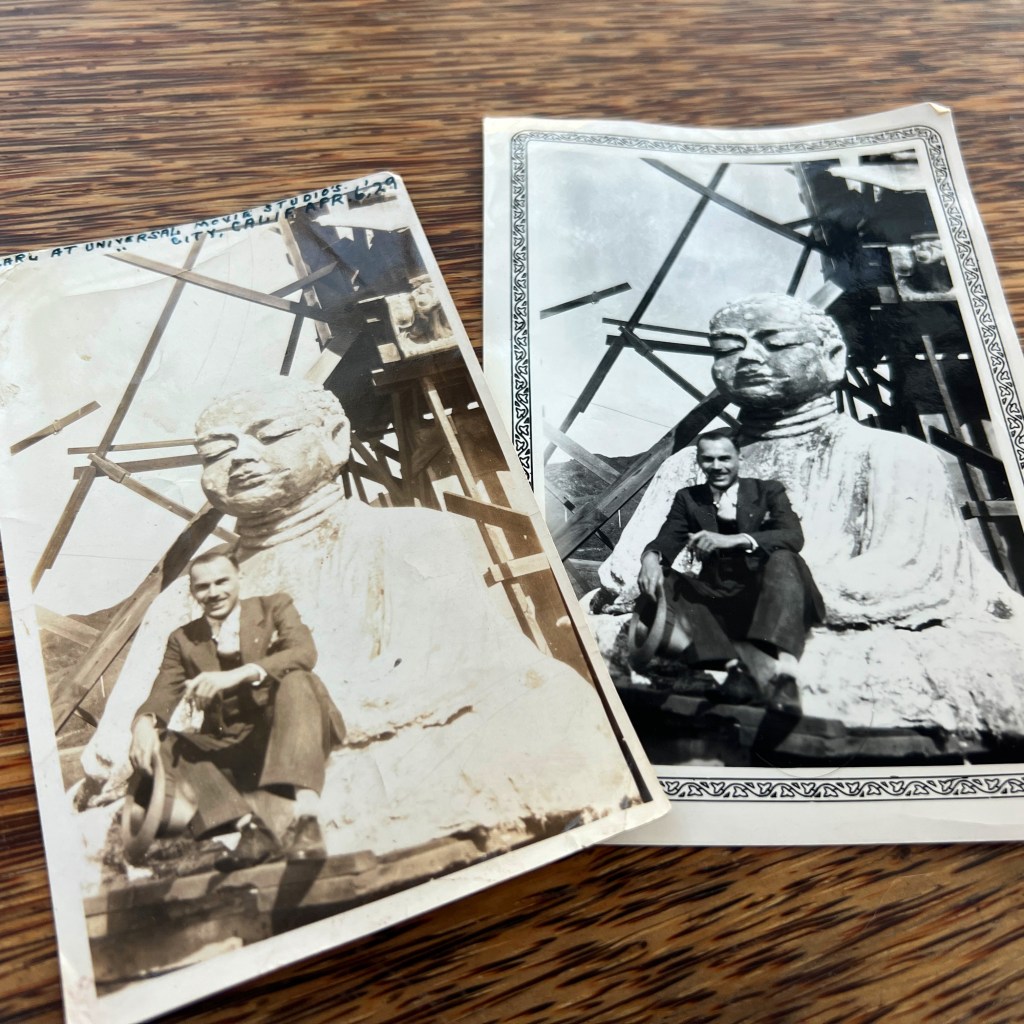
An inscription dates the photo to 1929. At this time Charles Hall was the art director for Universal, famous for his gothic aesthetic seen in the classic films Phantom of the Opera, Dracula, and Frankenstein. Was this buddha statue a creation of Hall for a new Universal film?
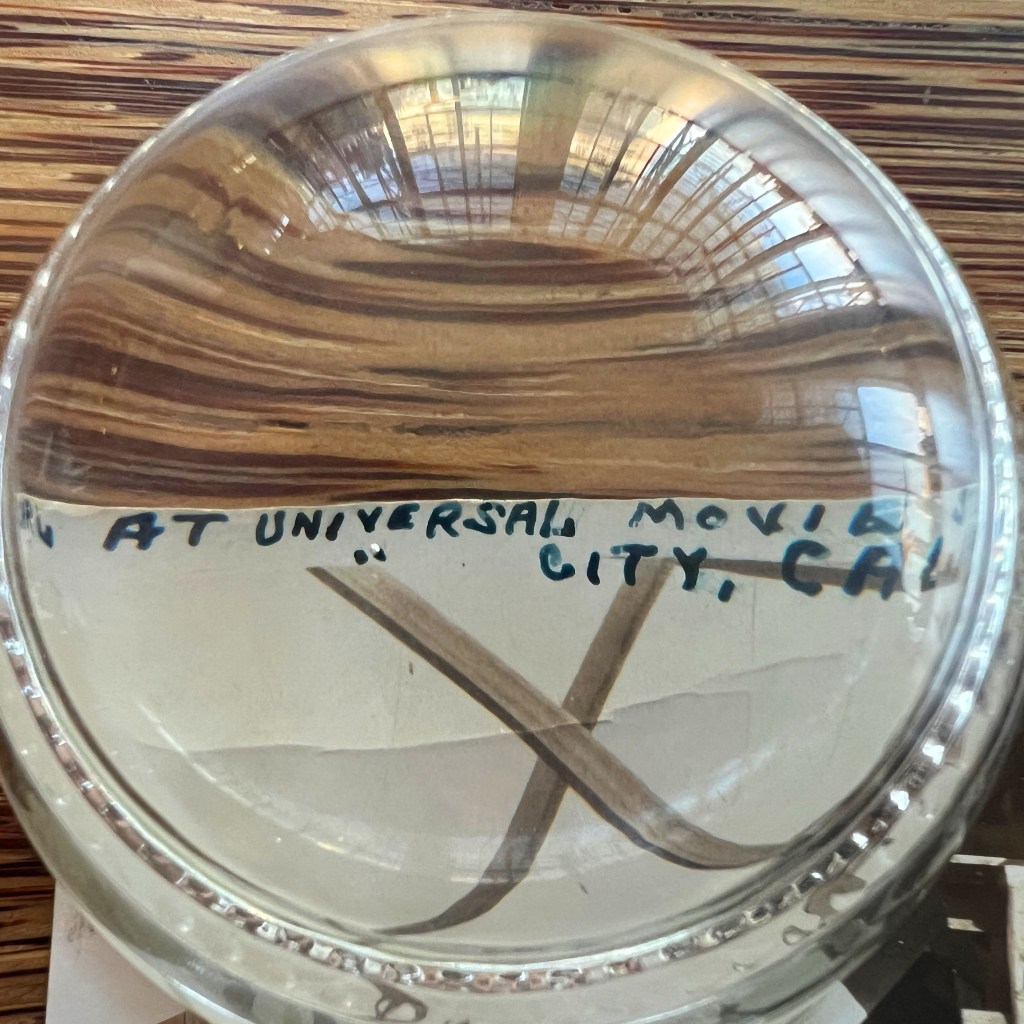
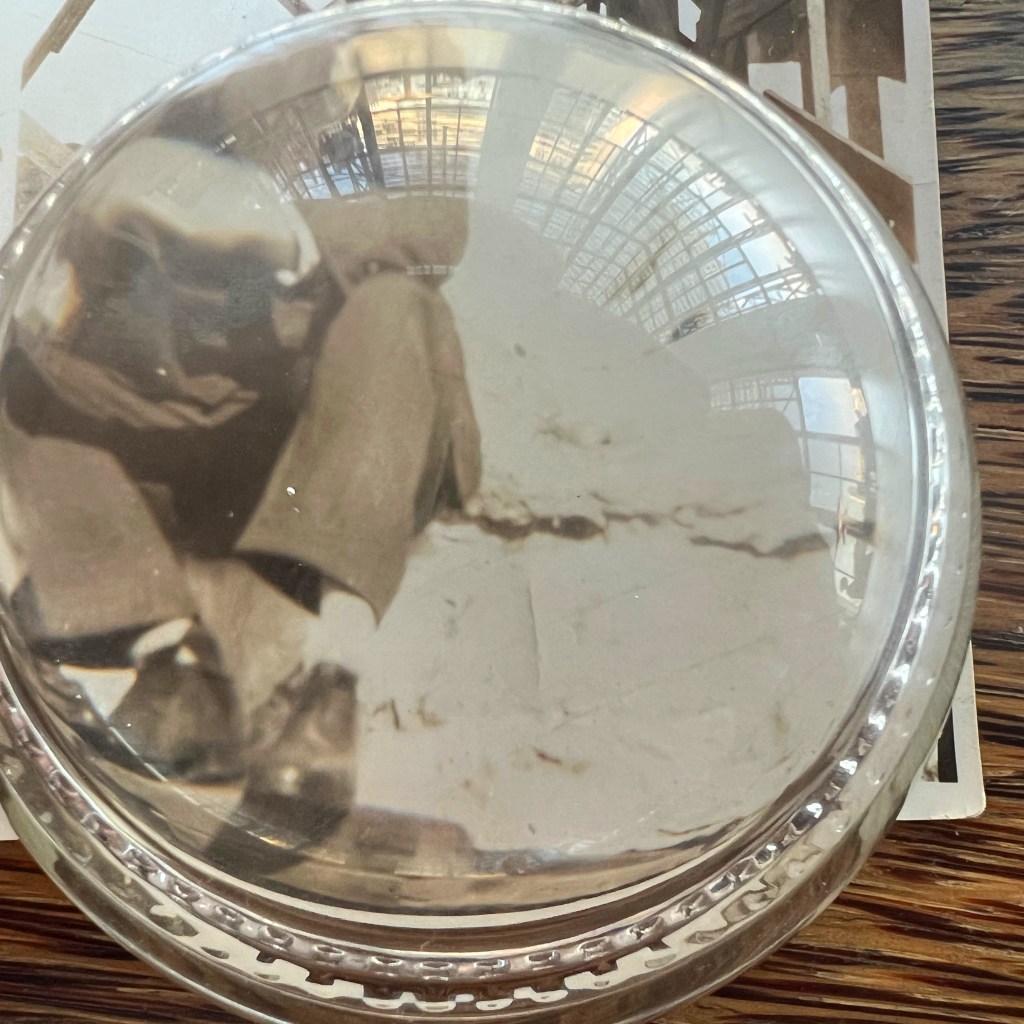
believe not. The cracks in the plaster suggest wear and age, not the process of crafting (see also the broken curls of hair below). Moreover, a very similar plaster buddha was created for Universal’s The Breath of the Gods in 1920, before Hall was hired, starring Tsuru Aoki.
Unfortunately, The Breath of the Gods is now lost and production stills remain the best evidence for set design. Popular Science ran a short article on the film, showing the construction of a new plaster buddha, is it the same one? Article viewable here: https://tinyurl.com/3jzhc3rj.
The Buddhas in the West Material Archive is a digital scholarship project that catalogues artifacts depicting Buddhist material culture for Western audiences. It’s comprised of prints, photos, and an assortment of ephemera and other objects. For a brief introduction to this archive, visit the main Buddhas in the West project page.
For Related Buddhas in the West Posts Featuring Photography:

For the Most Recent Buddhas in the West Posts:
 Personal Site of Peter Romaskiewicz