For all the new Buddhas in the West posts
follow us on Bluesky & Instagram
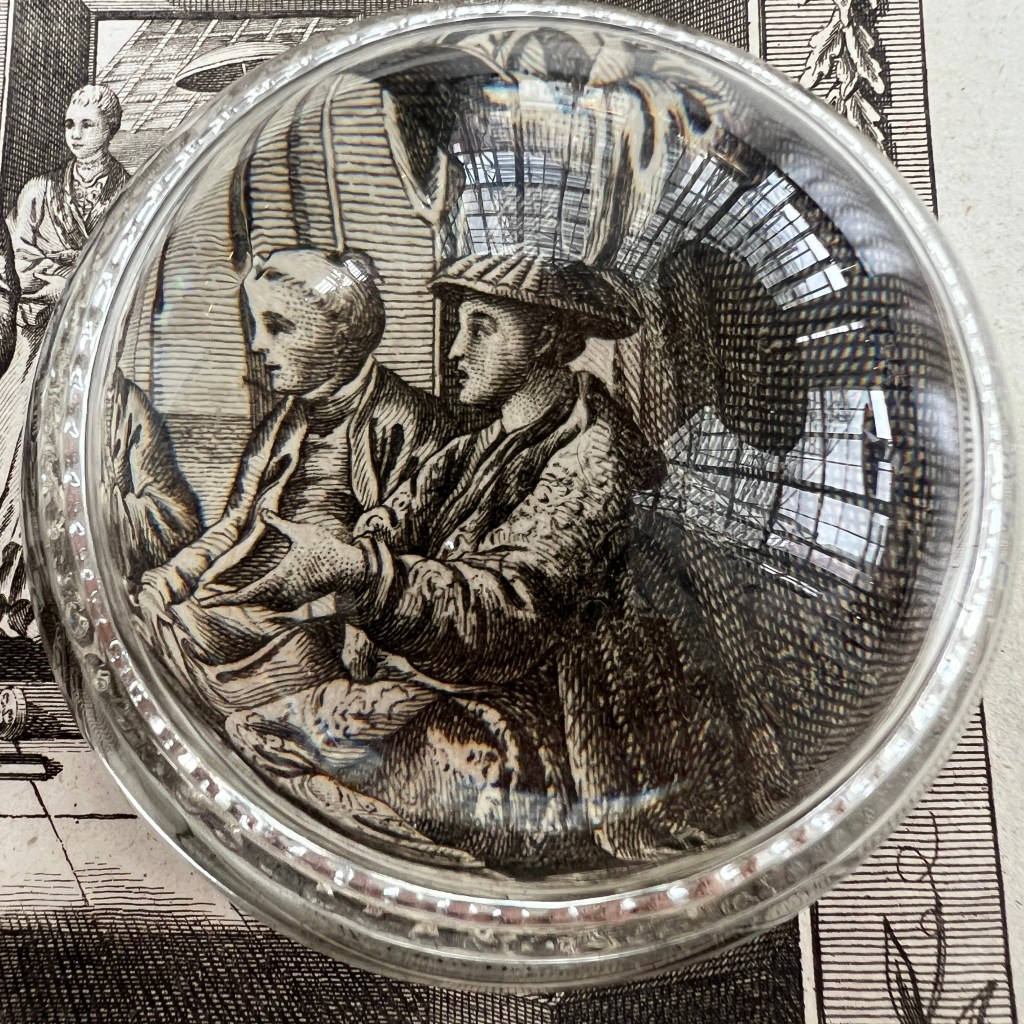
In the 17th century, to uncover suspected Christians, Japanese authorities in Nagasaki forced commoners to step on an image of Jesus or Mary. As knowledge of this practice spread to Europe, depictions of “treading on the crucifix,” appeared in illustrated works by the 18th century.
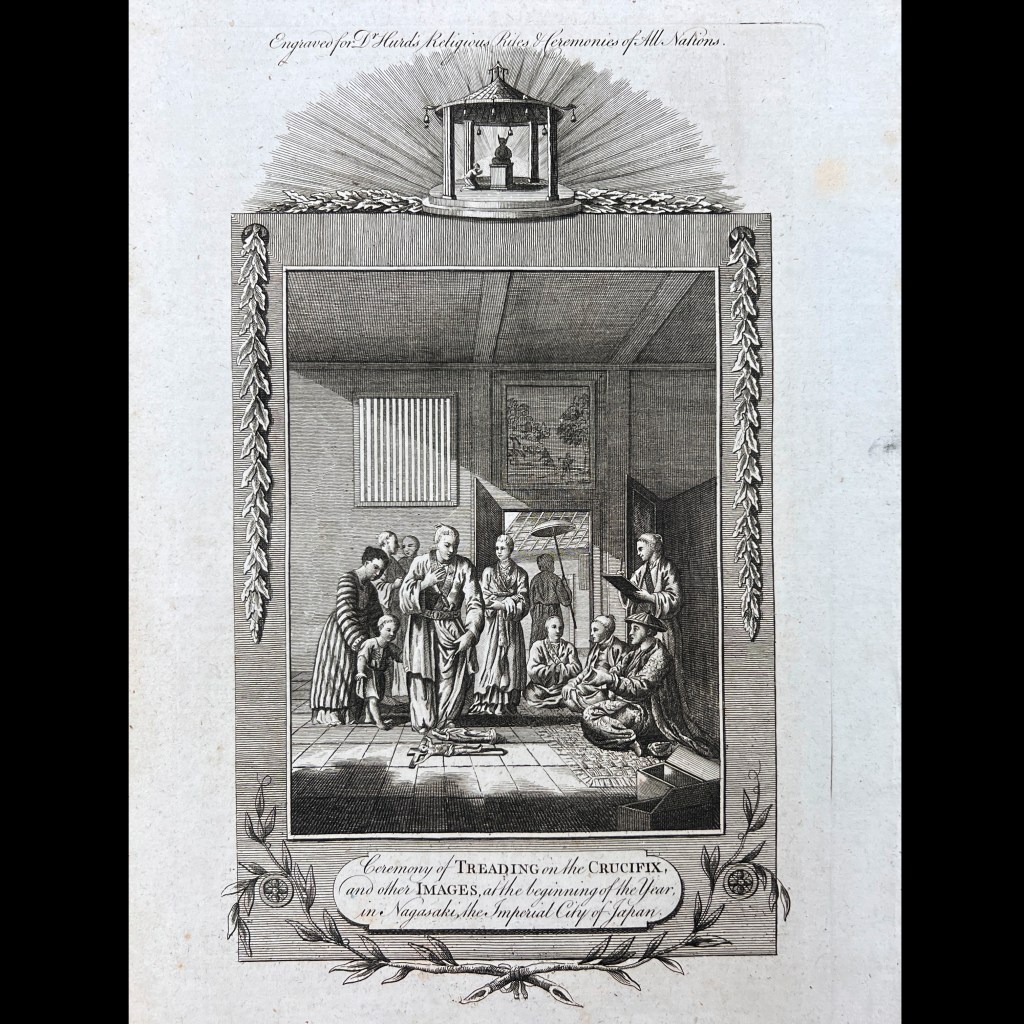
To ferret out “hidden Christians,” local villagers were forced to commit blasphemy by stepping on icons sacred to Christianity; such objects were called fumi-e 踏絵, or “images for stomping.” If anyone refused, authorities turned to torture to procure apostasy, or they were killed.
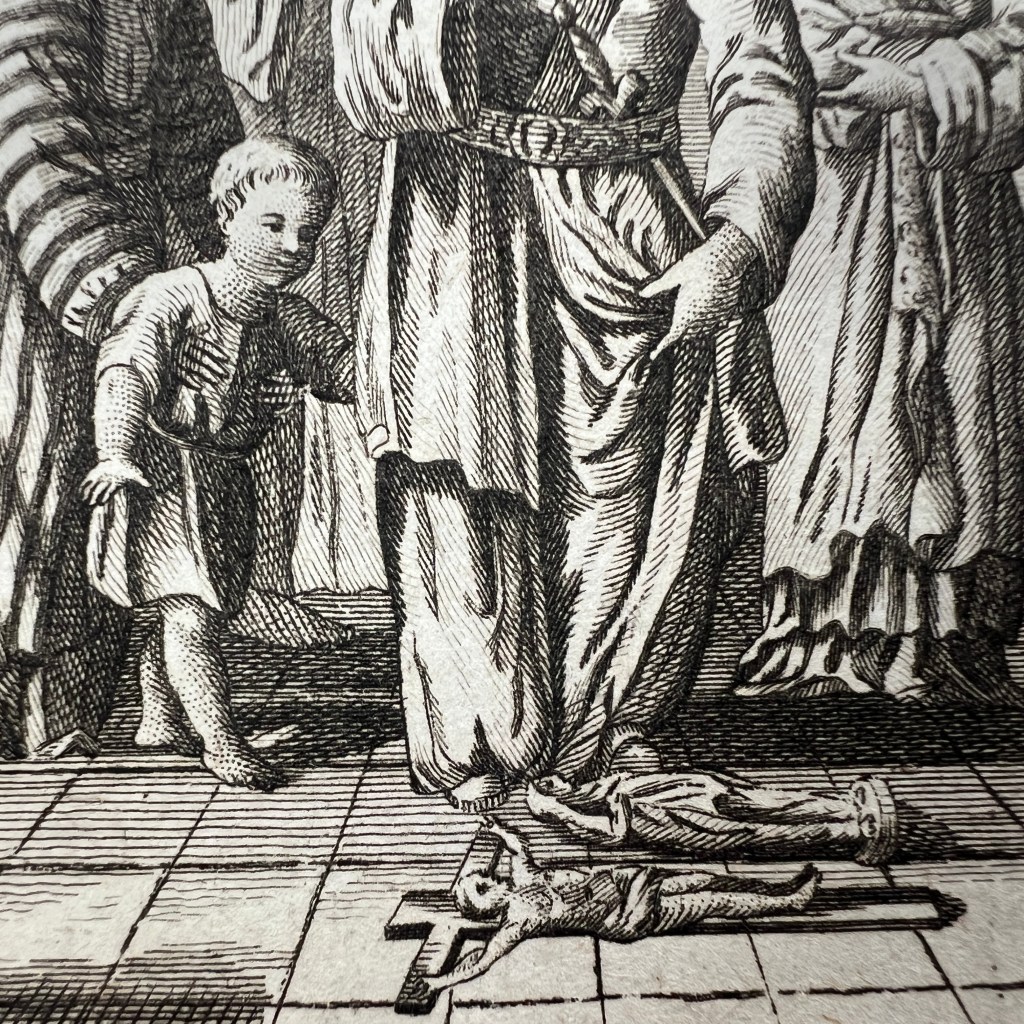
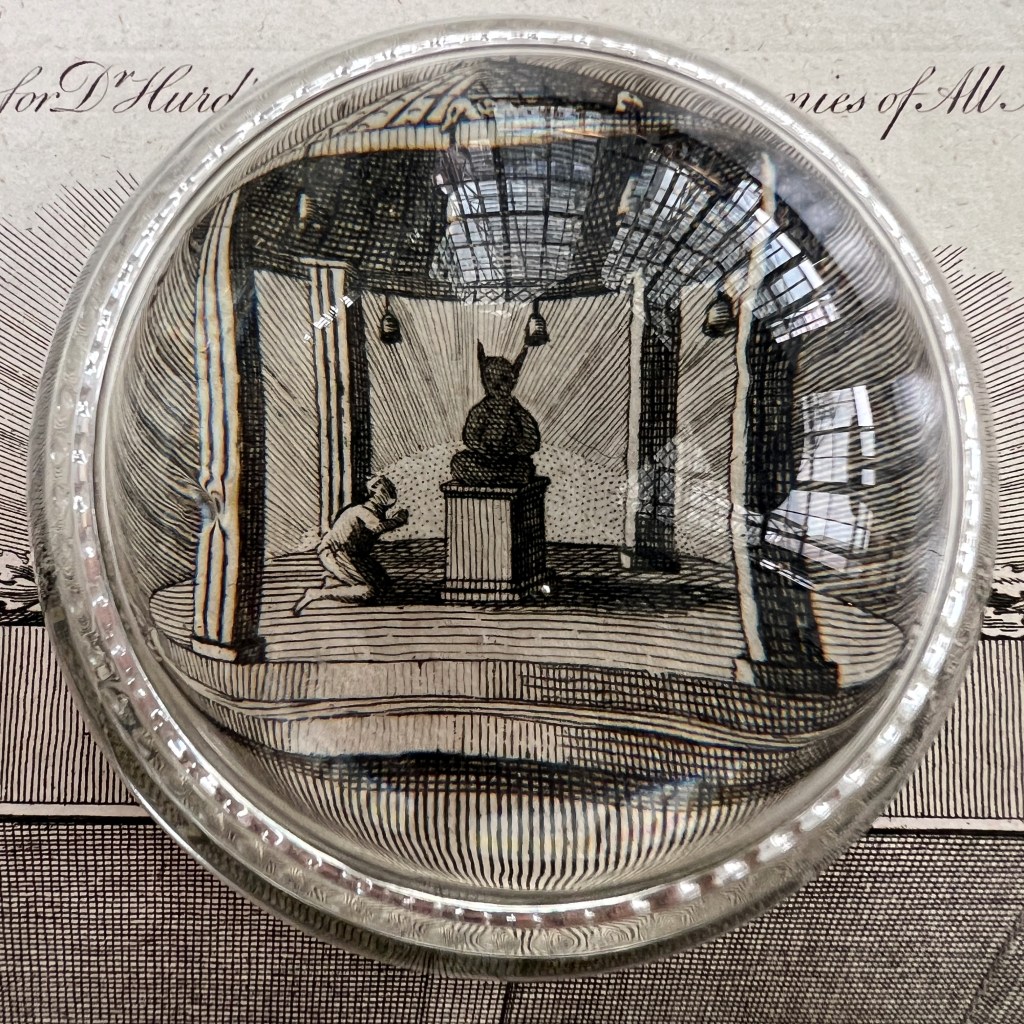
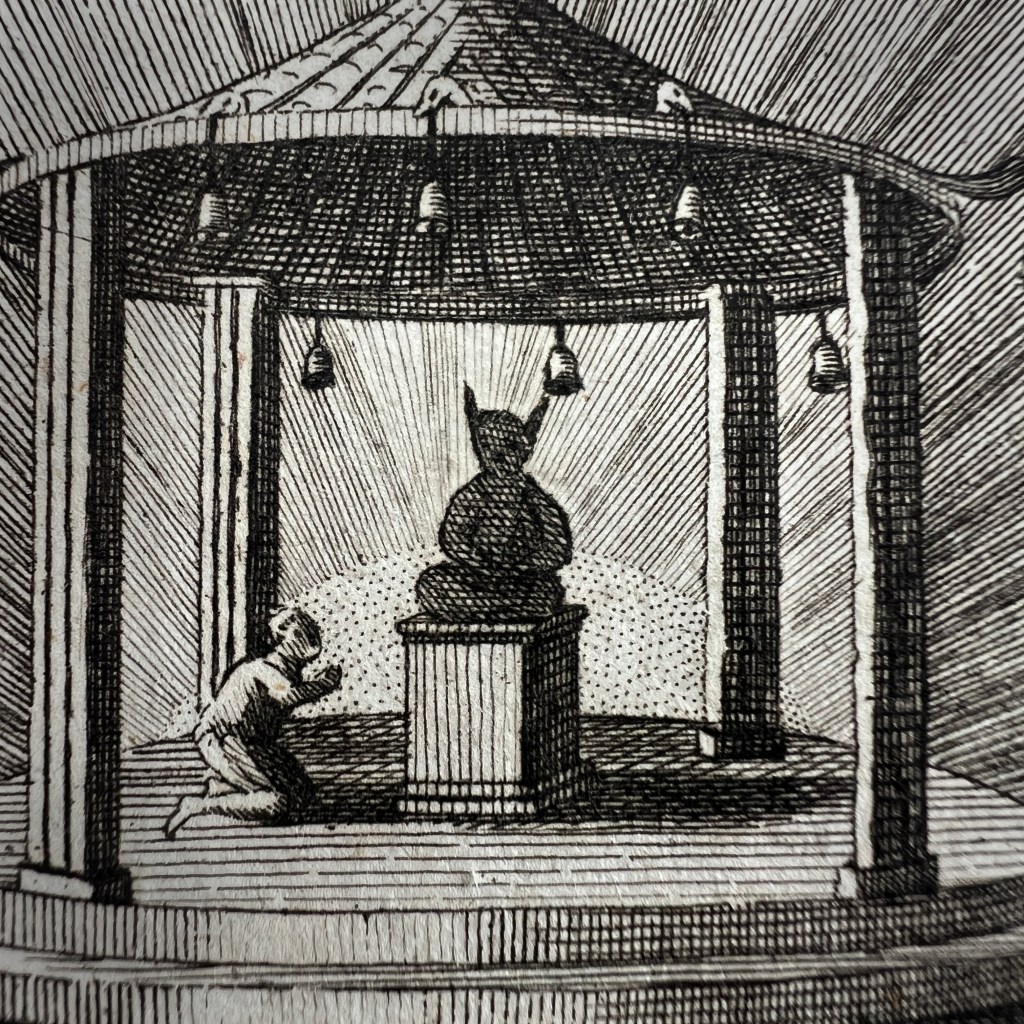
Stories of this practice circulated in popular European literature, such as Jonathan Swift’s Gulliver’s Travels (1726) and Voltaire’s Candide (1759). For European Christians, such actions were perceived as a vile act of paganism, reflected in this engraving by a buddha with devil horns.
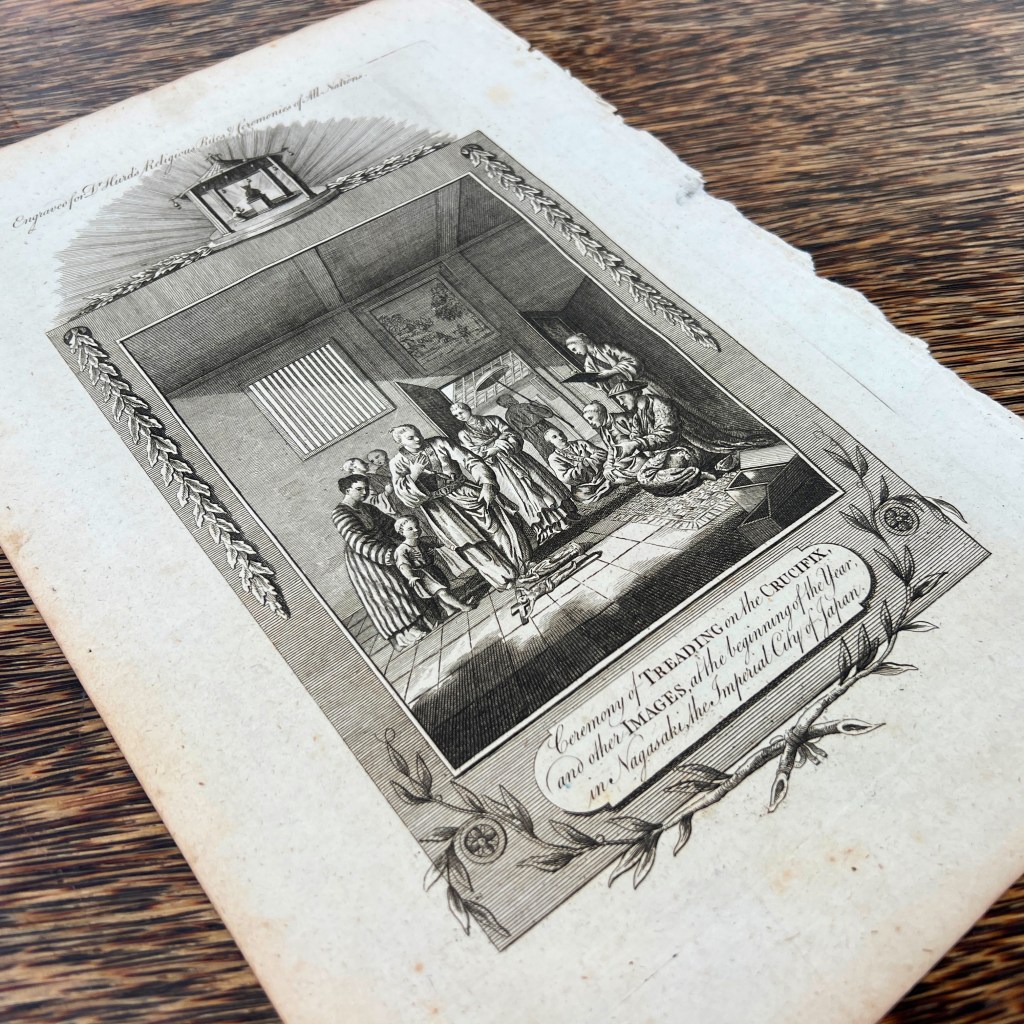
This image of a horned buddha is placed at the crown of the page as an ornamental embellishment. William Hurd’s New Universal History (1780) copied the main engraving from an older work, but added this detail to help further contextualize the depicted activity as demonic.
Unexpectedly, Hurd blames, in part, the proselytizing activities of the Jesuits who still placed importance in Christian icons. Had they taught the “simple truth, without the use of images,” Hurd implies the Japanese may have embraced Christianity, turning away from idolatry altogether.
This use of fumi-e continued until 1858 when it was formally abandoned. To read a scientific analysis of historical paper-made fumi-e, see Montanari et al., “Kami Fumi-e: Japanese Paper Images to Be Trampled on—A Mystery Resolved” (2025), here: https://www.mdpi.com/2571-9408/8/2/78.
The Buddhas in the West Material Archive is a digital scholarship project that catalogues artifacts depicting Buddhist material culture for Western audiences. It’s comprised of prints, photos, and an assortment of ephemera and other objects. For a brief introduction to this archive, visit the main Buddhas in the West project page.
For Related Buddhas in the West Posts Featuring Engravings:


For the Most Recent Buddhas in the West Posts:
 Personal Site of Peter Romaskiewicz