For all the new Buddhas in the West posts
follow us on Bluesky & Instagram
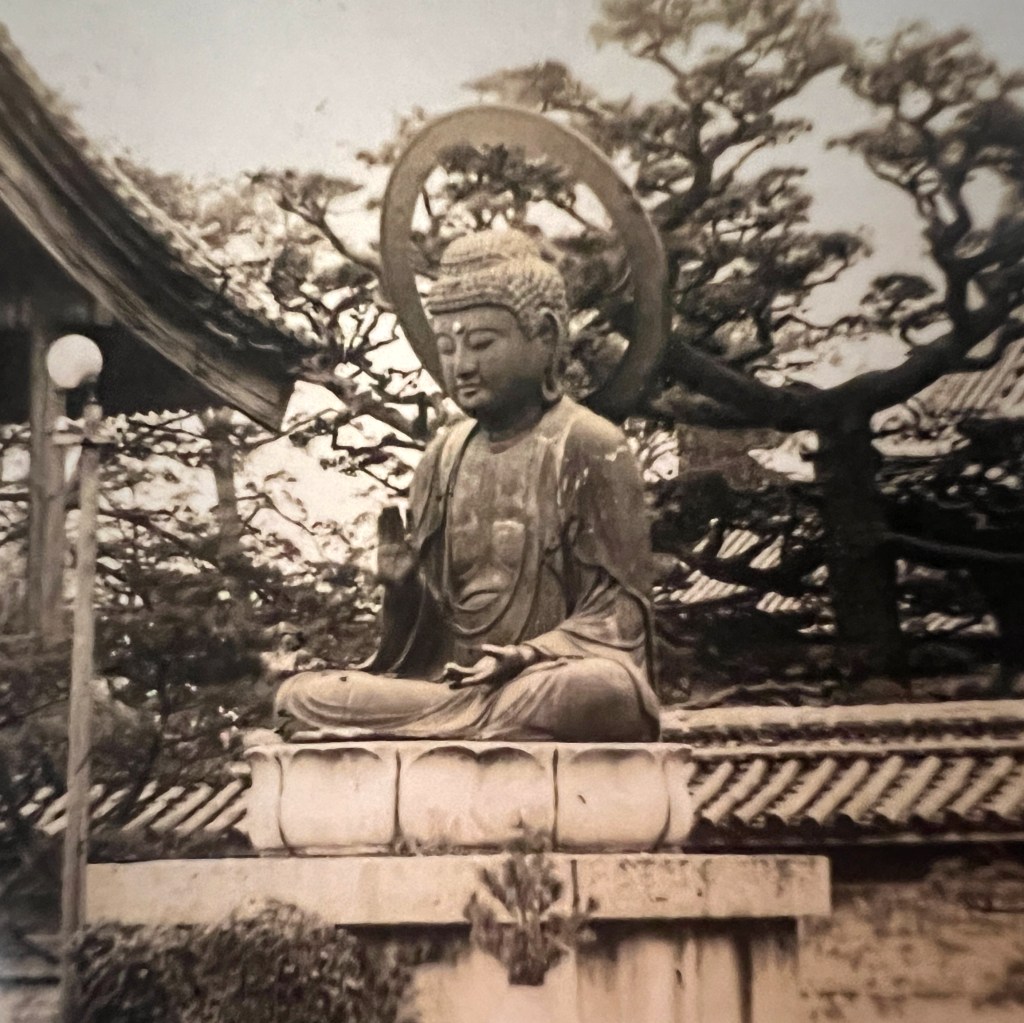
The Japanese port city of Kobe was a major tourist hub by the turn of the 20th century. One if the city’s main attractions was a giant statue of Vairocana Buddha displayed outside the main temple gate of Shinkōji until the complex was destroyed during WWII.
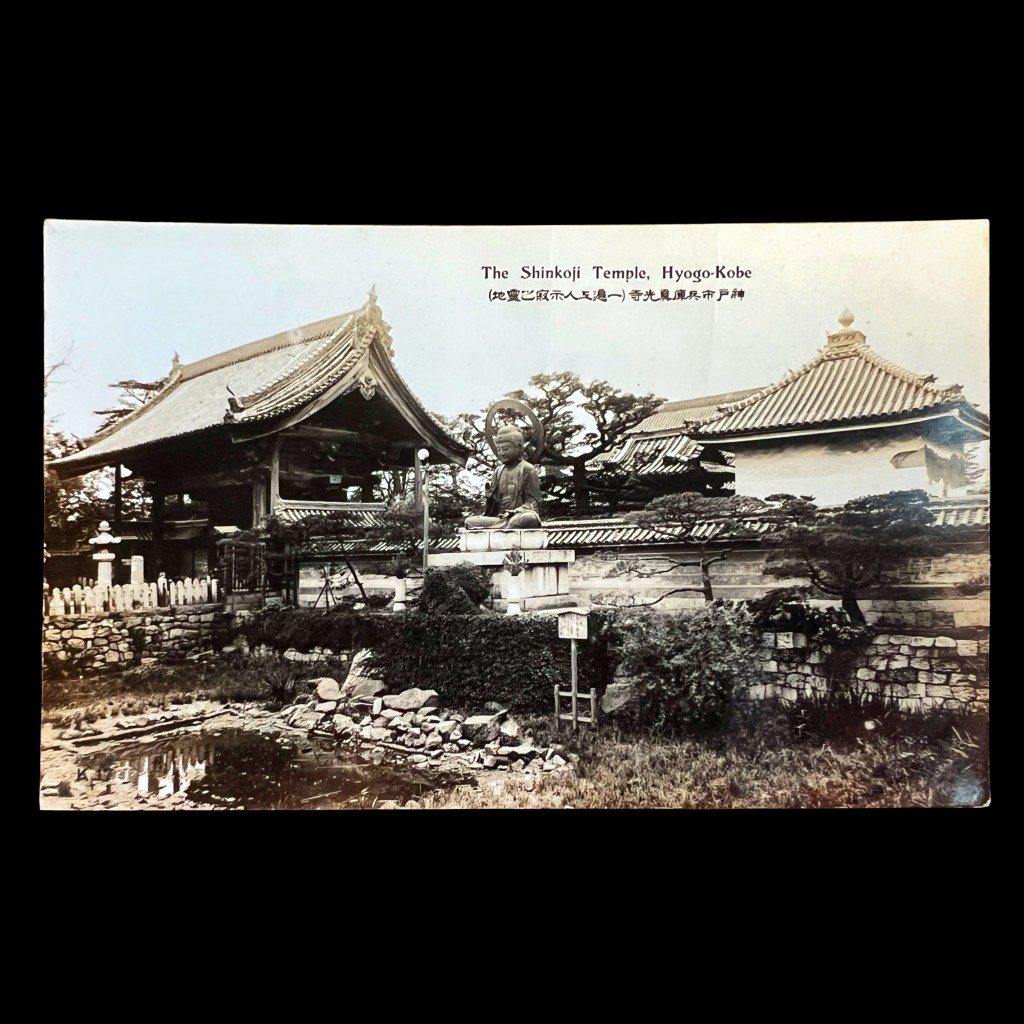
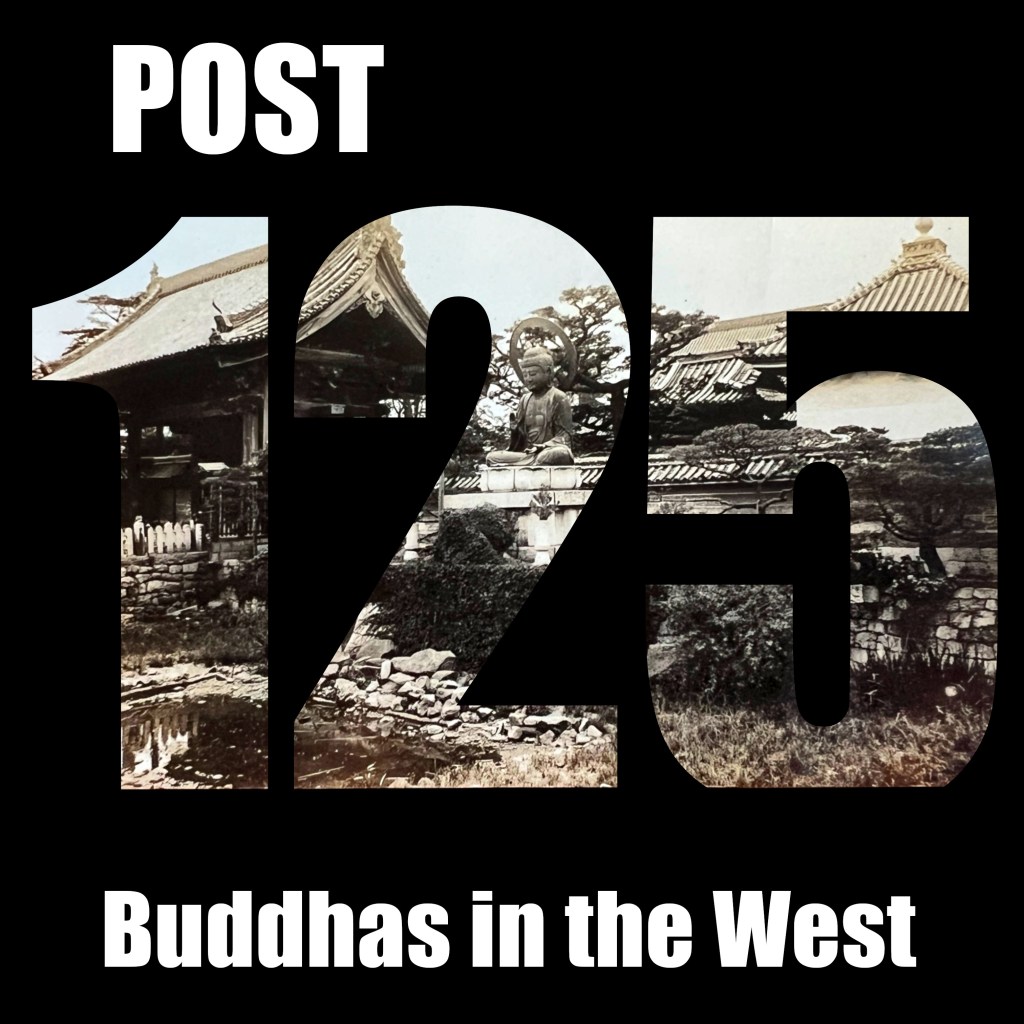
Documents record the height of the statue at 4.8 meters (16 feet). It sat atop an elevated pedestal in the middle of a lotus pond which was used as a habitat for rescued turtles. Behind the plastered wall we see the tiled roofs of the bell tower and main hall.
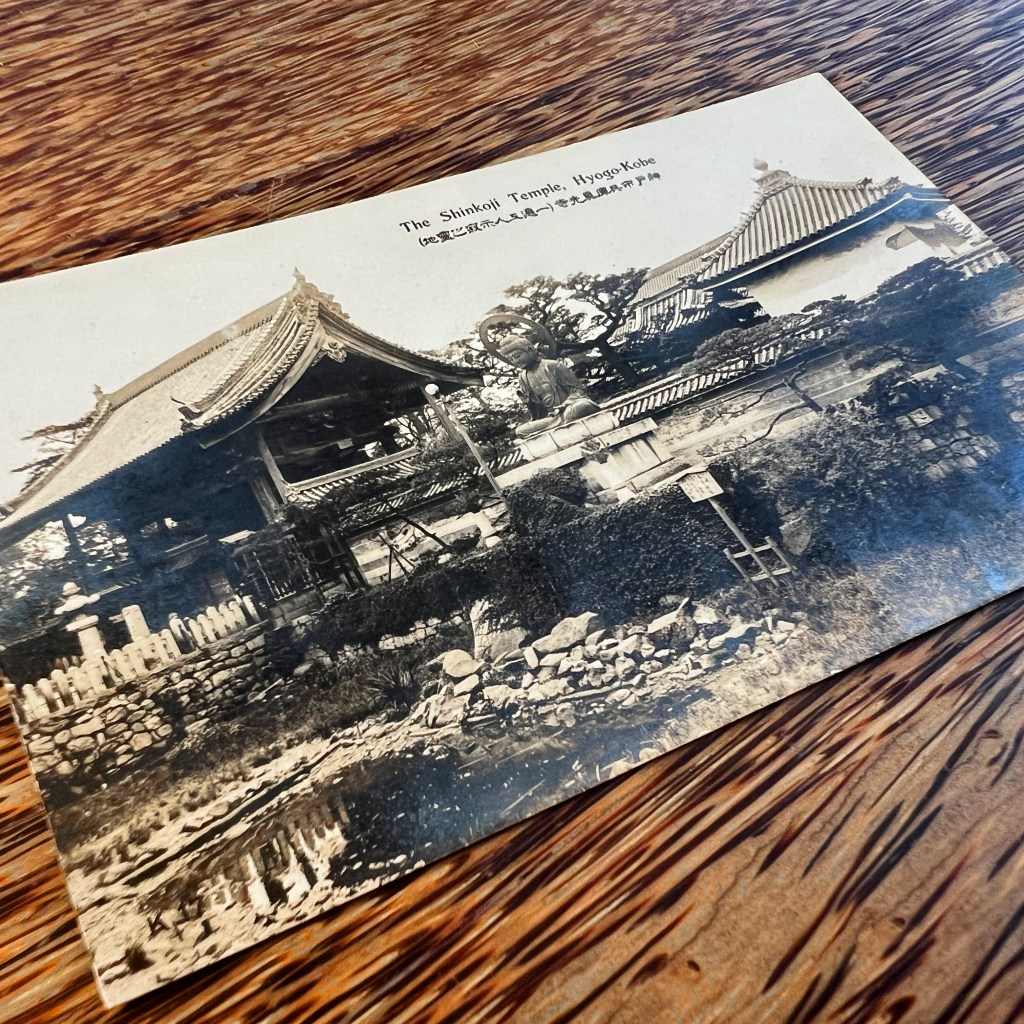
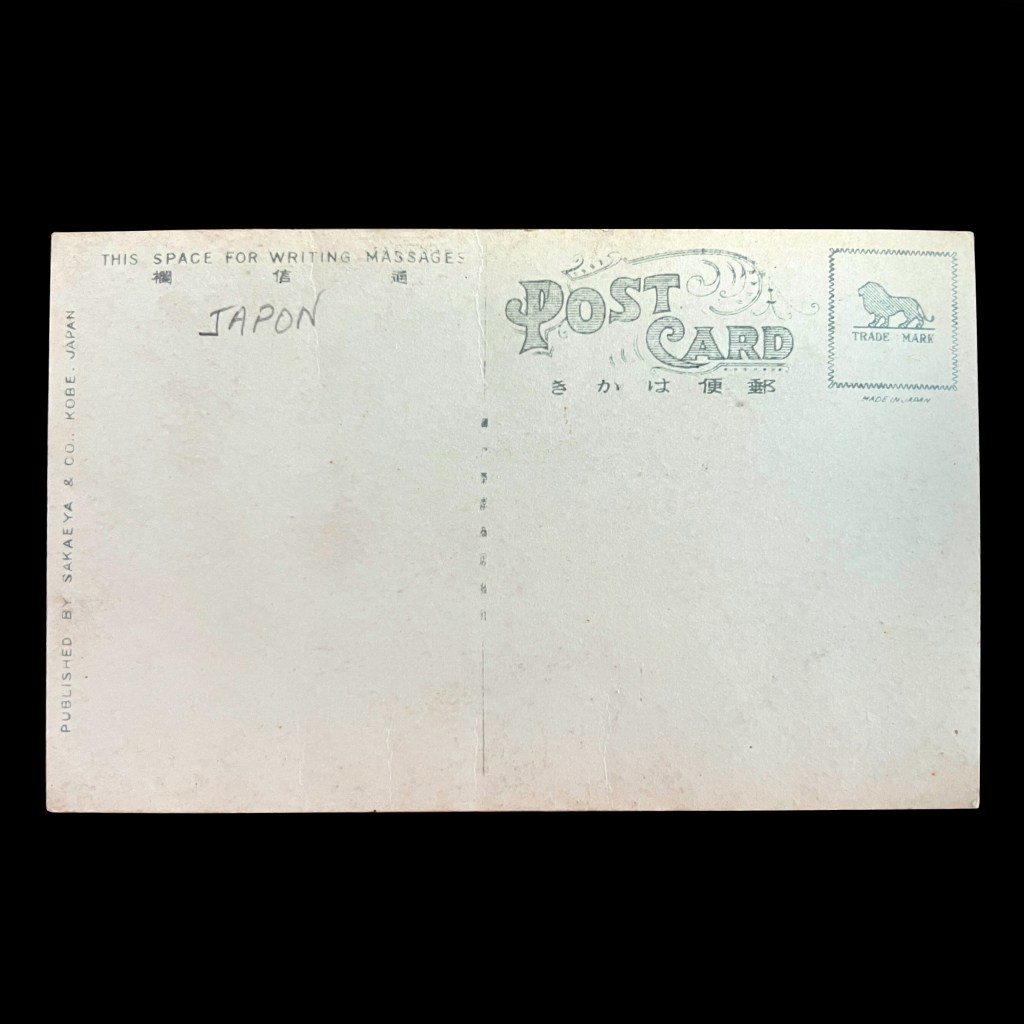
Unlike many Japanese postcards of the era, this is not a photomechanical print, but a chemically processed “real photo” postcard likely released in the early 1920s. The publisher, Sakaeya & Co., was based in Kobe and focused on cards depicting the environs of the bustling port city.
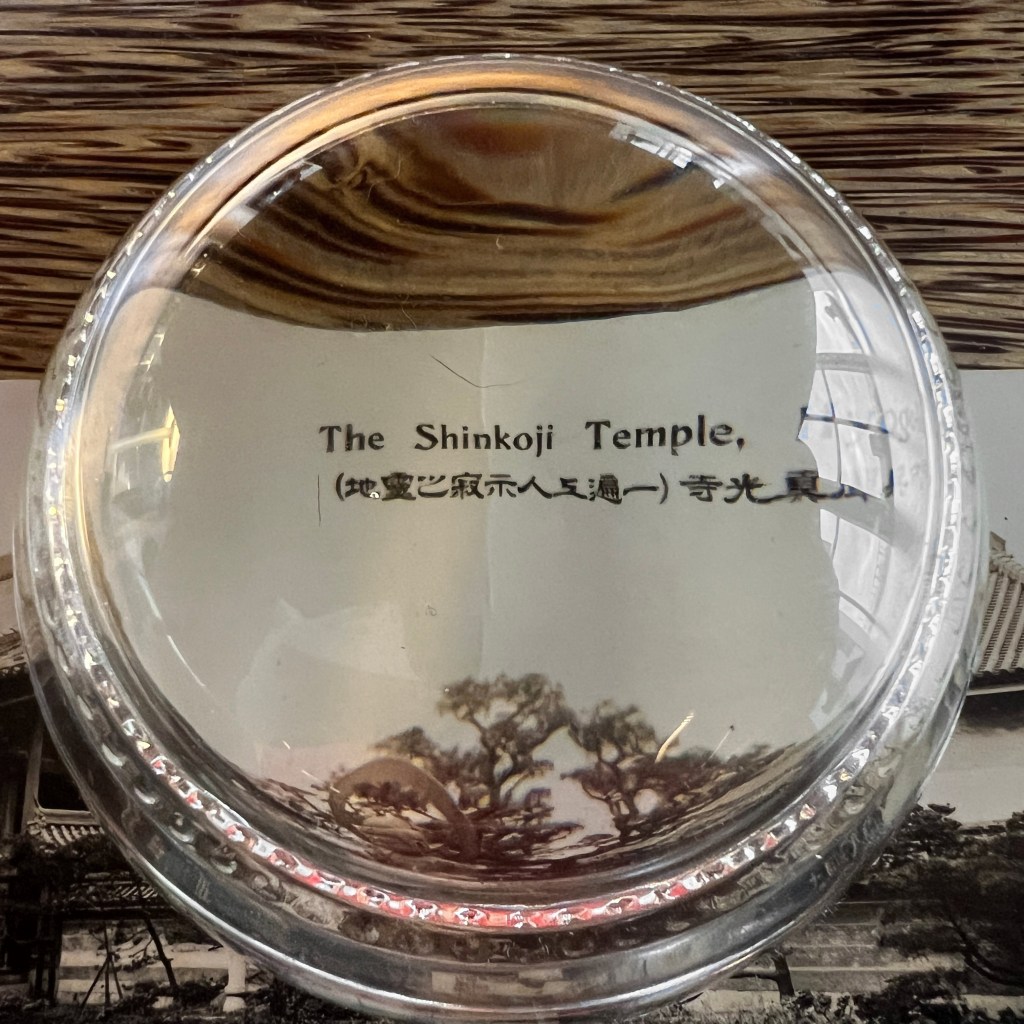
Notably, the Japanese caption provides more commentary on the religious relevance of the site than the English. It notes that Shinkōji was a sacred location where the Buddhist priest Ippen (1239–1289), known for his devotion to the Pure Land, passed away.
The temple was noted as being “worth a visit” by the widely circulated third edition of Murray’s Handbook for Travelers in Japan, published in 1891. Fifty years later, the statue was destroyed by allied firebomb attacks on Kobe in March 1945.
The Buddhas in the West Material Archive is a digital scholarship project that catalogues artifacts depicting Buddhist material culture for Western audiences. It’s comprised of prints, photos, and an assortment of ephemera and other objects. For a brief introduction to this archive, visit the main Buddhas in the West project page.
For Related Buddhas in the West Posts Featuring Kobe, Japan:


For the Most Recent Buddhas in the West Posts:
 Personal Site of Peter Romaskiewicz