For all the new Buddhas in the West posts
follow us on Bluesky & Instagram
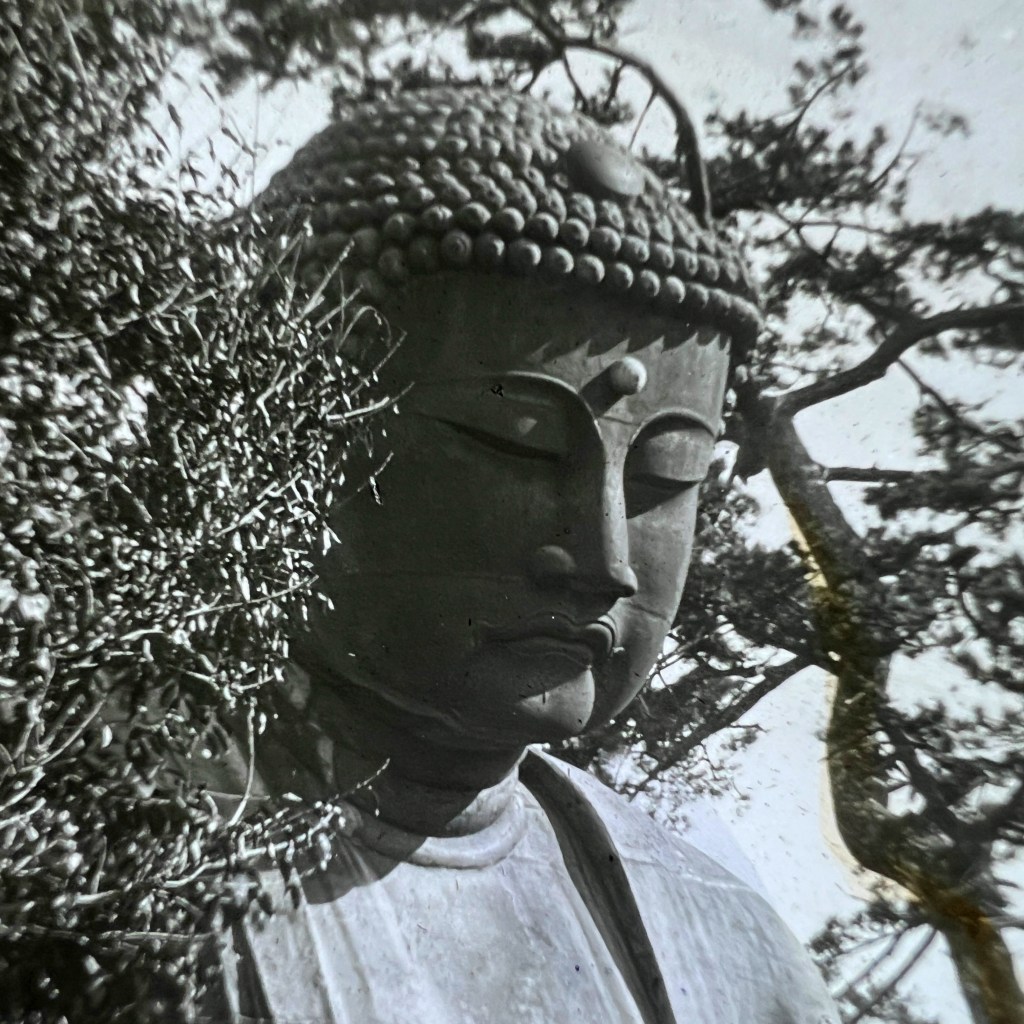
By the 1890s it was possible to browse American newspapers and see advertisements for informal lectures on countries around the world. Occupying church halls or town theaters, returning travelers often used “magic lantern” slides to illustrate their gripping travel narratives.
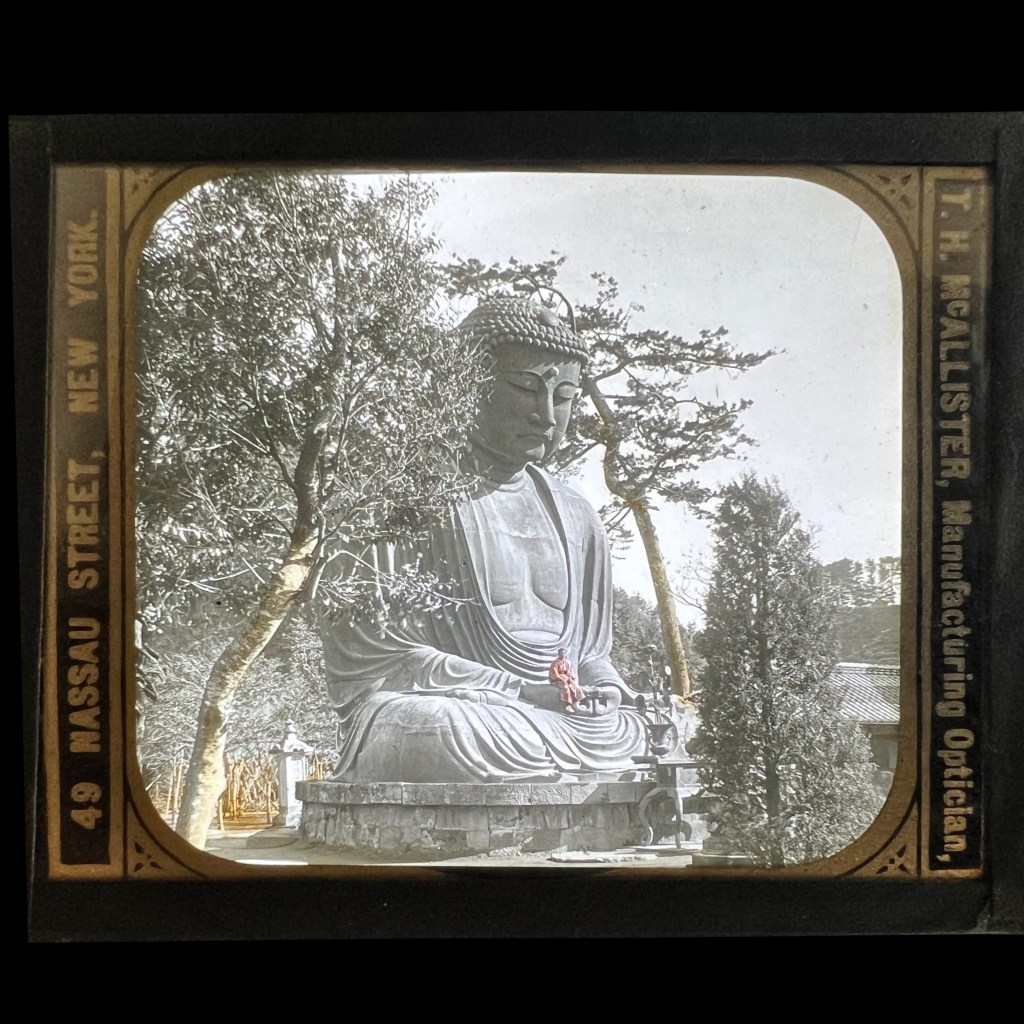
A typical trans-Pacific cruise of the era would port in Yokohama, a short day trip away from the colossal Kamakura Daibutsu. An image projected onto a wall or screen would enliven the presentation and provide visual details impossible to elaborate through words alone.
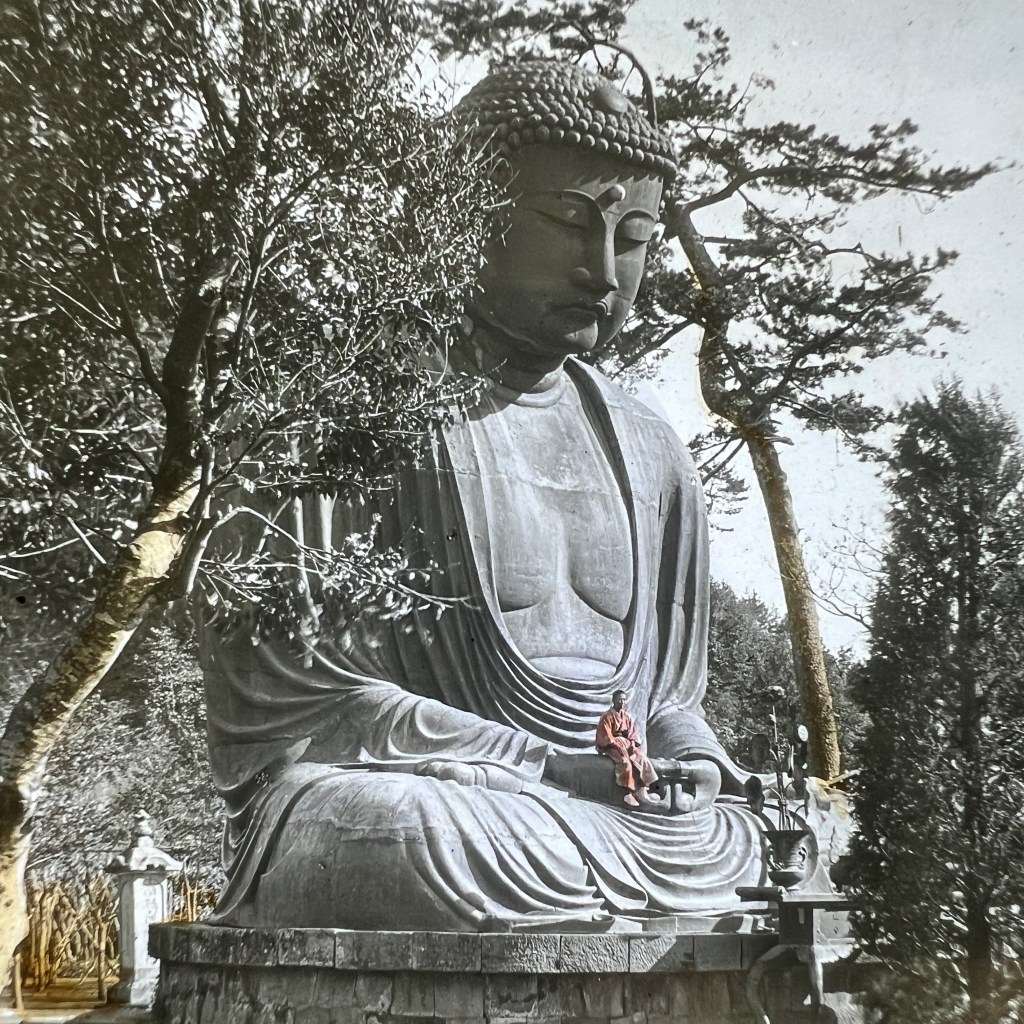
As the Victorian era progressed, there was increasing demand for visual education and moral entertainments, and the illustrated travelogue reflected such interests. We might find the past splendor of Asia, as seen through it monuments, contrasted with its then-current political strife.
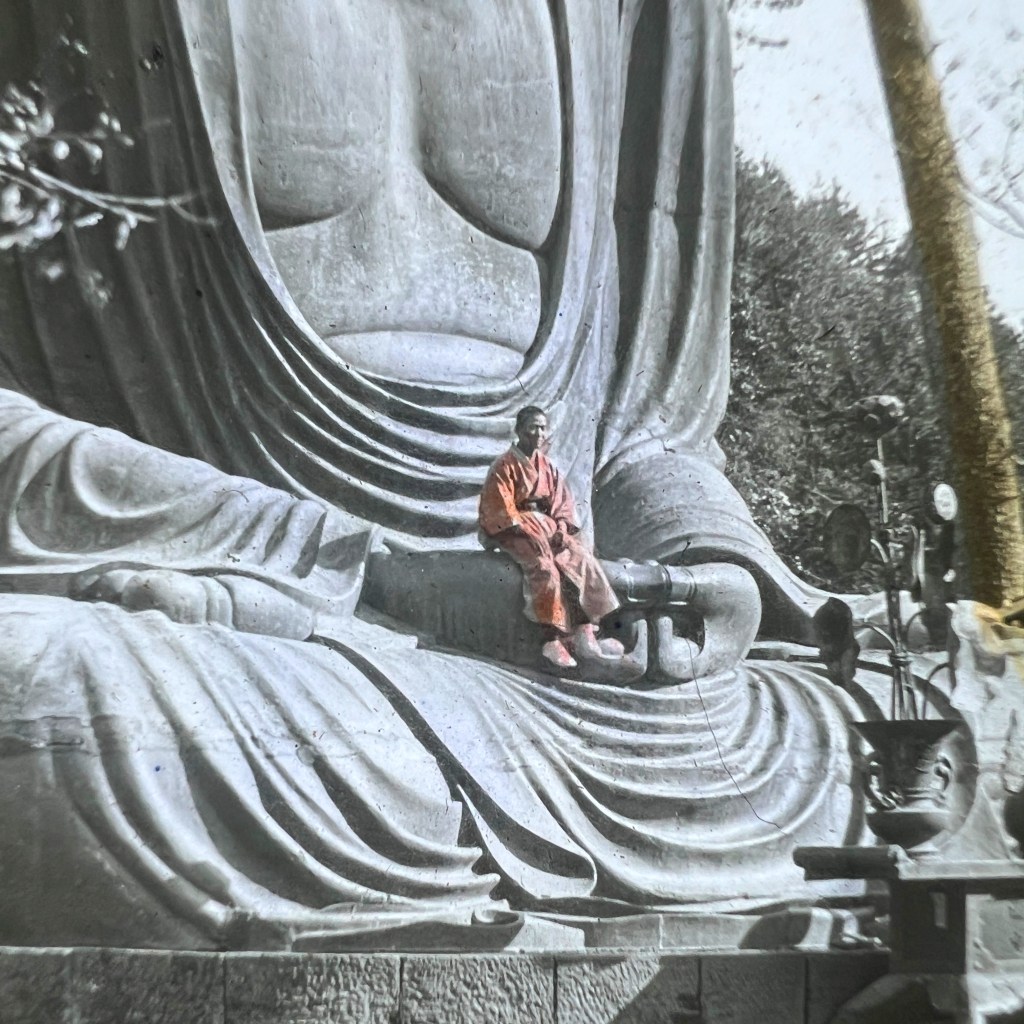
By 1887 T. H. McAllister was selling a set of 61 slides for a stock presentation entitled, “Around the World in 80 Minutes.” For a total of $30.25, the slides and lecture notes could be purchased by an aspiring lecturer so as to be “well prepared to describe the various scenes intelligently.”
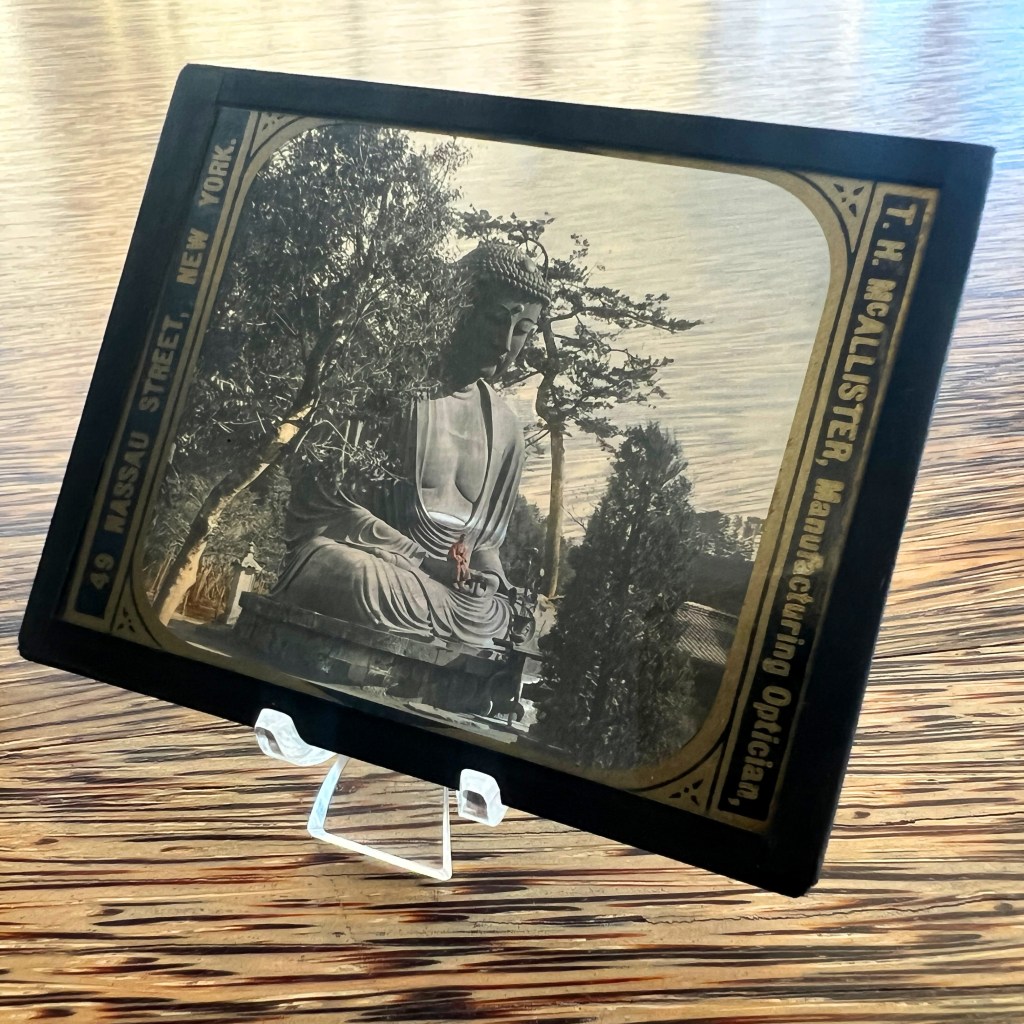
Beginning in England and ending in Washington DC, the Kamakura Daibutsu is the only Buddhist location visited during the lecture. For more on the importance of travel lecturers in spreading information about Asia, see Jeanette Roan’s Envisioning Asia (2010).
The Buddhas in the West Material Archive is a digital scholarship project that catalogues artifacts depicting Buddhist material culture for Western audiences. It’s comprised of prints, photos, and an assortment of ephemera and other objects. For a brief introduction to this archive, visit the main Buddhas in the West project page.
For Related Buddhas in the West Posts Featuring Lantern Slides:


For the Most Recent Buddhas in the West Posts:
 Personal Site of Peter Romaskiewicz