For all the new Buddhas in the West posts
follow us on Bluesky & Instagram
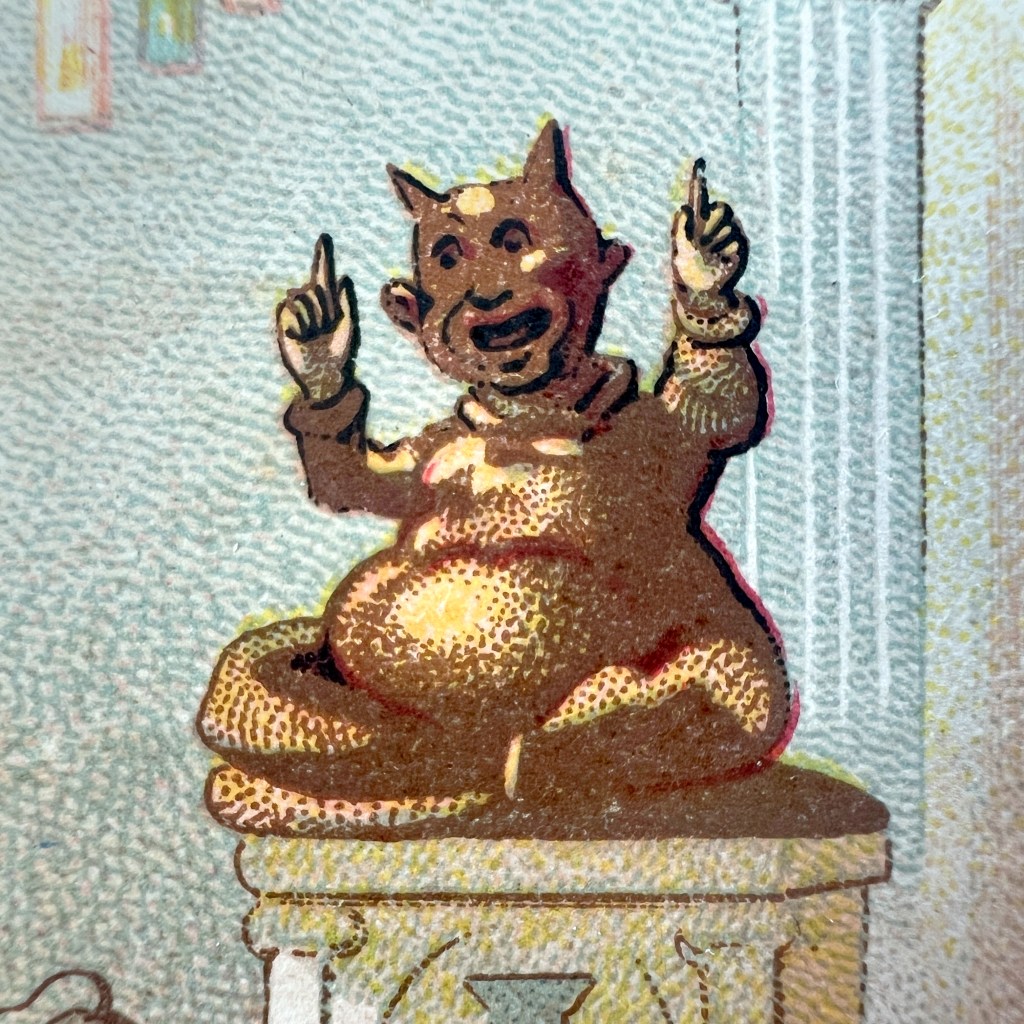
Victorian trade cards often employed the same visual language found in contemporary political cartoons. In the late 1870s and 1880s, as anti-Chinese xenophobia intensified in the US, depictions of the “heathen chinee” prostrating before Buddhist idols became more widespread.
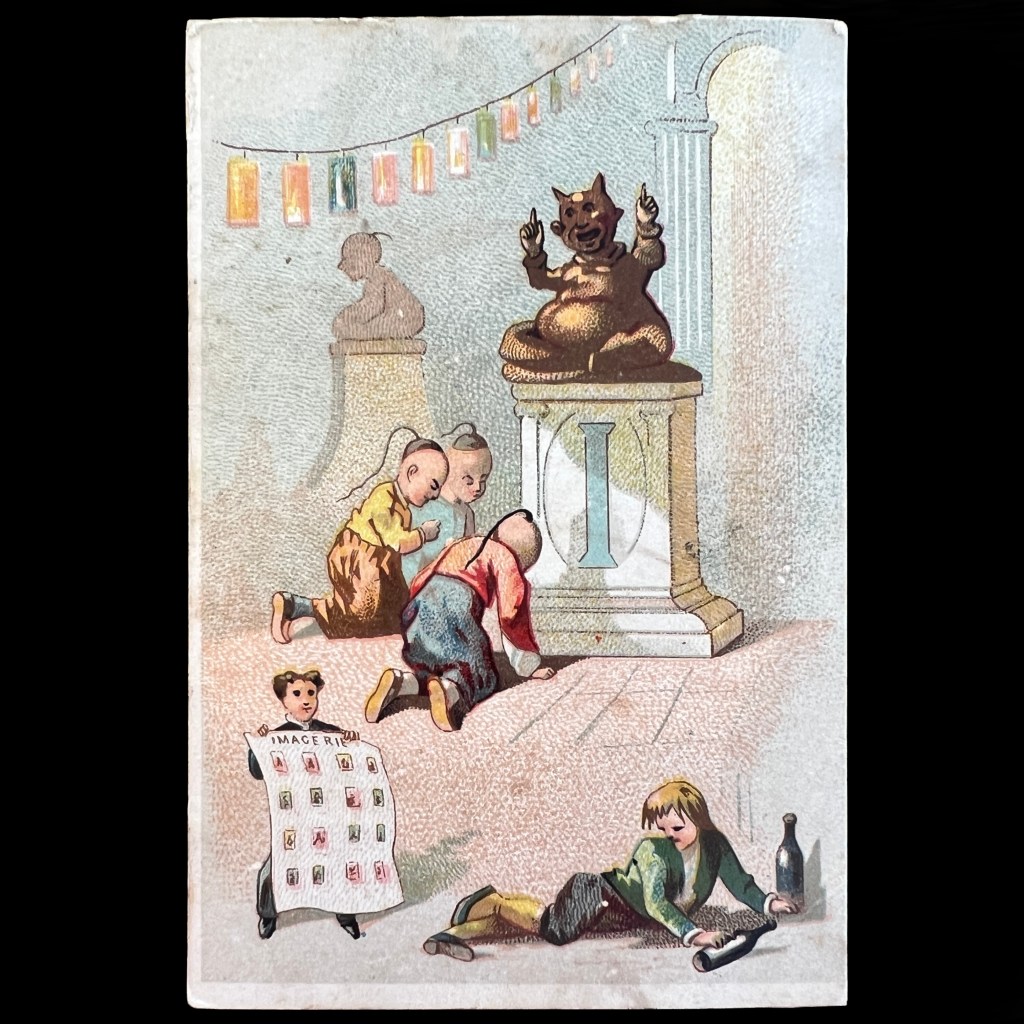
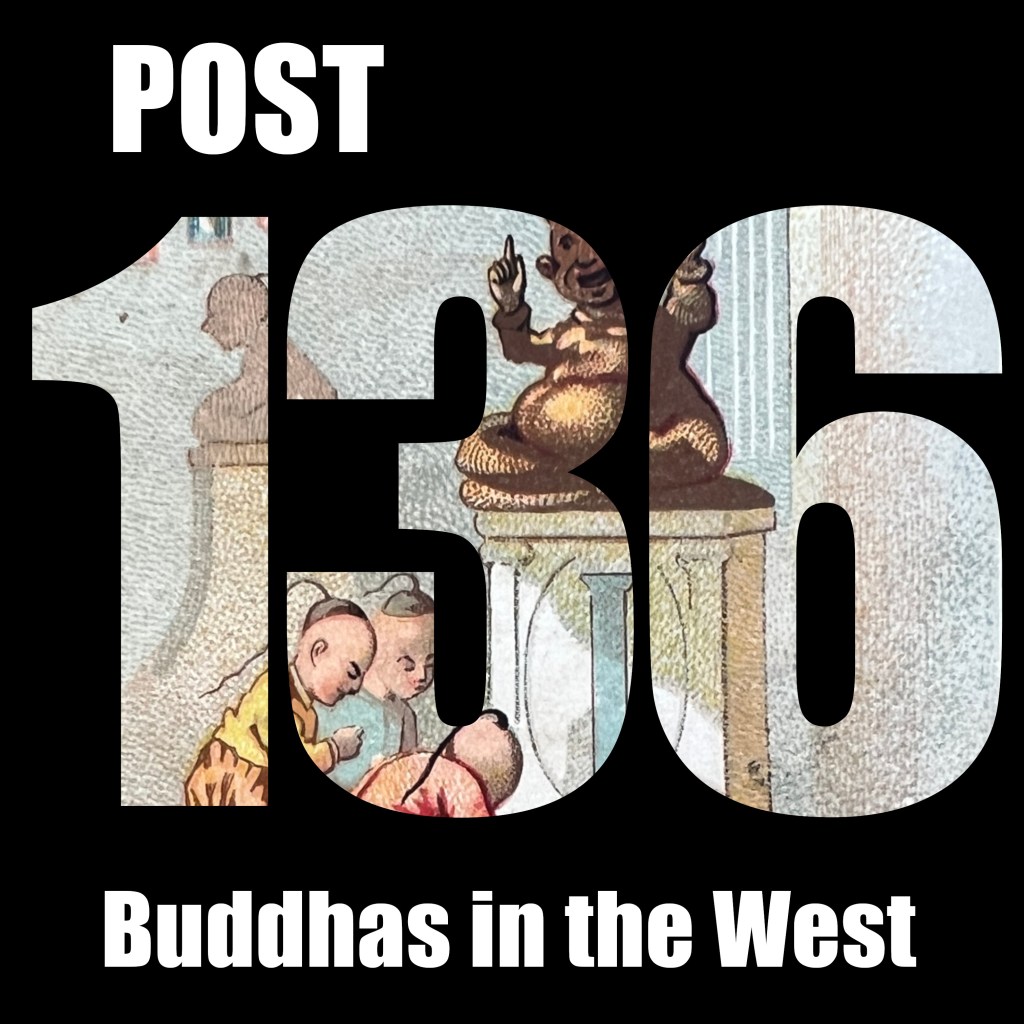
This stock card was from an alphabet primer series, appealing to one of the primary audiences for trade cards, children. The letter “I” can be spotted on the pedestal in the rear, thus asking viewers to interpret the scenes through the lens of words beginning with “I.”
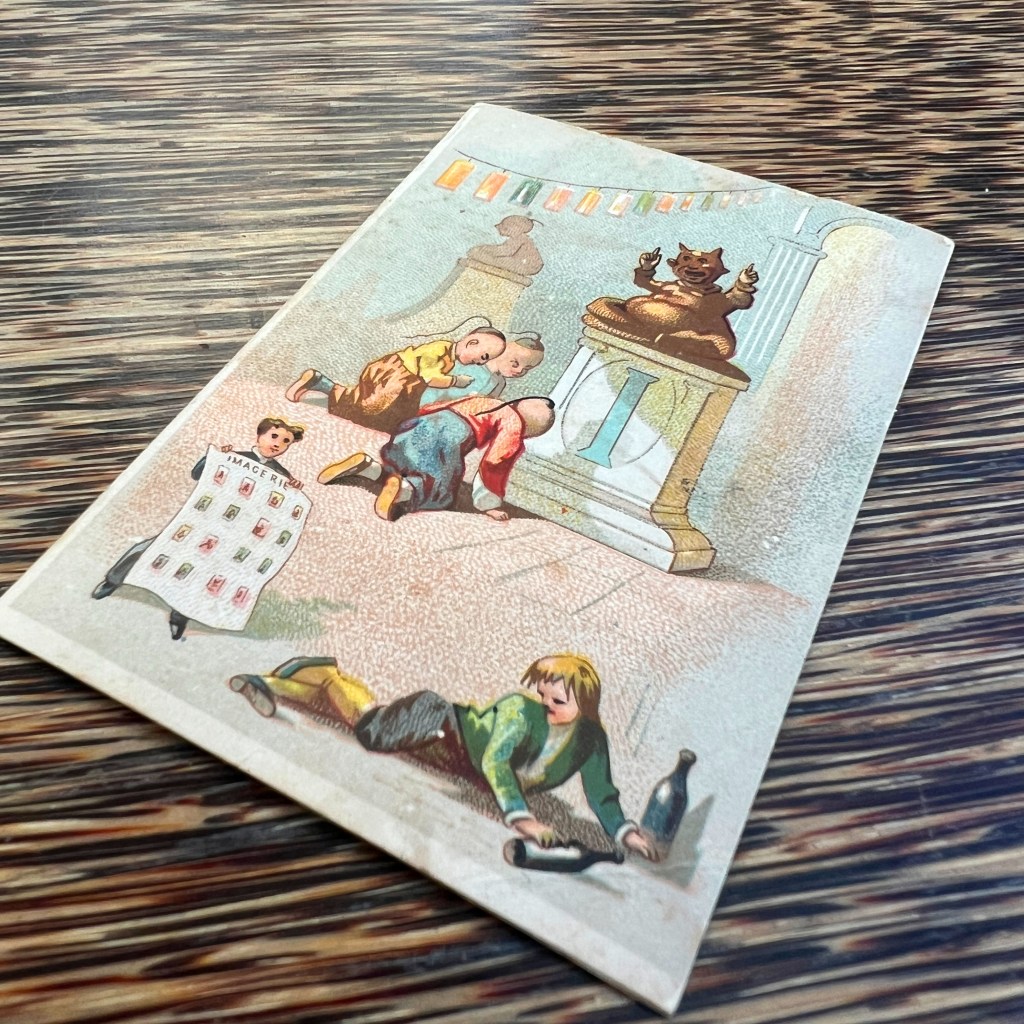
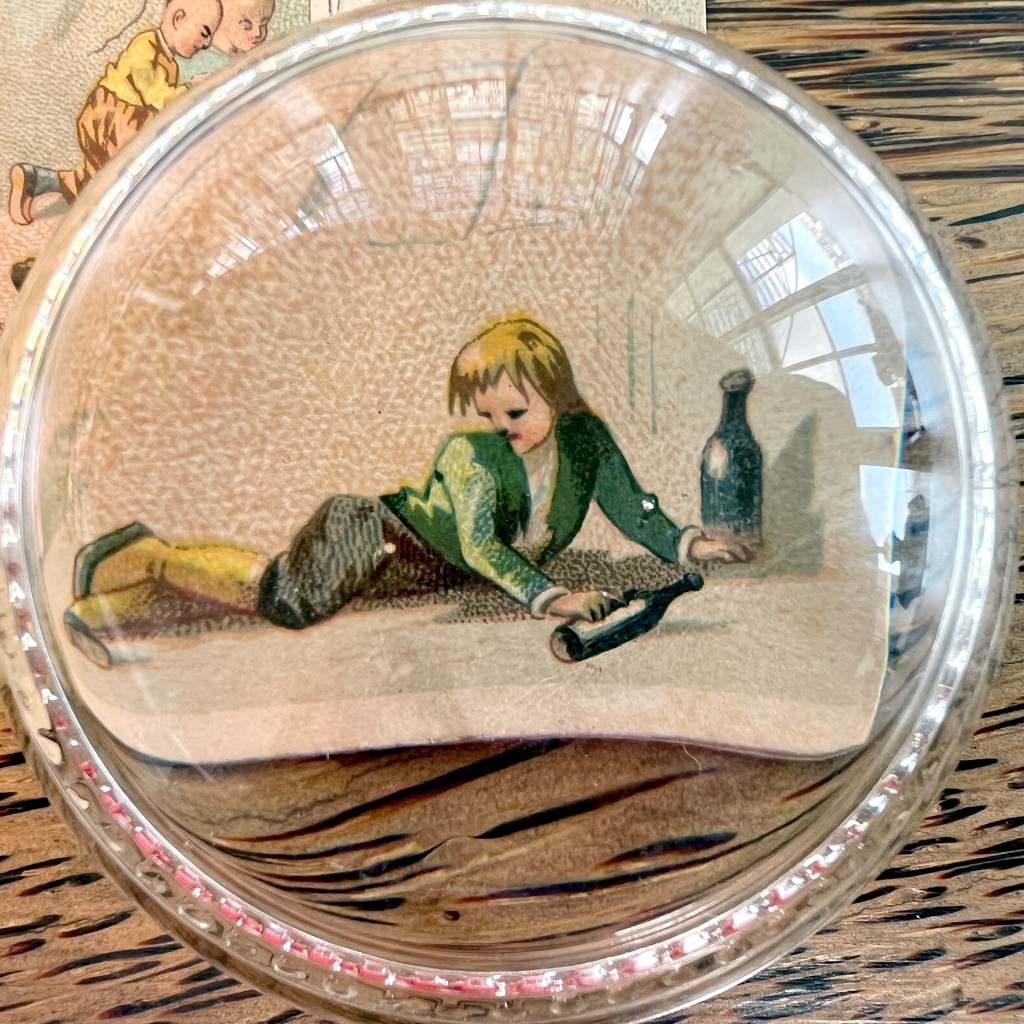
The moralizing tone of the images is apparent. In the foreground we see a child lying on the floor clutching a bottle, representing inebriation or intoxication.
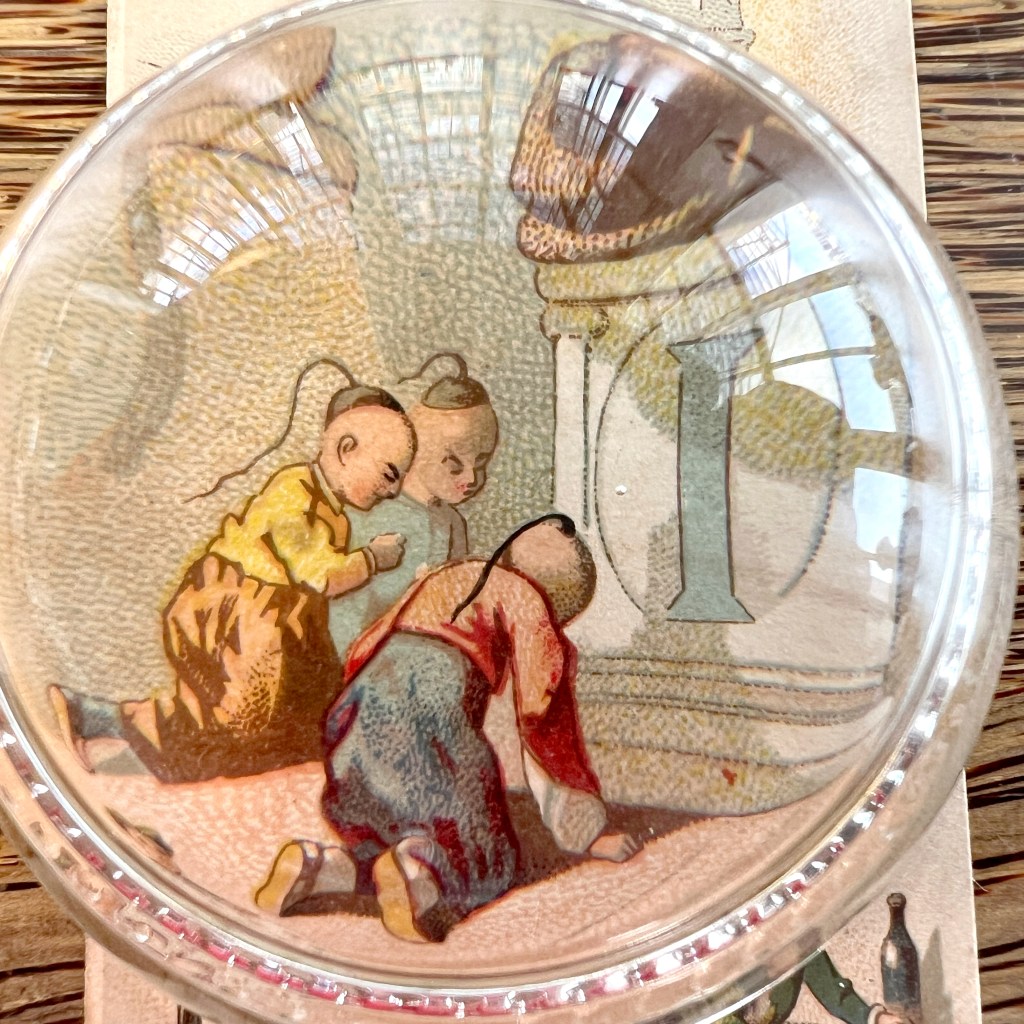
The Chinese children in the background, clearly identified by their long queues and flowing garments, represent idolators practicing foreign idolatry.
The idol is a distorted version of a sitting buddha, portrayed with horns and performing a “Chinese dance.” For more on the visual language of trade cards, see Lenore Metrick-chen, “The Chinese of the American Imagination: 19th Century Trade Card Images” (2007).
The Buddhas in the West Material Archive is a digital scholarship project that catalogues artifacts depicting Buddhist material culture for Western audiences. It’s comprised of prints, photos, and an assortment of ephemera and other objects. For a brief introduction to this archive, visit the main Buddhas in the West project page.
For Related Buddhas in the West Posts Featuring Chinese in the United States:


For the Most Recent Buddhas in the West Posts:
 Personal Site of Peter Romaskiewicz