Nipponophone’s Moving Buddha Advertising Postcard

For all the new Buddhas in the West posts
follow us on Bluesky & Instagram


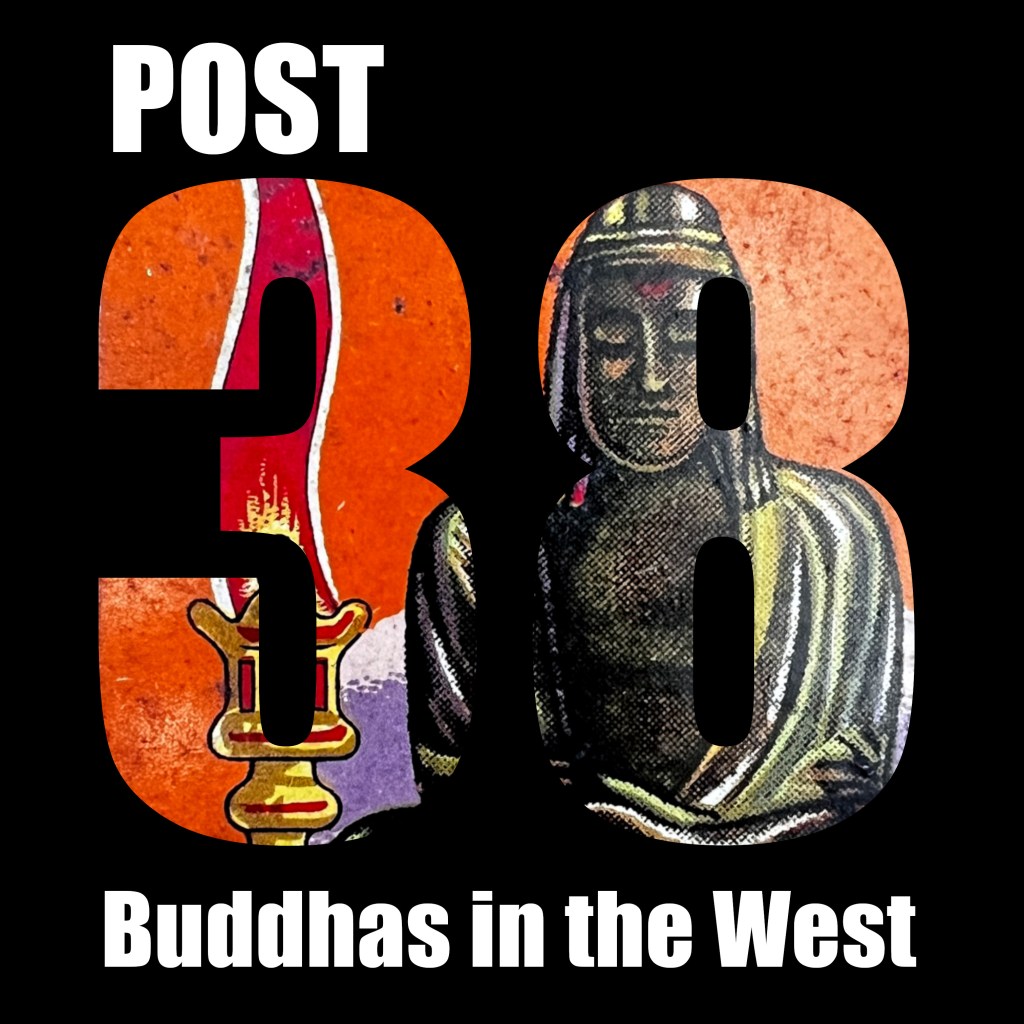
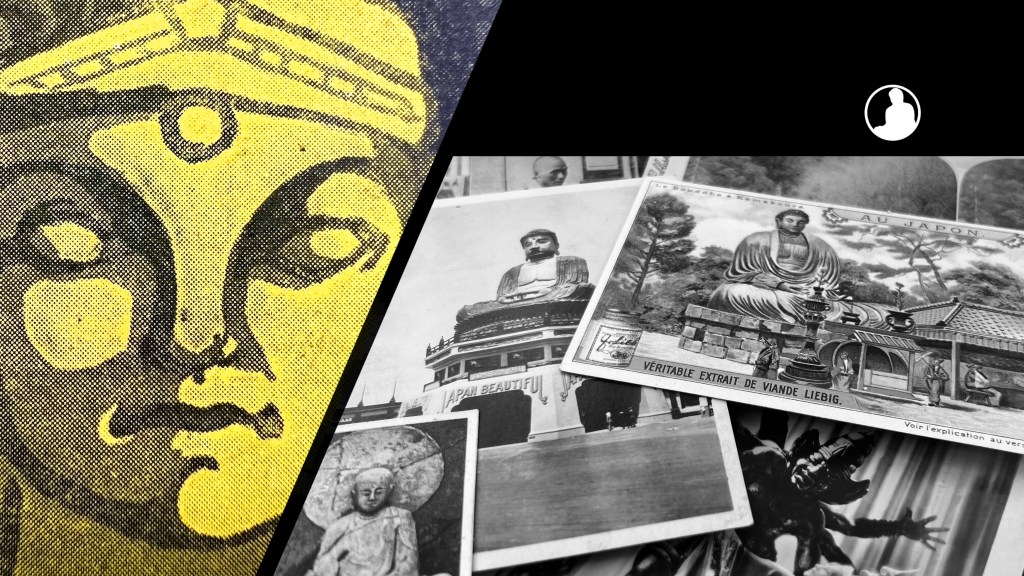
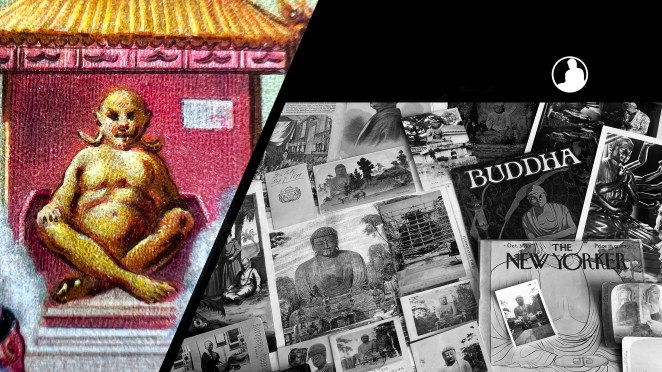
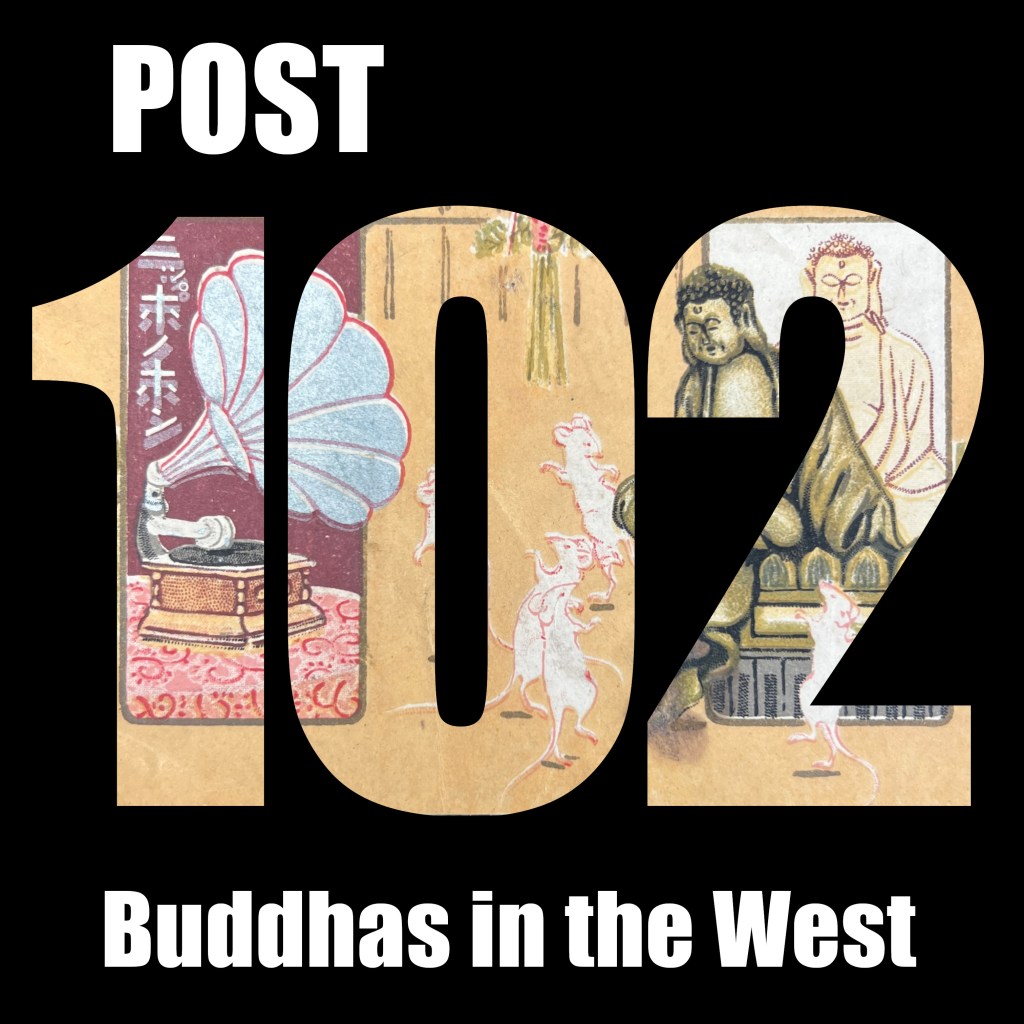
Nipponophone was an early Japanese record company, releasing the first domestically-produced phonograph in 1910 to commercial success. The company’s president, American Frederick Horn, adopted a large sitting Buddha for advertising, but with a subtle homage to another US brand.

Modern consumerism was just entering its stride and brand identity was emerging as central to advertising. In America, the most well-known music trademark at the time was Victor Records’ Nipper the dog who was depicted tilting his head to listen to his owner’s voice played on a record.
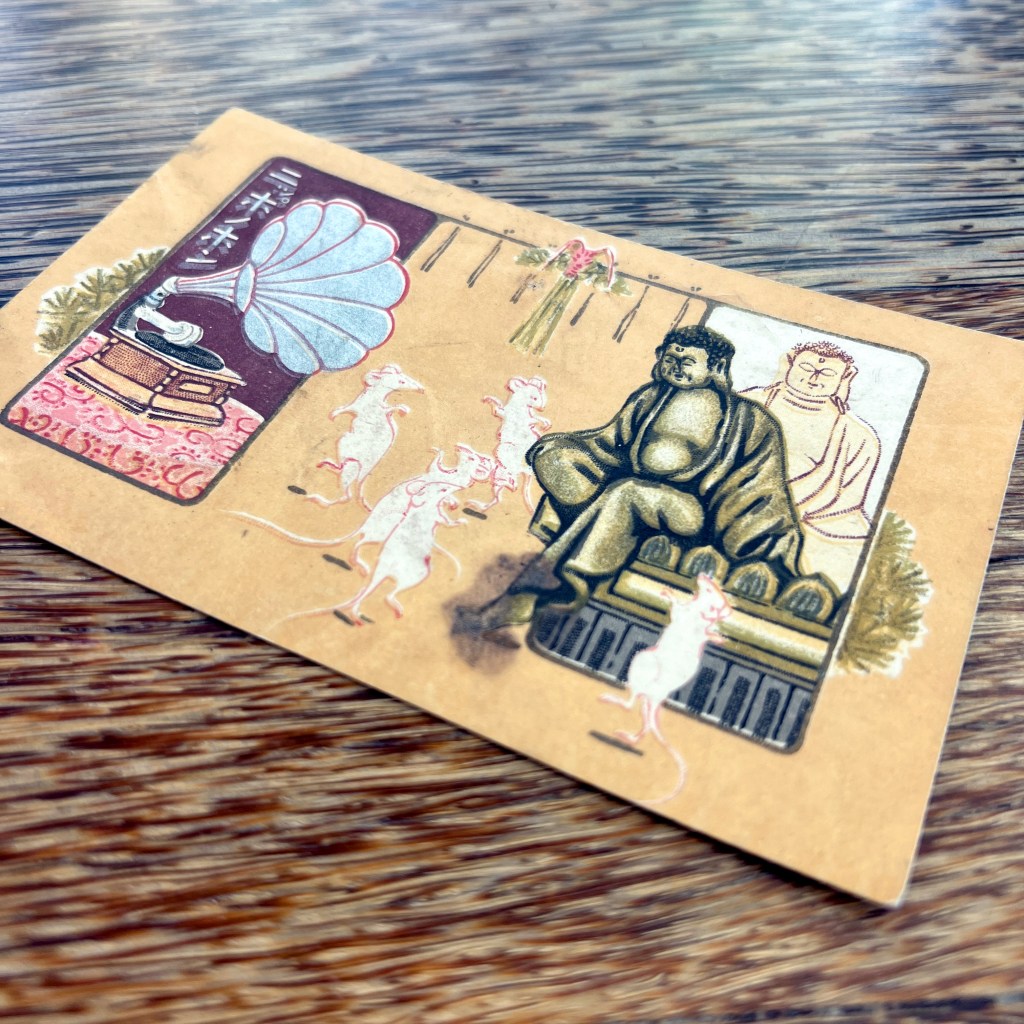
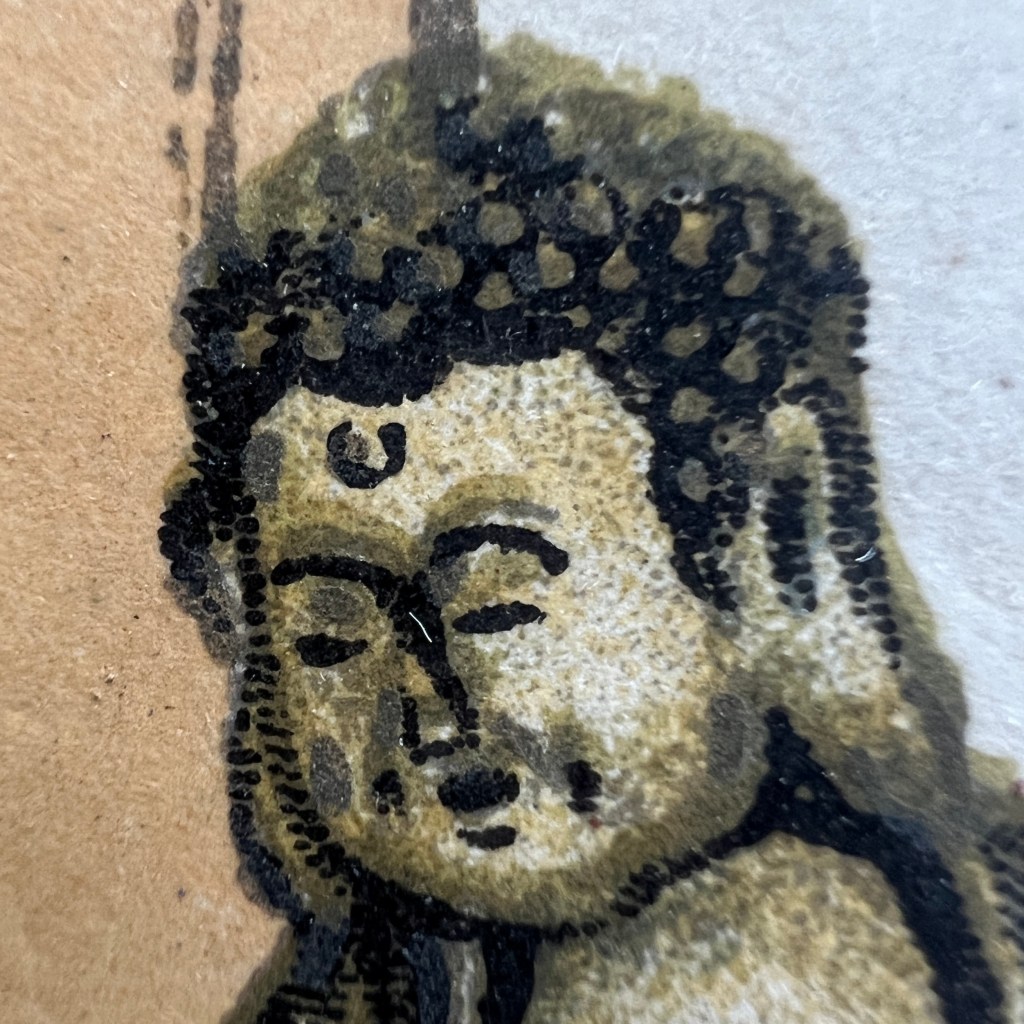
In contrast, designer Sassa Kōka used the otherwise stoically seated Buddha to illustrate the sonic appeal of the new phonograph. Such an image would undoubtedly strike Japanese audiences as unorthodox, but playful imagery was well-known in Japanese art through the Edo period (1600–1868).

During the height of the Japanese picture postcard boom (ehagaki būmu) it was not uncommon to see cards used as advertising. The placement of the address dividing line helps us date it to between 1910, when Nipponophone was founded, and 1918.
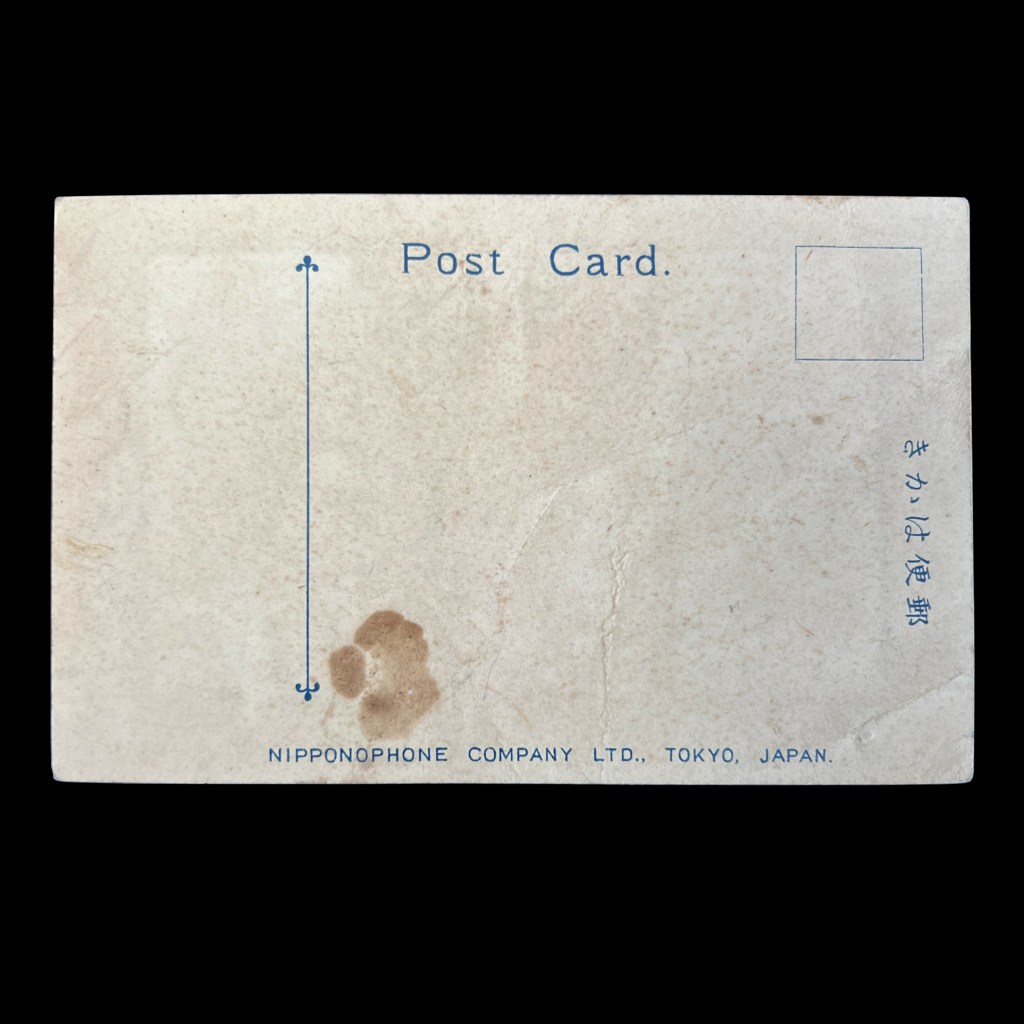
The moving Buddha image was used by Nipponophone in other business related ephemera. For example, it can be seen printed on the company’s paper record sleeves; one viewable here through the National Film and Sound Archive of Australia: https://tinyurl.com/4vk8f9sa
The Buddhas in the West Material Archive is a digital scholarship project that catalogues artifacts depicting Buddhist material culture for Western audiences. It’s comprised of prints, photos, and an assortment of ephemera and other objects. For a brief introduction to this archive, visit the main Buddhas in the West project page.


For Related Buddhas in the West Posts Featuring Historical Advertising:

For the Most Recent Buddhas in the West Posts:


Wall Street Mystery (1920) Promotional Handbook

For all the new Buddhas in the West posts
follow us on Bluesky & Instagram


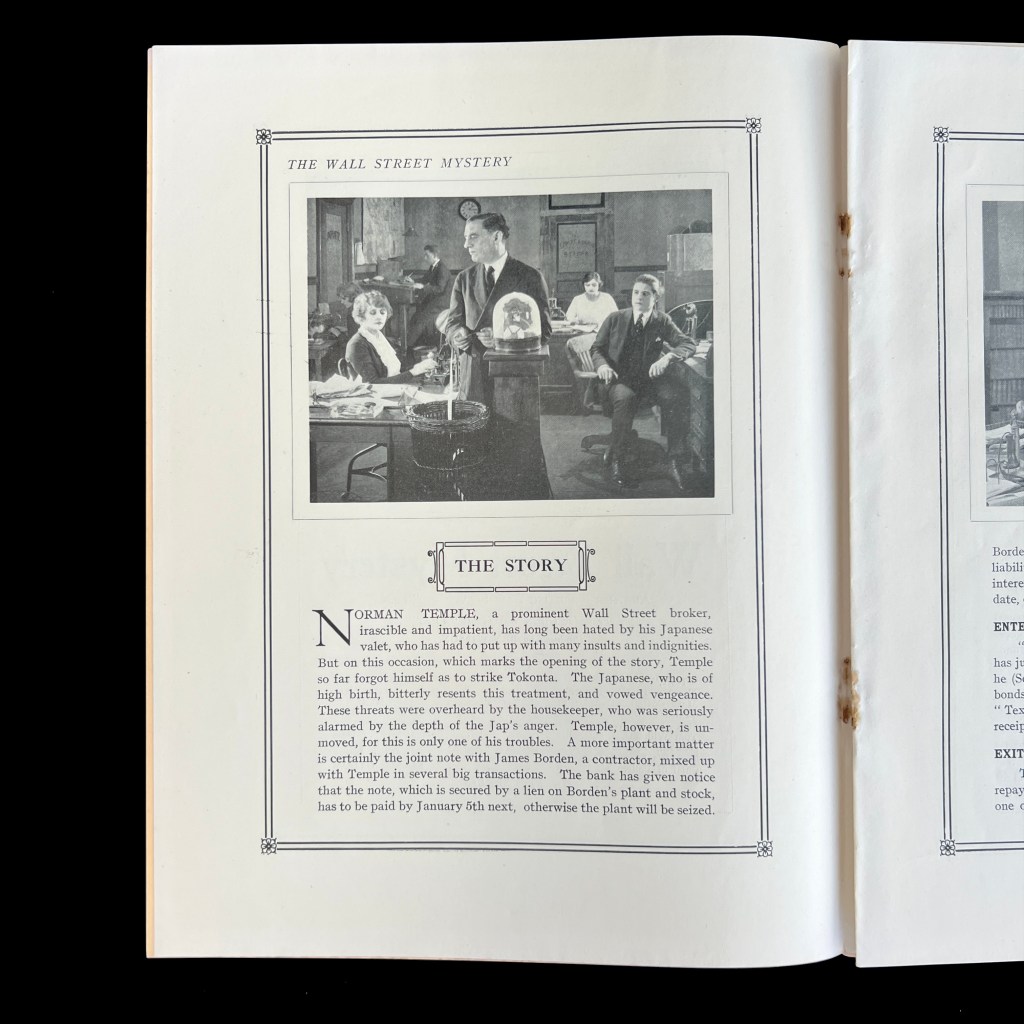
The five-reel Mystery of Wall Street was a 1920 entry of the short-lived Tex, the Elucidator of Mysteries, film series by Arrow Film Company. One scene, set in New York’s Chinatown, is used for the photo illustration of the film’s promotional trade handbook.

Played by Glenn White, Tex was a private detective who had been previously jailed on circumstantial evidence, thus his mission was to vindicate victims of injustice. Wall Street Mystery investigates the unresolved murder of a New York trade broker.

Eventually Tex is led to the broker’s Japanese valet who frequents Chinatown’s opium dens. Philippa Gates has demonstrated the popularity of the “Chinatown opium film” genre of the 1910s: “Opium dens…were a shorthand in American film to connect Chinatown to…criminality.”

Tex visits Chinatown’s opium den in disguise and a fight soon breaks out. The valet, who Tex had suspected for the murder, is found to be innocent based on his fingerprints; the case against him had proven to be mere circumstantial evidence.

Early film trade handbooks, like the one seen here, revealed the entire story to help the theater owner decide to purchase the reels. This included advertising and publicity suggestions.

The statue of the Buddha on the cover visually supports both the sense of mystery and the Chinatown locale. See also Philippa Gates, Criminalization/Assimilation: Chinese/Americans and Chinatowns in Classical Hollywood Film (New Brunswick: Rutgers, 2019).


The Buddhas in the West Material Archive is a digital scholarship project that catalogues artifacts depicting Buddhist material culture for Western audiences. It’s comprised of prints, photos, and an assortment of ephemera and other objects. For a brief introduction to this archive, visit the main Buddhas in the West project page.


For Related Buddhas in the West Posts Featuring Historical Advertising:


For the Most Recent Buddhas in the West Posts:


Anna Eva Faye’s Śiva Mascot Token

For all the new Buddhas in the West posts
follow us on Bluesky & Instagram


A rather unique mixture of religion, science, and stage magic was playing out on the Vaudeville circuit at the end of the 19th century. Anna Eva Faye, billed as the “Indescribable Phenomenon,” played to full houses with her other-worldly displays of mentalism.

As a souvenir of her show and a token of good luck (the generic sense of “mascot”), Faye sold coins bearing the image of the multi-armed Indian icon Śiva. The AEF below the figure refers to Anna Eva Faye.

The reverse bears a wreath (common to US coins of the era) enclosing the magic letters: AYX-7OD-77O. The coin reflects how the religious import of Śiva is funneled into larger American beliefs in occult power during this period.

This souvenir coin shows a decent amount of rub wear. This suggests the coin was a trusty good luck companion for someone in the past. The coin is about the size of a US quarter.

For a curated list of old newspaper articles about Anna Eva Faye, see the offering presented by the Library of Congress here: https://tinyurl.com/3jhkjsze.


The Buddhas in the West Material Archive is a digital scholarship project that catalogues artifacts depicting Buddhist material culture for Western audiences. It’s comprised of prints, photos, and an assortment of ephemera and other objects. For a brief introduction to this archive, visit the main Buddhas in the West project page.


For Related Buddhas in the West Posts Featuring Historical Advertising:


For the Most Recent Buddhas in the West Posts:


Vantine’s Buddha Sandalwood Incense Tin

For all the new Buddhas in the West posts
follow us on Bluesky & Instagram


An Art Deco Buddha: Ashley Vantine arrived in the newly opened port of Yokohama in 1861 looking to start an American import business. By the turn of the 20th century, A.A.Vantine & Co. had become one of the most influential importers of “Oriental” goods into the US.

First positioning itself as an authority of Japanese goods, by the 1890s Vantine’s shifted to a more eclectic mass-market approach. With a famous flagship store on Broadway in New York and a successful mail order business, Vantine’s goods circulated across the US.

By the 1910s it was becoming commonplace for more Americans to display Buddhist statuary in their homes to signify exotic taste. Vantine’s helped supply this growing market.

As the cosmetics market blossomed after WWI, Vantine’s shifted to perfumes and incense, often advertised with Buddhist imagery.

Valuable materials from the Vantine’s company are held by the Winterthur Museum Library. A mail order catalogue from 1914 is viewable here: https://tinyurl.com/4a7mhtst


The Buddhas in the West Material Archive is a digital scholarship project that catalogues artifacts depicting Buddhist material culture for Western audiences. It’s comprised of prints, photos, and an assortment of ephemera and other objects. For a brief introduction to this archive, visit the main Buddhas in the West project page.


For Related Buddhas in the West Posts Featuring Historical Trade Cards:


For the Most Recent Buddhas in the West Posts:


American Express Daibutsu Advertisement

For all the new Buddhas in the West posts
follow us on Bluesky & Instagram


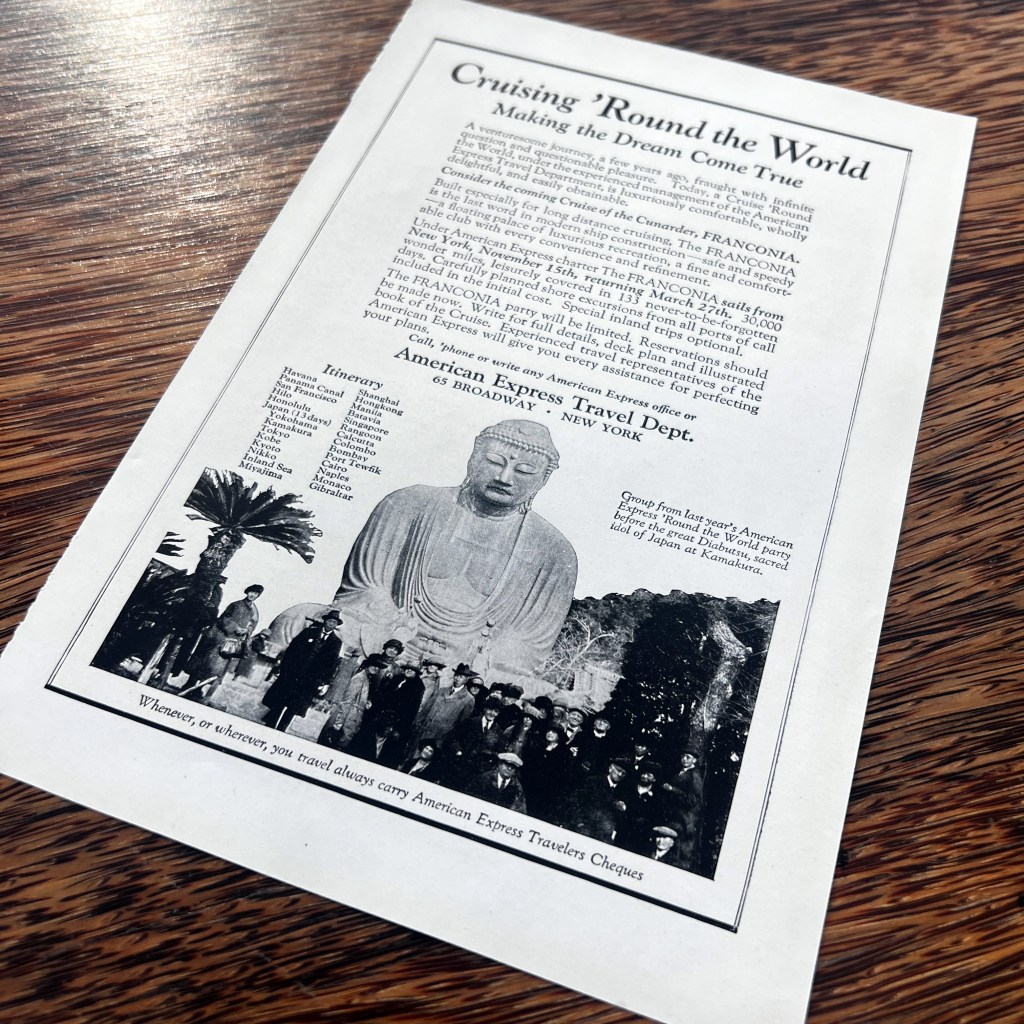
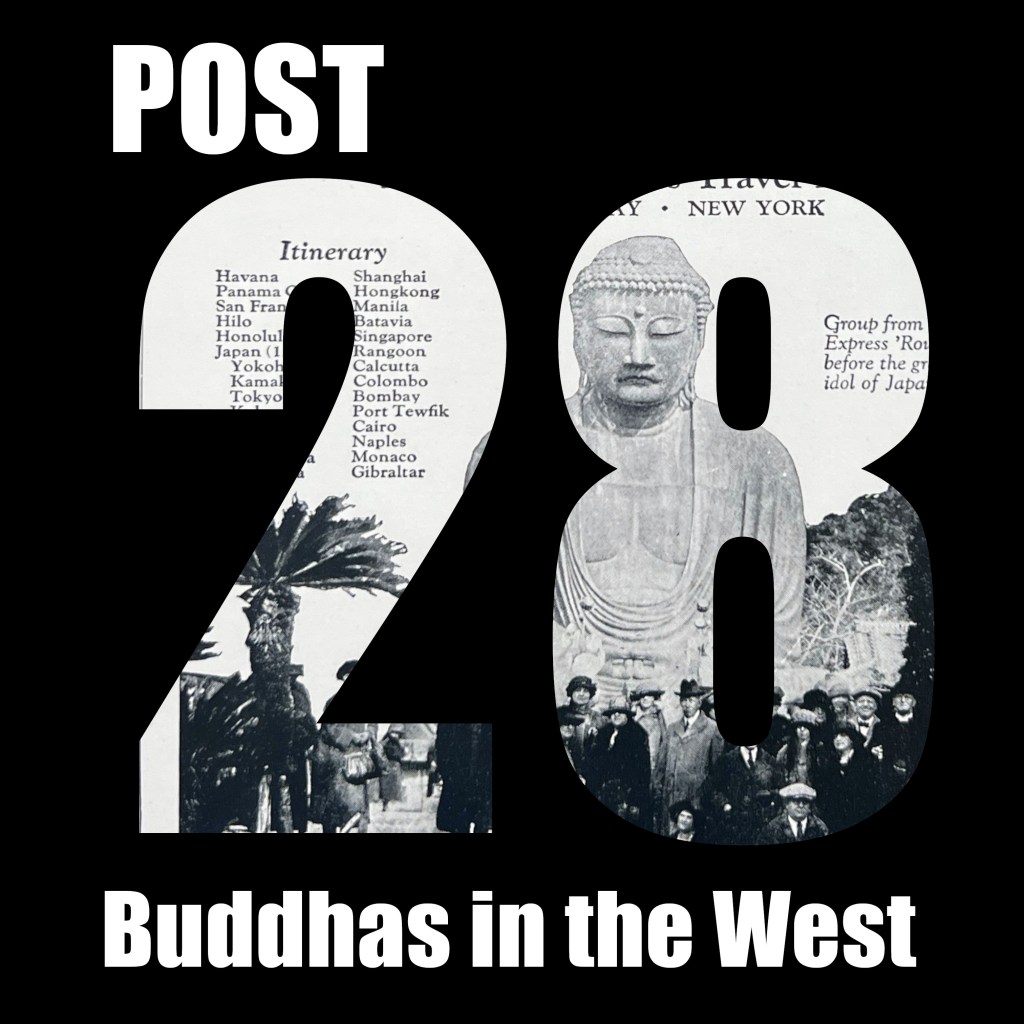
After the opening of the Panama Canal and the end of WWI, the first around-the-world commercial cruise was chartered by the American Express Company in late 1922. The following summer of 1923, American Express began advertising for its next cruise using the Great Buddha of Kamakura.

The success of the inaugural cruise is celebrated in the advertising copy. It notes how the journey is “luxuriously comfortable, wholly delightful, and easily obtainable.” The brief itinerary lists the major ports to be visited, including a long 13 day stay in Japan.

The most conspicuous element is the large cropped photo of the “sacred idol of Japan” – the Kamakura Daibutsu. Notably, the photo depicts the inaugural cruise passengers positioned in front, looking directly at the camera lens.

Unfortunately, the Great Kantō earthquake struck in September 1923, damaging the Daibutsu. The Second American Express Cruise Round the World continued, however, leaving New York in November 1923 and returning in March 1924.


The Buddhas in the West Material Archive is a digital scholarship project that catalogues artifacts depicting Buddhist material culture for Western audiences. It’s comprised of prints, photos, and an assortment of ephemera and other objects. For a brief introduction to this archive, visit the main Buddhas in the West project page.


For Related Buddhas in the West Posts Featuring Historical Advertising:

For the Most Recent Buddhas in the West Posts:


Rose and Pollack’s Buddha Foxtrot Sheet Music

For all the new Buddhas in the West posts
follow us on Bluesky & Instagram


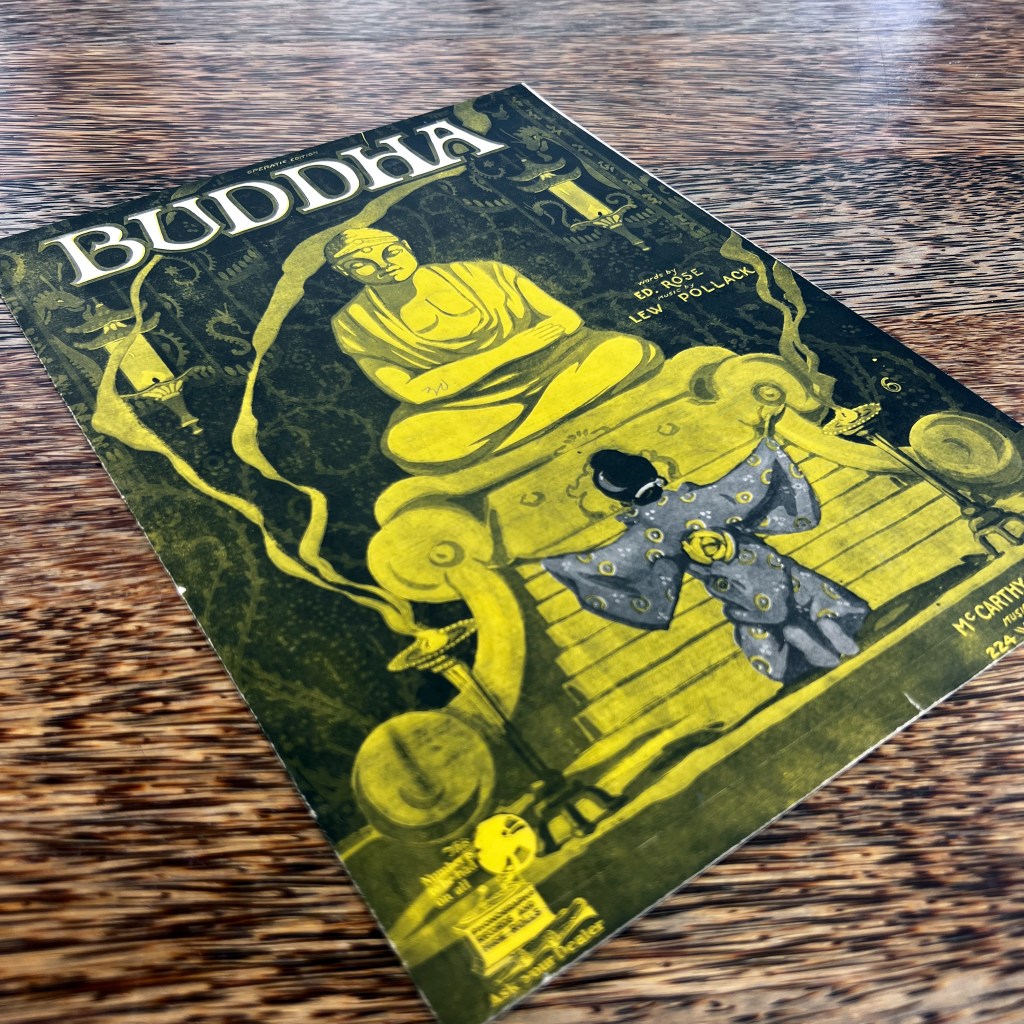
The Buddha Foxtrot: In the late 1910s era of ragtime, Vaudeville accompanist Lew Pollack composed the novelty piece “Buddha.” Several bands recorded versions of Pollack’s composition through the 1920’s; it was a moderate success.

The sheet music cover shows an imaginary scene of religious devotion, incorporating a woman in traditional Japanese dress praying to a Buddhist image.

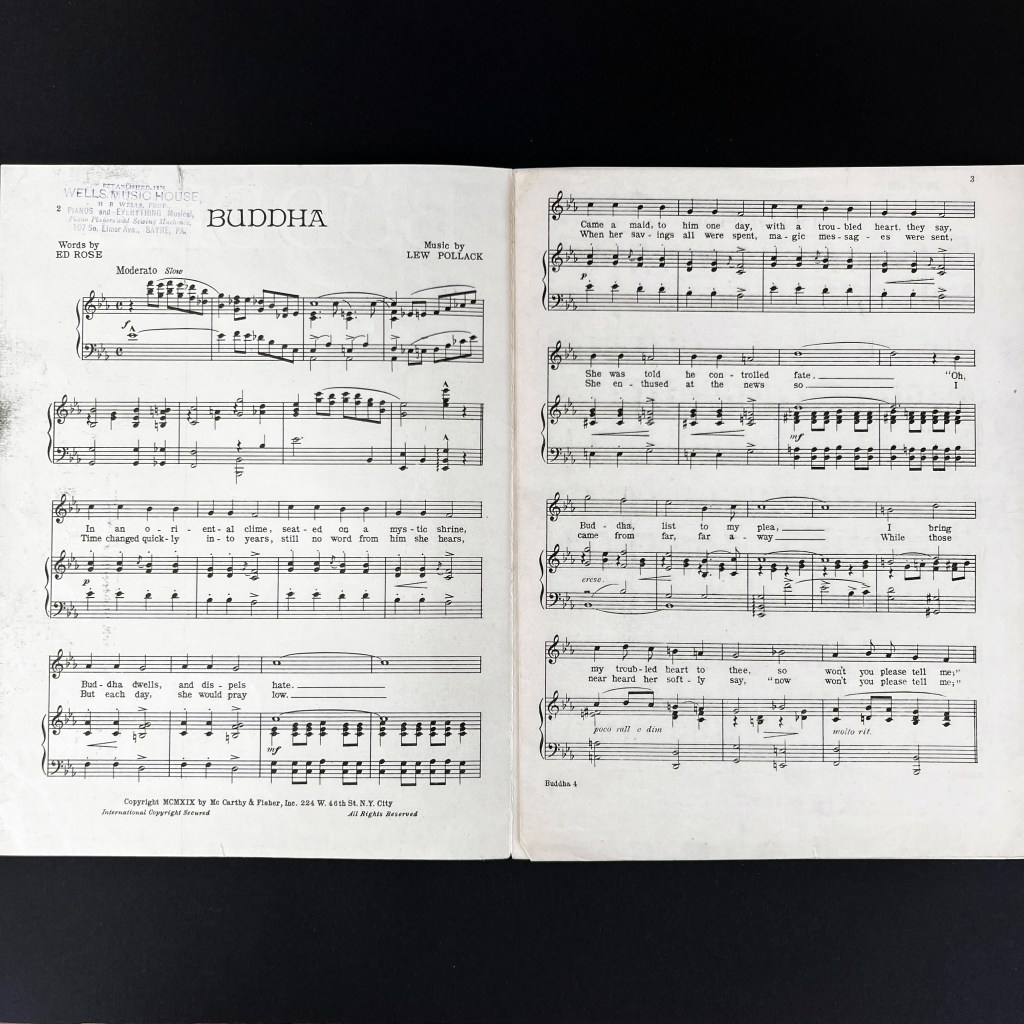
Lyrics were added to the musical composition by Ed Rose and the work was published in 1919. The song opens with the lyrics: “In an oriental clime, seated on a mystic shrine, Buddha dwells, and dispels hate.”

The song describes a woman who prays to the Buddha, pleading for her lover to return to her. This story reflects Giacomo Puccini’s opera Madame Butterfly, first performed in America in 1906.

I wrote a short post about the song and the imagery on the cover here: https://peterromaskiewicz.com/2019/01/09/the-buddha-foxtrot-by-pollack-and-rose-visual-literacy-of-buddhism/.


The Buddhas in the West Material Archive is a digital scholarship project that catalogues artifacts depicting Buddhist material culture for Western audiences. It’s comprised of prints, photos, and an assortment of ephemera and other objects. For a brief introduction to this archive, visit the main Buddhas in the West project page.


For Related Buddhas in the West Posts Featuring Historical Advertising:


For the Most Recent Buddhas in the West Posts: