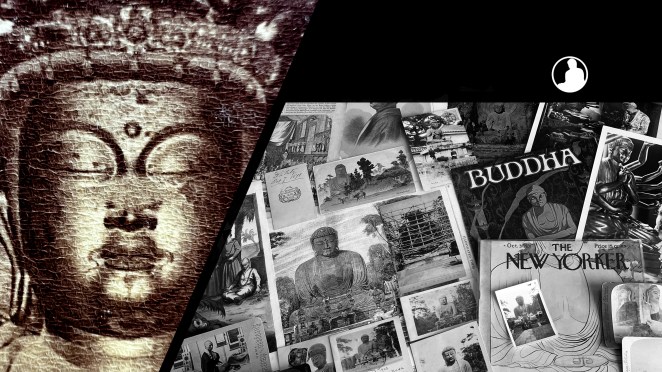
Thomas Allom’s Sticks of Fate Engraving

For all the new Buddhas in the West posts
follow us on Bluesky & Instagram


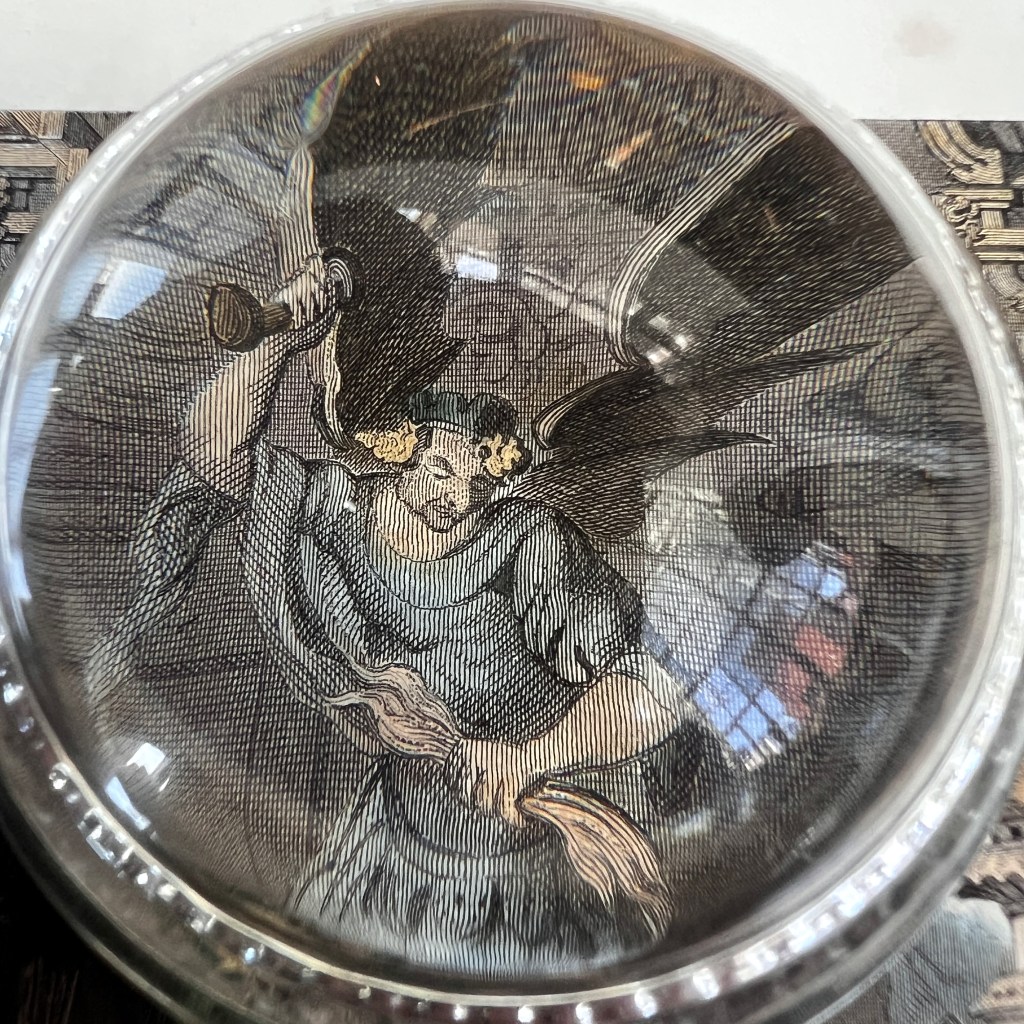
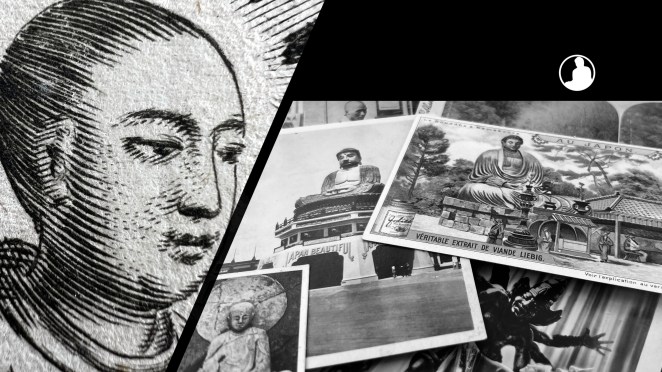
Having never traveled to China, Thomas Allom’s illustrations retain a touch of the fantastic common among his European pictorial predecessors. After the end of the Opium War in 1842 there was renewed interest in China and Allom’s book was among the first to serve this audience.

The text for China: In a Series of Views was composed by Rev. George Wright. He commonly portrayed the Chinese as inferior and infatuated with bizarre customs, reflecting a growing sentiment among Europeans after the Opium War.

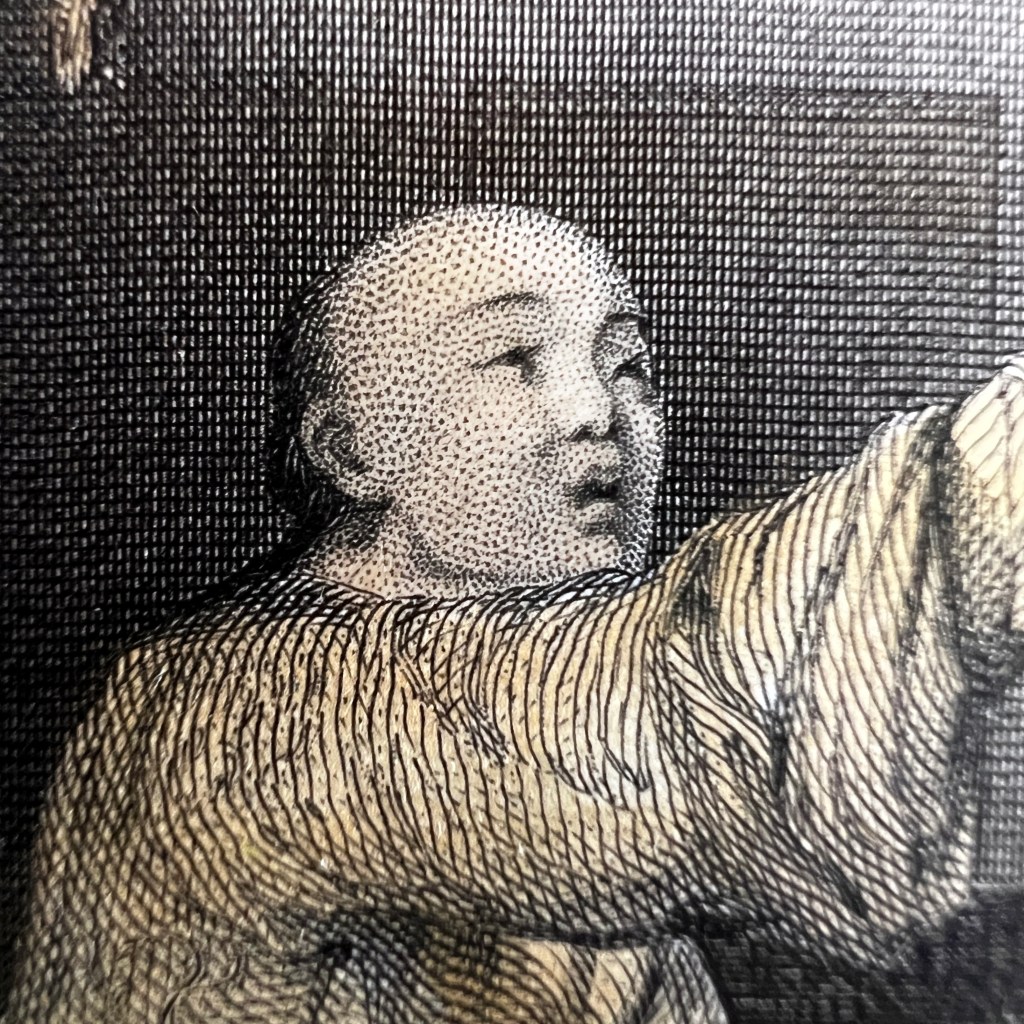
A trained illustrator, Allom prepared watercolor paintings and had them engraved for his books. While some paintings were copies of earlier works by others, including those in the British military stationed in China, this illustration appears to be the creation of Allom.

Overall, Allom creates a dynamic image showing a commonplace Chinese temple practice of fortune telling. Some elements, however, appear out of place.

The New York Public Library has digitized Allom’s works on China with a layout of all his engraved illustrations viewable here: https://tinyurl.com/3b74hu7m.


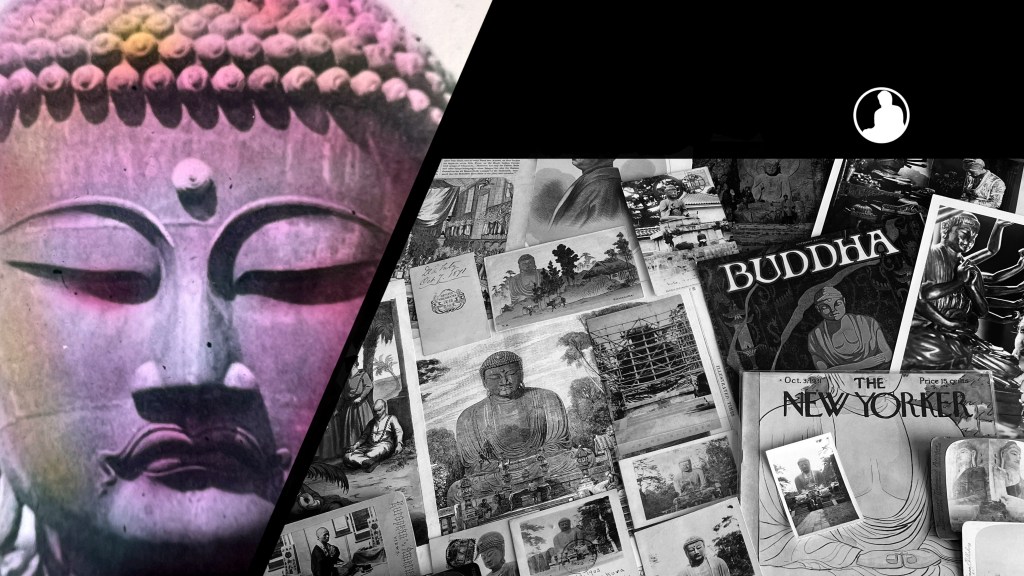
The Buddhas in the West Material Archive is a digital scholarship project that catalogues artifacts depicting Buddhist material culture for Western audiences. It’s comprised of prints, photos, and an assortment of ephemera and other objects. For a brief introduction to this archive, visit the main Buddhas in the West project page.


For Related Buddhas in the West Posts Featuring China:


For the Most Recent Buddhas in the West Posts:


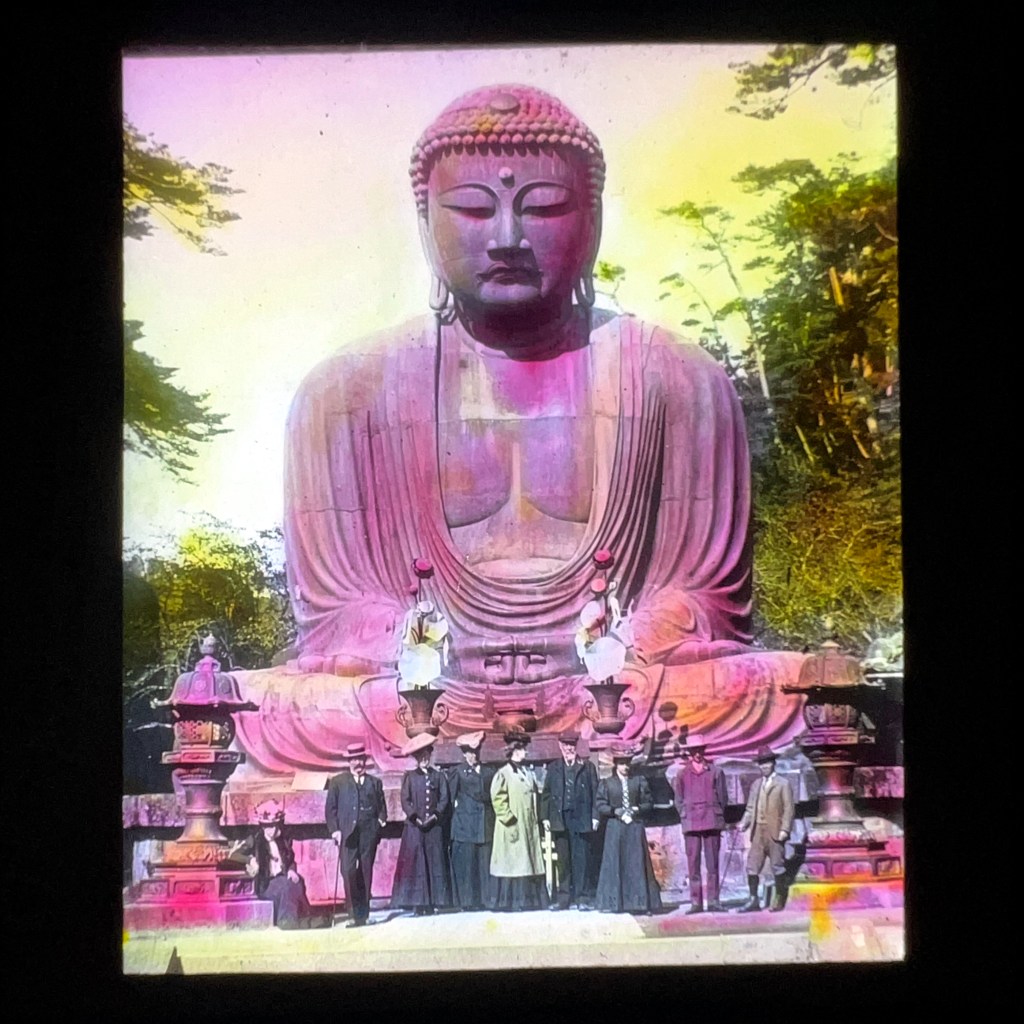
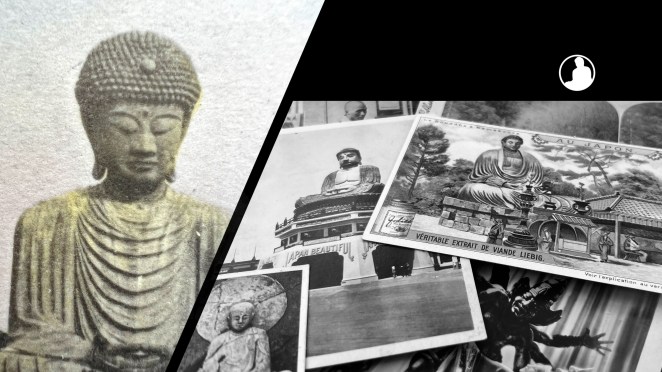
Daibutsu and Tour Group Glass Lantern Slide

For all the new Buddhas in the West posts
follow us on Bluesky & Instagram


In the pre-film era, magic lantern slides were a part of popular entertainment alongside panoramas and mechanical theaters. Many amateur lecturers who returned from a trip would book a church hall or town theater to show slides illustrating their personal travel narrative.

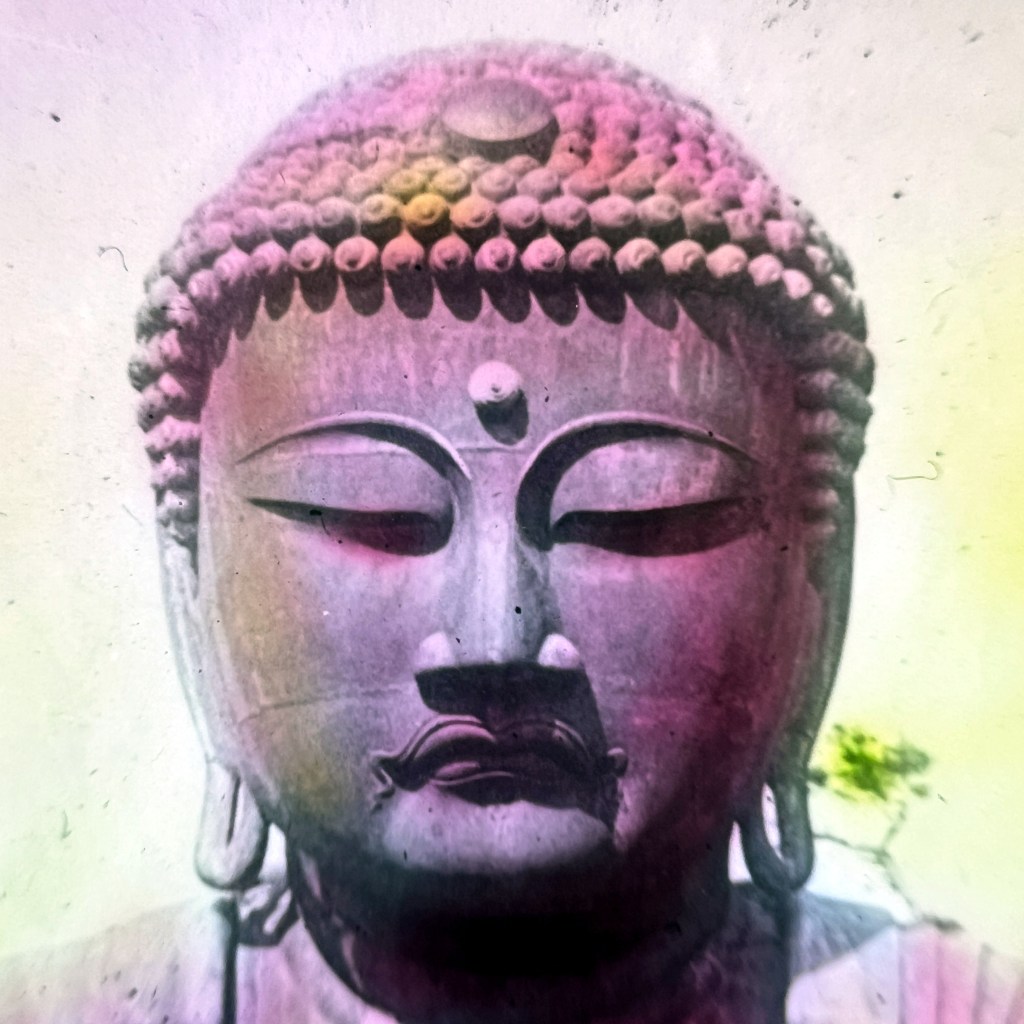
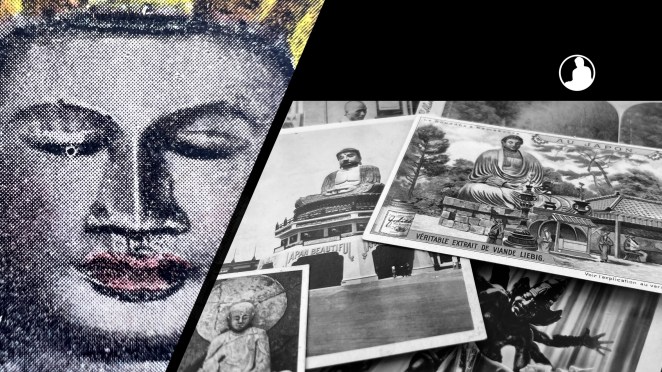
While photos and postcards were shared with friends in the home, glass lantern slides were also intended for showy public display. Consequently, glass slides were often hand-painted in eye-catching color; here we see the bronze Kamakura Daibutsu in uncharacteristic magenta.

Two pieces of glass, one of which bears the positive photographic print, sandwich the image to keep it safe from scratches and debris. Unlike the exemplar here, the publisher would often print their name on the matting around the image.

Based on the layout of the Daibutsu grounds, this photo was taken around 1910.

The University of Hawaii at Manoa has a large collection of slides as part of their Japan Collection, viewable here: https://tinyurl.com/8hdvfzad


The Buddhas in the West Material Archive is a digital scholarship project that catalogues artifacts depicting Buddhist material culture for Western audiences. It’s comprised of prints, photos, and an assortment of ephemera and other objects. For a brief introduction to this archive, visit the main Buddhas in the West project page.


For Related Buddhas in the West Posts Featuring Historical Glass Lantern Slides:


For the Most Recent Buddhas in the West Posts:

A.W. Plâté’s Reliquary Offering Postcard

For all the new Buddhas in the West posts
follow us on Bluesky & Instagram


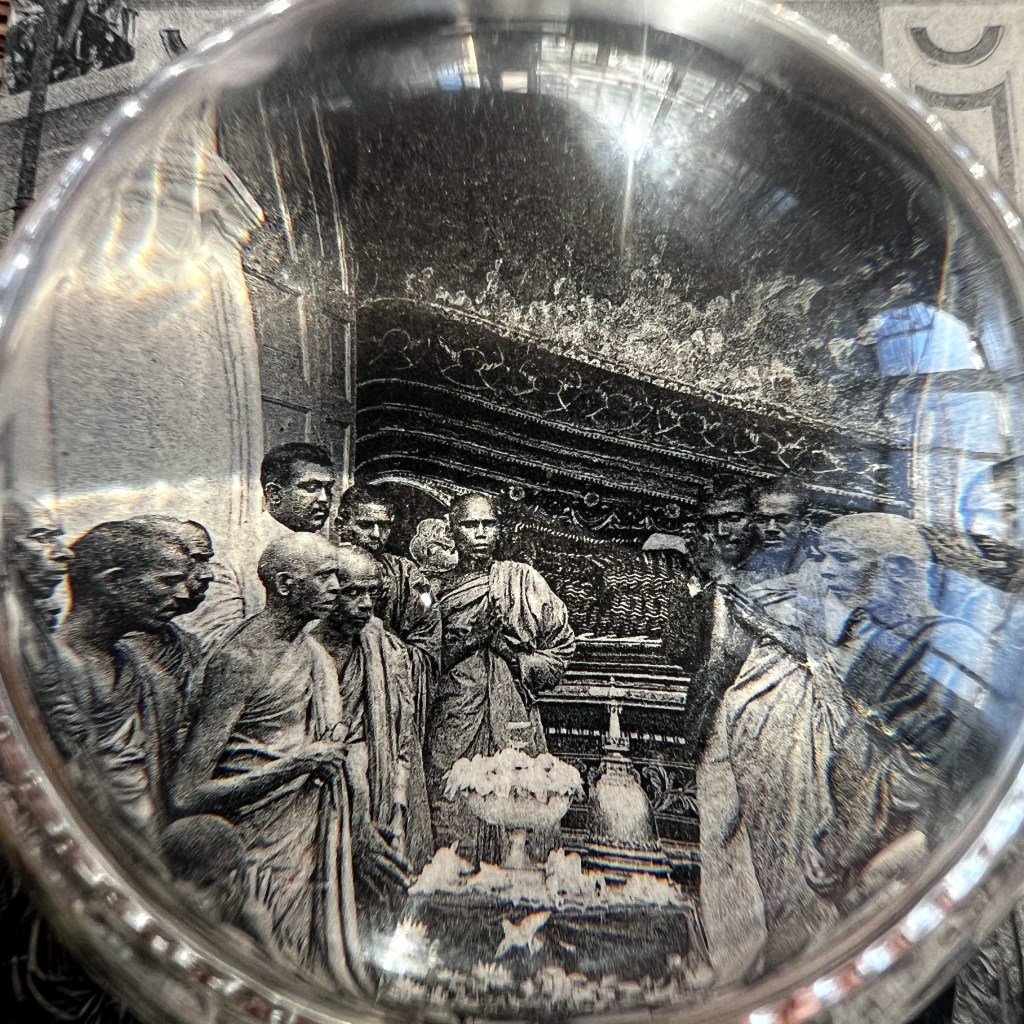
The first private company to sell Singhalese postcards was A. W. Plâté & Co. In 1890 Plâté first opened his photography studio and by 1907 he dominated the domestic postcard market, selling half a million cards that year.

As was common in many parts of the world, this card was printed in Germany, here identified with a rubber stamp. The hand written note describes the colors of the monk’s robes, suggesting this was purchased as an inexpensive photographic souvenir with no intention to mail.

Still in operation, Plâté’s photographic archives are a trove of Singhalese visual records. Can you find the partly obscured Buddha statue among the group of worshiping monks?

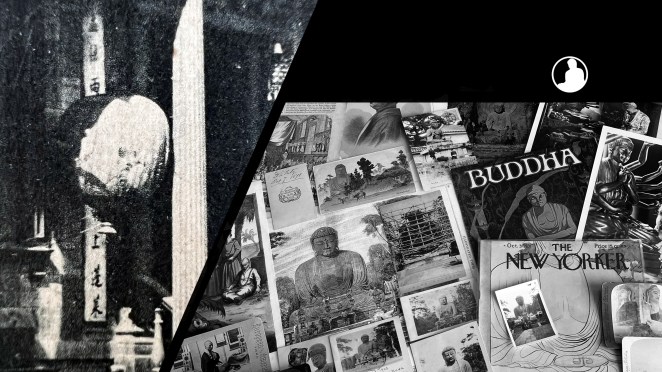
There is a Sleeping Buddha statue in just inside the temple doorway.

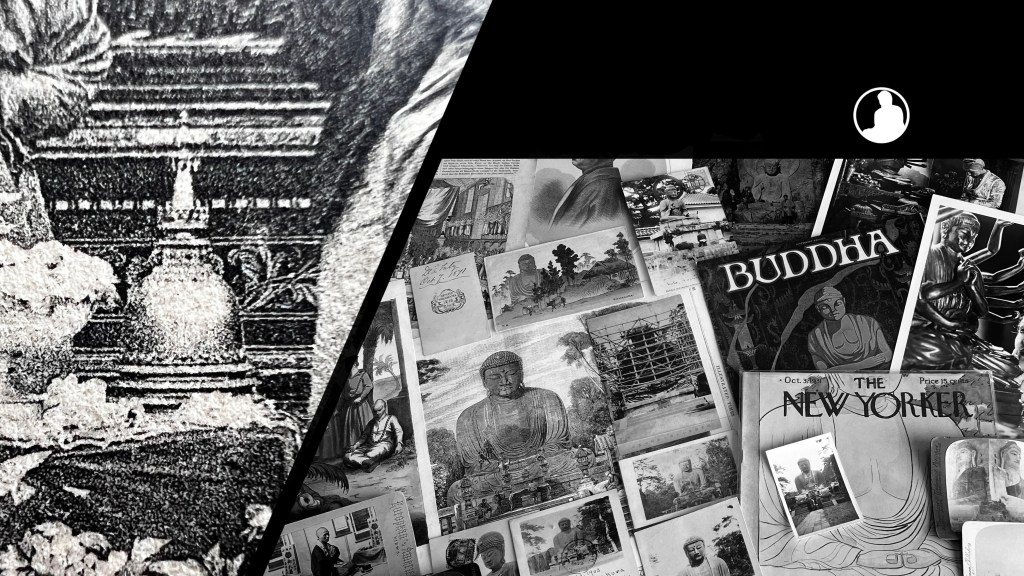
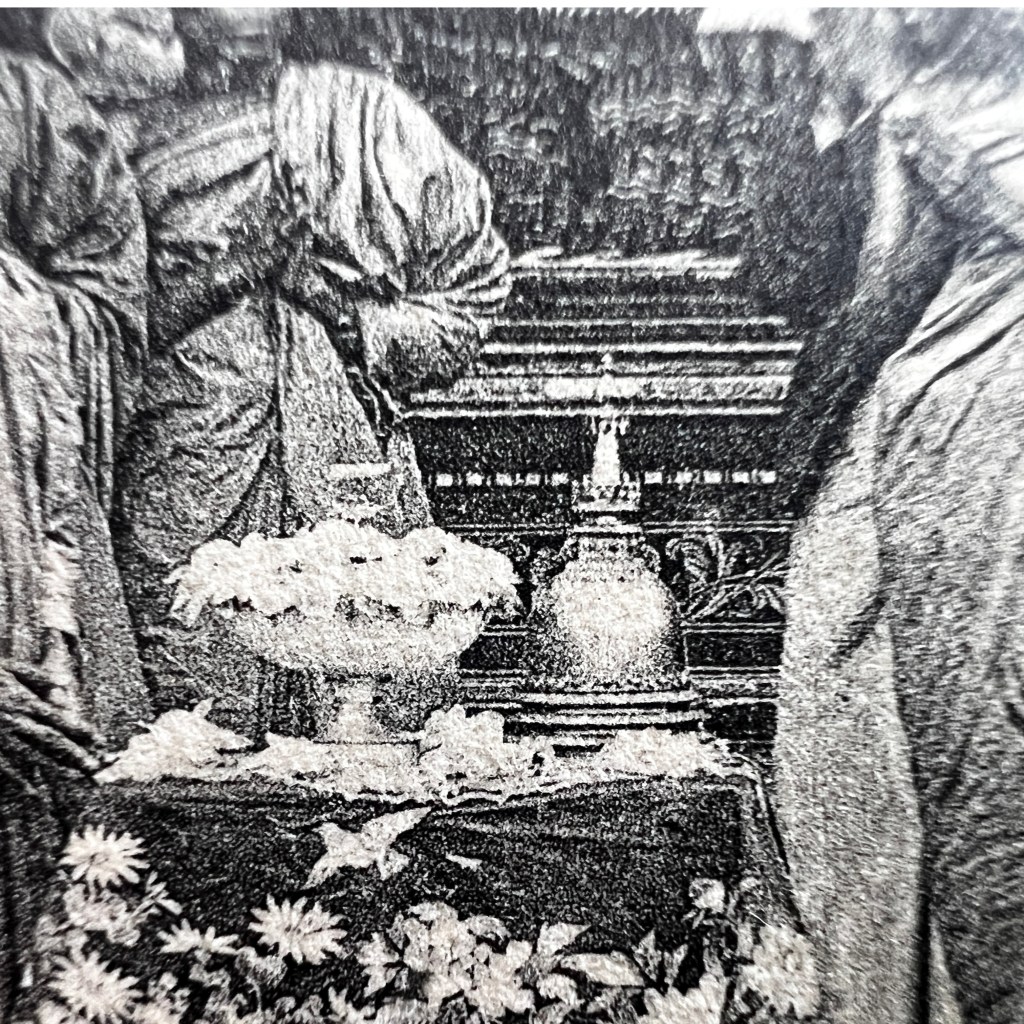
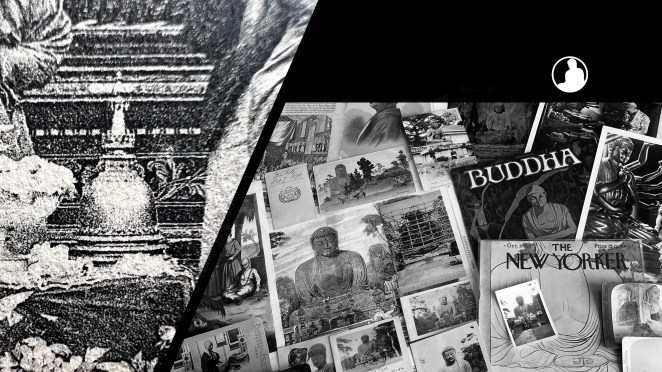
The monks pay homage to a small reliquary shrine that is dressed with flower offerings. For a discussion of Plâté’s legacy in the history of Singhalese photography, see the article by Benita Stambler here: https://tinyurl.com/sytn2mmd.


The Buddhas in the West Material Archive is a digital scholarship project that catalogues artifacts depicting Buddhist material culture for Western audiences. It’s comprised of prints, photos, and an assortment of ephemera and other objects. For a brief introduction to this archive, visit the main Buddhas in the West project page.


For Related Buddhas in the West Posts Featuring Historical Postcards:


For the Most Recent Buddhas in the West Posts:


Vantine’s Buddha Sandalwood Incense Tin

For all the new Buddhas in the West posts
follow us on Bluesky & Instagram


An Art Deco Buddha: Ashley Vantine arrived in the newly opened port of Yokohama in 1861 looking to start an American import business. By the turn of the 20th century, A.A.Vantine & Co. had become one of the most influential importers of “Oriental” goods into the US.

First positioning itself as an authority of Japanese goods, by the 1890s Vantine’s shifted to a more eclectic mass-market approach. With a famous flagship store on Broadway in New York and a successful mail order business, Vantine’s goods circulated across the US.

By the 1910s it was becoming commonplace for more Americans to display Buddhist statuary in their homes to signify exotic taste. Vantine’s helped supply this growing market.

As the cosmetics market blossomed after WWI, Vantine’s shifted to perfumes and incense, often advertised with Buddhist imagery.

Valuable materials from the Vantine’s company are held by the Winterthur Museum Library. A mail order catalogue from 1914 is viewable here: https://tinyurl.com/4a7mhtst


The Buddhas in the West Material Archive is a digital scholarship project that catalogues artifacts depicting Buddhist material culture for Western audiences. It’s comprised of prints, photos, and an assortment of ephemera and other objects. For a brief introduction to this archive, visit the main Buddhas in the West project page.


For Related Buddhas in the West Posts Featuring Historical Trade Cards:


For the Most Recent Buddhas in the West Posts:


Paris’ Panorama du Tour du Monde Advertising Card

For all the new Buddhas in the West posts
follow us on Bluesky & Instagram


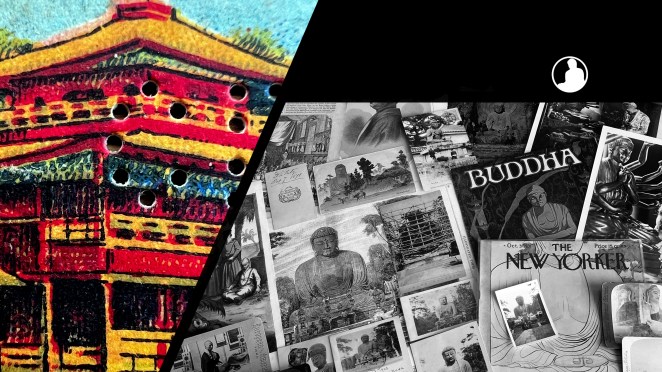
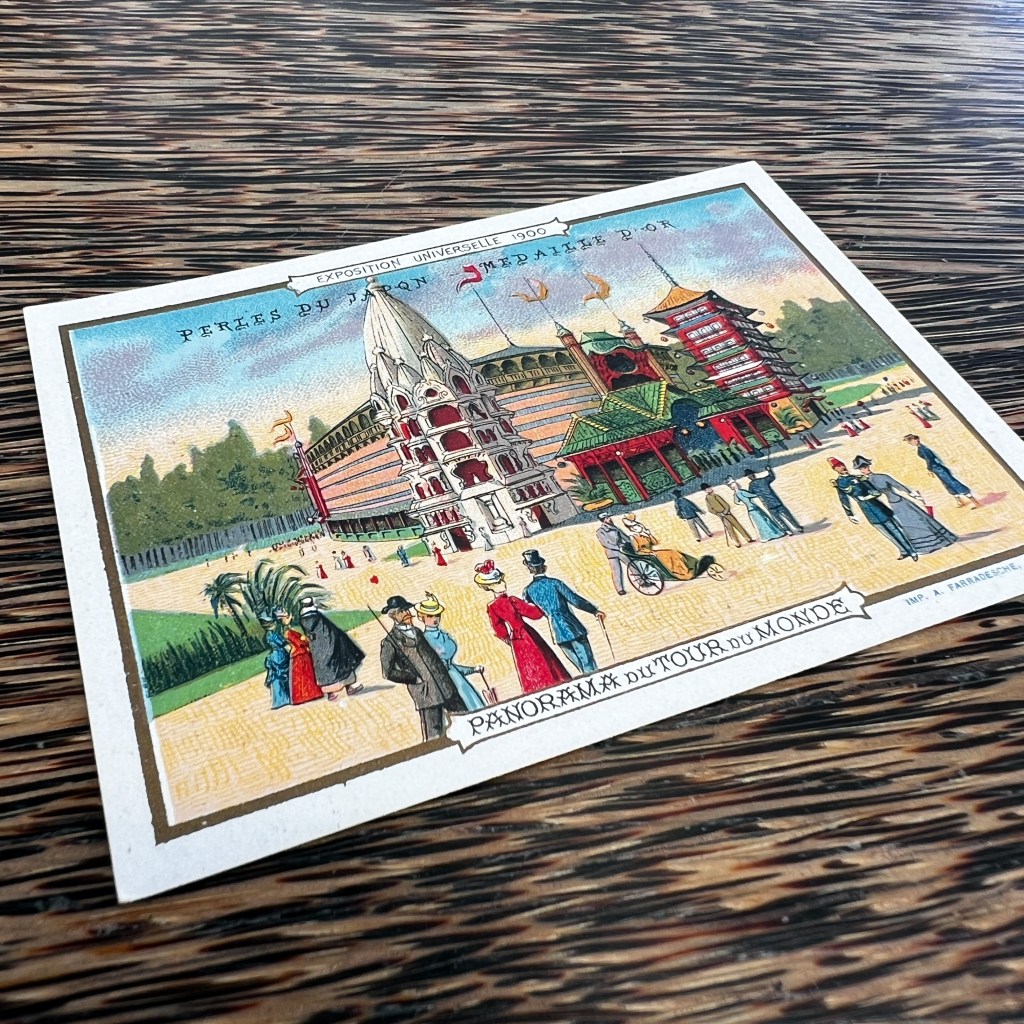
Panorama du Tour du Monde: By the 1900 Paris Exposition, amusement concessions were a major draw for all exposition visitors. Not far from the foot of the Eiffel Tower one found the Panorama du Tour du Monde which took patrons on a virtual voyage from Spain to Japan.

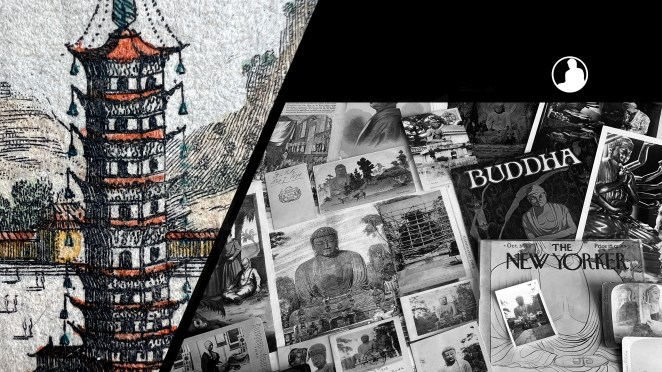
Built by Alexandre Marcel for a French sea-transport company, the architecture called to mind exotic locales with Asian-inspired structures. The main entrance was modeled on the Tōshō-gū in Nikkō, Japan. Some sources claim the red pagoda was based on a Chinese model.

Visitors were drawn in by large panoramic paintings of various foreign countries to give a sense of virtual travel. More astonishingly, the concession integrated many indigenous performers who engaged in various trades while wearing traditional foreign costumes

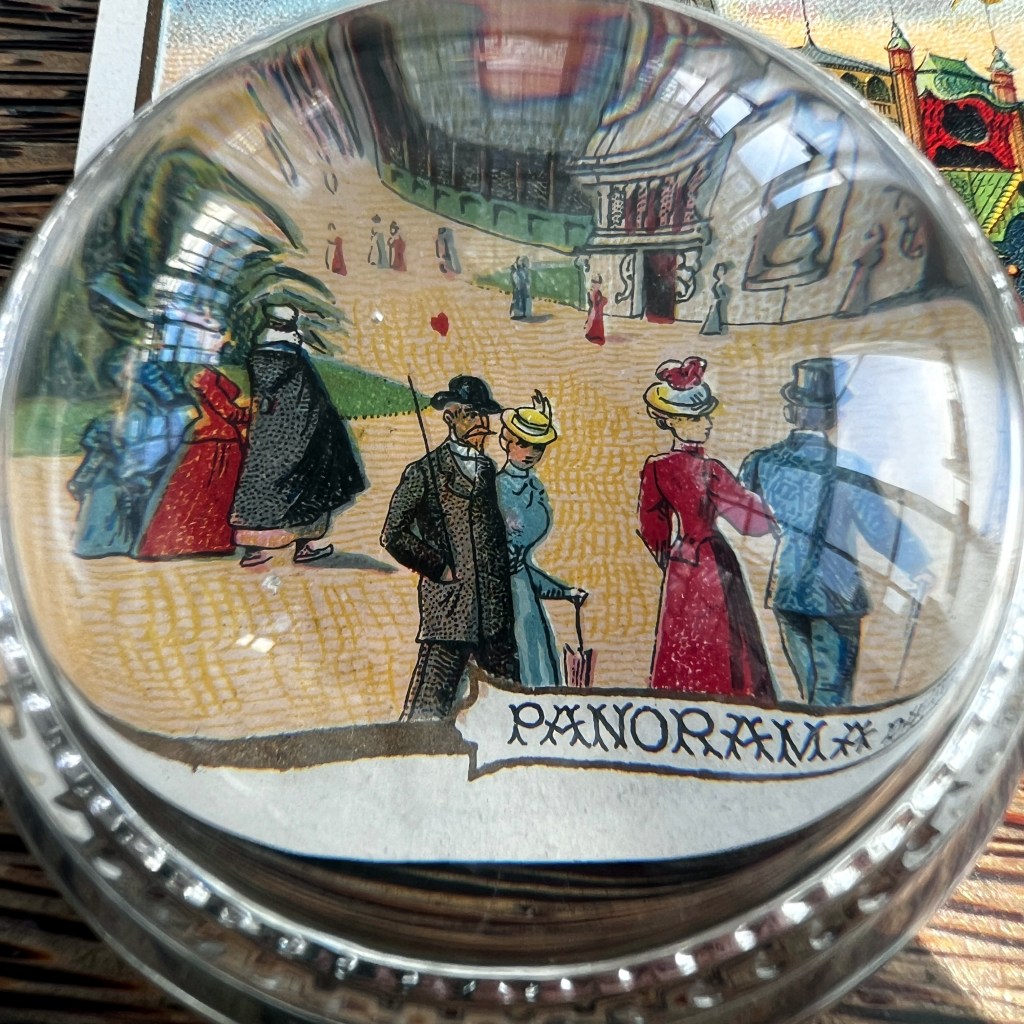
The beautiful lithographic print was part of an advertising campaign for a French company selling tapioca pearls, called “perles du Japon.”

King Leopold II was so struck by the building, he had Marcel build the Japanese Tower in Brussels. For more on the Tour du Monde exhibition, see https://tinyurl.com/2vbmr3c7.


The Buddhas in the West Material Archive is a digital scholarship project that catalogues artifacts depicting Buddhist material culture for Western audiences. It’s comprised of prints, photos, and an assortment of ephemera and other objects. For a brief introduction to this archive, visit the main Buddhas in the West project page.


For Related Buddhas in the West Posts Featuring France:


For the Most Recent Buddhas in the West Posts:

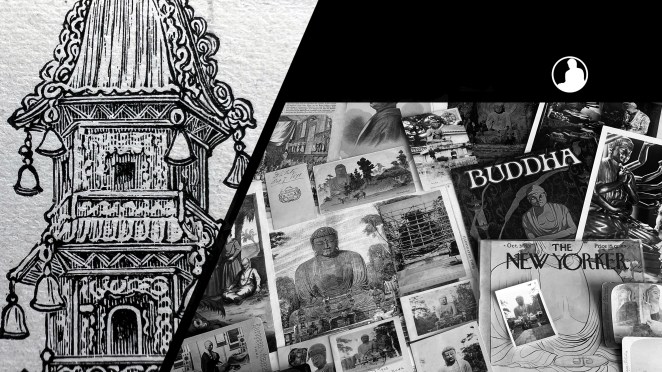
1876 Centennial Ivory Pagoda Print

For all the new Buddhas in the West posts
follow us on Bluesky & Instagram


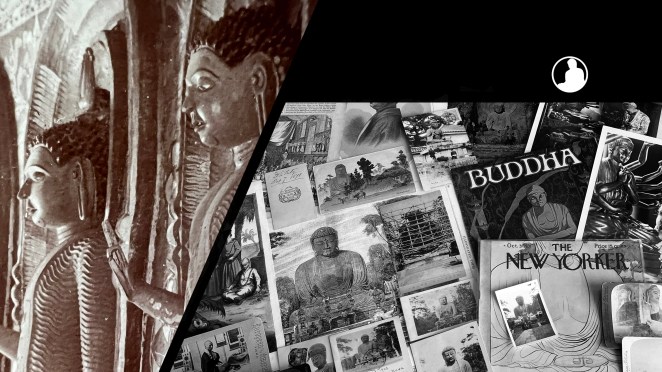
Lost Ivory Pagoda? Japan’s exhibit at the 1876 Centennial Exposition is often credited as inspiring American Japonisme. Less celebrated is China’s involvement who also made a splash with its exhibit, including an intricate 4-foot ivory pagoda.

The 1830s and 40s saw a handful of private Chinese museums open, but the Centennial included objects sent to the US by Chinese representatives. By plan, the objects chosen reflected the tastes of Chinese elite, including silks, porcelain, paintings, and fine teas.

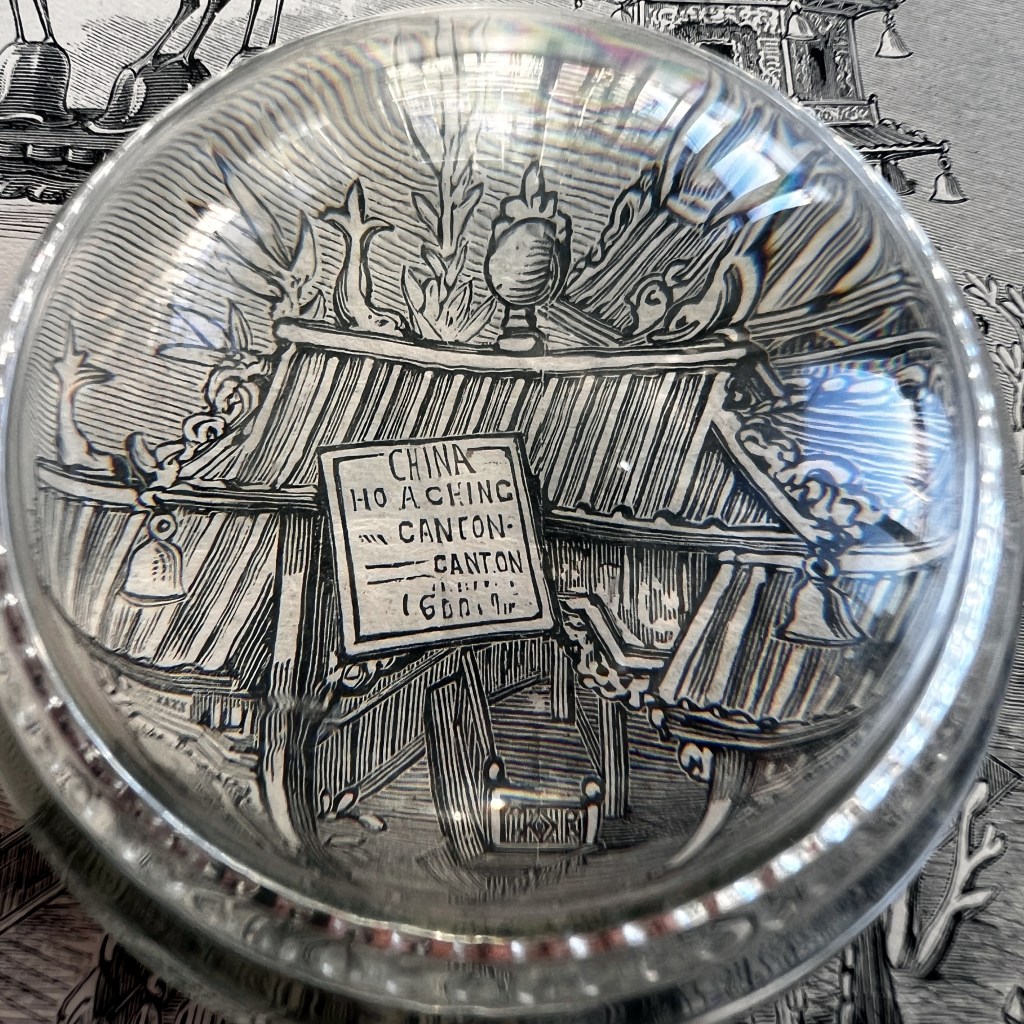
The carved ivory display merited some of the most attention, especially a fenced-in miniature pagoda surrounded by fruit trees and figurines. The artist here, working for the publisher Frank Leslie, notes the name of the Canton manufacturer, Ho A Ching.

We are told the pagoda was priced at $600. Many items were acquired by the Philadelphia Museum of Art, but I have not been able to confirm if its currently in the collection. A photo of the original pagoda can be seen here: https://tinyurl.com/mtkv2wzk.


The Buddhas in the West Material Archive is a digital scholarship project that catalogues artifacts depicting Buddhist material culture for Western audiences. It’s comprised of prints, photos, and an assortment of ephemera and other objects. For a brief introduction to this archive, visit the main Buddhas in the West project page.


For Related Buddhas in the West Posts Featuring the United States:


For the Most Recent Buddhas in the West Posts:

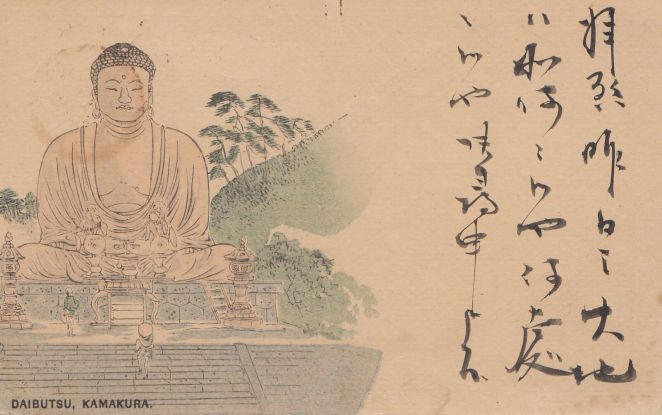
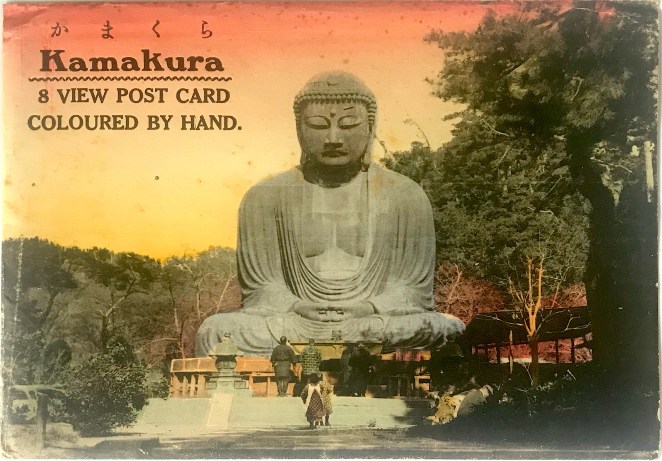
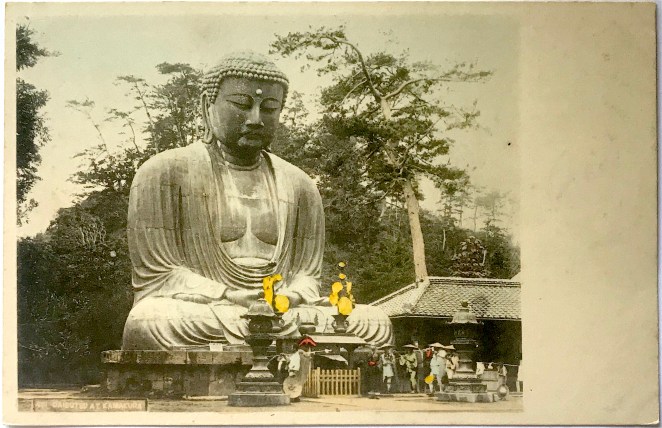
Hand-Colored Daibutsu Postcard Comparison

For all the new Buddhas in the West posts
follow us on Bluesky & Instagram


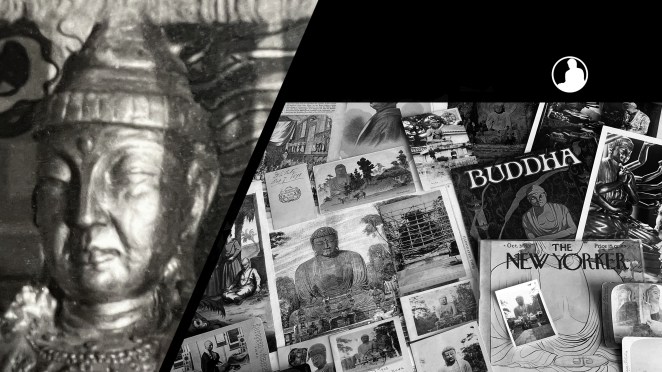
The US postal service delivered over 900 million postcards on the eve of WWI. In Japan, that number was 1.5 billion. Despite nearly doubling the total number of cards mailed, many Japanese picture postcards were also rather unique – they were individually hand painted.

As far as we can tell, a template card was painted by a specialist before it was sent out with dozens of plain cards to colorists, many of whom were women. At times you can find more notable coloring discrepancies between paired images.

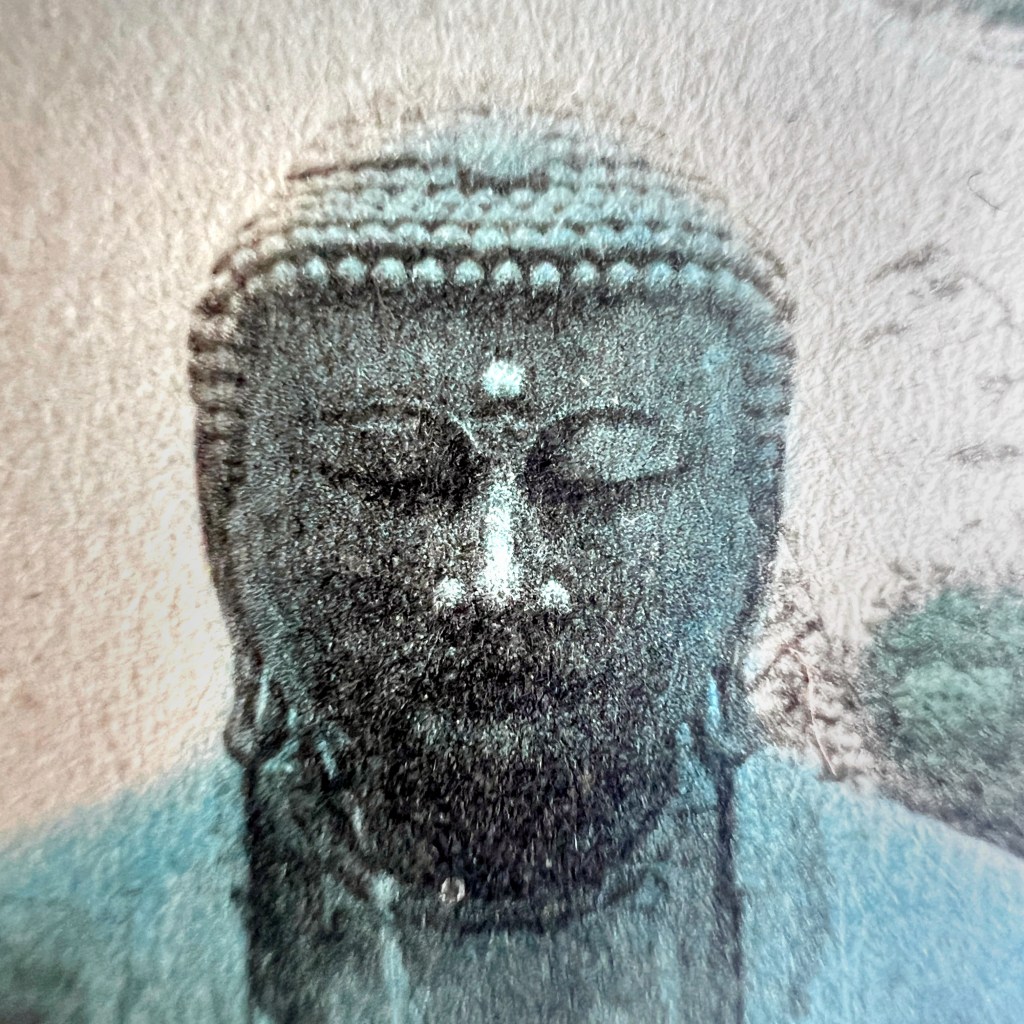
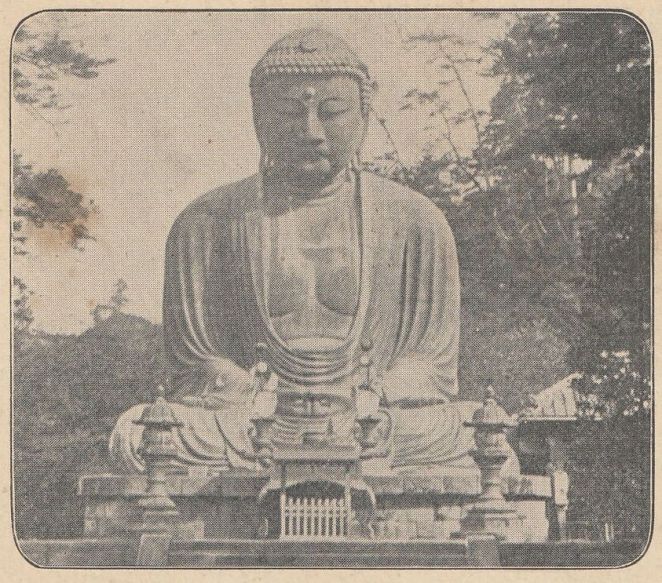
Note the differences in the boy’s garments, the open umbrella, the obi-sash, and stone pedestal in the background. It is also possible to see how the washes of color line up imperfectly with the collotype print in black ink.

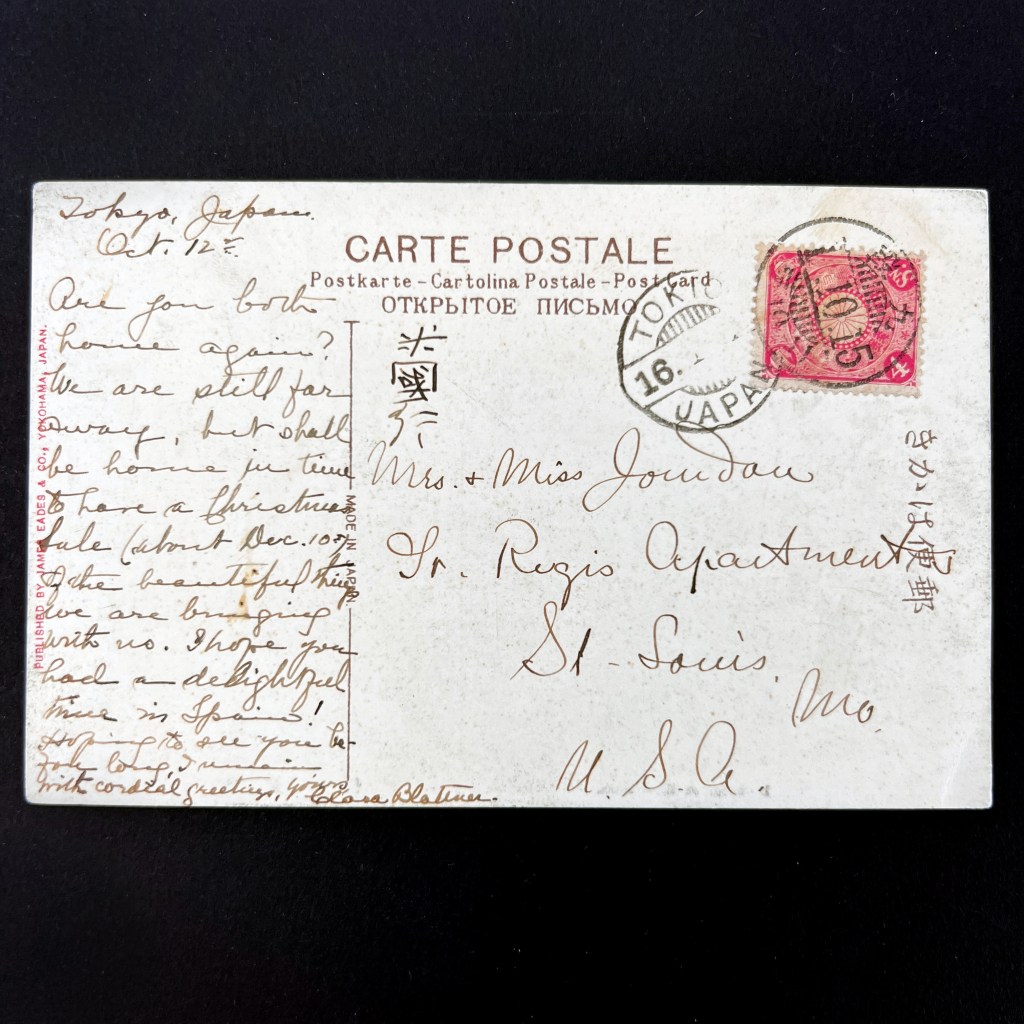
Due to the temple landscaping around the Kamakura Daibutsu, we know this photograph was likely taken between 1903 and 1910. According to the postal mark, the stamp was cancelled on October 15, 1912 (Taisho 1) and mailed to the United States (thus requiring a 4 sen stamp). We also have a rare publisher’s mark along the edge: James Eades & Co., Yokohama, Japan.

The Kamakura Daibustu was among the most popular tourist destinations in Japan and countless images of the bronze statue were sent as postcards around the world in the early 20th century.


The Buddhas in the West Material Archive is a digital scholarship project that catalogues artifacts depicting Buddhist material culture for Western audiences. It’s comprised of prints, photos, and an assortment of ephemera and other objects. For a brief introduction to this archive, visit the main Buddhas in the West project page.


For Related Buddhas in the West Posts Featuring the Kamakura Daibutsu:


For the Most Recent Buddhas in the West Posts:

Liebig’s Komusō Advertising Card

For all the new Buddhas in the West posts
follow us on Bluesky & Instagram


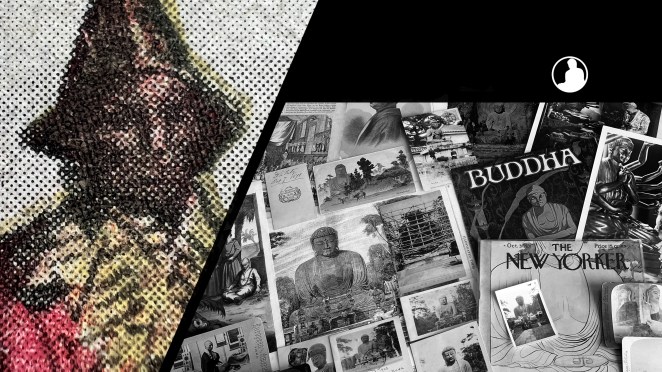
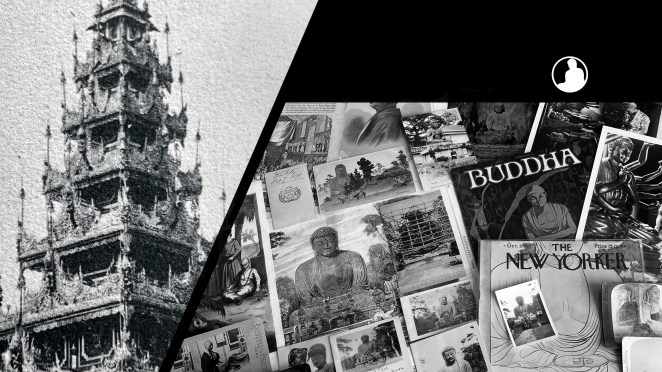
Komusō 虚無僧: Victorian trade card illustrations leaned into stereotypes to create collectables with easily identifiable cultures and peoples. With the 1905 Japanese modes of transportation series, the setting is provided a curious Buddhist figure: a flute playing monk.

The British Liebig company started producing trade cards in 1872 and by the turn of the century the vibrant chromolithographic prints were widely popular and printed in several languages. This set comprised six cards, with the one here focusing on the Japanese palanquin.

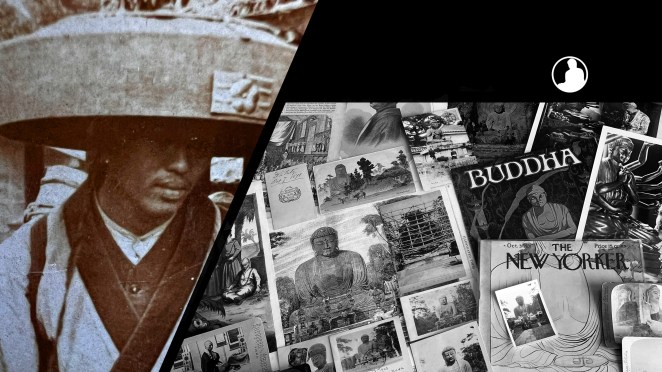
The faceless Komusō – monks of nothingness – were depicted in woodblock prints of the late Edo period and were seen in souvenir photographs of Yokohama studios in c.1890s. Consequently they became one among the visual icons of Japan for Western tourists.

The Fuke school of the komusō was prohibited in 1871, but lay shakuhachi flute players continued the tradition of playing in public while dressed in full garb.


The Buddhas in the West Material Archive is a digital scholarship project that catalogues artifacts depicting Buddhist material culture for Western audiences. It’s comprised of prints, photos, and an assortment of ephemera and other objects. For a brief introduction to this archive, visit the main Buddhas in the West project page.


For Related Buddhas in the West Posts Featuring Historical Trade Cards:


For the Most Recent Buddhas in the West Posts:

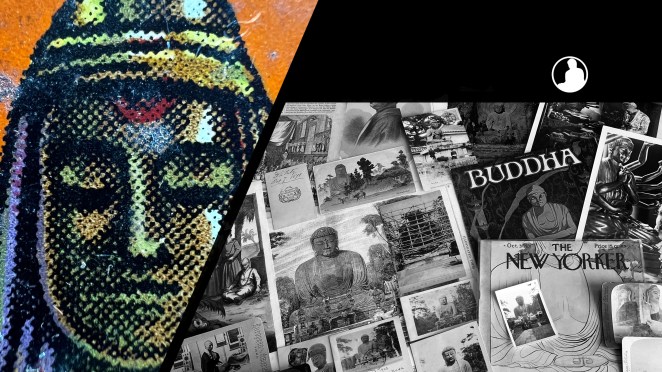
Argosy’s Jungle Justice Pulp Magazine Cover

For all the new Buddhas in the West posts
follow us on Bluesky & Instagram


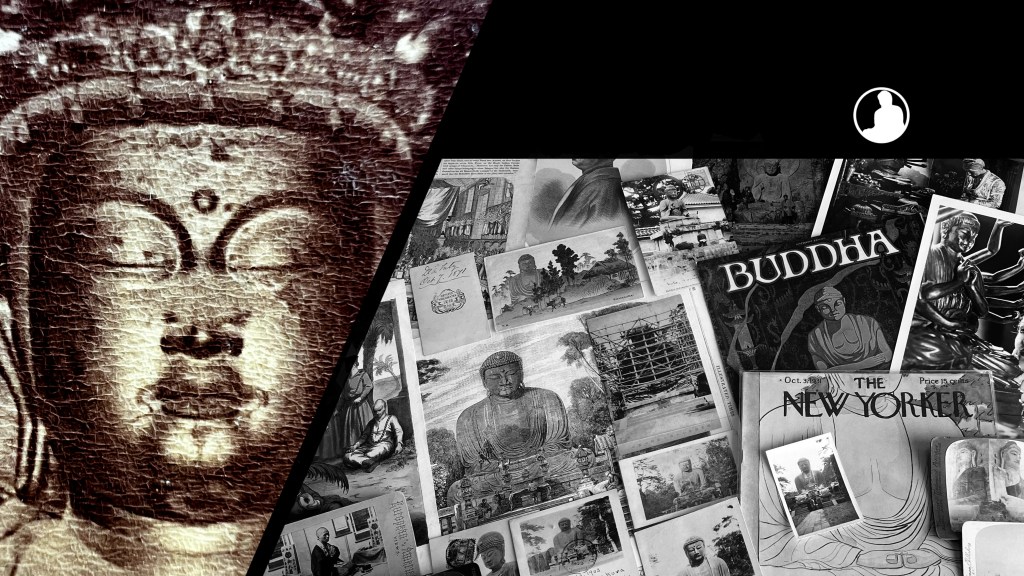
Pulp Fiction Buddhas: When editor Frank Munsey switched to inexpensive wood pulp paper in 1896, his publication, Argosy, was the first of what came to be known as pulp magazines. With over 150 publications in press by the 1930s, cover art was a critical driver for sales.

Argosy often featured episodic action and adventure stories, here starring Gillian Hazeltine as a crime solving lawyer in Jungle Justice. The cover of Paul Stahr vividly portrays the tropical setting and captures the tension between the hero and villain.

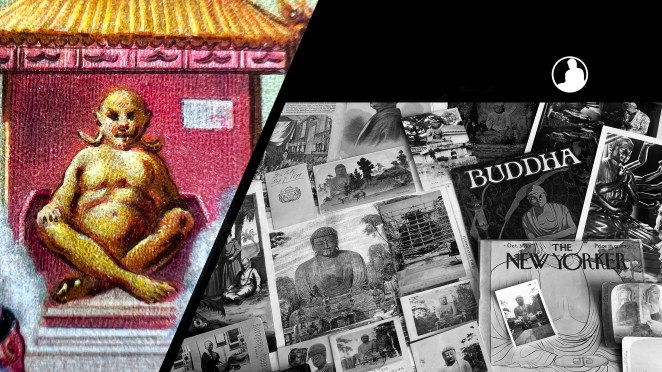
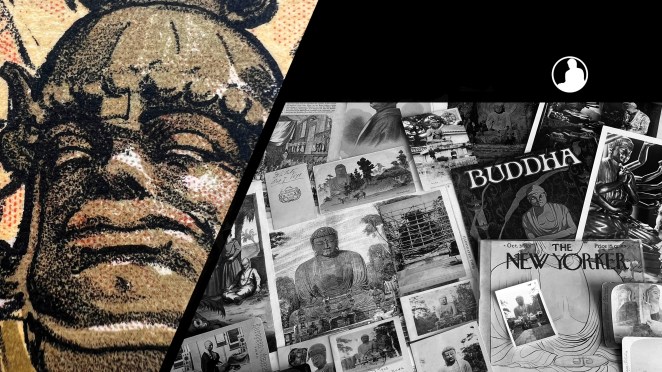
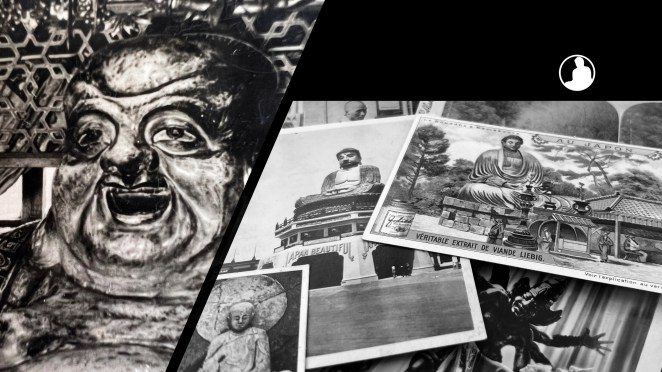
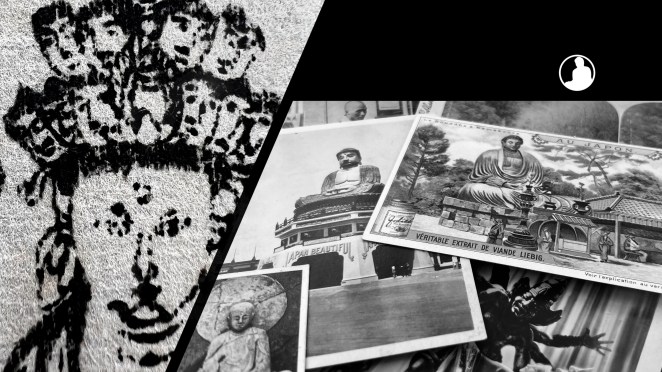
A closer look reveals a mélange of visual “Oriental” tropes: a grotesque Tibetan-style idol, a Japanese torii gate as shrine backdrop, and a turbaned menace hiding in the shadows.

The text is equally stereotypical, noting the location as “the Orient” (we are later informed its Saigon) and the villain as the “devil worshiper,” the Sultan of Senang.

The idol’s face, likely intended to signal the Sultan’s devil worship, resembles a Tibetan Buddhist cham dance mask. Various issues from Argosy, including Jungle Justice, can be read here: https://www.pulpmagazines.org/the-argosy/.


The Buddhas in the West Material Archive is a digital scholarship project that catalogues artifacts depicting Buddhist material culture for Western audiences. It’s comprised of prints, photos, and an assortment of ephemera and other objects. For a brief introduction to this archive, visit the main Buddhas in the West project page.


For Related Buddhas in the West Posts Featuring Historical Magazines:


For the Most Recent Buddhas in the West Posts:


World in Boston Missionary Expo Buddhism Postcard

For all the new Buddhas in the West posts
follow us on Bluesky & Instagram


A Buddhist Object Lesson: Buddhist material culture was critical to the first US missionary exposition in 1911. Called The World In Boston, religious artifacts were employed to help give visitors a realistic glimpse into international missionary life.

An estimated 400,000 people visited the exposition where “Buddhism” comprised a modest court in the Hall of Religions. In contrast to conventional museum exhibits, a single Burmese Buddhist statue was housed in a small building resembling a typical Southeast Asian temple.

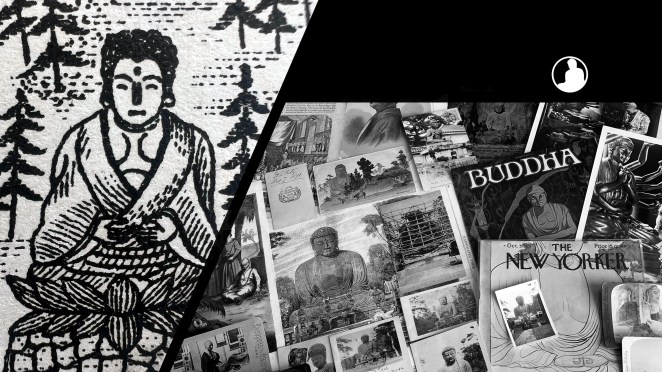
Inexpensive halftone printing allowed photographs to be reprinted as picture postcards, a very popular medium of the era. The image on the front bears only a loose resemblance to real Burmese temples found on postcards published by Philipp Klier and D.A. Ahuja.

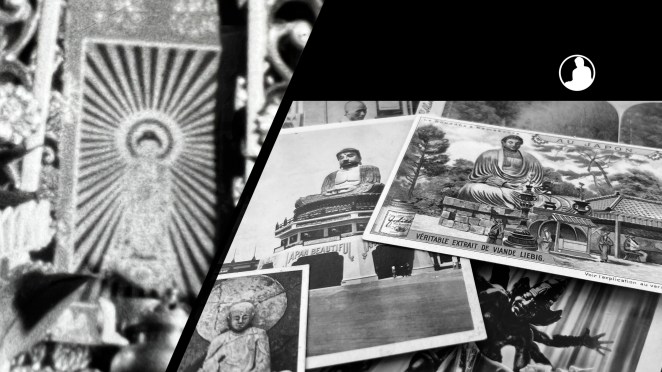
On-site docents ensured religious icons were understood as props within a missionary narrative of attempting to save debased heathens. The American Baptist Mission in Burma provided some of the objects on display at The World in Boston, possibly even this enshrined Buddha.

For further exploration of the artifacts on display at the 1911 missionary exhibition, see Hasinoff, Erin L. Faith in Objects American Missionary Expositions in the Early Twentieth Century. New York: Palgrave Macmillan, 2011.


The Buddhas in the West Material Archive is a digital scholarship project that catalogues artifacts depicting Buddhist material culture for Western audiences. It’s comprised of prints, photos, and an assortment of ephemera and other objects. For a brief introduction to this archive, visit the main Buddhas in the West project page.


For Related Buddhas in the West Posts Featuring Expositions:


For the Most Recent Buddhas in the West Posts: