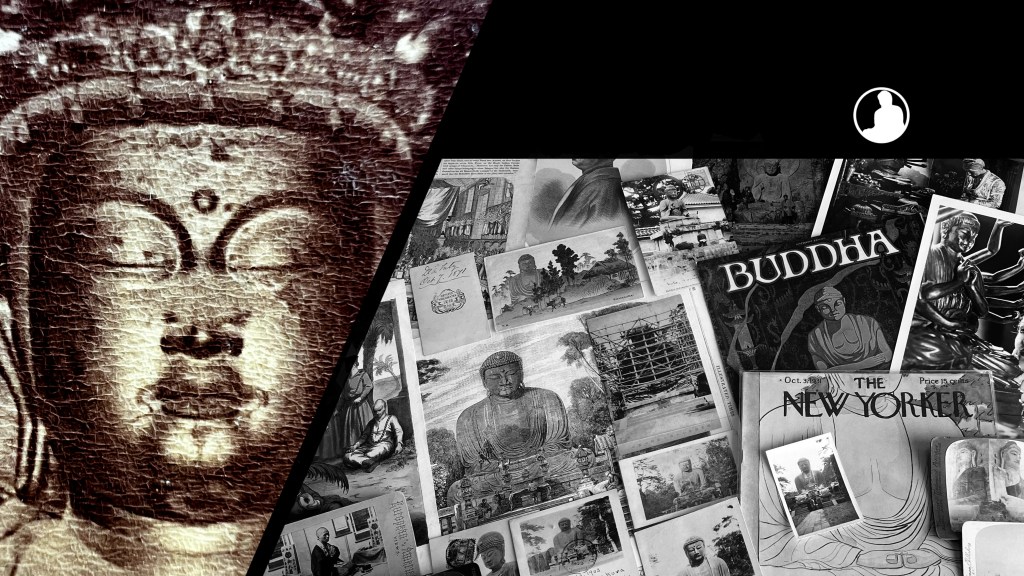
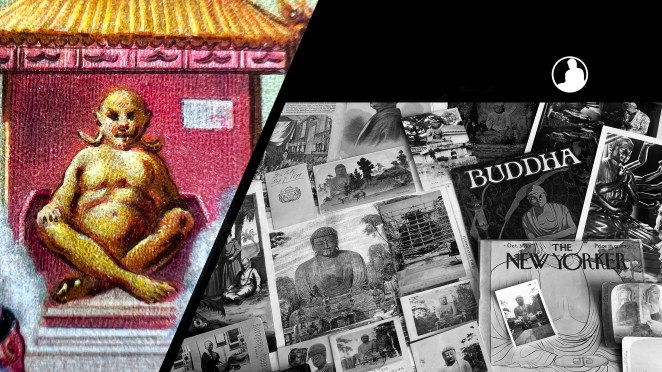
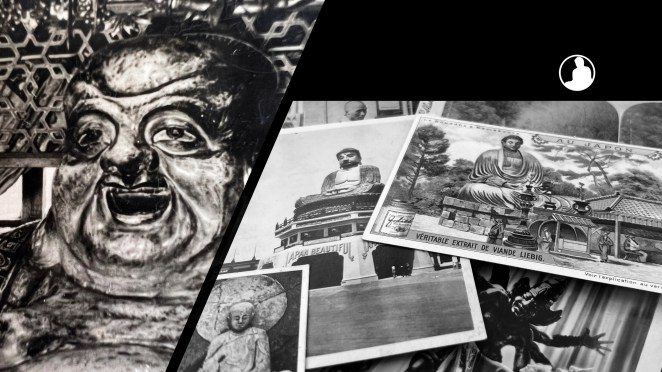
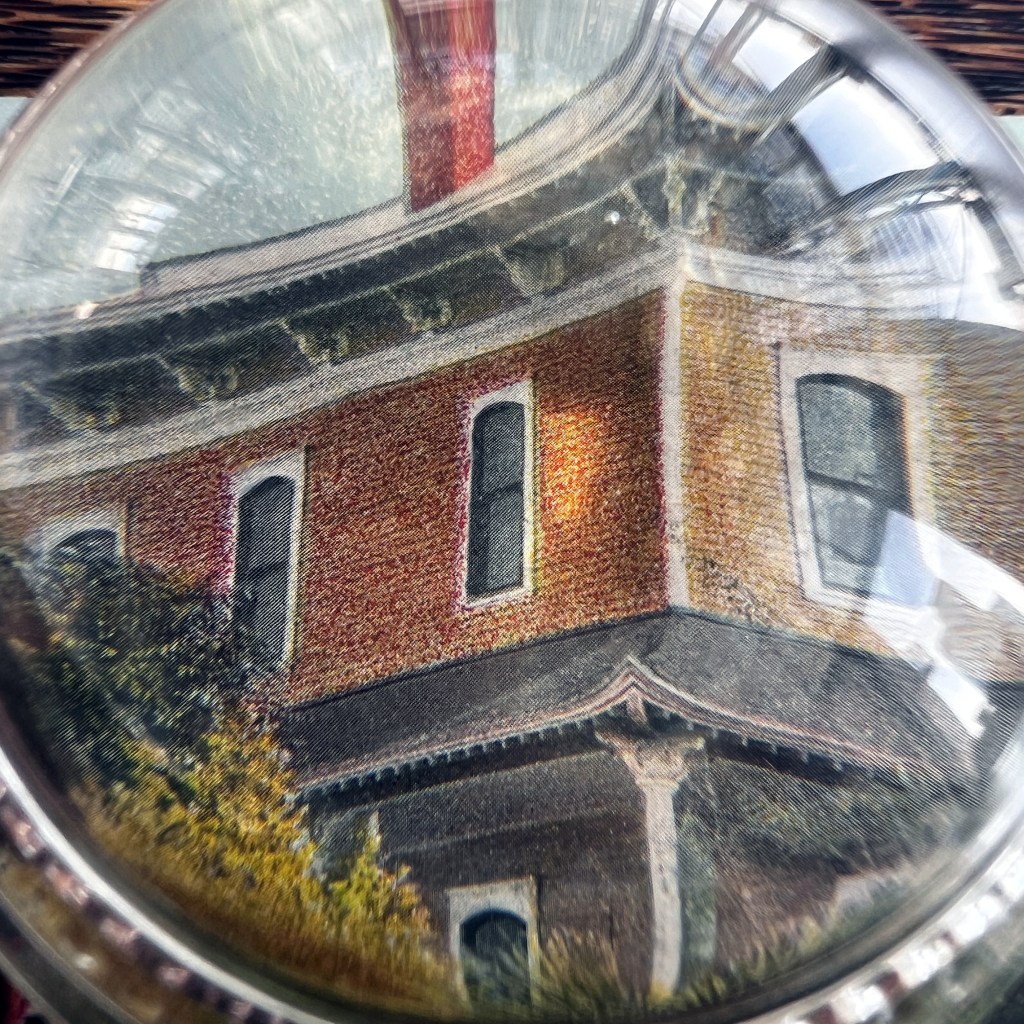
1933 Golden Pavilion Laughing Buddha Playing Card

For all the new Buddhas in the West posts
follow us on Bluesky & Instagram


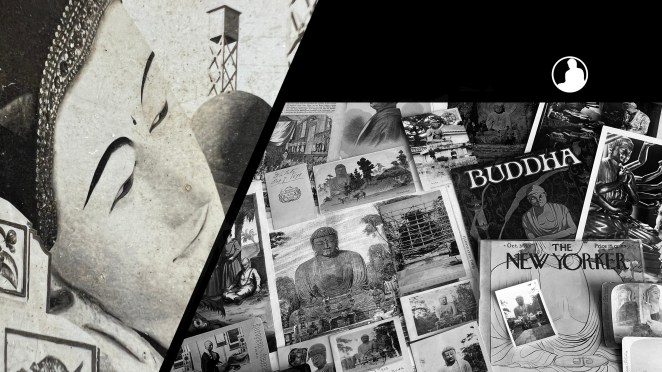
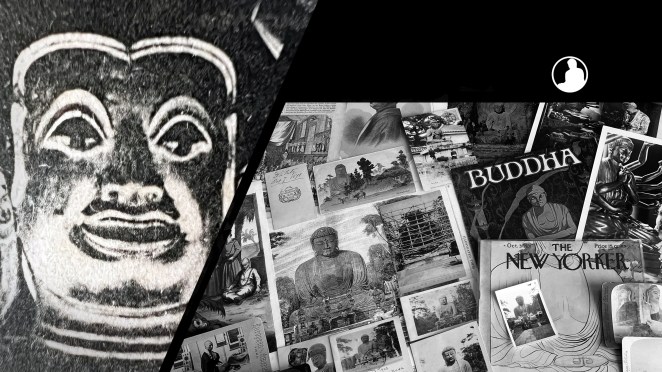
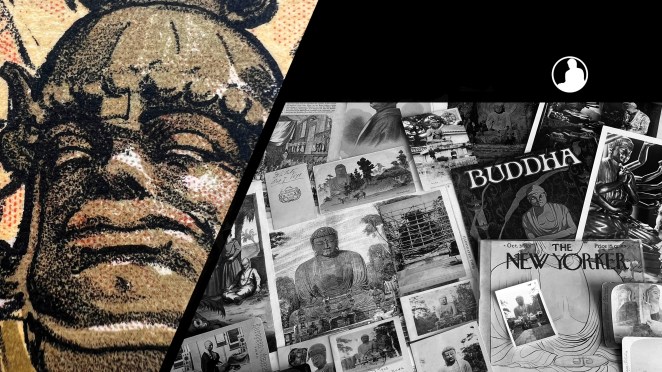
The 1933 Chicago World’s Fair held a true wonder: A Chinese replica of an 18th century Tibetan Buddhist shrine hall, the Golden Temple of Jehol. While the hall included a main shrine to Guanyin, the Laughing Buddha at the front entrance was often used in advertising.

Due to growing conflict in East Asia, the Chinese government withdrew from the 1933 World’s Fair. Subsequently, organizers arranged for display of the recently acquired temple replica of Vincent Bendix, a well-known Chicago industrialist.

Bendix had funded the expedition of Sved Hedin a few years earlier to procure a replica of a Chinese Buddhist temple. The original interest was to display two replica temples with Tibetan religious objects, one in Chicago and one in Stockholm.

Only one replica was made, but Hedin acquired many ritual implements, including thankas and icons, to outfit the building. Named the Bendix Golden Temple (or Pavilion), it was a Chinese-made replica of the Wanfaguiyi Hall in present-day Chengde (Jehol).

The temple was rebuilt for the 1939 World’s Fair in New York. As of 2018 the remains of the temple hall are in Stockholm, but the ritual items and furnishing have all been lost.


The Buddhas in the West Material Archive is a digital scholarship project that catalogues artifacts depicting Buddhist material culture for Western audiences. It’s comprised of prints, photos, and an assortment of ephemera and other objects. For a brief introduction to this archive, visit the main Buddhas in the West project page.


For Related Buddhas in the West Posts Featuring Budai / Laughing Buddha:


For the Most Recent Buddhas in the West Posts:


George Planté’s Hall of a Thousand Buddhas Postcard

For all the new Buddhas in the West posts
follow us on Bluesky & Instagram


George Planté came to Vietnam as a member of the colonial French government, but by 1893 had turned to photography and opened a studio in Saigon. He soon recognized the desire for postcards among the overseas French military and was selling the inexpensive souvenirs by 1905.

The undivided back design of this French card suggests it was published in 1905 or before. Around this time, Planté seems to have acquired the old stock of Aurélien Pestel, thus the photograph on the front may have been taken by Pestel.
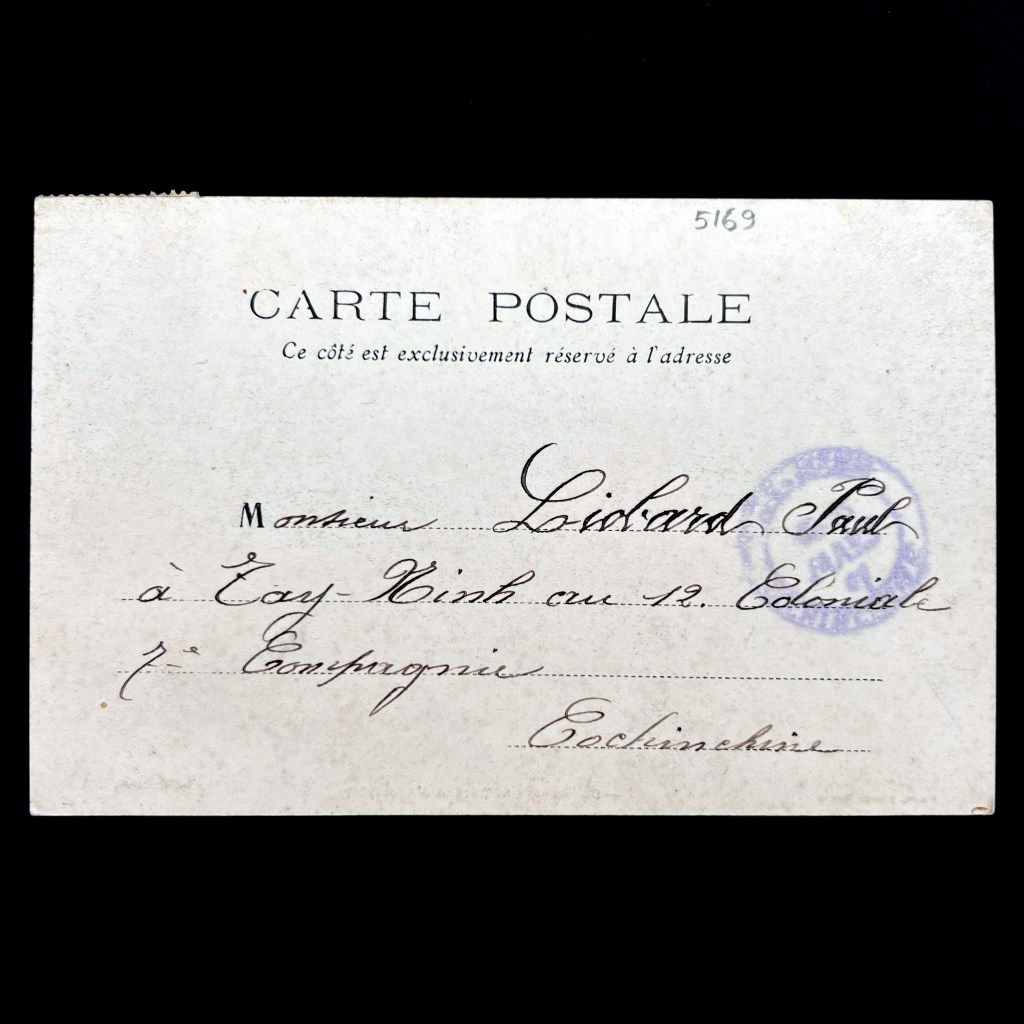
The caption gives the location as Angkor Wat, but this is the interior of the Preah Poan, known commonly as the Hall of a Thousand Buddhas. The presence of the Buddhist statues clearly shows how the original temple devoted to Viṣṇu was taken over by Buddhists.

The statues that once filled the open cruciform hall have all been removed in the course of restoration and preservation.
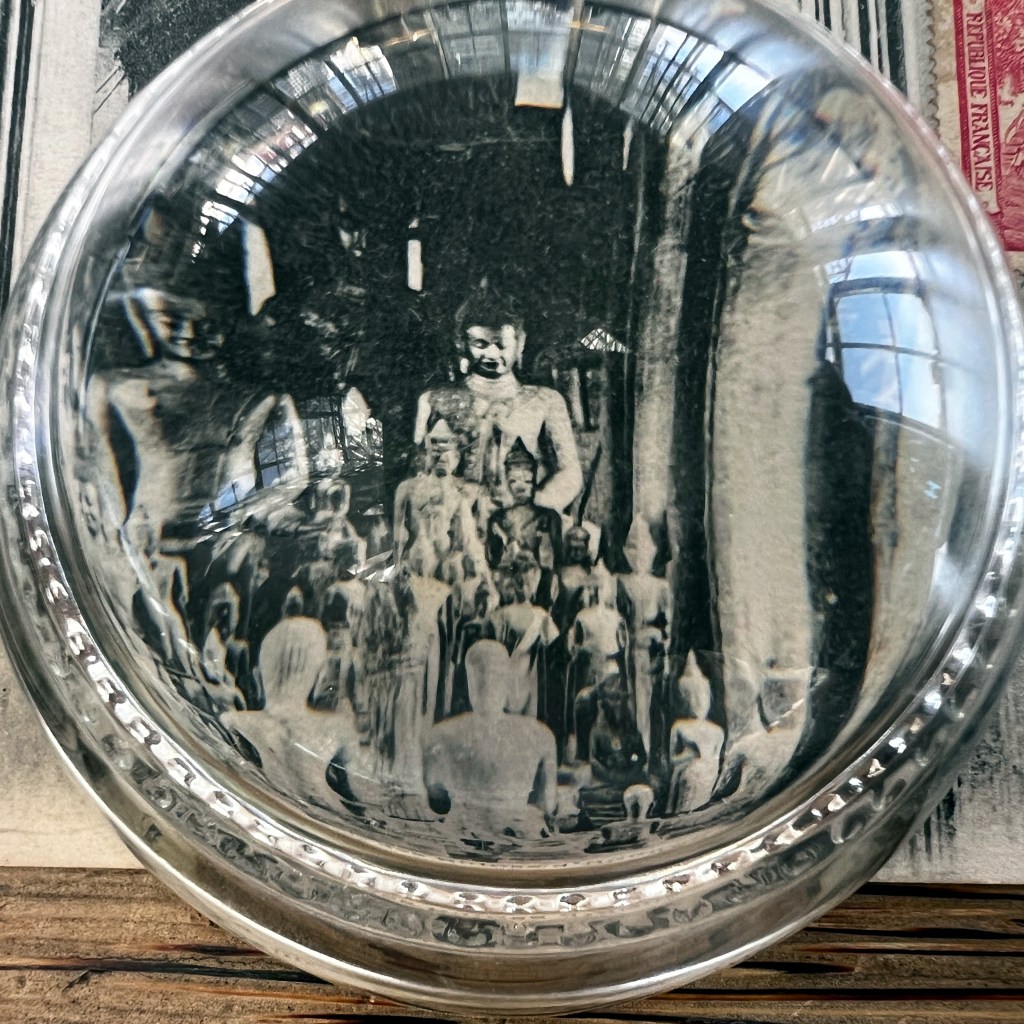
Photographs from the turn of the century capture how the hall once looked filled with Buddhist icons. Google Arts & Culture has a 360-degree view of the hall today, see here: https://tinyurl.com/yckkbumz


The Buddhas in the West Material Archive is a digital scholarship project that catalogues artifacts depicting Buddhist material culture for Western audiences. It’s comprised of prints, photos, and an assortment of ephemera and other objects. For a brief introduction to this archive, visit the main Buddhas in the West project page.


For Related Buddhas in the West Posts Featuring Angkor Wat:

For the Most Recent Buddhas in the West Posts:


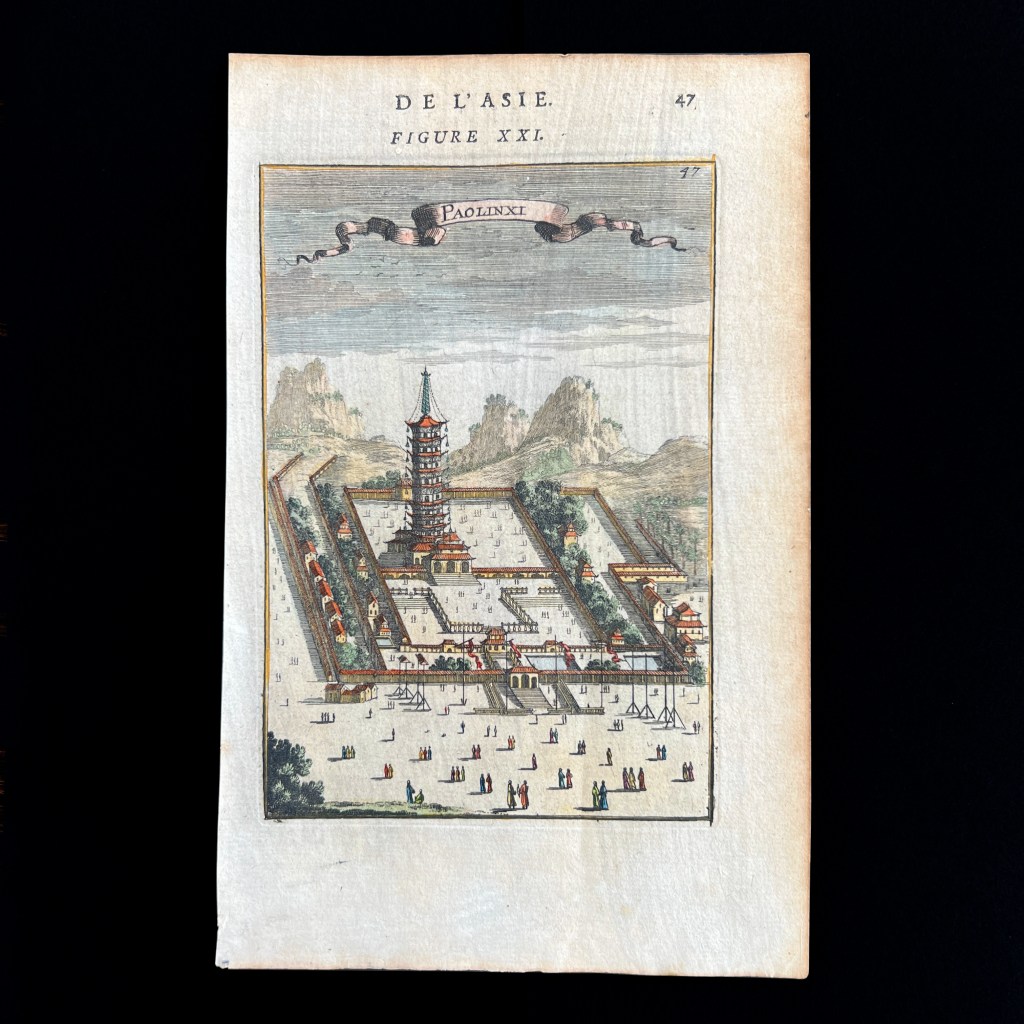
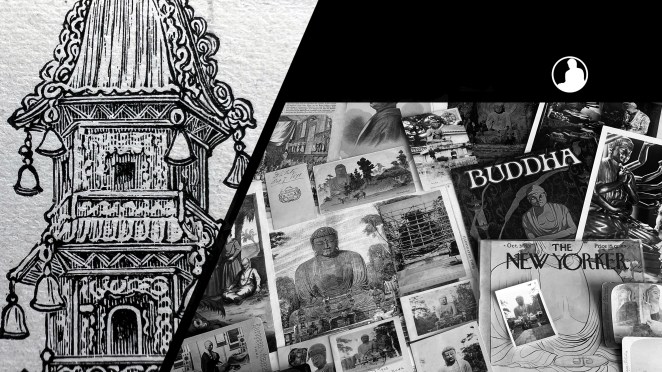
Alain Mallet’s Porcelain Pagoda of Baoen Temple Engraving

For all the new Buddhas in the West posts
follow us on Bluesky & Instagram


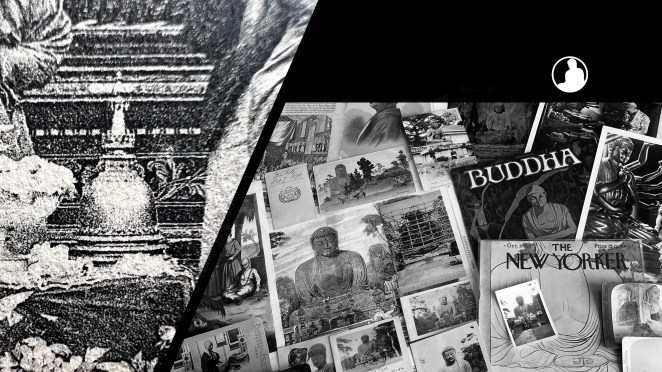
In 1683, the French military commander Alain Mallet published his illustrated five-volume set entitled Description de l’univers. While it received tepid reviews, Mallet’s encyclopedic approach drew together diverse information about East Asia that was still relatively new to European audiences.

Trained as an engineer and draughtsman, Mallet is sometimes claimed to have drawn the images for his books. While his cartography and celestial charts may have been original works, the images of Asia were copies of earlier published illustrations.

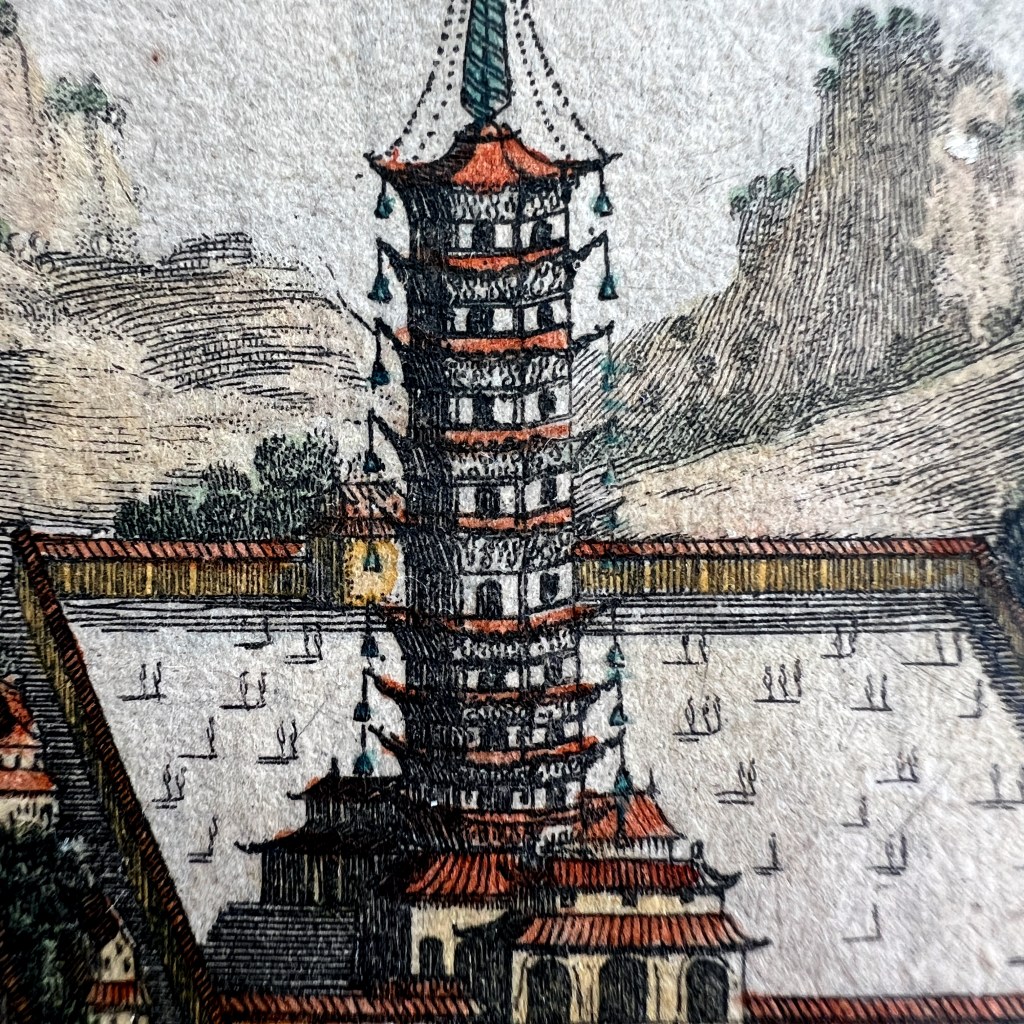
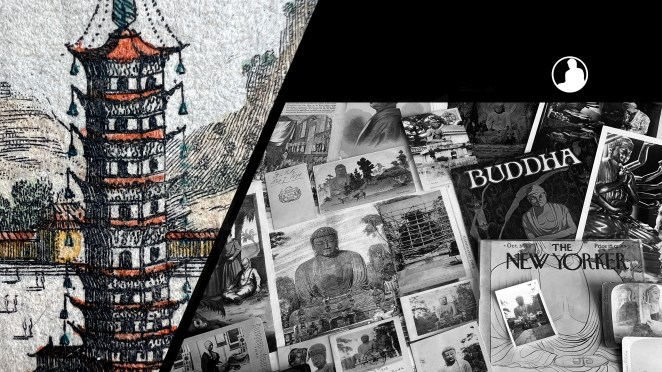
This illustration of the famed Porcelain Pagoda of Baoen Temple in Nanjing was a copy of Johan Nieuhof’s illustration more than a decade earlier. This included the irregular mountains in the back and the people added for scale.

It was publications like Description de l’univers, however, the kept the pagoda alive in the European imagination, making it a key visual element in chinoiserie.


The Buddhas in the West Material Archive is a digital scholarship project that catalogues artifacts depicting Buddhist material culture for Western audiences. It’s comprised of prints, photos, and an assortment of ephemera and other objects. For a brief introduction to this archive, visit the main Buddhas in the West project page.


For Related Buddhas in the West Posts Featuring Historical Engravings:


For the Most Recent Buddhas in the West Posts:

Liebig’s Chinese Buddha Advertising Card

For all the new Buddhas in the West posts
follow us on Bluesky & Instagram


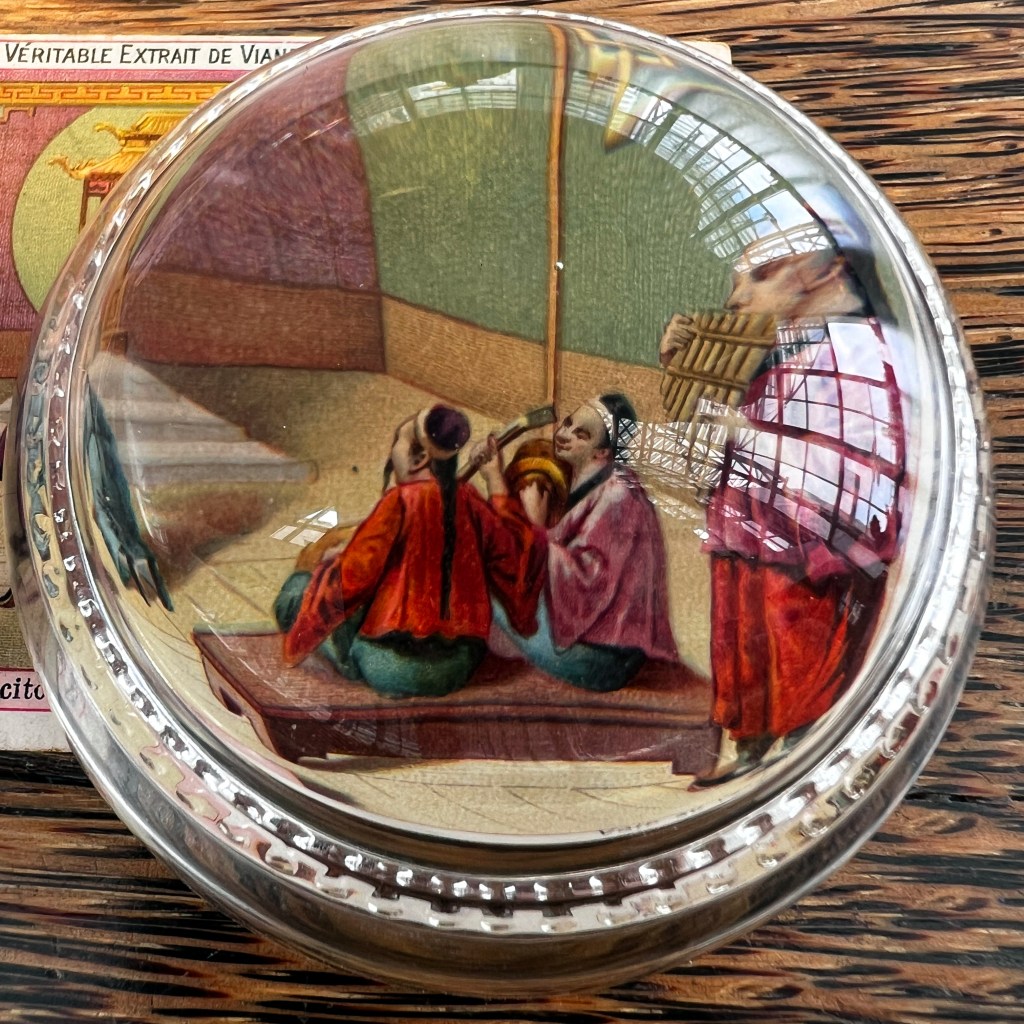
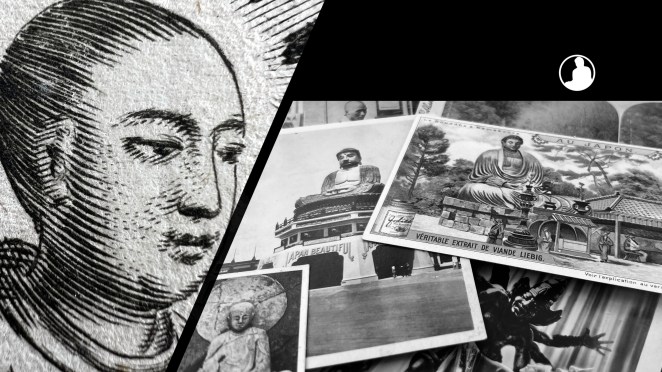
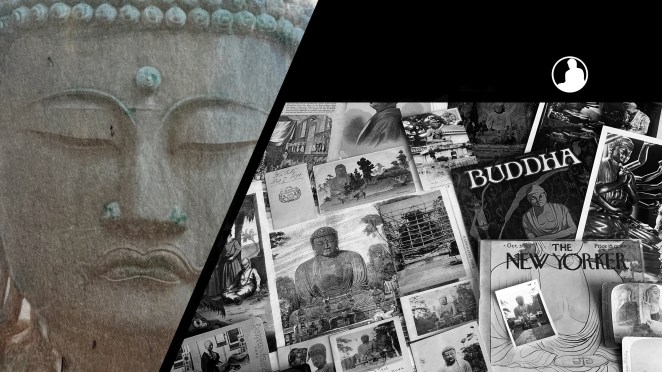
Gods of Antiquity: In the early age of black and white mass market publications, chromolithography ushered in a new era of visual media. From massive broadside to Victorian trade cards, vibrant color was the future and the British Liebig company capitalized on this market.

Liebig started producing trade cards in 1872 and by the turn of the century their cards were printed in several languages. Several different sets were made each year and these sets soon became collector’s items, predating hobbies such as baseball card collecting.

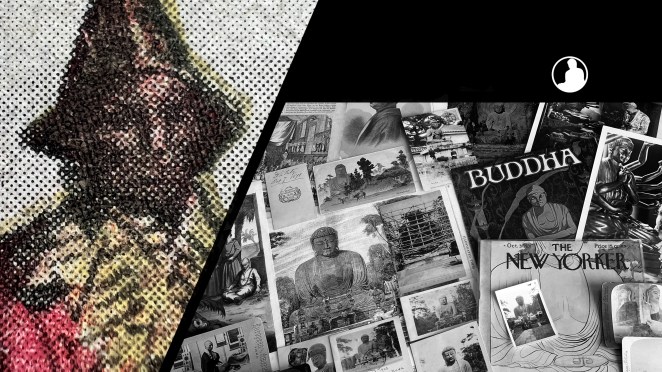
In 1895 Liebig released the Gods of Antiquity set, with the card here showing the worship of the Buddha by “Chinese nobles.” The scene is mostly a hodge-podge of turn of the century Chinese stereotypes.

A gold Buddha, sitting awkwardly with legs crossed, takes center stage in this imaginary temple scene.

Chinese Buddhist rituals use instruments, but not of the kind depicted here.

For a short introduction to the Liebig Company’s trade cards by Princeton University’s Firestone Library, follow this link: https://tinyurl.com/3nzvs6mh.


The Buddhas in the West Material Archive is a digital scholarship project that catalogues artifacts depicting Buddhist material culture for Western audiences. It’s comprised of prints, photos, and an assortment of ephemera and other objects. For a brief introduction to this archive, visit the main Buddhas in the West project page.


For Related Buddhas in the West Posts Featuring China:


For the Most Recent Buddhas in the West Posts:


Tooth of the Buddha Reliquary Postcard

For all the new Buddhas in the West posts
follow us on Bluesky & Instagram


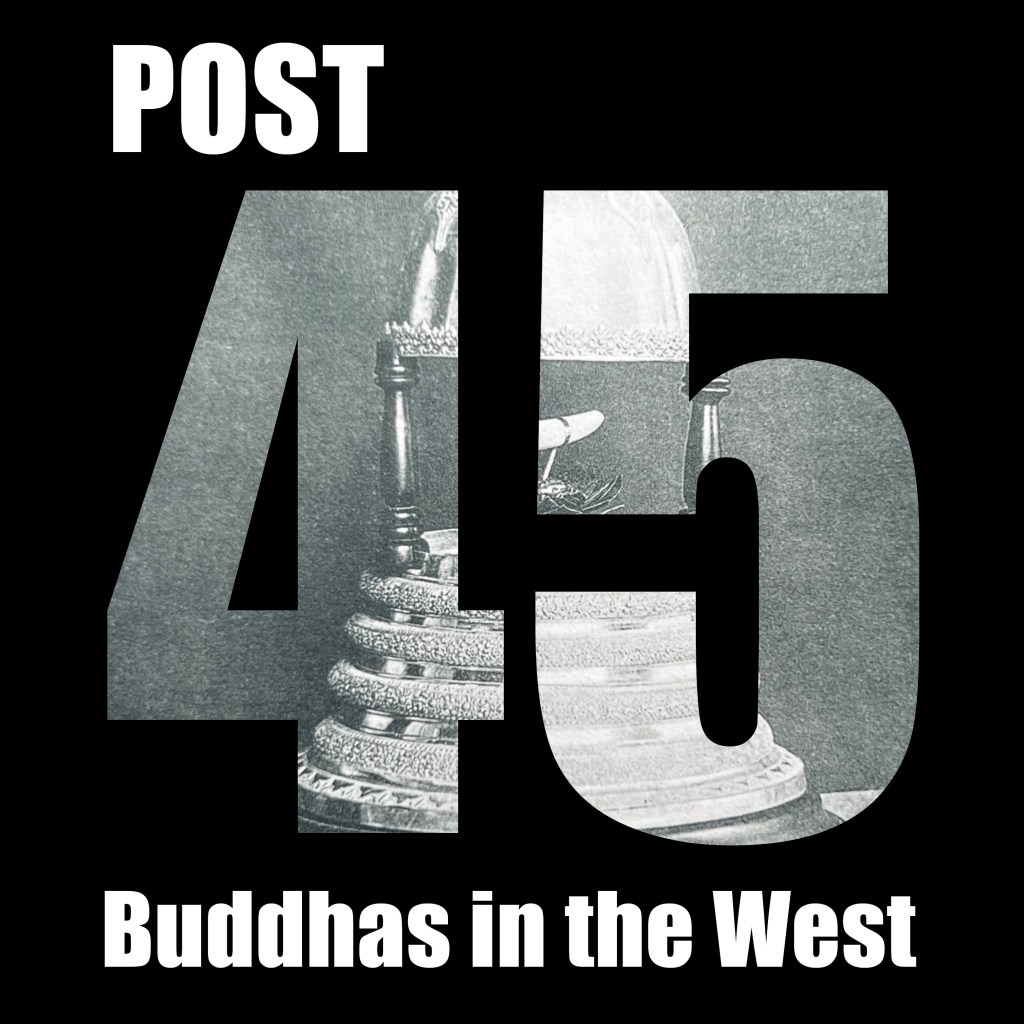
When the British re-enshrined the Buddha’s tooth relic at Kandy’s Temple of the Tooth in 1815, few among the British public were aware of the events. In 1875, however, when the Prince of Wales visits the relic, great interest in the sacred tooth spreads across England.

The undivided back design on the reverse indicates this card was printed before 1902, following British postal code. Unlike today, the message had to be written on the other side of the card, thus the blank space on the bottom edge of the obverse.

The “life story” of the tooth relic is preserved in the Dāṭhavaṃsa, compiled in the early 13th century. According to this work, in the ancient past a non-Buddhist Indian king tried to burn and smash the tooth, but it remained unscathed.

Consequently, as the story goes, the king converted to Buddhism and the tooth eventually made its way to Sri Lanka. Here we see the tooth encased in a stupa-shaped reliquary.

For a small collection of South Asian postcards, including a mailed version of the one shown here, see the offerings by the University of San Diego here: https://tinyurl.com/3nphs2k2.


The Buddhas in the West Material Archive is a digital scholarship project that catalogues artifacts depicting Buddhist material culture for Western audiences. It’s comprised of prints, photos, and an assortment of ephemera and other objects. For a brief introduction to this archive, visit the main Buddhas in the West project page.


For Related Buddhas in the West Posts Featuring Sri Lanka / Ceylon:


For the Most Recent Buddhas in the West Posts:


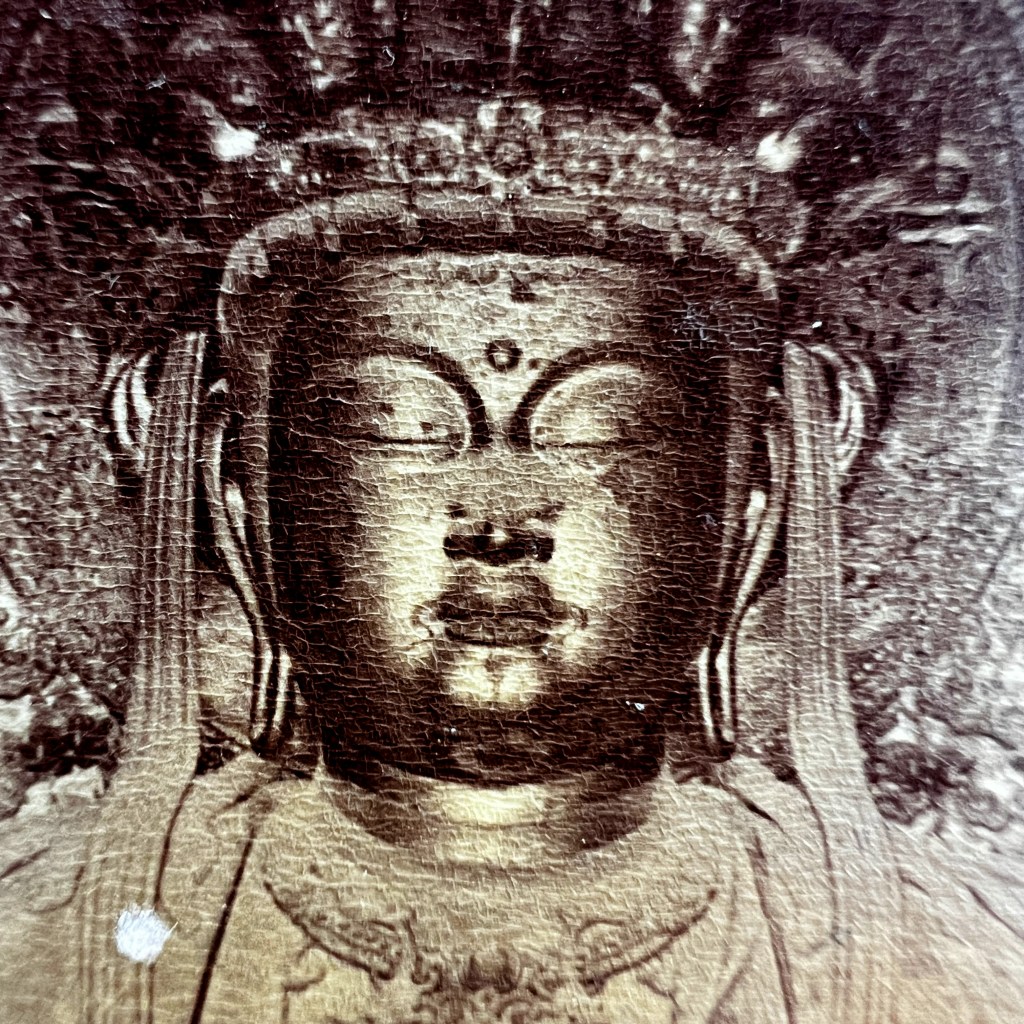
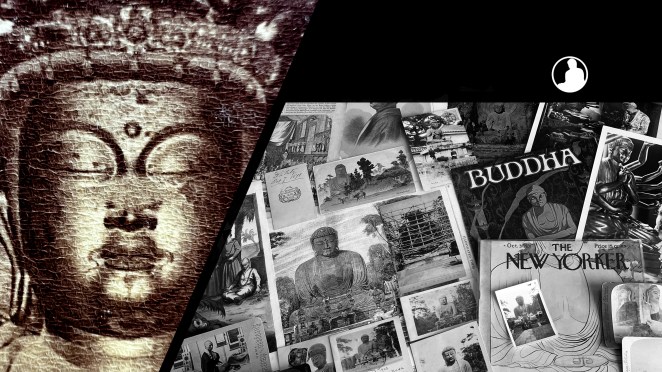
Albumen Photograph of Sanjūsangen-dō Kannon

For all the new Buddhas in the West posts
follow us on Bluesky & Instagram


For visitors to Japan in the 1860s, Kyoto was seen as brimming with dangerous anti-foreign samurai. This changed in the 1870s when it was transformed by tourism, driven in part by foreign photography studios who were allowed to shoot the city for the 1872 Kyoto Exposition.

While Europeans knew of Kyoto’s Sanjūsangen-dō through late 17th century book engravings, the first photographs of the temple likely did not circulate until the early 1870s. This albumen print is by an unknown commercial photographer and likely dates to the 1880s.

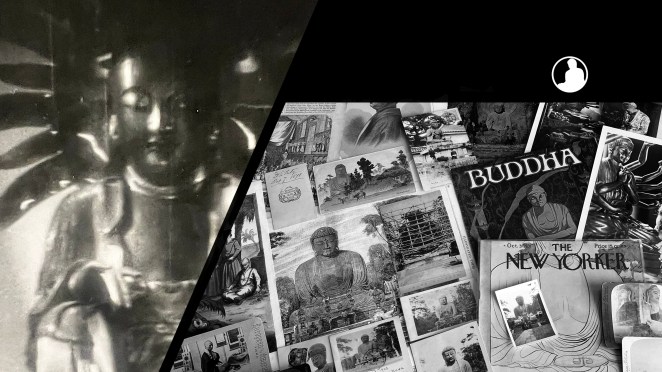
The central icon is a Thousand-armed Kannon from the 13th century and is recognized as a National Treasure of Japan.

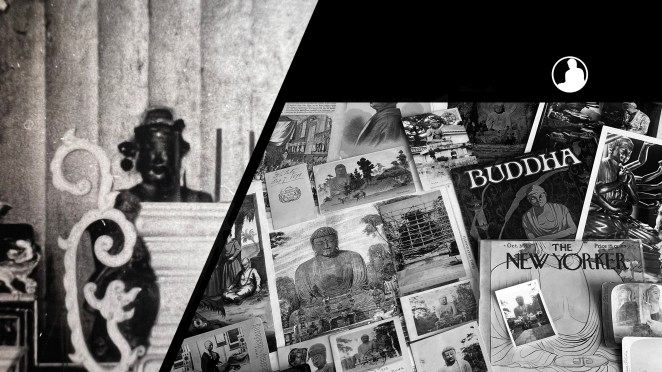
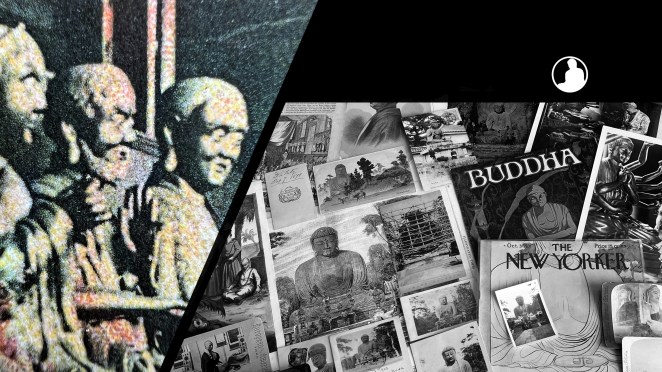
There appears to be a double exposure in this photograph, with a priest kneeling in front of the icon. The colorist gave the priest’s robes a wash of blue, but the paint did not cover over the woodwork designs of the altar.

Baron von Stillfried was among the foreign studio owners who photographed Kyoto in 1872. One of his albums, with views of Kyoto, can be seen through the Metropolitan Museum of Art here: https://tinyurl.com/yuuf52u9.


The Buddhas in the West Material Archive is a digital scholarship project that catalogues artifacts depicting Buddhist material culture for Western audiences. It’s comprised of prints, photos, and an assortment of ephemera and other objects. For a brief introduction to this archive, visit the main Buddhas in the West project page.


For Related Buddhas in the West Posts Featuring Kyoto, Japan:


For the Most Recent Buddhas in the West Posts:

Thomas Allom’s Sticks of Fate Engraving

For all the new Buddhas in the West posts
follow us on Bluesky & Instagram


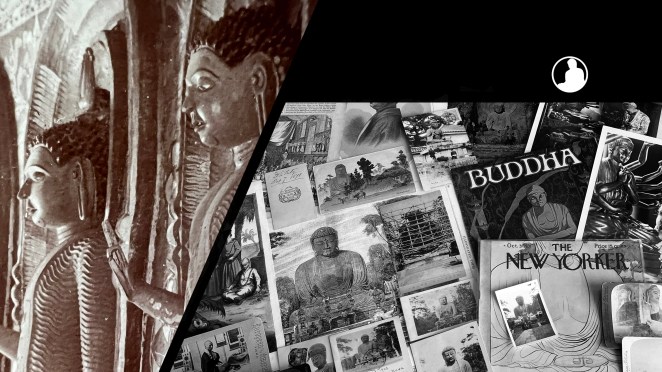
Having never traveled to China, Thomas Allom’s illustrations retain a touch of the fantastic common among his European pictorial predecessors. After the end of the Opium War in 1842 there was renewed interest in China and Allom’s book was among the first to serve this audience.

The text for China: In a Series of Views was composed by Rev. George Wright. He commonly portrayed the Chinese as inferior and infatuated with bizarre customs, reflecting a growing sentiment among Europeans after the Opium War.

A trained illustrator, Allom prepared watercolor paintings and had them engraved for his books. While some paintings were copies of earlier works by others, including those in the British military stationed in China, this illustration appears to be the creation of Allom.

Overall, Allom creates a dynamic image showing a commonplace Chinese temple practice of fortune telling. Some elements, however, appear out of place.

The New York Public Library has digitized Allom’s works on China with a layout of all his engraved illustrations viewable here: https://tinyurl.com/3b74hu7m.


The Buddhas in the West Material Archive is a digital scholarship project that catalogues artifacts depicting Buddhist material culture for Western audiences. It’s comprised of prints, photos, and an assortment of ephemera and other objects. For a brief introduction to this archive, visit the main Buddhas in the West project page.


For Related Buddhas in the West Posts Featuring China:


For the Most Recent Buddhas in the West Posts:

Paris’ Panorama du Tour du Monde Advertising Card

For all the new Buddhas in the West posts
follow us on Bluesky & Instagram


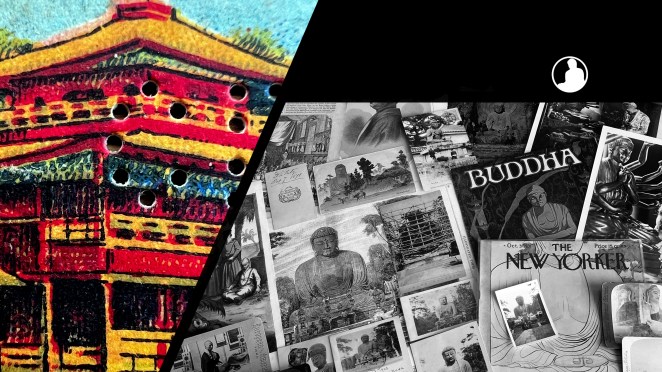
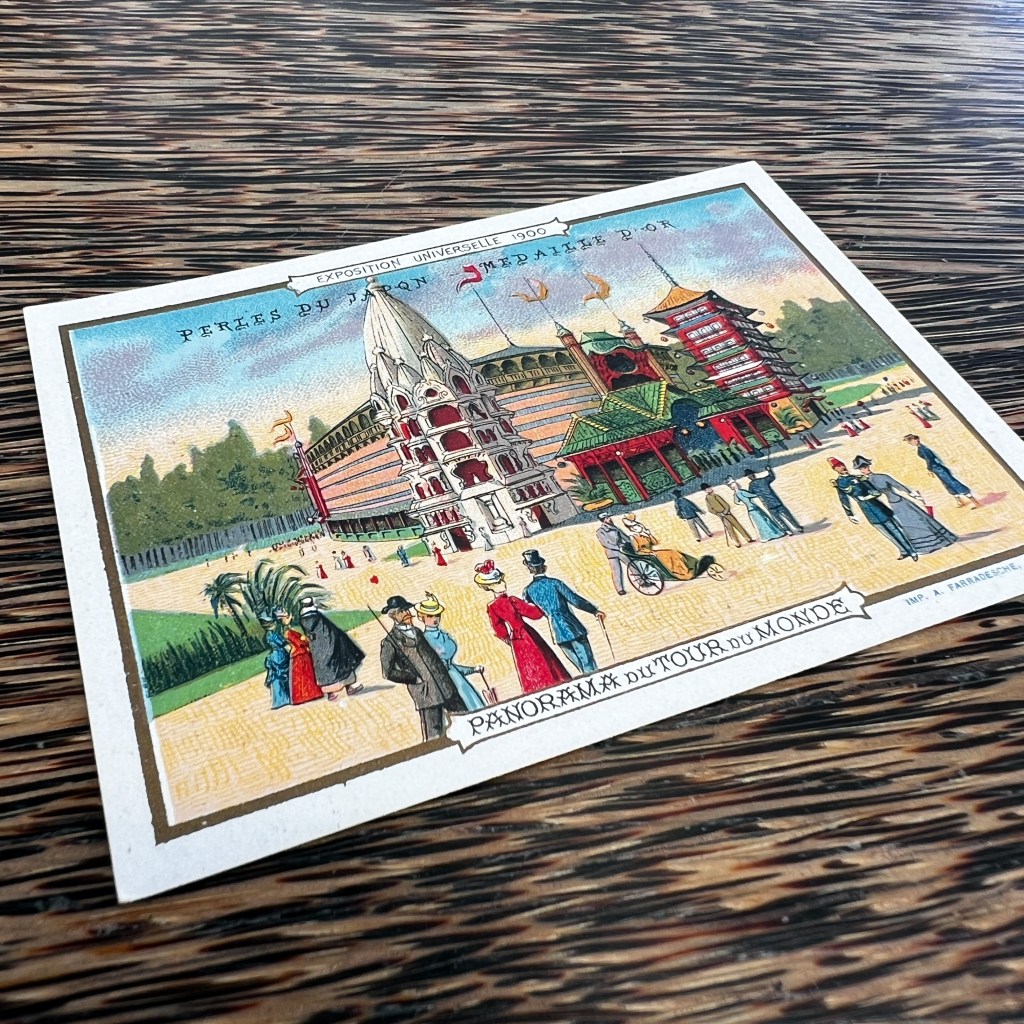
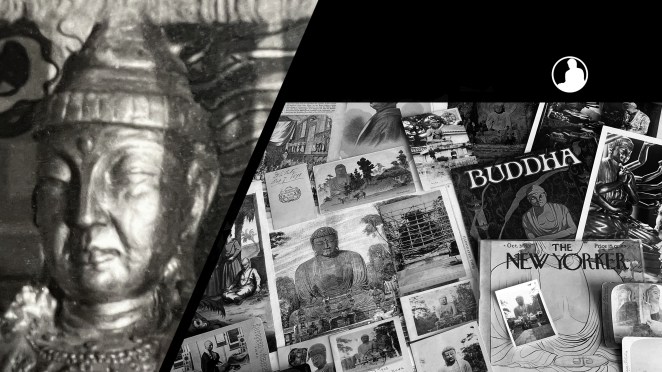
Panorama du Tour du Monde: By the 1900 Paris Exposition, amusement concessions were a major draw for all exposition visitors. Not far from the foot of the Eiffel Tower one found the Panorama du Tour du Monde which took patrons on a virtual voyage from Spain to Japan.

Built by Alexandre Marcel for a French sea-transport company, the architecture called to mind exotic locales with Asian-inspired structures. The main entrance was modeled on the Tōshō-gū in Nikkō, Japan. Some sources claim the red pagoda was based on a Chinese model.

Visitors were drawn in by large panoramic paintings of various foreign countries to give a sense of virtual travel. More astonishingly, the concession integrated many indigenous performers who engaged in various trades while wearing traditional foreign costumes

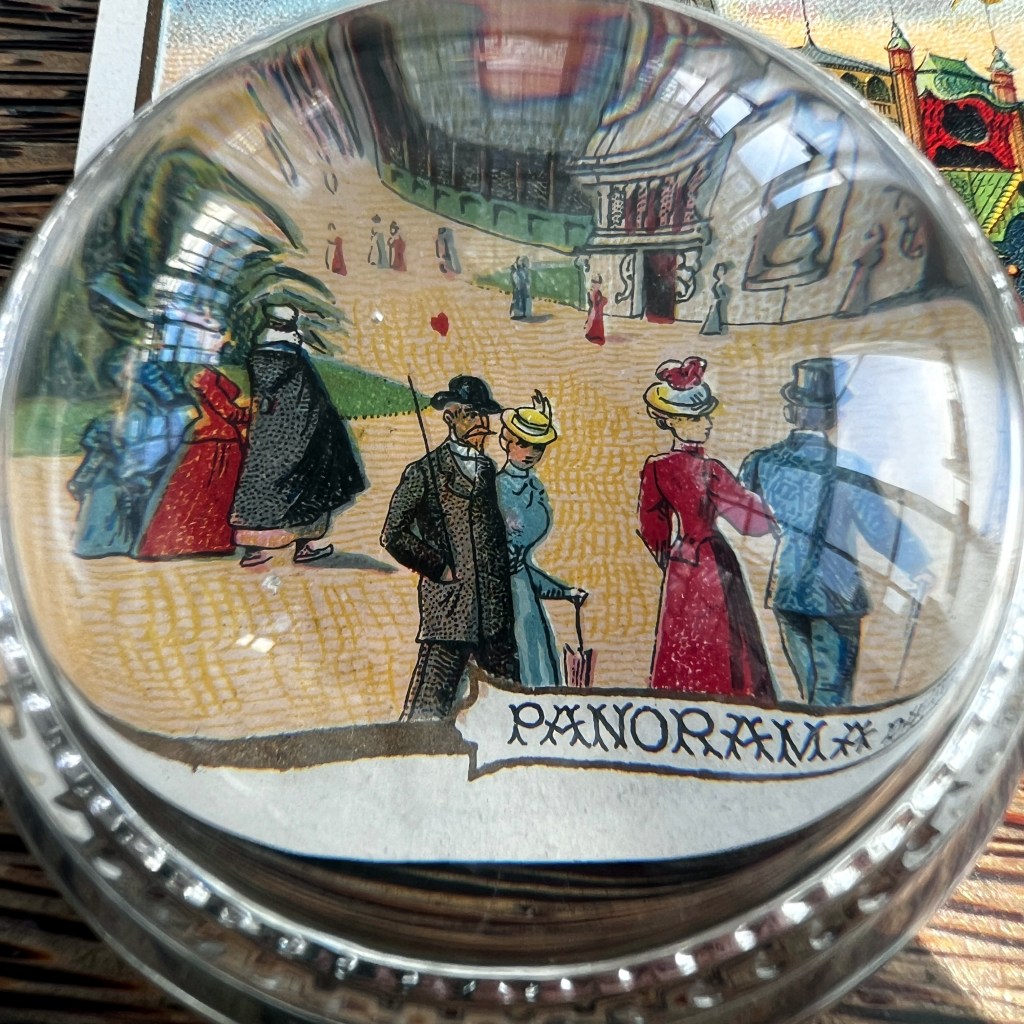
The beautiful lithographic print was part of an advertising campaign for a French company selling tapioca pearls, called “perles du Japon.”

King Leopold II was so struck by the building, he had Marcel build the Japanese Tower in Brussels. For more on the Tour du Monde exhibition, see https://tinyurl.com/2vbmr3c7.


The Buddhas in the West Material Archive is a digital scholarship project that catalogues artifacts depicting Buddhist material culture for Western audiences. It’s comprised of prints, photos, and an assortment of ephemera and other objects. For a brief introduction to this archive, visit the main Buddhas in the West project page.


For Related Buddhas in the West Posts Featuring France:


For the Most Recent Buddhas in the West Posts:

World in Boston Missionary Expo Buddhism Postcard

For all the new Buddhas in the West posts
follow us on Bluesky & Instagram


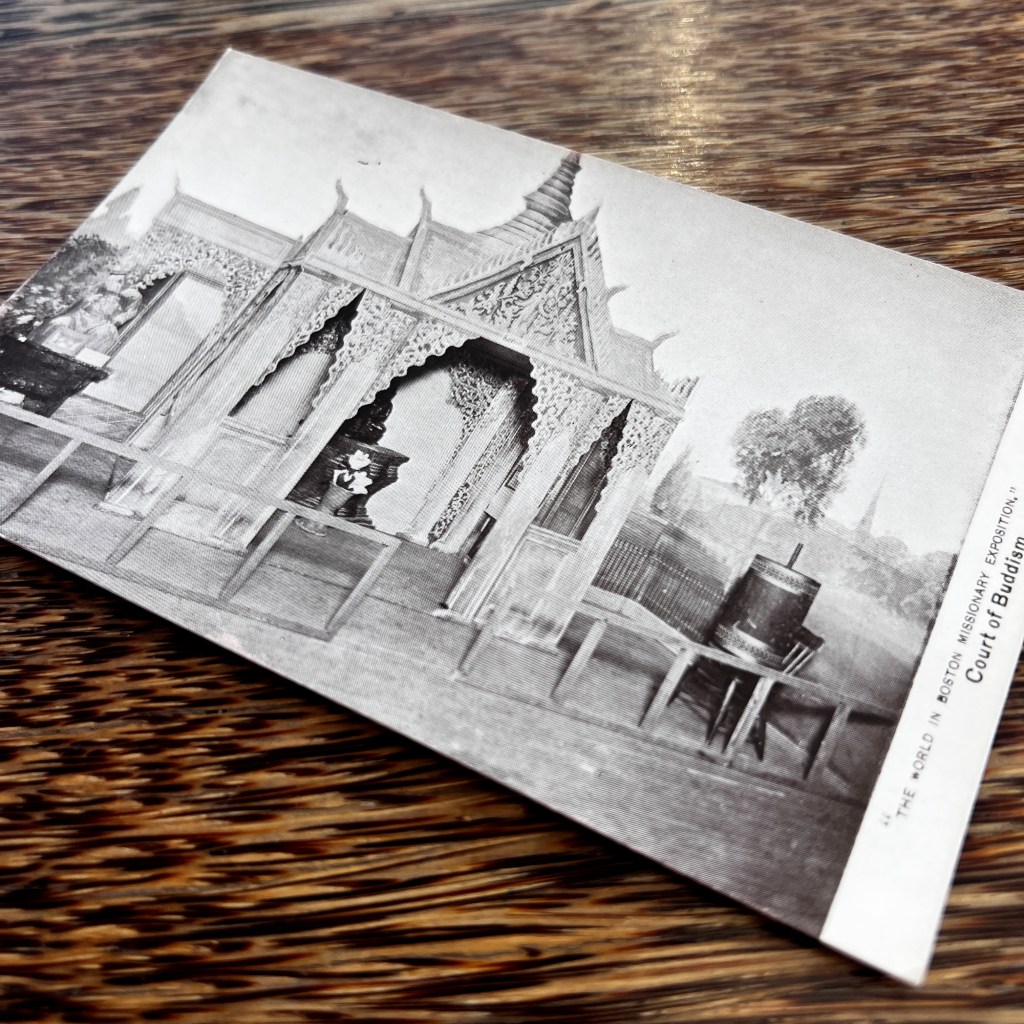
A Buddhist Object Lesson: Buddhist material culture was critical to the first US missionary exposition in 1911. Called The World In Boston, religious artifacts were employed to help give visitors a realistic glimpse into international missionary life.

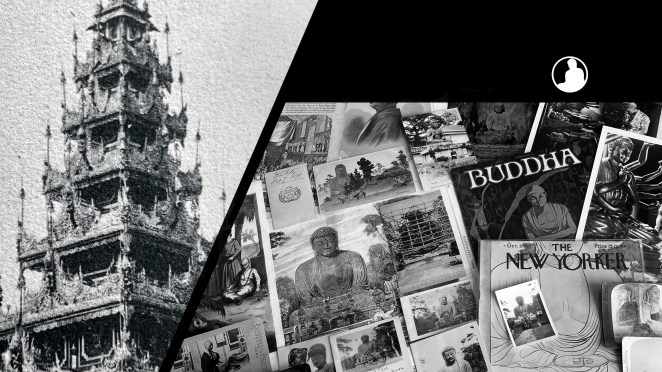
An estimated 400,000 people visited the exposition where “Buddhism” comprised a modest court in the Hall of Religions. In contrast to conventional museum exhibits, a single Burmese Buddhist statue was housed in a small building resembling a typical Southeast Asian temple.

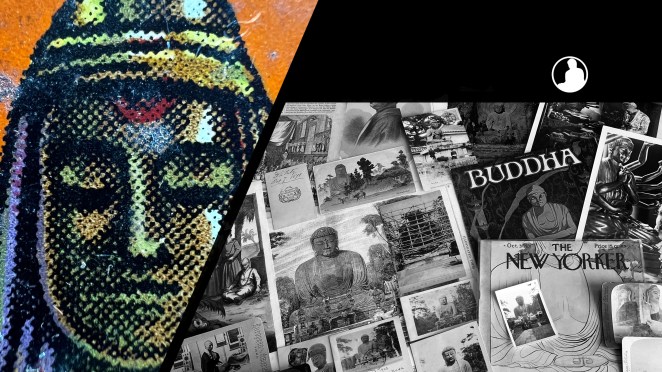
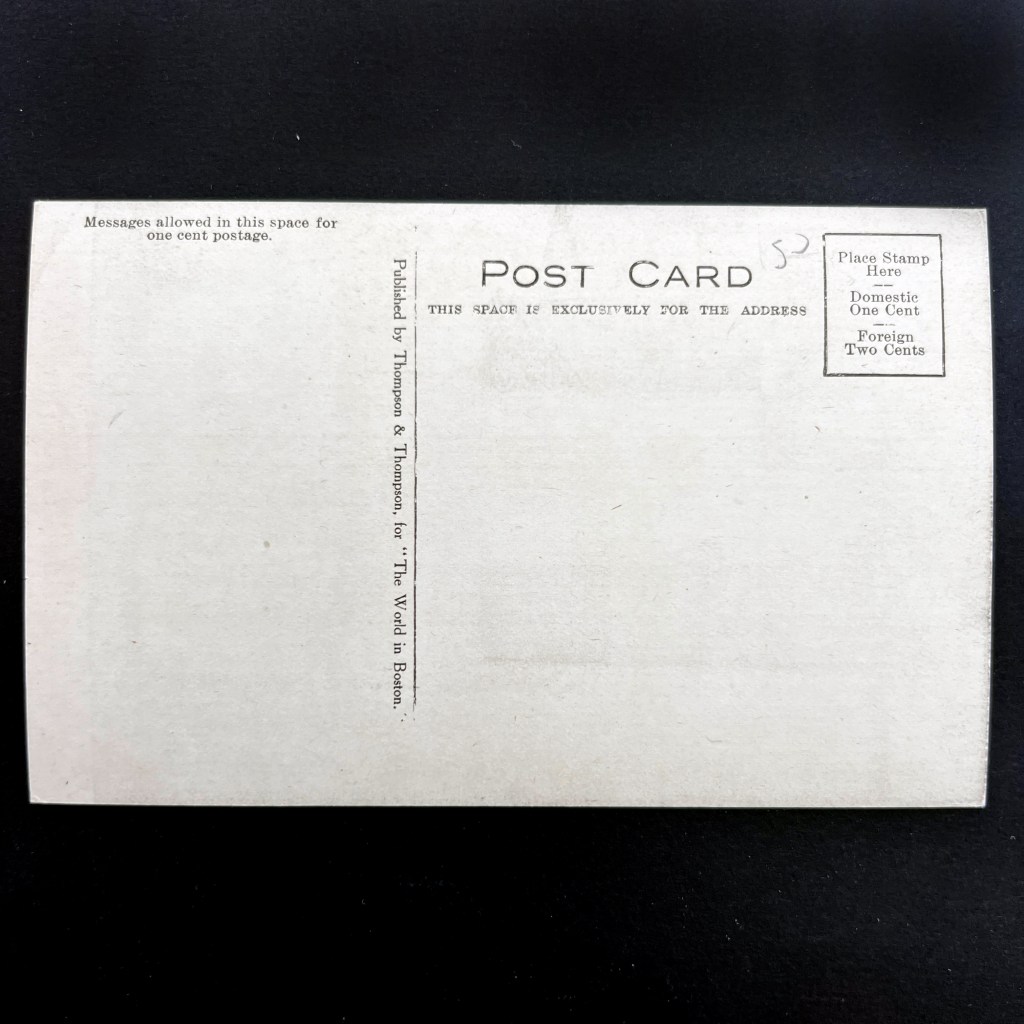
Inexpensive halftone printing allowed photographs to be reprinted as picture postcards, a very popular medium of the era. The image on the front bears only a loose resemblance to real Burmese temples found on postcards published by Philipp Klier and D.A. Ahuja.

On-site docents ensured religious icons were understood as props within a missionary narrative of attempting to save debased heathens. The American Baptist Mission in Burma provided some of the objects on display at The World in Boston, possibly even this enshrined Buddha.

For further exploration of the artifacts on display at the 1911 missionary exhibition, see Hasinoff, Erin L. Faith in Objects American Missionary Expositions in the Early Twentieth Century. New York: Palgrave Macmillan, 2011.


The Buddhas in the West Material Archive is a digital scholarship project that catalogues artifacts depicting Buddhist material culture for Western audiences. It’s comprised of prints, photos, and an assortment of ephemera and other objects. For a brief introduction to this archive, visit the main Buddhas in the West project page.


For Related Buddhas in the West Posts Featuring Expositions:


For the Most Recent Buddhas in the West Posts:


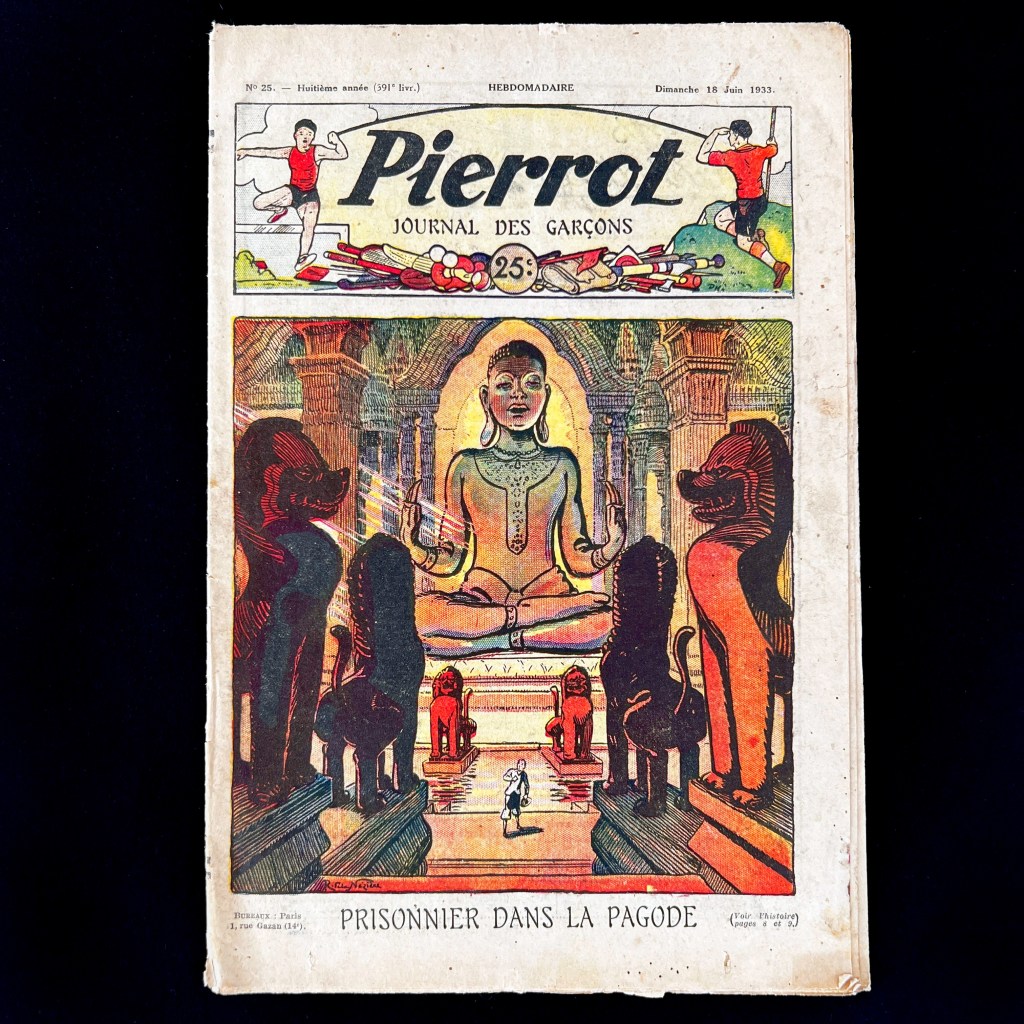
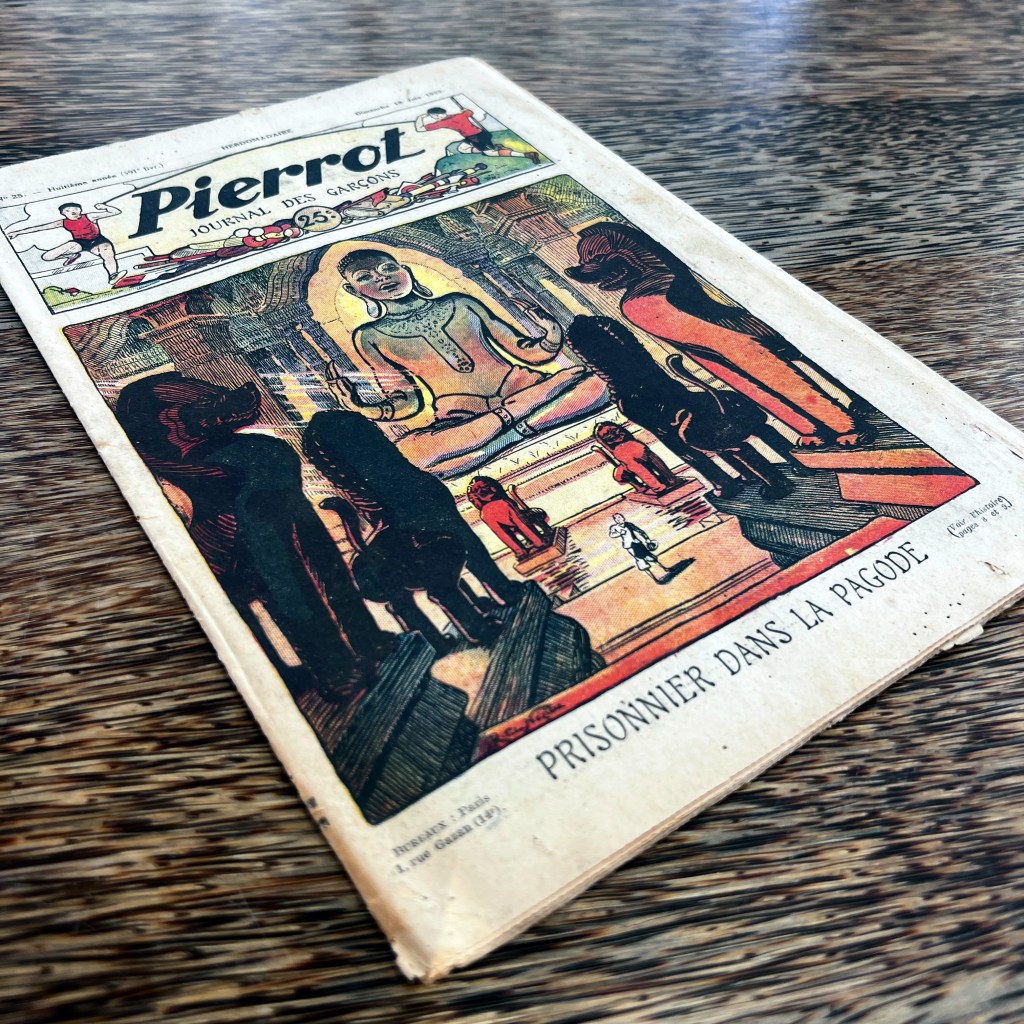
Pierrot’s “Prisonnier dans la pagode” Magazine Cover

For all the new Buddhas in the West posts
follow us on Bluesky & Instagram


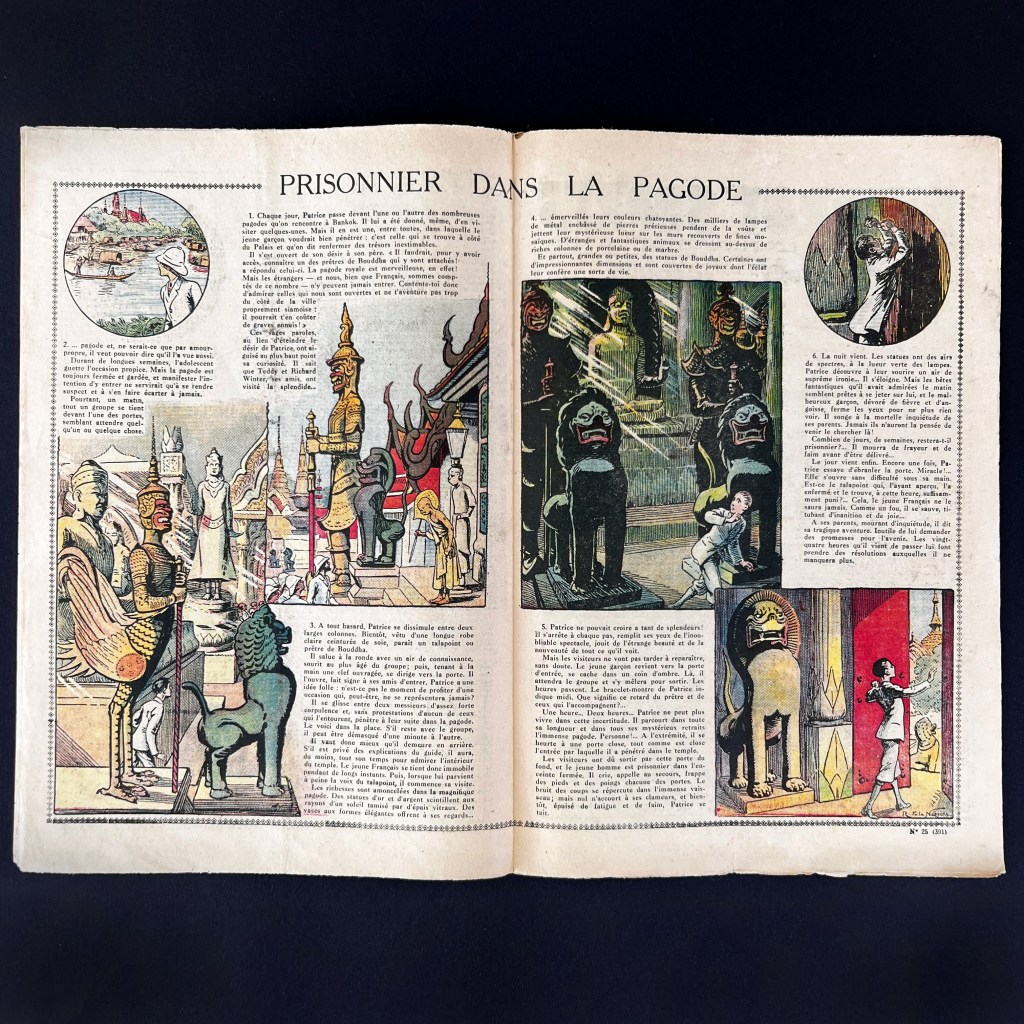
Prisoner in the Pagoda: Between World Wars, European periodicals geared towards boys grew in popularity. Many of these were written as action and adventure stories. Exotic locales, many of which were directly or indirectly colonized, became the sites of such exploits.

Pierrot, an illustrated French magazine first published in 1925, was a periodical in this vein. This 1933 issue has stories about pirates, piranha, and race cars, as well at the illustrated cover story, The Prisoner in the Pagoda.

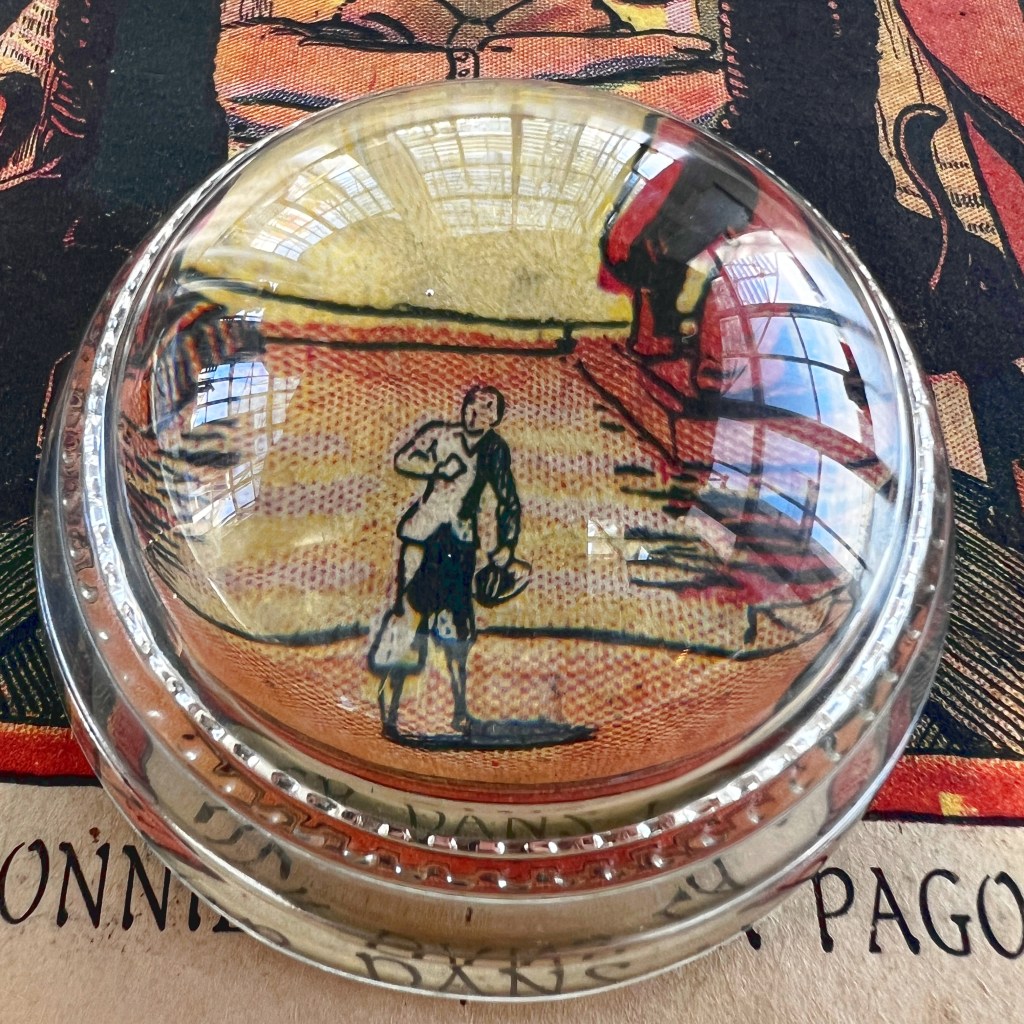
The art was intended to bring to mind the Temple of the Emerald Buddha at Wat Phra Kaew in Bangkok. The two-page spread tells the story of Patrice, an overly curious young boy who finds himself locked inside a Bangkok Buddhist temple overnight.

It follows a common trope of a mischievous boy who disregards his parents’ warnings and gets into trouble. Beyond mere trespassing, Patrice grows fearful of the strange buddhist icons that inhabit the temple.

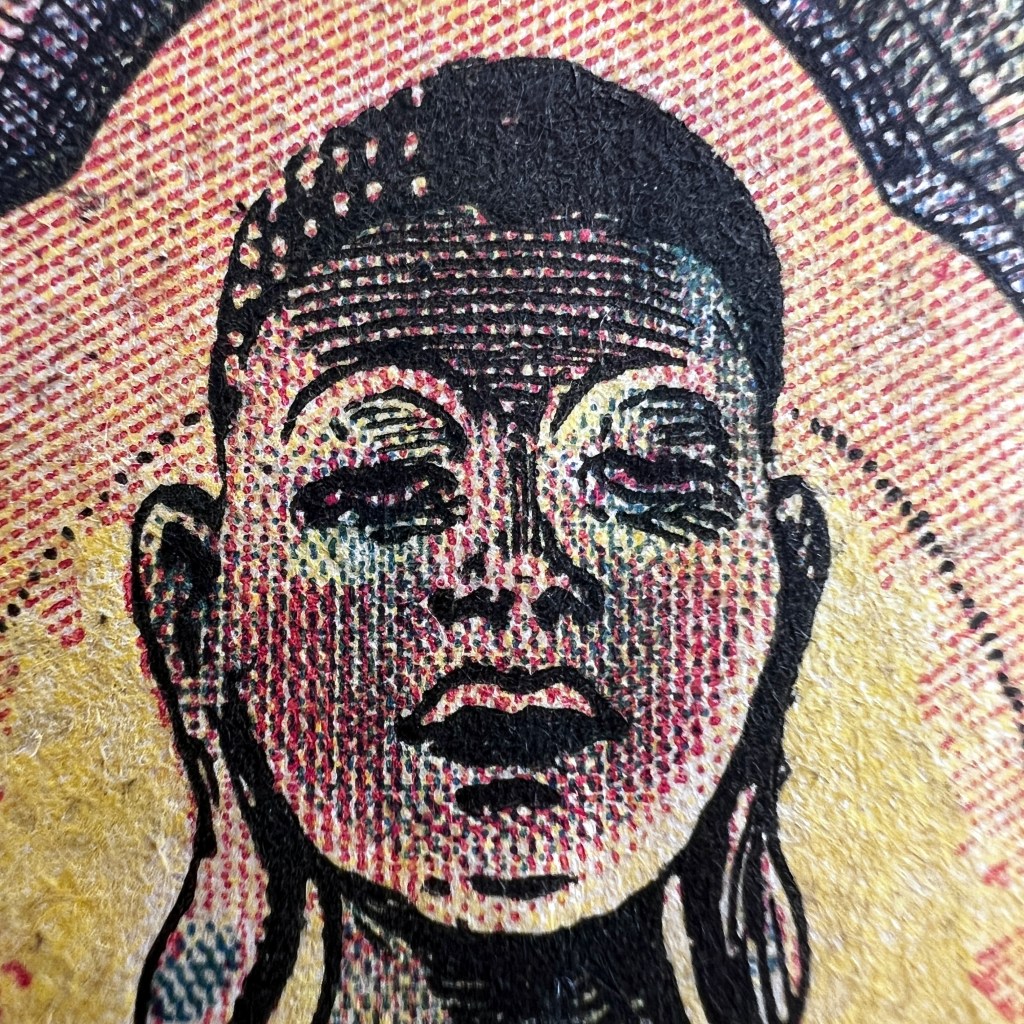
The Emerald Buddha is not drawn true to life and is made foreboding by its size and directional lighting.

The collection of Pierrot magazines has been digitized by the Bibliothèque nationale de France. The issue under review can be found here: https://tinyurl.com/yck22hde.

The Buddhas in the West Material Archive is a digital scholarship project that catalogues artifacts depicting Buddhist material culture for Western audiences. It’s comprised of prints, photos, and an assortment of ephemera and other objects. For a brief introduction to this archive, visit the main Buddhas in the West project page.


For Related Buddhas in the West Posts Featuring France:


For the Most Recent Buddhas in the West Posts: