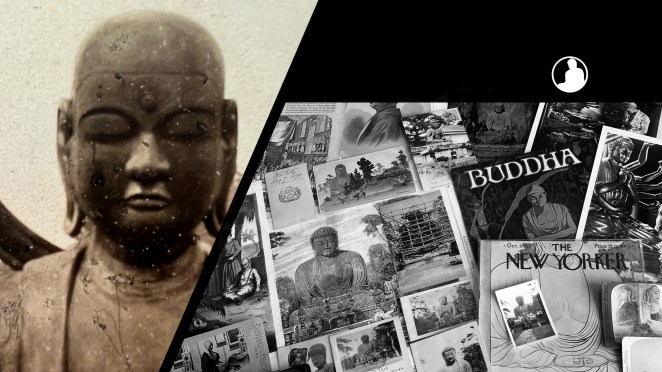
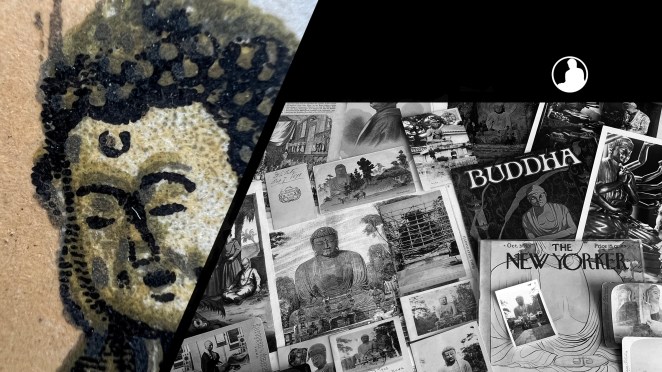
Philip Klier’s “Scene on the Shwe Dagon Pagoda” Postcard

For all the new Buddhas in the West posts
follow us on Bluesky & Instagram


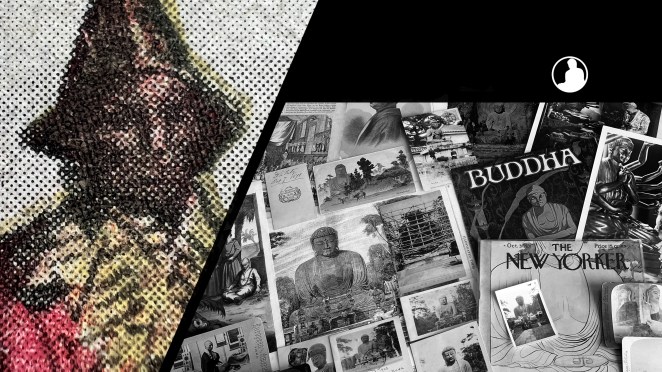
Shwedagon Pagoda is the most sacred Buddhist pilgrimage site in Myanmar, thought to enshrine eight hair strands of the Buddha. Philip Klier’s photo, taken in the 1880s, shows the activities of both monks and merchants on the main platform in front of the pagoda.
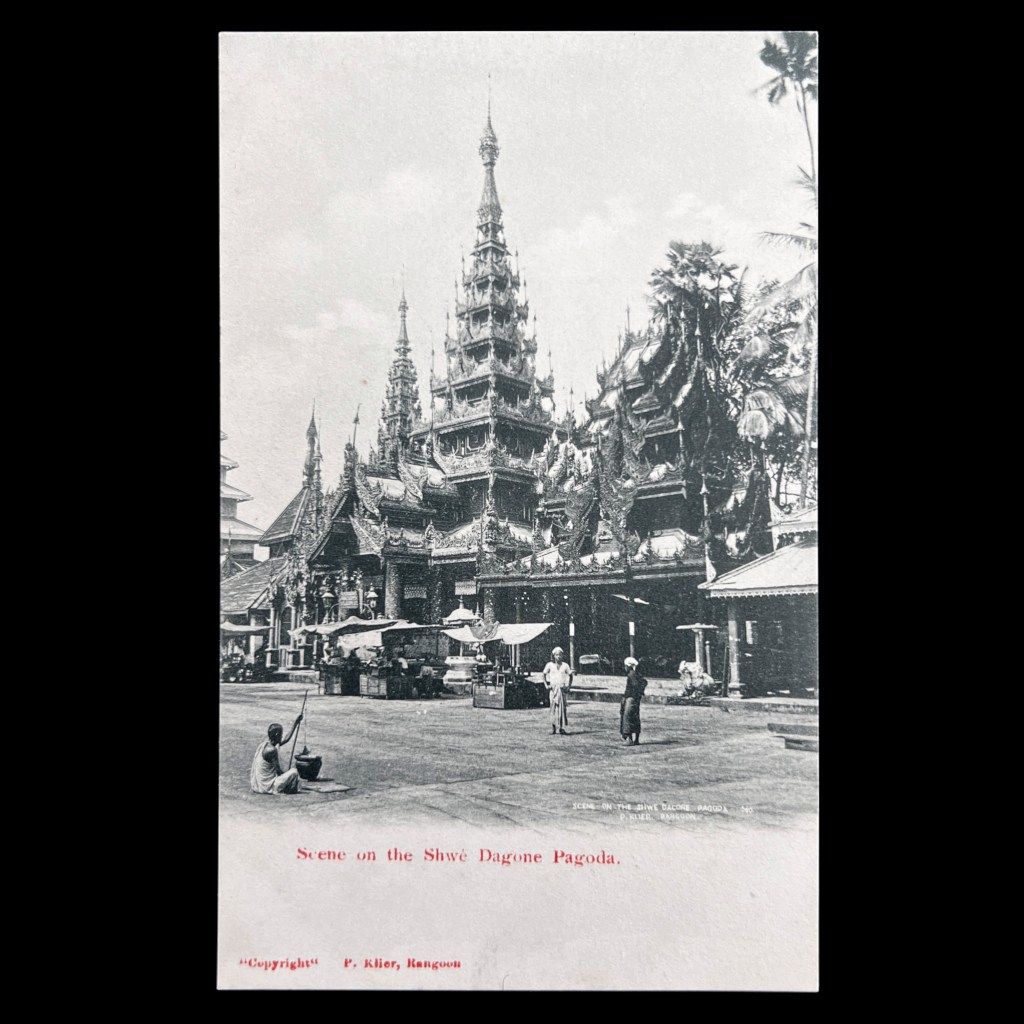
Built atop Singutarra Hill in the city of Yangon, four main entrance pavilions on the cardinal directions lead to a spacious open court where vendors sold ritual supplies. Small kiosks with shade coverings can be seen on the far side of the courtyard here.
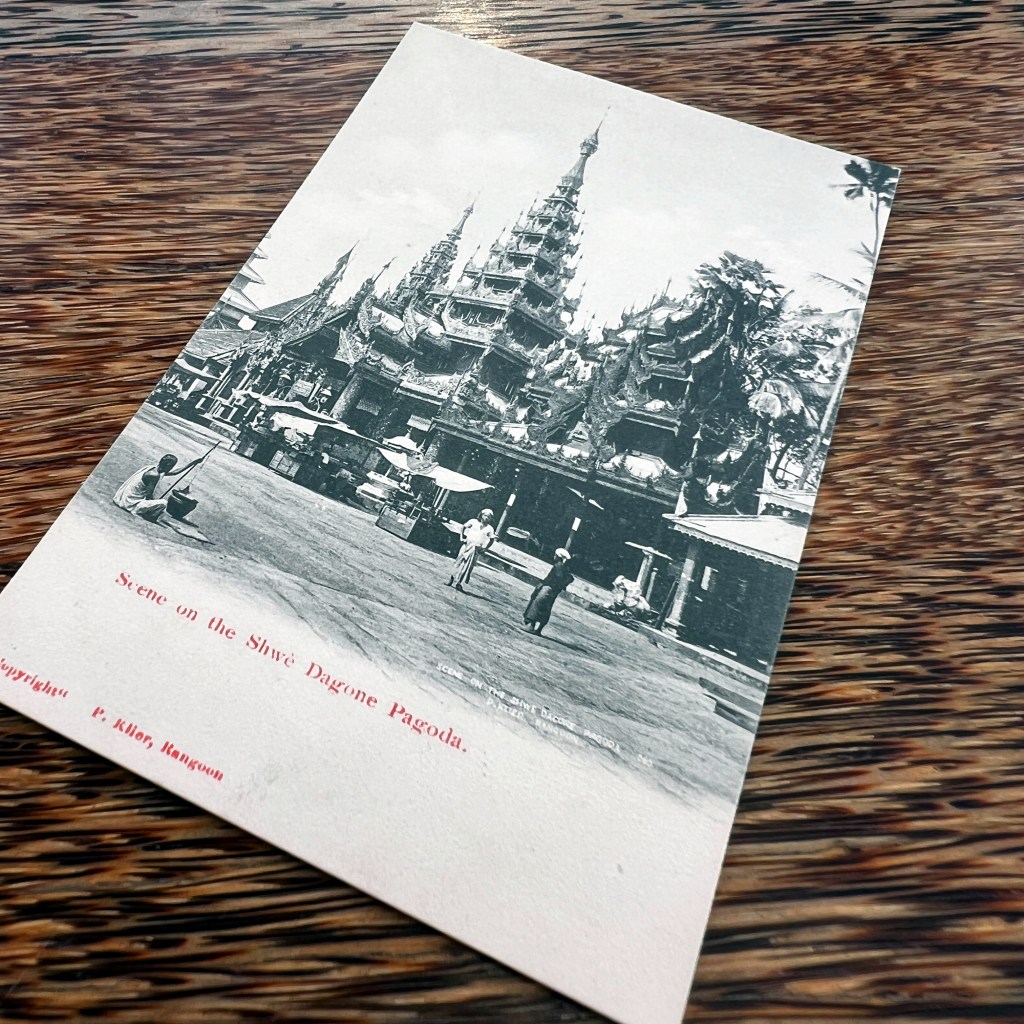
When German photographer Philip Klier relocated to the British capital at Yangon in c. 1880, he opened a studio just south of Shwedagon Pagoda. By the turn of the century he started selling postcards of his photographs, a media popular among foreign tourists visiting the site.

Klier’s name is inscribed on the negative with the title of his photo: “Scene on the Shwe Dagon Pagoda.” Surprisingly, the Shwedagon Pagoda is not actually in the frame of Klier’s photograph, it sits just off to the left.

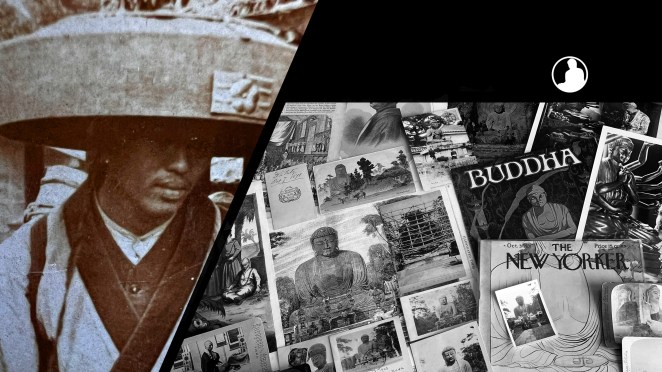
In the foreground we see a Theravada monk sitting on the ground with an alms bowl.

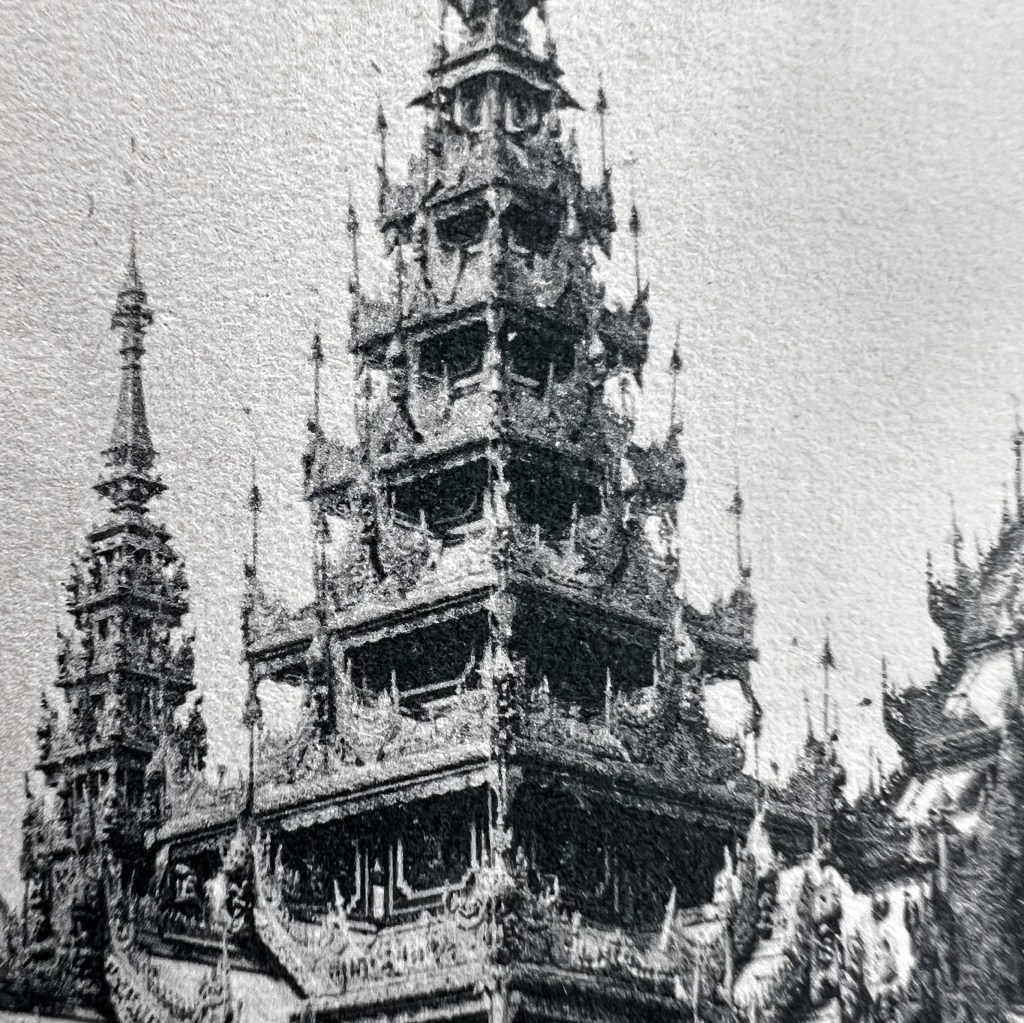
The distinctive building in the back is a seven-tiered pyatthat, characteristic of sacred Burmese architecture. For more of Klier’s photography, see the digitized collection at the National Gallery Singapore, viewable here: https://tinyurl.com/mtd9y72x.
Several of Montanus’ engravings were copied into later works on Japan, helping shape a visual lexicon for Buddhism into the 19th cent. The 1669 Dutch edition of Atlas Japannensis has been digitized by the National Library of the Netherlands, viewable here: tinyurl.com/5n6kstfy.


The Buddhas in the West Material Archive is a digital scholarship project that catalogues artifacts depicting Buddhist material culture for Western audiences. It’s comprised of prints, photos, and an assortment of ephemera and other objects. For a brief introduction to this archive, visit the main Buddhas in the West project page.


For Related Buddhas in the West Posts Featuring Myanmar / Burma:

For the Most Recent Buddhas in the West Posts:


Underwood’s Four Seated Buddhas of Bago Stereoview

For all the new Buddhas in the West posts
follow us on Bluesky & Instagram


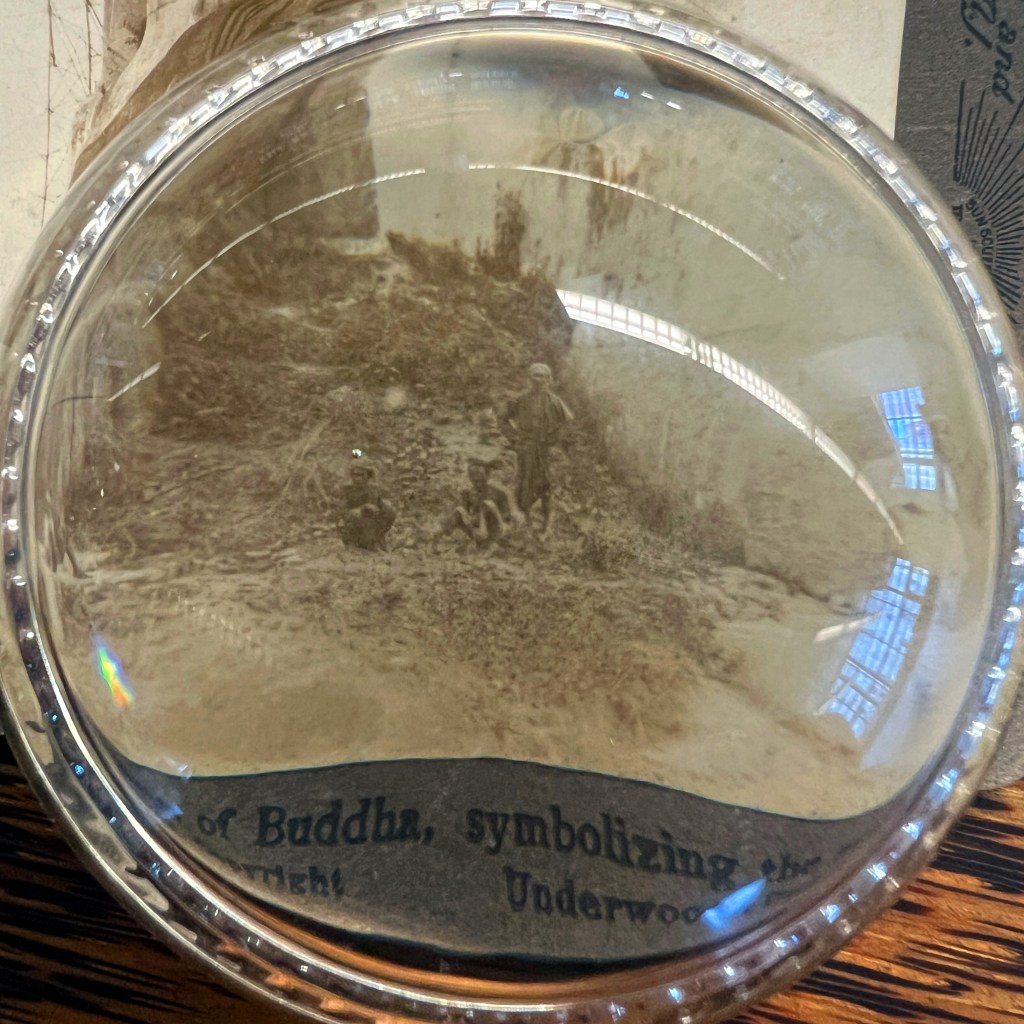
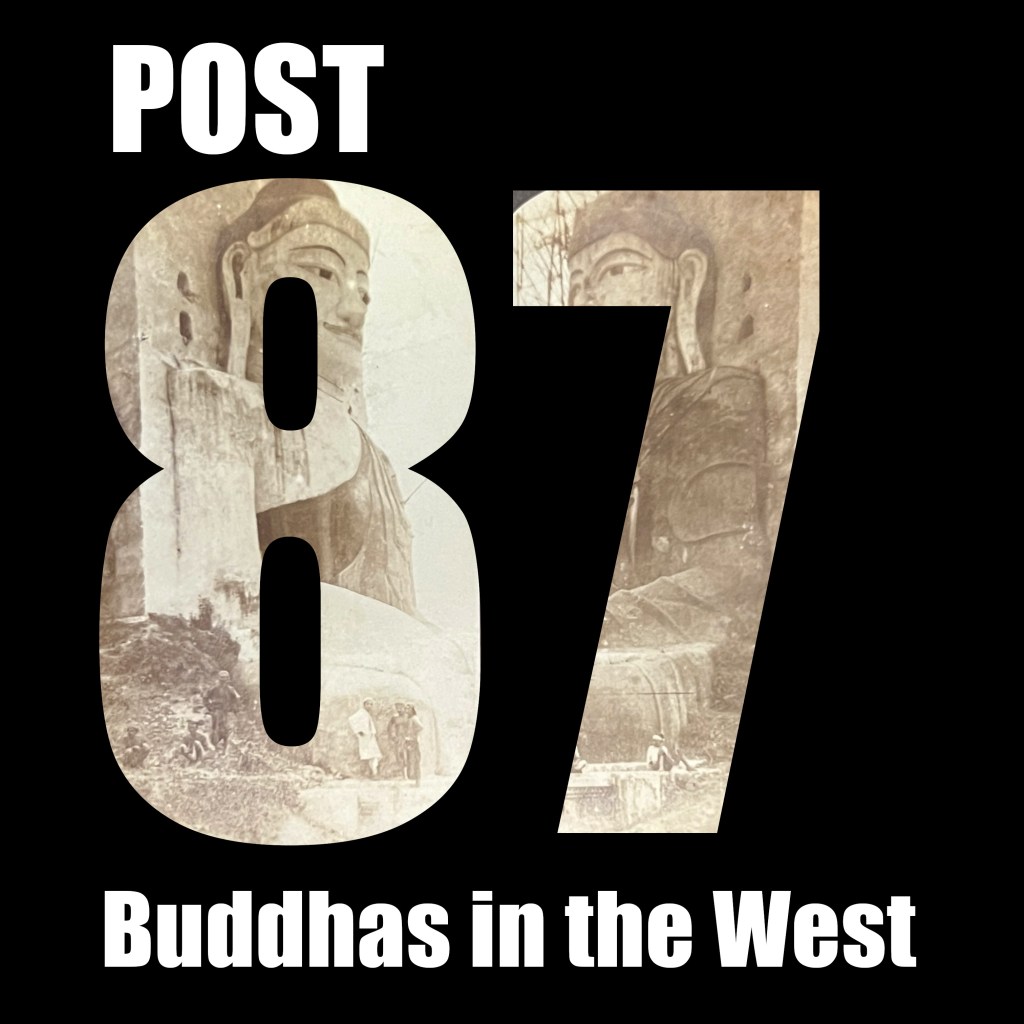
For nearly six centuries the four seated Buddhas of Bago have towered over the surrounding Burmese countryside. Constructed by the former Buddhist monk turned king, Dhammazedi, in 1476, the four colossal statues represent the four Buddhas of the past.

The Kyaikpun, as this site is known, also houses a relic chamber beneath the central rectangular pillar. Under Mon control, Bago served as a vital regional entrepôt and thriving hub of Theravada Buddhism with many shrines and monasteries.

This stereoview was part of the educational Underwood Stereoscopic Tour series from 1907, comprised of national sets with individual cards arranged as “a tourist might visit the actual scenes.” The Burma set was originally sold with fifty different views (this card is number 12).

The structure, which is over 90 ft. (27m) tall, was in near ruin by the 1890s, but local fundraising was able to repair the statues by the turn of the century. This stereoview, taken around 1905, still shows the remnants of rubble and scaffolding in the rear.

The Buddha facing north, representing Gautama Buddha, remained in the best condition, thus the other three statues were reputedly modeled after it during renovation. To see thirty-six views from Underwood’s Burma series held by the National Archives UK, visit tinyurl.com/3xwvkbsb.


The Buddhas in the West Material Archive is a digital scholarship project that catalogues artifacts depicting Buddhist material culture for Western audiences. It’s comprised of prints, photos, and an assortment of ephemera and other objects. For a brief introduction to this archive, visit the main Buddhas in the West project page.


For Related Buddhas in the West Posts Featuring Historical Stereophotography:


For the Most Recent Buddhas in the West Posts:


D.A. Ahuja’s Kaunghmudaw Pagoda Postcard

For all the new Buddhas in the West posts
follow us on Bluesky & Instagram


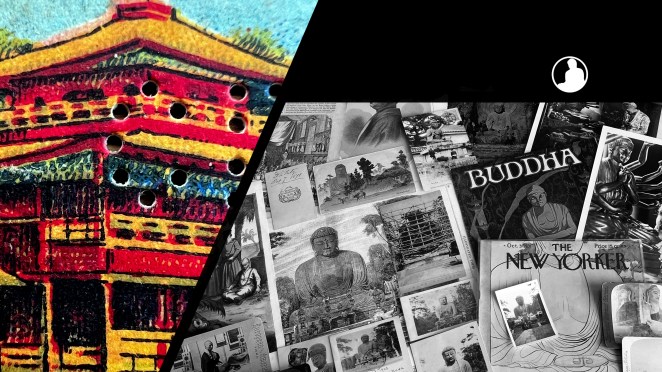
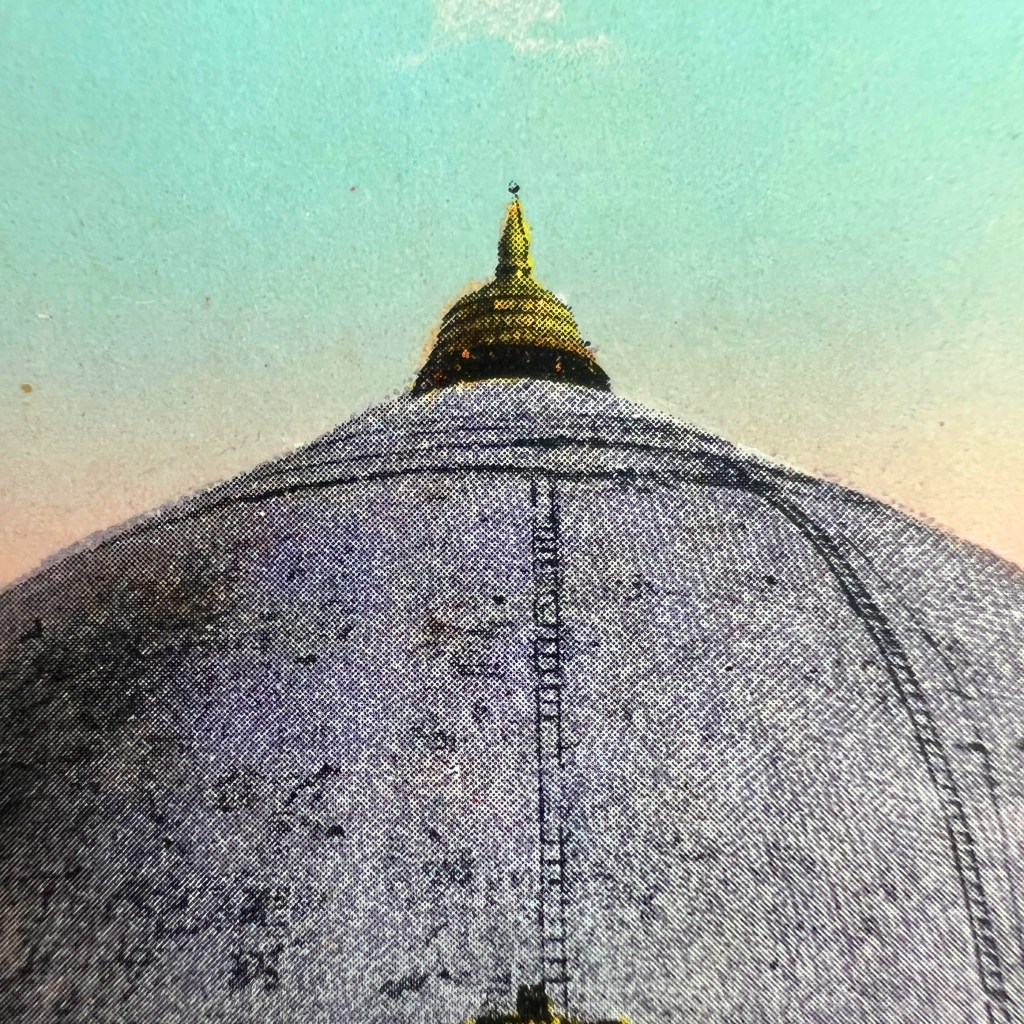
At the height of the worldwide postcard craze, no one produced more vibrant imagery of the Buddhist world than D.A. Ahuja. Here we see Myanmar’s 17th century Kaunghmudaw Pagoda with unique hemispherical dome – most Burmese pagodas are pyramidal structures.

According to Burmese chronicles, the Kaunghmudaw Pagoda enshrines the Buddha’s tooth relic among other religious treasures. This pagoda was intended to resemble Sri Lanka’s Maha Thupa, a structure reputed to hold the largest single cache of the Buddha’s relics.

The image was printed using a lithographic-halftone hybrid process, whereby a black halftone screen was applied on top of a multi-color lithographic substrate. The “divided back” design suggests the card was printed by Ahuja around 1910; he operated out of present-day Yangon.

Constructed in the Sagaing Hills, the Kaunghmudaw Pagoda houses a large marble statue of the Buddha hewn from the local quarry. The dome sits at a height of just over 150 feet (46m).

The use of a white dome was meant to symbolize a connection to the ancient past of Buddhist architecture. Just over a decade ago, however, the military government repainted the dome gold, against the outcry of local Buddhists.


The Buddhas in the West Material Archive is a digital scholarship project that catalogues artifacts depicting Buddhist material culture for Western audiences. It’s comprised of prints, photos, and an assortment of ephemera and other objects. For a brief introduction to this archive, visit the main Buddhas in the West project page.


For Related Buddhas in the West Posts Featuring Stūpas / Pagodas:


For the Most Recent Buddhas in the West Posts:


Herbert Ponting’s Shwethalyaung Sleeping Buddha Stereoview

For all the new Buddhas in the West posts
follow us on Bluesky & Instagram


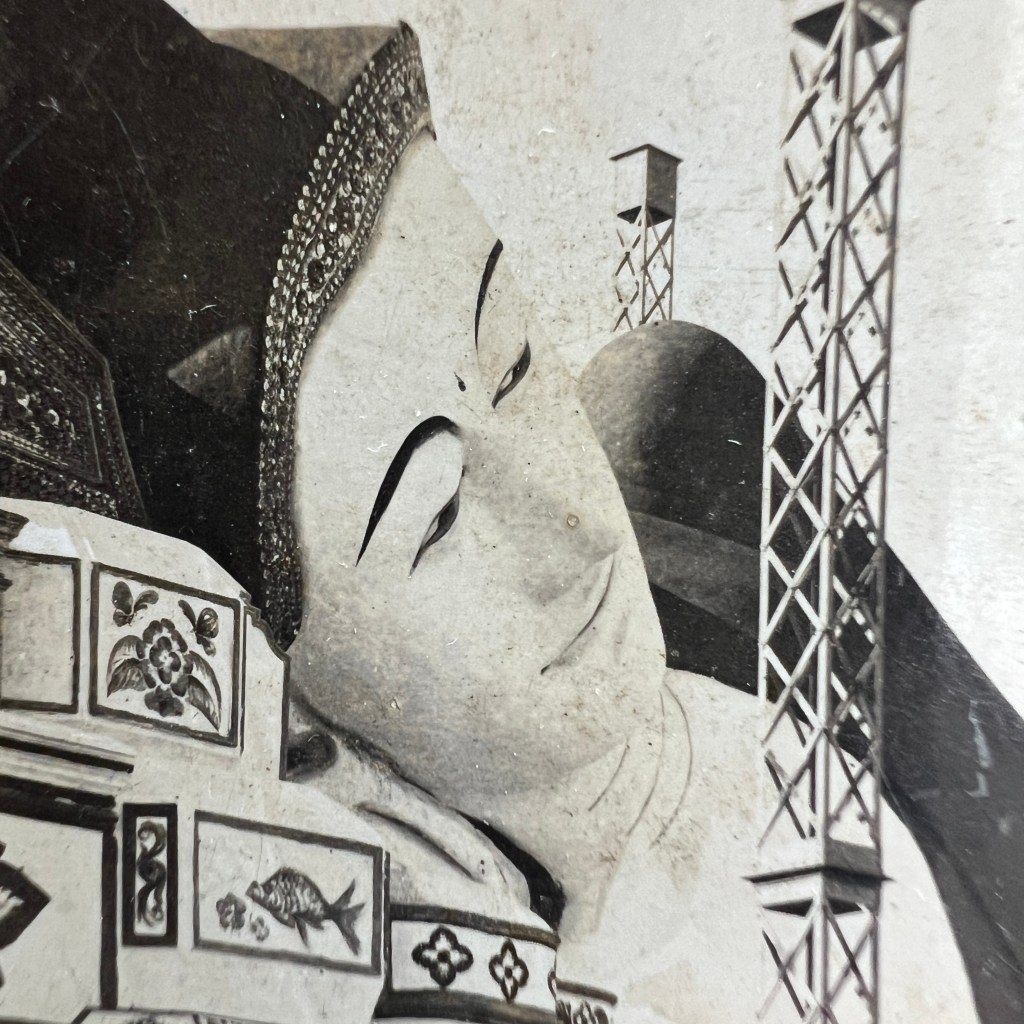
This colossal Sleeping Buddha was lost to the jungle when the Burmese city of Bago fell to invading forces in 1757. The statue was recovered in 1881 after railroad workers began digging through a tree-covered mound looking for scrap stone.

At 55 meters (180 ft) long and 16 meters (52 ft) high at the shoulder, the Shwethalyaung Buddha is among the largest reclining Buddha statues ever constructed. Made of brick and stucco, it is believed to have been built in the late tenth century under the patronage of a local king.

This stereograph was taken by Herbert Ponting who had returned from Manchuria after photographing the Russo-Japan War for publisher H. C. White.

Ponting had an expert eye; his placement of the man in the foreground produces a strong three-dimensional depth effect when viewed stereoscopically.

An earlier photograph of the Shwethalyaung Sleeping Buddha before decoration was published in Julius Smith’s Ten Years in Burma from 1902, viewable here: tinyurl.com/5n85dsxn.


The Buddhas in the West Material Archive is a digital scholarship project that catalogues artifacts depicting Buddhist material culture for Western audiences. It’s comprised of prints, photos, and an assortment of ephemera and other objects. For a brief introduction to this archive, visit the main Buddhas in the West project page.


For Related Buddhas in the West Posts Featuring Myanmar / Burma:


For the Most Recent Buddhas in the West Posts:


D.A. Ahuja’s Buddhist Priest Portrait Postcard

For all the new Buddhas in the West posts
follow us on Bluesky & Instagram


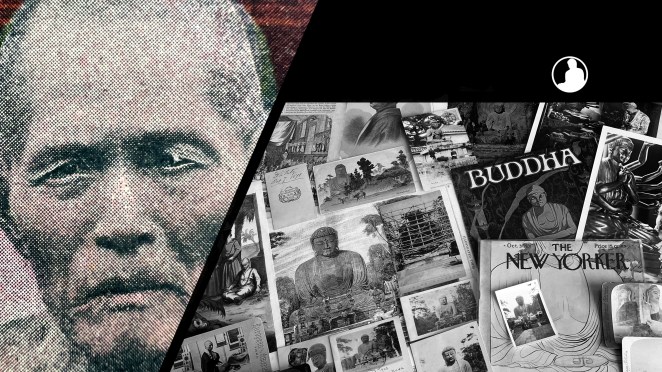
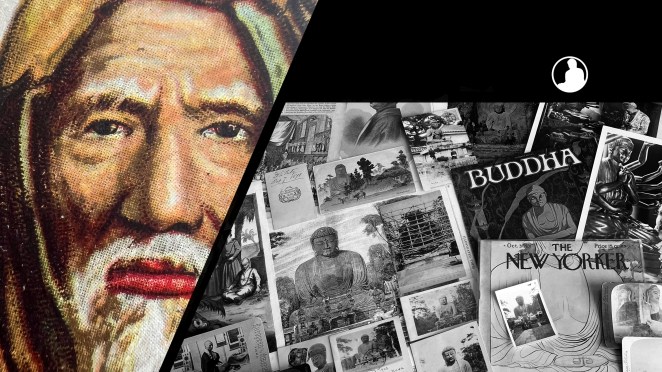
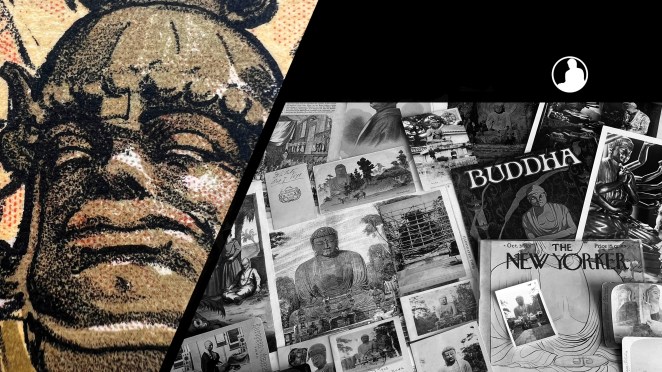
At the turn of the twentieth century, photographer D. A. Ahuja was integral in creating a visual canon of British colonial Burma. His picture postcards were among the most reprinted images of the era, including this portrait of an unnamed “Burmese priest.”

The image was made by a lithographic-halftone hybrid process, whereby a black halftone screen was applied on top of a multi-color lithographic substrate. The “divided back” design suggests Ahuja printed this card around 1910.

Burmese pagodas and monks were common enough to warrant claiming they constituted their own visual genre of “Burmese religious life.” The colorist here inaccurately represented the monk’s robes, combining the two most common colorways – saffron and maroon – into one.

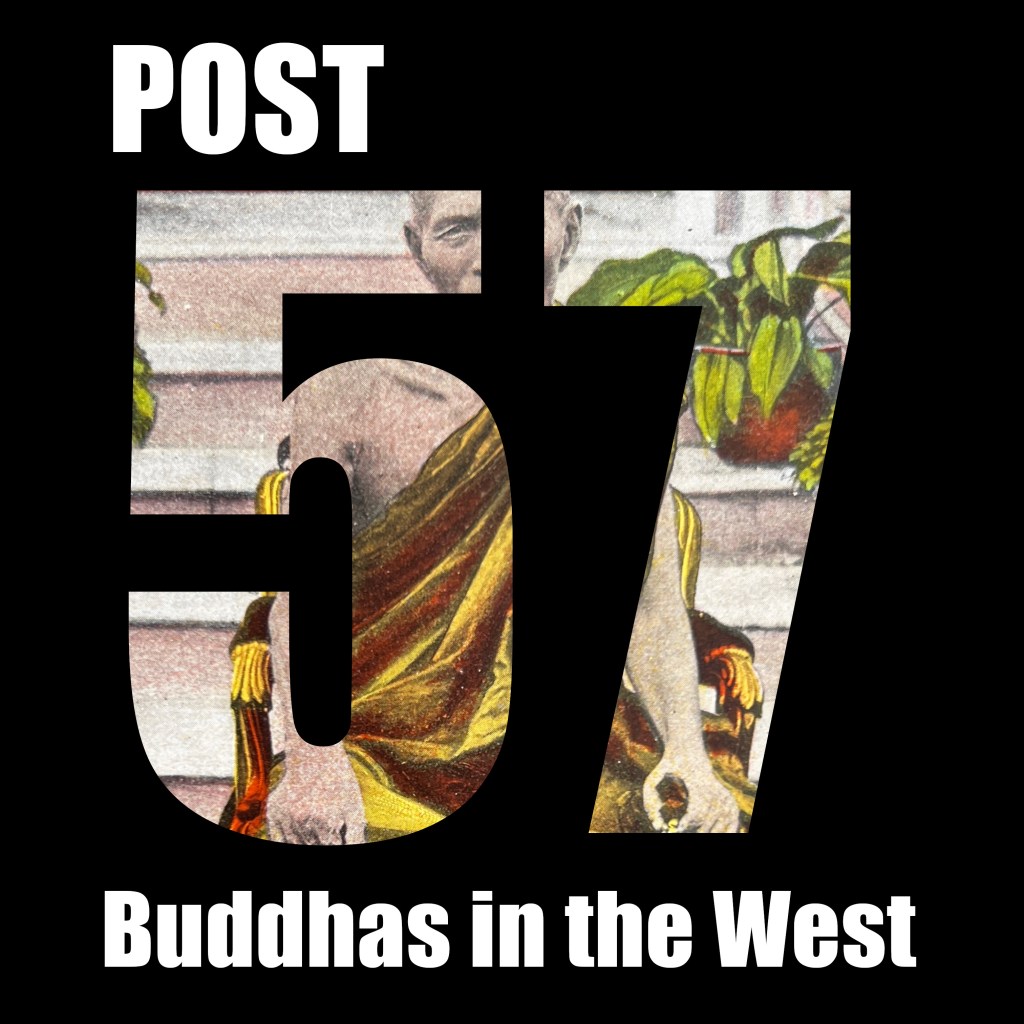
Somewhat unique to his oeuvre, Ahuja photographs his subject in formal portraiture, sitting in an ornate wooden chair on top of carpet. Holding a Buddhist mala, the elderly monk poses, without facial expression, for the camera.

Was he a highly regarded monk – as his portraiture might suggest? A collection of Burmese postcards has recently been digitized by Stanford University, available here: https://exhibits.stanford.edu/missionarypostcards


The Buddhas in the West Material Archive is a digital scholarship project that catalogues artifacts depicting Buddhist material culture for Western audiences. It’s comprised of prints, photos, and an assortment of ephemera and other objects. For a brief introduction to this archive, visit the main Buddhas in the West project page.


For Related Buddhas in the West Posts Featuring Buddhist Monastics:


For the Most Recent Buddhas in the West Posts:


D.A. Ahuja’s Idol Maker Postcard

For all the new Buddhas in the West posts
follow us on Bluesky & Instagram


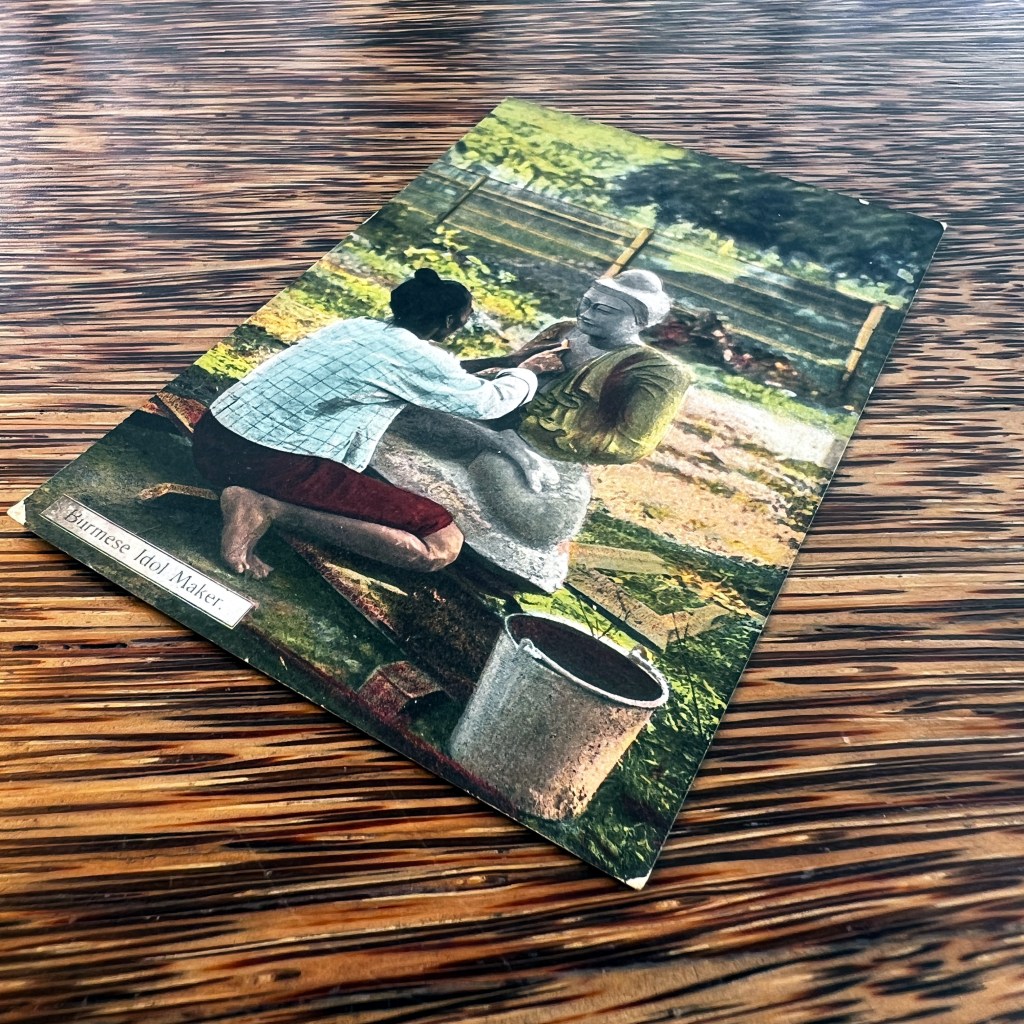
As new imagery of British colonial Burma circulated in the early 20th century, one trade received heightened interest: idol carving. The marble quarries north of Mandalay provided sufficient raw materials for the local carving industry centered around the village of Sagyin.

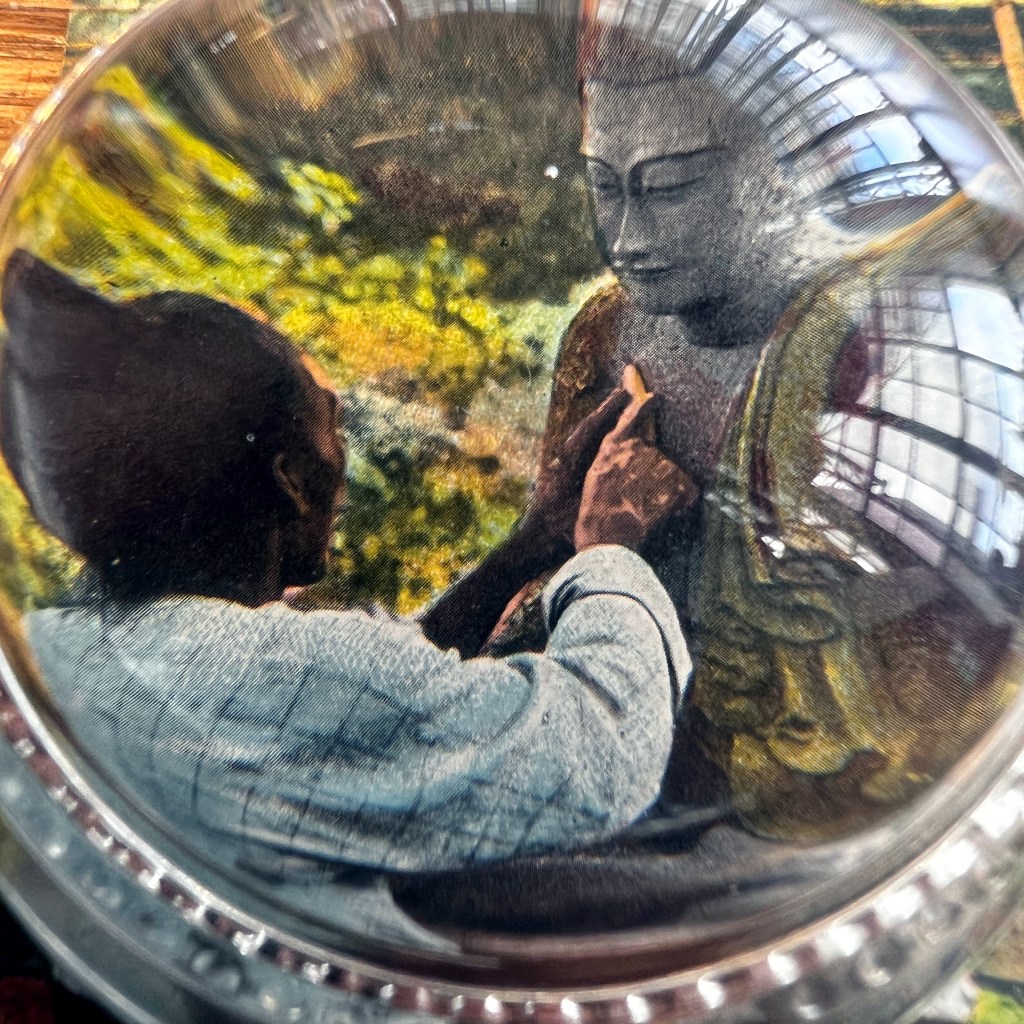
An active stone-workers’ quarter in Mandalay meant foreign travelers could encounter Burmese carvers working on Buddhist statuary. This postcard by D.A. Ahuja captures the crafting of a Mandalay-style marble Buddha, with thick garment folds and a band around the head.

The card reveals a lithographic-halftone hybrid process, whereby a black halftone screen was applied on top of a multi-color lithographic substrate. The reverse design suggests this card was printed around 1910.

Burmese white marble has been fashioned into Buddhist statuary since the Konbaung Dynasty (1752–1885). The trade continues in and around Sagyin and Mandalay today.

For further info on the history of Burmese marble carving and the early spread of Burmese Buddhas into China, see Deng, Beiyin. “Reimagining a Buddhist Cosmopolis: Conveying Marble Buddhas from Burma to China, 1890s-1930s.” Journal of Global Buddhism 24, no. 1 (2023): 25–46.


The Buddhas in the West Material Archive is a digital scholarship project that catalogues artifacts depicting Buddhist material culture for Western audiences. It’s comprised of prints, photos, and an assortment of ephemera and other objects. For a brief introduction to this archive, visit the main Buddhas in the West project page.


For Related Buddhas in the West Posts Featuring Myanmar / Burma:


For the Most Recent Buddhas in the West Posts:


World in Boston Missionary Expo Buddhism Postcard

For all the new Buddhas in the West posts
follow us on Bluesky & Instagram


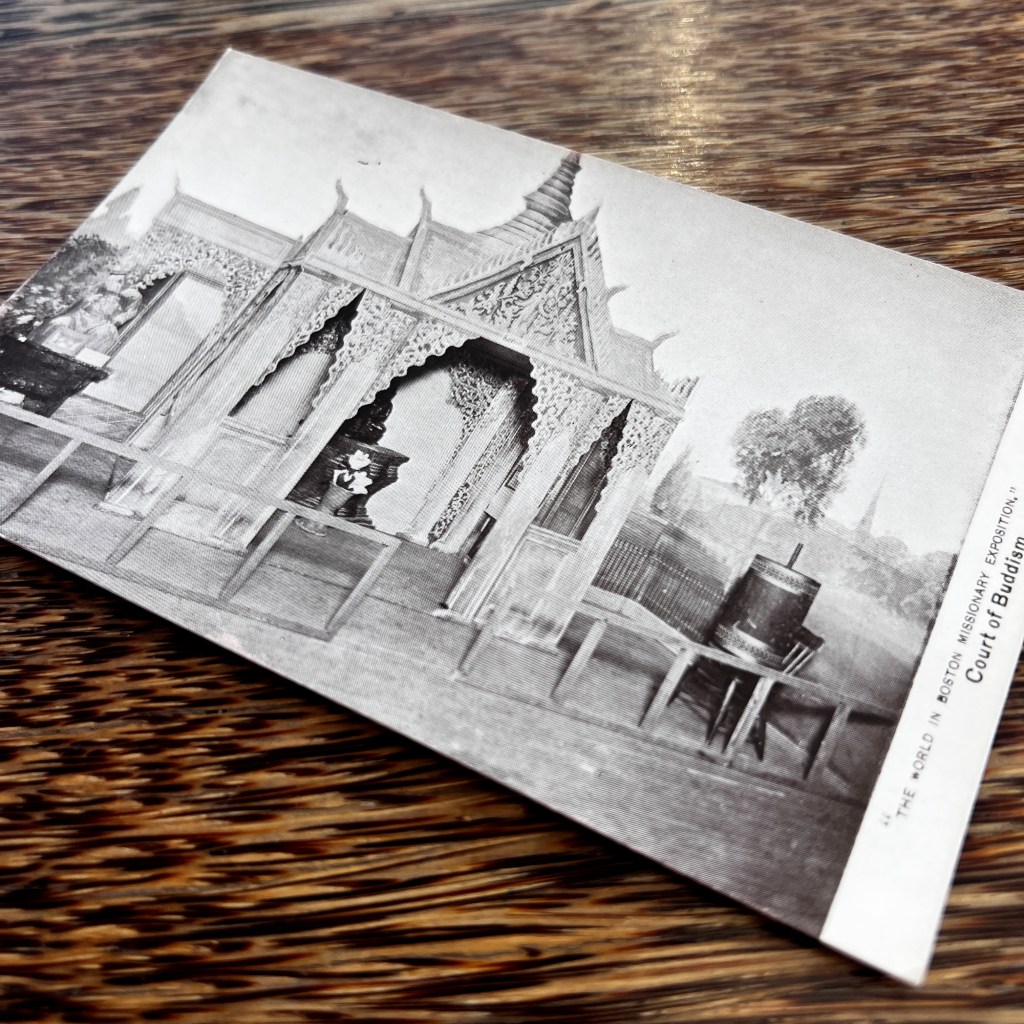
A Buddhist Object Lesson: Buddhist material culture was critical to the first US missionary exposition in 1911. Called The World In Boston, religious artifacts were employed to help give visitors a realistic glimpse into international missionary life.

An estimated 400,000 people visited the exposition where “Buddhism” comprised a modest court in the Hall of Religions. In contrast to conventional museum exhibits, a single Burmese Buddhist statue was housed in a small building resembling a typical Southeast Asian temple.

Inexpensive halftone printing allowed photographs to be reprinted as picture postcards, a very popular medium of the era. The image on the front bears only a loose resemblance to real Burmese temples found on postcards published by Philipp Klier and D.A. Ahuja.

On-site docents ensured religious icons were understood as props within a missionary narrative of attempting to save debased heathens. The American Baptist Mission in Burma provided some of the objects on display at The World in Boston, possibly even this enshrined Buddha.

For further exploration of the artifacts on display at the 1911 missionary exhibition, see Hasinoff, Erin L. Faith in Objects American Missionary Expositions in the Early Twentieth Century. New York: Palgrave Macmillan, 2011.


The Buddhas in the West Material Archive is a digital scholarship project that catalogues artifacts depicting Buddhist material culture for Western audiences. It’s comprised of prints, photos, and an assortment of ephemera and other objects. For a brief introduction to this archive, visit the main Buddhas in the West project page.


For Related Buddhas in the West Posts Featuring Expositions:


For the Most Recent Buddhas in the West Posts:

D.A. Ahuja’s Buddhist Priests Postcard

For all the new Buddhas in the West posts
follow us on Bluesky & Instagram


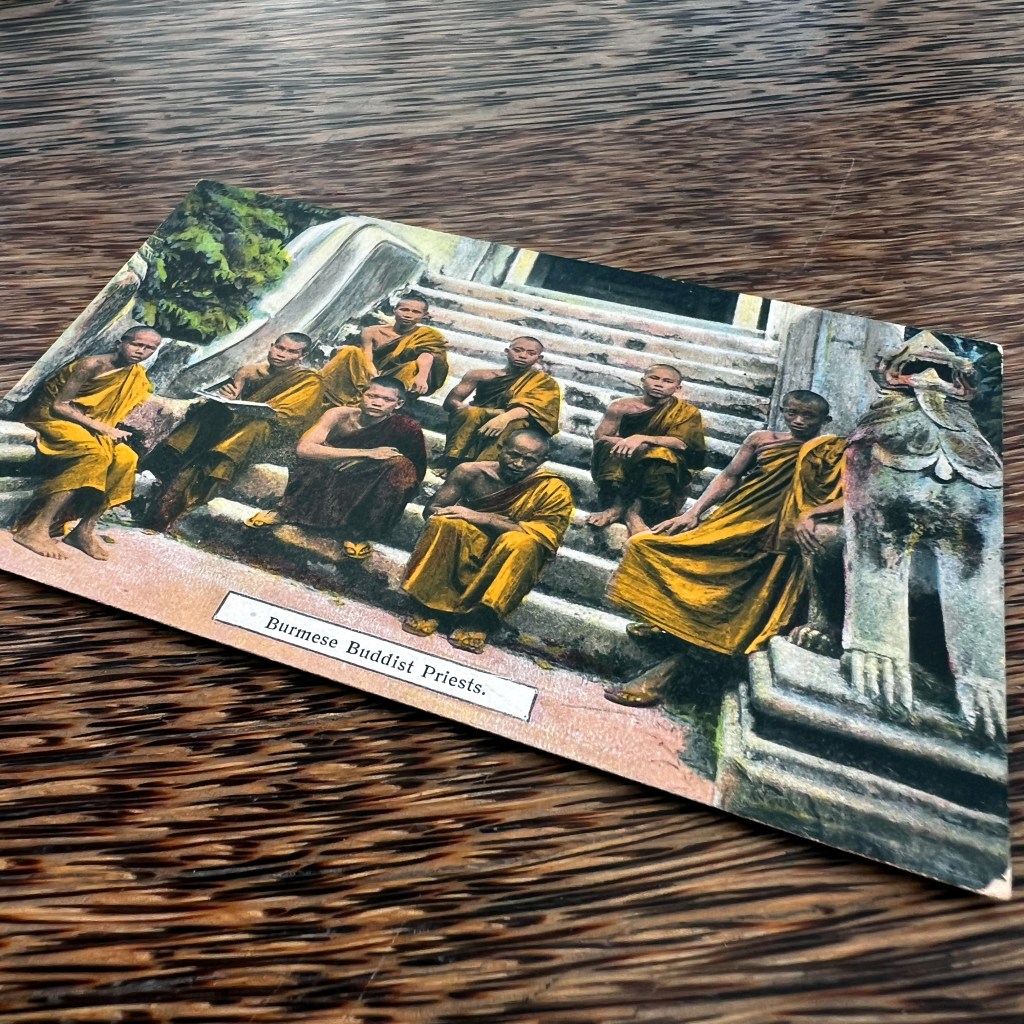
Buddhists & the British Crown: When Ceylon became a colony in 1815, the first Buddhist monks became subjects of the Crown. Burmese monks were added to their ranks in 1885. Victorian reports said the total Buddhist population was 500 million, nearly 40% of the global population.

British newspapers of the time printed engravings of the expanding empire, often focusing on exotic architecture and the clothes and customs of new subjects. The shaven heads and golden robes of Burmese monks, called poongyis in the press, garnered some of this attention.

Consequently, when D. A. Ahuja (c.1865–c. 1939) started publishing colorized postcards of Burma, monks dressed in colorful robes were a popular theme. This is card is a German lithographic-halftone print published circa 1910.

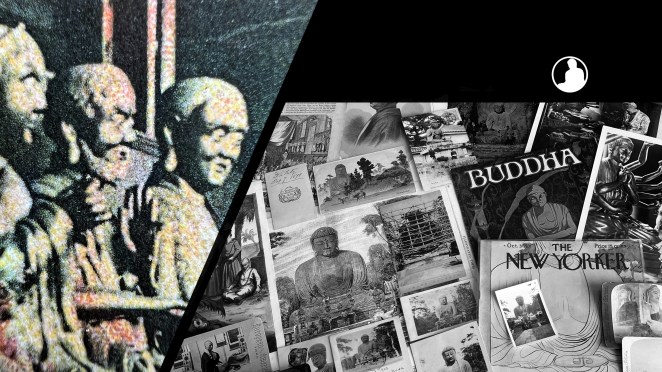
The popular press often described Burmese monks as indolent, but never-the-less kind-hearted. While Ahuja’s licensed photograph (taken by Philip Klier) seems to depict monks at rest on the stairs of a temple, it’s noteworthy one studious monk holds a notebook and pencil.

For further reflections on how Burmese Buddhism was represented in Victorian mass media, see Eiben, Emily Rose. “Representing Buddhism in British Media and Popular Culture, 1875-1895.” Ph.D dissertation, Ludwig Maximilian University, 2016


The Buddhas in the West Material Archive is a digital scholarship project that catalogues artifacts depicting Buddhist material culture for Western audiences. It’s comprised of prints, photos, and an assortment of ephemera and other objects. For a brief introduction to this archive, visit the main Buddhas in the West project page.


For Related Buddhas in the West Posts Featuring Historical Postcards:

For the Most Recent Buddhas in the West Posts: